AquaLibs presents AquaRank Discover the world’s leading aquascapers

Explore transparent rankings built from published results across the world’s leading aquascaping contests.

Zebra Angelfish (Pterophyllum scalare)

Taxonomy and identification

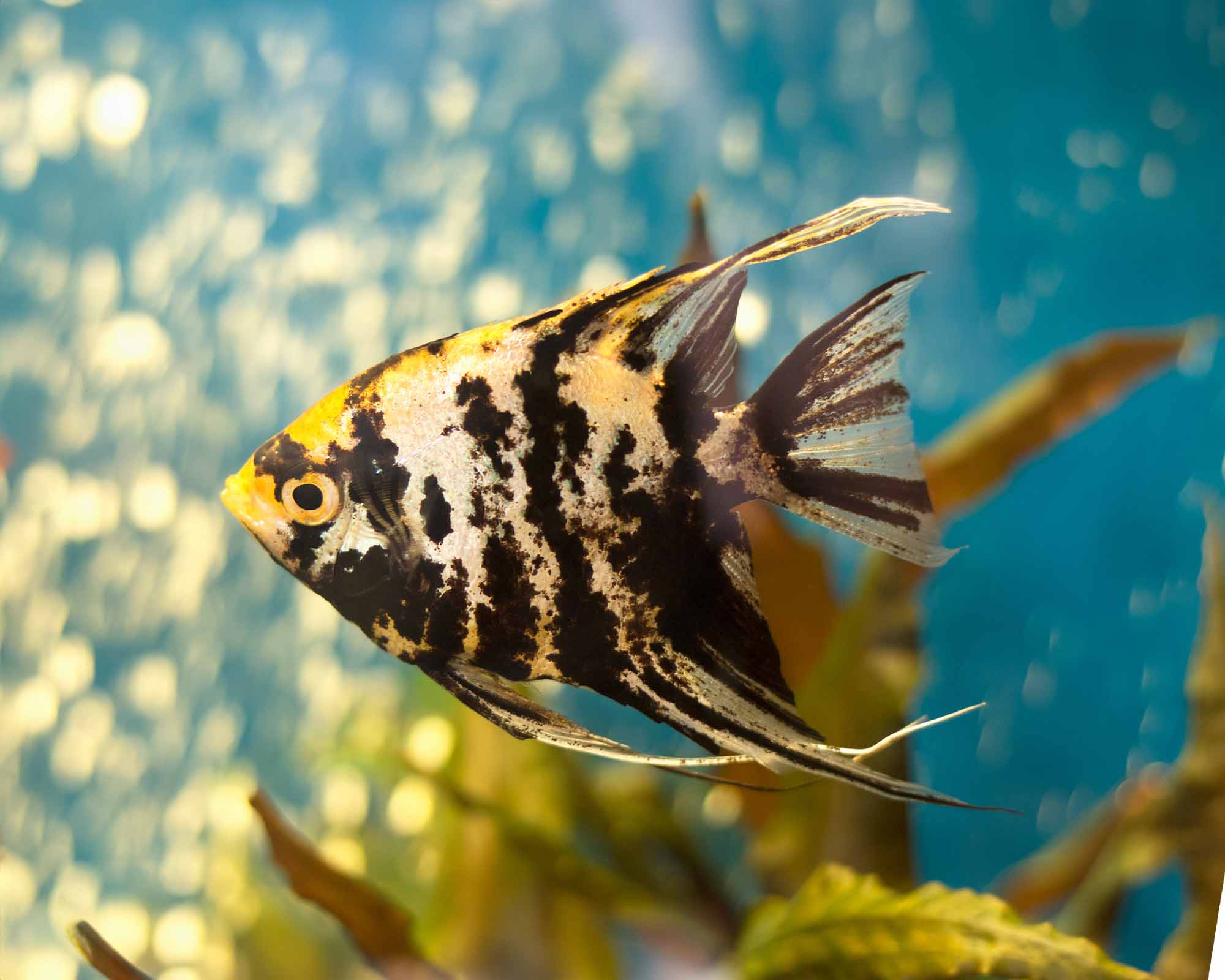
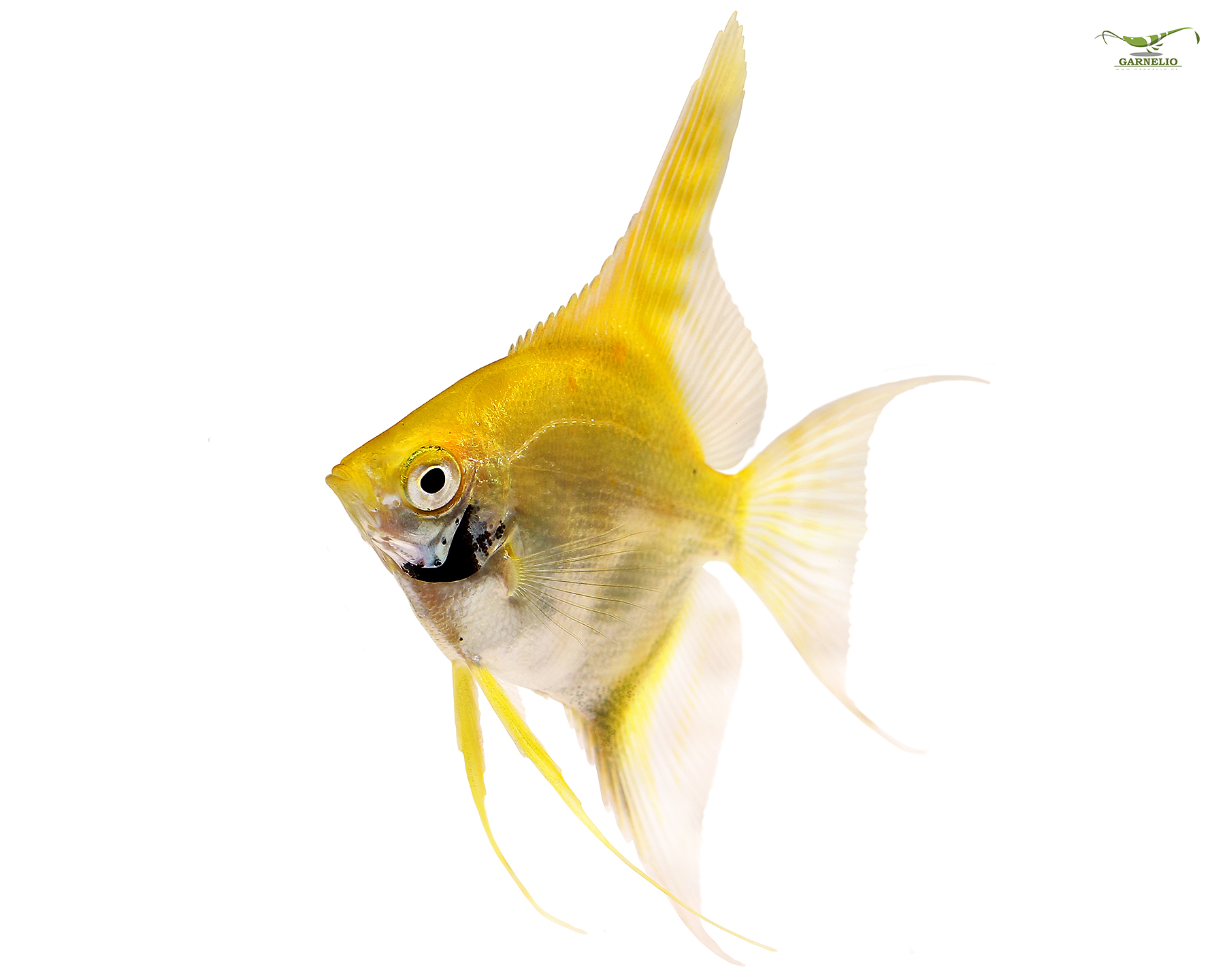
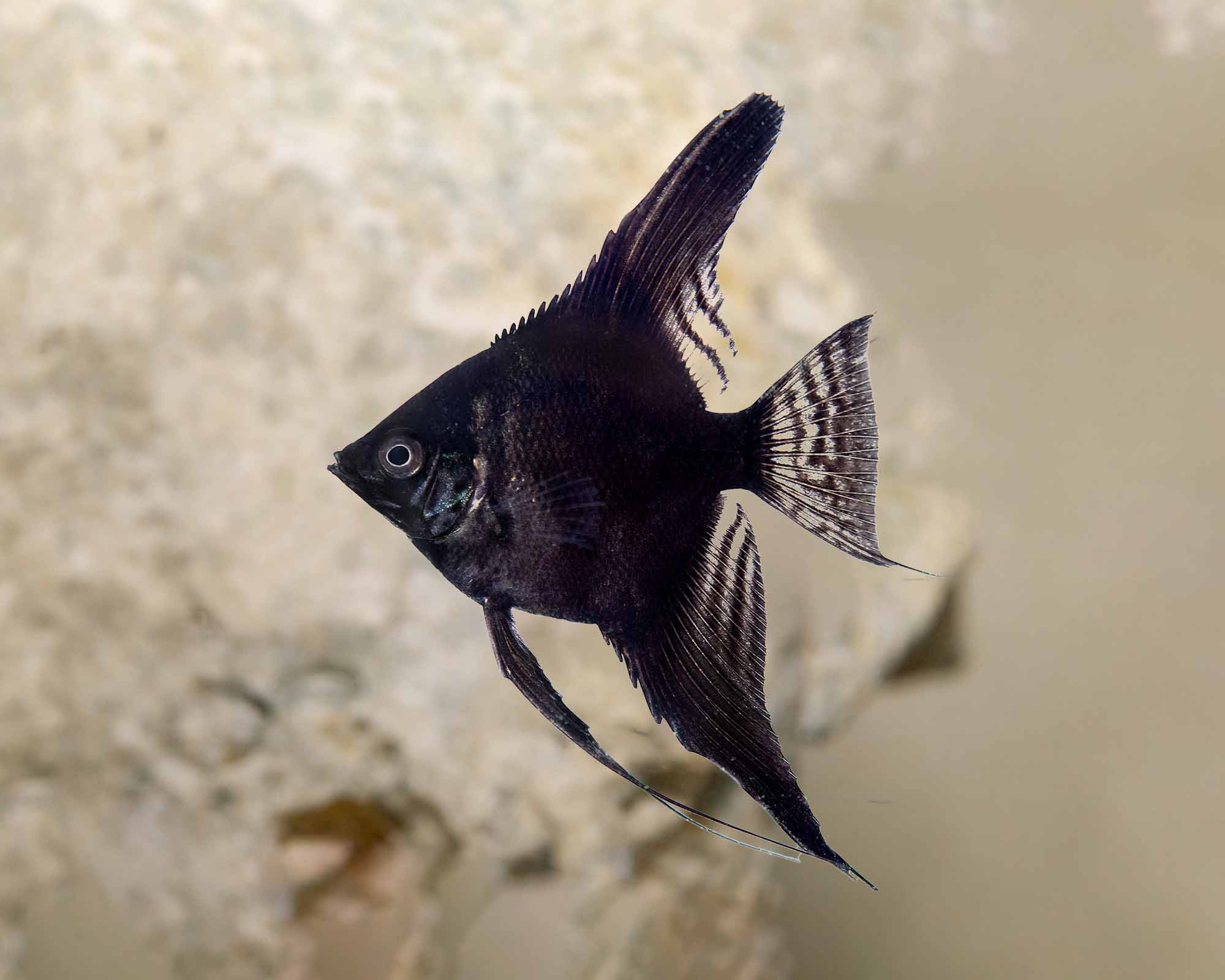
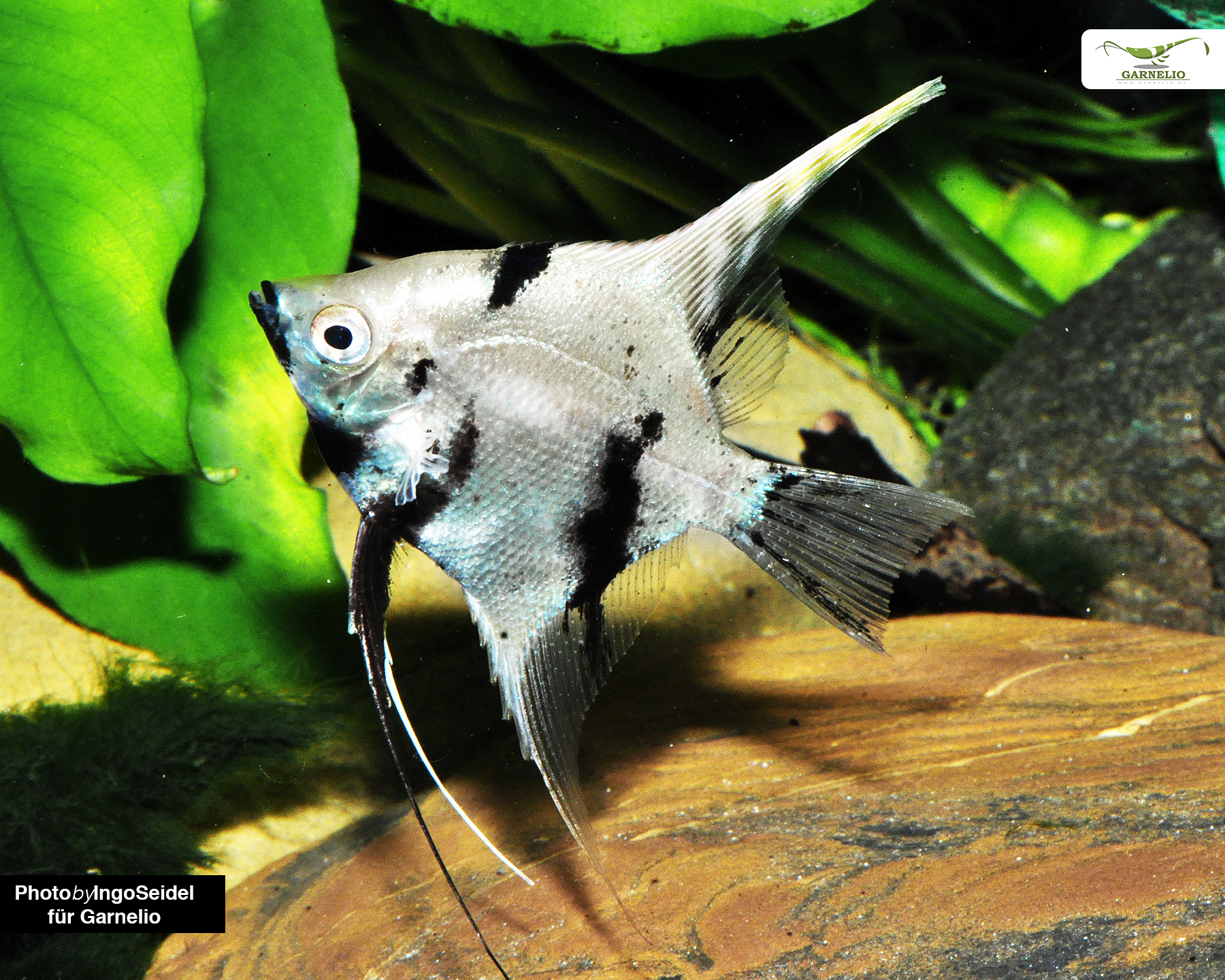
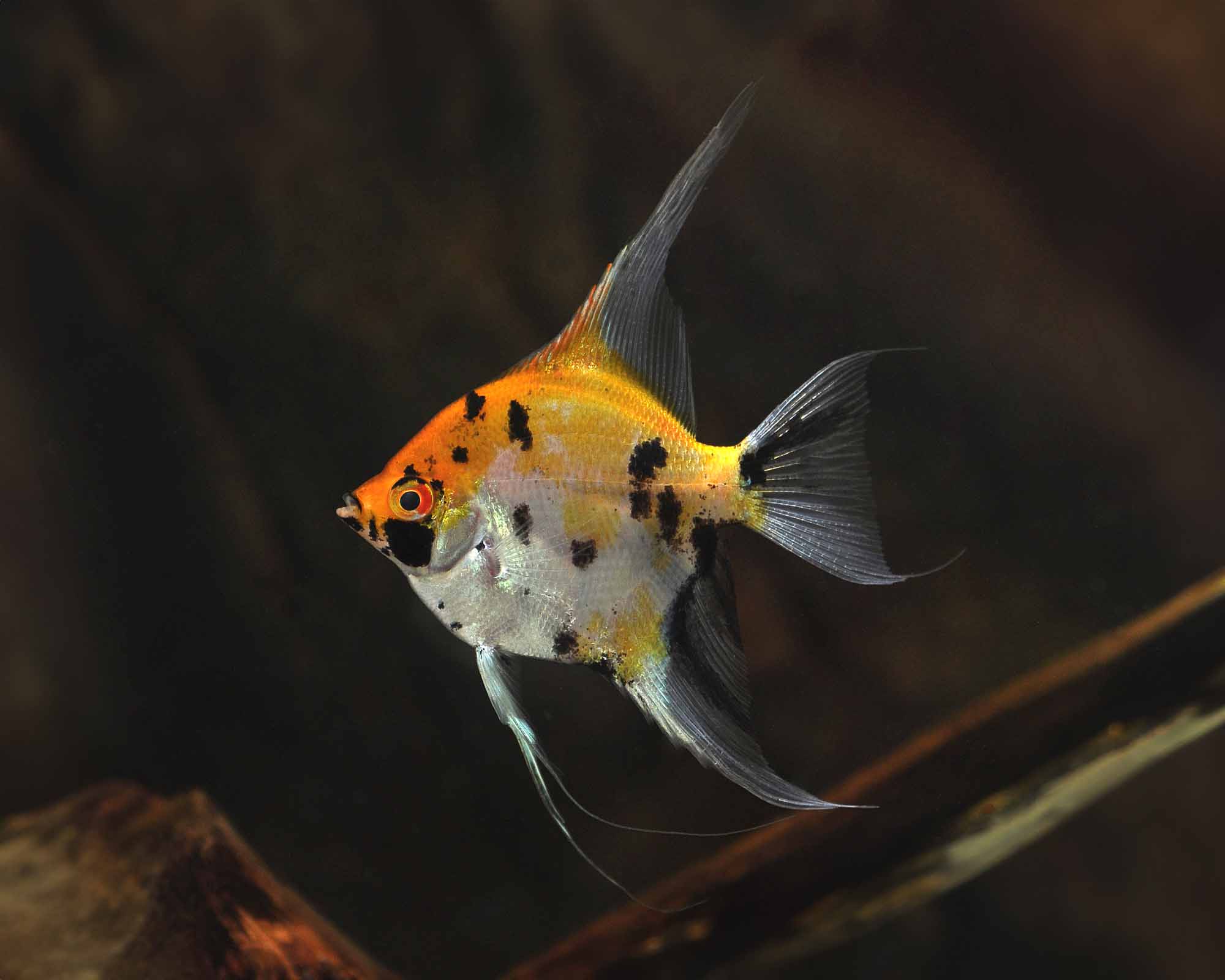
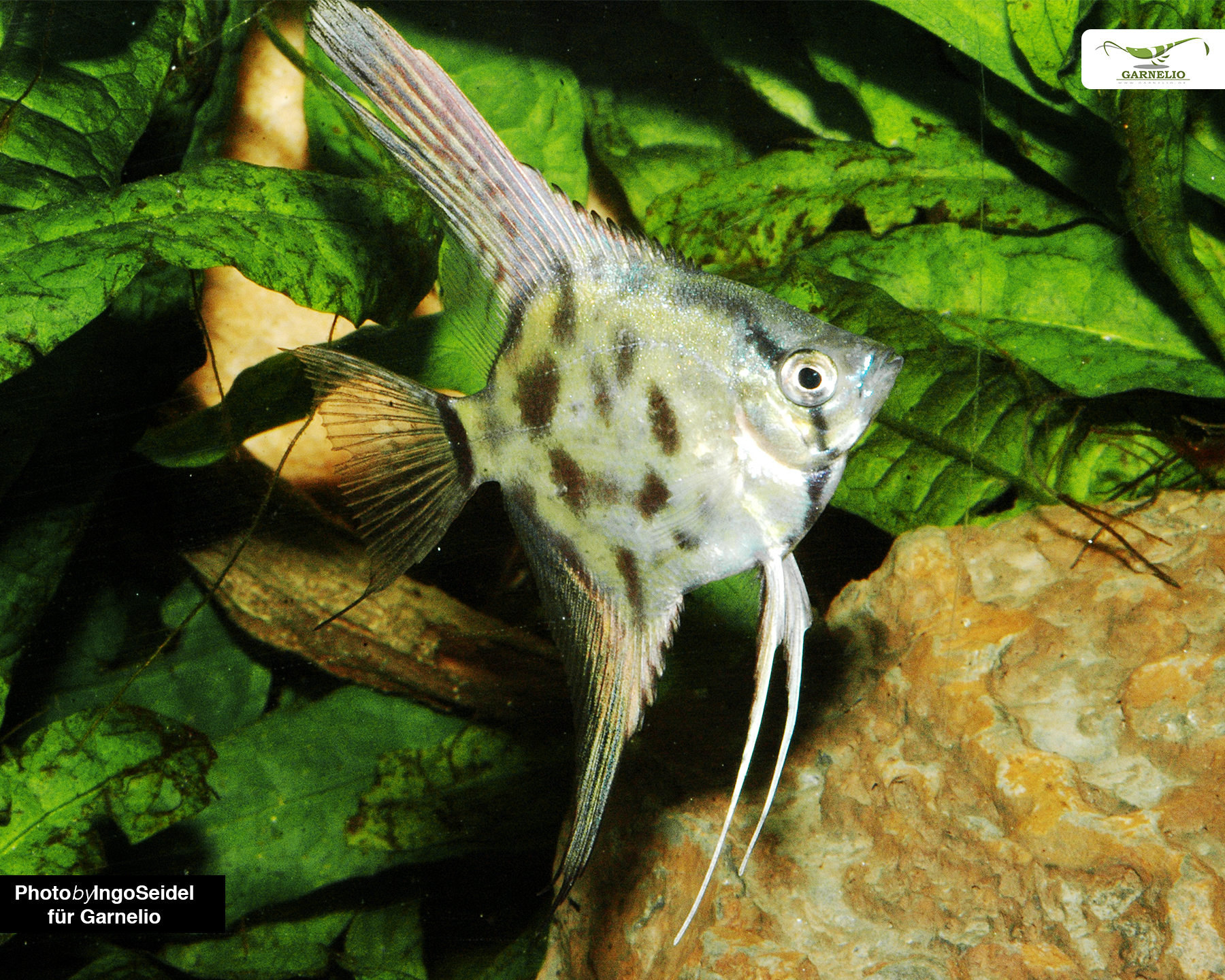
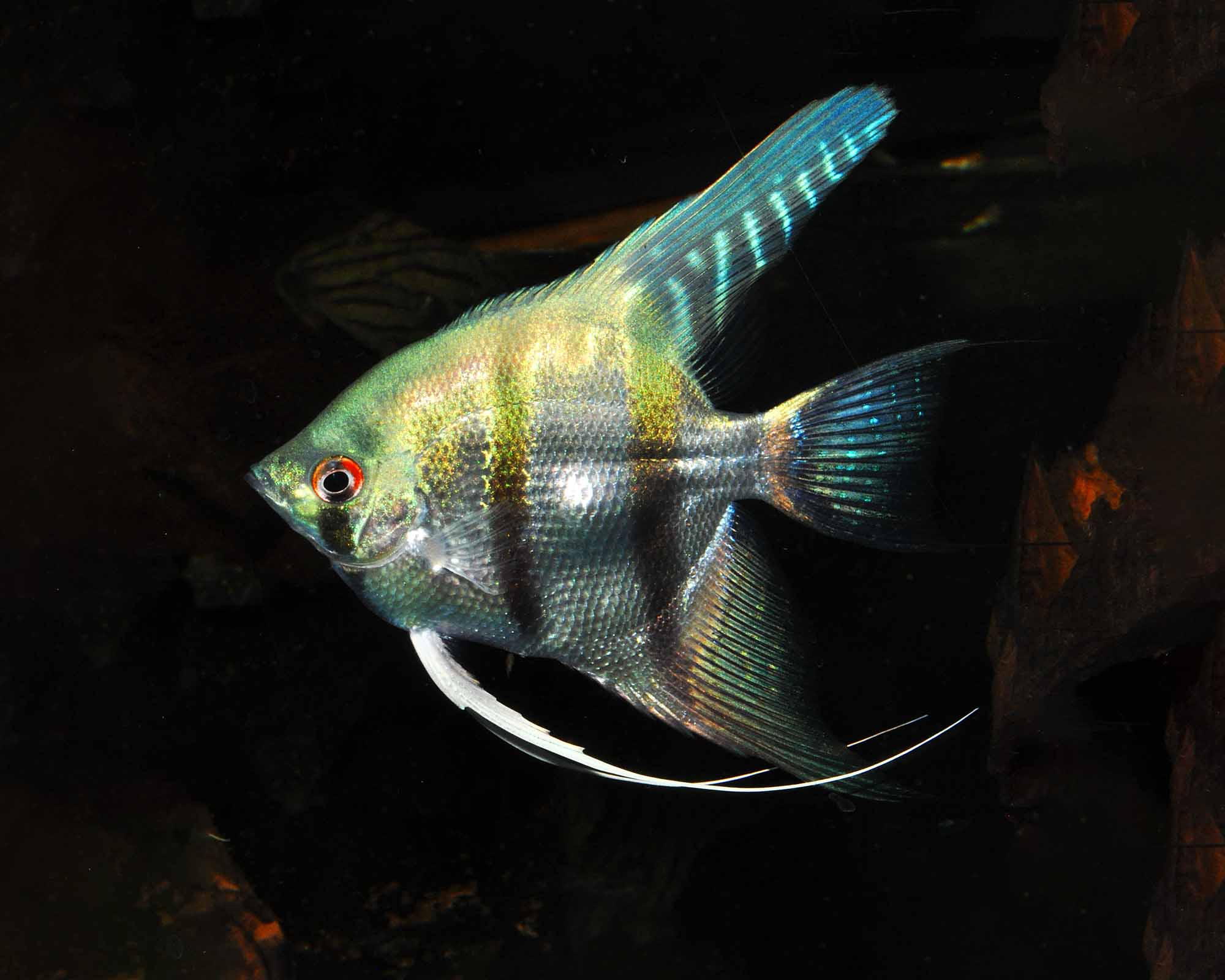
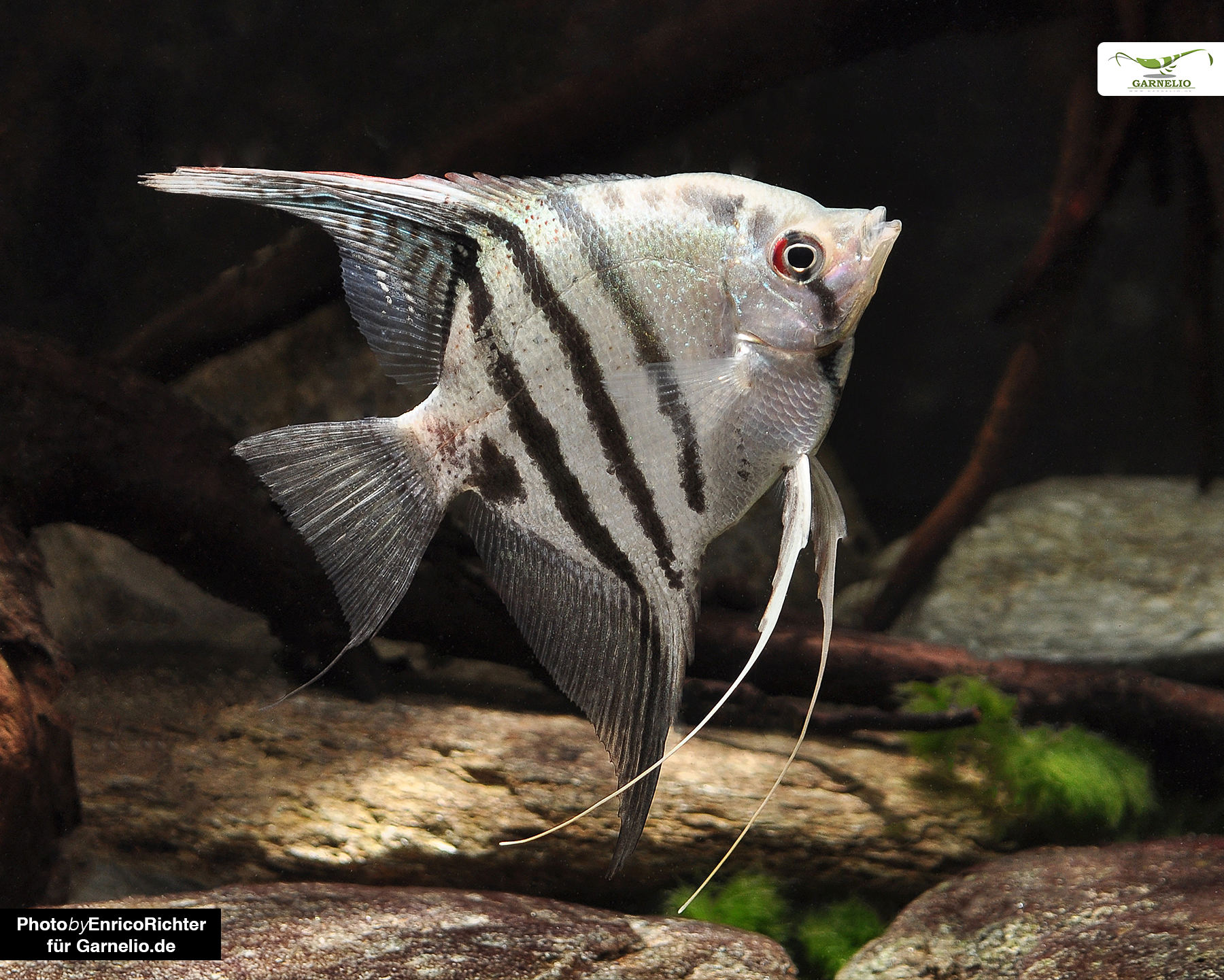
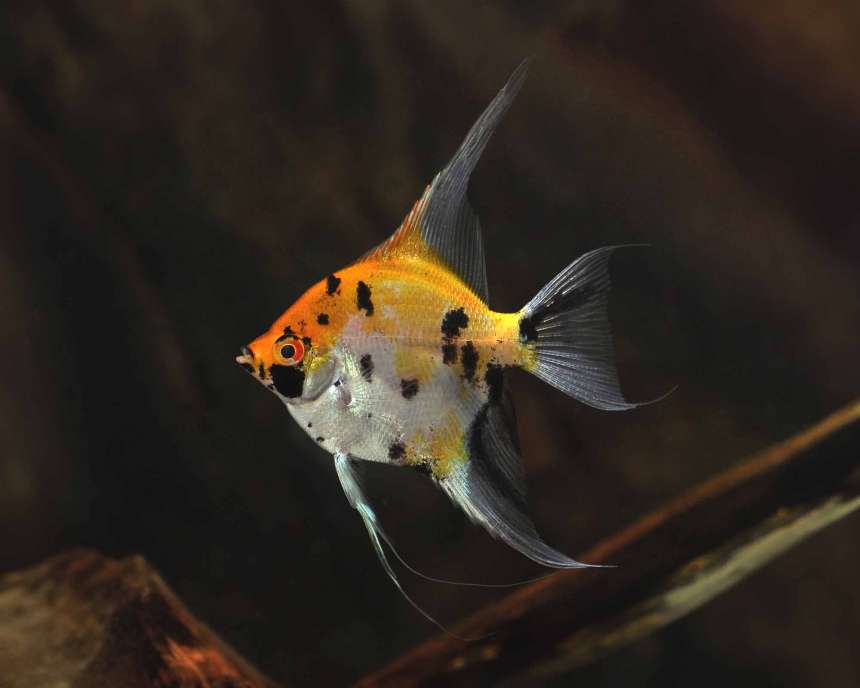
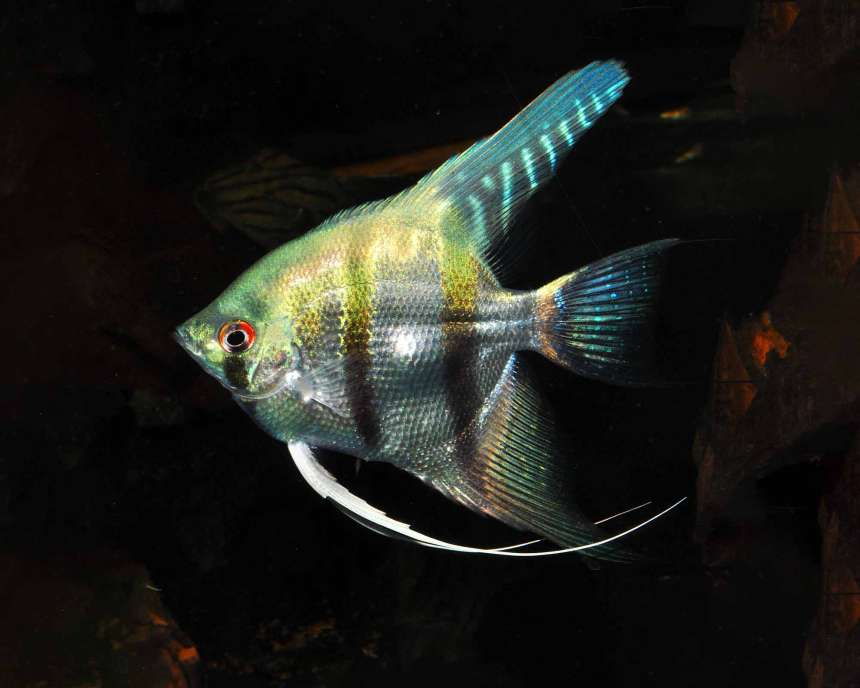
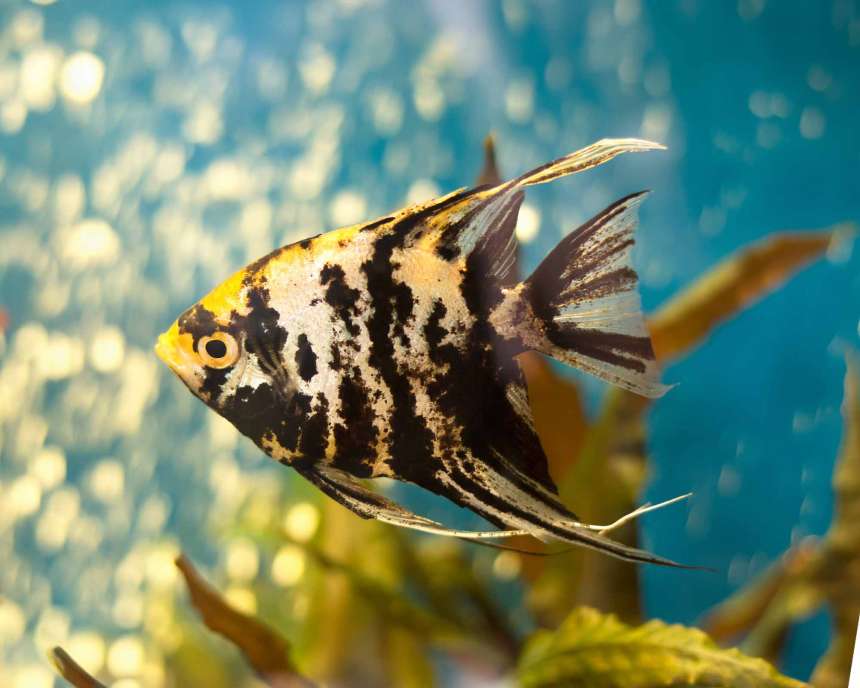
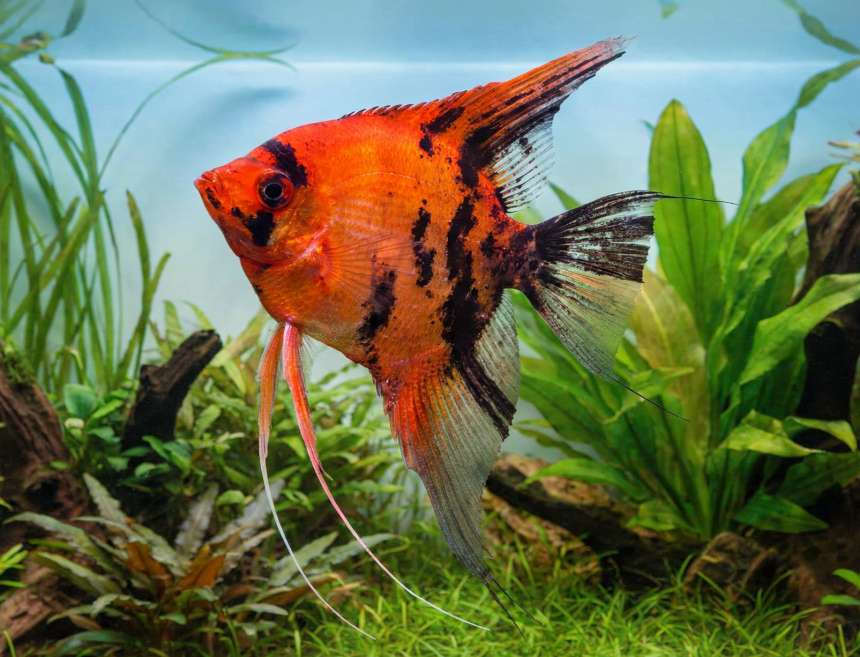
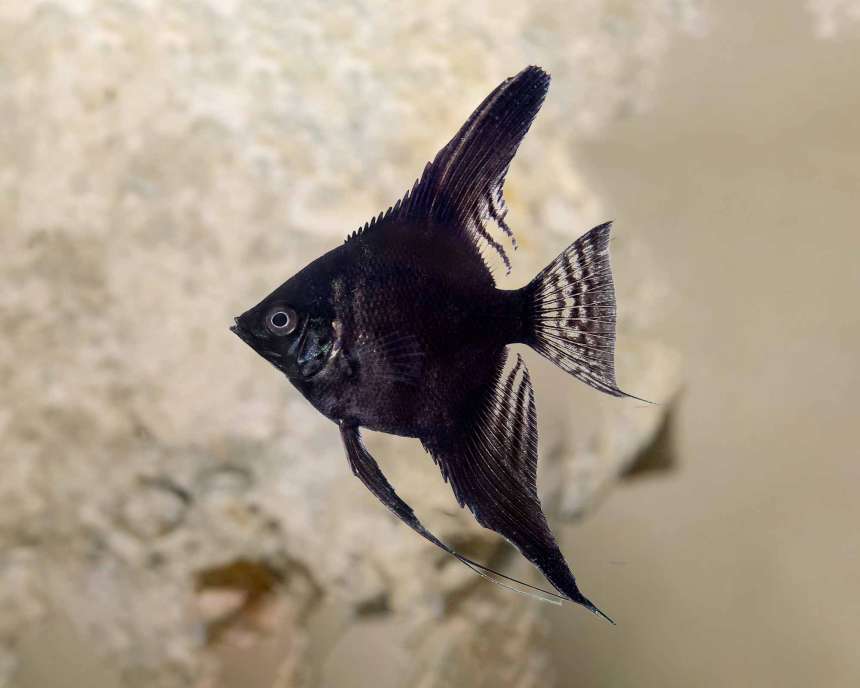
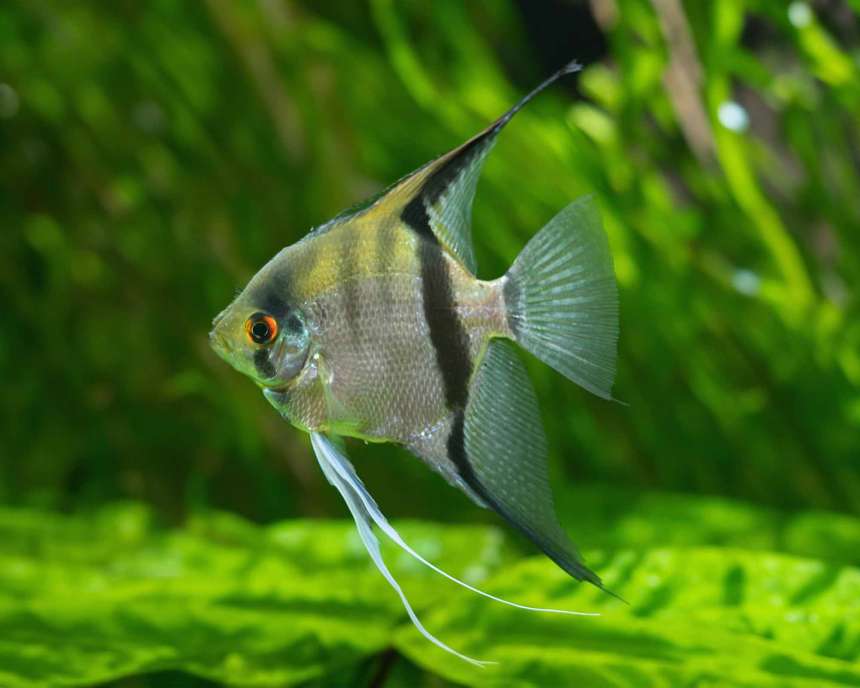
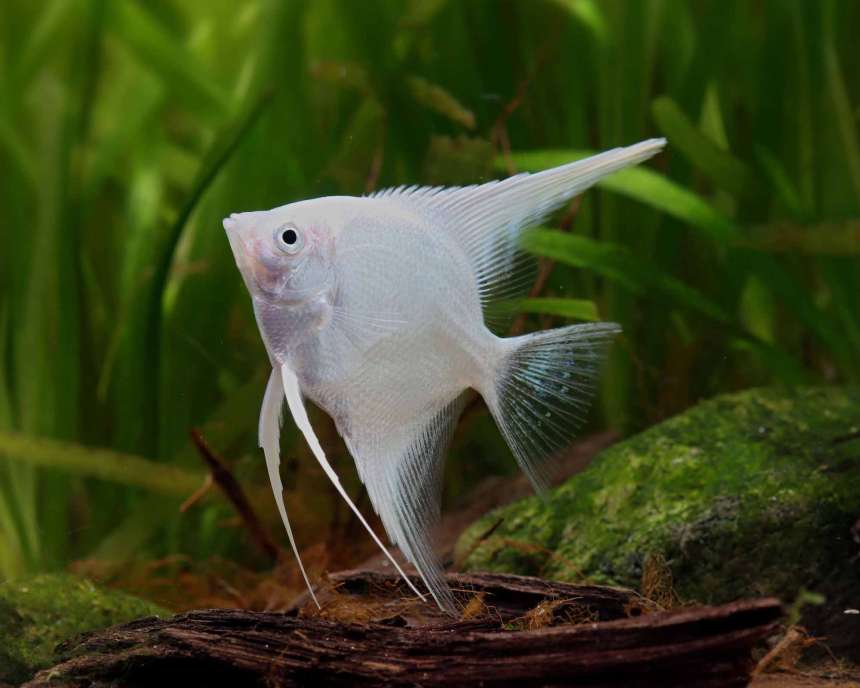
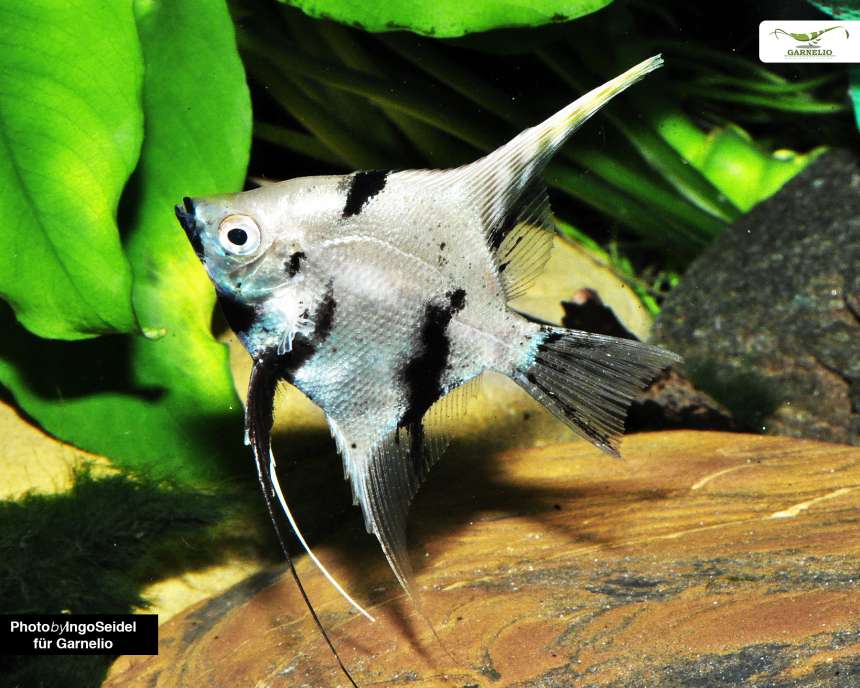
Pterophyllum scalare belongs to the family Cichlidae. It is commonly called the freshwater angelfish and is distinct from marine angelfish. Zebra is an aquarium strain or trade description rather than a separate species; it usually refers to a silver or pale base colour with multiple dark vertical bars. Aquarium strains may also have altered fin shape or additional colour. The supplied image set contains several colour and pattern forms, so exact strain identification is uncertain.
Taxonomy and identification

Distribution and habitat

The species is native to slow-moving and sheltered freshwater habitats in tropical South America, including parts of the Amazon basin and neighbouring river systems. It occurs among aquatic vegetation, roots and submerged branches, where its laterally compressed body allows movement through structure. Captive fish are commonly farm-bred, and the collection locality of this pair is not provided.
Distribution and habitat

Behaviour and social needs

Angelfish are usually calm when young, but adults establish territories and may become assertive, especially when pairing or spawning. They often occupy the middle and upper levels of the aquarium. Keeping a compatible pair is possible, although an unpaired pair may still show aggression. Groups of juveniles can be raised together, but adults may form pairs and exclude others. Provide plants, wood or other visual barriers and avoid overcrowding.
Behaviour and social needs

Aquarium size and setup

A pair should have at least about 200 litres, with a larger aquarium preferable for long-term stability or community keeping. Height is particularly important because the extended dorsal and anal fins make angelfish appear much taller than their body length; around 50 cm or more of aquarium height is useful. Use gentle to moderate circulation, an efficient filter, open swimming space and broad-leaved plants or vertical decor. Keep the aquarium mature, covered and consistently maintained.
Aquarium size and setup

Water parameters

Maintain stable, clean, well-oxygenated water at 24-30 °C and pH 6.0-7.5. Soft to moderately hard water is generally suitable, but stability is more important than pursuing a particular value. Regular partial water changes, restrained stocking and a fully cycled filter help prevent stress. Avoid sudden changes in temperature, pH or hardness, and test for ammonia and nitrite whenever fish are introduced or the aquarium is disturbed.
Water parameters

Diet

Pterophyllum scalare is an opportunistic omnivore. Offer a varied staple diet of quality flakes or small pellets, supplemented with frozen or suitably prepared foods such as brine shrimp, mysis and bloodworm. Occasional vegetable matter can be included, particularly in a varied maintenance diet. Feed small portions once or twice daily, remove uneaten food and avoid relying heavily on rich live or frozen foods.
Diet

Compatibility

Suitable companions are peaceful to moderately assertive fish that are too large to swallow and do not nip long fins. Choose tank mates carefully because angelfish may eat very small tetras, fry or shrimp, while fin-nipping species can damage their trailing fins. Avoid combining them with highly aggressive cichlids, persistent fin nippers or fish requiring markedly different water conditions. During spawning, a pair may need a separate aquarium or additional territory.
Compatibility

Breeding

Angelfish are substrate spawners that usually lay adhesive eggs in vertical rows on a broad leaf, aquarium panel, slate or another cleaned surface. The pair typically cleans the site, alternates during spawning and fans the eggs. Hatching and early survival depend on warm, clean, well-oxygenated water. Parents may guard and tend the clutch, but inexperienced pairs sometimes eat eggs; separating the eggs or rearing the fry separately is an option. Newly free-swimming fry require very small foods, commonly freshly hatched brine shrimp.
Breeding

Health and long-term care

Good filtration, quarantine of new fish, a varied diet and stable water reduce common aquarium problems. Watch for clamped fins, rapid breathing, loss of appetite, white spots, abdominal swelling or erosion of the long fins. Because the fish grows tall and can live for many years, plan the adult aquarium rather than selecting a tank only for juvenile size. Exact adult growth and lifespan depend on genetics, nutrition, water quality and disease prevention.
Health and long-term care

Fish info

  • Care level: Moderate
  • Temperament: Semi-aggressive
  • Adult size: 15-20 cm standard length
  • Life expectancy: 10-15 years
  • Fish type: South American freshwater cichlid
  • Temperature : 24-30 °C
  • pH: 6.0-7.5
Leave your comments
Latest on Fishs
  • Azur Cichlid (Sciaenochromis fryeri) Care Guide

    Azur Cichlid (Sciaenochromis fryeri) Care Guide

    Moderate
    Lake Malawi haplochromine cichlid
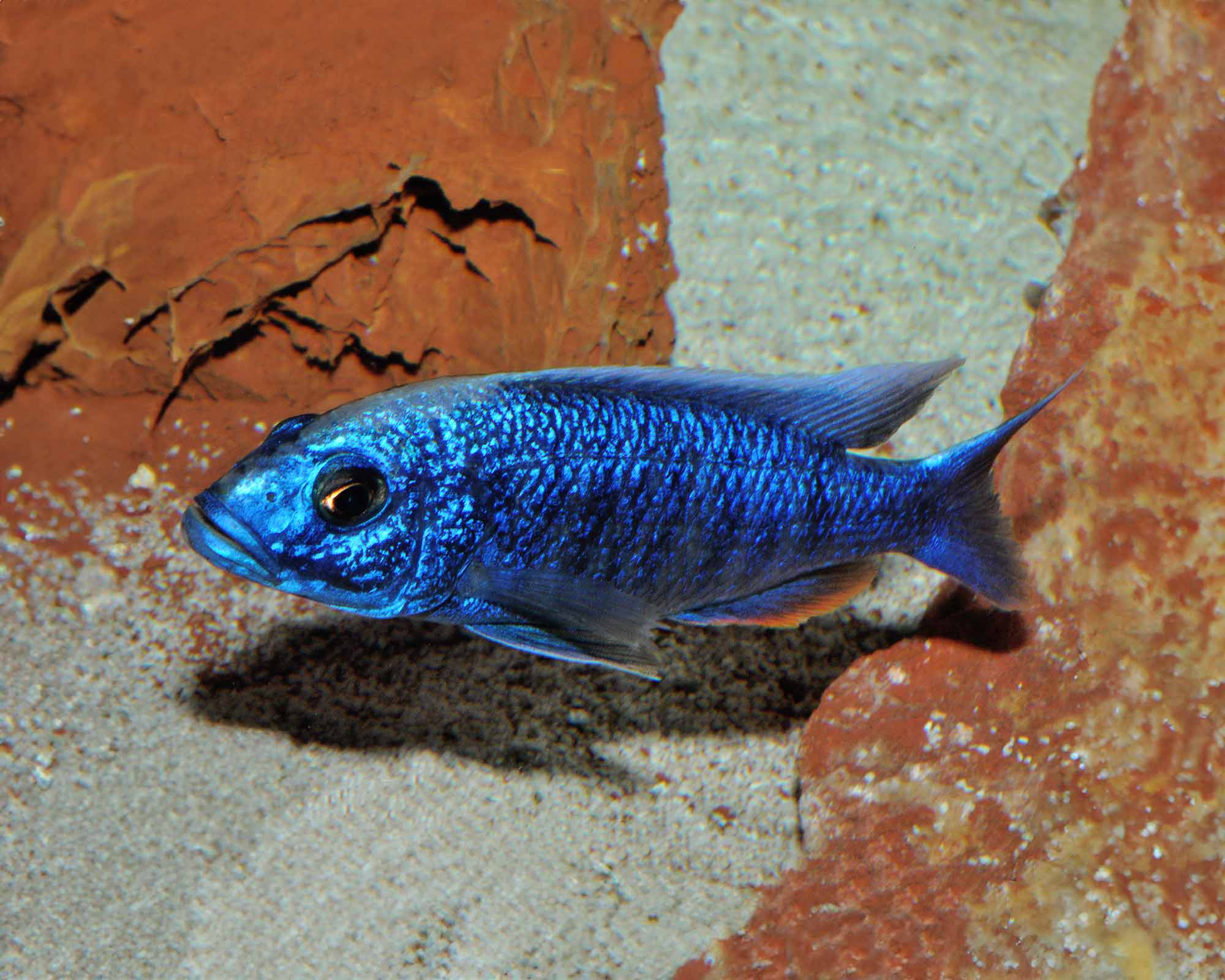
    The Azur cichlid is commonly sold as Sciaenochromis fryeri, a predatory haplochromine cichlid from Lake Malawi. Mature males develop vivid electric-blue coloration, while females and juveniles are generally less intensely colored. This fish is moderately aggressive and needs a spacious aquarium with rocky structure, alkaline, mineral-rich water, and carefully selected tank mates. The supplied source describes a DNZ pair, but sex and exact locality cannot be confirmed from the images alone. Identification confidence is therefore good but not absolute.
  • Marble Angelfish (Pterophyllum scalare)

    Marble Angelfish (Pterophyllum scalare)

    Moderate
    South American freshwater cichlid
    The marble angelfish is a captive-bred color form of Pterophyllum scalare, a tall-bodied South American cichlid valued for its elegant fins and distinctive irregular black patterning. It needs a mature, spacious aquarium with excellent water quality, warm water and suitable tank mates. Although generally manageable, adults establish territories and may become assertive when pairing or spawning. The supplied source identifies two marble angelfish; exact lineage and strain details cannot be confirmed from the available information.
  • Gold Angelfish, Pterophyllum scalare

    Gold Angelfish, Pterophyllum scalare

    Moderate
    Freshwater South American cichlid
    The Gold Angelfish is an ornamental colour form of Pterophyllum scalare, a tall-bodied South American cichlid valued for its graceful movement and parental care. It needs a mature, spacious aquarium with substantial vertical clearance, stable warm water and carefully chosen tank mates. The supplied source identifies two fish as Gold Angelfish, although the accompanying images show several angelfish colour and fin forms, so the exact appearance of the supplied specimens cannot be confirmed from the images alone.
  • Black Angelfish (Pterophyllum scalare)

    Black Angelfish (Pterophyllum scalare)

    Moderate
    South American freshwater cichlid
    The supplied record identifies two black angelfish, most likely a domestic color form of Pterophyllum scalare. The photographs show several angelfish color patterns, so they should not be treated as proof that every pictured fish is black or that all belong to the same strain. Black angelfish retain the tall, laterally compressed body and extended fins typical of freshwater angelfish. They need a tall, mature aquarium, stable warm water, a varied diet, and carefully selected tank mates.
  • White Marble Angelfish (Pterophyllum scalare)

    White Marble Angelfish (Pterophyllum scalare)

    Moderate
    Freshwater cichlid
    The white marble angelfish is a selectively bred aquarium color form of Pterophyllum scalare, a tall-bodied South American cichlid valued for its elegant fins and distinctive irregular dark marbling. It is generally peaceful when young but can become territorial, especially when paired for spawning. Successful care depends on a tall aquarium, excellent water quality, suitable tank mates, and a varied carnivorous-omnivorous diet. The exact genetic strain shown cannot be confirmed from photographs alone.
  • Freshwater Angelfish Mix (Pterophyllum scalare)

    Freshwater Angelfish Mix (Pterophyllum scalare)

    Moderate
    Freshwater cichlid
    Freshwater angelfish are tall-bodied South American cichlids valued for their graceful movement and wide range of captive color forms. The supplied source identifies a mixed group as Pterophyllum scalare; the photographs show several forms, including striped, black, orange, white, silver and blue-toned fish. They are manageable for experienced beginners, but their adult height, territorial breeding behavior and tendency to eat small tank mates require thoughtful aquarium planning.
  • Leopard Angelfish (Pterophyllum scalare)

    Leopard Angelfish (Pterophyllum scalare)

    Moderate
    South American freshwater cichlid
    The leopard angelfish is a domestic color form of Pterophyllum scalare, a tall-bodied freshwater cichlid from tropical South America. Its silver to yellowish body is marked with irregular dark spots or broken vertical bars, although pattern intensity varies with age, mood and breeding line. It is generally peaceful in a suitably spacious community aquarium, but pairs become territorial when spawning. This fish needs warm, clean water, generous vertical swimming space and tank mates too large to swallow.
  • Yellow Labidochromis (Labidochromis caeruleus)

    Yellow Labidochromis (Labidochromis caeruleus)

    Easy - Moderate
    Lake Malawi mbuna cichlid
    The Yellow Labidochromis is a bright yellow mbuna cichlid from Lake Malawi. Labidochromis caeruleus is generally manageable for an African cichlid, but it remains territorial and needs hard, alkaline water, rockwork, and carefully chosen companions. The supplied source identifies two fish as a pair; sex and pair bonding cannot be confirmed from the available images. This species is an adaptable algae grazer, a maternal mouthbrooder, and a rewarding choice for an appropriately planned Malawi cichlid aquarium.
  • Blue Pearl Angelfish (Pterophyllum scalare)

    Blue Pearl Angelfish (Pterophyllum scalare)

    Moderate
    Freshwater cichlid
    The Blue Pearl Angelfish is a selectively bred colour form of Pterophyllum scalare, the freshwater angelfish. Its laterally compressed body, extended fins and tall profile make it a striking inhabitant of a planted community aquarium. The supplied trade label supports identification as this species and colour form, although individual colour intensity can vary. It requires warm, stable, clean water, generous vertical swimming space and thoughtful tank-mate selection, especially as adults become territorial when pairing or spawning.
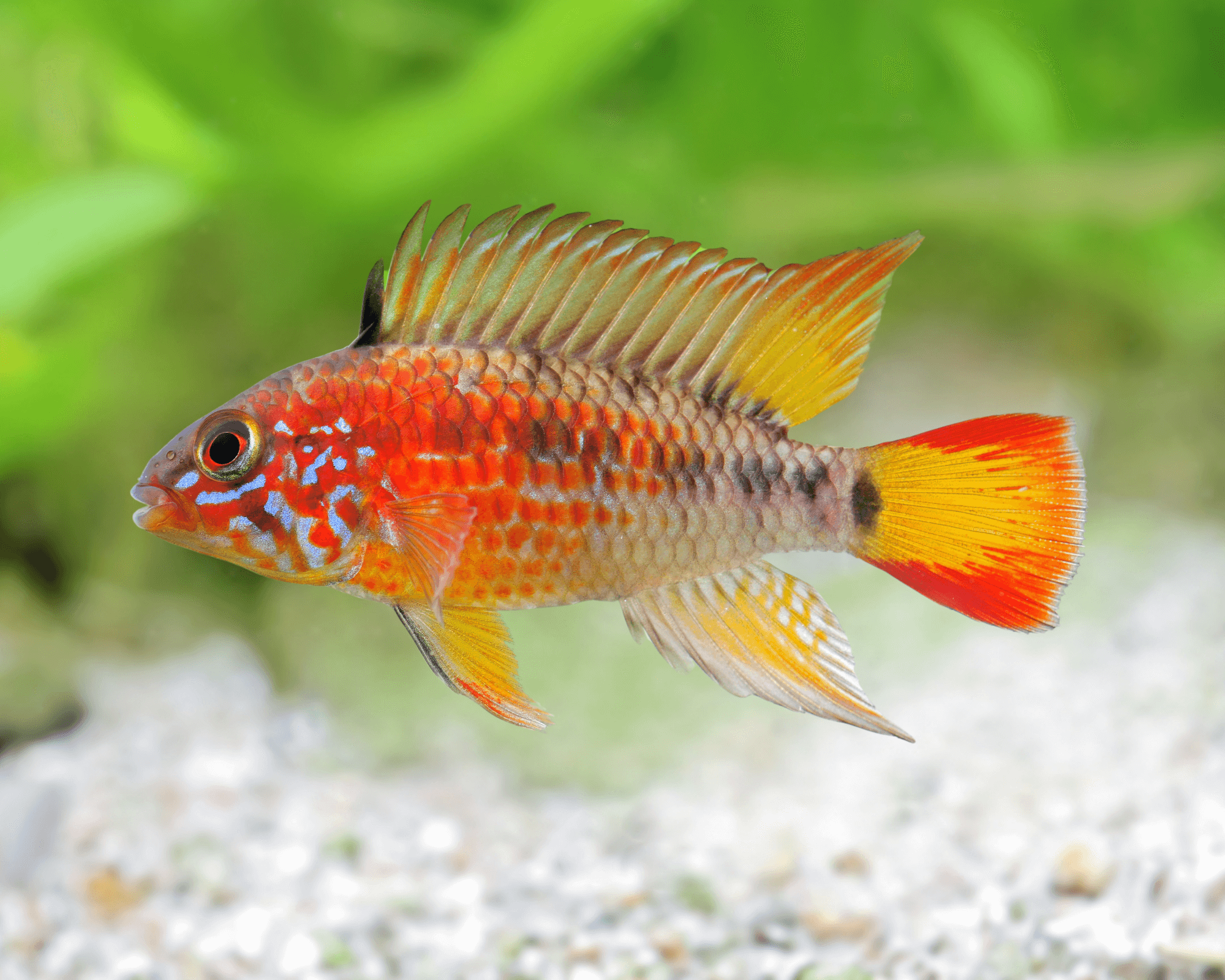
  • Villavicencio Dwarf Cichlid Apistogramma macmasteri

    Villavicencio Dwarf Cichlid Apistogramma macmasteri

    Moderate
    South American dwarf cichlid
    Apistogramma macmasteri, commonly called the Villavicencio dwarf cichlid, is a small South American cichlid associated with the Río Orinoco drainage of Colombia. It is valued for its compact size, elaborate finnage and interesting courtship behavior. A bonded pair can be kept in a carefully structured aquarium with soft, clean water, sand, cover and several potential spawning sites. Although manageable for an experienced community aquarist, territorial behavior increases during breeding, so tank layout and tankmate selection are important.
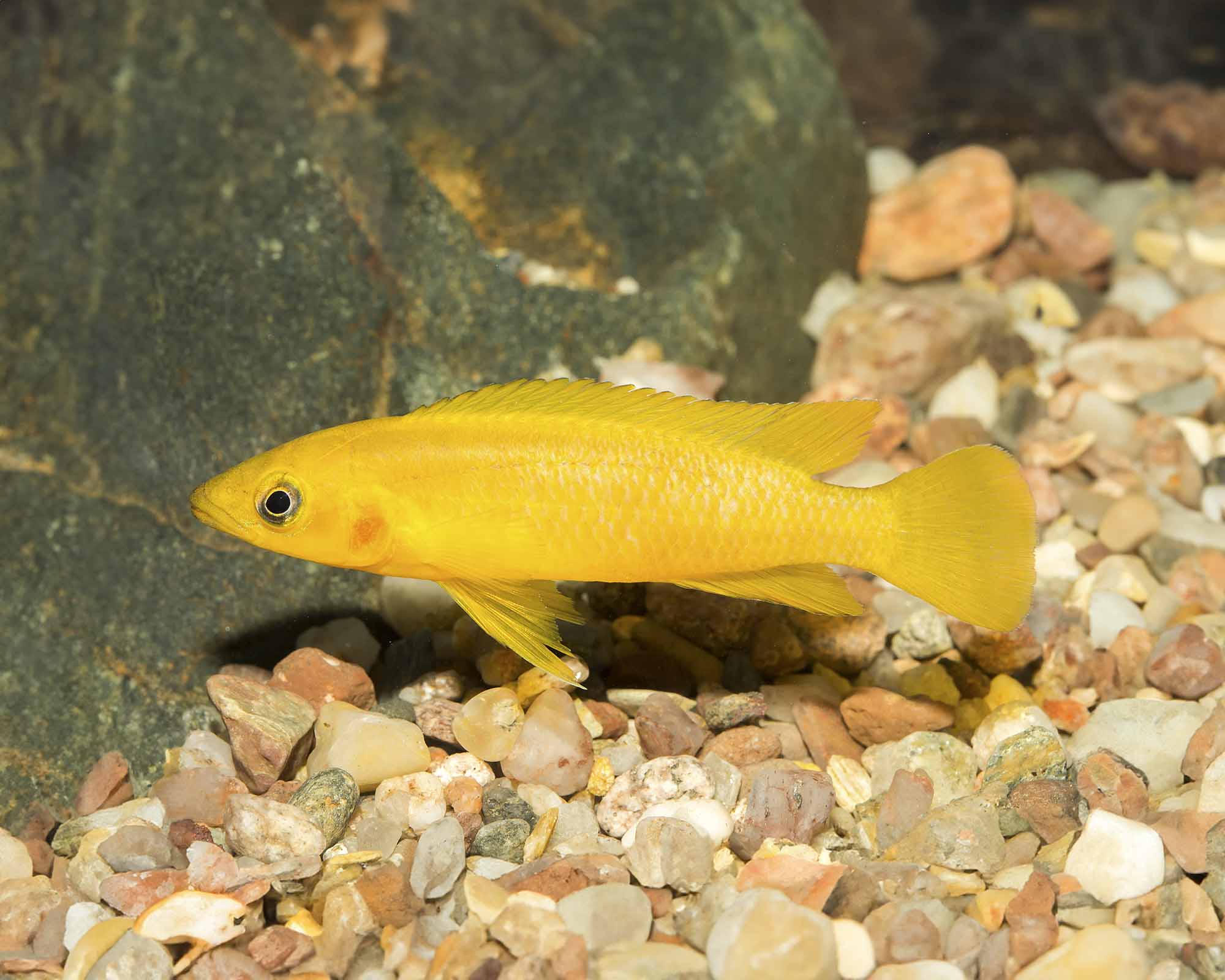
  • Neolamprologus leleupi (Tanganyika Golden Cichlid)

    Neolamprologus leleupi (Tanganyika Golden Cichlid)

    Moderate
    Lake Tanganyika rock-dwelling cichlid
    Neolamprologus leleupi is a small, brightly coloured cichlid endemic to Lake Tanganyika in East Africa. It inhabits rocky coastal areas and uses crevices for shelter, feeding and spawning. Despite its modest size, it can be strongly territorial, particularly when paired or breeding. The supplied source identifies these fish as a golden colour form and a pair, although sex cannot be confirmed reliably from the image alone. Successful care depends on alkaline, mineral-rich water, abundant rockwork and carefully chosen tank mates.
  • Maingano Cichlid (Melanochromis cyaneorhabdos)

    Maingano Cichlid (Melanochromis cyaneorhabdos)

    Moderate - Difficult
    Lake Malawi mbuna cichlid
    The Maingano, or Johanni Maingano, is a Lake Malawi mbuna recognized for its intense steel-blue body and dark horizontal markings. The supplied label combines “Johanni” with the scientific name Melanochromis cyaneorhabdos; these are distinct species, so identification should be confirmed from the seller or locality. This territorial mouthbrooding cichlid needs hard, alkaline water, abundant rockwork, a predominantly algae-based diet, and careful stocking to limit aggression.
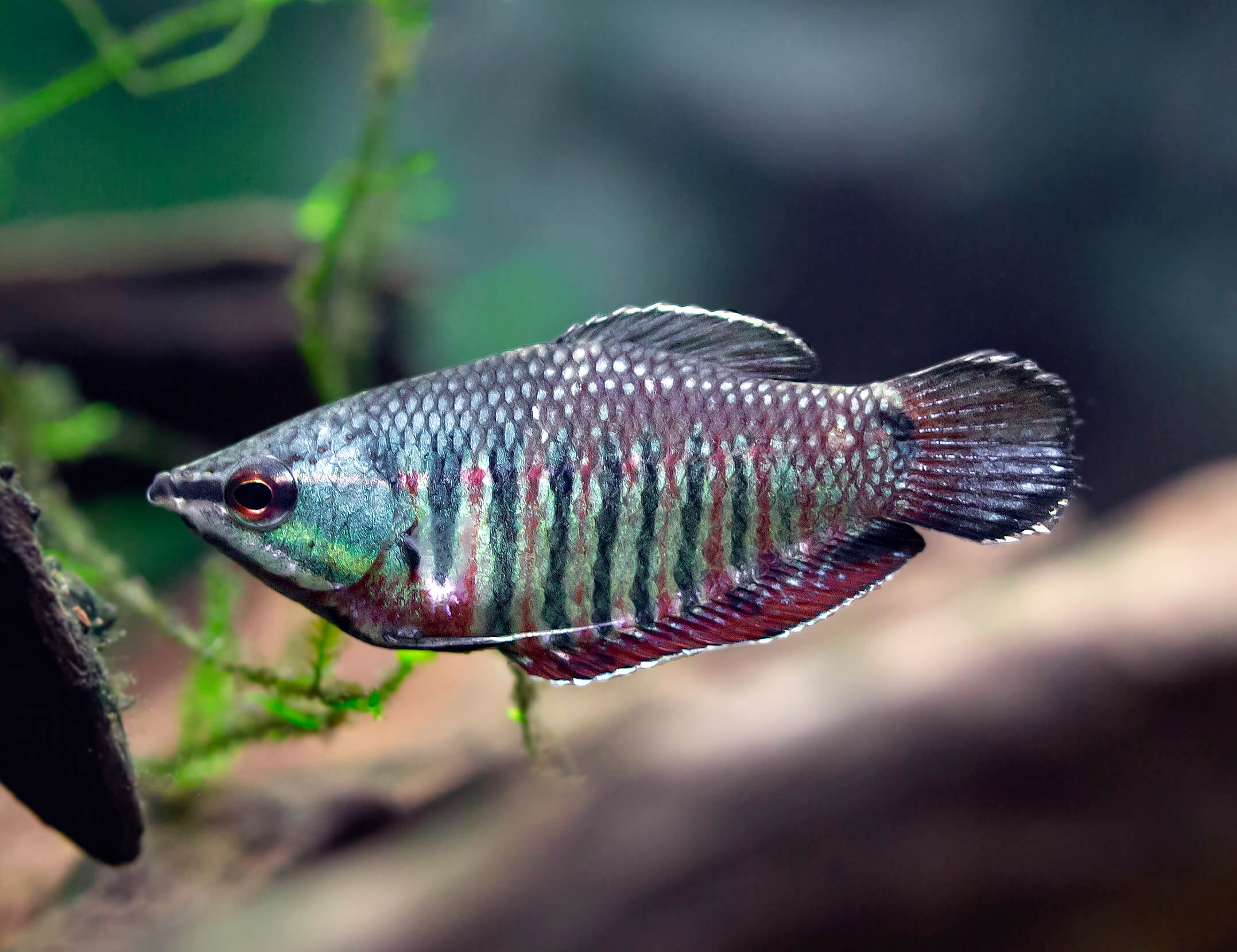
  • Red Chocolate Gourami (Sphaerichthys vaillanti)

    Red Chocolate Gourami (Sphaerichthys vaillanti)

    Difficult
    Blackwater labyrinth fish
    The red chocolate gourami, Sphaerichthys vaillanti, is a specialized Southeast Asian labyrinth fish suited to mature, soft, acidic blackwater aquariums. It is peaceful but easily stressed by bright lighting, strong currents and boisterous tank mates. The supplied source identifies these fish as a pair; sex and exact identity cannot be confirmed from the image alone, so identification should be checked against a reliable specimen reference. Stable water quality, cover and a varied small-food diet are central to long-term success.
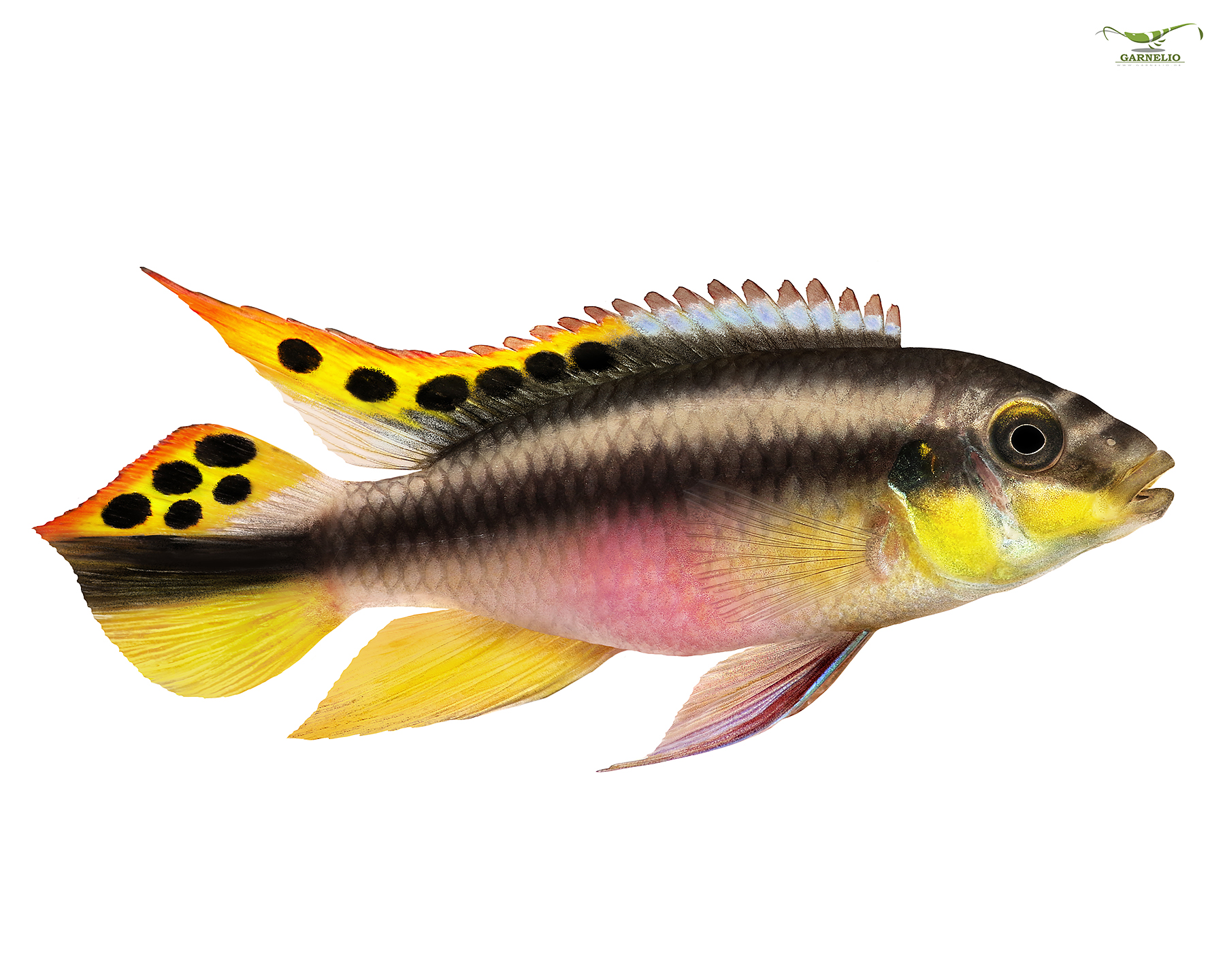
  • Pelvicachromis pulcher Purple Tilapia Pair Care Guide

    Pelvicachromis pulcher Purple Tilapia Pair Care Guide

    Easy - Moderate
    Small West African freshwater cichlid
    Pelvicachromis pulcher, commonly called the kribensis or purple cichlid, is a small West African cave-spawning cichlid valued for its manageable size, attractive breeding colors and attentive parental behavior. A bonded pair can live in a community aquarium when provided with suitable cover and carefully chosen tank mates. The supplied listing identifies the fish as Pelvicachromis pulcher, although photographs alone cannot confirm the exact locality or color form.
  • Red Lined Dwarf Cichlid (Apistogramma hongsloi)

    Red Lined Dwarf Cichlid (Apistogramma hongsloi)

    Moderate
    Dwarf Cichlid
    The Red Lined Dwarf Cichlid, Apistogramma hongsloi, is a small, colorful South American cichlid highly regarded by hobbyists. Native to the Orinoco River basin, this species displays striking red markings and elegant finnage. Known for their interesting social behaviors and relatively peaceful nature, they make excellent subjects for planted community aquariums that provide appropriate hiding spots and soft, acidic water conditions.
  • Apistogramma panduro

    Apistogramma panduro

    Moderate
    Dwarf Cichlid
    The Panduro dwarf cichlid, Apistogramma panduro, is a striking South American species highly prized for its vibrant coloration and manageable size. Native to the Amazon basin, this species exhibits distinct sexual dimorphism. They are best kept in pairs or small groups within well-structured aquariums, making them a fascinating choice for dedicated hobbyists interested in cichlid behavior and breeding dynamics.