Taxonomy and identification
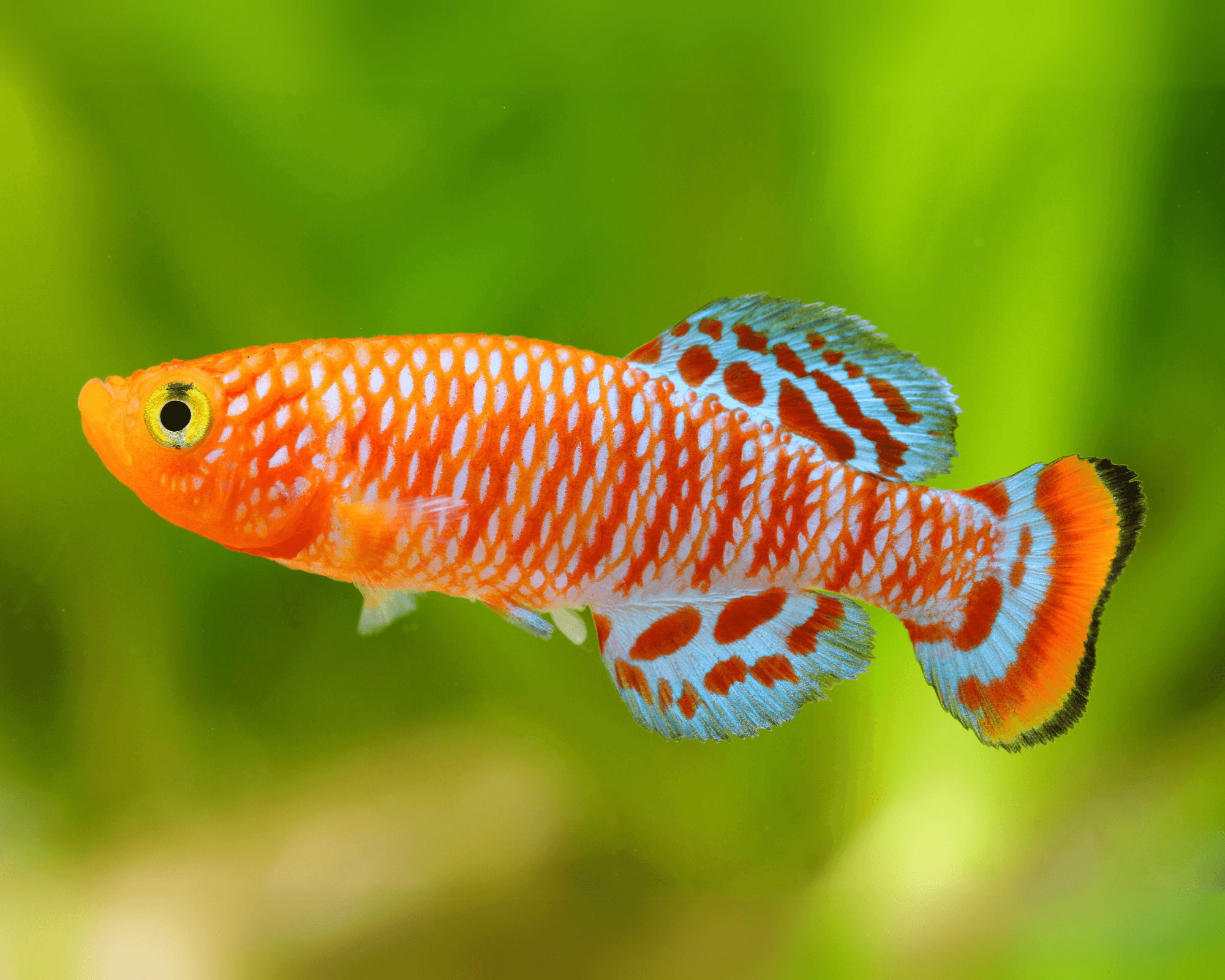
Nothobranchius rachovii belongs to the family Nothobranchiidae and the order Cyprinodontiformes. It is commonly called Rachow's splendour ground carp or Rachow's killifish. Males have a deep-bodied profile and elaborate fins with contrasting warm and blue tones; females are smaller-looking and comparatively subdued. Identification to a particular locality or strain cannot be confirmed from photographs alone, and the name has been associated with geographically variable populations in the aquarium trade.
Distribution and habitat
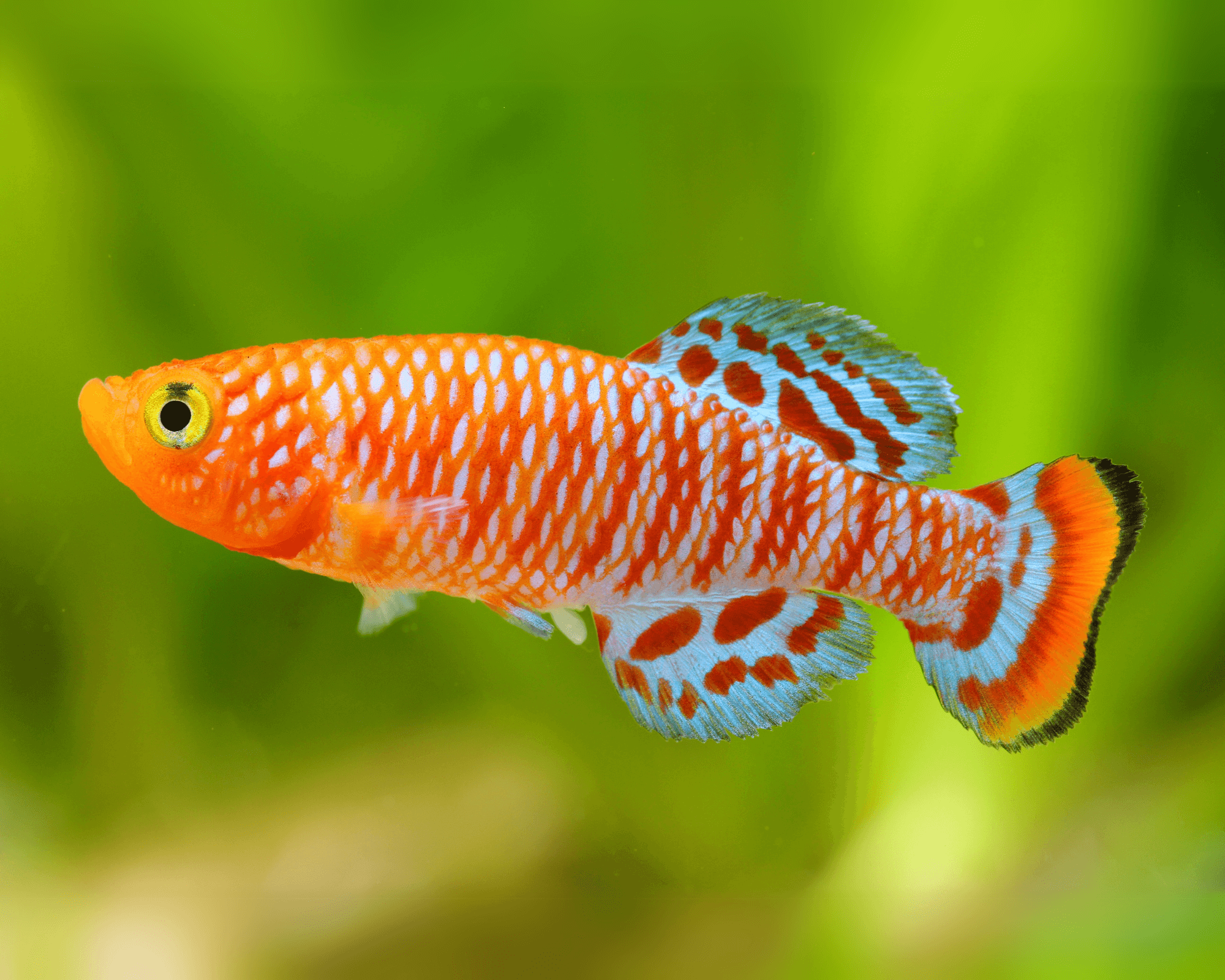
The species is associated with seasonal freshwater pools and floodplain habitats in Mozambique. These waters may fill during rainy periods and dry later, selecting for an annual life cycle. In an aquarium, replicate the sheltered, shallow-water character of such habitats with subdued lighting, plants or other cover, open swimming space near the bottom, and stable, well-maintained water rather than strong current.
Behaviour and temperament
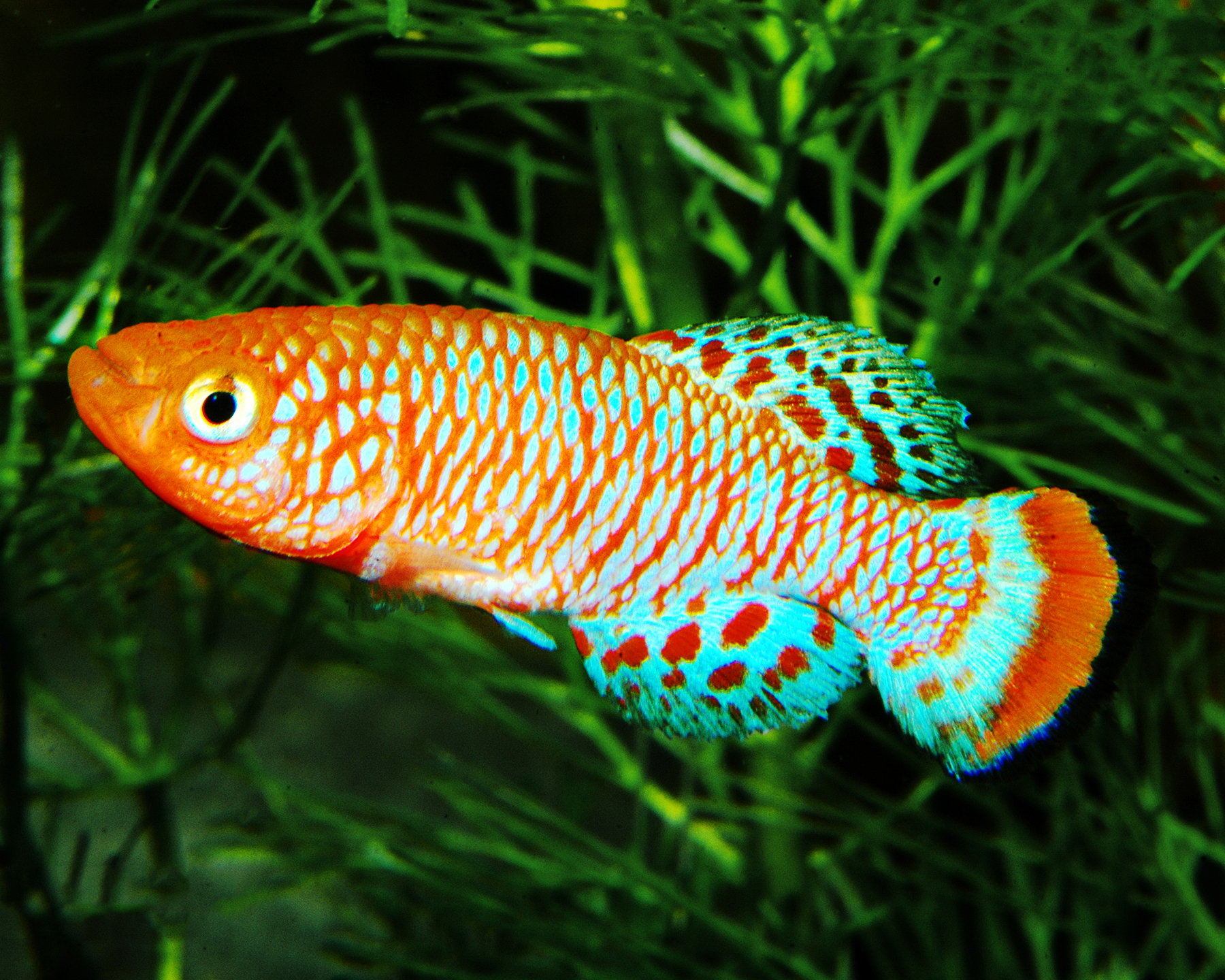
Rachow's splendour ground carp is active and generally manageable, but males can be competitive, especially around spawning sites. A male and several females, or a compatible group with sufficient cover, is usually preferable to keeping multiple males in a cramped aquarium. It may be kept with similarly sized, peaceful fish, but a species aquarium is safer because its short fins and feeding habits can make it vulnerable to boisterous tank mates.
Tank size and setup
A pair can be maintained in an aquarium of about 30 litres, while a group benefits from approximately 45 litres or more. Use a tight-fitting lid because killifish can jump. Provide gentle filtration, regular maintenance, floating or rooted plants, and a spawning container filled with fine peat or another suitable medium. Avoid excessive turbulence and sharp decor. Because this is an annual species, a dedicated breeding tank simplifies egg collection and control of the life cycle.
Water parameters
Maintain clean, oxygenated water at 22-26 °C, with a pH of 6.0-7.5. Moderate hardness is generally tolerated, but abrupt changes should be avoided. Keep nitrate low through regular partial water changes and do not allow uneaten food to accumulate. Stability, mature biological filtration and careful acclimation are more important than pursuing a narrow target value.
Diet
This species is primarily a small predator and responds best to live or frozen foods such as small bloodworms, mosquito larvae, daphnia, brine shrimp and blackworms. Offer small portions once or twice daily, varying the diet and removing leftovers. Some individuals accept quality micropellets, but dry food should not be relied upon as the main diet, particularly when conditioning fish for breeding.
Compatibility
Keep with peaceful fish of similar size that do not compete aggressively for food or nip fins. Avoid large, fast or highly boisterous tank mates, and do not combine it with fish likely to consume eggs or fry. For reliable observation and breeding, a species-only aquarium is recommended. Monitor males for persistent harassment and add visual barriers or separate individuals if one fish is continually excluded.
Breeding
Spawning usually occurs over fine peat or another soft substrate. Condition males and females with abundant live or frozen foods, then provide the spawning medium and inspect it regularly. Remove the medium after spawning, gently drain it until damp rather than wet, and store it in a sealed, labelled container at a stable room temperature. Annual killifish eggs undergo developmental delay, so incubation is variable; inspect periodically and wet the eggs when the embryos appear ready. Newly hatched fry require very small live foods, such as infusoria or freshly hatched brine shrimp, followed by larger foods as they grow. Prevent adults from eating eggs and fry.
Leave your comments