Taxonomy and identification
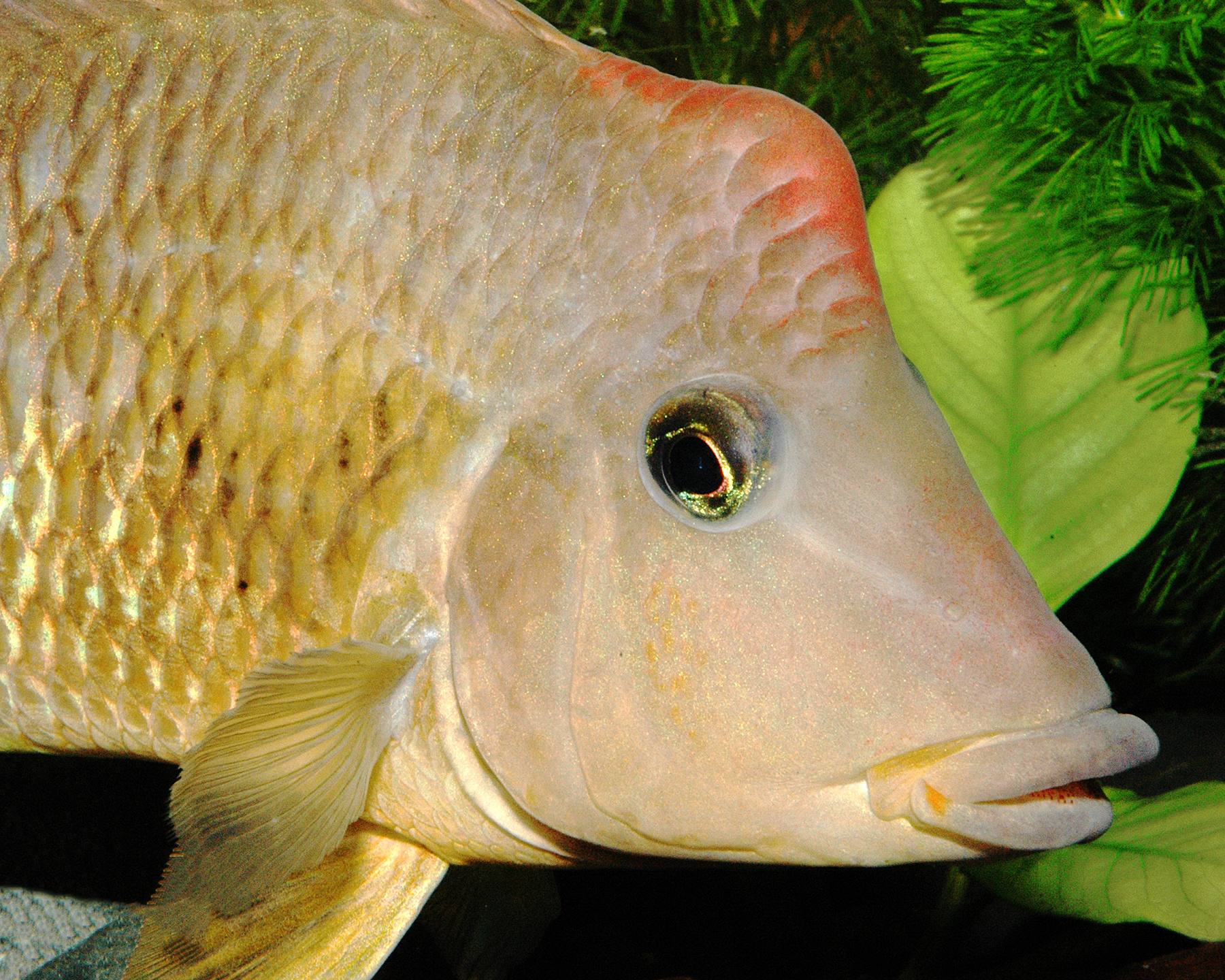
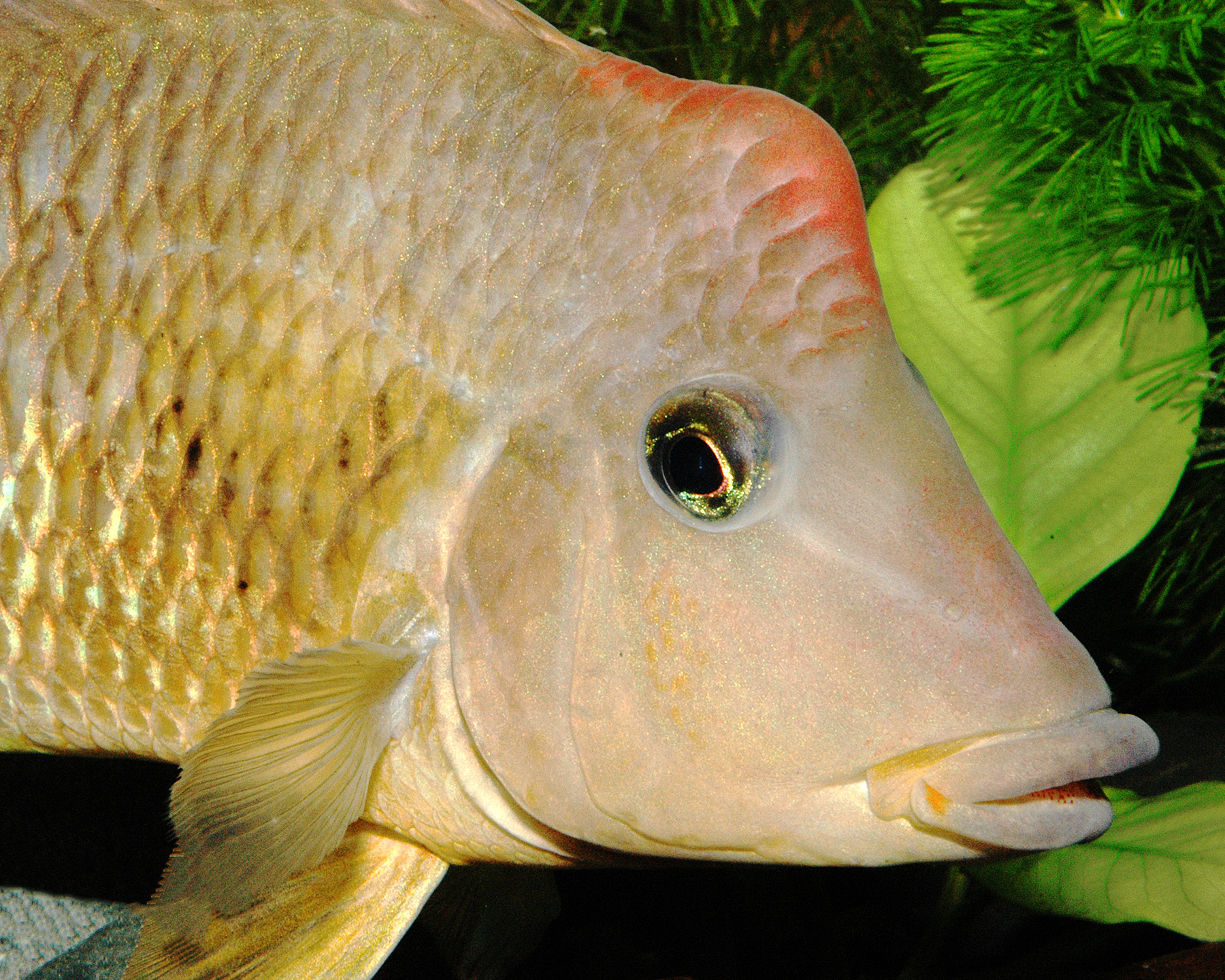
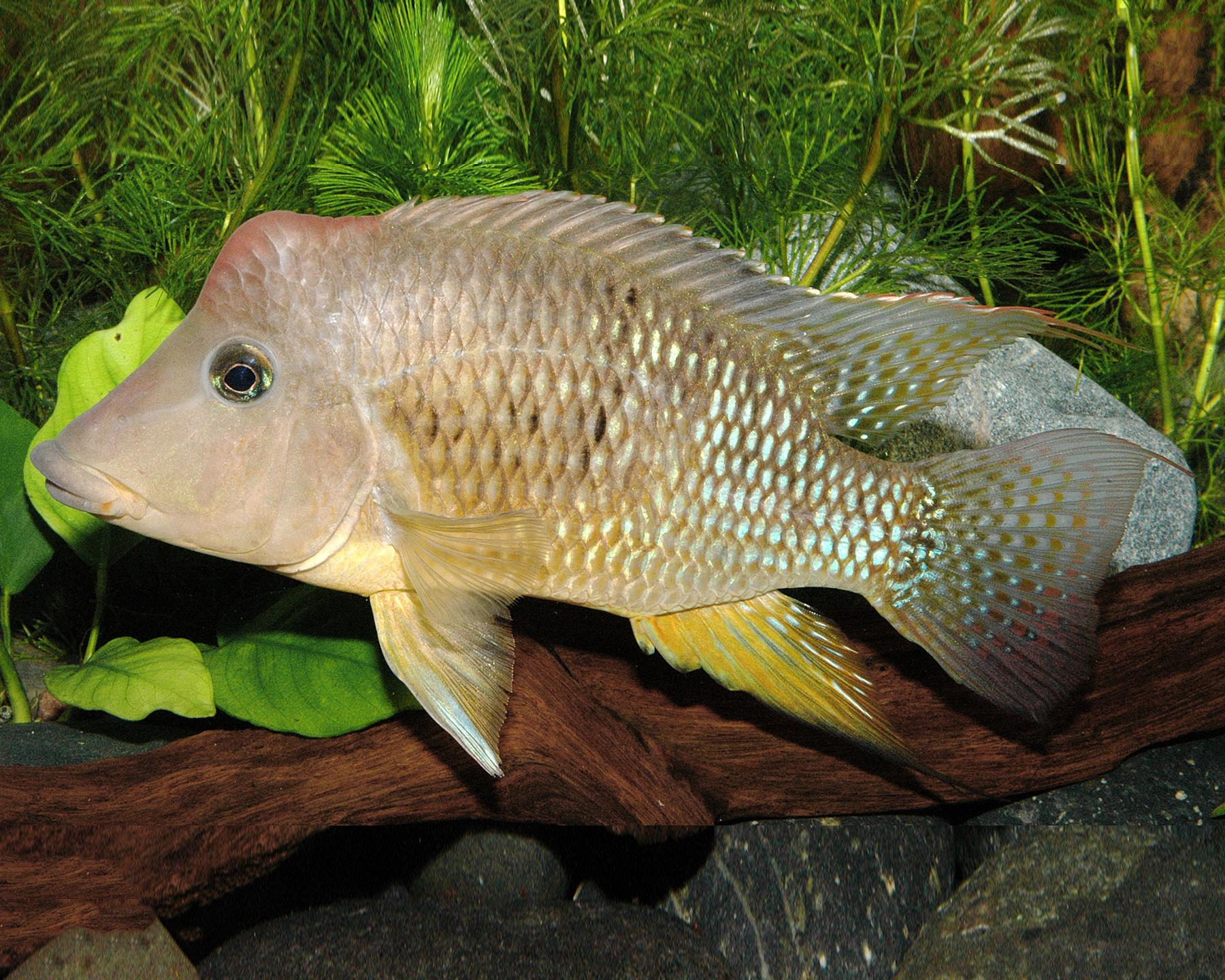
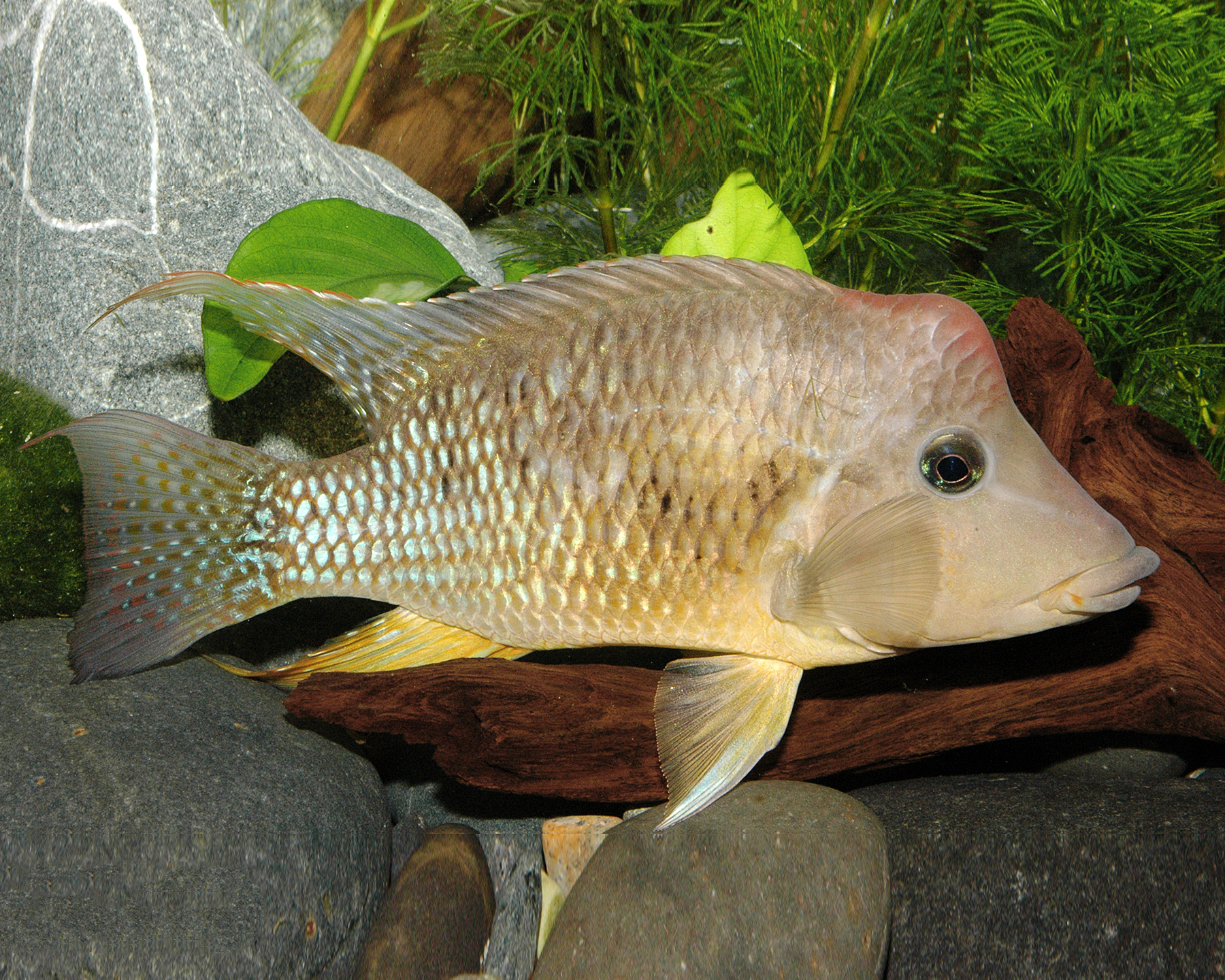
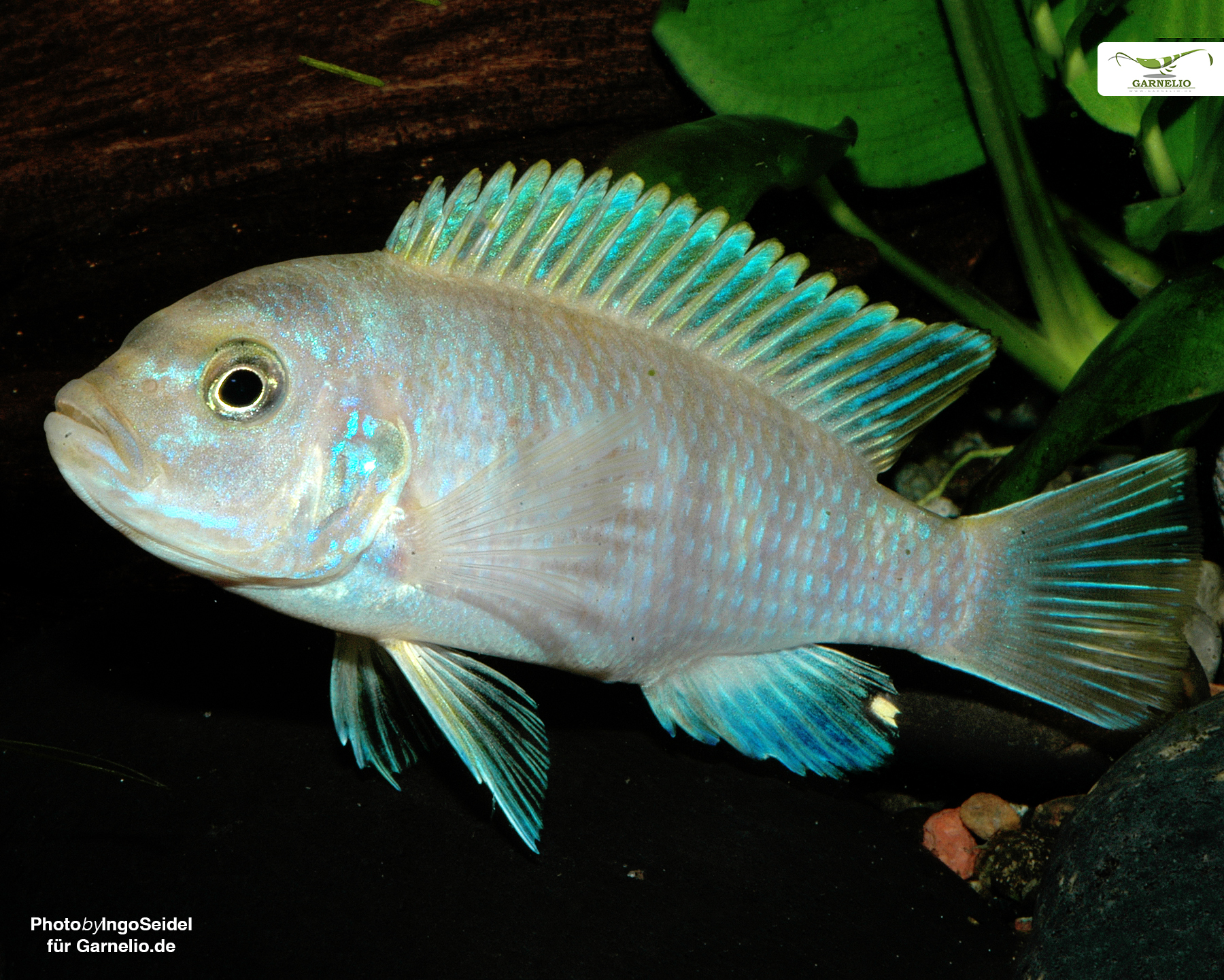
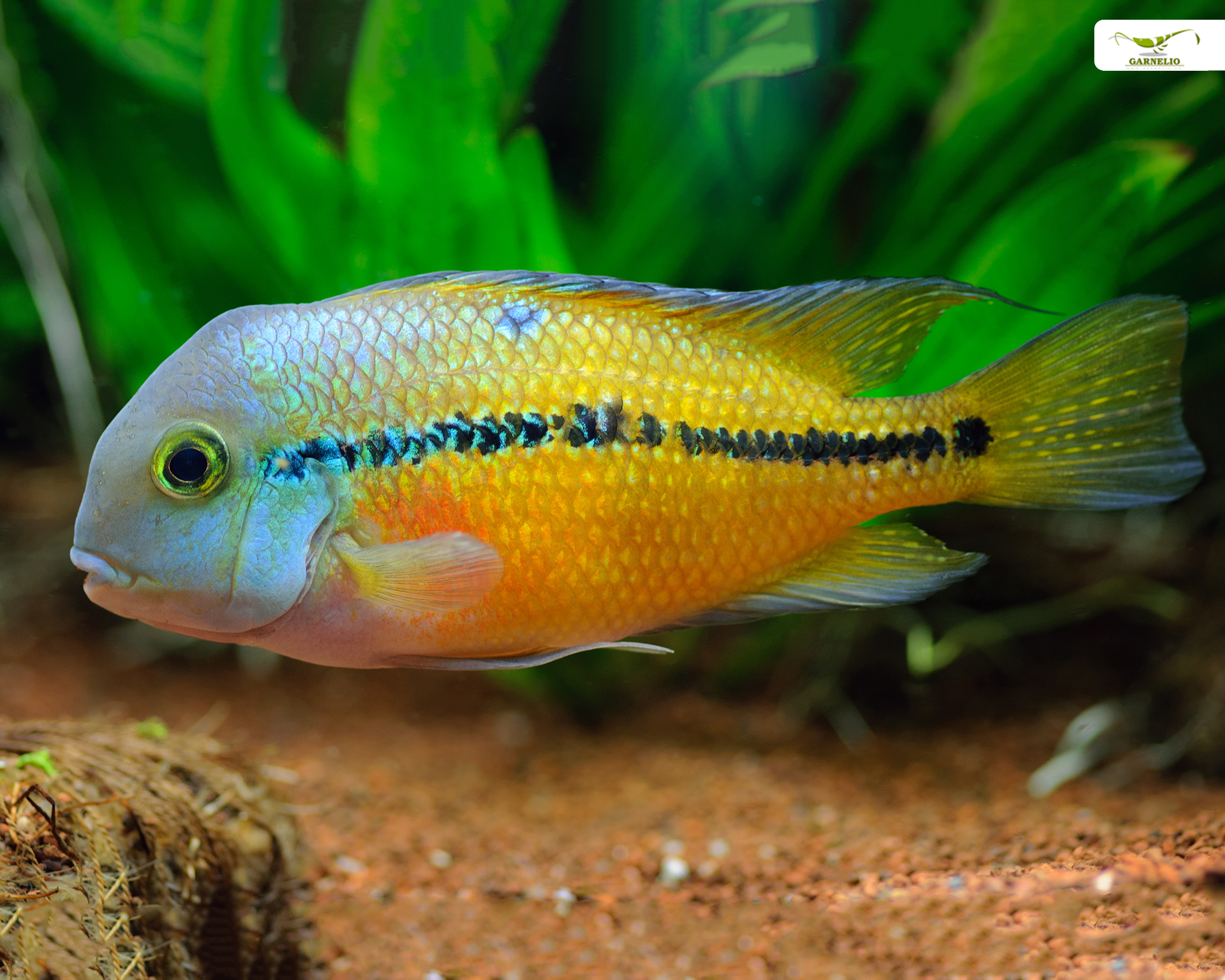
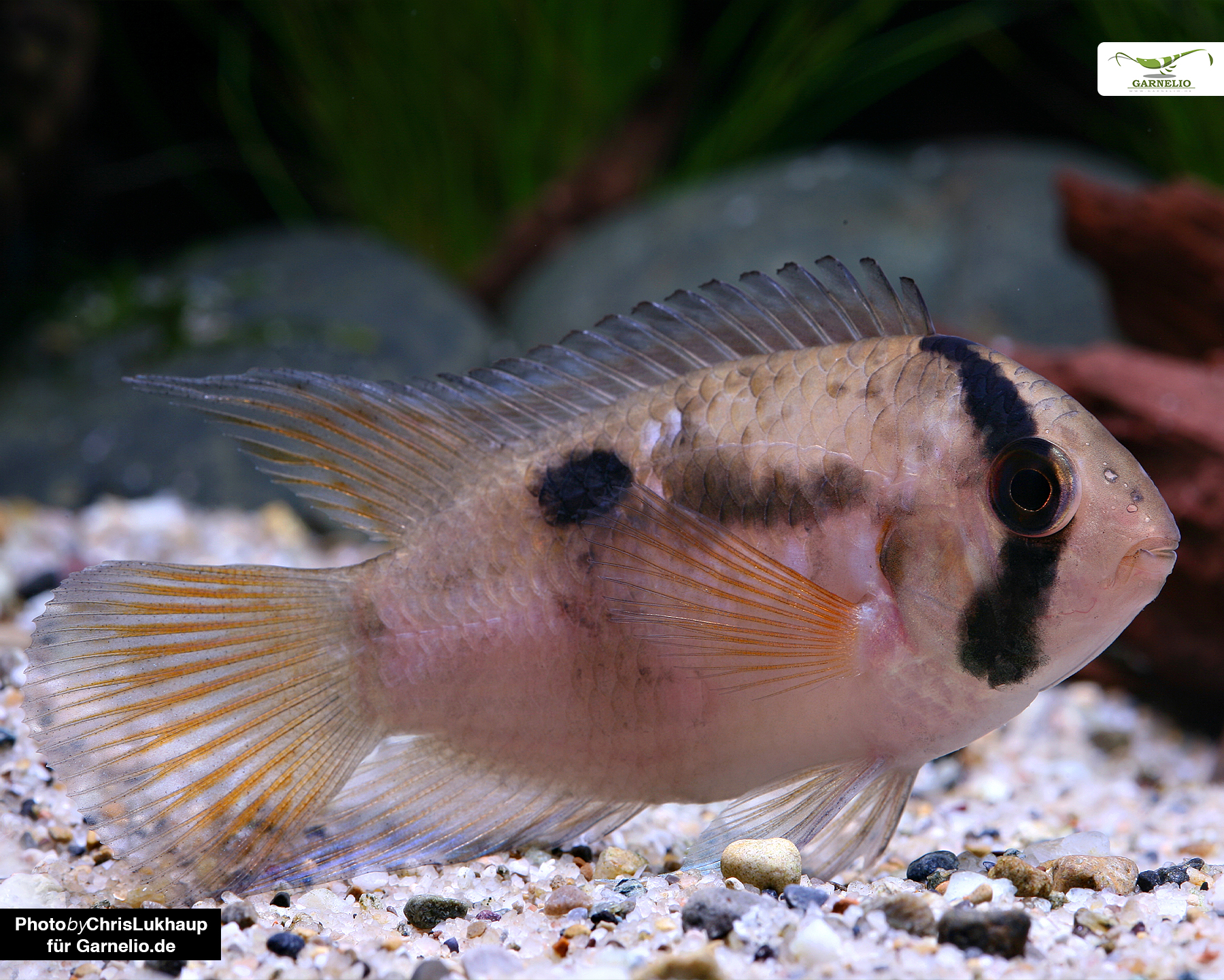
Geophagus steindachneri is a freshwater cichlid in the family Cichlidae. It is commonly called the Redhump Eartheater or Redhump Geophagus. The species has a deep, laterally compressed body, a pronounced sloping head profile and protrusible lower mouth adapted to taking food from substrate. Adult coloration varies with mood, sex, condition and locality; breeding males may show a stronger reddish head or nuchal hump. The supplied listing and photographs are consistent with this species, although a precise collection locality and sex are not established.
Natural distribution and habitat
This species is native to Colombia, particularly river systems associated with the Magdalena drainage and adjacent northern Colombian waters. It inhabits relatively slow-flowing river margins, tributaries and backwaters with sandy or fine-grained bottoms. Aquarium décor should leave open areas for feeding, with smooth wood, rounded stones and robust plants placed so that digging cannot undermine them.
Behavior
Redhump Eartheaters are active, social substrate sifters. They repeatedly take mouthfuls of sand, extract edible organisms and pass the cleaned material through the gills. A group provides more natural interaction than a solitary fish, but adults require adequate space and visual barriers. They are usually less aggressive than many large cichlids, while courtship, spawning and competition between mature males can produce chasing and territorial disputes.
Aquarium and tank size
Use a mature aquarium of at least 300 litres for a group of adults, with greater length and floor area preferred. A bonded pair can be maintained in a somewhat smaller aquarium, but approximately 200 litres is a more practical starting point because these fish grow large and may defend a spawning area. Use fine, rounded sand rather than sharp gravel, provide strong biological filtration, good oxygenation and regular partial water changes. Secure plants in pots or attach them to wood because digging is normal.
Water parameters
Maintain stable, clean water at 24–29 °C, pH 6.0–7.5 and low to moderate hardness. Soft to moderately hard water is suitable, but stability is more important than pursuing an extreme value. Ammonia and nitrite should remain undetectable, and nitrate should be kept low through maintenance. Avoid abrupt changes, accumulating organic waste and oxygen-poor conditions.
Diet
Offer a varied omnivorous diet based on sinking, quality cichlid pellets or granules, supplemented with frozen or live foods such as bloodworm, brine shrimp, daphnia and other suitably sized aquatic invertebrates. Small portions several times daily suit juveniles; adults can receive one or two measured feedings daily. Feed over sand so natural sifting can occur, and avoid relying on large floating pellets or mammalian meat.
Compatibility
Suitable companions include peaceful to moderately assertive South American cichlids and other community fish that tolerate warm, soft to neutral water. Choose tankmates too large to be swallowed and avoid fin-nippers, highly aggressive cichlids and delicate bottom dwellers that will be continually disturbed by digging. Keep sufficient open substrate for each species, and be prepared to separate fish if a breeding pair becomes excessively territorial.
Breeding
Geophagus steindachneri is a substrate-spawning cichlid with maternal mouthbrooding. A pair typically cleans a hard surface or a prepared area, lays and fertilizes eggs, and the female subsequently incubates the developing young in her mouth. Provide fine sand, smooth stones and calm, well-conditioned water. Condition prospective parents with varied foods and maintain excellent water quality. Once free-swimming, fry can be offered newly hatched brine shrimp and fine powdered foods. The adults may require separation from other fish during breeding, and individual parental care can vary.
Leave your comments