Taxonomy and identification
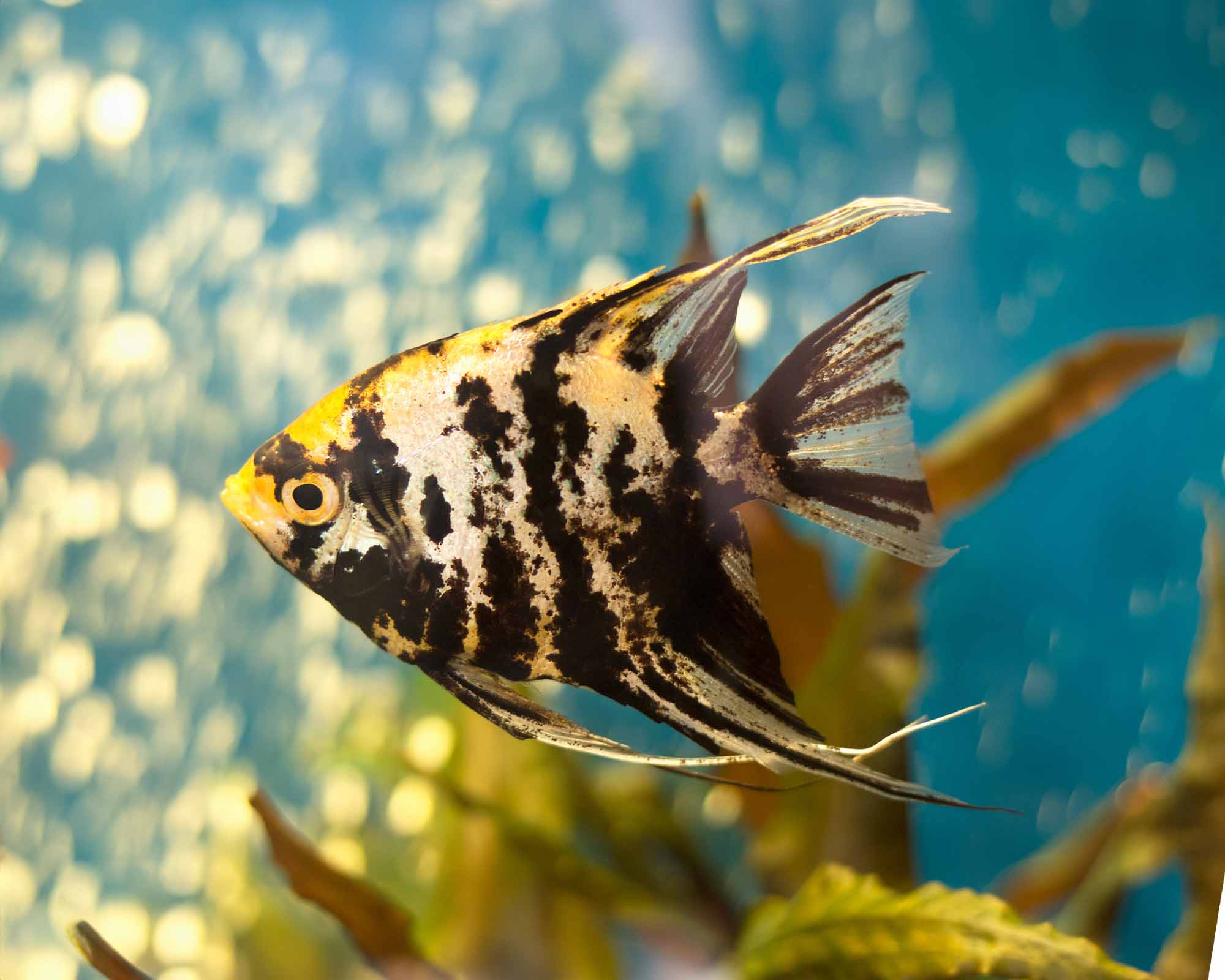
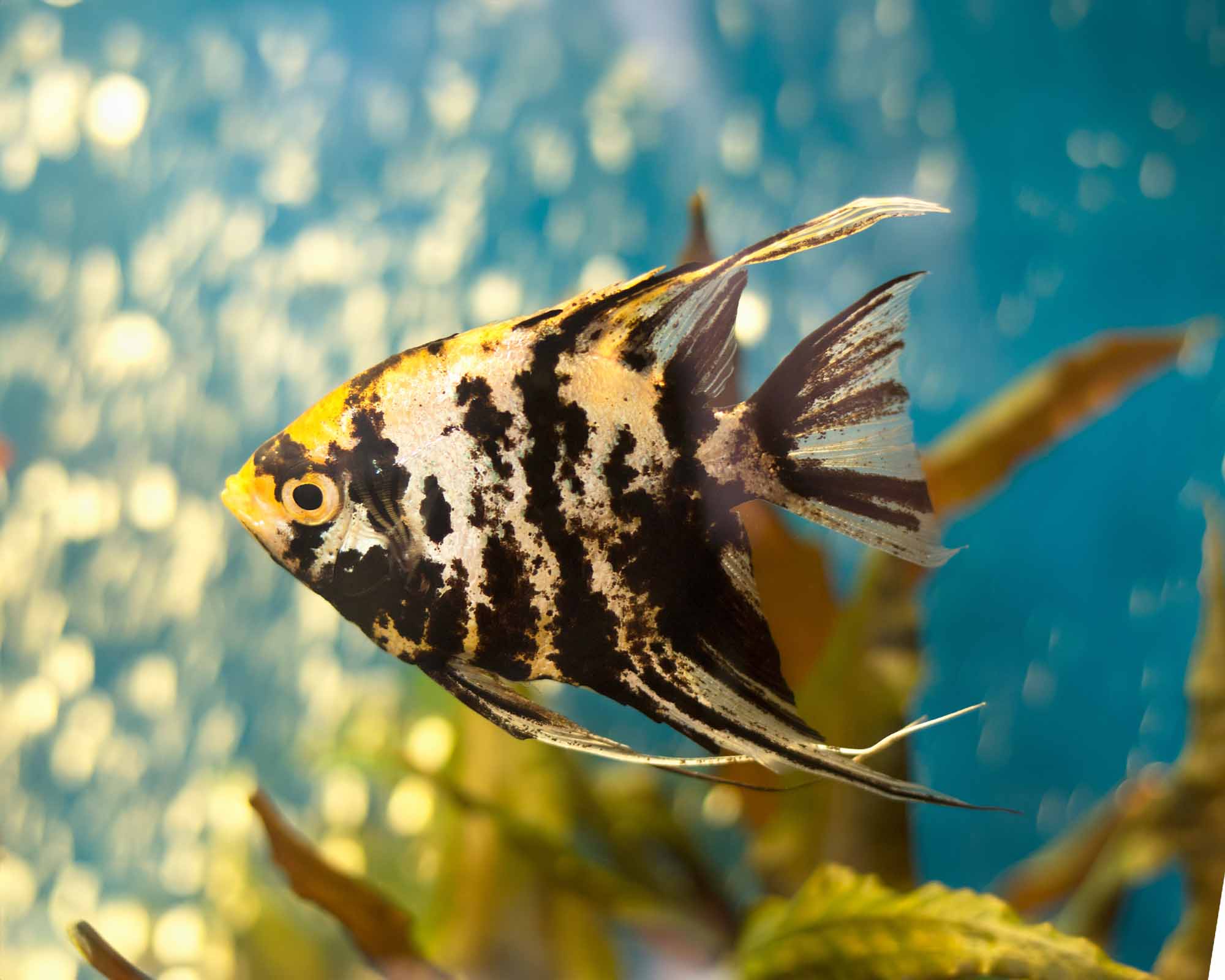
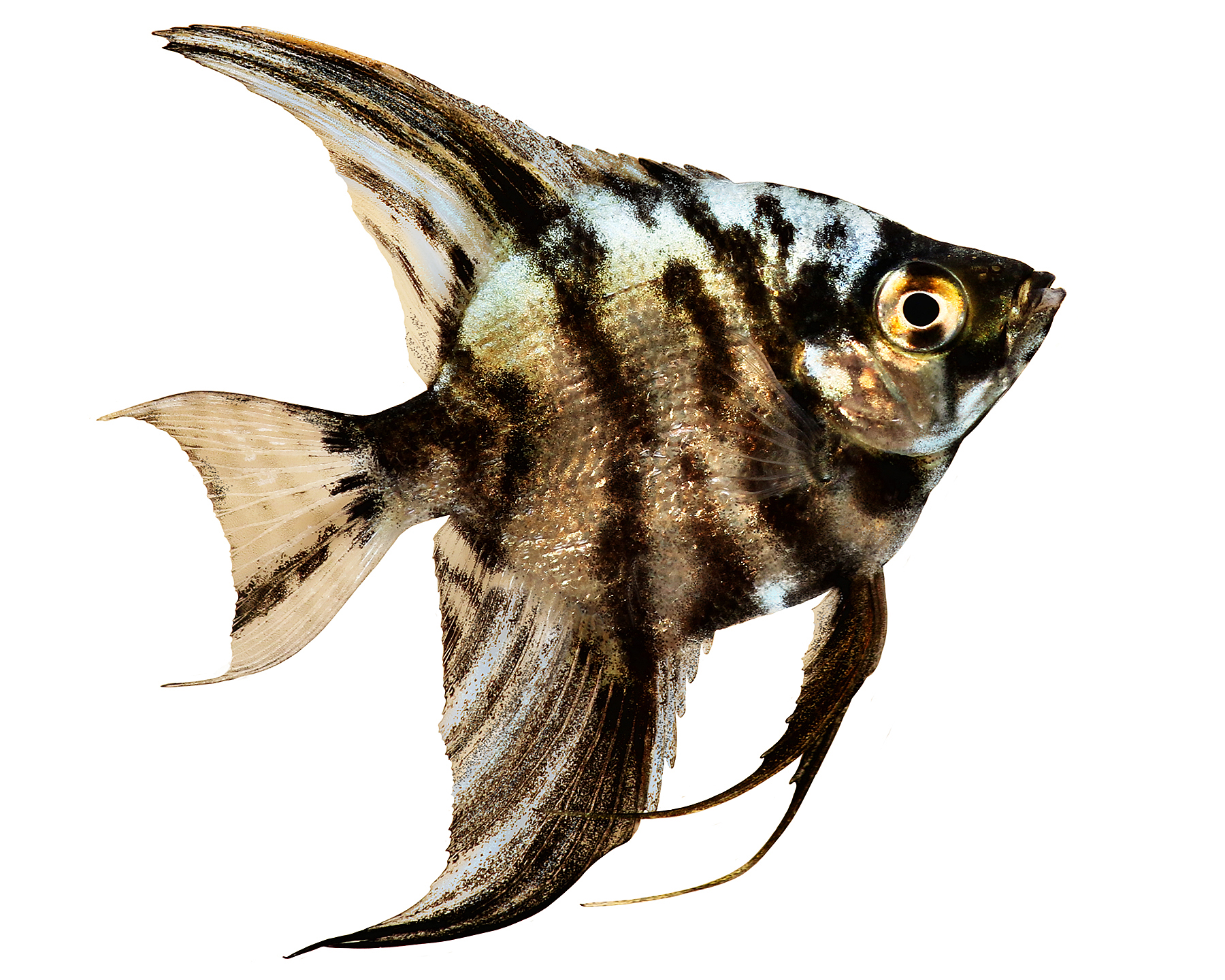
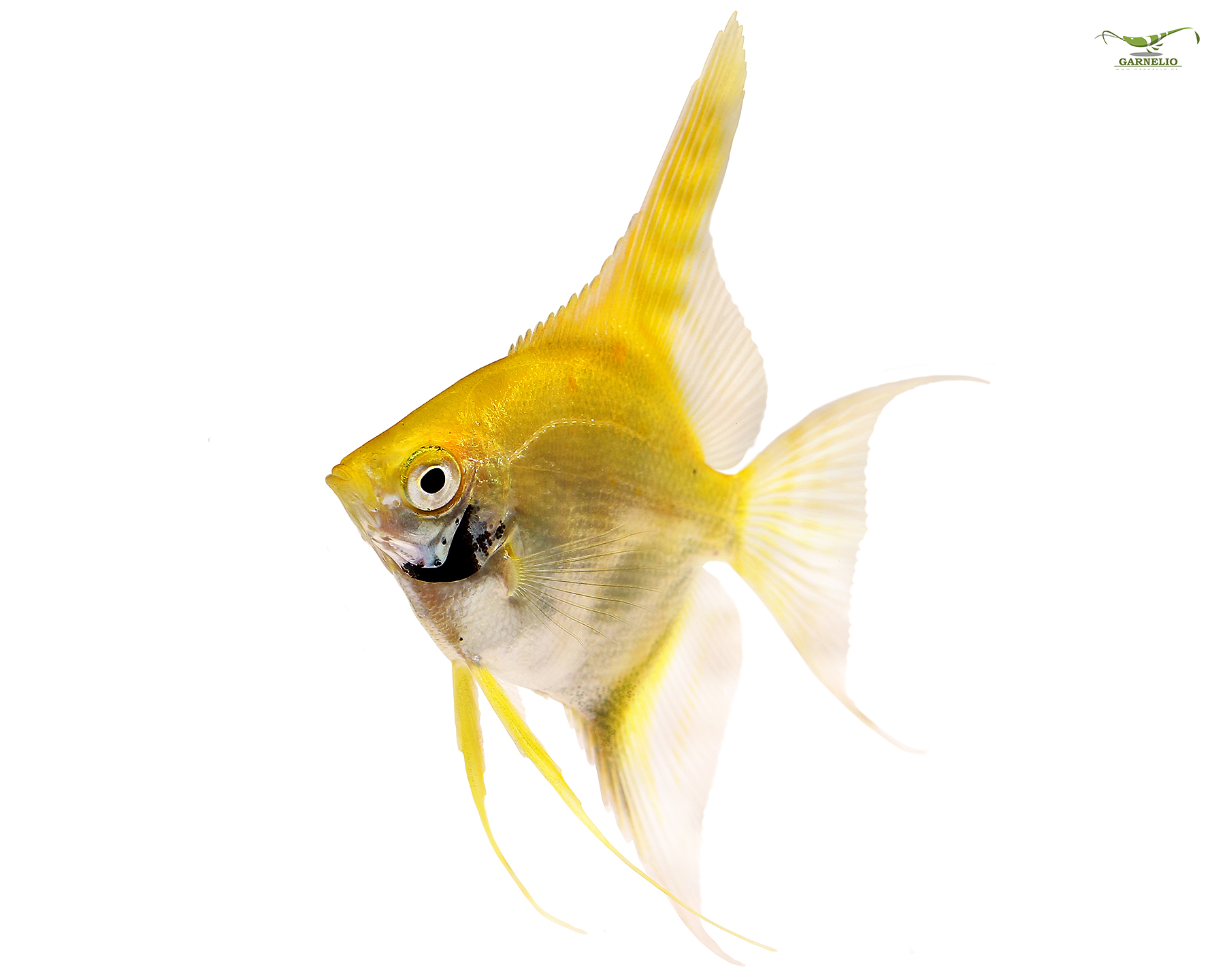
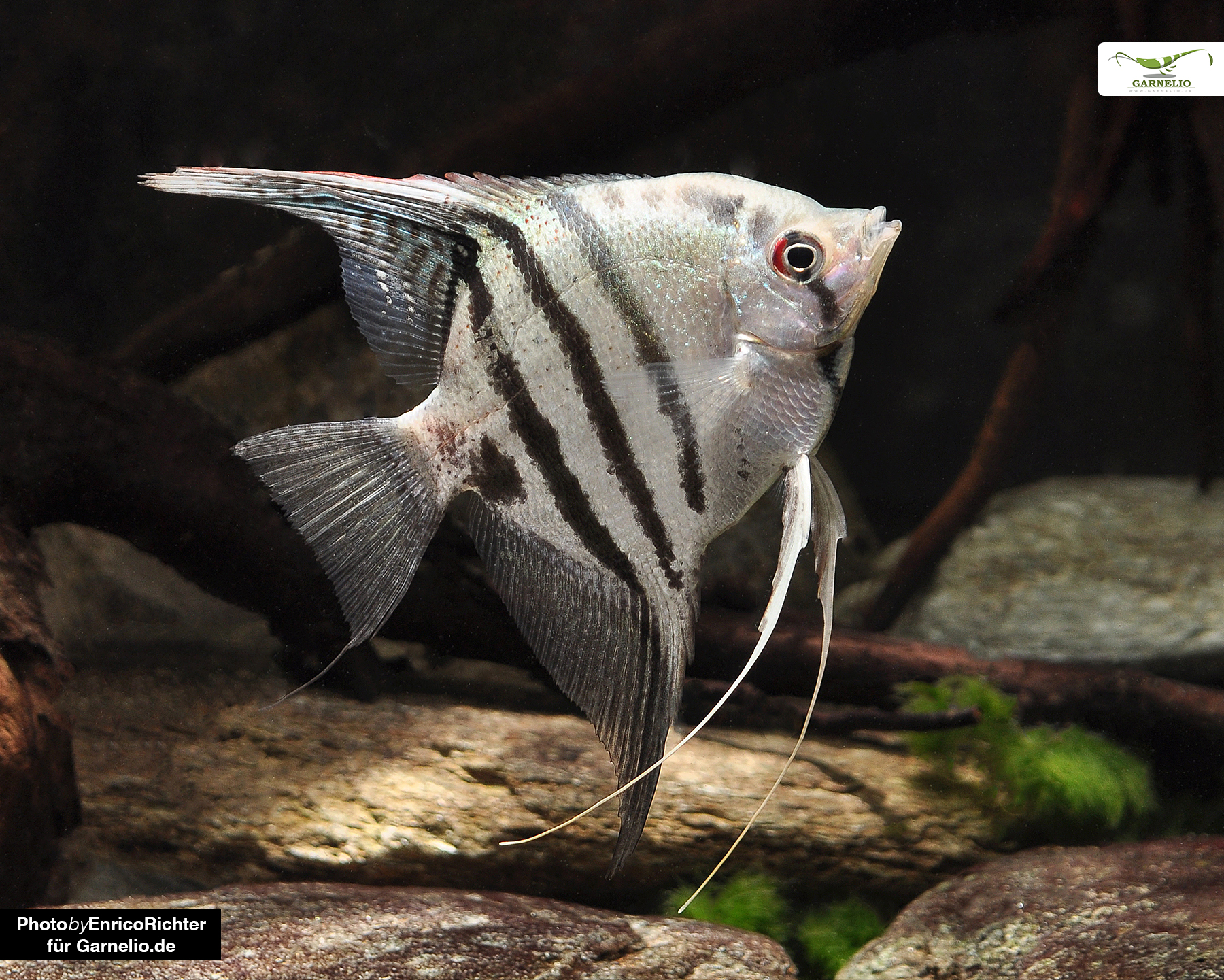
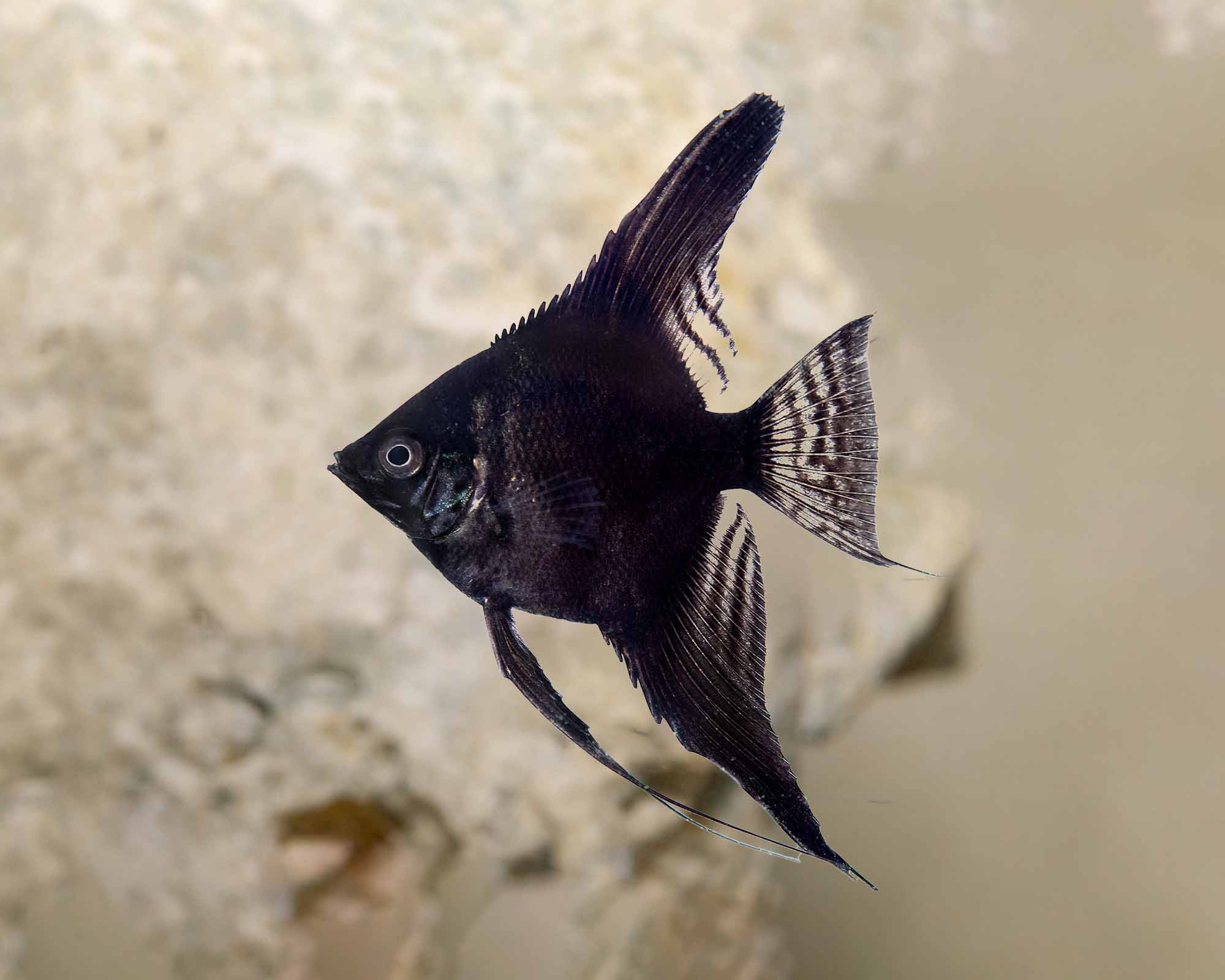
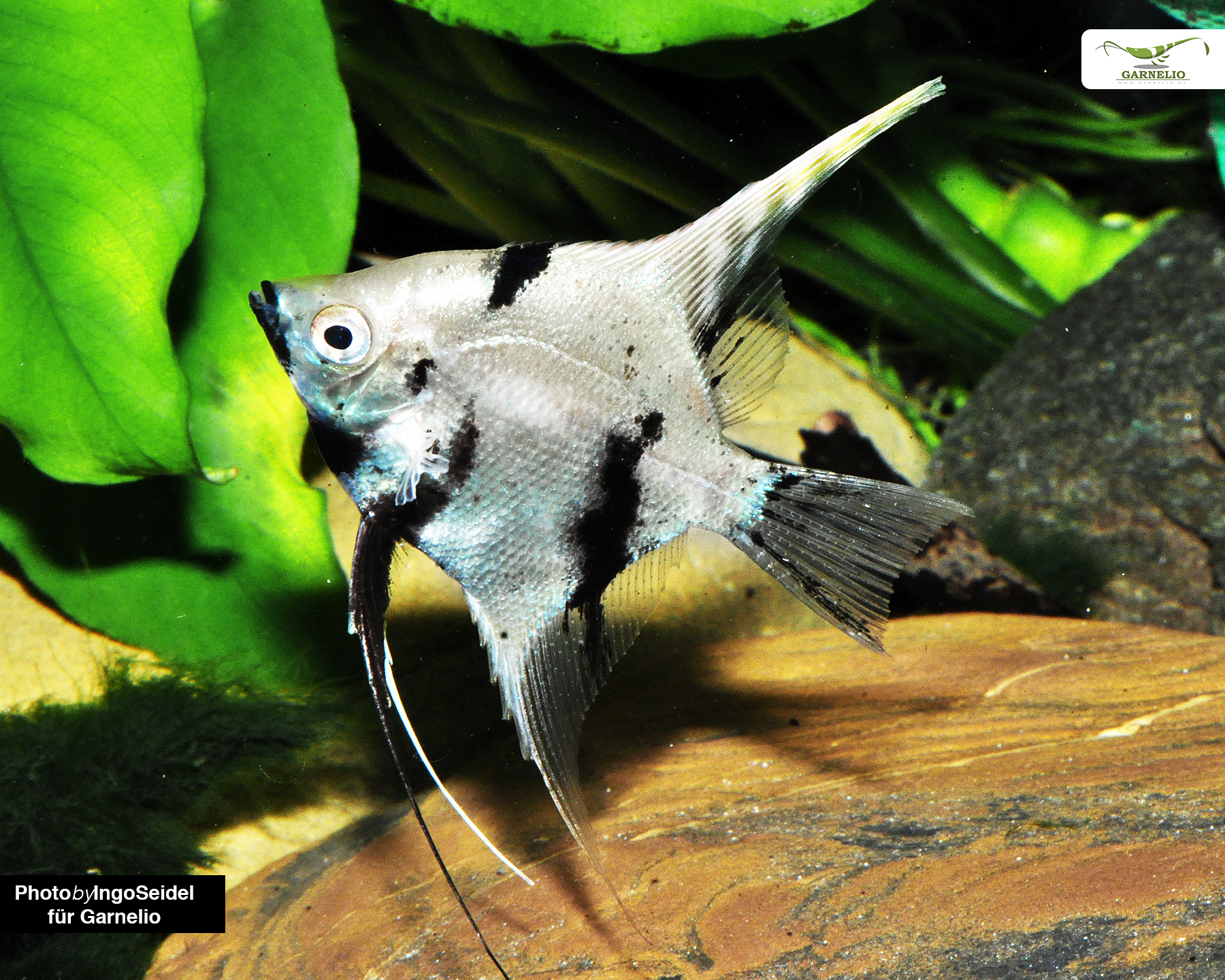
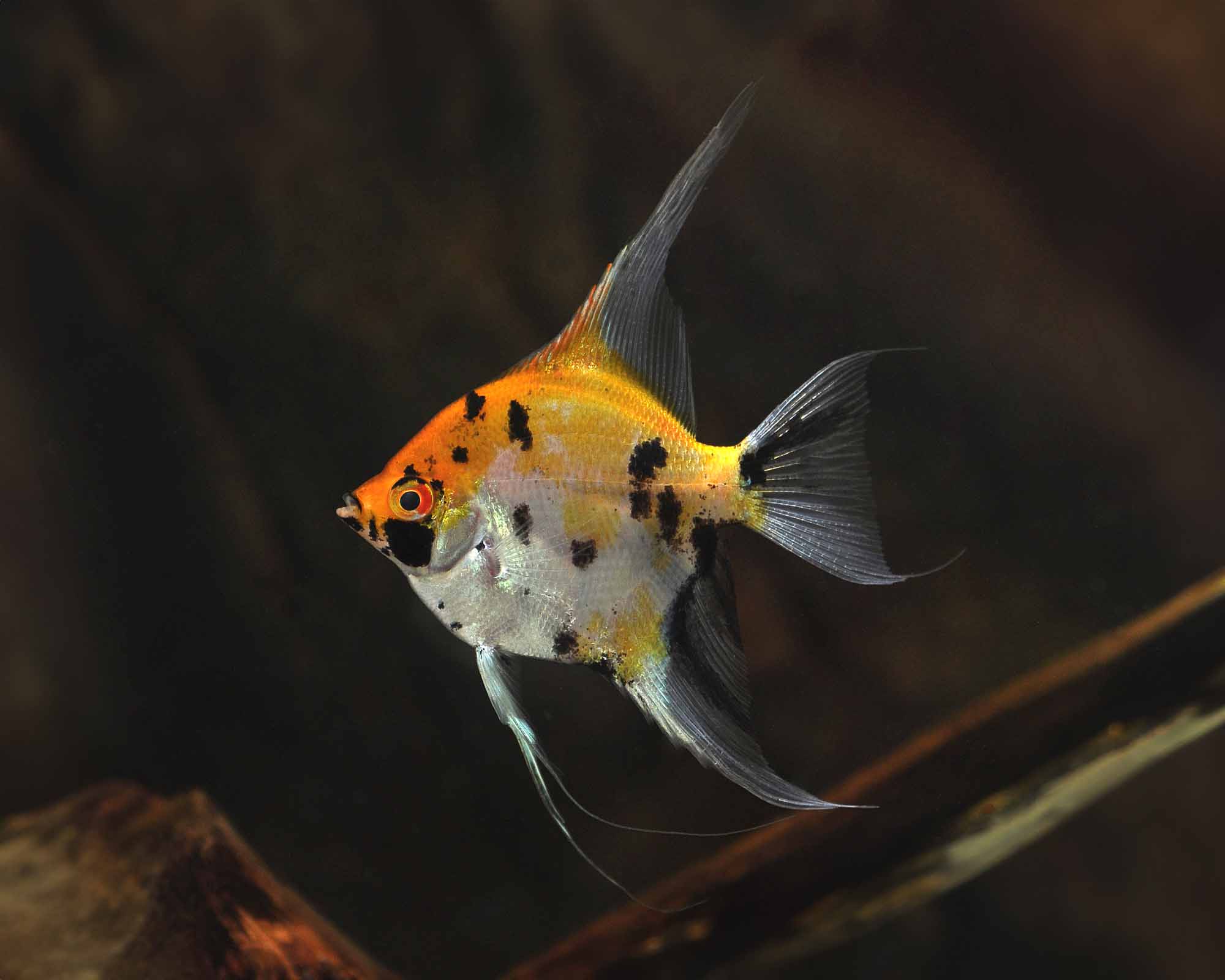
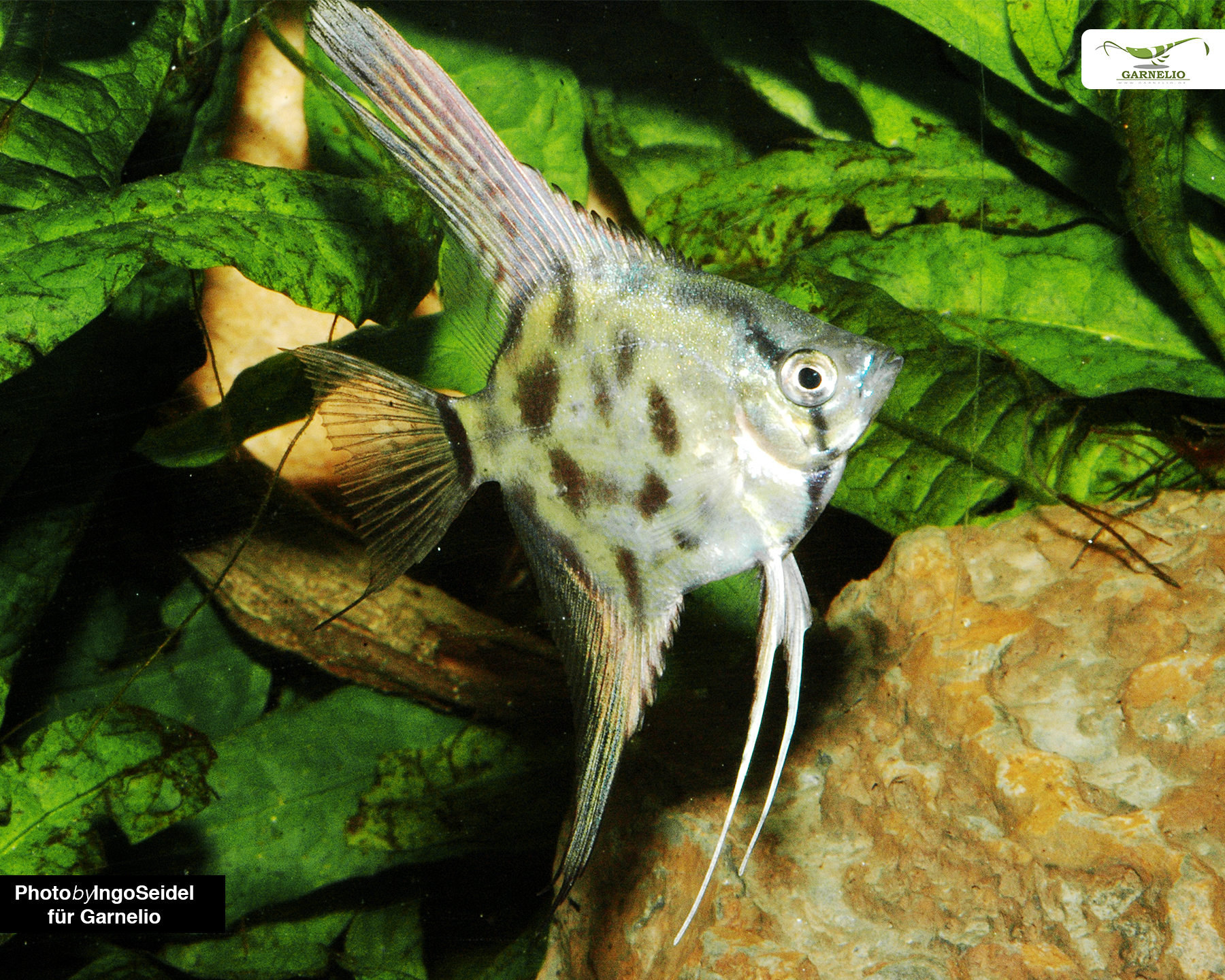
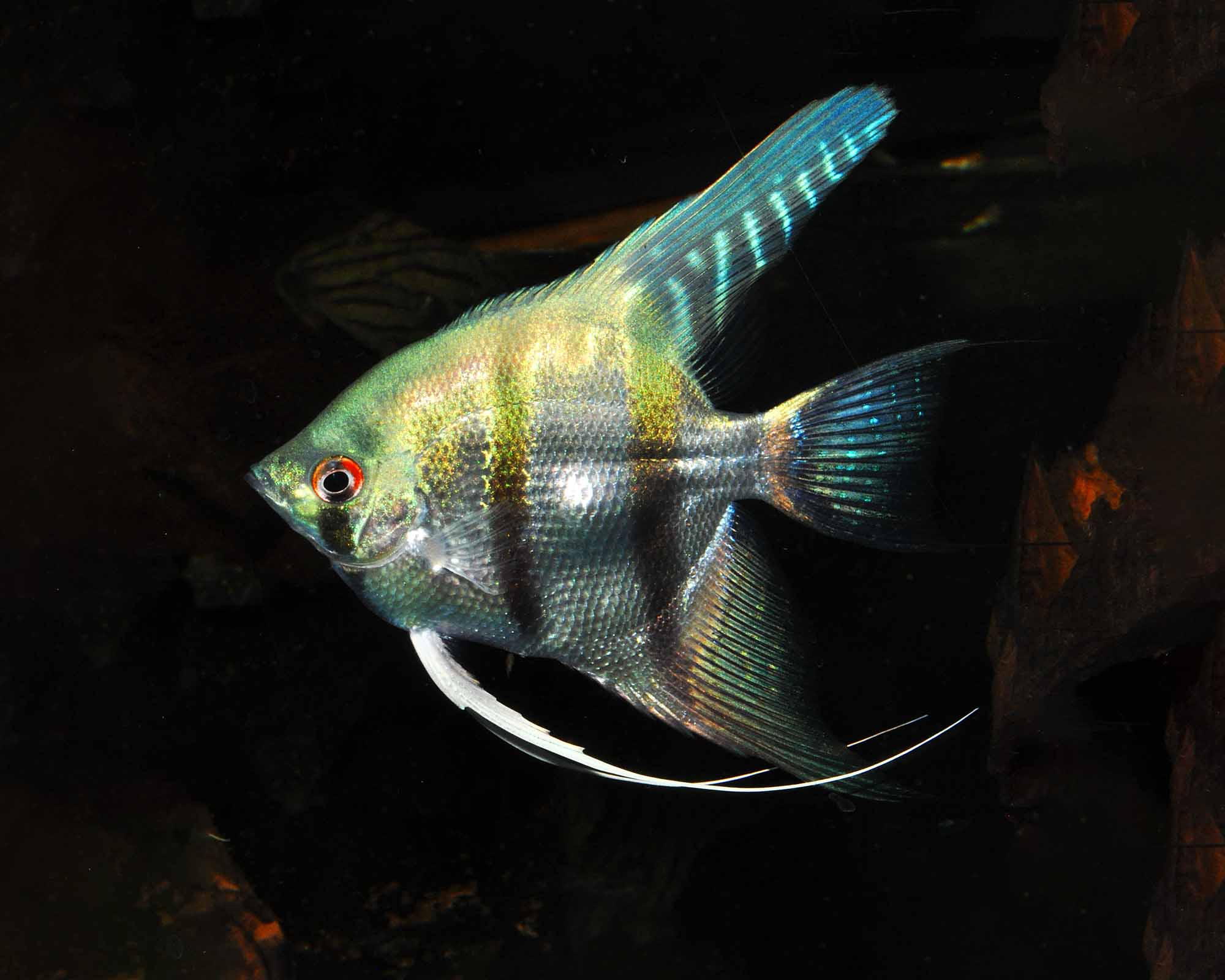
Pterophyllum scalare belongs to the family Cichlidae. The aquarium marble form is a domesticated color variety rather than a separate species. Typical fish have a laterally compressed body, elongated dorsal and anal fins, long pelvic filaments and a pointed snout. Marble patterning consists of irregular black markings over a silvery, pale or sometimes golden base. Individual pattern intensity varies, and the exact commercial strain cannot be confirmed from the source information.
Natural distribution and habitat
Pterophyllum scalare is native to slow-moving and sheltered freshwater environments in the tropical South American basin, including vegetated margins, backwaters and tributary habitats associated with the Amazon region. Exact locality varies among wild populations and is not established for this captive-bred marble form. In nature, the species uses plants, roots and submerged branches for cover and spawning surfaces.
Behavior and temperament
Angelfish are usually calm with appropriately sized companions but are territorial cichlids. They form social groups when young and may establish pairs as they mature. Pairing and spawning can produce strong aggression toward nearby fish, especially in a small aquarium. They commonly occupy the middle and upper water levels and may eat very small fish or shrimp that fit in their mouths.
Aquarium size and layout
A pair should have at least a well-filtered 200-litre aquarium, with greater volume preferable for a community or multiple adults. Height is especially important because the species grows tall; an aquarium around 50 cm high or more is useful for fully grown fish. Provide open swimming space, broad-leaved plants, vertical wood or spawning surfaces, subdued lighting and gentle to moderate circulation. Use a secure cover because angelfish can jump.
Water parameters and maintenance
Keep the aquarium biologically mature, stable and free of detectable ammonia and nitrite. A temperature of 25–29 °C and pH of 6.0–7.5 suit captive fish, provided changes are gradual. Soft to moderately hard water is generally suitable. Perform regular partial water changes, remove uneaten food and avoid abrupt shifts in temperature, pH or hardness. Filtration should provide reliable oxygenation without creating excessive turbulence.
Diet
Offer a varied omnivorous diet based on a quality cichlid or tropical granule, supplemented with frozen or live foods such as bloodworm, brine shrimp and daphnia. Small portions fed once or twice daily are preferable to overfeeding. Occasional vegetable matter can add variety, but avoid relying on fatty foods or feeder fish, which may introduce disease and provide an unbalanced diet.
Compatibility
Suitable companions include peaceful, robust community fish that tolerate warm water and are too large to be swallowed, such as appropriately sized tetras, rasboras, peaceful barbs and some Corydoras species. Avoid fin-nipping fish, highly aggressive cichlids and very small species. Keep an eye on long-finned tank mates and provide visual barriers so territories can be separated. A bonded pair may need isolation from the rest of the community during spawning.
Breeding
Angelfish are substrate-spawning cichlids that usually pair and lay adhesive eggs in several rows on a cleaned vertical surface, such as a broad leaf, slate or aquarium panel. The parents may fan and guard the eggs, although inexperienced pairs sometimes eat a first clutch. Condition prospective breeders with varied foods, maintain warm, clean, stable water and provide a suitable spawning surface. If raising fry separately, transfer the surface to a separate, gently filtered aquarium and feed newly free-swimming fry appropriately sized first foods.
 - pair - 1.webp)
Leave your comments