Taxonomy and identification
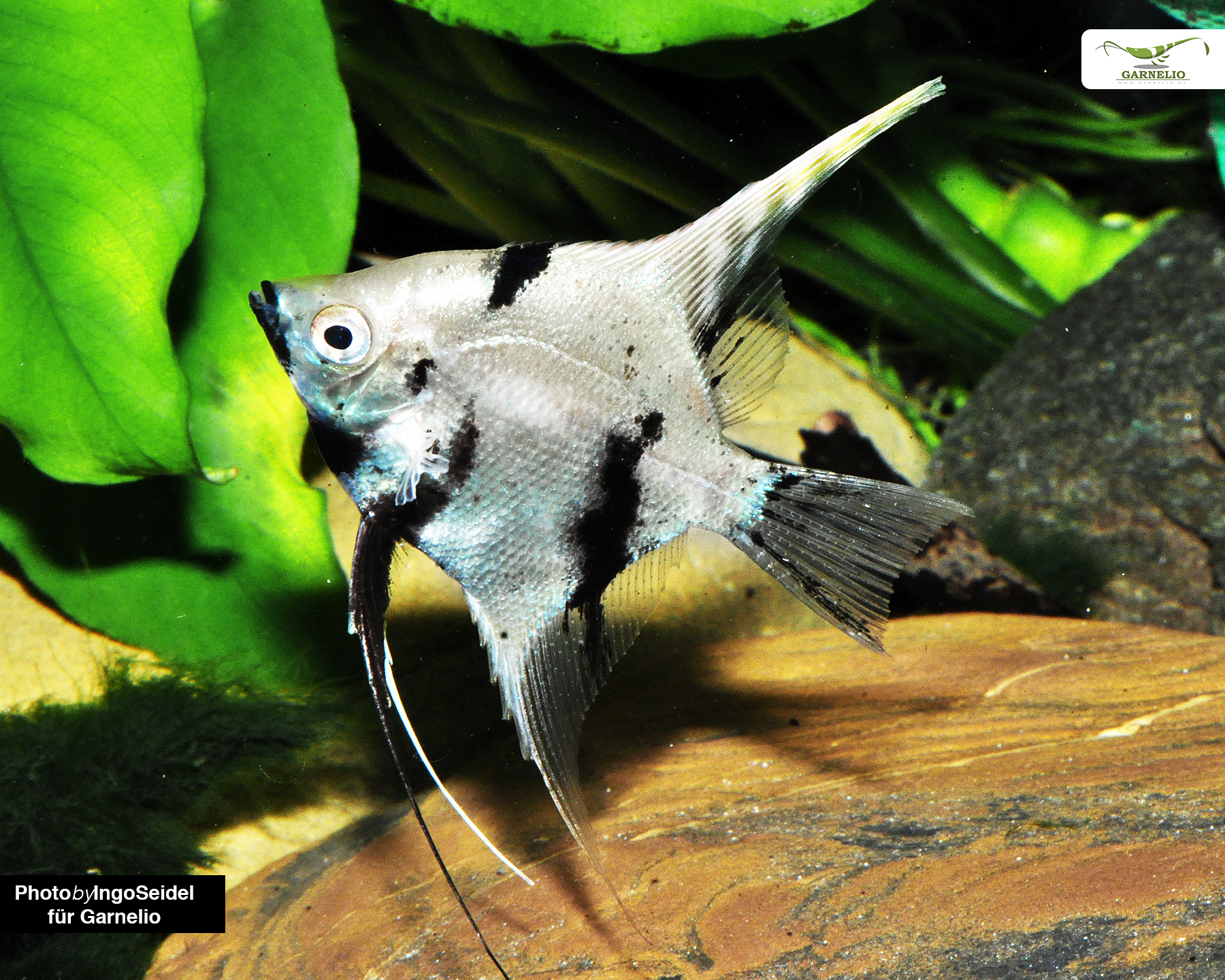
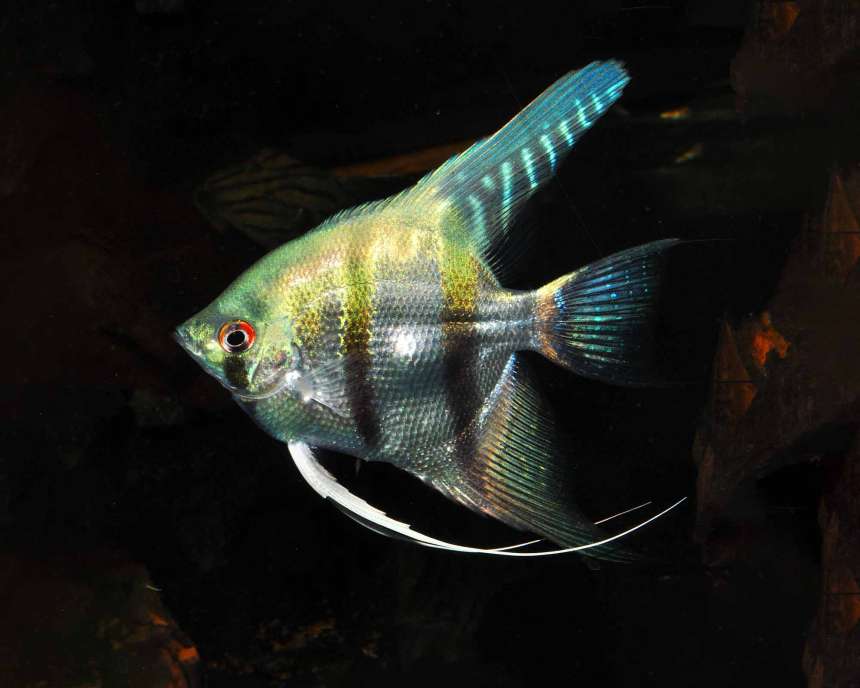
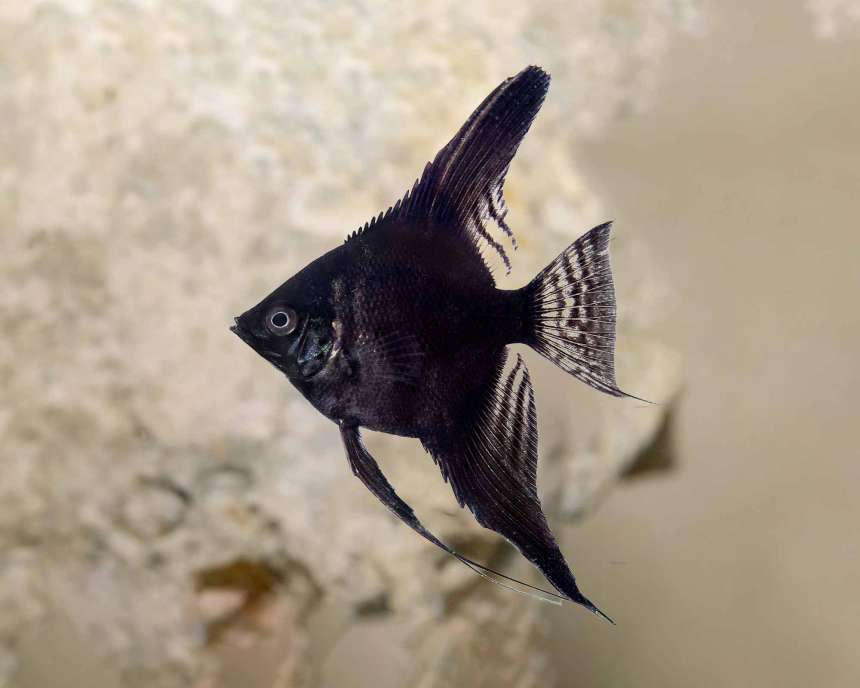
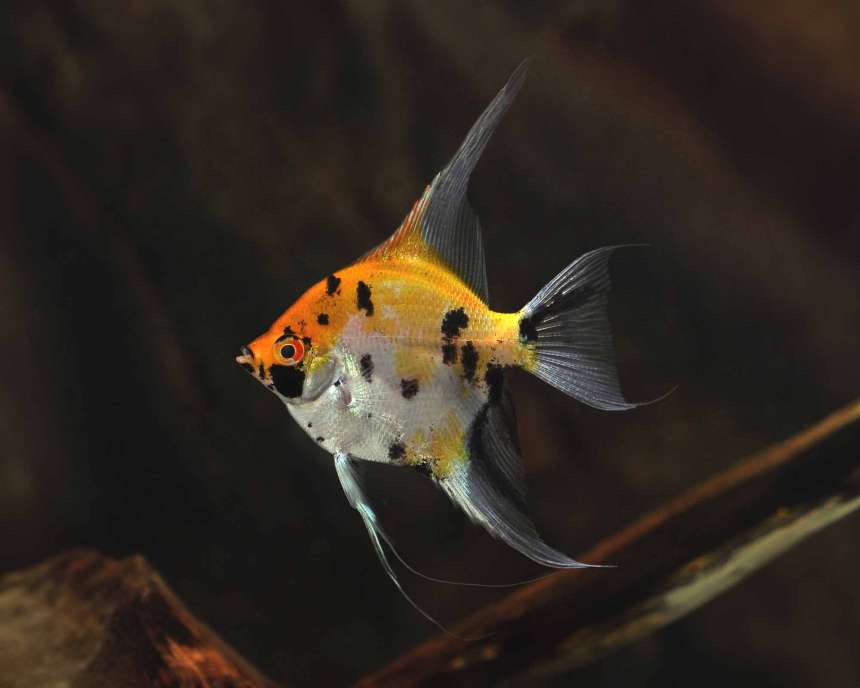
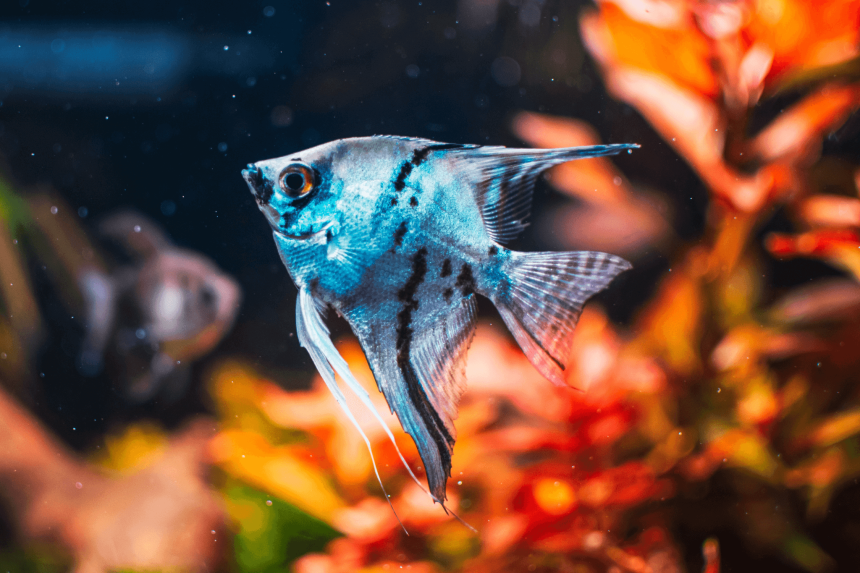
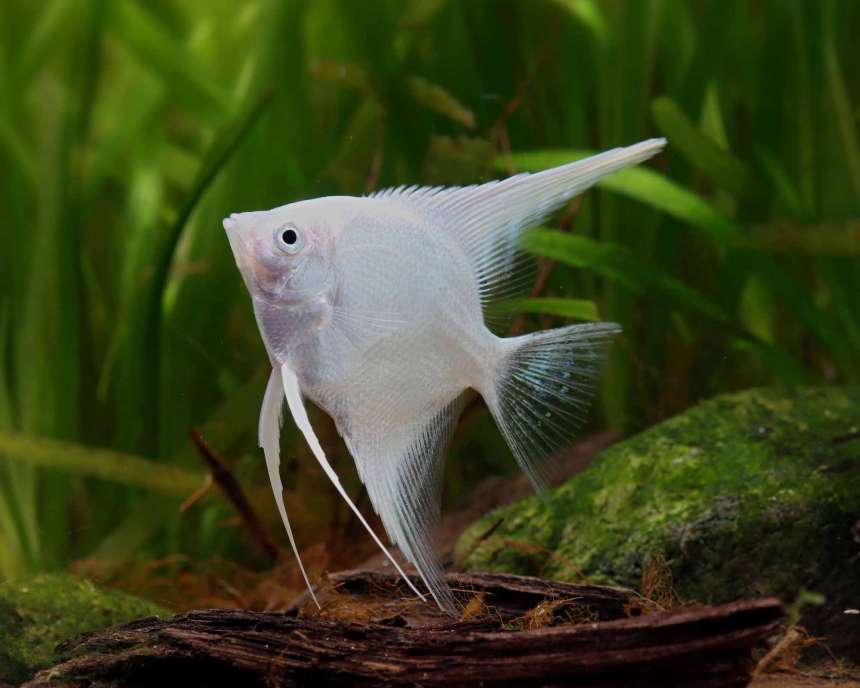
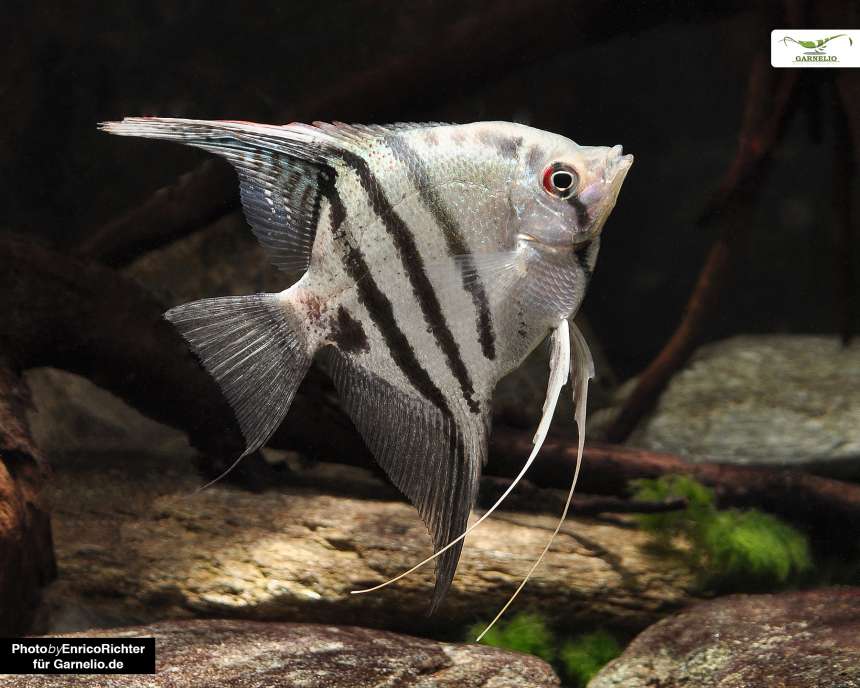
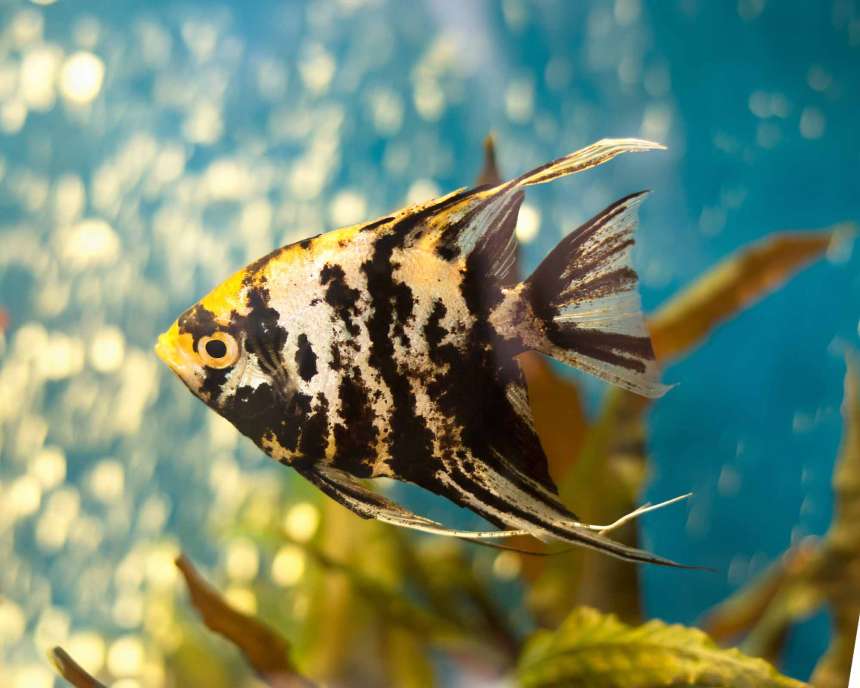
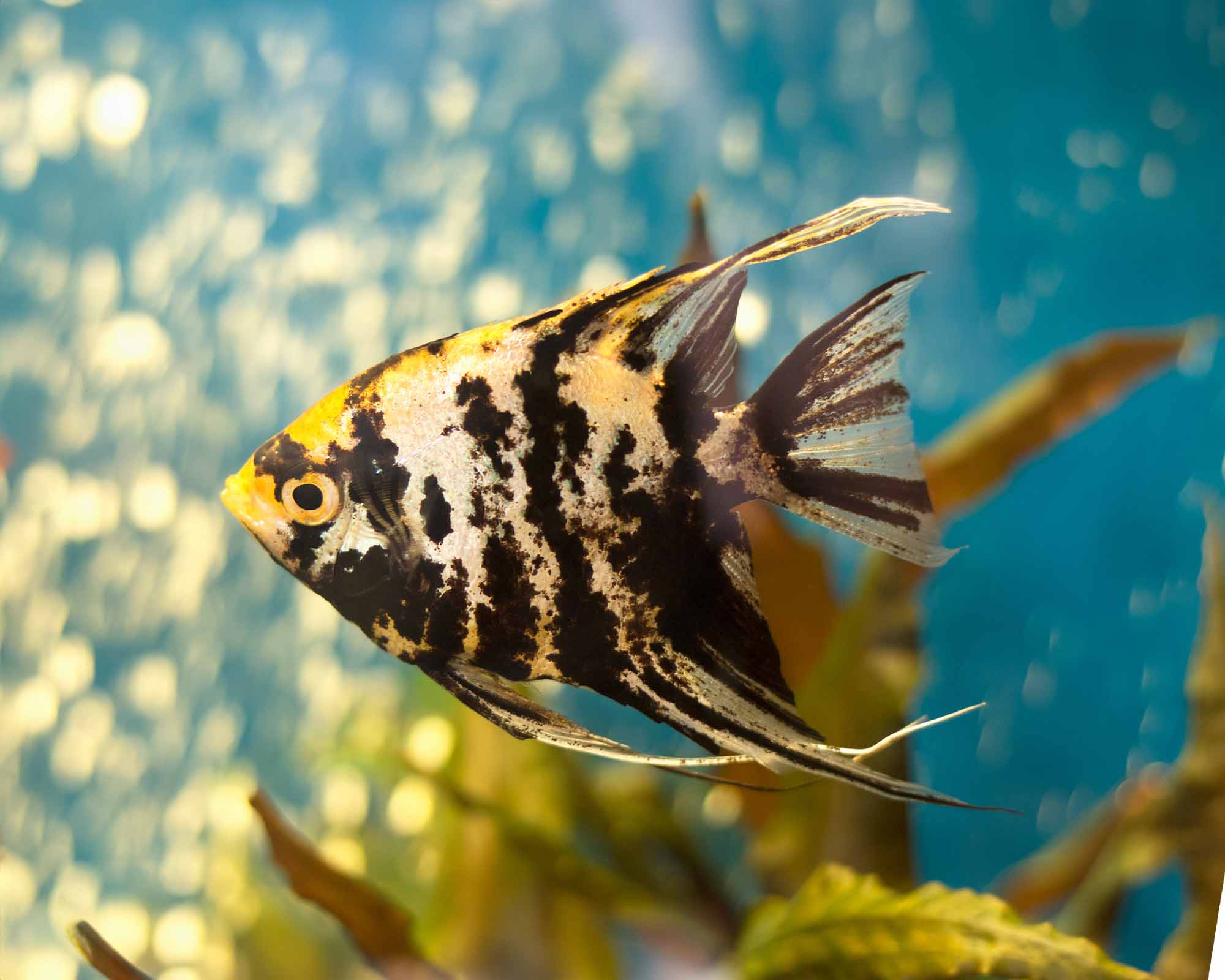
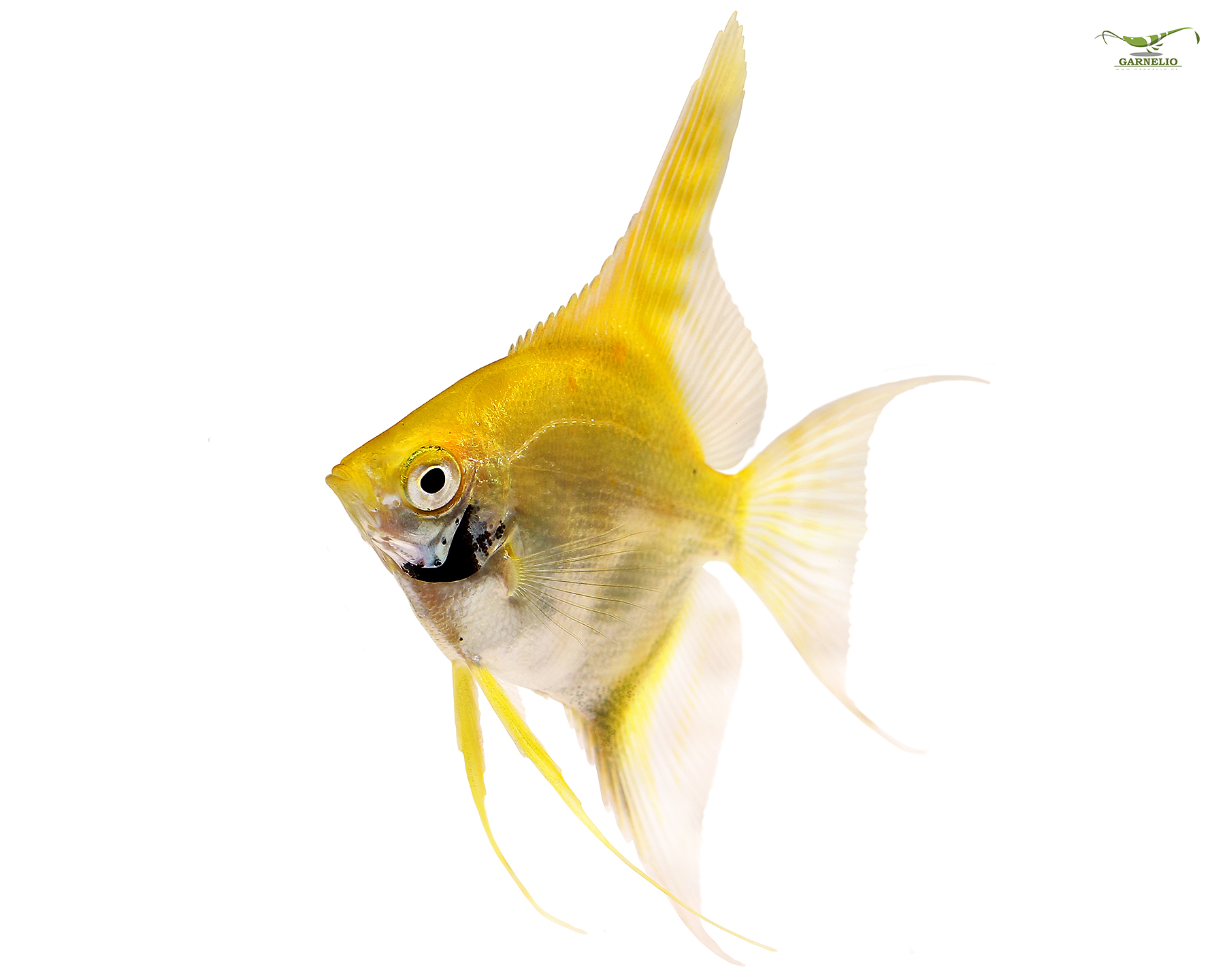
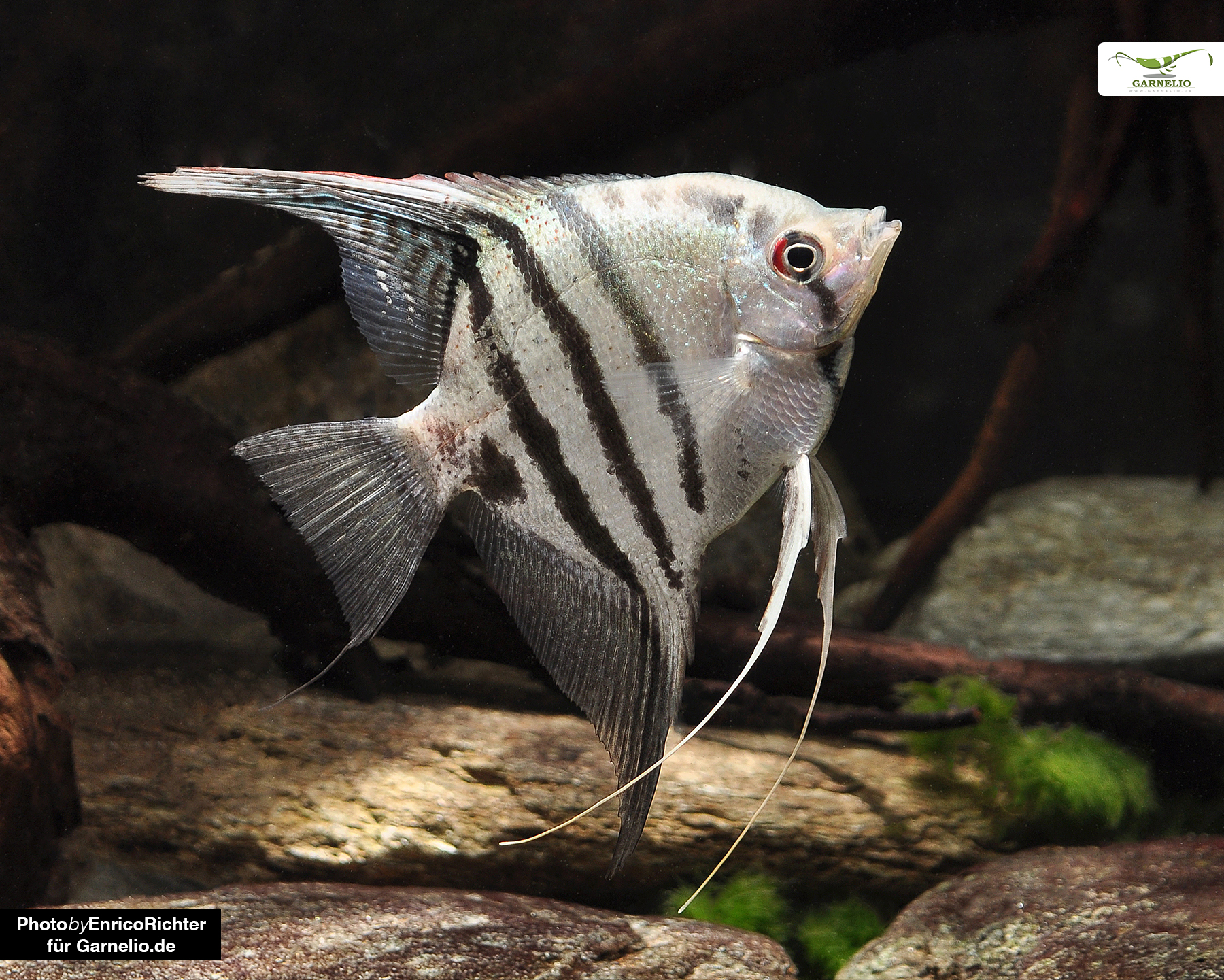
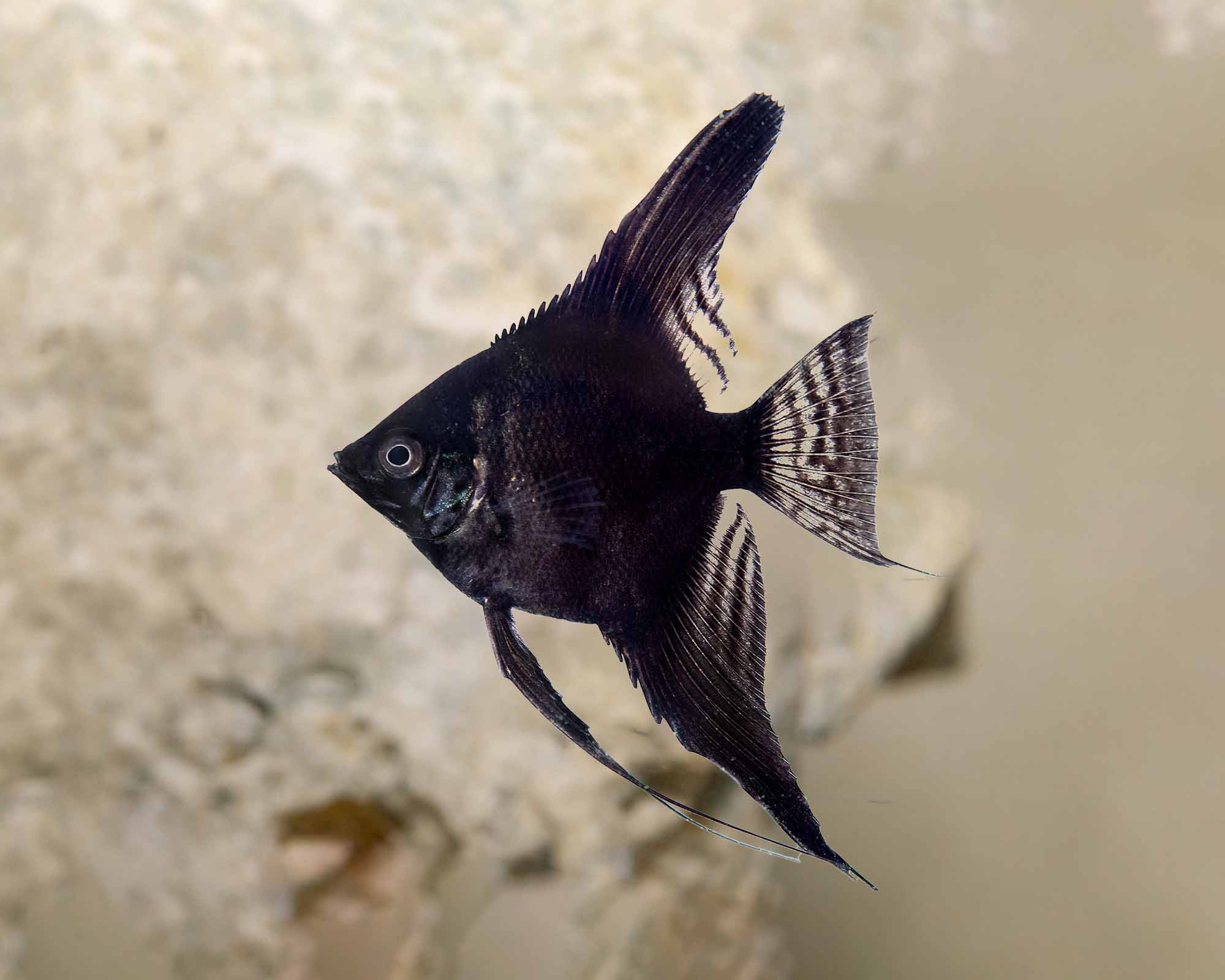
Pterophyllum scalare belongs to the family Cichlidae and the genus Pterophyllum. Its laterally compressed body, extended dorsal and anal fins, and thread-like pelvic fins distinguish it from most aquarium cichlids. White marble is a domestic color form rather than a separate species. The irregular black markings and pale silver-white base are consistent with this form, although the precise strain cannot be verified from images alone.
Natural distribution and habitat
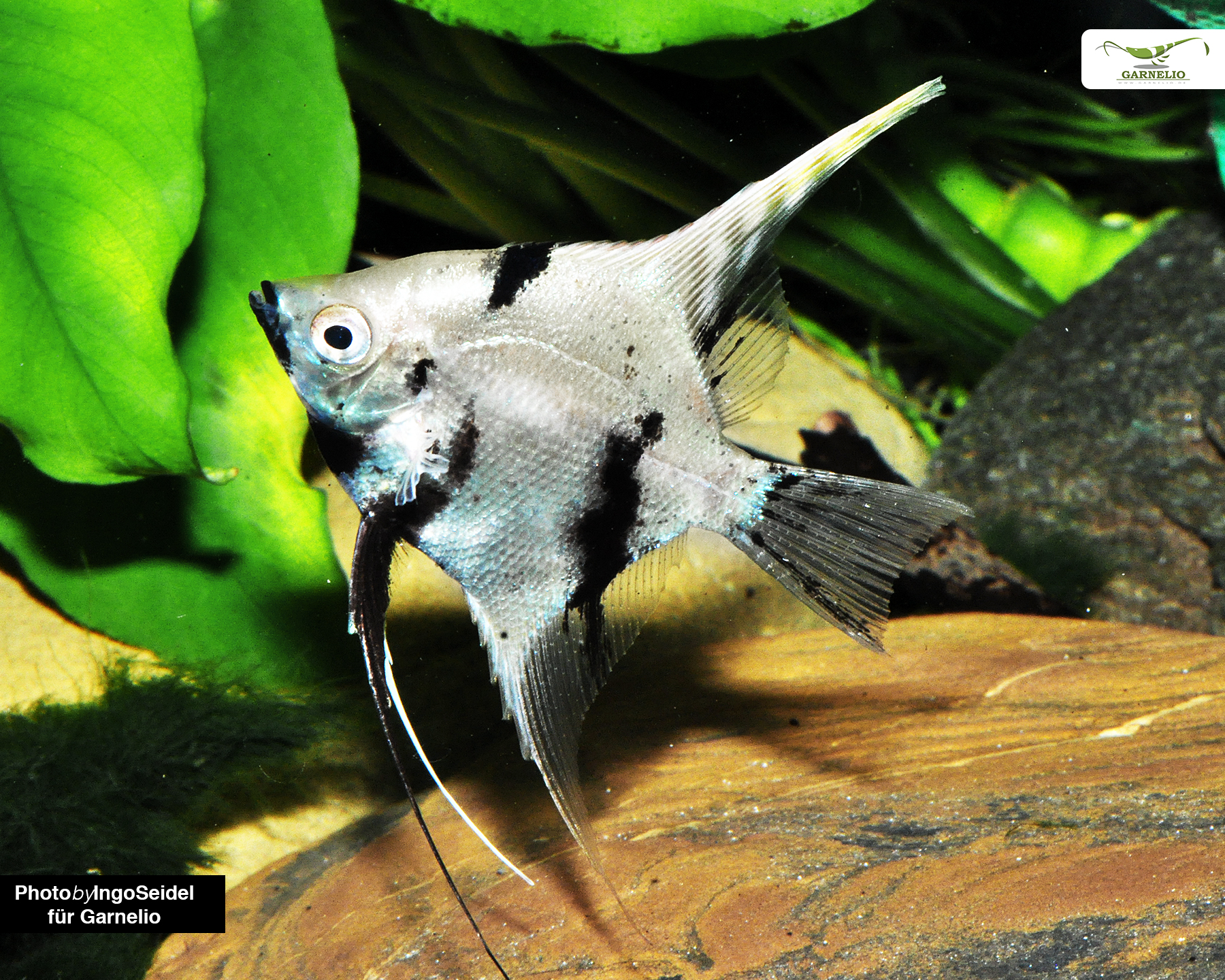
The species is native to tropical freshwater habitats in the Amazon, Essequibo, and Orinoco drainage regions of South America. It occurs in slow-moving or sheltered waters among submerged roots, branches, leaf litter, and aquatic vegetation. Wild habitats are commonly soft and acidic to neutral, but aquarium-bred angelfish usually tolerate a broader range when acclimated gradually and maintained in stable conditions.
Aquarium size and setup
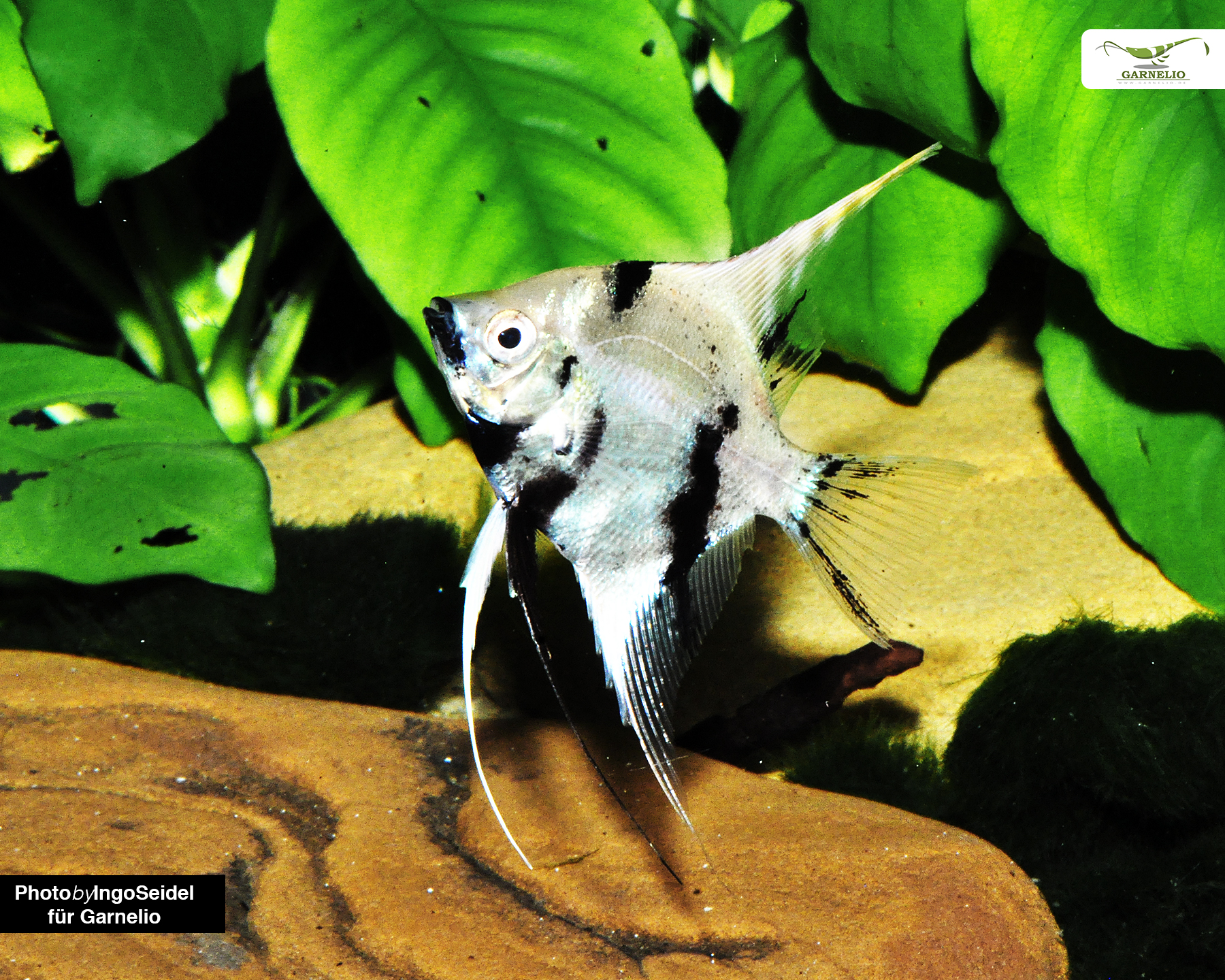
A pair should be kept in an aquarium of at least 200 litres, with greater volume recommended for groups or community systems. Height is especially important because adults have tall fins and a deep vertical profile. Use gentle circulation, open swimming space, broad-leaved plants, wood, and shaded retreats. A secure cover is advisable, and filtration should provide strong biological capacity without producing excessive current.
Water parameters and maintenance
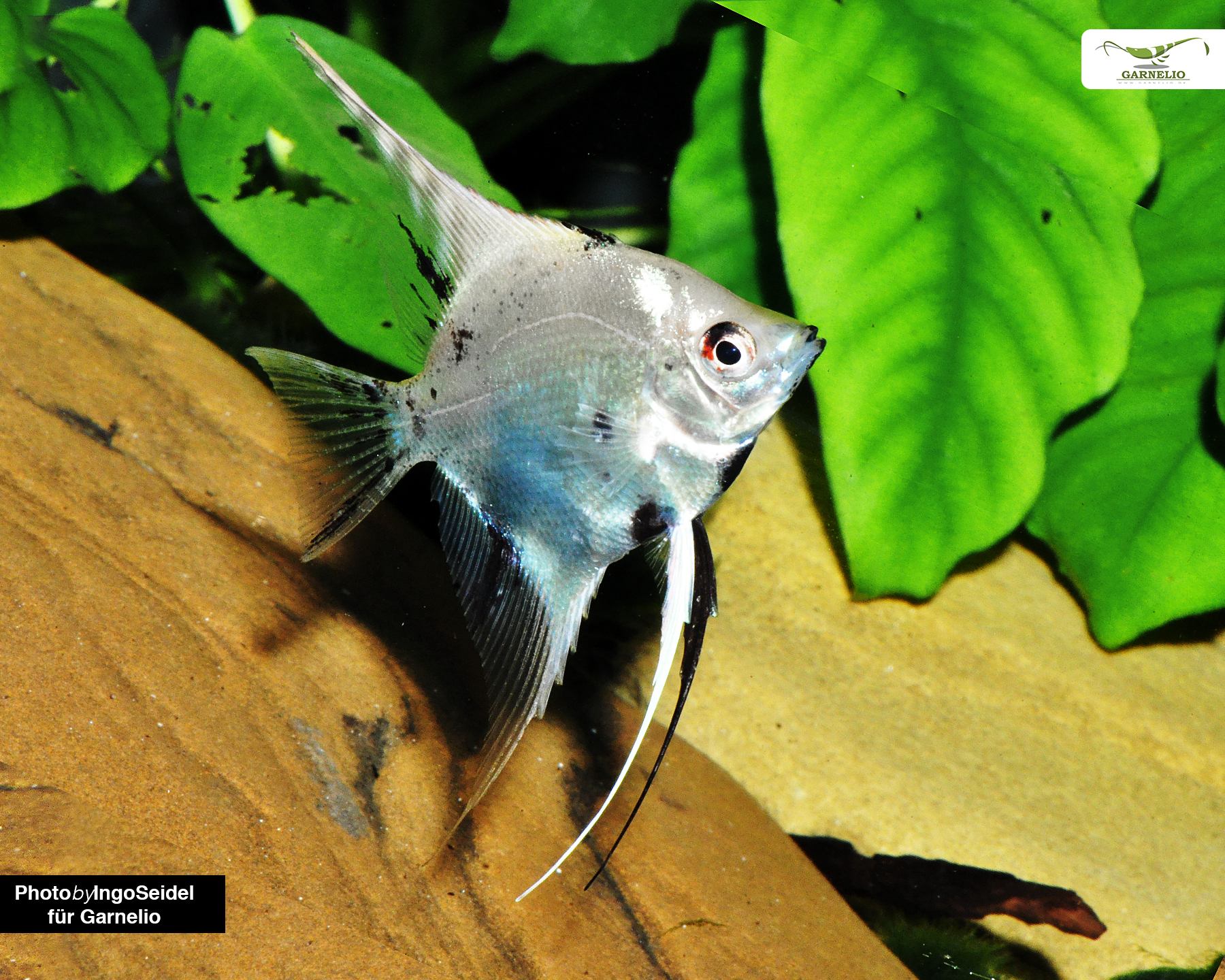
Keep the water warm, stable, and free of measurable ammonia and nitrite. A practical target is 24–30 °C and pH 6.0–7.5, with low to moderate hardness preferred. Regular partial water changes, restrained stocking, and removal of uneaten food help prevent disease. Sudden changes in temperature, pH, or mineral content should be avoided.
Behavior
Angelfish are social juveniles that often establish a hierarchy. Adults may become territorial, particularly around a chosen spawning surface, and bonded pairs can defend a large area. They usually occupy the middle and upper levels of the aquarium. Long fins and deliberate movement make them vulnerable to persistent fin nippers, while very small fish may be viewed as prey.
Diet
Offer a varied diet based on a quality cichlid pellet or flake, supplemented with frozen or live foods such as bloodworms, brine shrimp, daphnia, and suitably sized mosquito larvae. Feed small portions once or twice daily, removing leftovers. Juveniles benefit from more frequent meals and appropriately fine foods. Avoid relying exclusively on live foods or rich items, which can contribute to nutritional imbalance and water pollution.
Compatibility
Suitable companions are generally peaceful, similarly sized fish that tolerate warm water, such as selected medium-sized tetras, peaceful rasboras, and appropriate bottom-dwelling catfish. Avoid fin-nipping barbs, highly aggressive cichlids, and fish small enough to be swallowed. Stocking must be adjusted as angelfish mature, since a previously peaceful group may become territorial or form a breeding pair.
Breeding
Angelfish form monogamous pairs but sexing immature individuals is difficult. A pair usually cleans a vertical surface such as a broad leaf, slate, or aquarium panel, after which the female lays rows of adhesive eggs and the male fertilizes them. Both parents may fan and defend the clutch. Eggs commonly hatch in roughly two to three days, with free-swimming fry following several days later. Newly free-swimming fry require very small foods such as freshly hatched brine shrimp. In community aquariums, eggs or fry are often eaten, so a separate breeding setup may be needed for reliable survival.
Leave your comments