Taxonomy and identification
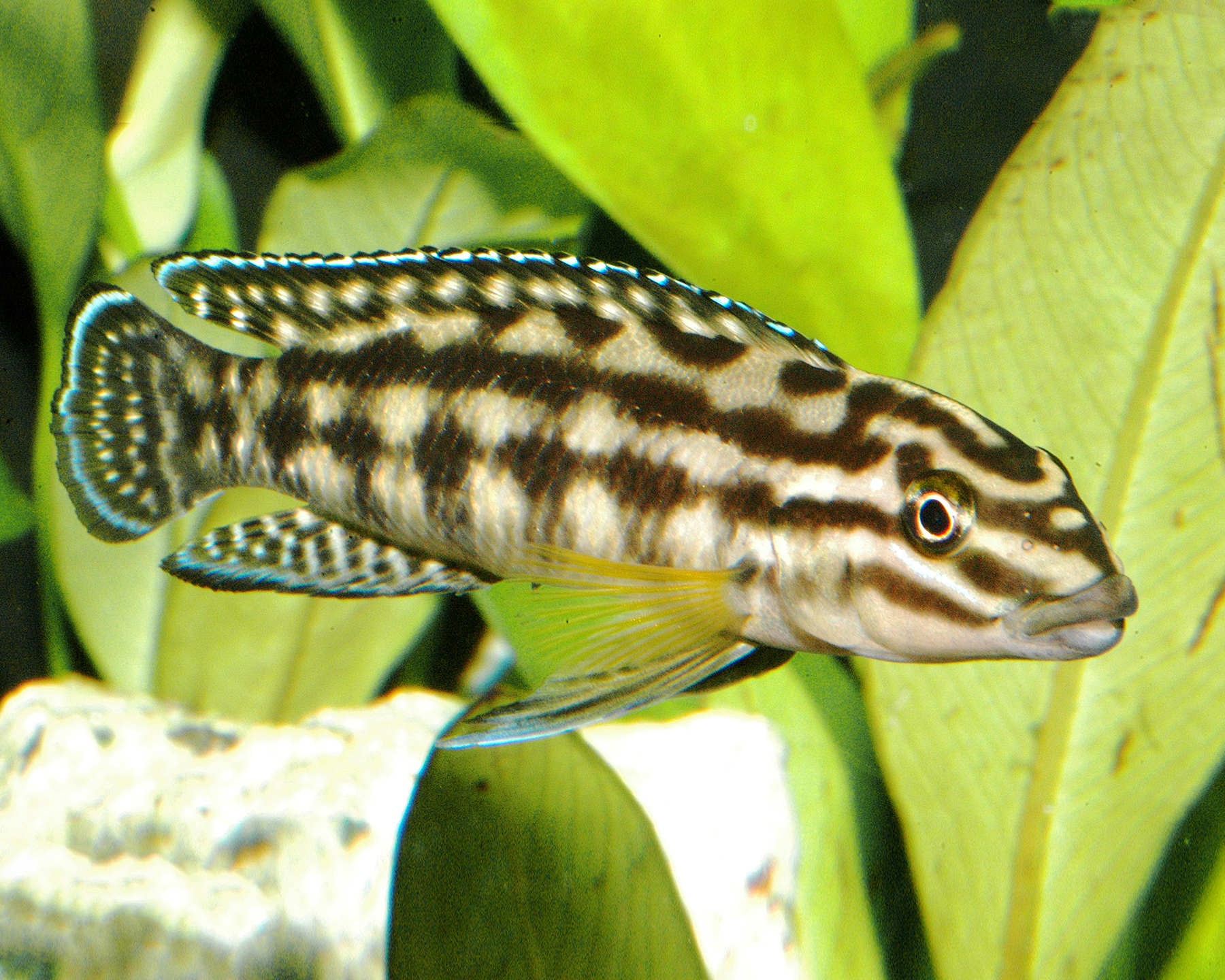
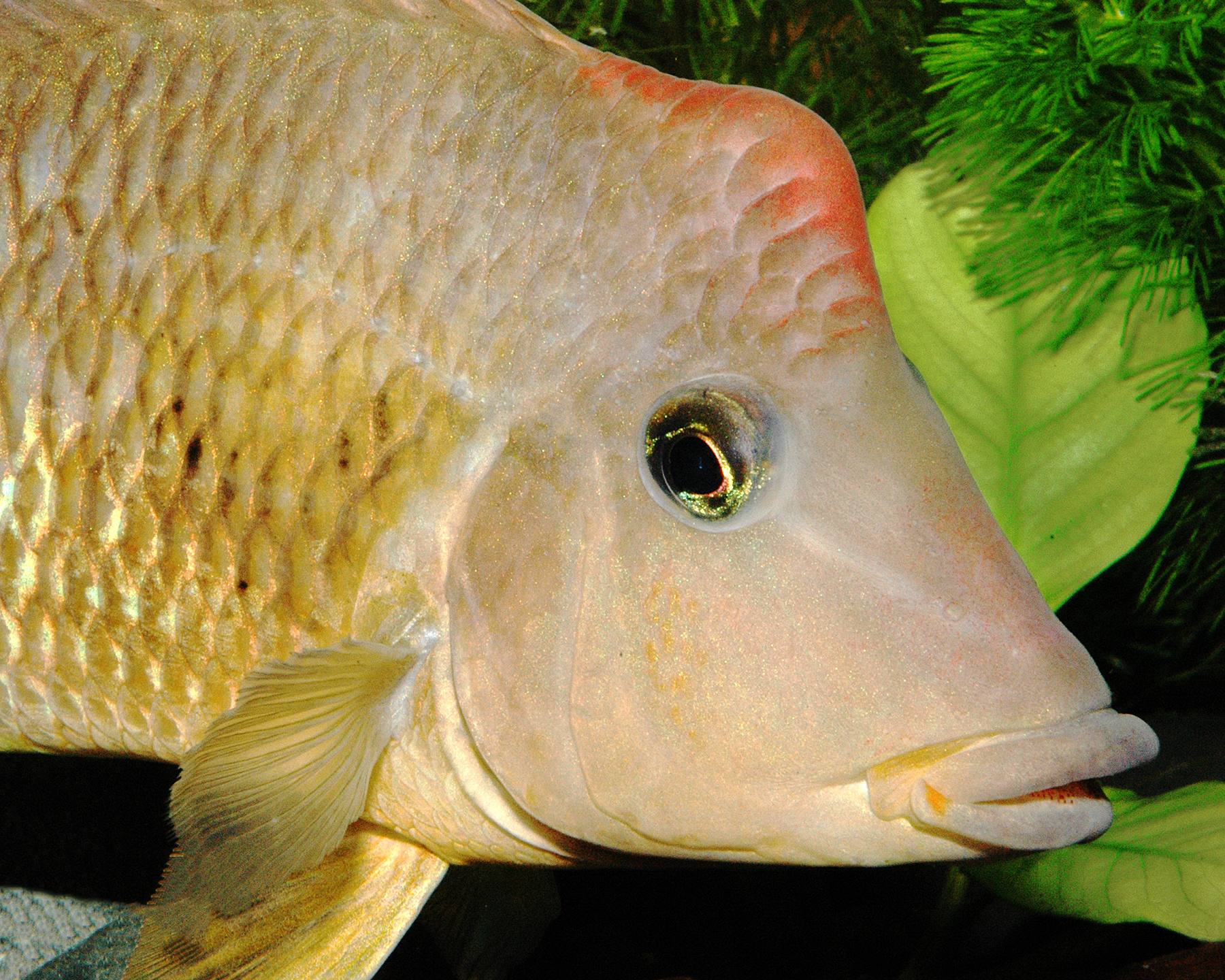
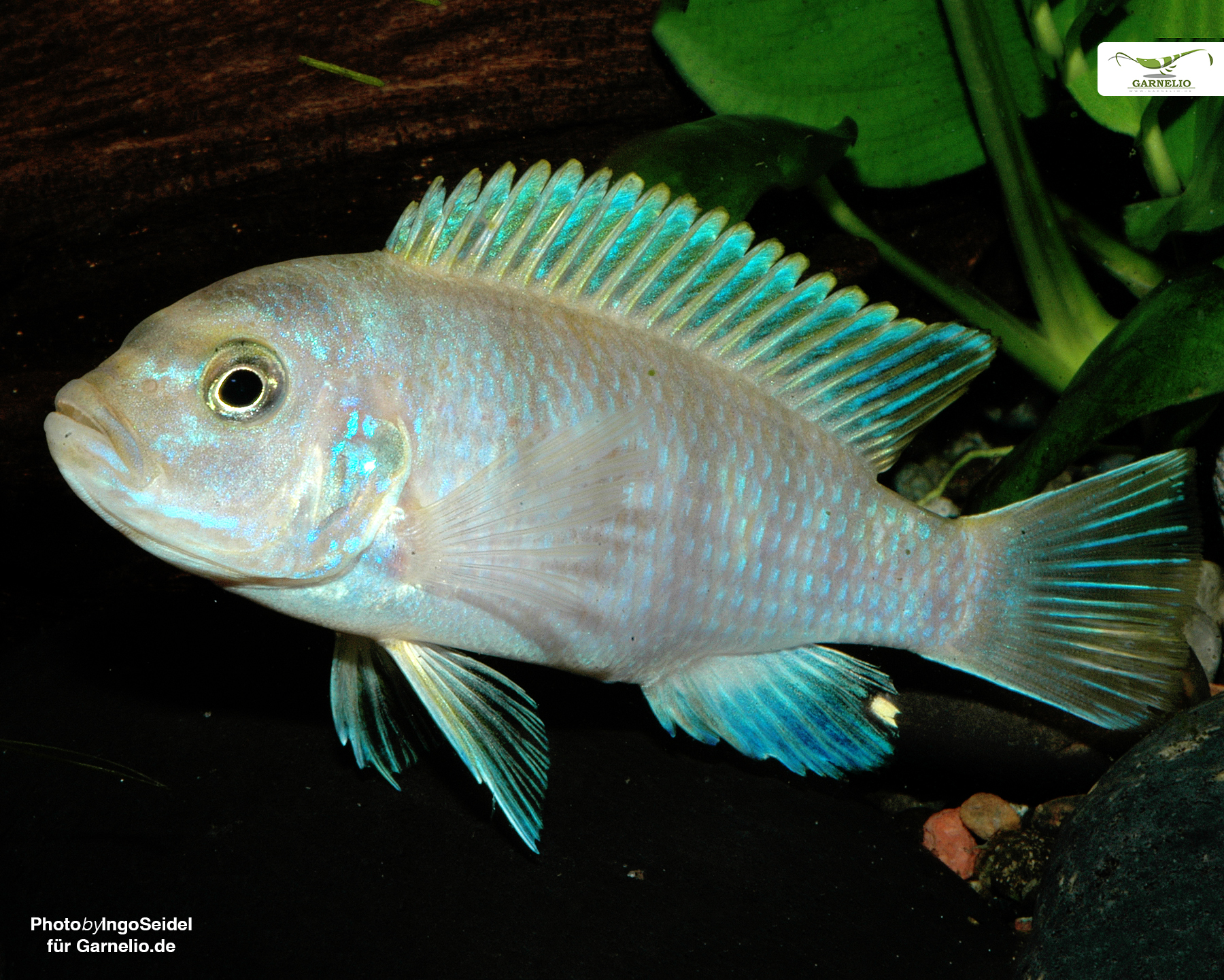
The species is Julidochromis dickfeldi, a member of the cichlid family Cichlidae and the genus Julidochromis. It is commonly called Dickfeld’s Julidochromis or the slender cichlid. The supplied source identifies the fish as this species, and the photographs show the expected elongated form, dark longitudinal markings, pale body and blue fin edging. Aquarium fish may vary in contrast according to mood, lighting and locality, so photographs alone should not be used to establish a collection locality or strain.
Distribution and habitat
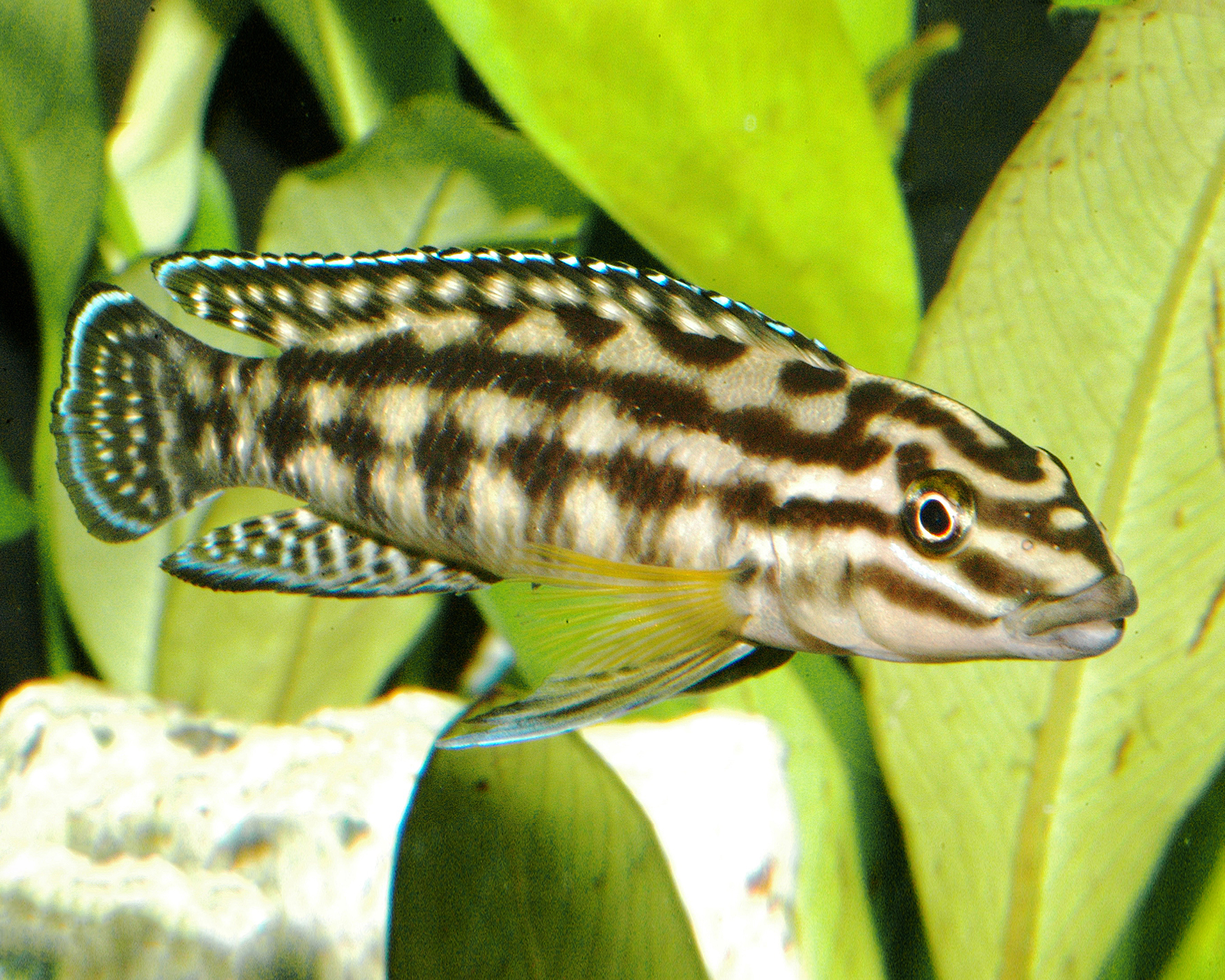
Julidochromis dickfeldi is endemic to Lake Tanganyika in East Africa. It inhabits the rocky littoral zone, where cracks, cavities and fallen rock provide shelter and breeding sites. The lake is warm, strongly mineralised and alkaline. Replicating these conditions with hard water, good oxygenation and extensive rockwork is more important than adding plants or creating a heavily planted layout.
Behaviour and temperament
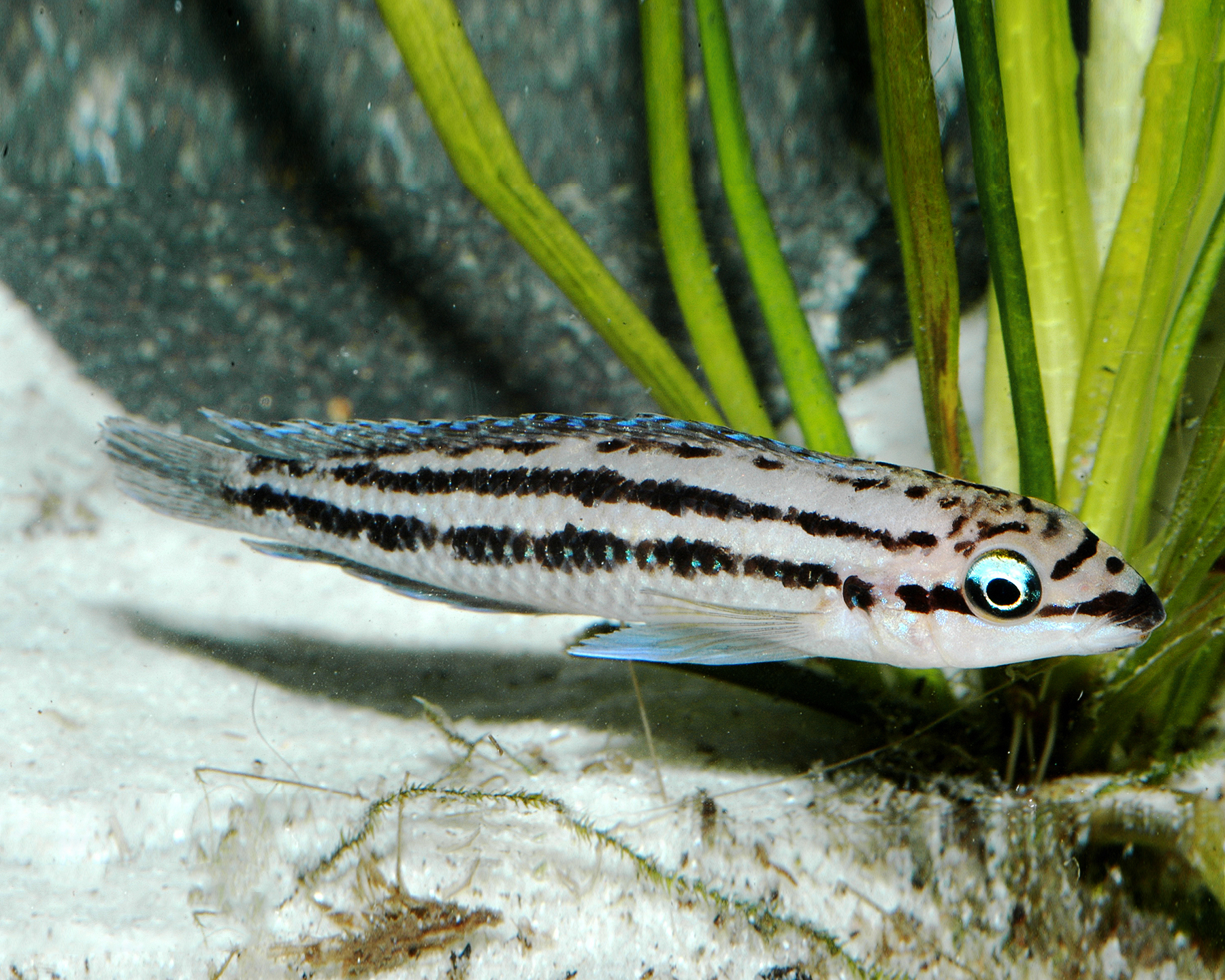
This is a secretive but active rock-dweller that spends much of its time inspecting surfaces, crevices and territories. It is usually manageable in a community of Tanganyikan fishes with similar water requirements, but adults defend a chosen cave and can be aggressive toward conspecifics or similarly shaped bottom-dwelling cichlids. A compatible pair is generally more reliable than keeping several unrelated adults in a small aquarium. Visual barriers and multiple separate shelters reduce conflict.
Aquarium size and setup
A bonded pair can be maintained in an aquarium of about 75 litres, provided it has a generous footprint and substantial rockwork; a larger aquarium is preferable for groups or a mixed Tanganyika community. Use a stable, fully cycled filter, strong surface movement and a secure cover. Arrange rounded rocks or suitable aquarium-safe caves directly on the tank base before adding substrate, preventing undermining. Fine sand or small smooth gravel is appropriate. Leave several narrow crevices and more than one potential territory so fish can retreat from one another.
Water requirements
Maintain 24-28 °C, pH 8.0-9.0 and consistently hard, alkaline water. Exact hardness values are less important than stability and adequate mineral content, but very soft or acidic water should be avoided. Ammonia and nitrite must remain at zero, while nitrate should be kept low through regular partial water changes. Match replacement water carefully for temperature and chemistry, and avoid abrupt changes in pH or hardness.
Diet and feeding
Offer a varied diet based on quality small cichlid pellets or granules, supplemented with flakes and occasional frozen foods such as mysis or brine shrimp. Small portions fed once or twice daily are preferable to large meals. Include some vegetable or algae-based material, but do not rely on a rich, high-fat diet. Remove uneaten food promptly, especially in a rock-filled aquarium where debris can collect in inaccessible spaces.
Compatibility
Suitable companions are peaceful to moderately assertive Tanganyika fishes that tolerate hard, alkaline water and do not compete directly for the same small caves. Avoid large predatory cichlids, fin-nippers, highly aggressive species and fish requiring soft acidic water. Keep sightlines broken with rockwork, but provide enough open area for feeding and routine observation. When a pair begins breeding, its defended area may expand and previously tolerated tank mates can be chased away.
Breeding
The species is a cave-spawning substrate breeder. A compatible pair usually selects a narrow crevice or small cave, where the female deposits eggs and the male fertilises them. Provide several potential spawning sites, stable warm alkaline water and excellent diet rather than repeatedly disturbing the rockwork. The parents generally guard the site and defend the immediate territory. Fry can be offered finely powdered foods or other appropriately sized first foods once free-swimming. In a community aquarium, many young may be lost to tank mates, so a separate rearing arrangement is useful when raising a larger number.
Leave your comments