Taxonomy and identification
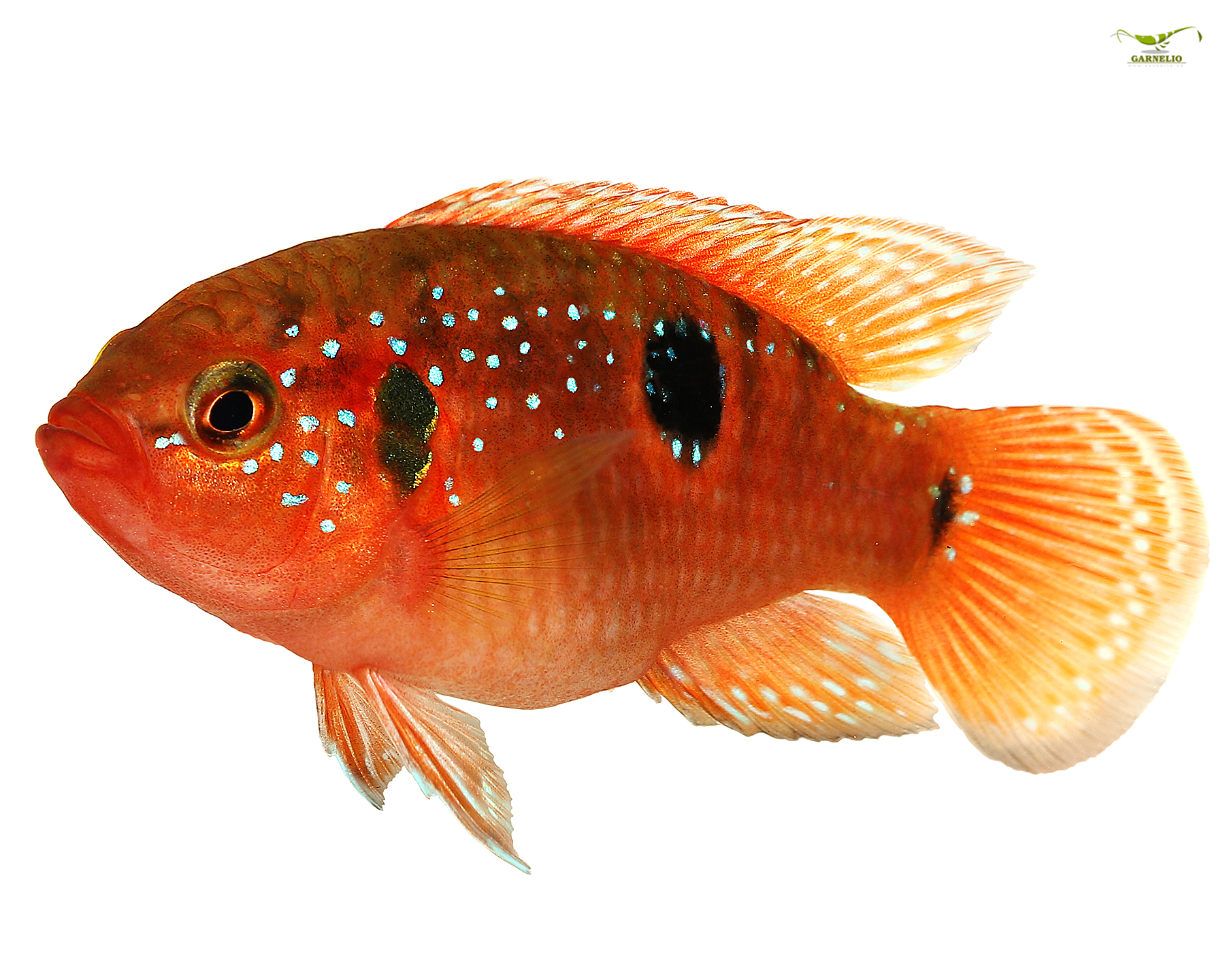
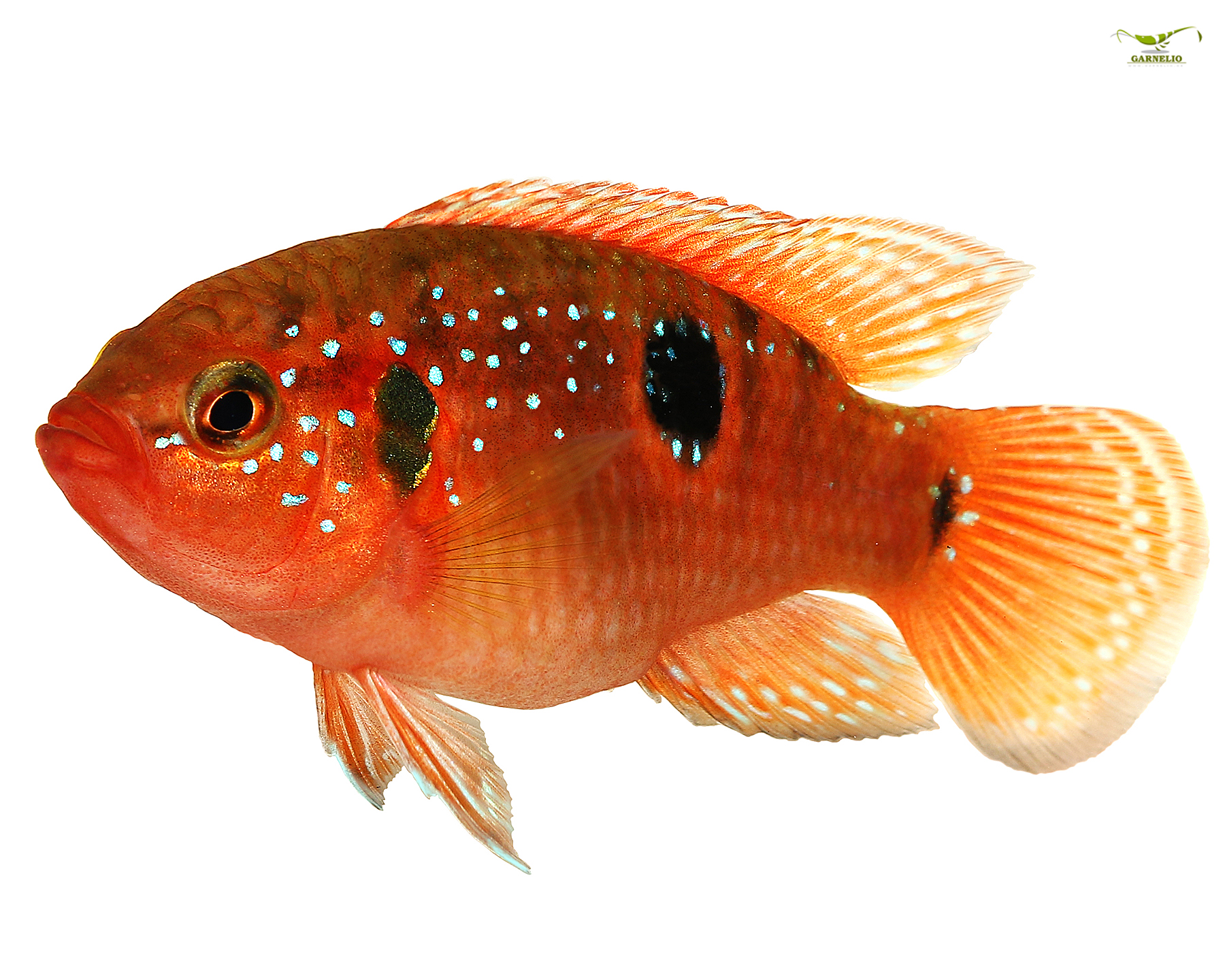
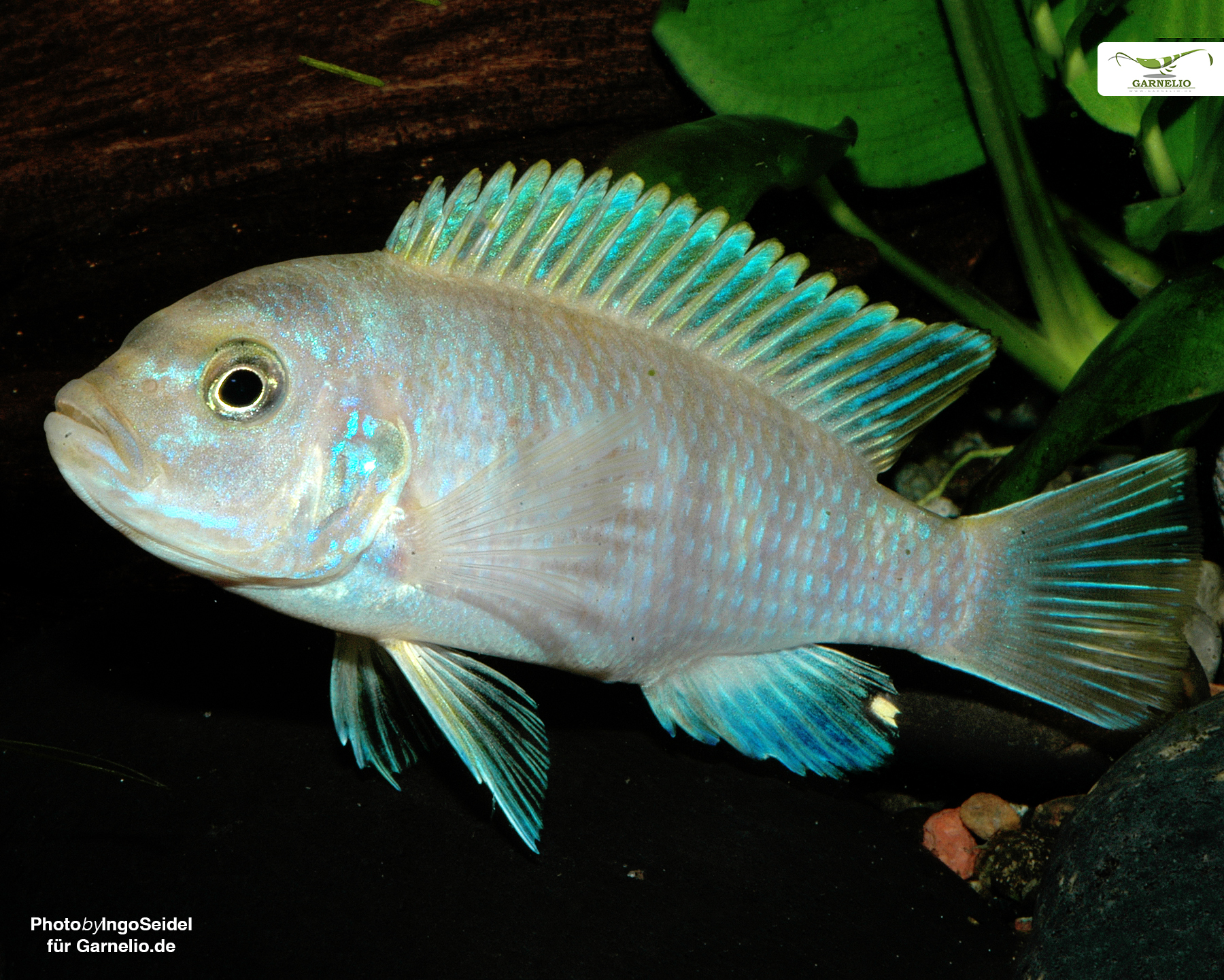
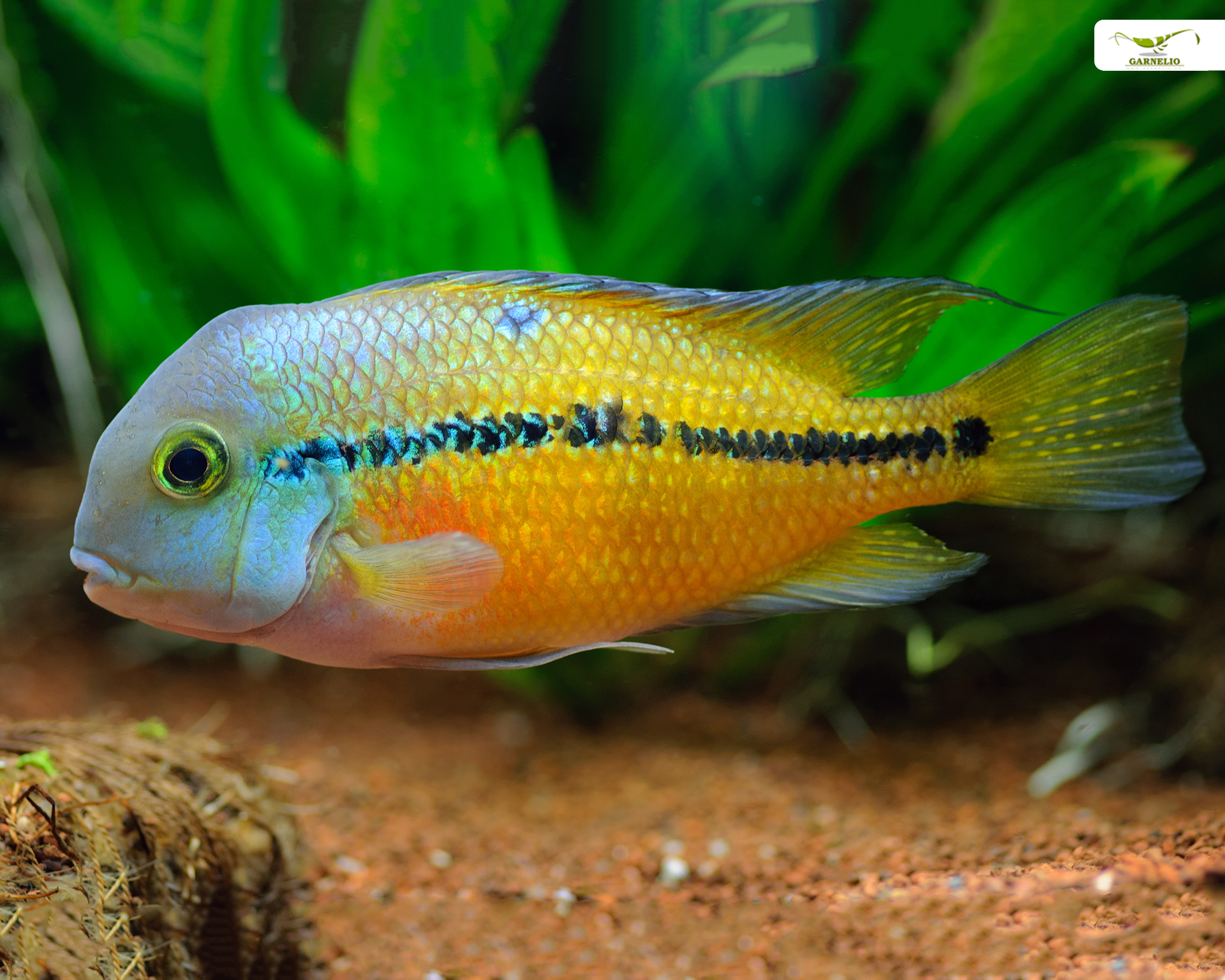
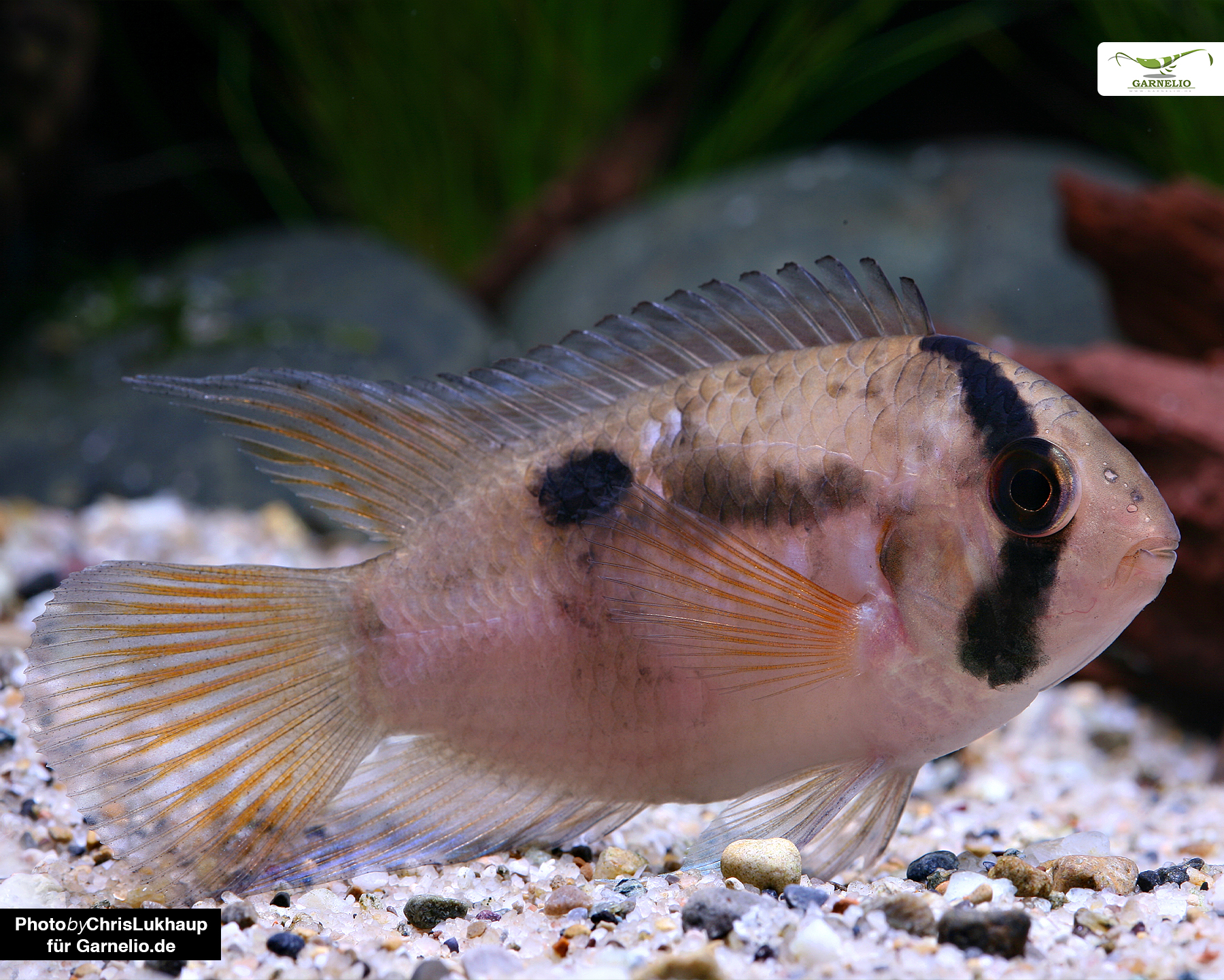
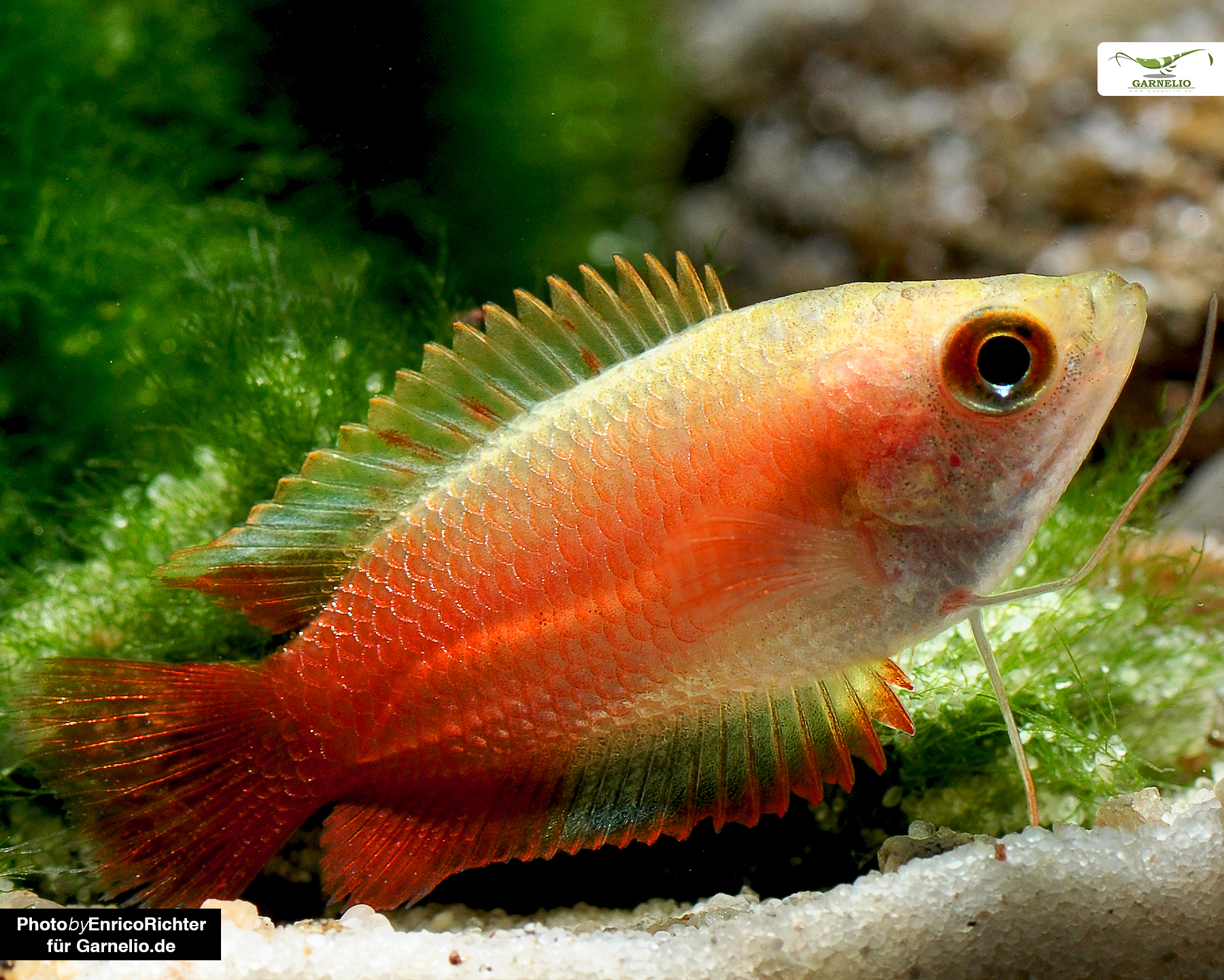
Hemichromis lifalili belongs to the family Cichlidae and the genus Hemichromis. It is commonly known as the red jewel cichlid or lifalili jewel cichlid. Adults usually have a red to orange base color, iridescent blue-green spots and one or more dark body markings. Trade names are inconsistent, and this species is frequently confused with other jewel cichlids; the supplied photographs and label support the identification but cannot establish it with complete certainty.
Distribution and habitat
The species is associated with freshwater habitats in tropical West-Central Africa, although published aquarium references and commercial labels do not always agree on the limits of its natural range. It occurs in warm, oxygenated waters with cover, rocks, wood and other structure. In an aquarium, provide open swimming space together with caves or visual barriers and a firm substrate.
Behavior and temperament
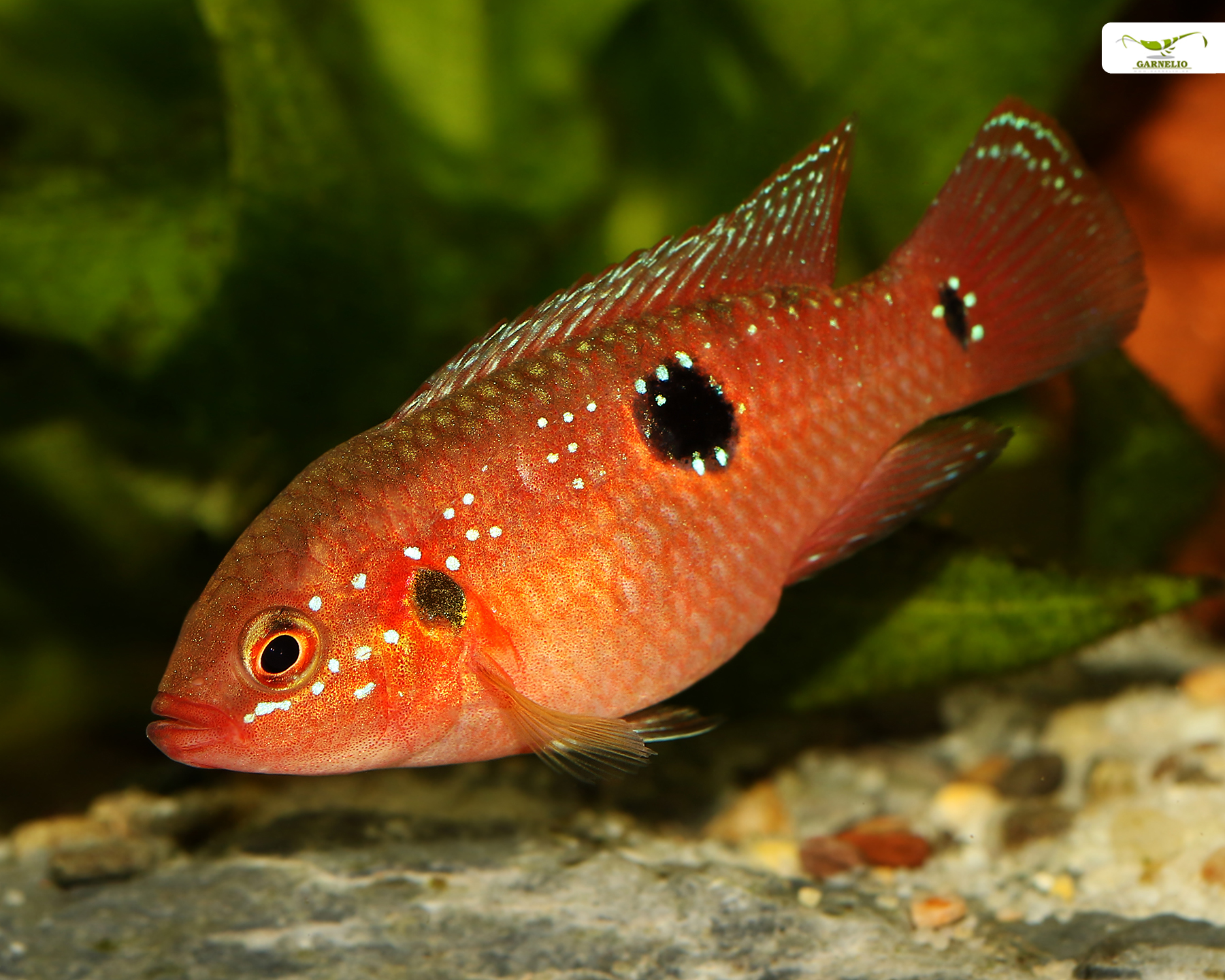
This is a territorial, robust cichlid rather than a peaceful community fish. Adults defend a chosen area, and aggression commonly increases when a pair forms or begins spawning. A compatible pair may remain closely bonded, but courtship can also become dangerous if the fish are not well matched. Observe new pairings closely and provide dividers or a second aquarium in case separation becomes necessary.
Aquarium size and setup
A pair should be given at least about 100 litres, with a larger aquarium preferable for long-term stability and aggression management. A community aquarium should be substantially larger and contain similarly sized, sturdy fish; many keepers instead maintain a species-only setup. Use rocks, caves, wood or hardy plants to break lines of sight. Secure decorations because territorial digging and spawning activity can shift loose objects. Efficient filtration, good surface agitation and regular partial water changes are important.
Water parameters
Maintain stable tropical conditions at 23-28 °C, pH 6.0-7.5, with low ammonia and nitrite and controlled nitrate. The species can tolerate some variation when acclimated, but sudden changes and poor maintenance increase stress and disease risk. Moderate hardness is generally suitable. Test new or heavily stocked aquariums regularly rather than relying only on visual appearance.
Diet
Hemichromis lifalili is an opportunistic omnivore with a strong preference for animal foods. Offer a quality cichlid pellet or granule as the staple, supplemented with frozen or live foods such as brine shrimp, mysis or bloodworm. Small portions once or twice daily are preferable to overfeeding. Avoid making fatty mammalian foods a regular part of the diet, and remove uneaten food promptly.
Compatibility
Do not combine this cichlid with delicate, slow-moving or very small fish. Suitable companions, if attempted, must be robust, similarly sized and able to avoid the pair's territory, but compatibility is never guaranteed. Avoid overcrowding and provide multiple shelters and visual breaks. During spawning, a breeding pair may injure or kill tank mates, so a separate breeding aquarium is the safest arrangement.
Breeding
This species is a substrate spawner. A compatible pair usually cleans a flat rock, slate or another firm surface, where the female deposits eggs and the male fertilizes them. Both parents may fan and guard the clutch, defend the territory and care for wrigglers after hatching. Offer several potential spawning surfaces and gentle but effective filtration. Free-swimming fry can be fed newly hatched brine shrimp or an appropriately fine fry food. Remove surplus juveniles or prepare additional tanks, because parental aggression and the number of young can quickly exceed the available space.
Leave your comments