Identification and taxonomy
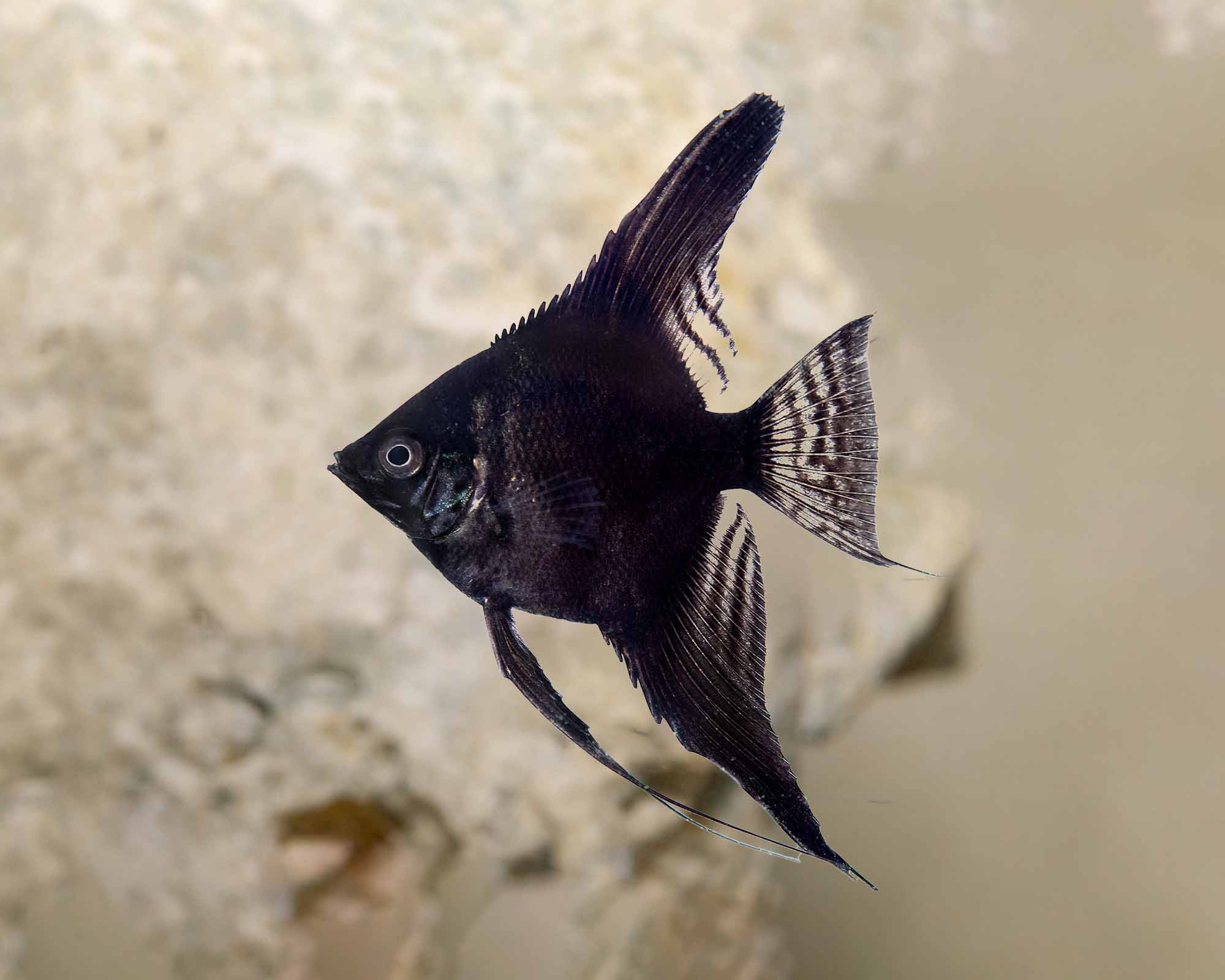
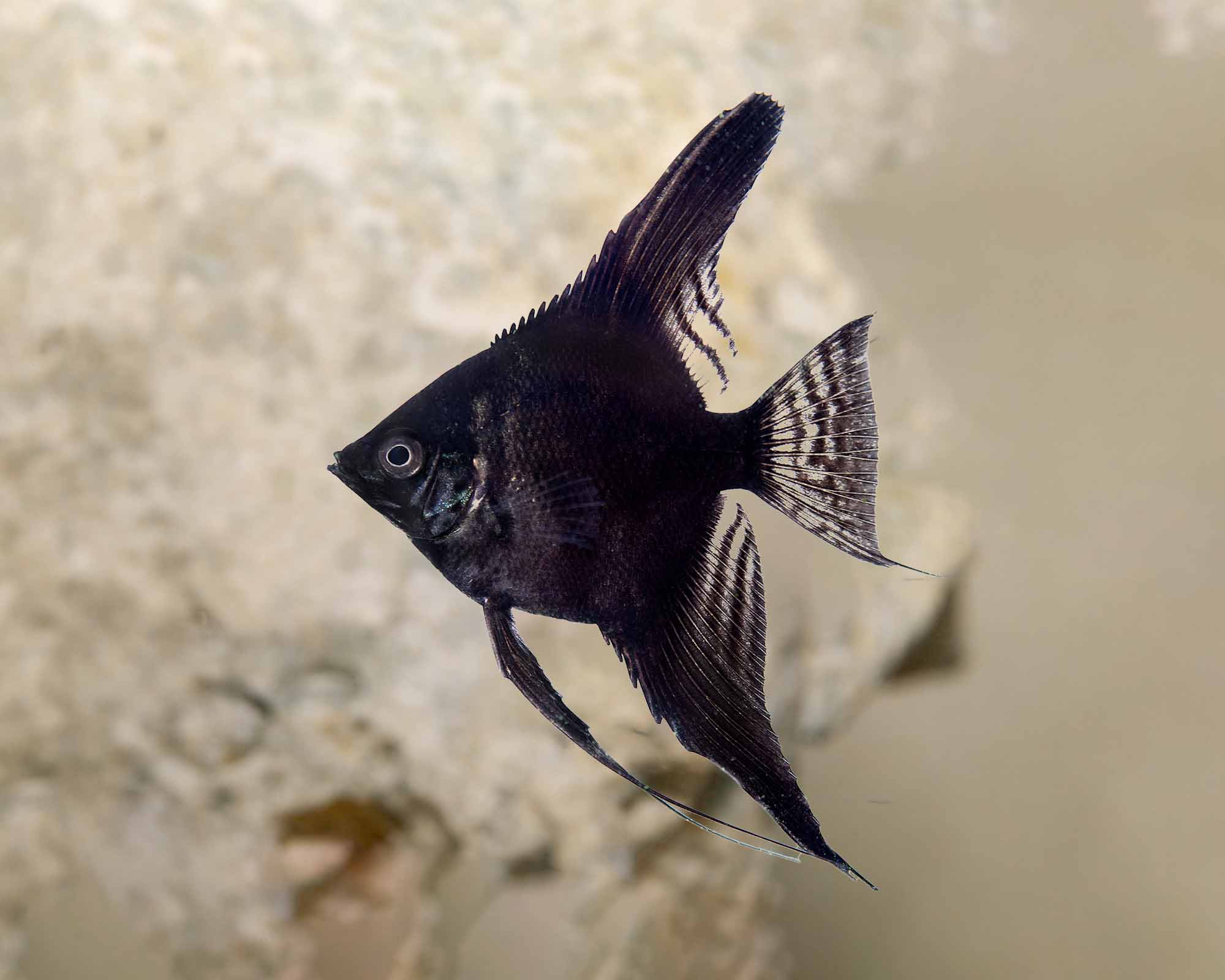
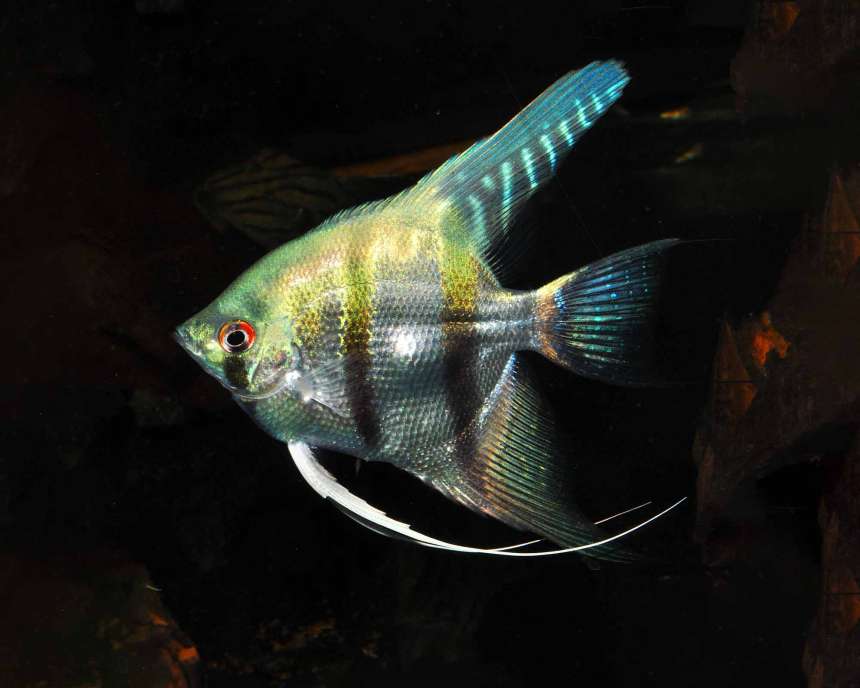
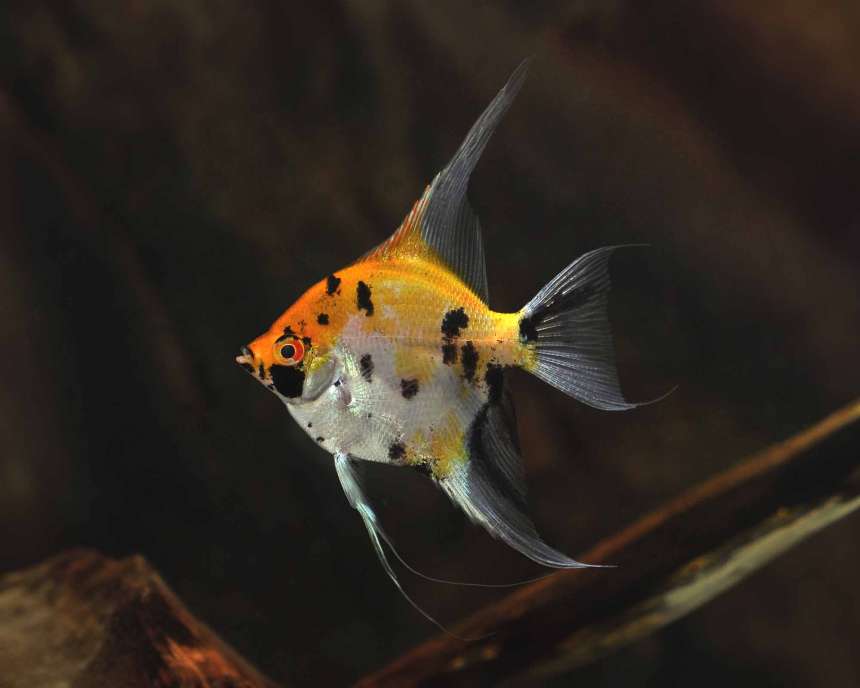
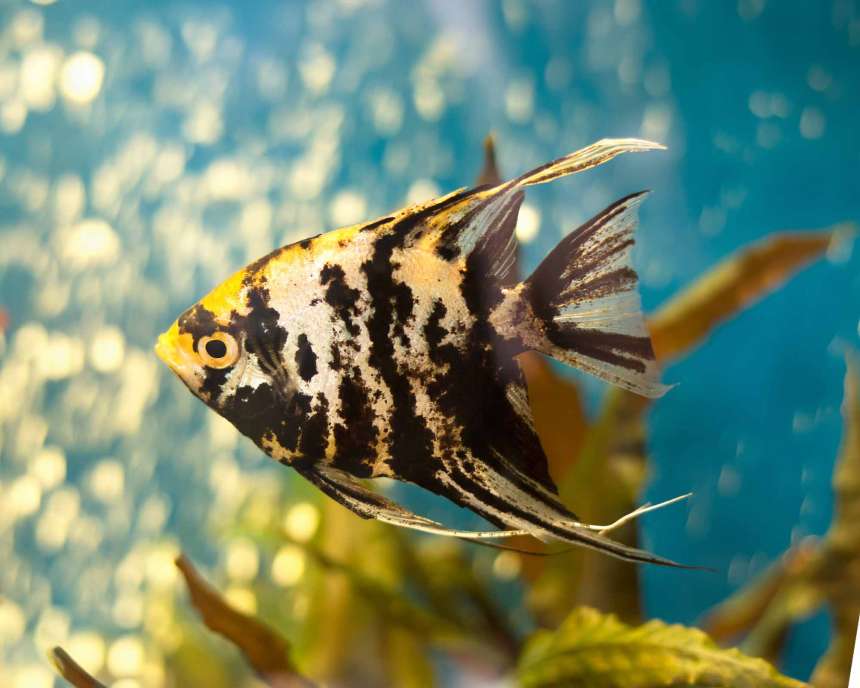
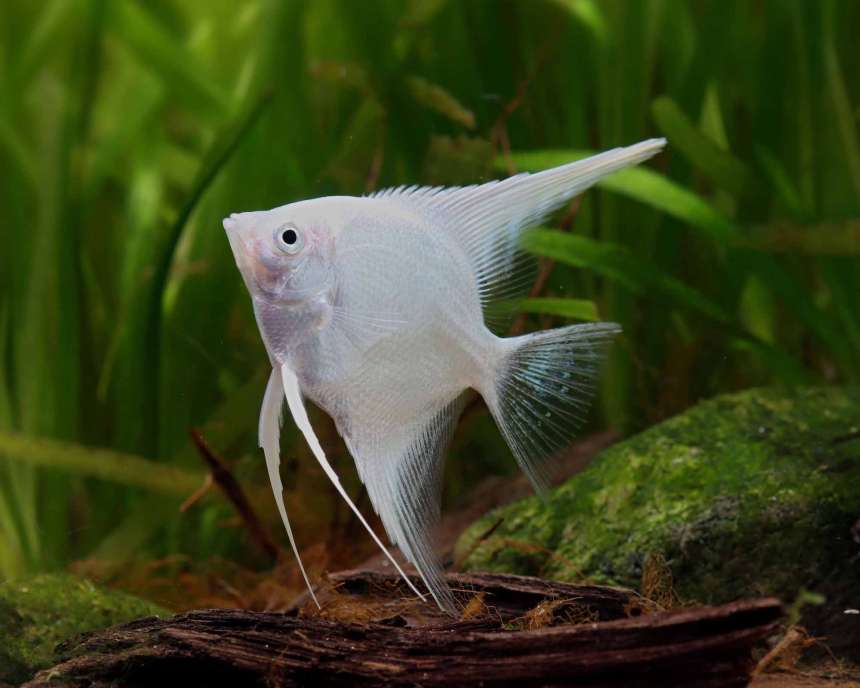
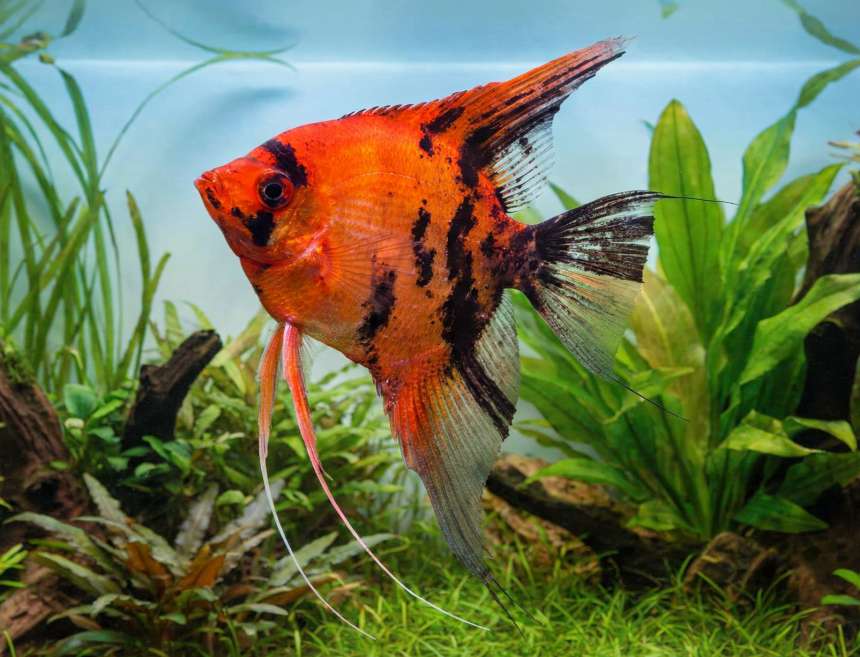
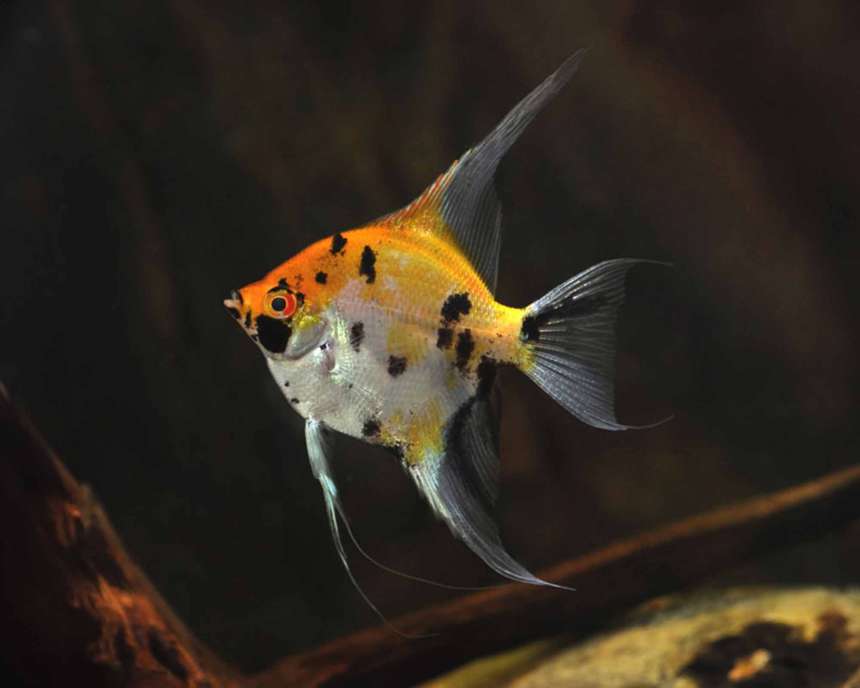
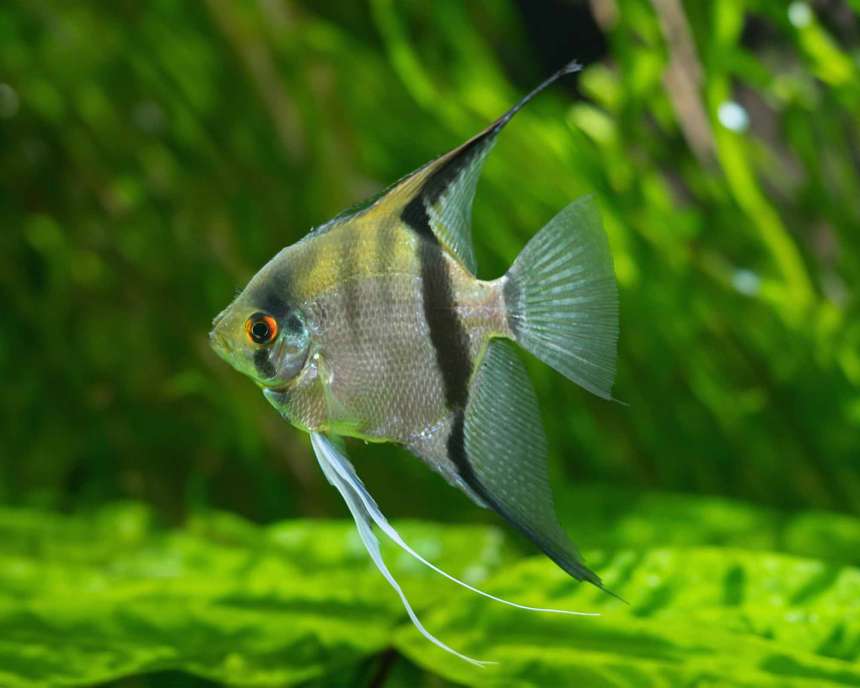
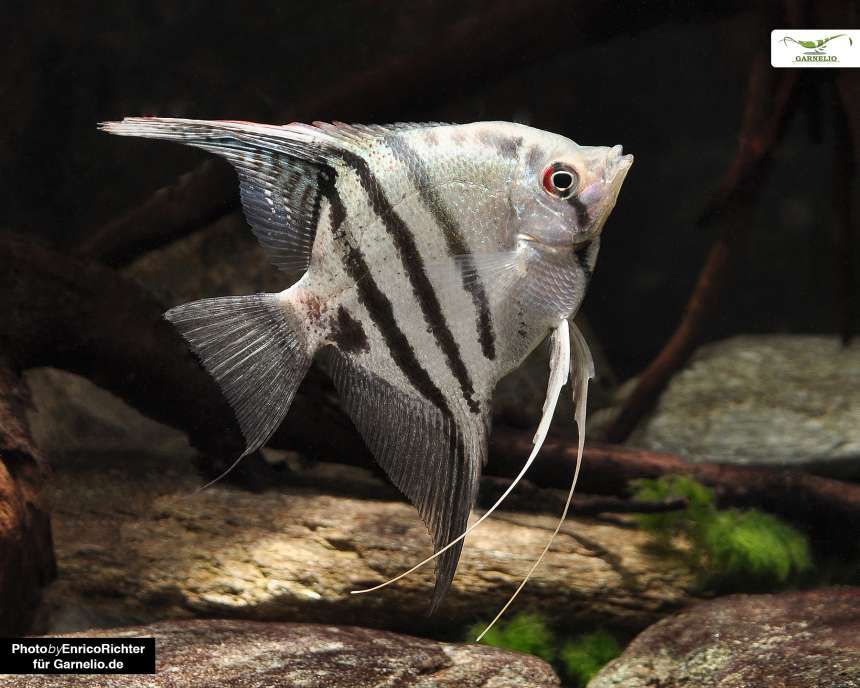
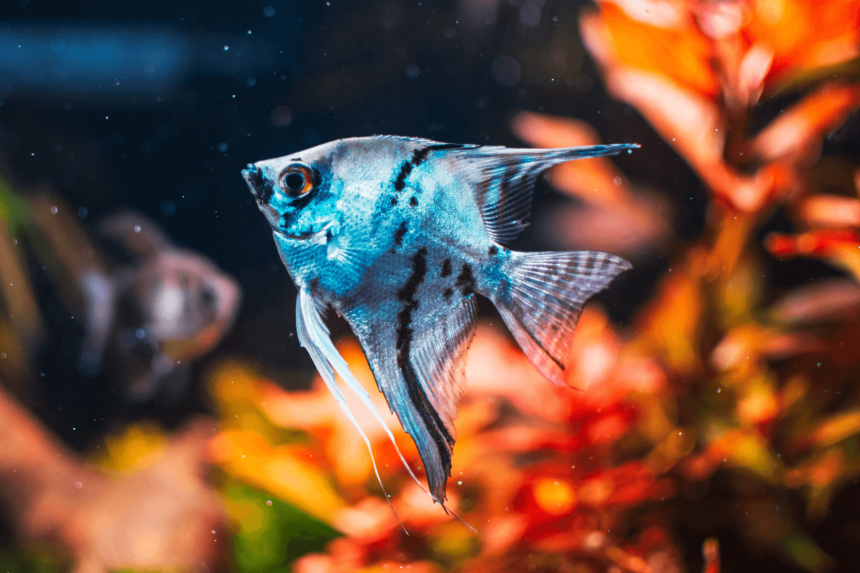
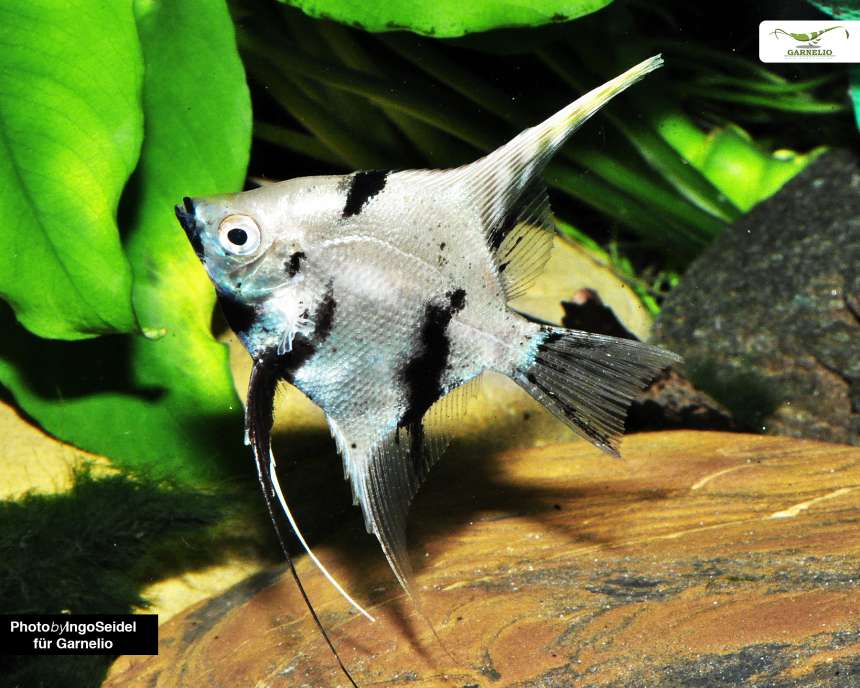
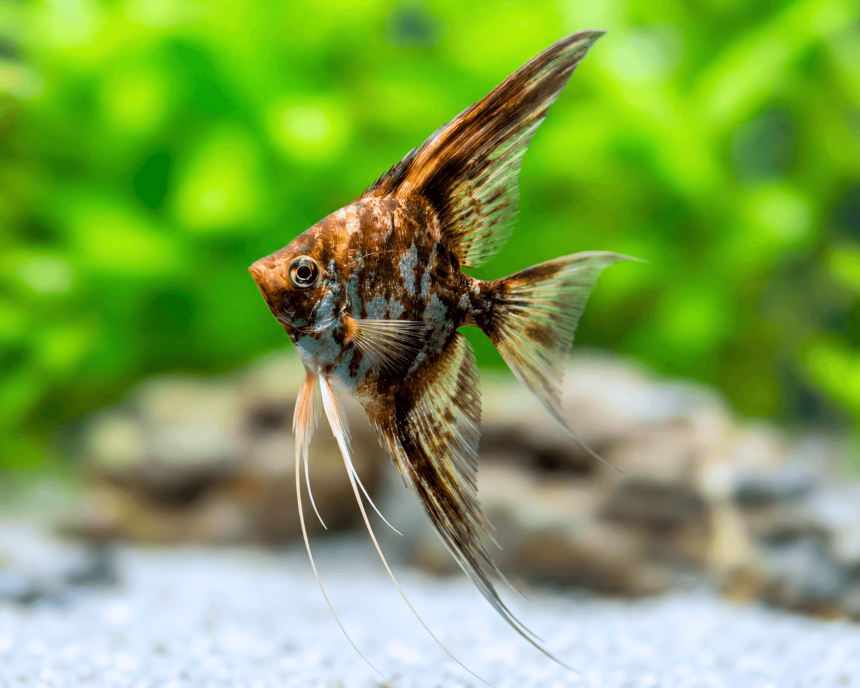
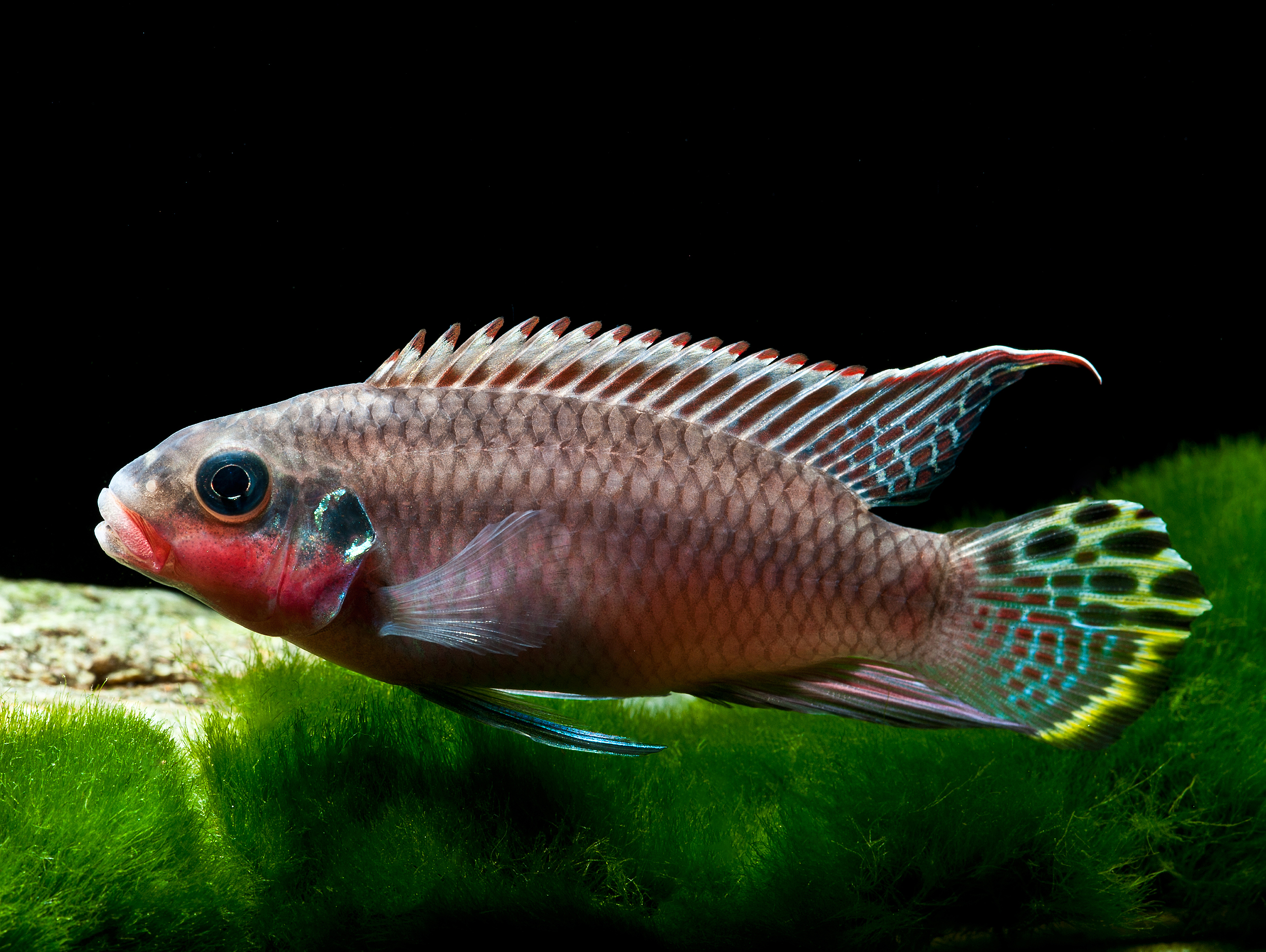
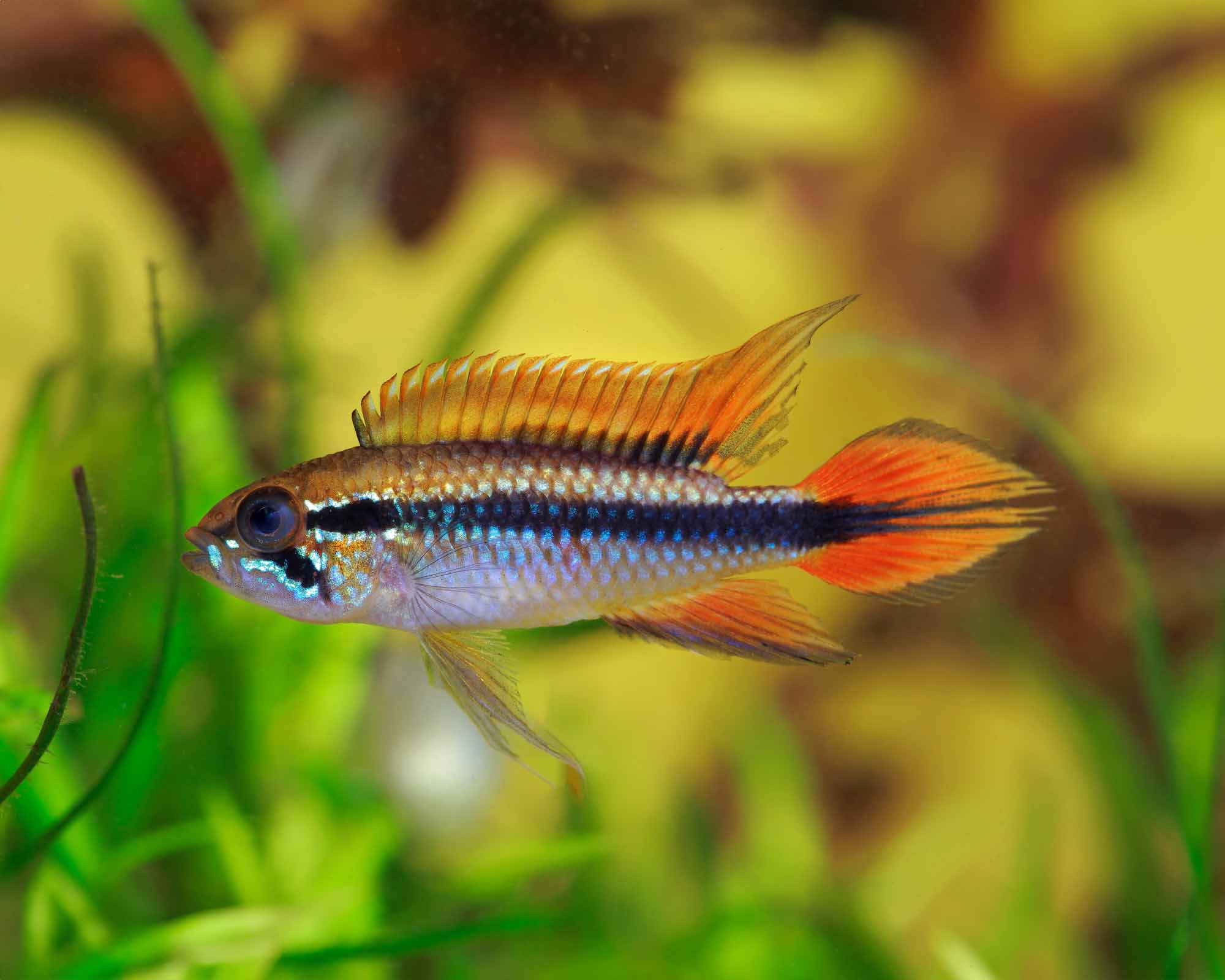
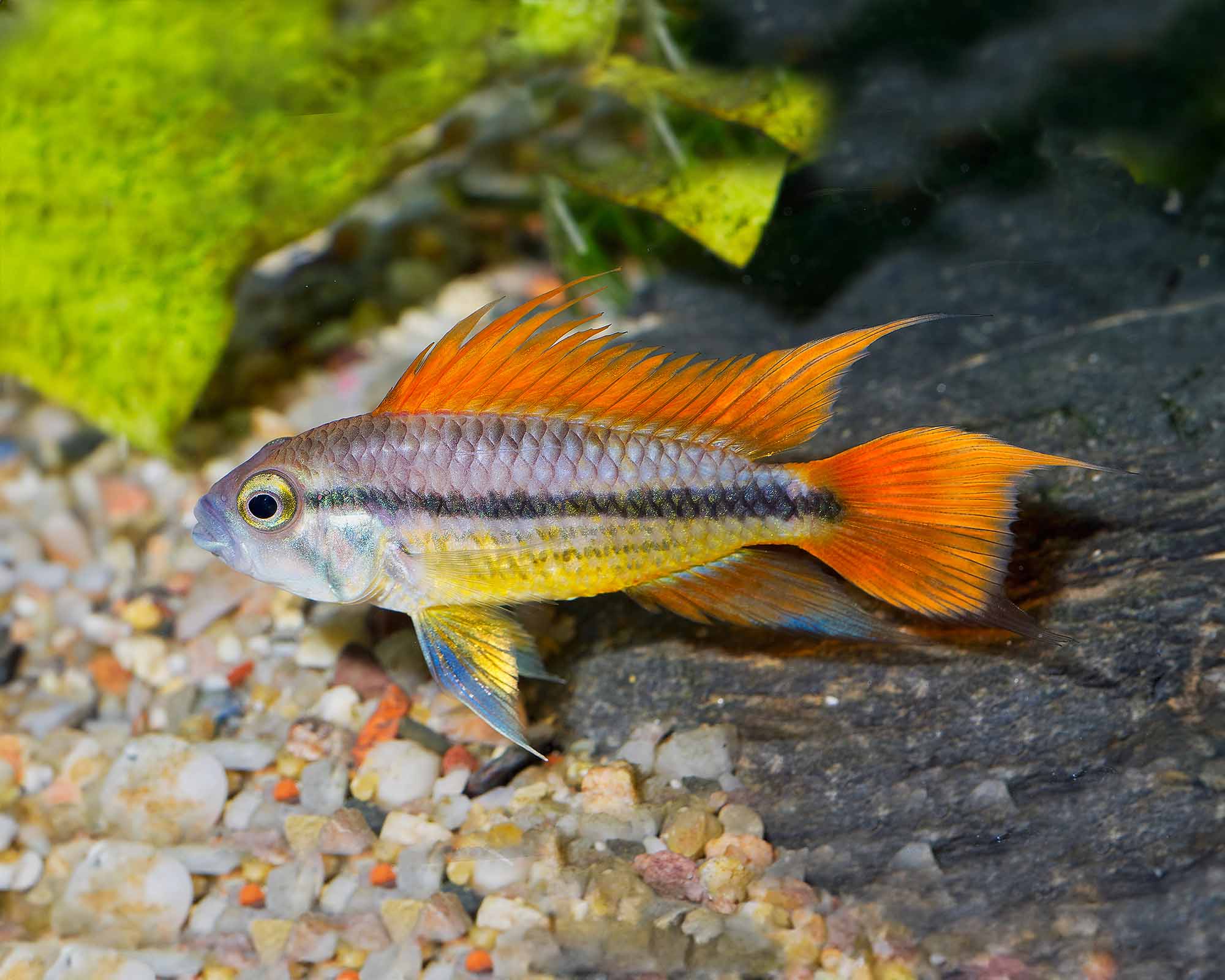
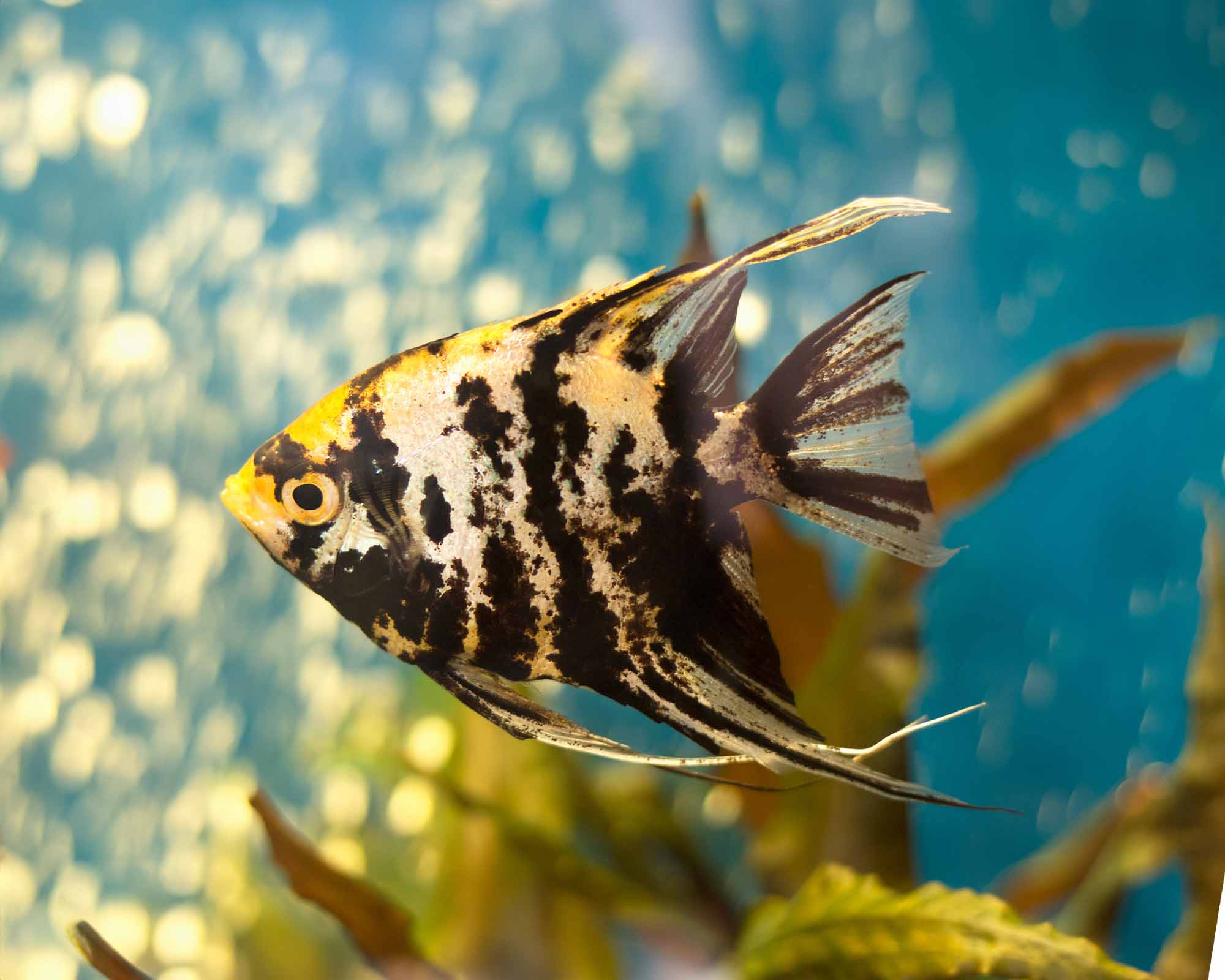
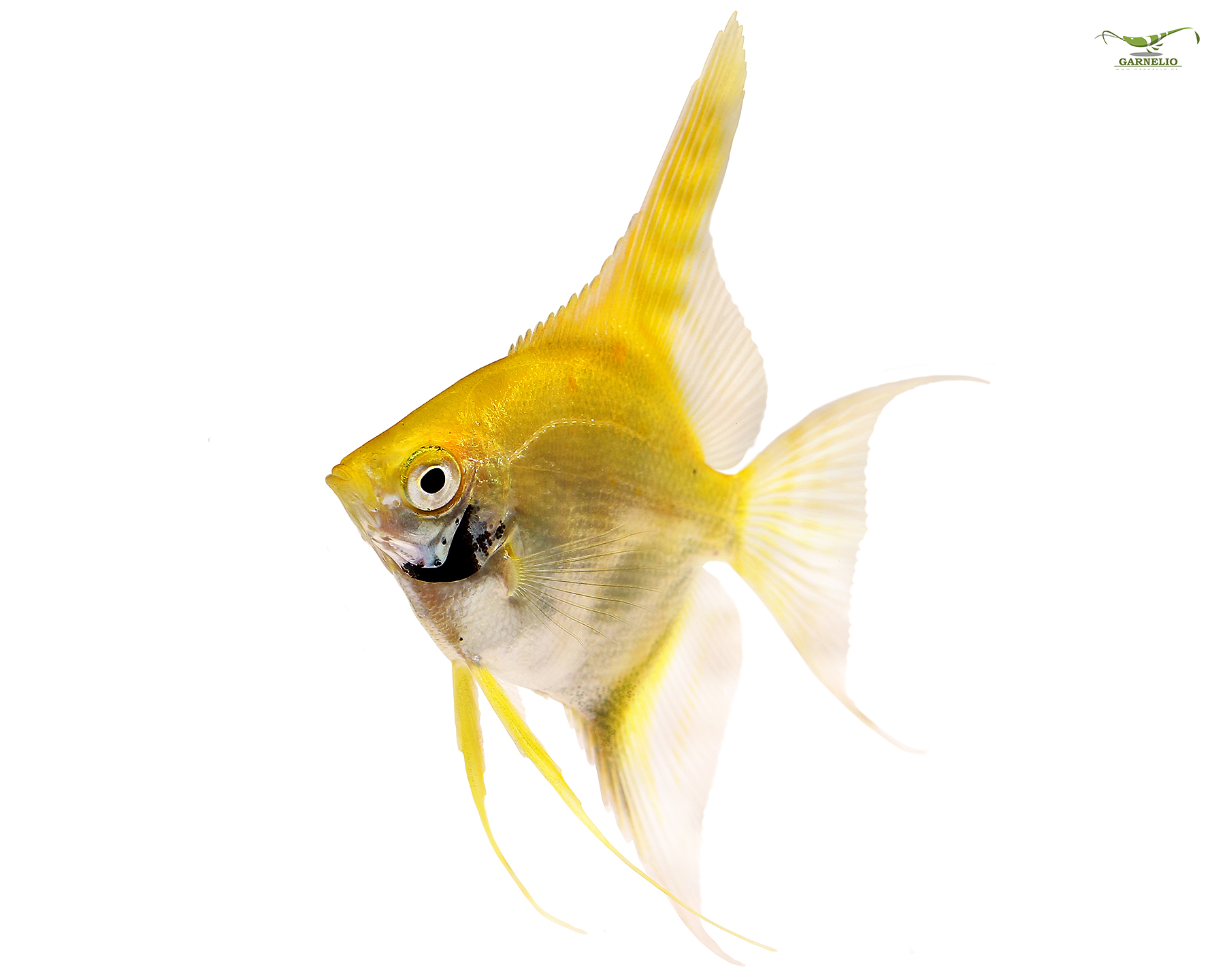
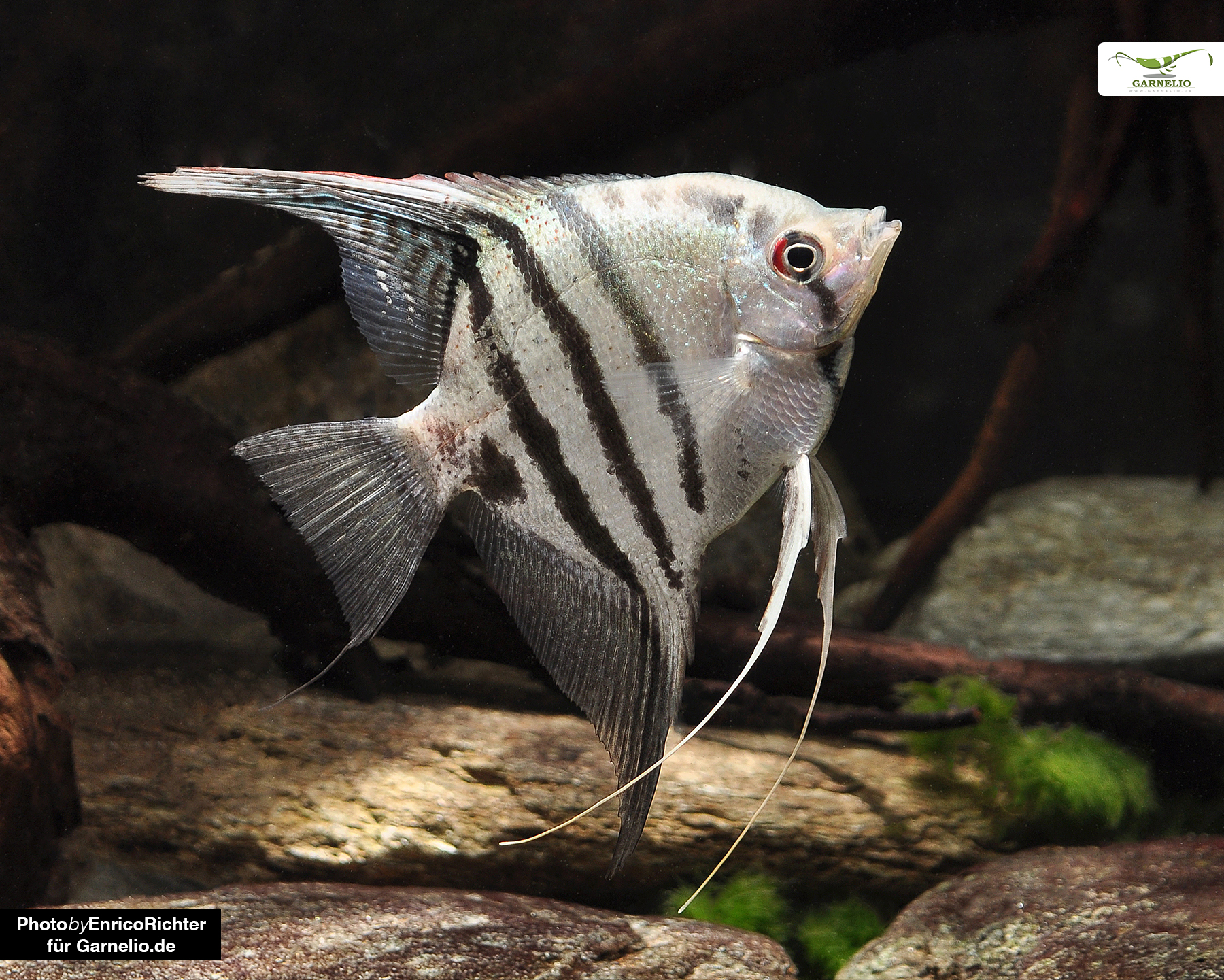
Pterophyllum scalare is a freshwater cichlid in the family Cichlidae. It is commonly called the freshwater angelfish. The aquarium term black angelfish generally describes a selectively bred color form rather than a separate species. Domestic strains may also have altered fin shapes or patterning. The supplied label supports identification as black Pterophyllum scalare, but the mixed photographs make exact strain identification uncertain.
Natural distribution
Wild Pterophyllum scalare occurs in tropical South America, especially slow-moving waters and flooded habitats associated with the Amazon, Orinoco, and Essequibo drainage regions. It uses areas with vegetation, roots, branches, and subdued flow. Most black angelfish sold for aquariums are captive-bred, so their commercial color form does not indicate a particular wild locality.
Behavior
Angelfish are usually calm when young but become territorial as they mature. They form social groups when immature and may establish a dominant pair or breeding territory as adults. Courtship and spawning can cause substantial chasing and fin damage. Their tall fins and deliberate swimming style are best supported by open vertical space, plants, wood, and visual breaks.
Aquarium size and layout
A pair should have a well-filtered aquarium of about 200 litres, with greater volume recommended for a group or community setup. A tall tank is more useful than a shallow tank because adult fins can make the fish considerably taller than their body length. Use gentle to moderate circulation, secure covers, smooth decor, broad-leaved plants, and open swimming areas. Maintain excellent water quality and avoid overcrowding.
Water parameters
Keep the aquarium warm and stable at 24-30 °C, with a practical target around 26-28 °C. A pH of 6.0-7.5 is suitable, provided it remains stable. Soft to moderately hard water is generally tolerated. Ammonia and nitrite should remain undetectable, and nitrate should be kept low through regular maintenance. Acclimate fish carefully when water chemistry differs substantially.
Diet
Offer a varied omnivorous diet based on a quality cichlid or tropical granule, supplemented with frozen or live foods such as brine shrimp, bloodworm, daphnia, and mosquito larvae where appropriate. Feed small portions once or twice daily and remove uneaten food. Variety supports condition, but rich foods should not replace a balanced staple diet.
Compatibility
Suitable companions are peaceful, robust fish of compatible size that tolerate warm, soft-to-neutral water. Avoid fin-nipping species, highly aggressive cichlids, and very small fish that may be swallowed by adult angelfish. Angelfish may prey on small shrimp and tiny schooling fish. Keep an eye on long-finned tank mates, since territorial behavior and occasional nipping can increase during spawning.
Breeding
Angelfish are egg-laying cichlids that usually form a pair and deposit adhesive eggs in rows on a vertical surface such as a broad leaf, slate, pipe, or aquarium glass. Good conditioning, warm clean water, and suitable spawning surfaces can encourage breeding. Both parents may fan and defend the eggs, although inexperienced pairs sometimes eat a clutch. For reliable survival, move the spawning surface or raise the fry separately; newly free-swimming fry require very small foods such as freshly hatched brine shrimp.
Leave your comments