AquaLibs presents AquaRank Discover the world’s leading aquascapers

Explore transparent rankings built from published results across the world’s leading aquascaping contests.

Melanochromis auratus: Golden Mbuna Care Guide

Taxonomy and identification

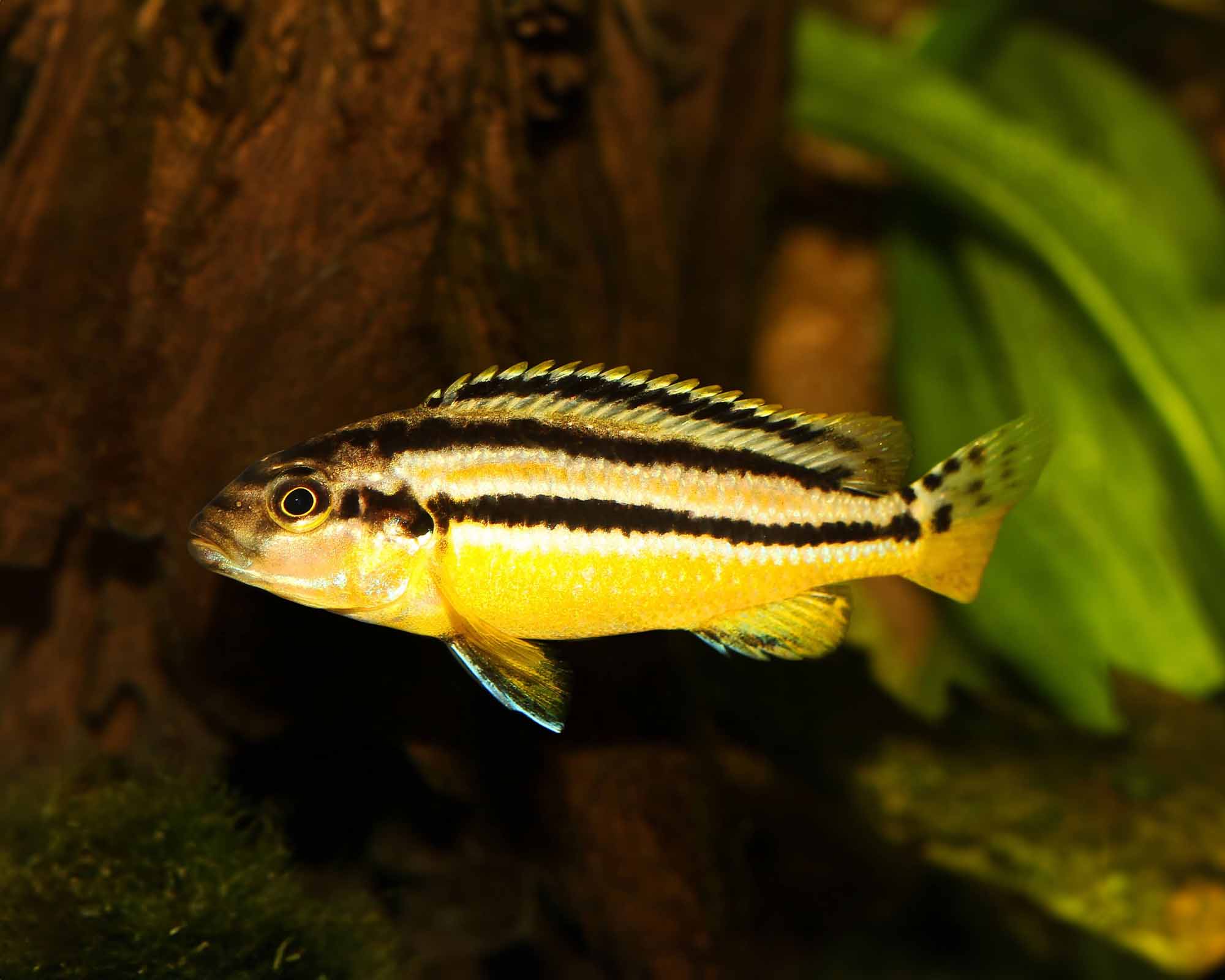
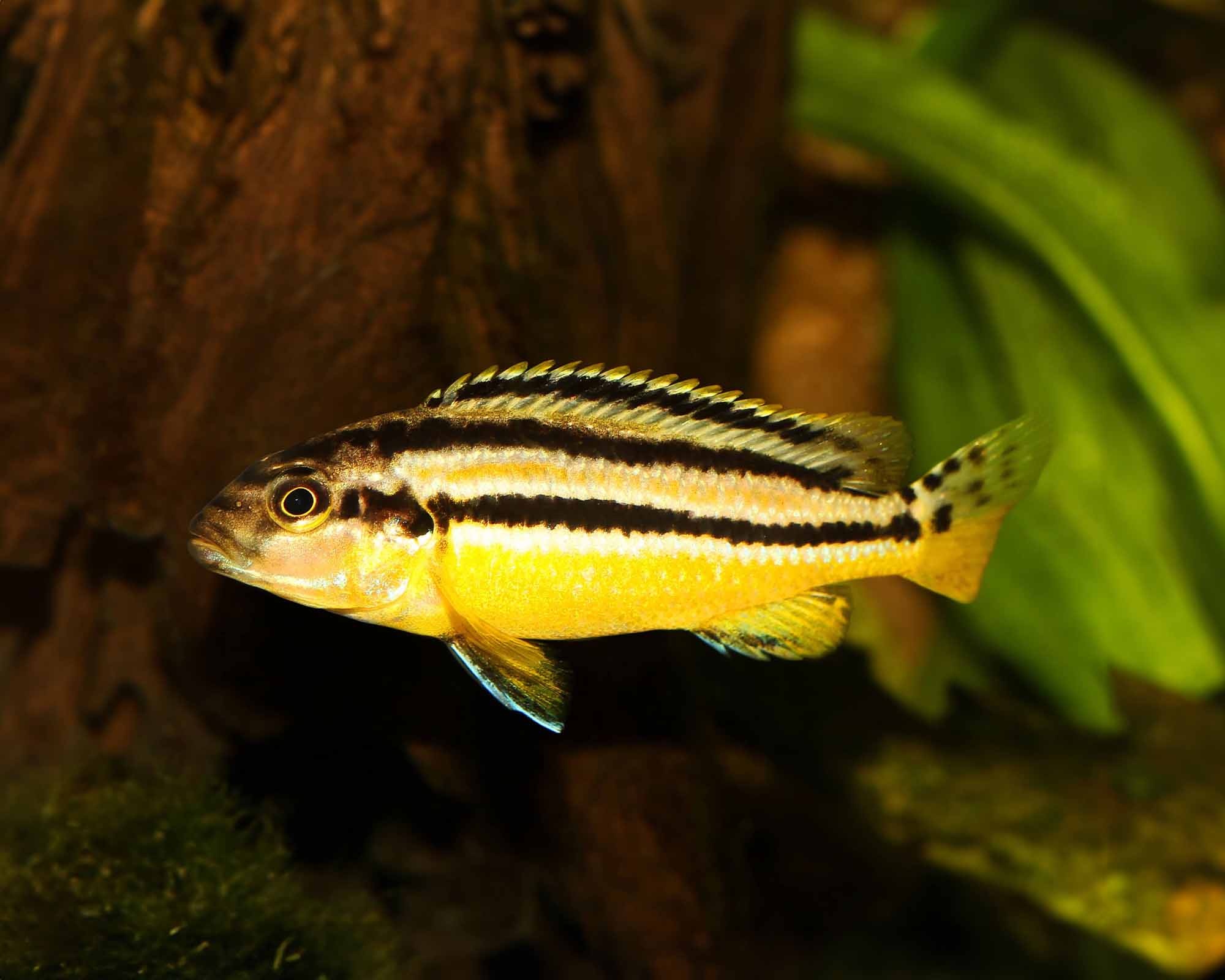
Melanochromis auratus is a cichlid in the family Cichlidae and the mbuna group of rock-associated Lake Malawi fishes. The species is frequently sold as the auratus cichlid, golden mbuna, or Malawi golden cichlid. It is not Carassius auratus, the goldfish. The supplied label combines “turquoise goldfish” with the valid-looking name Melanochromis auratus; the images and scientific name are consistent with the latter, but sex, locality, and captive color strain cannot be confirmed from the material supplied.
Taxonomy and identification

Distribution and habitat

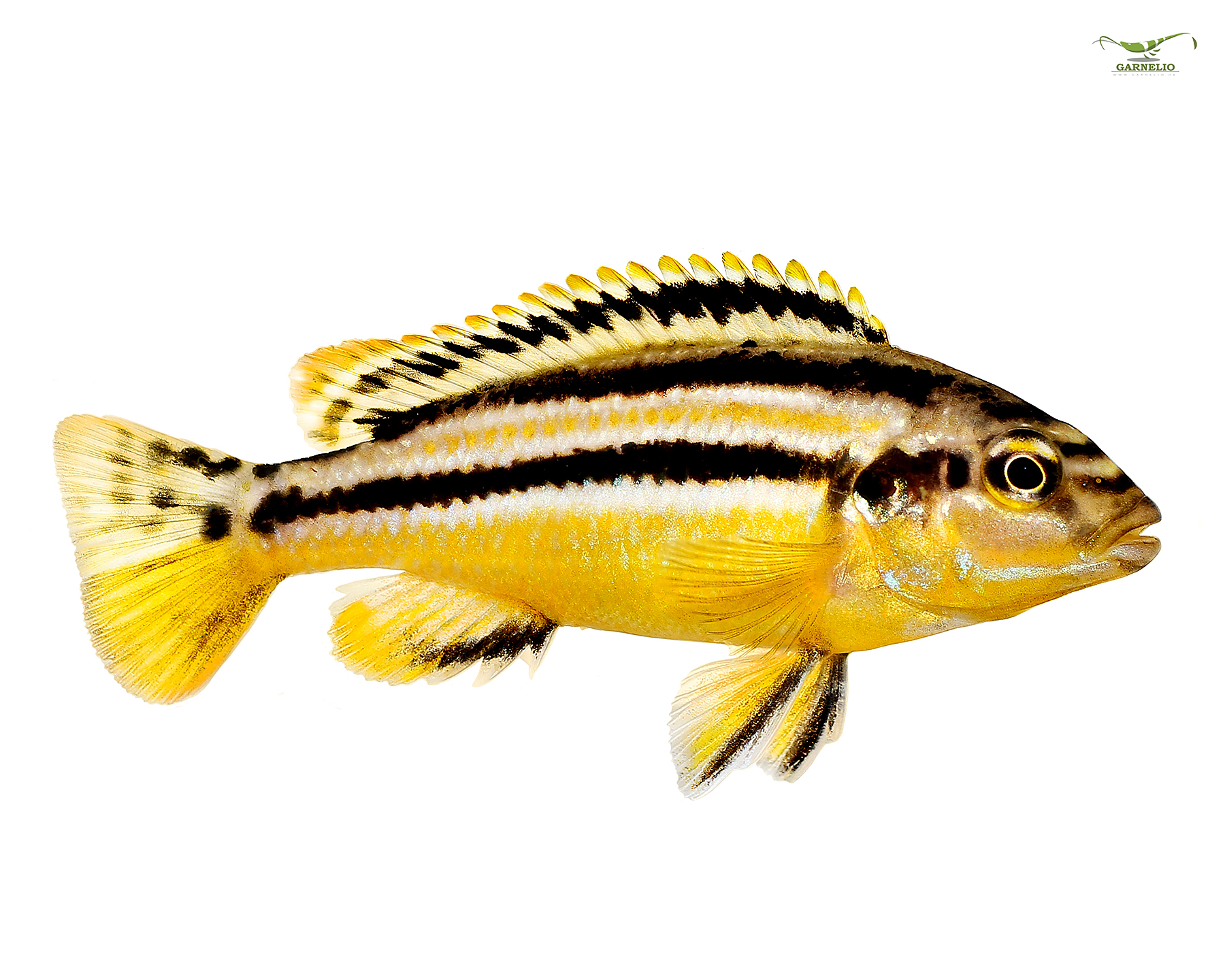
The species is native to Lake Malawi in East Africa, where it inhabits shallow rocky margins and associated rubble zones. Its natural environment provides caves, crevices, hard alkaline water, and extensive surfaces for grazing. An aquarium should reproduce this structure with rounded rocks or other stable hardscape, open swimming space, and secure hiding places.
Distribution and habitat

Appearance and sexual differences

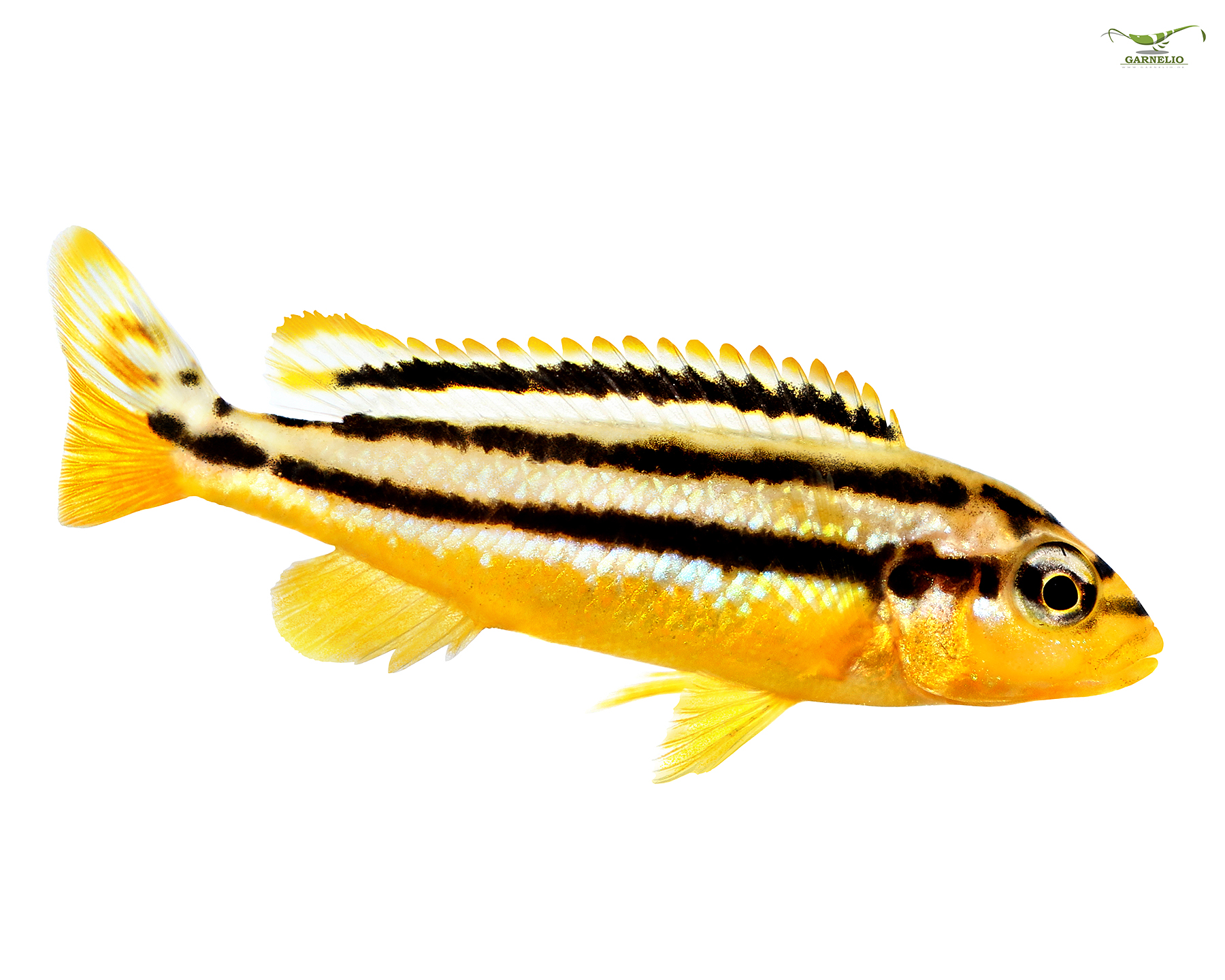
Females and juveniles are commonly yellow to golden with several dark horizontal bands and dark markings on the fins. Mature males often develop a much darker blue-black or brown-black ground color with pale or blue-white striping. Color can vary with sex, social rank, mood, and locality. The fish shown is strongly yellow and black, but a photograph alone cannot establish sex or geographic population.
Appearance and sexual differences

Behavior

Melanochromis auratus is a highly territorial mbuna. It patrols a small feeding and refuge area, grazes rock surfaces, and may chase or injure weaker fish, particularly in a confined aquarium. A pair is not automatically peaceful: a male may relentlessly pressure a female when she has insufficient cover. Use abundant rockwork that breaks lines of sight, and monitor subordinate fish for torn fins, hiding, loss of appetite, or emaciation.

Tank size and setup

A pair should not be kept in a small display aquarium. For a carefully managed pair, about 200 litres is a practical minimum, while a larger aquarium of roughly 250 litres or more is preferable for a community of mbuna. Prioritize floor area and rock structure over excessive height. Build caves and visual barriers on a stable base, leave some open water, use efficient biological filtration, and provide strong circulation without creating exhausting turbulence. A tight-fitting cover is advisable.

Water parameters

Maintain stable, highly oxygenated alkaline water at 24-28 °C, pH 7.6-8.6, with moderate to hard mineral content. Ammonia and nitrite must remain undetectable, and nitrate should be kept low through regular partial water changes and restrained feeding. Match replacement water closely to the aquarium rather than making abrupt pH changes. Stability is more important than pursuing a single exact value.

Diet

This species is primarily an aufwuchs grazer. Offer a high-quality herbivorous cichlid pellet or flake as the staple, supplemented with spirulina-based foods and occasional blanched vegetables such as spinach or courgette. Feed small portions once or twice daily, removing leftovers. Avoid making meaty foods, bloodworms, or fatty preparations a regular part of the diet, because a rich diet can contribute to digestive problems in herbivorous mbuna.

Compatibility

The safest companions are robust Lake Malawi mbuna of comparable adult size and similar water requirements, provided the aquarium is large enough and territorial layouts are planned carefully. Avoid peaceful community fish, slow species, long-finned fish, and similarly patterned or closely related rivals when possible. Do not combine this fish with goldfish or other cool-water species. Overstocking is not a substitute for adequate space, filtration, cover, and observation.

Breeding

Melanochromis auratus is an ovophile maternal mouthbrooder. The female accepts eggs after a spawning display, gathers them in her mouth, and later releases free-swimming fry. Courtship and spawning usually occur over a cleared area near rocks. A brooding female may hide and eat little; avoid netting or stressing her unnecessarily. If fry are to be raised, move the female only with care to a suitable separate aquarium or provide dense cover, because tank mates and adult mbuna may eat the young.

Lifespan and responsible identification

With good water quality, a varied plant-based diet, low chronic aggression, and suitable space, captive individuals commonly live around 8-10 years. The trade name in the supplied source should not be used as evidence that the fish is a goldfish or a turquoise color form. Confirm the seller’s scientific name, sex, and collection or breeding line before purchasing, especially when planning a pair.
Fish info

  • Care level: Moderate
  • Temperament: Aggressive
  • Adult size: 10-12 cm
  • Life expectancy: 8-10 years
  • Fish type: Lake Malawi mbuna cichlid
  • Temperature : 24-28 °C
  • pH: 7.6-8.6
Related on Fishs
Leave your comments
Latest on Fishs
  • Gold Shell-Dwelling Cichlid (Lamprologus ocellatus)

    Gold Shell-Dwelling Cichlid (Lamprologus ocellatus)

    Easy - Moderate
    Lake Tanganyika shell-dwelling cichlid
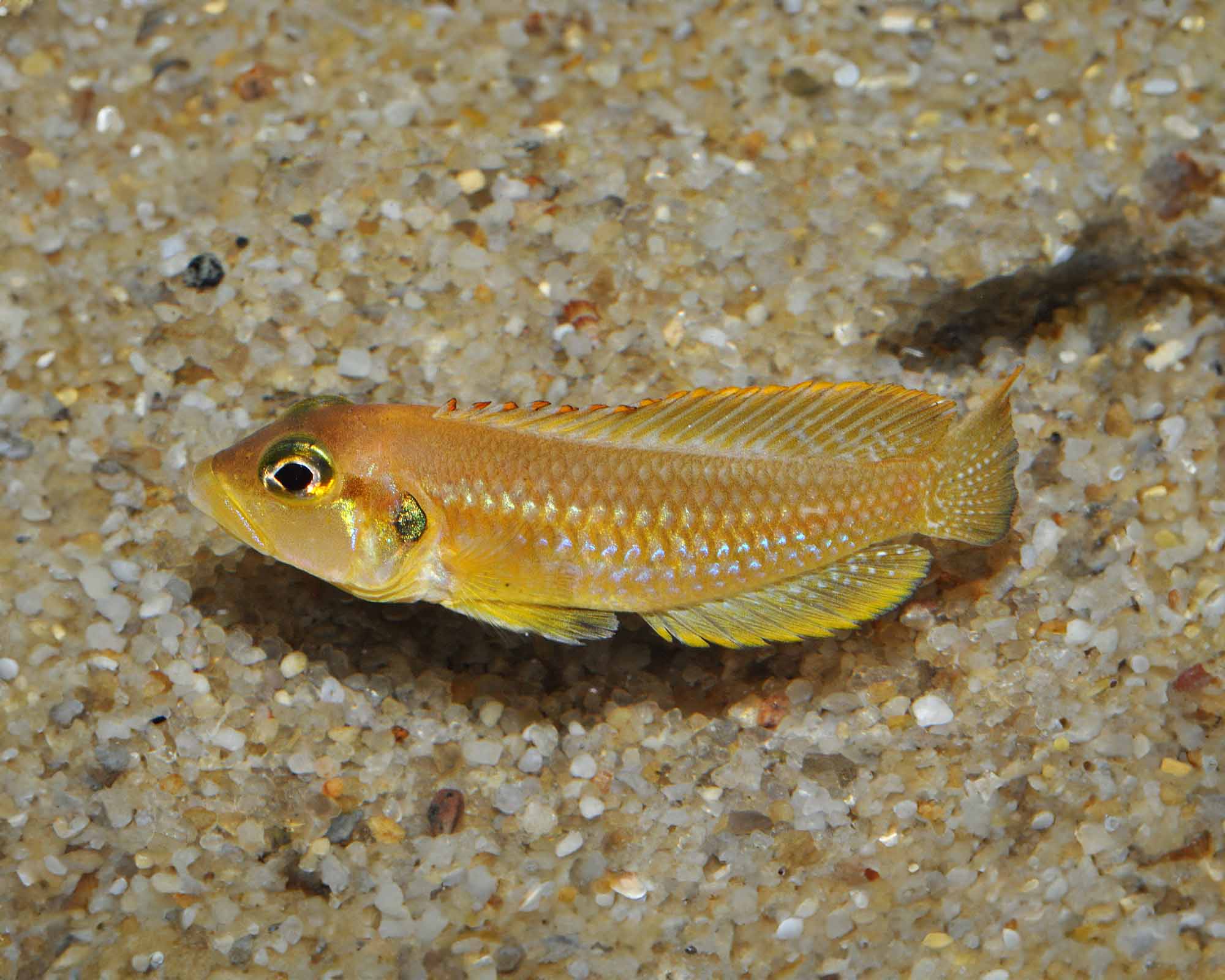
    Lamprologus ocellatus is a small Tanganyikan cichlid that shelters, breeds and defends territory around empty snail shells. The supplied source identifies a gold pair, and the images are consistent with the golden color form, although photographs cannot confirm sex, health or that the fish are an established pair. This species is manageable for aquarists who can provide alkaline, mineral-rich water, a fine sandy substrate and several suitable shells. Its small size contrasts with strong territorial behavior, especially around breeding sites.
  • Salvin's Cichlid (Trichromis salvini)

    Salvin's Cichlid (Trichromis salvini)

    Moderate - Difficult
    Central American cichlid
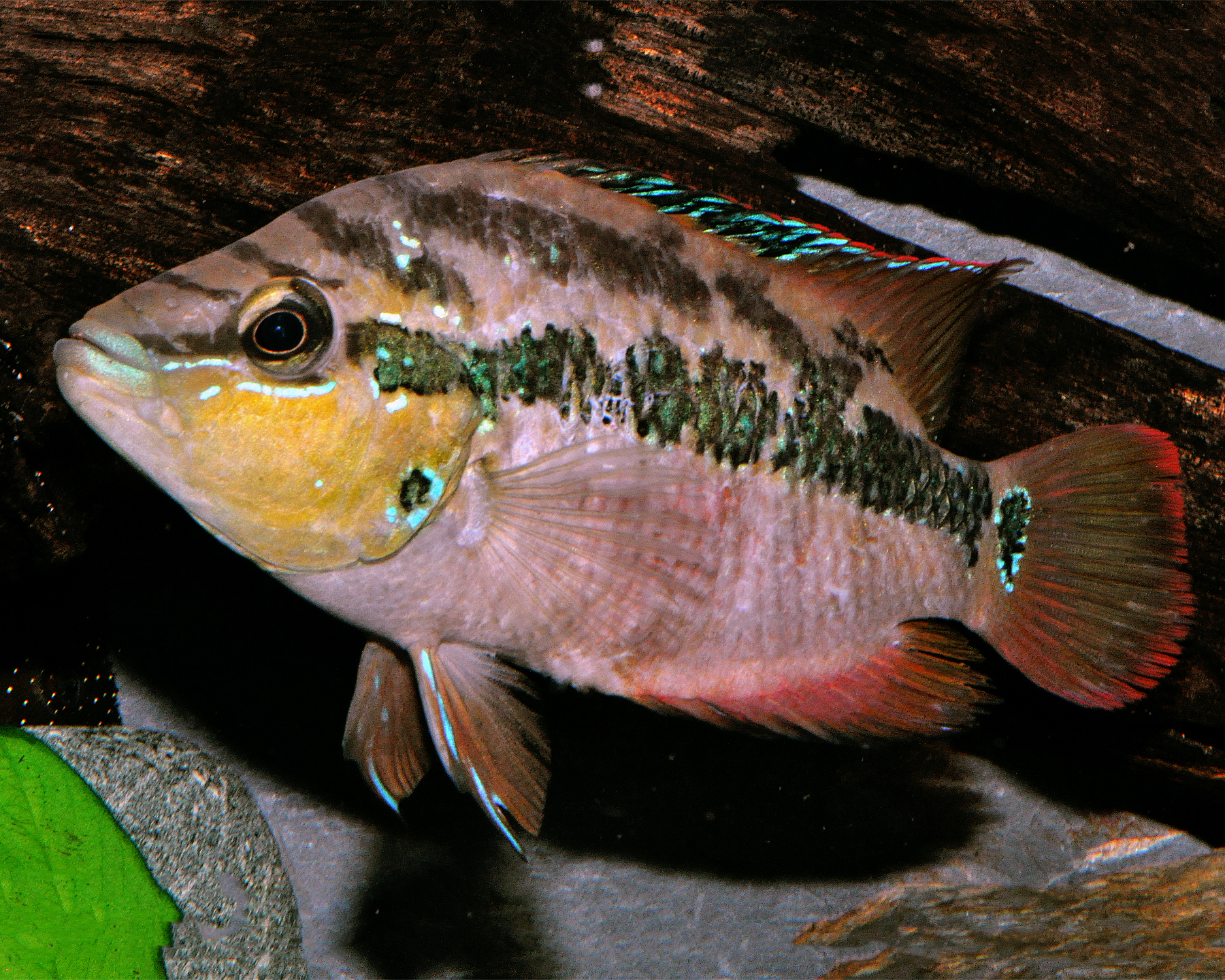
    Salvin's cichlid is a colorful Central American cichlid known for its yellow, red and blue-green markings and strongly territorial behavior. The supplied source identifies a pair as Cichlasoma salvini; the species is generally treated in current references as Trichromis salvini, although aquarium literature still commonly uses the older name. It is best kept as a dedicated pair or with carefully selected robust tank mates.
  • Striped Snail Cichlid (Neolamprologus multifasciatus)

    Striped Snail Cichlid (Neolamprologus multifasciatus)

    Easy - Moderate
    Lake Tanganyika shell-dwelling cichlid
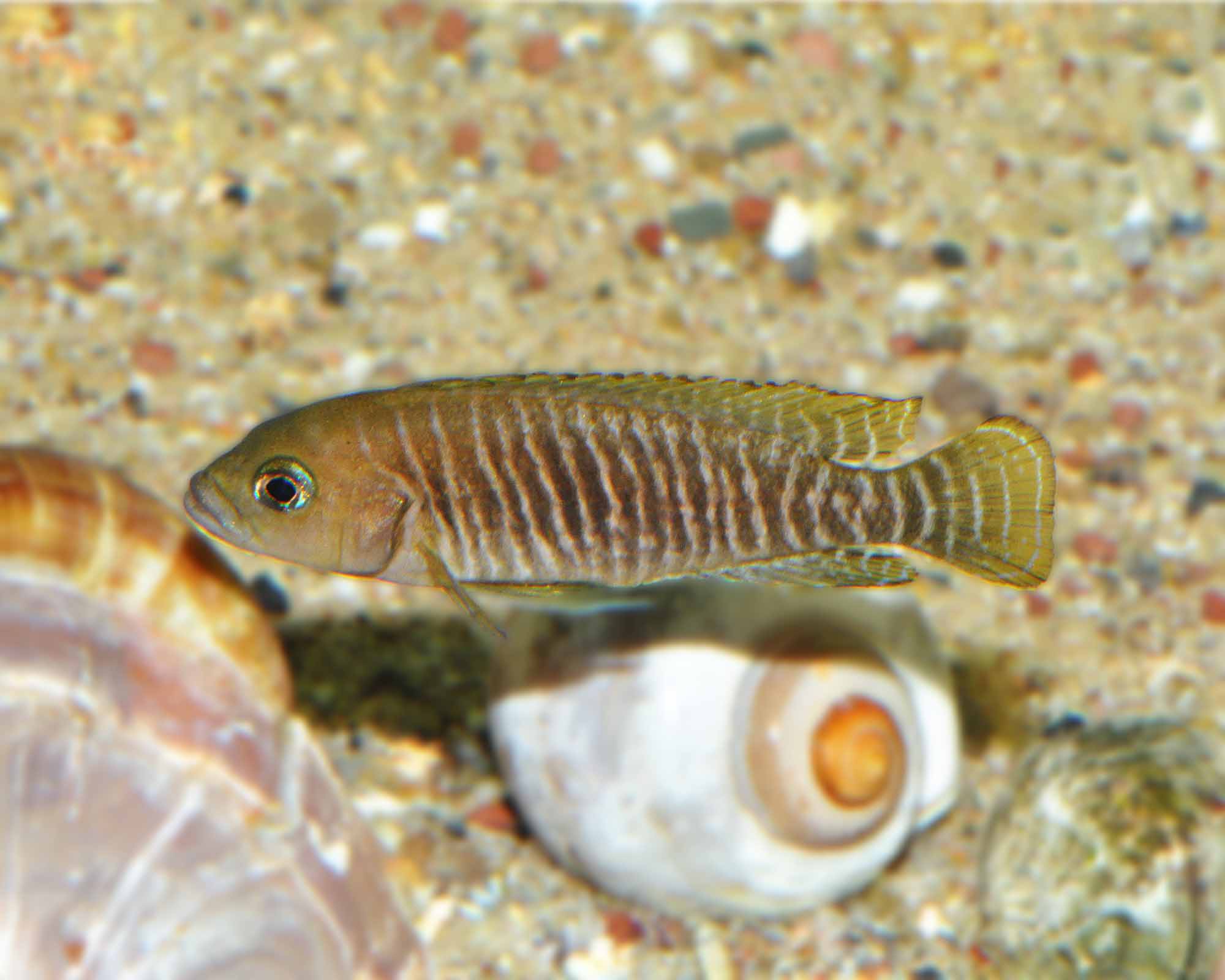
    Neolamprologus multifasciatus is a very small shell-dwelling cichlid from Lake Tanganyika. It lives among empty snail shells, excavates sand, and defends a small territory while forming active colonies. Despite its size, it displays complex social and breeding behavior. The supplied source identifies these fish as N. multifasciatus; photographs alone can be difficult to distinguish from closely related shell-dwelling Neolamprologus, so identification should be confirmed from provenance or examination by an experienced aquarist.
  • Dickfeld’s Julidochromis (Julidochromis dickfeldi)

    Dickfeld’s Julidochromis (Julidochromis dickfeldi)

    Moderate
    Lake Tanganyika rock-dwelling cichlid
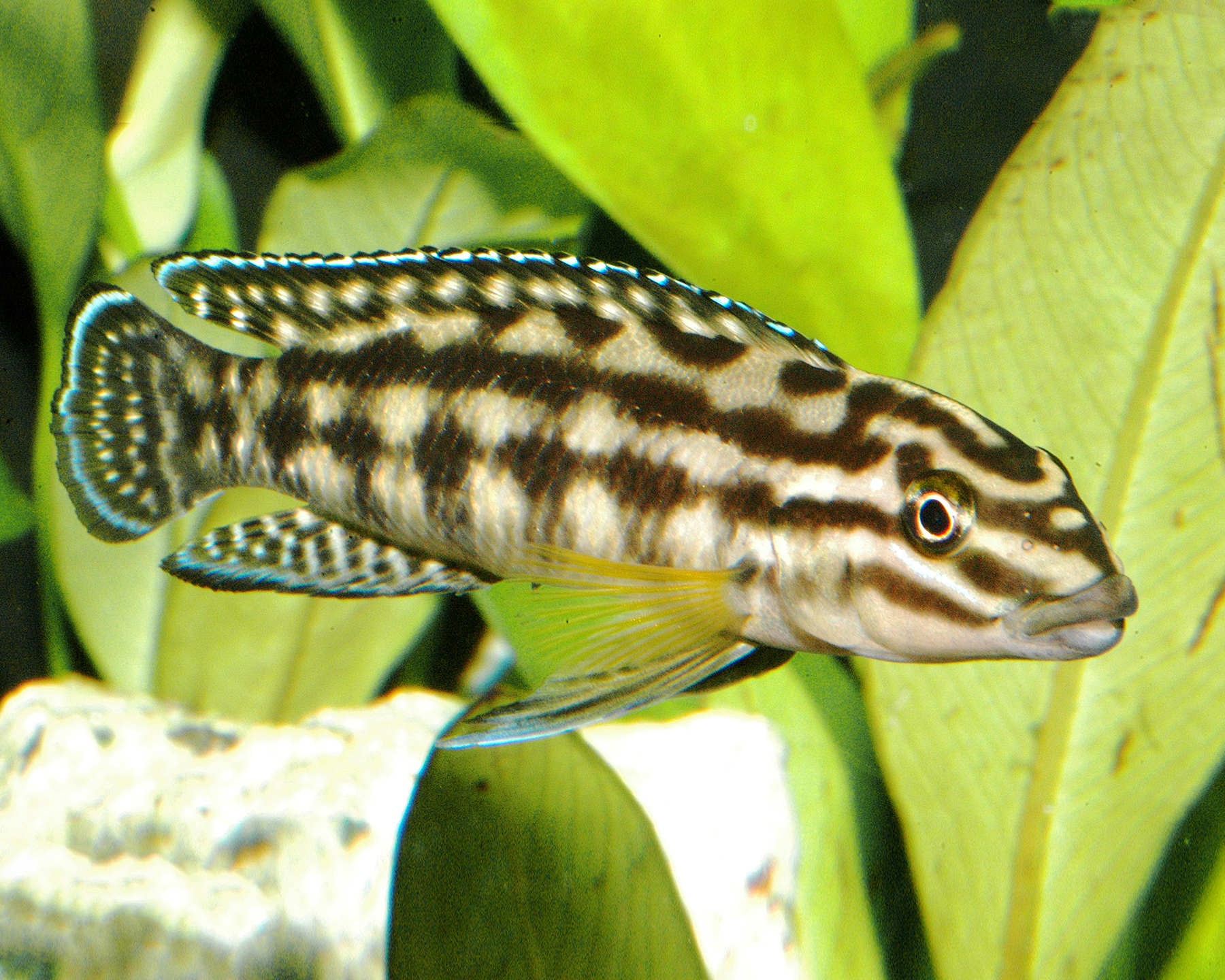
    Dickfeld’s Julidochromis is a small, elongated shell- and rock-dwelling cichlid endemic to Lake Tanganyika in East Africa. It is recognized by a pale cream to silvery body marked with dark longitudinal stripes and blue edging on the fins. Although modest in size, it is territorial, especially when paired or spawning. A carefully structured aquarium with hard, alkaline water, numerous rock crevices and stable maintenance provides the conditions needed for long-term success.
  • Apistogramma agassizii Red Dwarf Cichlid

    Apistogramma agassizii Red Dwarf Cichlid

    Moderate
    South American dwarf cichlid
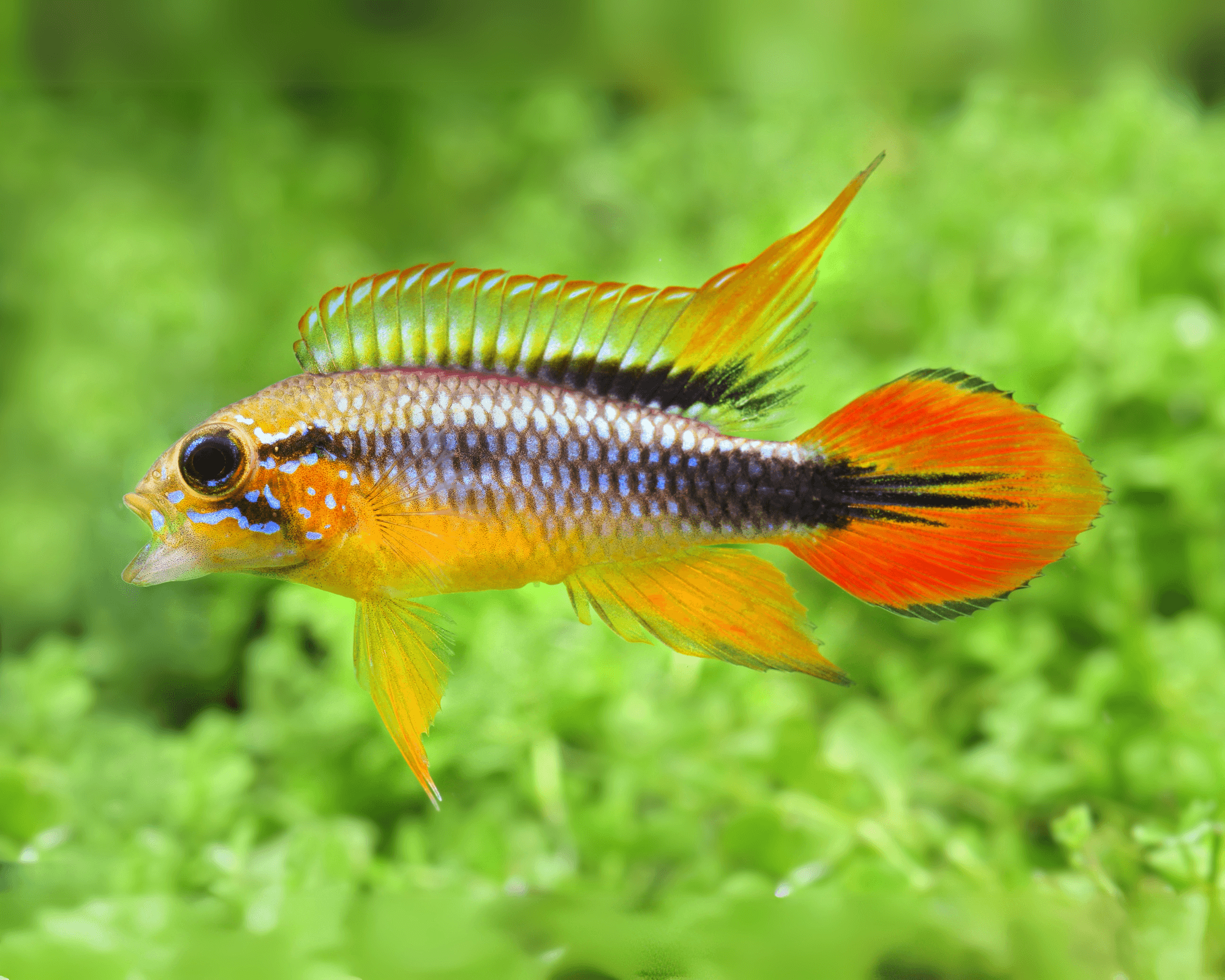
    Apistogramma agassizii is a small South American freshwater cichlid valued for its elongated fins, iridescent markings and territorial breeding behavior. The supplied trade label identifies these fish as a red color form and a pair, although sex and exact line cannot be confirmed solely from the listing or images. They suit mature, structured aquariums with soft to moderately hard, clean water, gentle flow and plenty of caves or plant cover.
  • Red Jewel Cichlid (Hemichromis lifalili)

    Red Jewel Cichlid (Hemichromis lifalili)

    Moderate - Difficult
    African riverine cichlid
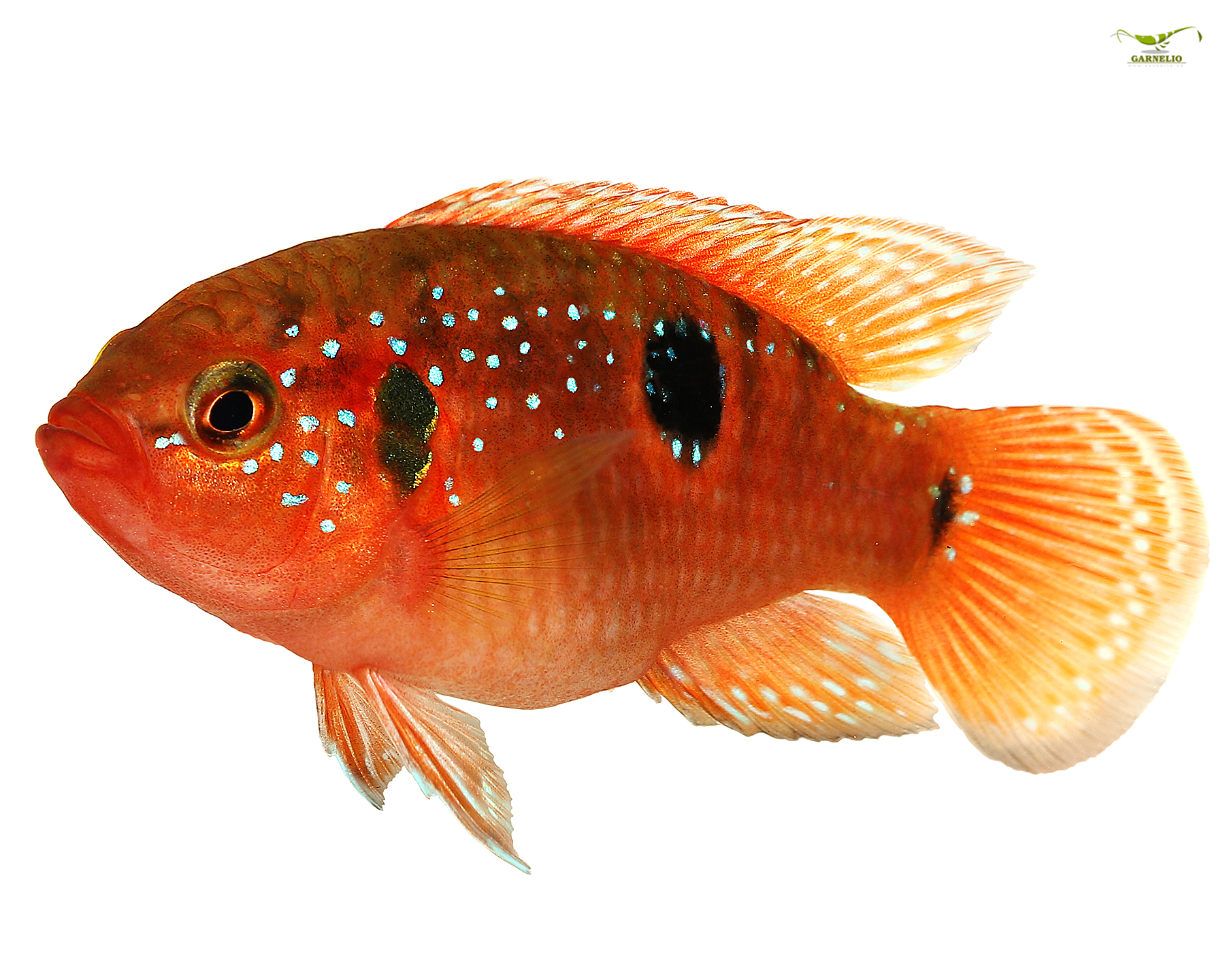
    Hemichromis lifalili, commonly called the red jewel cichlid, is a small but strongly territorial African cichlid recognized for its red body, blue-green spotting and dark lateral markings. It is often confused in the aquarium trade with related Hemichromis species, especially H. bimaculatus, so identification from photographs or trade labels is not always certain. A pair needs a carefully arranged aquarium, stable water quality and a plan for managing aggression during breeding.
  • Redhump Eartheater (Geophagus steindachneri)

    Redhump Eartheater (Geophagus steindachneri)

    Moderate
    South American eartheater cichlid
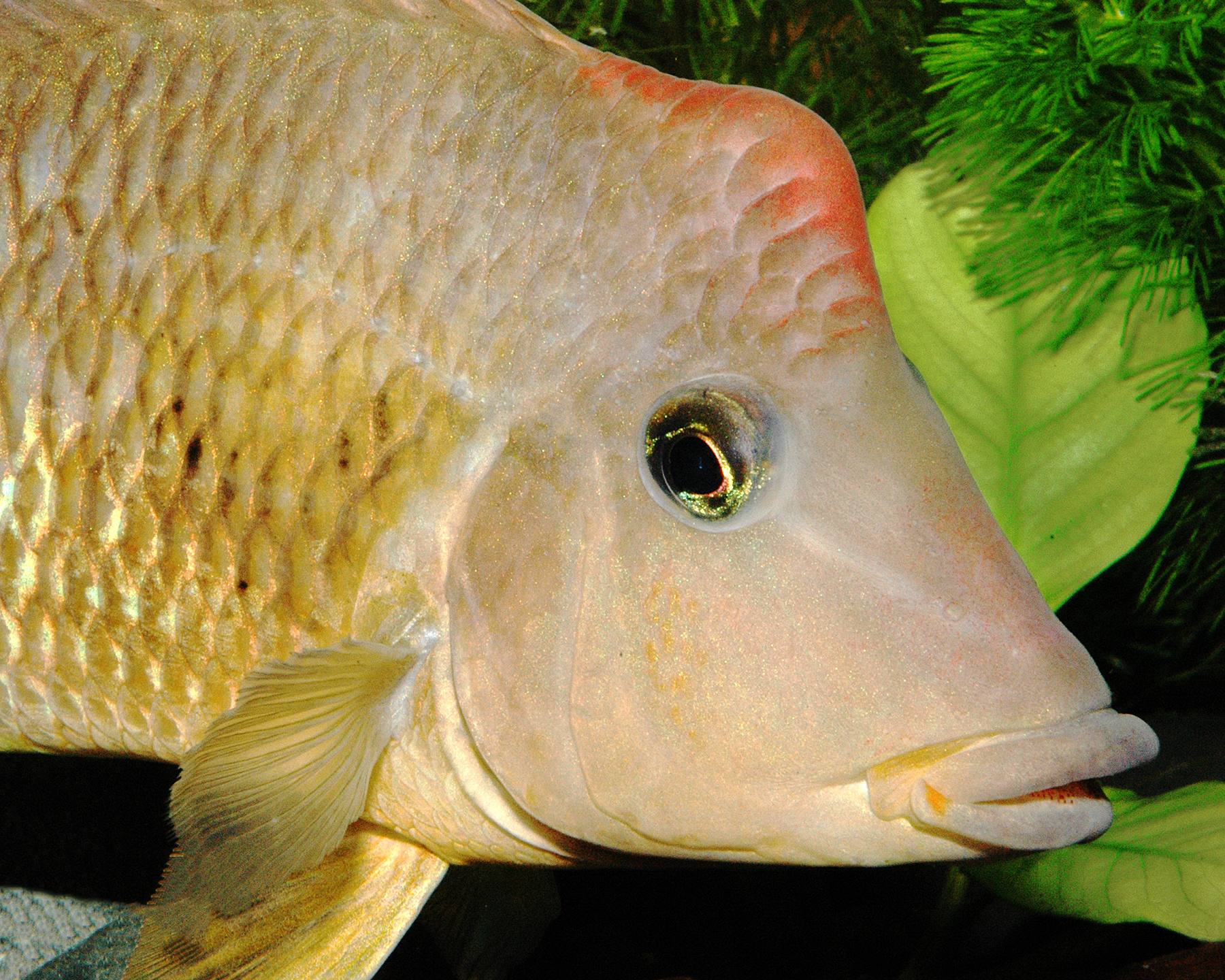
    Geophagus steindachneri is a South American eartheater distinguished by its sloping forehead, browsing mouth and habit of sifting fine substrate for food. Adults become substantial, active cichlids that need generous floor space, clean water and a soft sand bed. The supplied fish are identified as Redhump Eartheaters, but locality and sex cannot be confirmed from the listing alone. They are generally peaceful for their size, though territorial behavior increases during spawning.
  • Rachow's Splendour Ground Carp (Nothobranchius rachovii)

    Rachow's Splendour Ground Carp (Nothobranchius rachovii)

    Moderate - Difficult
    Annual killifish
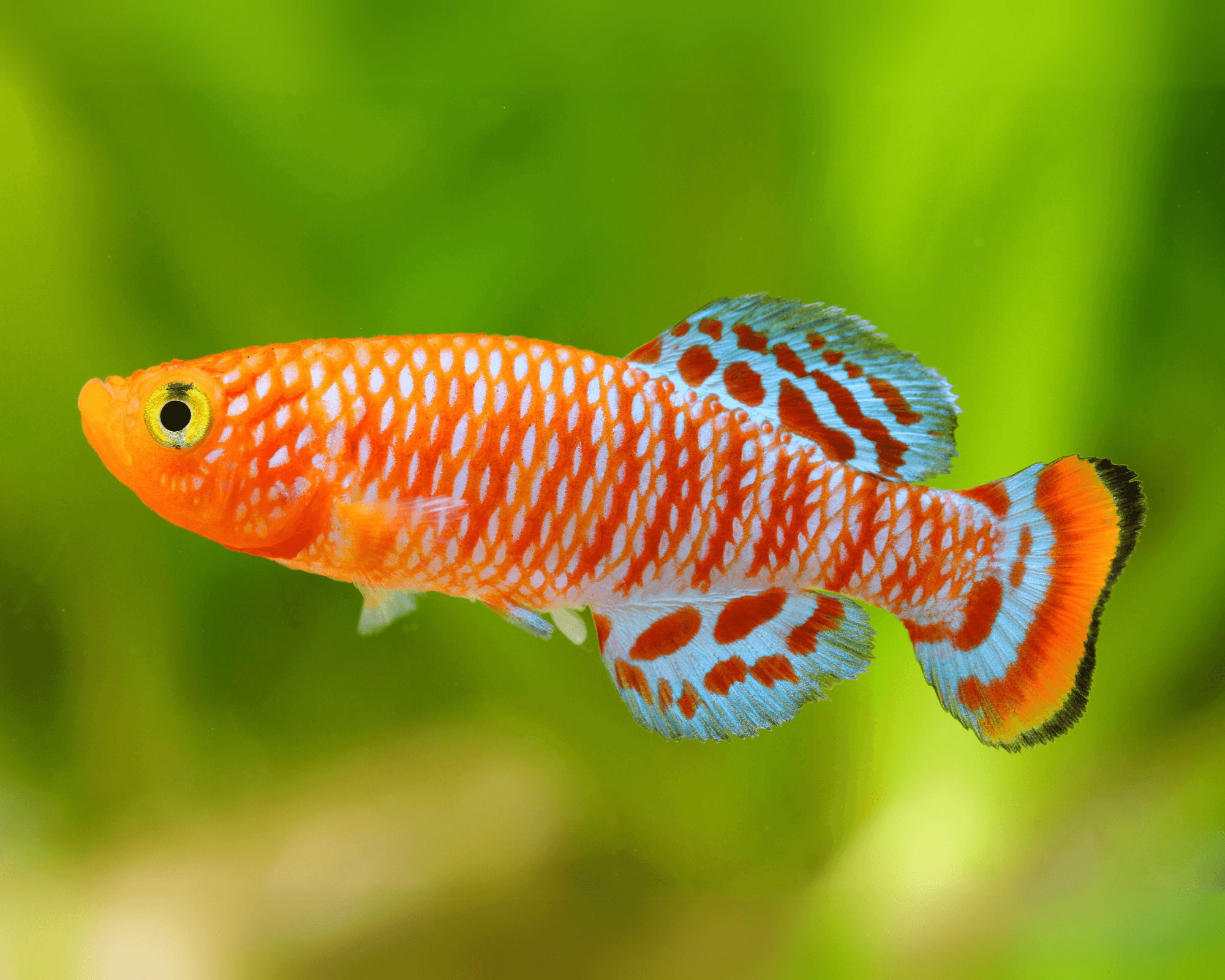
    Rachow's splendour ground carp is a brightly marked annual killifish from seasonal freshwater habitats in Mozambique. Males display intense orange, red, blue and white coloration, while females are usually much plainer. It is best maintained in a species-focused aquarium with gentle filtration, a covered top and soft spawning material. The fish has a short natural lifespan, but careful feeding and egg management make it a rewarding specialist species. Aquarium specimens may represent different geographic forms, so locality information is valuable when available.
  • Red Tiger Oscar Cichlid (Astronotus ocellatus)

    Red Tiger Oscar Cichlid (Astronotus ocellatus)

    Difficult
    Large South American cichlid
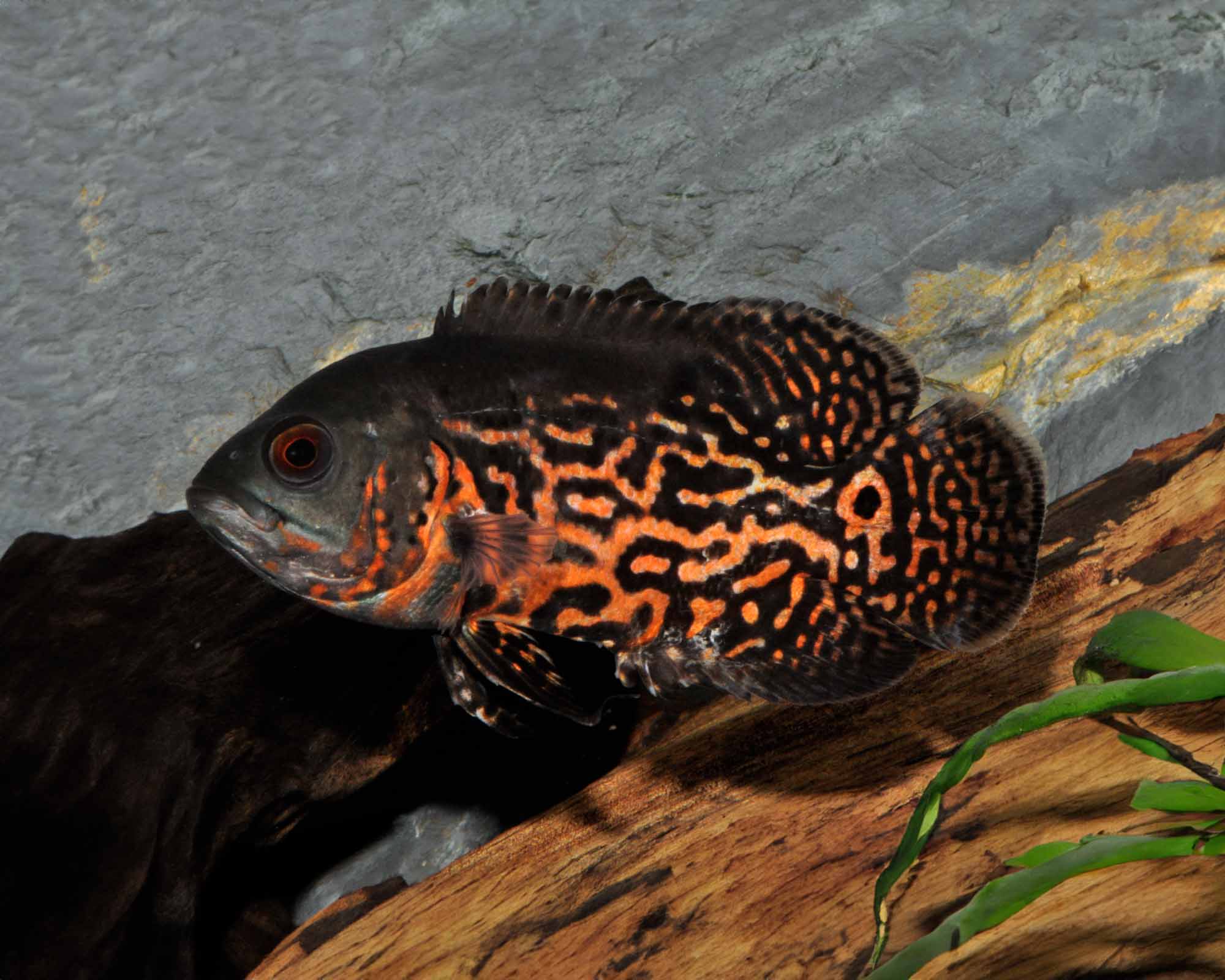
    The Red Tiger Oscar is a selectively bred color form of Astronotus ocellatus, a large South American cichlid known for intelligence, bold feeding behavior, and strong individual personality. The supplied source describes a pair, but sex and true pair-bond status cannot be confirmed from the images alone. Oscars require a spacious, strongly filtered aquarium, careful tankmate selection, and a varied diet. They are rewarding display fish, but their adult size, territorial behavior, waste production, and tendency to rearrange décor make them unsuitable for most community aquariums.
  • Red Oscar Cichlid (Astronotus ocellatus)

    Red Oscar Cichlid (Astronotus ocellatus)

    Difficult
    Large South American cichlid
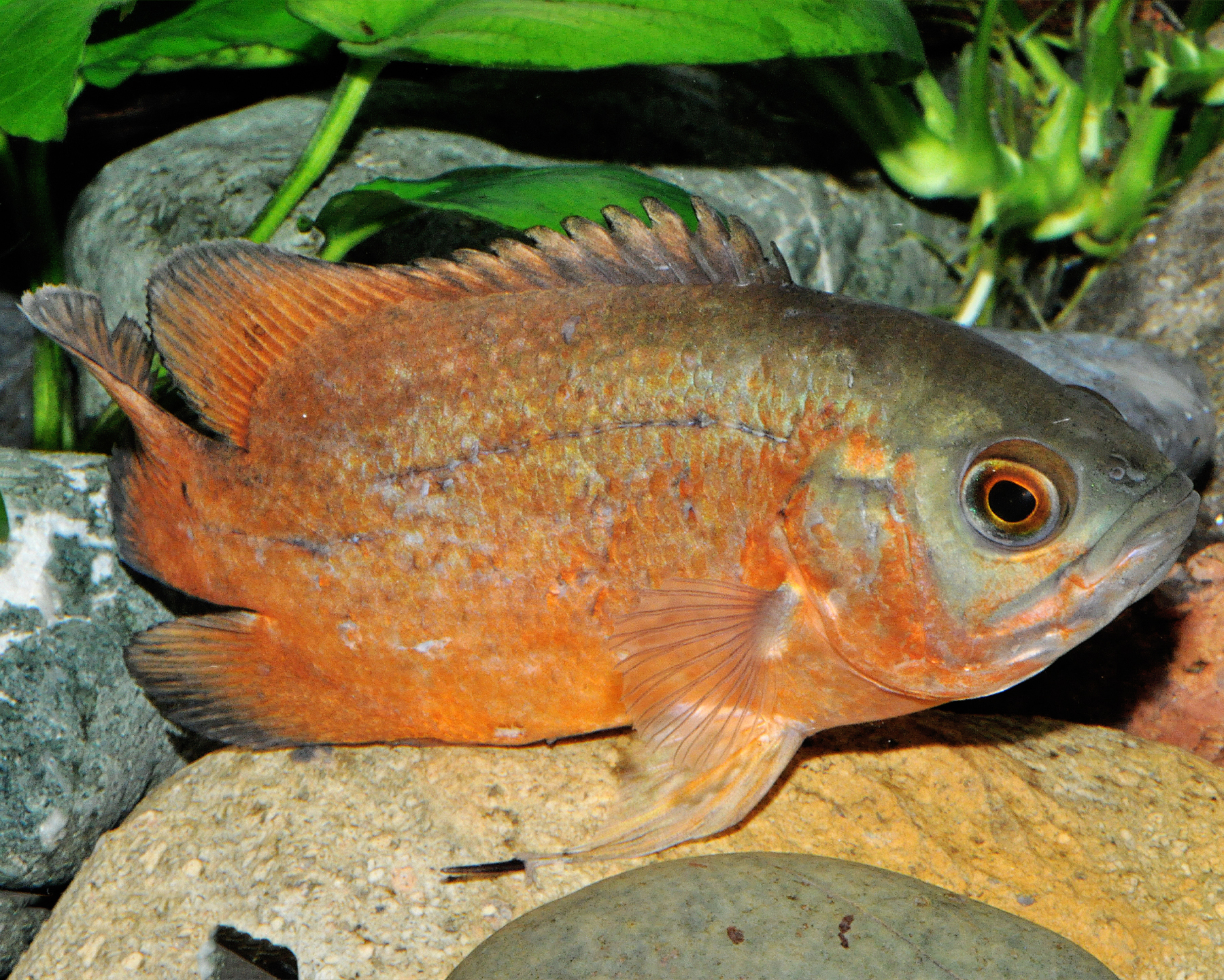
    The red Oscar is a selectively bred color form of Astronotus ocellatus, a large South American cichlid valued for its intelligence, interactive behavior, and bold appearance. The supplied source describes a pair, while the images show Oscar-like fish with predominantly orange-red bodies. Exact strain and sex cannot be confirmed from the images alone. This is a powerful, messy-eating species that requires a spacious aquarium, strong filtration, and careful planning for compatibility.
  • Kenyi Cichlid (Maylandia lombardoi)

    Kenyi Cichlid (Maylandia lombardoi)

    Moderate - Difficult
    Lake Malawi mbuna cichlid
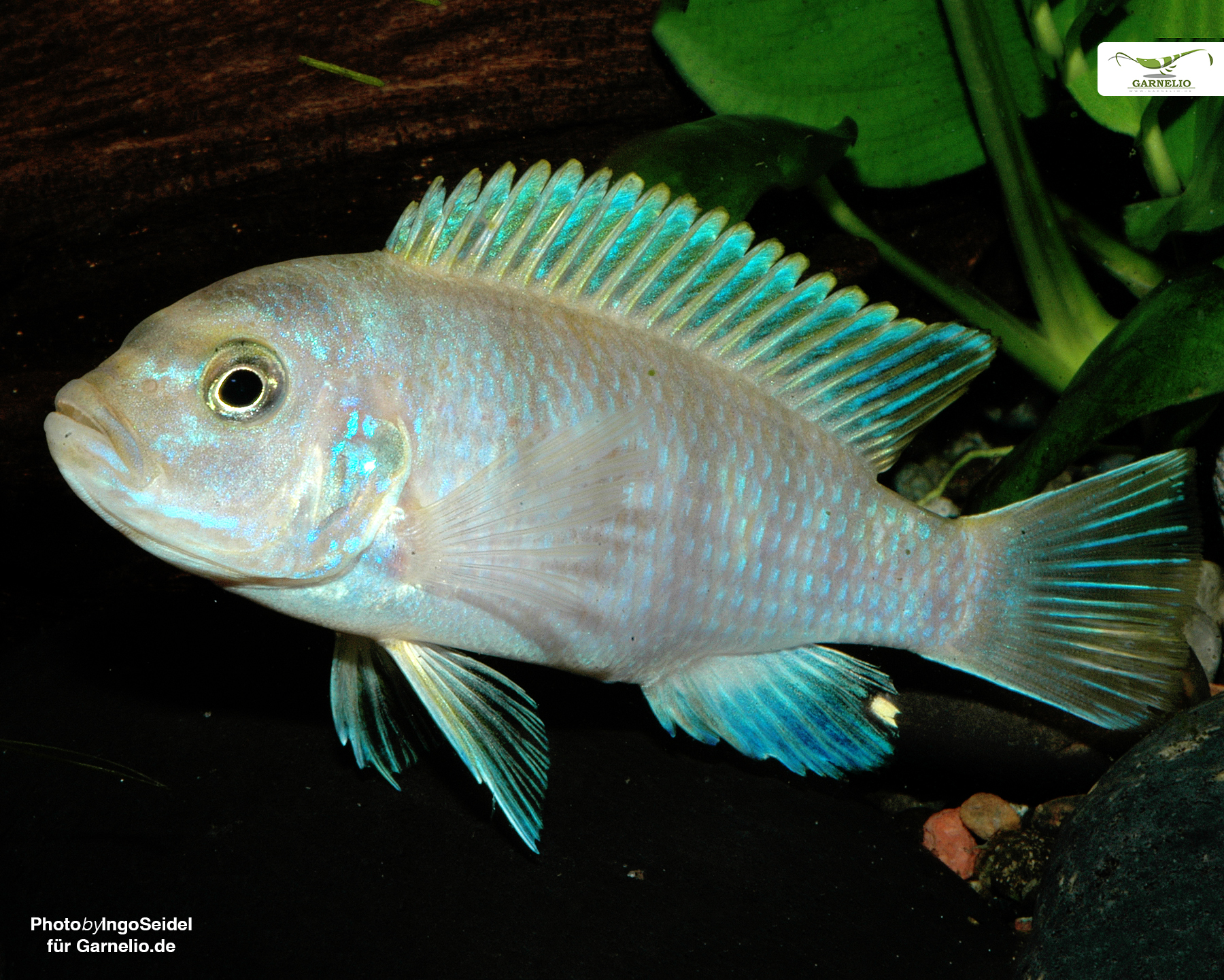
    The fish sold as Pseudotropheus lombardoi is now generally treated as Maylandia lombardoi, a Lake Malawi mbuna commonly known as the Kenyi cichlid. It is a robust, territorial algae grazer that needs hard, alkaline water, abundant rockwork and carefully planned tank-mate selection. Adult coloration is strongly sex- and mood-dependent, and the supplied images show a blue to turquoise fish with pale yellow tones rather than proving a particular sex or commercial color form. Identification and the claimed pair status should therefore be confirmed by the seller.
  • Betta imbellis: Peaceful Fighting Fish Care Guide

    Betta imbellis: Peaceful Fighting Fish Care Guide

    Moderate
    Osphronemid labyrinth fish
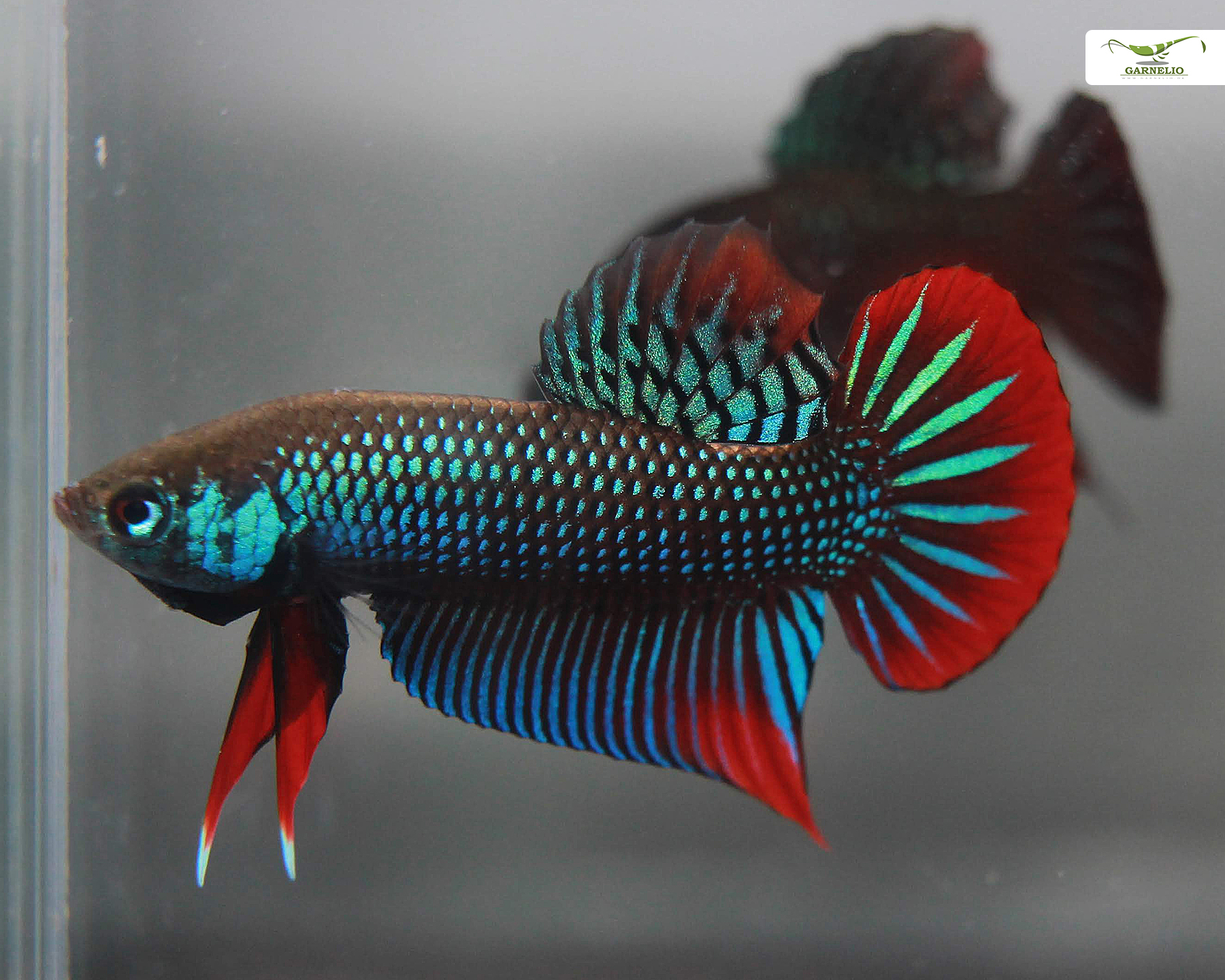
    Betta imbellis, commonly called the peaceful fighting fish, is a small labyrinth fish from shallow, slow-moving waters of the Malay Peninsula and nearby parts of Sumatra. It is generally less combative than Betta splendens, although males remain territorial and should not be assumed to be universally peaceful. This guide covers identification, habitat, aquarium care, feeding, tank mates and bubble-nest breeding. The pictured fish appears consistent with a selectively bred, long-finned Betta imbellis, but image-only identification cannot confirm its lineage or locality.
  • Nicaraguan Cichlid (Hypsophrys nicaraguensis)

    Nicaraguan Cichlid (Hypsophrys nicaraguensis)

    Moderate - Difficult
    Large Central American cichlid
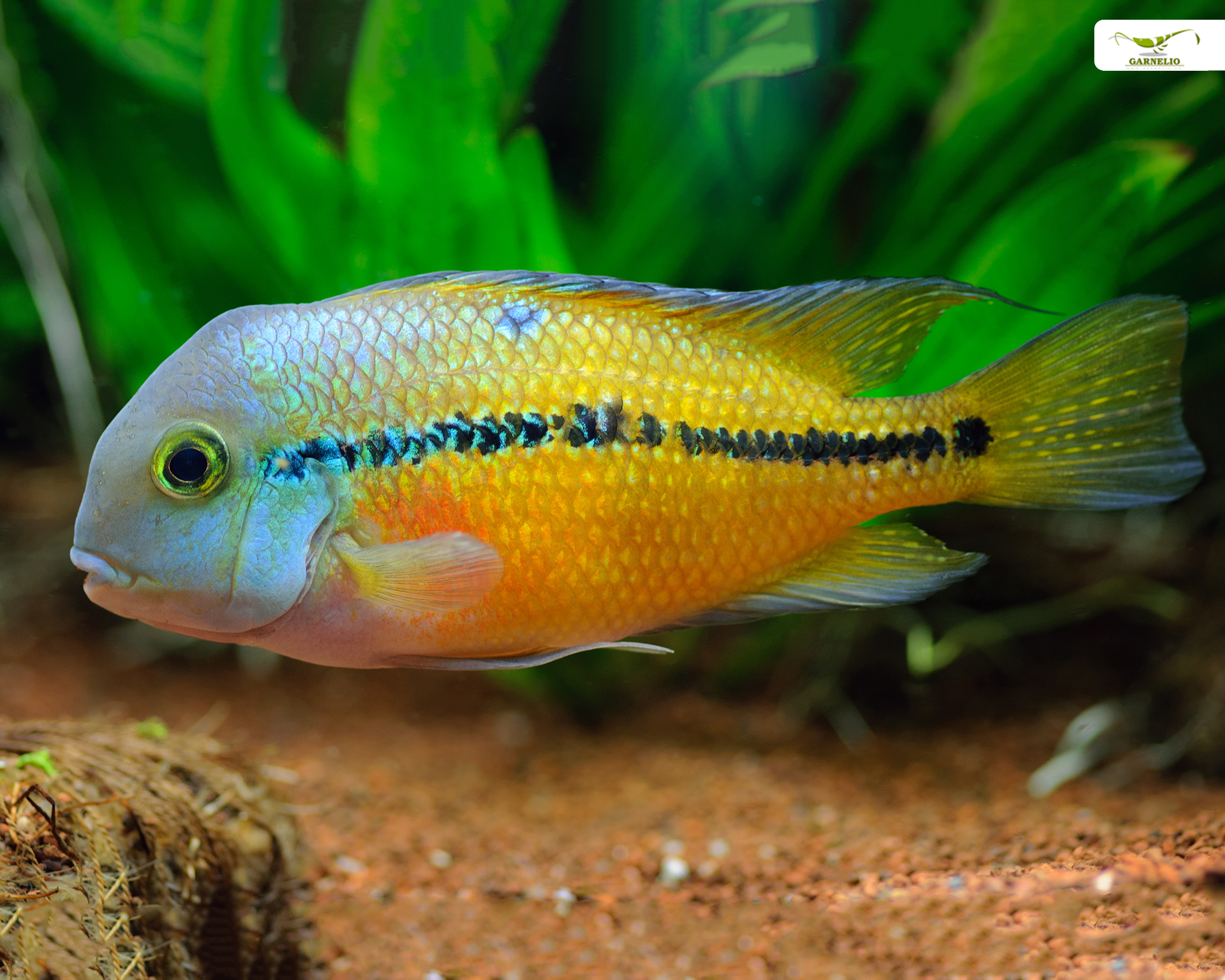
    The Nicaraguan cichlid is a robust Central American species known for its changing gold, orange, blue and black patterning. It is often sold under the older name Cichlasoma nicaraguense, while Hypsophrys nicaraguensis is the generally accepted current placement. This is a territorial fish requiring substantial space, strong filtration and carefully planned tank mates. The supplied listing describes a pair, but sex, compatibility and breeding condition cannot be independently verified from the source image alone.
  • Pearl Gourami (Trichogaster leerii)

    Pearl Gourami (Trichogaster leerii)

    Easy - Moderate
    Peaceful freshwater labyrinth fish
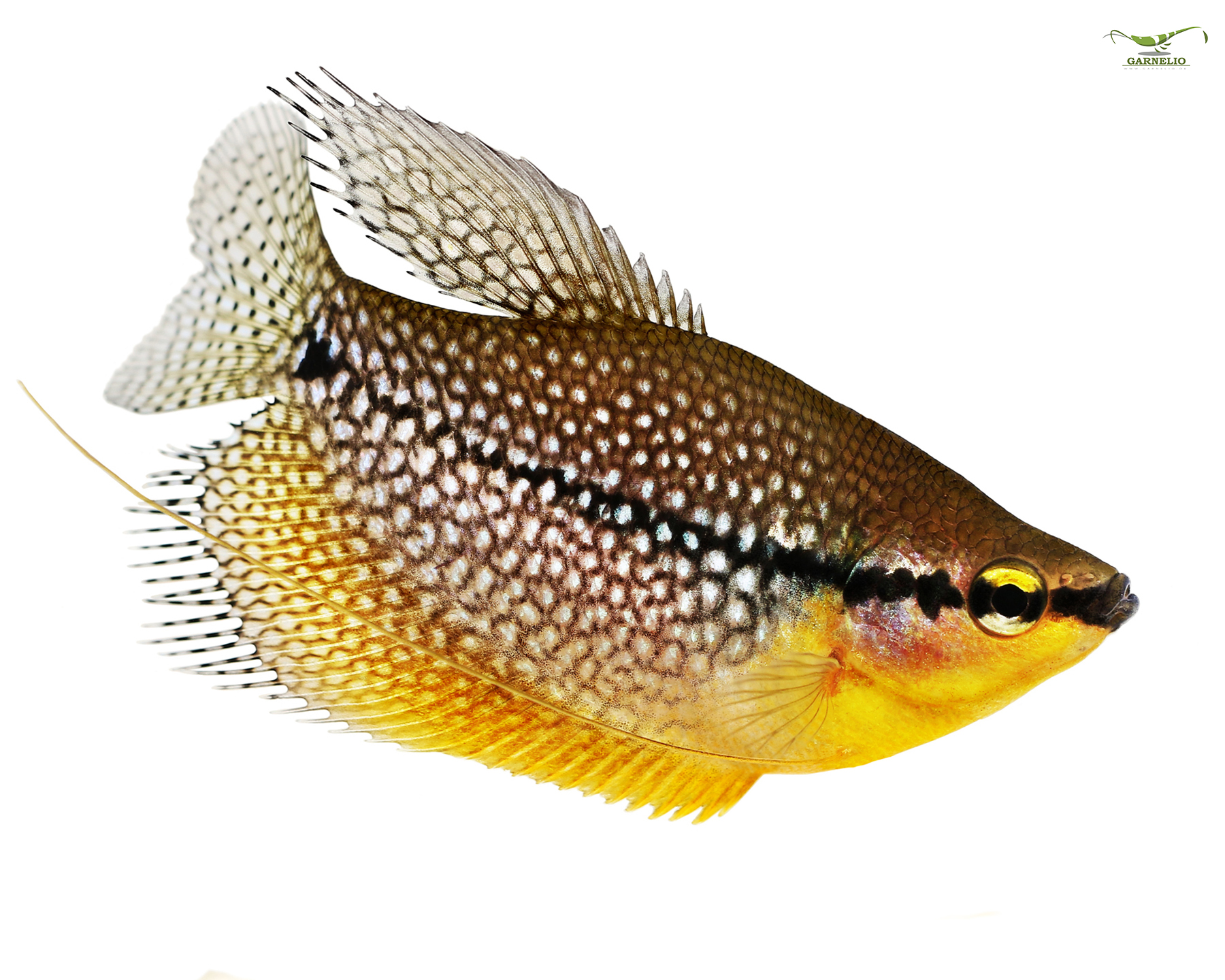
    The pearl gourami is a peaceful, labyrinth fish recognized by its pearly spots, dark midlateral stripe, and warm orange throat. It originates in vegetated, slow-moving waters of Southeast Asia and is generally suitable for a calm community aquarium. A pair needs stable, warm water, dense cover, gentle flow, and access to atmospheric air at the surface.
  • Moonlight Gourami (Trichogaster microlepis)

    Moonlight Gourami (Trichogaster microlepis)

    Moderate
    Southeast Asian labyrinth fish
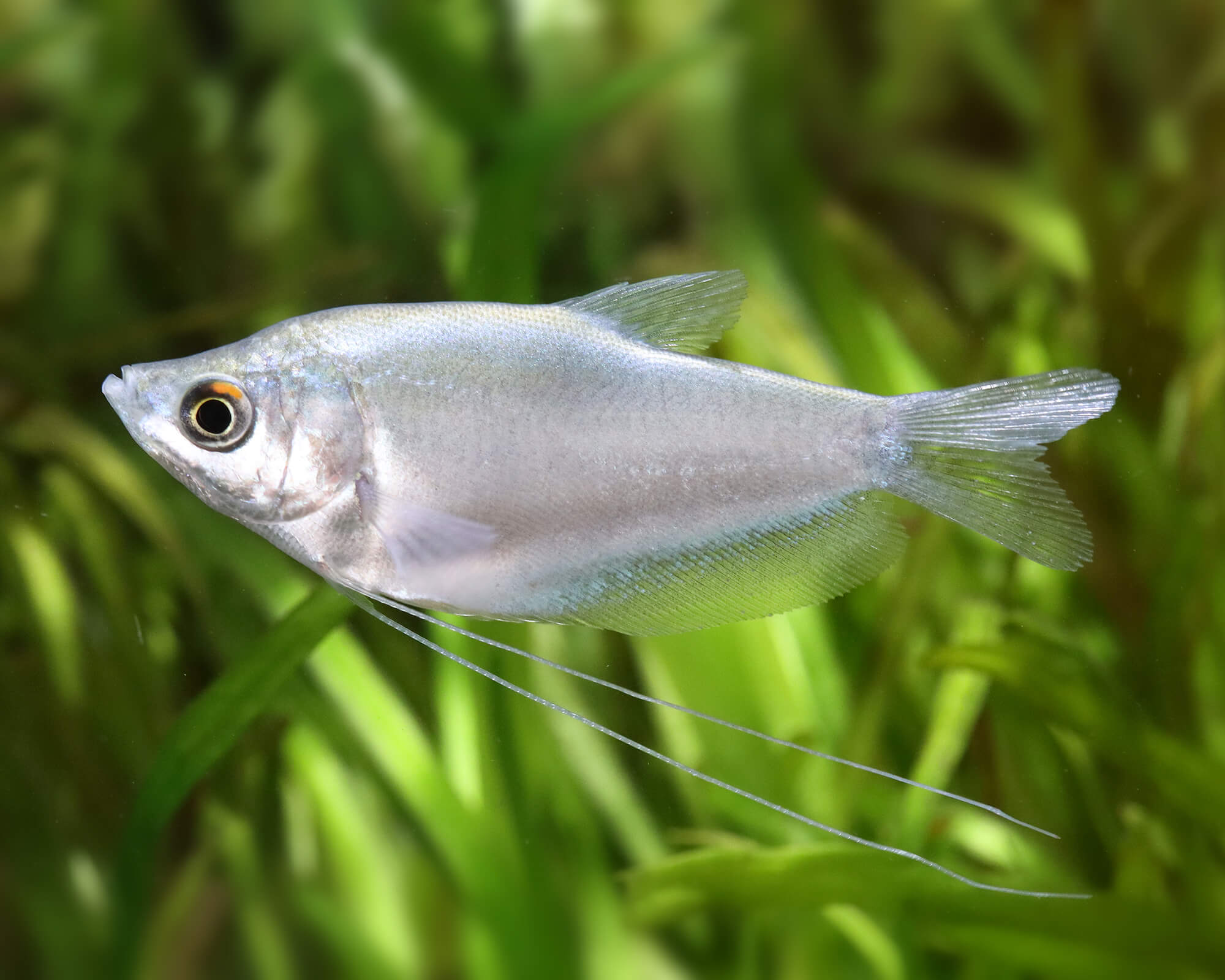
    The moonlight gourami is a peaceful, laterally compressed labyrinth fish from mainland Southeast Asia. Its silvery body, long thread-like pelvic fins and calm, deliberate swimming make it a distinctive community-aquarium species. Although the supplied source identifies a pair, sex cannot be confirmed reliably from the images alone. Provide a spacious, mature aquarium with gentle flow, dense planting and access to humid air above the water. It is generally hardy once acclimated, but it appreciates stable conditions and should not be housed with fin-nipping or highly aggressive tank mates.
  • Keyhole Cichlid (Aequidens maronii)

    Keyhole Cichlid (Aequidens maronii)

    Moderate
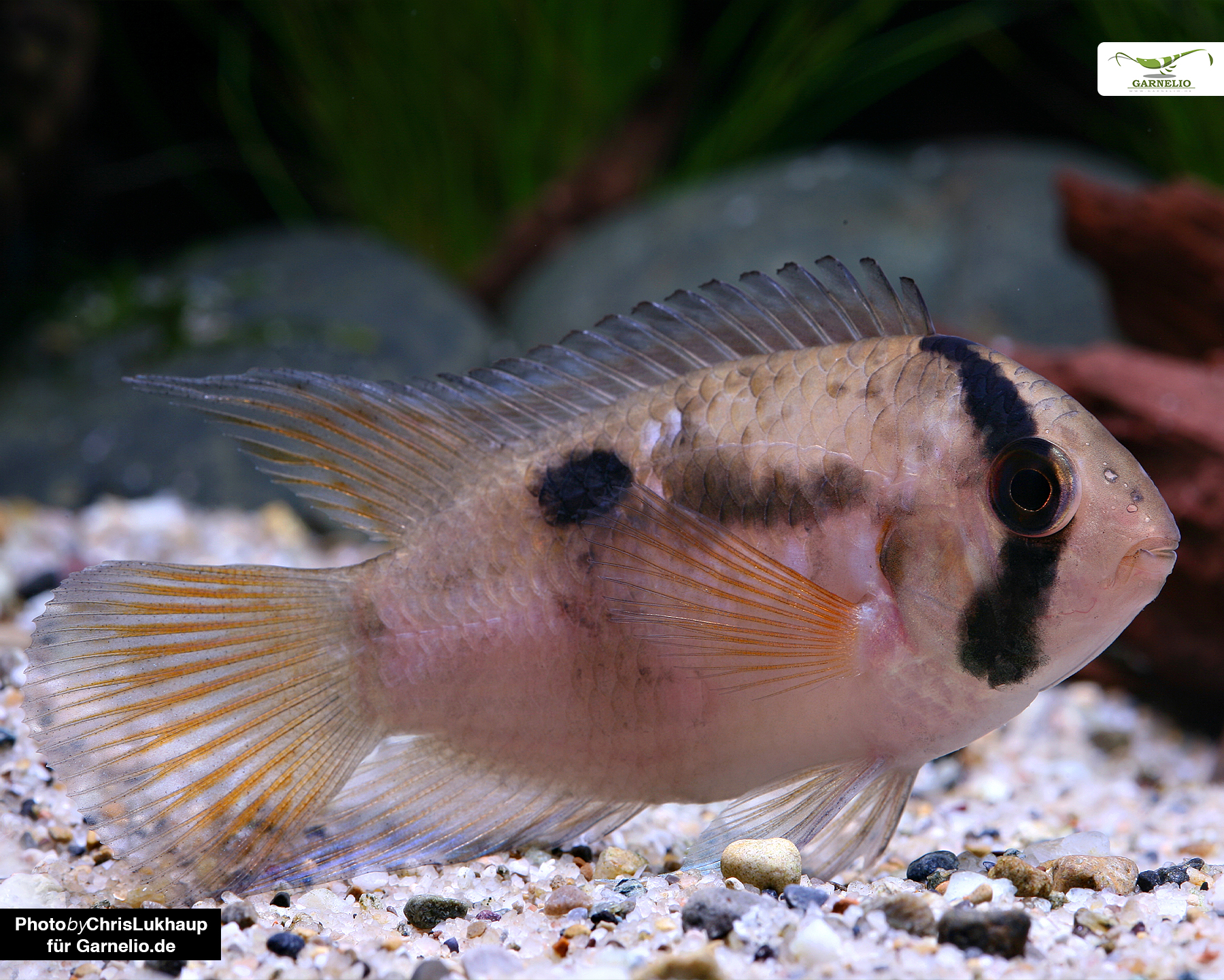
    South American freshwater cichlid
    The fish supplied is consistent with the keyhole cichlid, commonly listed as Aequidens maronii and currently placed by many authorities in the genus Cleithracara. It is a relatively peaceful South American cichlid recognized by its dark keyhole-shaped marking, subdued body coloration and interesting parental care. A pair needs a mature, well-filtered aquarium with soft surroundings, hiding places and stable water quality. Although generally manageable, it becomes territorial while spawning and should not be kept with boisterous or fin-nipping tank mates.