Taxonomy and identification
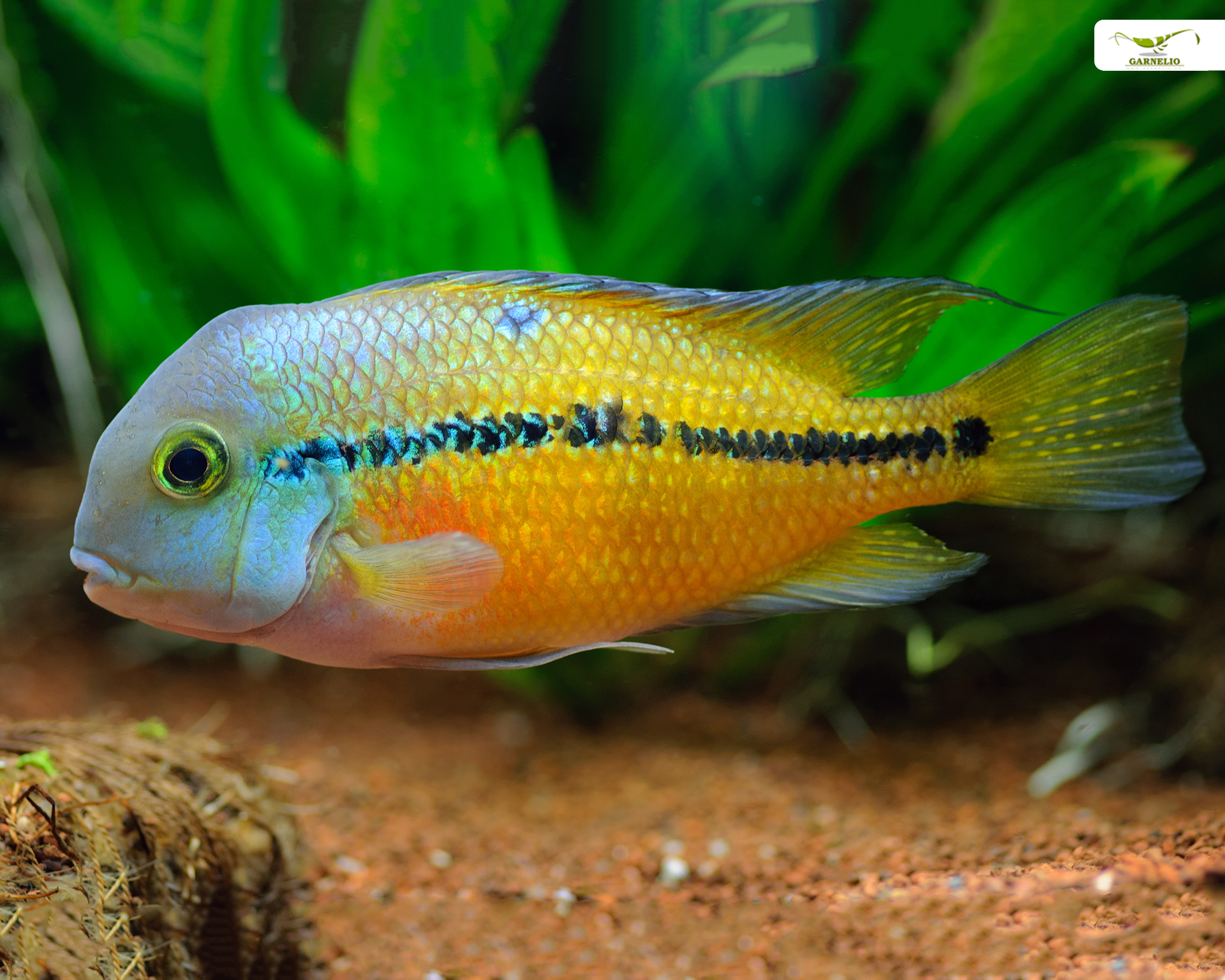
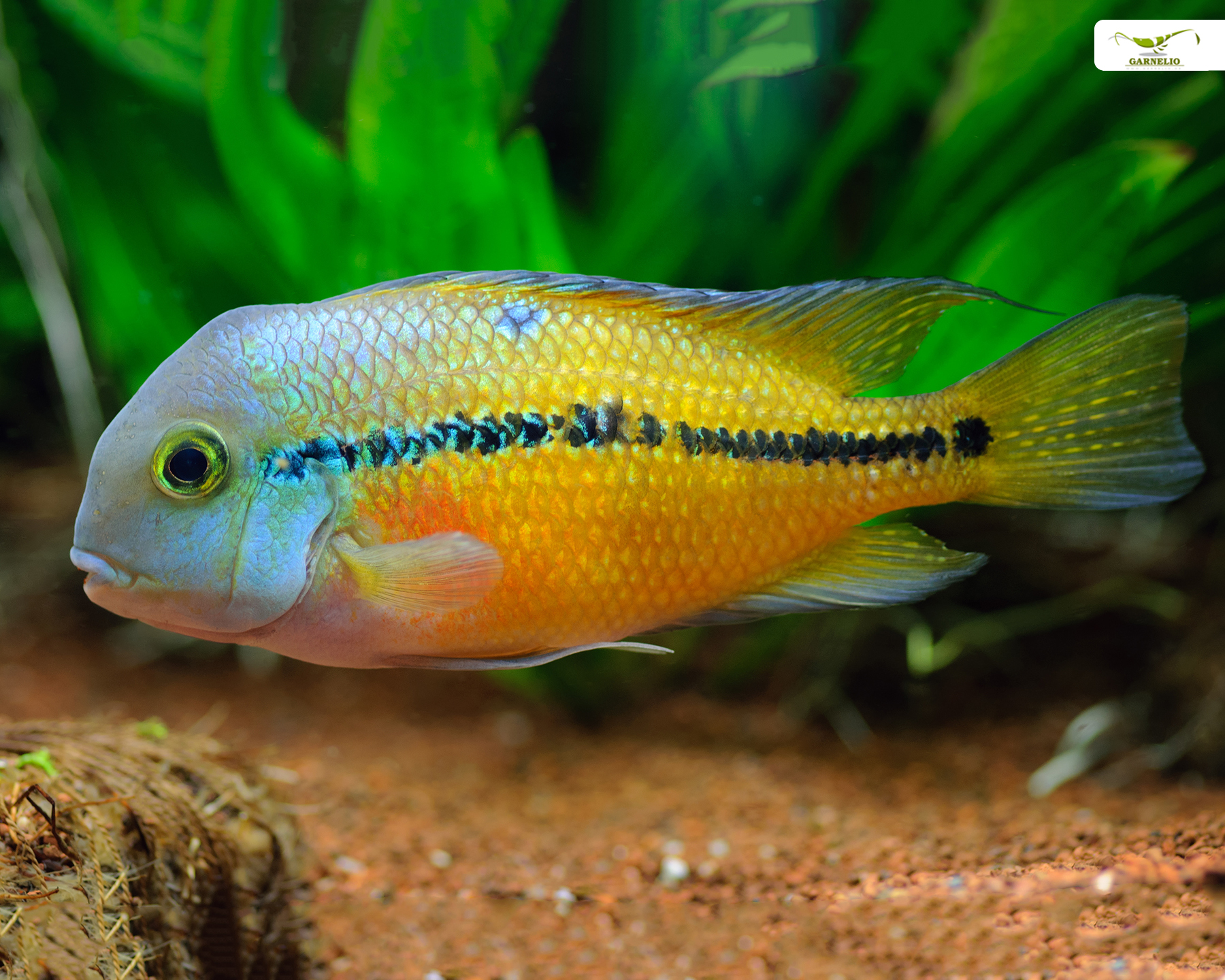
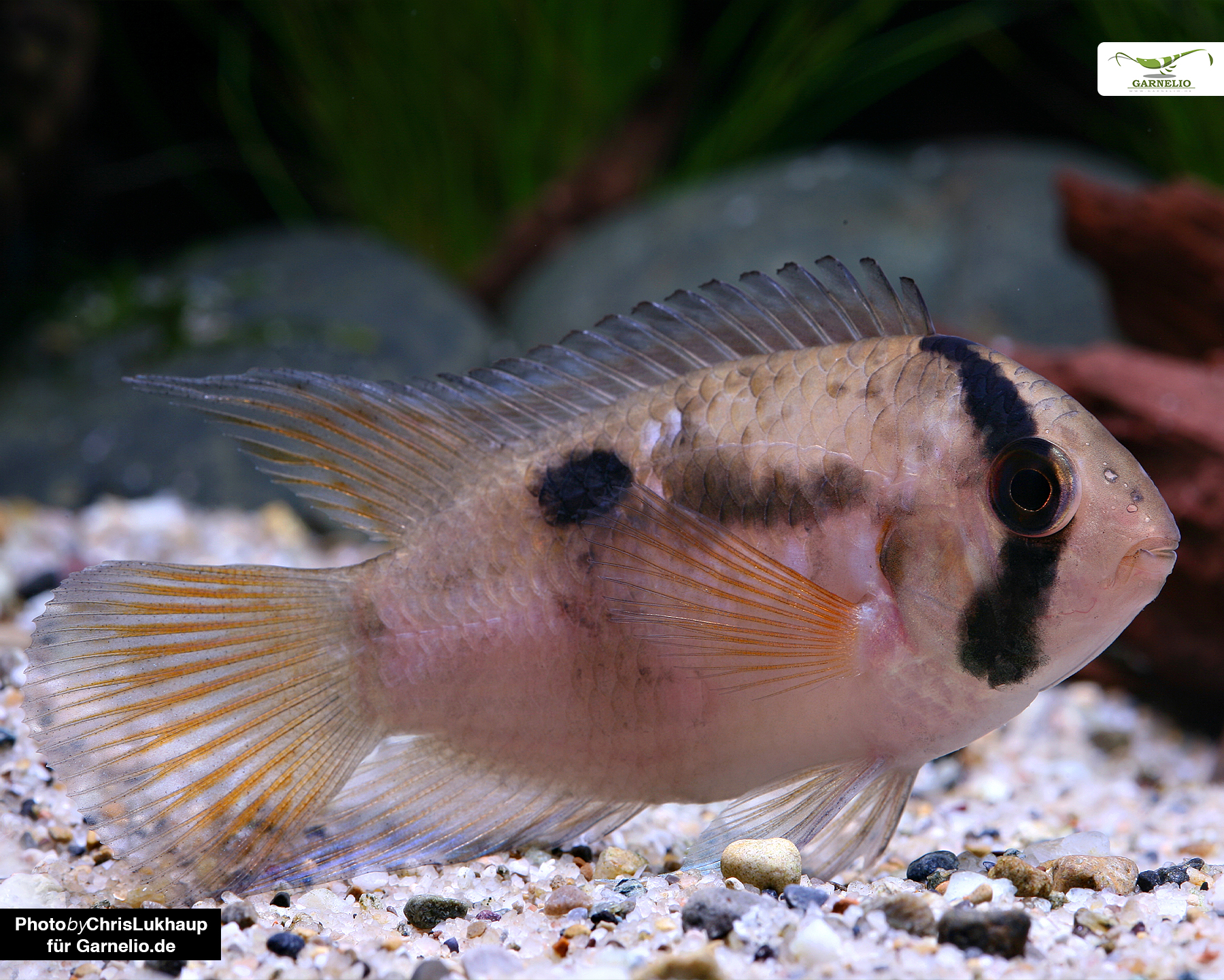
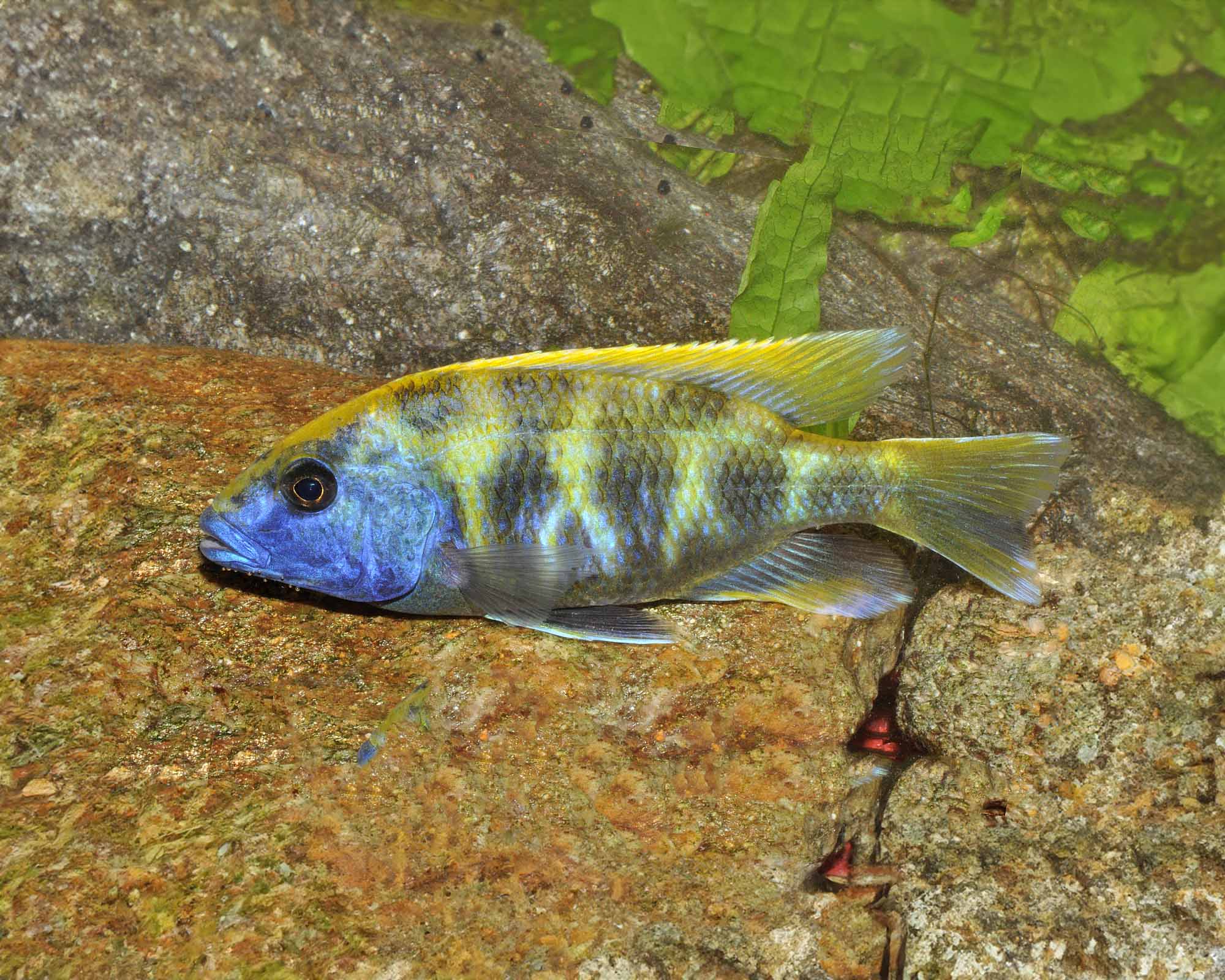
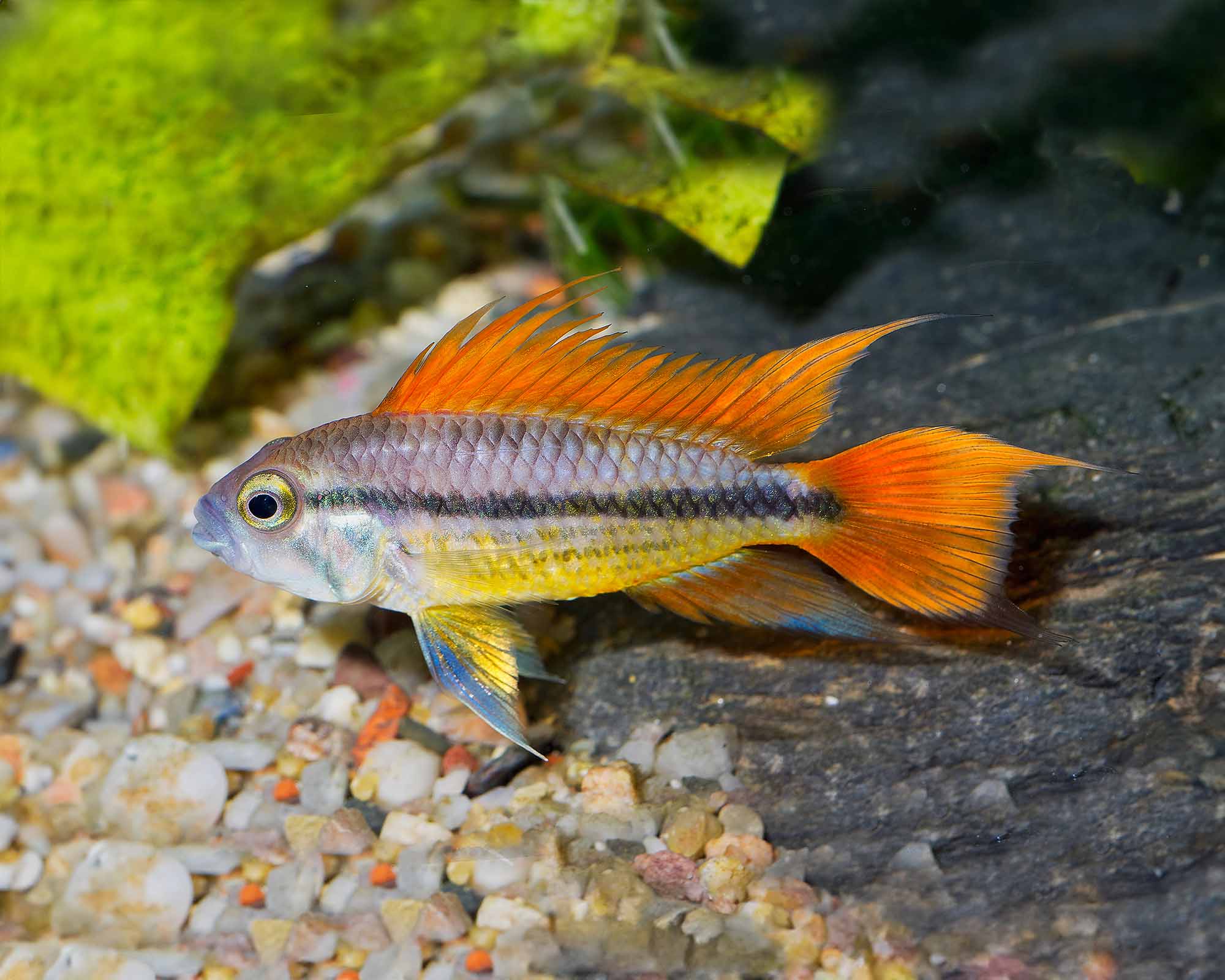
The Nicaraguan cichlid is commonly traded as Cichlasoma nicaraguense. It is generally treated in current aquarium and taxonomic references as Hypsophrys nicaraguensis, in the family Cichlidae. It has a deep-bodied profile, a pointed head, elongated dorsal and anal fins, and a dark horizontal stripe that may become more or less prominent with mood, age and breeding condition. The pictured fish is consistent with this species, although a photograph cannot confirm the claimed pair or sex.
Natural distribution
This species is native to freshwater habitats in Nicaragua and Costa Rica in Central America. It occurs in lakes, rivers and connected waters with warm, generally neutral to alkaline conditions. Aquariums should provide stable water quality rather than attempting to reproduce a precise locality unless the collection origin is known.
Behavior
Nicaraguan cichlids are active, intelligent and territorial. They investigate the substrate, rearrange décor and defend a chosen area, with aggression usually increasing during courtship and spawning. A bonded pair may remain close and cooperate in territory defense, but an incompatible male and female can injure one another. Use caves, rocks, wood or other sight breaks to divide the aquarium.
Aquarium size and setup
A compatible adult pair should have at least about 300 litres, with a larger aquarium preferable for community housing. A long footprint is more useful than extra height. Use a secure cover, efficient biological filtration and strong circulation without excessive current. Provide a sand or fine-gravel substrate, sturdy rocks and caves, and anchor plants well because digging is likely. Leave open swimming space and inspect décor for stability.
Water parameters
Maintain 24-28 °C, pH 7.0-8.5 and stable, moderately hard to hard water. Ammonia and nitrite must remain at zero, while nitrate should be kept low through regular partial water changes and sensible stocking. Avoid abrupt changes in temperature, pH or mineral content. Good oxygenation and dependable filtration are particularly important for large, messy-feeding cichlids.
Diet
Offer a varied omnivorous diet based on quality cichlid pellets or granules, supplemented with appropriately sized frozen or prepared foods such as brine shrimp, mysis and other invertebrate-based foods. Some vegetable matter can be included through spirulina-based foods or suitable blanched vegetables. Feed modest portions once or twice daily, removing uneaten food to protect water quality. Avoid relying on feeder fish or fatty mammalian foods.
Compatibility
This species is best kept as a carefully selected pair or with robust, similarly sized Central American cichlids in a very large, structured aquarium. Avoid small, timid or slow-moving fish, which may be harassed or eaten, and avoid mixing with multiple territorial pairs in limited space. Introduce tank mates cautiously and have a separation plan, especially when the pair begins breeding. Individual temperament varies considerably.
Breeding
Nicaraguan cichlids are substrate spawners and may form a strongly bonded pair. The female typically deposits eggs on a firm, cleaned surface such as a rock, cave wall or other décor, while both parents guard the spawning site and defend free-swimming fry. Condition potential breeders with varied foods and maintain warm, clean, stable water. Provide several possible spawning surfaces and remove or separate other fish if parental aggression becomes severe. The listing identifies a pair, but breeding readiness and proven compatibility are not confirmed.
Leave your comments