Taxonomy and identification
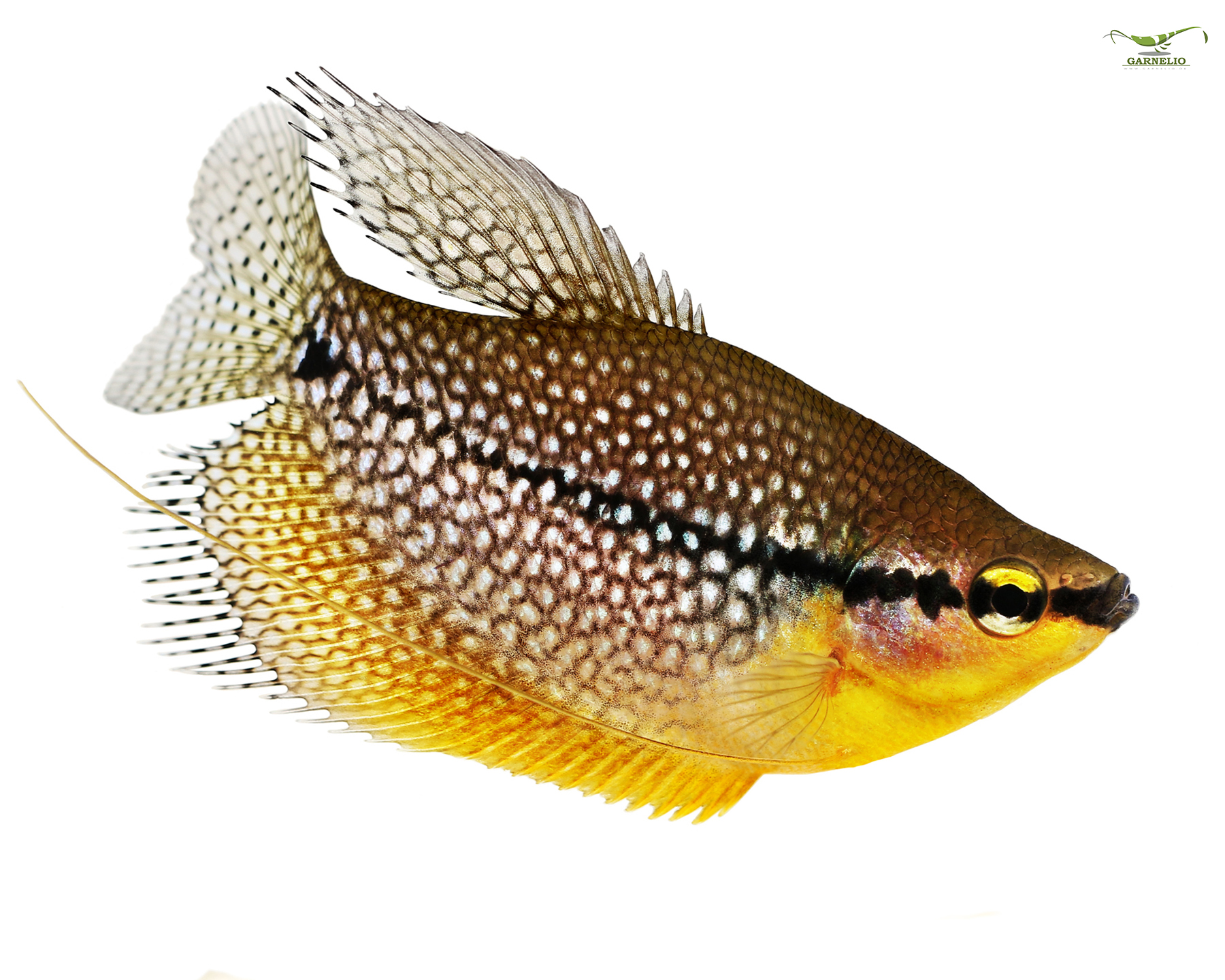
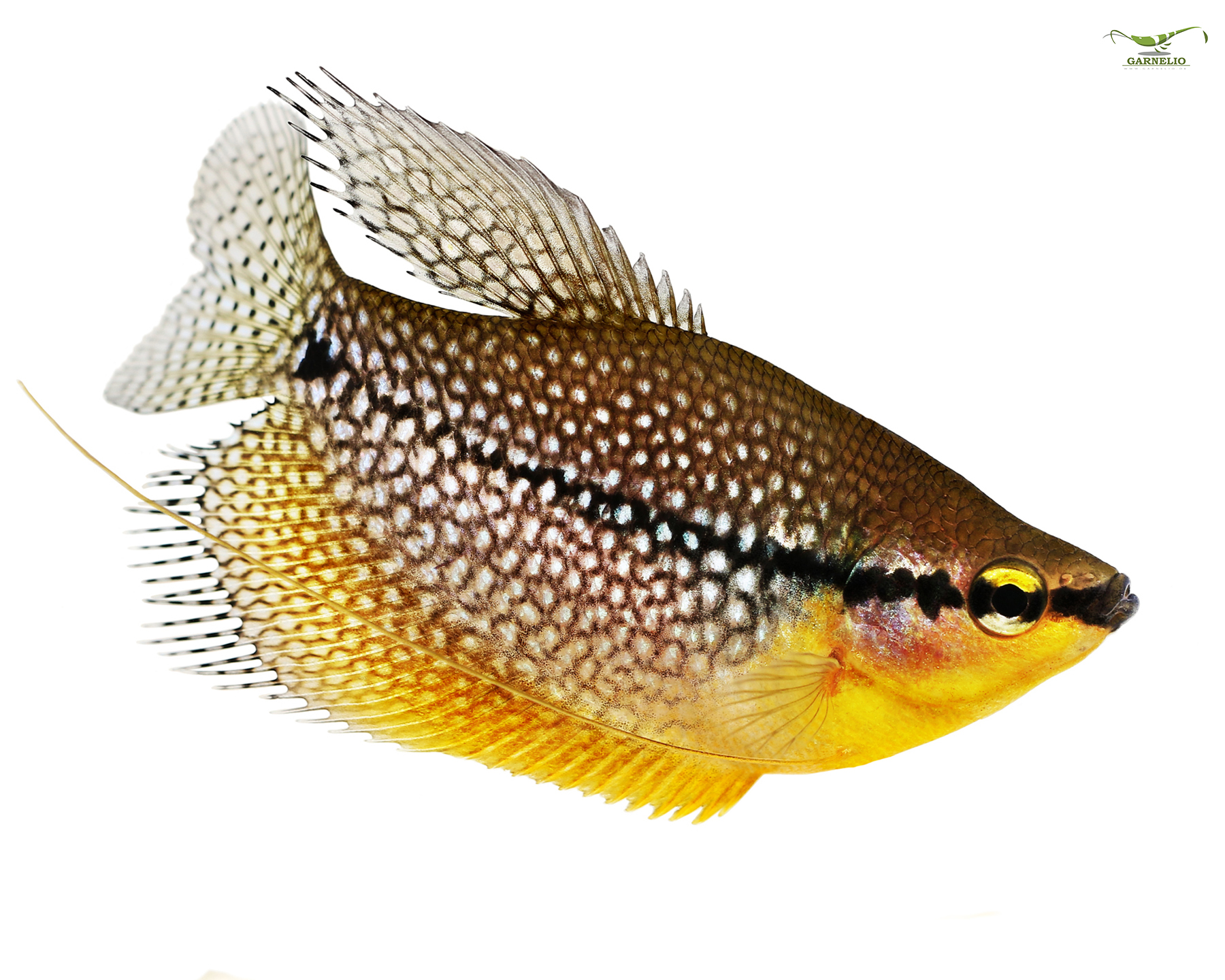
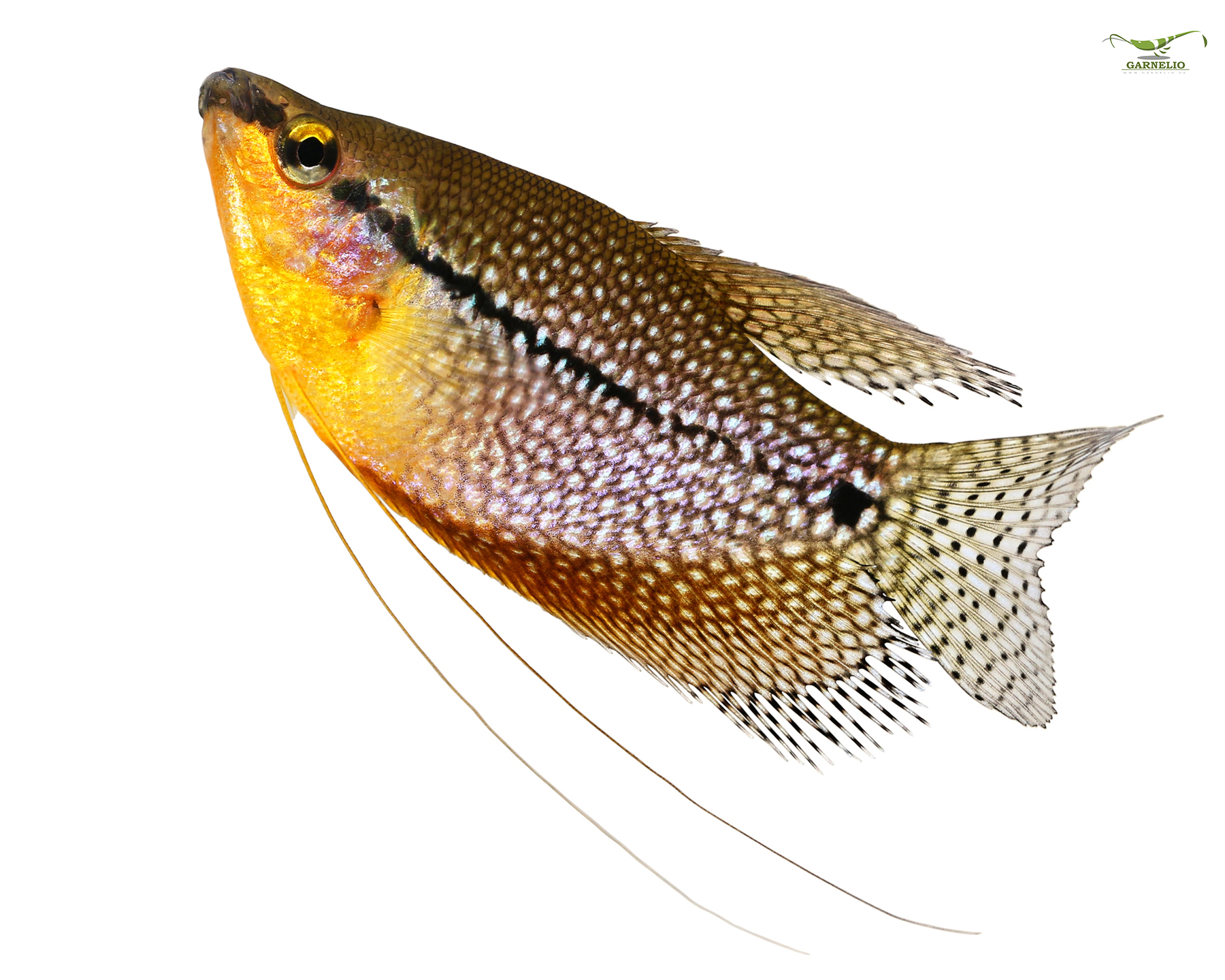
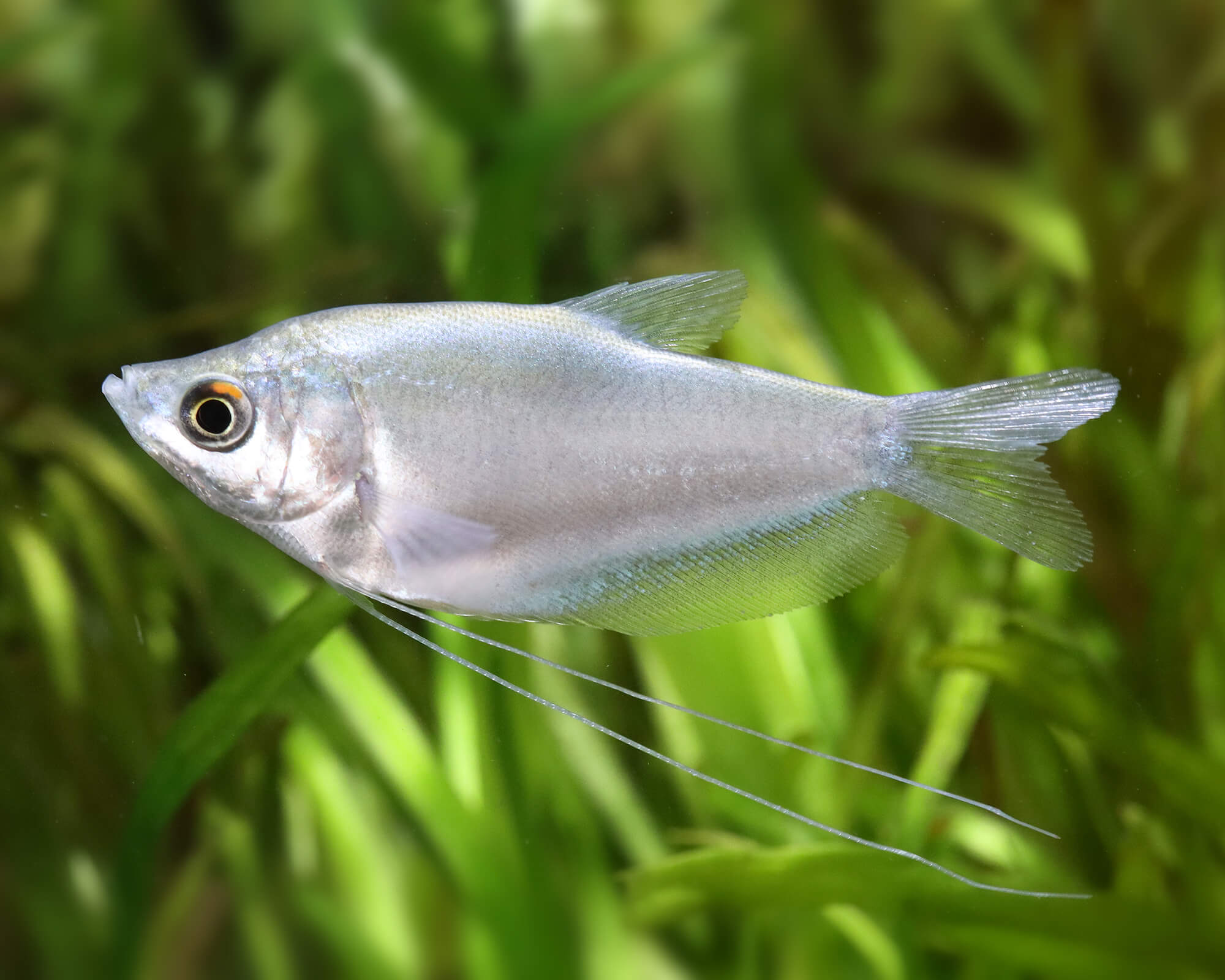
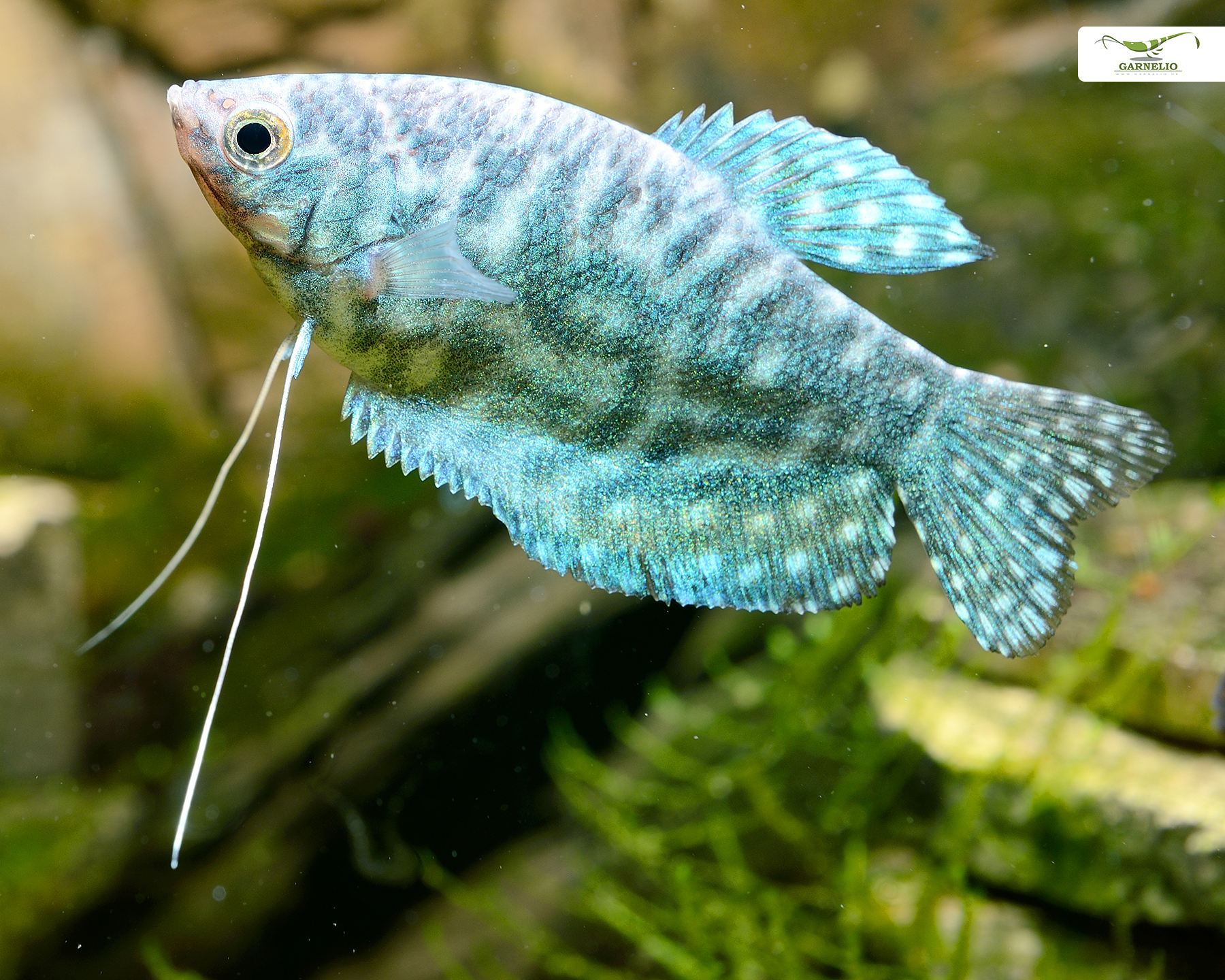
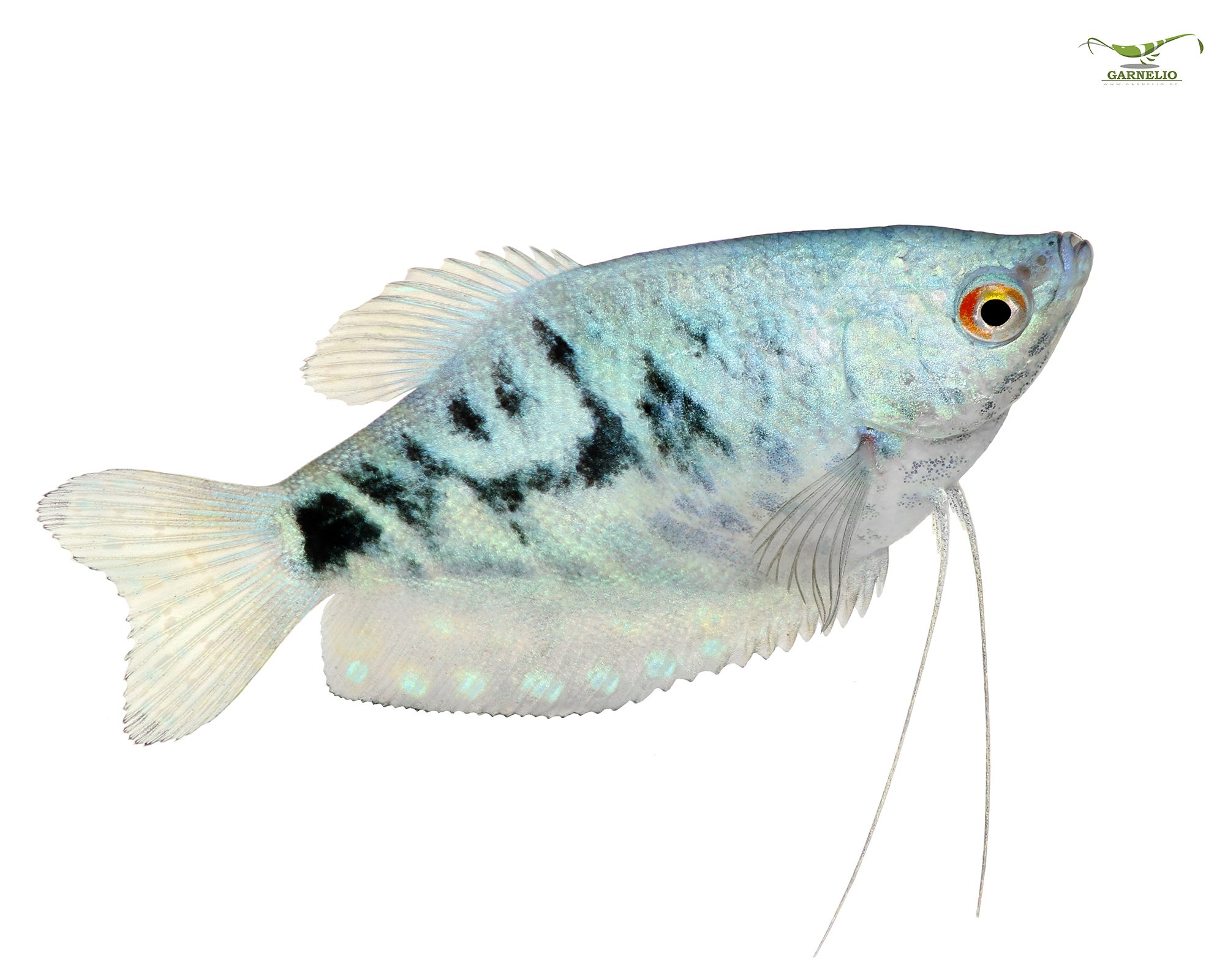
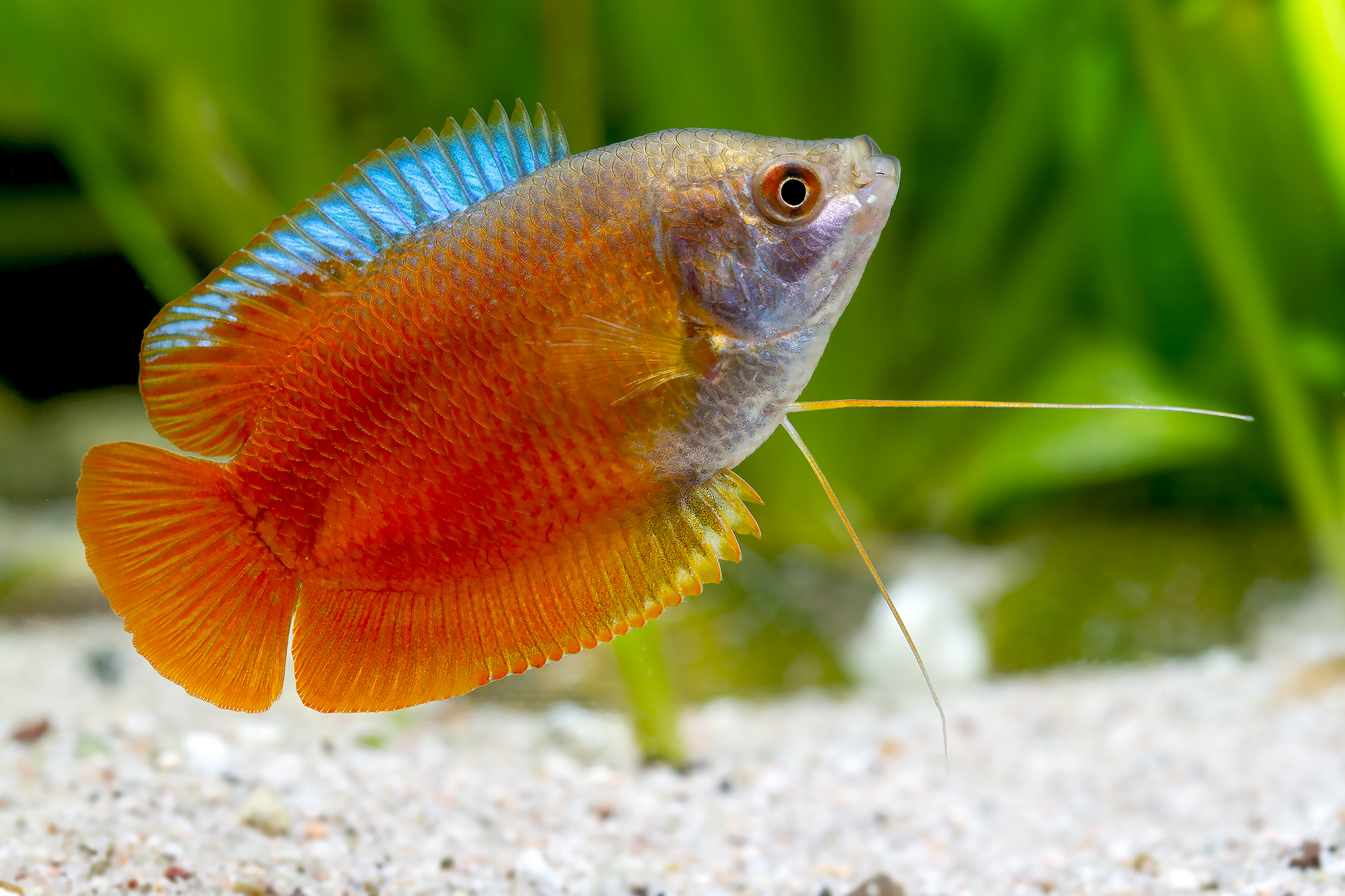
The supplied identification is the pearl or mosaic gourami, commonly listed as Trichogaster leerii. It is a member of the gourami family Osphronemidae and is a labyrinth fish, meaning it can use a specialized accessory breathing organ to take atmospheric oxygen. Aquarium references may differ in generic placement, so the supplied name is retained here. Adults have a rounded, laterally compressed body, long threadlike pelvic fins, a dark broken-looking lateral stripe, and numerous pale pearl-like spots.
Natural distribution and habitat
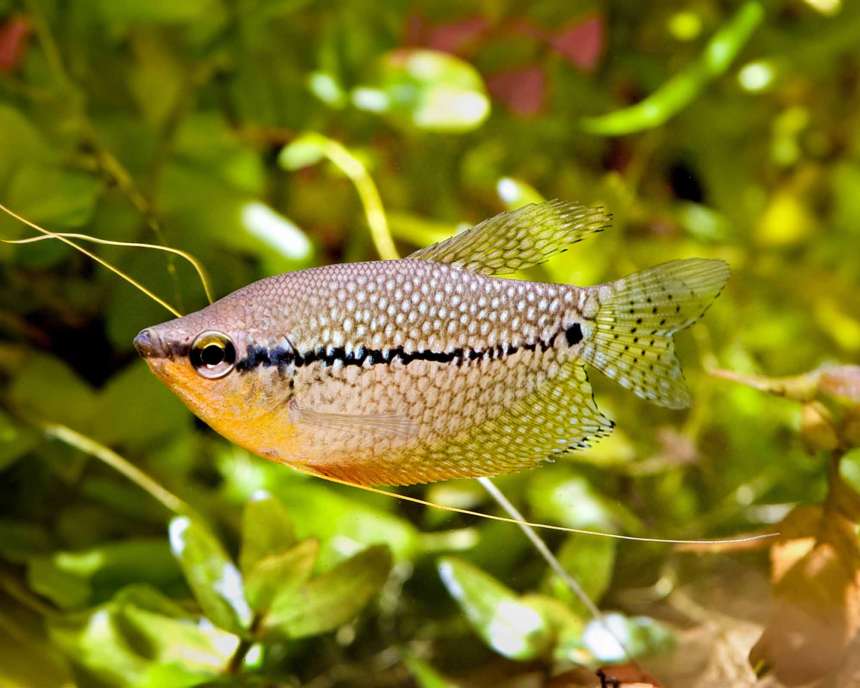
Pearl gouramis are native to lowland Southeast Asia, including parts of Thailand, the Malay Peninsula, Sumatra, and Borneo. They inhabit quiet or slow-flowing, often acidic to neutral waters such as forest streams, swamps, canals, and vegetated pools. These habitats typically provide subdued light, floating or overhanging vegetation, organic cover, and relatively gentle water movement.
Aquarium and tank size
For a pair, provide at least 75 litres, with a larger aquarium preferable for long-term comfort or community keeping. A tank around 90 litres or more offers better swimming space and reduces territorial pressure. Use a secure lid with a humid air space above the water, because sudden exposure to cold, dry air can stress labyrinth fish. Include plants, driftwood, shaded areas, and open water. Maintain gentle circulation and avoid strong, turbulent flow.
Water parameters
Keep the water consistently warm at 24-30 °C, with a practical target around 25-28 °C. A pH of 6.0-8.0 is tolerated, although stable, moderately soft to moderately hard water is usually suitable. Stability and low pollutants matter more than pursuing an exact value. Use regular partial water changes, good filtration, and mature biological filtration; avoid detectable ammonia and nitrite.
Behavior and social needs
Pearl gouramis are generally peaceful, deliberate swimmers that spend much of their time in the middle and upper levels. They may inspect plants and tankmates with their threadlike pelvic fins. Males can become territorial when courting or guarding a nest, especially in a small or sparsely furnished aquarium. Dense planting and visual breaks help. A compatible pair can be kept together, but observe the female for persistent chasing and provide retreats.
Diet
Offer a varied omnivorous diet of quality small pellets or flakes supplemented with frozen or live foods such as mosquito larvae, daphnia, brine shrimp, and bloodworms. Small portions once or twice daily are appropriate for adults, with only as much food as they consume promptly. Plant-based ingredients may be included in a quality prepared food, but a varied protein-rich diet helps maintain condition and breeding readiness.
Compatibility
Choose peaceful, similarly sized community fish that do not fin-nip, harass, or compete aggressively at the surface. Suitable companions can include calm rasboras, tetras, peaceful barbs, smaller peaceful loaches, Corydoras, and other non-aggressive community species, provided temperature and water requirements overlap. Avoid large aggressive cichlids, persistent fin-nippers, and highly boisterous fish. Do not overcrowd the upper levels, and provide enough cover for the pair.
Breeding
Pearl gouramis are bubble-nest breeders. Condition the pair with plentiful live or frozen foods and provide warm, clean, calm water with floating plants or other material at the surface. The male builds a bubble nest, courts the female, and gathers the fertilized eggs into the nest. He usually guards and repairs it while the female should be monitored for excessive harassment and removed if necessary. After hatching, the fry remain near the nest before becoming free swimming. Remove the male once the fry disperse or if he begins eating them. Raise fry in a separate shallow, covered nursery with gentle filtration and very small first foods such as infusoria or commercially prepared fry food, followed by newly hatched brine shrimp as they grow.
Identification note
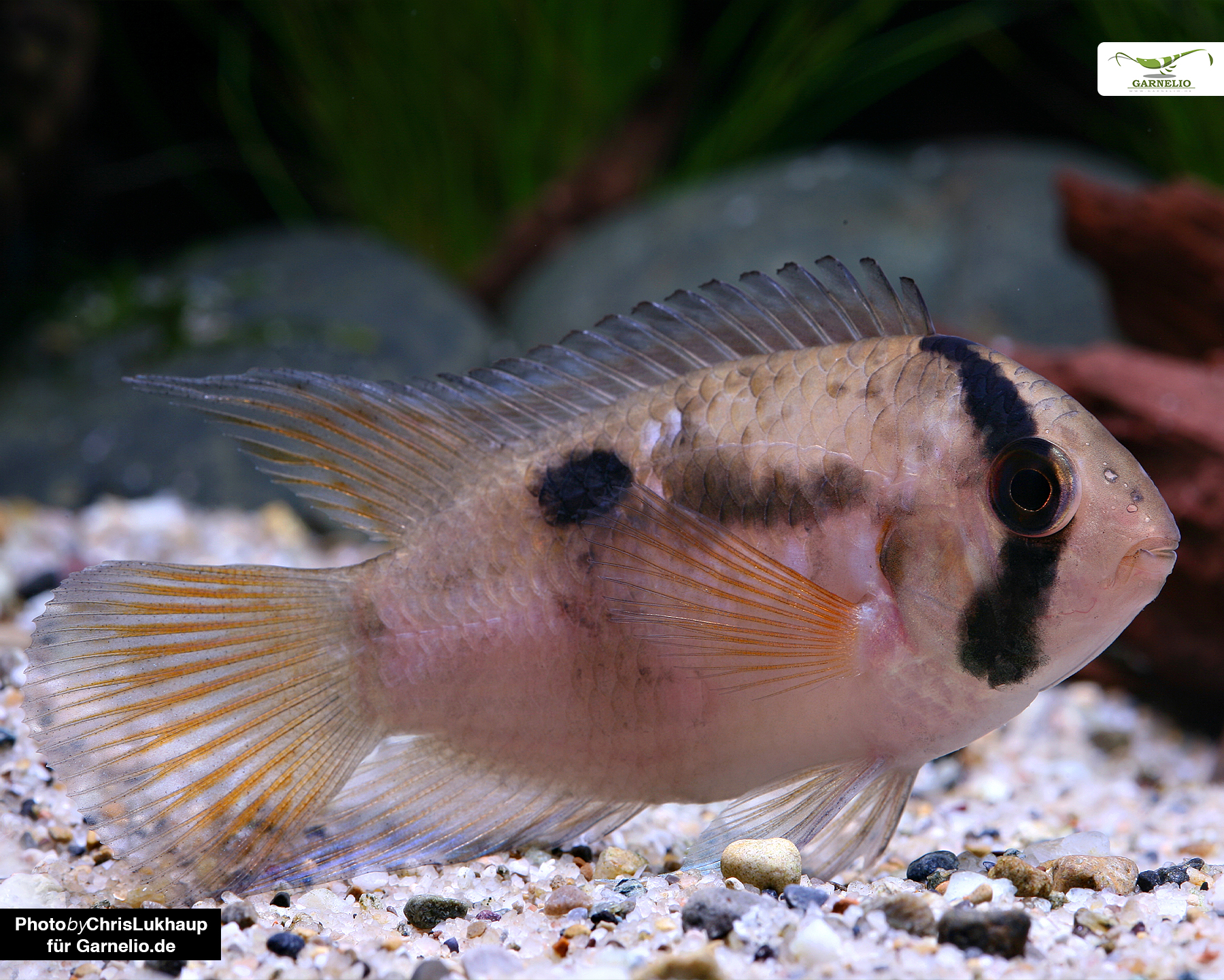
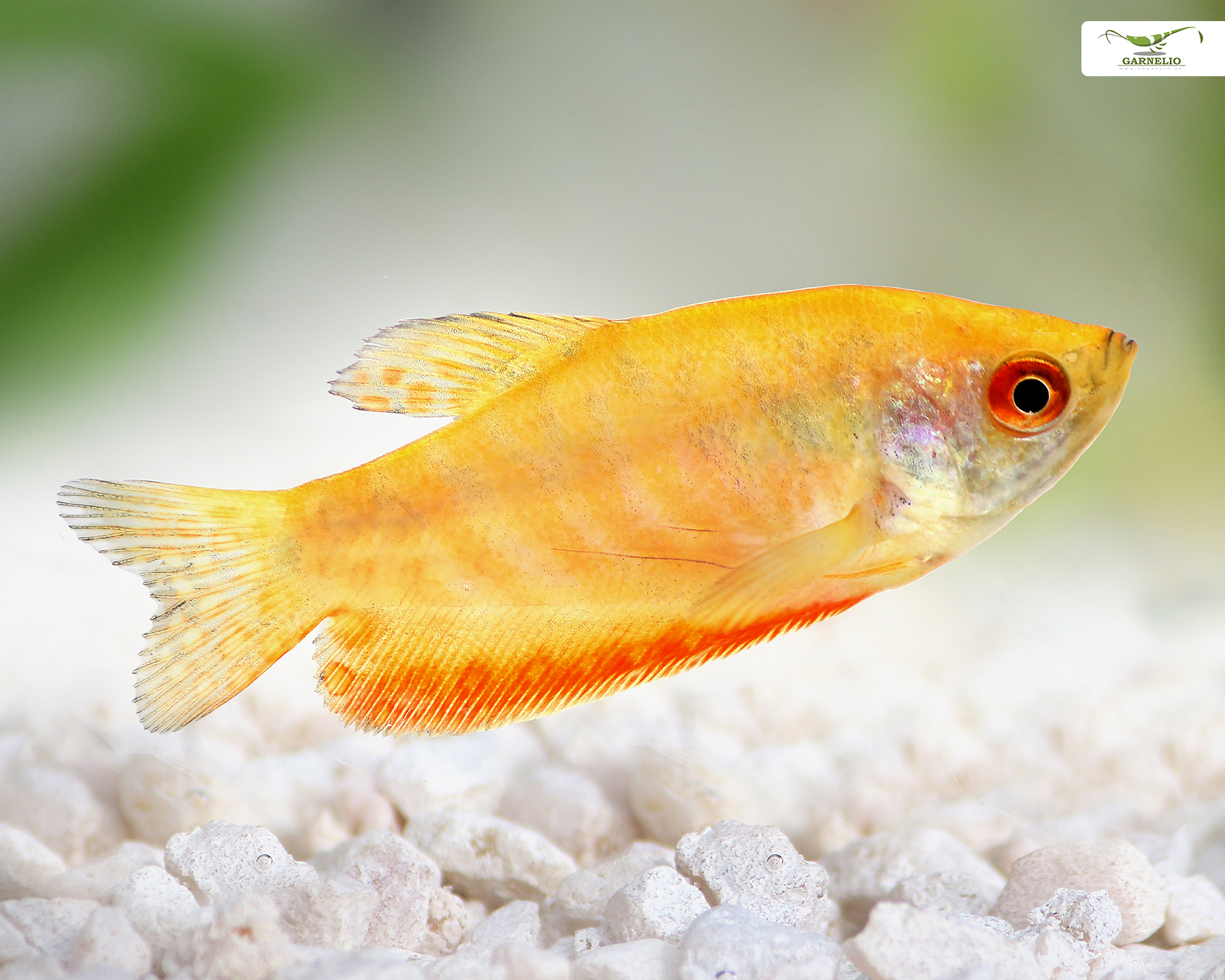
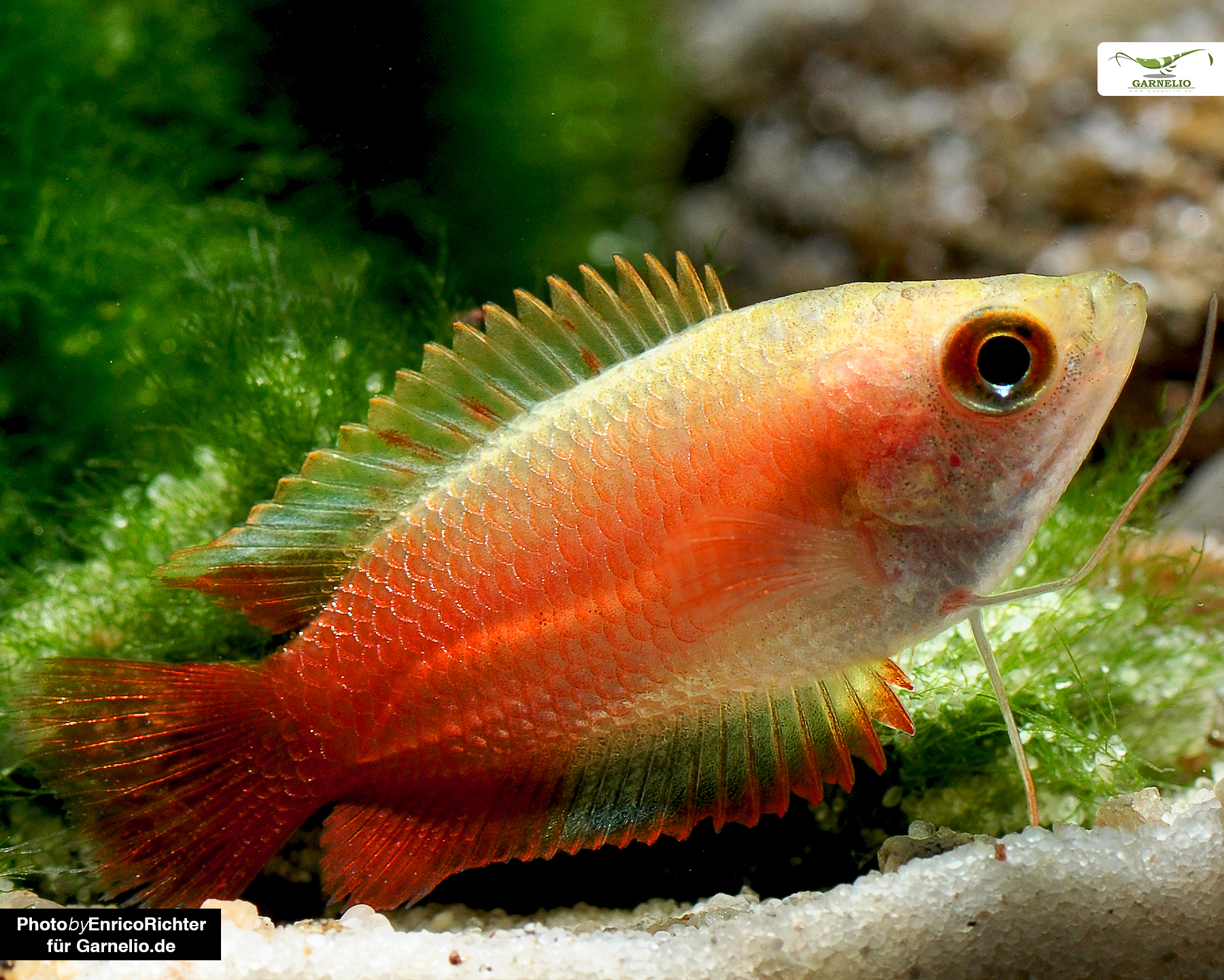
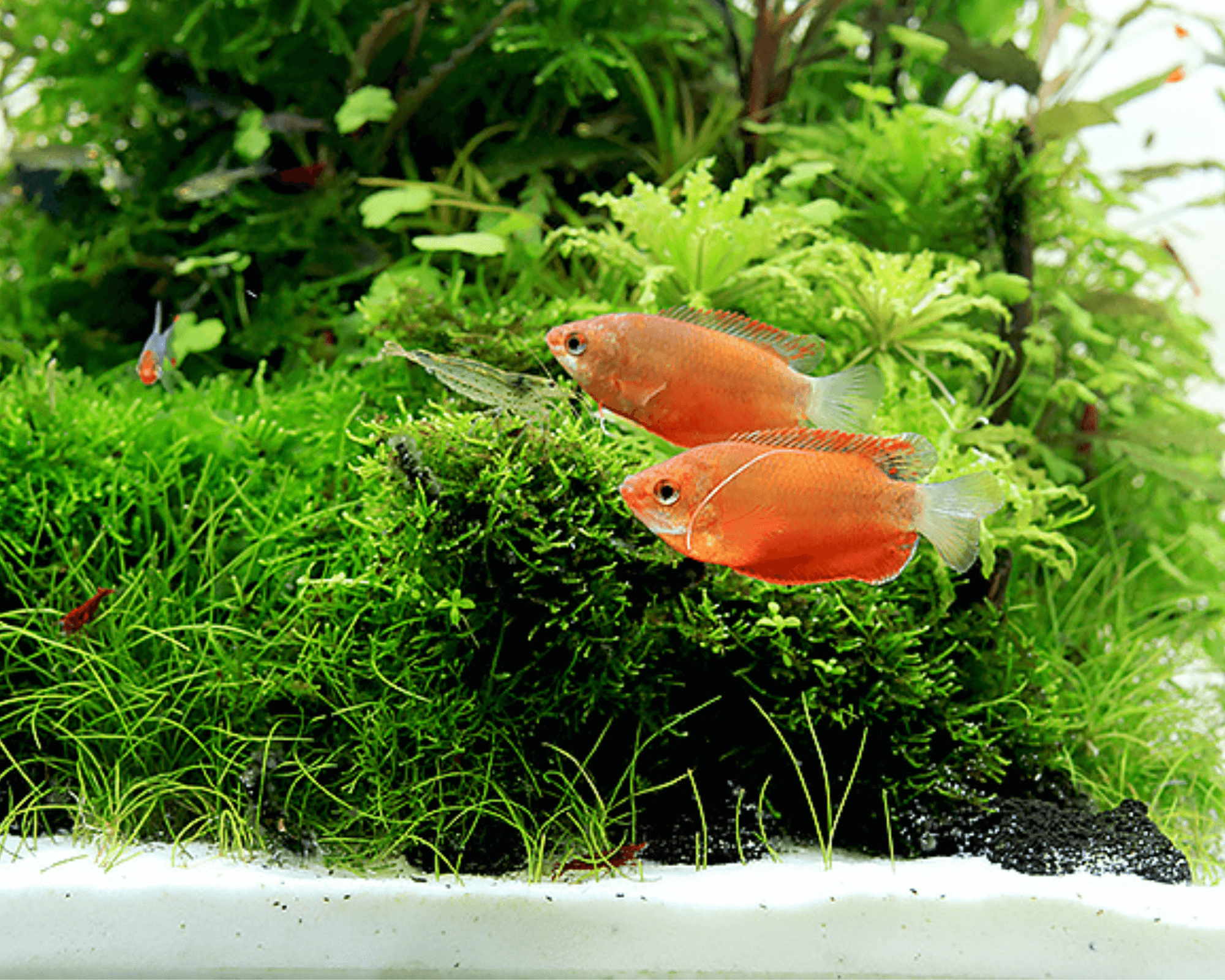
The supplied label names a pair of Trichogaster leeri, and the visible fish show the characteristic pearl spotting, dark lateral marking, threadlike pelvic fins, and orange throat of pearl gouramis. Sex cannot be confirmed reliably from the supplied views alone, although mature males commonly develop stronger coloration and a more pointed dorsal fin than females.
Leave your comments