Taxonomy and identification
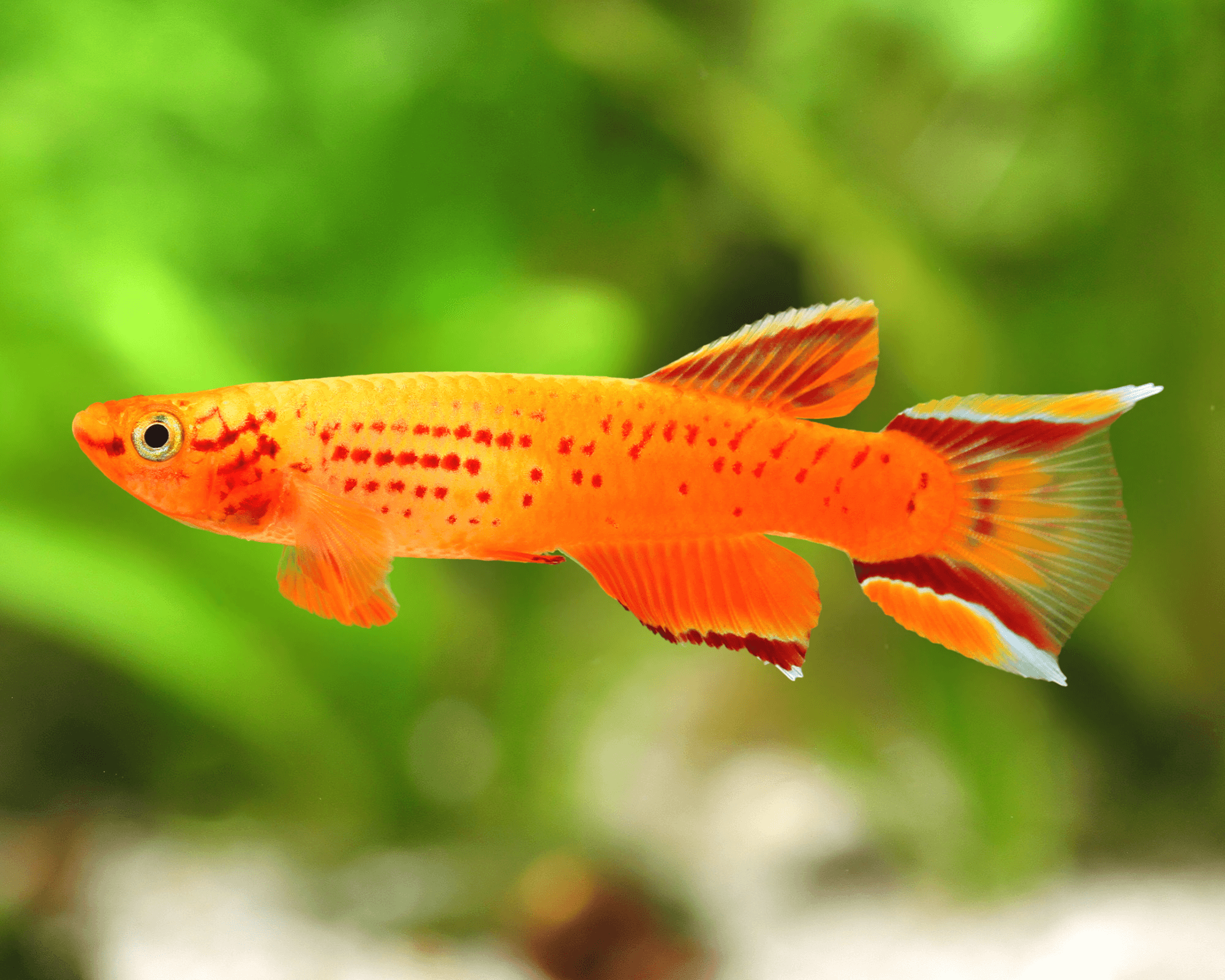
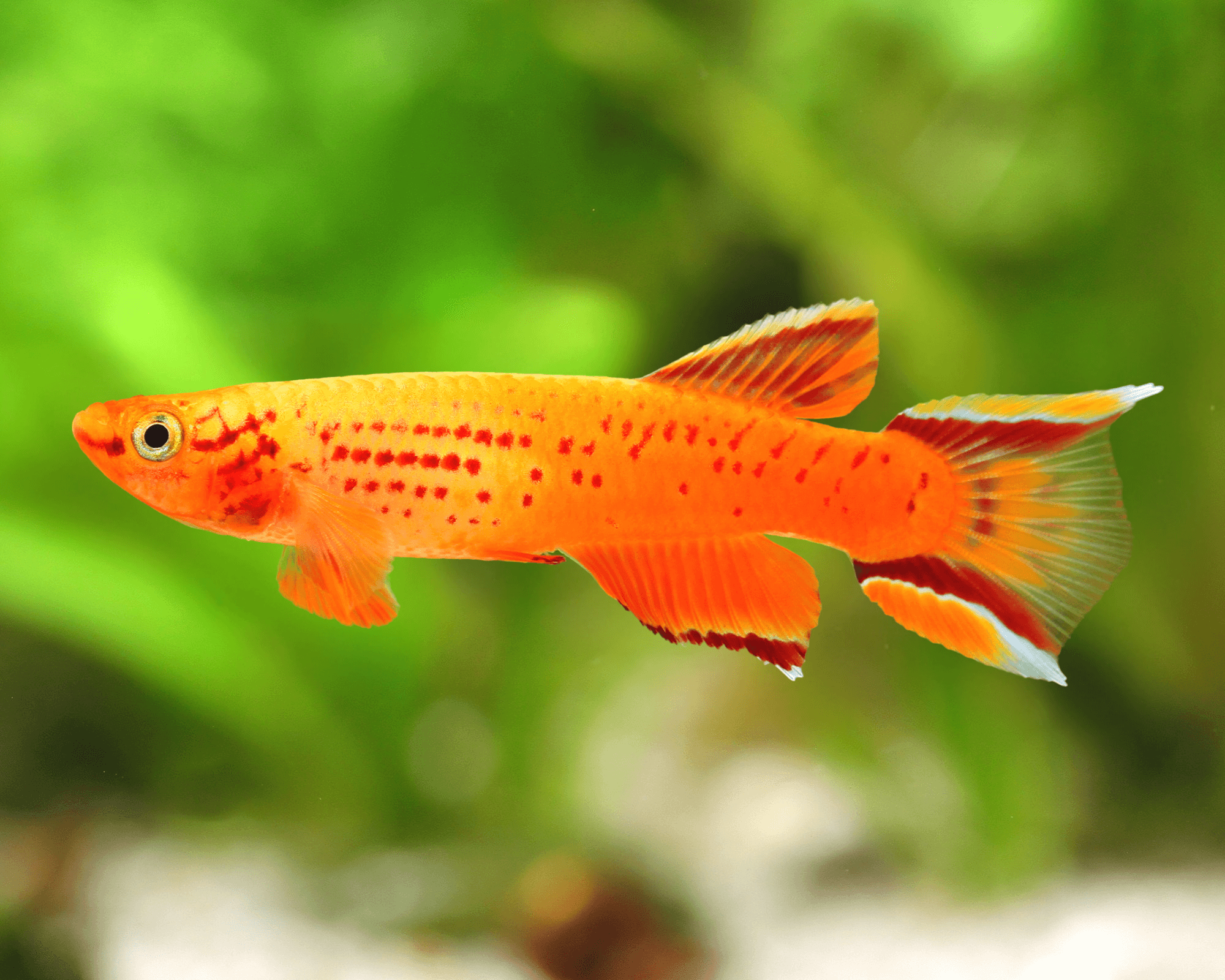
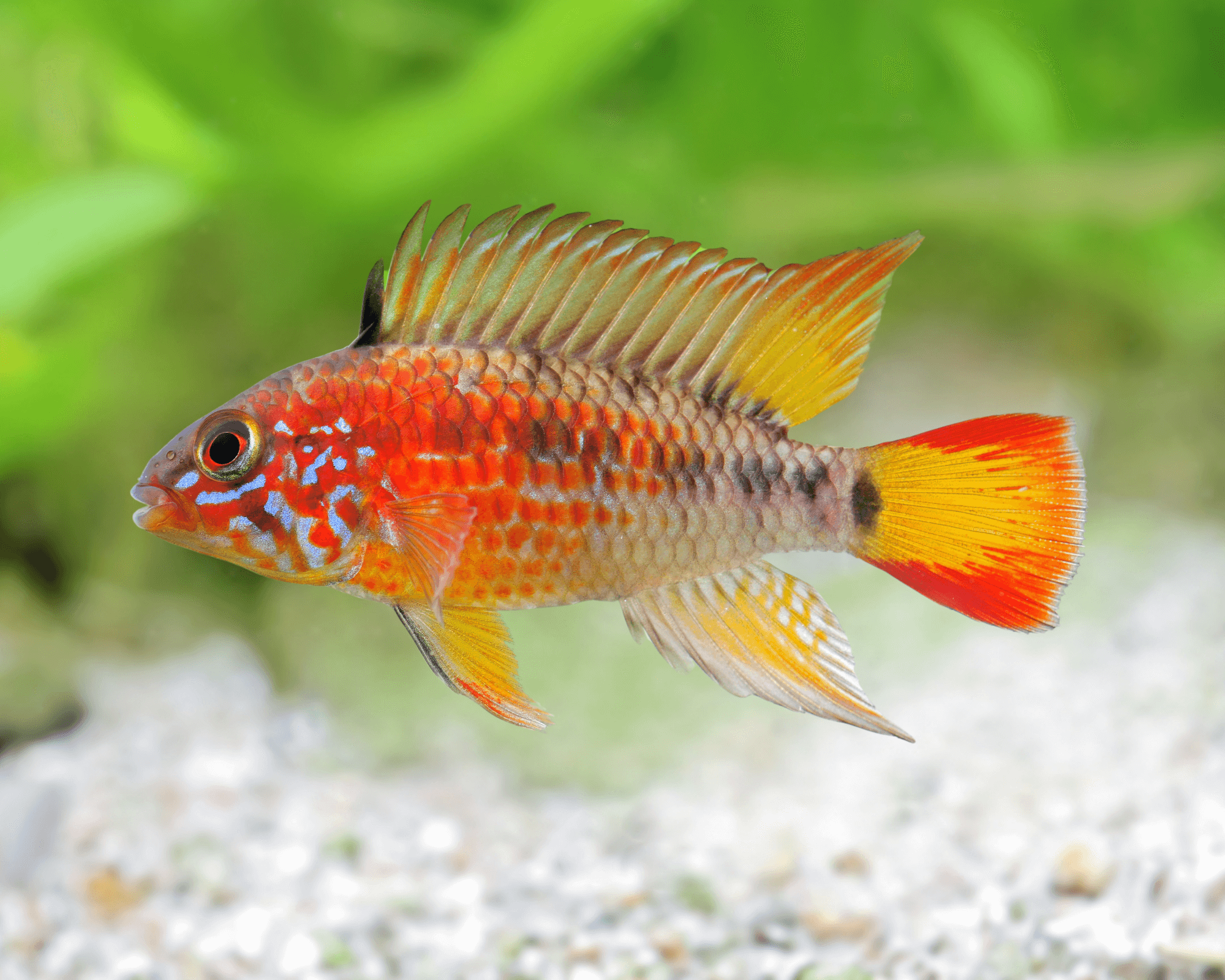
Aphyosemion australe belongs to the family Nothobranchiidae and order Cyprinodontiformes. It is commonly called the Cape Lopez killifish or Lyretail killifish. Males are more colorful and have longer, more ornate fins; females are smaller, rounder and comparatively subdued. “Splendid carpets” is treated here as a trade or line description, not as a separate species. The pictured fish appears consistent with an orange ornamental form, but image-based identification cannot establish the exact strain.
Natural distribution and habitat
This species is native to coastal areas of western Central Africa, especially Gabon and the Cape Lopez region. It occurs in shallow, slow-flowing streams, forest pools, swamps and other quiet waters with vegetation, leaf litter and subdued light. Aquarium specimens benefit from cover, gentle circulation and stable, clean water rather than strong current.
Aquarium size and setup
A planted aquarium of about 40 litres is a practical long-term size for a pair or small group, although a dedicated breeding setup can be smaller when carefully maintained. Use a tight-fitting lid because killifish can jump. Include floating plants, fine-leaved plants, driftwood or other cover, and open swimming space near the surface. Gentle filtration with an air-driven sponge filter is suitable. Dark substrate and subdued lighting often encourage confident behavior and improve color display.
Water parameters and maintenance
Keep the temperature around 20-24 °C, pH 6.0-7.5, and hardness low to moderate. The fish generally tolerate neutral conditions when acclimated, but stability is more important than pursuing a particular number. Provide regular partial water changes, avoid detectable ammonia and nitrite, and prevent abrupt changes in temperature or mineral content. Soft, slightly acidic water is useful for breeding, particularly when the source stock has been maintained under those conditions.
Behavior and compatibility
Cape Lopez killifish are generally peaceful, shy and most active when provided with vegetation and subdued lighting. Males display to females and to one another, but serious aggression is uncommon in a well-structured aquarium. Keep them with similarly small, calm fish that prefer comparable water and temperature. Avoid large, boisterous species, fin-nippers and highly competitive feeders. A species aquarium is the safest choice for preserving a particular strain and observing courtship.
Diet
Offer small live, frozen or high-quality prepared foods. Suitable choices include mosquito larvae, daphnia, grindal worms, baby brine shrimp and finely sized frozen foods. Many individuals accept good micro-pellets or flakes after acclimation, but varied feeding supports condition and spawning better than relying on dry food alone. Feed small portions once or twice daily and remove uneaten food promptly.
Breeding
This is a non-annual killifish that deposits adhesive eggs among fine plants, moss or a spawning mop. Condition the pair with nutritious live or frozen foods and provide a yarn mop or dense fine-leaved vegetation. The male courts the female under cover, where eggs are fertilized individually. Eggs can be collected and incubated in clean, slightly soft water, or left in the aquarium if some natural losses are acceptable. Hatching time varies with temperature, commonly taking roughly two to three weeks. Newly free-swimming fry require infusoria or another very small first food, followed by baby brine shrimp or similarly sized prey.
Conservation and strain notes
Captive-bred lines are preferable to unverified wild collection when available. Keep locality or line records and avoid mixing distinct populations if breeding for maintenance or exchange. Because the supplied name includes a commercial phrase and the photograph cannot verify provenance, the exact “splendid carpets” line should be documented from the seller rather than assumed from coloration alone.
Leave your comments