AquaLibs presents AquaRank Discover the world’s leading aquascapers

Explore transparent rankings built from published results across the world’s leading aquascaping contests.

Marble Gourami (Cosby Gourami), Trichopodus trichopterus

Taxonomy and identification

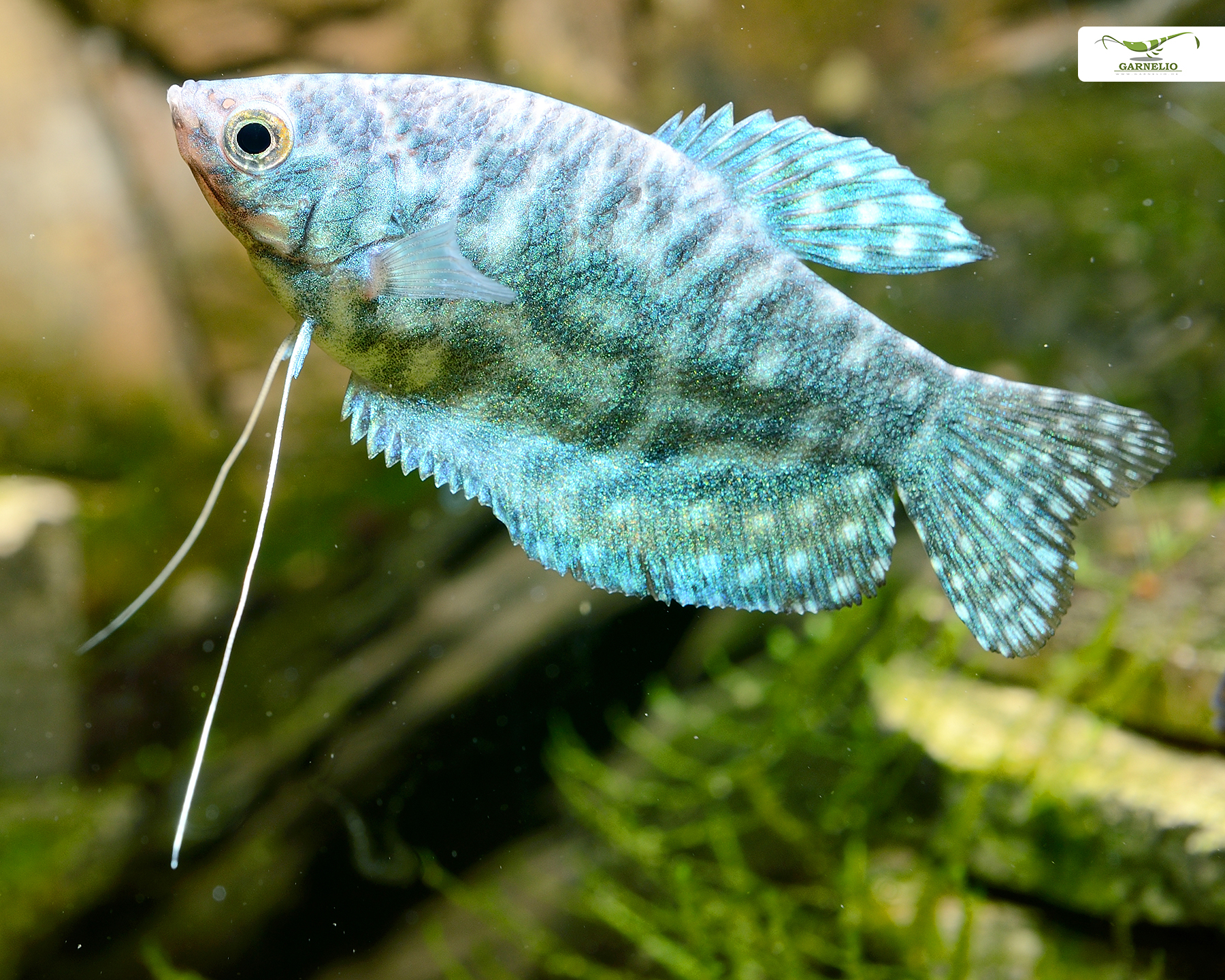
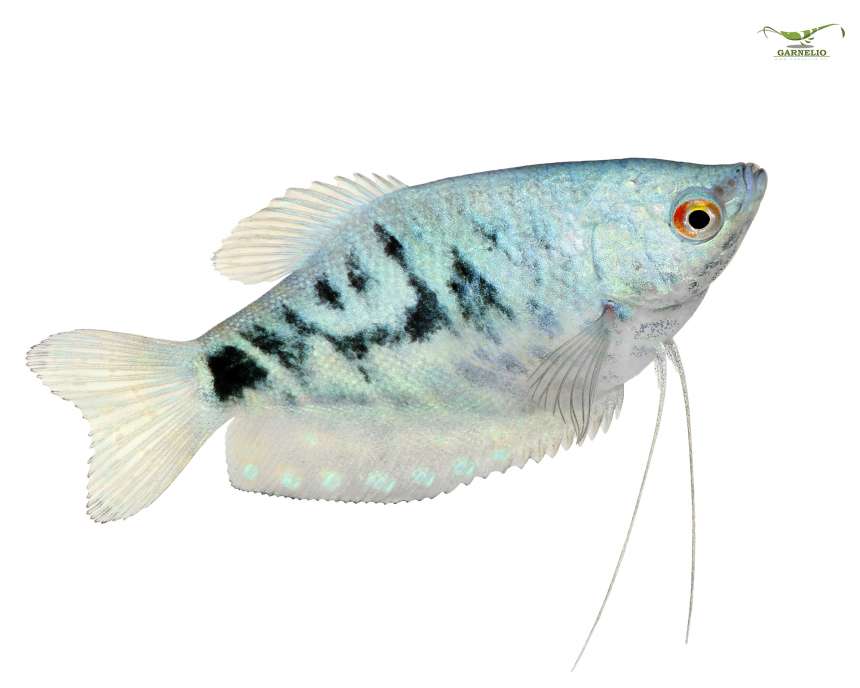
The accepted scientific name is Trichopodus trichopterus, in the family Osphronemidae and order Anabantiformes. Aquarium literature and older trade names may use Trichogaster trichopterus. The marble or Cosby form is a captive-bred color variety rather than a separate species. Typical marble fish have a blue, silver, or pale background with irregular dark blue to black markings. The supplied source describes a pair, but sex and exact color strain cannot be confirmed reliably from the available images.
Taxonomy and identification

Natural distribution and habitat

Trichopodus trichopterus is native to mainland and island Southeast Asia, including parts of Thailand, Cambodia, Laos, Vietnam, Malaysia and Indonesia. It inhabits slow-moving or still waters such as swamps, ponds, rice fields, canals and vegetated margins. These environments are often warm, quiet and periodically low in dissolved oxygen, which explains the species' labyrinth organ and preference for access to the water surface.
Natural distribution and habitat

Behavior

Marble gouramis are generally calm to moderately assertive community fish. They spend much of their time in the upper and middle water layers and may investigate plants, décor and tank mates. Males can defend a territory and may chase females or other gouramis, especially during nest building. Dense planting, floating cover and visual barriers reduce conflict. Keep the aquarium covered because gouramis may jump and need warm, humid air above the water for normal labyrinth-organ function.
Behavior

Aquarium size and layout

A pair should have at least 120 litres, with 150 litres or more preferable for long-term keeping and community use. Choose a tank with substantial horizontal swimming space rather than a tall, narrow aquarium. Use gentle filtration, subdued circulation, floating plants and rooted vegetation around the sides and rear, leaving open areas for movement. Smooth décor and shaded retreats help reduce stress. Maintain a stable, mature aquarium with zero ammonia and nitrite and low nitrate.

Water parameters

Keep the water warm and stable at 24-28 °C, with a pH of 6.0-8.0. Soft to moderately hard water is generally suitable, but consistency is more important than chasing a particular value. Perform regular partial water changes and avoid abrupt changes in temperature, pH or mineral content. Moderate surface agitation is useful for oxygenation, but excessive turbulence can make surface breathing and bubble-nest construction more difficult.

Diet

This species is an adaptable omnivore. Offer a quality floating or slow-sinking staple pellet or flake, supplemented with frozen or live foods such as brine shrimp, daphnia, mosquito larvae and bloodworms. Small portions once or twice daily are preferable to overfeeding. Occasional vegetable matter or spirulina-based food can add variety. Remove uneaten food promptly, particularly in a warm aquarium where waste breaks down quickly.

Compatibility

Suitable companions include peaceful, similarly sized community fish that do not constantly nip fins or compete aggressively at the surface. Avoid fin-nippers, highly boisterous species and aggressive cichlids. Keep only one male in a smaller aquarium; several females can spread attention in a larger, well-planted setup. A pair is not automatically peaceful during breeding, so provide cover and be prepared to separate the female if persistent chasing or injury occurs.

Breeding

Marble gouramis are bubble-nest breeders. A separate, gently filtered breeding aquarium with floating plants or other surface cover can be used. Condition the pair with varied, protein-rich foods and raise the temperature gradually within the normal range. The male constructs a bubble nest, courts the female and gathers the buoyant eggs into the nest after spawning. Remove the female if the male becomes excessively aggressive. The male usually guards the nest; remove him after the fry become free-swimming or if he begins eating them. Infusoria or another suitably tiny first food is required for newly free-swimming fry, followed by larger foods as they grow.

Fish info

  • Care level: Easy - Moderate
  • Temperament: Moderate
  • Adult size: 12-15 cm
  • Life expectancy: 4-6 years
  • Fish type: Freshwater labyrinth fish
  • Temperature : 24-28 °C
  • pH: 6.0-8.0
  • Color Form: Black, Blue, Gold, Orange, Silver
Leave your comments
Latest on Fishs
  • Brass Mouthbrooder (Pseudocrenilabrus philander dispersus)

    Brass Mouthbrooder (Pseudocrenilabrus philander dispersus)

    Moderate
    African riverine cichlid
    The brass mouthbrooder is a small African cichlid valued for its metallic body colors and distinctive maternal mouthbrooding. The supplied fish are identified as Pseudocrenilabrus philander dispersus, offered as a trio of two females and one male at approximately 4 cm. Taxonomic treatment of regional forms can vary, so the subspecies identification should be regarded as provisional unless supported by locality data. It is best kept in a structured aquarium with clean, moderately hard water and sheltered areas for females.
  • Chindongo demasoni: Demason’s Mouthbrooder Care Guide

    Chindongo demasoni: Demason’s Mouthbrooder Care Guide

    Moderate - Difficult
    Lake Malawi mbuna cichlid
    Chindongo demasoni is a small, vividly striped mbuna from Lake Malawi. Its blue-and-black pattern is distinctive, but its confident temperament and persistent territorial behavior require thoughtful stocking and abundant rockwork. Keep a group rather than a pair, provide strongly filtered alkaline water, and offer a predominantly algae-based diet. Females are maternal mouthbrooders, carrying eggs and fry in the mouth after spawning. The supplied identification is consistent with Chindongo demasoni, although photographs alone cannot confirm locality or sex.
  • Pseudotropheus acei (Acei Cichlid)

    Pseudotropheus acei (Acei Cichlid)

    Moderate
    Lake Malawi mbuna cichlid
    Pseudotropheus acei is a Lake Malawi mbuna recognized for its blue to violet body and contrasting pale or bluish fins. It is generally less aggressive than many rock-dwelling mbuna, but it remains territorial and should be kept in a spacious, structured aquarium. The supplied trade description identifies a trio of two females and one male at approximately 4 cm; sex and exact locality cannot be confirmed from the available evidence. Adult coloration may develop considerably with age and condition.
  • Melanochromis auratus: Golden Mbuna Care Guide

    Melanochromis auratus: Golden Mbuna Care Guide

    Moderate
    Lake Malawi mbuna cichlid
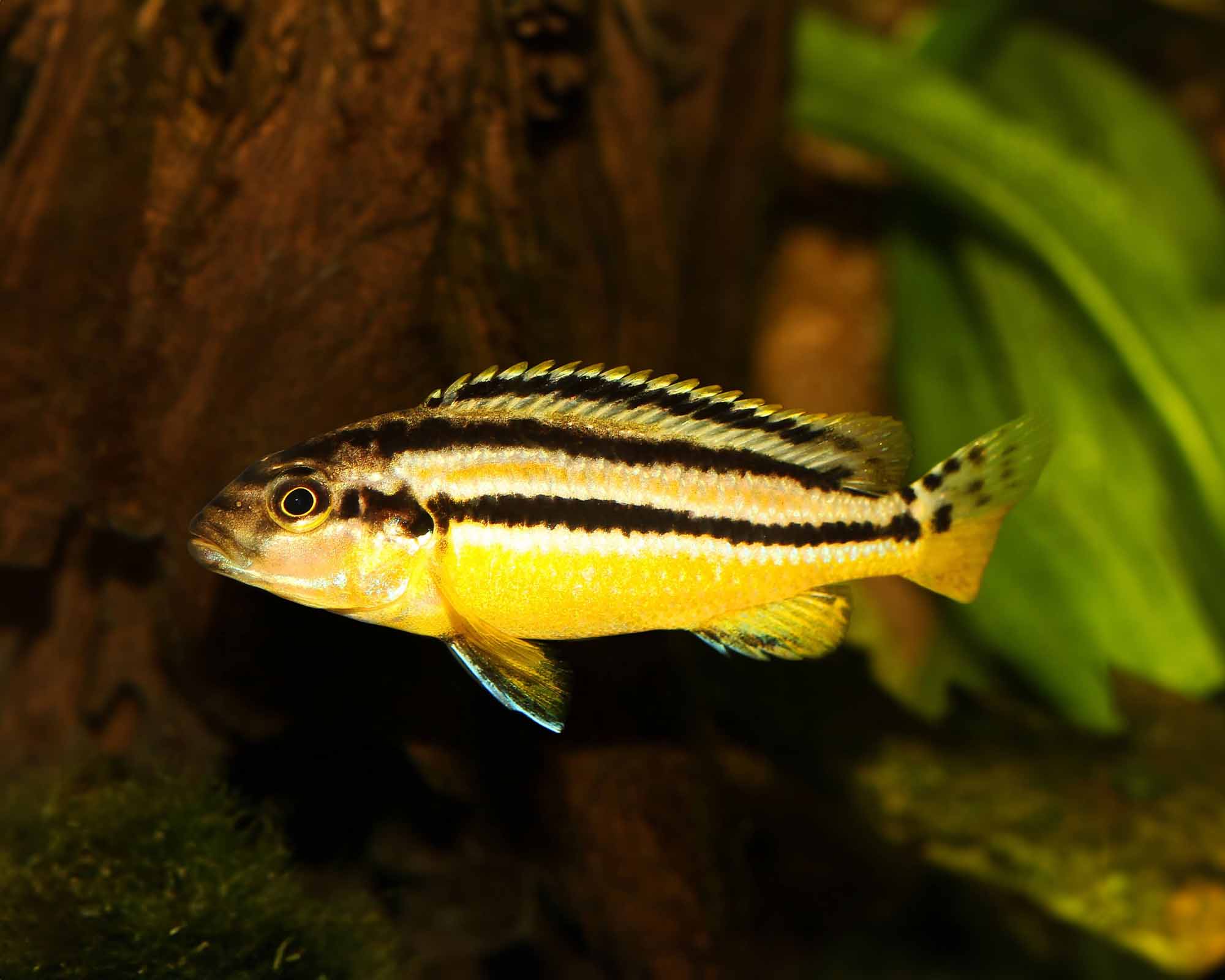
    Melanochromis auratus is a Lake Malawi mbuna commonly known as the auratus cichlid or golden mbuna, not a goldfish. Its yellow-gold and black horizontal striping is especially vivid in females and juveniles, while mature males commonly become dark blue-black with pale stripes. This territorial herbivore is best kept in a spacious, rocky African cichlid aquarium with carefully selected tank mates. The supplied source label is contradictory, so identification here follows the scientific name and the pictured fish rather than the “turquoise goldfish” wording.
  • Gold Shell-Dwelling Cichlid (Lamprologus ocellatus)

    Gold Shell-Dwelling Cichlid (Lamprologus ocellatus)

    Easy - Moderate
    Lake Tanganyika shell-dwelling cichlid
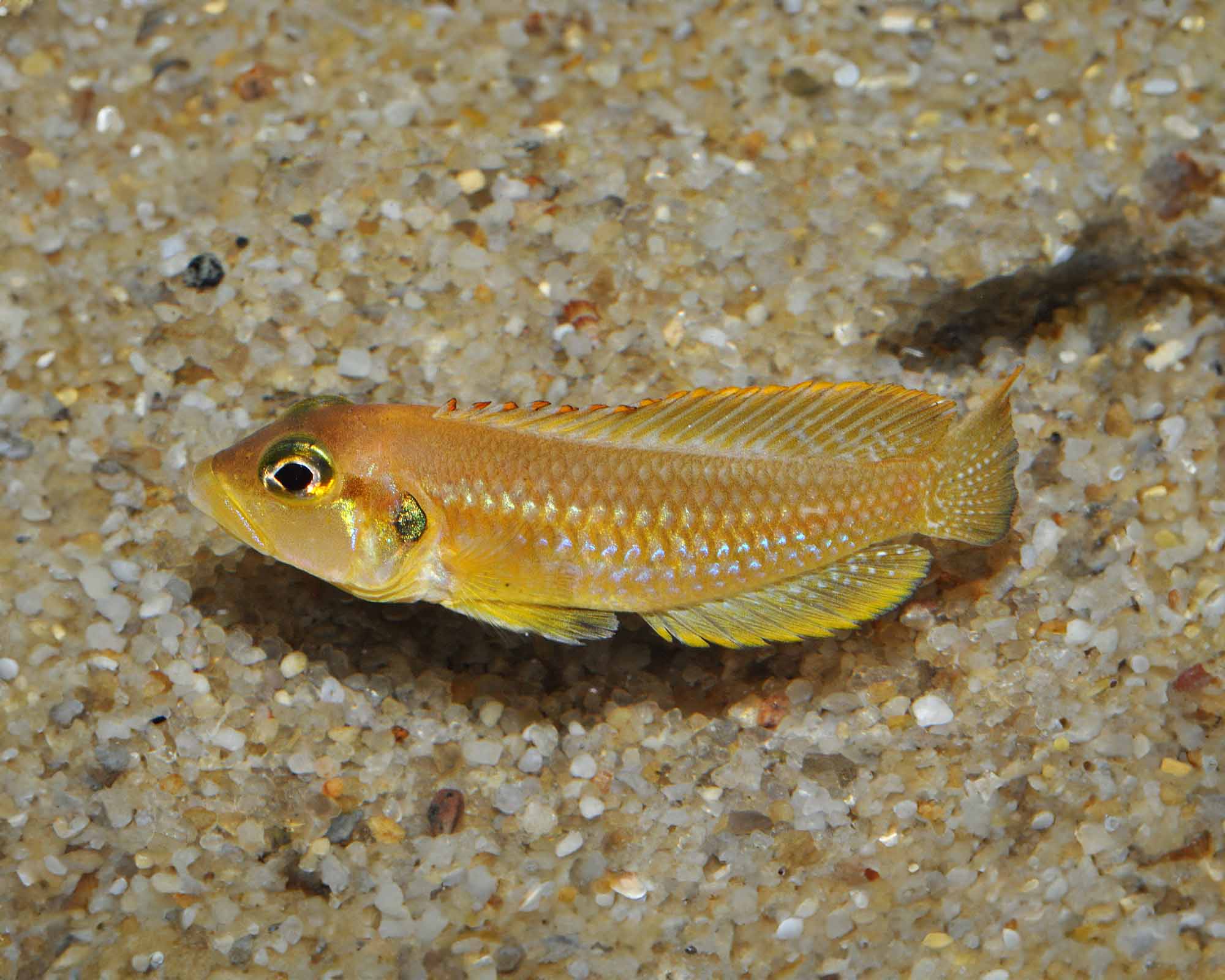
    Lamprologus ocellatus is a small Tanganyikan cichlid that shelters, breeds and defends territory around empty snail shells. The supplied source identifies a gold pair, and the images are consistent with the golden color form, although photographs cannot confirm sex, health or that the fish are an established pair. This species is manageable for aquarists who can provide alkaline, mineral-rich water, a fine sandy substrate and several suitable shells. Its small size contrasts with strong territorial behavior, especially around breeding sites.
  • Salvin's Cichlid (Trichromis salvini)

    Salvin's Cichlid (Trichromis salvini)

    Moderate - Difficult
    Central American cichlid
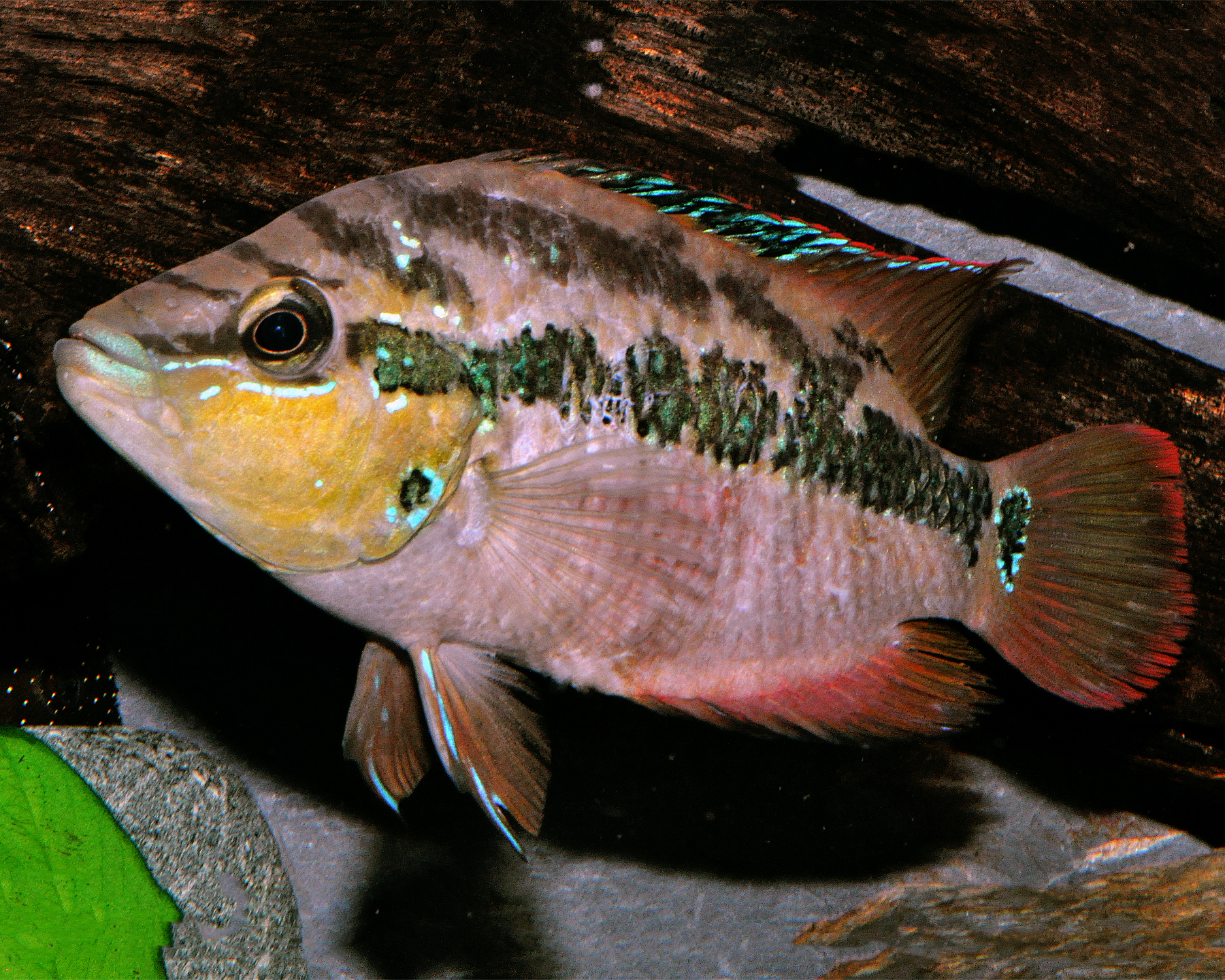
    Salvin's cichlid is a colorful Central American cichlid known for its yellow, red and blue-green markings and strongly territorial behavior. The supplied source identifies a pair as Cichlasoma salvini; the species is generally treated in current references as Trichromis salvini, although aquarium literature still commonly uses the older name. It is best kept as a dedicated pair or with carefully selected robust tank mates.
  • Striped Snail Cichlid (Neolamprologus multifasciatus)

    Striped Snail Cichlid (Neolamprologus multifasciatus)

    Easy - Moderate
    Lake Tanganyika shell-dwelling cichlid
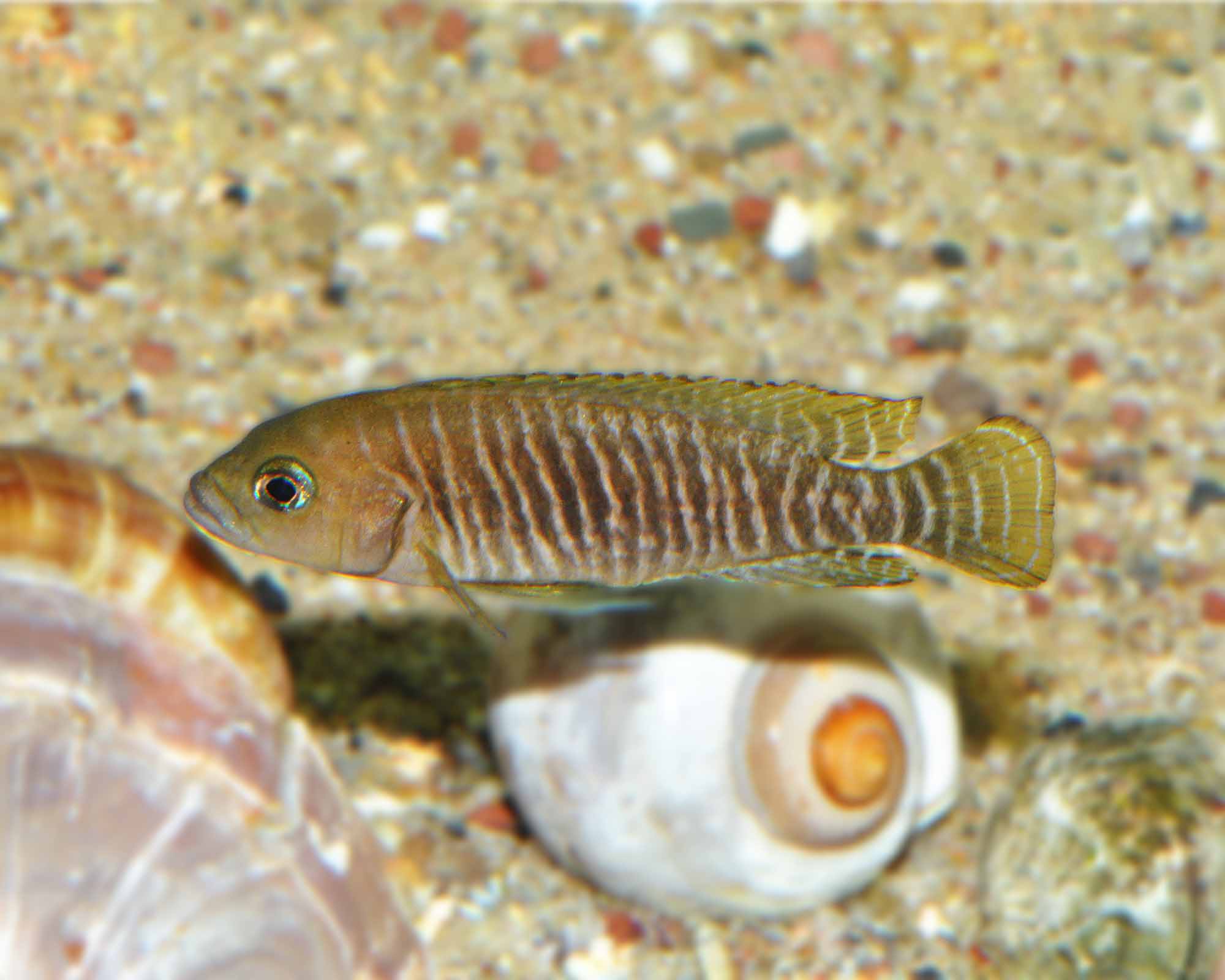
    Neolamprologus multifasciatus is a very small shell-dwelling cichlid from Lake Tanganyika. It lives among empty snail shells, excavates sand, and defends a small territory while forming active colonies. Despite its size, it displays complex social and breeding behavior. The supplied source identifies these fish as N. multifasciatus; photographs alone can be difficult to distinguish from closely related shell-dwelling Neolamprologus, so identification should be confirmed from provenance or examination by an experienced aquarist.
  • Dickfeld’s Julidochromis (Julidochromis dickfeldi)

    Dickfeld’s Julidochromis (Julidochromis dickfeldi)

    Moderate
    Lake Tanganyika rock-dwelling cichlid
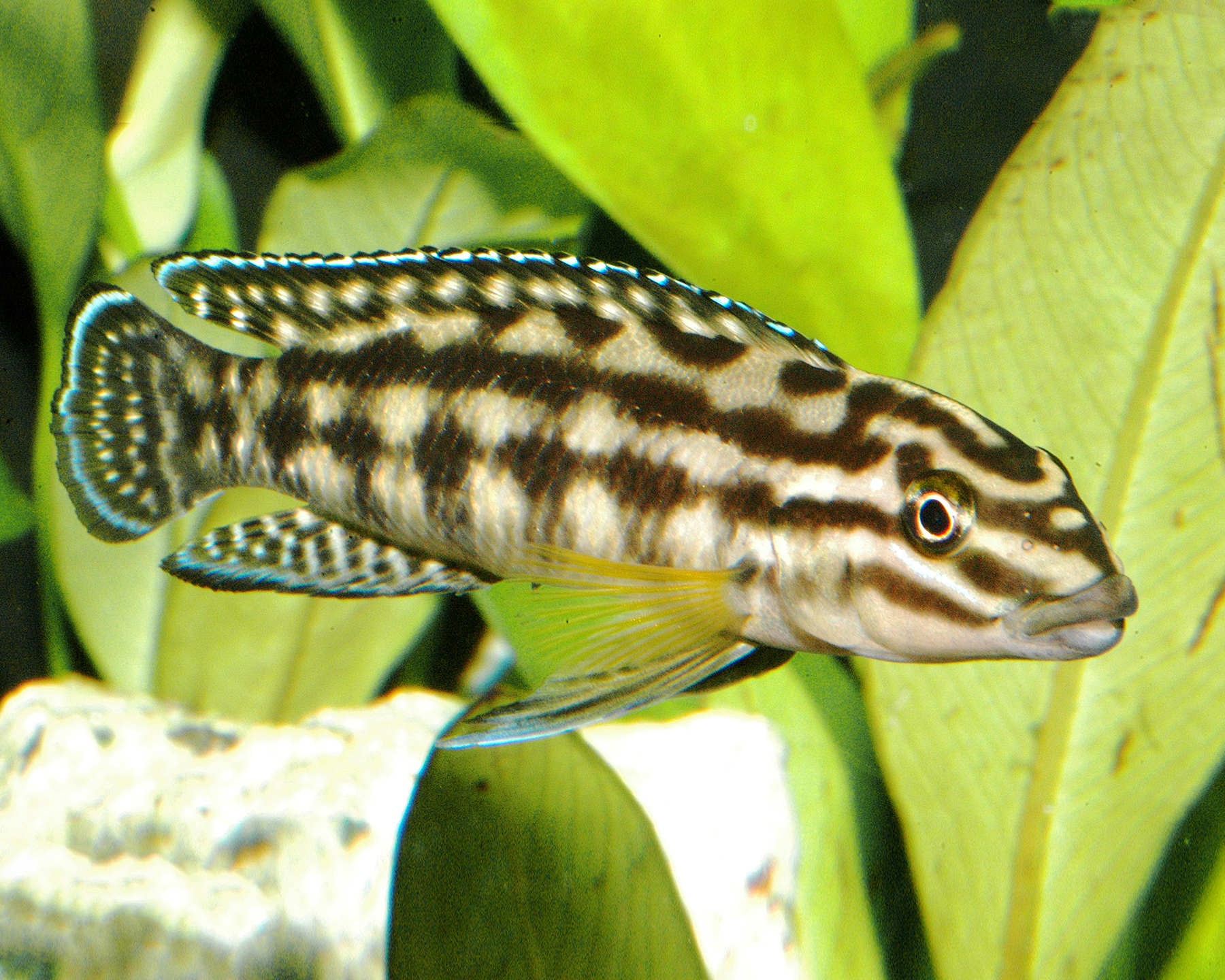
    Dickfeld’s Julidochromis is a small, elongated shell- and rock-dwelling cichlid endemic to Lake Tanganyika in East Africa. It is recognized by a pale cream to silvery body marked with dark longitudinal stripes and blue edging on the fins. Although modest in size, it is territorial, especially when paired or spawning. A carefully structured aquarium with hard, alkaline water, numerous rock crevices and stable maintenance provides the conditions needed for long-term success.
  • Apistogramma agassizii Red Dwarf Cichlid

    Apistogramma agassizii Red Dwarf Cichlid

    Moderate
    South American dwarf cichlid
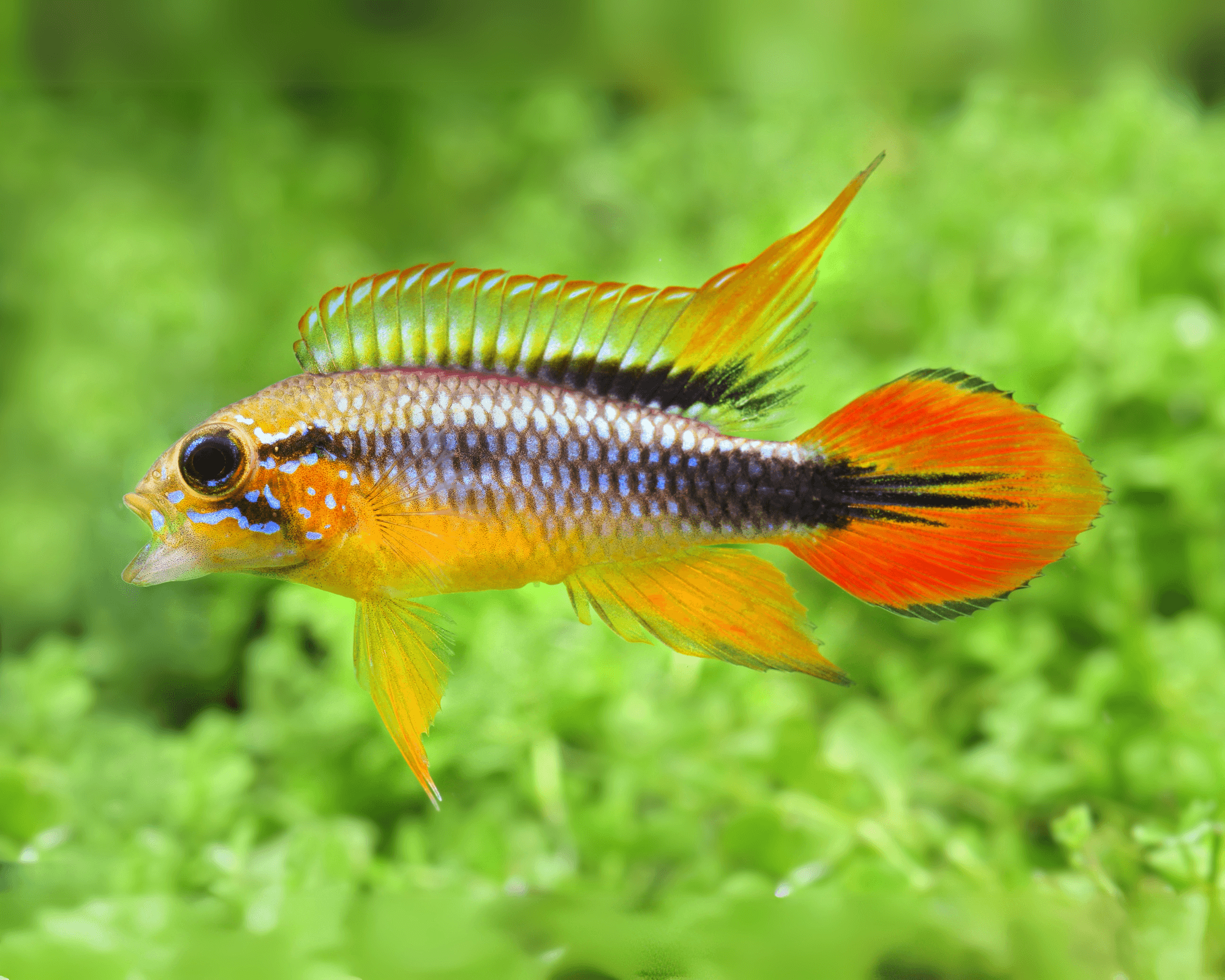
    Apistogramma agassizii is a small South American freshwater cichlid valued for its elongated fins, iridescent markings and territorial breeding behavior. The supplied trade label identifies these fish as a red color form and a pair, although sex and exact line cannot be confirmed solely from the listing or images. They suit mature, structured aquariums with soft to moderately hard, clean water, gentle flow and plenty of caves or plant cover.
  • Red Jewel Cichlid (Hemichromis lifalili)

    Red Jewel Cichlid (Hemichromis lifalili)

    Moderate - Difficult
    African riverine cichlid
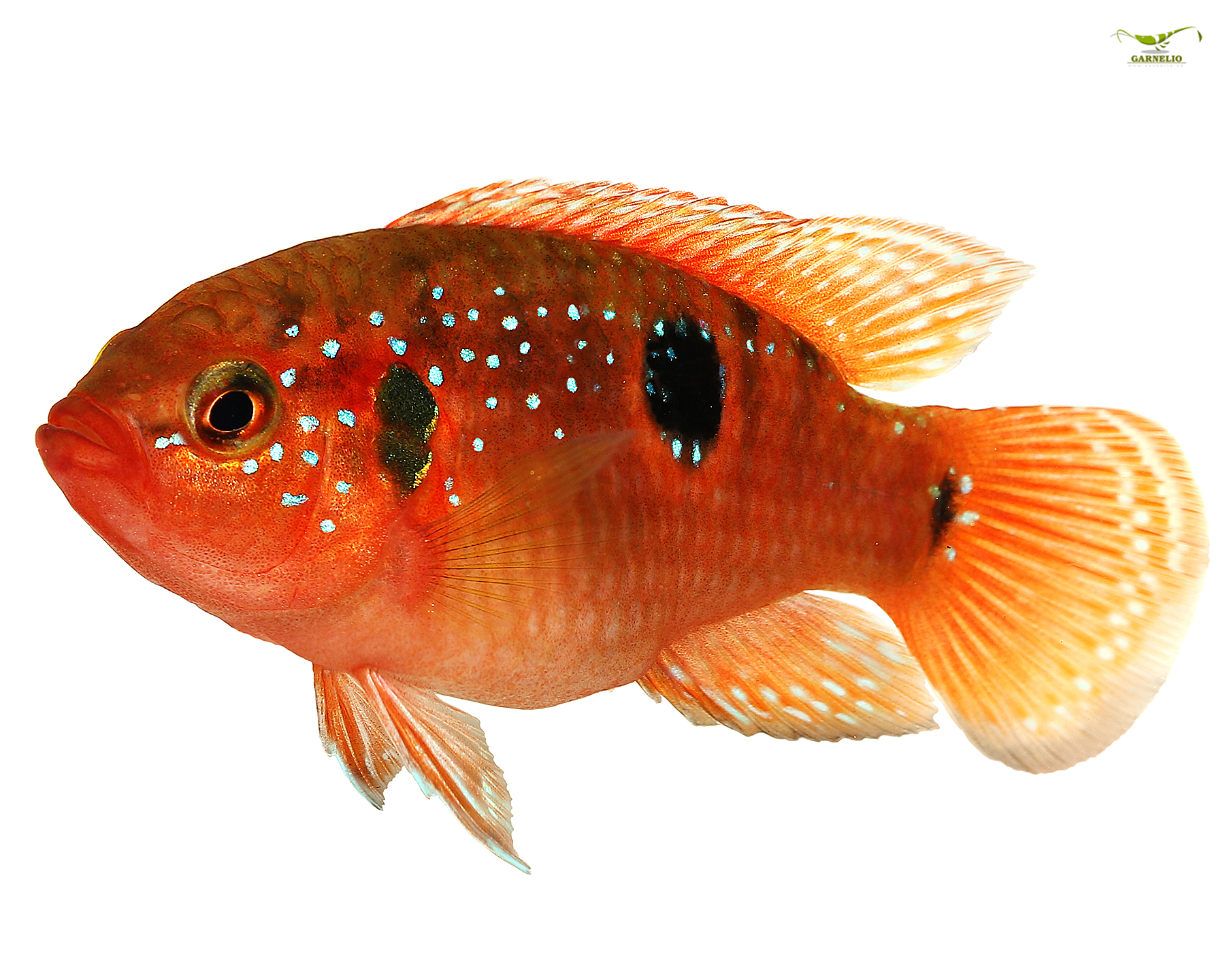
    Hemichromis lifalili, commonly called the red jewel cichlid, is a small but strongly territorial African cichlid recognized for its red body, blue-green spotting and dark lateral markings. It is often confused in the aquarium trade with related Hemichromis species, especially H. bimaculatus, so identification from photographs or trade labels is not always certain. A pair needs a carefully arranged aquarium, stable water quality and a plan for managing aggression during breeding.
  • Redhump Eartheater (Geophagus steindachneri)

    Redhump Eartheater (Geophagus steindachneri)

    Moderate
    South American eartheater cichlid
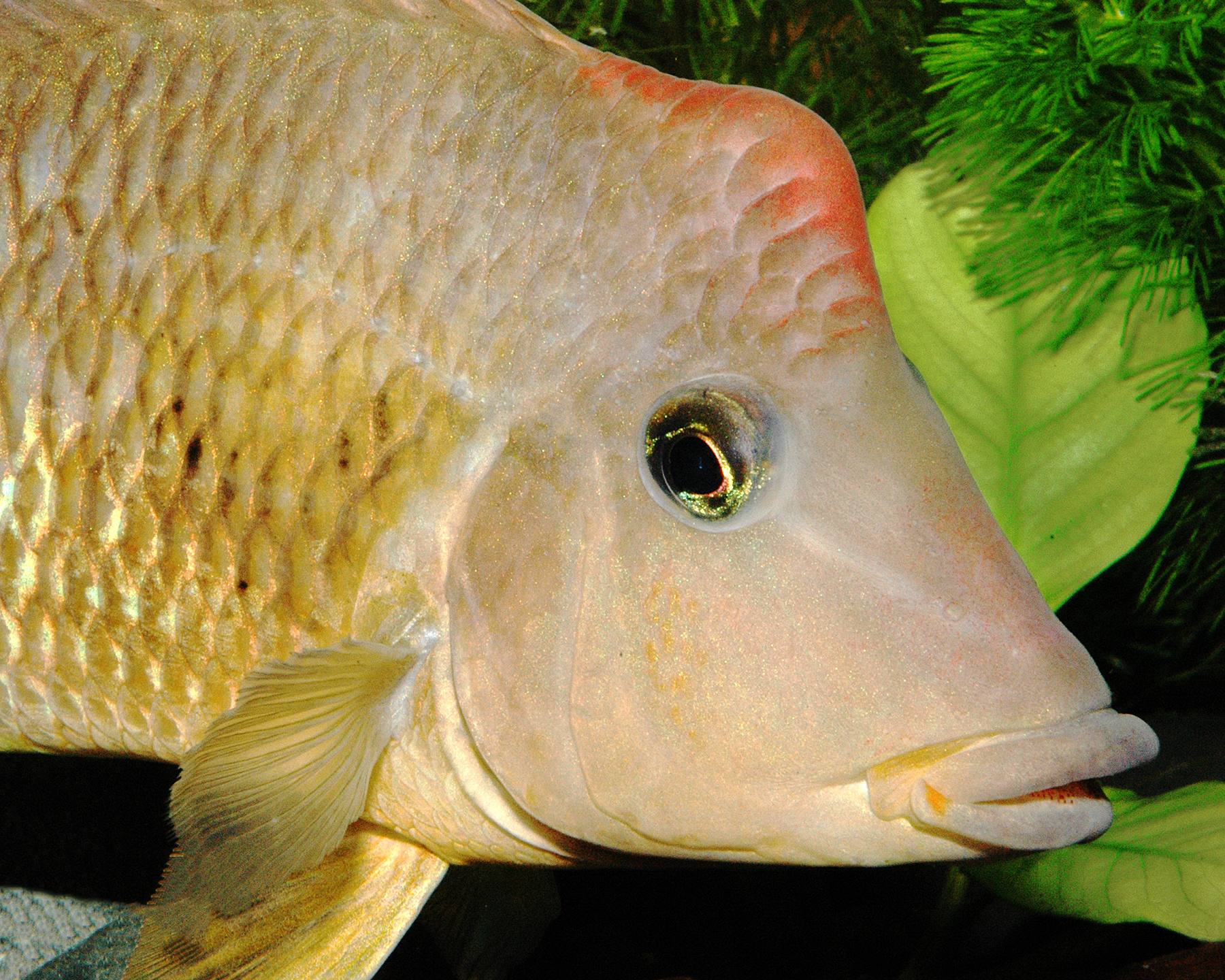
    Geophagus steindachneri is a South American eartheater distinguished by its sloping forehead, browsing mouth and habit of sifting fine substrate for food. Adults become substantial, active cichlids that need generous floor space, clean water and a soft sand bed. The supplied fish are identified as Redhump Eartheaters, but locality and sex cannot be confirmed from the listing alone. They are generally peaceful for their size, though territorial behavior increases during spawning.
  • Rachow's Splendour Ground Carp (Nothobranchius rachovii)

    Rachow's Splendour Ground Carp (Nothobranchius rachovii)

    Moderate - Difficult
    Annual killifish
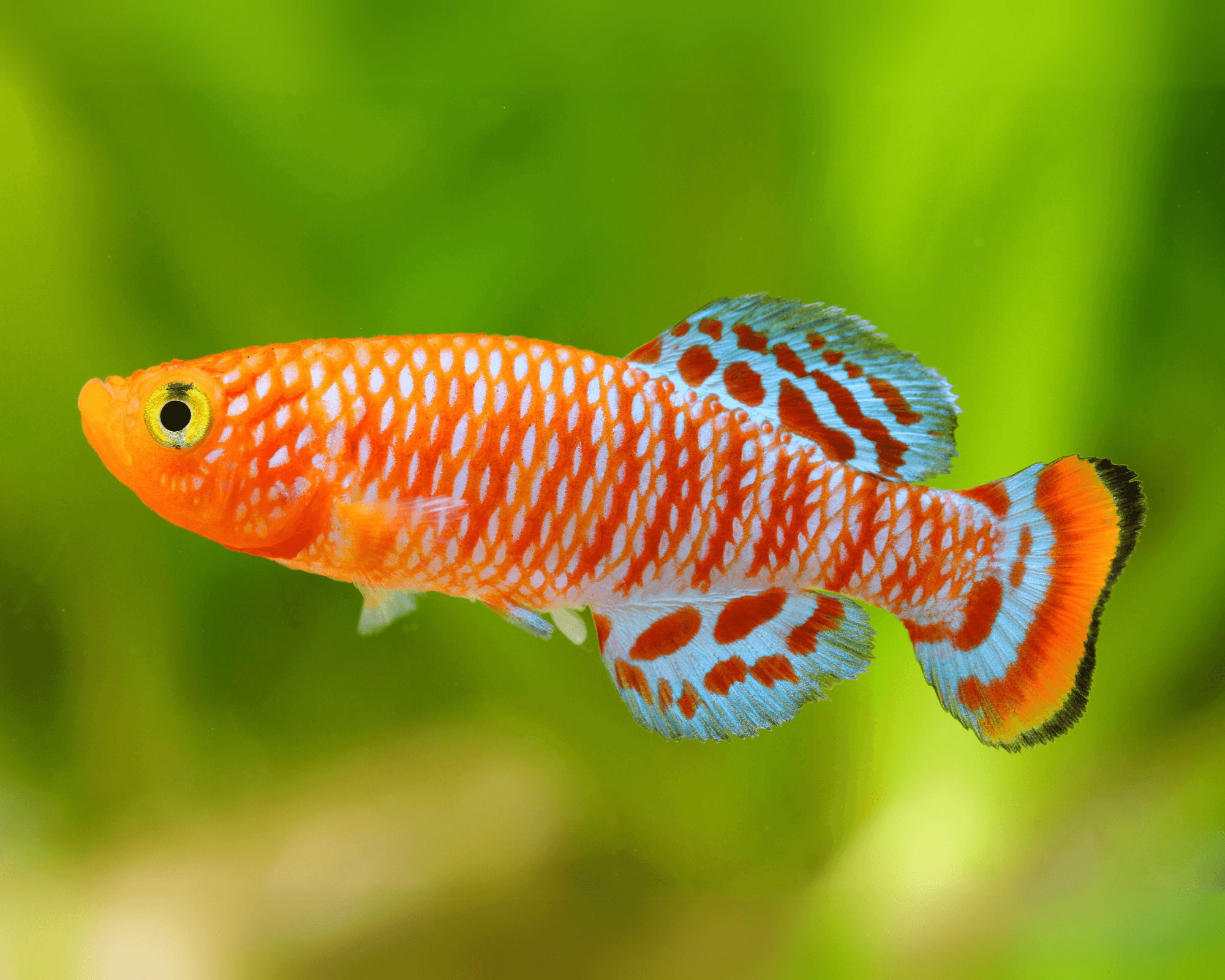
    Rachow's splendour ground carp is a brightly marked annual killifish from seasonal freshwater habitats in Mozambique. Males display intense orange, red, blue and white coloration, while females are usually much plainer. It is best maintained in a species-focused aquarium with gentle filtration, a covered top and soft spawning material. The fish has a short natural lifespan, but careful feeding and egg management make it a rewarding specialist species. Aquarium specimens may represent different geographic forms, so locality information is valuable when available.
  • Red Tiger Oscar Cichlid (Astronotus ocellatus)

    Red Tiger Oscar Cichlid (Astronotus ocellatus)

    Difficult
    Large South American cichlid
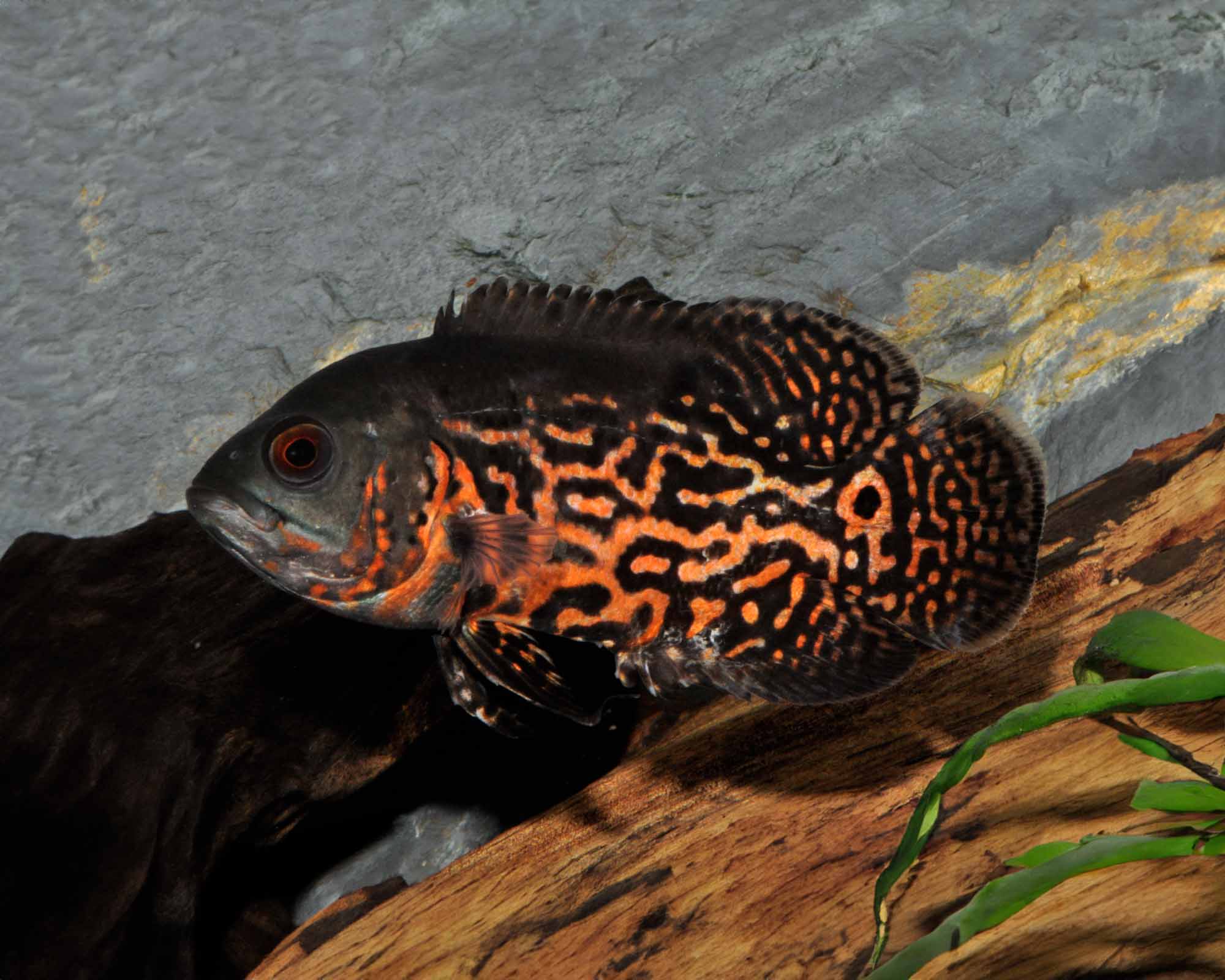
    The Red Tiger Oscar is a selectively bred color form of Astronotus ocellatus, a large South American cichlid known for intelligence, bold feeding behavior, and strong individual personality. The supplied source describes a pair, but sex and true pair-bond status cannot be confirmed from the images alone. Oscars require a spacious, strongly filtered aquarium, careful tankmate selection, and a varied diet. They are rewarding display fish, but their adult size, territorial behavior, waste production, and tendency to rearrange décor make them unsuitable for most community aquariums.
  • Red Oscar Cichlid (Astronotus ocellatus)

    Red Oscar Cichlid (Astronotus ocellatus)

    Difficult
    Large South American cichlid
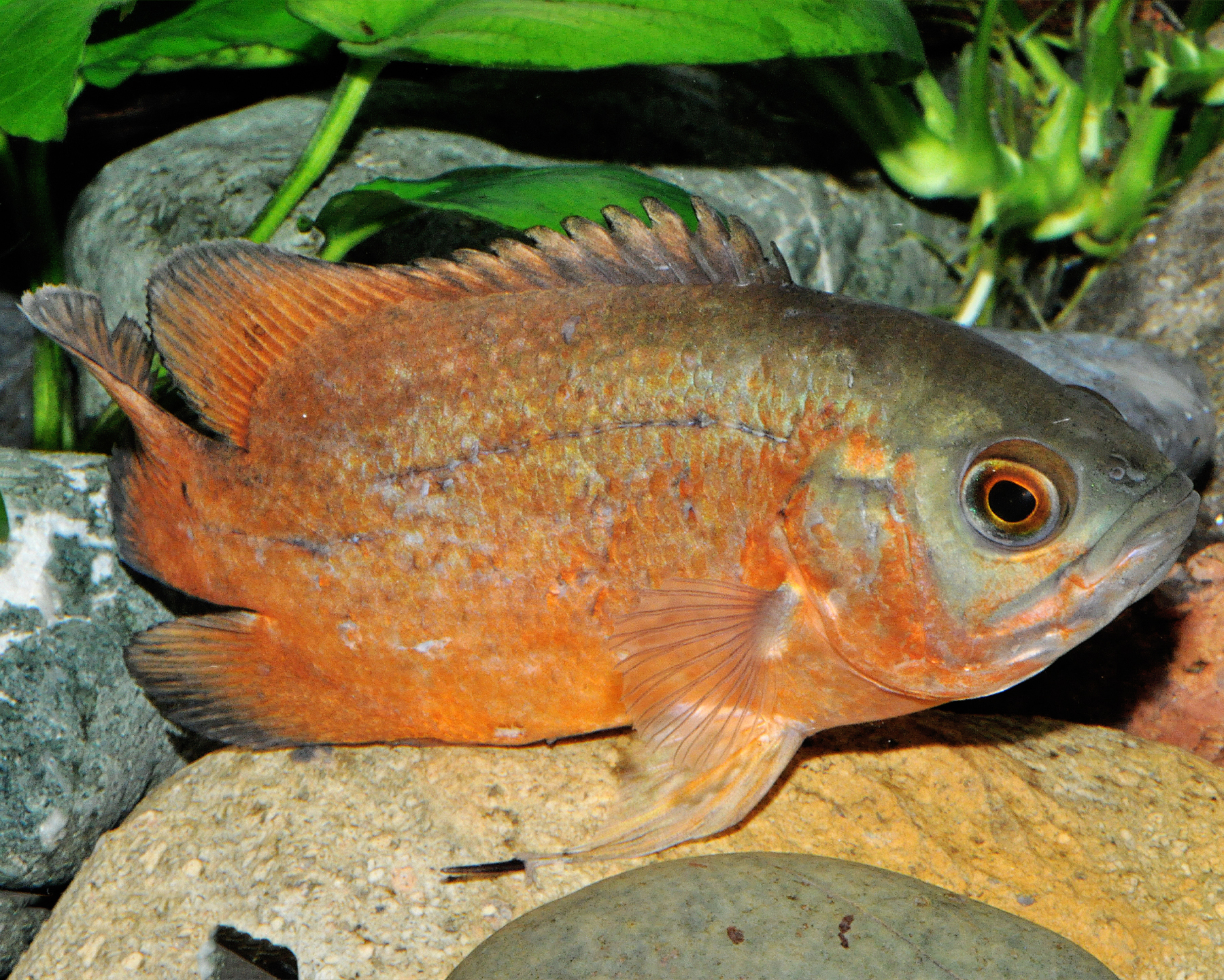
    The red Oscar is a selectively bred color form of Astronotus ocellatus, a large South American cichlid valued for its intelligence, interactive behavior, and bold appearance. The supplied source describes a pair, while the images show Oscar-like fish with predominantly orange-red bodies. Exact strain and sex cannot be confirmed from the images alone. This is a powerful, messy-eating species that requires a spacious aquarium, strong filtration, and careful planning for compatibility.
  • Kenyi Cichlid (Maylandia lombardoi)

    Kenyi Cichlid (Maylandia lombardoi)

    Moderate - Difficult
    Lake Malawi mbuna cichlid
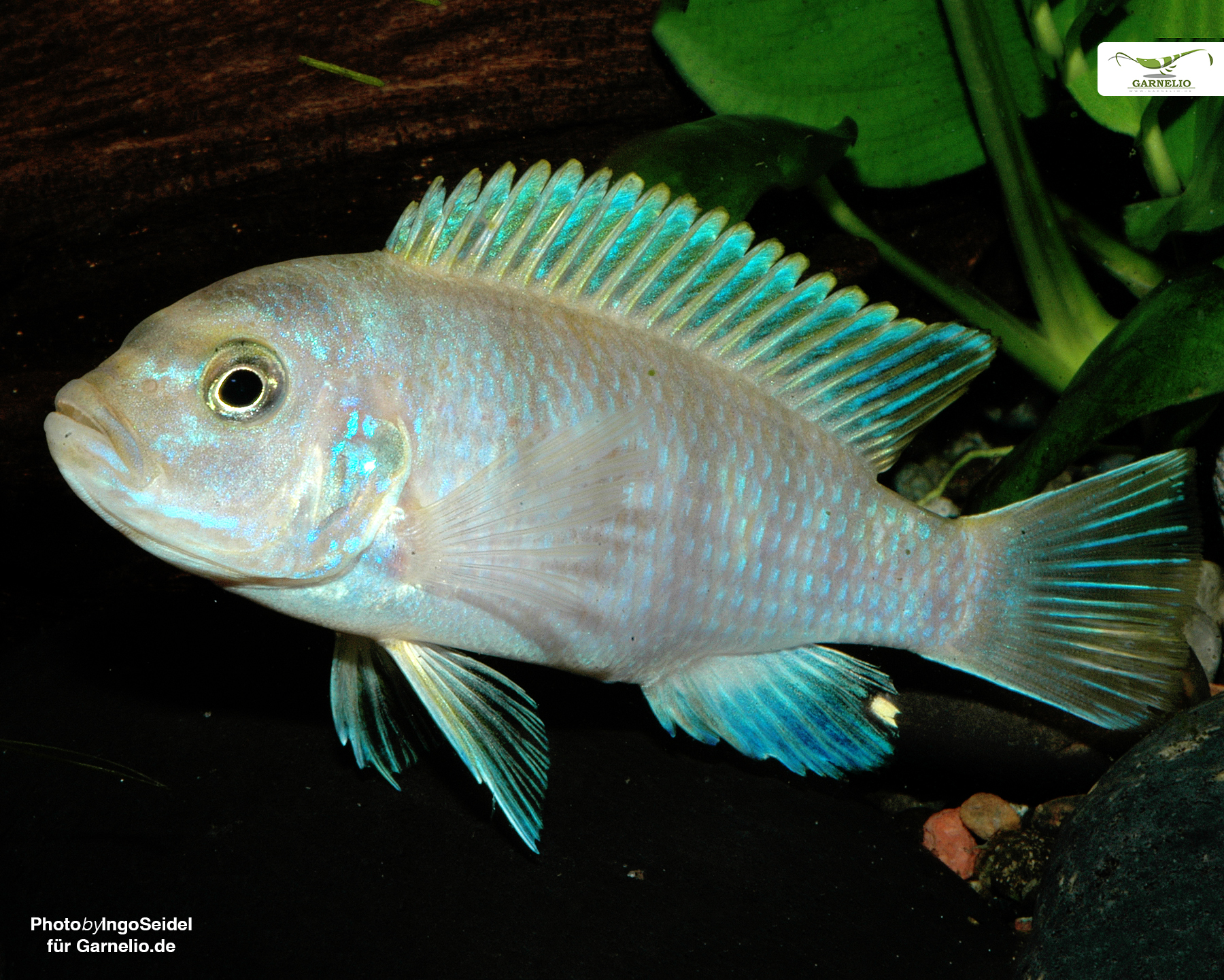
    The fish sold as Pseudotropheus lombardoi is now generally treated as Maylandia lombardoi, a Lake Malawi mbuna commonly known as the Kenyi cichlid. It is a robust, territorial algae grazer that needs hard, alkaline water, abundant rockwork and carefully planned tank-mate selection. Adult coloration is strongly sex- and mood-dependent, and the supplied images show a blue to turquoise fish with pale yellow tones rather than proving a particular sex or commercial color form. Identification and the claimed pair status should therefore be confirmed by the seller.
  • Betta imbellis: Peaceful Fighting Fish Care Guide

    Betta imbellis: Peaceful Fighting Fish Care Guide

    Moderate
    Osphronemid labyrinth fish
    Betta imbellis, commonly called the peaceful fighting fish, is a small labyrinth fish from shallow, slow-moving waters of the Malay Peninsula and nearby parts of Sumatra. It is generally less combative than Betta splendens, although males remain territorial and should not be assumed to be universally peaceful. This guide covers identification, habitat, aquarium care, feeding, tank mates and bubble-nest breeding. The pictured fish appears consistent with a selectively bred, long-finned Betta imbellis, but image-only identification cannot confirm its lineage or locality.