Taxonomy and identification
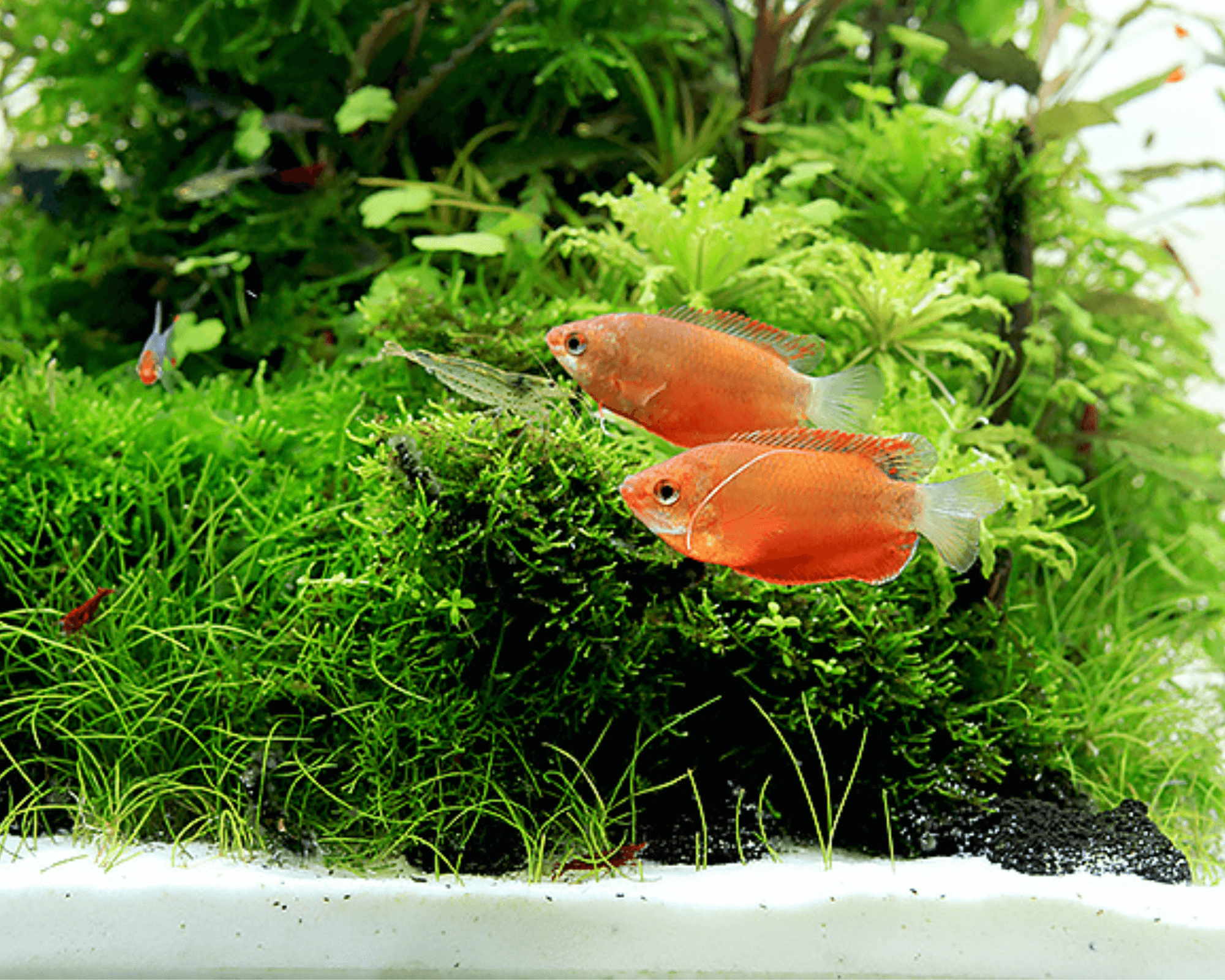
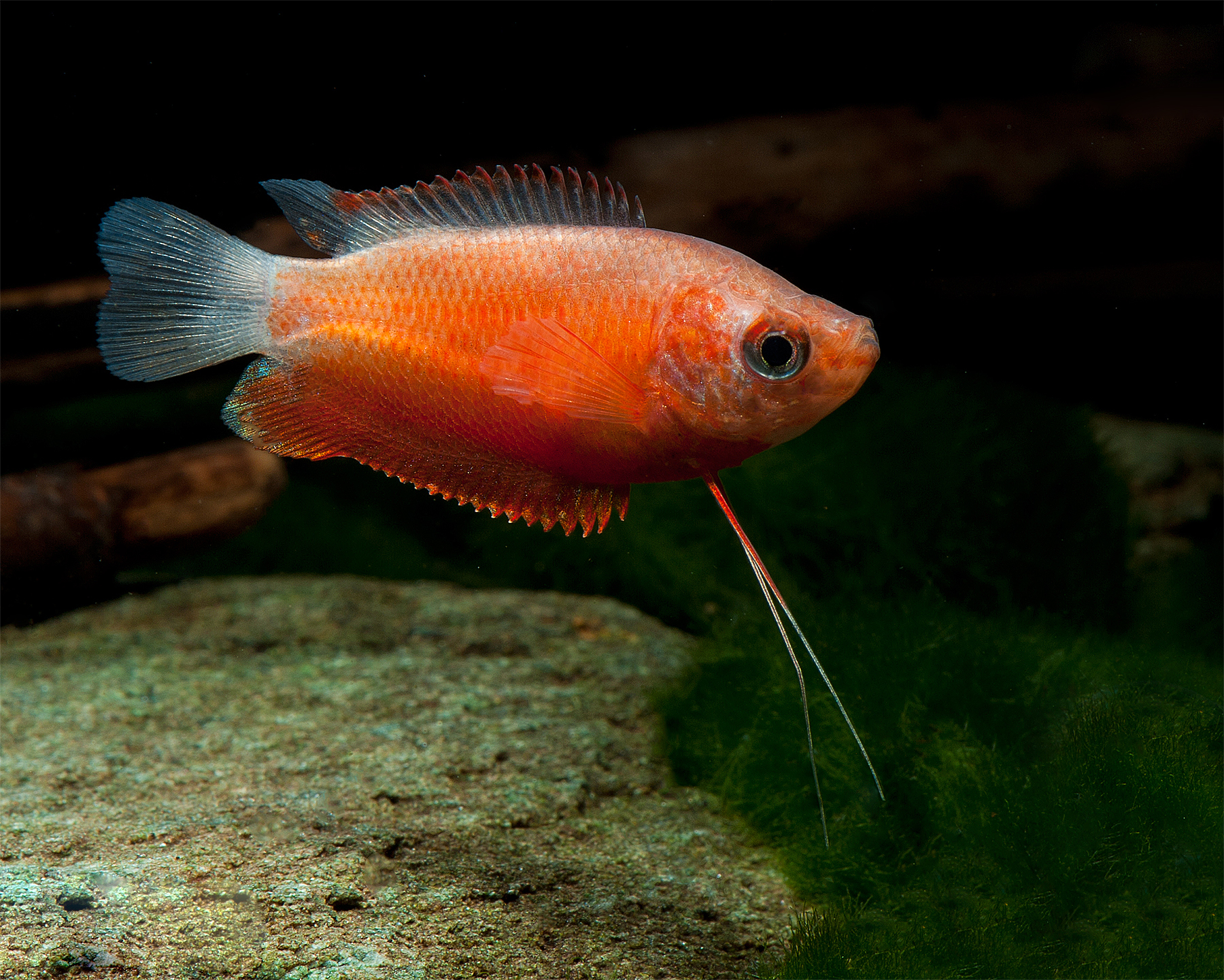
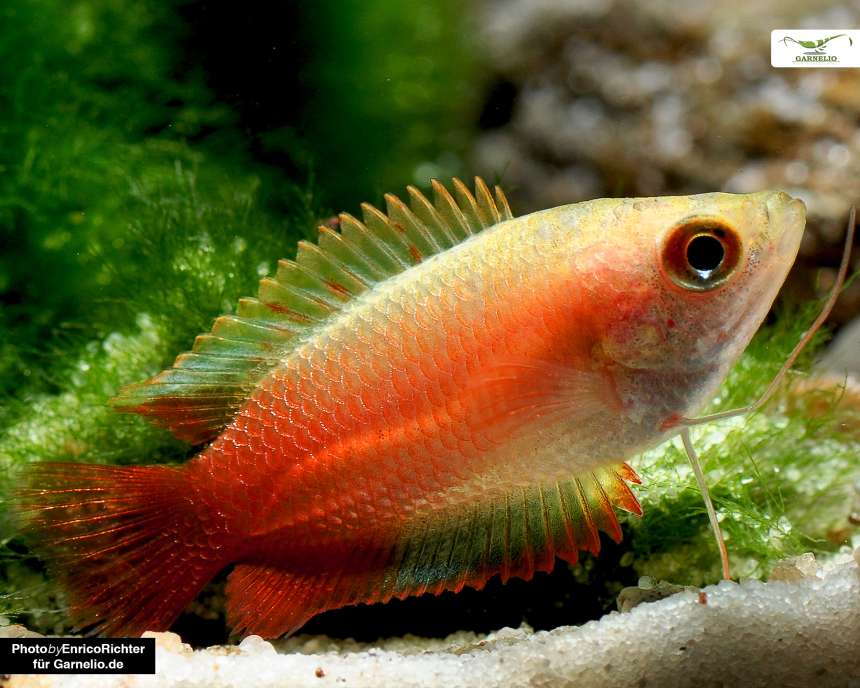
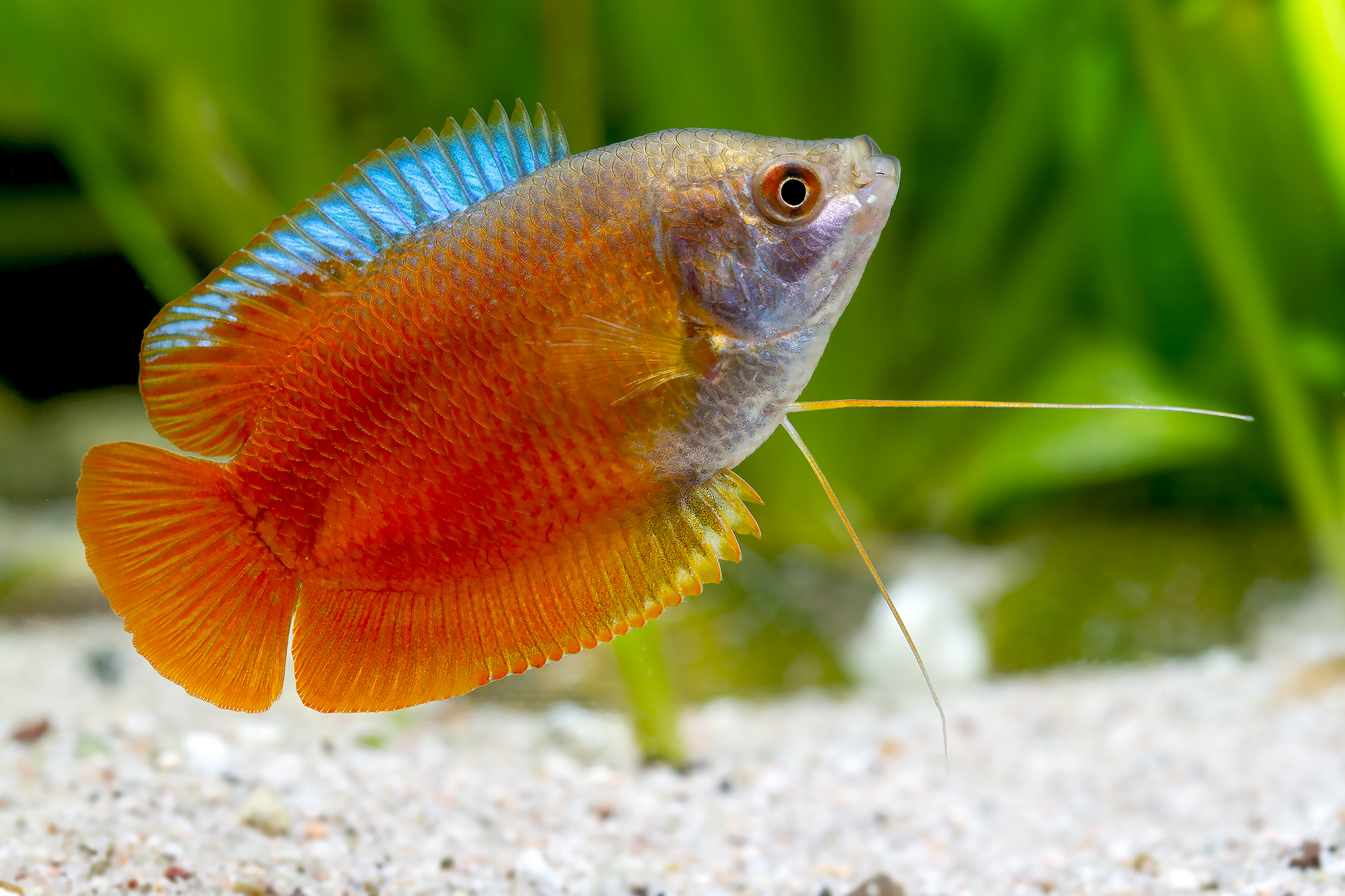
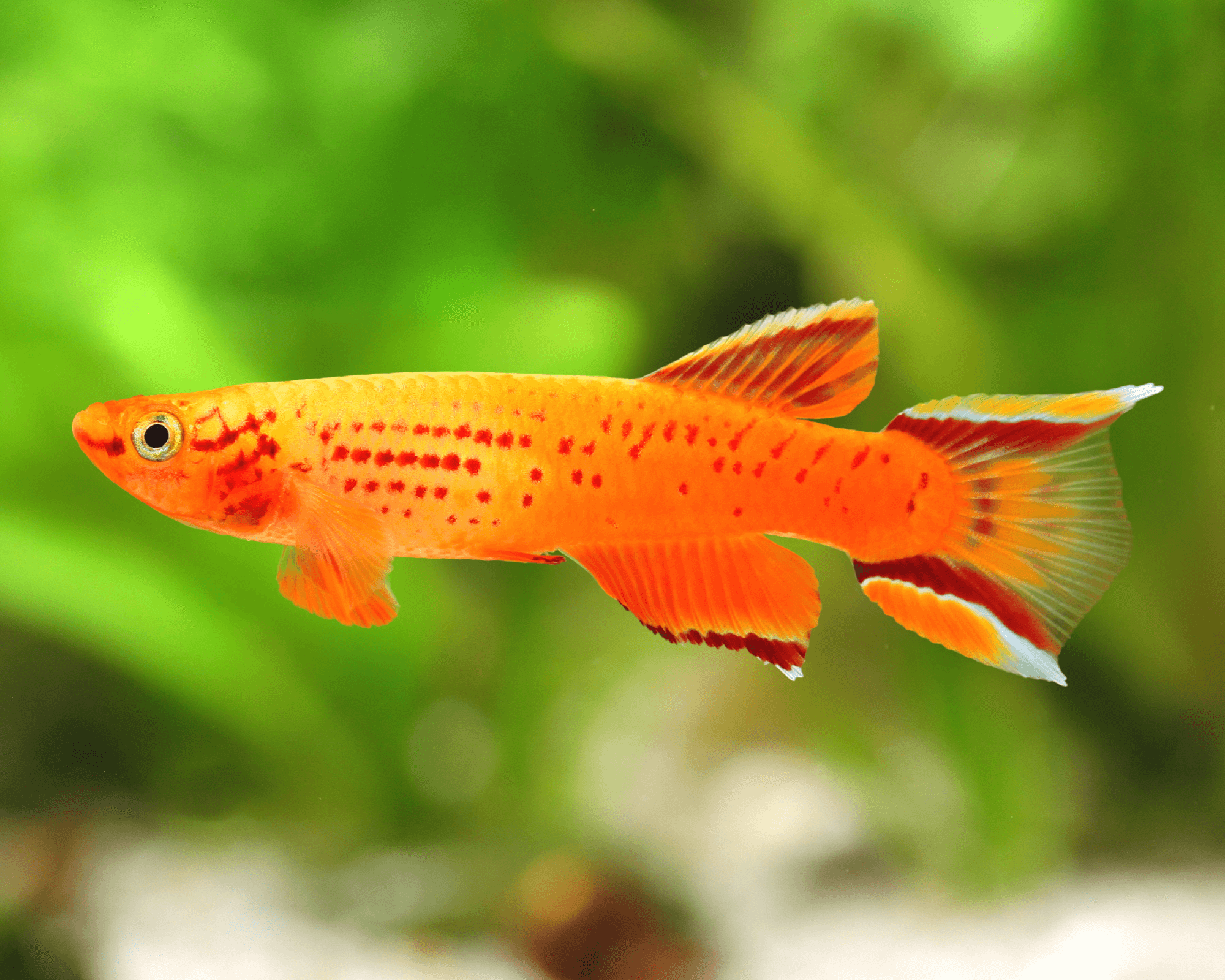
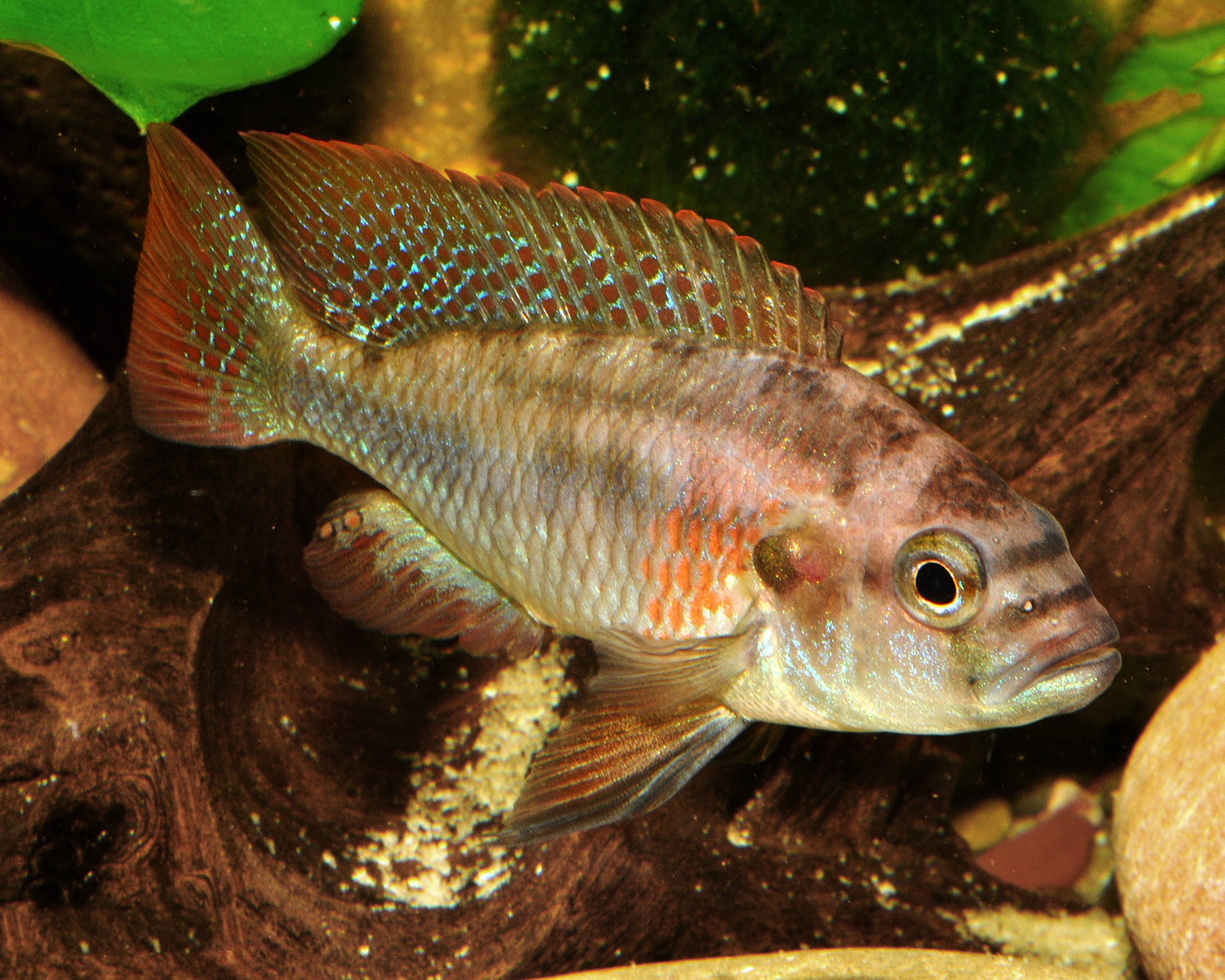
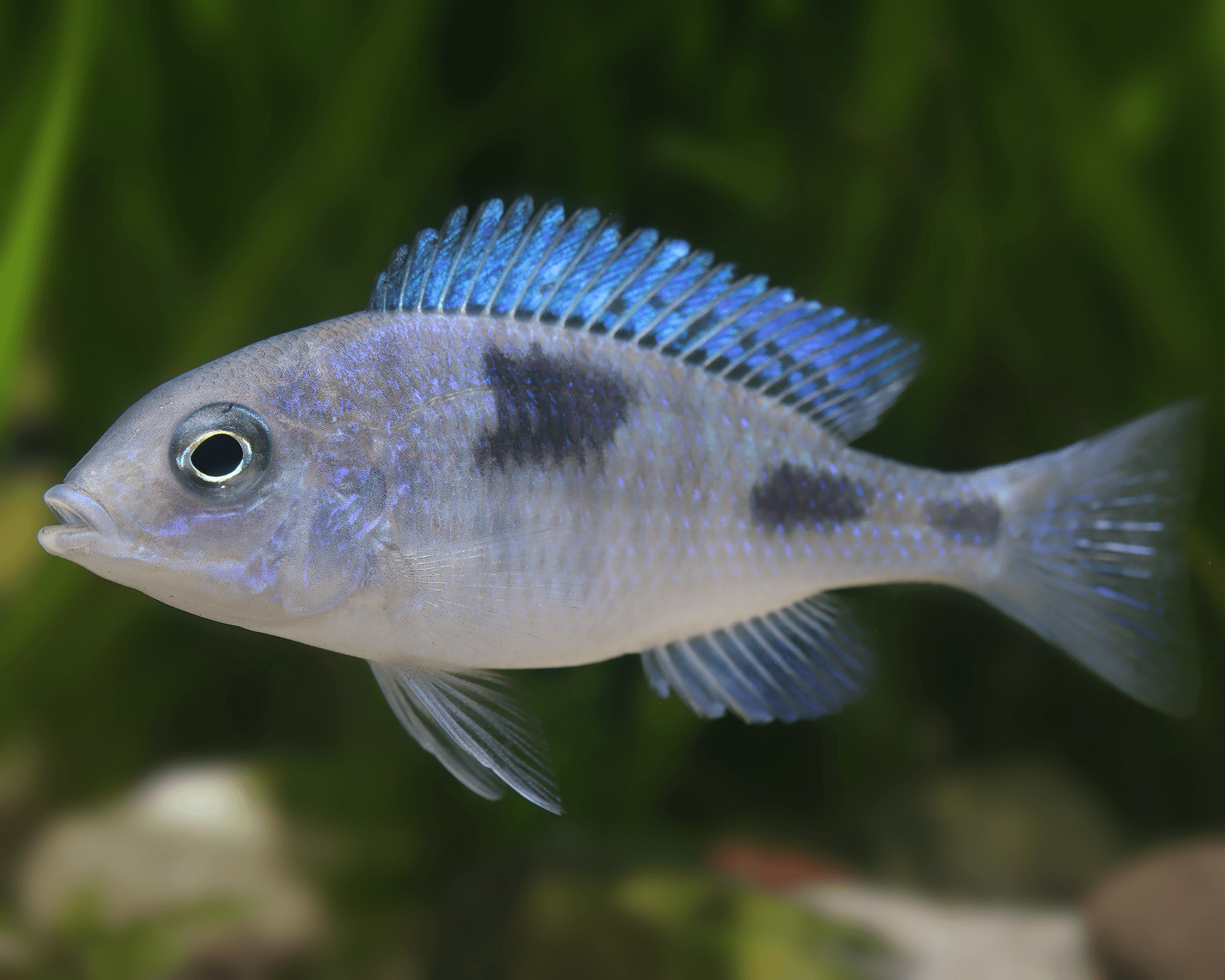
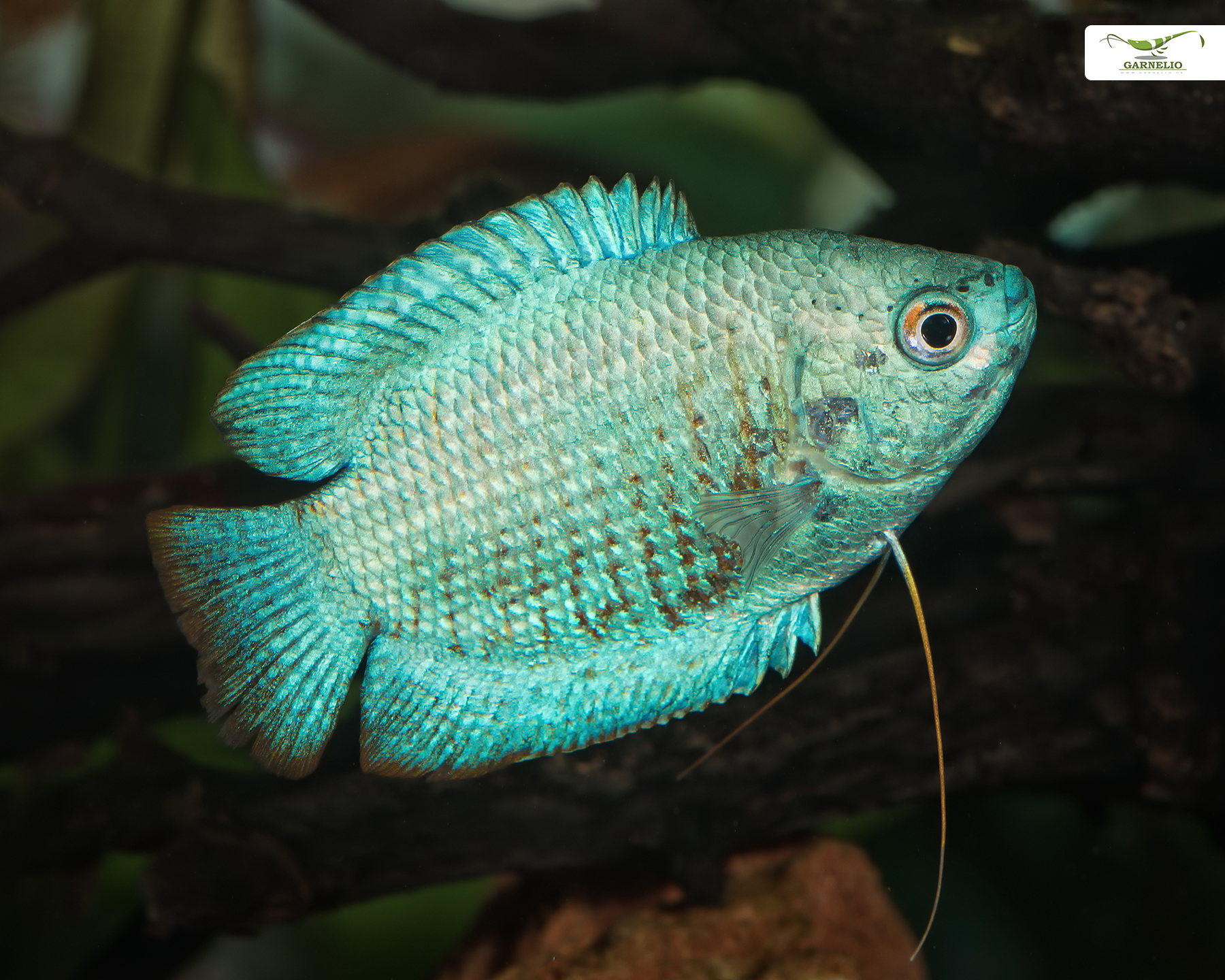
The honey gourami is commonly known in aquarium literature as Colisa chuna. Its currently accepted scientific placement is Trichogaster chuna, in the family Osphronemidae and order Anabantiformes. Colisa chuna remains a widely used synonym. It has an oval, laterally compressed body, a small upturned mouth and thread-like pelvic fins used for tactile exploration. The photographs show strongly red-orange aquarium coloration, likely a selectively bred color form; the images do not establish the sex of either fish.
Natural distribution and habitat
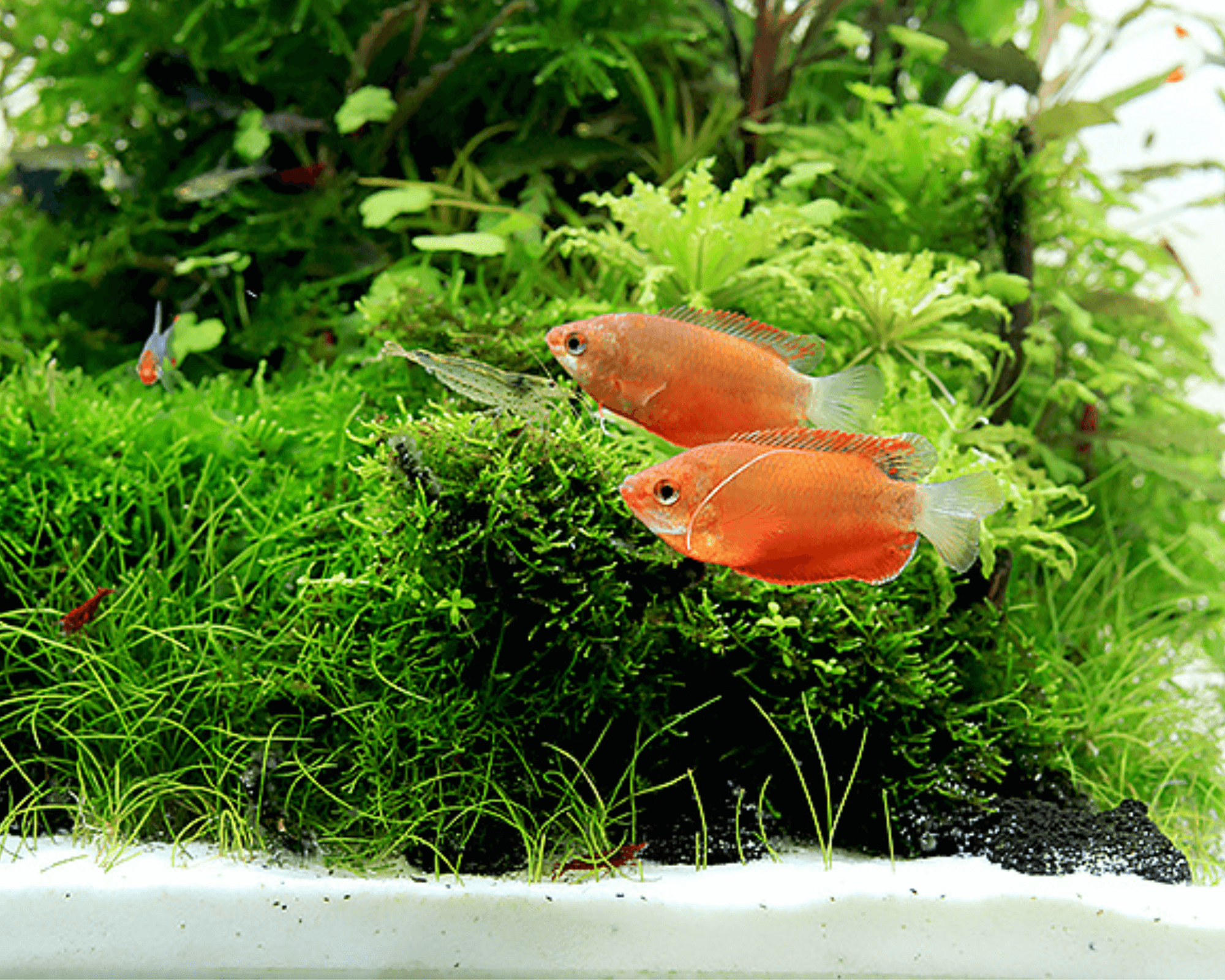
Trichogaster chuna is native to South Asia, especially the Ganges-Brahmaputra region, including parts of India and Bangladesh. It inhabits shallow, slow-moving or still waters such as vegetated margins, ponds, swamps and gentle streams. These environments commonly have dense plant growth, subdued light, limited current and access to atmospheric air.
Behavior and social needs
Honey gouramis are generally peaceful, cautious fish that spend much of their time in the middle and upper levels of the aquarium. They use their modified pelvic fins to investigate objects and other fish. Males may defend a small area, particularly when building a bubble nest, but this species is usually less aggressive than many larger gouramis. A pair can be kept together when the aquarium contains plants and visual barriers. Provide a covered aquarium because labyrinth fish may jump and need warm, humid air above the water.
Aquarium size and setup
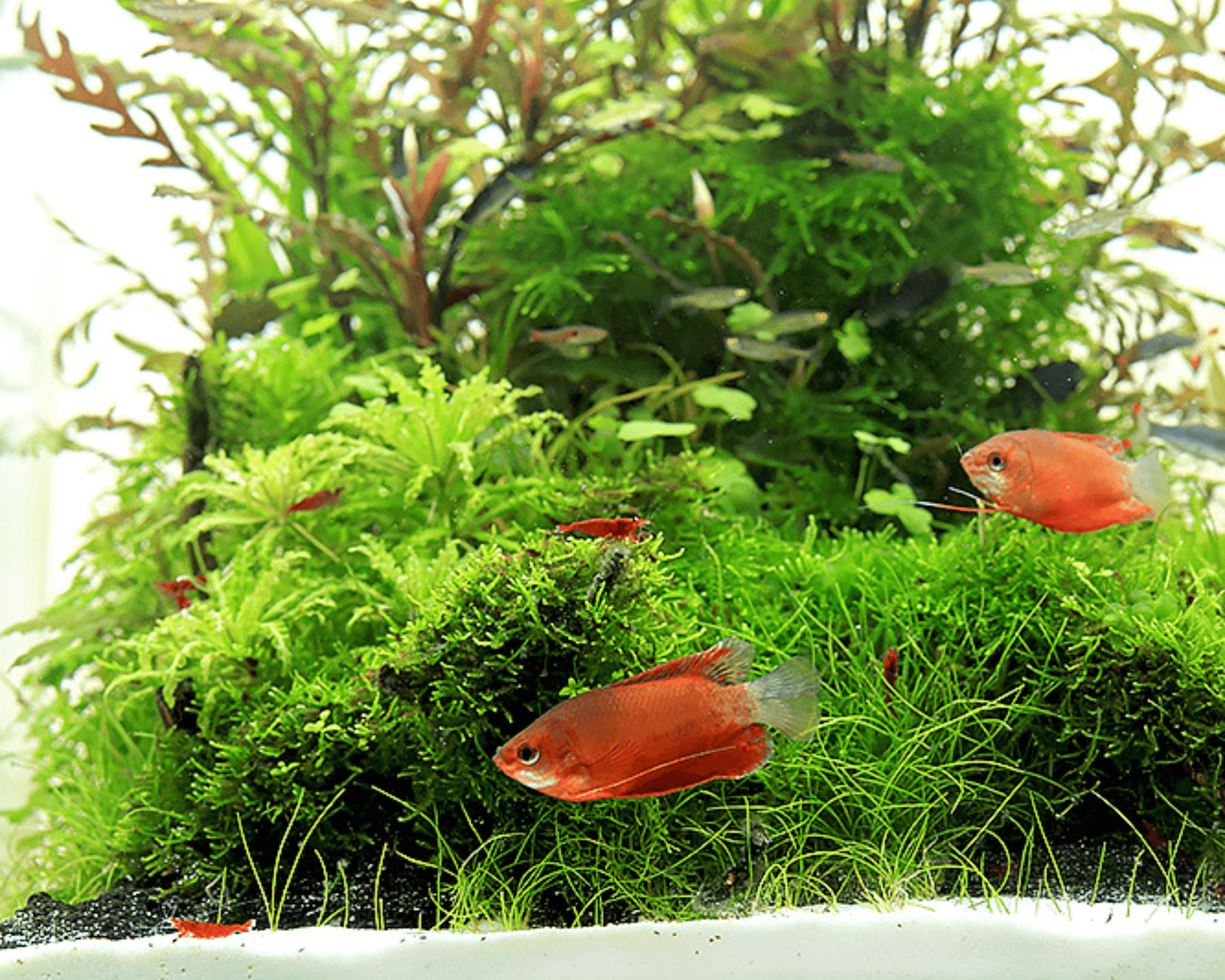
A pair can be maintained in an aquarium of about 40 litres, although 60 litres or more is preferable for a stable planted community. Use gentle filtration and avoid strong, open-water currents. Dense plants, floating vegetation, wood and shaded areas provide security and break lines of sight. Leave some unobstructed surface access for breathing. Maintain mature biological filtration, regular partial water changes and stable conditions rather than pursuing extreme softness or acidity.
Water parameters
Aim for 22-28 °C, pH 6.0-7.5 and low to moderate hardness. Honey gouramis can adapt to a reasonably broad range when acclimated gradually, but sudden changes, elevated nitrate and chronically poor water quality are harmful. Test ammonia and nitrite regularly in new or recently disturbed aquariums; both should remain at zero. Stable maintenance is more important than matching a single exact number.
Diet
Offer a varied omnivorous diet consisting of a good-quality small floating or slow-sinking pellet, fine flakes and appropriately sized frozen or live foods. Bloodworms, daphnia, brine shrimp and mosquito larvae can be used as occasional enrichments. Feed small portions once or twice daily and remove uneaten food. Dense planting may also support grazing on tiny invertebrates and microorganisms, but it should not replace a complete diet.
Compatibility
Choose peaceful, similarly sized tank mates that do not compete aggressively at the surface or nip fins. Small rasboras, tetras, peaceful livebearers, small Corydoras and other calm community fish may work in a sufficiently spacious, planted aquarium. Avoid large, boisterous fish, persistent fin nippers and aggressive gouramis. During breeding, the male may become territorial, so provide cover and be prepared to separate fish if the female is repeatedly harassed.
Breeding
Honey gouramis are bubble-nest breeders. Condition a compatible pair with varied live or frozen foods and provide floating plants or other surface cover. The male constructs a nest among floating material, courts the female and gathers the fertilized eggs into the nest. He usually guards and repairs it while the female should be monitored for excessive chasing. For higher fry survival, move the female after spawning and later remove the male when the fry become free-swimming, because adults may eat eggs or young. Newly free-swimming fry require very small first foods, such as infusoria or a suitable commercial fry food, followed by larger foods as they grow.
Leave your comments