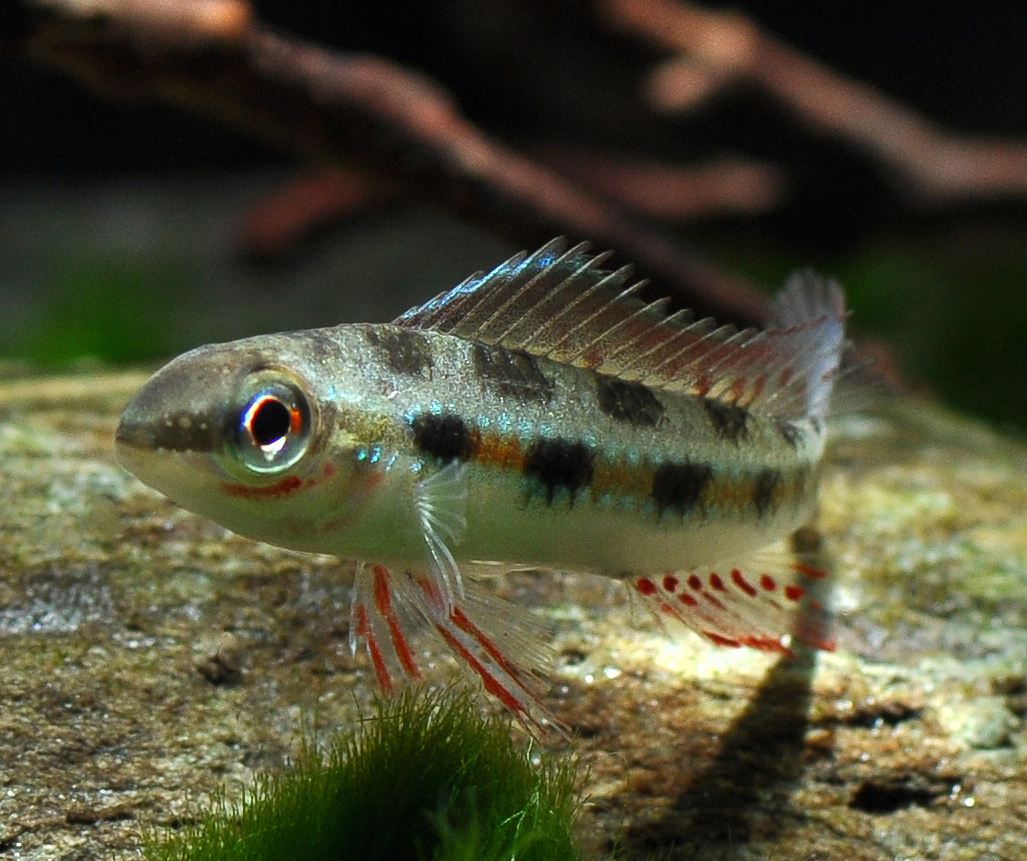
Distribution and Habitat
Dicrossus filamentosus is found in the soft, acidic, and tannin-stained waters of the Amazon and Orinoco river basins in South America. They inhabit slow-moving tributaries and flooded forests, often found among leaf litter and submerged vegetation which provides them with cover and foraging grounds.
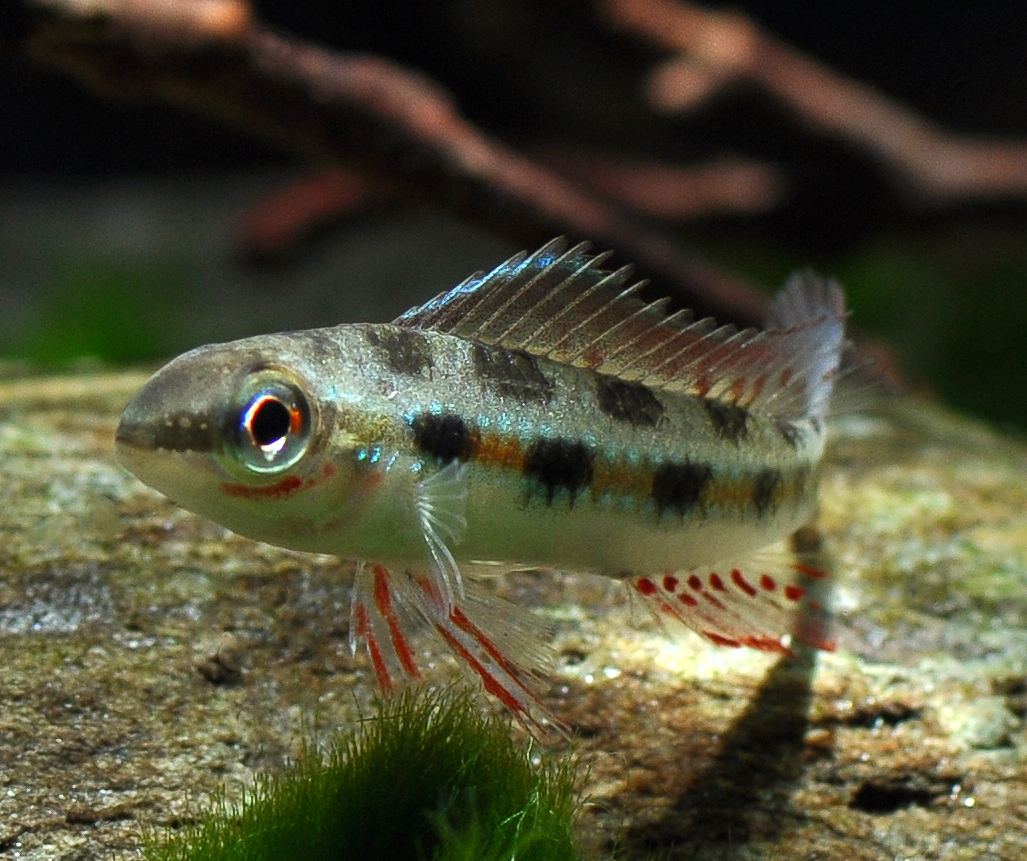
Tank Requirements
A tank of at least 75 liters is recommended for a pair. The aquarium should be well-planted with sandy substrate and plenty of hiding spots such as caves, driftwood, and dried leaves to simulate their natural environment. Filtration should be efficient but not create strong currents, and frequent water changes with appropriate water conditioning are essential.
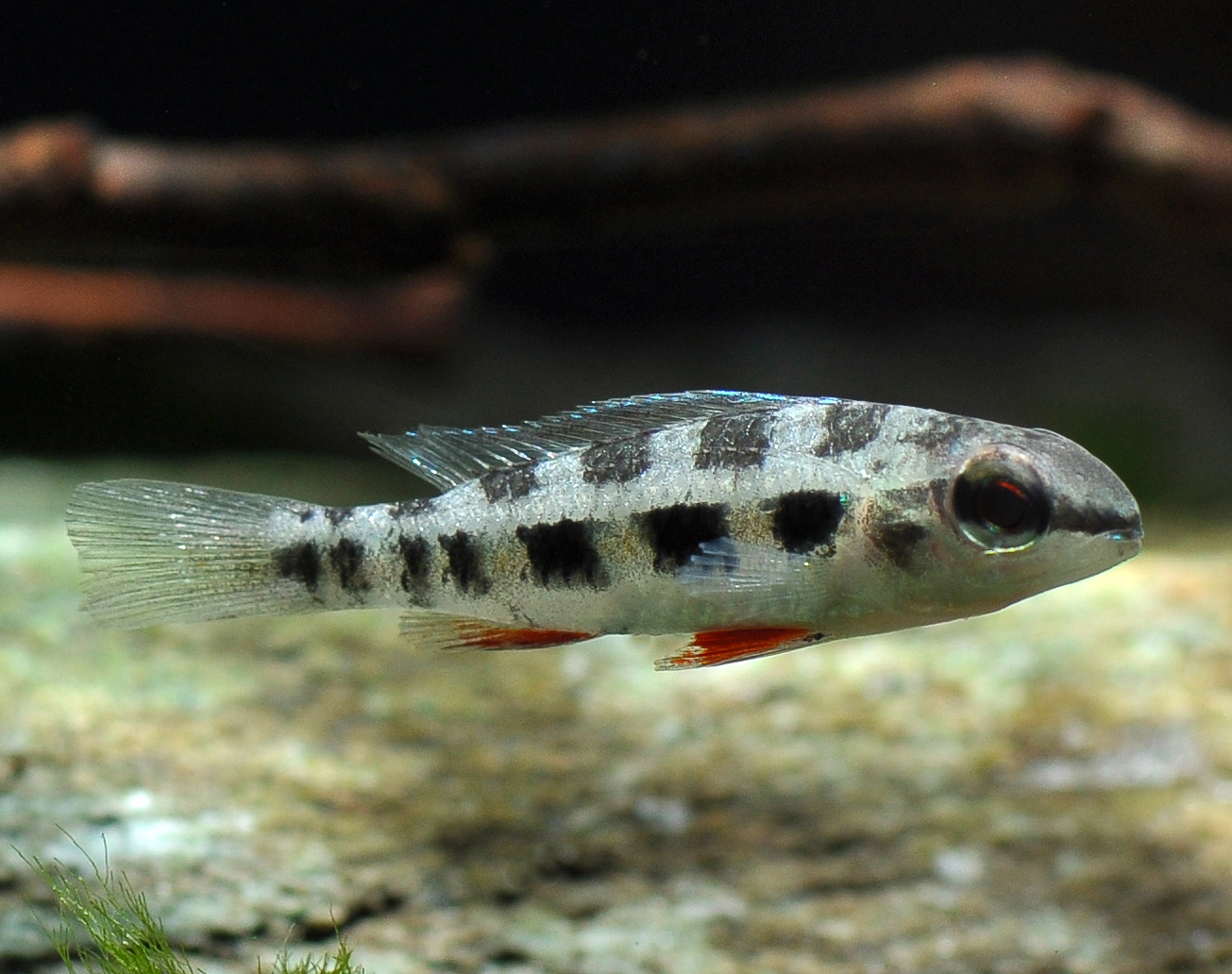
Diet and Feeding
These cichlids are primarily micro-predators. In the aquarium, they thrive on a varied diet of high-quality frozen foods like brine shrimp, daphnia, and mosquito larvae. They may accept small, high-quality pellets, but live foods are preferred to encourage natural foraging behavior and maintain optimal health.
Compatibility and Behavior
As a peaceful dwarf cichlid, they are suitable for community tanks with other small, non-aggressive species such as tetras, hatchetfish, and corydoras. They are generally shy and should not be kept with boisterous or large tank mates. Males can display territorial behavior toward each other if the tank space is insufficient.
Breeding
Breeding requires very soft, acidic water with low mineral content. They are substrate spawners, typically laying eggs on a cleaned leaf or flat stone. The female is primarily responsible for brood care, while the male defends the territory. Fry are small and require infusoria or newly hatched brine shrimp as initial food.
 - pair - 1.webp)
Leave your comments