Taxonomy and Distribution
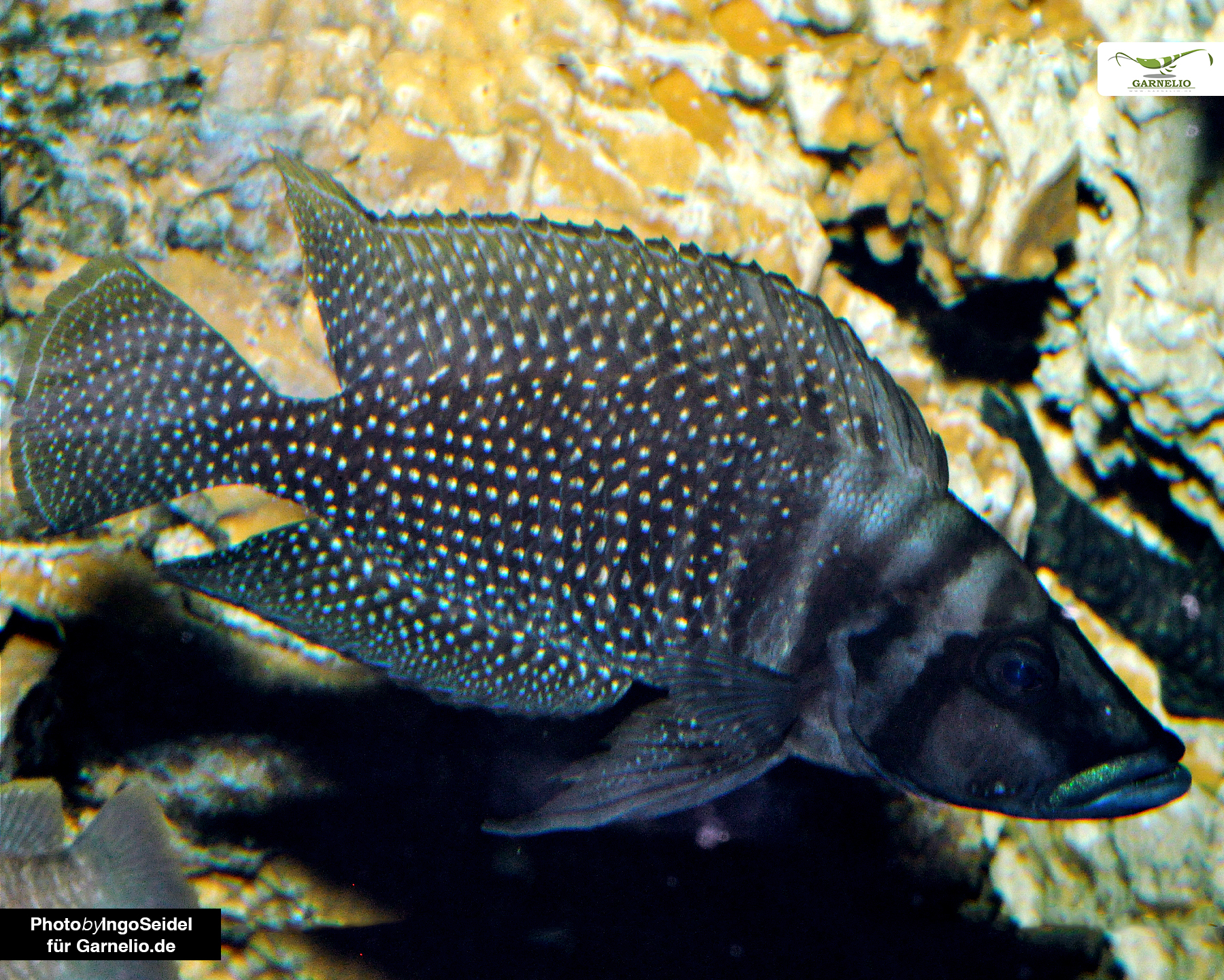
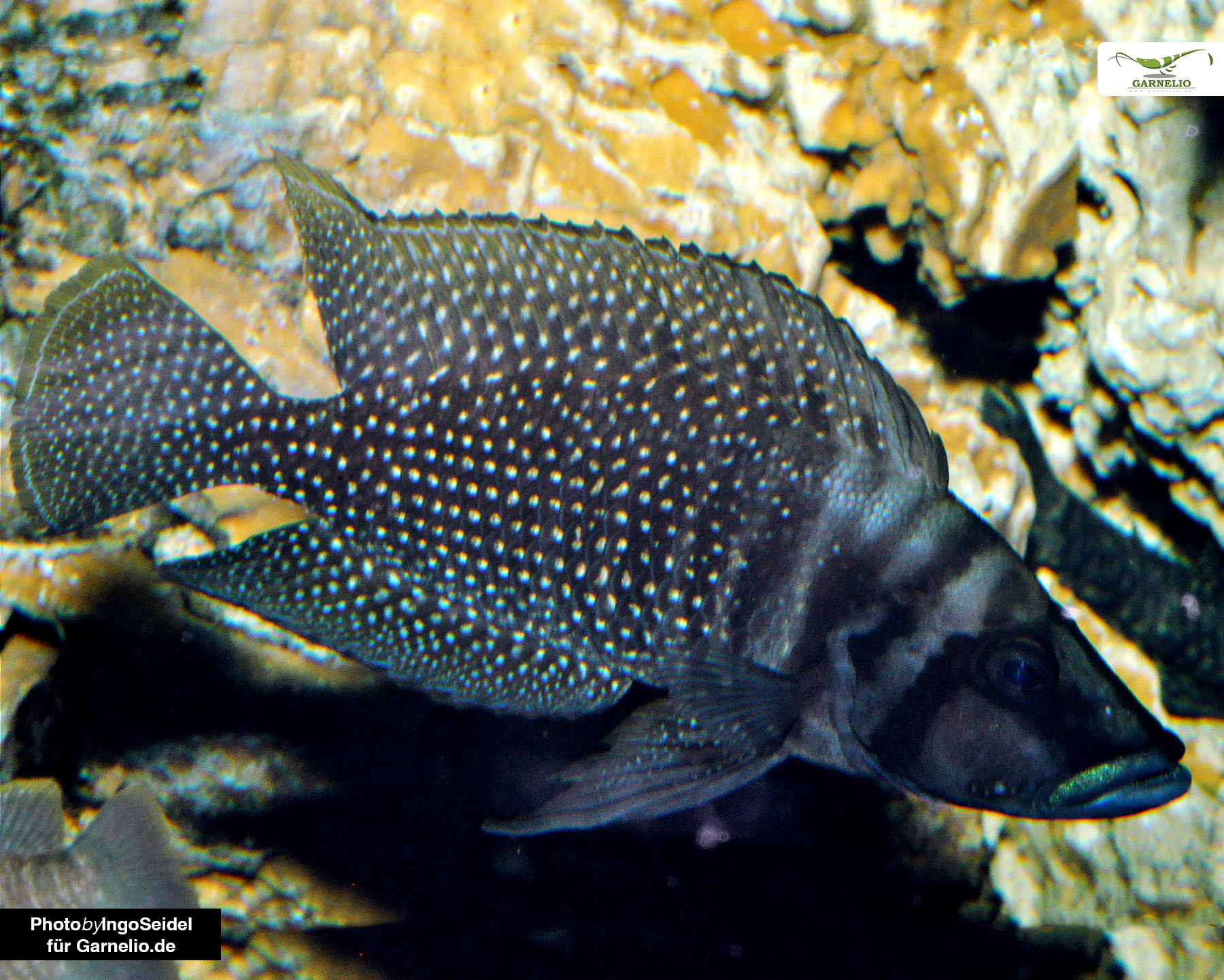
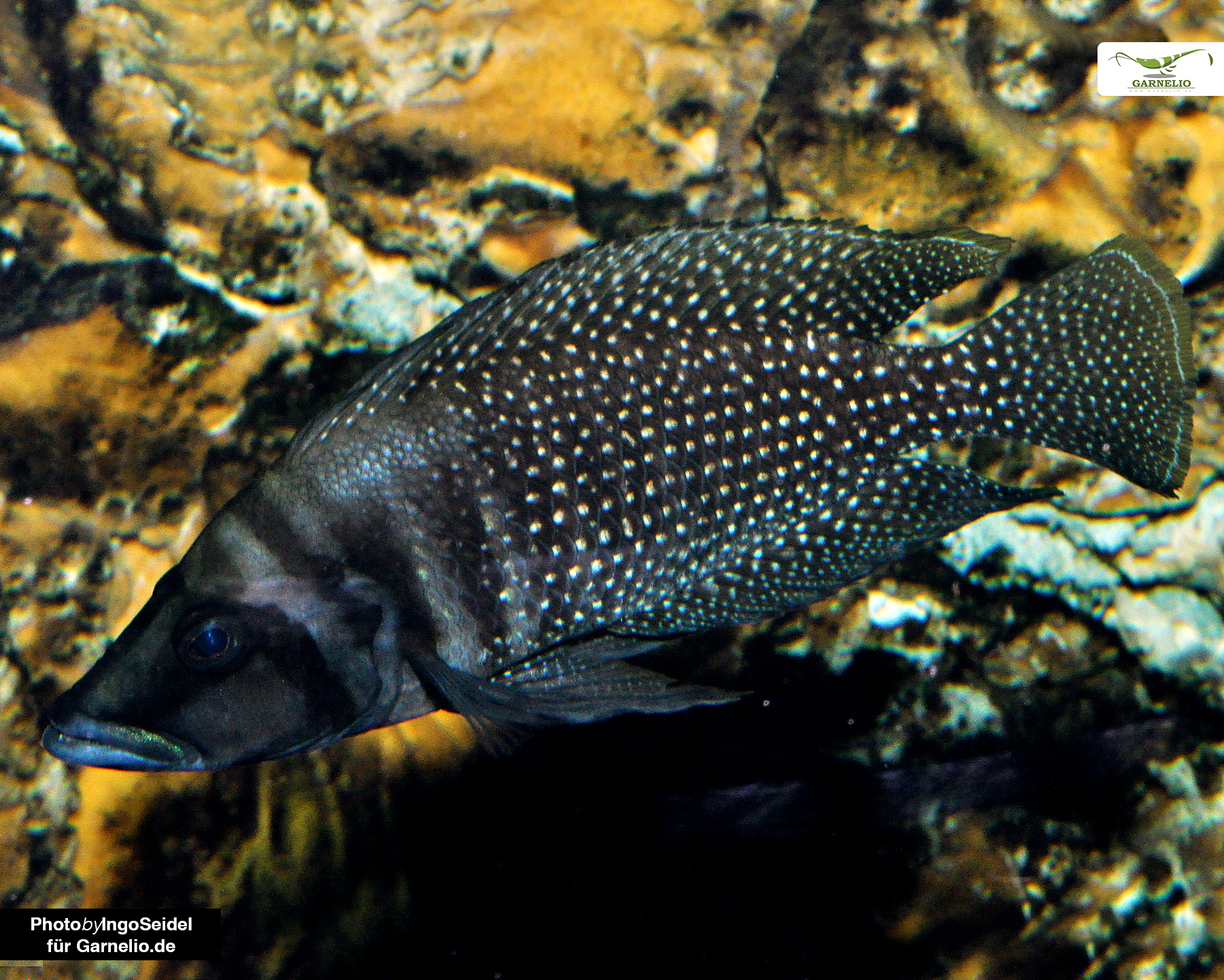
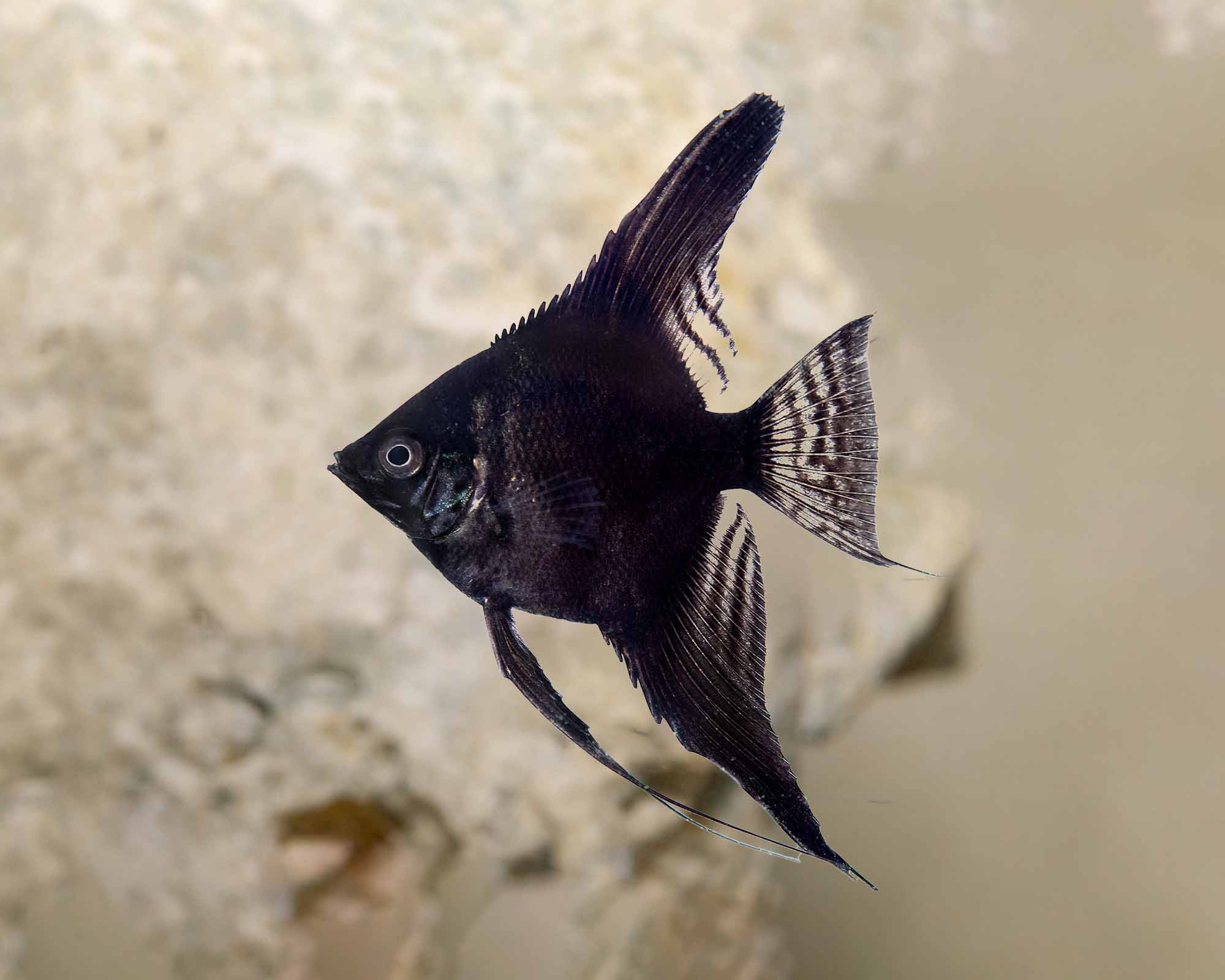
Altolamprologus calvus belongs to the family Cichlidae. It is native to the rocky shorelines of Lake Tanganyika, where it is found in deeper waters compared to many other cichlids. The Black color form is a highly sought-after variant characterized by its dark pigmentation and striking white, pearl-like spots across the body and fins.
Behavior and Compatibility
This species is a specialized predator that uses its thin body to reach into tight rock crevices to hunt small fish and crustaceans. While generally not overtly aggressive towards larger tank mates, they are territorial. They are best kept in a biotope-style aquarium with other robust Lake Tanganyika cichlids that occupy different levels of the water column.
Tank Requirements
A minimum tank size of 200 liters is recommended to accommodate a pair. The environment should replicate their natural habitat with extensive rockwork, providing numerous caves and crevices for shelter and breeding. High water quality and stable parameters are essential, requiring efficient filtration and regular water changes to maintain low nitrate levels.
Diet and Feeding
As carnivores, they thrive on a diet of high-quality frozen or live foods, including mysis shrimp, brine shrimp, and small pieces of fish or krill. They are slow eaters and should not be kept with overly aggressive, fast-feeding tank mates that might outcompete them for resources.
Breeding
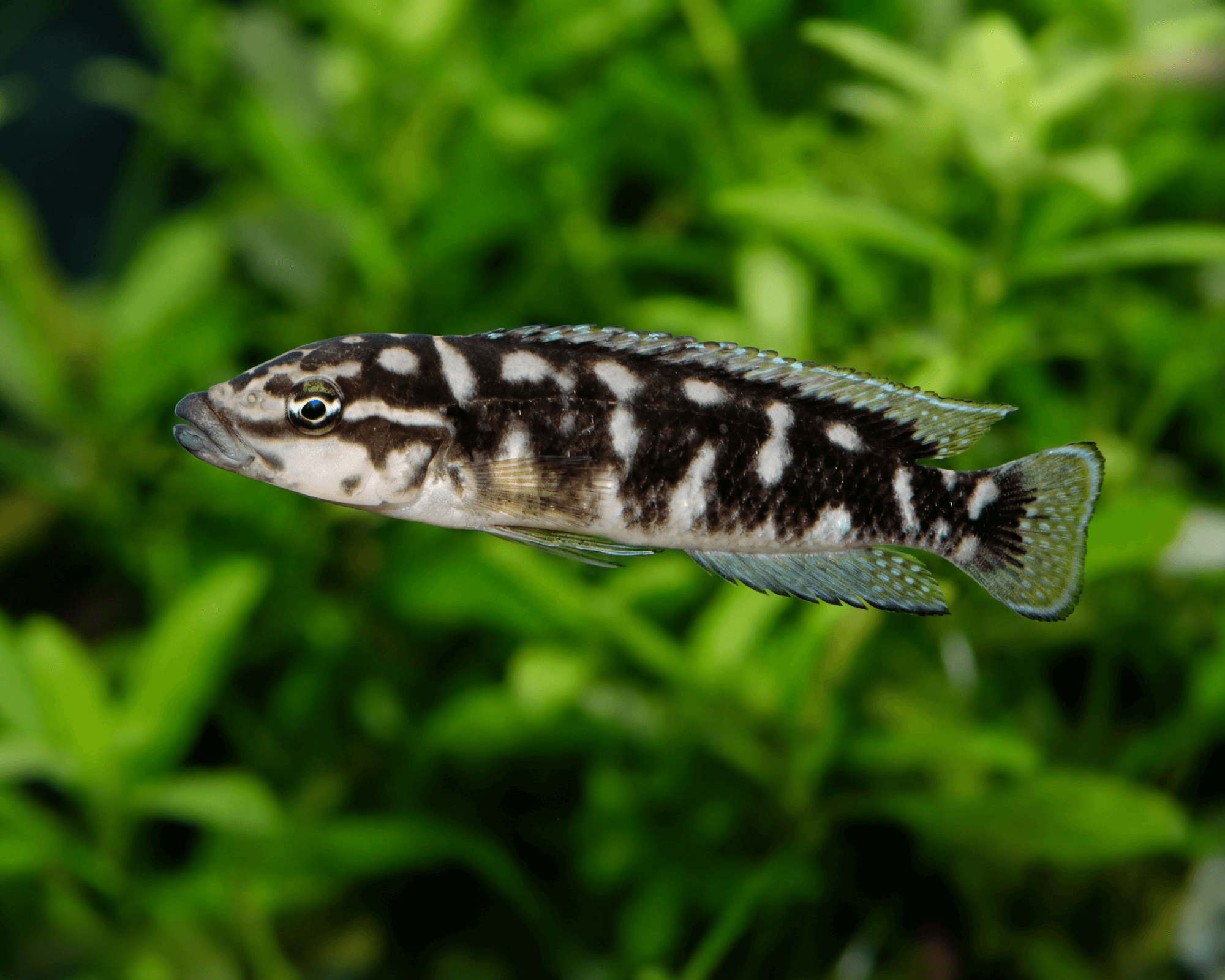
Breeding occurs in deep, narrow crevices or caves that are too small for the male to enter. The female deposits eggs inside the cave, and the male fertilizes them from the entrance. The female guards the eggs and fry within the confined space. Providing appropriate sized shells or PVC tubes can encourage successful spawning.
 - pair - 1.webp)
Leave your comments