AquaLibs presents AquaRank Discover the world’s leading aquascapers

Explore transparent rankings built from published results across the world’s leading aquascaping contests.

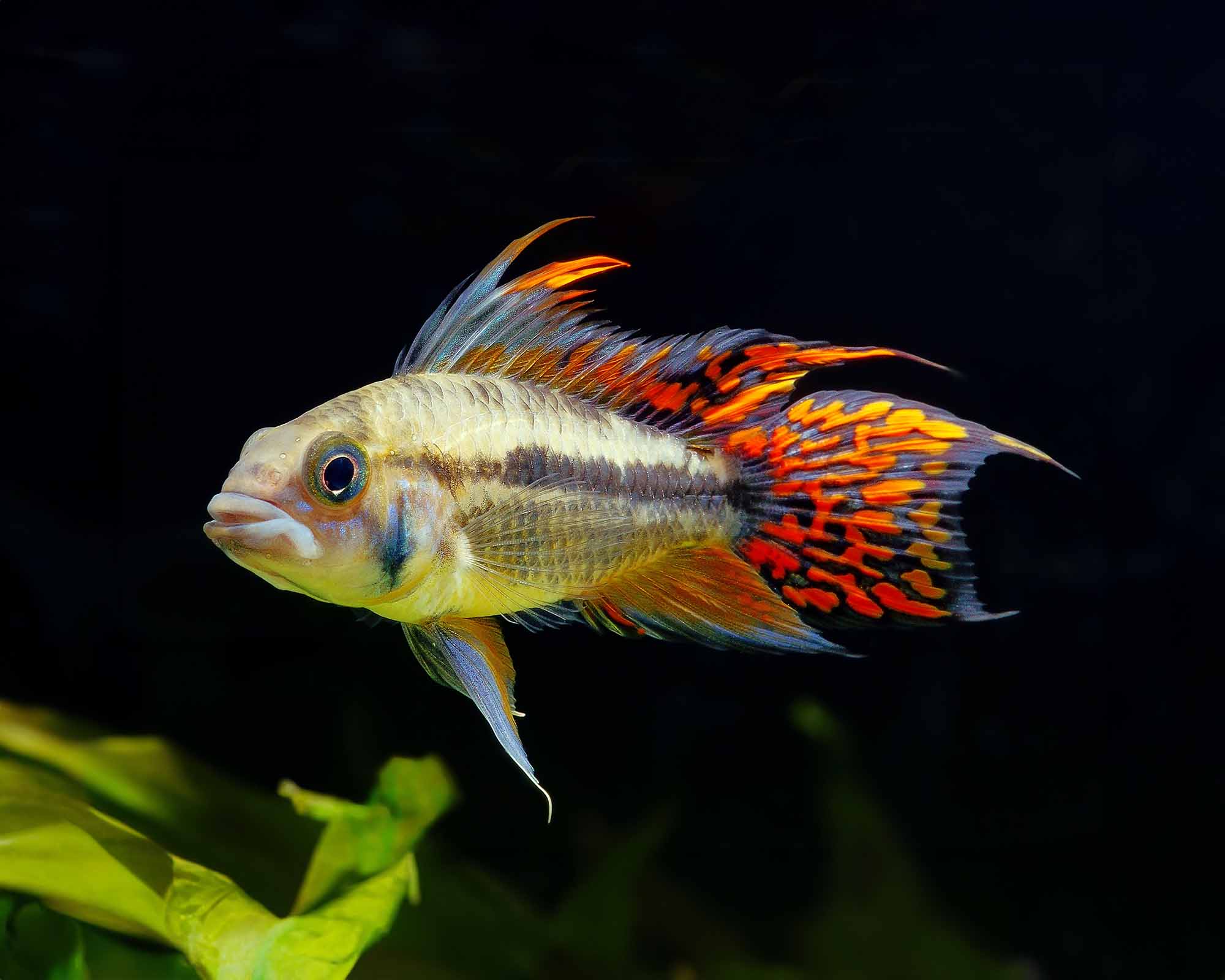
Apistogramma agassizii ‘Fire Red’

Taxonomy and identification

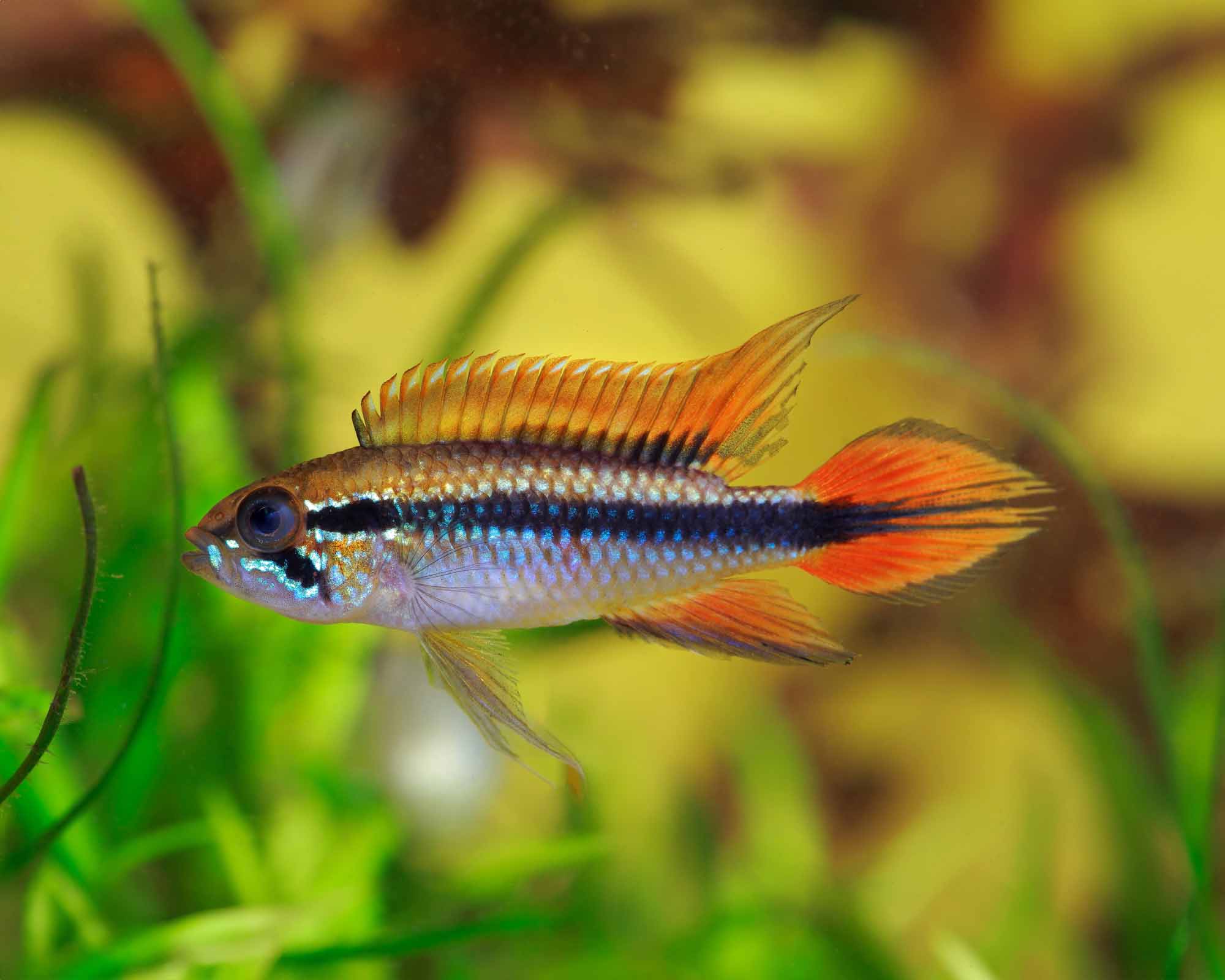
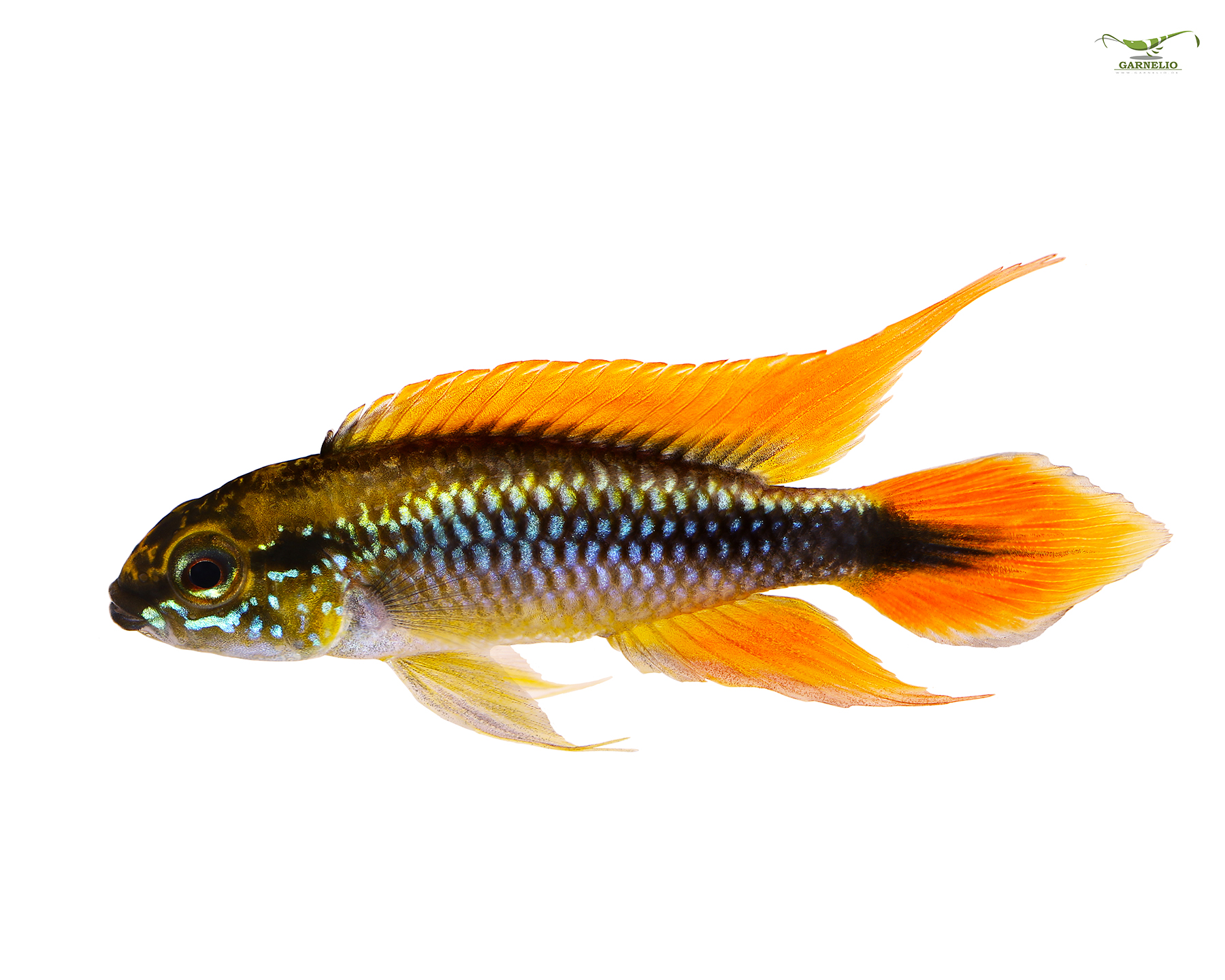
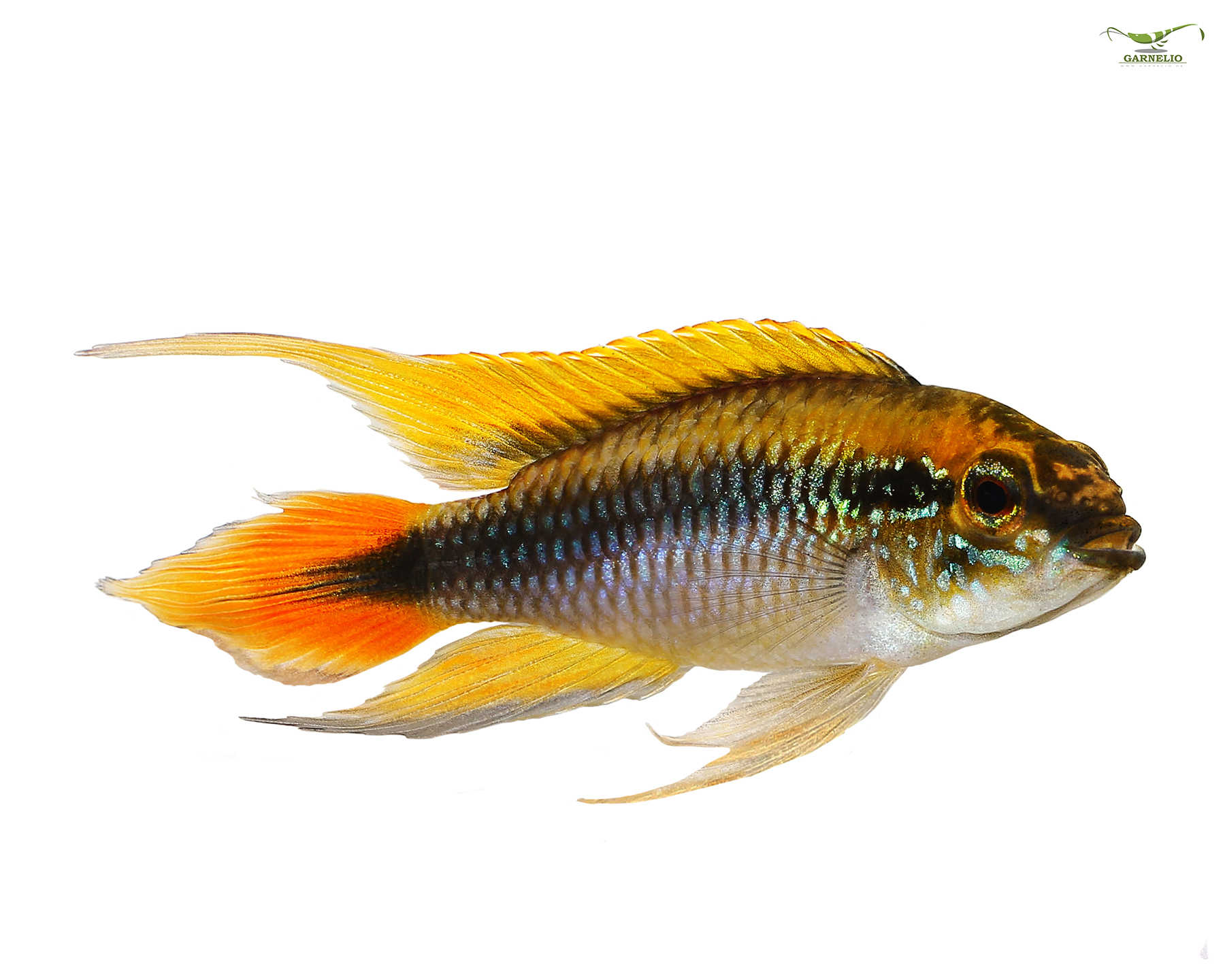
The species is Apistogramma agassizii, a member of the cichlid family Cichlidae. It is commonly called Agassiz’s dwarf cichlid. “Fire Red” is a trade designation for a selectively bred color form and does not establish a distinct taxon or wild locality. The images appear consistent with an elongated Apistogramma showing orange-red fins and a dark lateral marking, but the exact cultivated line and sex composition of the advertised pair cannot be verified from the supplied material.
Taxonomy and identification

Distribution and habitat

Apistogramma agassizii is native to lowland waters of the Amazon drainage in South America. It occurs in quiet or slowly flowing habitats, including shallow margins, leaf litter, submerged roots and small tributary environments. These habitats are often warm, shaded and relatively soft, with shelter that allows the fish to avoid larger predators and establish small territories.
Distribution and habitat

Appearance and sexual differences

Males are larger and usually develop longer dorsal, anal and pelvic fins, with stronger body patterning and more extensive red, orange or yellow coloration in aquarium strains. Females are smaller and generally less ornate, becoming especially yellow and darkly marked when guarding eggs or fry. Color intensity varies with mood, social status, water quality, diet and breeding line.
Appearance and sexual differences

Behavior

This is a bottom-oriented, territorial dwarf cichlid. Outside spawning it is often restrained, but a pair can defend a cave and surrounding area vigorously when breeding. Provide several visual barriers and caves so the female can hold a separate refuge. Avoid keeping multiple males in a small aquarium, since persistent territorial pressure can cause injury or chronic stress.

Aquarium and water requirements

A pair should have at least a 60-litre aquarium with substantial floor area; a larger tank is preferable for a community setting or additional territories. Use sand or another smooth substrate, driftwood, plants, leaf litter and small caves made from wood, stone or ceramic. Gentle filtration, good oxygenation and stable conditions are important. Aim for 24–29 °C, pH 5.5–7.5, low to moderate hardness and undetectable ammonia and nitrite. Soft, acidic water is especially useful for breeding, but stability is more important than chasing a precise number.

Diet

Offer a varied carnivorous diet. Suitable foods include high-quality small pellets or granules, frozen or live bloodworms, brine shrimp, daphnia and other appropriately sized aquatic invertebrates. Feed small portions once or twice daily and remove uneaten food. Newly imported or stressed specimens often respond best to small live or frozen foods before being transitioned to prepared diets.

Compatibility

Choose peaceful, similarly sized tank mates that occupy the middle or upper levels, such as calm small characins, pencilfish or peaceful surface fish. Avoid large, boisterous, fin-nipping or highly aggressive species, as well as fish that compete intensely for the substrate. Corydoras and other bottom dwellers may be tolerated in a spacious, structured aquarium, but spawning pairs can harass them near a defended cave. Do not combine this form with other Apistogramma species in a small aquarium.

Breeding

The species is a cave spawner with female-led brood care. Provide several small caves and soft, clean water, then condition the pair with nutritious live or frozen foods. The female usually selects a cave, lays adhesive eggs on its roof or inner surface and guards the clutch; the male commonly defends the wider territory. Eggs generally hatch within several days, with free-swimming fry following after further development. Feed newly free-swimming fry suitable first foods, such as newly hatched brine shrimp or other appropriately sized foods, and protect them from filtration intakes and tank mates. Remove or separate the male only if the female is being persistently attacked.

Identification note

The source label specifies “Apistogramma agassizii Fire Red DNZ pair.” DNZ may describe a seller, breeder or line, but its meaning cannot be established from the supplied information. The listing indicates two fish and a pair, while the available images do not independently confirm sex, provenance or genetic lineage.
Fish info

  • Care level: Moderate
  • Temperament: Semi-aggressive
  • Adult size: Male 7–9 cm; female 5–6 cm
  • Life expectancy: 3–5 years
  • Fish type: South American dwarf cichlid
  • Temperature : 24–29 °C
  • pH: 5.5–7.5
Related on Fishs
Leave your comments
Latest on Fishs
  • Cockatoo Cichlid Orange (Apistogramma cacatuoides)

    Cockatoo Cichlid Orange (Apistogramma cacatuoides)

    Easy - Moderate
    South American dwarf cichlid
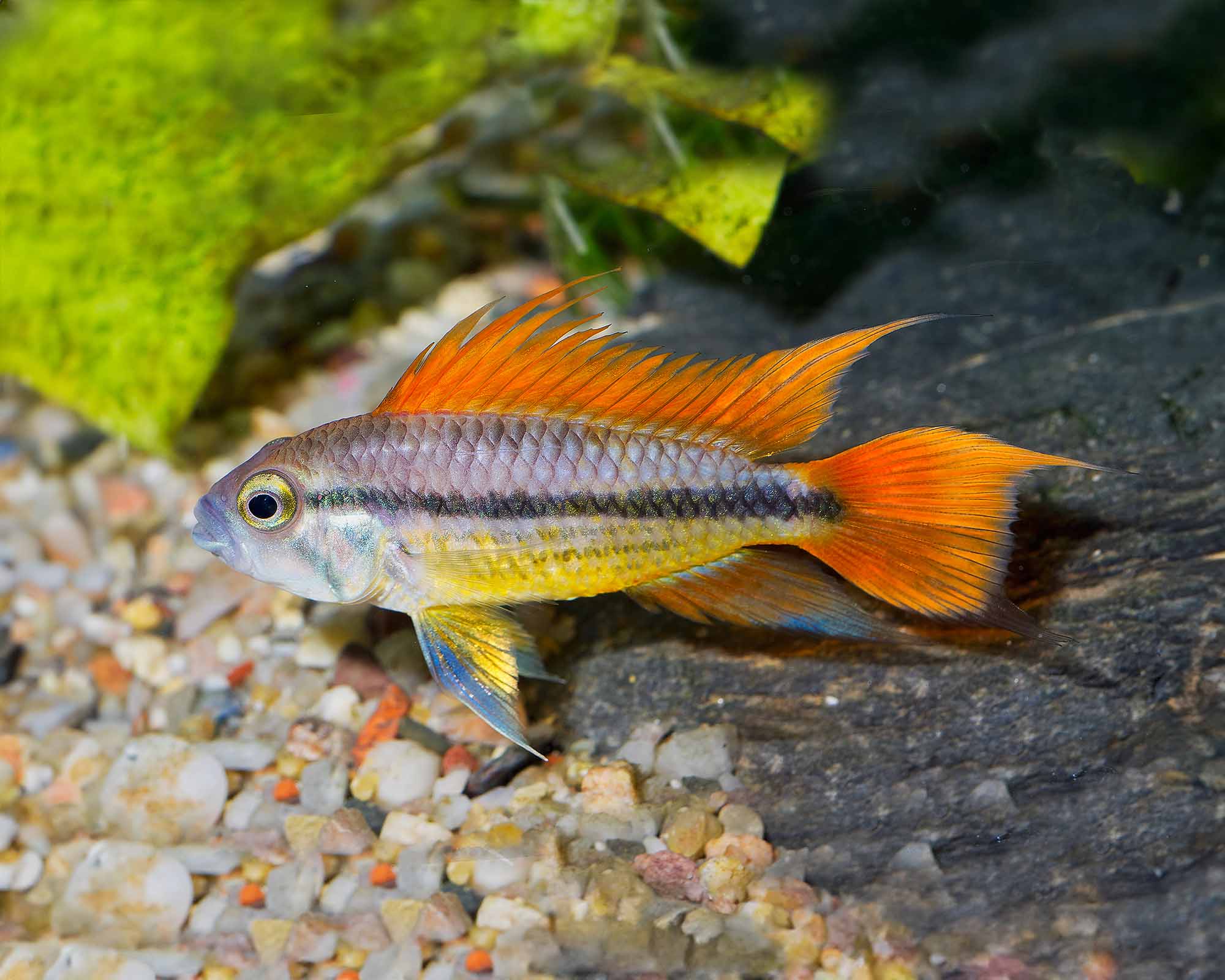
    The Cockatoo Cichlid is a small South American dwarf cichlid known for its elongated dorsal fin, bold facial markings and colorful orange fin forms. Apistogramma cacatuoides comes from slow-moving waters and tributaries of the upper Amazon basin, where it shelters among leaf litter, roots and submerged vegetation. It is generally manageable for an aquarist who provides soft, clean water, caves and visual barriers. The supplied listing describes an orange pair, but sex and exact form should be confirmed by the seller because photographs alone are not definitive.
  • Dwarf Gourami Red (Trichogaster lalius)

    Dwarf Gourami Red (Trichogaster lalius)

    Easy - Moderate
    Asian labyrinth fish
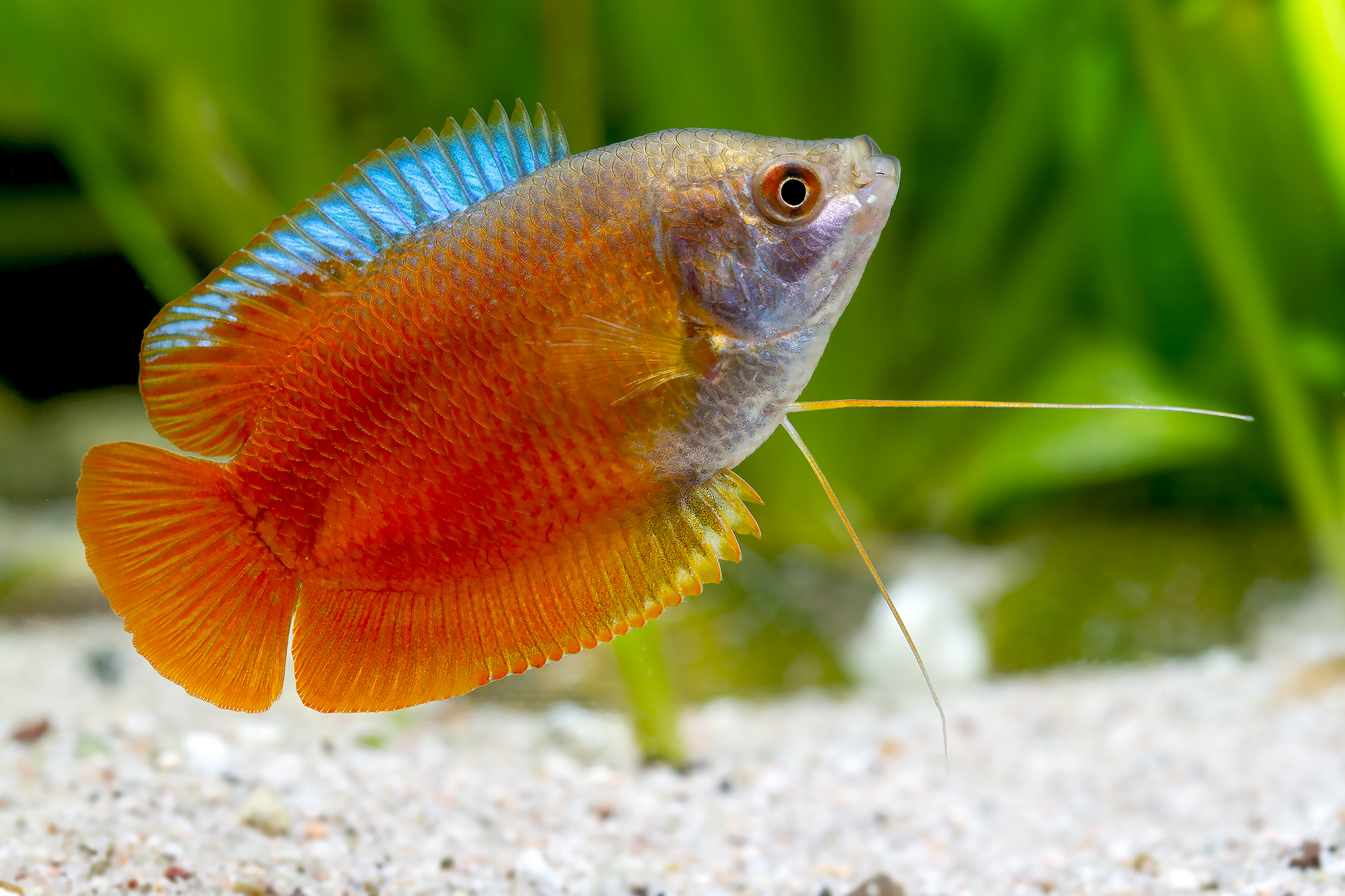
    The red dwarf gourami is a selectively bred color form of the dwarf gourami, a small labyrinth fish formerly widely known as Colisa lalia. It is suited to mature, planted community aquariums with gentle water movement and calm tank mates. Males can be territorial, especially when kept with females in confined conditions, so cover, visual barriers, and careful observation are important for a pair.
  • Cockatoo Cichlid Red (Apistogramma cacatuoides)

    Cockatoo Cichlid Red (Apistogramma cacatuoides)

    Moderate
    South American dwarf cichlid
    The Cockatoo Cichlid is a small South American dwarf cichlid valued for its personality, breeding behavior and colorful finnage. Apistogramma cacatuoides is generally adaptable when provided with clean, stable water, cover and a soft substrate. Males are larger and more vividly marked than females, while pairs become territorial around spawning sites. The supplied “red” designation most likely refers to a selectively bred color form; exact strain and sex confirmation cannot be established from the listing alone.
  • Discus (Symphysodon aequifasciatus) Care Guide

    Discus (Symphysodon aequifasciatus) Care Guide

    Difficult
    South American freshwater cichlid
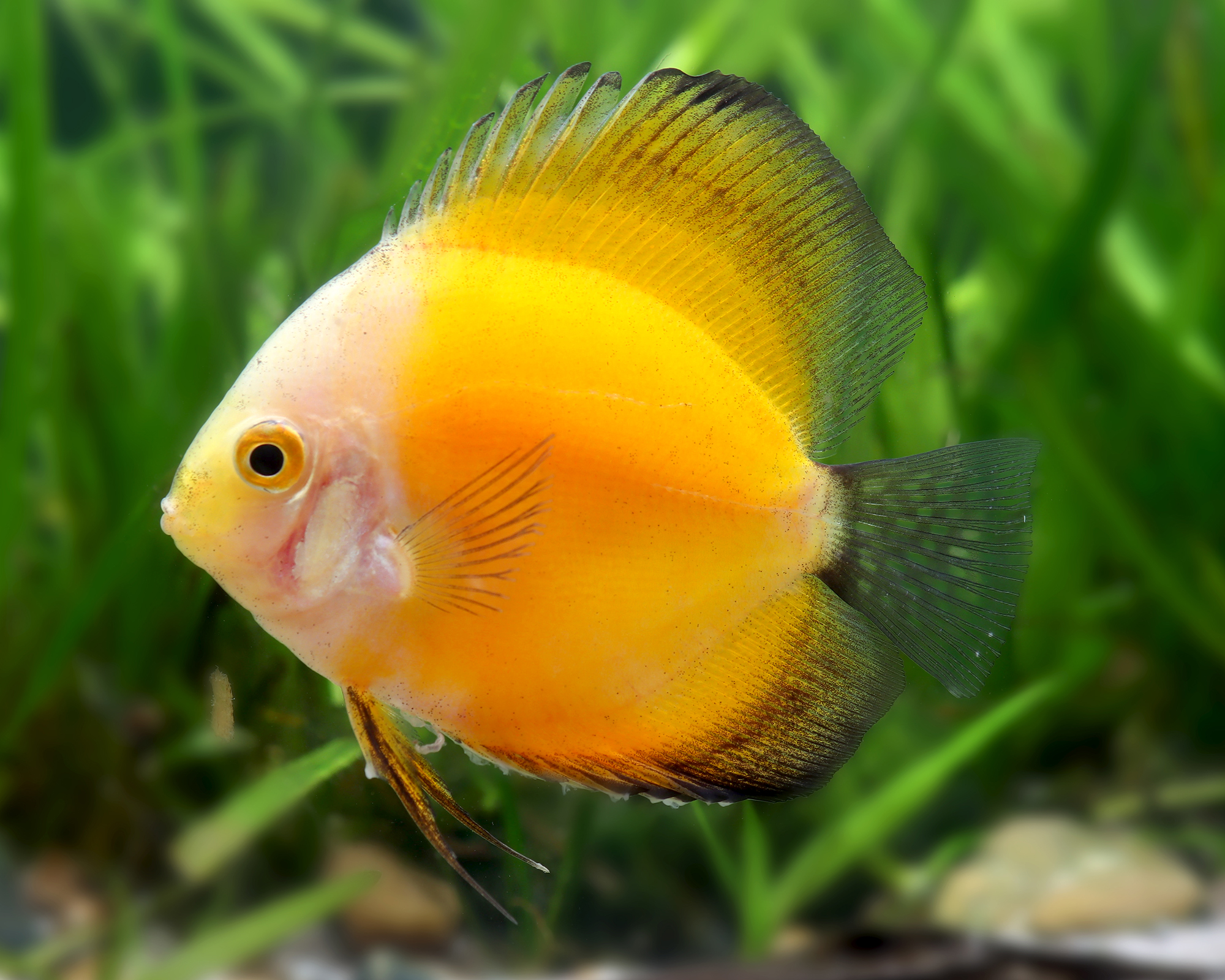
    Symphysodon aequifasciatus is a large, laterally compressed cichlid from the Amazon Basin, valued for its calm behavior and striking disc-shaped body. It requires warm, clean, stable water and careful feeding, making it better suited to experienced aquarists. The supplied images show yellow, orange, red, white and dark color forms; cultivated strains can vary considerably, so exact variety identification from images alone is uncertain. Discus are social fish and generally thrive in groups rather than as isolated specimens.
  • Cape Lopez Killifish (Aphyosemion australe)

    Cape Lopez Killifish (Aphyosemion australe)

    Moderate
    West African non-annual killifish
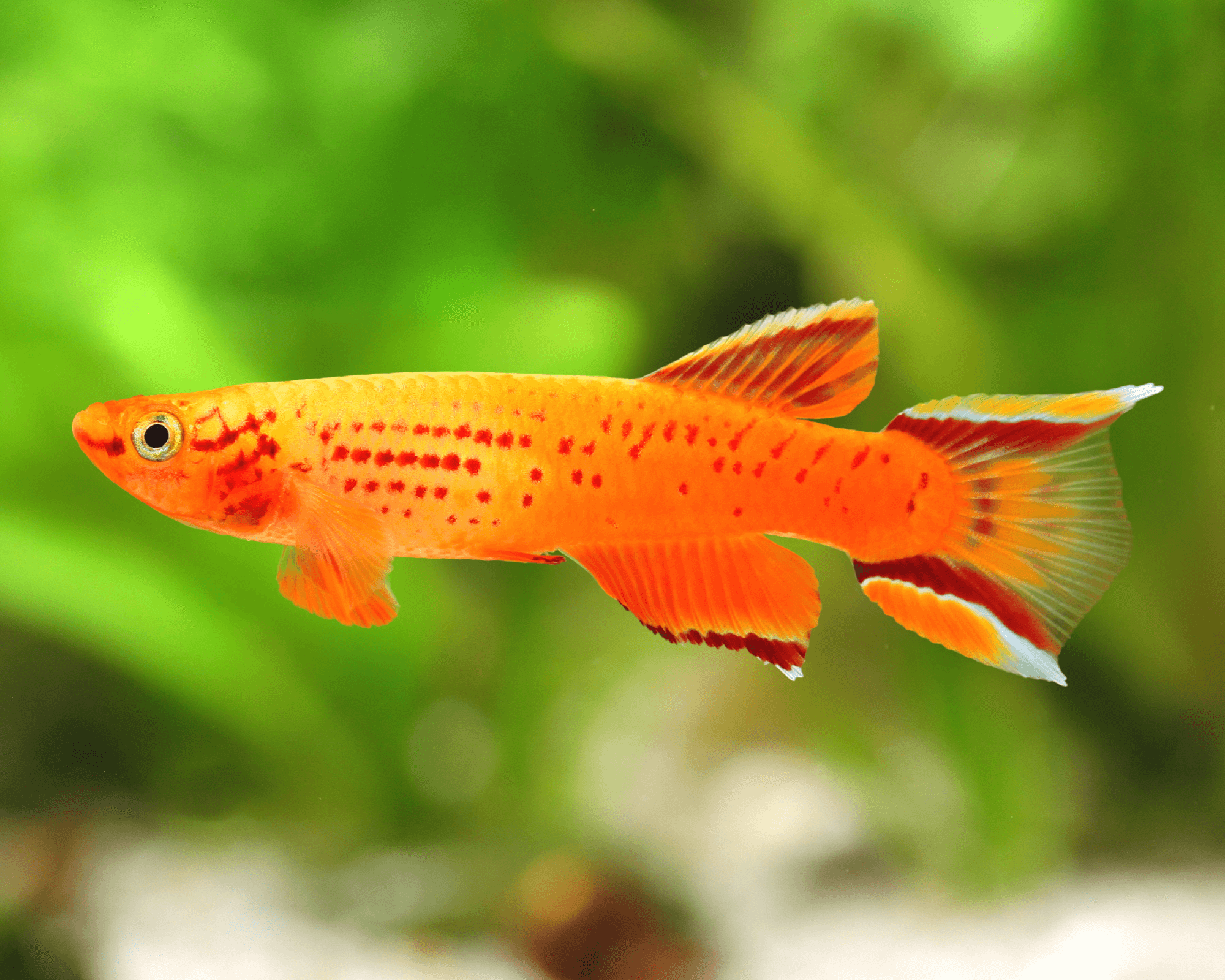
    The Cape Lopez killifish is a small, peaceful West African freshwater fish prized for its patterned body, flowing fins and manageable size. It inhabits slow-moving and temporary waters around coastal Gabon, including the Cape Lopez region. The supplied trade description identifies a pair as “Cape Lopez splendid carpets,” but this wording may describe a commercial strain rather than a formally recognized taxon. The image appears to show an orange form, so exact strain identification should be confirmed with the breeder or supplier.
  • Burton’s Mouthbrooder (Astatotilapia burtoni)

    Burton’s Mouthbrooder (Astatotilapia burtoni)

    Moderate
    East African haplochromine cichlid
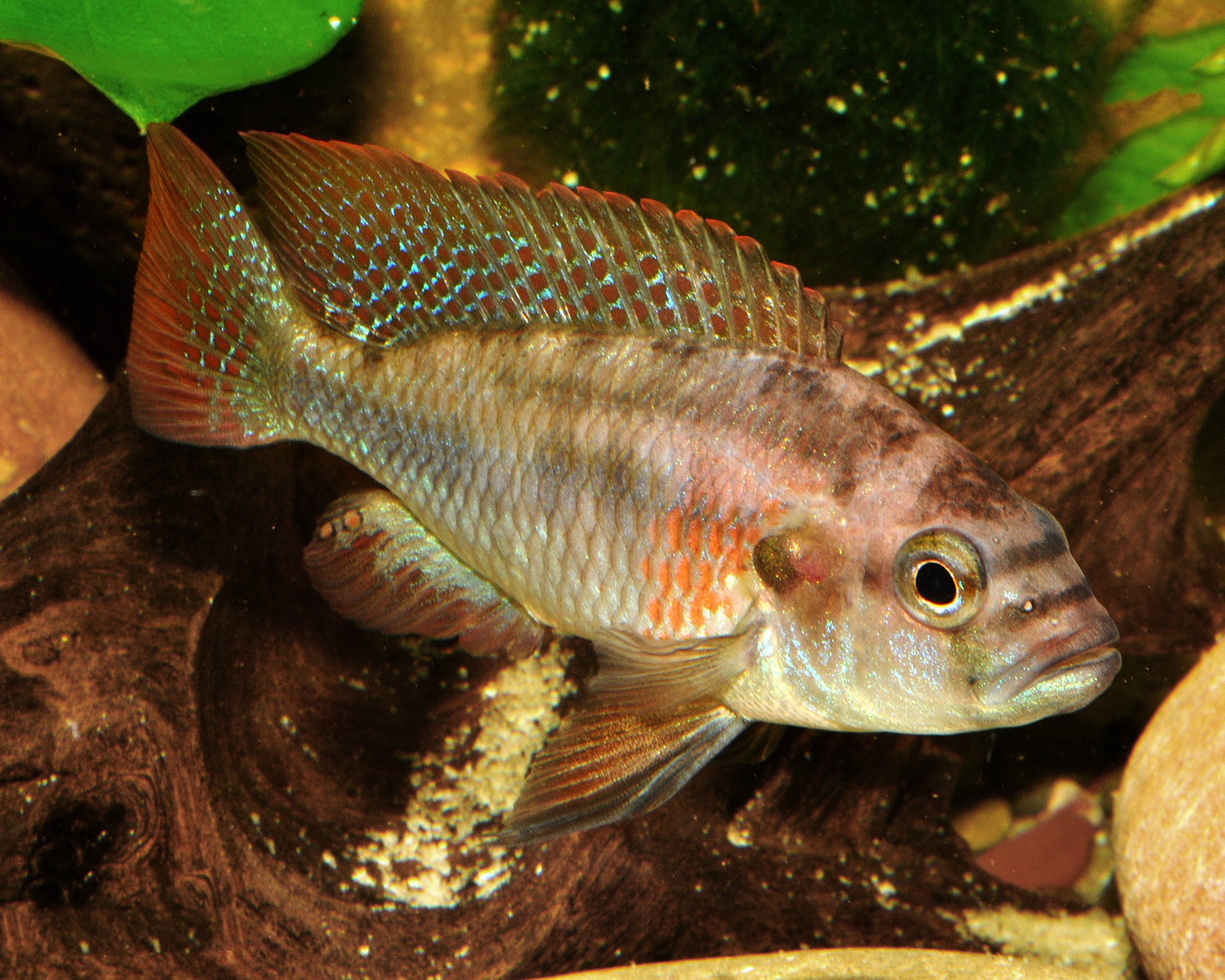
    Burton’s mouthbrooder, Astatotilapia burtoni, is a moderately aggressive East African haplochromine cichlid known for strong social hierarchies and maternal mouthbrooding. Males become more vividly patterned and defend territories, while females are generally less colorful and carry eggs and fry in the mouth. A pair requires a spacious, well-filtered aquarium with rocky cover, alkaline water and carefully selected tank mates. The supplied identification is consistent with Astatotilapia burtoni, although sex and locality form cannot be confirmed from the photographs alone.
  • Cyrtocara moorii (Blue Dolphin Cichlid) Care Guide

    Cyrtocara moorii (Blue Dolphin Cichlid) Care Guide

    Moderate
    Lake Malawi haplochromine cichlid
    Cyrtocara moorii is a large, distinctive haplochromine cichlid from Lake Malawi, recognised for its blue adult coloration and rounded forehead, which becomes more pronounced with age. It is a maternal mouthbrooder and is generally less aggressive than many Malawi mbuna, but its size and territorial breeding behaviour require a spacious aquarium. The supplied images appear consistent with blue C. moorii, although photographs cannot confirm sex, locality, or whether the fish form a true bonded pair.
  • Blue Dwarf Gourami Pair (Trichogaster lalius)

    Blue Dwarf Gourami Pair (Trichogaster lalius)

    Easy - Moderate
    Peaceful labyrinth fish
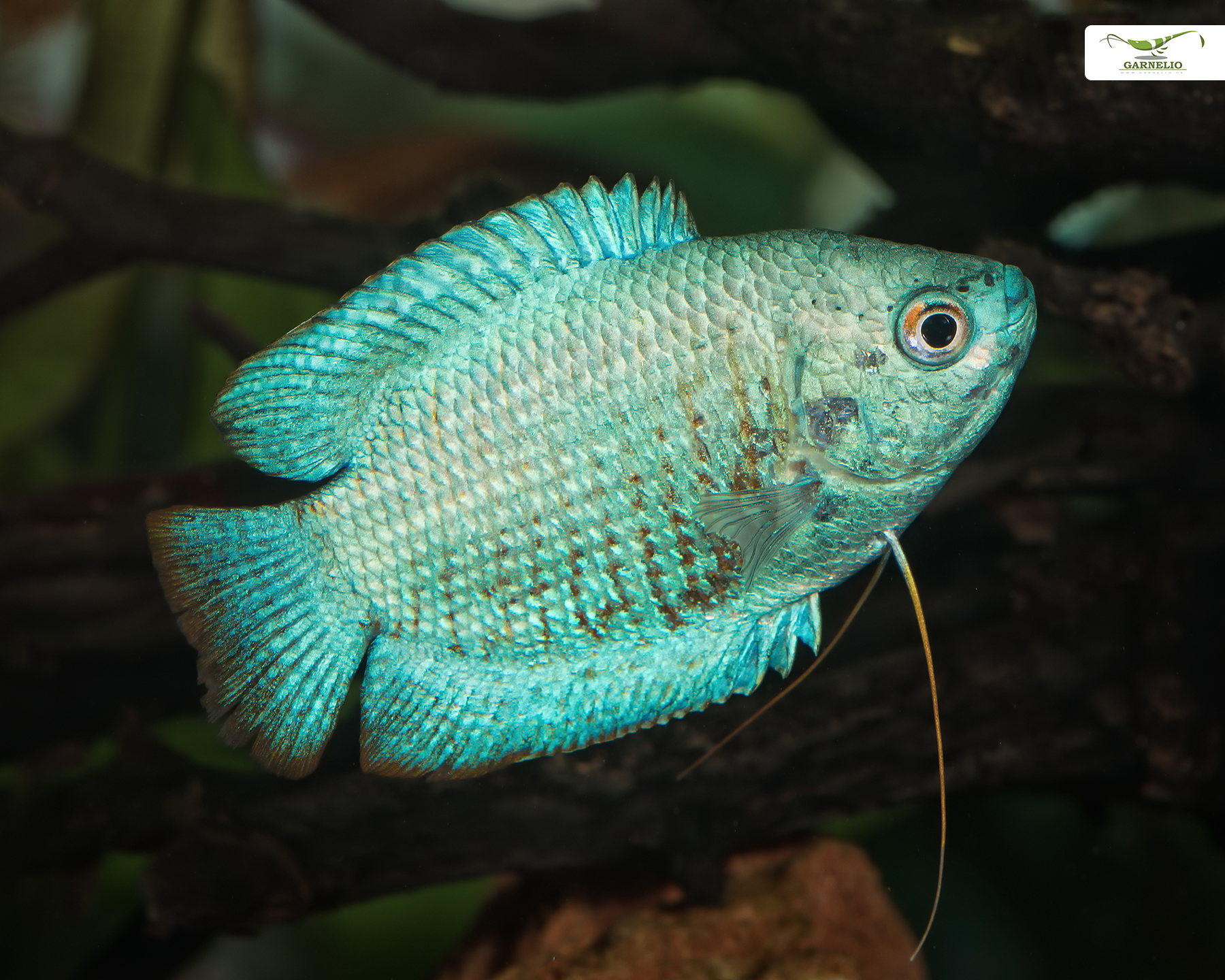
    The blue dwarf gourami is a selectively colored form of a small labyrinth fish native to the Indian subcontinent. It spends much of its time in the upper and middle aquarium, using its specialized labyrinth organ to breathe atmospheric air. Males can become territorial, especially when nesting, so a planted aquarium with calm tank mates, gentle flow, and surface cover is important. The supplied name uses Trichopodus lalius; Trichogaster lalius is the commonly used current combination.
  • Blue Acara (Aequidens pulcher)

    Blue Acara (Aequidens pulcher)

    Moderate
    South American freshwater cichlid
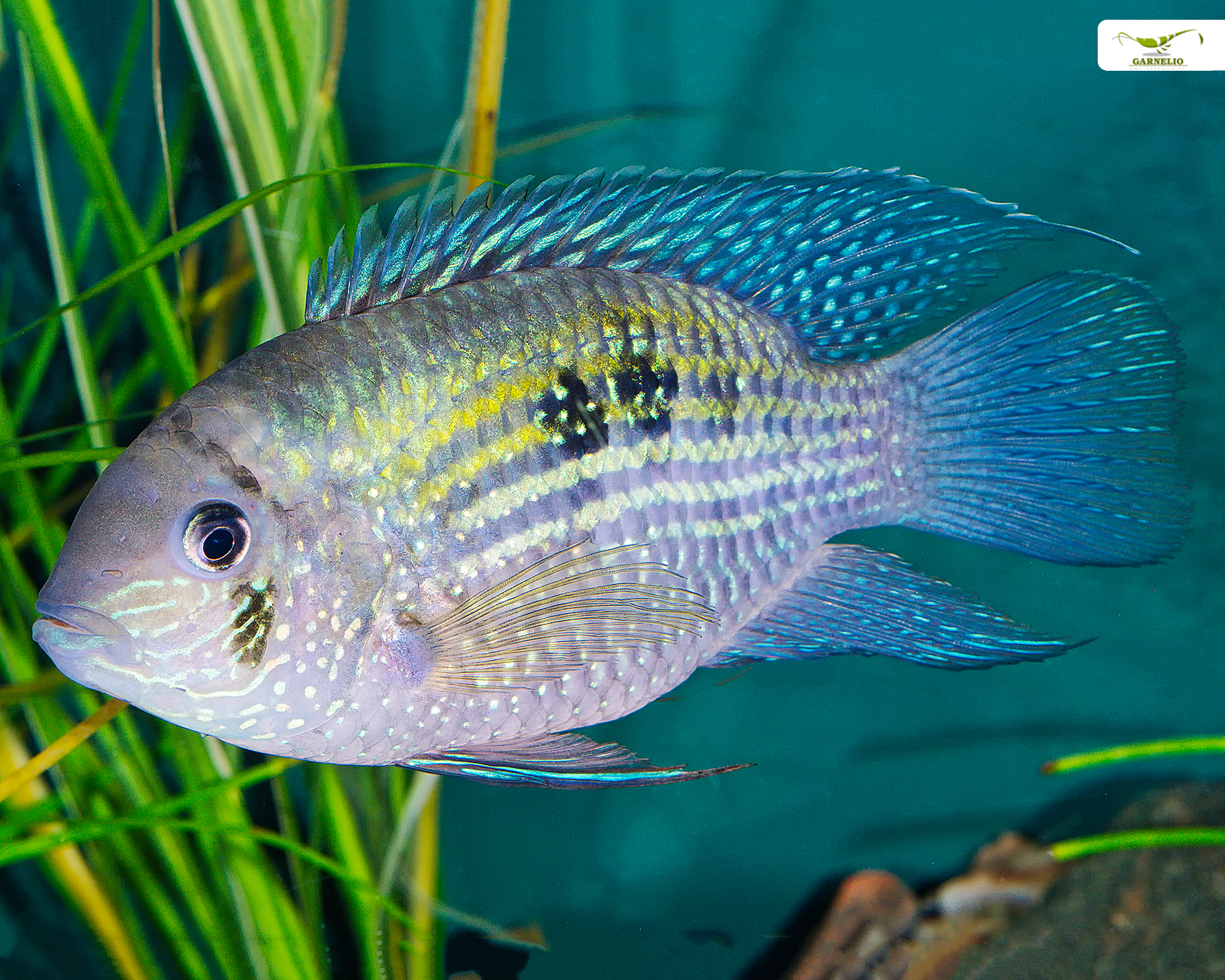
    The supplied label identifies these fish as Blue Acara, Aequidens pulcher, a South American freshwater cichlid often placed in the genus Andinoacara in current aquarium literature. The photograph is consistent with a blue acara, although a definitive identification cannot be confirmed from one image alone. This pair requires a spacious aquarium, stable water quality, hiding places and careful observation during breeding, when territorial behavior becomes stronger.
  • Julidochromis transcriptus: Black-and-White Slender Cichlid

    Julidochromis transcriptus: Black-and-White Slender Cichlid

    Moderate
    Lake Tanganyika rock-dwelling cichlid
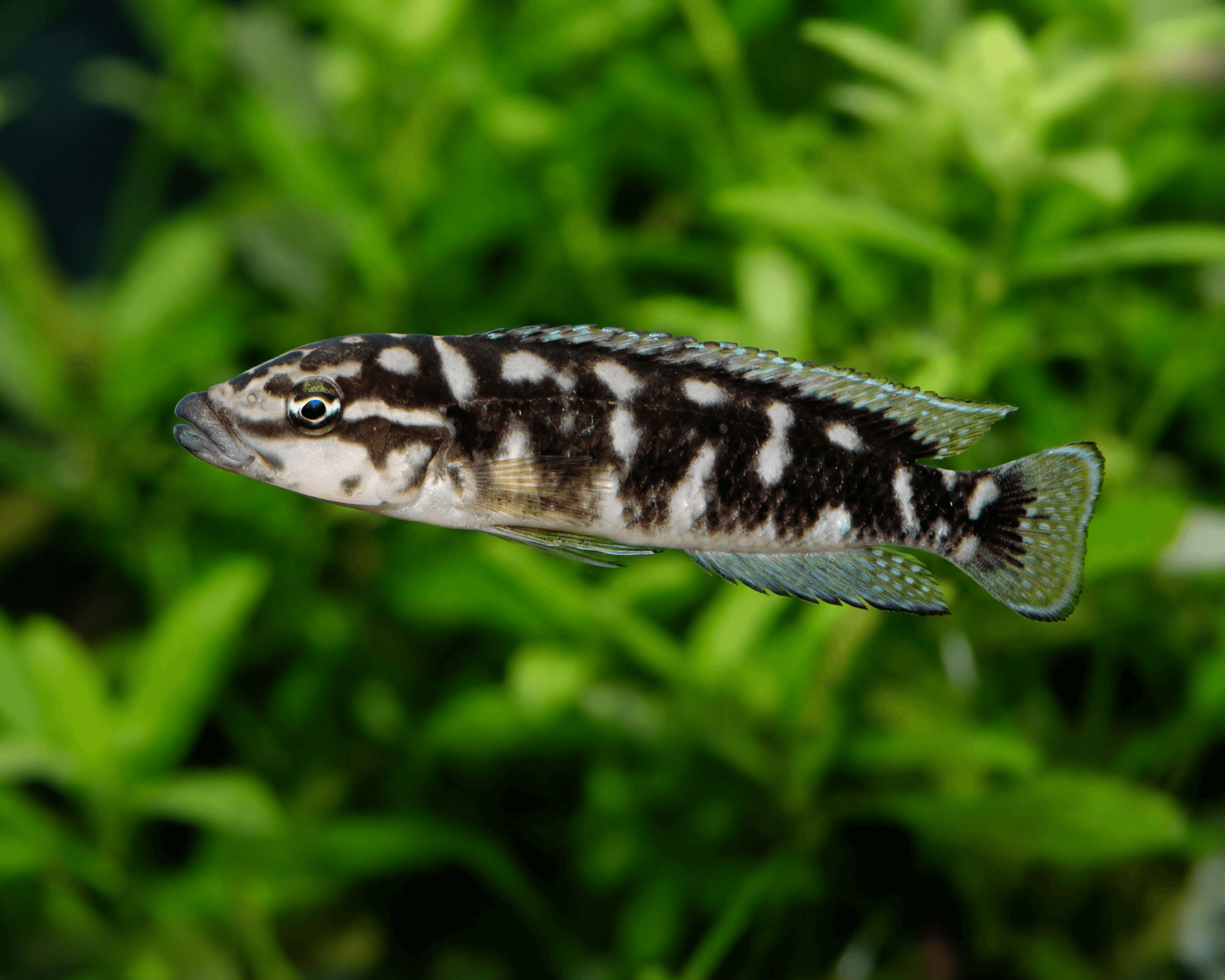
    Julidochromis transcriptus is a small rock-dwelling cichlid from Lake Tanganyika, recognized by its compact, elongated body and irregular black-and-white pattern. It is a territorial cave dweller that is best kept as an established pair in a carefully structured aquarium. The supplied fish are identified as a DNZ pair, although sex, collection locality, and precise geographic form cannot be verified from the supplied material alone.
  • Azur Cichlid (Sciaenochromis fryeri) Care Guide

    Azur Cichlid (Sciaenochromis fryeri) Care Guide

    Moderate
    Lake Malawi haplochromine cichlid
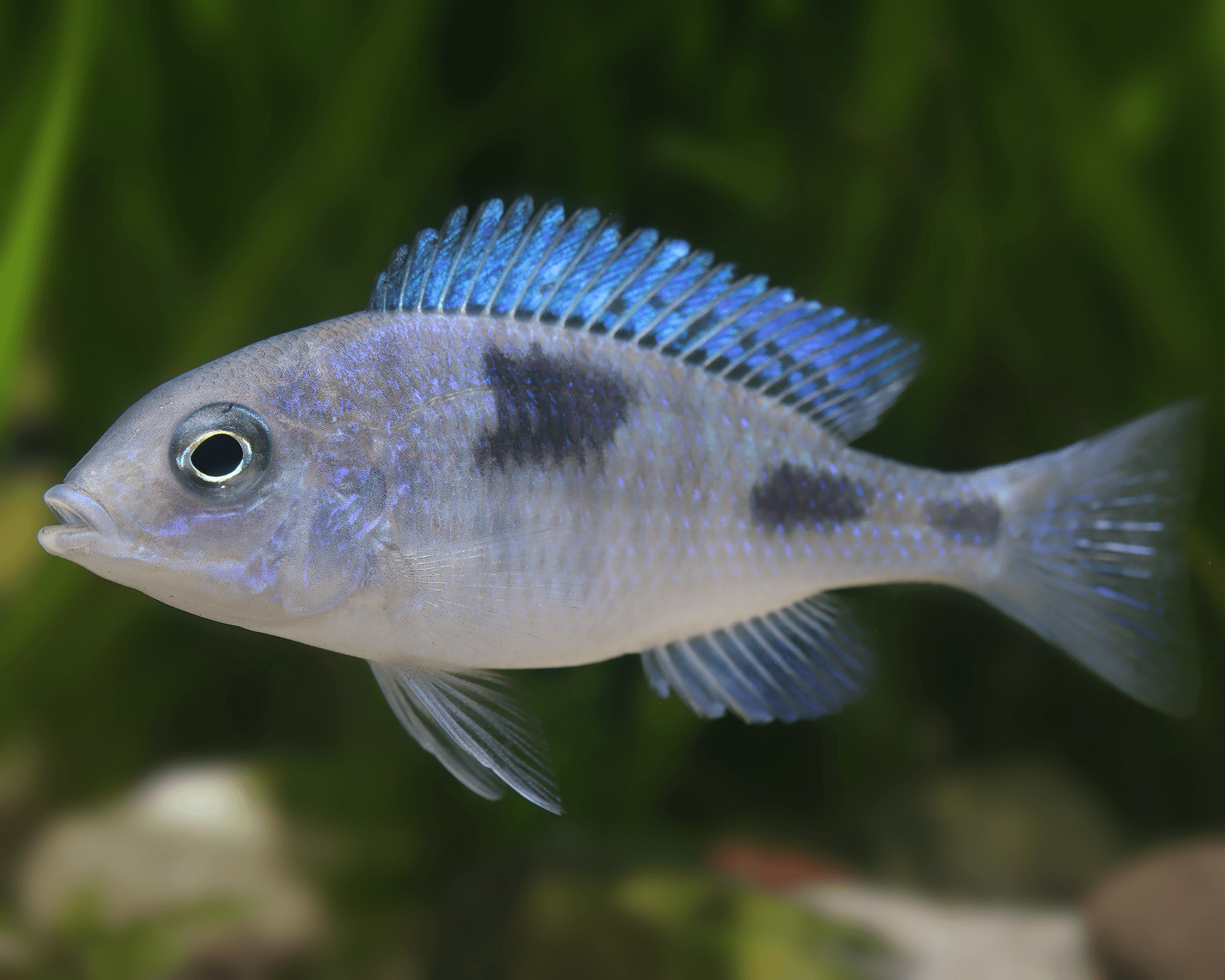
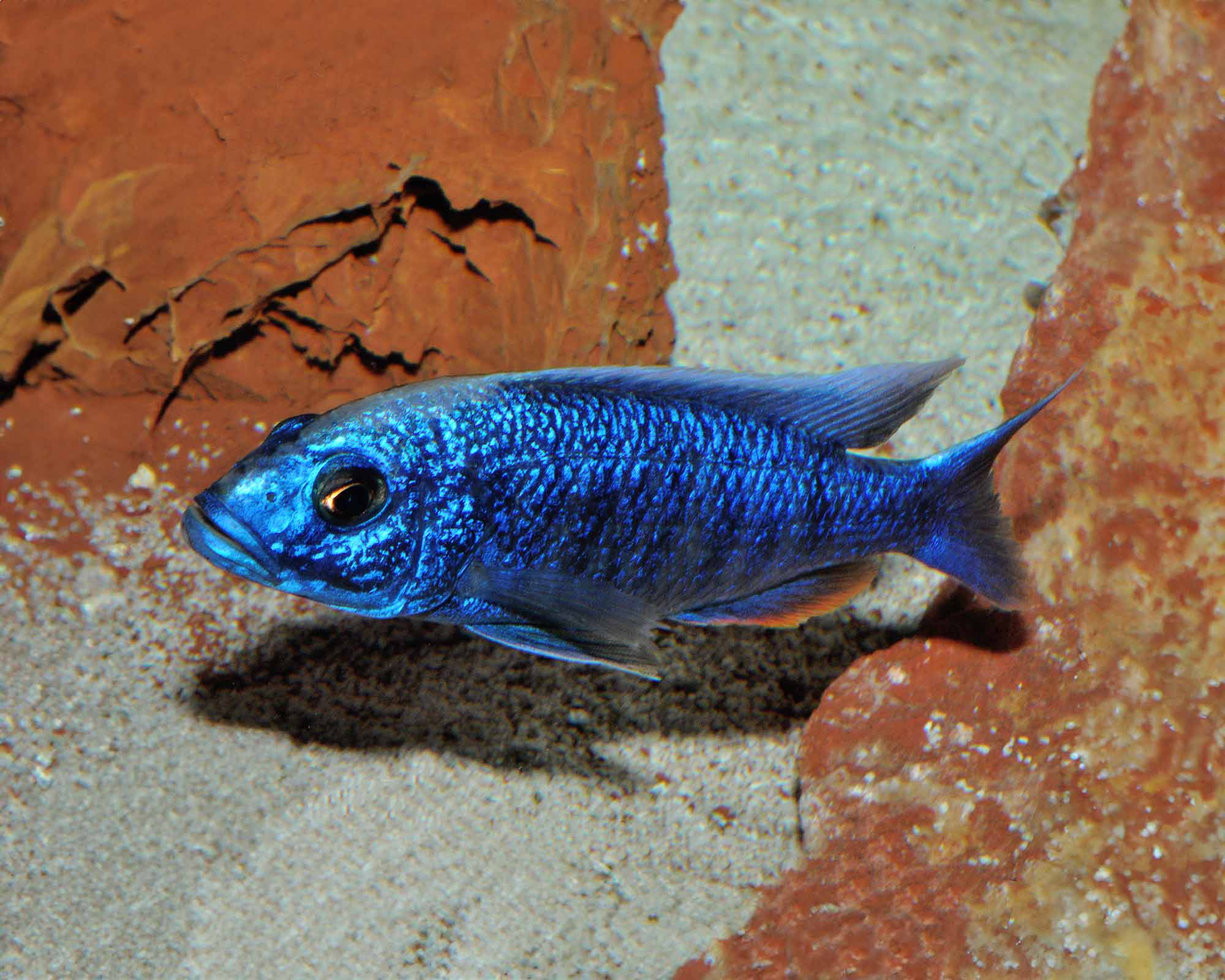
    The Azur cichlid is commonly sold as Sciaenochromis fryeri, a predatory haplochromine cichlid from Lake Malawi. Mature males develop vivid electric-blue coloration, while females and juveniles are generally less intensely colored. This fish is moderately aggressive and needs a spacious aquarium with rocky structure, alkaline, mineral-rich water, and carefully selected tank mates. The supplied source describes a DNZ pair, but sex and exact locality cannot be confirmed from the images alone. Identification confidence is therefore good but not absolute.
  • Marble Angelfish (Pterophyllum scalare)

    Marble Angelfish (Pterophyllum scalare)

    Moderate
    South American freshwater cichlid
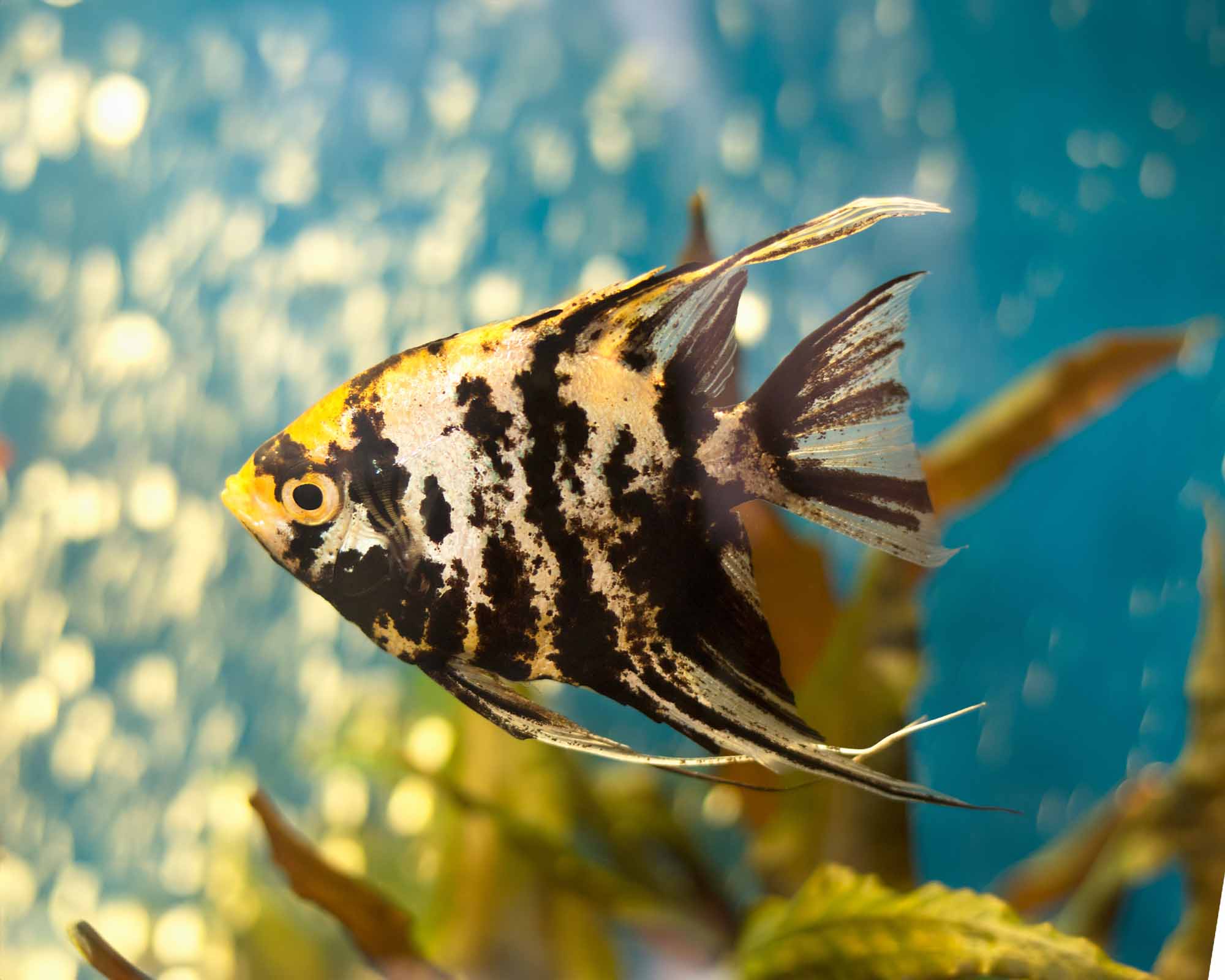
    The marble angelfish is a captive-bred color form of Pterophyllum scalare, a tall-bodied South American cichlid valued for its elegant fins and distinctive irregular black patterning. It needs a mature, spacious aquarium with excellent water quality, warm water and suitable tank mates. Although generally manageable, adults establish territories and may become assertive when pairing or spawning. The supplied source identifies two marble angelfish; exact lineage and strain details cannot be confirmed from the available information.
  • Gold Angelfish, Pterophyllum scalare

    Gold Angelfish, Pterophyllum scalare

    Moderate
    Freshwater South American cichlid
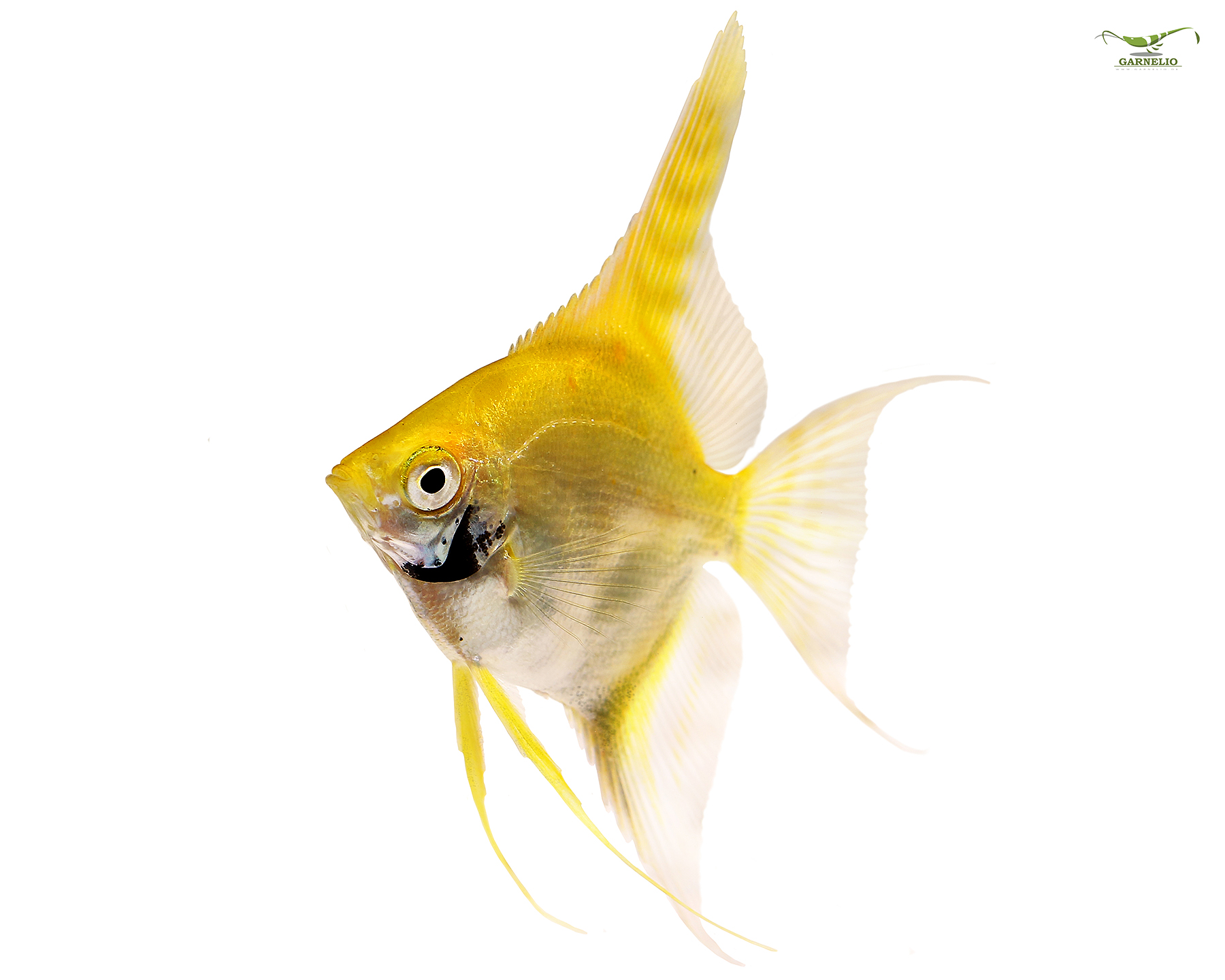
    The Gold Angelfish is an ornamental colour form of Pterophyllum scalare, a tall-bodied South American cichlid valued for its graceful movement and parental care. It needs a mature, spacious aquarium with substantial vertical clearance, stable warm water and carefully chosen tank mates. The supplied source identifies two fish as Gold Angelfish, although the accompanying images show several angelfish colour and fin forms, so the exact appearance of the supplied specimens cannot be confirmed from the images alone.
  • Zebra Angelfish (Pterophyllum scalare)

    Zebra Angelfish (Pterophyllum scalare)

    Moderate
    South American freshwater cichlid
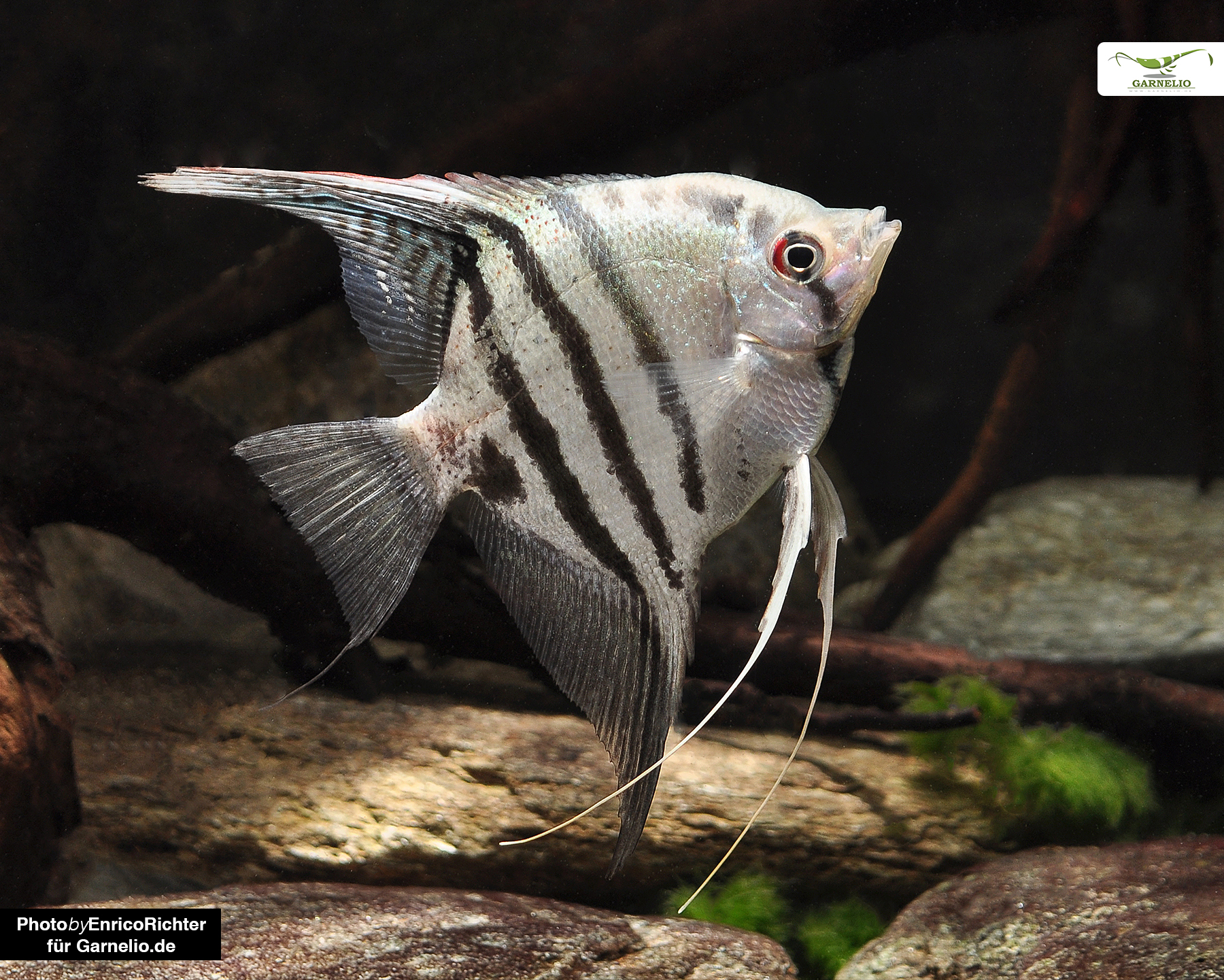
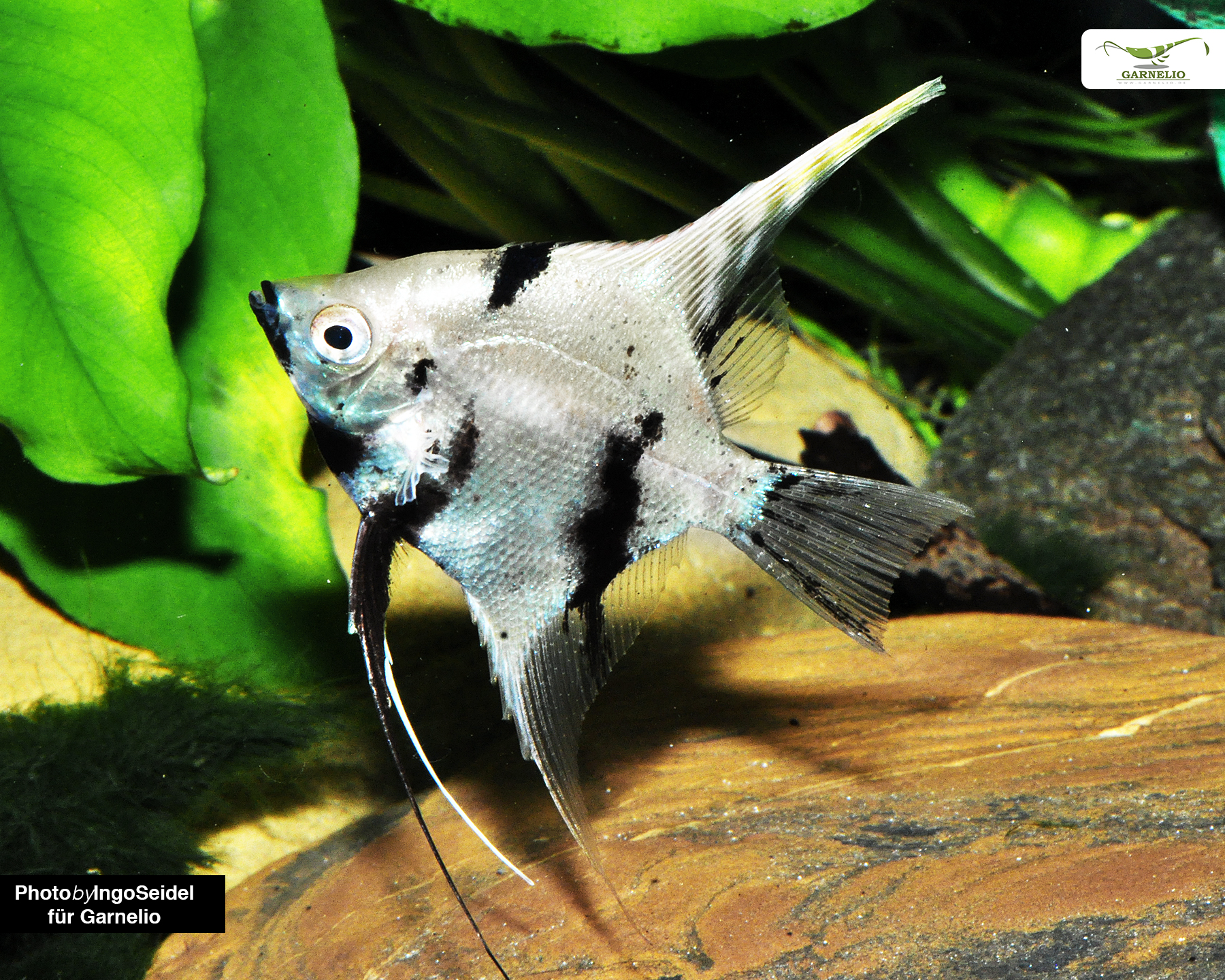
    The Zebra Angelfish is a selectively bred form of Pterophyllum scalare, recognised by a silvery body with several dark vertical bars and the tall, laterally compressed shape typical of freshwater angelfish. The supplied images also show other angelfish colour forms, so the exact appearance of the listed pair cannot be confirmed from the image set alone. This South American cichlid is generally manageable for experienced community keepers, but its size, territorial breeding behaviour and need for a tall aquarium should be planned for carefully.
  • Black Angelfish (Pterophyllum scalare)

    Black Angelfish (Pterophyllum scalare)

    Moderate
    South American freshwater cichlid
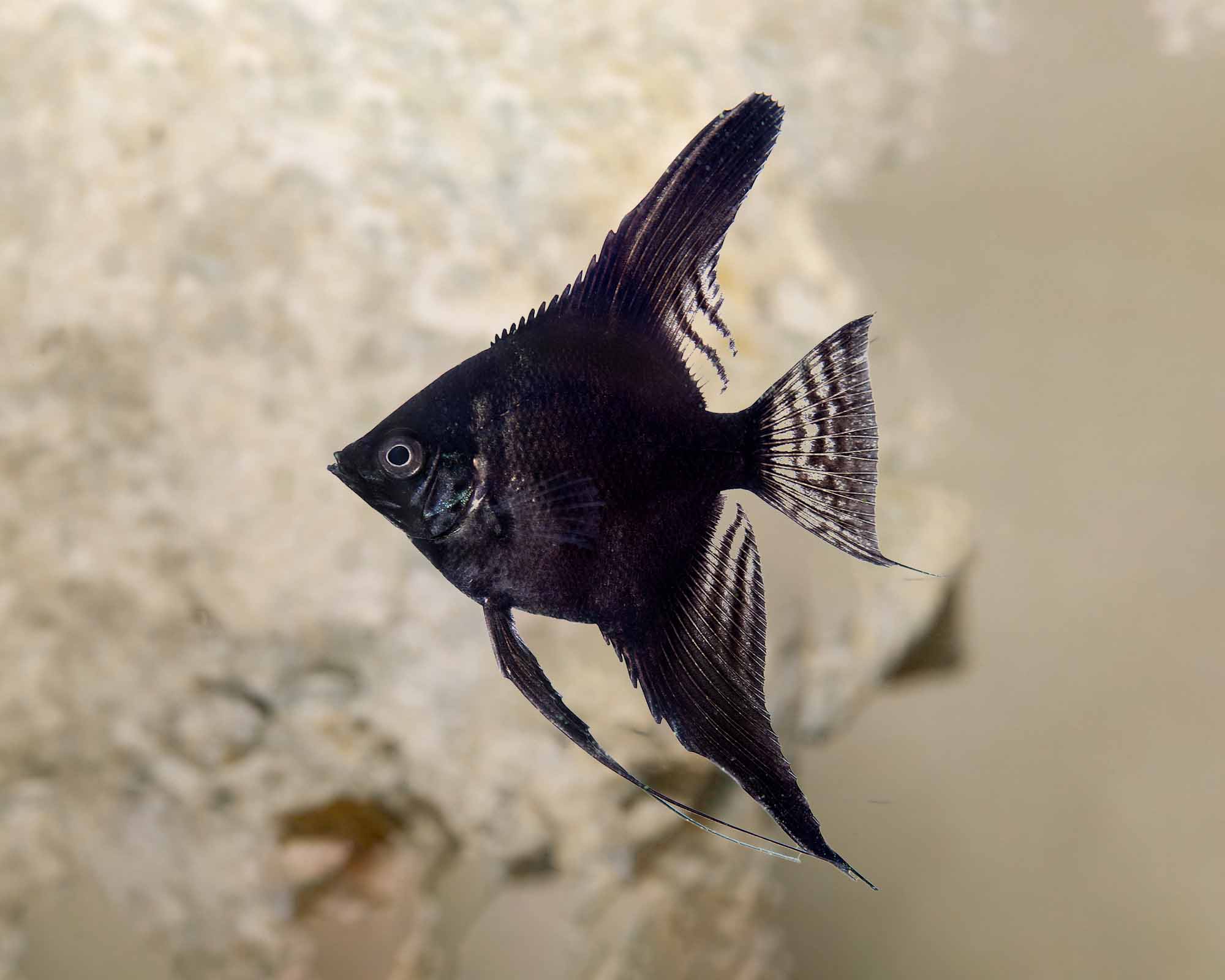
    The supplied record identifies two black angelfish, most likely a domestic color form of Pterophyllum scalare. The photographs show several angelfish color patterns, so they should not be treated as proof that every pictured fish is black or that all belong to the same strain. Black angelfish retain the tall, laterally compressed body and extended fins typical of freshwater angelfish. They need a tall, mature aquarium, stable warm water, a varied diet, and carefully selected tank mates.
  • White Marble Angelfish (Pterophyllum scalare)

    White Marble Angelfish (Pterophyllum scalare)

    Moderate
    Freshwater cichlid
    The white marble angelfish is a selectively bred aquarium color form of Pterophyllum scalare, a tall-bodied South American cichlid valued for its elegant fins and distinctive irregular dark marbling. It is generally peaceful when young but can become territorial, especially when paired for spawning. Successful care depends on a tall aquarium, excellent water quality, suitable tank mates, and a varied carnivorous-omnivorous diet. The exact genetic strain shown cannot be confirmed from photographs alone.