Taxonomy and identification
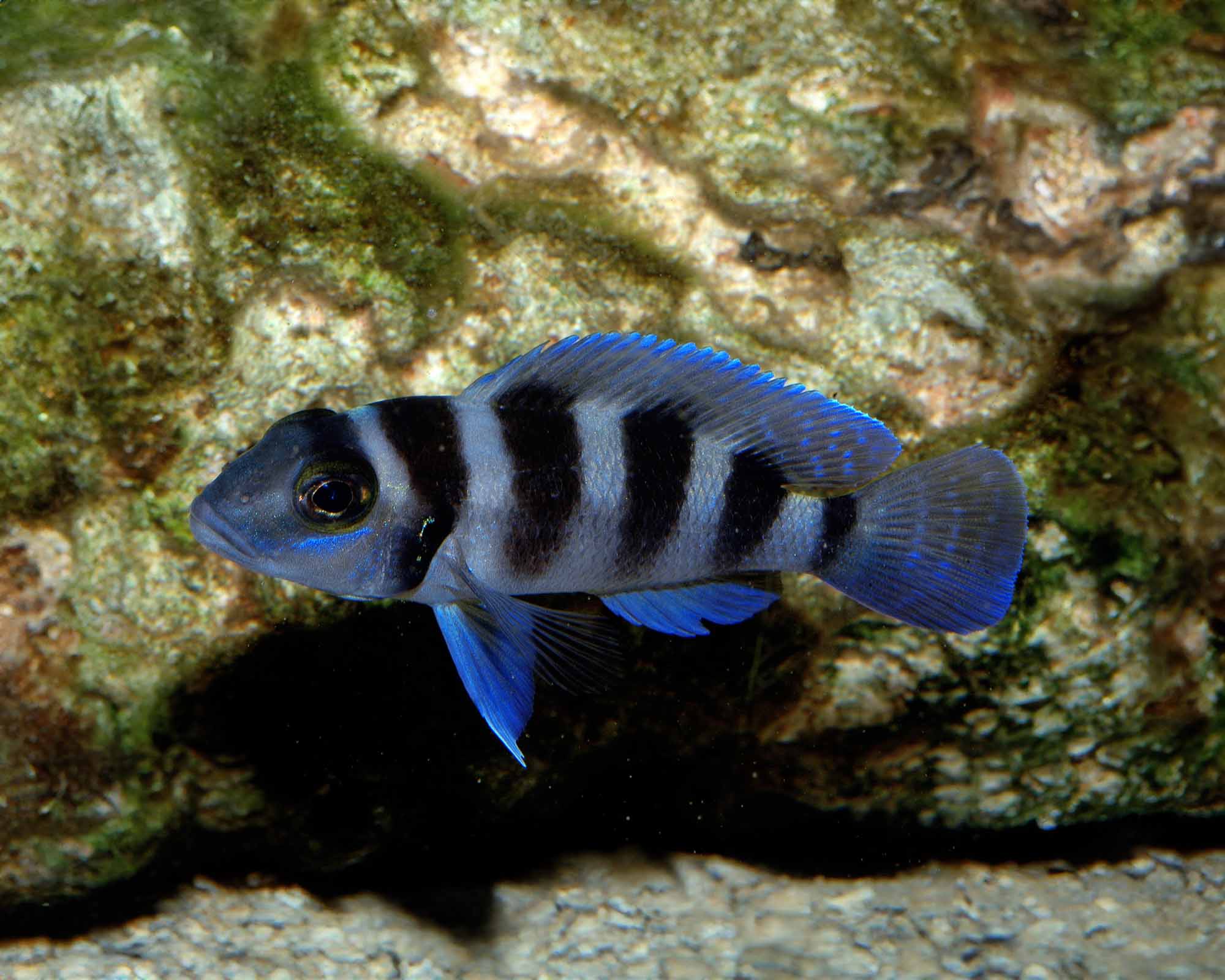
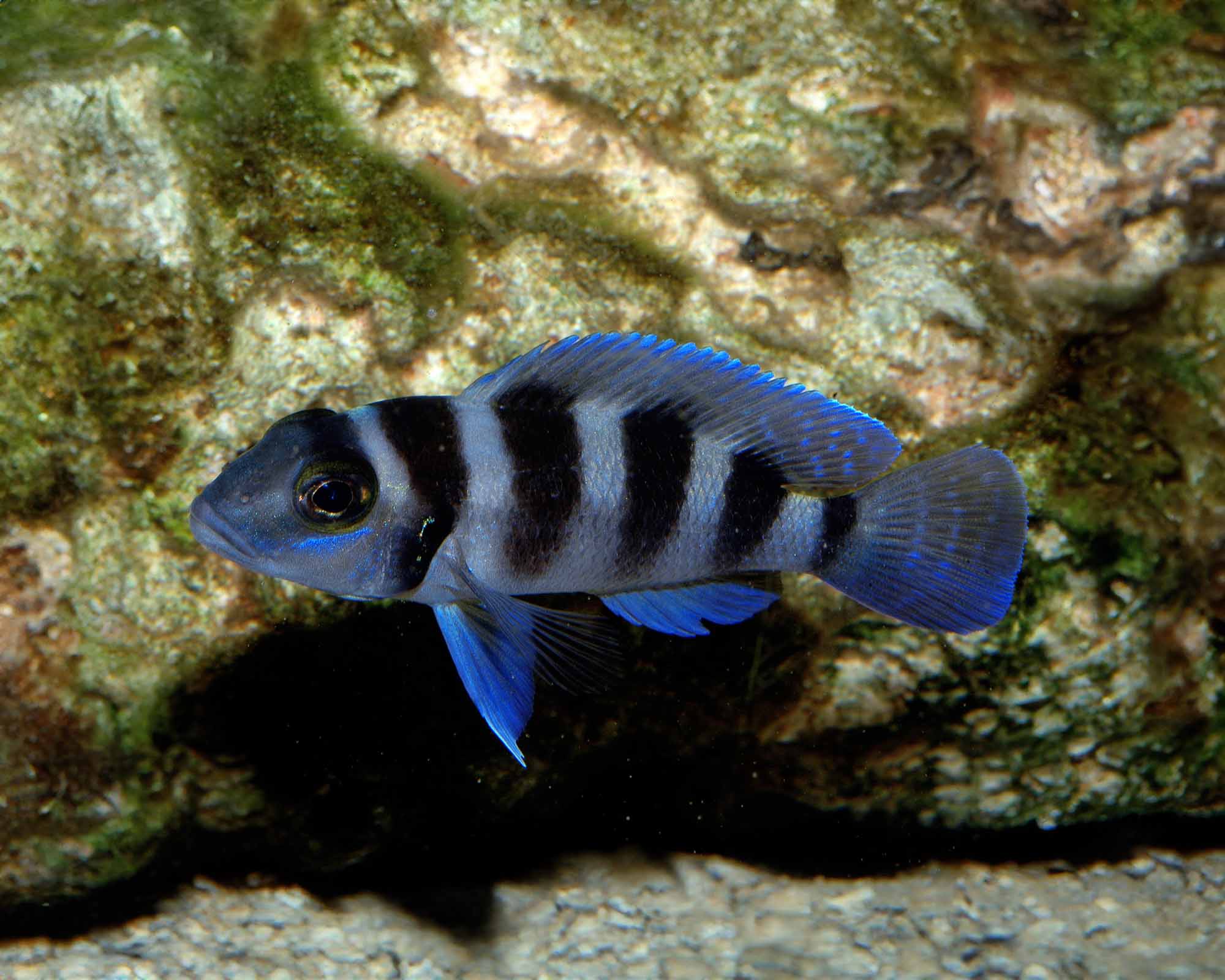
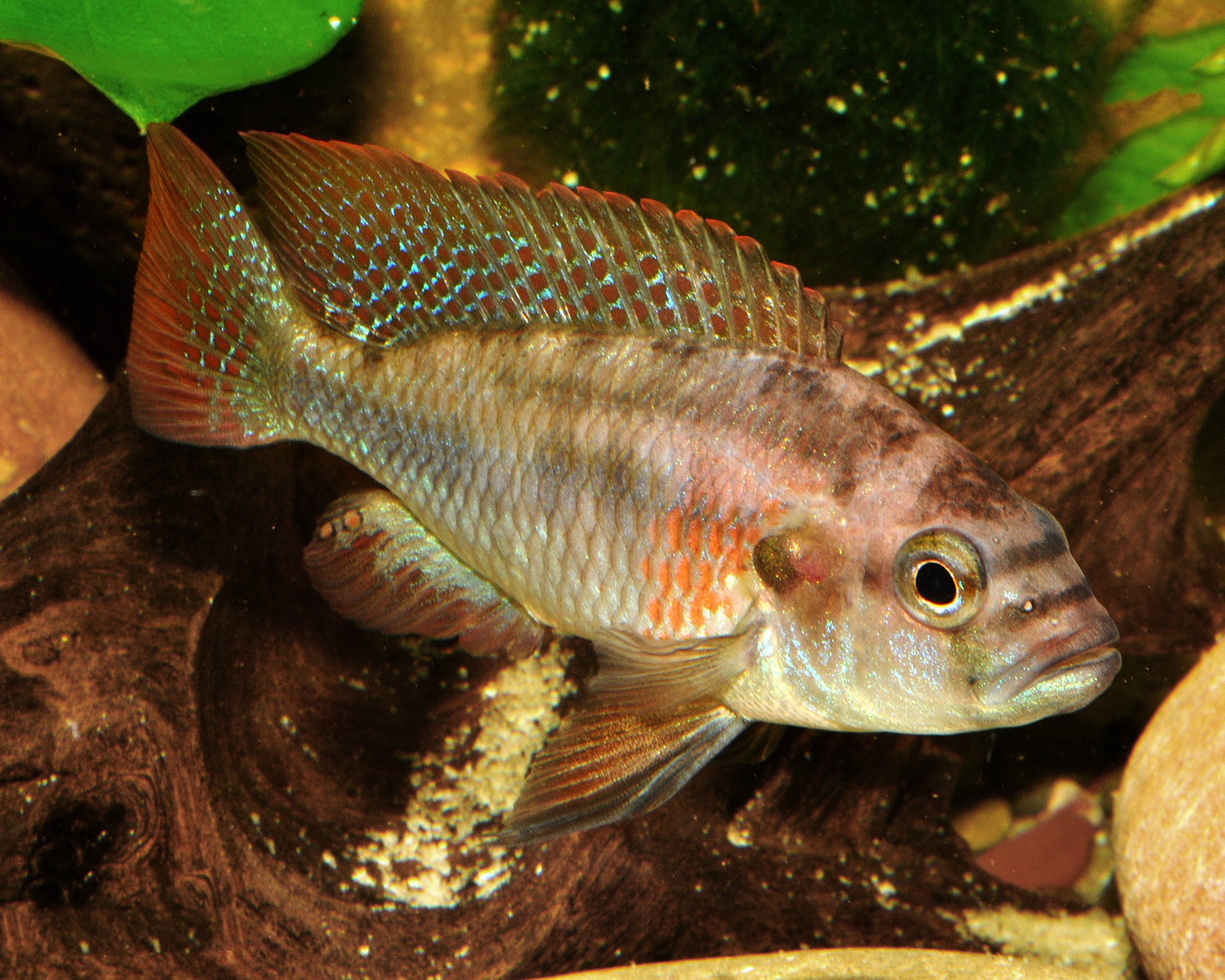
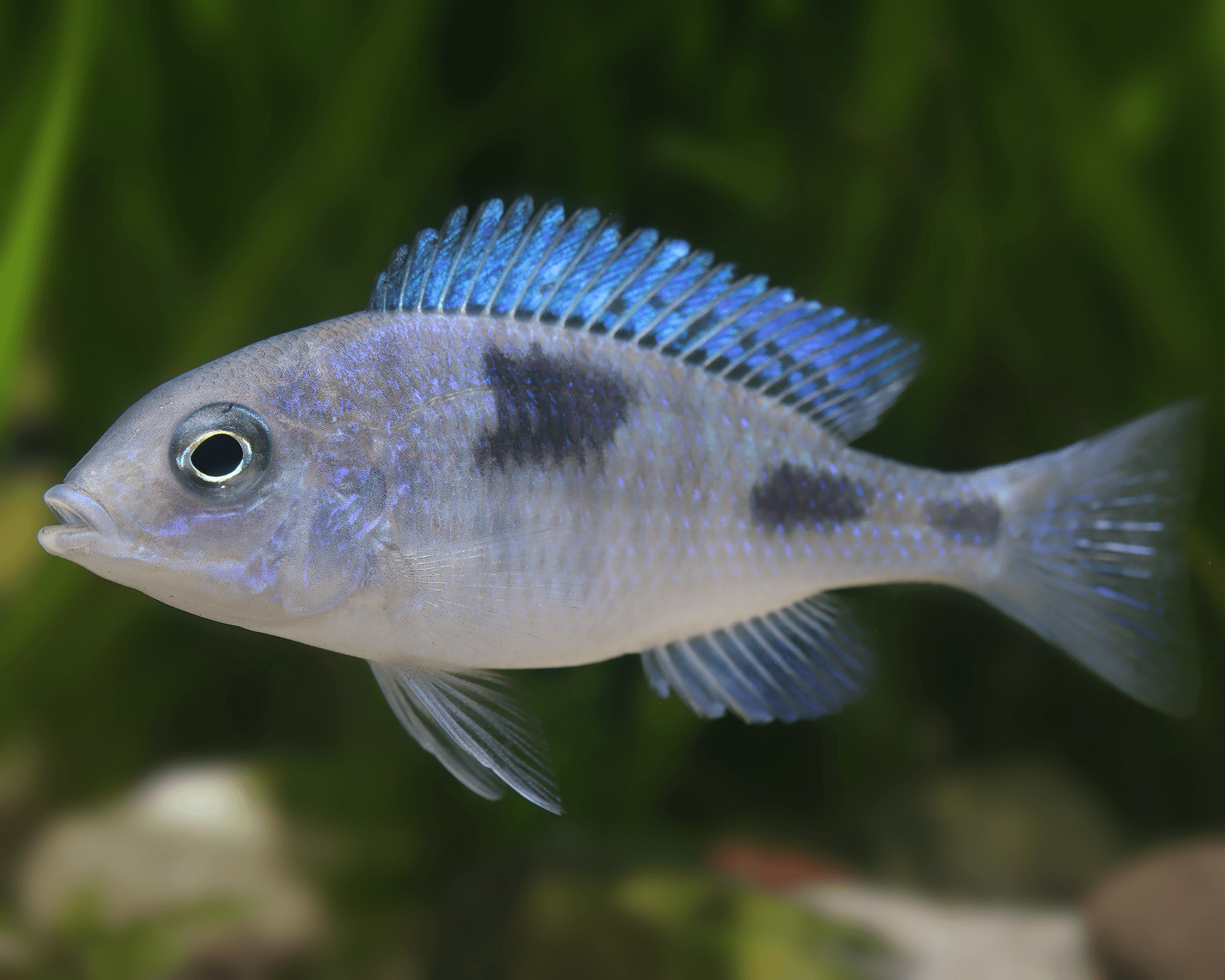
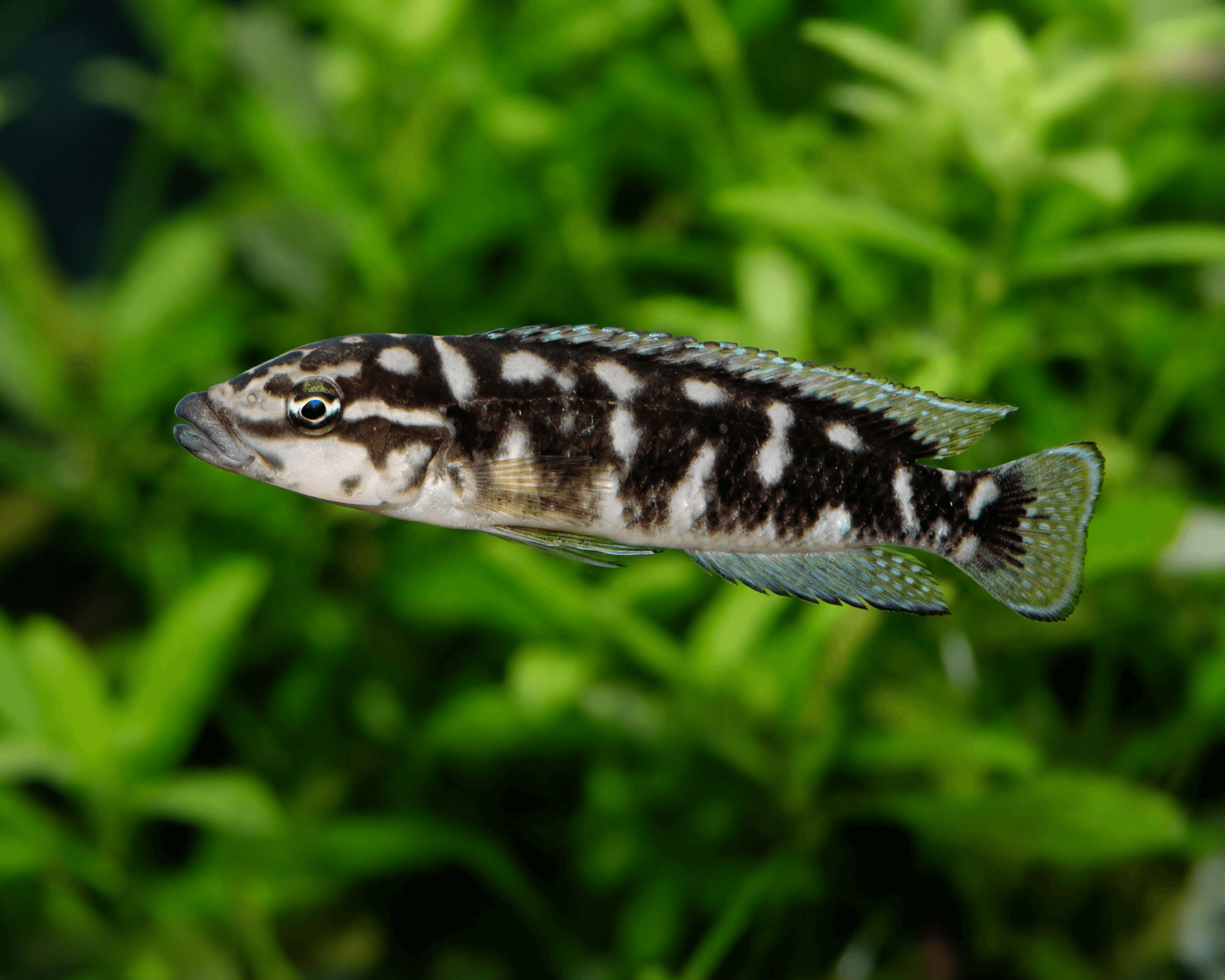
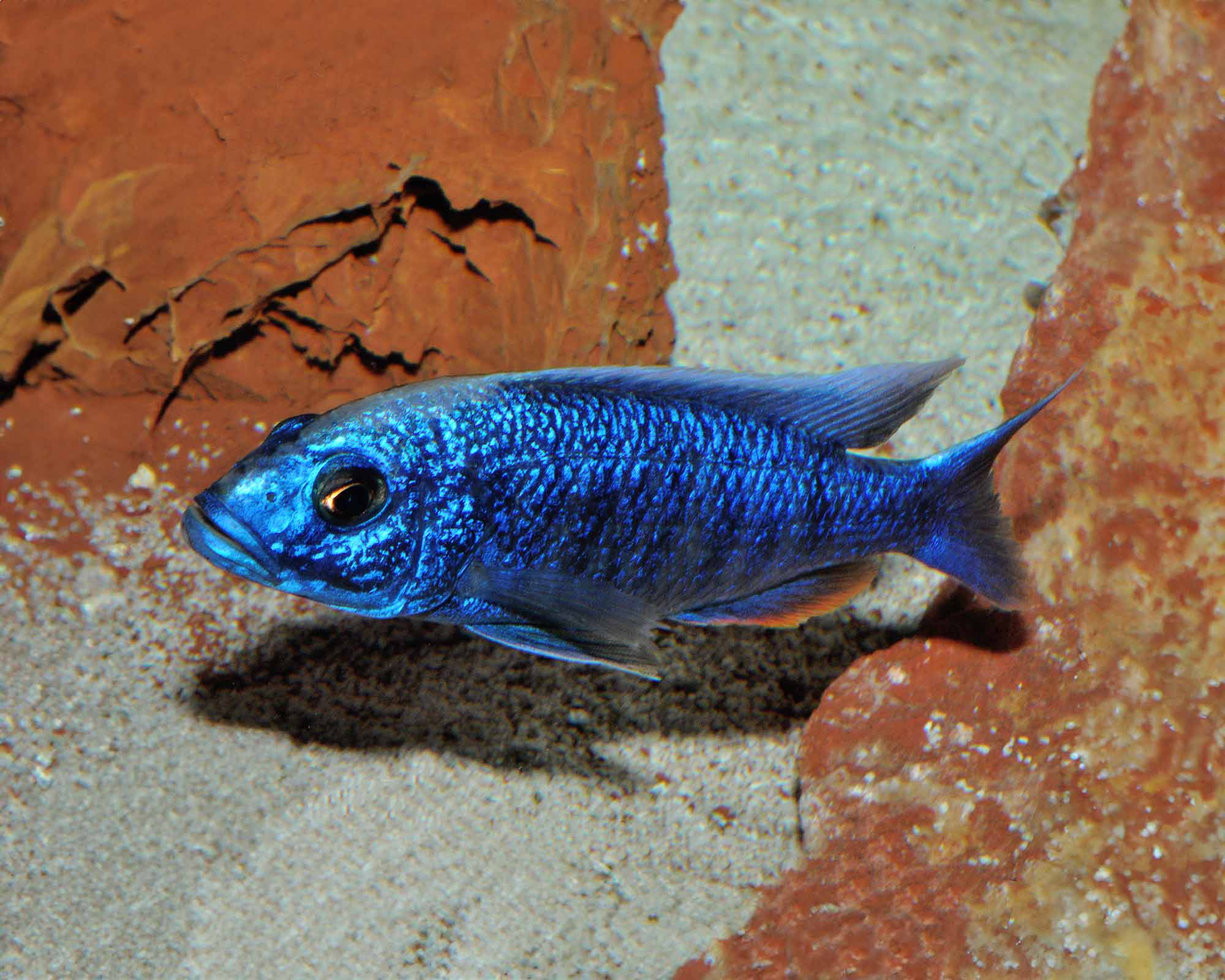
Neolamprologus tretocephalus is a cichlid in the family Cichlidae. It is commonly known as the five-bar or five-striped cichlid because adults show five prominent dark vertical bars over a blue-gray to gray body. Blue coloration is often visible on the head and fins. Similar Lake Tanganyika cichlids can be confused with it, so identification from a photograph alone should be treated as provisional; the supplied trade label supports this identification.
Distribution and habitat
This species is endemic to Lake Tanganyika in East Africa. It occurs in rocky coastal habitats, where cracks, crevices, and boulder fields provide shelter and territorial boundaries. An aquarium should reproduce this structure with stable rockwork and open swimming space. Use inert sand or fine rounded substrate, and ensure rocks cannot topple or be undermined.
Behavior
The five-bar cichlid is territorial, active, and predatory. Adults defend a defined area among rocks and may harass or seriously injure intruders. Aggression generally increases during courtship and spawning. It is not a community fish for peaceful tropical species, and a pair may still require extensive territory separation and careful observation.
Aquarium size and setup
For an established pair, a tank of at least about 300 litres with substantial floor area is a practical starting point; larger systems are safer for mixed Tanganyika communities. Provide multiple rock shelters and visual barriers, while leaving open areas for swimming. Use strong filtration, good oxygenation, a secure lid, and regular partial water changes. Introduce compatible fish together where possible and rearrange territories if aggression becomes excessive.
Water parameters
Maintain stable, mineral-rich Lake Tanganyika-style water at 24-27 °C, pH 8.0-9.0, and moderate to high hardness. Ammonia and nitrite must remain undetectable, and nitrate should be kept low through maintenance. Avoid sudden changes in pH or mineral content. Testing the aquarium water is more reliable than relying only on prepared Tanganyika salts or buffers.
Diet
This species is primarily carnivorous. Offer a varied diet of quality sinking cichlid pellets or granules supplemented with frozen foods such as krill, mysis, or chopped prawns. Feed modest portions once or twice daily, removing uneaten food. Avoid making high-fat mammalian foods part of the diet, and do not overfeed, as excess waste rapidly affects water quality.
Compatibility
Keep only with robust Lake Tanganyika cichlids of comparable size and temperament, and only in a sufficiently large, carefully structured aquarium. Avoid small fish, delicate species, slow feeders, and peaceful community fish, which may be attacked or eaten. Even suitable tank mates can be injured, so provide escape routes and be prepared to separate individuals. A bonded pair is not guaranteed merely because two fish are sold together.
Breeding
The five-bar cichlid is a substrate-spawning cave breeder. Offer several rock caves or narrow crevices, maintain excellent water quality, and feed a varied conditioning diet. A compatible pair typically selects a sheltered site, where eggs are laid and guarded. Both parents may defend the territory, making aggression toward other fish especially severe. Remove threatened tank mates or move the pair to a dedicated breeding aquarium. Fry require very small foods, such as newly hatched brine shrimp, once free-swimming.
Leave your comments