Taxonomy and identification
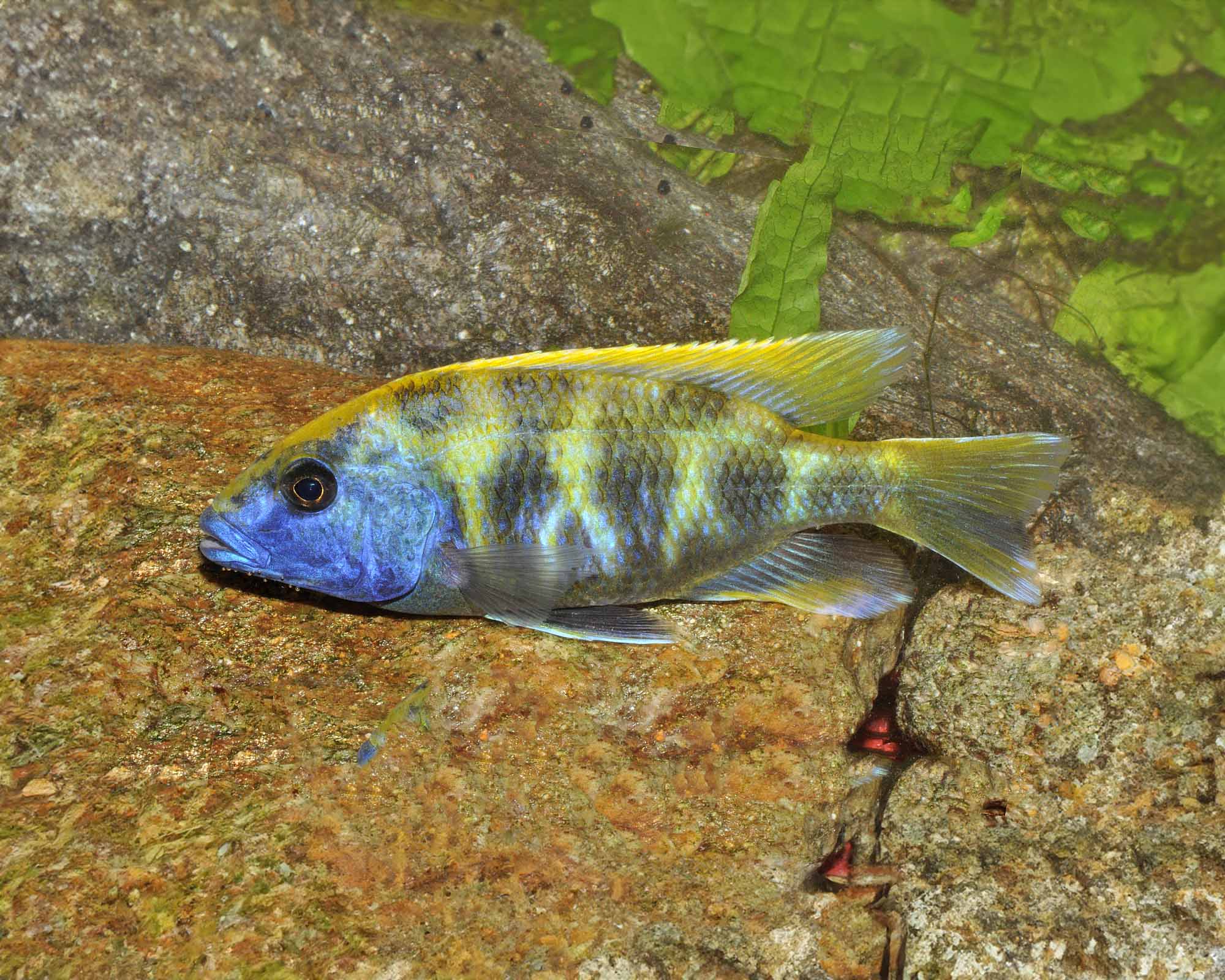
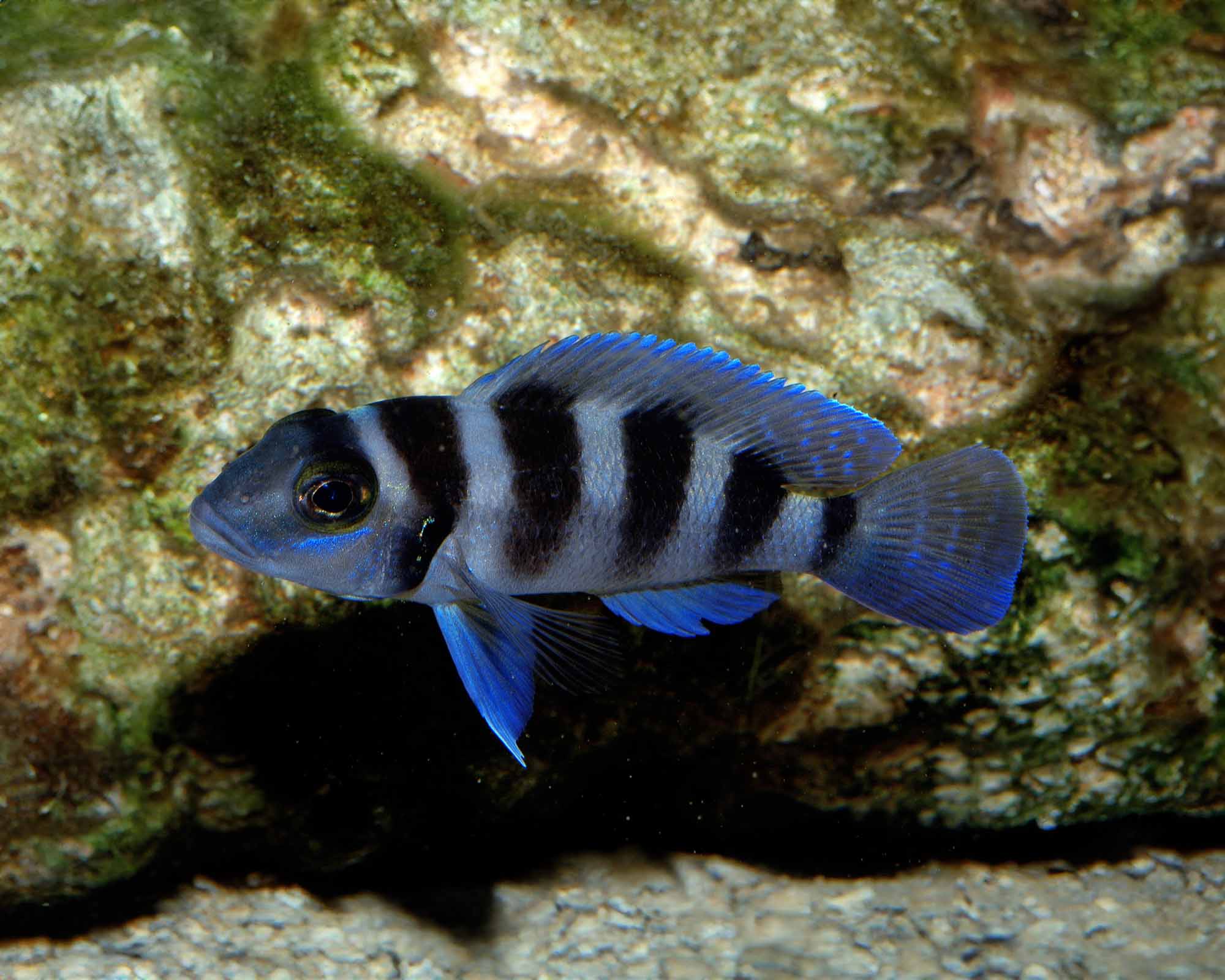
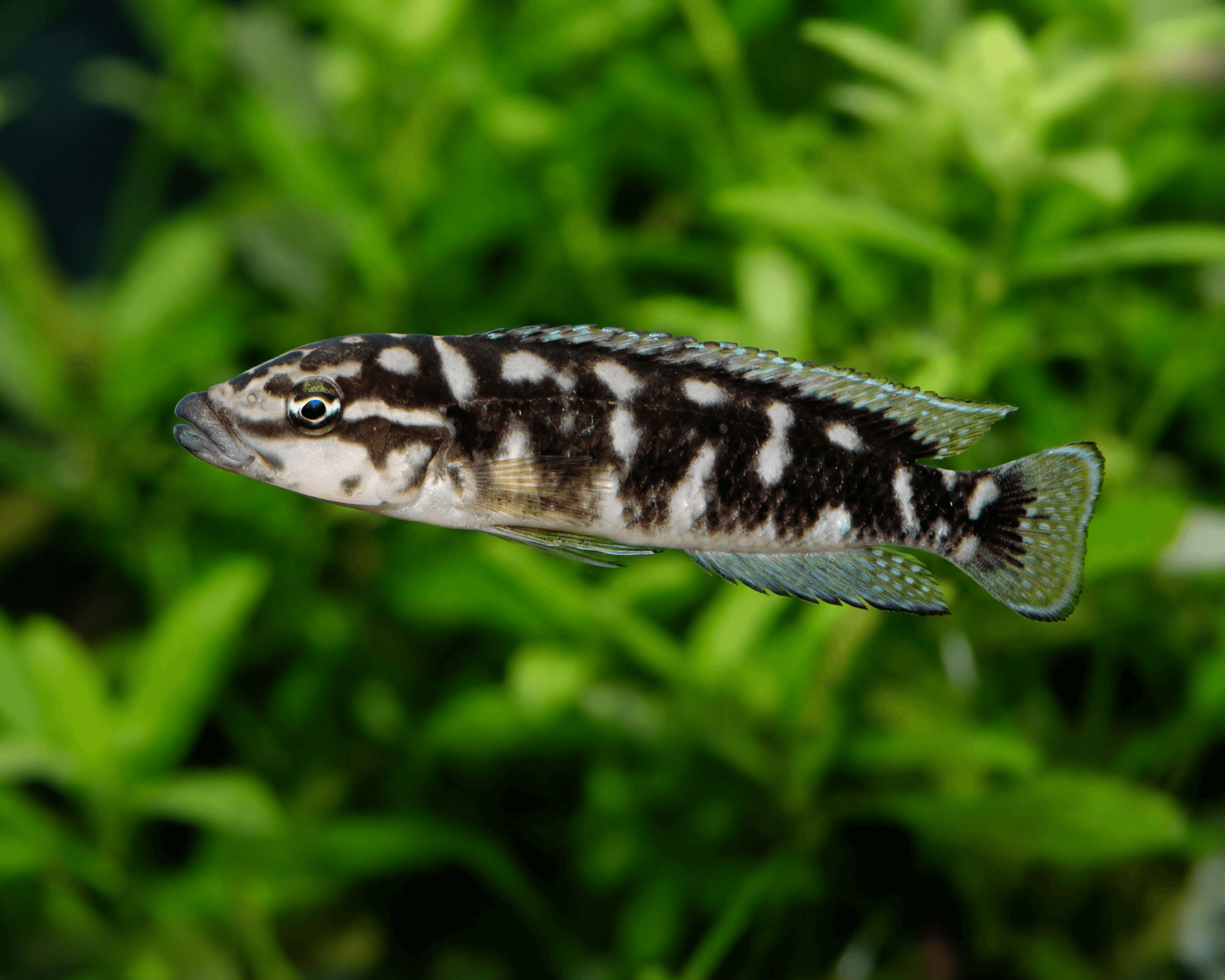
Nimbochromis venustus is a member of the cichlid family Cichlidae and the Lake Malawi haplochromine group. The common names giraffe perch and giraffe cichlid refer to its mottled or reticulated pattern, although adult coloration varies with sex, mood, dominance and breeding condition. The supplied identification is treated as Nimbochromis venustus; very small juveniles can be difficult to distinguish from related Malawi cichlids, and the sex of 4 cm fish cannot be established confidently from appearance alone.
Natural distribution and habitat
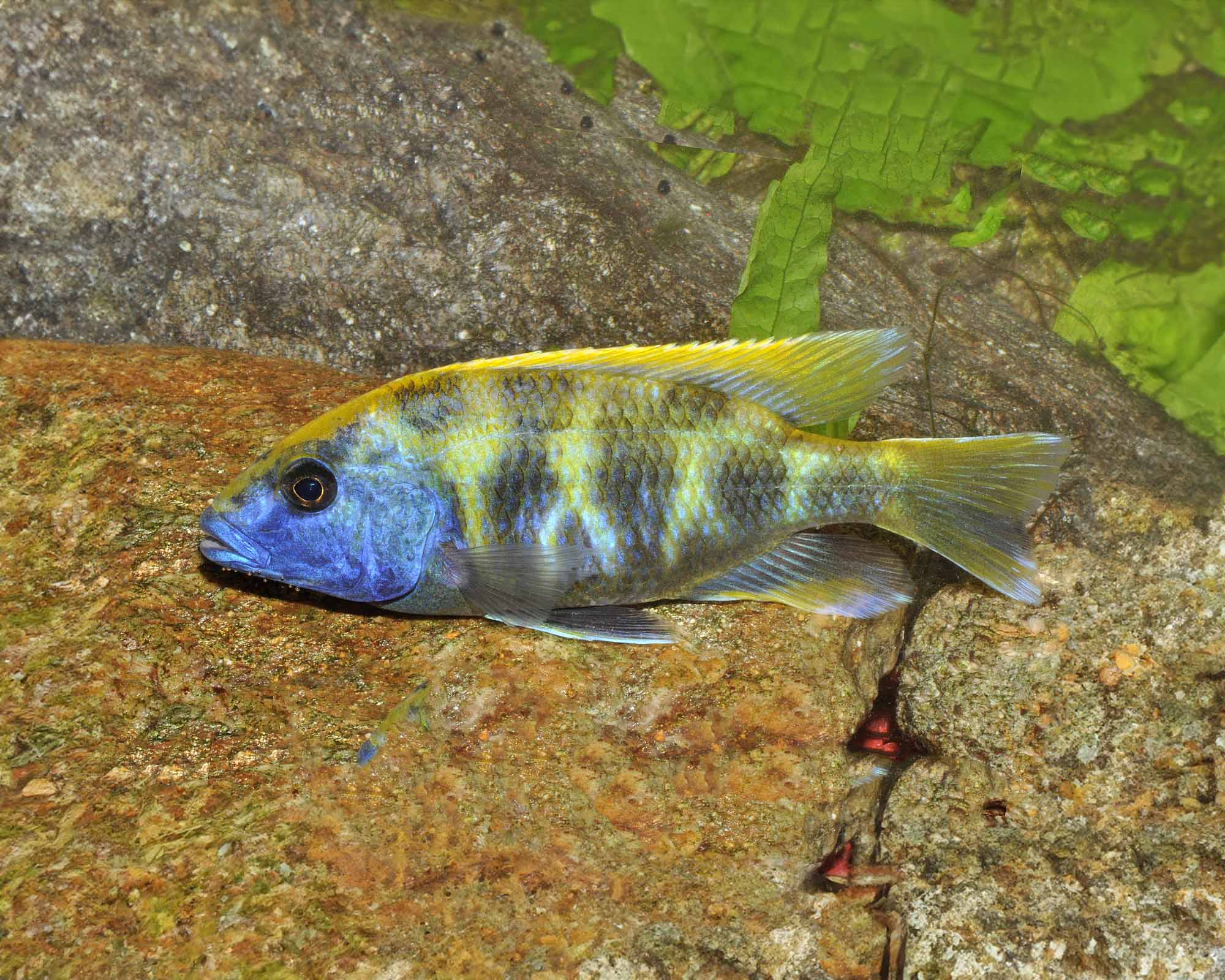
This species is endemic to Lake Malawi in East Africa. It occurs in rocky and mixed rocky habitats, where it hunts smaller fish and uses structure for cover and ambush. Aquarium décor should include stable rocks, caves and open swimming space, with all heavy structures placed securely on the tank base rather than directly on loose sand.
Behaviour
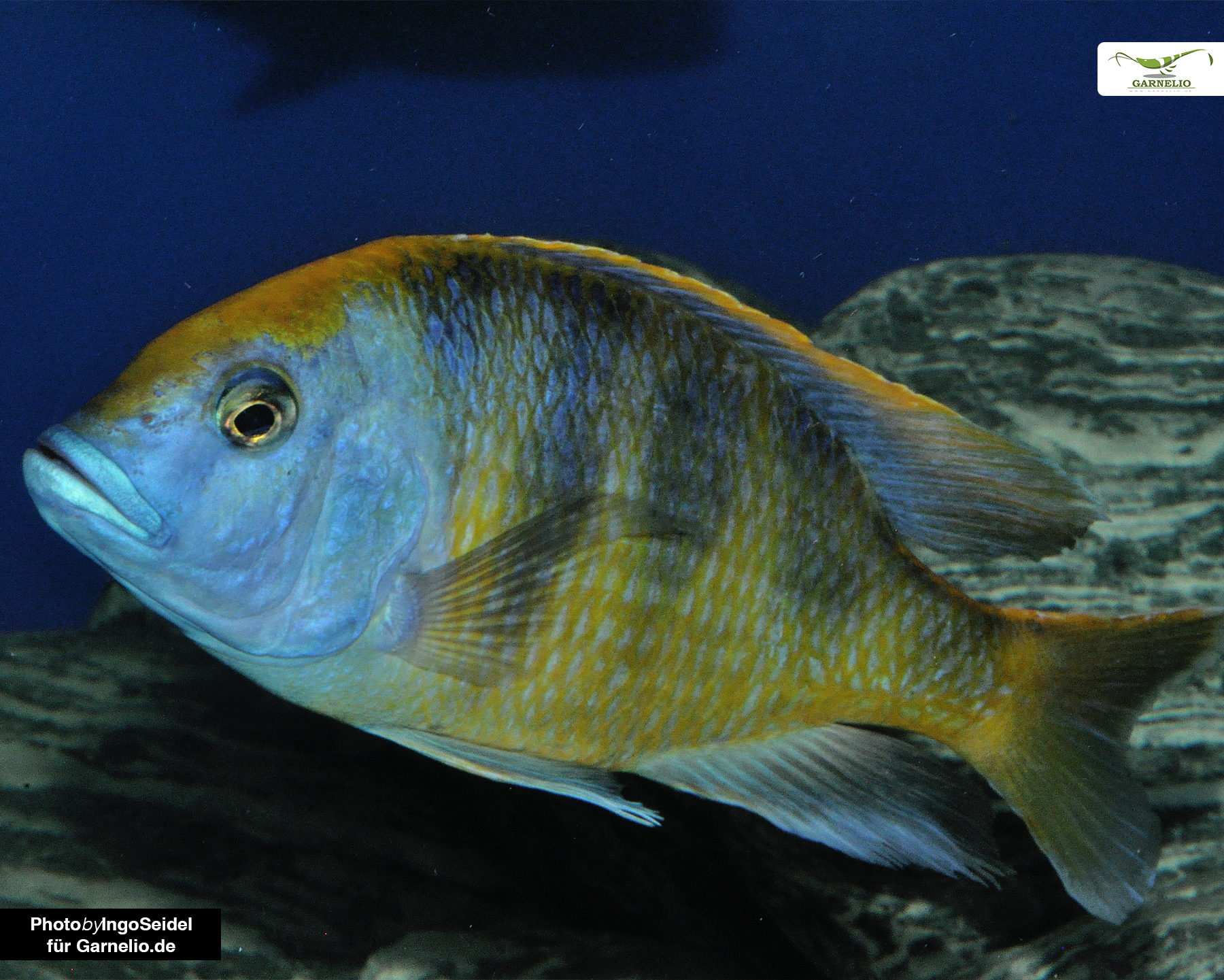
Nimbochromis venustus is an active predator and becomes increasingly assertive as it matures. It may patrol a territory, chase rivals and swallow suitably small tank mates. It is not a community fish for peaceful tropical aquariums. Provide visual barriers and several retreats, while preserving an unobstructed area for swimming. A lid is advisable because large cichlids can jump when startled or pursuing prey.
Tank size and setup
A single adult requires a large aquarium; for a pair or a community of robust Malawi cichlids, plan on at least about 500 litres with a footprint around 180 cm long, and more space is preferable. Use efficient biological filtration, strong circulation without excessive turbulence, regular maintenance and moderate lighting. Fine sand is suitable for natural digging and should be combined with securely arranged limestone or other aquarium-safe rockwork.
Water parameters
Maintain stable, clean, alkaline and moderately hard water. A practical target is 24-28 °C, pH 7.6-8.6, with measurable carbonate hardness and general hardness appropriate for Malawi cichlids. Avoid sudden changes in temperature, pH or mineral content. Test regularly for ammonia and nitrite, which should remain undetectable, and keep nitrate controlled through partial water changes.
Diet
This is primarily a piscivorous cichlid. Offer quality carnivorous cichlid pellets, frozen mysis, krill or other suitably sized aquatic foods, with portions adjusted to the fish’s mouth size. Feed small amounts once or twice daily rather than allowing excessive growth or obesity. Do not use live feeder fish as a routine diet because of disease, injury and nutritional risks.
Compatibility
Choose tank mates of similar adult size, robust temperament and comparable water requirements, preferably other large Lake Malawi cichlids. Avoid peaceful species, small fish, long-finned fish and any fish that can fit into its mouth. Overstocking to dilute aggression is risky unless the aquarium is exceptionally large and filtration, décor and observation are adequate. Be prepared to separate individuals if persistent harassment causes injury.
Breeding
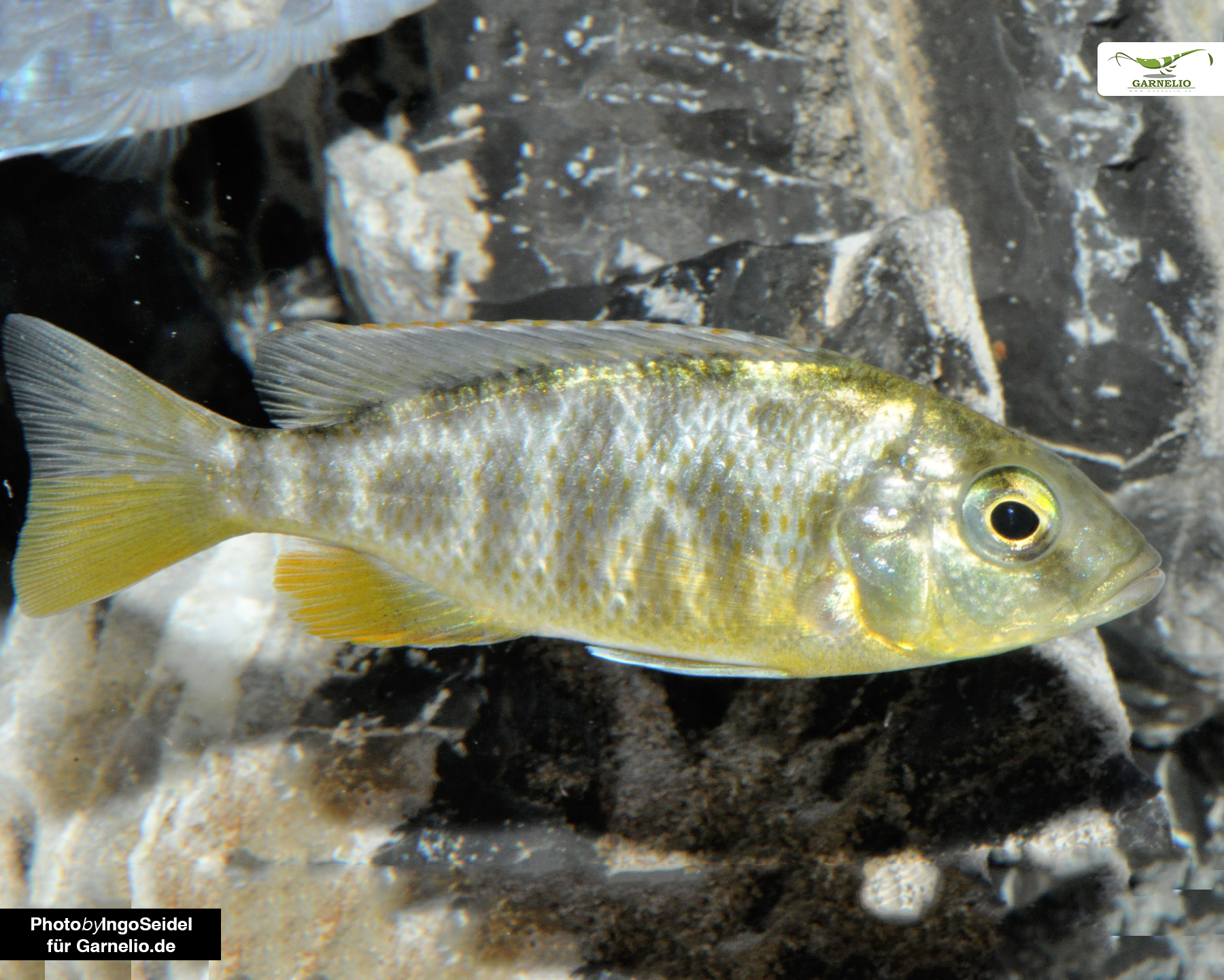
Nimbochromis venustus is a maternal mouthbrooder. A mature male establishes a breeding site and courts a receptive female; after spawning and fertilisation, the female holds the eggs and developing young in her mouth. Incubation commonly lasts roughly three weeks, although timing varies. Breeding aggression can be intense, so provide cover and monitor the female. In a dedicated setup, the female may be left to release the fry naturally or moved carefully if controlled rearing is desired. Sexing young fish at the supplied 4 cm size is unreliable.
Leave your comments