Identification and taxonomy
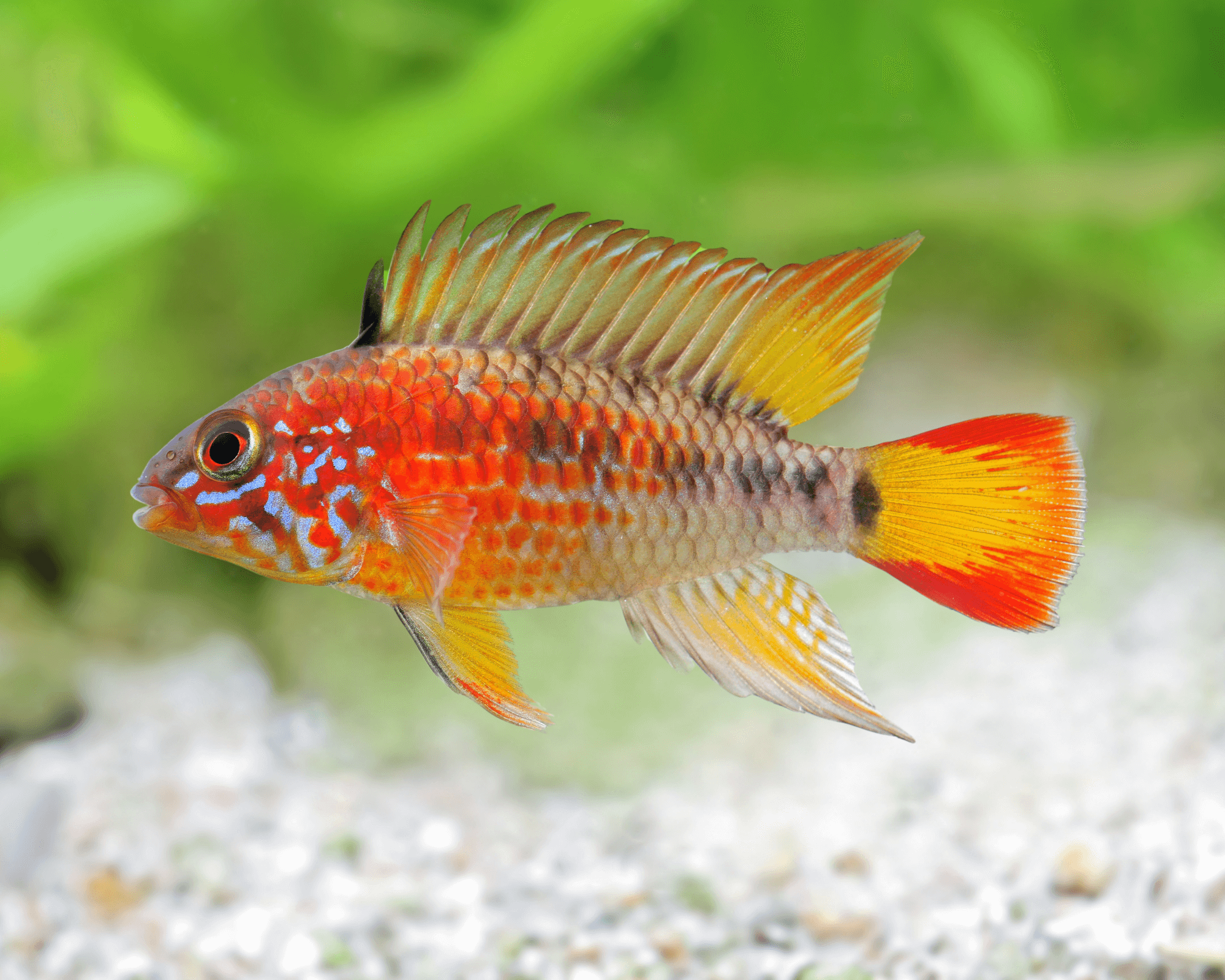
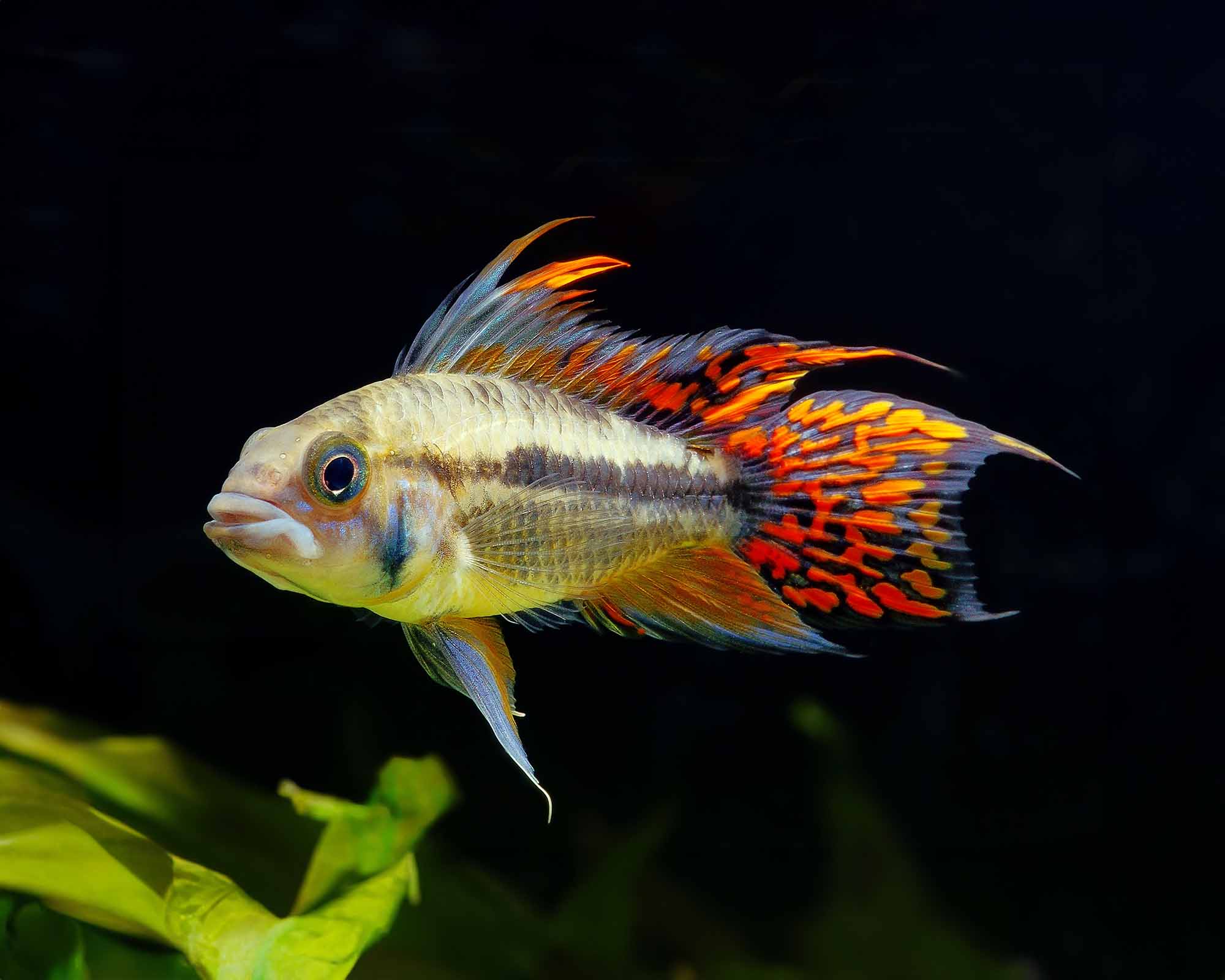
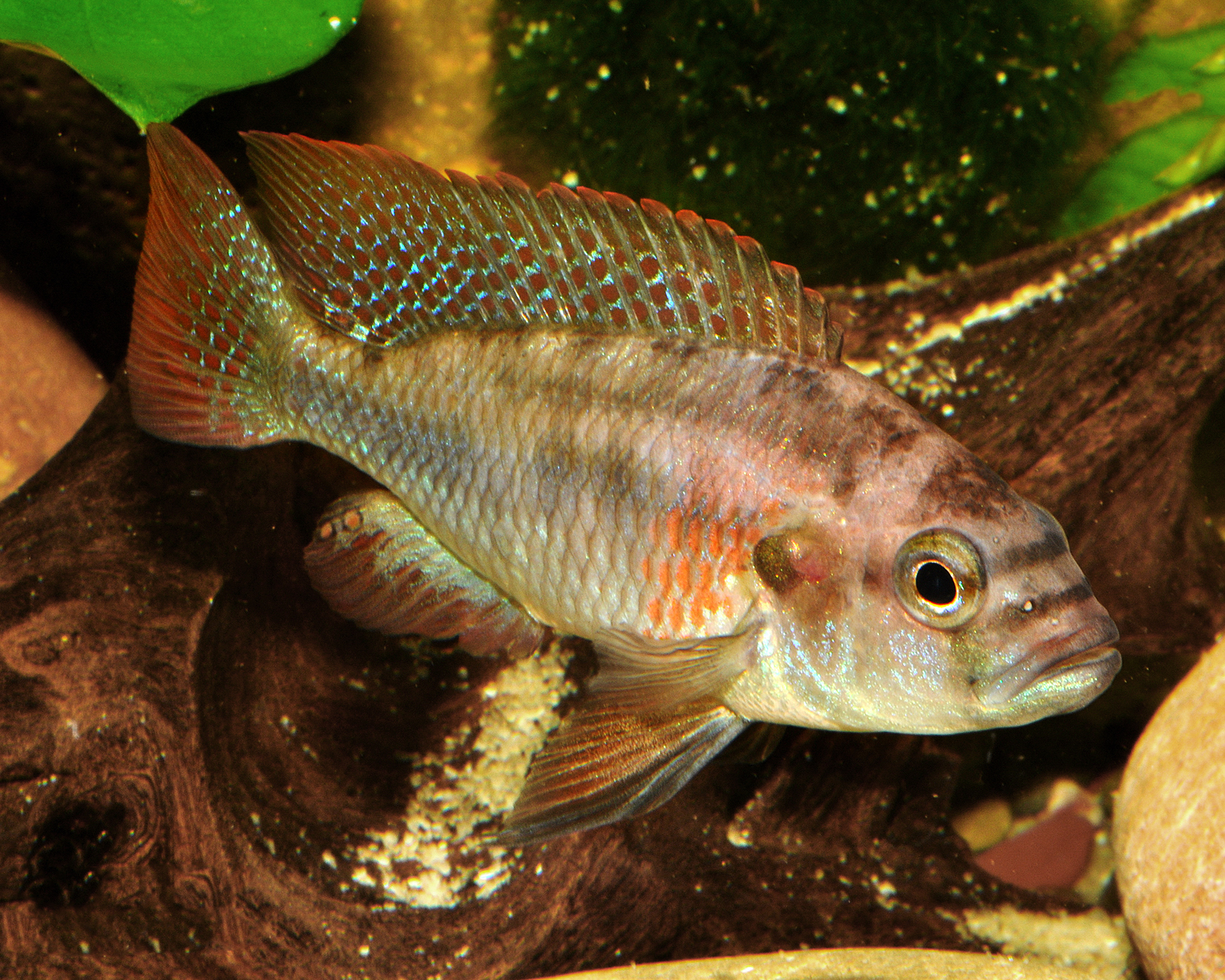
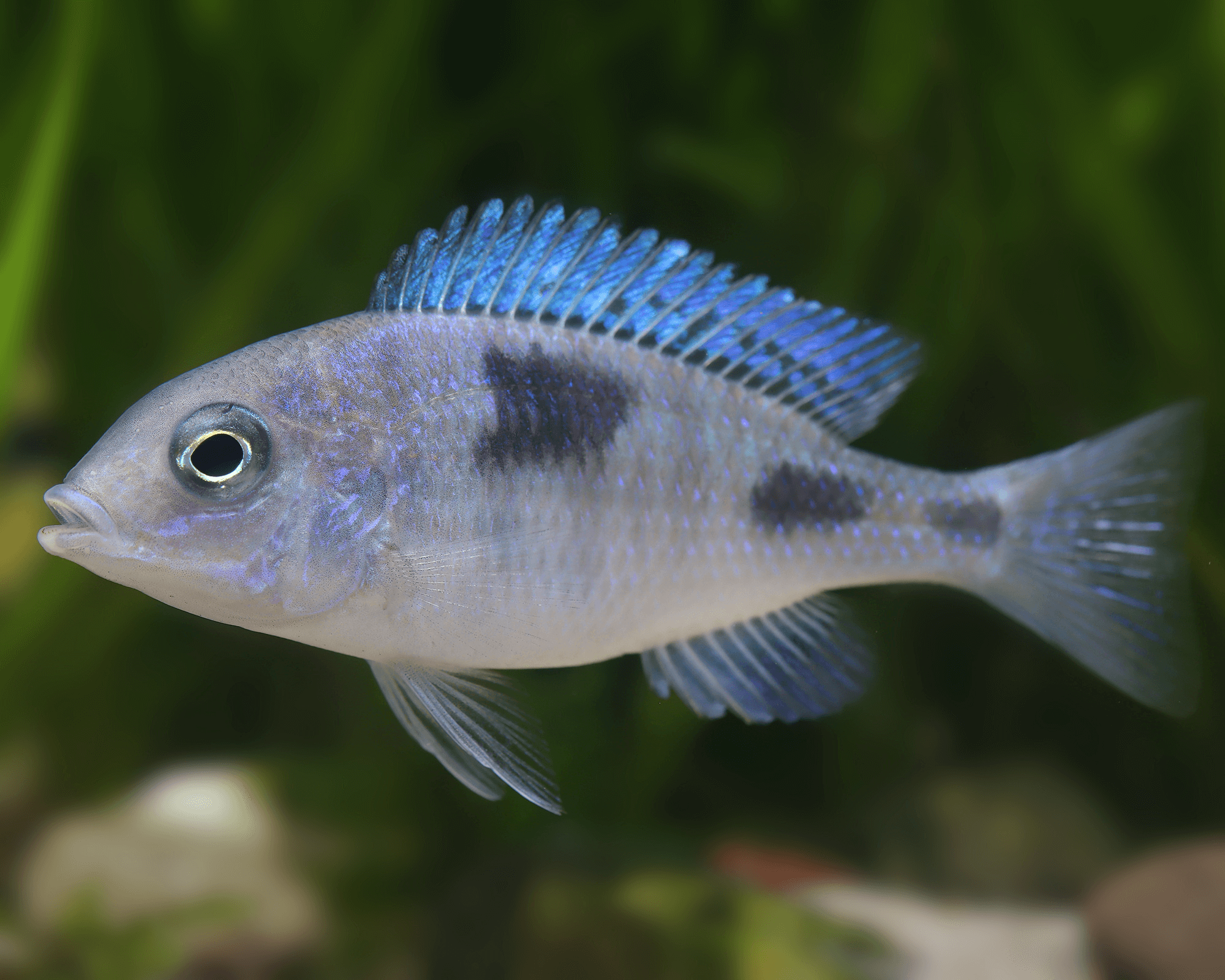
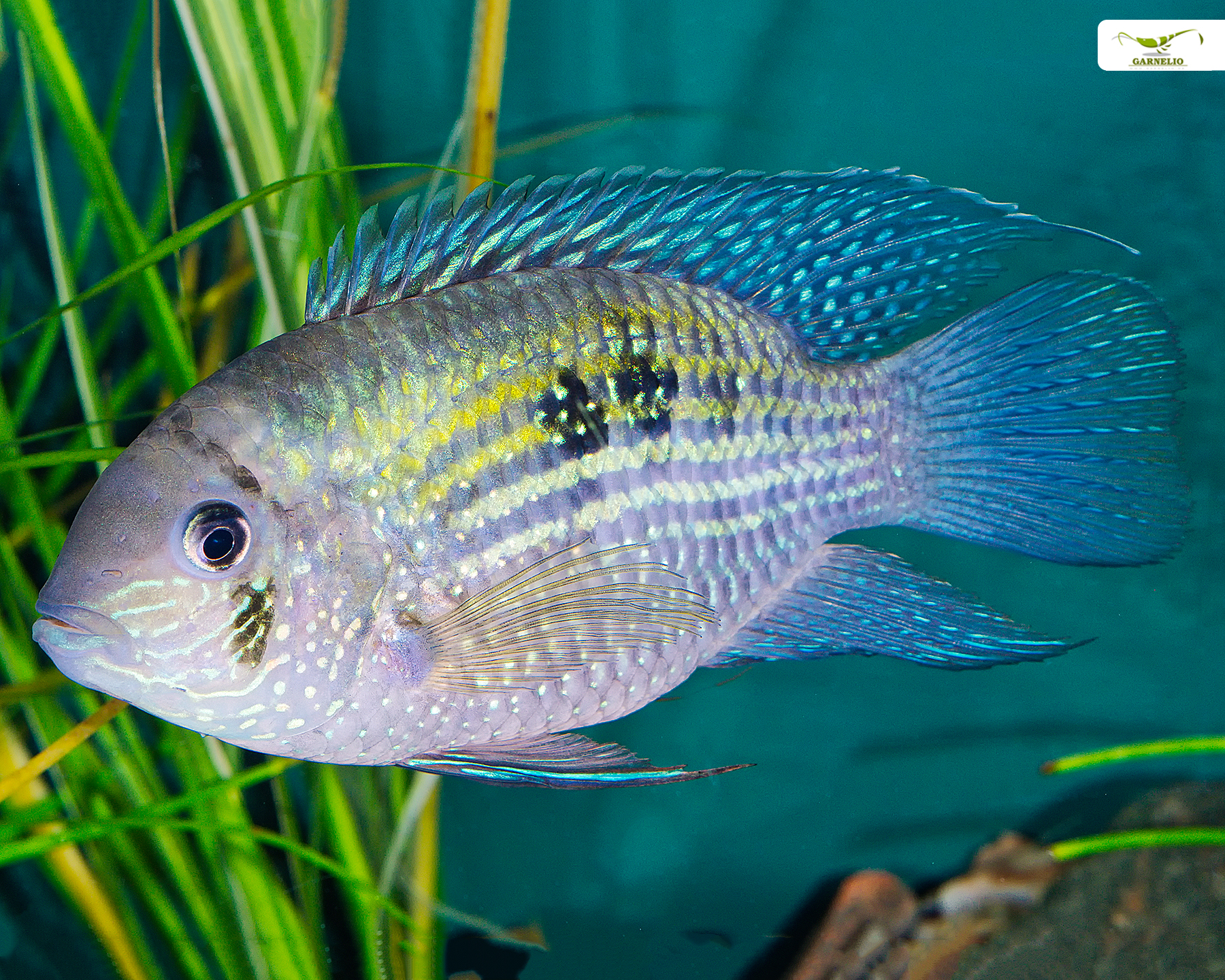
The supplied trade label identifies these fish as Apistogramma macmasteri, the Villavicencio dwarf cichlid, and describes a pair. The species belongs to the family Cichlidae and genus Apistogramma. Males are generally larger and more elaborately finned than females. Color and body pattern can vary with mood, sex, locality and breeding line, and closely related Apistogramma forms can be difficult to distinguish from photographs alone; the supplied label is therefore treated as the working identification rather than independently verified from the images.
Distribution and natural habitat
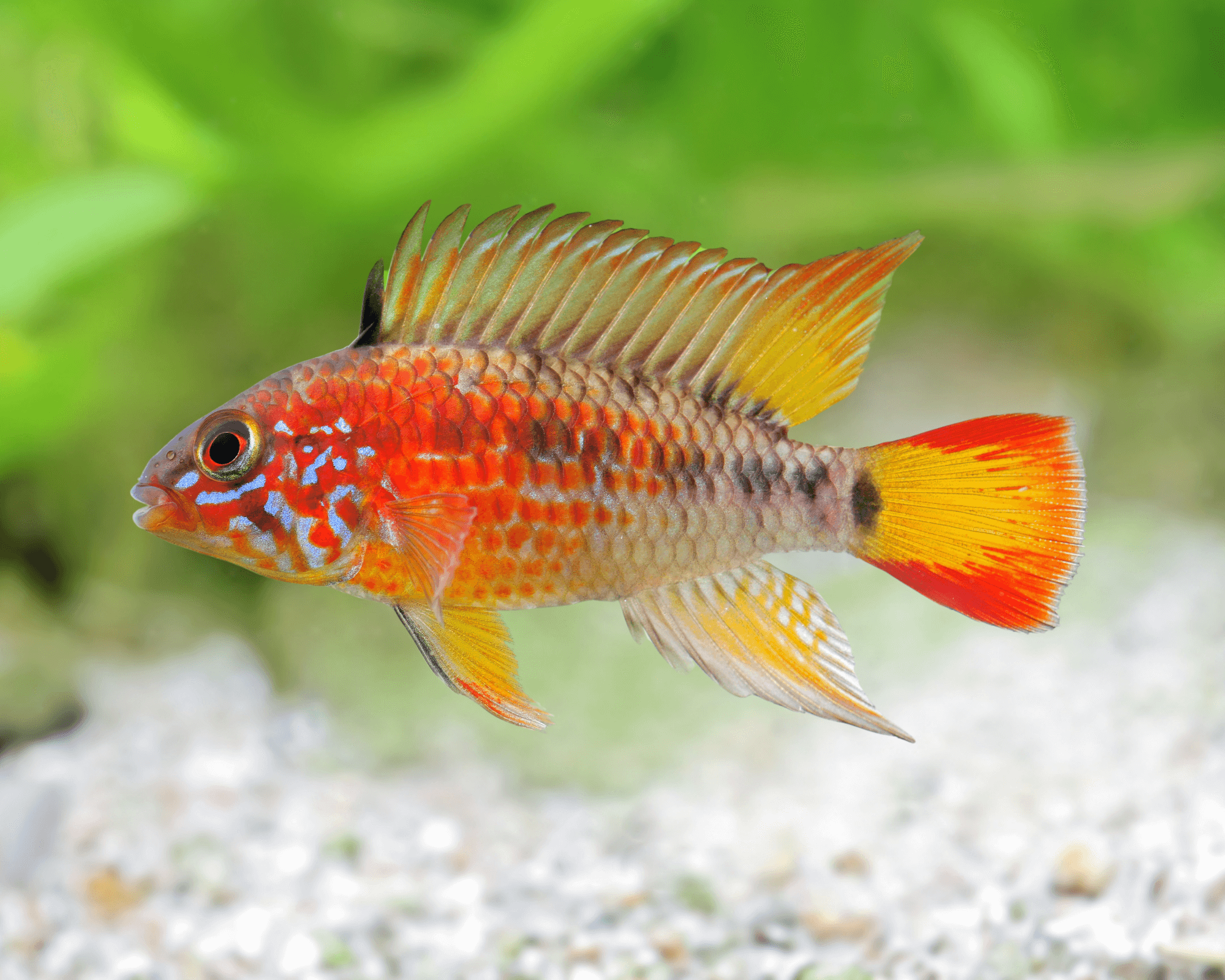
Apistogramma macmasteri is associated with the Villavicencio region of Colombia and the upper Río Meta area within the Orinoco drainage. In nature, dwarf cichlids of this group use shallow, structurally complex waters with submerged roots, leaf litter, plants and small cavities. Aquarium décor should provide shaded retreats and broken sightlines rather than an exposed, brightly lit layout.
Aquarium and water conditions
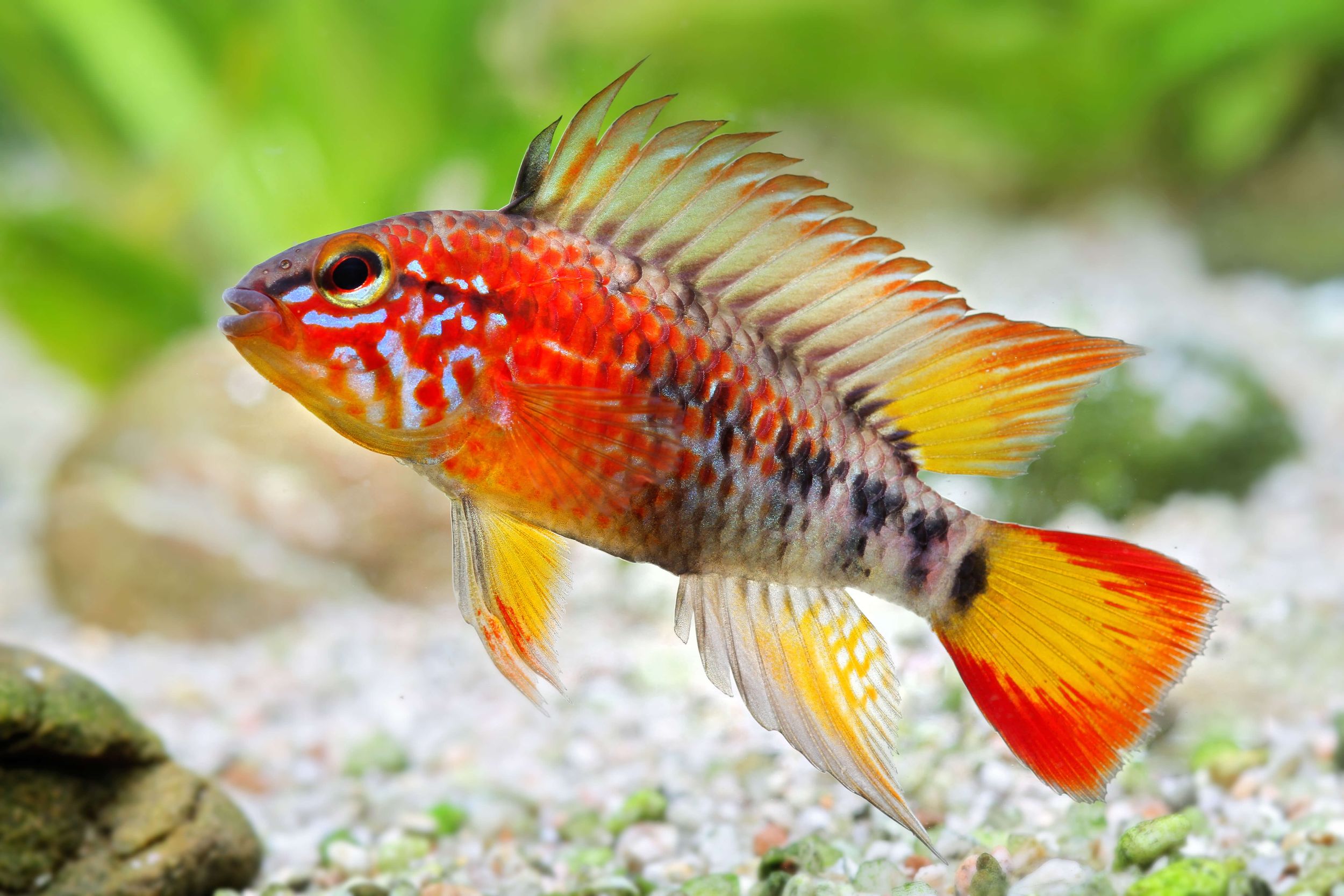
A pair should have at least a 60-litre aquarium, with a larger footprint preferable for community keeping or breeding. Use fine sand or another smooth substrate, driftwood, hardy plants, leaf litter and several caves or small overturned pots. Gentle filtration, good oxygenation and regular partial water changes are important. Keep ammonia and nitrite at zero and nitrate low. Stable soft to moderately hard water is preferable; avoid abrupt changes in temperature, pH or mineral content.
Behaviour and compatibility
This species is usually calm when not spawning but becomes territorial around a chosen cave. A female may defend the immediate nesting area while the male patrols a broader territory. Suitable companions are peaceful, similarly sized midwater fish that tolerate warm, clean water and do not monopolize the bottom. Avoid aggressive cichlids, fin-nippers, very large fish and crowded bottom communities. During breeding, temporary separation may be necessary if one fish is persistently harassed.
Diet
Offer a varied carnivorous-leaning diet. Quality small sinking pellets can form the staple, supplemented with frozen or live foods such as daphnia, brine shrimp, mosquito larvae and bloodworms. Feed small portions once or twice daily and remove uneaten food. Newly imported or stressed fish often respond best when appetizing frozen or live foods are introduced gradually alongside prepared foods.
Breeding
Apistogramma macmasteri is a cave-spawning cichlid. Provide multiple small caves, soft clean water and excellent maintenance. The female usually selects and prepares a sheltered site, lays adhesive eggs on the roof or interior surface, and guards the eggs and larvae. The male commonly defends the surrounding territory. Fry benefit from very small first foods, such as freshly hatched brine shrimp or other suitable microscopic foods. Monitor the pair closely because courtship and brood care can produce intense territorial disputes.
Leave your comments