Taxonomy and identification
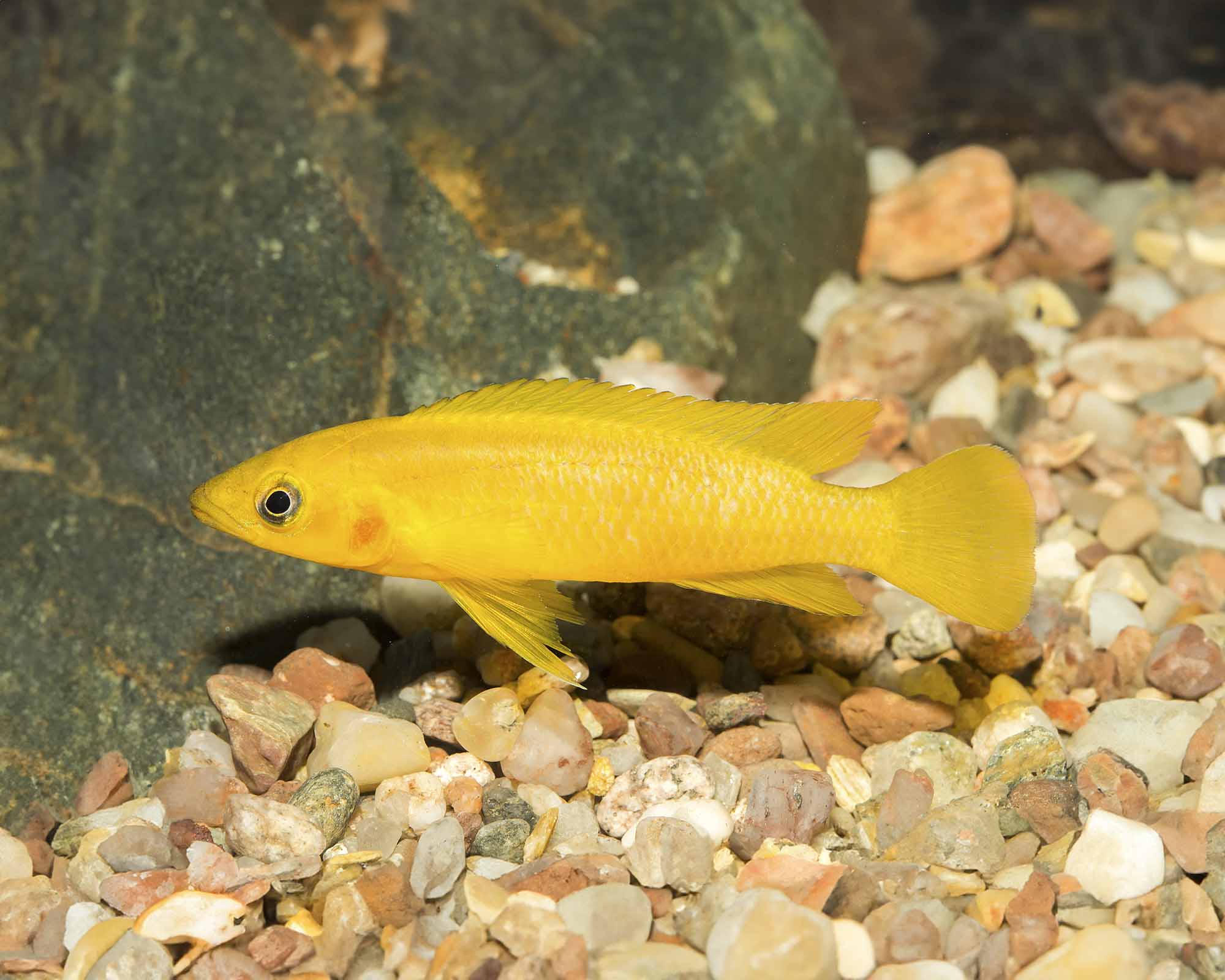
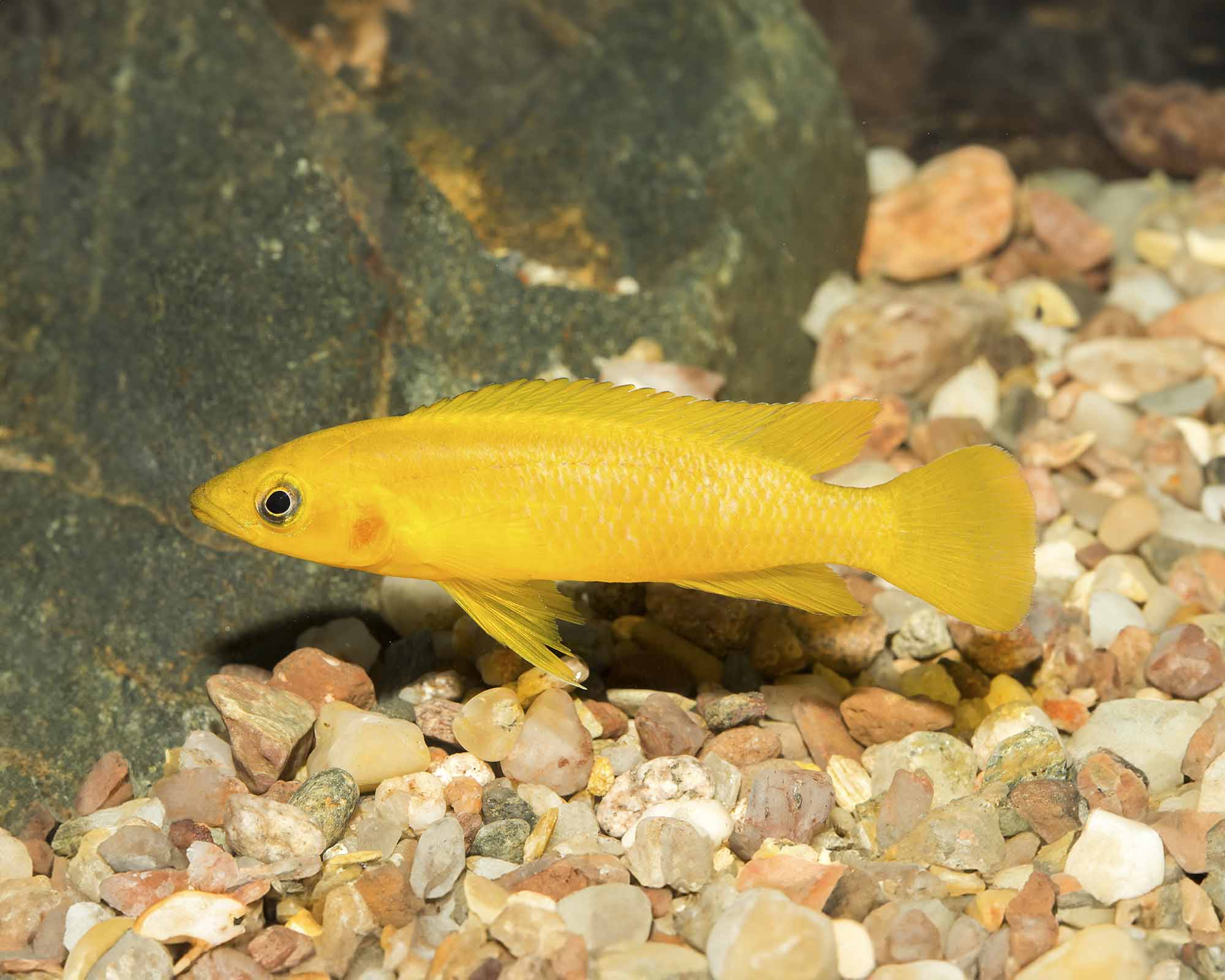
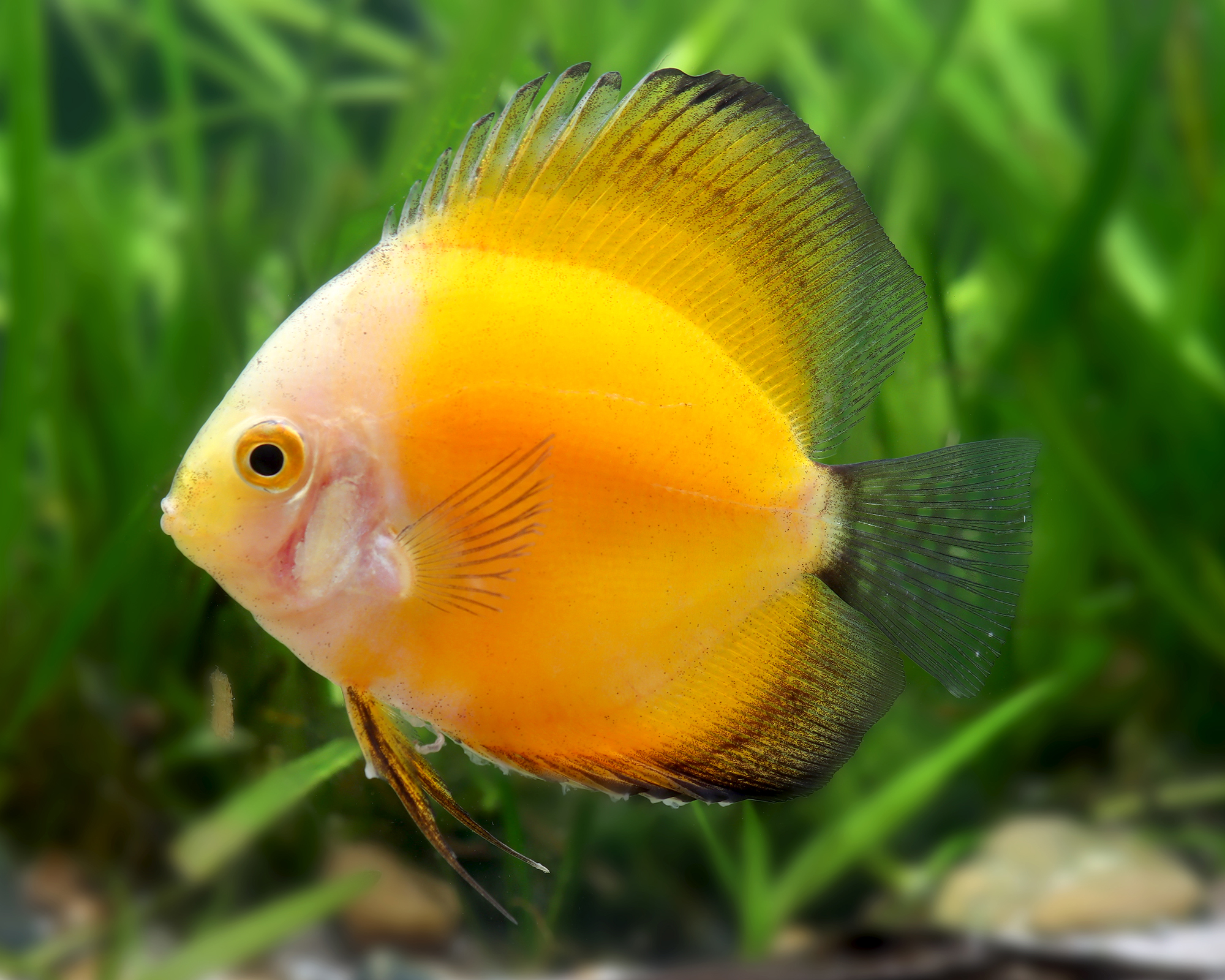
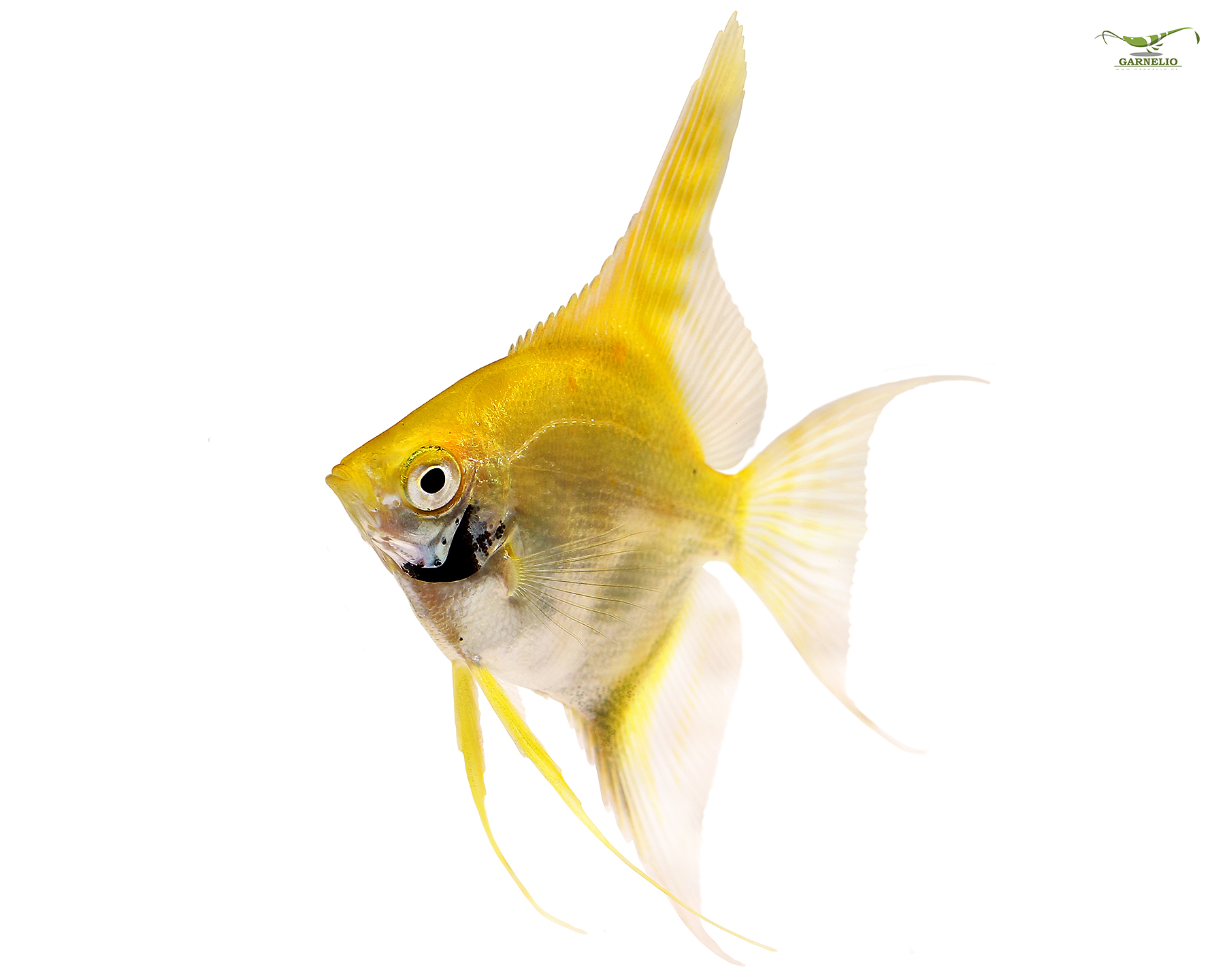
The Tanganyika golden cichlid is Neolamprologus leleupi, in the family Cichlidae. It is a member of the lamprologine cichlids. Adults have an elongated body, pointed head and continuous dorsal fin. Natural and captive colour varies from yellow through orange and brownish forms; the supplied image shows a vivid golden-yellow fish. The source describes a pair, but visual evidence is insufficient to verify sex or whether the fish are a confirmed bonded pair.
Distribution and habitat
Neolamprologus leleupi is endemic to Lake Tanganyika in East Africa. It is associated with rocky littoral habitats, where cracks, caves and spaces between stones provide shelter and spawning sites. An aquarium should reproduce this structure with stable rockwork, open swimming areas and a sandy or fine-grained substrate. Arrange caves so that territories can be divided and subordinate fish can retreat.
Behaviour
This species is active, territorial and usually best maintained as a compatible pair or in a carefully planned Tanganyika community. Aggression is concentrated around caves and breeding territories and may become intense toward conspecifics or similarly shaped bottom-dwelling fish. A pair can defend a surprisingly large area for its size. Provide multiple visual barriers and monitor for persistent chasing, fin damage or a fish being excluded from food and shelter.
Aquarium size and setup
A pair should have at least a 200-litre aquarium with a footprint of about 100 cm by 40 cm; a larger tank is preferable for community housing. Use efficient biological filtration, strong oxygenation and regular water changes. Build several rock shelters on a stable base rather than placing heavy rocks directly on loose substrate. Avoid sharp decor, and leave some open bottom area for feeding and movement.
Water parameters
Maintain stable, mineral-rich water at 24-28 °C, pH 8.0-9.0, with moderate to high hardness and good alkalinity. Exact hardness should remain stable rather than being adjusted abruptly. Ammonia and nitrite must remain undetectable, and nitrate should be kept low through maintenance. Use a reliable test kit and acclimate fish gradually whenever water chemistry differs substantially from their existing aquarium.
Diet and feeding
Neolamprologus leleupi is primarily carnivorous and accepts quality sinking cichlid pellets, granules and prepared foods formulated for African cichlids. Supplement with suitably sized frozen or live foods such as brine shrimp, mysis and other small aquatic invertebrates. Feed small portions once or twice daily, removing uneaten food. A varied diet supports colour and condition; avoid making fatty mammalian foods a regular part of the menu.
Compatibility
Choose tank mates that tolerate warm, hard, alkaline water and occupy different territories, such as appropriately sized Lake Tanganyika cichlids. Avoid very peaceful small fish, slow species, fin-nippers and other cave-centred cichlids that will compete directly for shelter. Do not assume that a pair will tolerate additional leleupi in a small aquarium. Introduce compatible fish with the rockwork rearranged when possible, and provide enough space for separate territories.
Breeding
The species is a cave spawner. A bonded pair usually selects a narrow crevice, cave or sheltered surface and defends the site. The female deposits eggs in the shelter, while both parents may guard the territory and fry. Offer several caves with entrances suitable for the adults, maintain excellent water quality and feed a varied diet. Once free-swimming, fry can be given finely powdered foods or newly hatched brine shrimp. Remove or protect fry only if tank mates threaten them.
Leave your comments