Taxonomy and identification
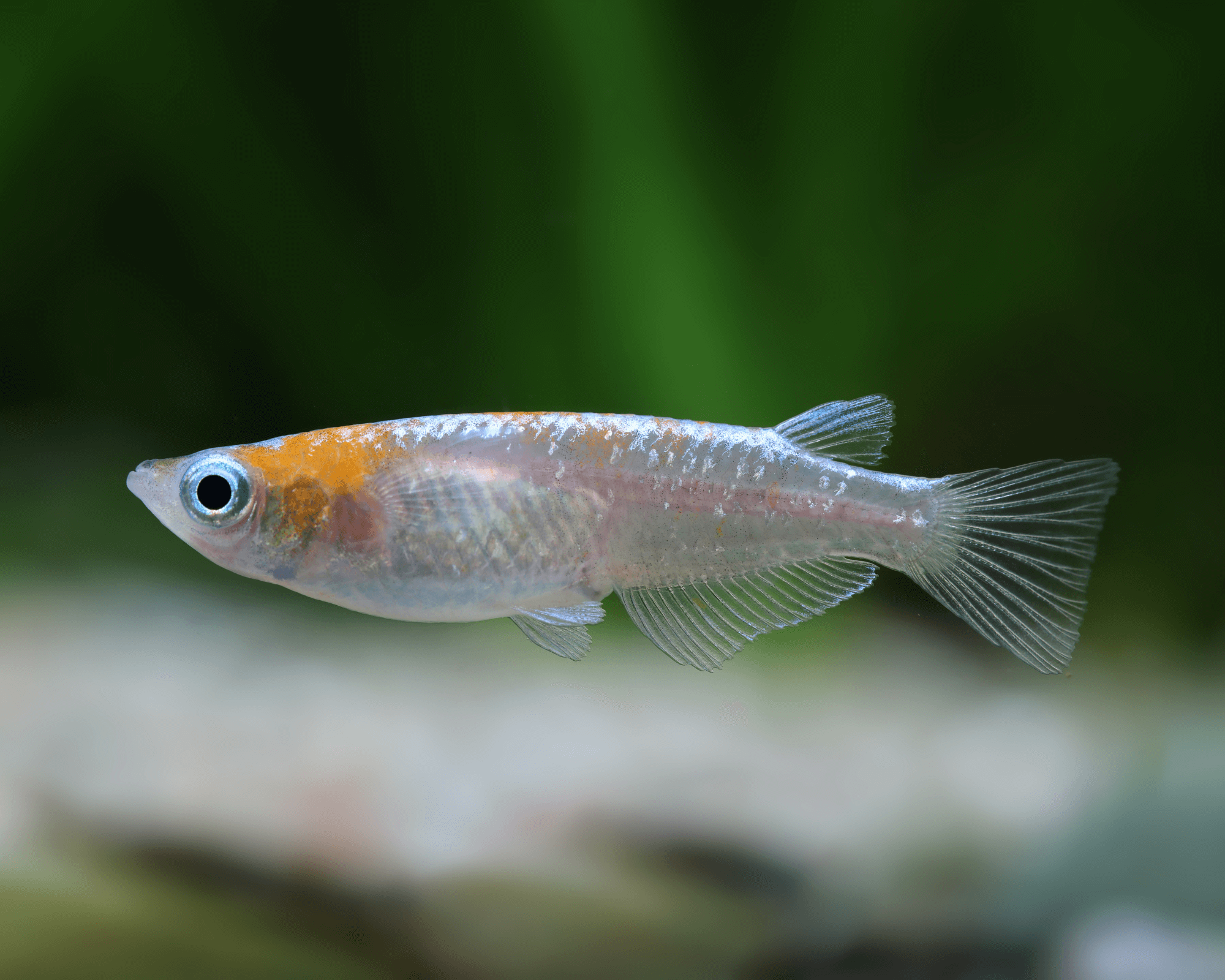
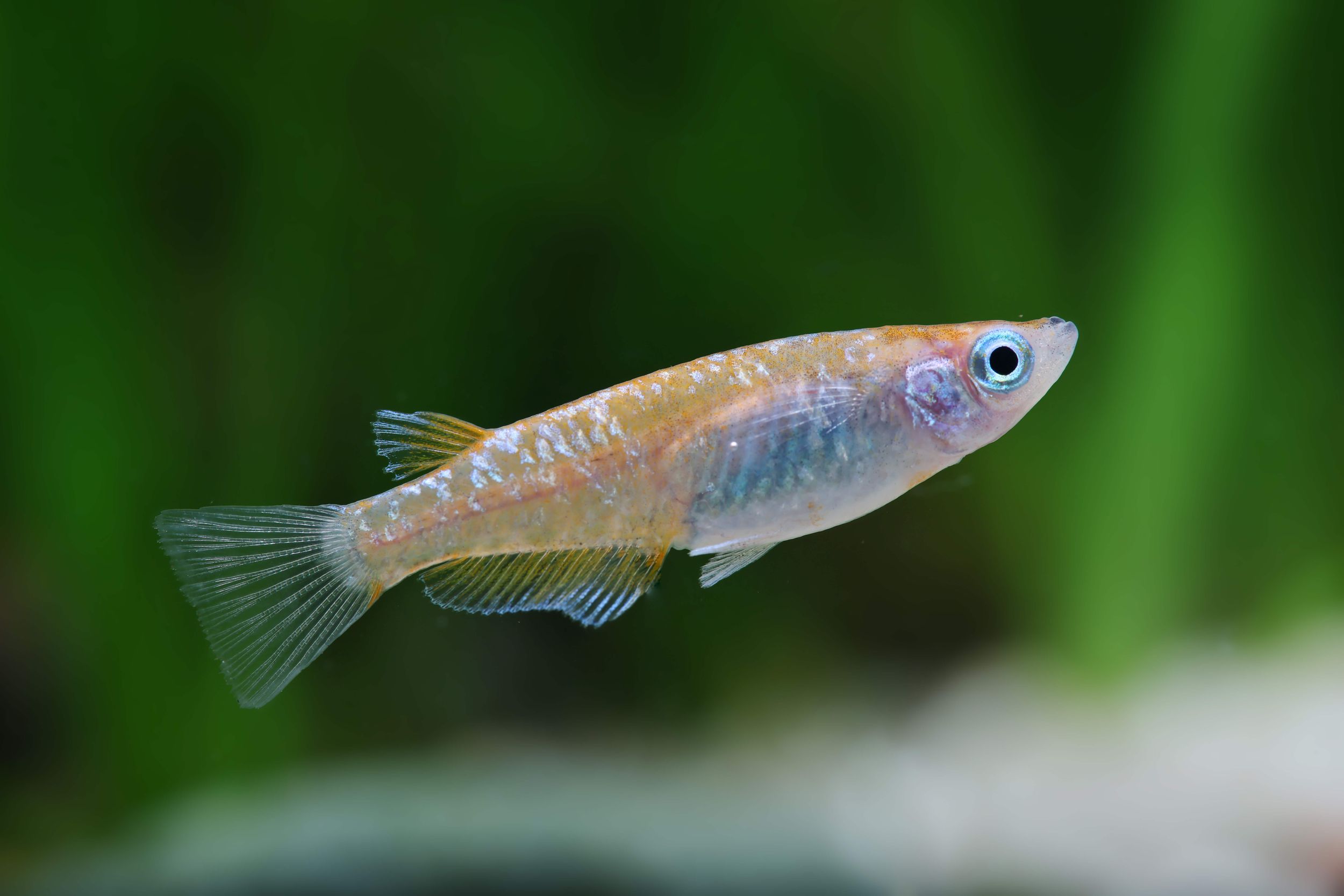
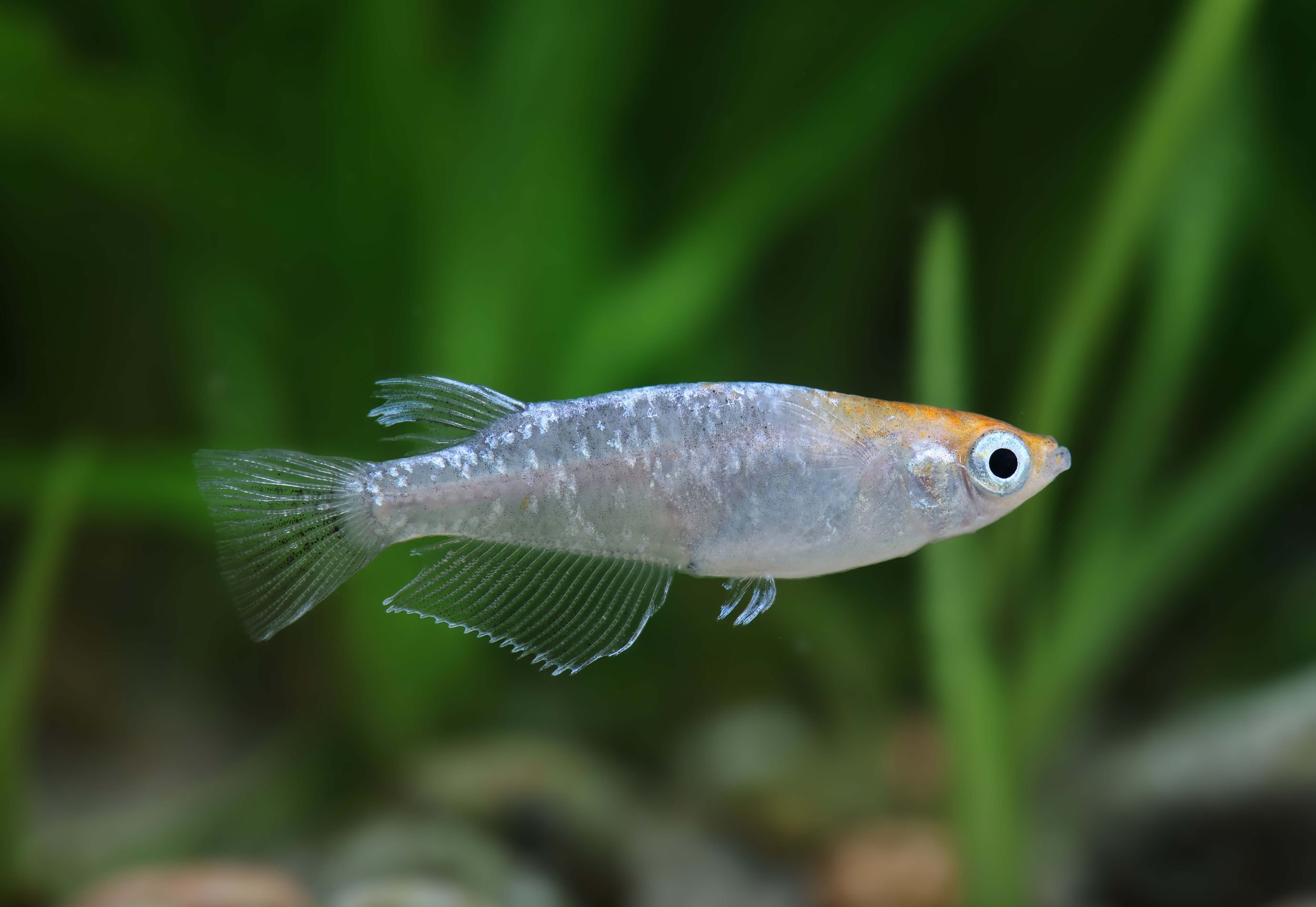
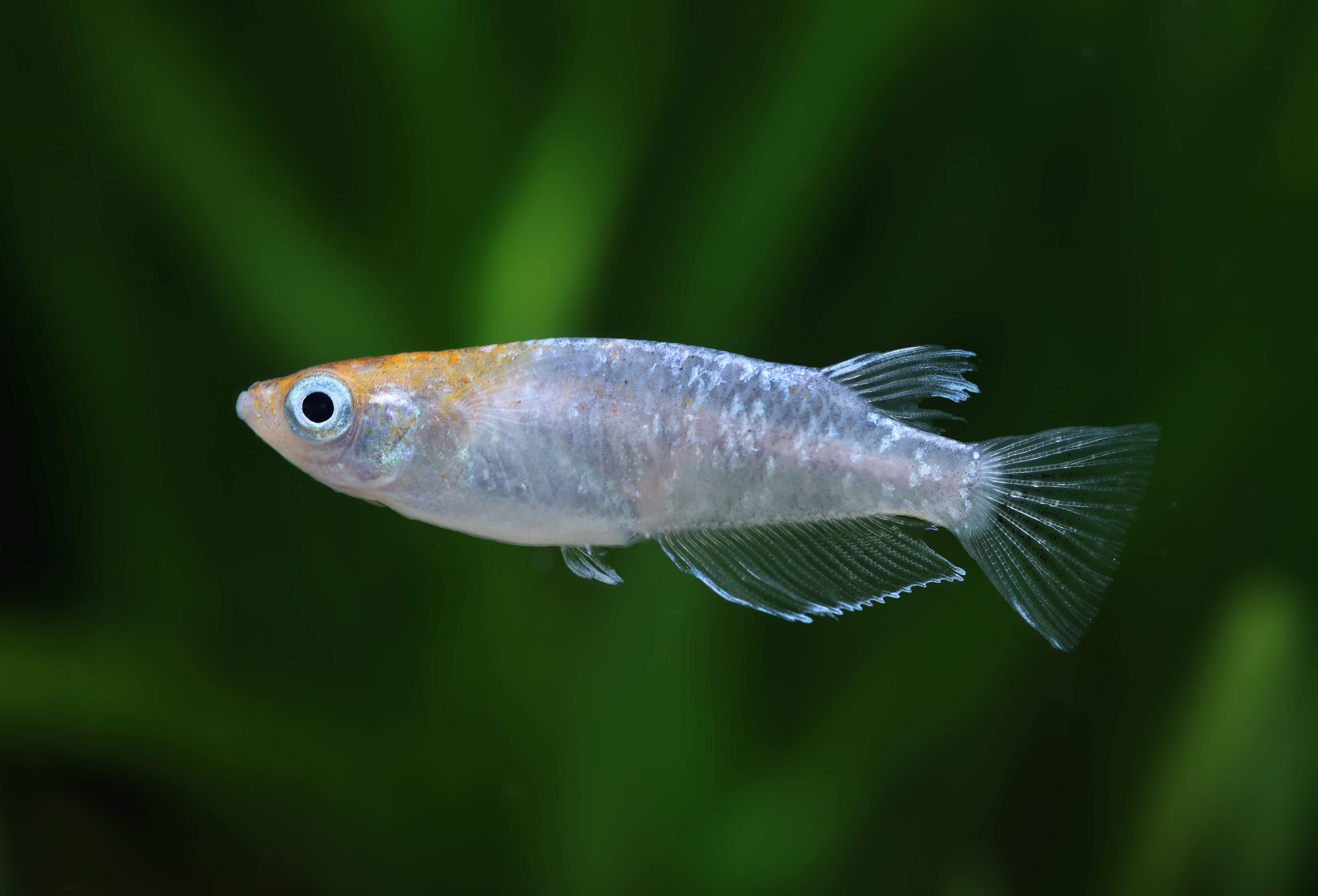
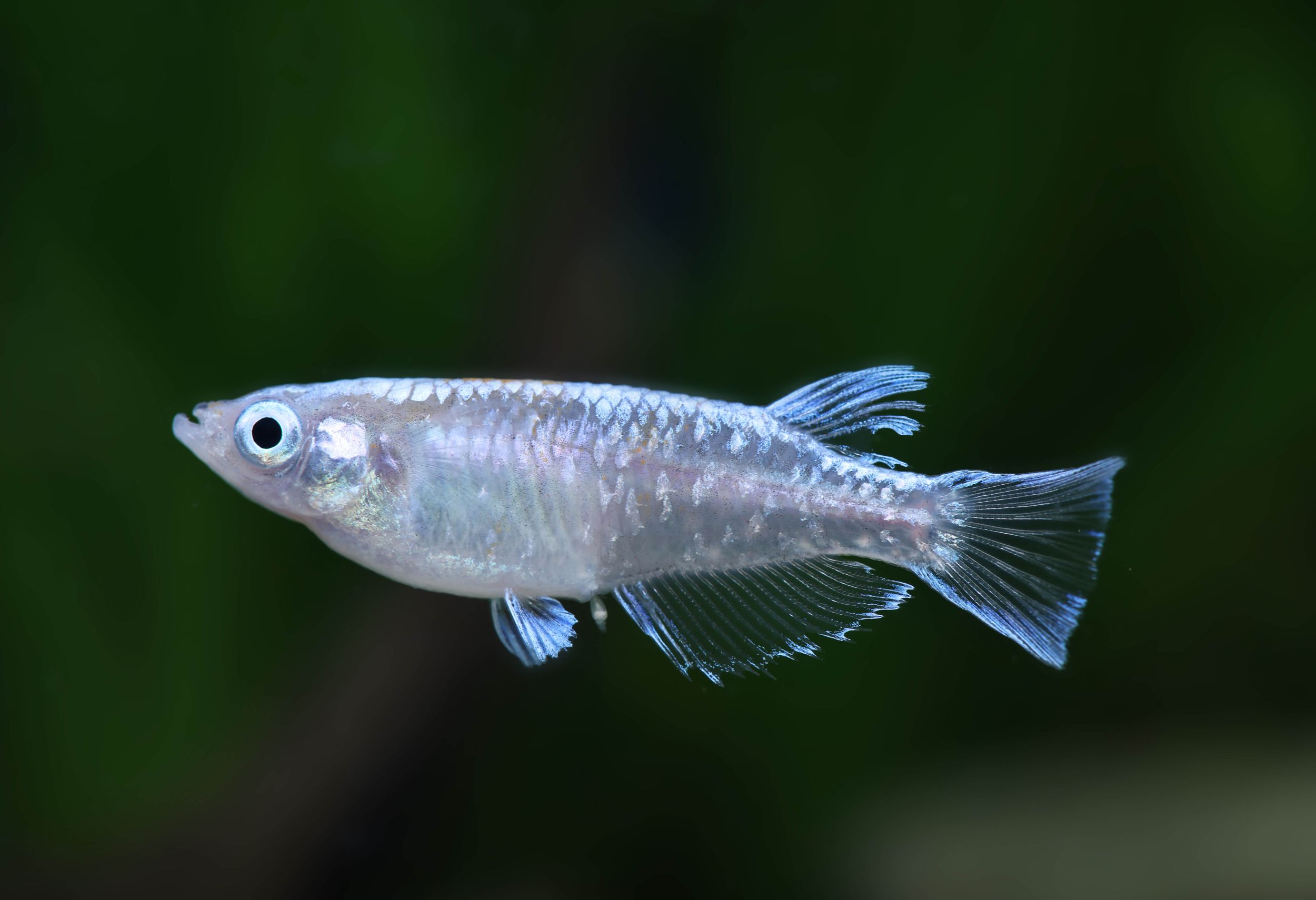
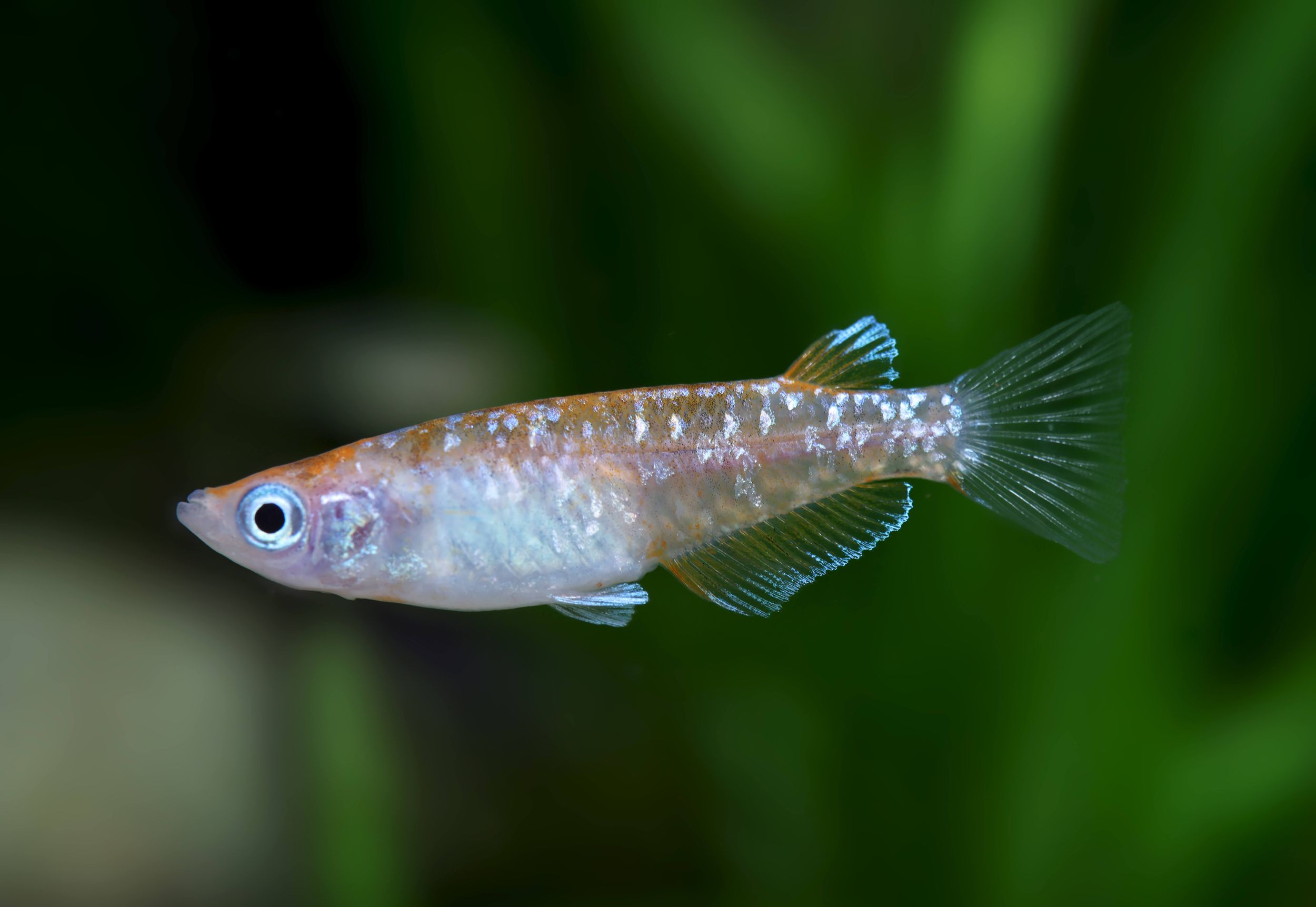
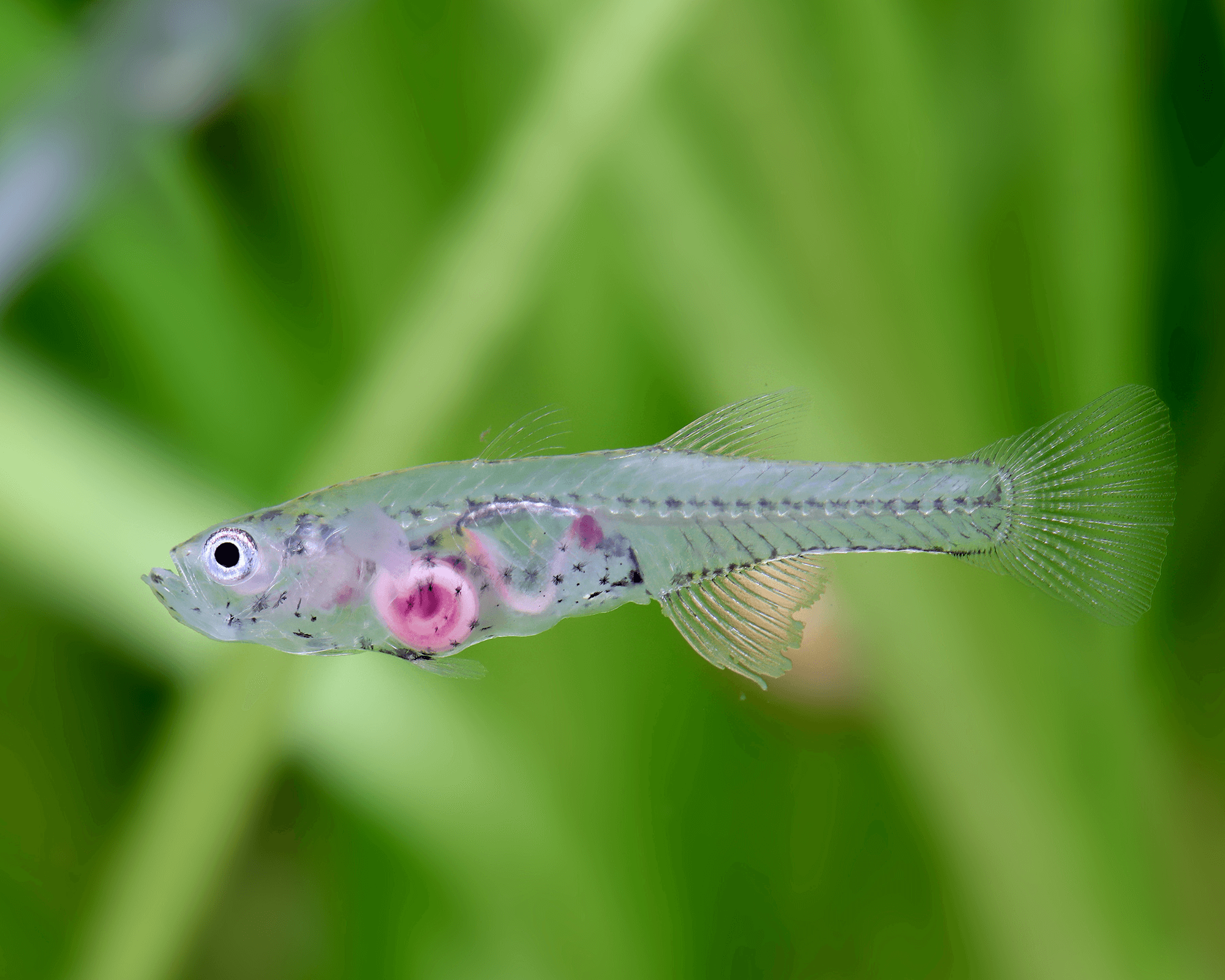
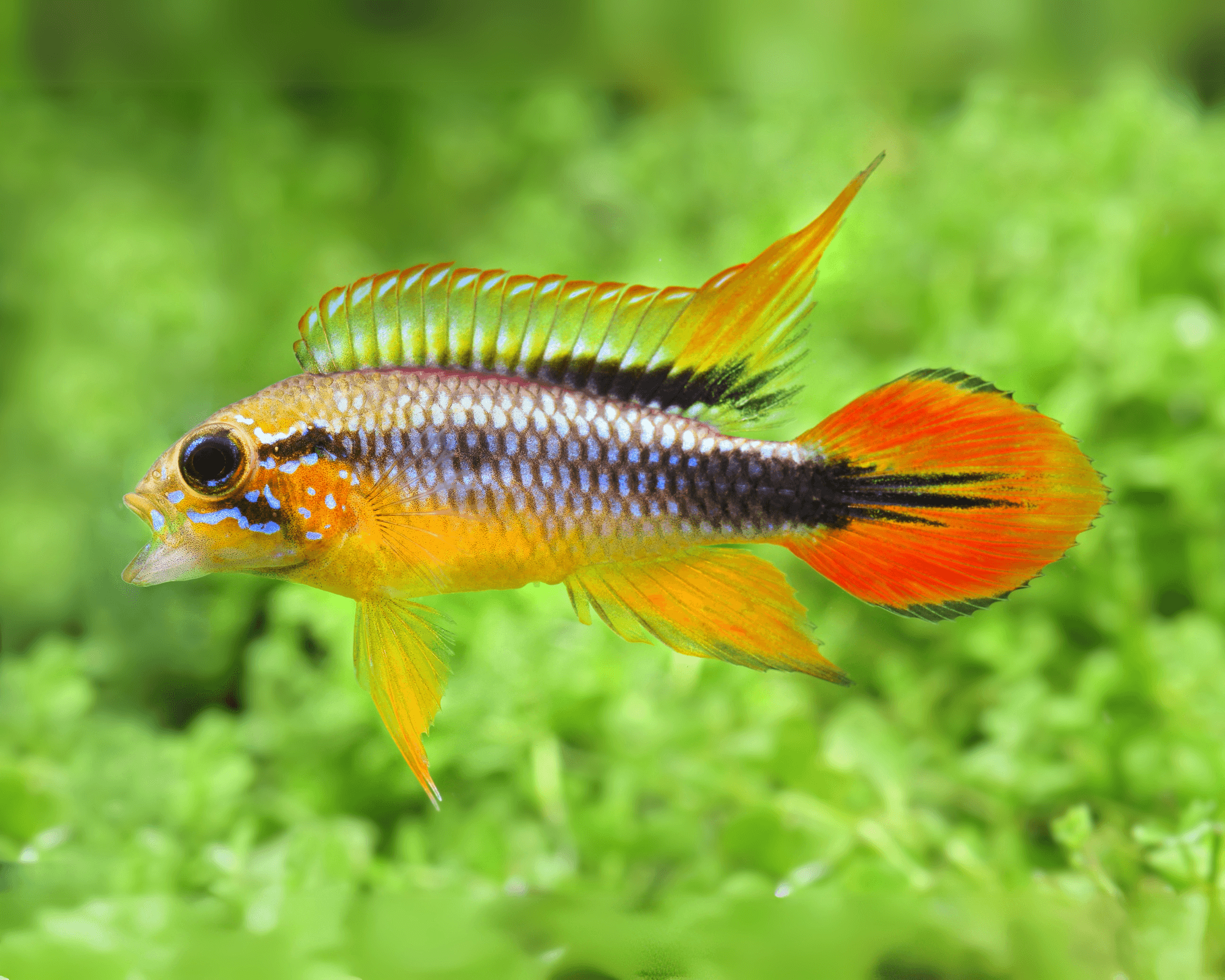
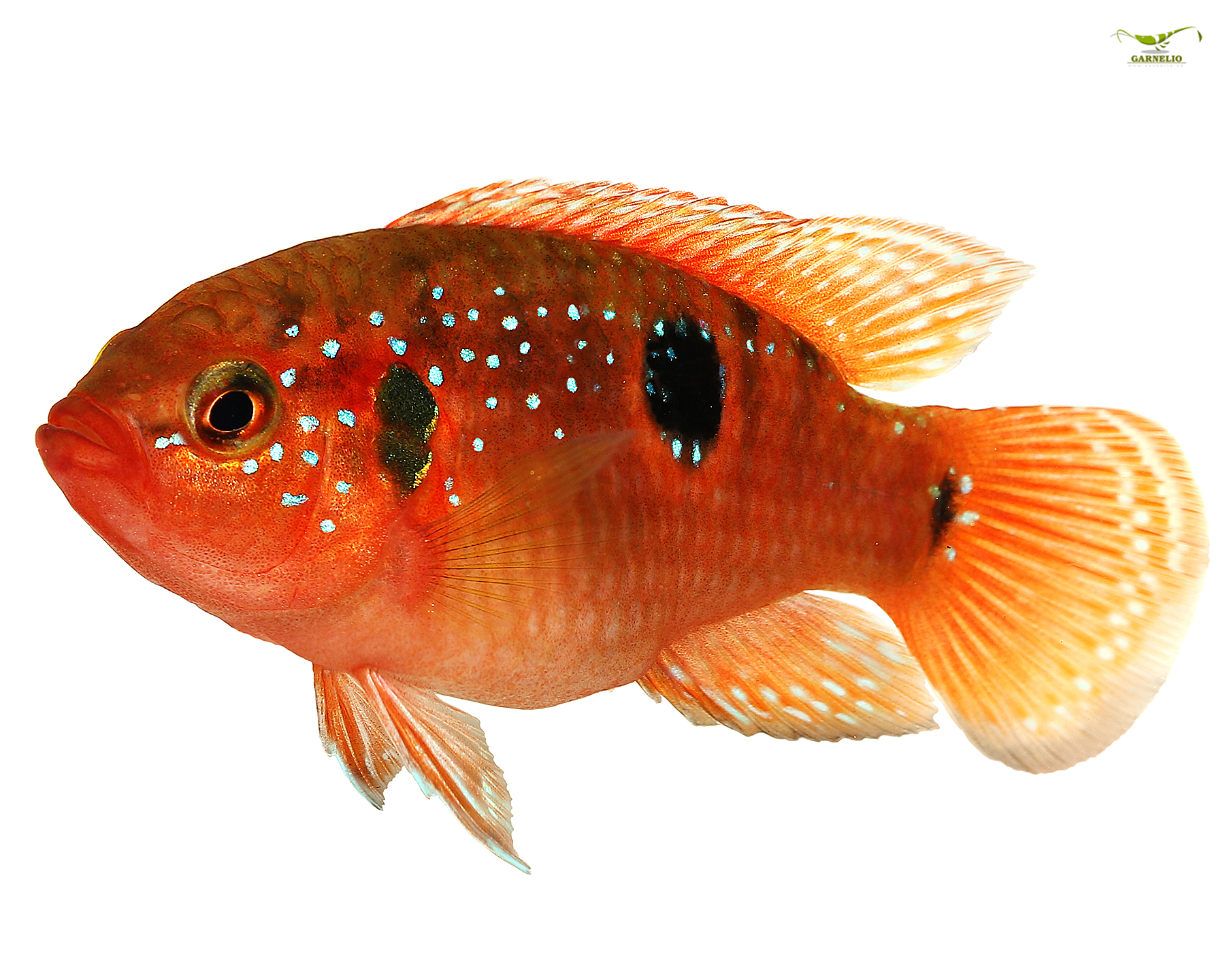
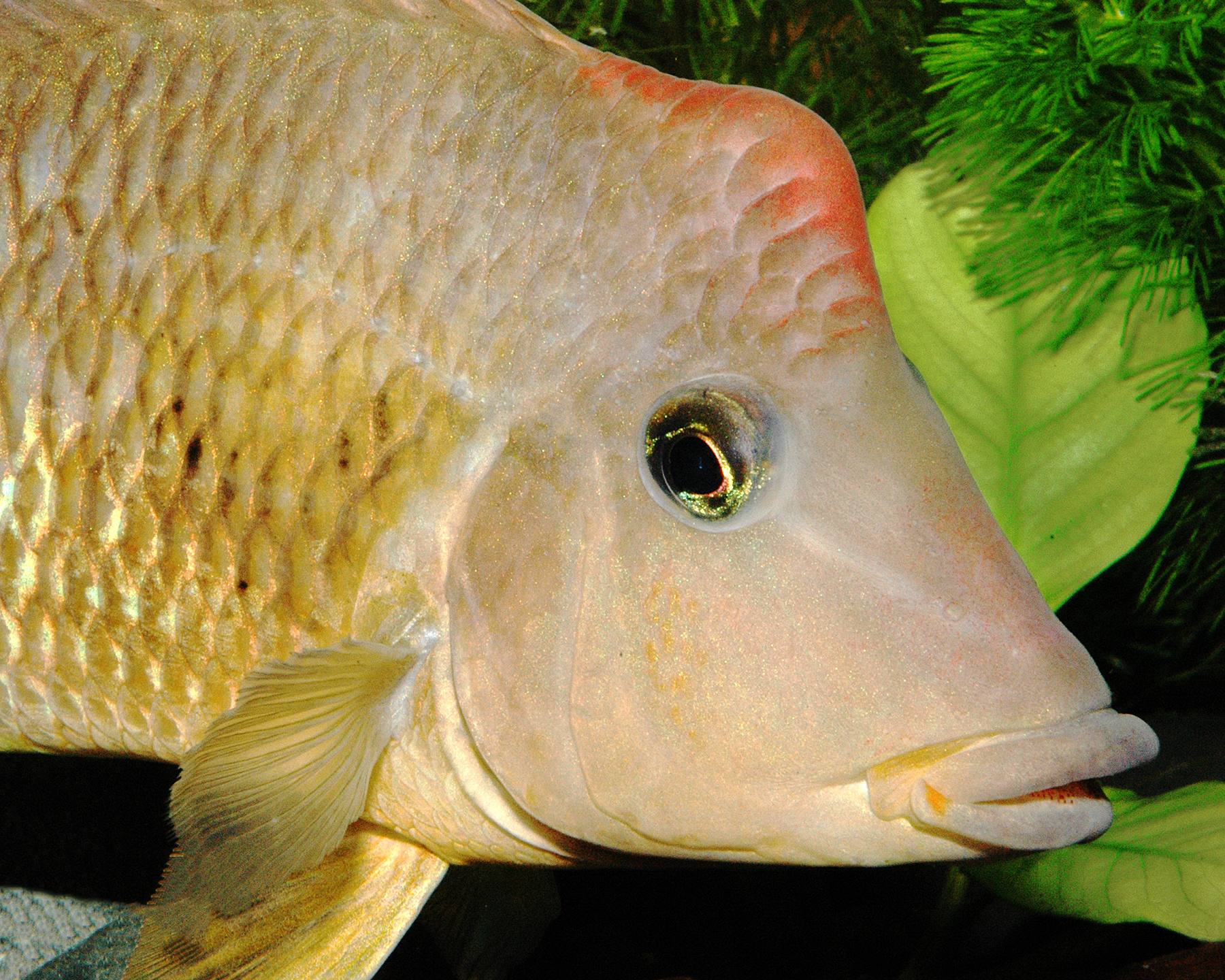
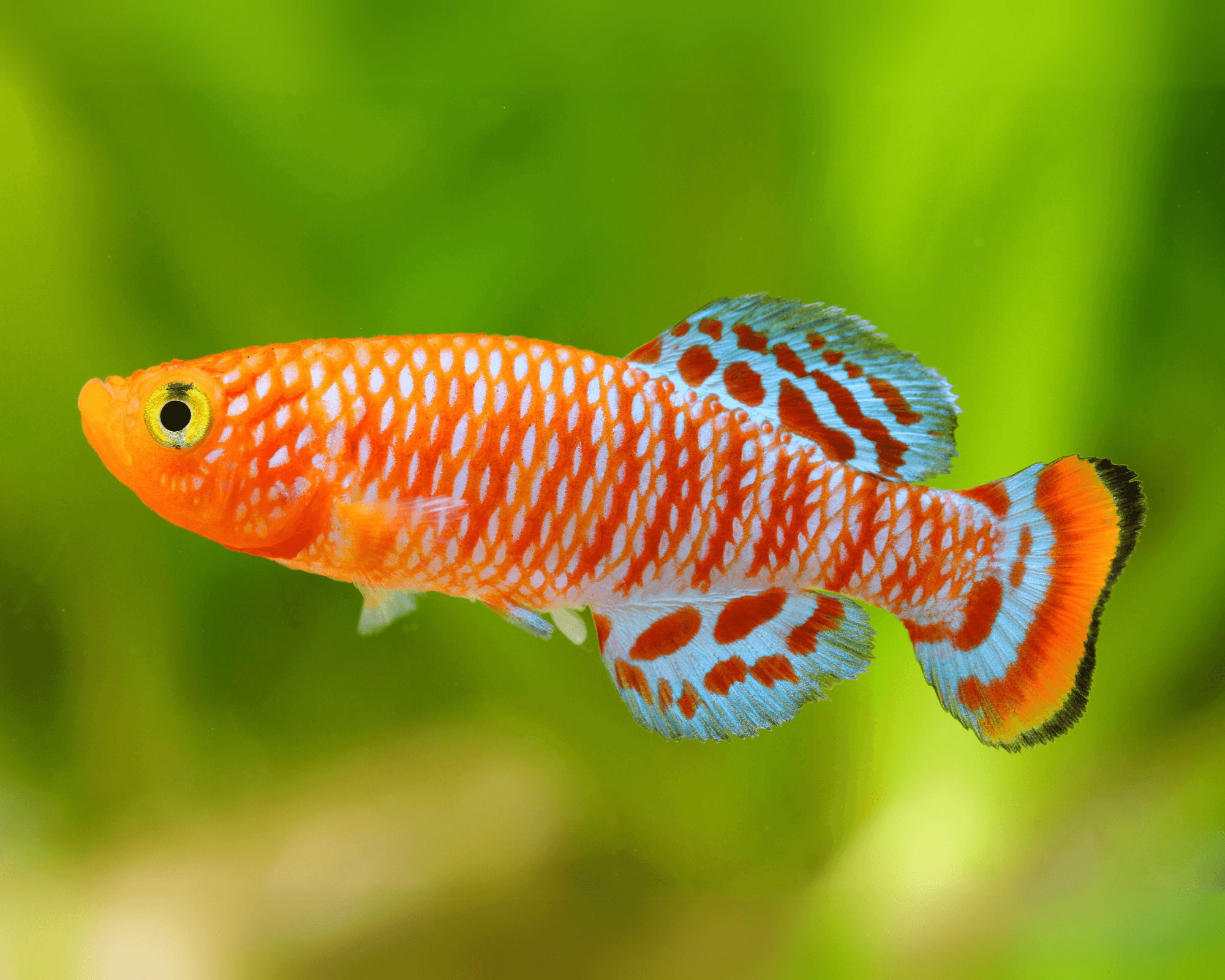
Medaka is Oryzias latipes, in the family Adrianichthyidae and order Beloniformes. It is a small, slender fish with an upturned mouth and a single dorsal fin positioned well back on the body. The images appear consistent with medaka, but a named strain cannot be identified reliably from photographs alone. Selective breeding has produced numerous color, pattern, fin, and body-shape forms.
Natural distribution and habitat
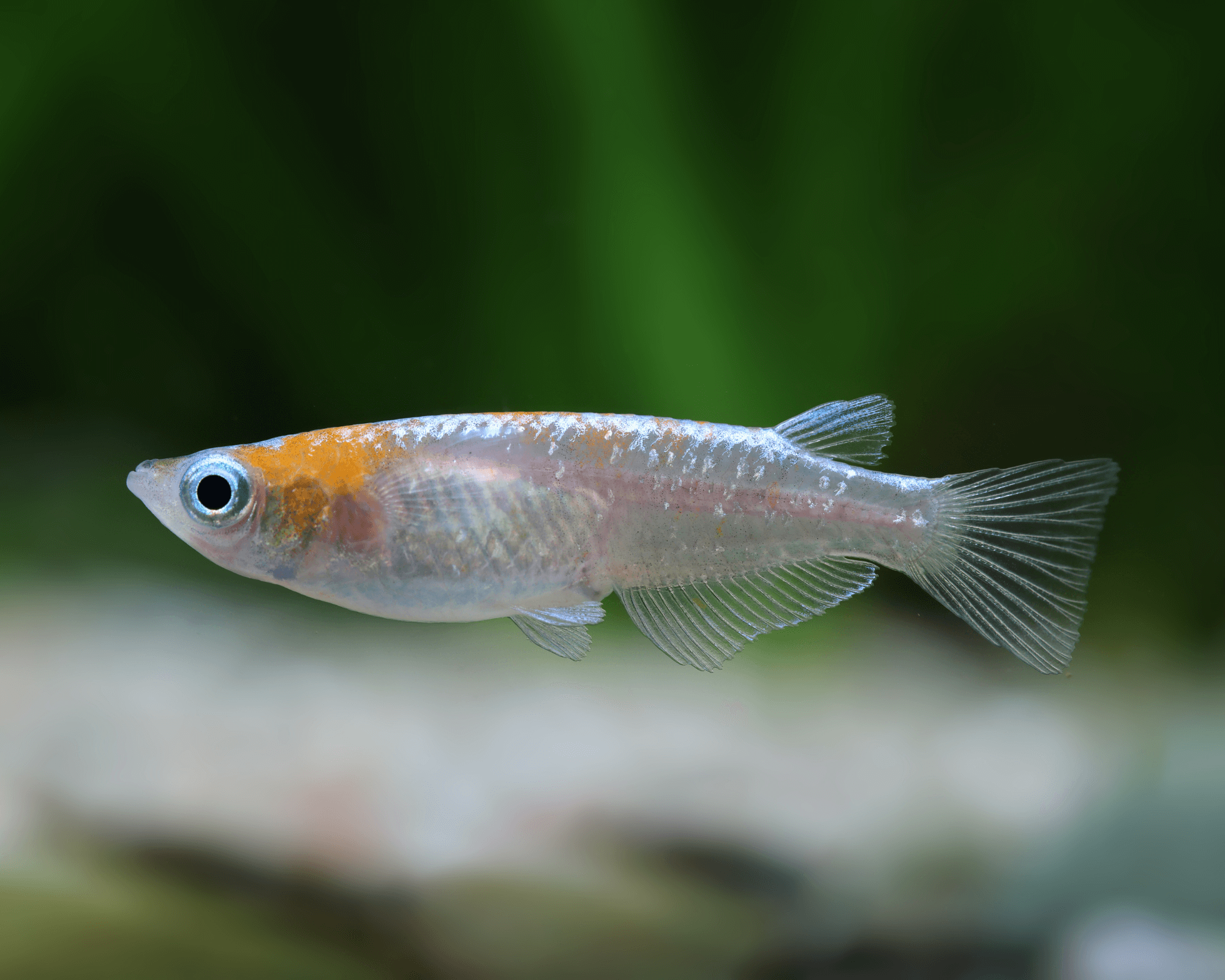
The species is native to East Asia, including Japan and neighboring parts of the Korean Peninsula, China, and Taiwan. It inhabits quiet or slow-moving freshwater such as rice fields, ditches, ponds, marshes, and sheltered stream margins. It is commonly associated with vegetation and calm surface water. Populations outside the native range may be introduced and should not be released.
Behavior
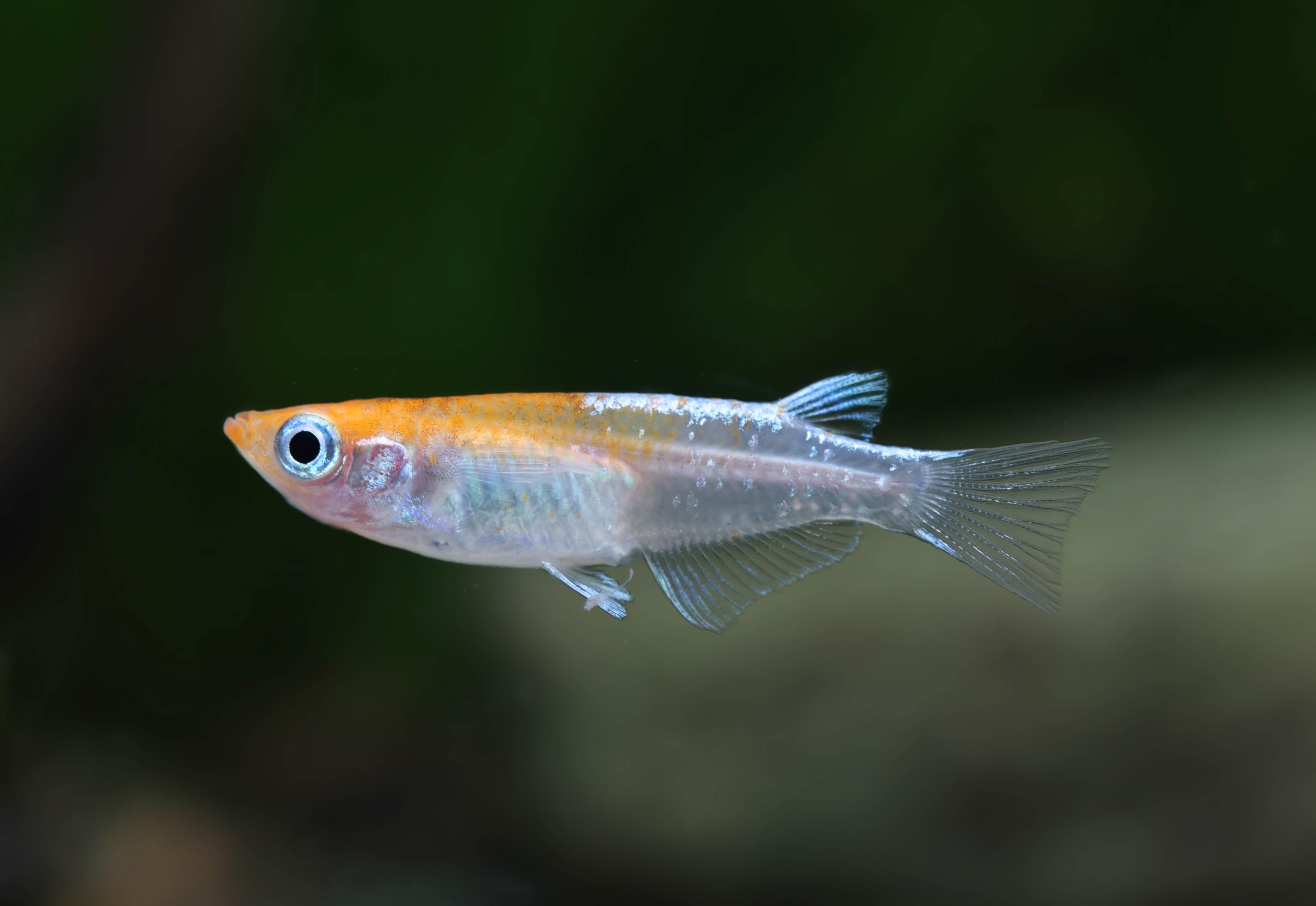
Medaka are peaceful, social fish that are best kept in groups rather than singly. They spend much of their time in the upper water column, where they readily approach food and display natural activity in open, well-lit areas. They may jump when startled, so a secure cover is important. Adults can eat newly hatched fry and may consume eggs if given access to them.
Aquarium and tank size
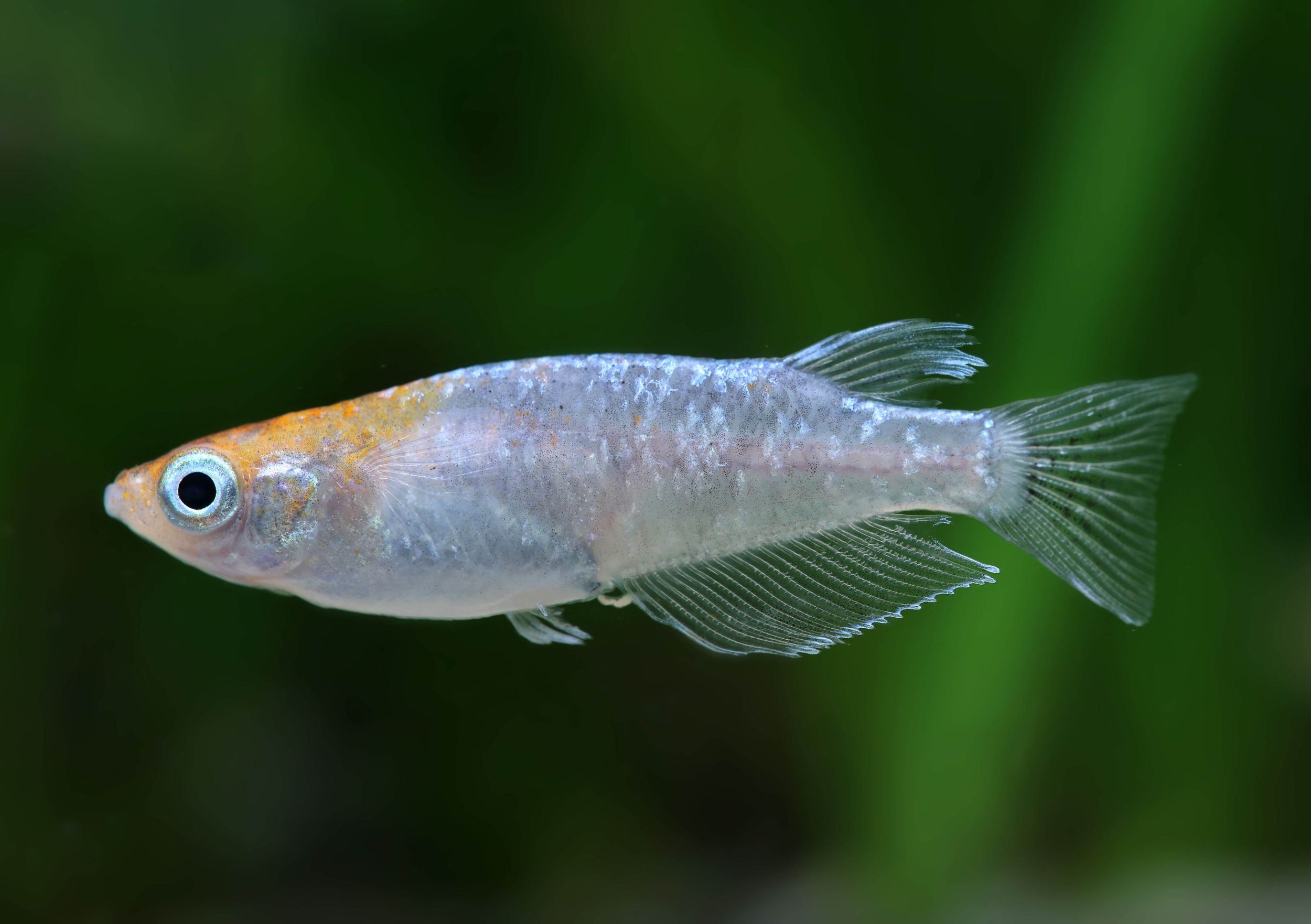
A practical minimum for a small group is about 40 litres, with more volume preferred for larger groups or mixed communities. Prioritize a broad footprint over excessive depth because medaka use the surface zone. Use a mature, gently filtered aquarium with subdued flow, open swimming space, floating or fine-leaved plants, and a covered top. Outdoor tubs can work in suitable climates, provided overheating, predators, and winter conditions are managed.
Water parameters
Keep the water clean, well oxygenated, and stable. A temperature of 18-26 °C and pH of 6.5-8.0 suit aquarium-kept medaka; moderate hardness is generally tolerated. Avoid abrupt changes, stagnant conditions, and persistent extremes. Perform regular partial water changes and monitor ammonia and nitrite, which should remain at zero in an established aquarium.
Diet
Medaka are omnivores and feed mainly in the upper levels. Offer a quality small-pellet or finely crushed flake as the staple, supplemented with suitably sized frozen or live foods such as baby brine shrimp, daphnia, and other small aquatic invertebrates. Feed small portions once or twice daily and remove uneaten food. Fry require very fine first foods, such as suitable powdered fry foods or appropriately sized live prey.
Compatibility
Choose peaceful tank mates of similar size that tolerate the same temperature and water chemistry. Small, calm community fish may be suitable when they do not compete aggressively at the surface or prey on medaka. Avoid large, predatory, fin-nipping, or highly boisterous species. Keeping medaka with their own kind is the safest option, especially for long-finned or selectively bred forms.
Breeding
Medaka are egg scatterers that can breed readily when well fed and kept in stable, warmer conditions with adequate light. A male courts a female, fertilizes the eggs, and the female may carry a cluster briefly before attaching it to plants, spawning mops, or other fine material. For a high survival rate, move the eggs to a separate hatching container or remove the spawning substrate. Incubate them in clean, gently aerated water and separate fry from adults because eggs and young may be eaten. Provide fine food as soon as free-swimming fry begin feeding.
Care notes and identification confidence
The supplied source label identifies the fish as medaka and Oryzias latipes. The photographs support that identification, while the particular ornamental strain, sex, breeding line, and locality remain uncertain. Treat the fish as standard O. latipes unless reliable breeder records provide more specific information. Maintain a lid, quarantine new arrivals, and avoid releasing aquarium fish or eggs into natural waters.
 - 1.webp)
 - 1.webp)
 - DNZ 4 cm - 1.webp)
 - 1.webp)
 - DNZ 4 cm - 1.webp)
Leave your comments