Taxonomy and identification
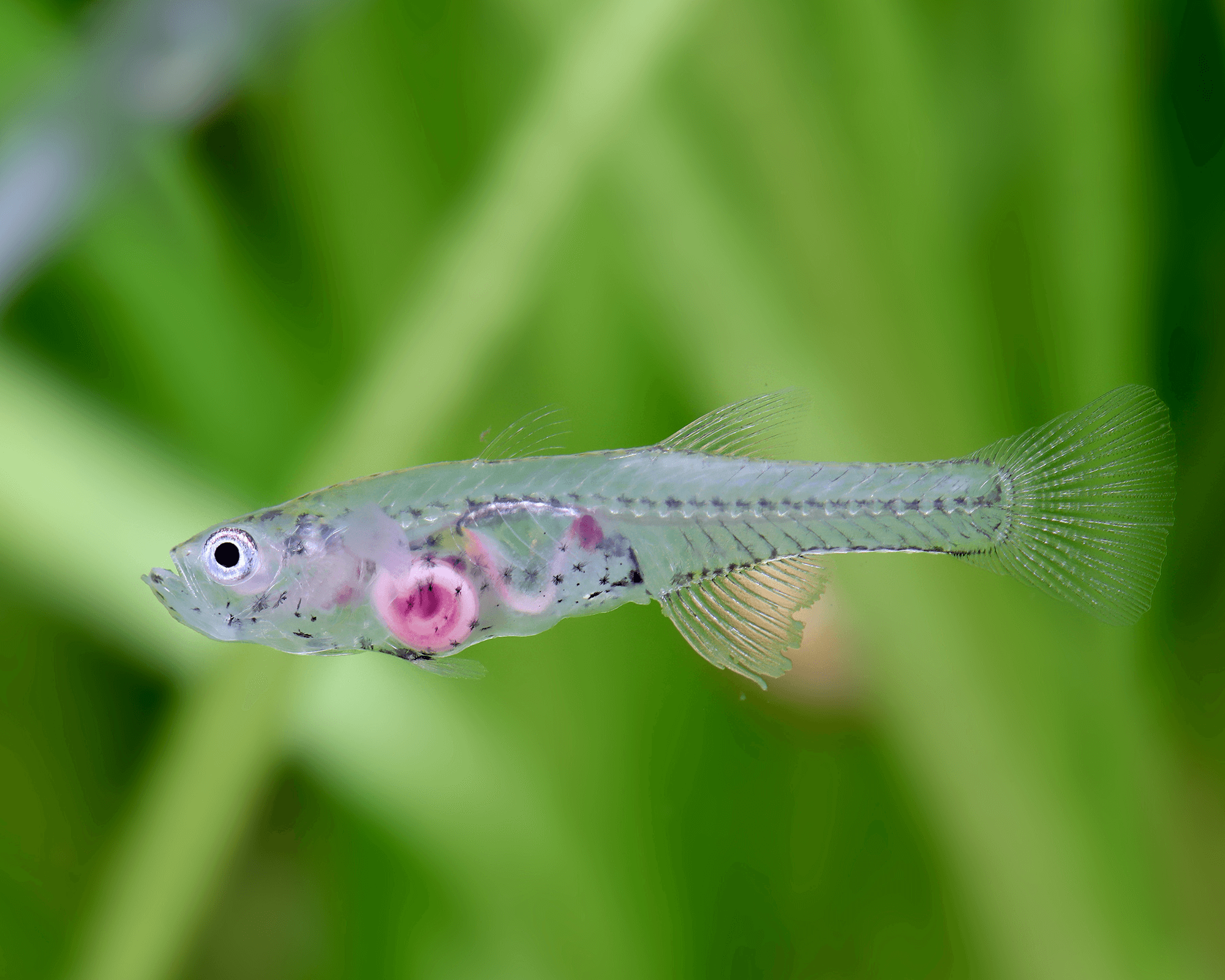
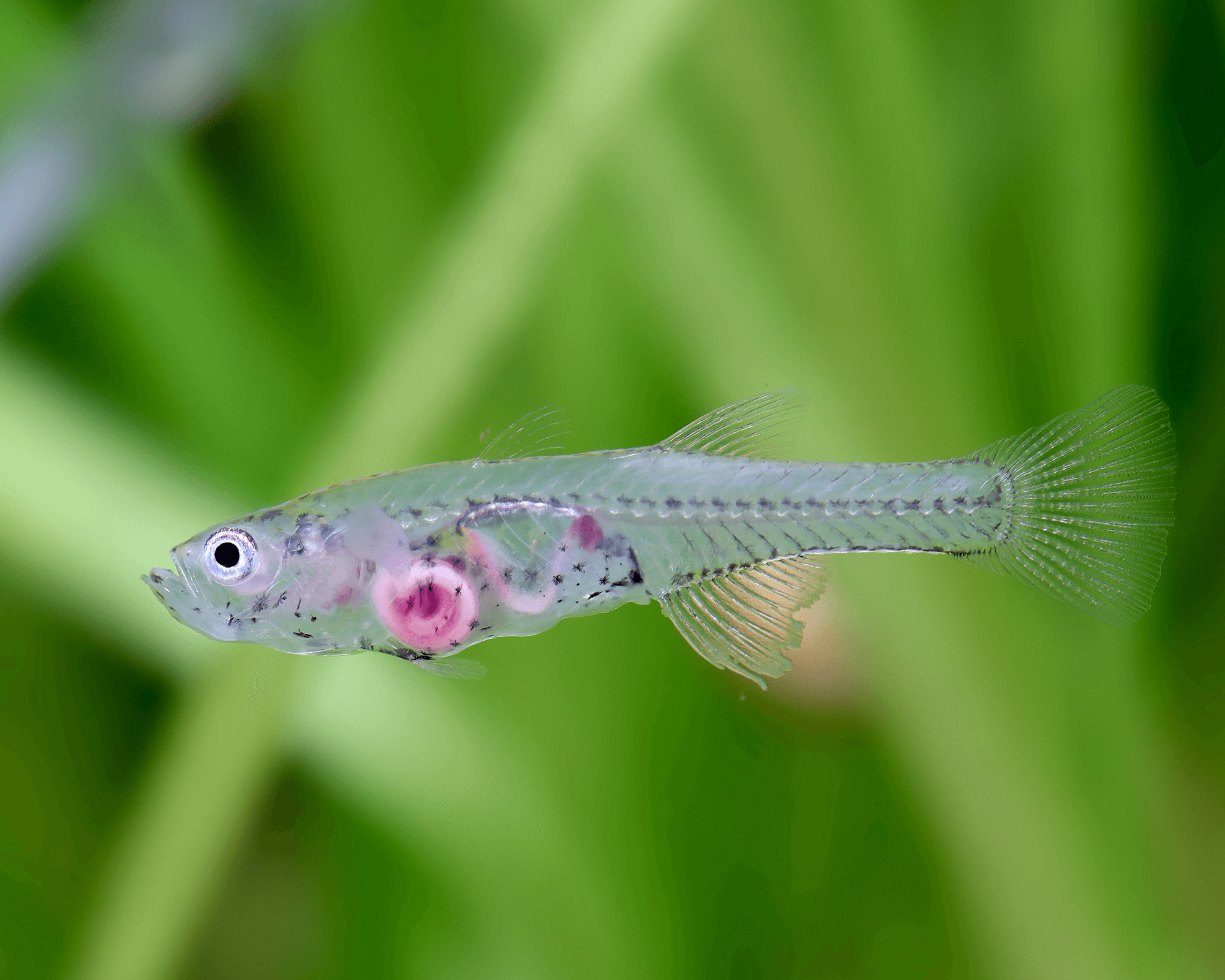
Gobiopterus chuno is a small goby in the family Gobiidae. The body is exceptionally translucent, with the vertebral column, internal organs and dark markings visible through the skin. Pink or reddish areas may be visible around the gill region and abdomen, especially in well-fed or mature fish. Aquarium photographs and trade names can be unreliable; unusually opaque, strongly colored or much larger fish should not be assumed to be this species without a proper identification.
Distribution and habitat
This species is associated with coastal South Asia, including parts of the Indian subcontinent and nearby areas, but published and trade accounts do not always agree on the complete range. It occurs in lowland waters influenced by fresh and brackish conditions. Because local populations may experience different salinities, ask the supplier about the collection locality and acclimate gradually rather than making an abrupt change between freshwater and brackish water.
Behavior and social needs
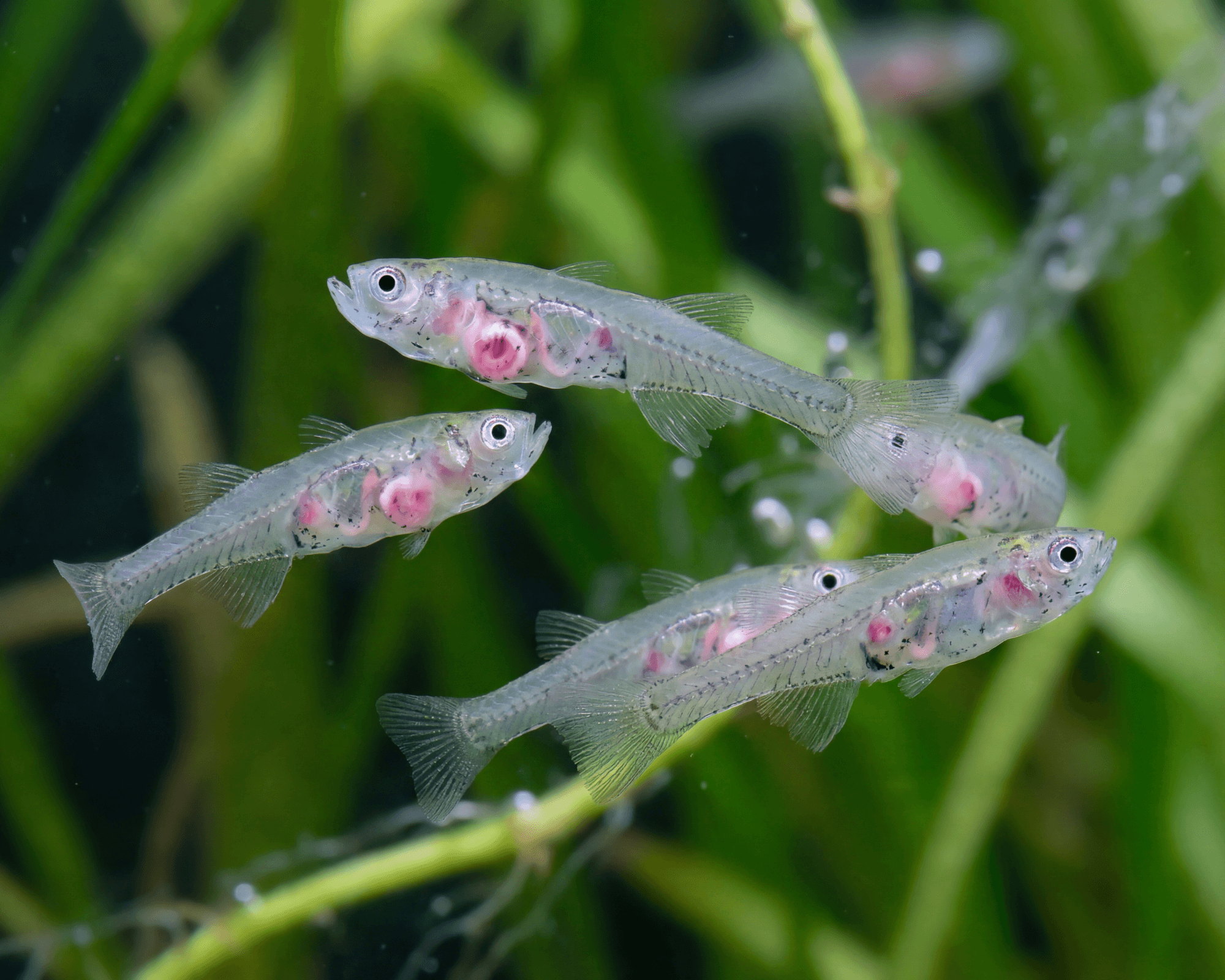
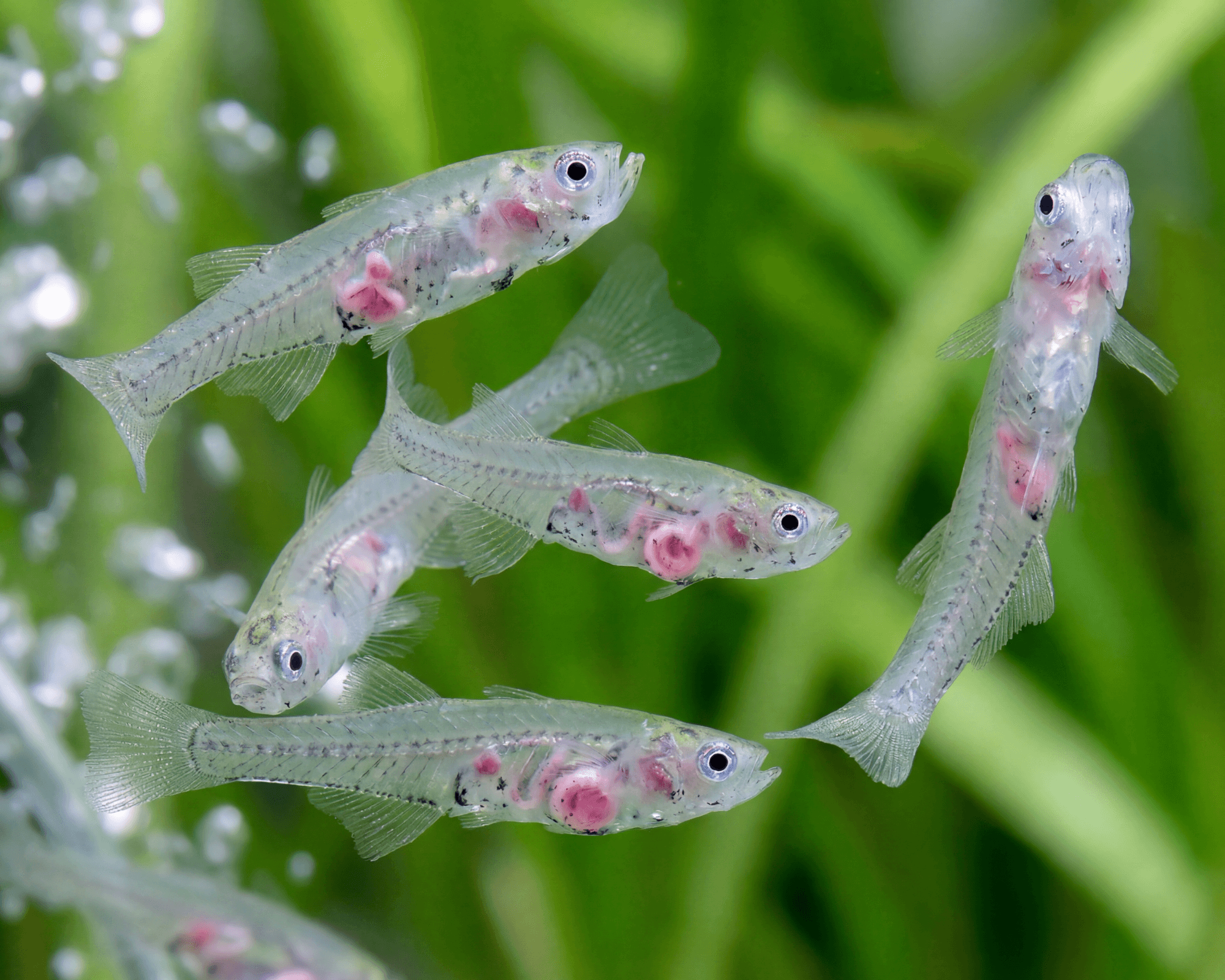
Glass gobies are peaceful, active small fish that are more confident in a group. Keep at least six, with eight to ten preferable where aquarium space permits. They usually occupy the middle and upper levels and may hover among fine-leaved plants, roots or other cover. They are easily intimidated by boisterous fish and can lose condition quickly if they must compete for food.
Aquarium and equipment
A mature aquarium of about 60 litres is a practical starting point for a group of these fish; a larger, longer aquarium provides more stable conditions and feeding space. Use a tightly fitting cover, subdued lighting or floating plants, gentle circulation and an established biological filter. Include dense vegetation, fine branches and open water. Avoid strong intakes or protect them with a sponge because the fish are small and delicate.
Water parameters
Maintain stable, clean water rather than chasing a precise number. A temperature of 22-28 °C, pH 7.0-8.2 and low ammonia and nitrite are suitable general targets. Moderate hardness is usually tolerated. Some populations are collected from mildly brackish water, while others are kept in fresh water; salinity should therefore follow the fish's proven source conditions. Make changes slowly and avoid sudden dilution or concentration.
Diet and feeding
The small mouth is suited to tiny live or frozen foods. Newly imported specimens often accept baby brine shrimp, cyclops, Moina, daphnia and other small planktonic foods more readily than dry food. Feed small portions two or three times daily, ensuring that every fish gets access. Finely powdered or suitably sized quality foods may be offered after acclimation, but a fish that refuses food needs prompt attention to competition, water quality and possible prior starvation.
Compatibility
Choose peaceful tank mates of similar size that tolerate the same temperature and water chemistry. Small, calm livebearers, rasboras or other non-aggressive community fish may work when feeding competition is controlled, but a species-only aquarium is safer for newly imported groups. Avoid large fish, fin-nippers, aggressive gobies, fast predators and invertebrate predators. Do not mix freshwater and brackish species solely on the basis of similar size.
Breeding
Reliable aquarium breeding information for Gobiopterus chuno is limited. A dedicated breeding setup should provide mature, stable water, dense cover and small spawning surfaces such as smooth plant leaves, wood or other sheltered structures. If eggs are produced, remove or protect them from tank mates and provide very small first foods for fry. Do not assume that methods used for other gobies will work for this species; early survival and larval feeding are likely to be the main difficulties.
Health and acclimation
Quarantine new arrivals when possible and use a slow acclimation, particularly when the transport water differs in salinity. Inspect the fish for emaciation, damaged fins, abnormal swimming and signs of bacterial or parasitic disease. Maintain high oxygenation without creating a strong current, perform regular partial water changes and avoid overcrowding. Their transparency can make condition difficult to judge, so appetite and body fullness are important daily indicators.
 - 1.webp)
 - 1.webp)
 - DNZ 4 cm - 1.webp)
 - 1.webp)
 - DNZ 4 cm - 1.webp)
Leave your comments