 - 1.webp)
Taxonomy and identification
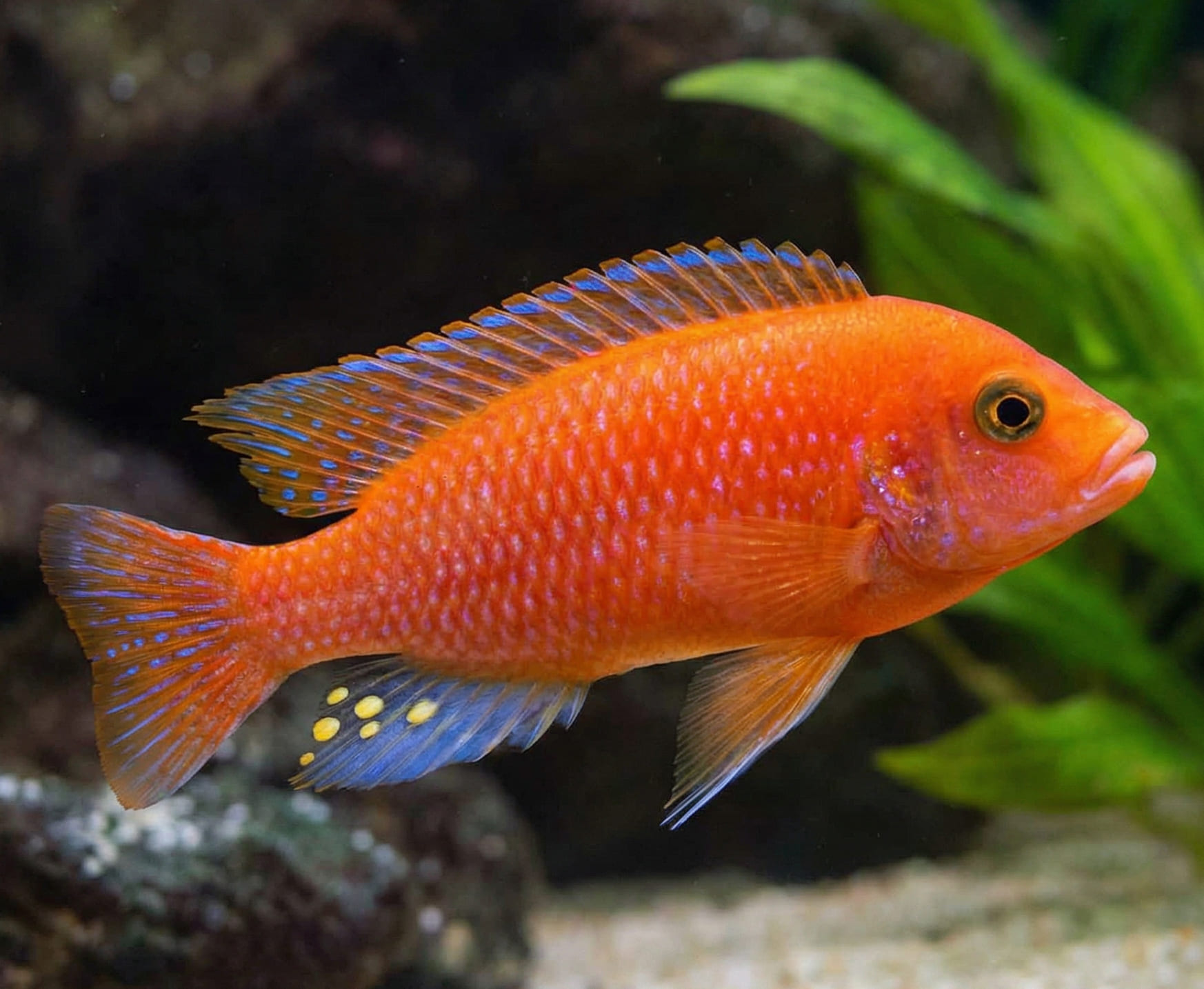
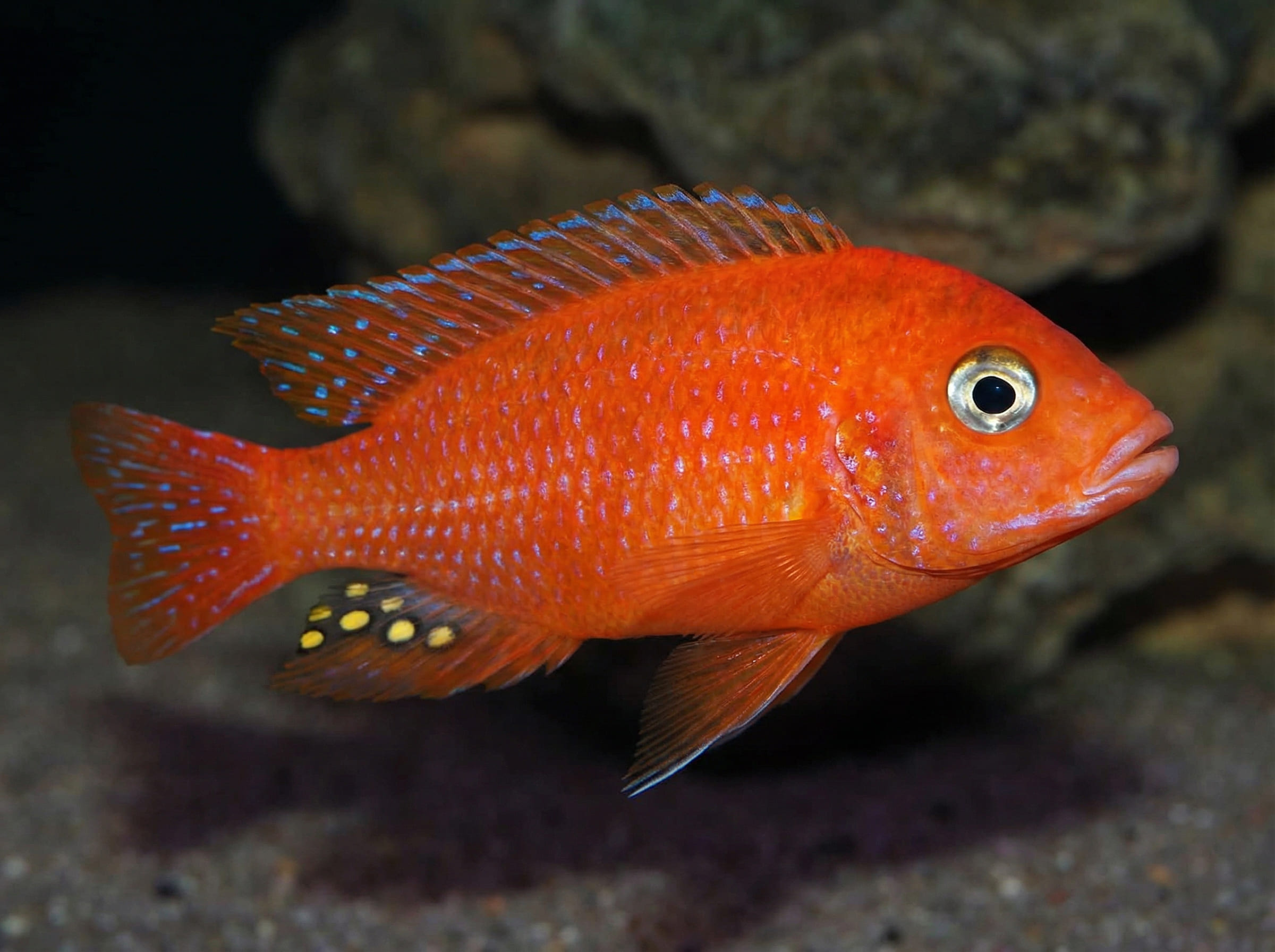
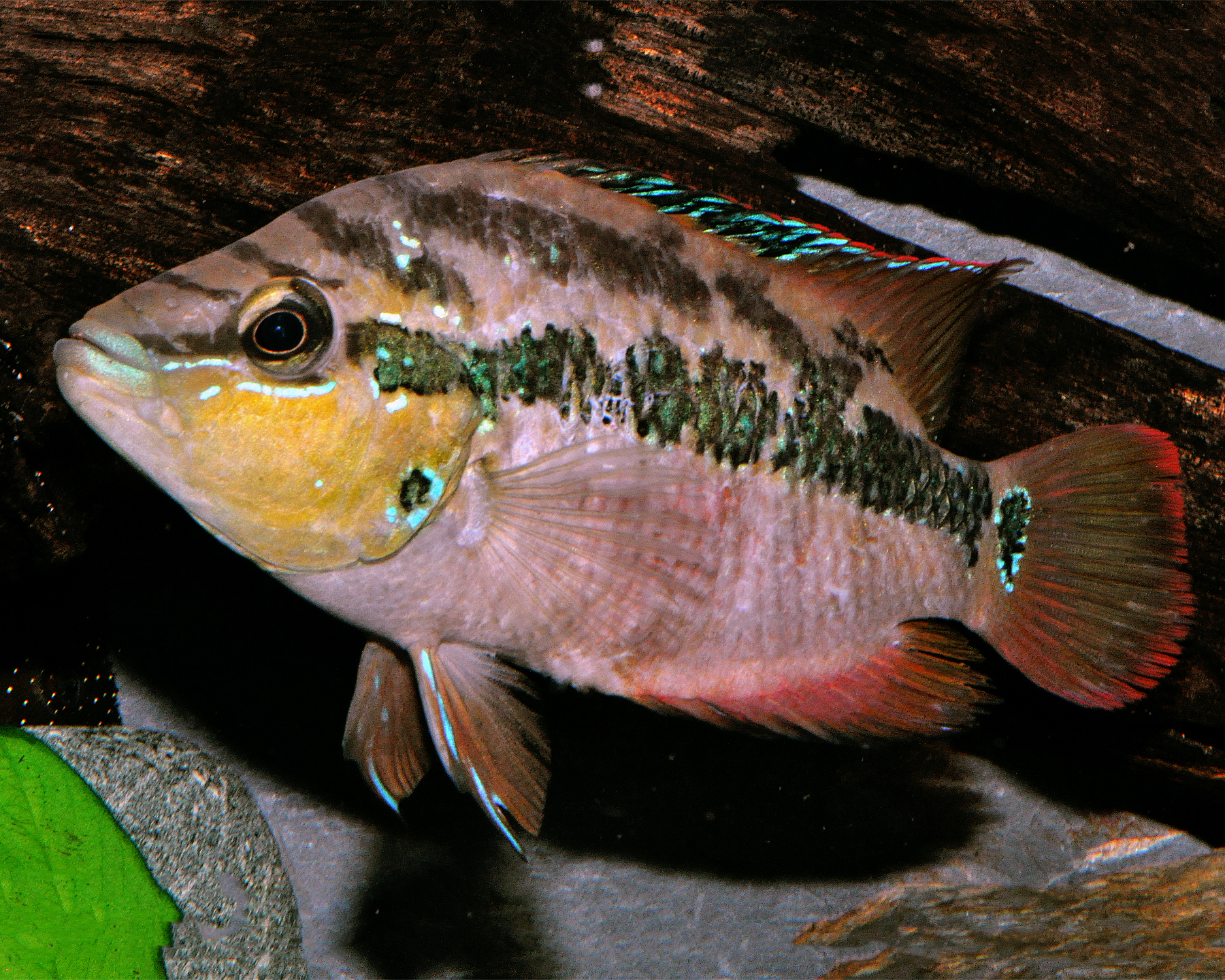
The fish is widely known in the aquarium trade as Pseudotropheus estherae. The currently used genus is generally Maylandia, making Maylandia estherae a commonly accepted name. Older literature and retailers may continue to use Pseudotropheus estherae. The trade name Red Zebra refers to a color form rather than a guarantee of a particular wild population, and captive-bred fish may show substantial variation.
Natural distribution and habitat
This species is native to Lake Malawi in East Africa, where it is associated with rocky shoreline habitats. It belongs to the mbuna group, a term describing rock-dwelling Malawi cichlids. In nature it grazes aufwuchs, the mixture of algae and small organisms growing over hard surfaces, while using rocks for shelter and territory.
Aquarium and tank size
For a trio of one male and two females, use at least a 200-litre aquarium with substantial floor area; a larger aquarium is preferable. A mixed mbuna community generally needs about 300 litres or more, depending on the species and stocking plan. Provide a sand or fine-gravel substrate, many stable rocks, caves, and visual barriers. Build rockwork securely because these fish dig and may undermine decorations. Strong biological filtration, good oxygenation, and regular maintenance are essential.
Water parameters
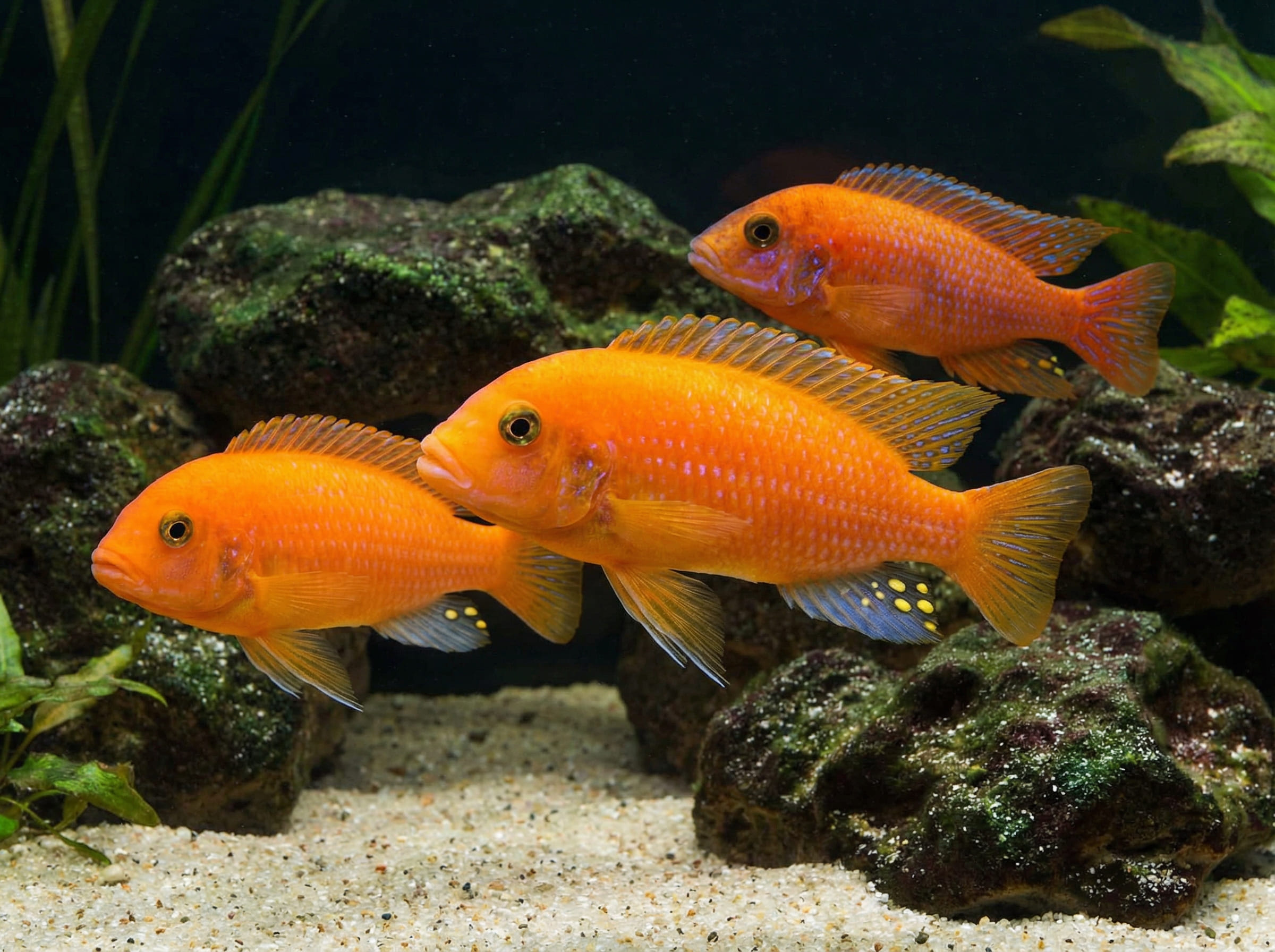
Maintain warm, hard, alkaline water at 24-28 °C and pH 7.6-8.6. Stable conditions are more important than pursuing an exact target within this range. Ammonia and nitrite must remain undetectable, and nitrate should be kept low through regular partial water changes. Test local tap water before selecting buffering materials or using a commercial Malawi buffer.
Behavior and temperament
Red Zebras are active, territorial, and semi-aggressive. Males defend feeding and spawning areas, with aggression often increasing during courtship. Caves, broken sightlines, and several feeding locations help distribute pressure. A one-male-to-multiple-female ratio is preferable to keeping a lone female with a persistent male. Monitor for torn fins, hiding, loss of appetite, or persistent harassment, and be prepared to rearrange rockwork or separate individuals.
Diet
Feed a predominantly vegetable-based diet built around quality spirulina or algae-based pellets and flakes. Supplement with blanched vegetables such as spinach, zucchini, or peas if accepted. Offer small portions once or twice daily, removing uneaten food. Avoid making meaty foods, tubifex, or other rich animal-protein foods a regular part of the diet, because mbuna are adapted to grazing and may develop digestive problems when overfed unsuitable foods.
Compatibility
Keep this cichlid with similarly sized, robust Lake Malawi mbuna that tolerate hard alkaline water and comparable aggression. Avoid peaceful community fish, slow-moving species, delicate finned fish, and fish requiring soft acidic water. Do not combine different color forms or closely related mbuna casually if preserving a line matters, because hybridization is possible. Overstocking is sometimes used by experienced mbuna keepers to spread aggression, but it requires a large aquarium, powerful filtration, and disciplined maintenance.
Breeding
This is a maternal mouthbrooder. The female lays eggs on a cleared surface, picks them up, and fertilizes them by responding to egg spots on the male's anal fin. She incubates the eggs and developing fry in her mouth for roughly three weeks, often eating little during that period. A brooding female may be moved to a separate mature aquarium if fry survival is important, but handling and isolation can stress her. Fry accept finely crushed spirulina foods after release.
Identification note
The supplied trade name identifies the fish as a red Zebra Cichlid and gives Pseudotropheus estherae as the scientific name. Because aquarium trade names and captive color strains are not always standardized, the exact locality or lineage cannot be confirmed from the supplied information alone. Treat the fish as Maylandia estherae unless reliable provenance or specialist identification indicates otherwise.
 - 1.webp)
 - DNZ 4 cm - 1.webp)
 - 1.webp)
 - DNZ 4 cm - 1.webp)
Leave your comments