Taxonomy and identification
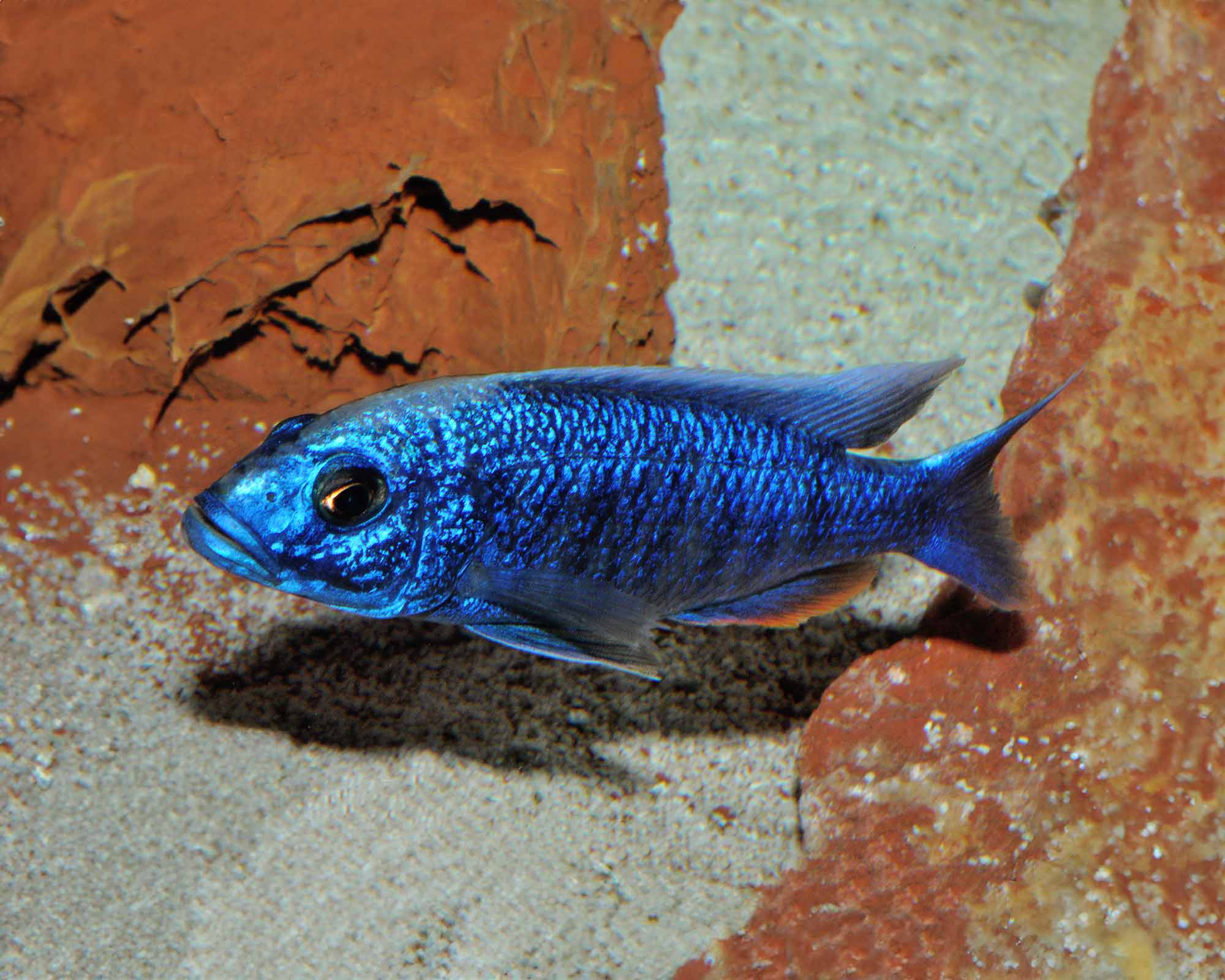
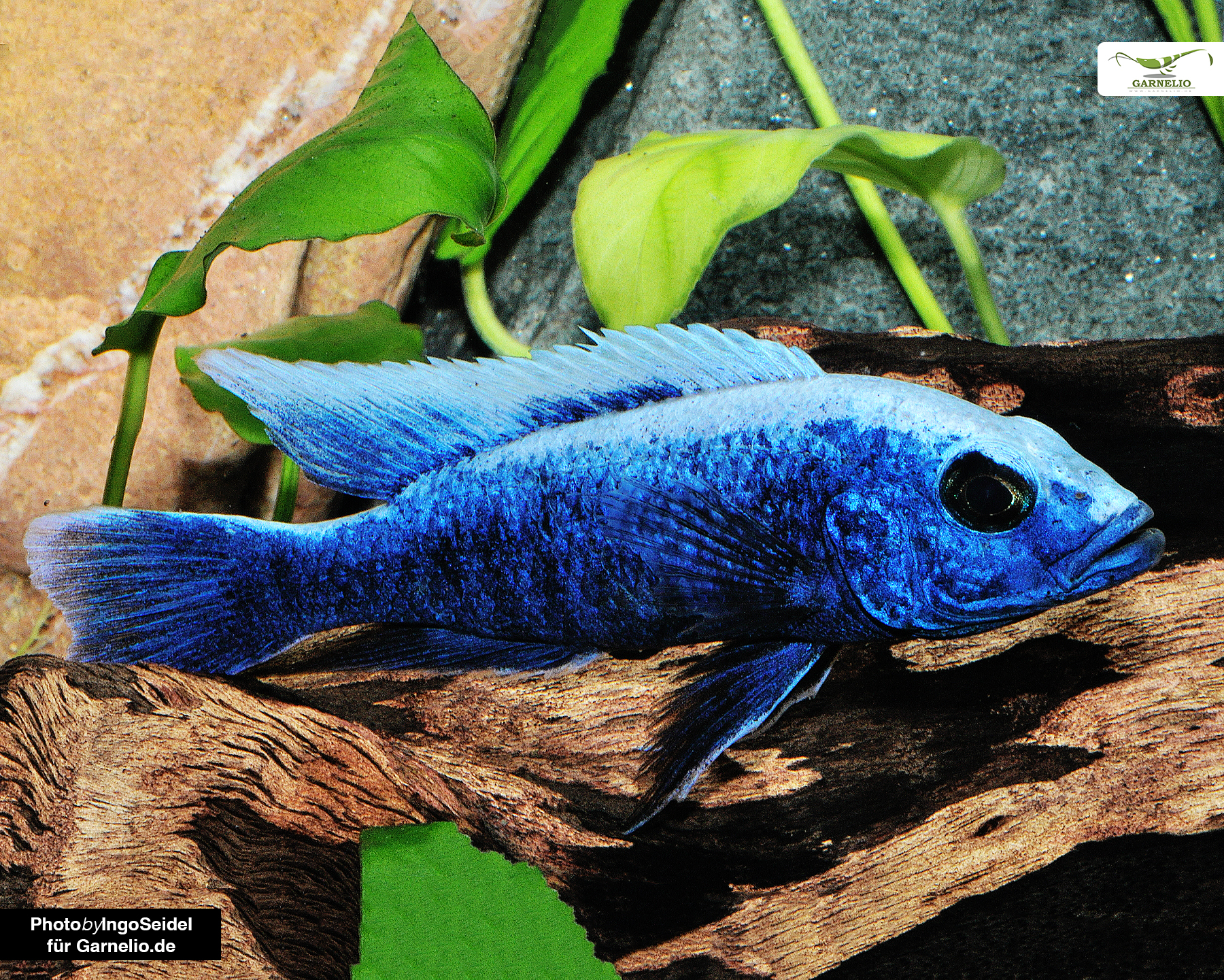
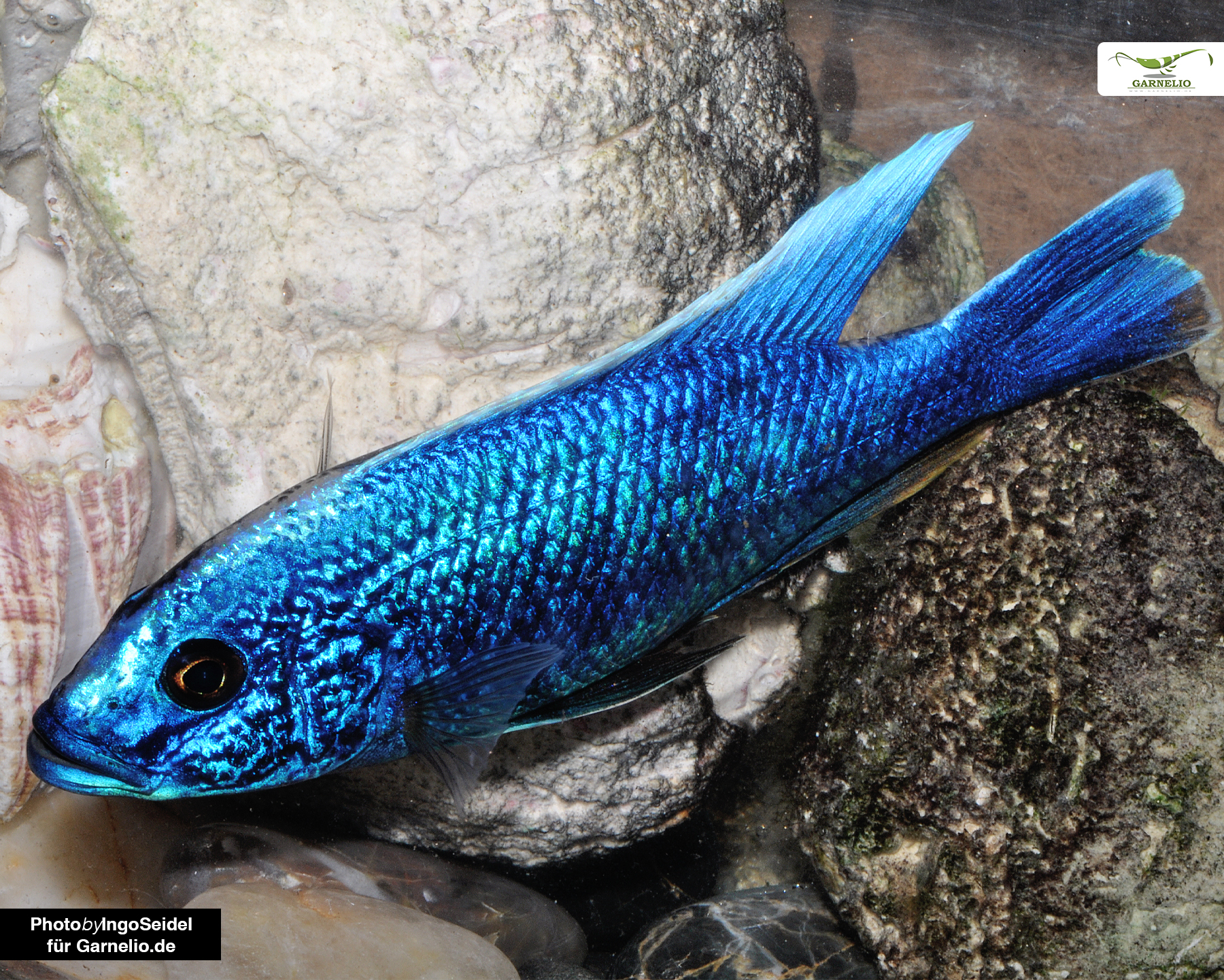
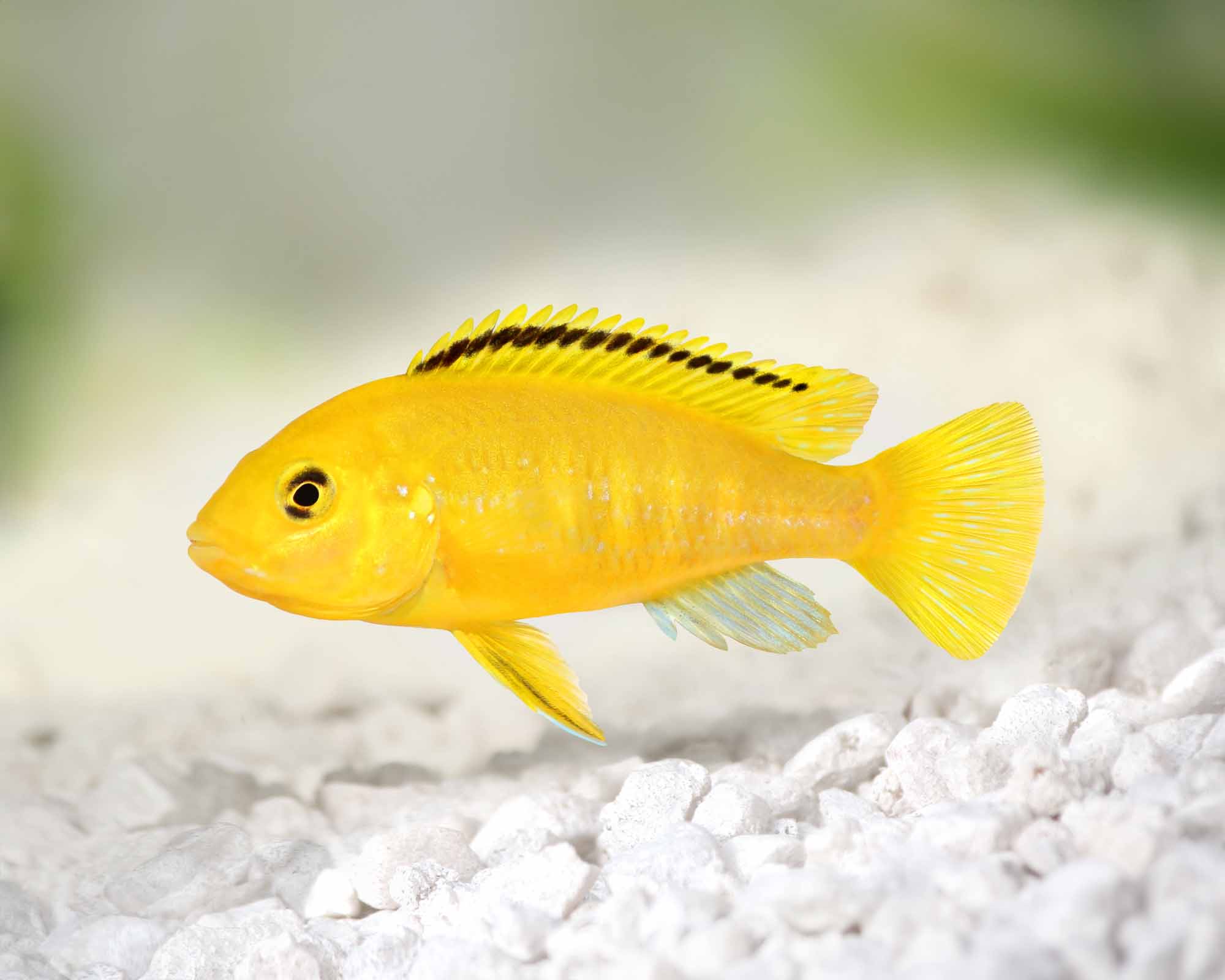
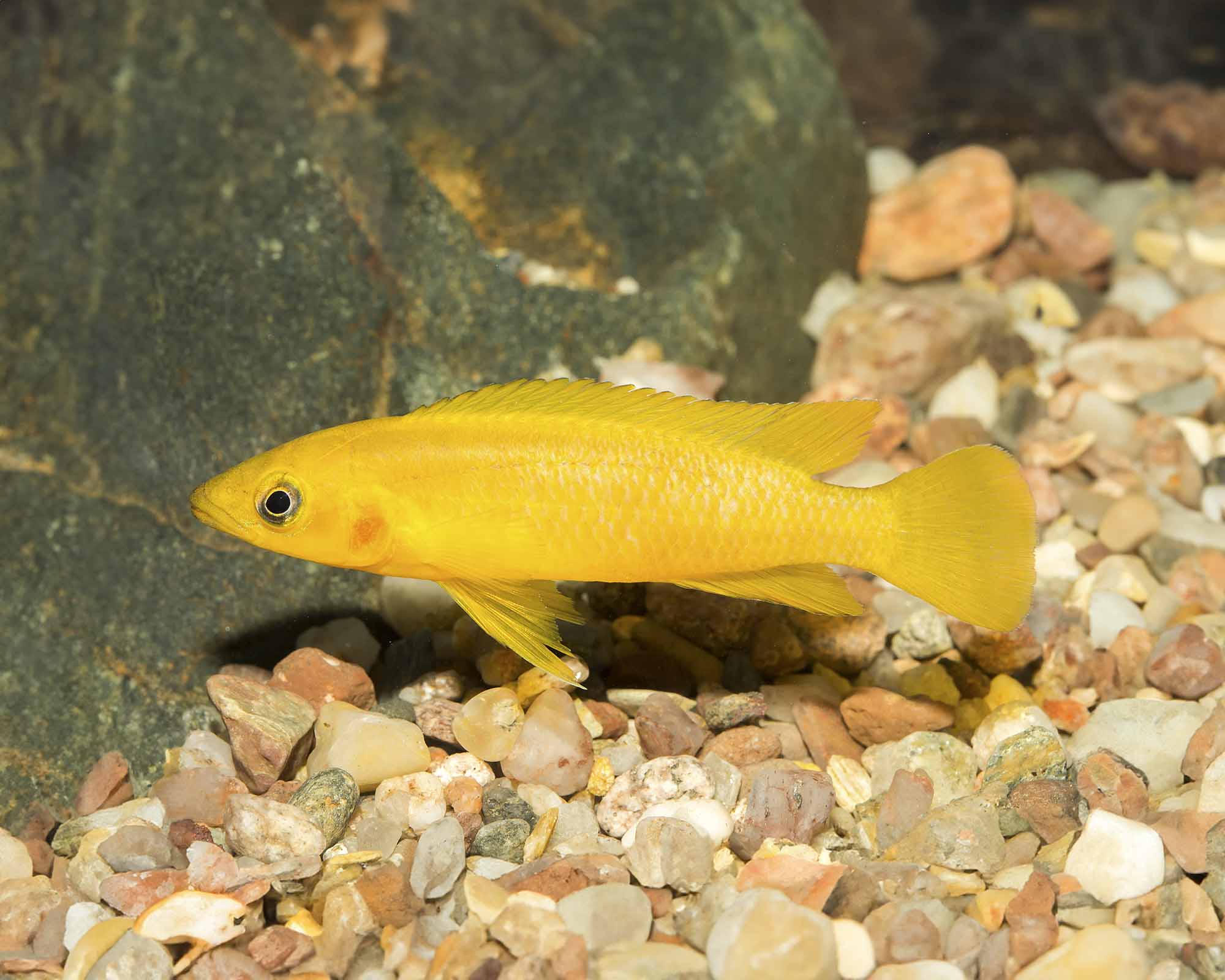
Sciaenochromis fryeri belongs to the family Cichlidae and is a haplochromine cichlid. It is widely known in the aquarium trade as the electric blue hap or azure cichlid. Trade names and locality labels can vary, so the commercial name “Azur cichlid” should be checked against the seller’s records. Adult males are typically elongated and intensely blue; females and immature fish are usually less colorful and may show darker barring.
Natural distribution
This species is endemic to Lake Malawi in East Africa. It occurs in rocky and intermediate habitats where it hunts smaller fish and other aquatic prey. Aquarium specimens may represent different collection localities or captive lines, and locality-specific appearance should not be assumed without reliable provenance.
Aquarium size and setup
A pair should be kept in an aquarium of at least 300 litres, with a footprint around 120 cm or longer; a larger tank is preferable for a community. Use sand or fine gravel with securely arranged rocks, caves, and visual barriers. Leave open swimming space, provide strong biological filtration, and use a tightly fitting cover. Avoid sharp decor and unstable rock piles.
Water parameters
Maintain stable, clean, well-oxygenated water at 24-28 °C, pH 7.6-8.6, with moderate to high hardness and good carbonate buffering. Regular partial water changes are important because this active cichlid produces substantial waste. Avoid rapid changes in temperature, pH, or mineral content, and keep ammonia and nitrite at zero.
Behavior and compatibility
Sciaenochromis fryeri is a territorial predator with moderate to high aggression, especially from mature males during courtship. It is best kept with robust Lake Malawi cichlids of comparable size and temperament in a spacious aquarium. Do not combine it with tiny fish that can be swallowed, delicate community species, or similarly colored males likely to provoke constant conflict. A single male with several females is generally safer than a pair, because a female may receive excessive attention.
Diet
Offer a varied, carnivorous diet based on quality cichlid pellets or granules, supplemented with frozen or prepared foods such as mysis shrimp, krill, and other suitable aquatic invertebrate foods. Feed small portions once or twice daily rather than one large meal. Avoid relying on fatty mammalian meats, and remove uneaten food promptly. Juveniles should receive appropriately sized foods more frequently.
Breeding
This is a maternal mouthbrooder. The male establishes a courtship territory, and the female collects fertilized eggs into her mouth, where she incubates them and protects the young after release. Spawning is more likely when fish are mature, well conditioned, and kept in stable alkaline water. Provide caves and visual barriers. A female may be harassed by the male, so additional females, plenty of cover, or a separate breeding aquarium can improve survival and welfare. If the female holds eggs, avoid unnecessary capture and stress; fry can be raised separately if protection from tank mates is needed.
Identification note
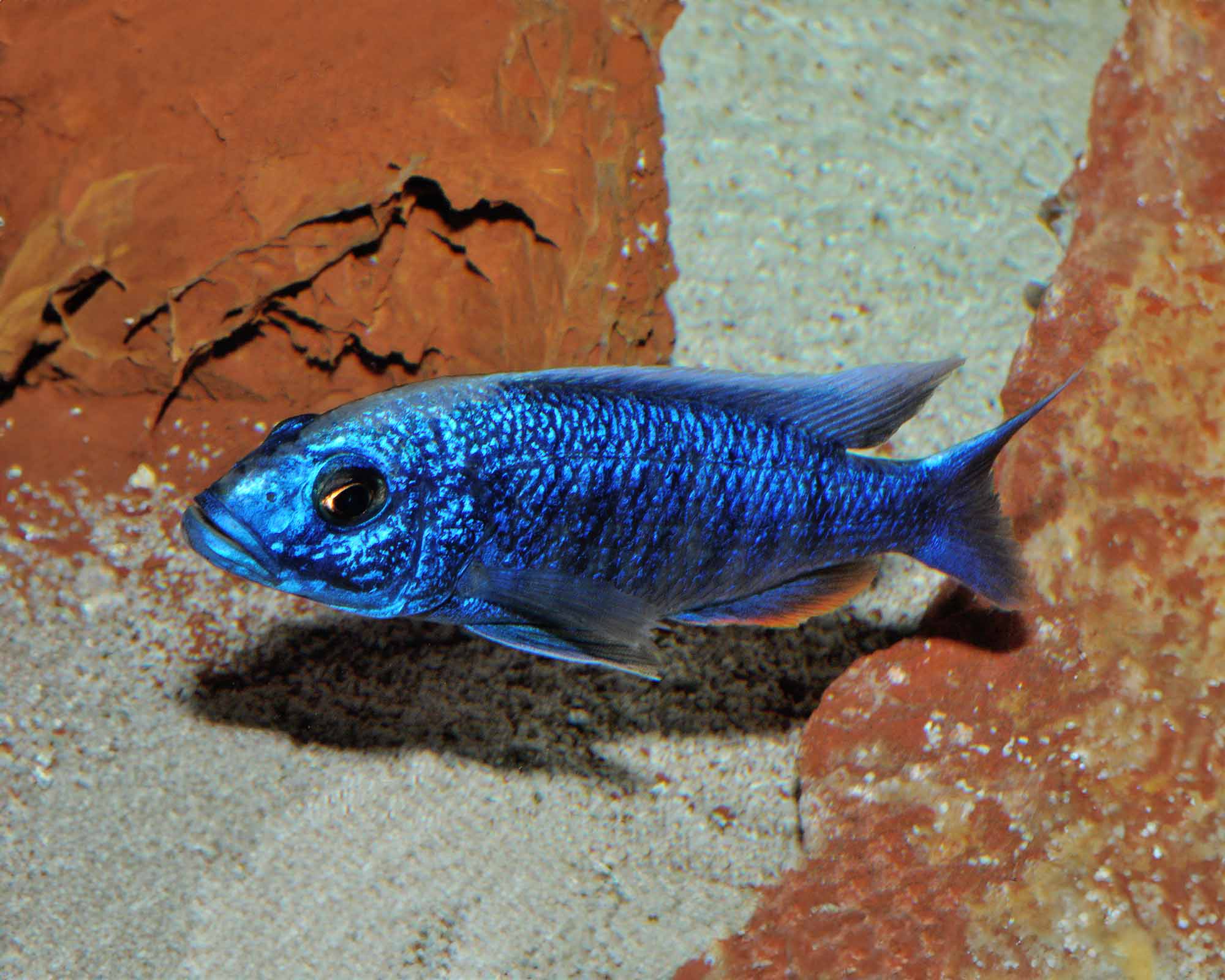
The photographs show a strongly blue Sciaenochromis-type fish, consistent with the supplied Sciaenochromis fryeri label. The images do not independently verify sex, captive origin, DNZ status, locality, or that two fish form a confirmed breeding pair. Confirm those details with the seller before planning a breeding group.
 - pair - 1.webp)
Leave your comments