Overview
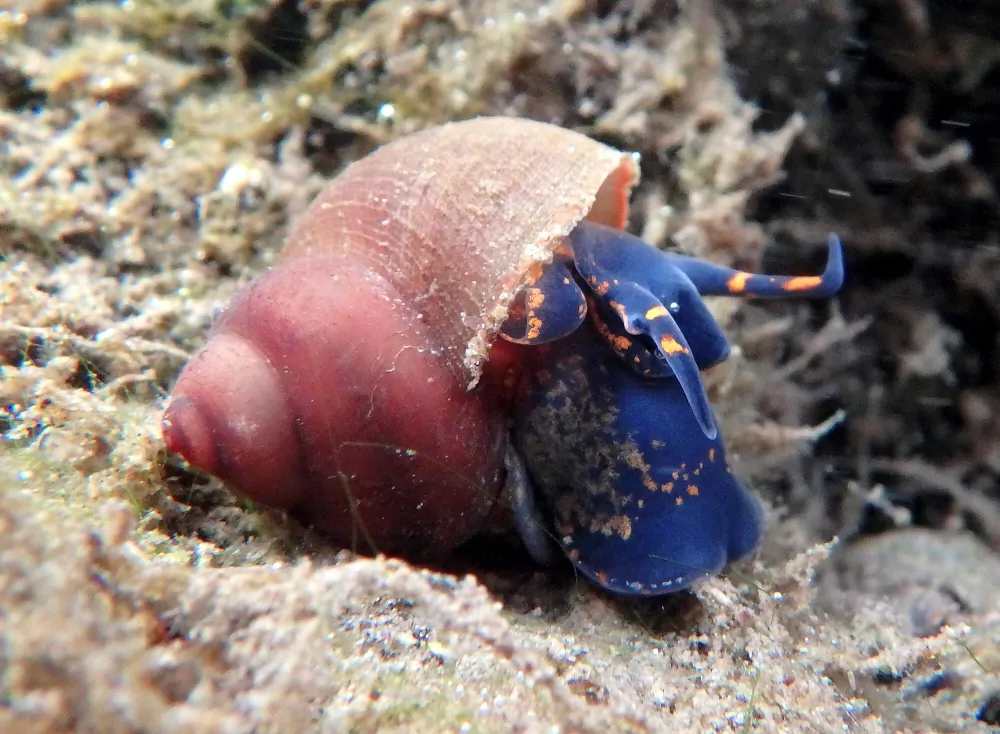
The Blueberry Snail (Viviparus sp.) is a relatively new and highly sought-after arrival in the freshwater aquarium hobby. Named for the remarkable, deep blue coloration of its flesh, this snail is an instant focal point in any planted tank. Unlike many common scavenger snails, the Blueberry Snail is primarily a filter feeder and a livebearer, making its behavior just as fascinating as its appearance.
Distribution and Habitat
Native to the tropical freshwater rivers and streams of Indonesia, particularly in the Papua region, these snails thrive in environments with moderate water flow and highly oxygenated water. In their natural habitat, they can often be found clinging to rocks, submerged wood, and vegetation where they filter micro-organisms and suspended detritus from the passing water currents.
Description of Blueberry Snail
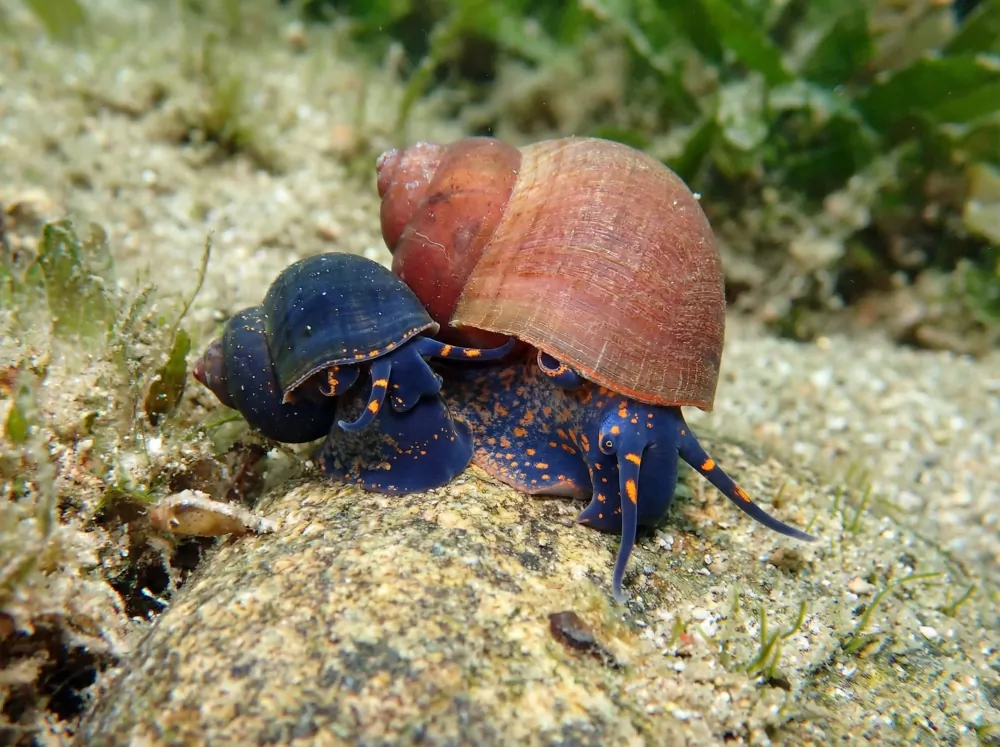
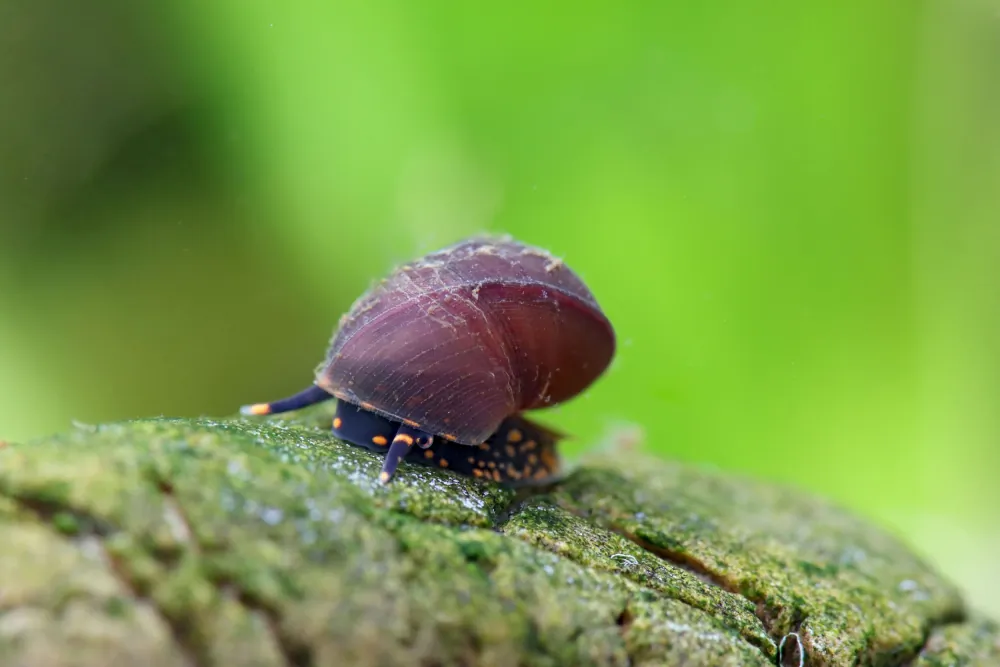
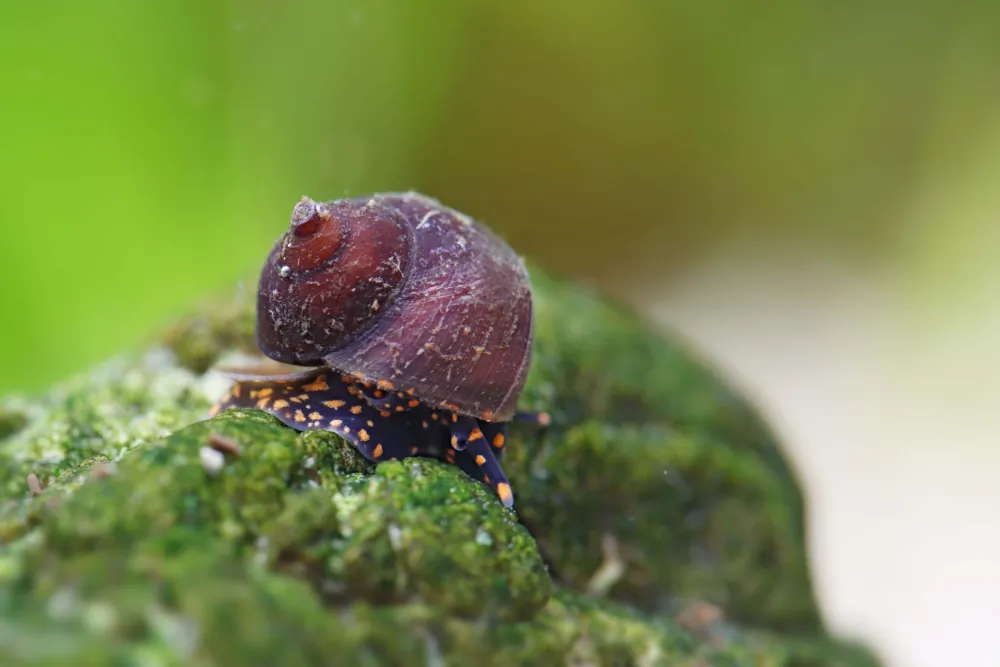
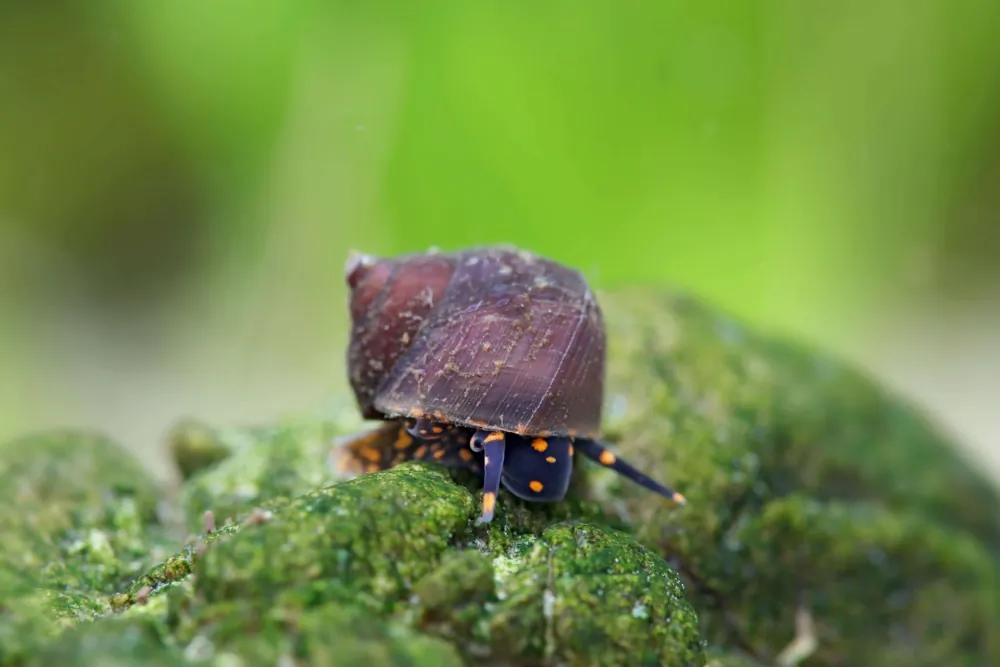
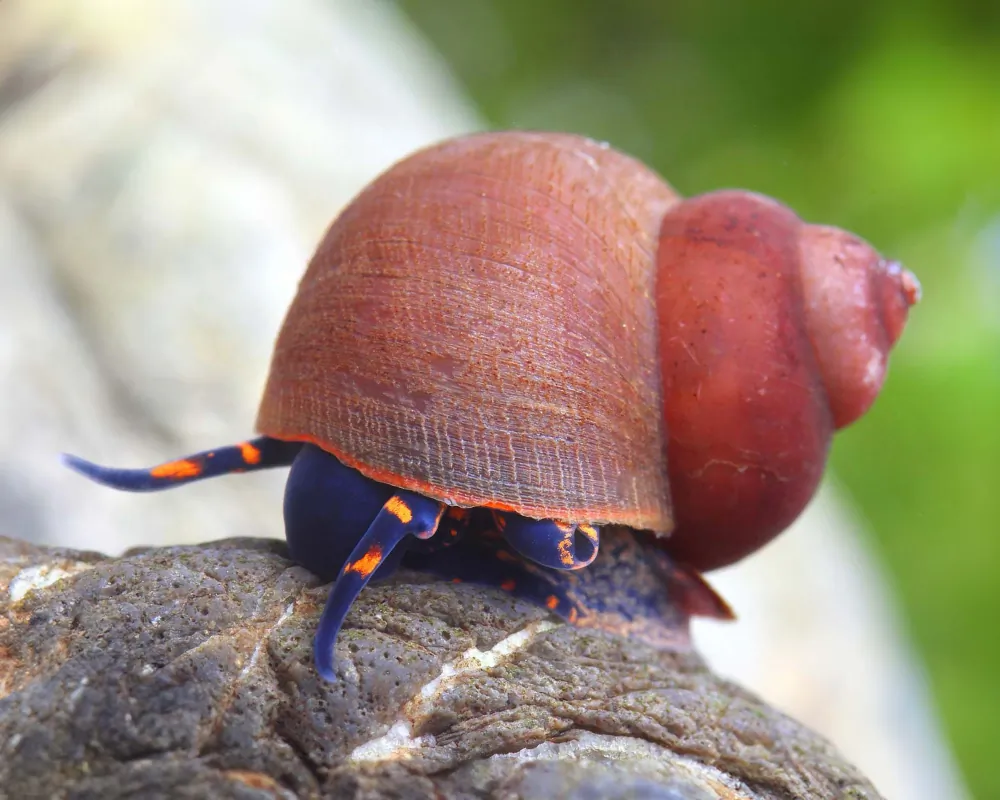
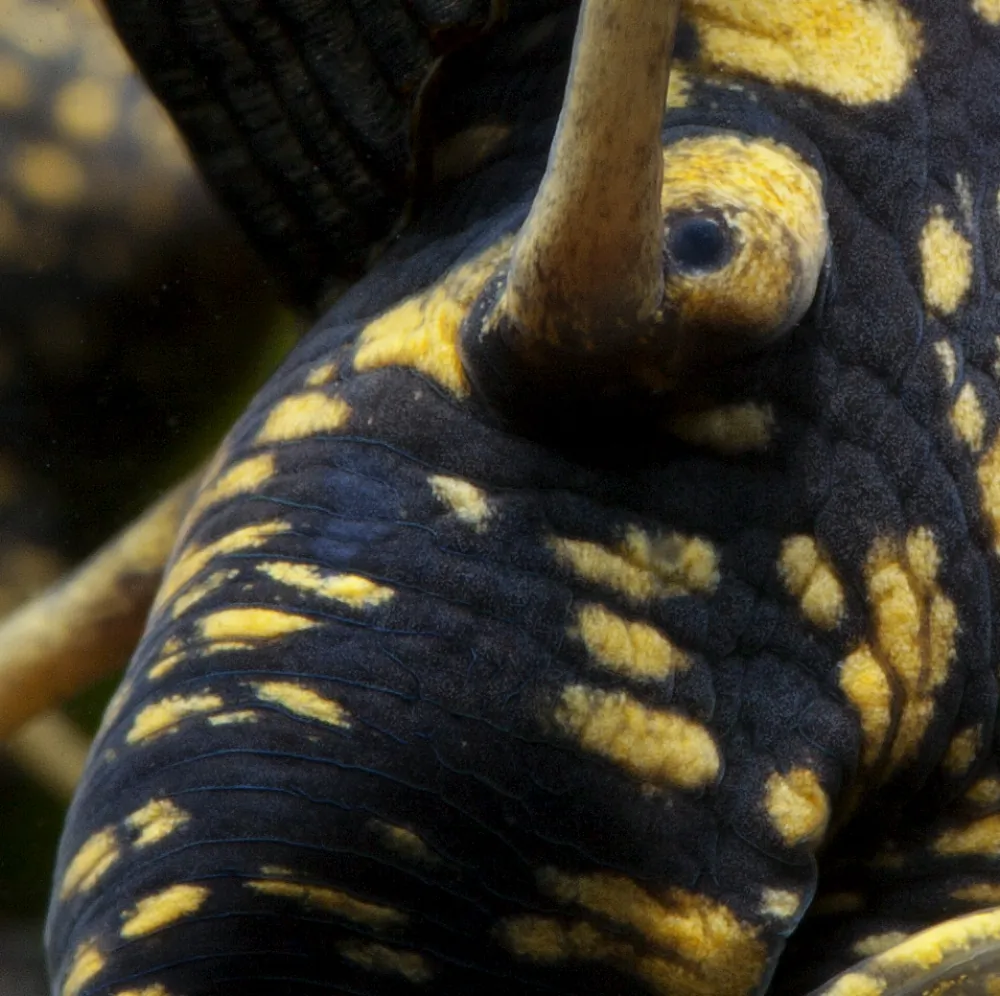
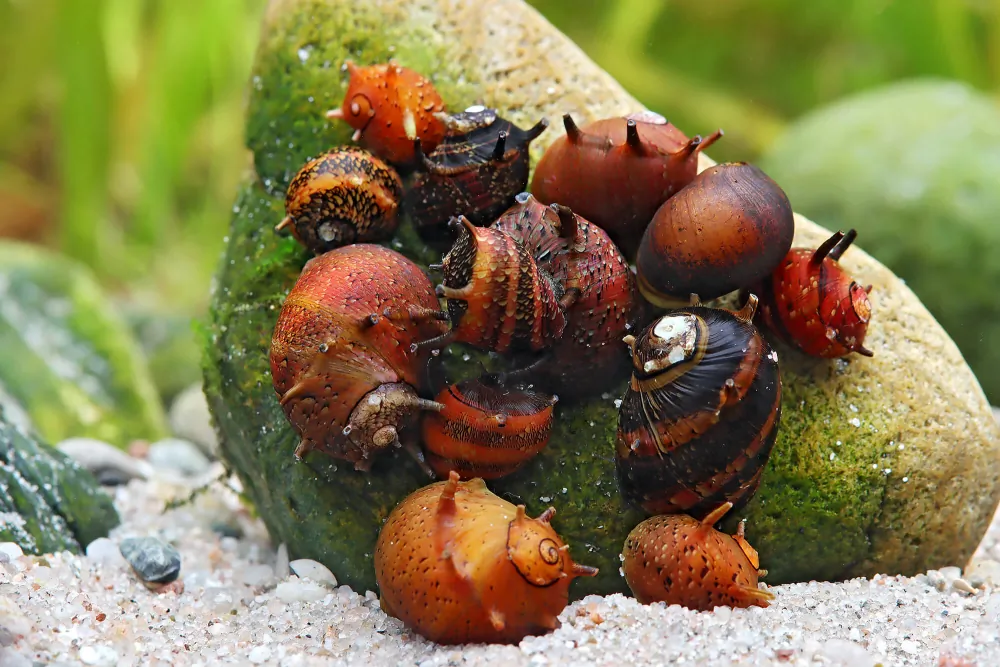
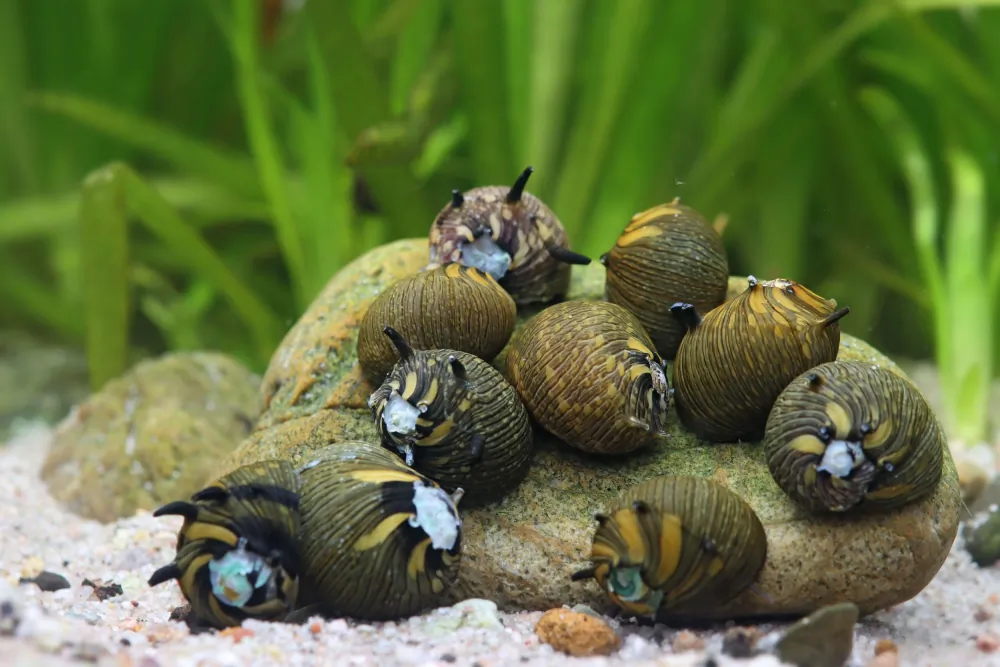
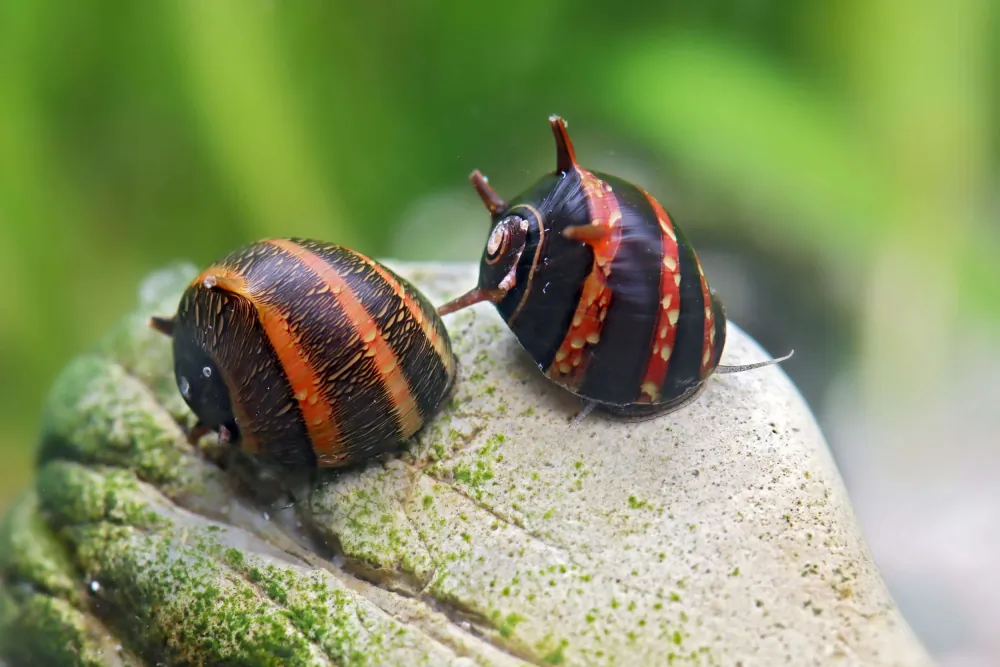
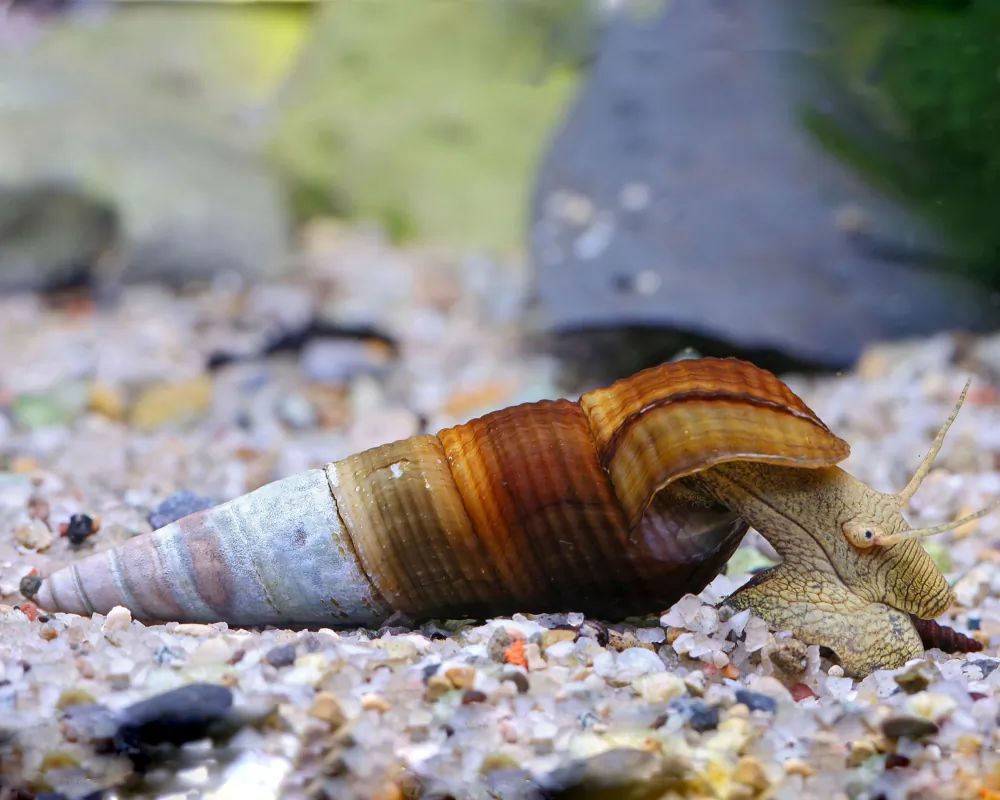
The Blueberry Snail is truly a visual marvel. Its most defining feature is its deeply pigmented, blue-to-purple soft body (foot and head), which is heavily speckled with bright orange or yellow spots. This striking flesh contrasts beautifully against its shell, which typically ranges from a rich reddish-brown to a dark, textured maroon.
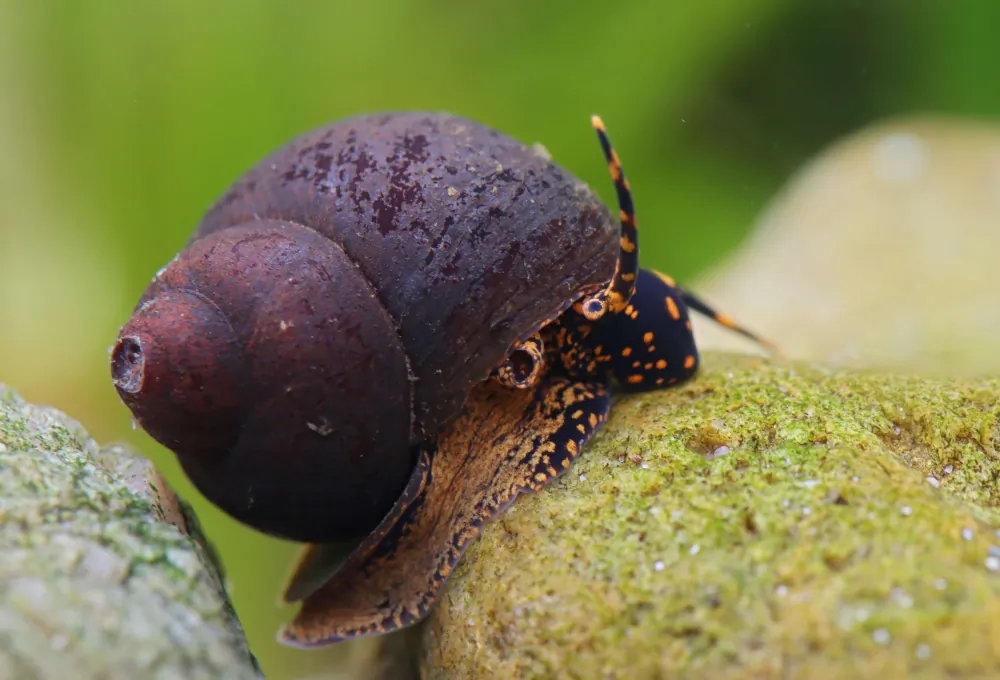
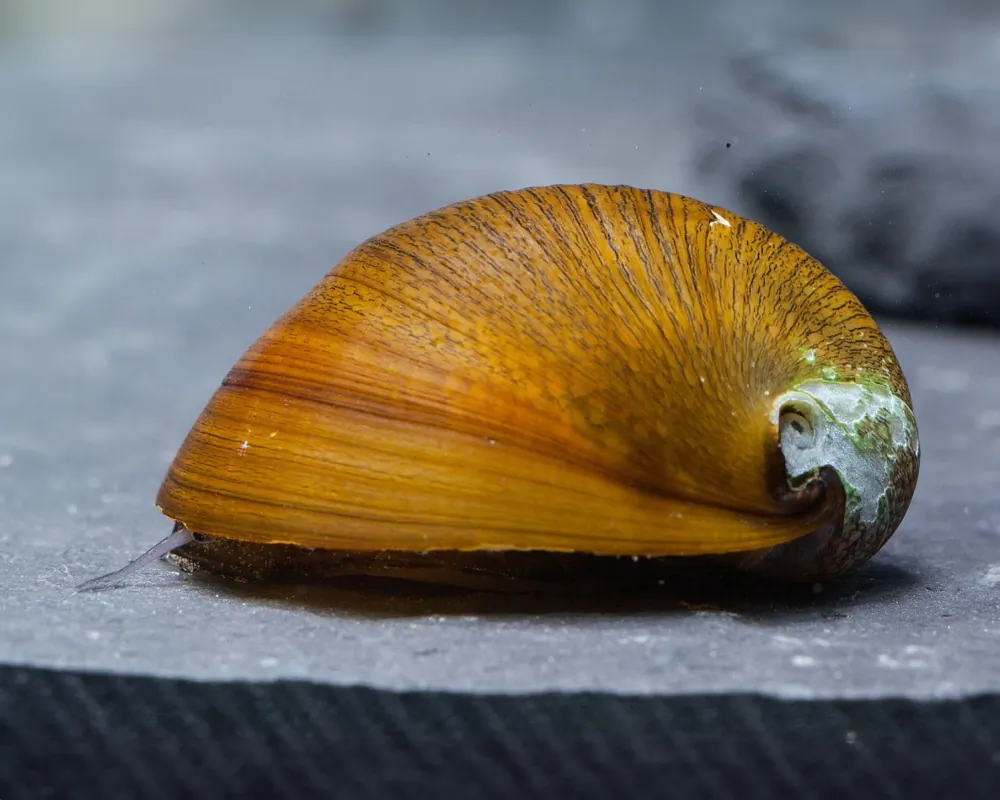
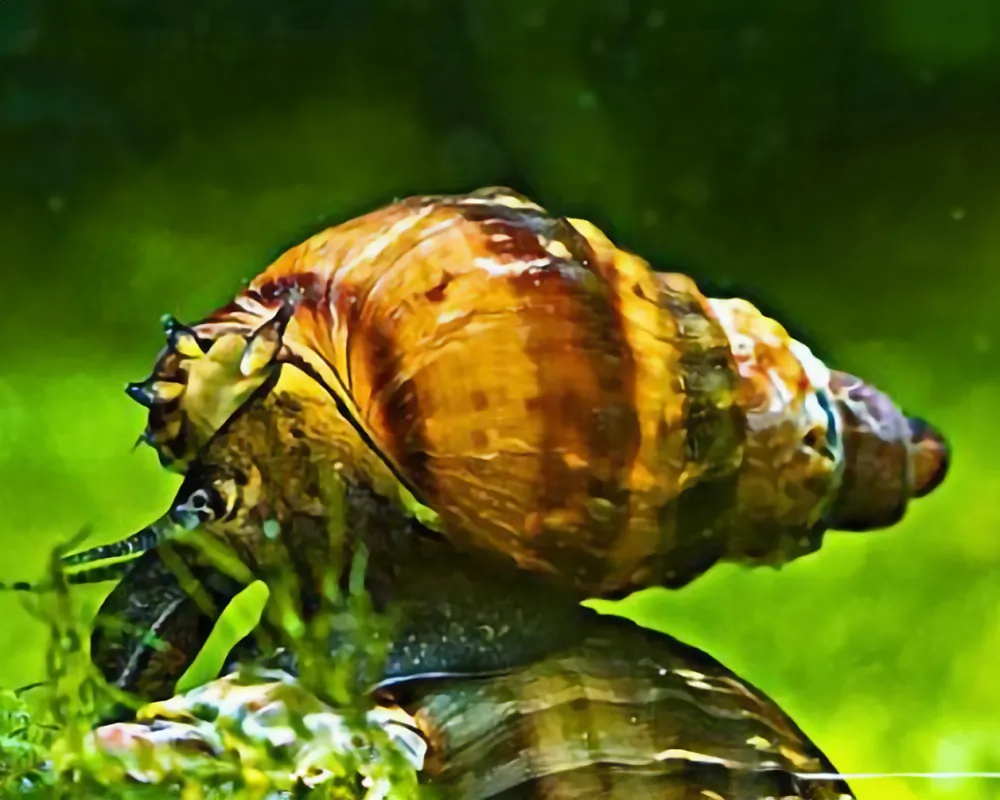
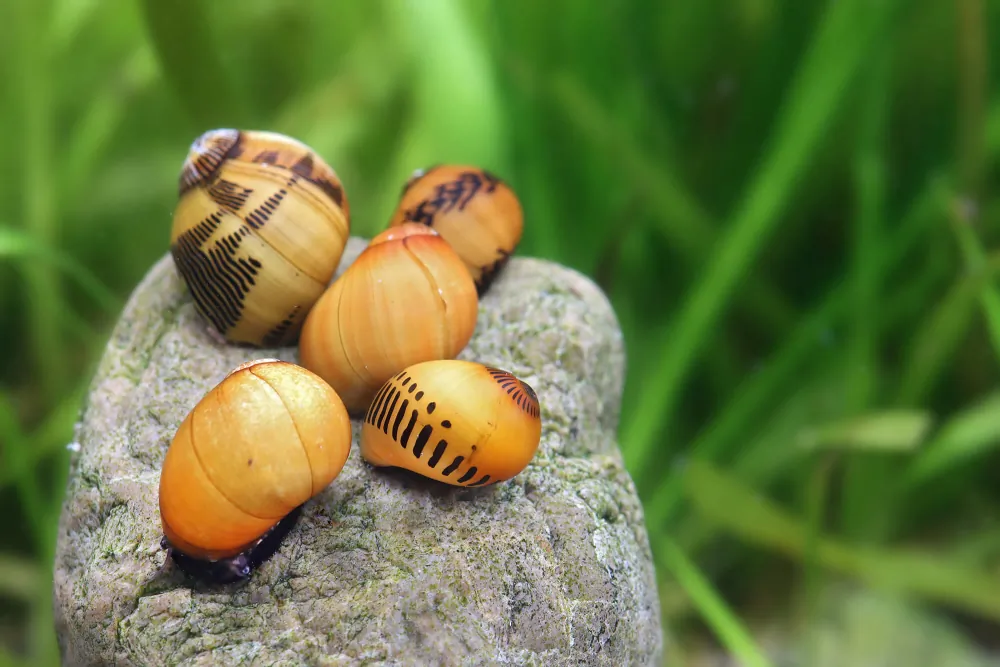
The shell itself is relatively thick and globose, featuring distinct whorls. They also possess a trapdoor (operculum) that they can use to seal themselves inside their shells for protection. They typically reach a maximum size of about 1.5 to 2 inches in diameter.
Keeping and Caring for Blueberry Snail
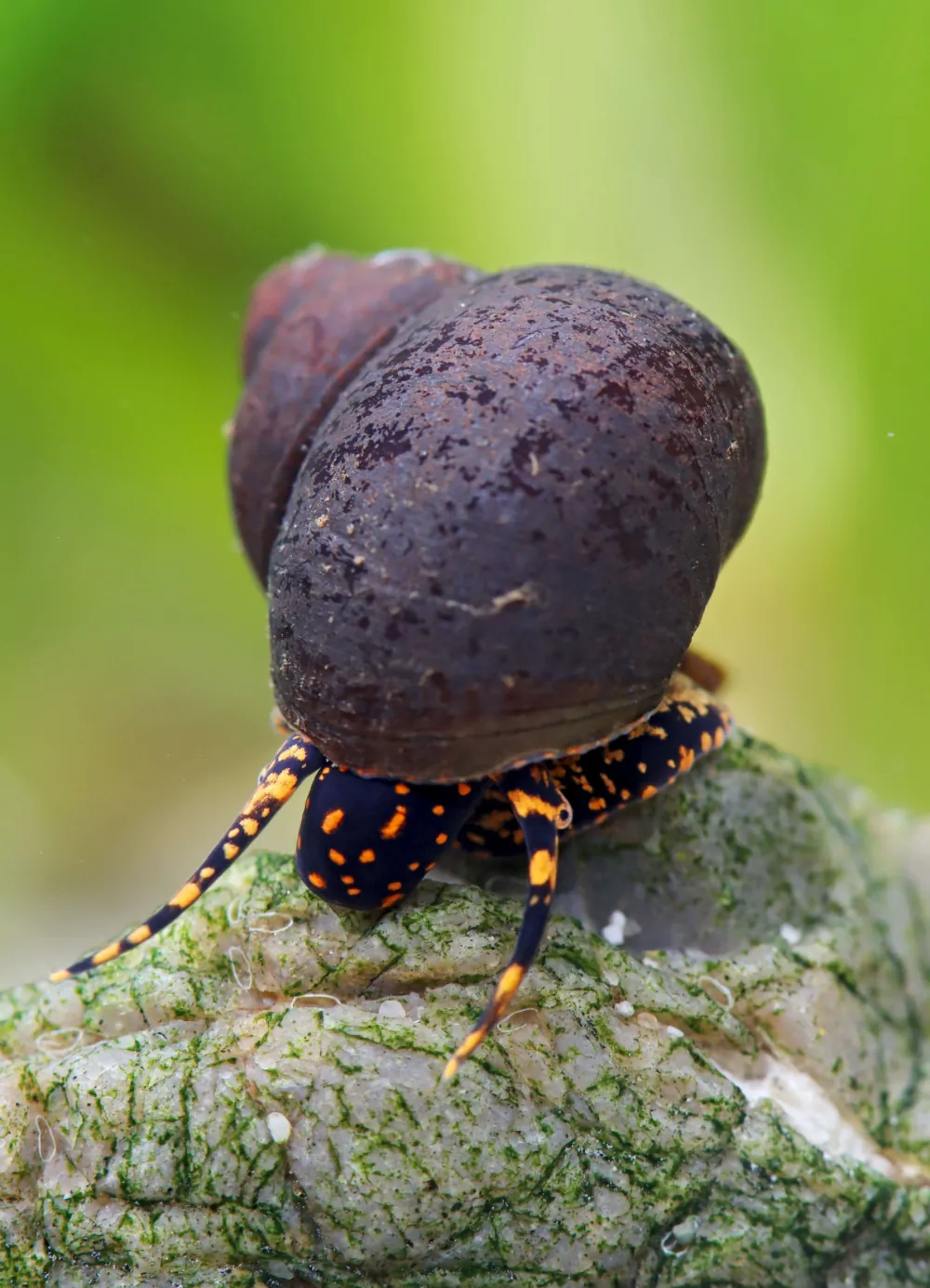
While their appearance is alluring, Blueberry Snails require specific care, primarily due to their feeding habits. They are peaceful and will not bother tank mates, making them excellent additions to community tanks with small, non-aggressive fish and dwarf shrimp. They are entirely plant-safe and will not consume healthy aquarium vegetation.
Tank size:
A minimum tank size of 10 to 15 gallons is recommended. Because they are filter feeders, they rely on mature water columns with enough suspended particles to eat, which is difficult to maintain in nano setups without fouling the water.
Water Parameters:
Stability is key for the Blueberry Snail. They require well-oxygenated water with a moderate flow to assist their filter-feeding behavior.
Temperature
Keep the water temperature between 72°F and 82°F (22°C - 28°C). Tropical temperatures ensure they remain active and healthy.
pH
A slightly alkaline pH between 7.0 and 8.0 is ideal to prevent the deterioration of their thick shells.
Hardness
They require hard water (GH 8-15, KH 4-10) rich in calcium and other essential minerals to maintain their shell integrity and support healthy growth.
Ammonia, Nitrite, Nitrate
Like most invertebrates, they are highly sensitive to poor water quality. Ammonia and Nitrite must be strictly at 0 ppm, and Nitrates should be kept as low as possible, ideally below 20 ppm.
Feeding the Blueberry Snail
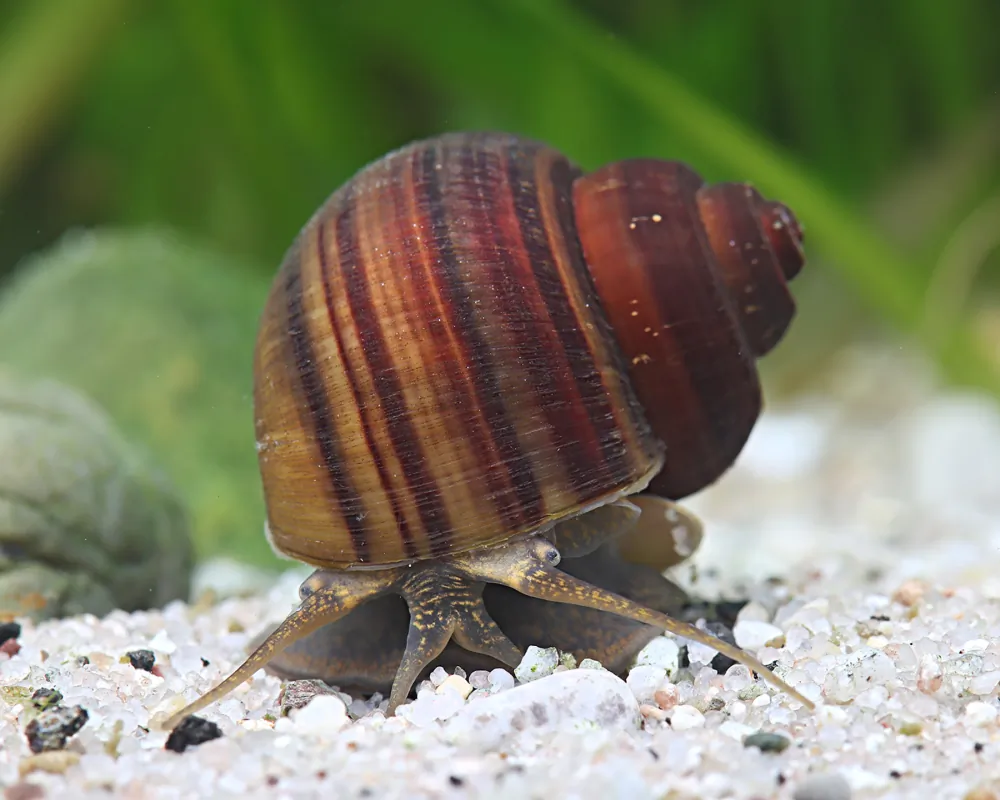
Feeding is the most challenging aspect of keeping Blueberry Snails. Unlike Mystery or Nerite snails that actively graze on algae wafers and vegetables, Blueberry Snails are primarily filter feeders. They use specialized gills to trap suspended particles from the water column. To keep them nourished, you must provide powdered fry foods, spirulina powder, microalgae, and specialized invertebrate filter-feeder supplements. They will also graze on soft biofilm on rocks and glass, but powdered foods introduced into the water current are essential for their long-term survival.
Breeding Blueberry Snail
The breeding behavior of the Blueberry Snail is fascinating. As indicated by their genus name Viviparus, they are viviparous, meaning they give birth to fully formed, live young rather than laying egg clutches. They are not hermaphroditic; there are distinct males and females. Males can often be identified by a slightly thicker, modified right antenna used during reproduction.
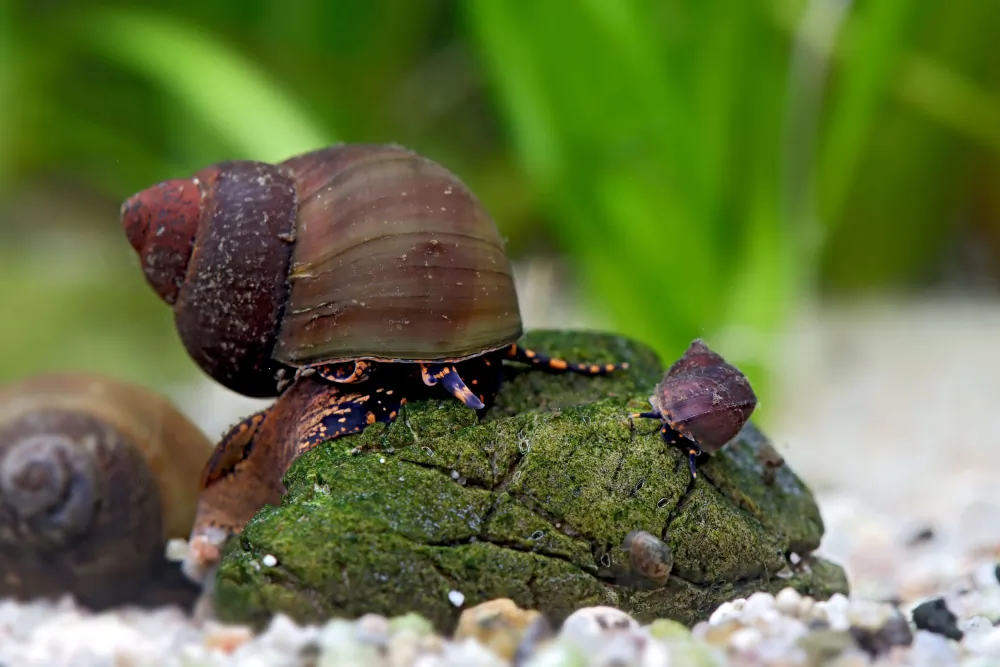
Females will birth a single, relatively large baby snail every few weeks. Because their reproductive rate is so slow, there is no risk of them overpopulating an aquarium like bladder or ramshorn snails might. The babies emerge as miniature versions of the adults, already displaying the characteristic blue skin and tiny orange spots.
Conclusion
The Blueberry Snail is an extraordinary invertebrate that rewards dedicated aquarists with its unique behaviors and stunning coloration. While their need for powdered foods and filter-feeding accommodations makes them slightly more demanding than the average cleanup crew, their peaceful nature and slow breeding rate make them a highly prized addition. If you can meet their dietary and water quality needs, the Blueberry Snail will be a standout centerpiece in your freshwater aquarium.






Leave your comments