Overview
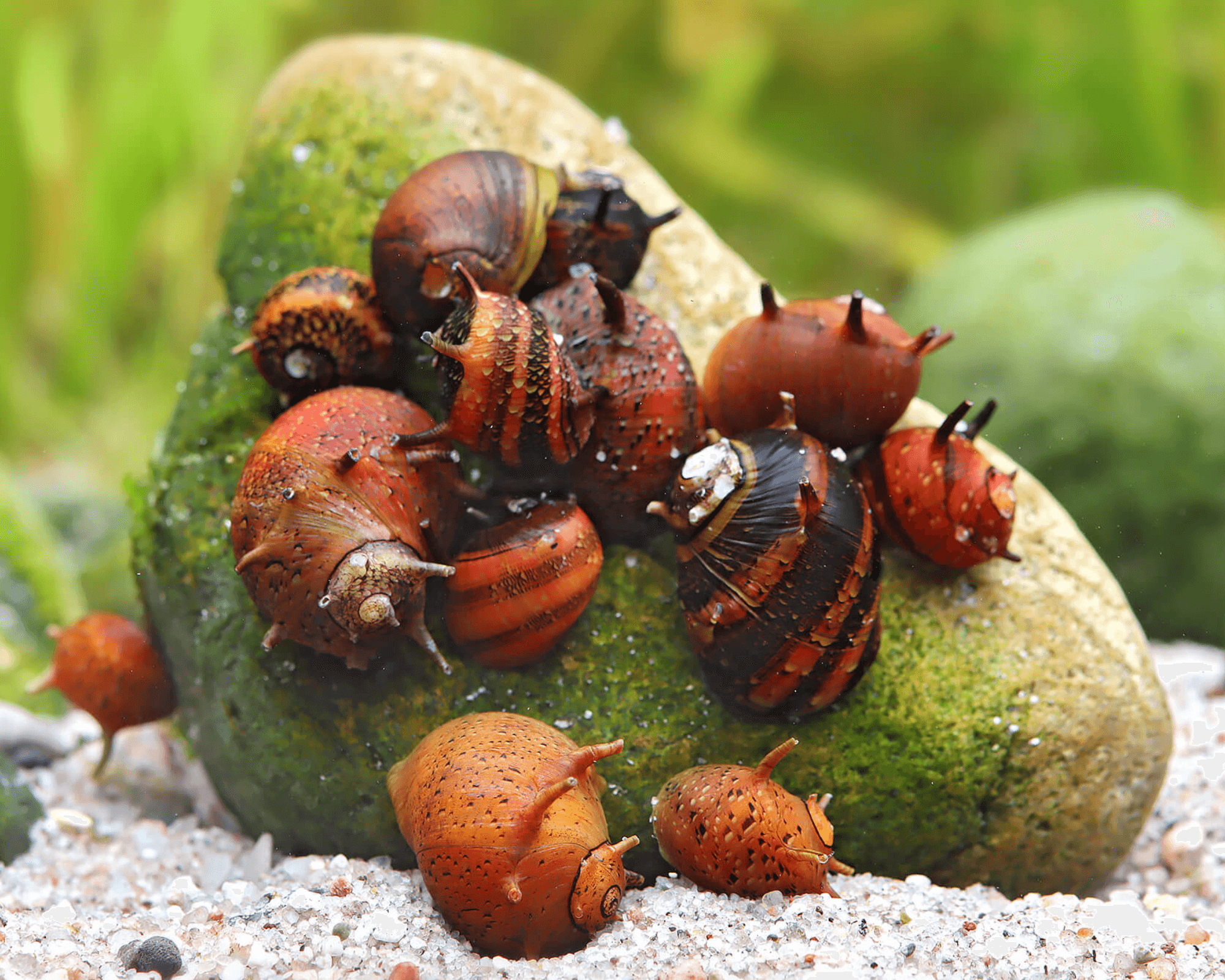
The Clithon sowerbianum, commonly known in the hobby as the Volcano Red Horned Snail or "Geweihschnecke" in German, is a highly sought-after member of the nerite family. Renowned for their voracious appetite for nuisance algae and their inability to overpopulate in freshwater, they are a staple cleanup crew member for planted tanks and aquascapes.

Distribution and Habitat
These fascinating snails are native to Southeast Asia, particularly found in coastal regions, estuaries, and river mouths. In the wild, they inhabit areas where freshwater streams meet the ocean, creating a brackish environment. They are typically found clinging tightly to rocks, driftwood, and smooth stones in fast-flowing waters, grazing continuously on biofilms and algae.
Description of Volcano Red Horned Snail
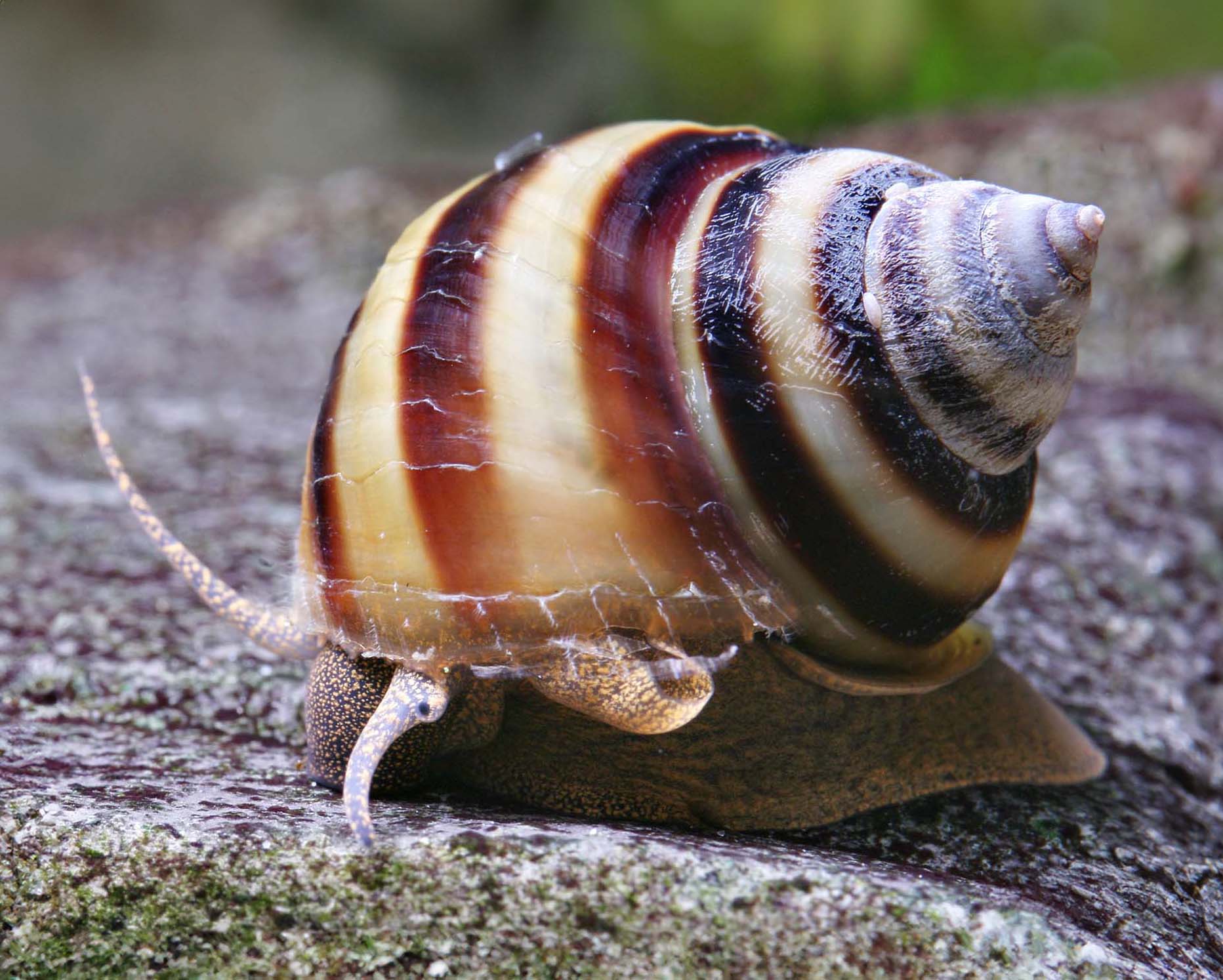
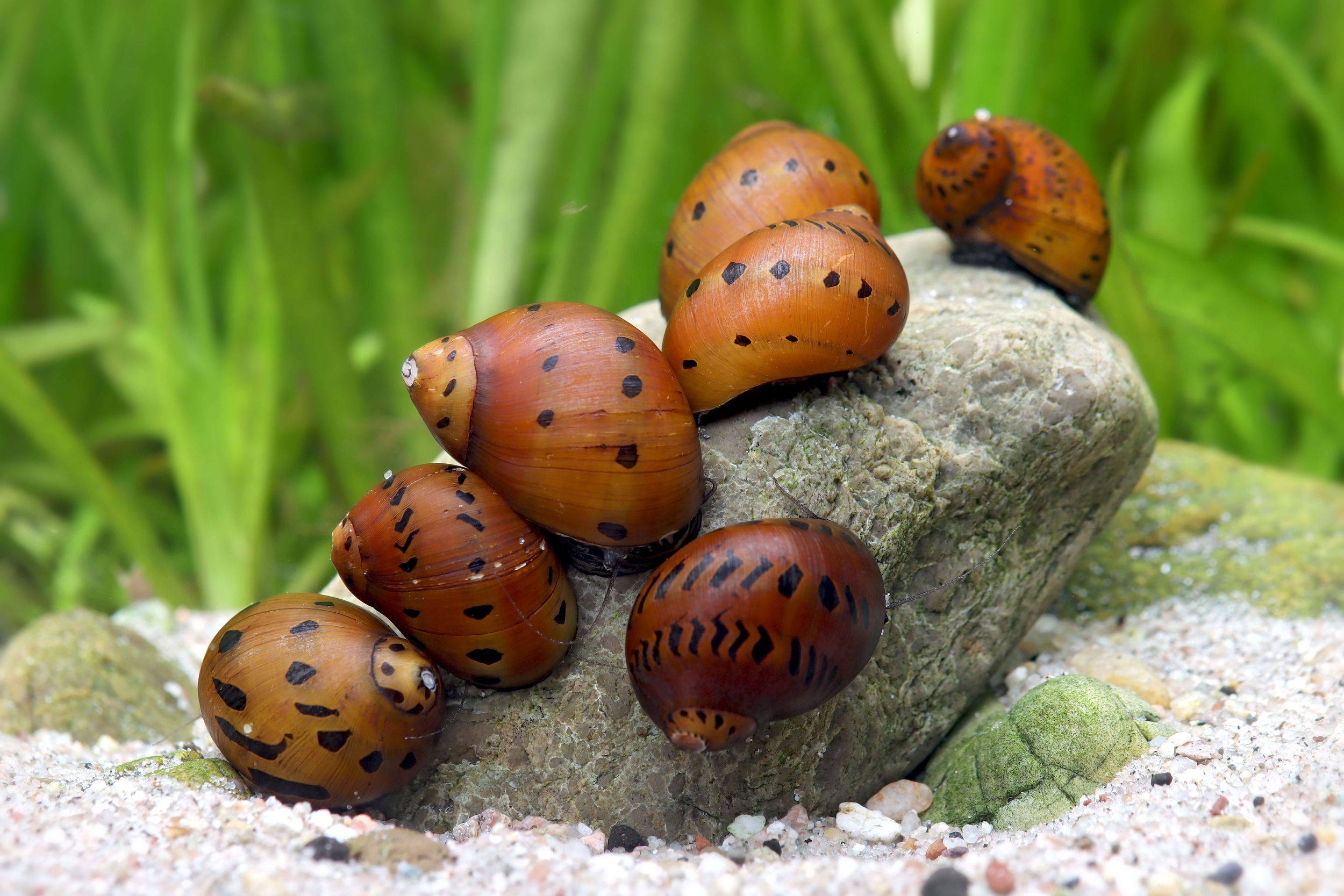
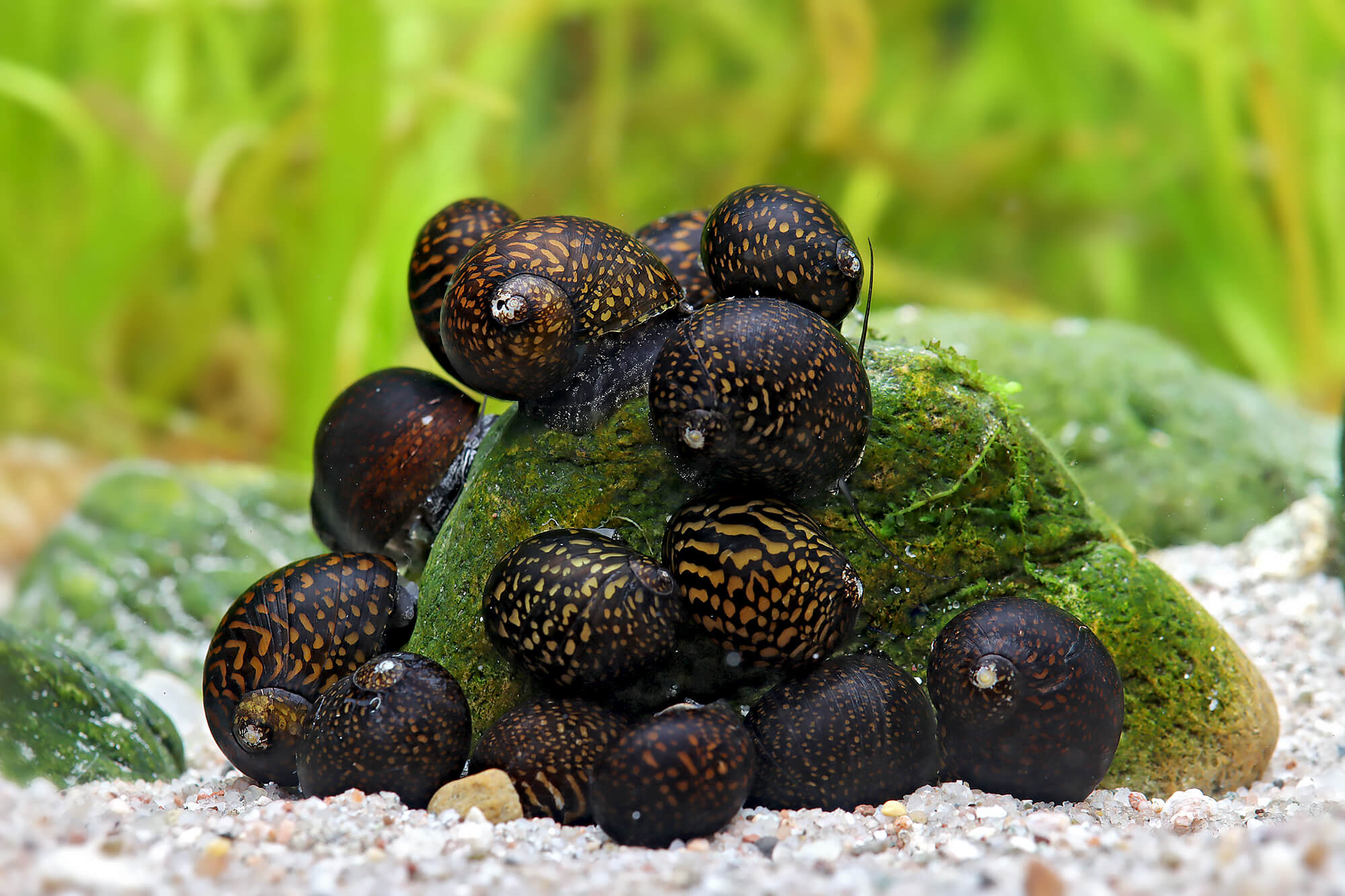
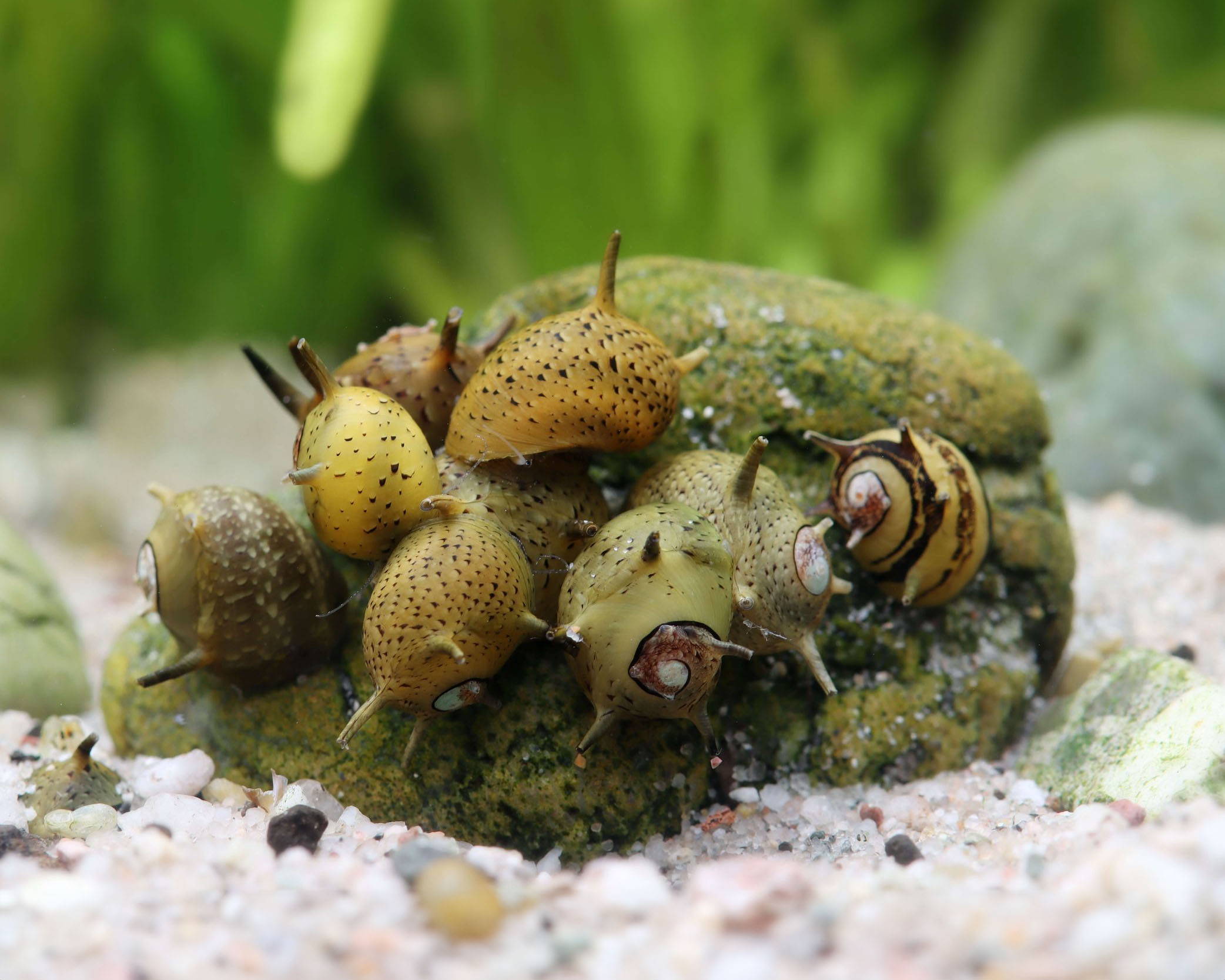
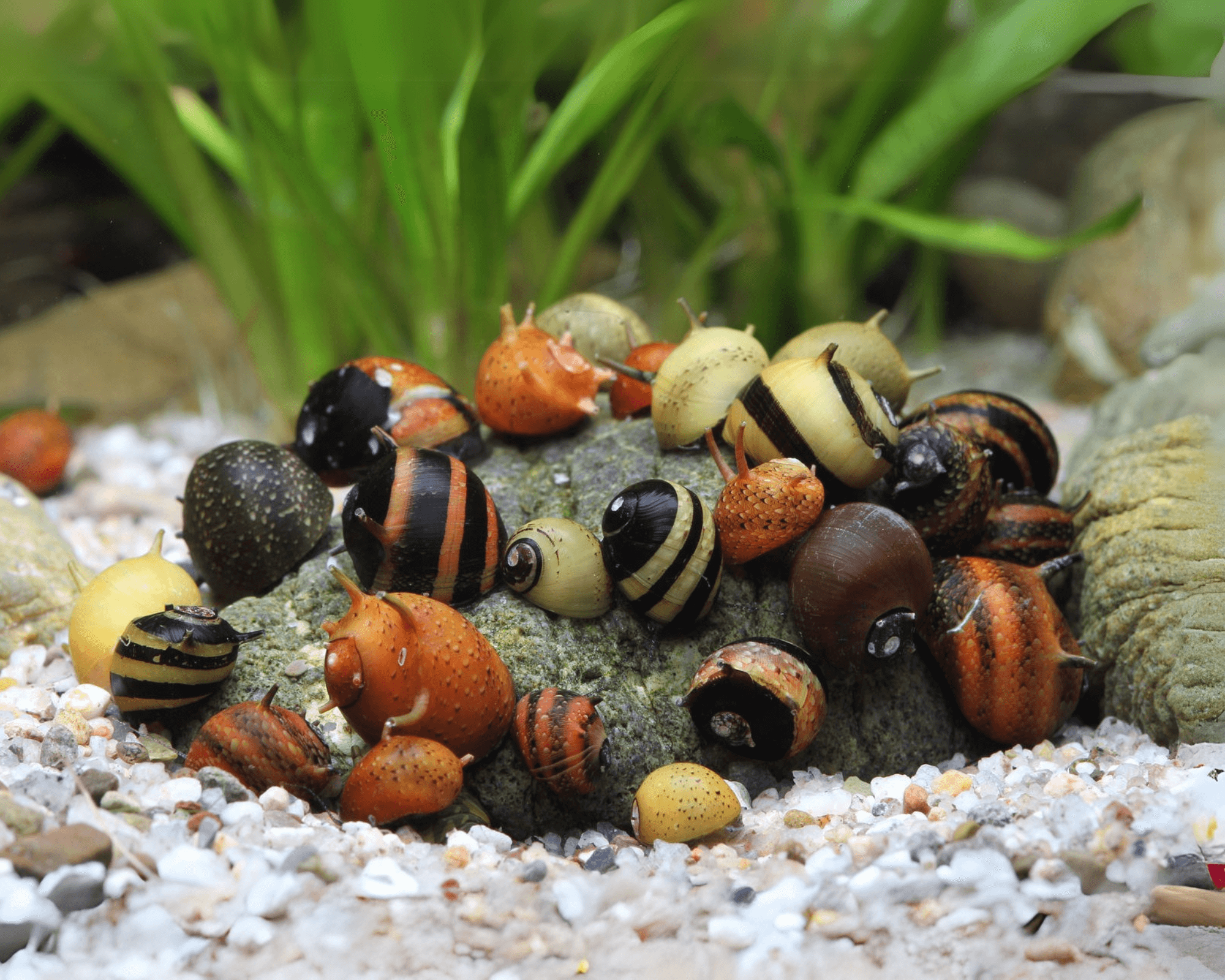
As their name suggests, the Volcano Red Horned Snail boasts a stunning, fiery coloration. Their shells feature a beautiful gradient of deep reds, vibrant oranges, and sometimes warm yellowish hues. Many individuals exhibit dark, tiger-like stripes or intricate speckles that contrast sharply with their bright base colors. Their most defining physical trait is the crown of small, dark, thorn-like appendages—or "horns"—protruding from their shells. These horns serve as a natural defense mechanism against predators. They are a relatively small species, typically reaching a maximum size of 1.5 to 2 cm (about 0.6 to 0.8 inches).

Keeping and Caring for Volcano Red Horned Snail
Caring for the Volcano Red Horned Snail is relatively straightforward, making them suitable for both beginners and experienced aquarists. They are completely peaceful and will not bother fish, shrimp, or other snails. However, they should not be housed with aggressive, snail-eating fish such as pufferfish or large loaches.
Tank size:
A minimum tank size of 10 liters (approx. 2.5 gallons) is sufficient for a small group of these snails. However, larger tanks are generally recommended to ensure there is a constant, adequate supply of naturally growing algae for them to graze on.
Water Parameters:
Like most snails, they require stable water conditions and are highly sensitive to sudden fluctuations and heavy metals, particularly copper.
Temperature
They thrive in tropical temperatures ranging from 22 to 28 °C (72 - 82 °F).
pH
A slightly alkaline pH of 7.0 to 8.5 is ideal. Acidic water (pH below 7.0) can gradually dissolve their shells, leading to severe health issues and pitting.
Hardness
Moderate to hard water is essential. A General Hardness (GH) of 6-20 dGH and a Carbonate Hardness (KH) of 4-15 dKH will provide the necessary calcium and minerals they need to maintain their strong, horned shells.
Ammonia, Nitrite, Nitrate
Ammonia and Nitrite must always be at 0 ppm. Nitrates should be kept as low as possible, ideally below 20 ppm, through regular water changes and good tank maintenance.

Feeding the Volcano Red Horned Snail
These snails are strict algivores and herbivores. They will spend their days meticulously cleaning the aquarium glass, hardscape, and plant leaves of soft green algae, brown diatoms, and biofilm. They are entirely plant-safe and will not consume healthy aquatic plants. If your tank is pristine and lacks natural algae, you must supplement their diet to prevent starvation. Offer high-quality algae wafers, spirulina powder, or blanched vegetables like zucchini, cucumber, and spinach.
Breeding Volcano Red Horned Snail
One of the biggest advantages of keeping Clithon sowerbianum is that they will not overpopulate your freshwater aquarium. While females will lay small, white, sesame-seed-like egg capsules on driftwood, rocks, and occasionally on the shells of other snails, these eggs require brackish or marine water to hatch and develop. In a standard freshwater setup, the eggs will simply remain unhatched, ensuring your snail population stays exactly where you want it.
Conclusion
The Volcano Red Horned Snail is a striking, hard-working addition to any planted or community aquarium. Their fiery colors, unique defensive horns, and unparalleled algae-cleaning abilities make them a top-tier choice for aquarists. By providing them with hard, alkaline water and plenty of algae to graze on, you can enjoy these beautiful and beneficial invertebrates for years to come.
 - 1.webp)

 DNZ - 1.webp)
Leave your comments