Overview
The Fancy Antler Snail, scientifically known as Clithon sowerbyanum (frequently spelled Clithon sowerianum in the aquarium trade), is a highly sought-after member of the Neritidae family. These snails are beloved for their phenomenal algae-clearing abilities and their striking, highly variable shell patterns. Unlike larger snail species, they remain quite small, making them an unobtrusive yet incredibly effective cleanup crew for nano aquariums and large aquascapes alike. Because they do not reproduce in freshwater, aquarists can enjoy their benefits without the fear of a population explosion.
Distribution and Habitat
In the wild, Clithon sowerbyanum is found throughout the coastal regions and estuaries of the Indo-Pacific. They naturally inhabit areas where freshwater streams meet the ocean, meaning they frequently transition between freshwater and brackish environments. They are typically found clinging to rocks, driftwood, and smooth stones in fast-flowing waters, grazing heavily on the natural biofilm and algae that grow in these sunlit, nutrient-rich environments.
Description of Fancy Antler Snail
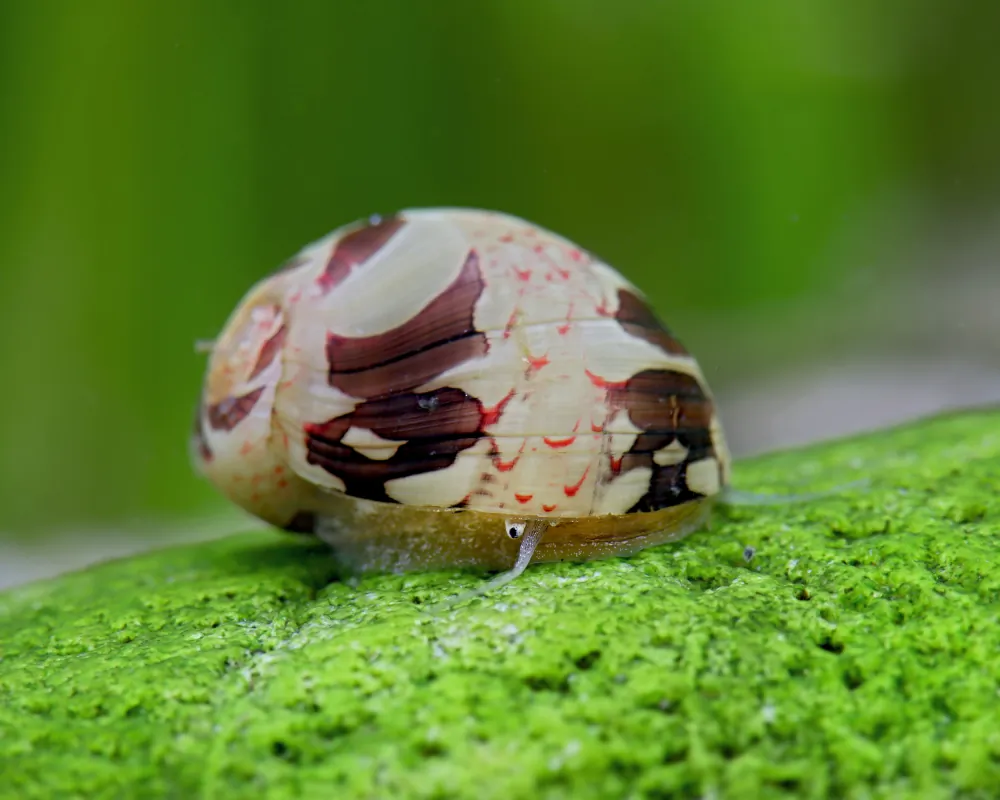
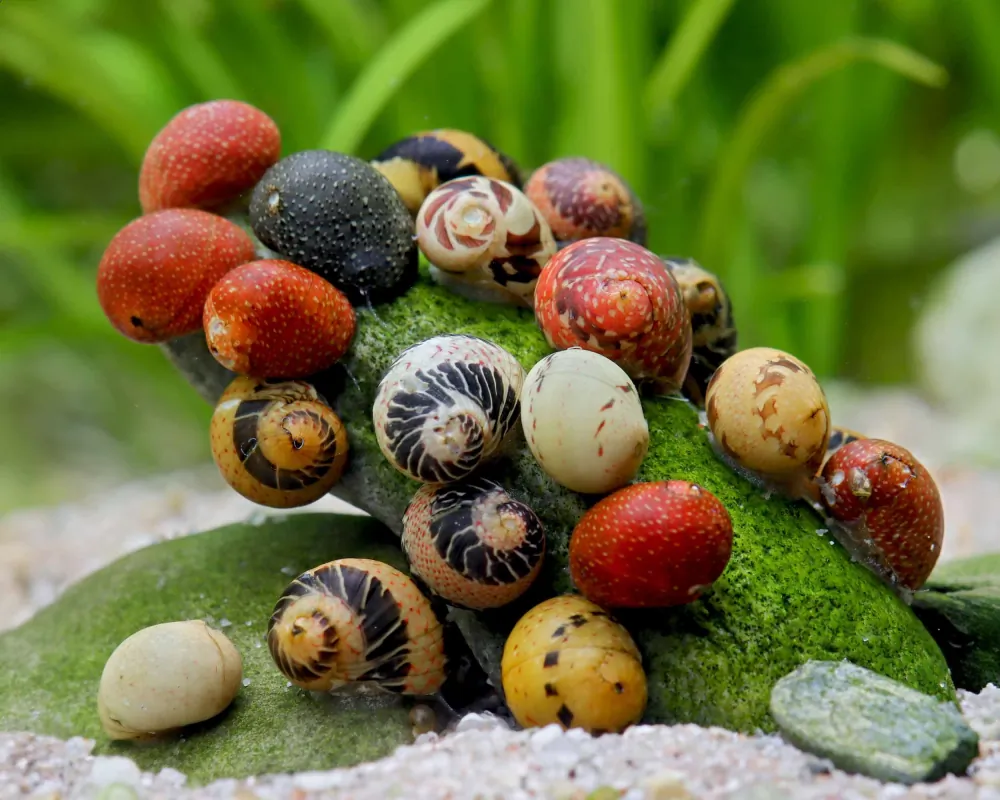
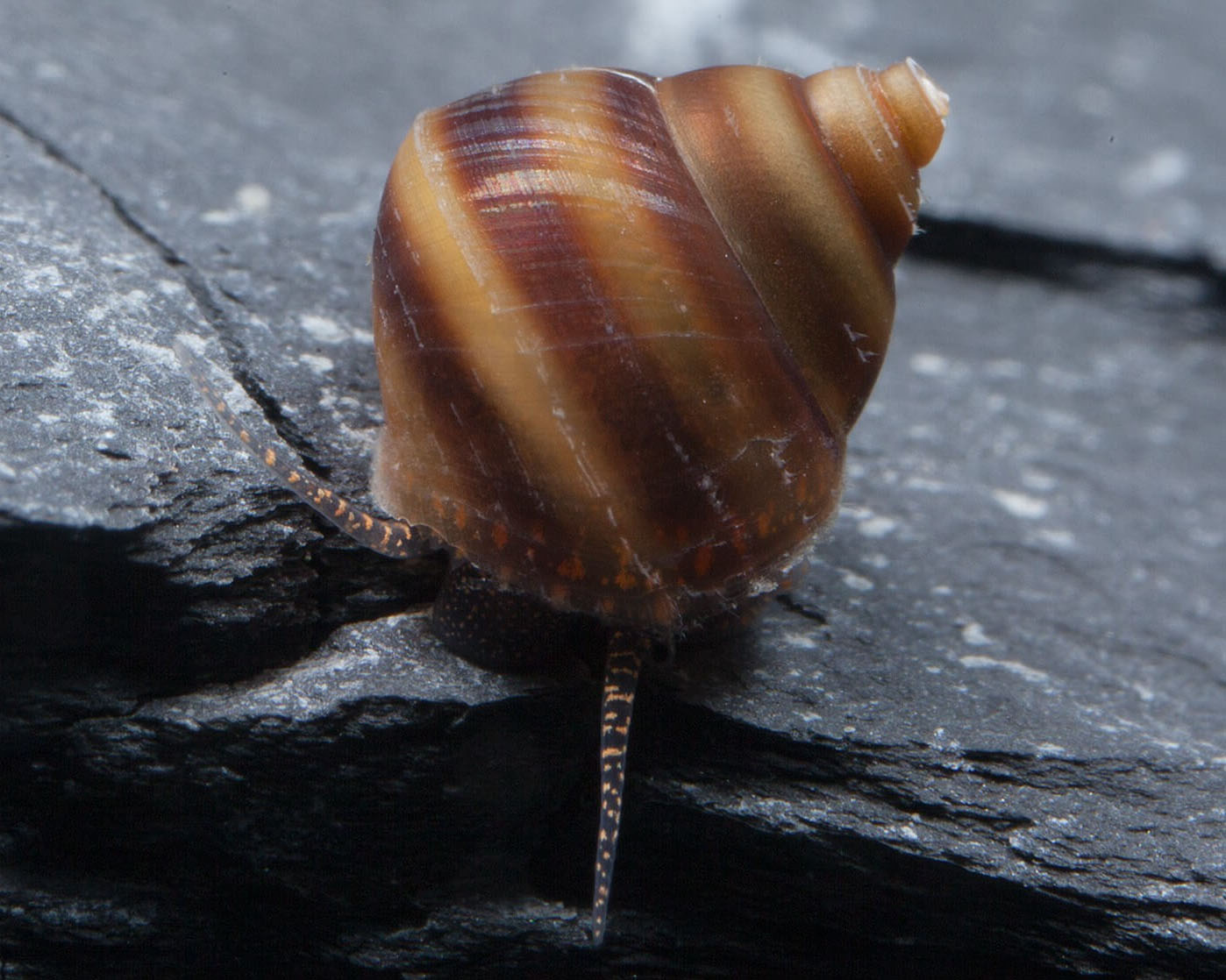
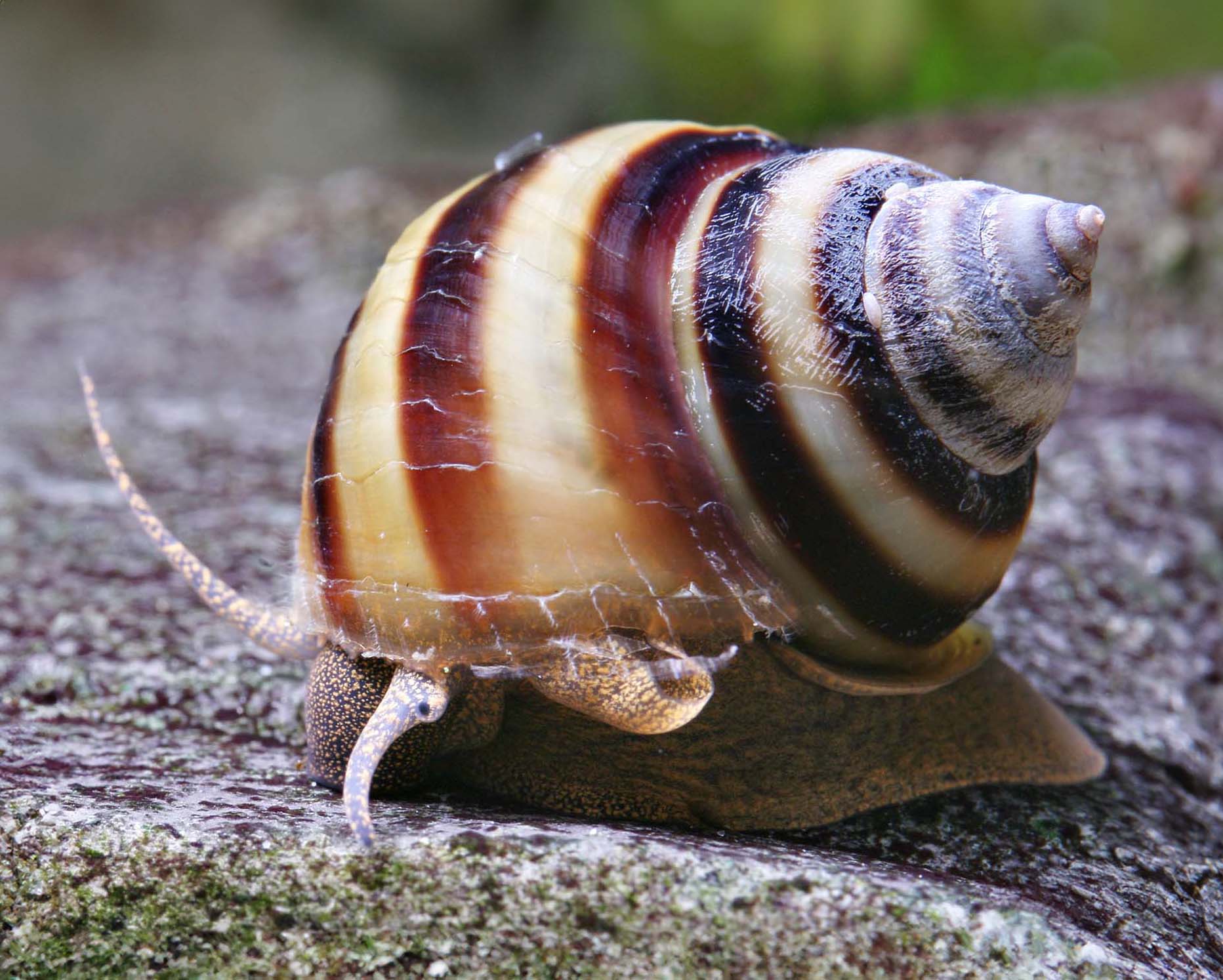
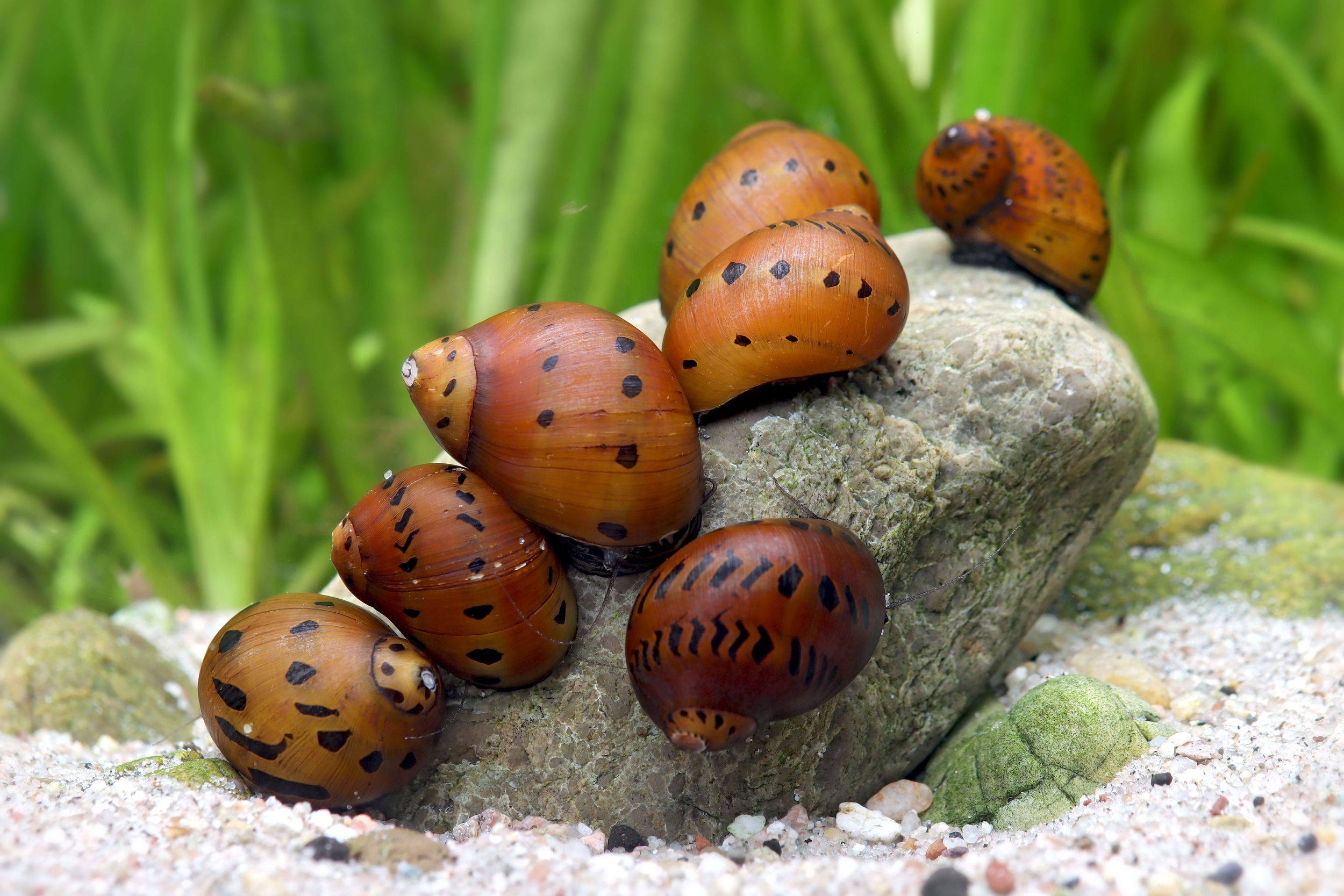
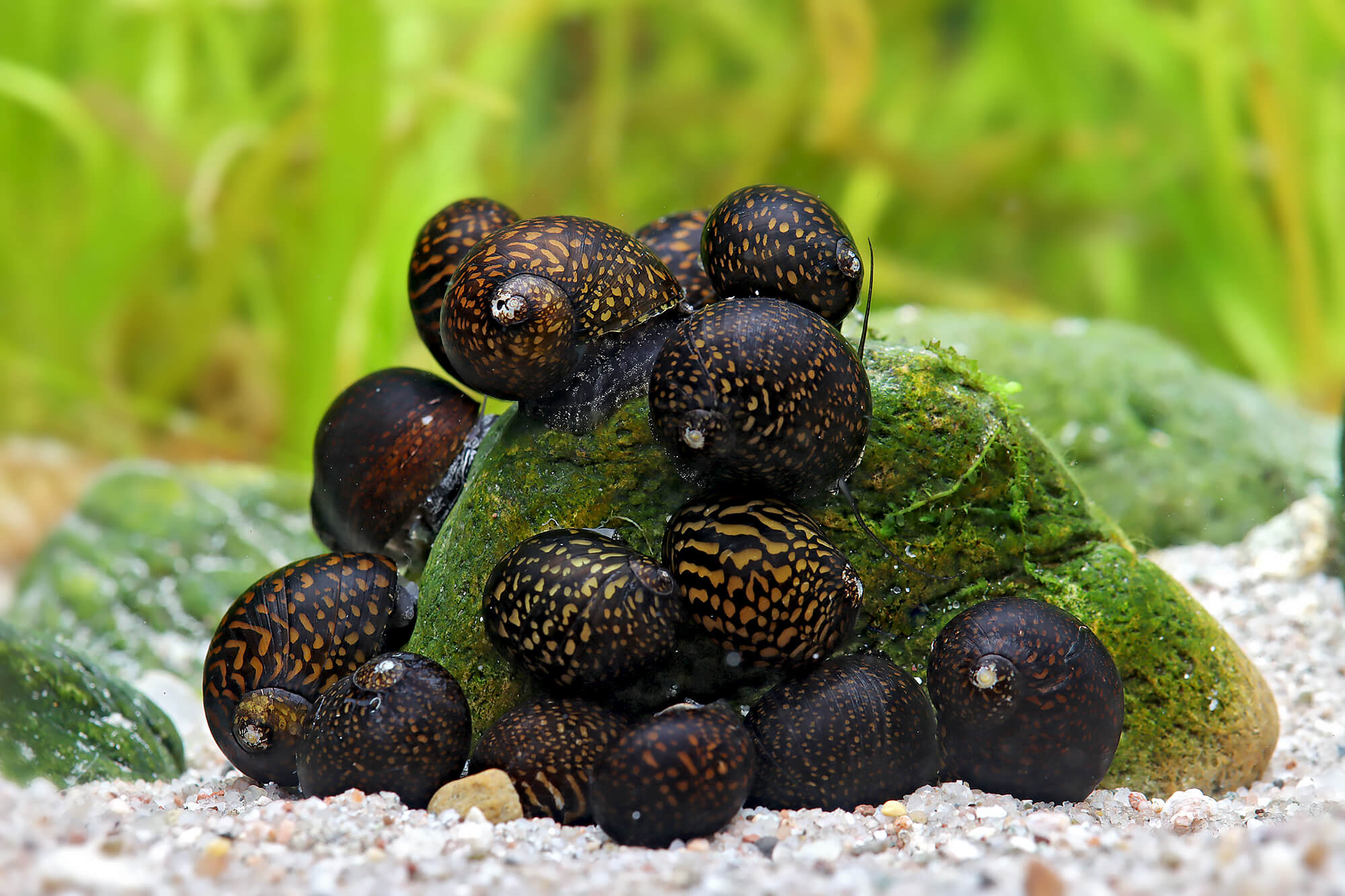
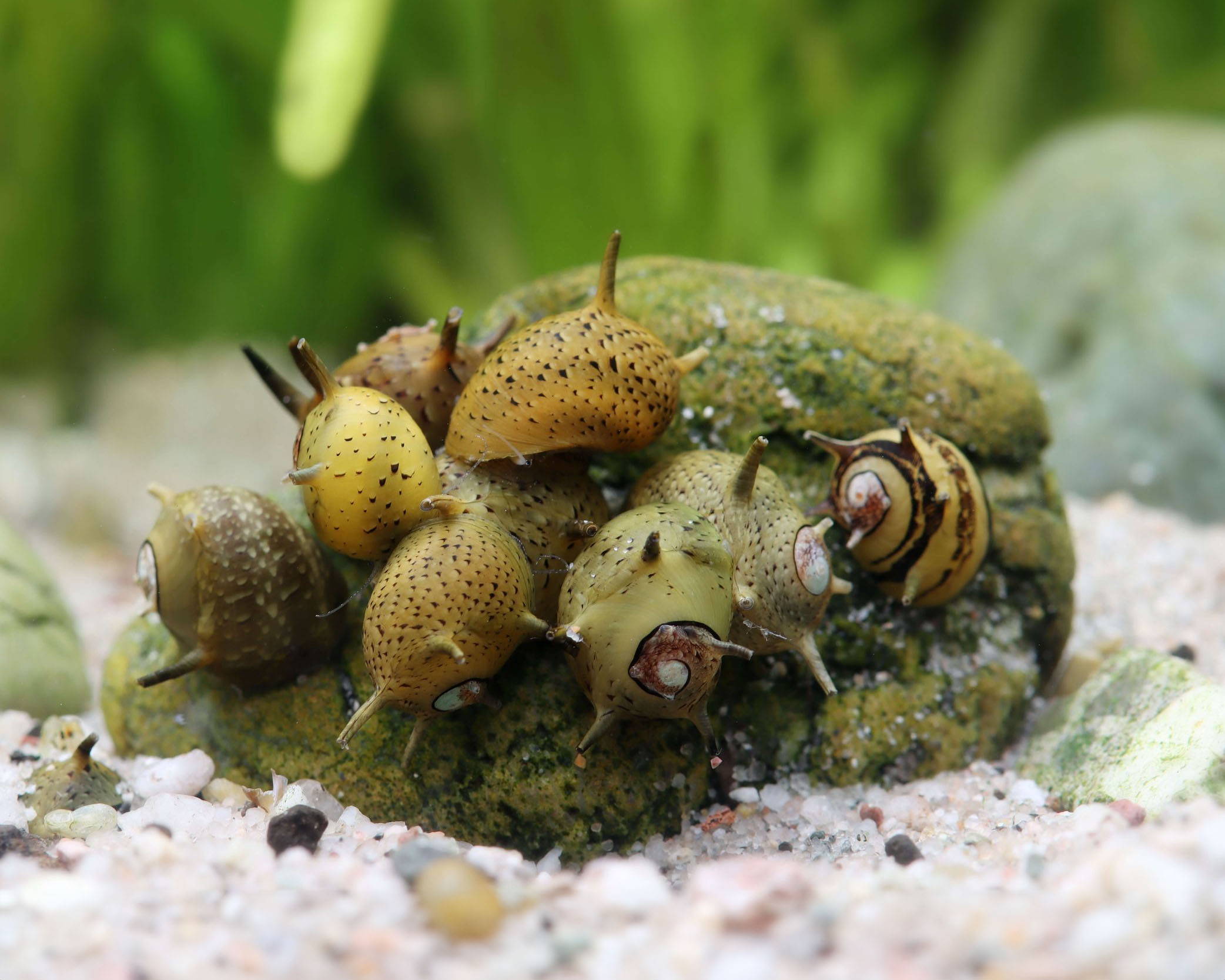
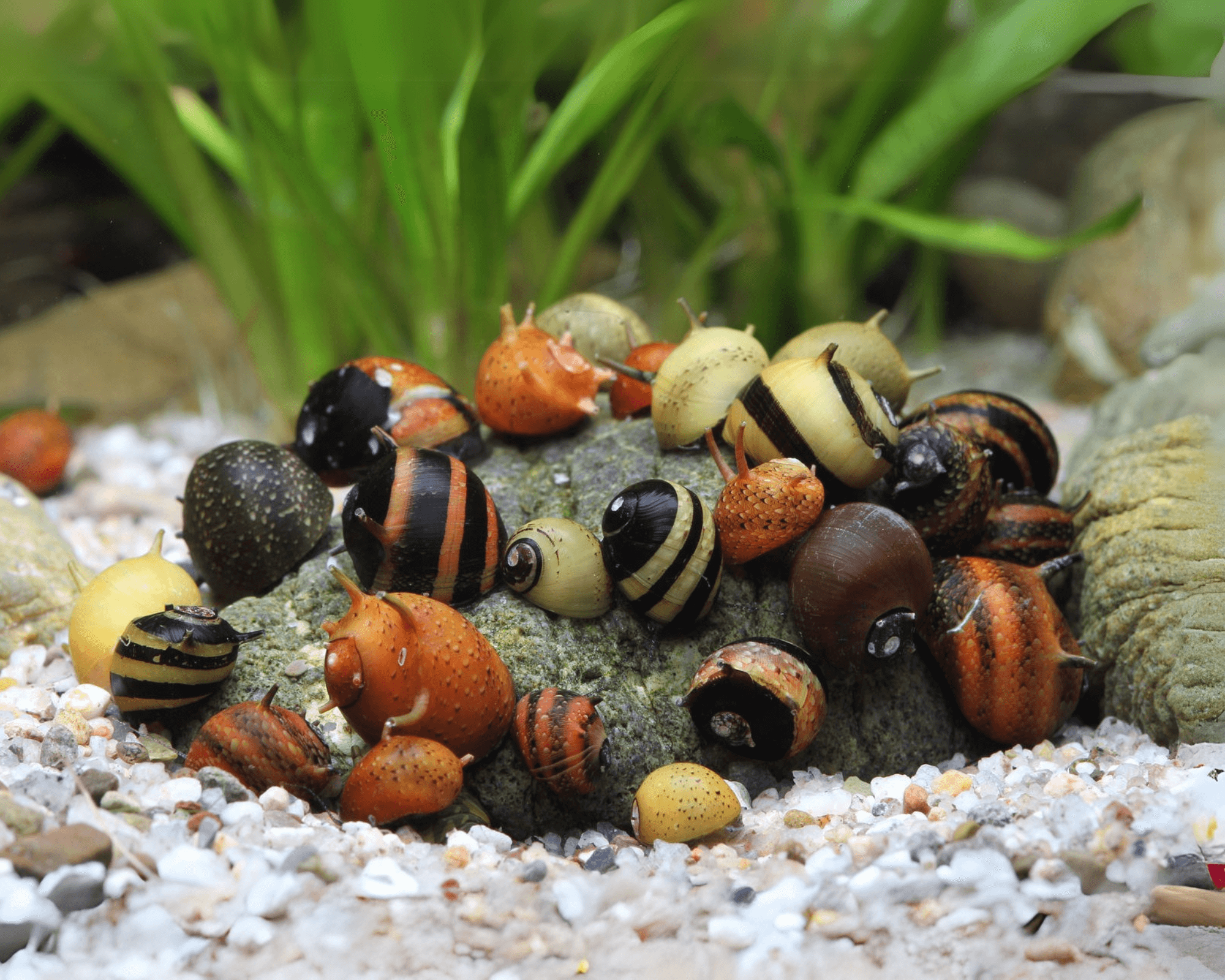
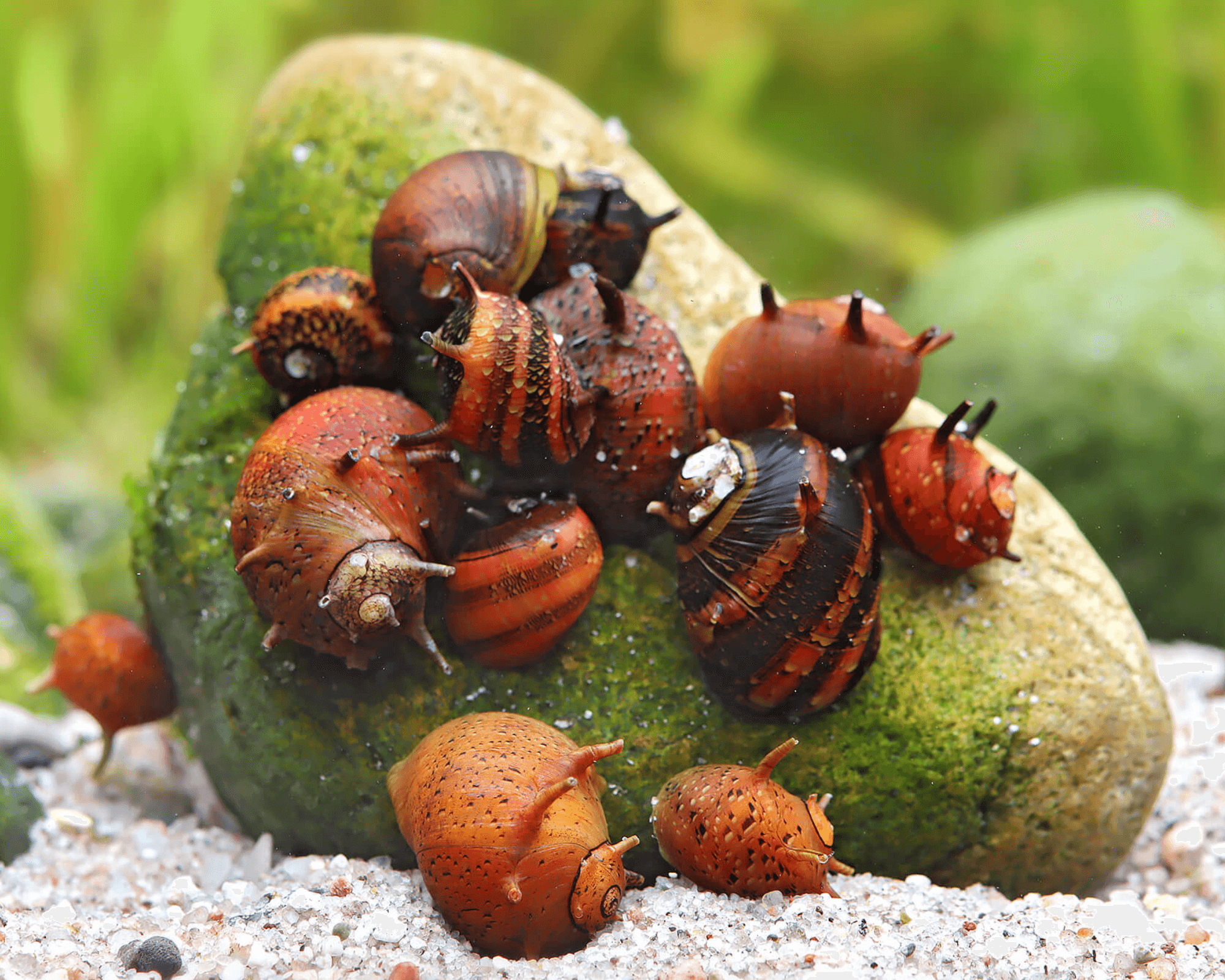
As their "Fancy" moniker suggests, these snails boast an incredible diversity of shell aesthetics. As seen in the provided images, their shells can feature base colors of vibrant red, mustard yellow, cream, dark brown, or black. These bases are often overlaid with intricate patterns ranging from speckles and spots to thick bands and erratic zigzags. They are quite small, generally maxing out at around 0.5 to 0.7 inches (1.5 - 2 cm) in diameter. Interestingly, despite the name "Antler Snail," many specimens of Clithon sowerbyanum exhibit very small, worn-down horns, or completely lack them altogether, presenting a smooth, rounded shell instead.
Keeping and Caring for Fancy Antler Snail
Caring for the Fancy Antler Snail is relatively straightforward, provided their basic water chemistry needs are met. They are entirely peaceful and can be housed with any community fish, dwarf shrimp, or other peaceful invertebrates. Like most nerites, they are notorious escape artists; a tight-fitting aquarium lid is absolutely mandatory to prevent them from crawling out of the tank.
Tank size:
Due to their small size, a group of these snails can be comfortably kept in tanks as small as 5 gallons. However, because they rely heavily on naturally occurring algae for food, larger, more mature tanks are recommended to sustain them long-term.
Water Parameters:
Temperature
They thrive in standard tropical aquarium temperatures ranging from 72°F to 82°F (22°C - 28°C).
pH
A slightly alkaline pH is crucial for their shell health. Maintain the pH between 7.0 and 8.2 to prevent their shells from eroding over time.
Hardness
They require hard water with plenty of dissolved minerals (calcium and magnesium) to maintain their thick shells. Aim for a GH of 8-15+ dGH and a KH of 4-10 dKH.
Ammonia, Nitrite, Nitrate
Ammonia and Nitrite must always be at 0 ppm. Nitrates should be kept as low as possible, ideally below 20 ppm. They are highly sensitive to copper and other heavy metals.
Feeding the Fancy Antler Snail
The Fancy Antler Snail is a voracious consumer of soft film algae, diatoms (brown algae), and green spot algae. They will meticulously clean aquarium glass, rocks, and plant leaves without ever damaging the underlying plant tissue. If your tank is pristine and lacks natural algae, you must supplement their diet with high-quality sinking algae wafers, spirulina powder, or blanched vegetables like zucchini, spinach, or cucumber to prevent starvation.
Breeding Fancy Antler Snail
Breeding the Fancy Antler Snail in a standard home aquarium is virtually impossible. While the females will lay small, white, sesame-seed-like egg capsules on hard surfaces (like wood, rocks, or even other snails' shells), these eggs require brackish or full marine saltwater to hatch and develop. In freshwater, the eggs will remain unhatched, which is a major benefit for aquarists looking to avoid snail overpopulation.
Conclusion
The Fancy Antler Snail (Clithon sowerbyanum) is a top-tier choice for any freshwater aquarist dealing with algae issues. Their minimal bioload, plant-safe nature, inability to overpopulate, and stunning visual variety make them an incredibly rewarding and functional addition to planted tanks and community aquariums alike.
 - 1.webp)

 DNZ - 1.webp)
Leave your comments