 - pair - 1.webp)
Taxonomy and identification
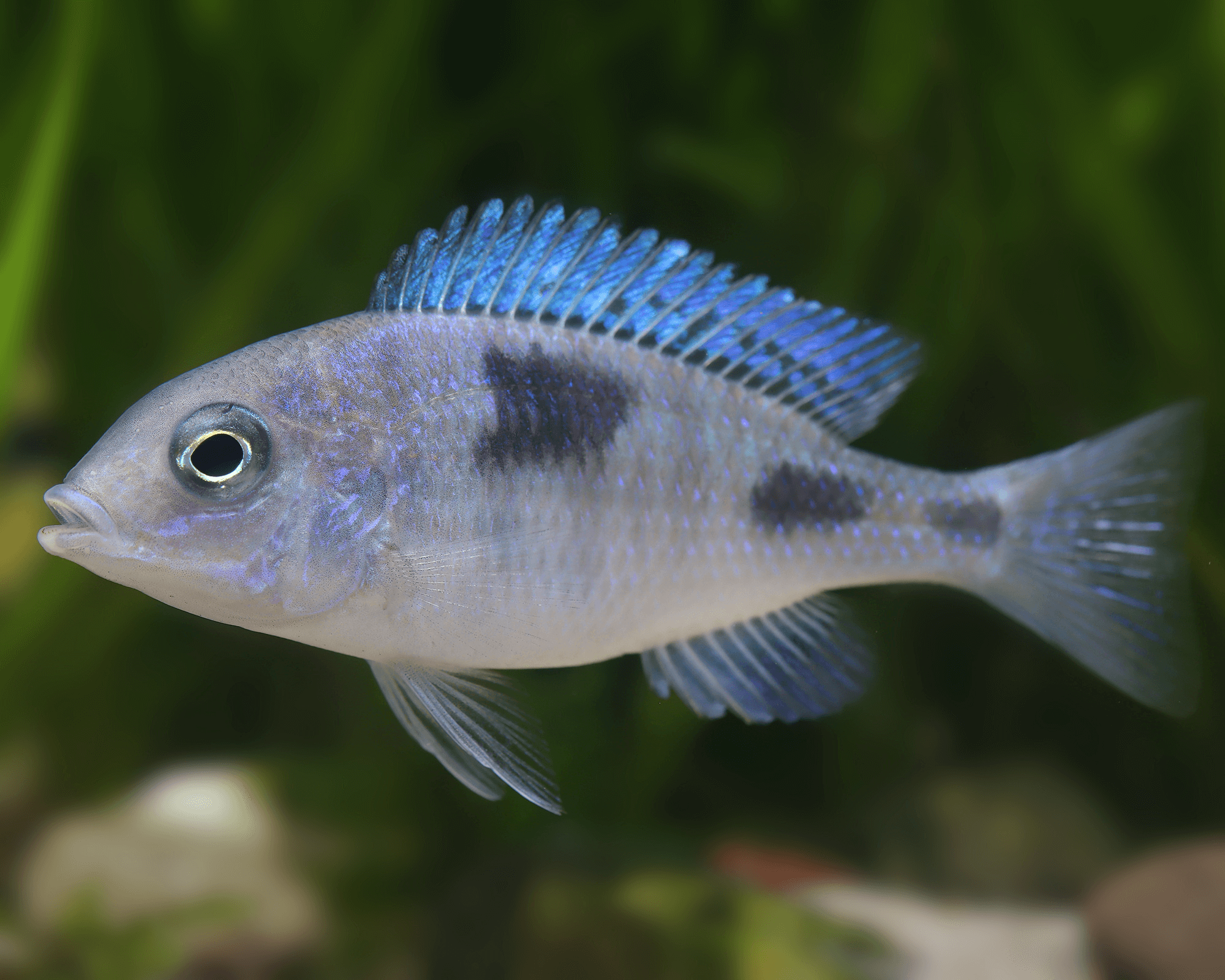
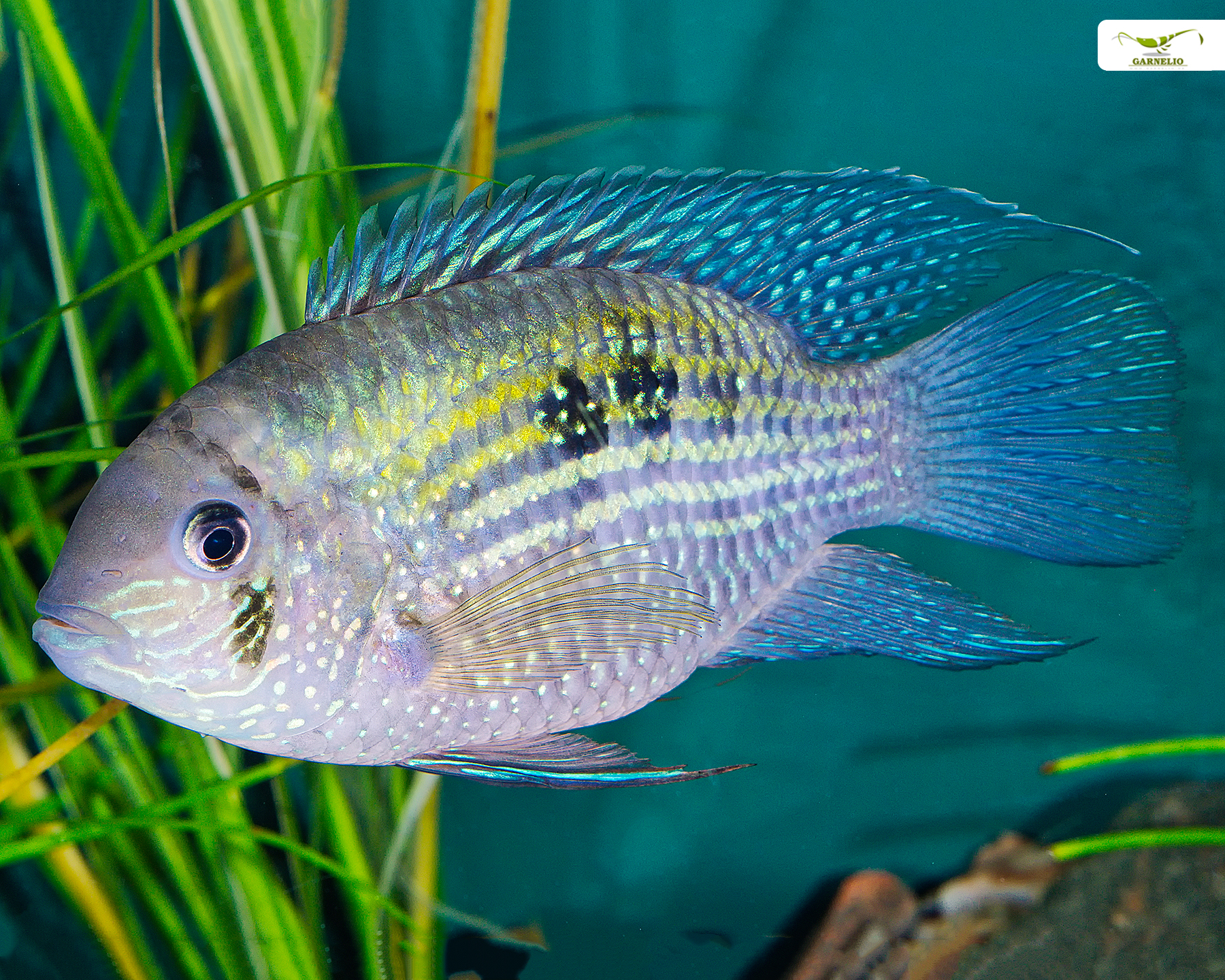
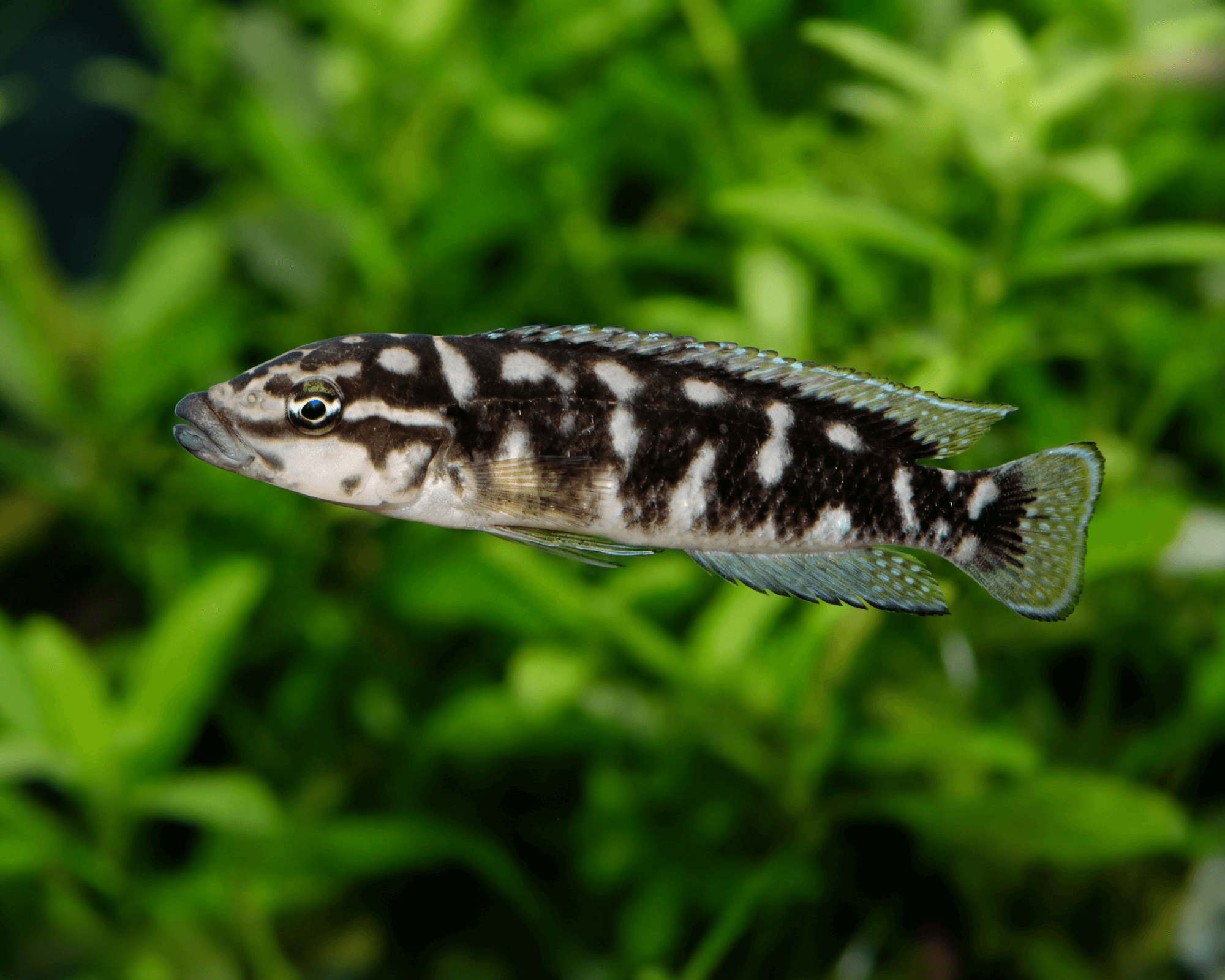
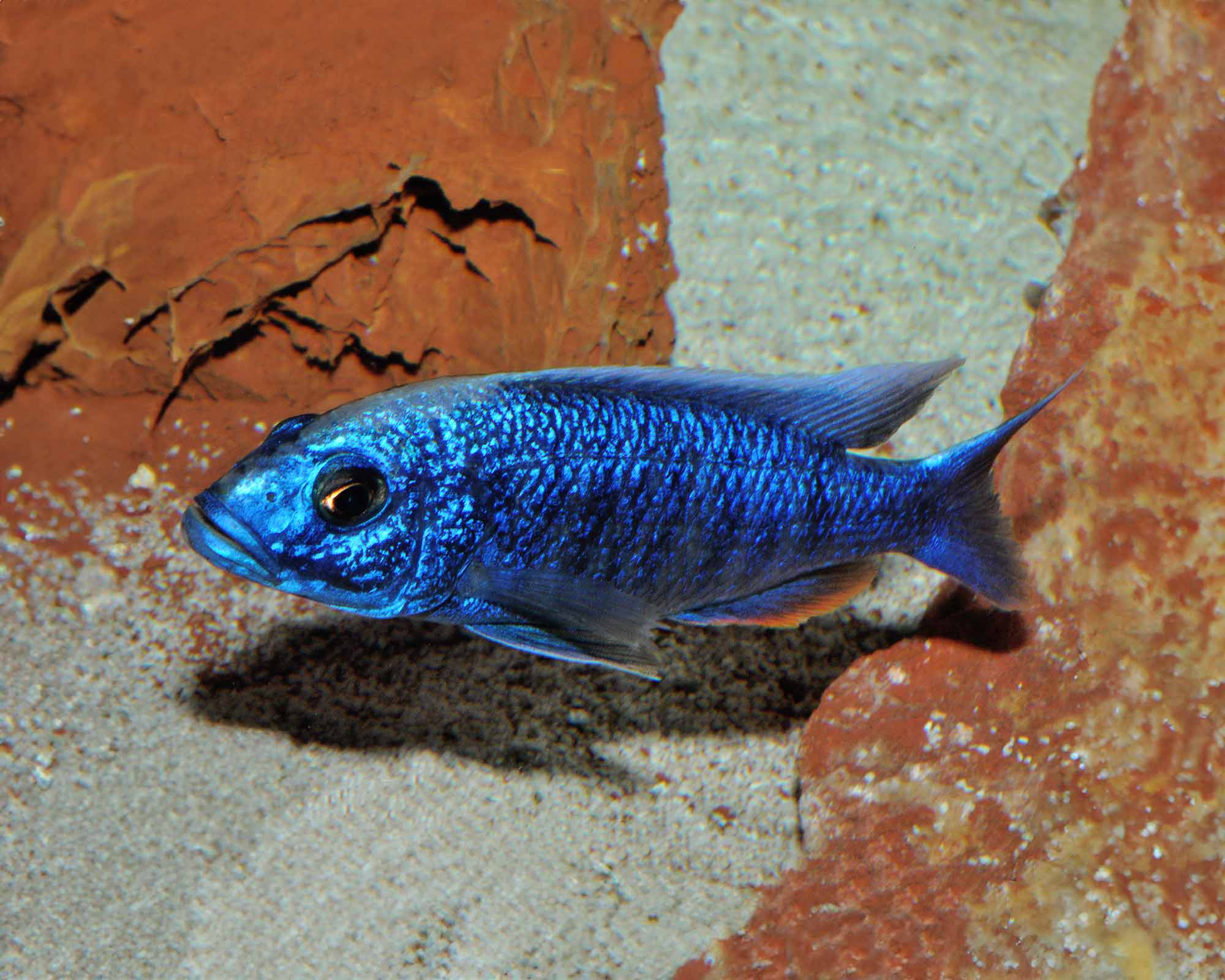
Melanochromis cyaneorhabdos is commonly called Maingano. The trade name “Johanni Maingano” is potentially confusing because Melanochromis johannii is a separate species. The supplied source label therefore does not establish exact identity with complete certainty. Maingano typically has a blue body with darker horizontal bands, while coloration, sex, mood, and lighting can vary.
%20-%20pair%20-%201.webp)
Distribution and habitat
Melanochromis cyaneorhabdos is associated with rocky habitats around Likoma Island in Lake Malawi, East Africa. It is a mbuna, a group of rock-dwelling cichlids that graze surfaces and defend small territories among rocks. An aquarium should provide caves, crevices, and broken sightlines rather than an open, sparsely furnished layout.
%20-%20pair%20-%202.webp)
Behavior and compatibility
This is a territorial and assertive cichlid, especially when spawning. A pair may not be a stable long-term arrangement because a persistent male can harass a female. Groups with several females per male are generally safer than keeping a single pair, provided the aquarium is large and carefully structured. Suitable companions are similarly sized Lake Malawi mbuna with compatible water requirements; avoid peaceful community fish, slow species, and other very similar Melanochromis where hybridization or severe territorial conflict may occur.
Aquarium and tank size
For a pair, use at least a 200-litre aquarium, with a larger tank preferable for a group or mixed mbuna community. Use a fine, inert substrate and securely arranged rocks that create multiple territories and retreats. Strong biological filtration, good oxygenation, a tight-fitting cover, and regular partial water changes are important. Do not place unstable rocks directly on loose substrate, because digging can undermine them.
Water parameters
Maintain stable, warm, hard, alkaline water at 24-28 °C and pH 7.6-8.6. Moderate to high carbonate hardness is desirable, but stability matters more than chasing an exact value. Ammonia and nitrite should remain at zero, and nitrate should be kept low through maintenance and restrained feeding. Acclimate specimens gradually, particularly when the source water differs substantially.
Diet
Feed a predominantly herbivorous mbuna diet based on quality spirulina or algae-rich flakes and pellets. Supplement with blanched vegetables or other suitable vegetable foods in moderation. Offer small portions once or twice daily and remove uneaten food. Avoid making meaty foods a major part of the diet, as excessive animal protein can contribute to digestive problems in herbivorous mbuna.
Breeding
This species is a maternal mouthbrooder. During courtship, the male defends a territory and the female lays eggs, picks them up, and fertilizes them as she responds to the male’s egg spots. She incubates the eggs and developing fry in her mouth for several weeks, usually eating little during this period. In a community aquarium, many fry may be lost to predation; a separate breeding setup or careful removal of the holding female can improve survival, but handling should be done gently and only when necessary.
Identification confidence
Confidence is moderate rather than high because the supplied label uses both “Johanni” and “Maingano,” names that can refer to different Melanochromis species. The scientific name Melanochromis cyaneorhabdos and the visible blue coloration support a Maingano identification, but locality, body pattern, sex, and verified supplier records would provide stronger confirmation.
Leave your comments