
AquaLibs presents AquaRank Discover the world’s leading aquascapers

Explore transparent rankings built from published results across the world’s leading aquascaping contests.

When Aquarium Shrimp Keep Dying: A Failure-Diagnosis Plan for Planted Tanks

When Aquarium Shrimp Keep Dying: A Failure-Diagnosis Plan for Planted Tanks

Repeated shrimp losses are rarely solved by adding another product at random. The useful question is not simply why one shrimp died, but what happened before the loss, which shrimp were affected, and whether the same trigger is still present. A plant...
The Four-Filter Plant Plan: Match Aquarium Plants to Your Setup and Schedule

The Four-Filter Plant Plan: Match Aquarium Plants to Your Setup and Schedule

A plant can be labeled easy and still fail in your aquarium if it needs more light, stronger circulation, richer substrate, or more pruning than your routine allows. The better approach is to filter every plant through four practical questions: How m...
What Should Your Fish Do in the Aquascape? A Color-and-Scale Plan for Planted Tanks

What Should Your Fish Do in the Aquascape? A Color-and-Scale Plan for Planted Tanks

A planted aquarium can contain beautiful fish and still look visually confused. The problem is often not compatibility alone, but design: too many similar colors, too much movement in one zone, or livestock that overwhelms the plants and available sw...
Before Adding a Snail, Test the Water: A Shell-Health Plan for Planted Tanks

Before Adding a Snail, Test the Water: A Shell-Health Plan for Planted Tanks

Aquarium snails can support a planted tank, but shell health depends on more than visible algae. A snail may arrive with a polished shell and still deteriorate if the aquarium is too soft, too acidic, too clean to feed it, or inconsistent after water...
Fresh from the rankings

Latest works from the AquaRank Top 300

A rotating selection from the newest locally archived contest works created by the world’s Top 300 aquascapers.

Aquarium Library

  • All
  • Plant
  • Fish
  • Shrimp
  • Snail

Spain at IAPLC 2026: Roberto Buenadicha’s Forest and the Space Between Trunks

Roberto Buenadicha’s aquarium is the only Spanish work in the published ranks 1–300. Its slender dar...

France at IAPLC 2026: A Close Reading of Jean Christophe Grosset’s Woodland

Only one French work appears in the published ranks 1–300. That gives this instalment a different ta...

Singapore at IAPLC 2026: Open Stone and an Enclosed Planted Passage

Two Singaporean works appear in the published ranks 1–300, and they offer an unusually clear contras...

Hong Kong at IAPLC 2026: Three Studies in Light, Layers and Visual Impact

A low timber ceiling, blue-toned terraces and converging planted diagonals create three visibly diff...

Italy at IAPLC 2026: Calm Routes and More Dramatic Planted Frames

A clear route through planted banks can feel quiet; a coloured ridge beneath a dark frame can feel t...

United States at IAPLC 2026: Four Distinct Readings of a Wooded Aquarium

The four American photographs selected here all contain important wood structures, yet they do not p...
Top 300 spotlight

AquaRank Top 300

Explore AquaRank
Moenkhausia sp. (Blue-Eye Kogal Tetra)

Overview

The Blue-Eye Kogal Tetra is a captivating and relatively rare freshwater fish in the aquarium hobby. Belonging to the diverse Moenkhausia genus, this undescribed species is highly sought after for its unique coloration, particularly its striking blue eyes. It is a hardy, active schooling fish that brings vibrant energy to community setups.

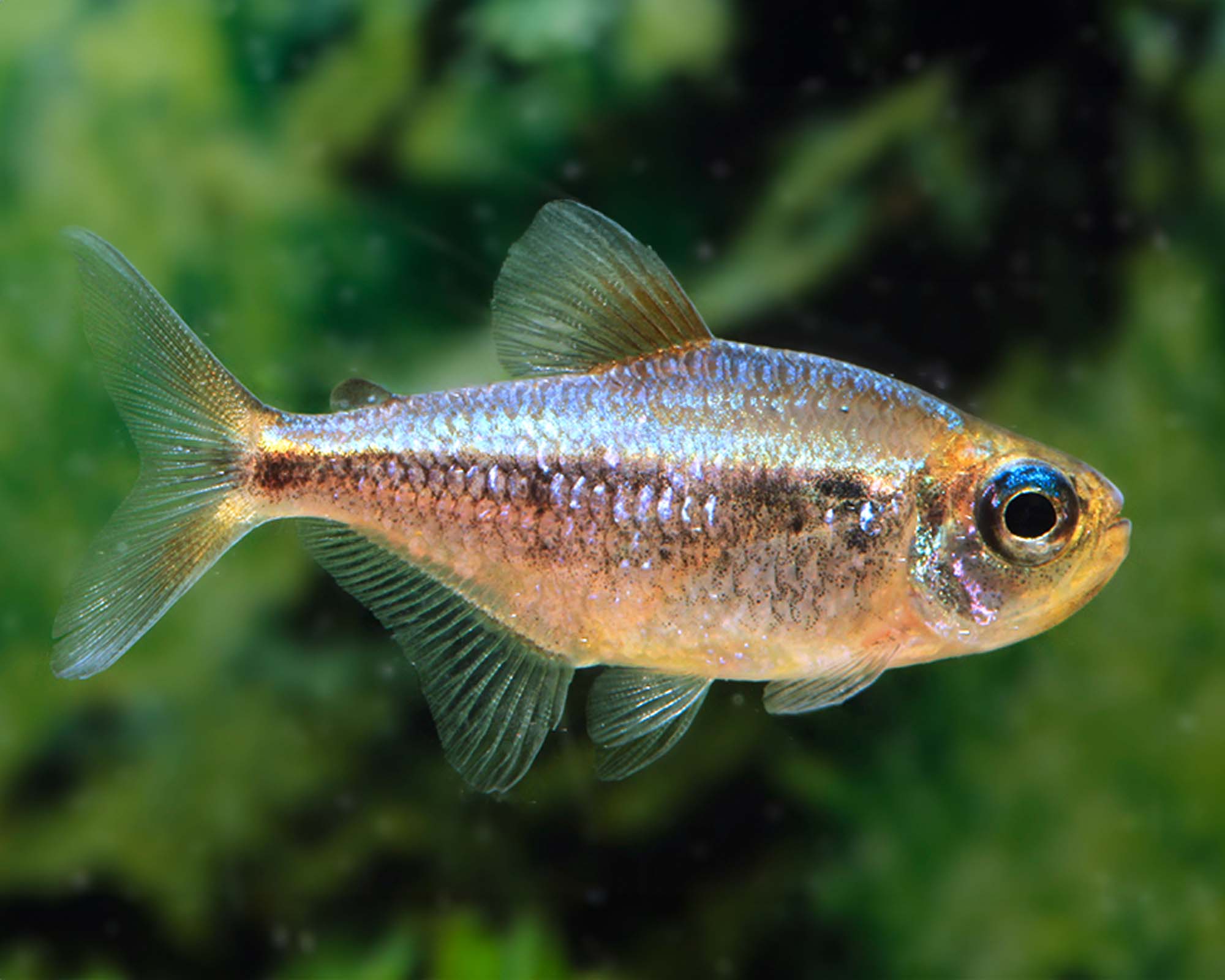
Image of blauaugen kogaltetra nz moenkhausia spec. kogal gold

Distribution and Habitat

While its exact taxonomic classification is still pending, this species originates from the warm, heavily vegetated river basins of South America. They are typically found in slow-moving tributaries and forest streams, where the water is often stained with tannins from decaying organic matter, creating a slightly acidic environment.

Description of Blue-Eye Kogal Tetra

Body shape:

It possesses a classic, laterally compressed, and somewhat deep-bodied tetra profile, allowing for quick, agile movements through the water.

Color:

The body exhibits a shimmering golden-silver base, often overlaid with a subtle, dark horizontal band or brownish mottling along the lateral line.

Barbels:

Like all characins, this species does not possess barbels.

Snout:

The snout is short and relatively blunt, with a terminal mouth suited for mid-water feeding.

Eyes:

The most defining feature is the upper half of the iris, which glows with an intense, iridescent blue color.

Fins:

The fins are largely translucent, sometimes displaying faint yellowish or whitish tints at the edges.

The Tail:

It features a deeply forked, transparent caudal fin that aids in its swift swimming capabilities.

Temper

This is a peaceful species that generally ignores other tank mates. They are excellent community fish but can be slightly boisterous among themselves during feeding or mating displays.

Sociality

They are highly social and must be kept in a school of at least 6 to 8 individuals. Keeping them in larger groups reduces stress and encourages their best colors and natural behaviors.

Activity

Blue-Eye Kogal Tetras are diurnal and highly active. They predominantly occupy the middle to upper levels of the aquarium, constantly darting around in a loose school.

Keeping and Caring for Blue-Eye Kogal Tetra

Tank size:

A minimum tank size of 80 liters (approximately 20 gallons) is recommended to provide ample swimming space for a small school.

Water Parameters:

Temperature

They thrive in tropical temperatures ranging from 23 to 27°C (73-81°F).

pH

A slightly acidic to neutral pH between 6.0 and 7.5 is ideal.

Hardness

Soft to moderately hard water, around 2-15 dGH, suits them best.

Ammonia, Nitrite, Nitrate

Ammonia and Nitrite must be strictly maintained at 0 ppm, while Nitrates should be kept below 20 ppm through regular water changes.

Lighting

Moderate to dim lighting is preferred. Floating plants can be used to diffuse bright lights and make the fish feel more secure.

Water flow

A moderate water flow mimics their natural stream habitats and provides good oxygenation.

Decorations and Plants

A dark substrate, driftwood tangles, and dense background planting will bring out their best colors. Dried leaf litter can be added to simulate a natural blackwater environment.

Diet

They are unfussy omnivores. In the aquarium, they will readily accept high-quality dry flakes and micro-pellets. This should be supplemented with live or frozen foods such as daphnia, brine shrimp, and bloodworms to ensure optimal health and coloration.

Some Feeding Tips

Feed them small amounts once or twice a day—only what they can consume within two minutes. Offering a varied diet is key to maintaining their vibrant blue eyes and golden sheen.

Breeding

Like many tetras, they are egg-scatterers that exhibit no parental care. To breed them, set up a separate dimly lit breeding tank with soft, acidic water and fine-leaved plants like Java Moss or a spawning mop. Condition the adults with live foods, introduce them to the breeding tank, and remove them promptly after spawning to prevent them from eating the eggs. The fry will hatch in a few days and require infusoria until they are large enough to eat baby brine shrimp.

Conclusion

The Blue-Eye Kogal Tetra is a stunning, active, and peaceful addition to the freshwater community aquarium. Their hardiness makes them suitable for intermediate aquarists, while their unique golden bodies and piercing blue eyes offer a visual treat that rivals many of the most popular tetra species.
Fish info

  • Care level: Easy - Moderate
  • Temperament: Peaceful
  • Adult size: 5-6 cm
  • Life expectancy: 3-5 years
  • Fish type: Tetra
  • Temperature : 23-27°C
  • pH: 6.0-7.5
  • Color Form: Blue, Brown, Gold, Silver
Leave your comments
Latest on Fishs
  • Keyhole Cichlid (Aequidens maronii)

    Keyhole Cichlid (Aequidens maronii)

    Moderate
    South American freshwater cichlid
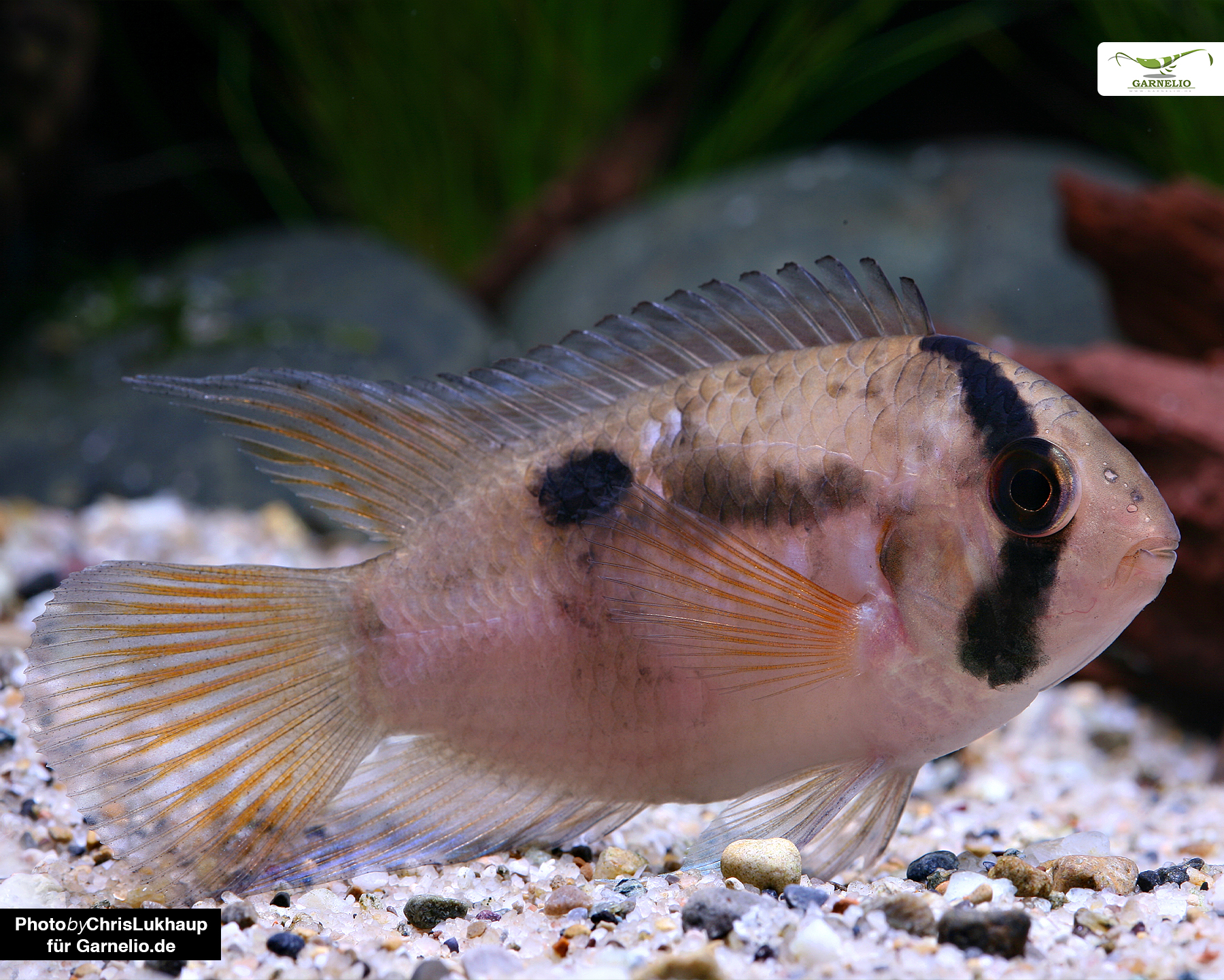
    The fish supplied is consistent with the keyhole cichlid, commonly listed as Aequidens maronii and currently placed by many authorities in the genus Cleithracara. It is a relatively peaceful South American cichlid recognized by its dark keyhole-shaped marking, subdued body coloration and interesting parental care. A pair needs a mature, well-filtered aquarium with soft surroundings, hiding places and stable water quality. Although generally manageable, it becomes territorial while spawning and should not be kept with boisterous or fin-nipping tank mates.
  • Marble Gourami (Cosby Gourami), Trichopodus trichopterus

    Marble Gourami (Cosby Gourami), Trichopodus trichopterus

    Easy - Moderate
    Freshwater labyrinth fish
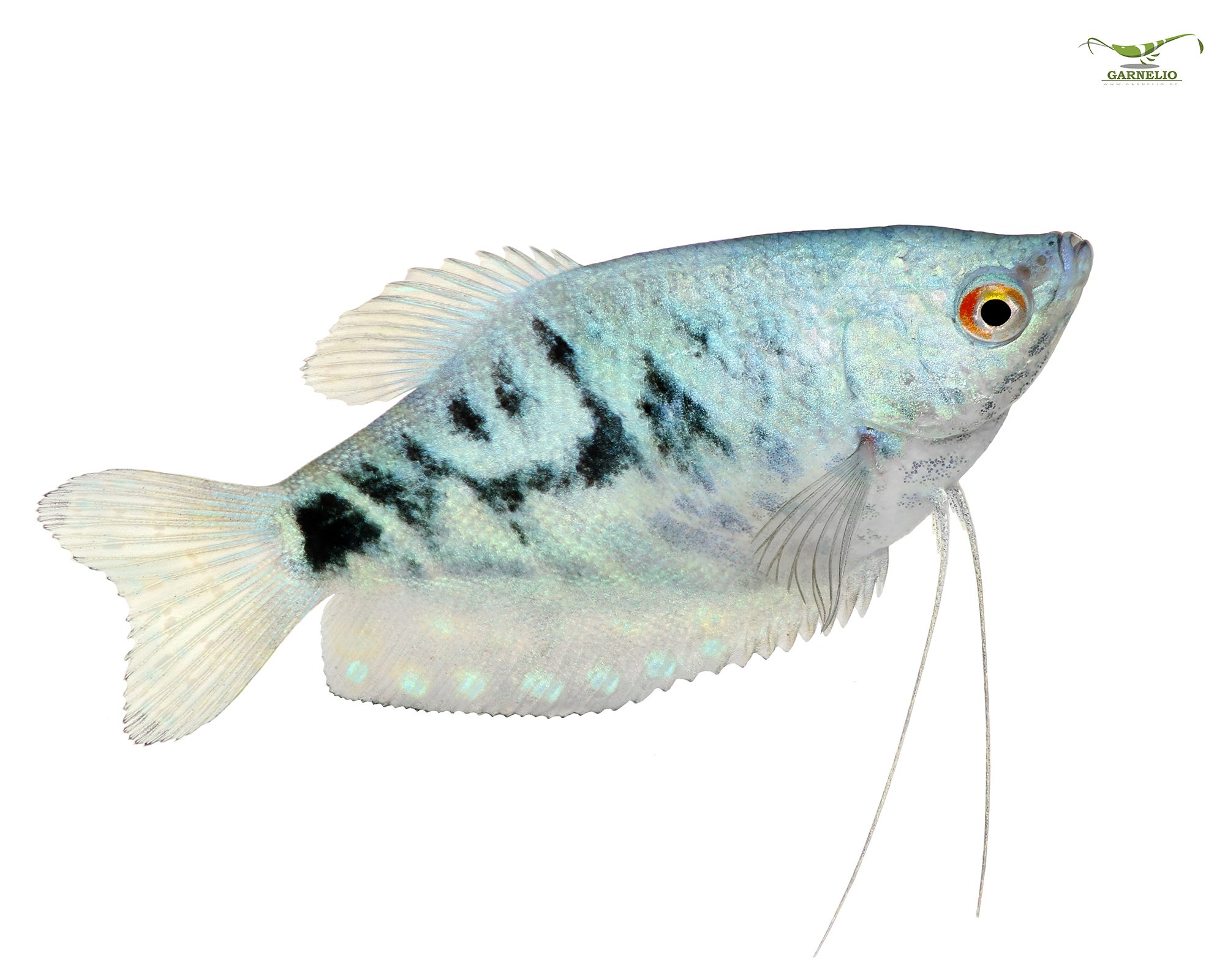
    The marble gourami, commonly sold as the Cosby gourami, is a selectively bred color form of the three-spot gourami, Trichopodus trichopterus. It is a labyrinth fish that can breathe atmospheric air and generally occupies the upper and middle levels of a planted aquarium. This species is usually hardy, but adult males may become territorial, particularly when spawning. The supplied images show several color forms, so exact strain identification is not certain; the fish are best treated as marble or related cultivated forms of T. trichopterus.
  • Marble Gourami, Gold-Orange Form (Trichogaster trichopterus)

    Marble Gourami, Gold-Orange Form (Trichogaster trichopterus)

    Easy - Moderate
    Freshwater labyrinth fish
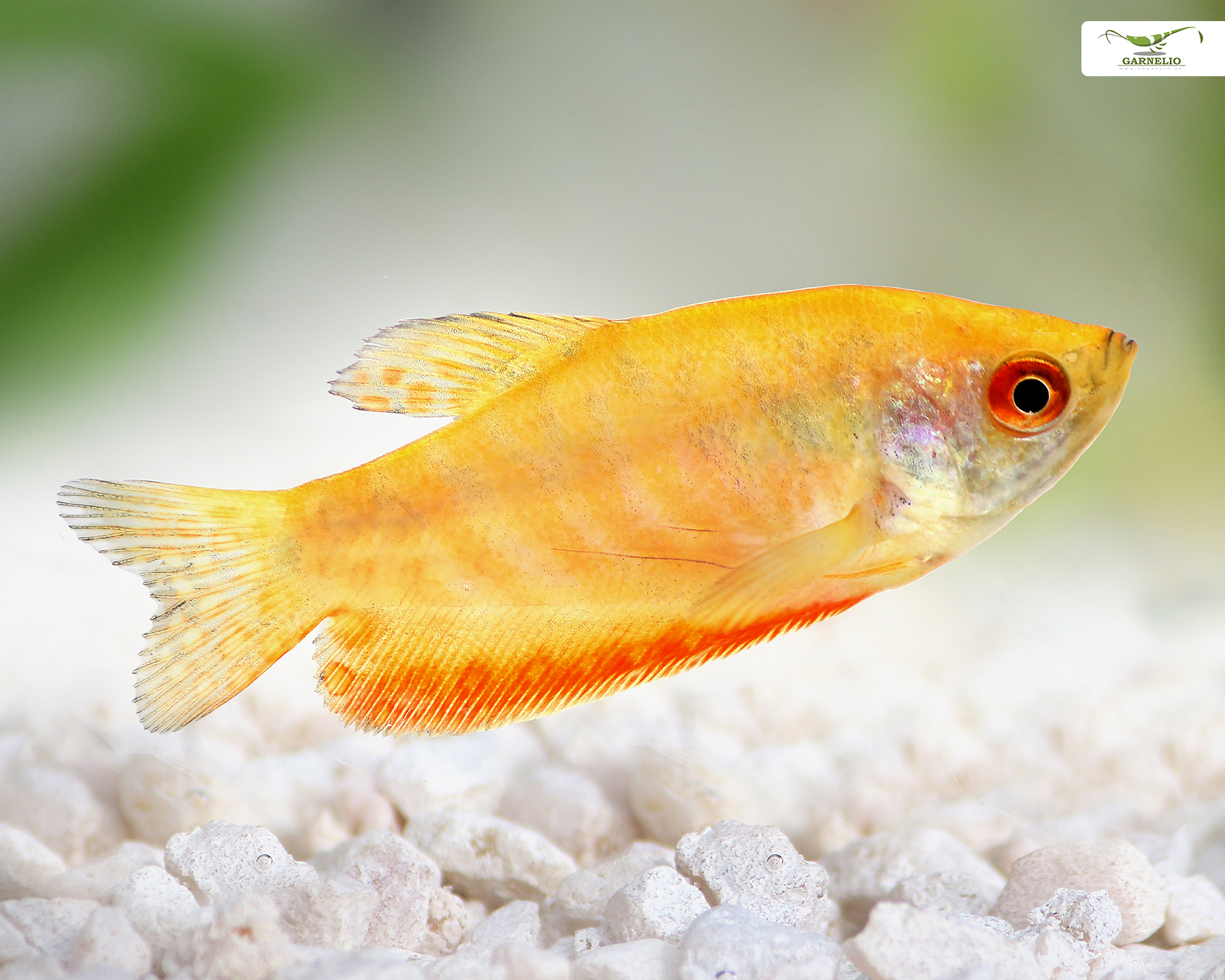
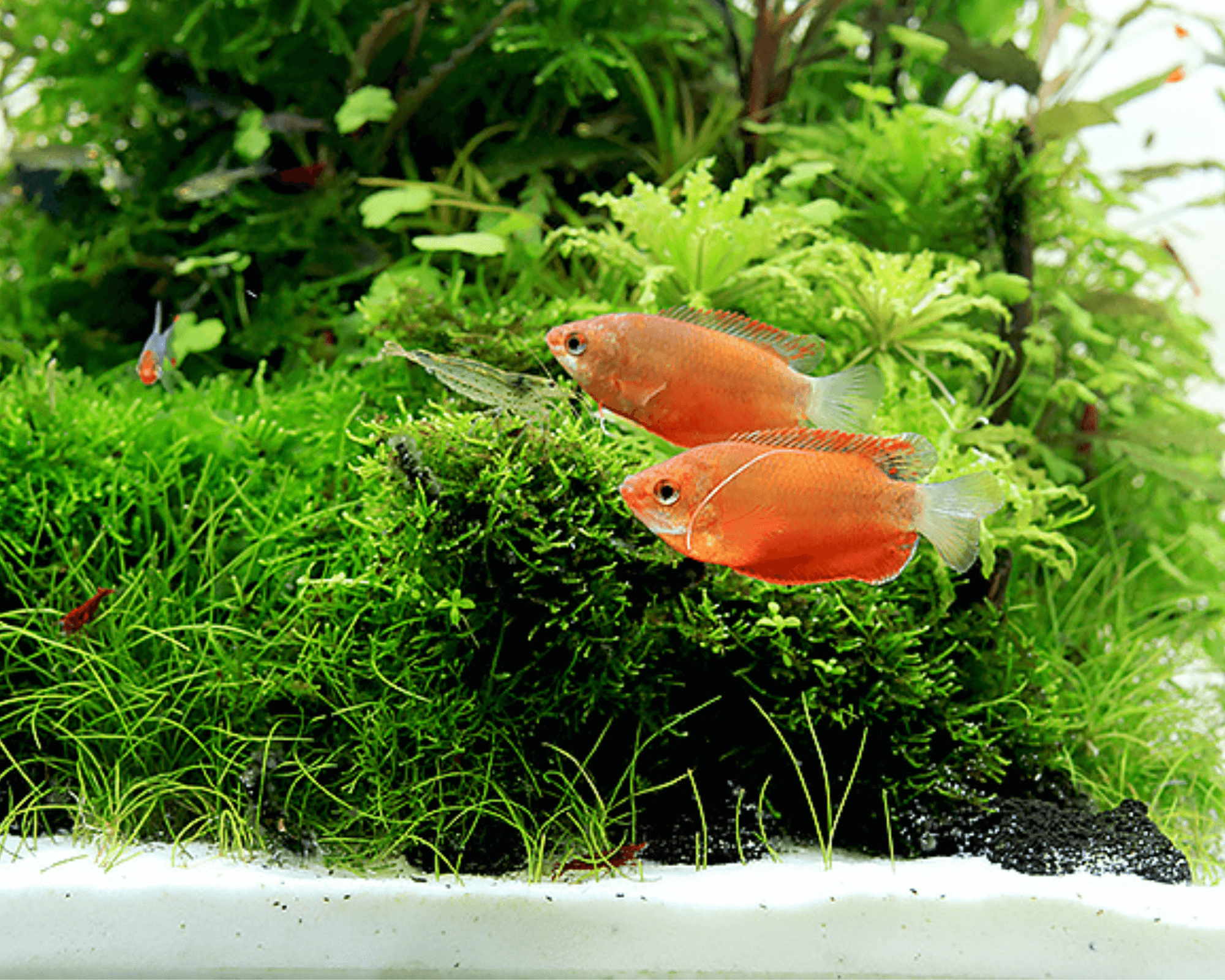
    The marble gourami is a selectively bred color form of the three-spot gourami, a labyrinth fish from mainland and island Southeast Asia. The supplied trade label identifies these fish as a gold-orange pair, although commercial names and appearance can vary, so the exact cultivated form is not fully certain. They are generally hardy community fish, but males may become territorial, especially when spawning. Provide warm, stable water, surface access, dense planting, and gentle filtration.
  • Honey Gourami Gold (Trichogaster chuna)

    Honey Gourami Gold (Trichogaster chuna)

    Easy - Moderate
    Small freshwater labyrinth fish
    The honey gourami is a small, peaceful labyrinth fish suited to planted freshwater aquariums. The supplied source identifies a gold pair as Colisa chuna, an older name now generally treated as Trichogaster chuna. The photographs show orange-gold individuals, but sex and exact variety cannot be confirmed from the images alone. Provide gentle flow, surface access, dense cover and calm tank mates for best results.
  • Honey Gourami (Colisa chuna) Care Guide

    Honey Gourami (Colisa chuna) Care Guide

    Easy - Moderate
    Small freshwater labyrinth fish
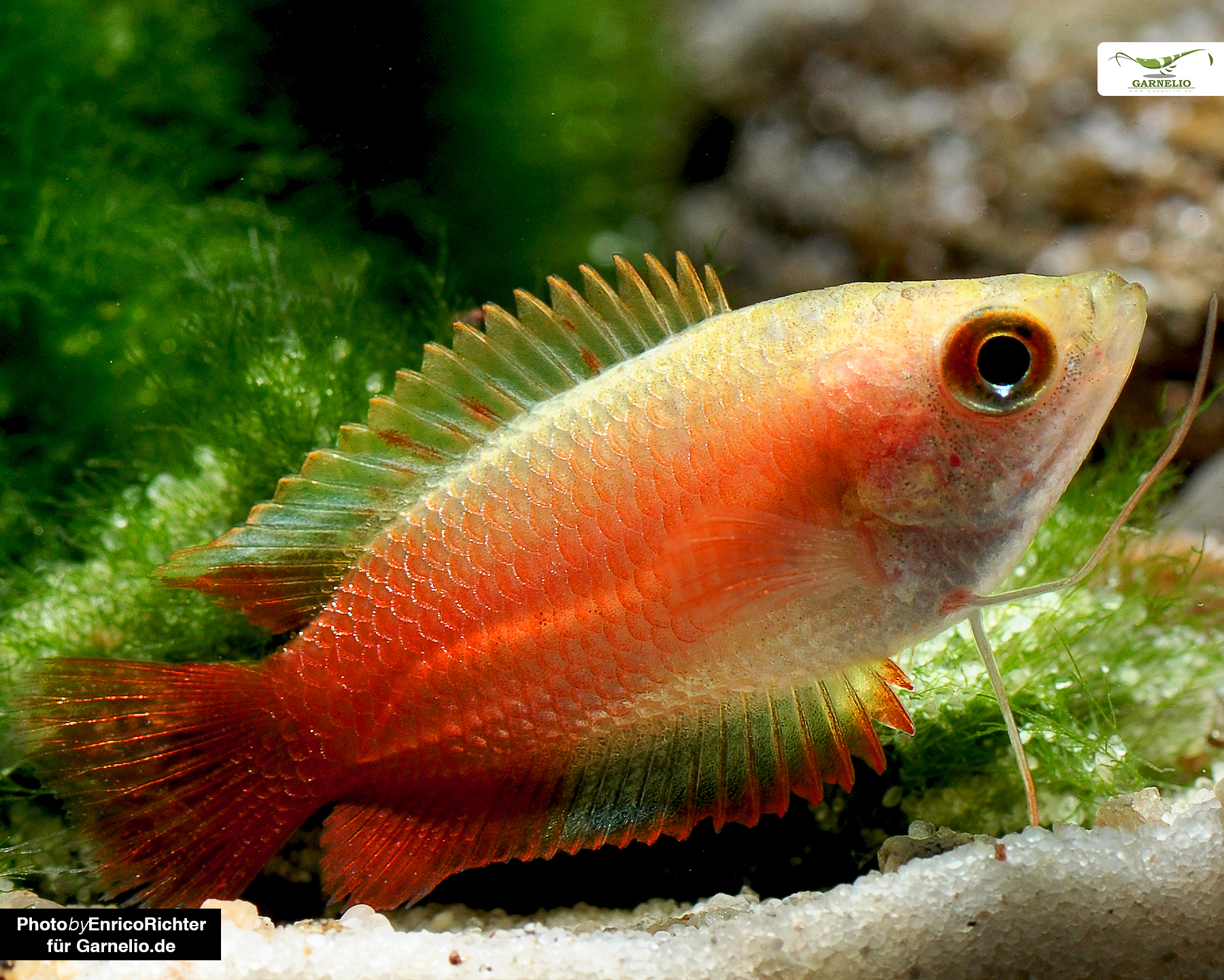
    The honey gourami is a small, peaceful labyrinth fish from the slow-moving waters of South Asia. Aquarium specimens may be natural honey-colored fish or selectively bred red and orange forms, like those shown here. The supplied images appear consistent with honey gourami, although sex cannot be confirmed reliably from the photographs. A planted aquarium with gentle flow, surface cover, stable warm water and calm tank mates suits this species well.
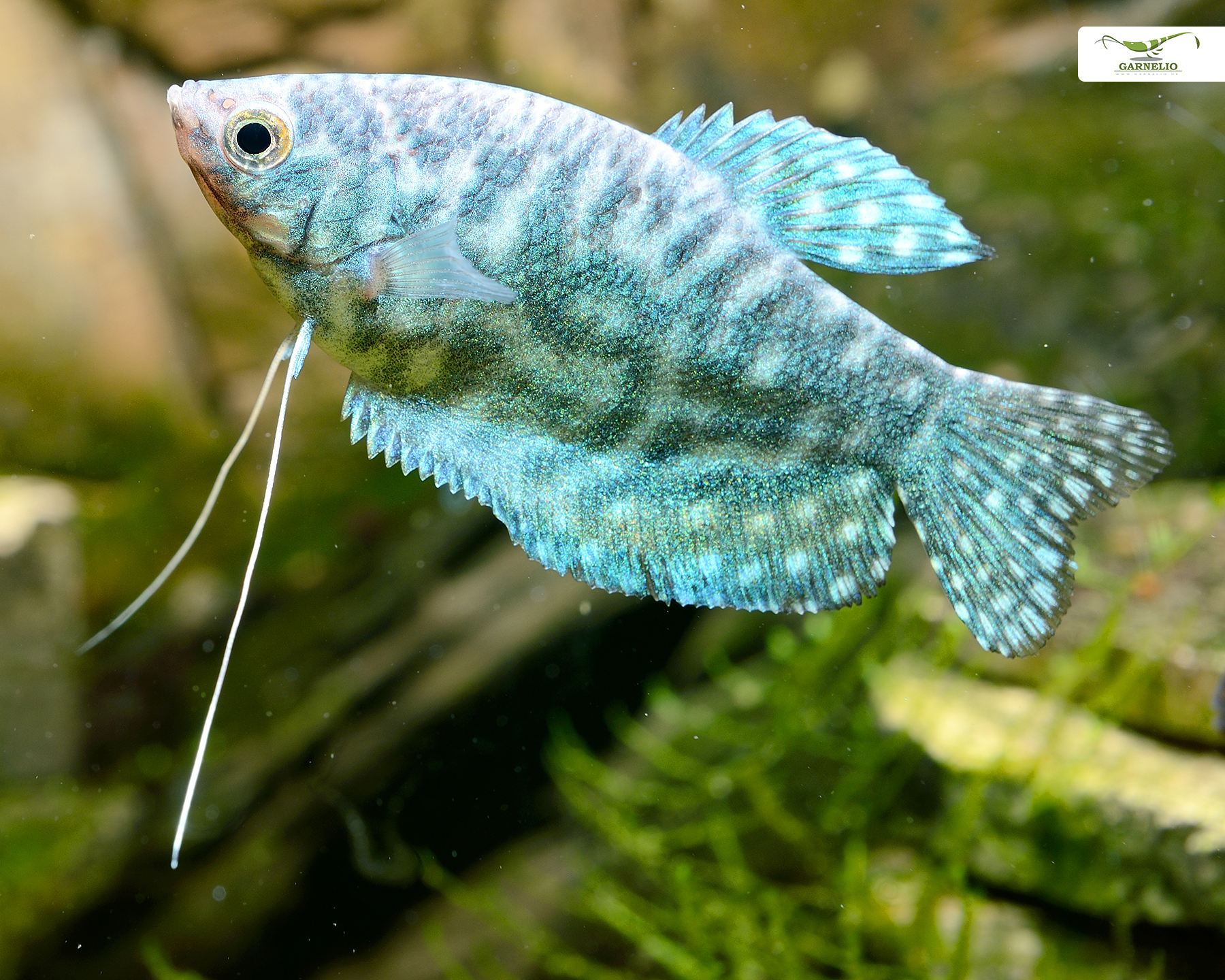
  • Blue Gourami (Trichogaster trichopterus) Care Guide

    Blue Gourami (Trichogaster trichopterus) Care Guide

    Easy - Moderate
    Labyrinth fish; freshwater anabantoid
    The blue gourami is a hardy labyrinth fish suited to a spacious, planted community aquarium. It is the blue color form of the three-spot gourami, a species that can become territorial, particularly when males mature or spawn. Provide gentle filtration, access to warm humid air above the water, hiding places, and a varied diet. The supplied images clearly show blue gouramis, although photographs alone cannot confirm sex or verify that every pictured fish belongs to the same color form.
  • Giraffe Perch (Nimbochromis venustus) Care Guide

    Giraffe Perch (Nimbochromis venustus) Care Guide

    Difficult
    Lake Malawi predatory haplochromine cichlid
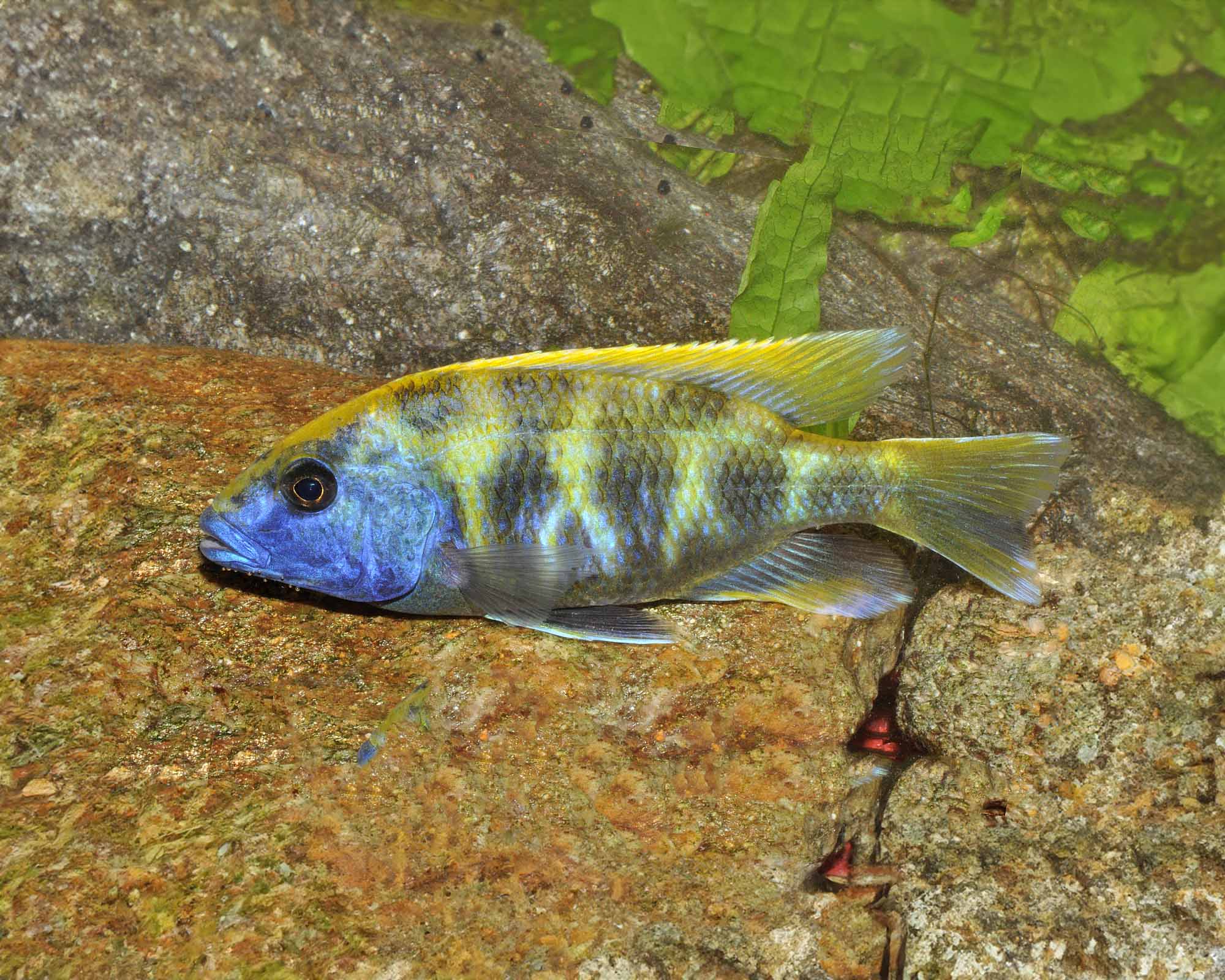
    Nimbochromis venustus is a large predatory haplochromine cichlid from Lake Malawi, known in aquariums as the giraffe perch or giraffe cichlid. Juveniles are comparatively subdued, while adults develop blue facial tones and yellow, olive or gold body coloration with darker markings. The supplied listing describes two 4 cm fish as a pair, but sex cannot be confirmed reliably at that size. This species requires a spacious, rocky aquarium and carefully selected tank mates.
  • Dwarf Gourami (Trichogaster lalius)

    Dwarf Gourami (Trichogaster lalius)

    Moderate
    Small freshwater labyrinth fish
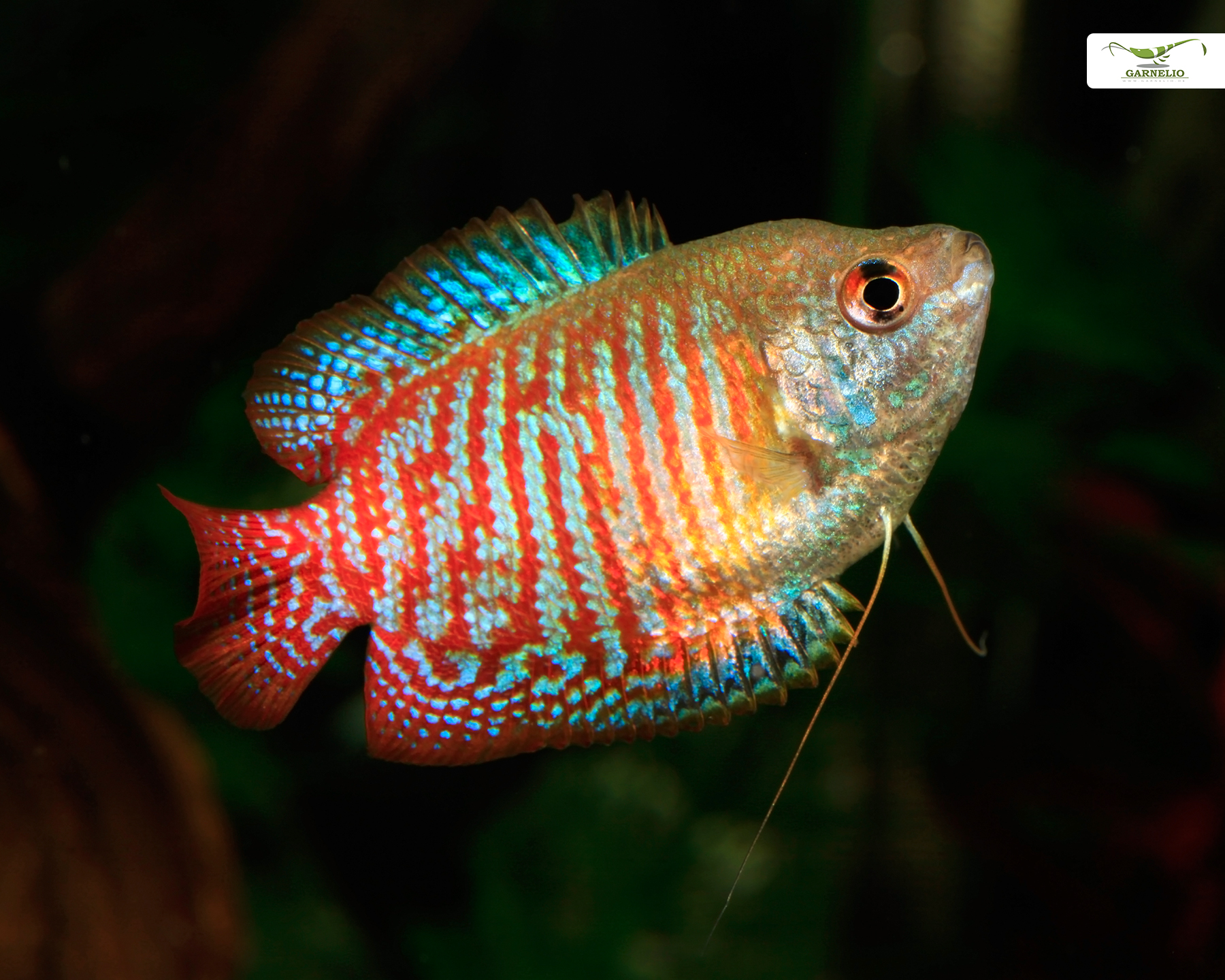
    The dwarf gourami is a small labyrinth fish from vegetated, slow-moving waters of South Asia. Trichogaster lalius is generally peaceful, colorful and suitable for a planted community aquarium, although males can become territorial, especially around a bubble nest. A pair needs warm, stable water, gentle circulation, surface access and plenty of cover. The supplied identification is consistent with dwarf gourami, though color varieties and sex should be confirmed by physical examination.
  • Five-Bar Cichlid (Neolamprologus tretocephalus)

    Five-Bar Cichlid (Neolamprologus tretocephalus)

    Difficult
    Lake Tanganyika rock-dwelling cichlid
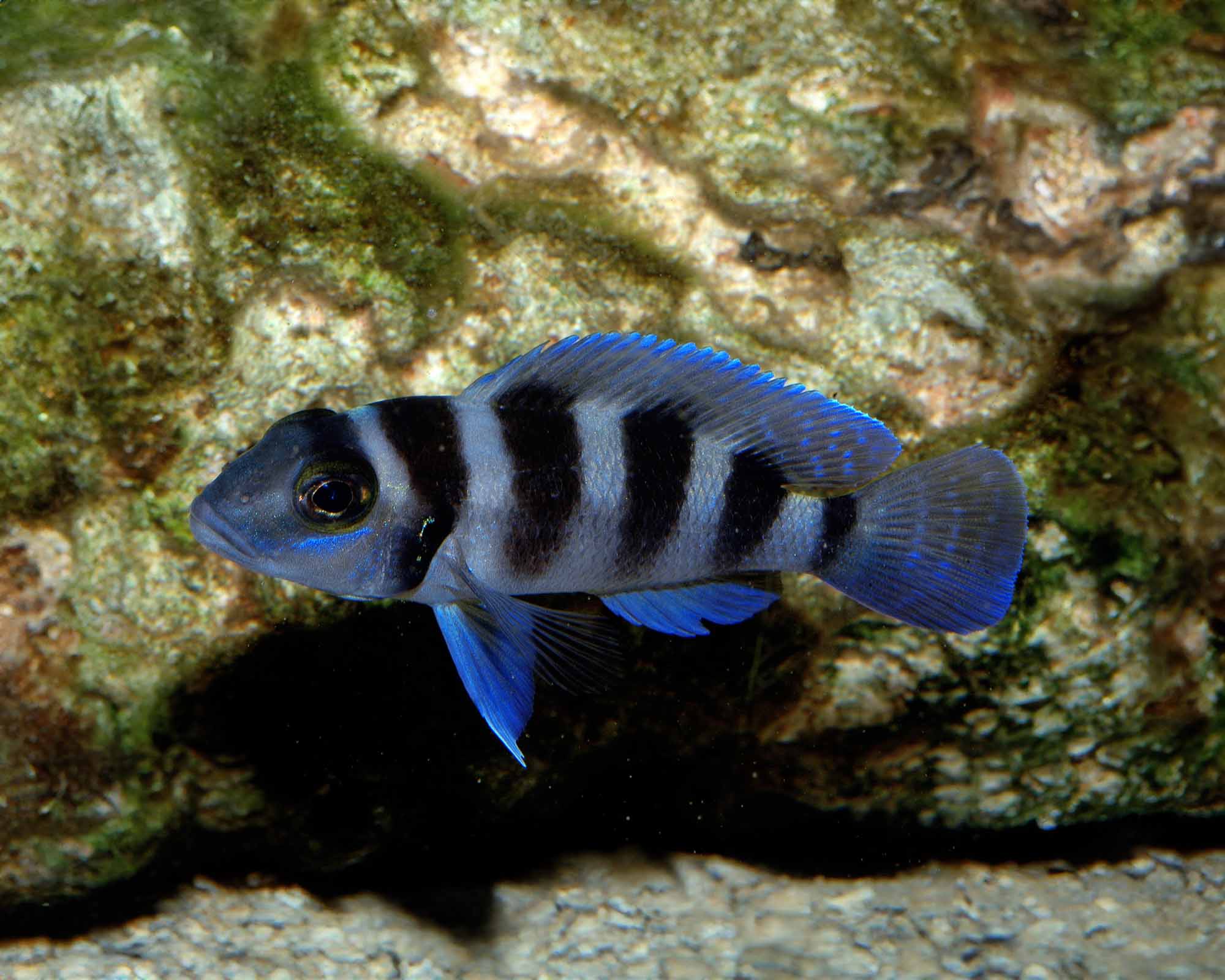
    The five-bar cichlid, also called the five-striped cichlid, is a robust Lake Tanganyika predator with a dark blue-gray body marked by five broad black bars. Neolamprologus tretocephalus is territorial and can become highly aggressive, particularly when spawning. It suits experienced aquarists who can provide a spacious, rock-structured aquarium, alkaline hard water, and carefully selected tank mates. The supplied label identifies this fish as a pair, but sex and exact locality cannot be confirmed from the available information.
  • Gardner’s Splendid Carp (Fundulopanchax gardneri)

    Gardner’s Splendid Carp (Fundulopanchax gardneri)

    Moderate
    West African killifish
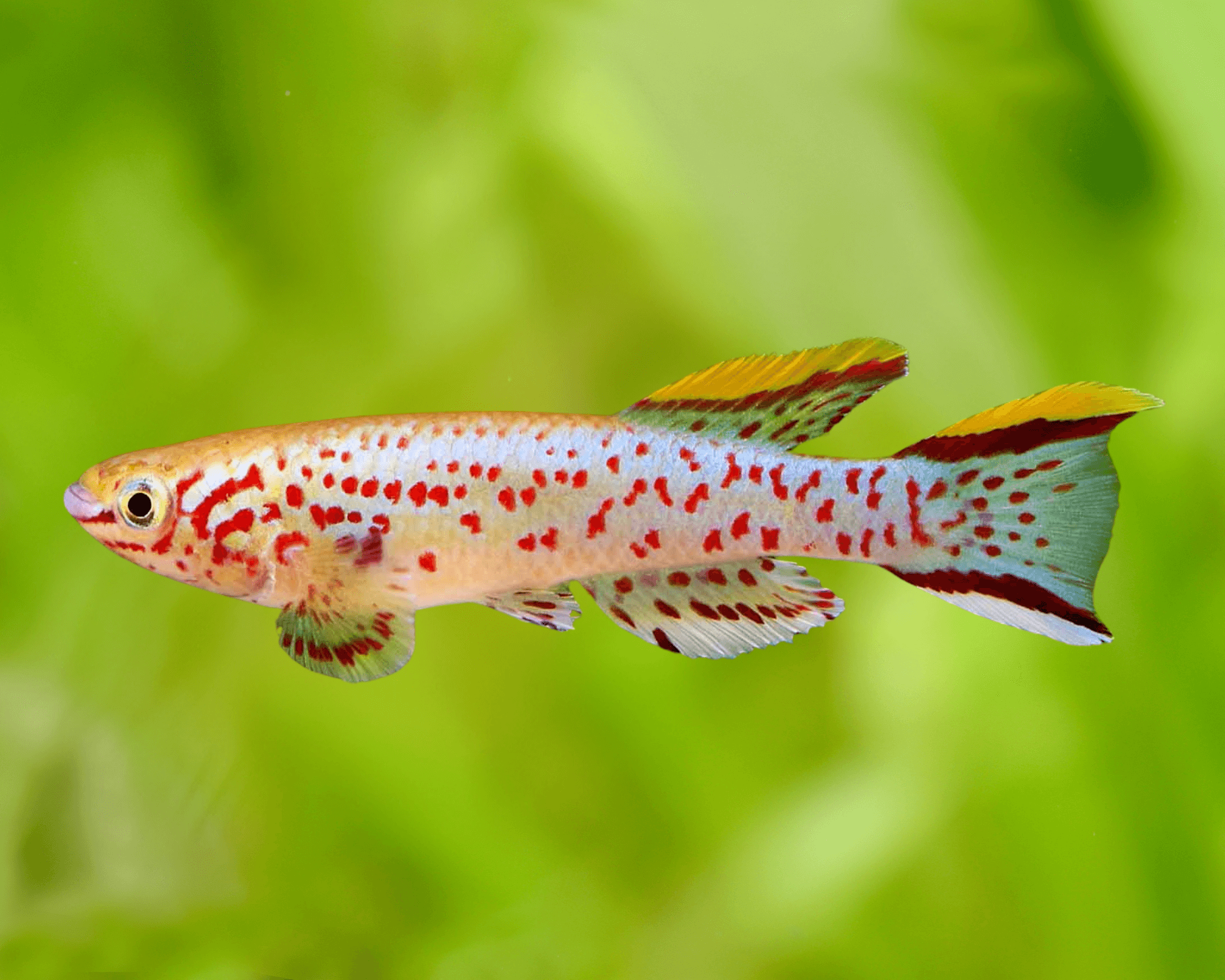
    Gardner’s splendid carp is a small West African killifish valued for its iridescent body, red markings and patterned fins. The supplied image appears to show a brightly colored male, while the source identifies a pair; exact locality form and sex of every fish cannot be confirmed from the available evidence. It is generally peaceful, though males may spar, and it is best kept in a covered, mature aquarium with gentle flow, subdued lighting and abundant plant cover.
  • Pelvicachromis taeniatus Nigeria Red

    Pelvicachromis taeniatus Nigeria Red

    Moderate
    West African dwarf cichlid
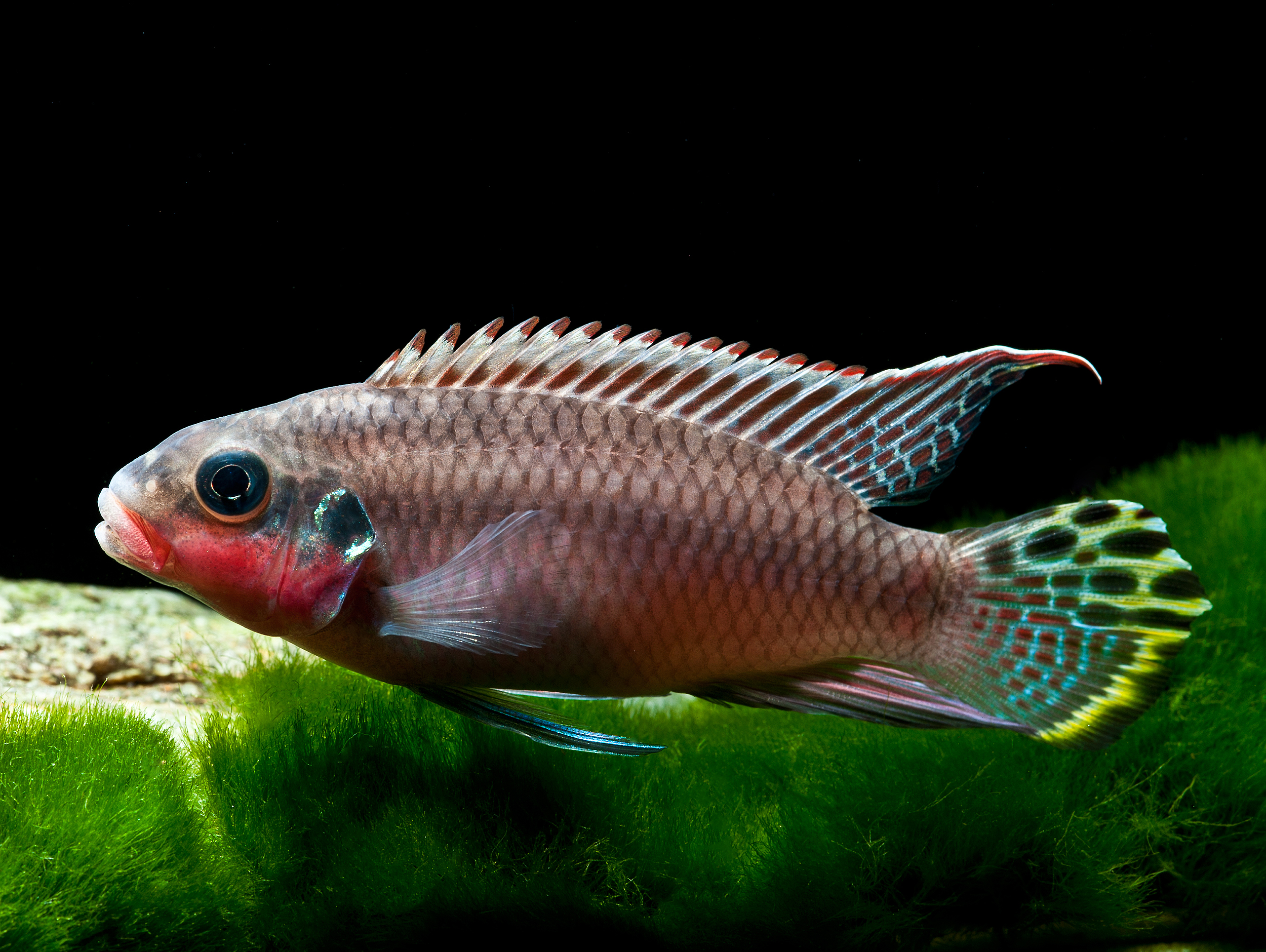
    Pelvicachromis taeniatus, commonly known as the striped krib or taeniatus cichlid, is a small West African riverine cichlid valued for its parental behavior and locality-based color variation. “Nigeria Red” identifies a trade form or collection locality rather than a separate species. The supplied source label also calls these fish emerald perch, but that common name is not a standard scientific name. This species is generally manageable for experienced beginners when provided with stable, clean water, hiding places and a carefully planned community aquarium.
  • Apistogramma agassizii ‘Fire Red’

    Apistogramma agassizii ‘Fire Red’

    Moderate
    South American dwarf cichlid
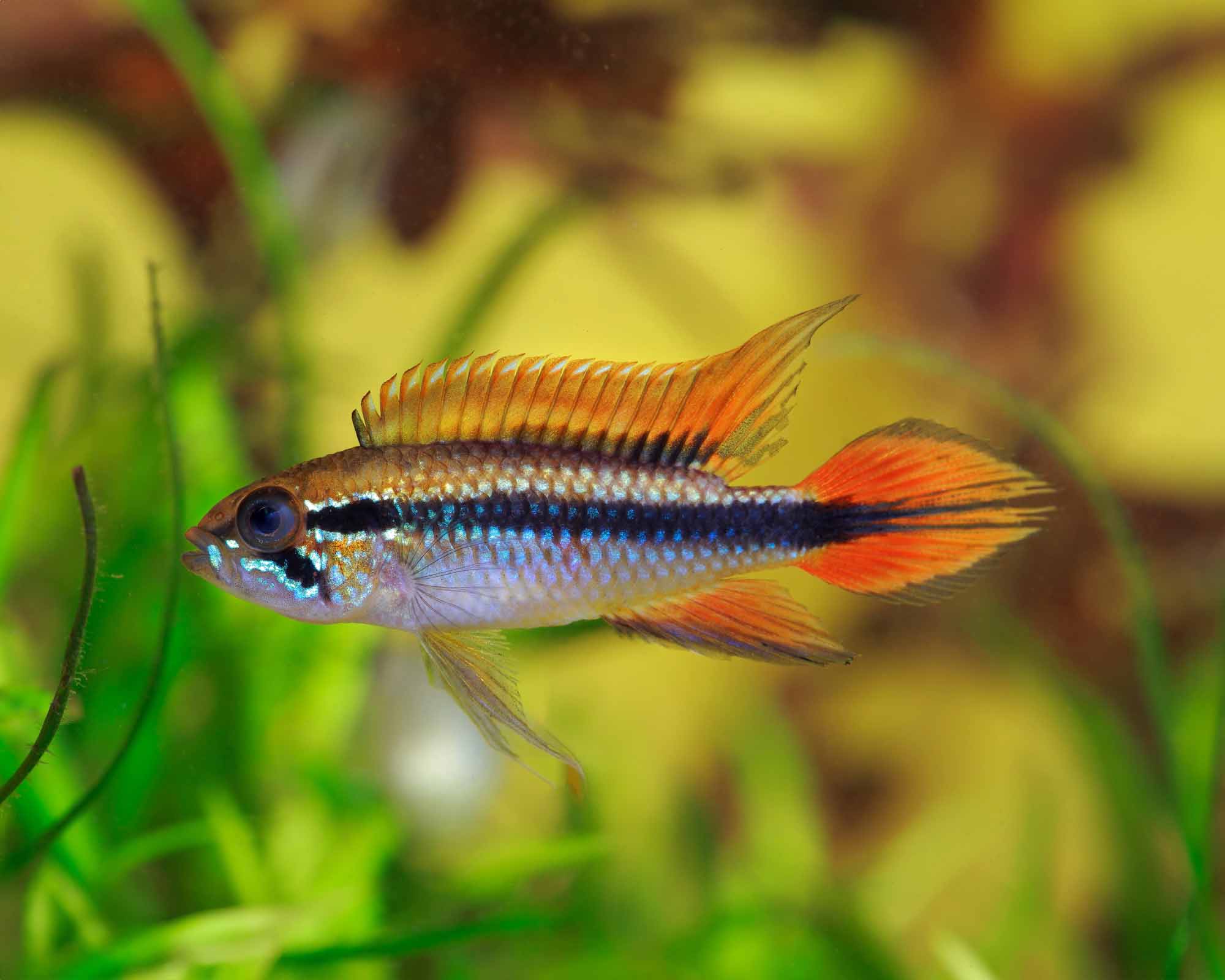
    Apistogramma agassizii is a small South American cichlid valued for its intricate markings, elongated fins and interesting parental behavior. “Fire Red” is a selectively bred aquarium color form rather than a separate species. The supplied listing describes a pair, although sex, locality and breeding-line identity cannot be confirmed from the available material. This species suits a mature, planted aquarium with soft, clean water, subdued lighting, cover and a fine substrate.
  • Cockatoo Cichlid Orange (Apistogramma cacatuoides)

    Cockatoo Cichlid Orange (Apistogramma cacatuoides)

    Easy - Moderate
    South American dwarf cichlid
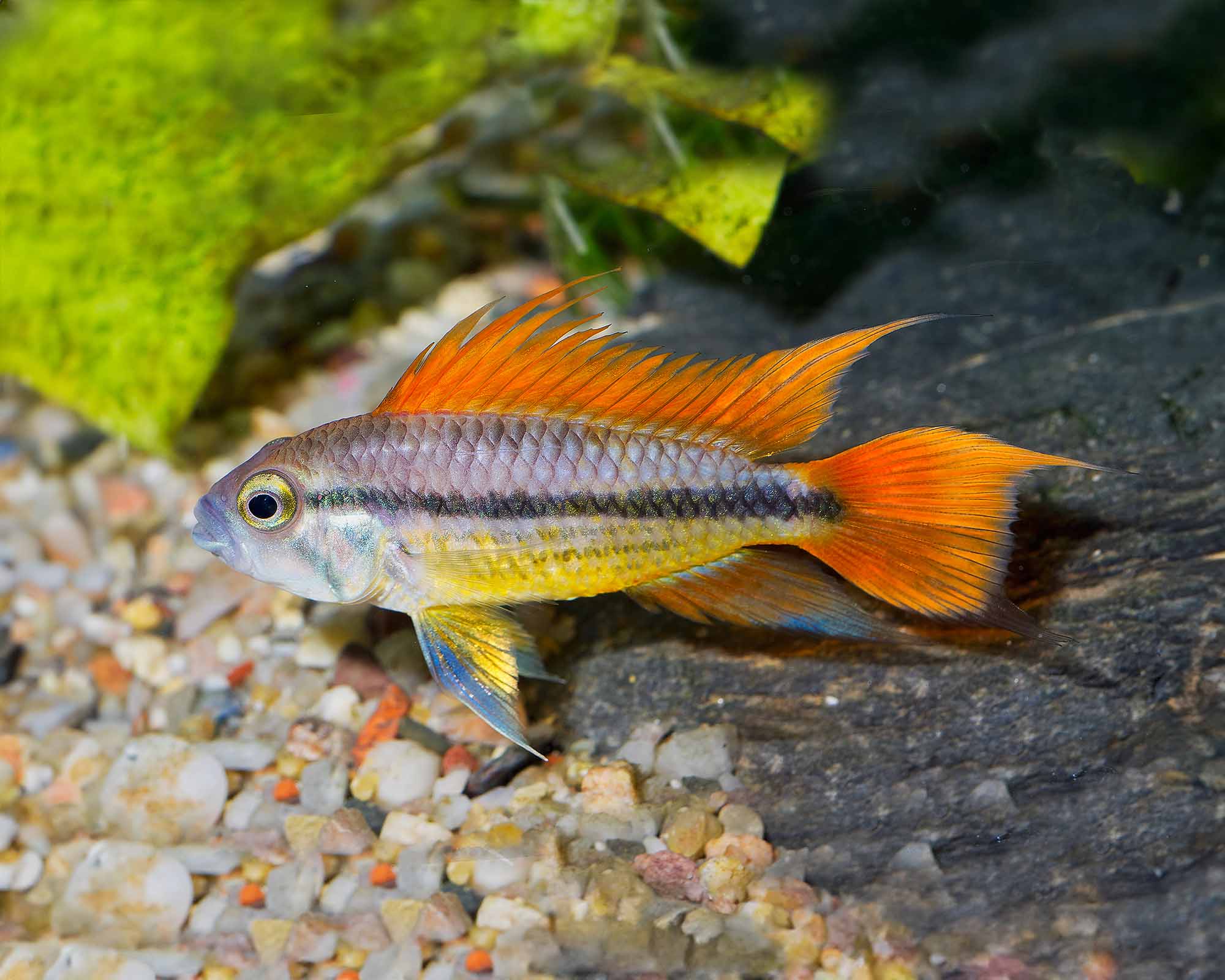
    The Cockatoo Cichlid is a small South American dwarf cichlid known for its elongated dorsal fin, bold facial markings and colorful orange fin forms. Apistogramma cacatuoides comes from slow-moving waters and tributaries of the upper Amazon basin, where it shelters among leaf litter, roots and submerged vegetation. It is generally manageable for an aquarist who provides soft, clean water, caves and visual barriers. The supplied listing describes an orange pair, but sex and exact form should be confirmed by the seller because photographs alone are not definitive.
  • Dwarf Gourami Red (Trichogaster lalius)

    Dwarf Gourami Red (Trichogaster lalius)

    Easy - Moderate
    Asian labyrinth fish
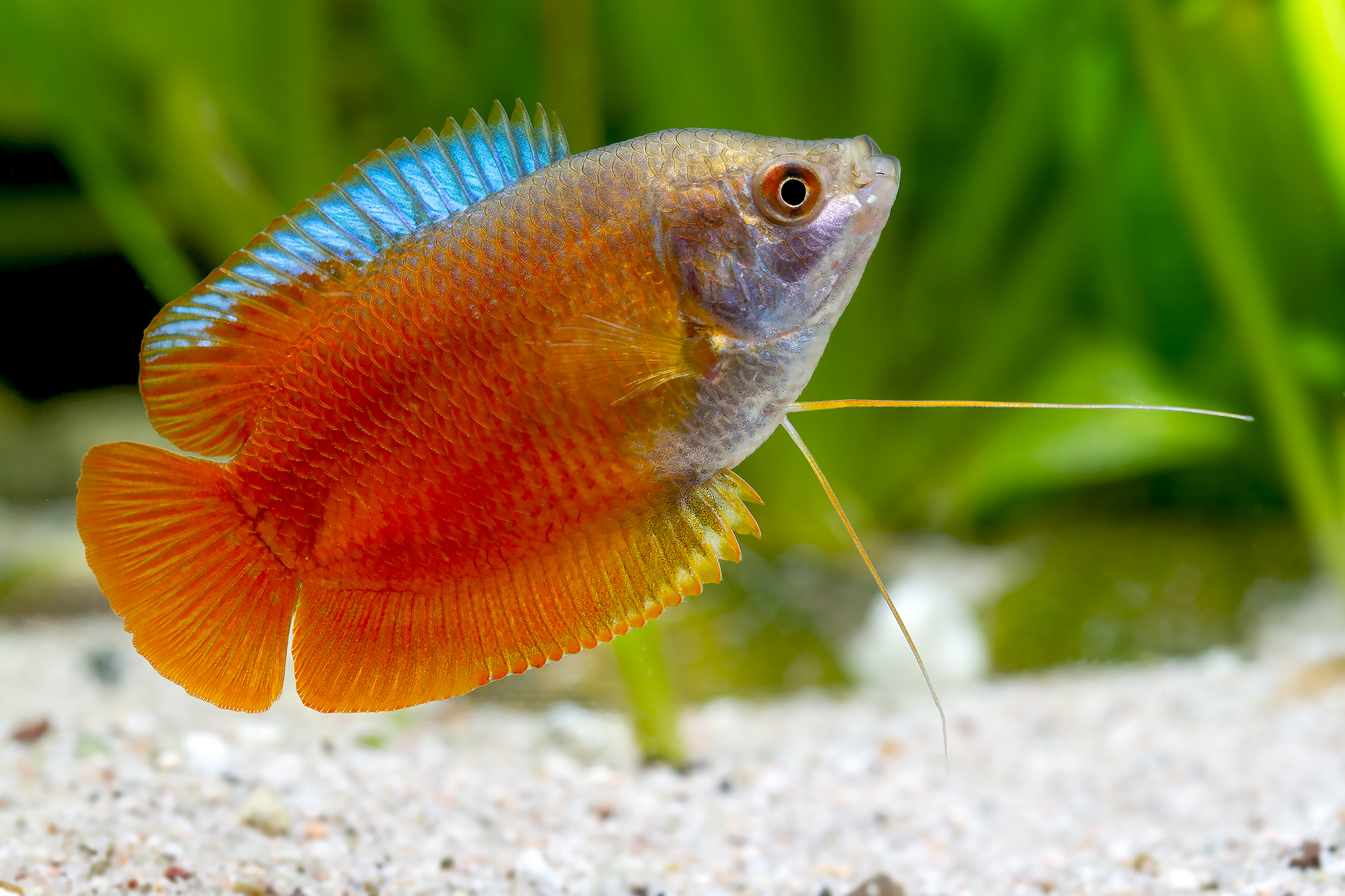
    The red dwarf gourami is a selectively bred color form of the dwarf gourami, a small labyrinth fish formerly widely known as Colisa lalia. It is suited to mature, planted community aquariums with gentle water movement and calm tank mates. Males can be territorial, especially when kept with females in confined conditions, so cover, visual barriers, and careful observation are important for a pair.
  • Cockatoo Cichlid Red (Apistogramma cacatuoides)

    Cockatoo Cichlid Red (Apistogramma cacatuoides)

    Moderate
    South American dwarf cichlid
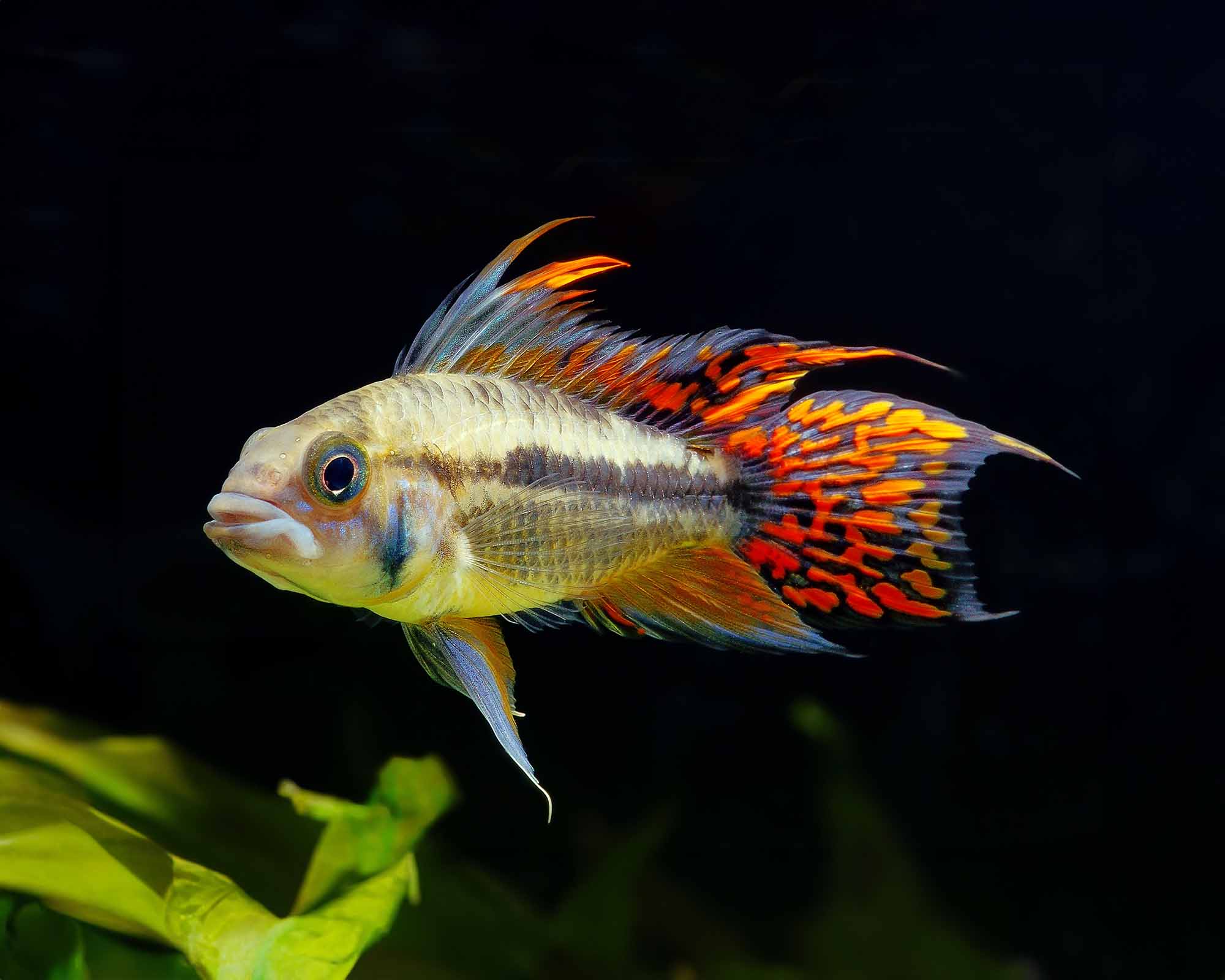
    The Cockatoo Cichlid is a small South American dwarf cichlid valued for its personality, breeding behavior and colorful finnage. Apistogramma cacatuoides is generally adaptable when provided with clean, stable water, cover and a soft substrate. Males are larger and more vividly marked than females, while pairs become territorial around spawning sites. The supplied “red” designation most likely refers to a selectively bred color form; exact strain and sex confirmation cannot be established from the listing alone.
  • Discus (Symphysodon aequifasciatus) Care Guide

    Discus (Symphysodon aequifasciatus) Care Guide

    Difficult
    South American freshwater cichlid
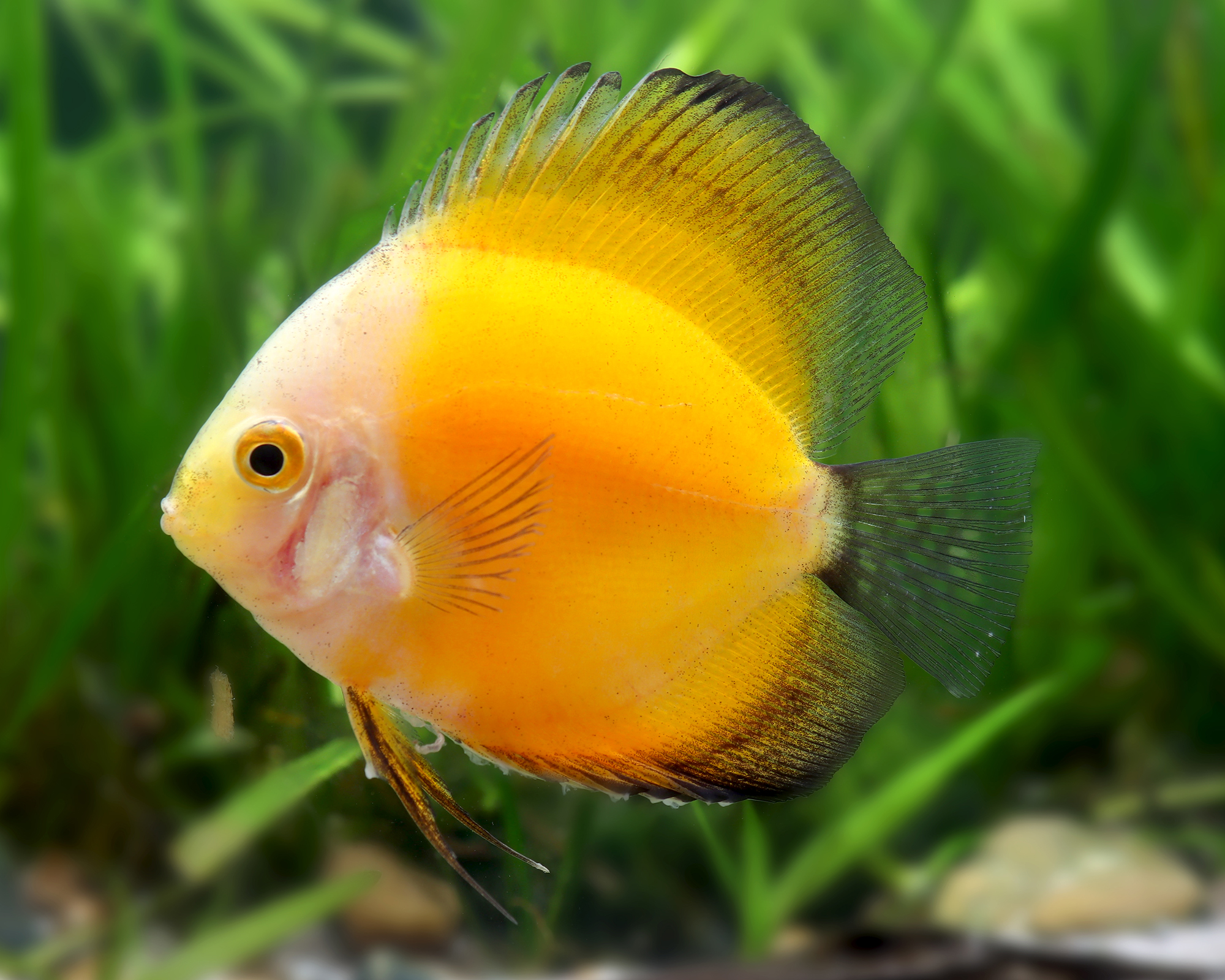
    Symphysodon aequifasciatus is a large, laterally compressed cichlid from the Amazon Basin, valued for its calm behavior and striking disc-shaped body. It requires warm, clean, stable water and careful feeding, making it better suited to experienced aquarists. The supplied images show yellow, orange, red, white and dark color forms; cultivated strains can vary considerably, so exact variety identification from images alone is uncertain. Discus are social fish and generally thrive in groups rather than as isolated specimens.