Overview
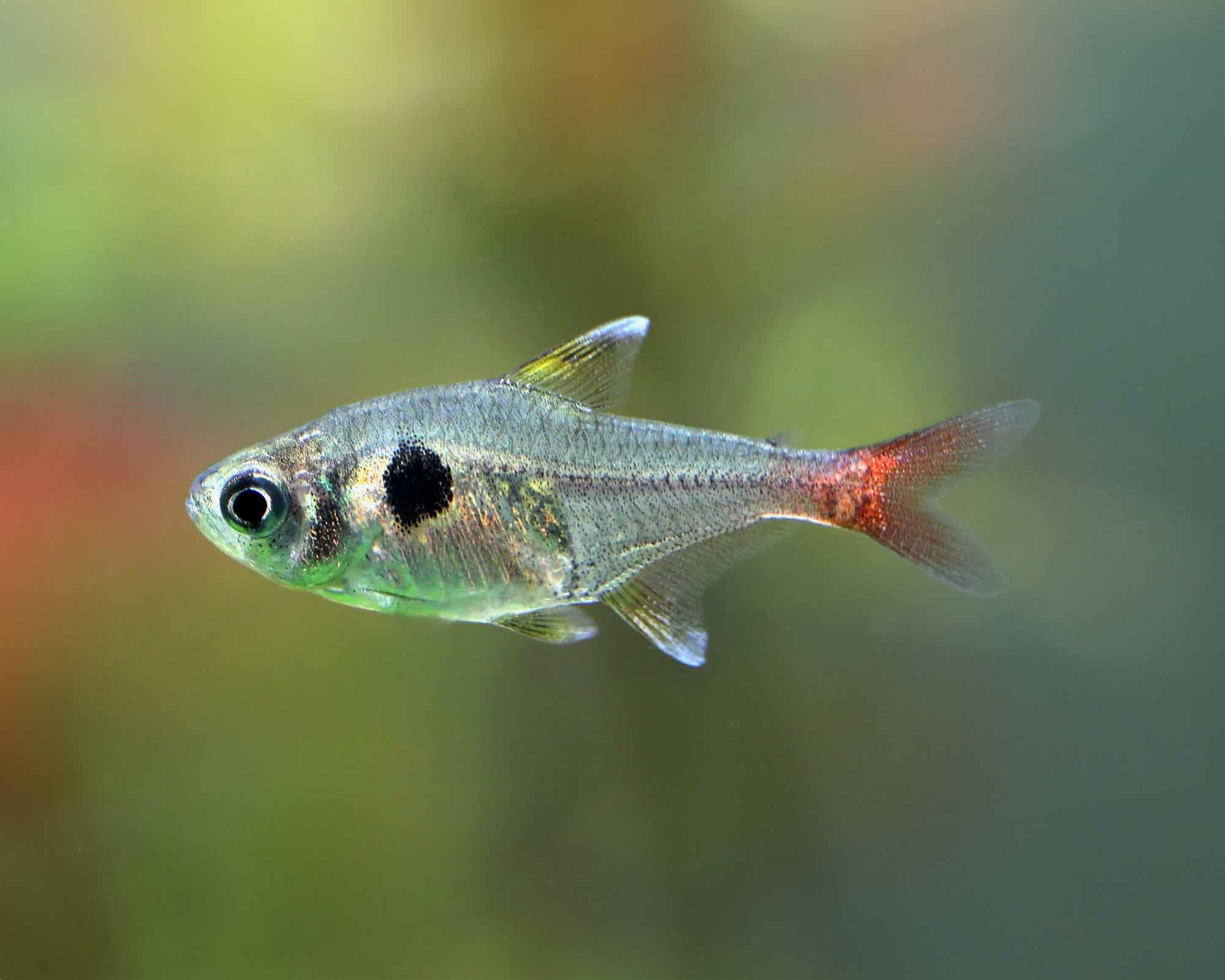
The Golden Phantom Tetra is a charming, active, and peaceful freshwater fish belonging to the Characidae family. Often identified by its distinct black shoulder patch, it is a favorite among aquarists looking to add subtle color and schooling behavior to their planted tanks.

Distribution and Habitat
Native to the slow-moving, shaded forest streams and tributaries of South America, particularly in the Guianas and parts of the Amazon basin. They inhabit waters tinted with tannins from decaying leaves, branches, and submerged roots.
Description of Golden Phantom Tetra
Body shape:
Deep-bodied and laterally compressed, typical of many phantom tetras, giving them a slightly diamond-like profile.
Color:
A translucent, silvery-gold body with a prominent, large black spot behind the gill cover (shoulder). The base of the tail features a distinctive red or rosy patch.
Barbels:
None.
Snout:
Short and blunt, featuring a small, terminal mouth adapted for mid-water feeding.
Eyes:
Relatively large with a dark pupil and a silvery, highly reflective iris that helps them navigate dimly lit waters.
Fins:
Transparent to slightly yellowish. The dorsal fin is tall, especially in males, and may have a dark edge or white tip.
The Tail:
The caudal fin is deeply forked, translucent, and accented by a striking red flush at the peduncle.
Temper
Peaceful and somewhat timid if kept in too small of a group or with boisterous tank mates.
Sociality
Highly gregarious. They are a schooling species that must be kept in groups of at least 6 to 8 individuals to feel secure and display their best colors.
Activity
Diurnal and highly active, they spend most of their time darting around the middle to lower levels of the water column.
Keeping and Caring for Golden Phantom Tetra
Tank size:
A minimum of 60 liters (15 gallons) is recommended to provide adequate swimming space for a school.
Water Parameters:
Temperature
22-27°C (72-81°F).
pH
6.0-7.5, preferring slightly acidic conditions.
Hardness
Soft to moderately hard water, ideally between 2-12 dGH.
Ammonia, Nitrite, Nitrate
Ammonia and Nitrite must be strictly 0 ppm. Nitrates should be kept below 20 ppm through regular water changes.
Lighting
Subdued to moderate lighting is preferred to mimic their shaded natural environment. Floating plants can help diffuse light.
Water flow
Gentle to moderate water flow. They do not appreciate overly turbulent currents.
Decorations and Plants
A heavily planted tank with dark substrate, driftwood, and leaf litter (like Indian Almond leaves) creates an ideal, naturalistic environment.
Diet
Omnivorous. In the wild, they feed on small insects, worms, and crustaceans. In captivity, they readily accept high-quality flakes, micro-pellets, and frozen or live foods like daphnia, brine shrimp, and bloodworms.
Some Feeding Tips
Feed small amounts 1-2 times daily, only what they can consume in a few minutes. Variety is key to maintaining their vibrant colors and immune system.
Breeding
Egg scatterers. Breeding requires a separate, dimly lit breeding tank with soft, acidic water and fine-leaved plants or a spawning mop. After the morning spawning, adults must be removed immediately to prevent them from eating the eggs. The fry hatch in 24-36 hours and require infusoria once free-swimming.
Conclusion
The Golden Phantom Tetra is a hardy, visually appealing, and peaceful addition to any soft-water community aquarium. Their lively schooling behavior and unique coloration make them a rewarding species for both beginner and experienced aquarists alike.
Leave your comments