Taxonomy and identification
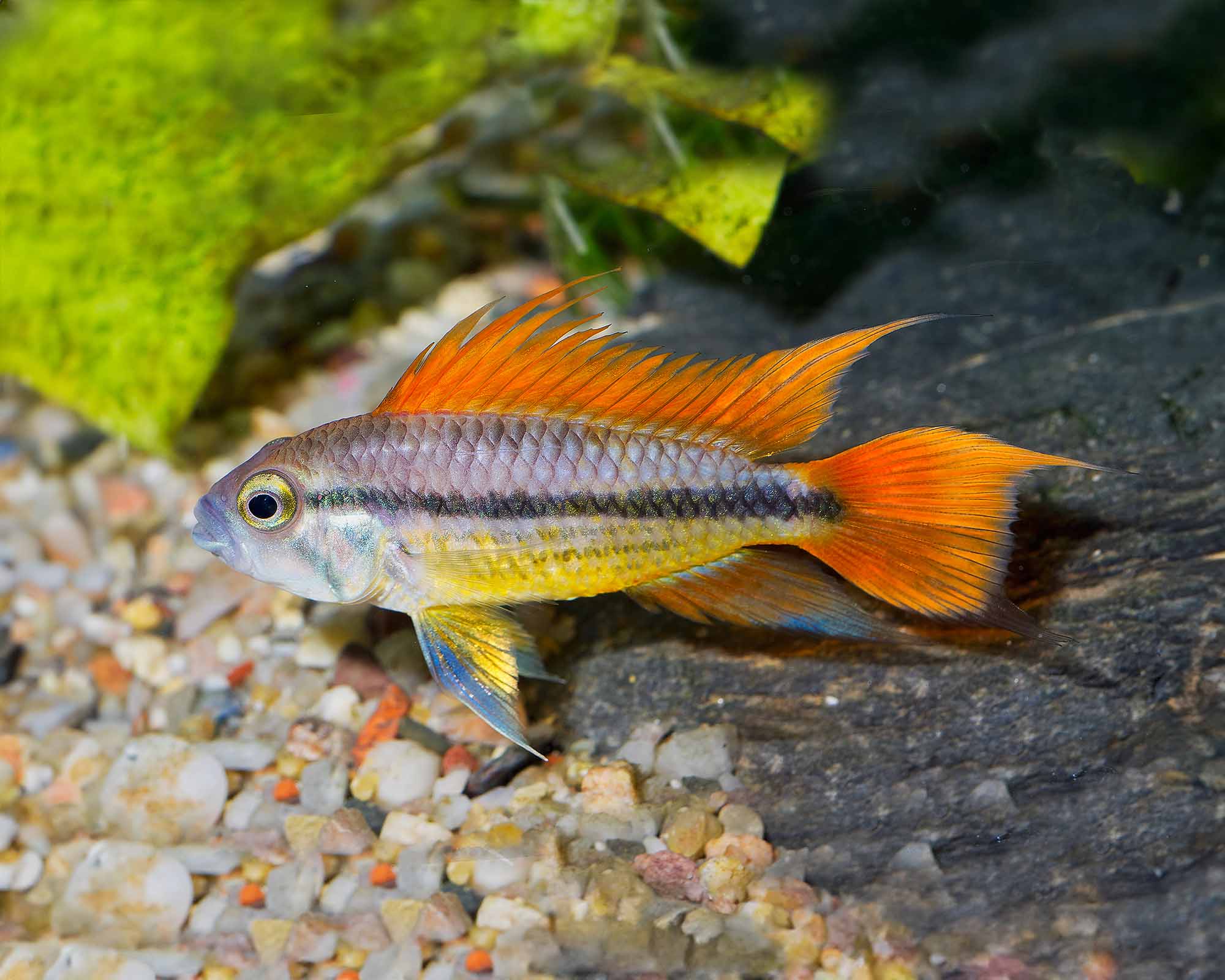
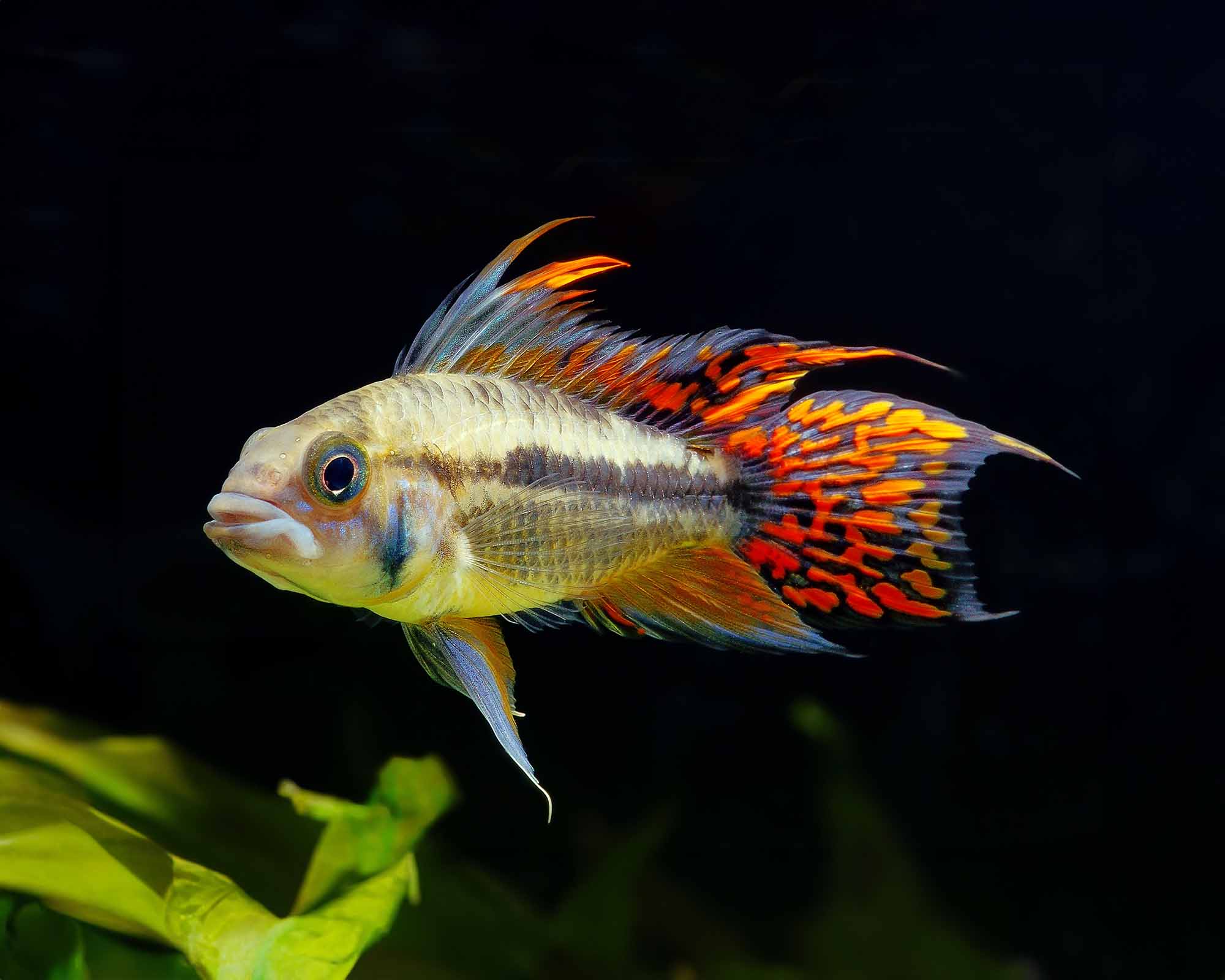
Apistogramma cacatuoides is a member of the family Cichlidae and the genus Apistogramma. The common name Cockatoo Cichlid refers especially to the male’s tall, extended dorsal-fin rays, which can resemble a crest. Males are usually larger and more strongly marked, while females are smaller and often become yellow during breeding. Orange is a selectively maintained aquarium color form rather than a separate species. The supplied source identifies the fish as an orange pair, but the sex and breeding status cannot be verified with certainty from the available images alone.
Natural distribution and habitat
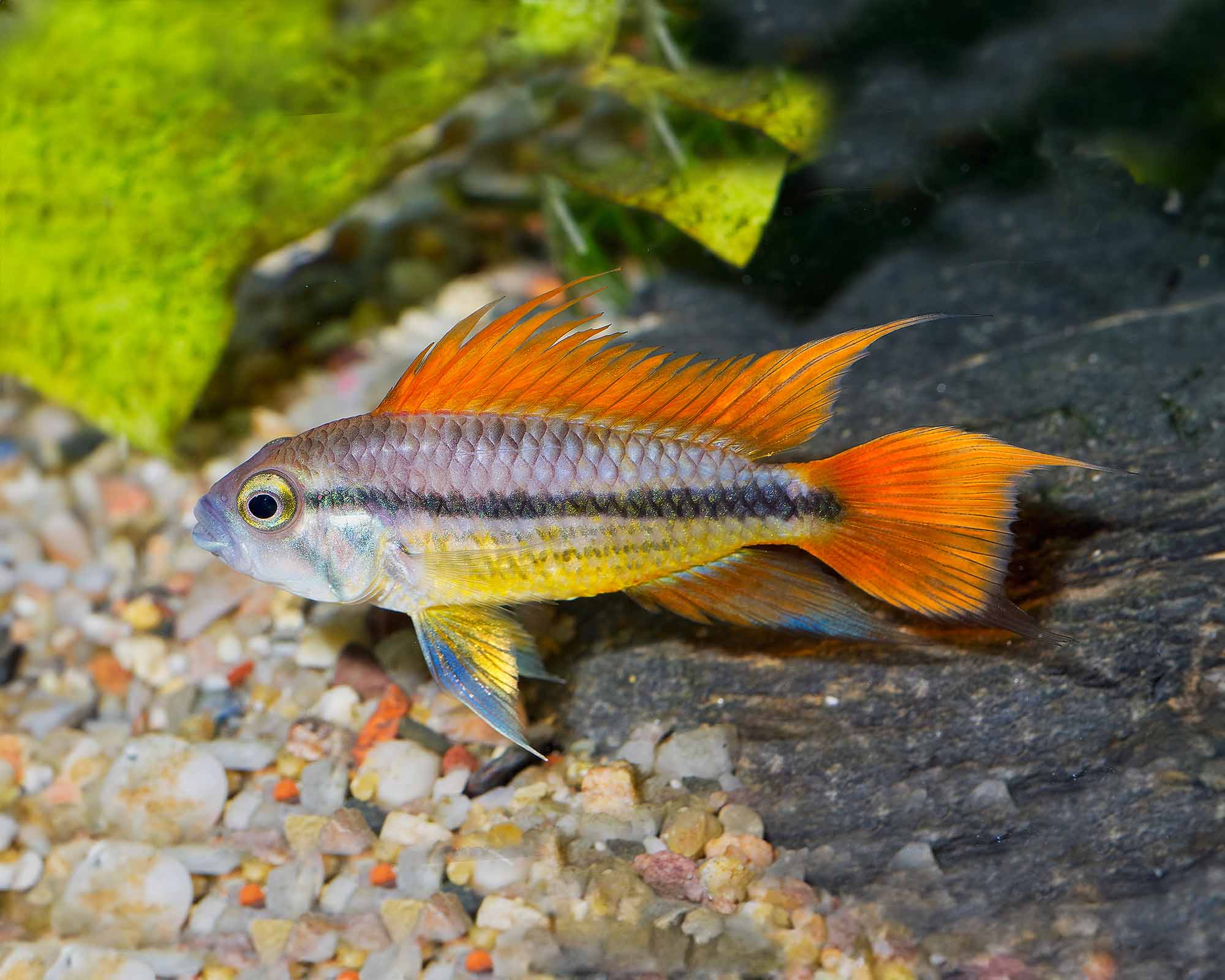
This species is native to the upper Amazon basin, particularly tributary habitats in Peru. It is associated with relatively quiet, shallow waters containing leaf litter, submerged roots, branches and dense cover. Such environments commonly have low to moderate hardness and may be acidic, although captive-bred fish can adapt to a broader range when changes are gradual and water quality is stable.
Behavior
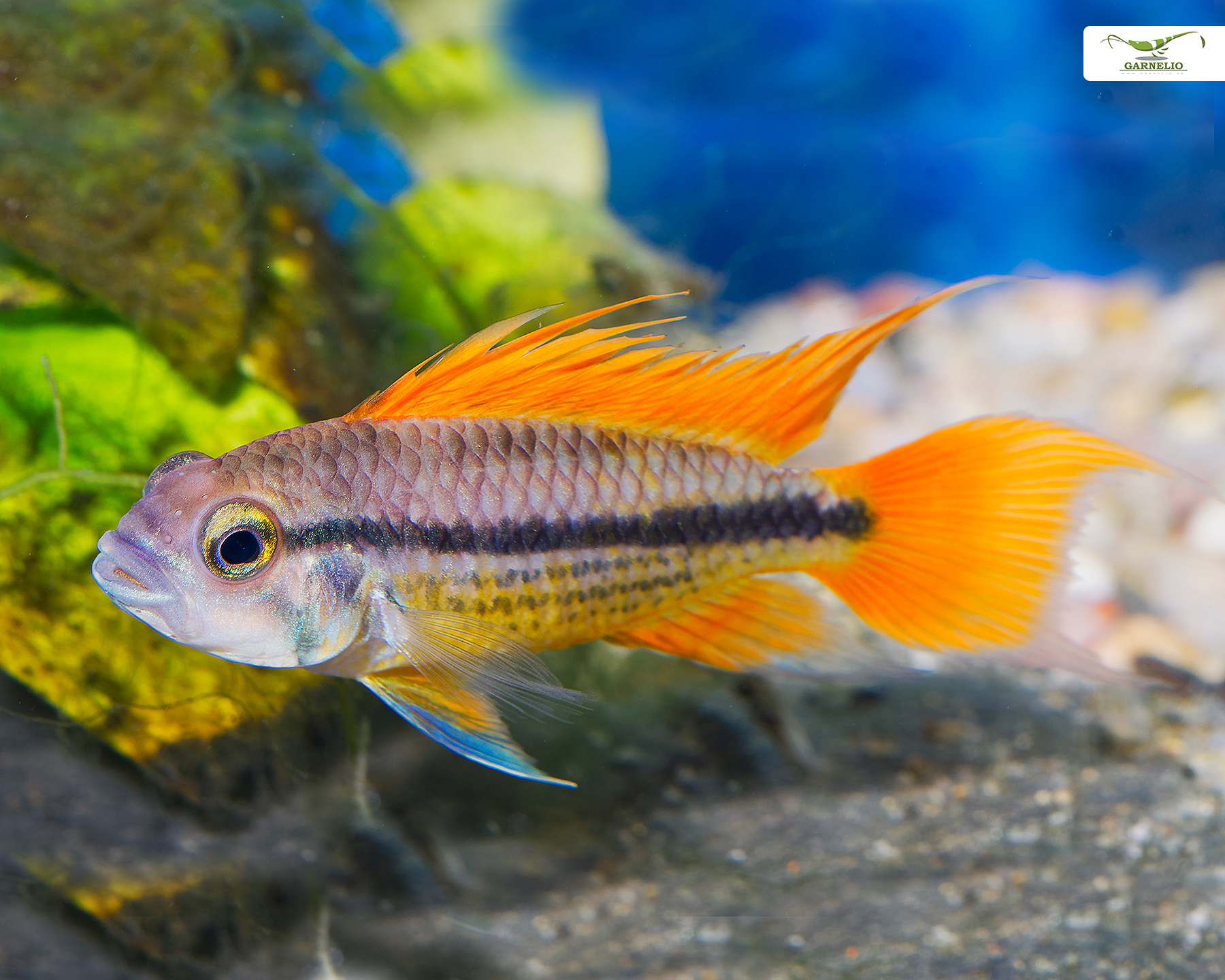
Cockatoo Cichlids are bottom-oriented, inquisitive and territorial around shelters. Outside breeding, they are usually restrained community fish, but a male or guarding female may chase intruders from a chosen cave. A pair can defend a surprisingly localized territory, and aggression increases when several cichlids compete for the same floor space. Plants, wood, caves and broken sight lines help reduce conflict.
Aquarium and tank size
A pair should have an aquarium of at least 75 litres, with a broad floor area preferred over a tall, narrow design. Larger aquariums are advisable for a community setup or when keeping more than one male. Use fine sand or another smooth substrate, driftwood, hardy plants and several small caves made from coconut shells, ceramic shelters or rockwork. Gentle filtration, subdued lighting and regular partial water changes are beneficial. The aquarium must be mature and fully cycled before introduction.
Water parameters
Aim for 23-29 °C, pH 5.5-7.5 and soft to moderately hard water, with stability more important than pursuing an extreme value. For breeding, many keepers use softer, more acidic water near the lower part of this range. Ammonia and nitrite should remain undetectable, and nitrate should be kept low through maintenance. Avoid abrupt changes in temperature, pH or mineral content.
Diet
This species is primarily carnivorous and naturally consumes small aquatic invertebrates and other tiny prey. Offer a varied diet of quality small sinking pellets or granules supplemented with frozen or live foods such as baby brine shrimp, daphnia, mosquito larvae and bloodworms. Feed small portions once or twice daily, remove uneaten food and avoid relying exclusively on rich live or frozen foods.
Compatibility
Suitable companions include peaceful, similarly sized tetras, pencilfish, small rasboras and non-competitive bottom fish that tolerate the same water conditions. Avoid large, boisterous or fin-nipping species, aggressive cichlids and overcrowding of the substrate. Corydoras and other bottom dwellers may be chased from a breeding territory, so provide ample floor space and separate hiding places. Very small shrimp and fry may be eaten.
Breeding
Apistogramma cacatuoides is a cave-spawning species. Provide several small caves, clean water and a varied diet to condition the fish. The female usually selects and cleans a shelter, lays adhesive eggs on its roof or interior surface, and guards the clutch and surrounding area. The male commonly defends the wider territory. Eggs generally hatch after a few days, with free-swimming fry following several days later, depending on temperature. Feed free-swimming fry newly hatched brine shrimp or another suitably tiny food. Remove or protect other fish if they threaten the brood, and be prepared to separate juveniles as they grow.
Leave your comments