
AquaLibs presents AquaRank Discover the world’s leading aquascapers

Explore transparent rankings built from published results across the world’s leading aquascaping contests.

What Will This Planted Aquarium Cost to Feed? A Livestock and Maintenance Planning Guide

What Will This Planted Aquarium Cost to Feed? A Livestock and Maintenance Planning Guide

A planted aquarium can reduce waste pressure, provide grazing surfaces and make a small community feel more complete, but it does not cancel the work created by livestock. Every fish, shrimp and snail adds feeding decisions, waste, oxygen demand and ...
Spain at IAPLC 2026: Roberto Buenadicha’s Forest and the Space Between Trunks

Spain at IAPLC 2026: Roberto Buenadicha’s Forest and the Space Between Trunks

Roberto Buenadicha’s aquarium is the only Spanish work in the published ranks 1–300. Its slender dark trunks, fine green planting and conspicuous pale fish make it a rewarding individual study. This instalment returns to the older Spain introduction ...
France at IAPLC 2026: A Close Reading of Jean Christophe Grosset’s Woodland

France at IAPLC 2026: A Close Reading of Jean Christophe Grosset’s Woodland

Only one French work appears in the published ranks 1–300. That gives this instalment a different task: a close reading of Jean Christophe Grosset’s aquarium, with the older country introduction as context. The photograph deserves attention for its o...
Food, Traps, or Predators? A Reproduction-Aware Plan for Aquarium Snails

Food, Traps, or Predators? A Reproduction-Aware Plan for Aquarium Snails

A planted aquarium does not need to be snail-free to look balanced. The real challenge is matching snail numbers to the tank’s food supply, plant density, shrimp population, and maintenance routine. Small ramshorns, bladder snails, and trumpet snails...
Fresh from the rankings

Latest works from the AquaRank Top 300

A rotating selection from the newest locally archived contest works created by the world’s Top 300 aquascapers.

Aquarium Library

  • All
  • Plant
  • Fish
  • Shrimp
  • Snail

Spain at IAPLC 2026: Roberto Buenadicha’s Forest and the Space Between Trunks

Roberto Buenadicha’s aquarium is the only Spanish work in the published ranks 1–300. Its slender dar...

France at IAPLC 2026: A Close Reading of Jean Christophe Grosset’s Woodland

Only one French work appears in the published ranks 1–300. That gives this instalment a different ta...

Singapore at IAPLC 2026: Open Stone and an Enclosed Planted Passage

Two Singaporean works appear in the published ranks 1–300, and they offer an unusually clear contras...

Hong Kong at IAPLC 2026: Three Studies in Light, Layers and Visual Impact

A low timber ceiling, blue-toned terraces and converging planted diagonals create three visibly diff...

Italy at IAPLC 2026: Calm Routes and More Dramatic Planted Frames

A clear route through planted banks can feel quiet; a coloured ridge beneath a dark frame can feel t...

United States at IAPLC 2026: Four Distinct Readings of a Wooded Aquarium

The four American photographs selected here all contain important wood structures, yet they do not p...
Top 300 spotlight

AquaRank Top 300

Explore AquaRank
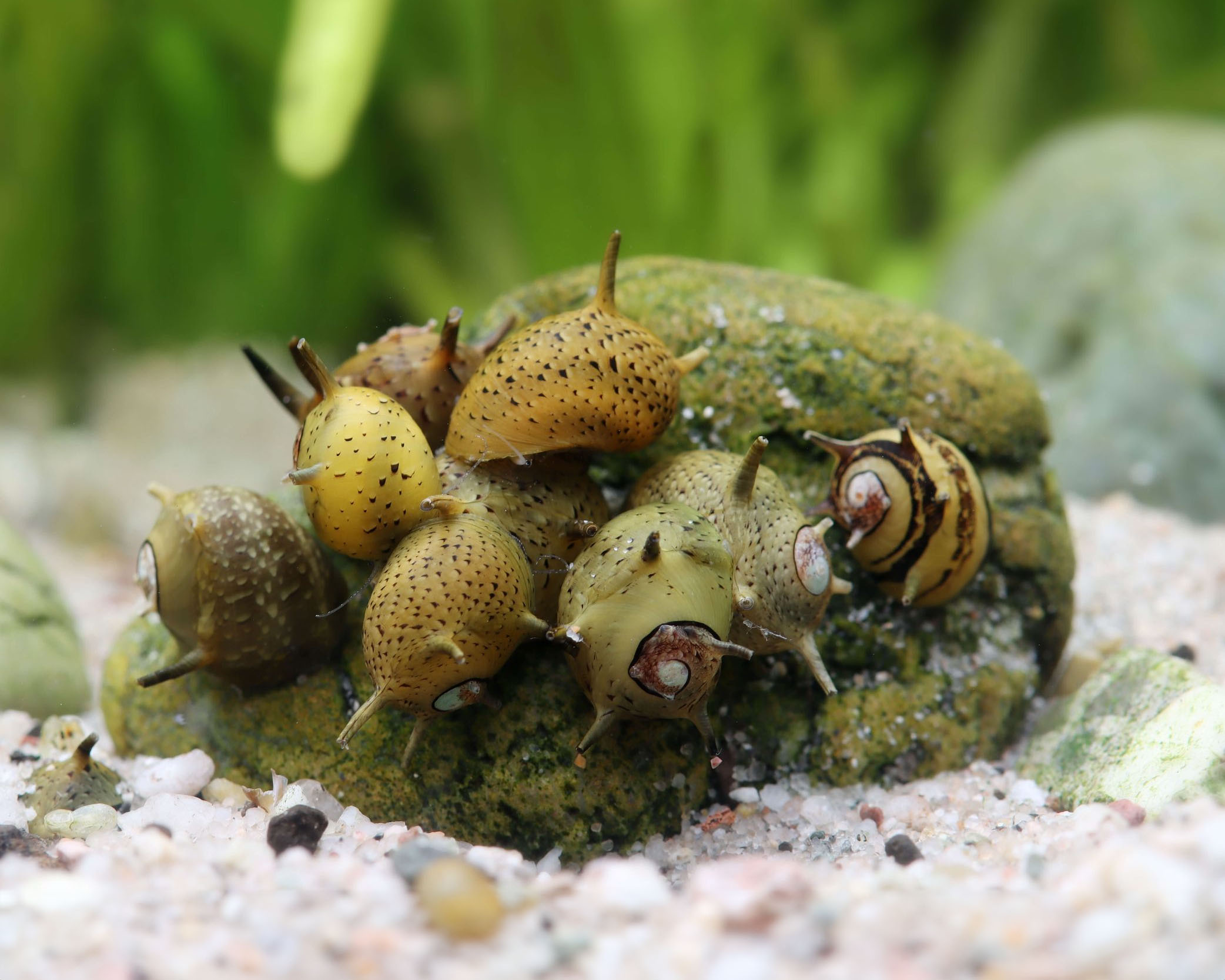
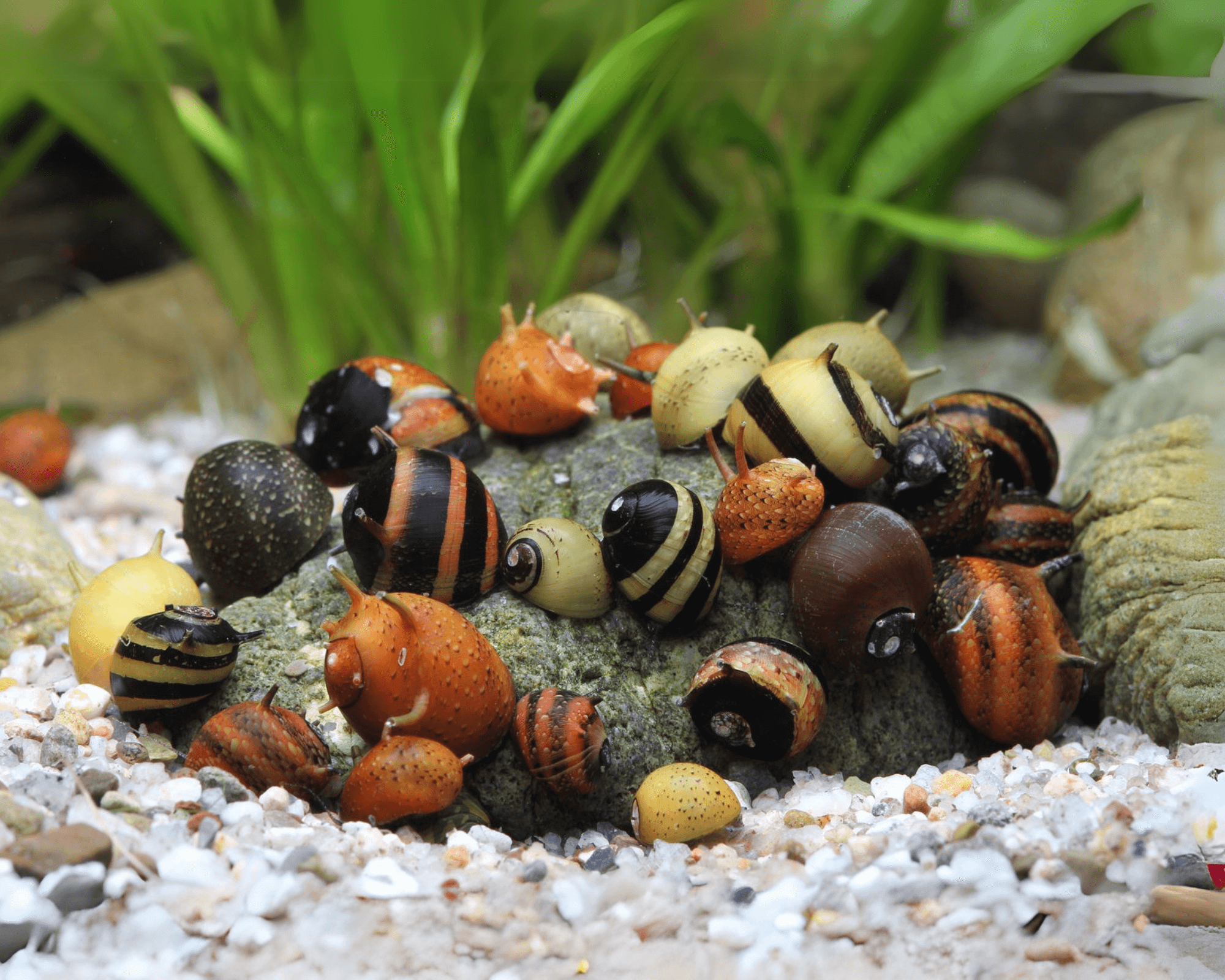
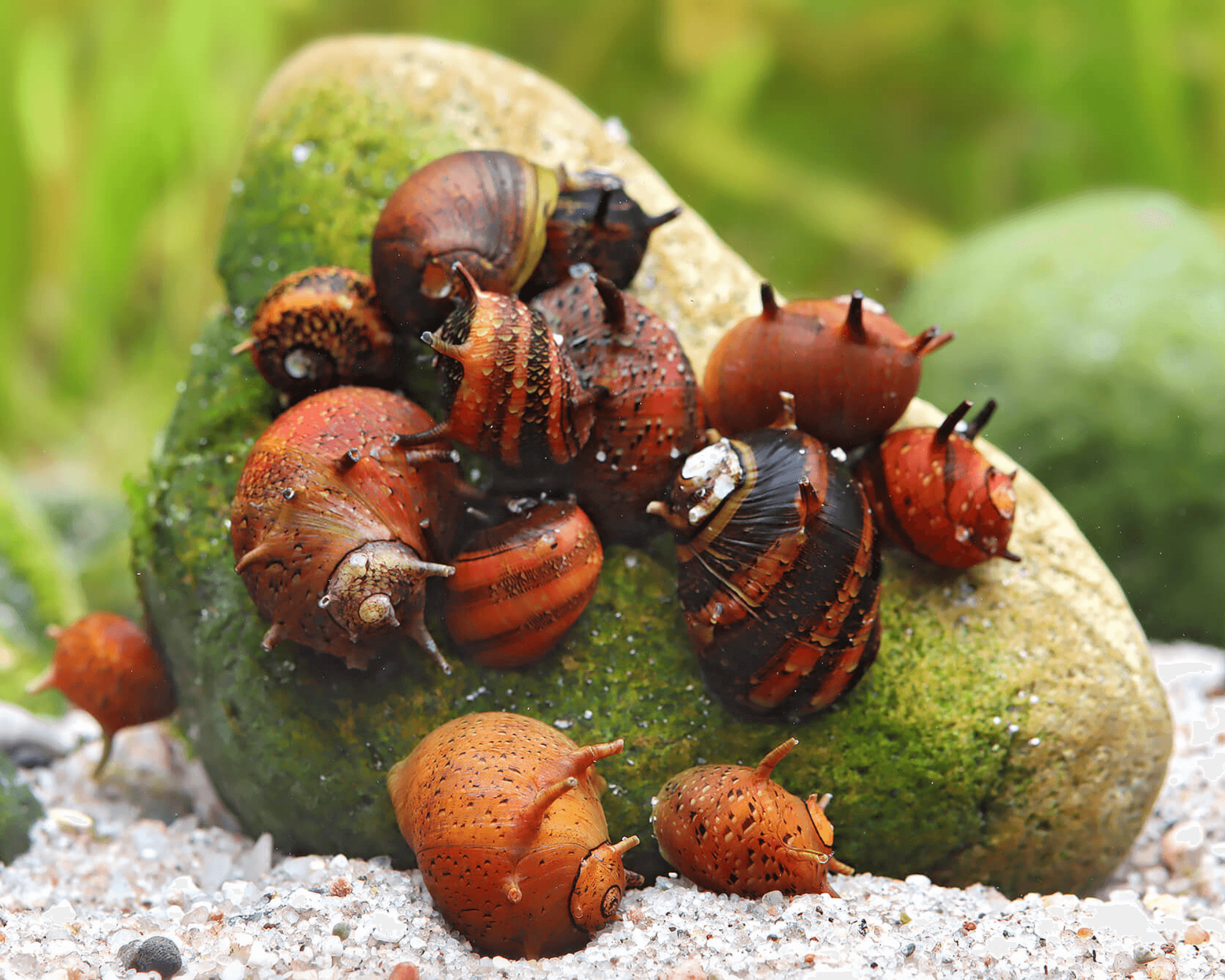
Neritina sp. (Anthrazit Napfschnecke / Black Helmet Snail)

Overview

Image of anthrazit napfschnecke neritina sp

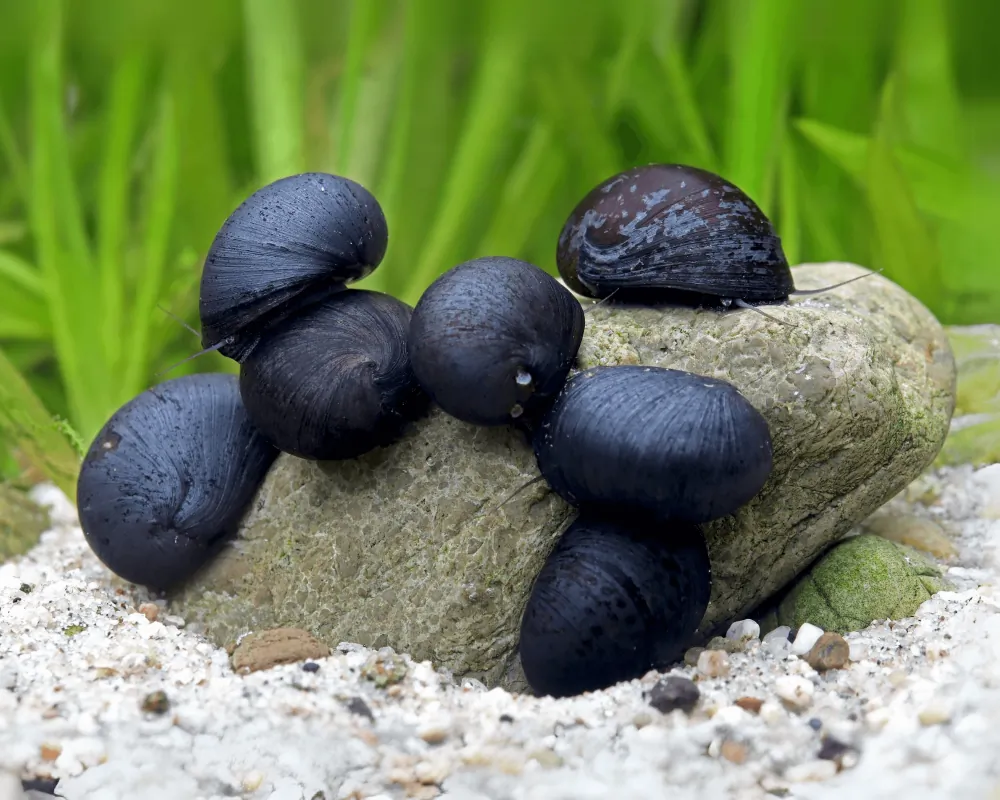
The Anthrazit Napfschnecke, scientifically known as Neritina sp. (often identified in the hobby as Neritina pulligera), is highly sought after by aquarium enthusiasts. Commonly referred to as the Black Helmet Snail, it is renowned for its insatiable appetite for algae and its sleek, minimalist appearance.

Distribution and Habitat
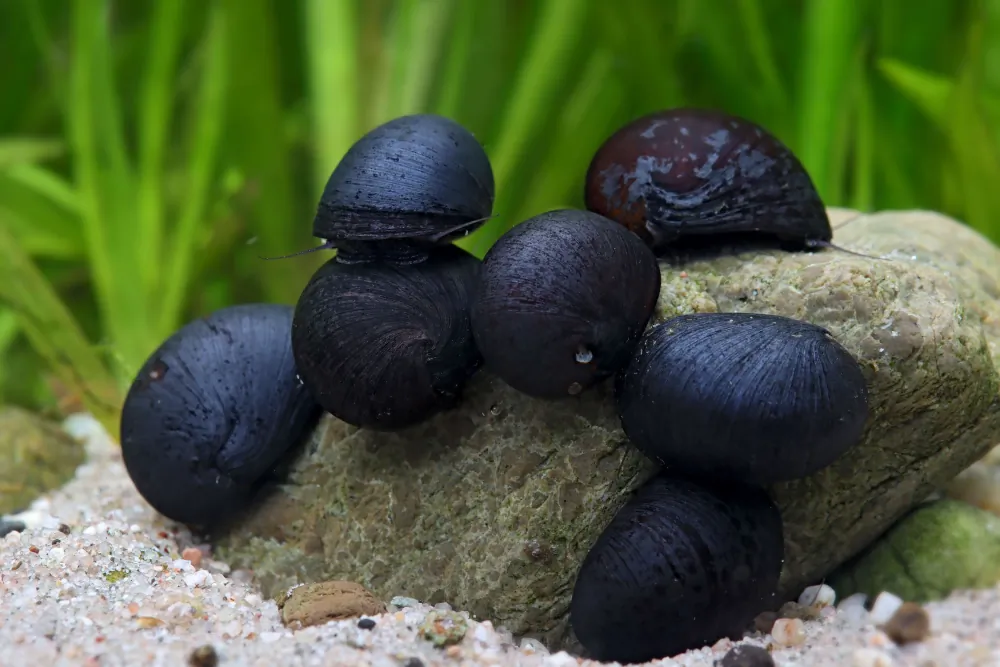
Image of anthrazit napfschnecke neritina sp

Native to the Indo-Pacific region, these snails are typically found in fast-flowing coastal streams and rivers. They naturally inhabit estuarine areas where freshwater meets the ocean, thriving in environments with rocky substrates where they can graze on abundant algae and biofilm.

Description of Anthrazit Napfschnecke
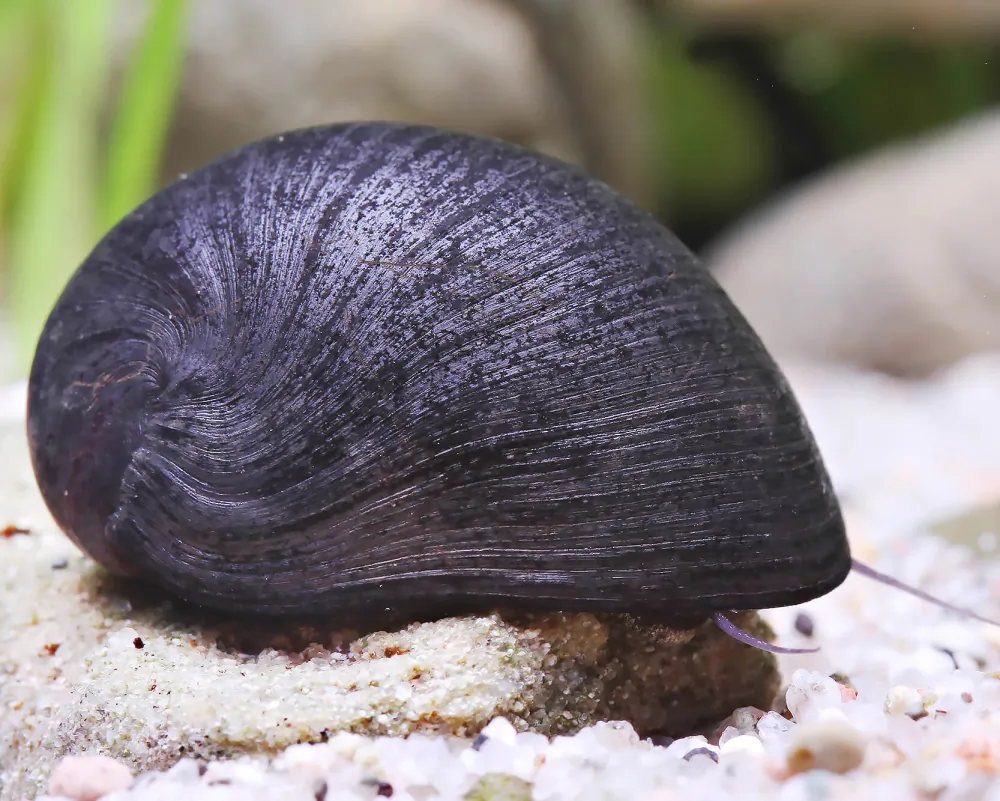
Image of anthrazit napfschnecke neritina sp

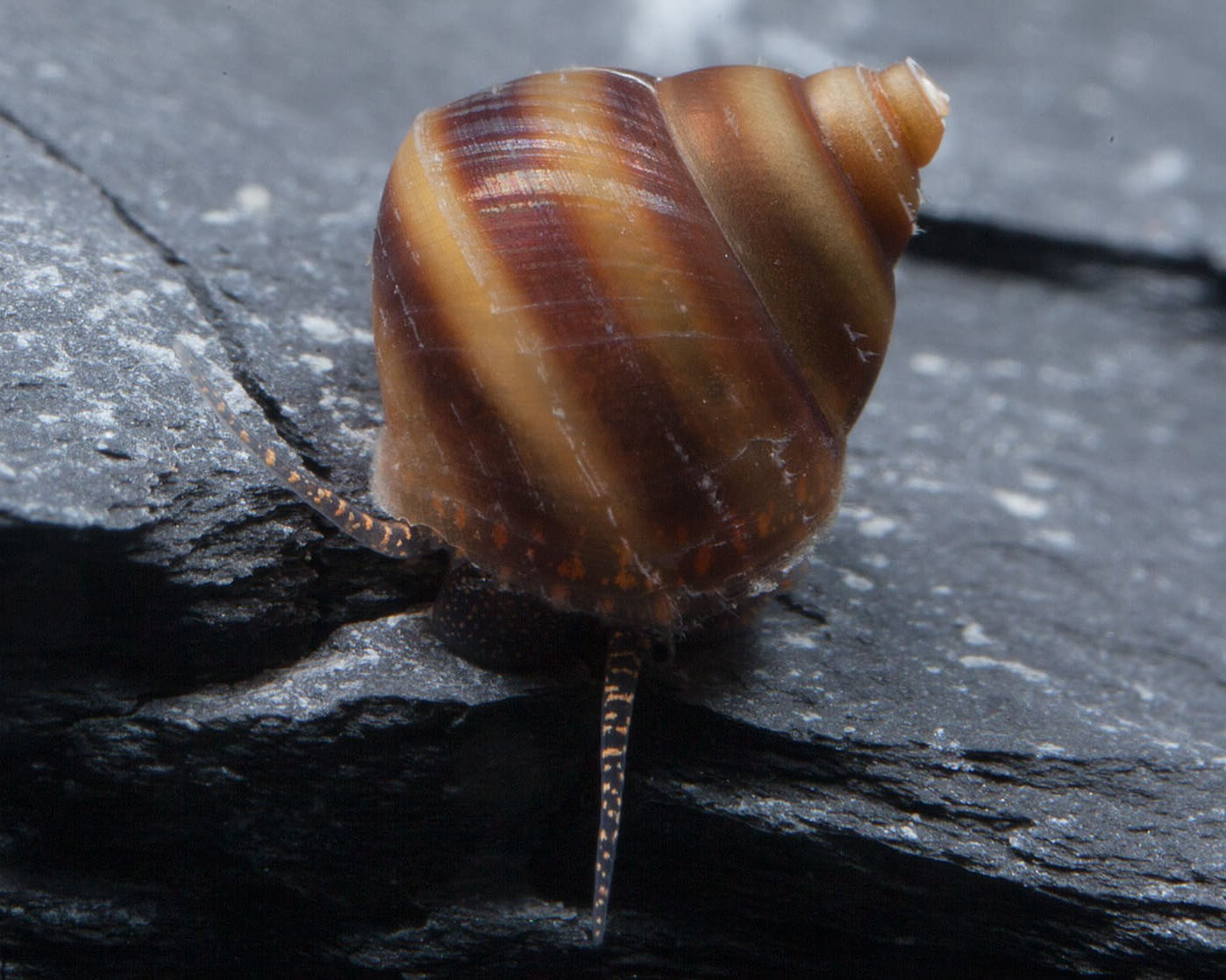
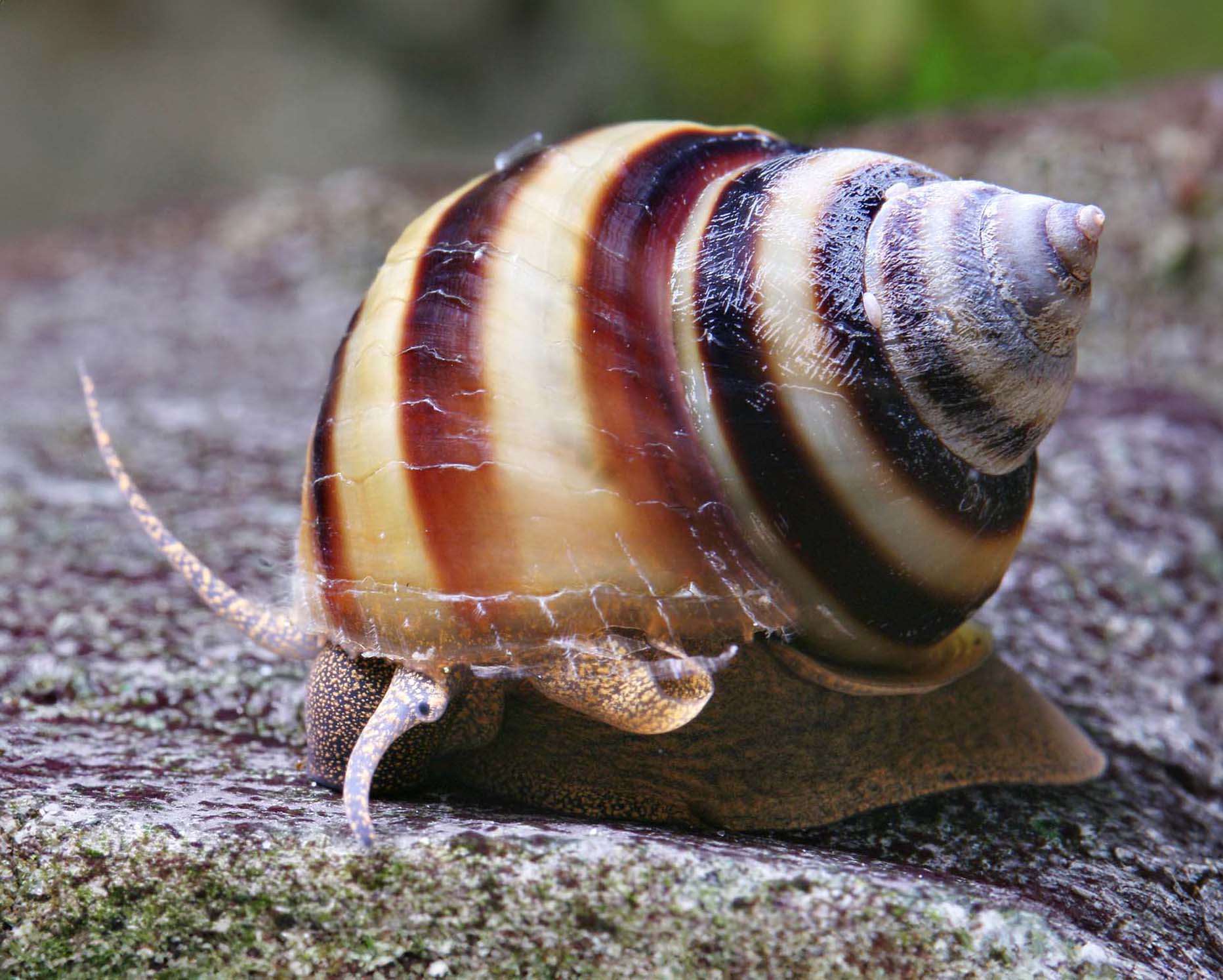
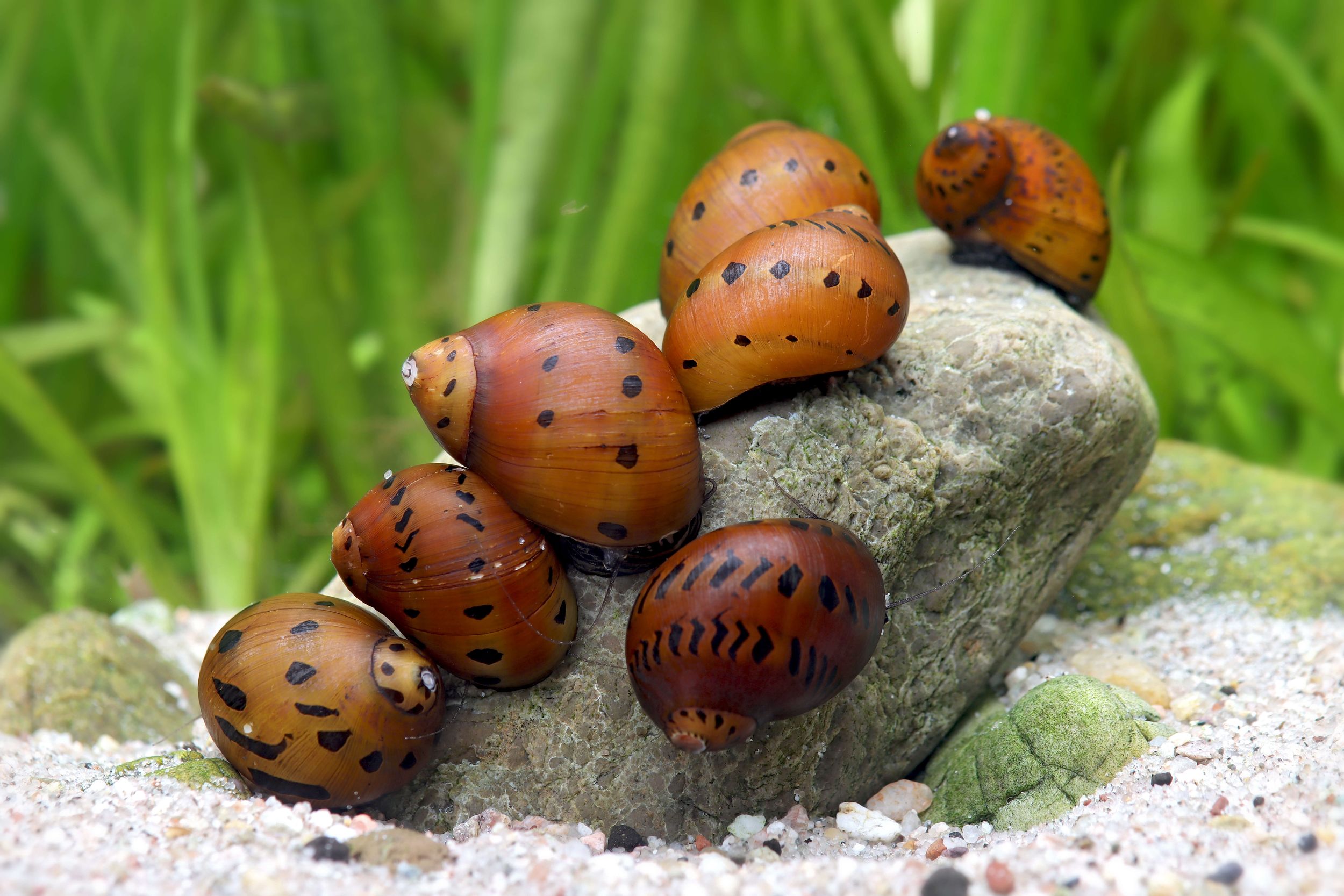
This snail features a smooth, robust shell that closely resembles a tiny helmet. The coloration ranges from deep grey to jet black and dark anthracite. Unlike other patterned nerite snails, the Black Helmet Snail boasts a uniform, dark elegance. As seen in their anatomy, their specialized radula is perfectly adapted for scraping tough algae off flat surfaces.

Keeping and Caring for Anthrazit Napfschnecke
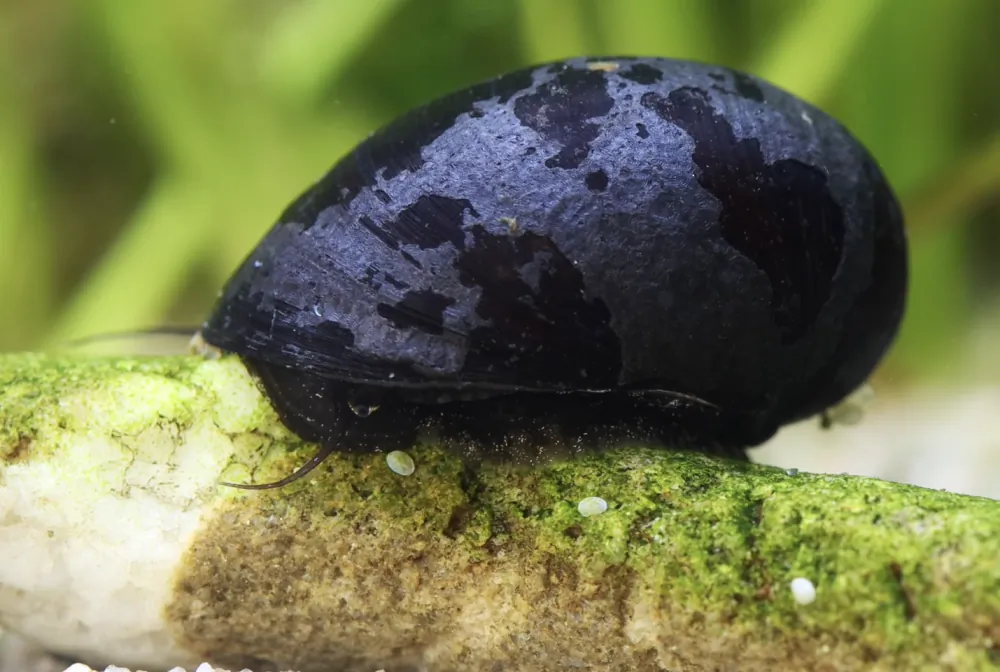
Image of anthrazit napfschnecke neritina sp

Caring for the Anthrazit Napfschnecke is relatively straightforward, making it an excellent choice for both beginners and experienced aquarists. They are entirely peaceful and will not bother tank mates or consume healthy aquatic plants.

Tank size:

A minimum tank size of 5 to 10 gallons is recommended. Because they are heavy eaters, a larger, biologically mature tank ensures a steady and natural supply of algae.

Water Parameters:

Maintaining stable water conditions is crucial for their shell health and overall longevity in captivity.

Temperature

They prefer tropical temperatures ranging from 22 to 28 °C (72 - 82 °F).

pH

A slightly alkaline pH between 7.0 and 8.5 is ideal to prevent their shells from deteriorating or pitting.

Hardness

Moderate to hard water (GH 8-20) with sufficient calcium is absolutely necessary to maintain their thick, helmet-like shells.

Ammonia, Nitrite, Nitrate

Ammonia and Nitrite must always be at 0 ppm. Nitrates should ideally be kept below 20 ppm. Like most invertebrates, they are highly sensitive to copper medications.

Feeding the Anthrazit Napfschnecke
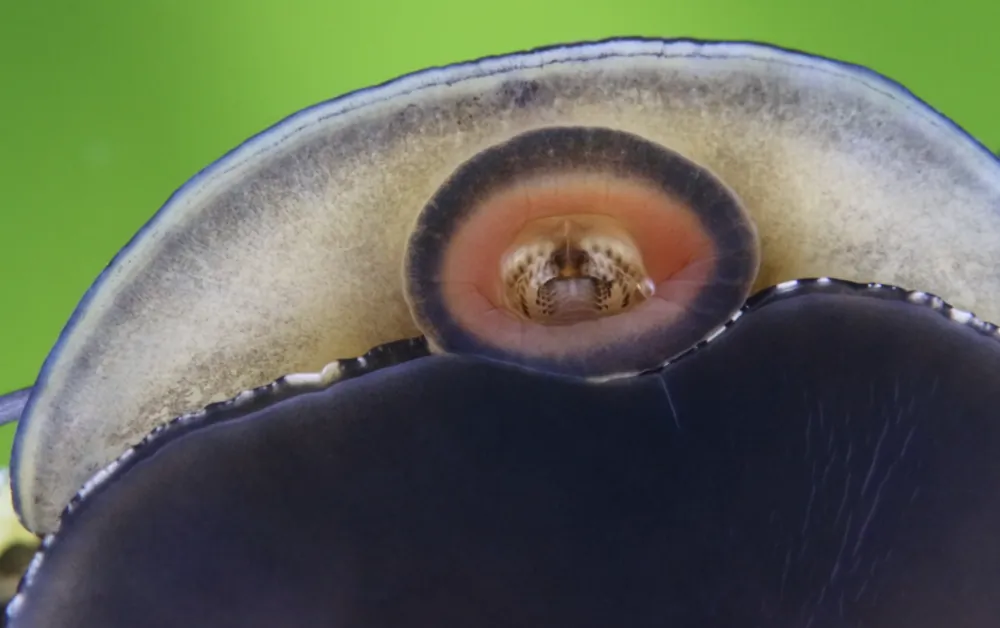
Image of anthrazit napfschnecke neritina sp

These snails are obligate herbivores and some of the best algae eaters available. They will tirelessly consume green spot algae, diatoms, and biofilm from glass, rocks, and wood. If the tank is too clean, their diet must be supplemented with high-quality algae wafers, blanched vegetables (like zucchini), and spirulina.

Breeding Anthrazit Napfschnecke
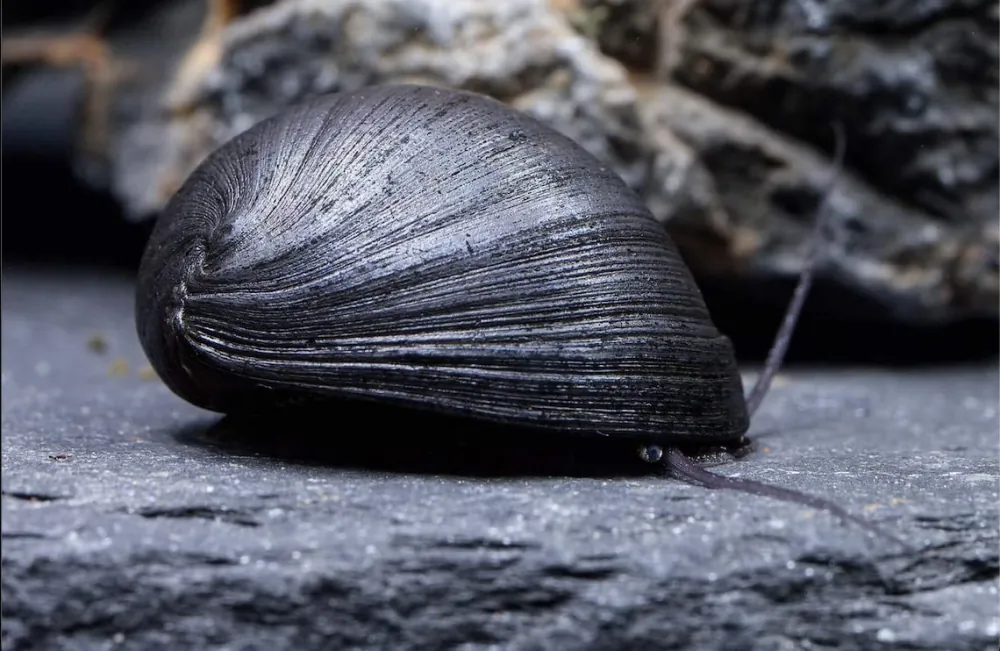
Image of anthrazit napfschnecke neritina sp

Like other Nerite snails, the Anthrazit Napfschnecke will lay small, white, sesame-seed-like eggs on hardscape and glass. However, these eggs will not hatch in freshwater. The larvae require a brackish or marine environment to develop, meaning they will never overpopulate your freshwater aquarium.

Conclusion
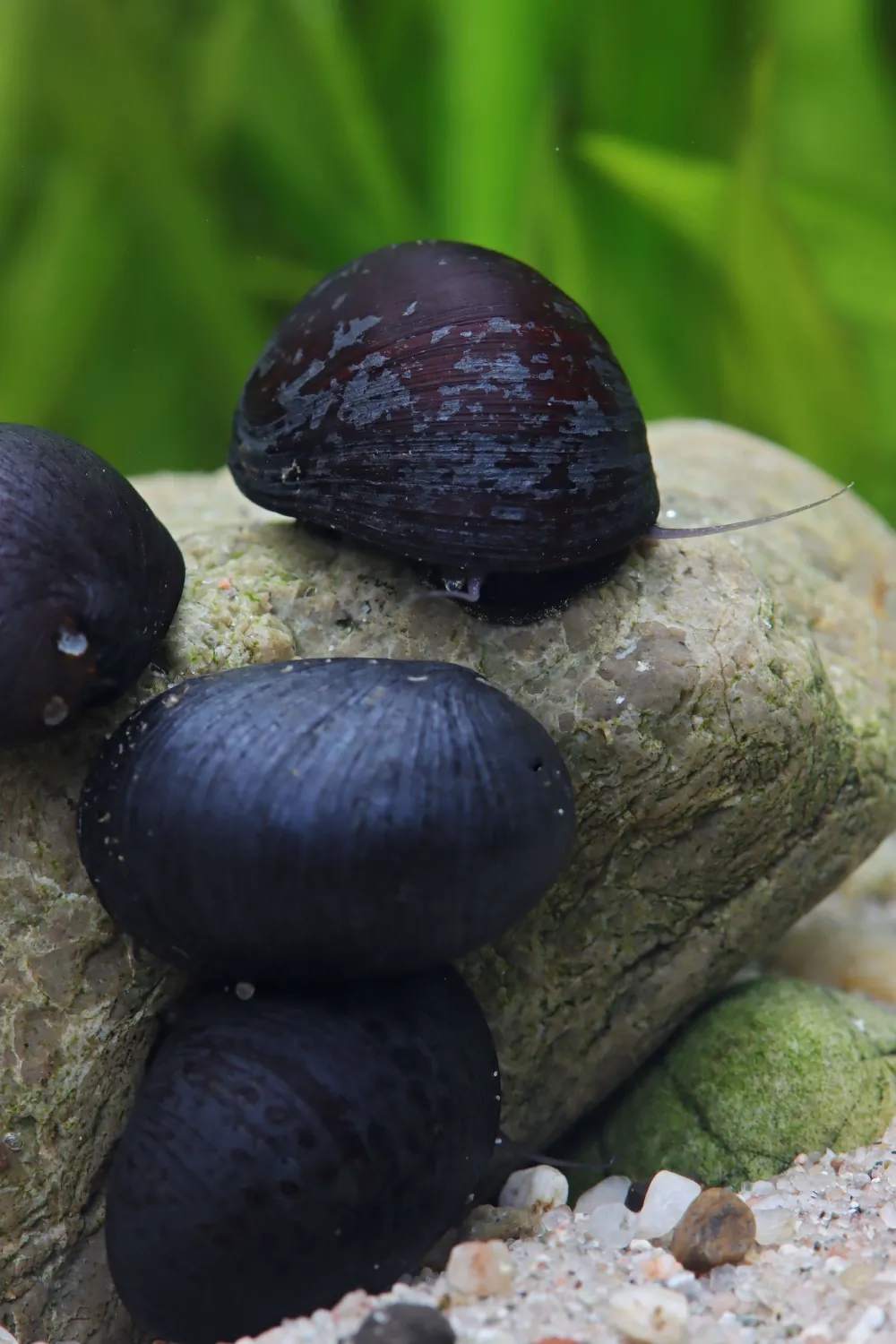
Image of anthrazit napfschnecke neritina sp

The Anthrazit Napfschnecke is a highly attractive, peaceful, and incredibly industrious addition to the freshwater aquarium. Their inability to breed in freshwater, combined with their unmatched algae-clearing skills, makes them a top-tier clean-up crew member for any planted tank setup.
Snail info

  • Temperature : 22 - 28 °C (72 - 82 °F)
  • pH: 7.0 - 8.5
  • Color Form: Black
Leave your comments
Latest on Snails
  • Pimpled Lace Snail (Melanoides granifera)

    Pimpled Lace Snail (Melanoides granifera)

    The pimpled lace snail, Melanoides granifera, is a burrowing freshwater snail from the family Thiaridae. It spends much of its time in substrate, emerging to graze on biofilm, detritus and leftover food. Its ridged, patterned shell adds interest to planted aquariums, while its live-bearing reproduction can gradually increase its numbers. It is generally peaceful and plant-safe when adequately fed, but should be kept under observation because identification and appearance can vary among imported aquarium stock.
  • Pink ramshorn snail (Planorbella duryi duryi)

    Pink ramshorn snail (Planorbella duryi duryi)

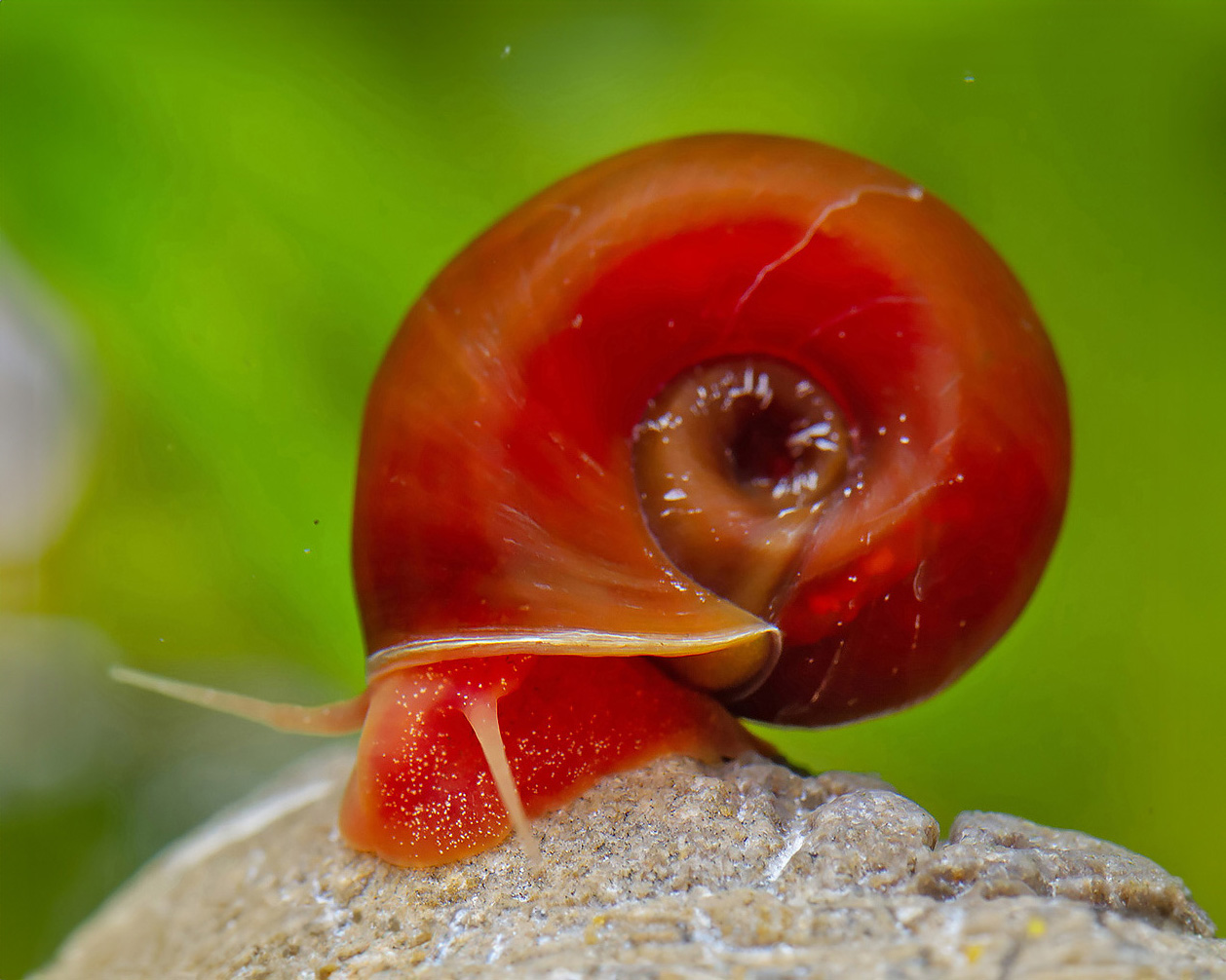
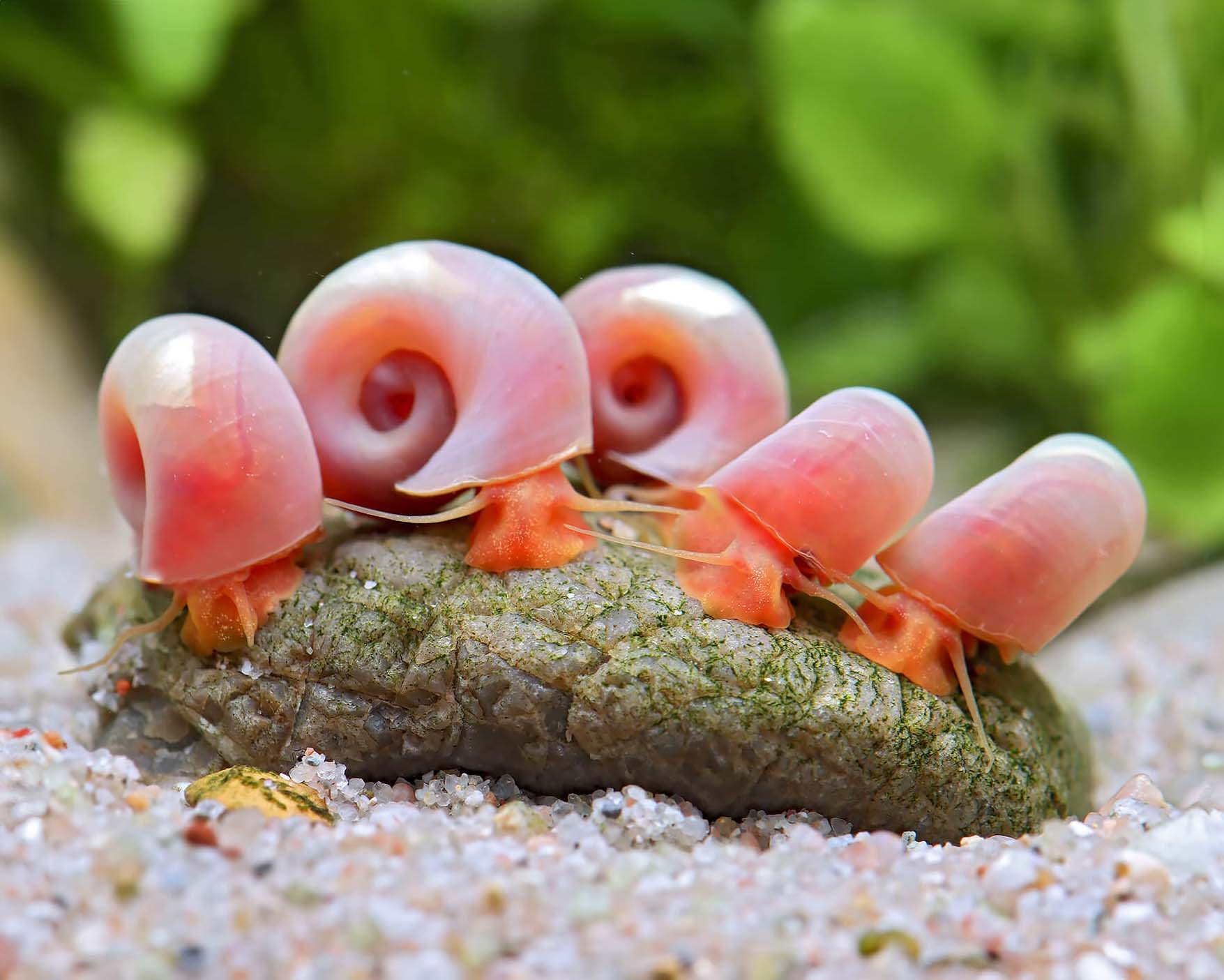
    The pink ramshorn snail is a freshwater planorbid recognized by its flat, coiled shell and pink to reddish body. The supplied name identifies it as Planorbella duryi duryi, a subspecies associated with the southeastern United States, although shell color alone cannot confirm an exact identification. It is peaceful, air-breathing, and useful as a scavenger in planted aquariums. Like many ramshorns, it can reproduce quickly when excess food and organic debris are available.
  • Piano Snail (Taia naticoides)

    Piano Snail (Taia naticoides)

    Taia naticoides is a freshwater, live-bearing snail sold under names such as piano snail. It has a rounded, banded shell and is valued as a grazer of algae and aquarium biofilm. The supplied photographs resemble this trade identification, but images alone cannot confirm species, age, or whether the specimen is a juvenile. Good calcium availability, stable alkaline water, and regular access to natural or supplemental food are important for long-term care.
  • Piano Snail (Taia naticoides)

    Piano Snail (Taia naticoides)

    The piano snail, also sold as the brush algae snail, is a large freshwater operculate snail with a rounded, banded shell. Taia naticoides is associated with Southeast Asian freshwater habitats and is valued for grazing surface growth and consuming organic debris. Aquarium identification can be complicated because common names are applied inconsistently; confirm the species with a reliable supplier. It is generally peaceful, plant-safe and live-bearing, but it needs mineral-rich water and should not be treated as a solution for heavy algae growth.
  • Orange Track Racing Snail (Vittina semiconica)

    Orange Track Racing Snail (Vittina semiconica)

    The Orange Track racing snail, Vittina semiconica, is a freshwater nerite valued for algae grazing and its patterned orange shell. It is generally peaceful, plant-safe and suitable for established community aquariums. Identification from shell pattern alone can be difficult because several Vittina and related nerite species resemble one another, so the supplied trade name should be treated as provisional unless confirmed by a specialist examination.
  • Orange Rock Snail (Orange Tylomelania)

    Orange Rock Snail (Orange Tylomelania)

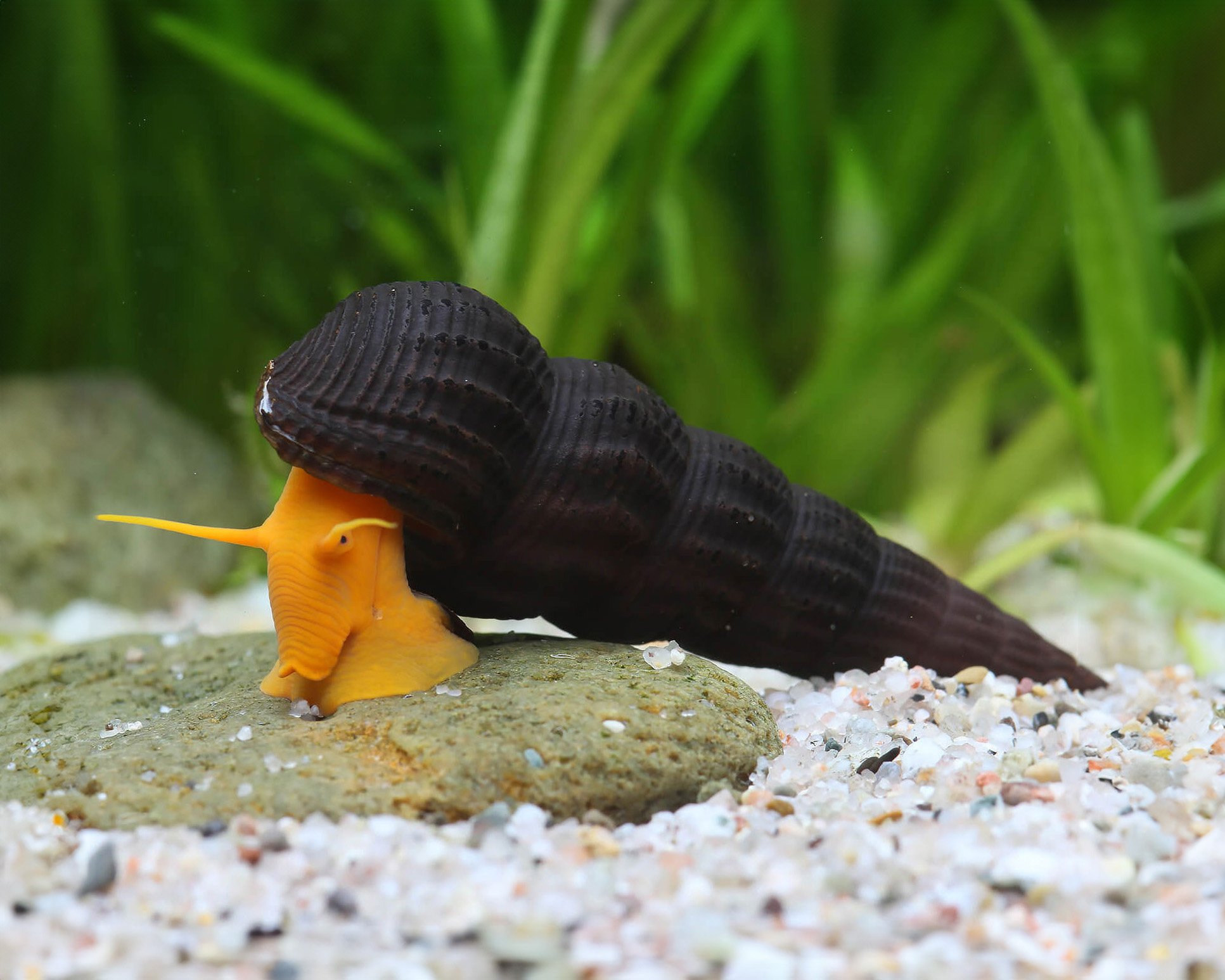
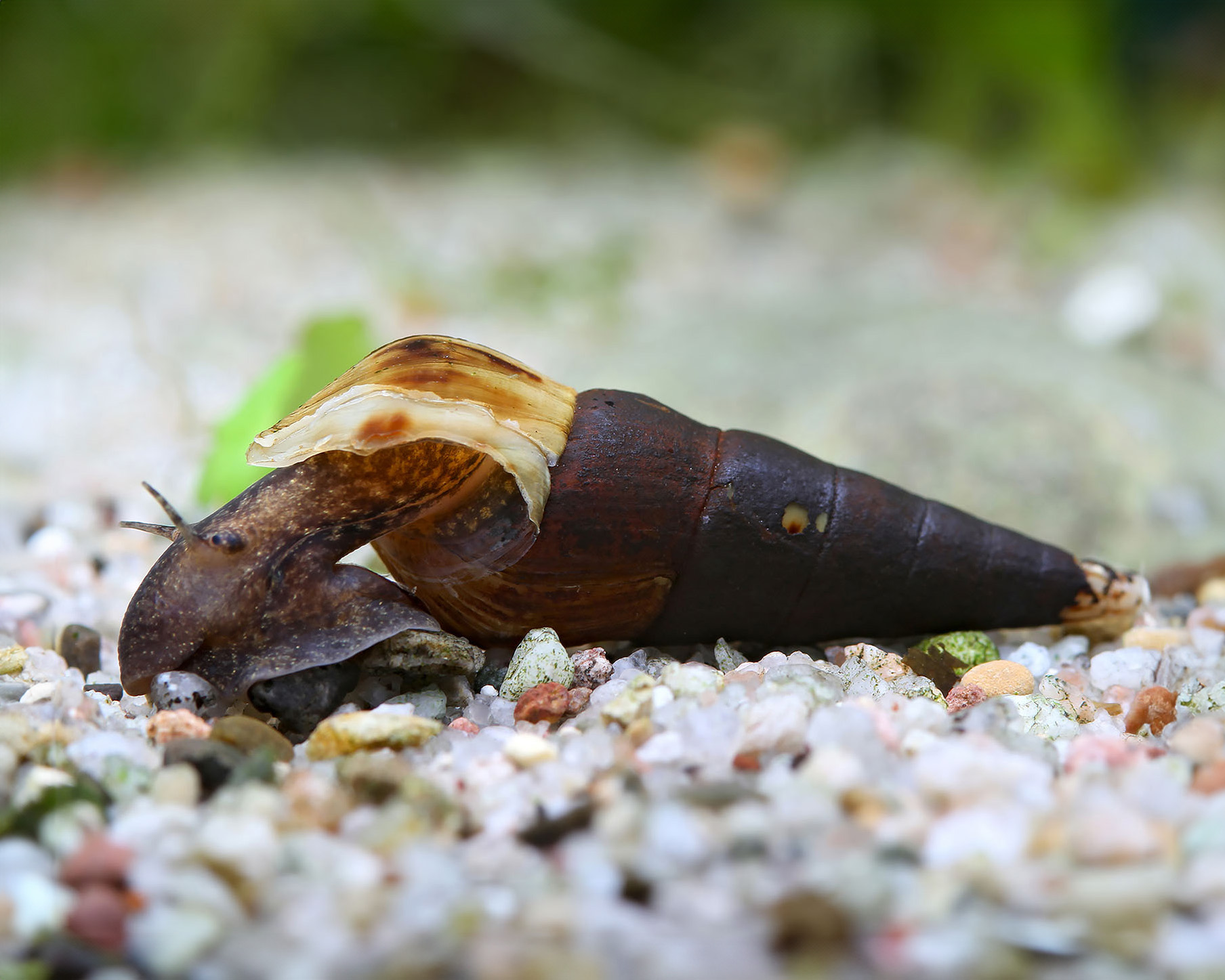
    The Orange Rock Snail is a trade name commonly used for orange-bodied Tylomelania, a group of freshwater snails associated with Sulawesi. Its dark, strongly ridged shell contrasts with the bright orange foot and head. Exact species identification is uncertain from the trade name and photographs alone, so care should follow general Tylomelania requirements. These snails are peaceful, active mainly at night, and best kept in mature, warm, alkaline aquariums with stable mineral content.
  • Orange Red Ramshorn Snail (Planorbella duryi duryi)

    Orange Red Ramshorn Snail (Planorbella duryi duryi)

    The orange red ramshorn snail is a freshwater planorbid recognized by its flat, coiled shell and brightly colored body. Planorbella duryi duryi is associated with freshwater habitats in the southeastern United States, especially Florida, although aquarium specimens may be selectively bred and their exact locality is often unknown. It is generally peaceful, useful as a grazer and scavenger, and capable of reproducing quickly when food is abundant.
  • Midnight Lady Snail (Vittina sp.)

    Midnight Lady Snail (Vittina sp.)

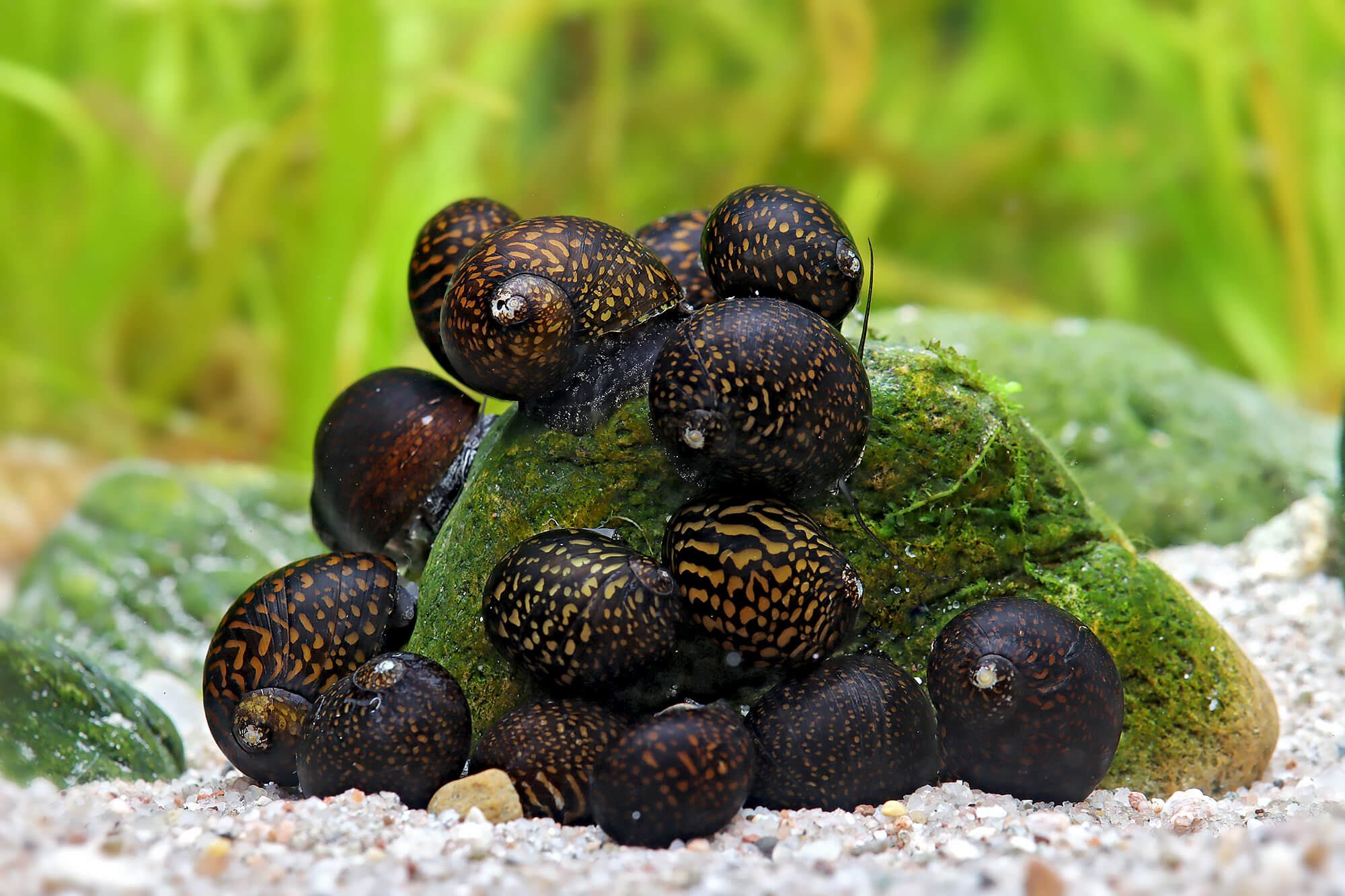
    The Midnight Lady Snail is a dark, patterned nerite sold under the aquarium trade name Midnight Lady Schnecke. It is identified here as Vittina sp., because the exact species cannot be confirmed from the supplied name and photograph alone. These snails are generally peaceful algae grazers for mature freshwater aquariums, but successful breeding requires conditions that are not normally present in freshwater tanks.
  • Ivory Predatory Snail: Anentome helena

    Ivory Predatory Snail: Anentome helena

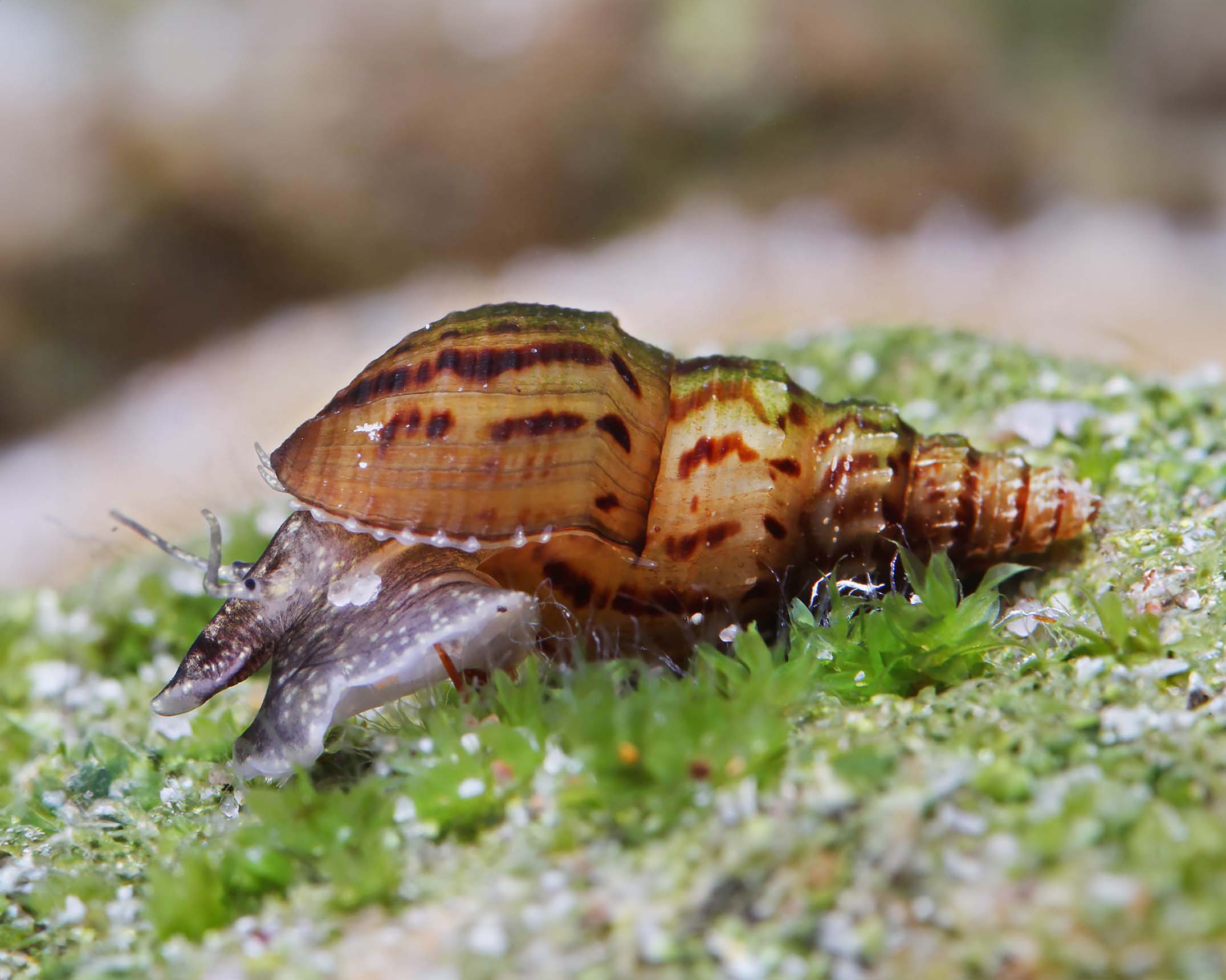
    The ivory predatory snail, commonly sold as Clea helena, is a freshwater assassin snail from Southeast Asia. It has a strongly ribbed, ivory to yellow-brown shell and a mottled gray-brown body. This active carnivore hunts or scavenges other small snails and accepts meaty foods in aquaria. It is generally plant-safe, but its predatory diet and egg-laying reproduction require planning when keeping it with ornamental snails or maintaining a controlled population.
  • Hedgehog Snail (Brotia armata)

    Hedgehog Snail (Brotia armata)

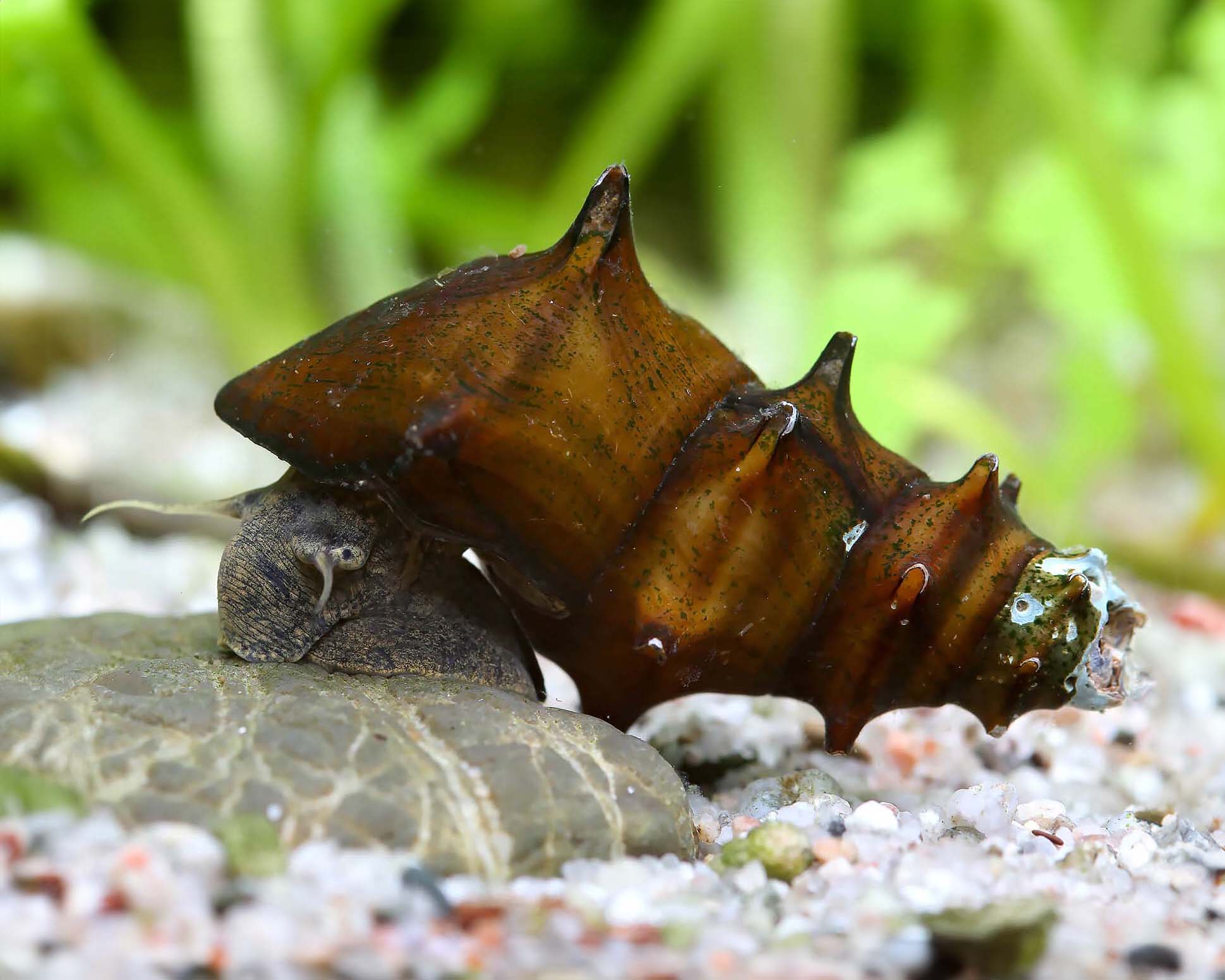
    The hedgehog snail, Brotia armata, is a large freshwater pachychilid recognized by its strongly ridged, spiny shell. It is a grazing and scavenging snail rather than a dedicated algae-control species, and it needs mature aquariums with clean, oxygenated water and adequate mineral content. Identification from photographs can be uncertain because several Brotia species have similar shell forms, so locality information is useful when confirming specimens.
  • Indian Malayan Louver Snail (Melanoides tuberculata)

    Indian Malayan Louver Snail (Melanoides tuberculata)

    Melanoides tuberculata is a small, conical freshwater snail commonly known in aquaria as the Malaysian trumpet snail. It spends much of the day burrowing through substrate and becomes more active after dark. This adaptable species consumes biofilm, algae, detritus and uneaten food, while generally leaving healthy plants alone. Its live-bearing reproduction can produce a large population when food is abundant. The name supplied for this article is retained, although common names vary and aquarium specimens may be confused with related thiarid snails.
  • Green staghorn snail (Clithon corona)

    Green staghorn snail (Clithon corona)

    The green staghorn snail, Clithon corona, is a nerite snail valued for grazing algae and biofilm in freshwater aquariums. It is generally peaceful, plant-safe and unlikely to overpopulate in freshwater because its larvae normally require brackish or marine conditions. Provide mature surfaces for grazing, mineral-rich water and a secure lid. Identification can be difficult because aquarium trade names overlap among Clithon species, so the supplied name should be treated as a probable identification rather than a definitive one.
  • Geweihschnecke Tricolor (Clithon sp.)

    Geweihschnecke Tricolor (Clithon sp.)

    Geweihschnecke Tricolor is a trade name for a colourful horned nerite in the genus Clithon. Exact species identification is uncertain because several closely related Clithon species and colour forms are sold under similar names. These small algae-grazing snails suit mature freshwater aquariums with stable, mineral-rich water. They are generally peaceful, plant-safe and unable to establish a large population in ordinary freshwater, although they may leave small white egg capsules on hard surfaces.
  • Geweihschnecke Red Venom (Clithon sowerbianum)

    Geweihschnecke Red Venom (Clithon sowerbianum)

    The Red Venom Geweihschnecke is a striking horned nerite sold for freshwater aquariums. Its dark shell, red-orange bands and small projections make it distinctive, although trade names and shell patterns can overlap among Clithon species. It is mainly a grazer of algae and biofilm, is generally safe with healthy plants, and usually cannot establish a self-sustaining population in freshwater because its larvae require different conditions.
  • Geweihschnecke Volcano Red (Clithon sowerbianum)

    Geweihschnecke Volcano Red (Clithon sowerbianum)

    The Volcano Red Geweihschnecke is a small freshwater nerite-type snail sold under the scientific name Clithon sowerbianum. Its shell commonly shows red, orange, brown, and dark patterns, with horn-like projections in some individuals. It grazes algae and biofilm from hard surfaces without normally damaging healthy plants. Identification and the exact validity or spelling of the supplied scientific name should be treated with some caution because aquarium trade names and Clithon nomenclature are not always used consistently.
  • Yellow Baby Poso Snail, Tylomelania sp.

    Yellow Baby Poso Snail, Tylomelania sp.

    The Yellow Baby Poso Snail is a juvenile Tylomelania identified in the trade as Tylomelania sp. Its yellow to golden body contrasts with a dark, strongly ribbed shell. The “Poso” name suggests a Sulawesi lake lineage, but the exact species and locality cannot be confirmed from the supplied trade name or photographs alone. This is a freshwater snail for warm, mineral-rich aquariums and should be kept with peaceful tank mates that will not damage its soft body or feelers.