Taxonomy and identification
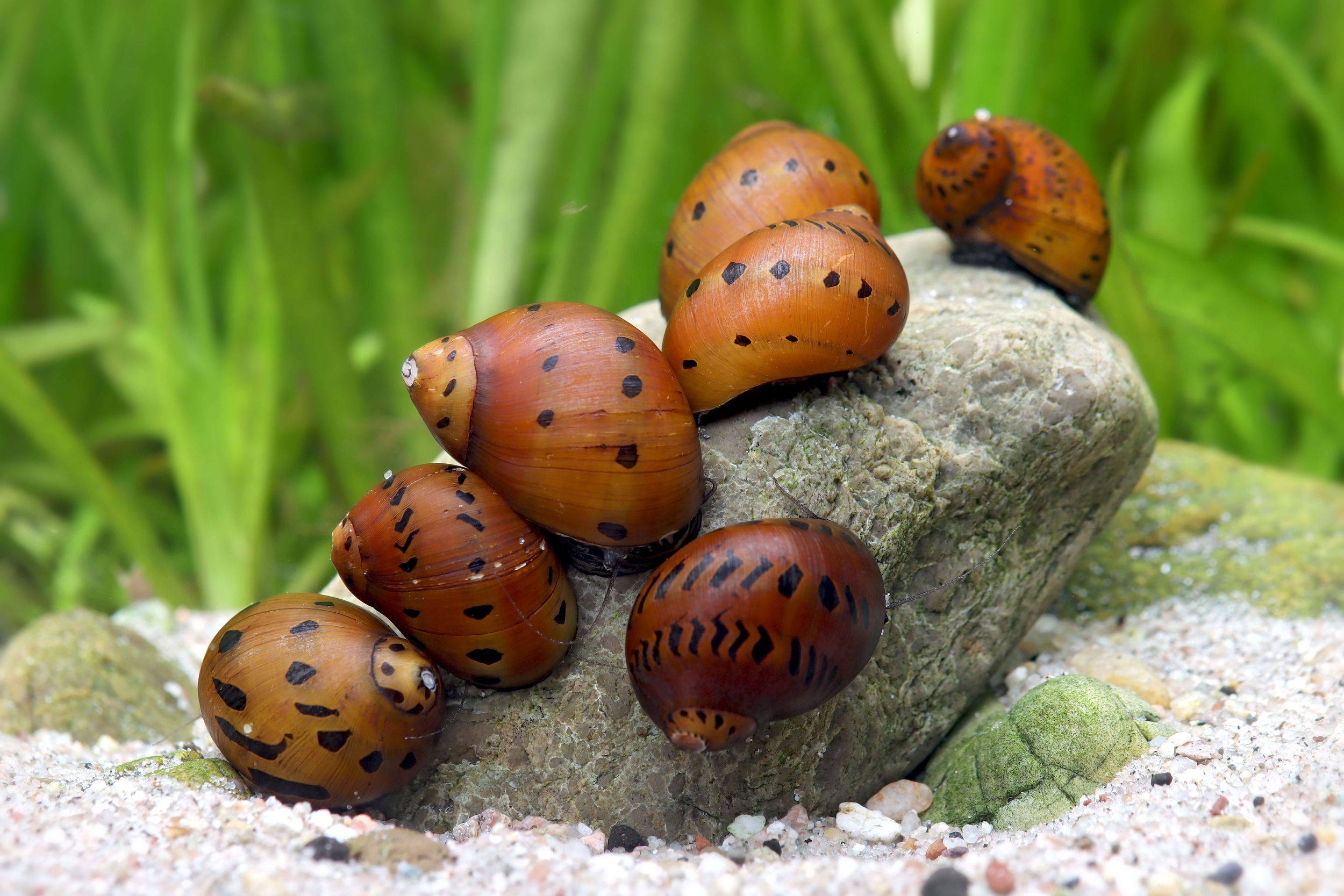
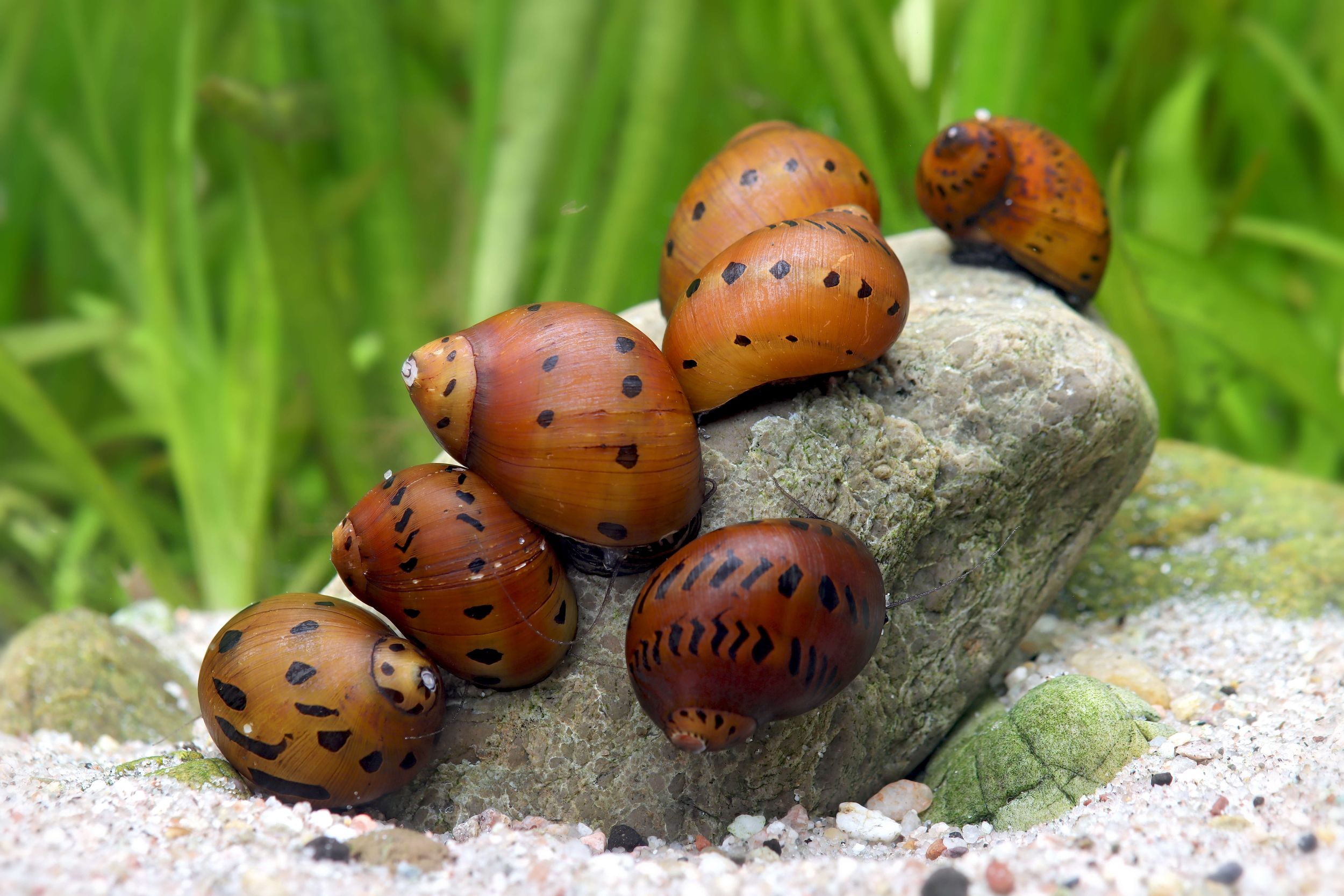
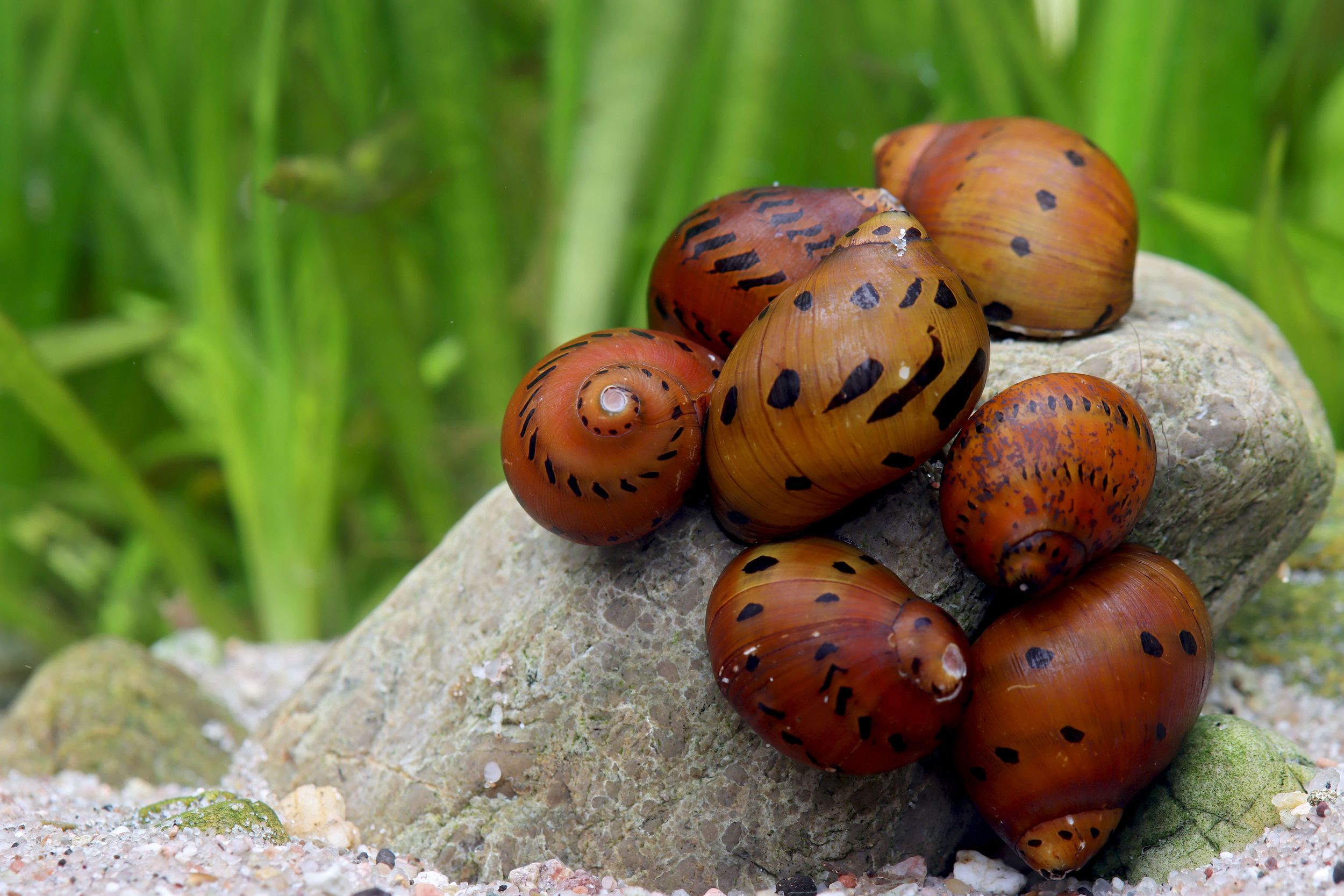
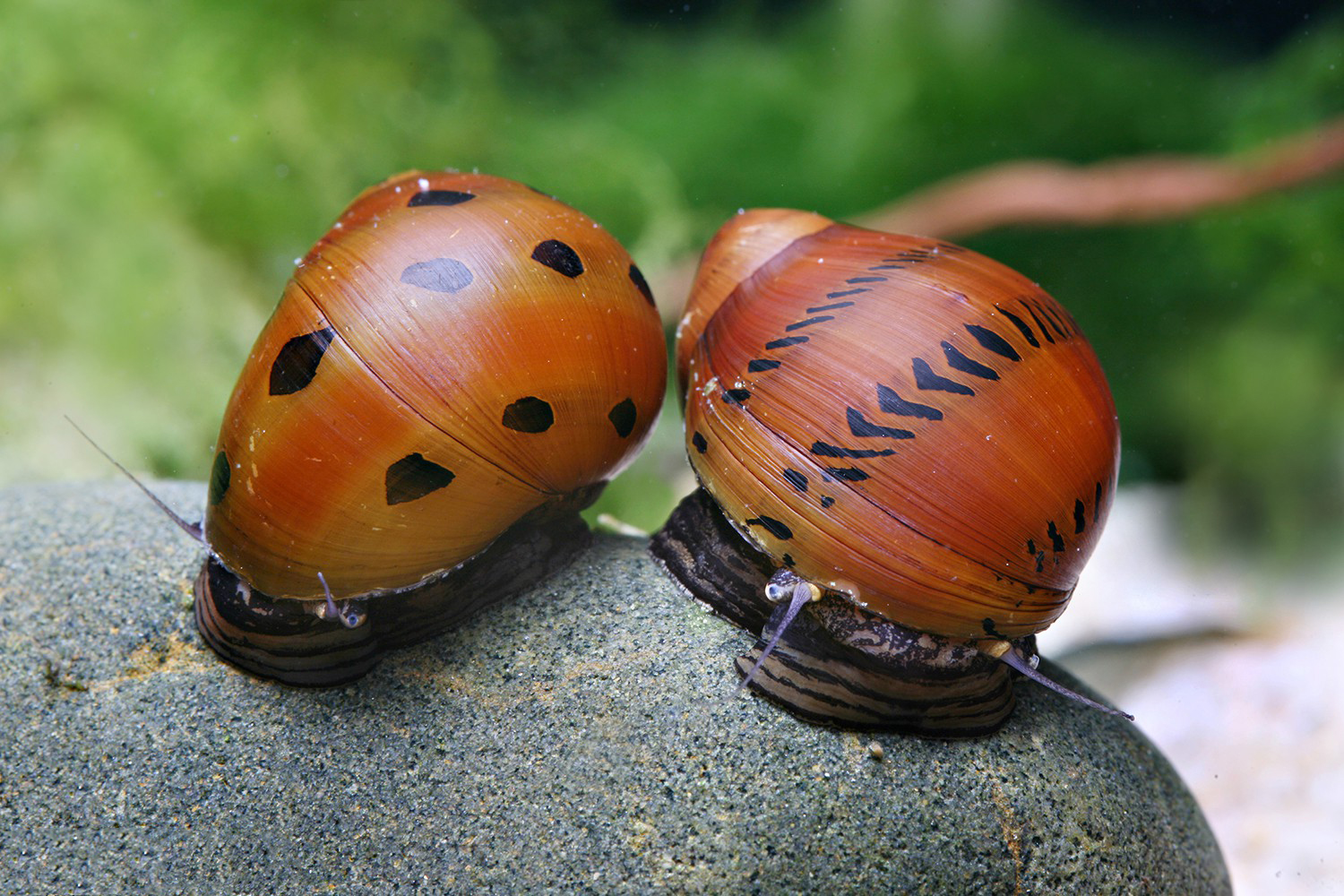
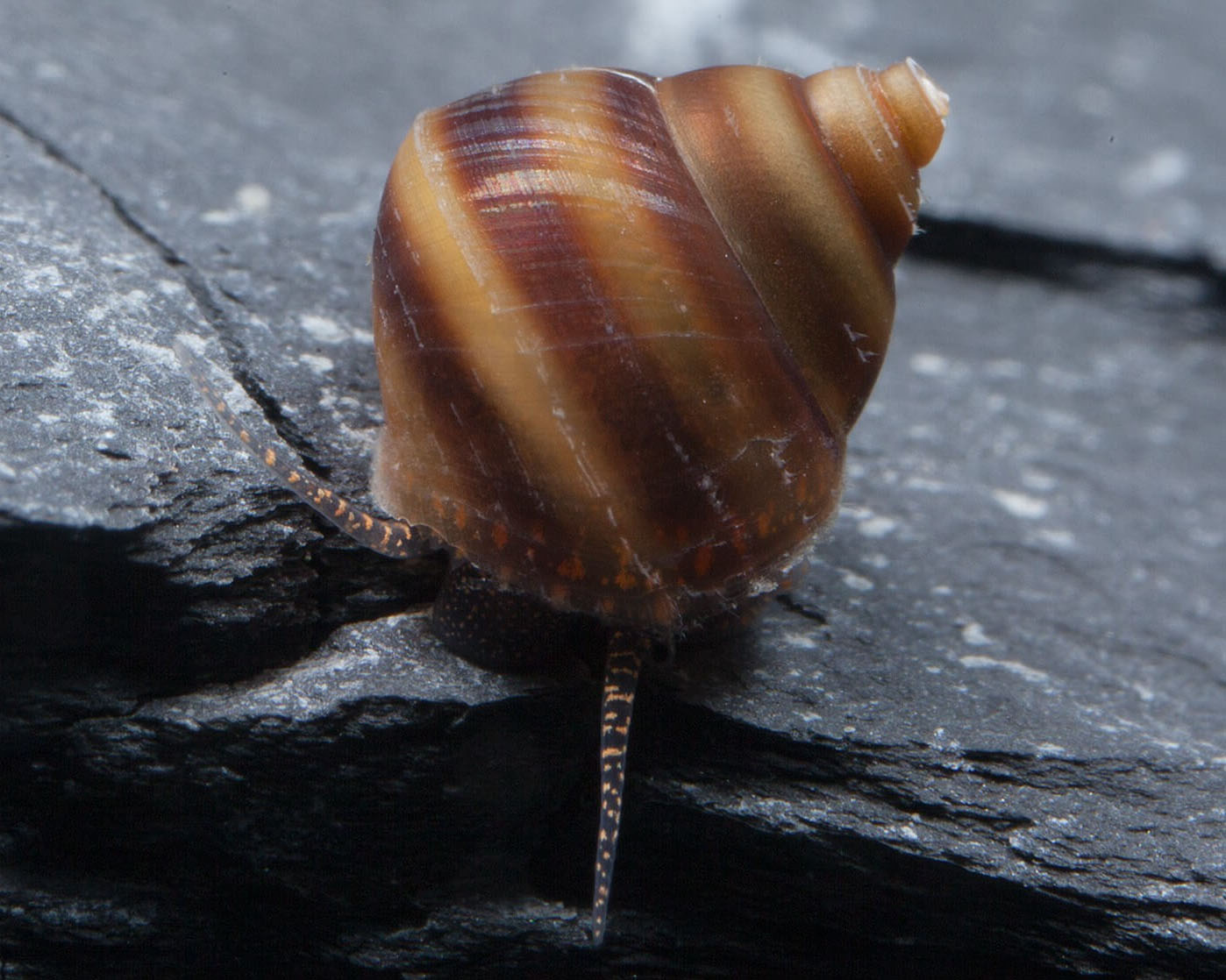
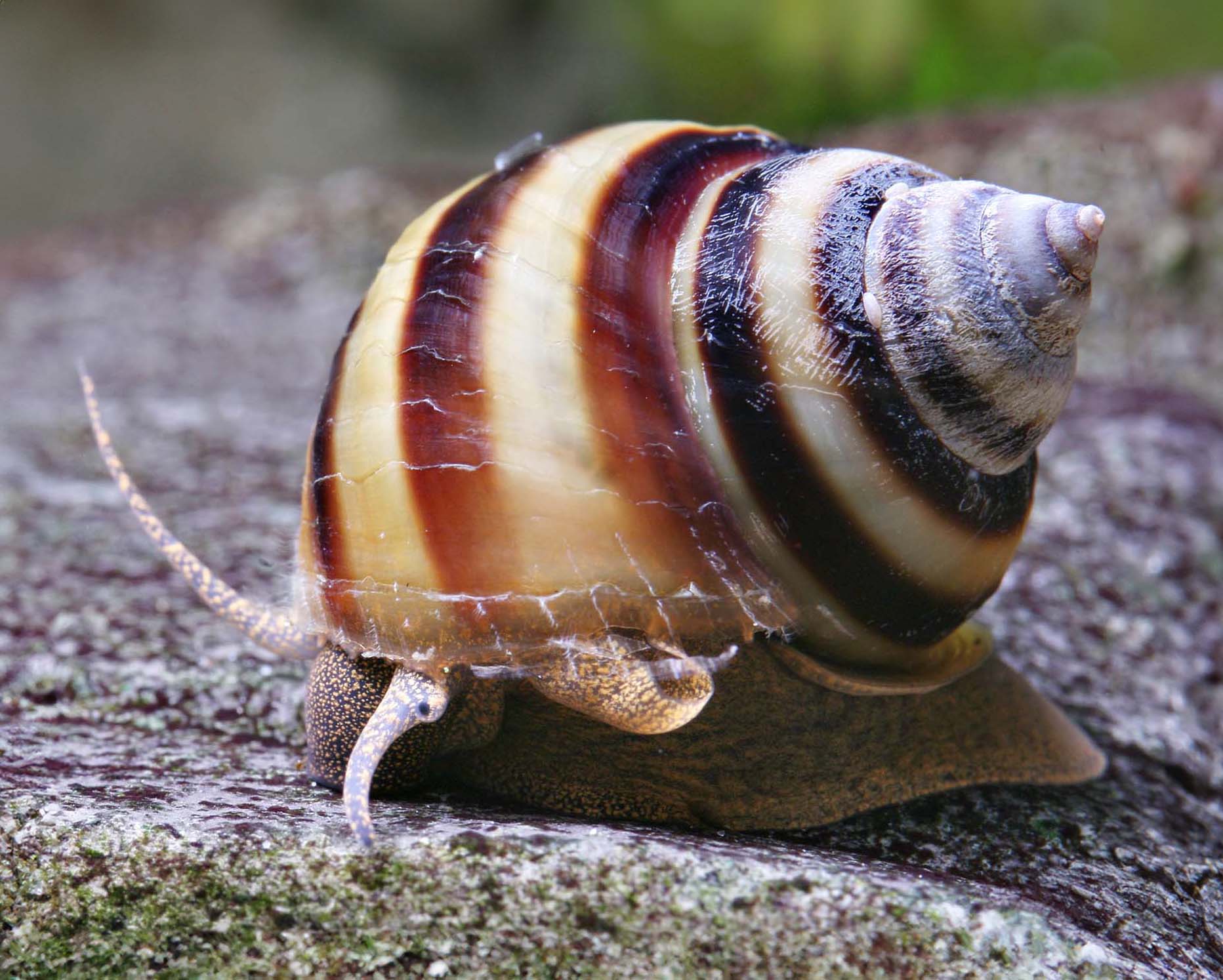
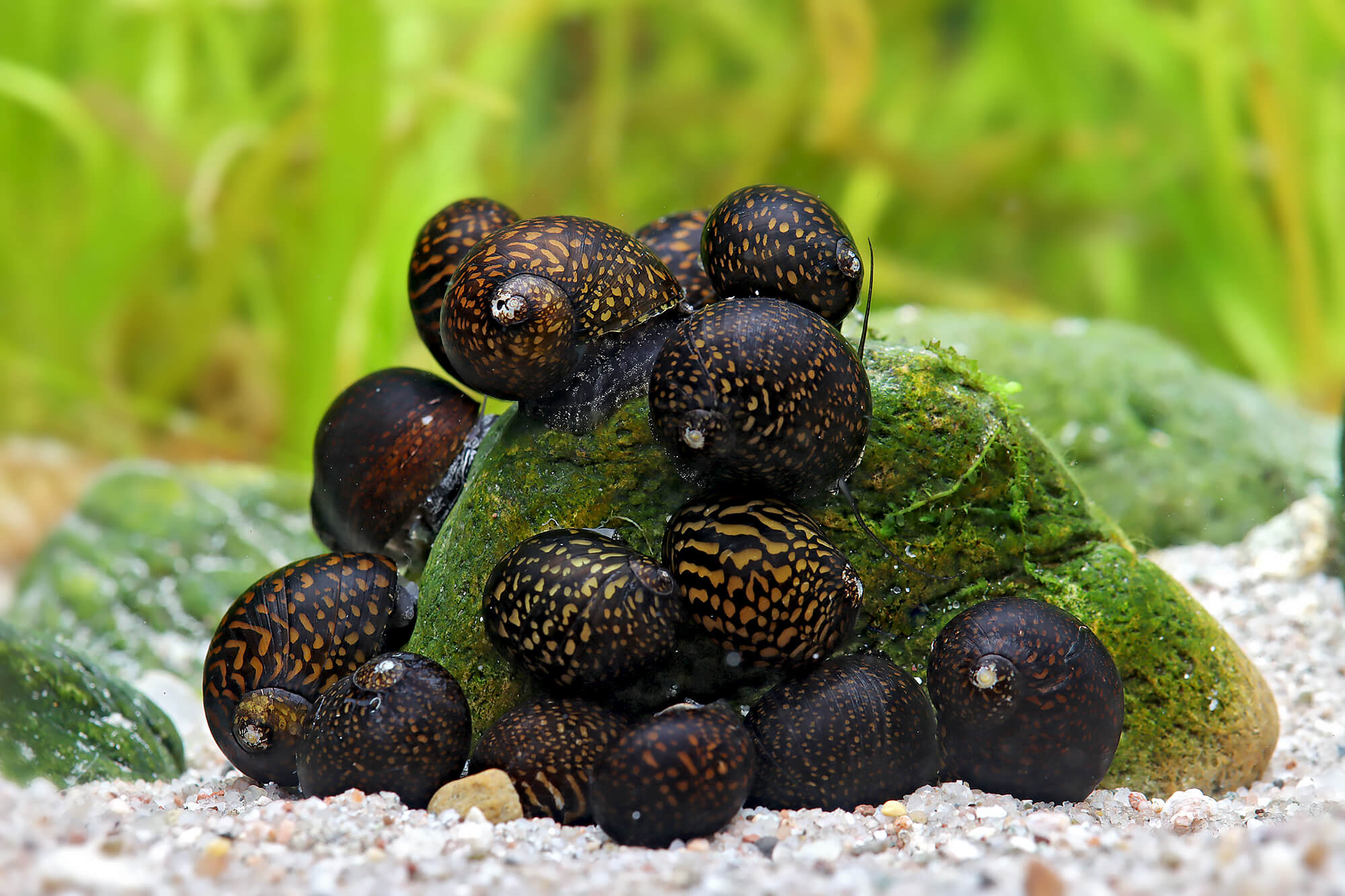
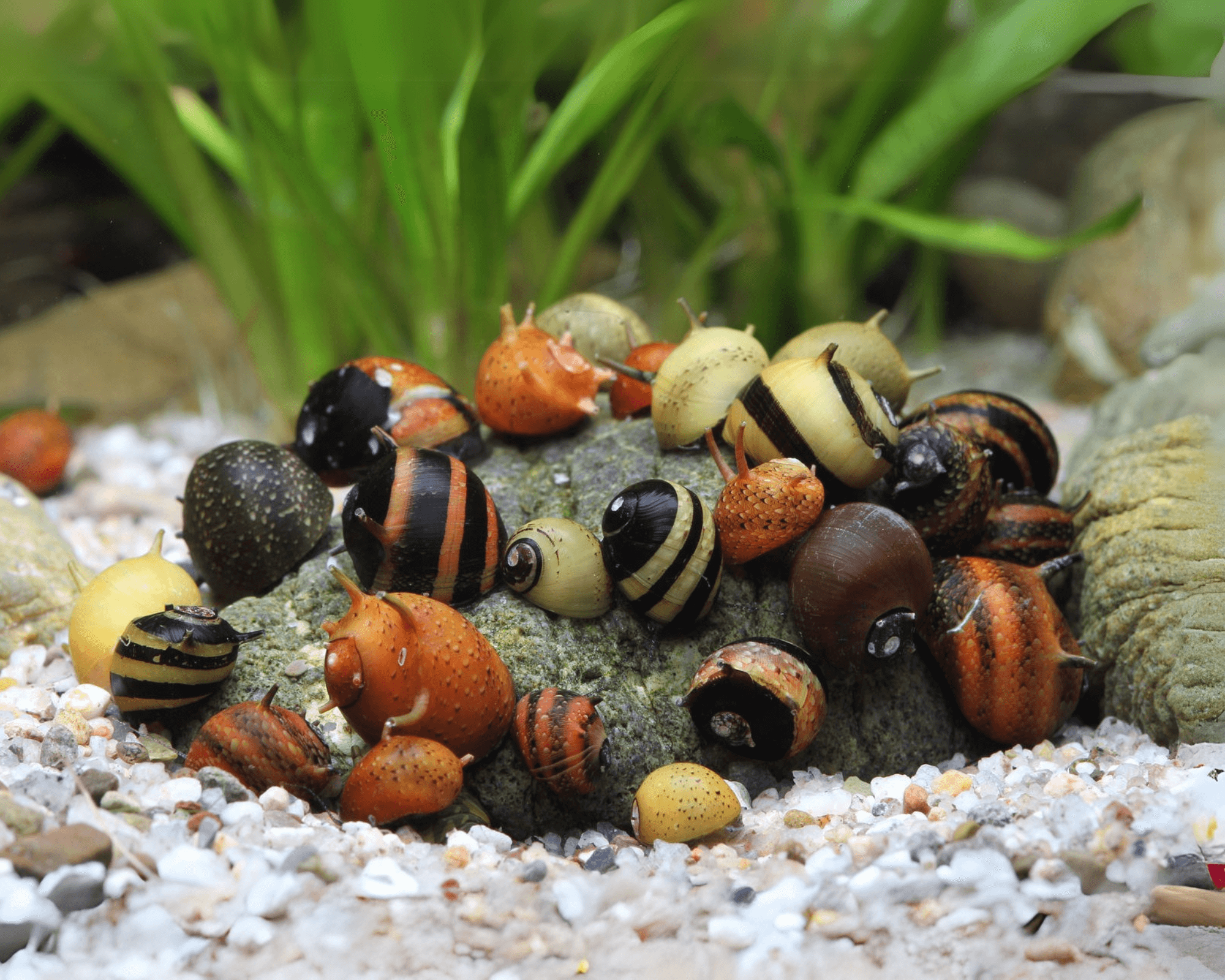
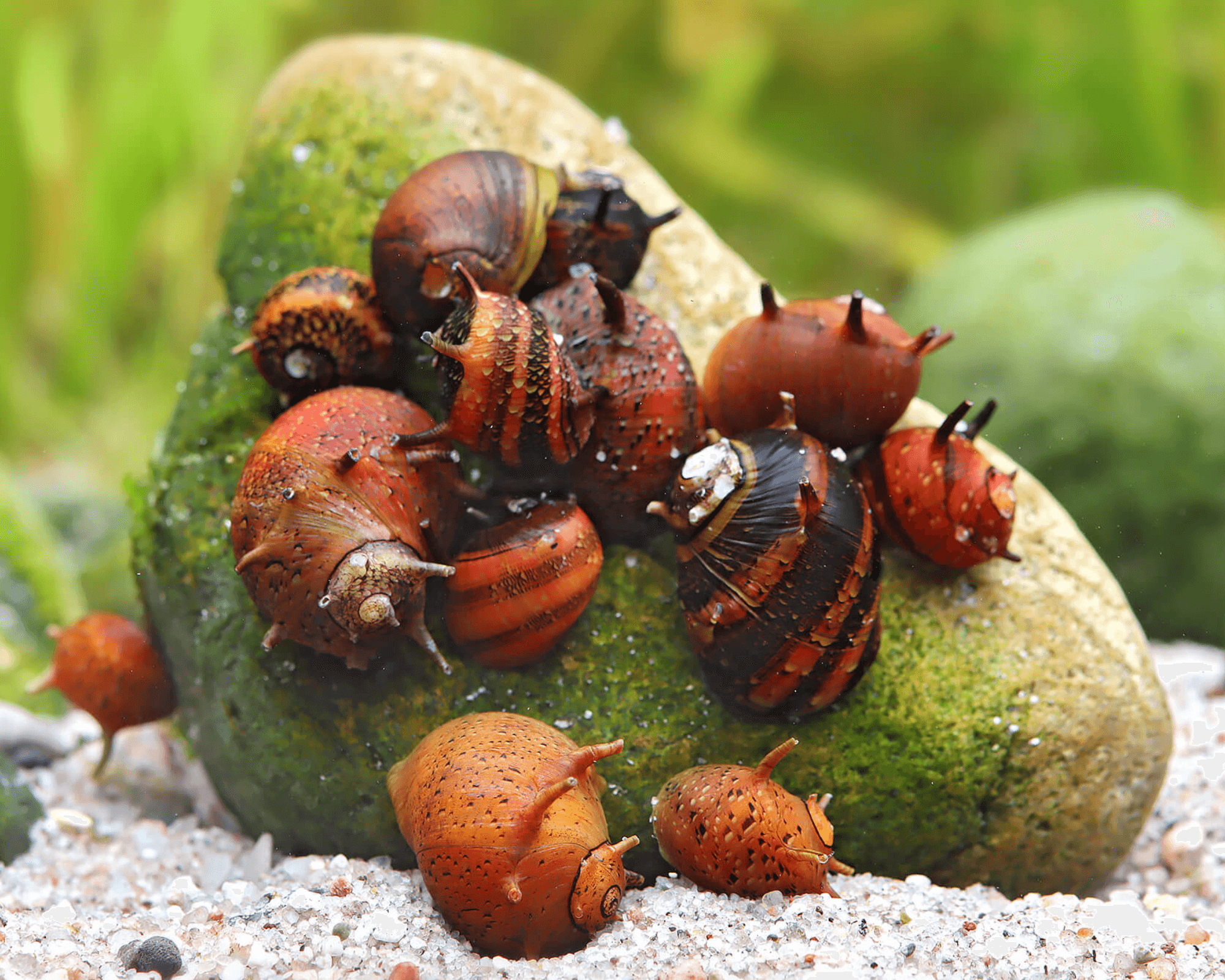
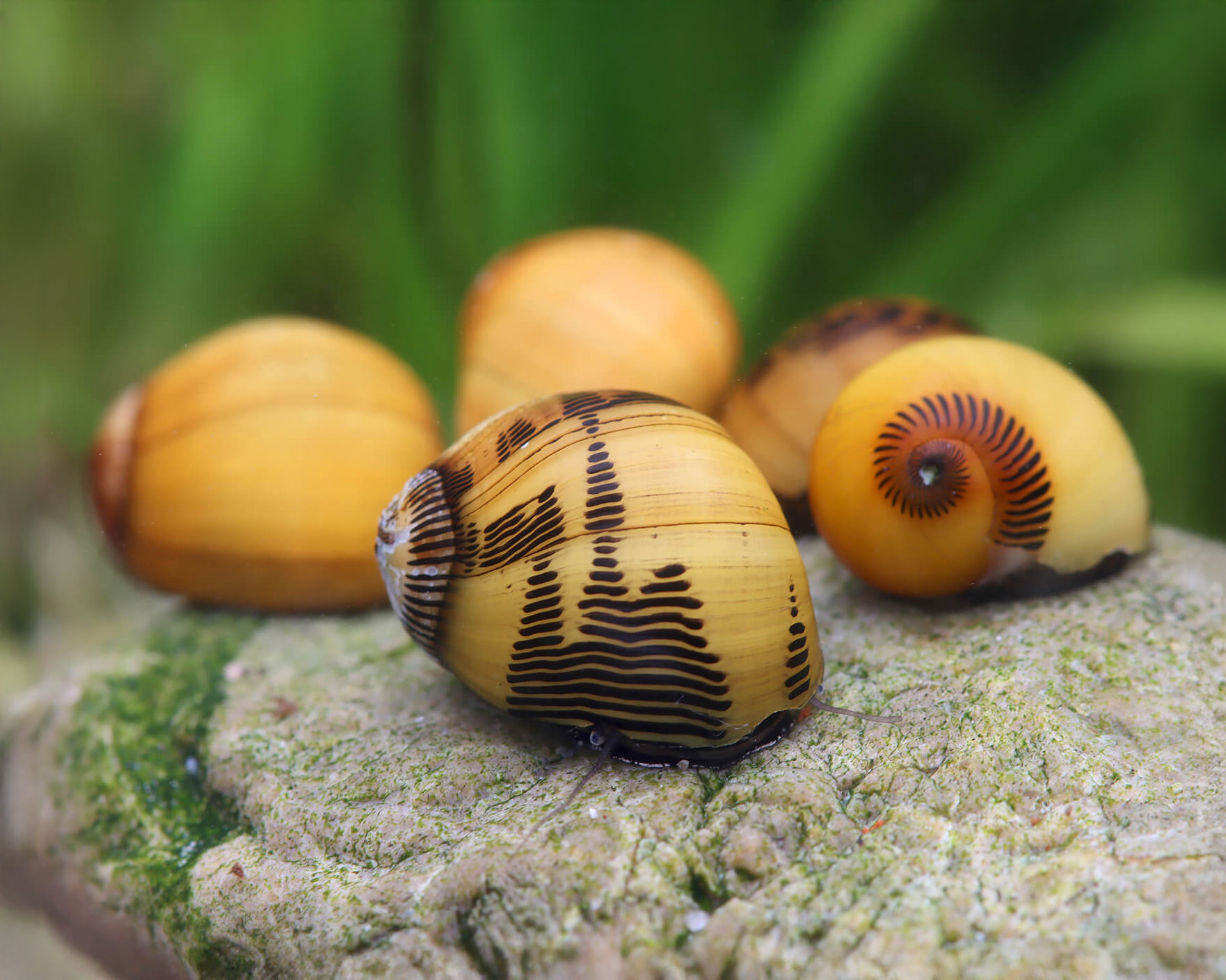
Vittina semiconica is a nerite snail in the family Neritidae, class Gastropoda. Aquarium names such as Orange Track racing snail describe its appearance and trade identity rather than a formal taxonomic group. Shells are typically rounded to ovate, orange, amber or reddish brown, with black spots, dashes or track-like markings. Pattern and colour vary, and a photograph is not always sufficient to distinguish this species from similar Vittina nerites.
Natural habitat
Vittina nerites are associated with tropical, flowing freshwater environments and hard surfaces where algae and microbial films grow. They may encounter tidal or brackish conditions during parts of their life cycle. In an aquarium, provide mature biological filtration, oxygen-rich water, smooth rocks, wood and other grazing surfaces. A secure cover is useful because nerites can climb above the waterline.
Water parameters
Maintain stable tropical conditions at 22–28 °C and pH 7.0–8.5. Moderately hard, alkaline water with available calcium and carbonate helps maintain shell growth. Ammonia and nitrite should remain undetectable, and nitrate should be kept low through regular maintenance. Avoid sudden changes in pH, temperature or mineral content. Copper-based medications are toxic to snails.
Feeding
The main diet is algae, diatoms and biofilm scraped from glass, rocks, wood and other surfaces. In a clean or newly established aquarium, natural growth may be insufficient; offer small amounts of algae wafers or other sinking foods formulated for herbivorous invertebrates, along with occasional blanched vegetables. Remove uneaten food promptly. Do not rely on a nerite to control a severe algae problem.
Plant safety and tank mates
Healthy aquarium plants are normally safe, because Vittina nerites primarily graze surfaces rather than eat intact plant tissue. They may consume algae on leaves and can disturb loose plants while climbing. Keep them with peaceful fish and invertebrates. Avoid puffers, loaches, large cichlids and other animals that can attack or pry at the shell or soft body.
Reproduction
Separate sexes are generally present, and adults may mate in freshwater. Females deposit small, hard, pale egg capsules on glass, rock, wood or equipment. The capsules can be conspicuous but usually do not hatch into growing juveniles in ordinary freshwater. The larvae require a specialised marine or brackish planktonic phase, and successful captive rearing is uncommon. Eggs can remain attached even when no population increase occurs.
Population control and care
This snail usually does not overpopulate a freshwater aquarium because its larvae fail to develop under normal freshwater conditions. Control numbers by buying an appropriate starting group, limiting excess food and removing unwanted adults or egg capsules manually. Do not use snail-killing chemicals, salt treatments or copper products in a mixed aquarium. If specimens are surrendered, give them to another aquarist rather than releasing them outdoors.
 - 1.webp)

 DNZ - 1.webp)

Leave your comments