 - 1.webp)
Taxonomy and identification
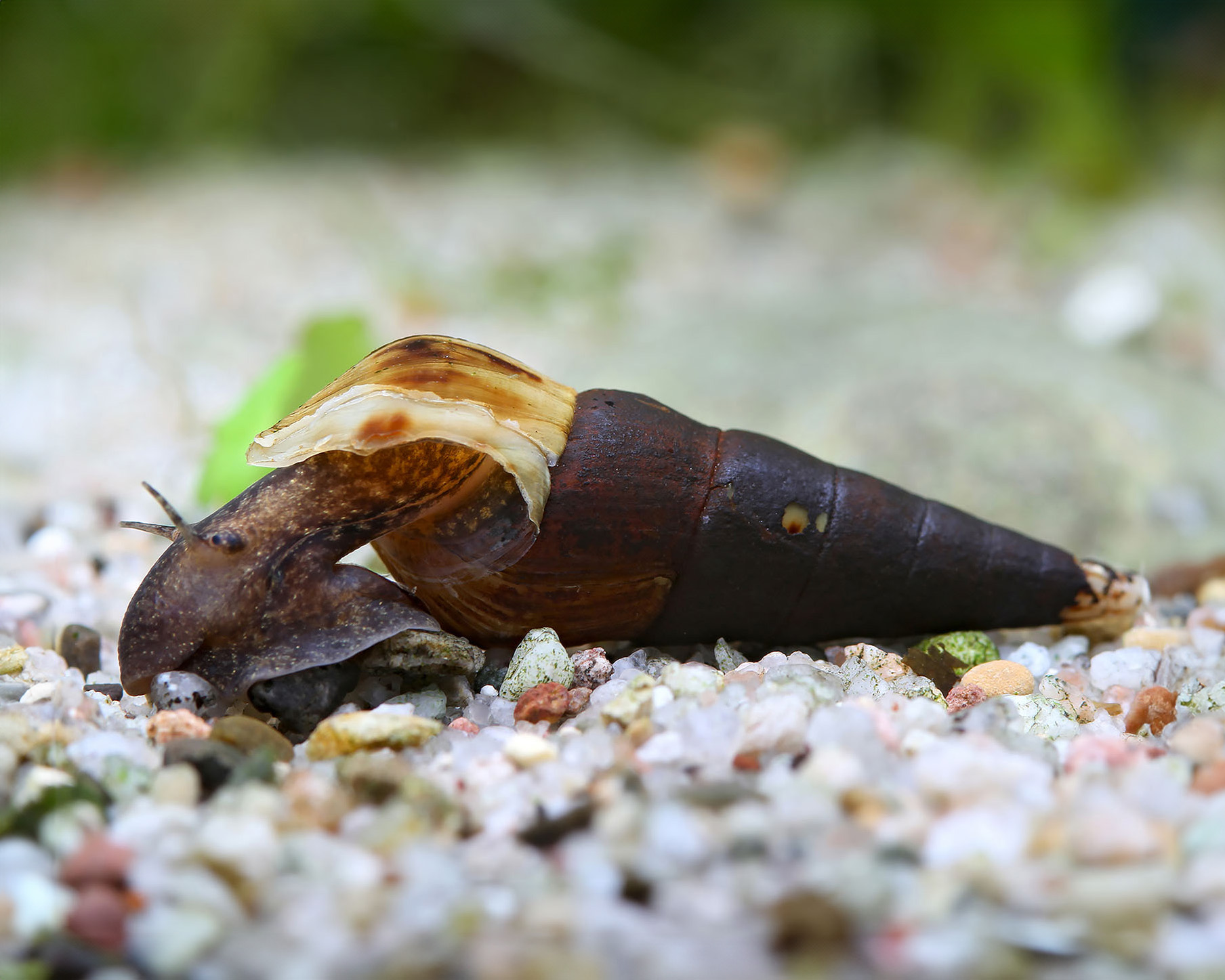
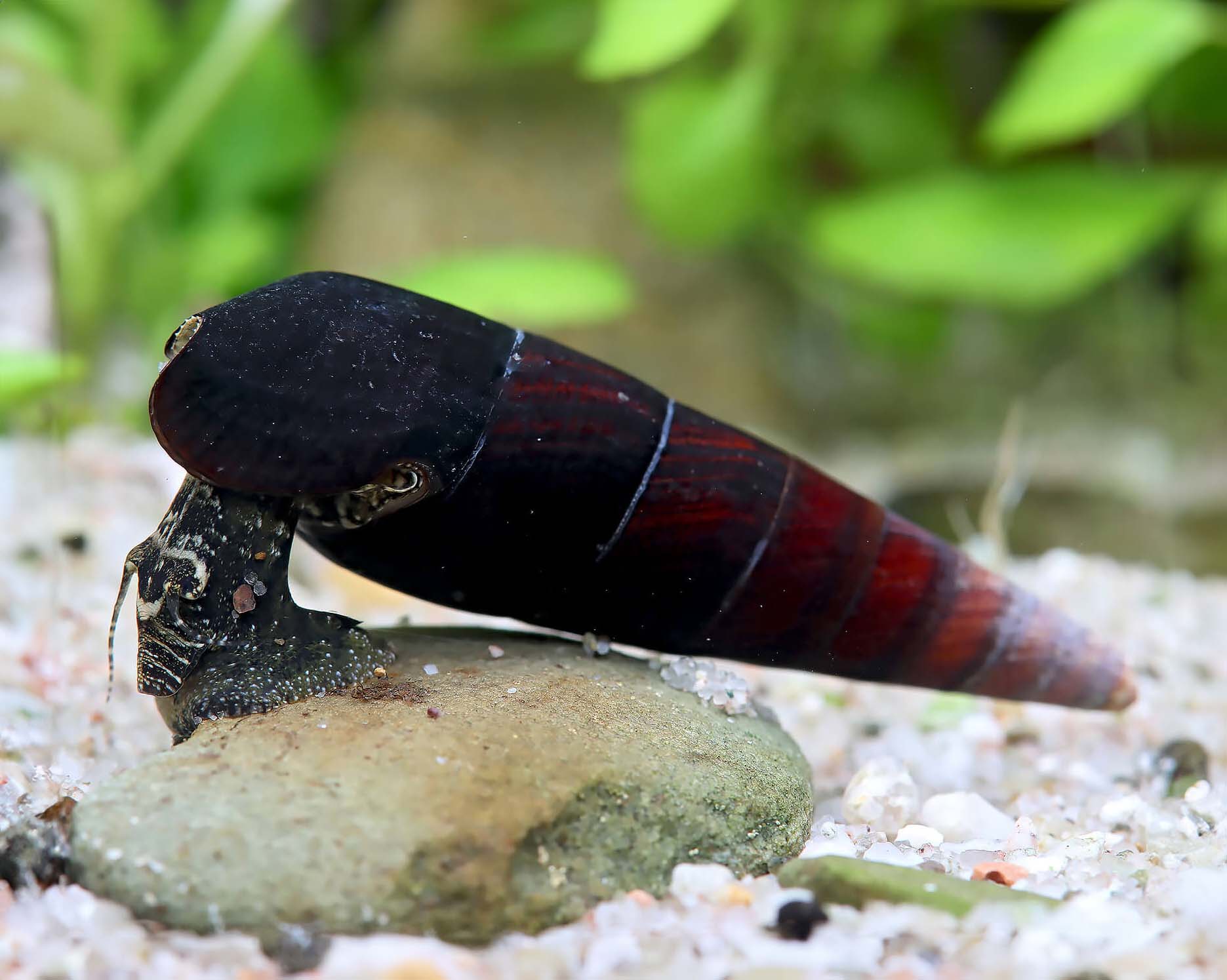
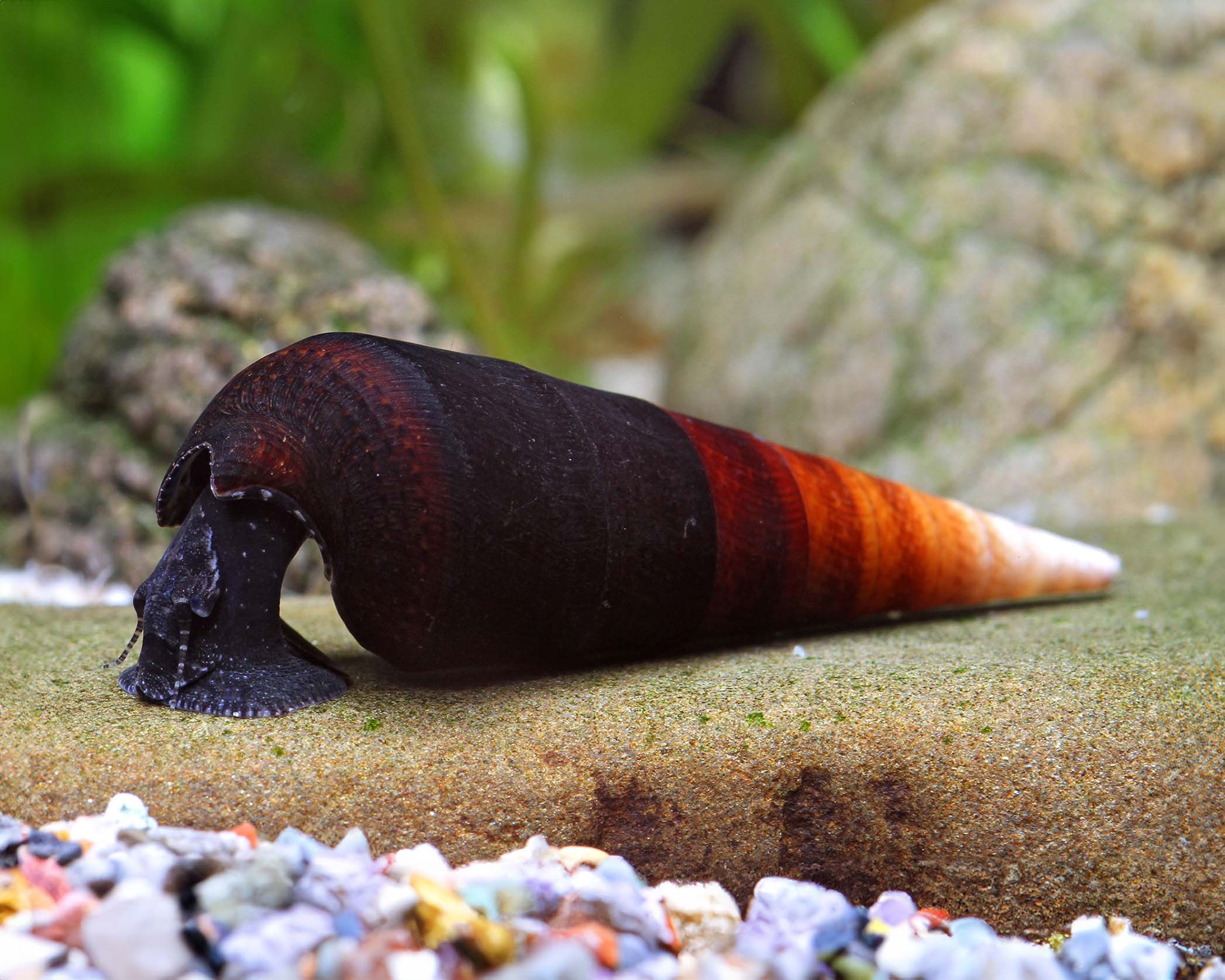
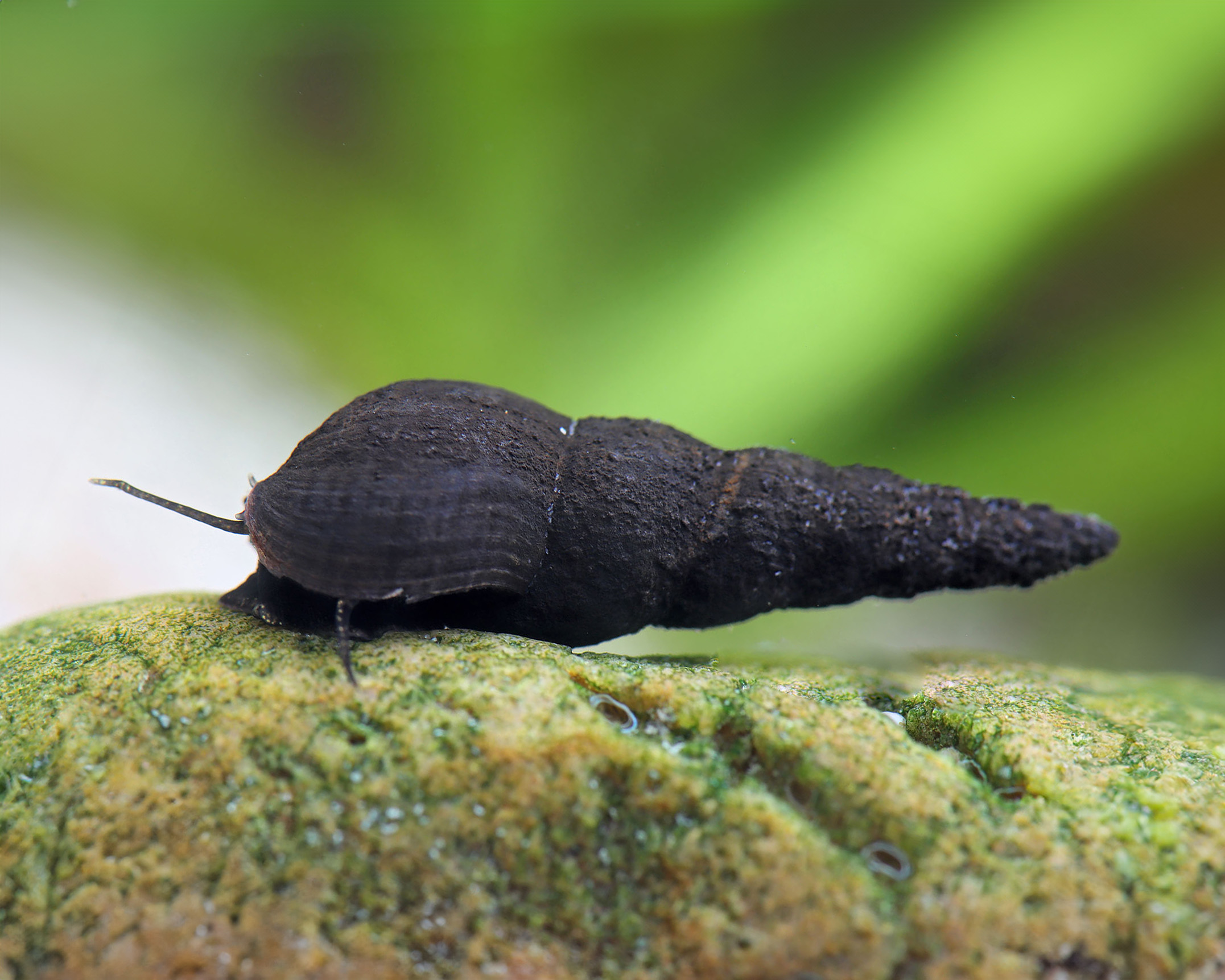
The species is widely known in the aquarium trade as Clea helena and is also treated under the name Anentome helena. It belongs to the freshwater snail family Nassariidae. Identification is supported by the elongated, conical shell, pronounced spiral ridges, pale ivory to yellow-brown coloration, and often darker bands or shading. Trade names and color intensity vary, so shell color alone should not be used for exact identification.
%20-%201.webp)
Natural habitat
Anentome helena is native to freshwater habitats in Southeast Asia. It is associated with submerged surfaces and soft or sandy bottom areas where it can burrow and search for prey. In an aquarium, provide a mature, stable tank with fine or smooth substrate, cover, and places to explore. Secure a tight-fitting lid because snails may climb above the waterline.
%20-%202.webp)
Water parameters and care
Maintain clean, well-oxygenated freshwater with stable conditions rather than pursuing an exact value. A temperature of 22–28 °C and pH of 7.0–8.5 are suitable working ranges. Moderate hardness and adequate calcium help maintain the shell; very soft, acidic water can cause erosion. Avoid copper-based medications and sudden changes in temperature, pH, or mineral content. Regular partial water changes and effective filtration are important.
%20-%203.webp)
Feeding behavior
This is a carnivorous predator and scavenger. It can consume small live snails, especially when prey are accessible on the substrate, and will also eat dead animals or meaty aquarium foods. Offer sinking foods such as prepared carnivore pellets, wafers, or suitable frozen foods when natural prey is scarce. Do not rely on a large pest-snail population as its only food source, because prey depletion can leave the snails underfed.
%20-%204.webp)
Plant safety and tankmates
Healthy aquarium plants are generally safe because Anentome helena is not primarily an algae-grazing or plant-eating snail. It may investigate plant surfaces and can disturb delicate seedlings while burrowing, but direct plant damage is not normally its main behavior. It is safest with fish and invertebrates that will not prey on snails. Do not keep it with ornamental snails that must be protected, including small reproducing species, because predation is possible.
%20-%205.webp)
Reproduction
Anentome helena has separate sexes, so reproduction normally requires both males and females. Mating may be followed by the placement of individual egg capsules on hard surfaces such as glass, wood, rock, or decor. Young snails hatch and develop in freshwater, with access to suitable food affecting survival and growth. Breeding is usually slower and less explosive than that of many pest snails, but a group can establish a persistent population.
%20-%206.webp)
Population control
Control numbers by starting with a small group, limiting excess meaty food, and removing unwanted adults or egg capsules during routine maintenance. Reducing the abundance of feeder snails also limits reproduction and growth, but hungry adults may then need supplemental prepared food. Use a snail-safe removal method such as hand collection or a trap designed for the target species. Never release unwanted snails or aquarium water into natural waterways.

 DNZ - 1.webp)

Leave your comments