Taxonomy and identification
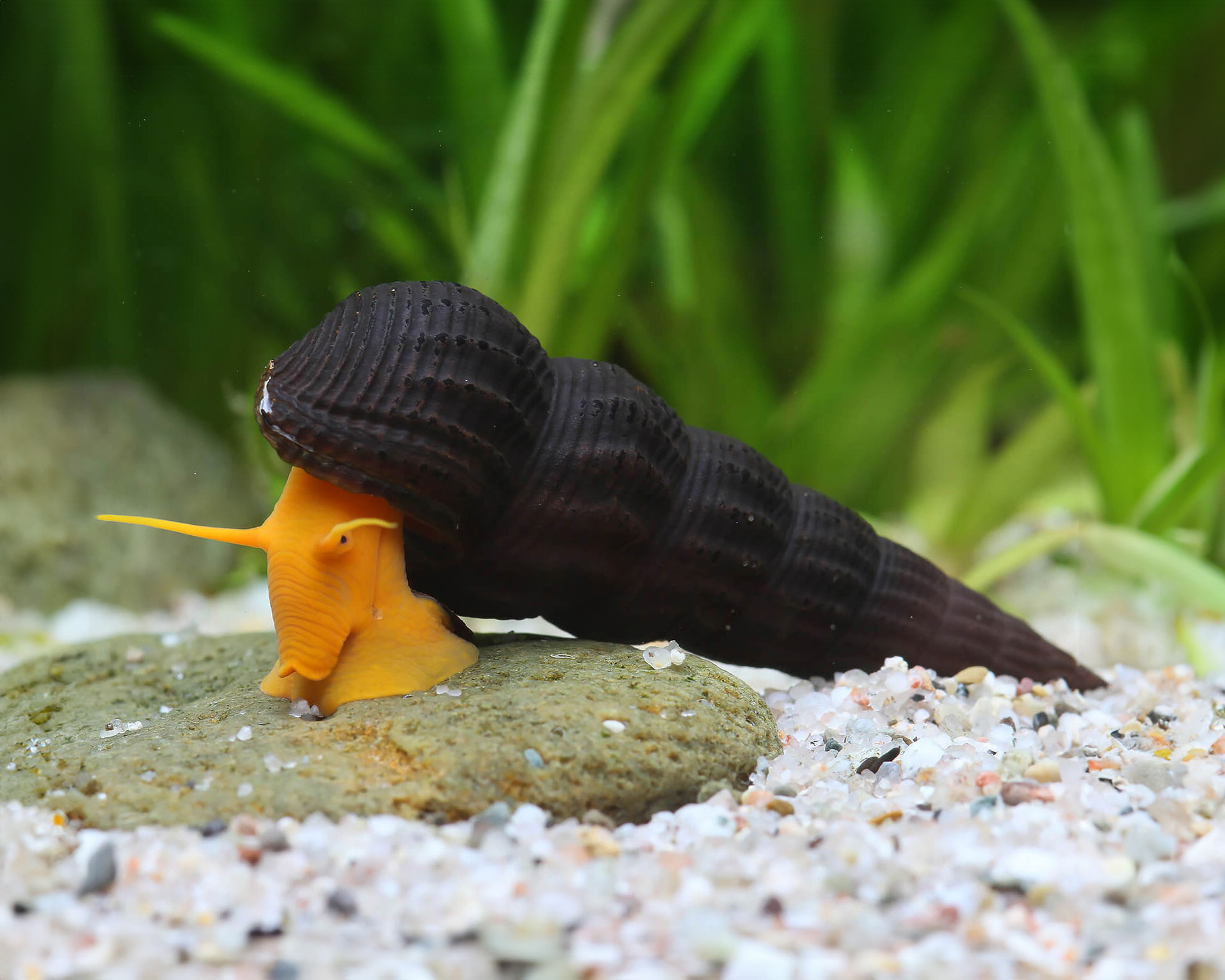
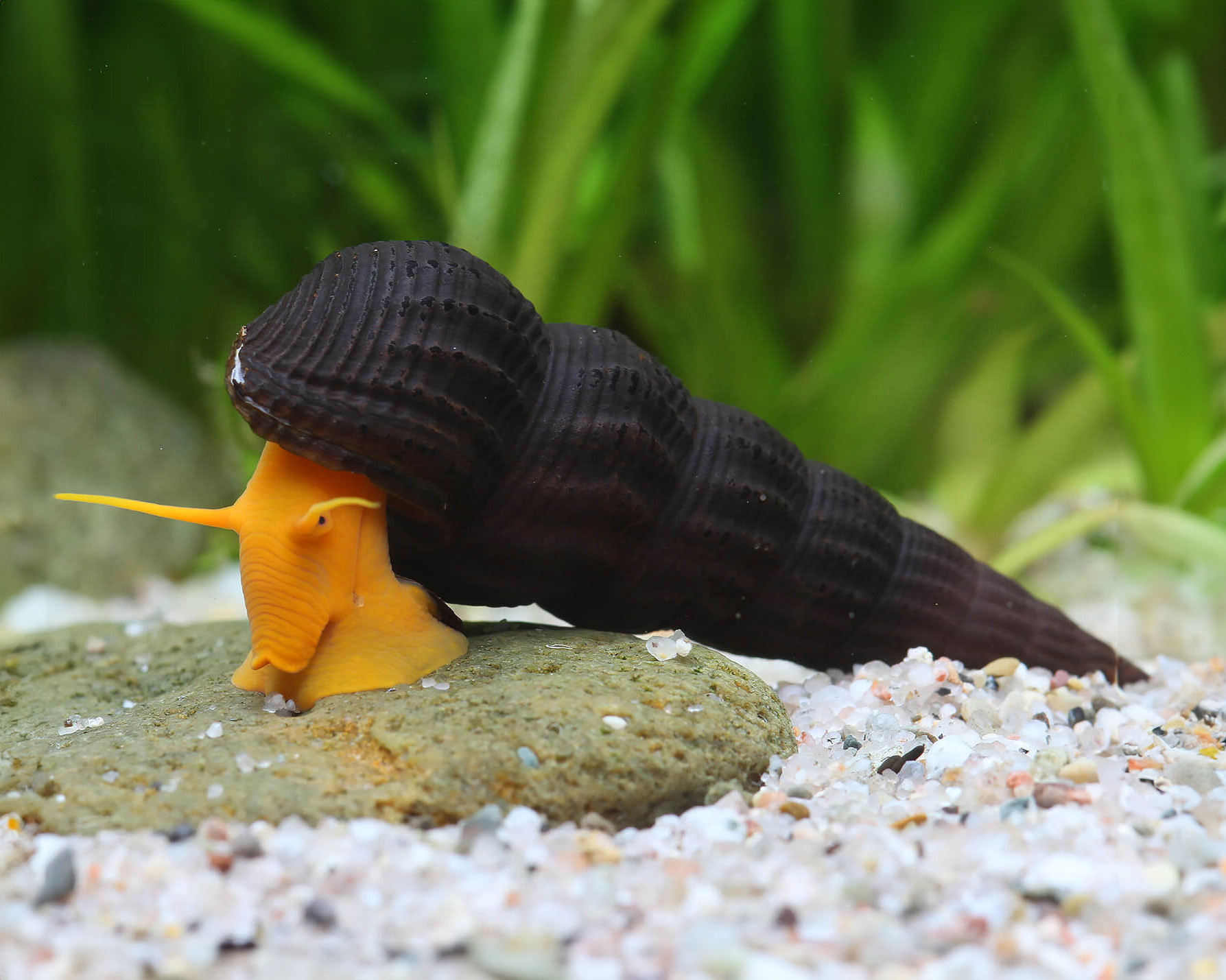
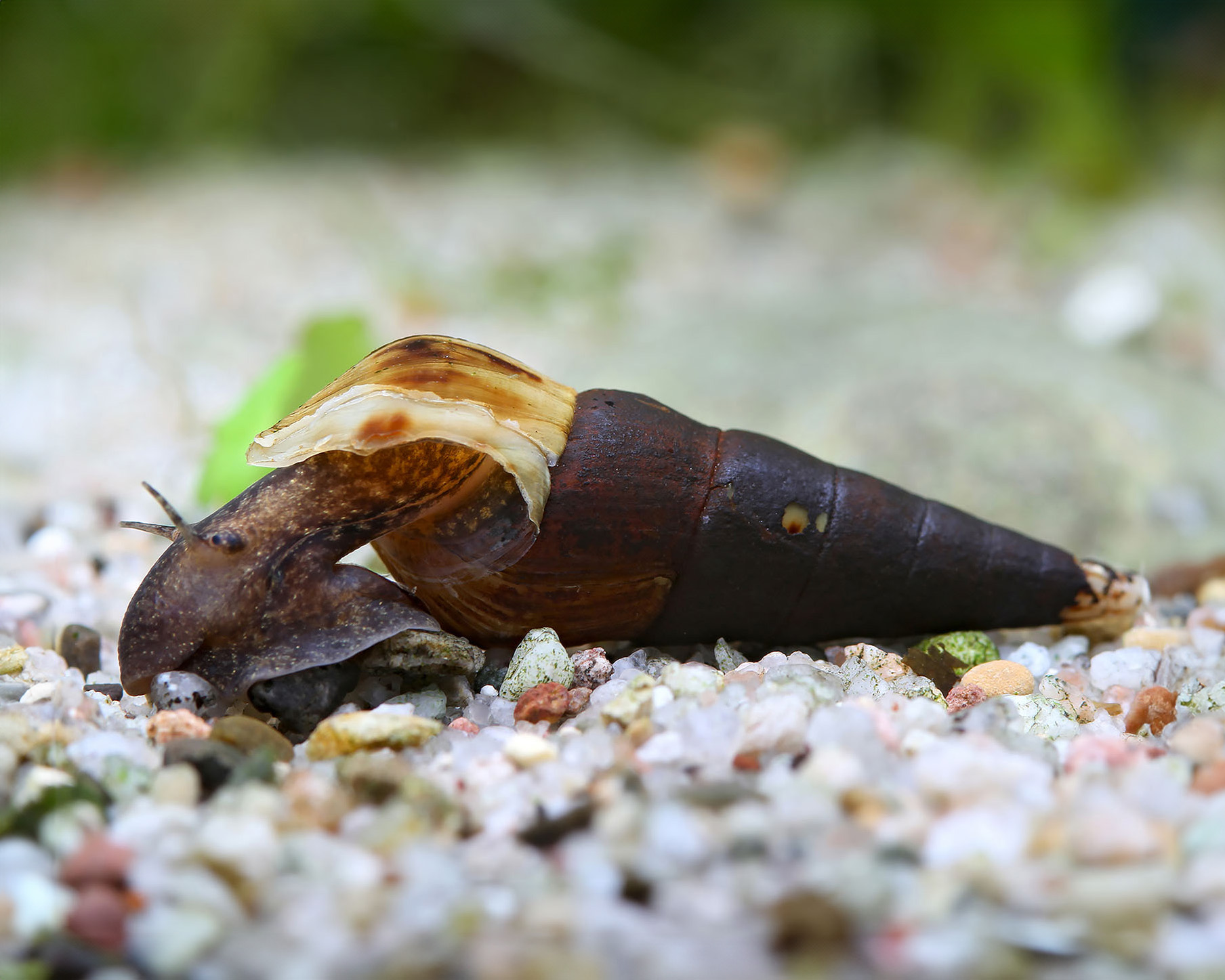
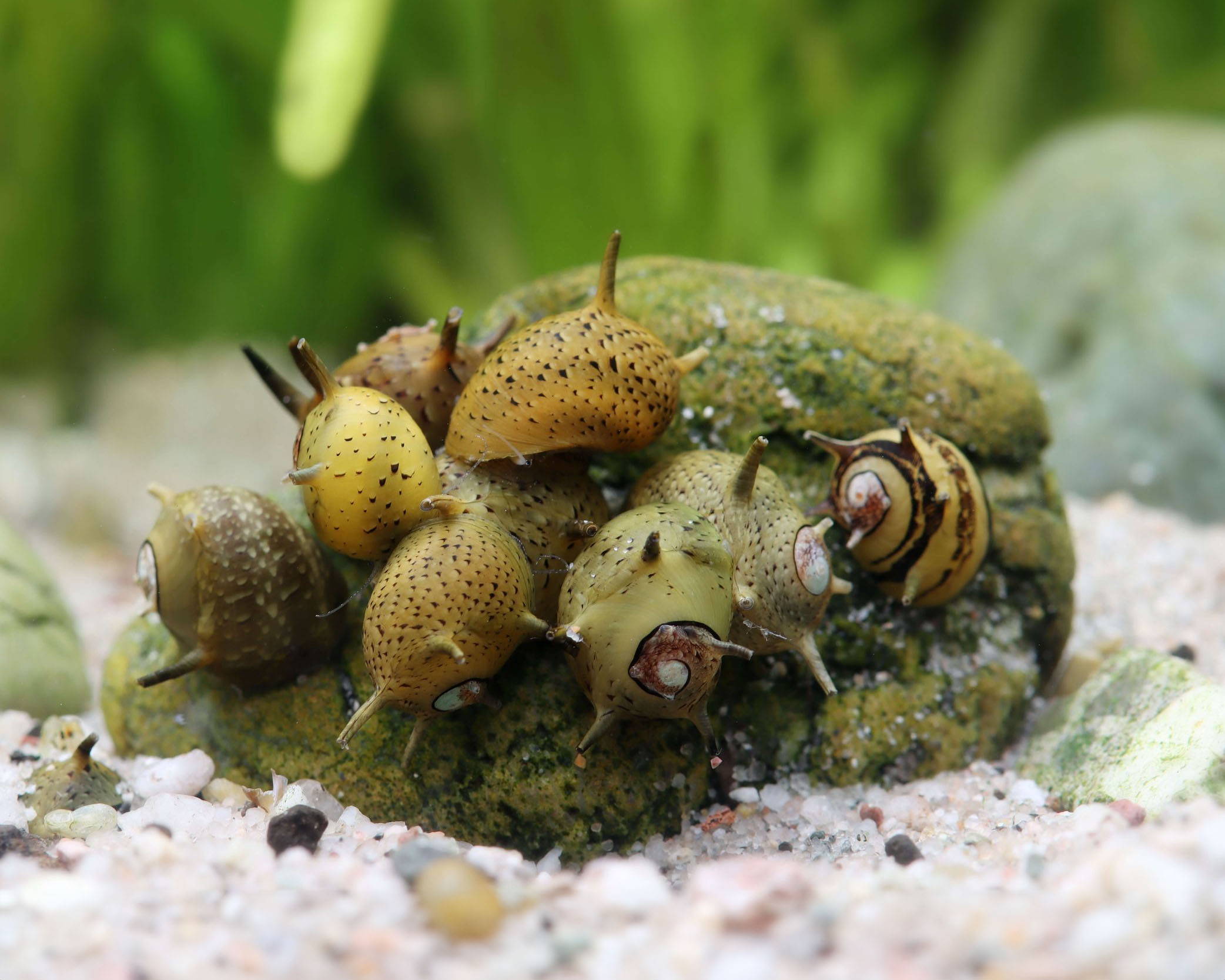
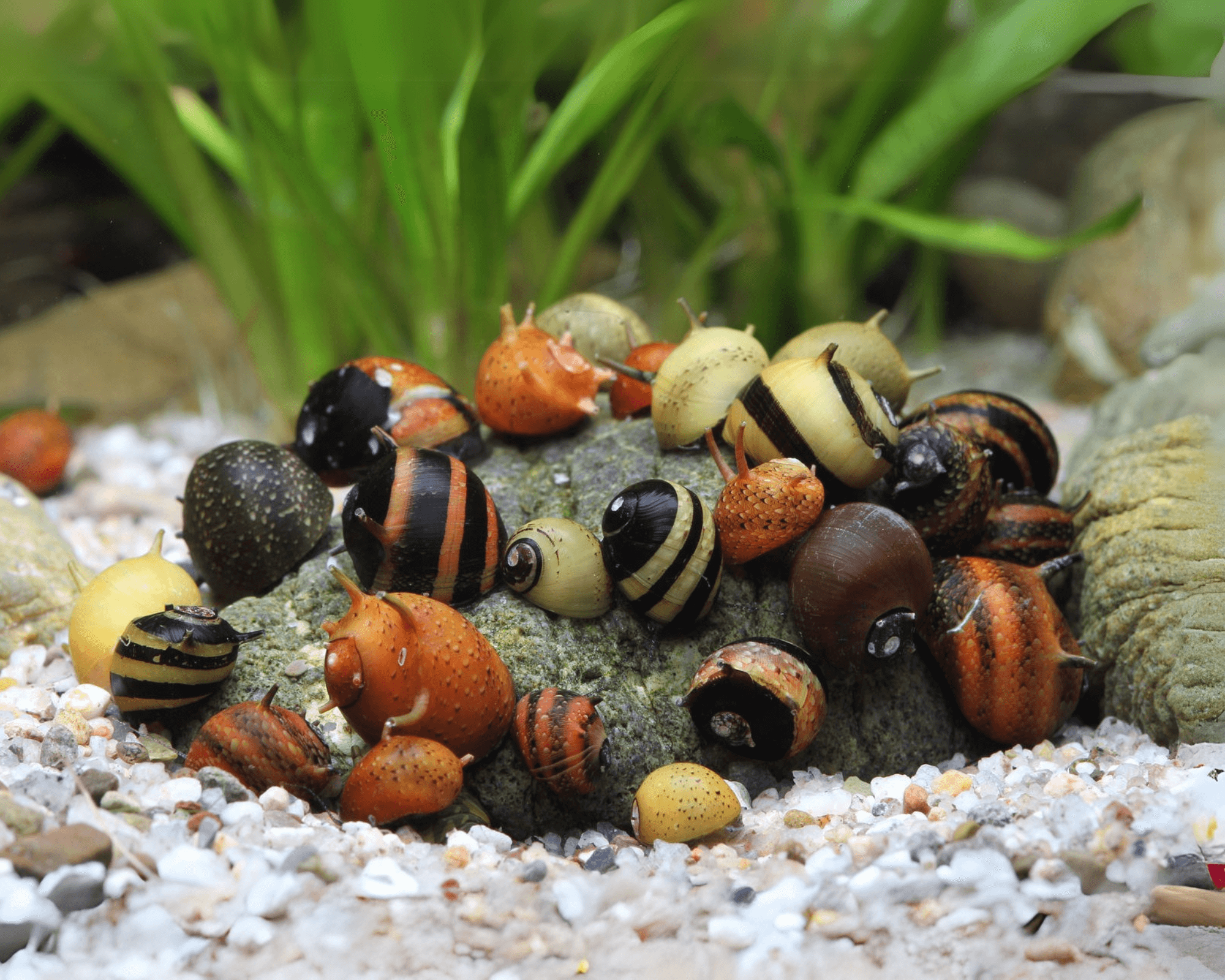
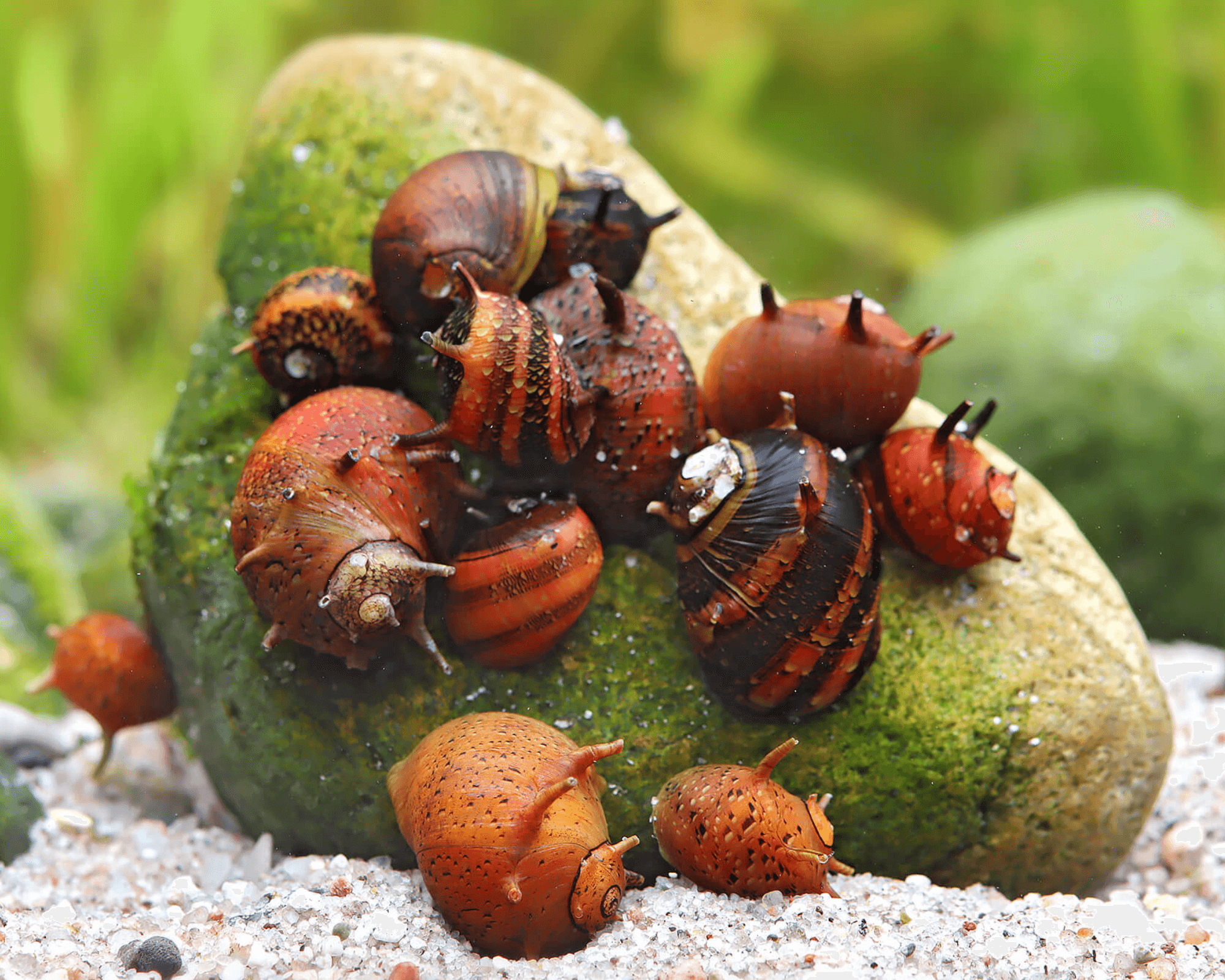
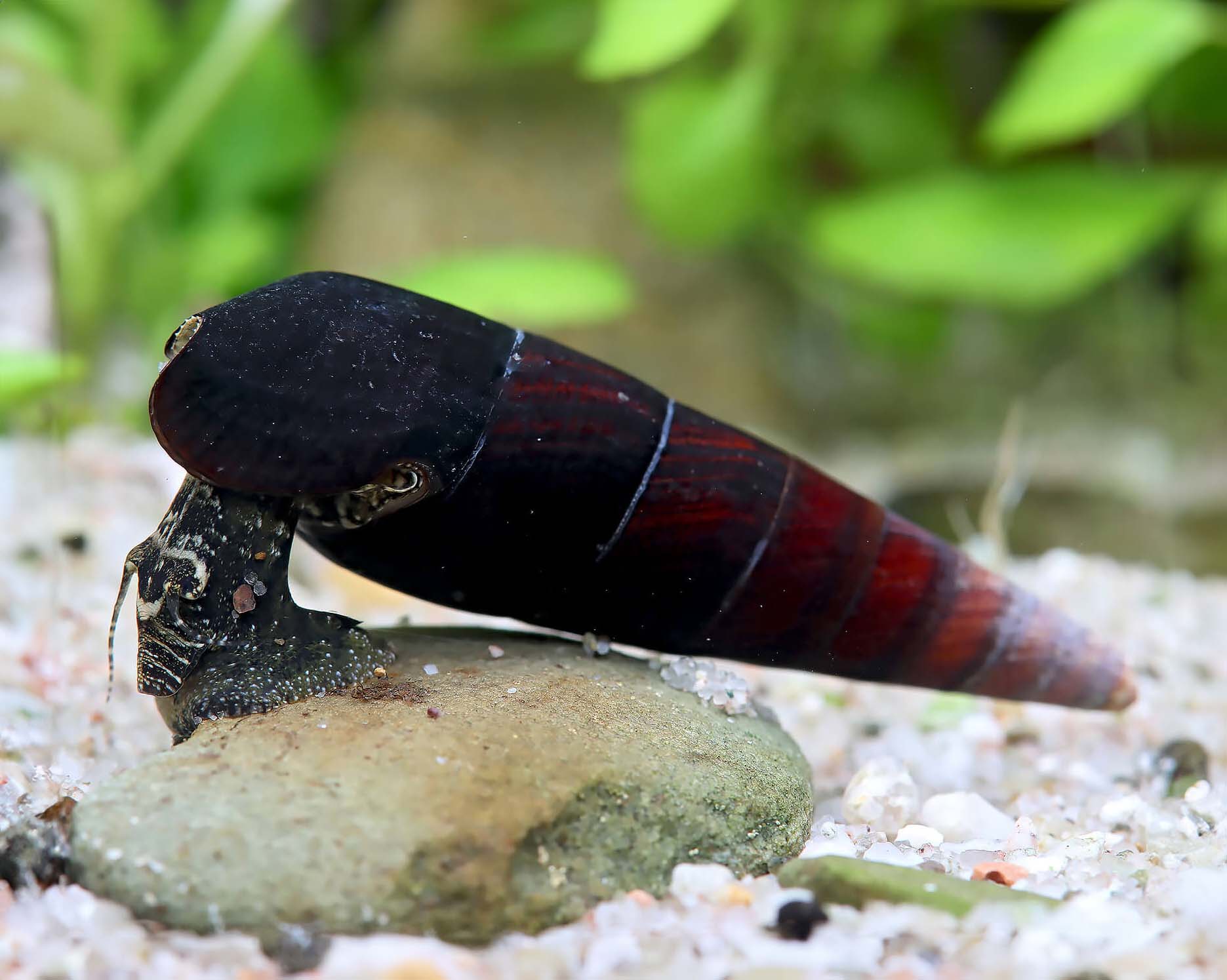
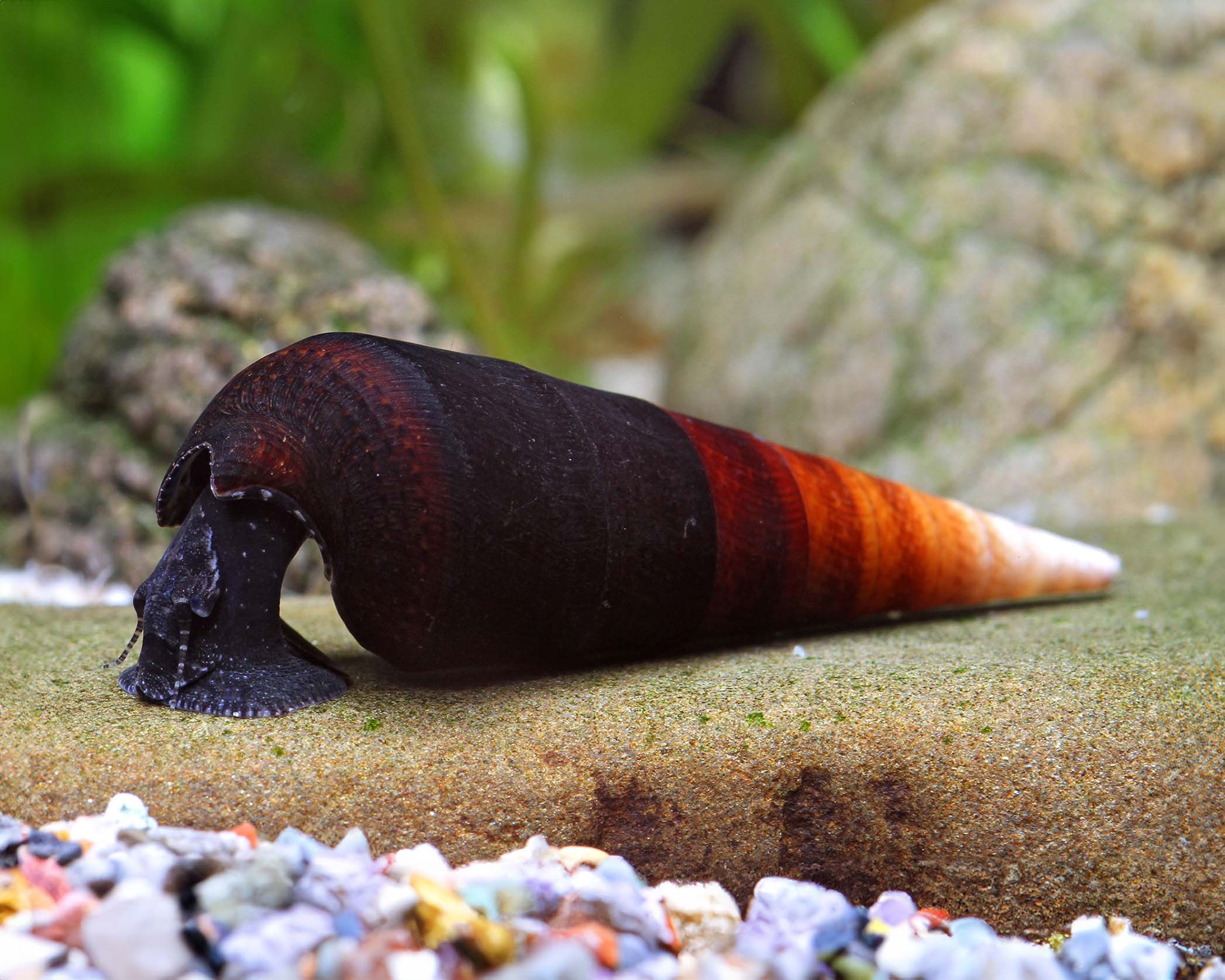
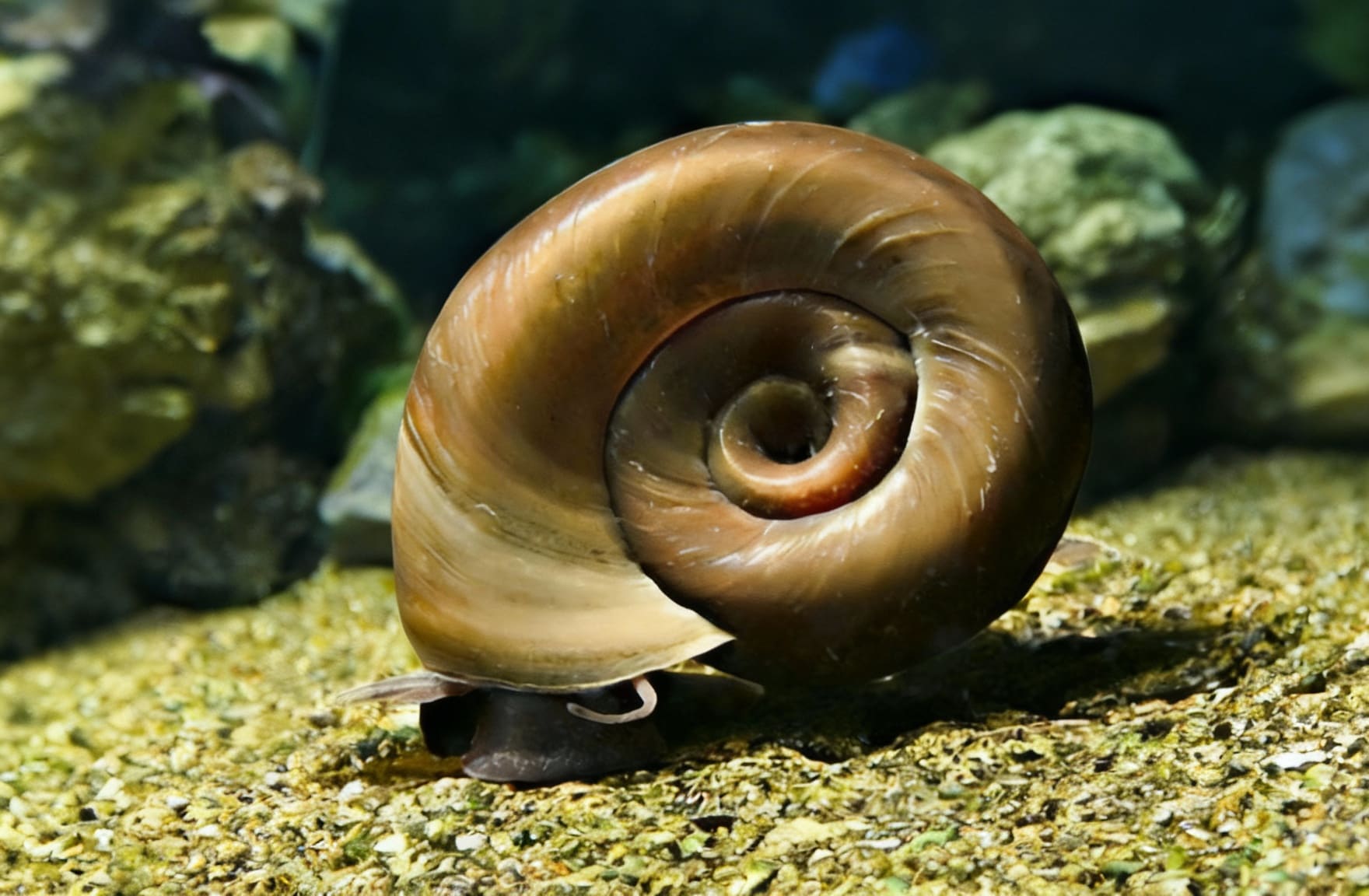
Tylomelania is a genus of freshwater snails in the family Pachychilidae, within the gastropods. The aquarium name Orange Rock Snail or Orange Tylomelania does not establish a particular species, and several related forms are traded under similar names. The pictured form has an orange to yellow-orange body and a dark brown or black, elongated shell with pronounced ridges. Confirmed species-level identification would require reliable locality and shell or anatomical information.
Natural habitat
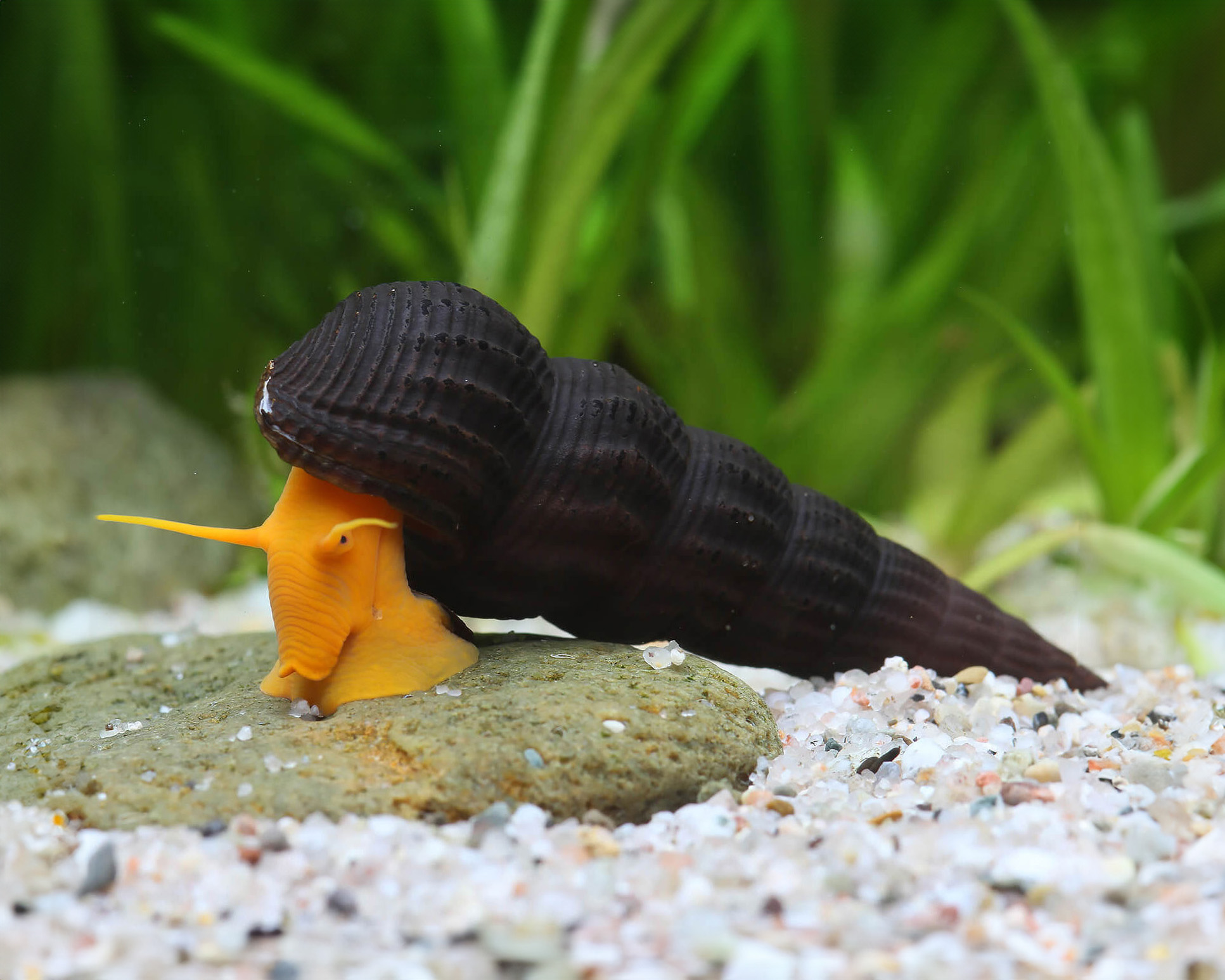
Tylomelania species are native to Indonesian fresh waters, especially habitats associated with Sulawesi. Depending on species, they occur in lakes, streams, and springs, often on rocks, coarse substrate, submerged wood, or other firm surfaces. Many aquarium forms are collected or bred from environments that are warm, well oxygenated, alkaline, and rich in dissolved minerals.
Aquarium conditions
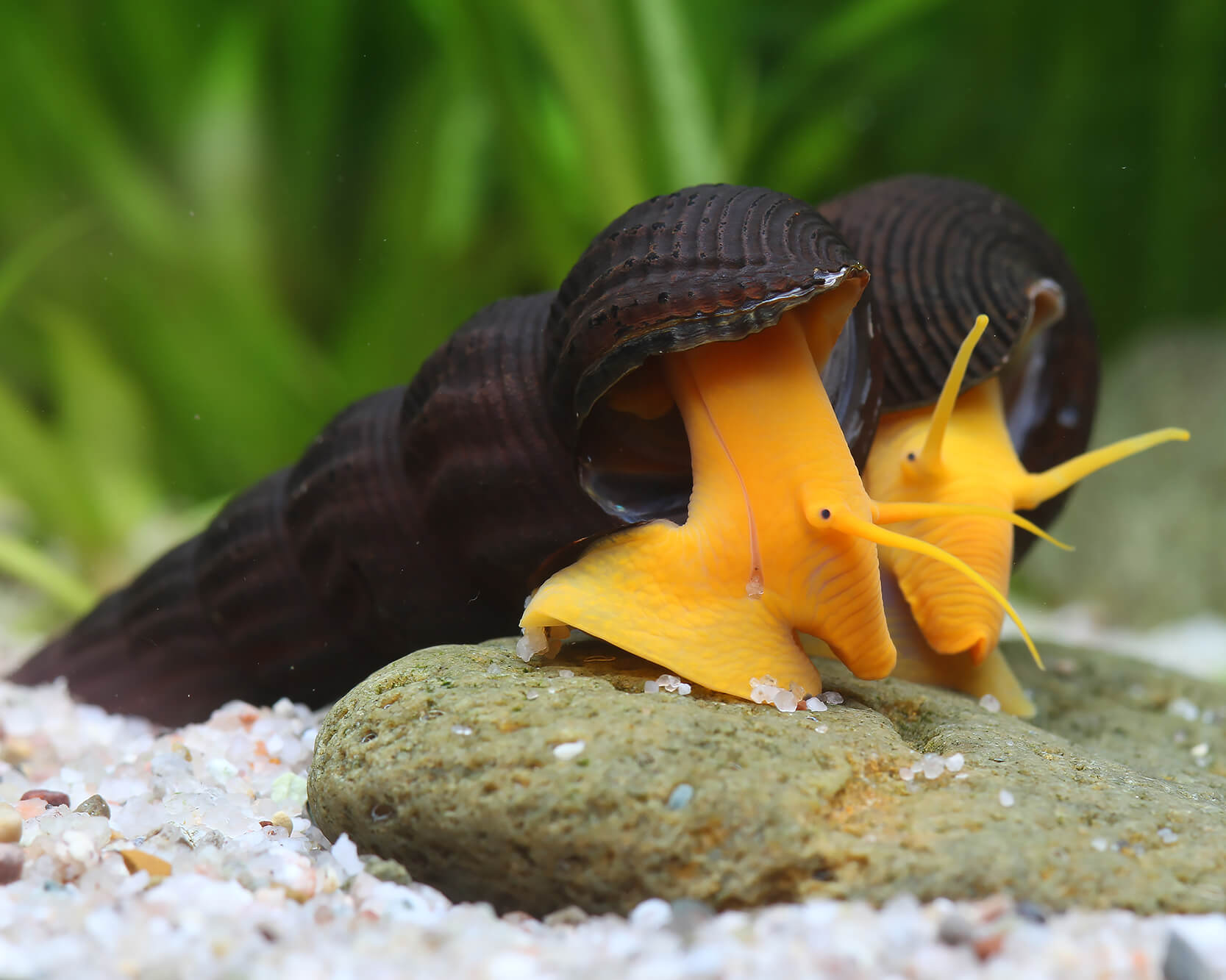
Use a mature aquarium with stable temperature, strong biological filtration, good oxygenation, and gentle to moderate circulation. Aim for approximately 26–30 °C and pH 7.5–8.5, with measurable hardness and sufficient calcium and other minerals for shell growth. Avoid sudden changes, prolonged acidity, low oxygen, and detectable ammonia or nitrite. Smooth rocks and open bottom areas provide useful grazing and resting surfaces.
Feeding
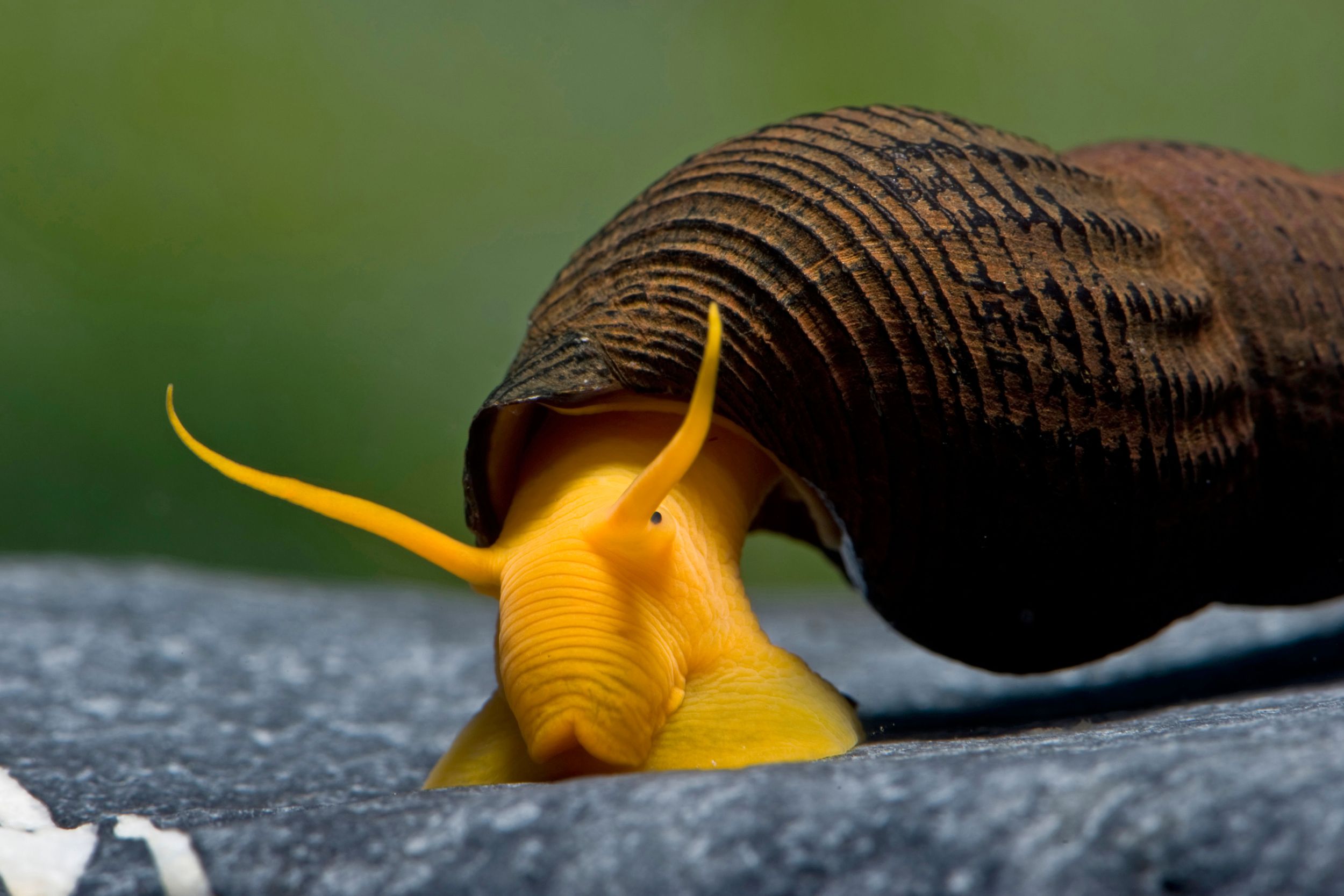
These snails graze biofilm, soft algae, microorganisms, and settled organic matter, but an aquarium should not be expected to supply all of their food. Offer sinking foods such as algae-based wafers, spirulina foods, or prepared foods suitable for herbivorous and omnivorous freshwater snails. Blanched vegetables can be used occasionally. Remove uneaten food to protect water quality and prevent excessive population growth.
Plant safety
Healthy, established plants are generally safe with Tylomelania. These snails mainly graze surfaces and consume soft, decaying material rather than deliberately shredding healthy leaves. They may climb through plants or dislodge poorly rooted specimens because of their size and activity. Plant damage is more likely when food is insufficient or when leaves are already weakened.
Behaviour and tank mates
Orange Tylomelania are peaceful toward fish, shrimp, and other snails that do not attack them. Avoid aggressive fish, snail-eating species, and persistent fin or body nippers. Provide enough floor area, hiding places, and access to food. They may spend periods buried, inactive, or hidden, especially after transport or acclimation, but persistent inactivity can indicate unsuitable water or poor condition.
Reproduction
Tylomelania are livebearing snails rather than typical egg-cluster layers. Females produce individual young enclosed in a protective capsule, and the young emerge as relatively developed miniature snails. Reproduction is usually slower than that of common pest snails, but successful breeding requires mature animals, warm stable water, adequate food, and minerals. Exact reproductive details vary among species and unidentified trade forms.
Population control
Control numbers by keeping an appropriate starting group, feeding measured portions, removing excess food, and siphoning accumulated organic debris. Hand-remove surplus snails during maintenance and rehome them where possible. A sudden increase usually indicates abundant food rather than a disease. Do not use copper-based medications or chemical snail killers in a display containing wanted snails, shrimp, or other sensitive invertebrates.
 - 1.webp)

 DNZ - 1.webp)

Leave your comments