Taxonomy and identification
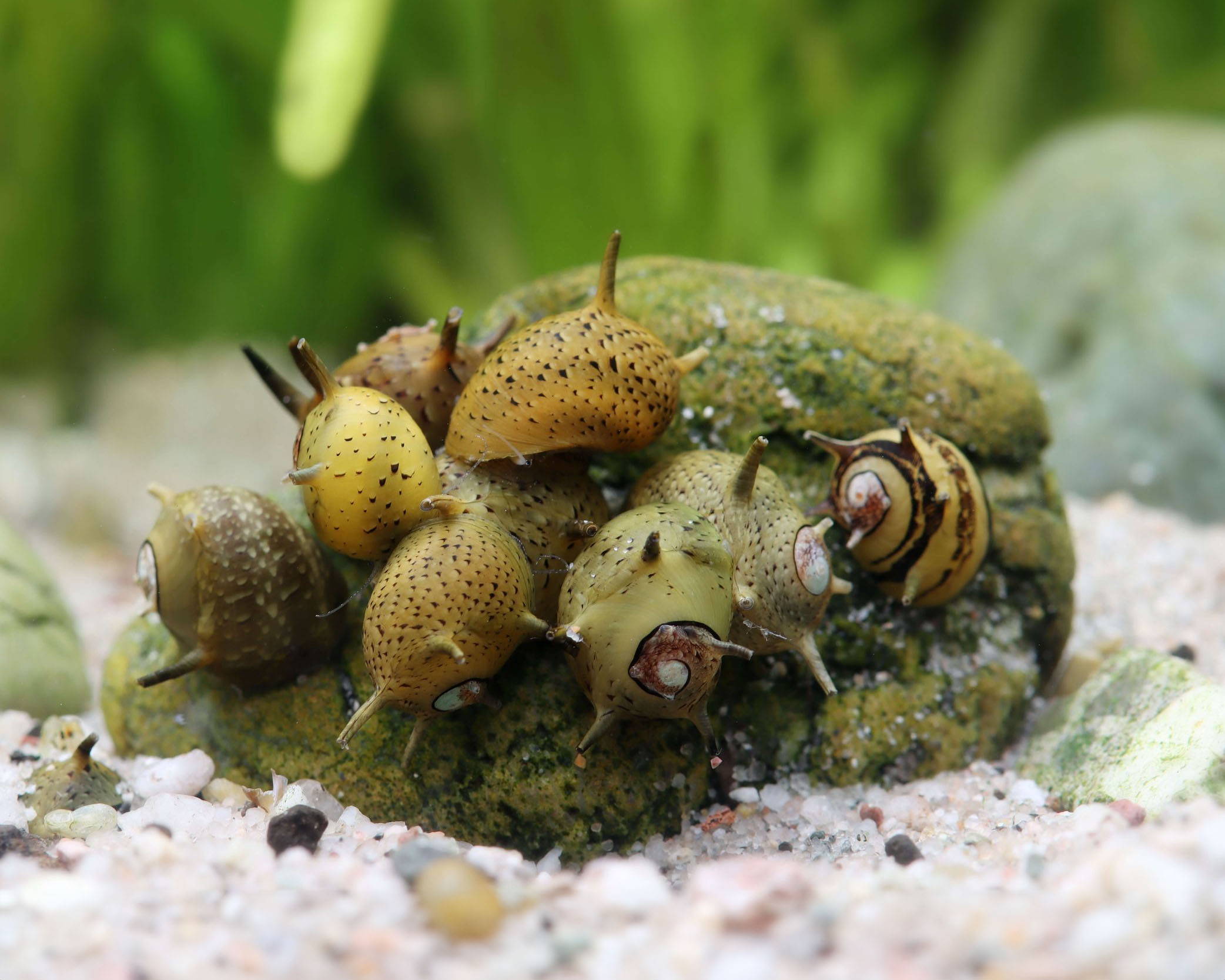
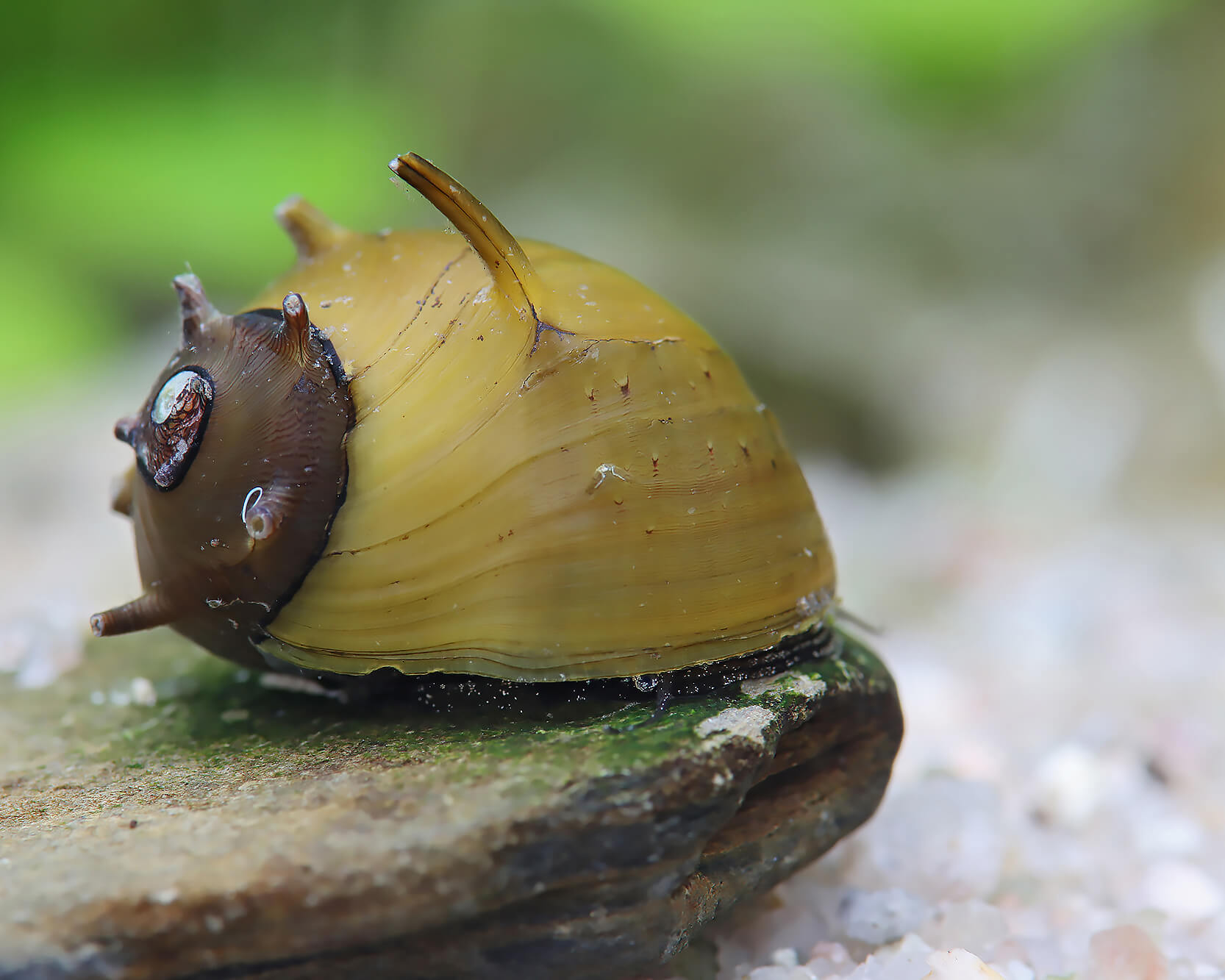
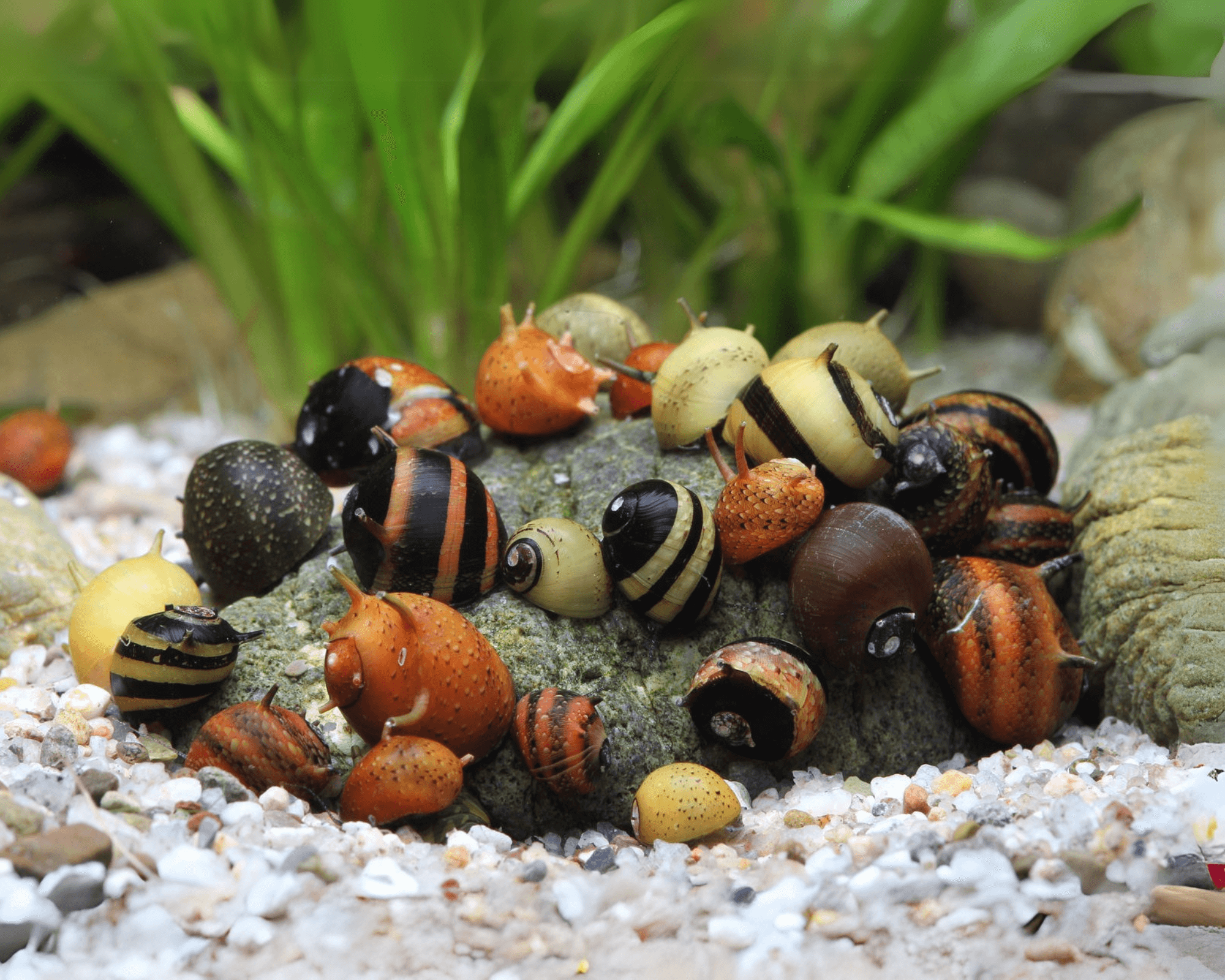
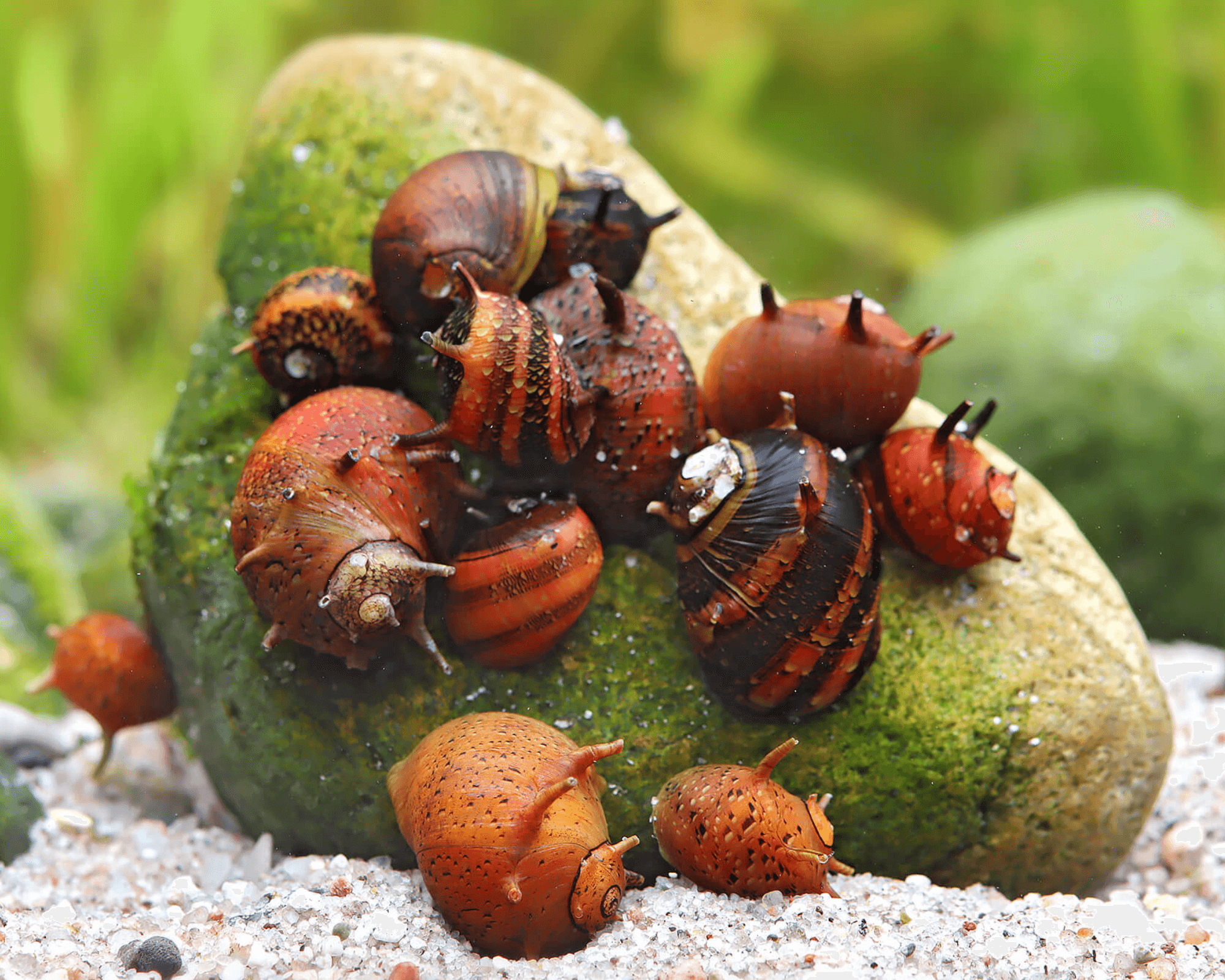
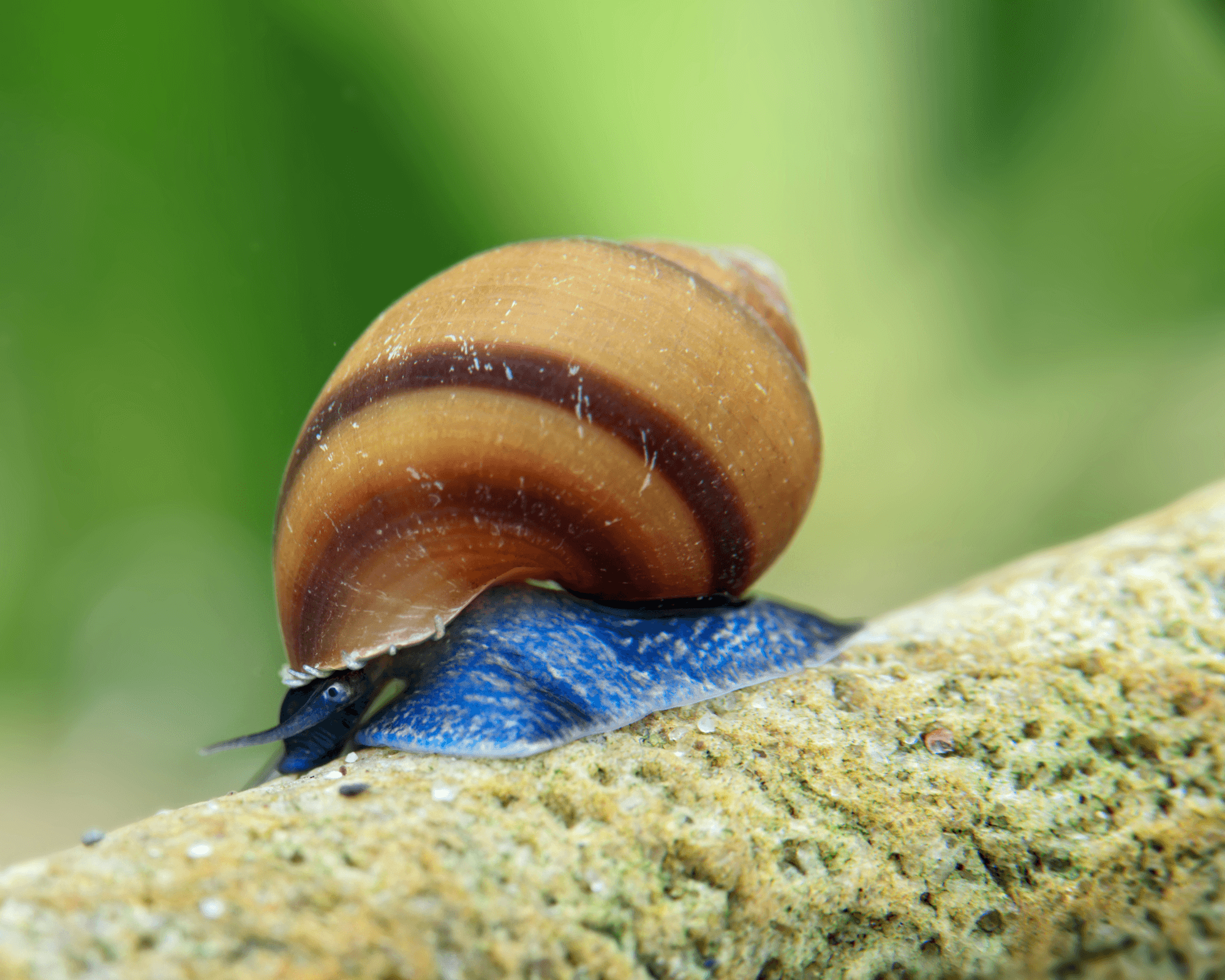
Clithon corona is a gastropod mollusc in the family Neritidae and genus Clithon. It is commonly grouped with freshwater nerite snails, although many Clithon species use coastal, estuarine or freshwater habitats during different life stages. The shell may be rounded and strongly sculptured, while the animal can show elongated projections that inspire the staghorn name. Aquarium trade identification is not always reliable, and photographs alone cannot confirm the species with certainty.
Natural habitat and behavior
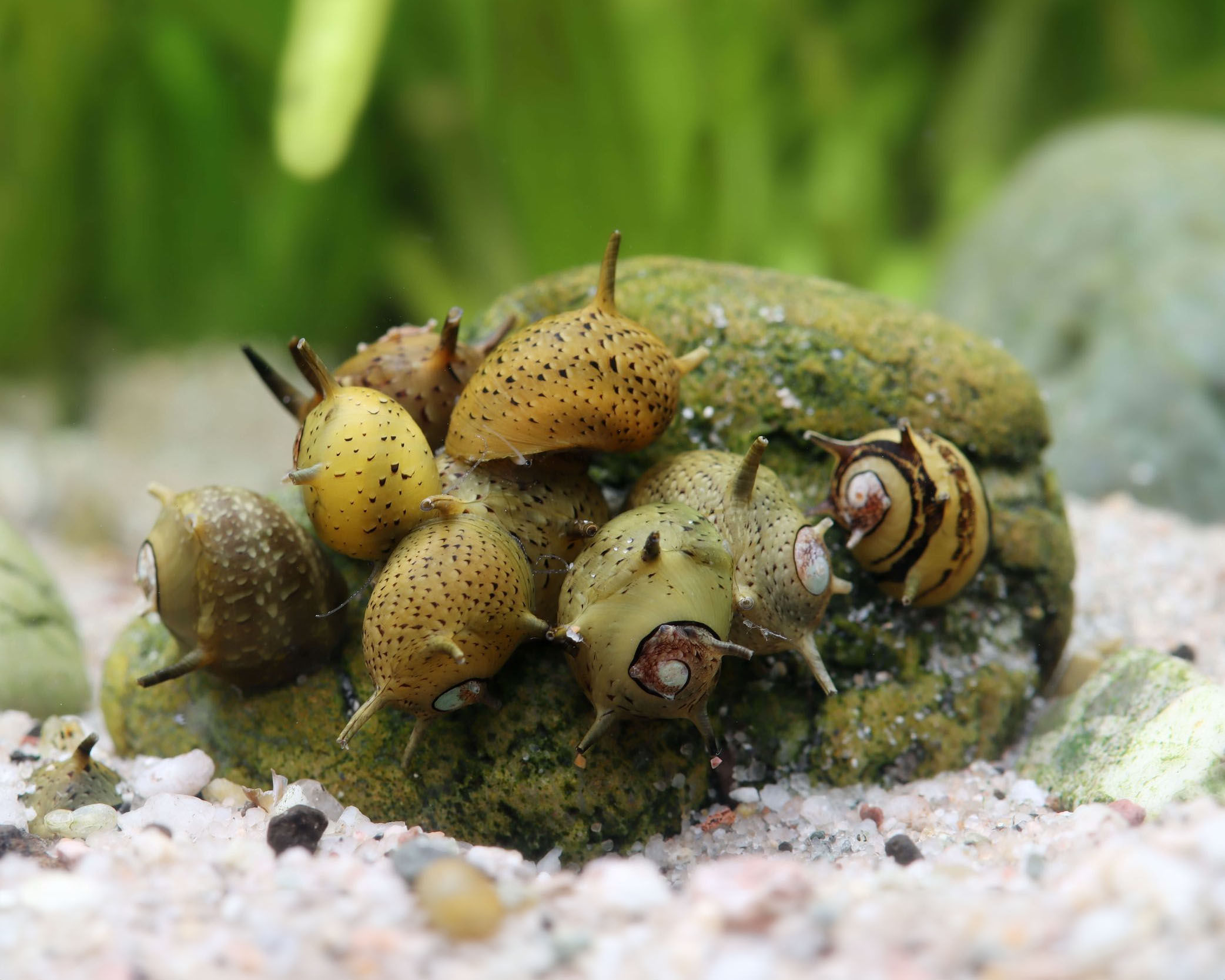
This snail is associated with warm tropical waters, including streams and areas influenced by estuarine or coastal conditions. In an aquarium it grazes on hard surfaces, décor, rocks, glass and driftwood, often becoming more active in subdued light or at night. It is peaceful with fish, shrimp and other snails, but may crawl above the waterline, so use a close-fitting lid and leave a small air gap.
Water parameters
Use stable, mature aquarium water with good oxygenation and low ammonia and nitrite. A temperature of 22–28 °C and pH of 7.0–8.2 are suitable practical targets. Moderate hardness and adequate carbonate hardness help maintain shell quality; persistently soft or acidic water can cause erosion. Avoid sudden changes in salinity, temperature or pH. Copper-based medications and other copper contamination are dangerous to snails.
Feeding
The main food is naturally growing algae, diatoms and biofilm on hard surfaces. Do not place these snails in a newly set-up or excessively clean aquarium with no established grazing area. If natural food is insufficient, offer small amounts of algae wafers or other invertebrate-safe foods, plus occasional blanched vegetables such as courgette or spinach. Remove uneaten food promptly so it does not foul the water.
Plant safety and tank mates
Clithon corona is generally safe with healthy aquarium plants and normally scrapes algae from surfaces rather than chewing intact leaves. It may feed on damaged or decaying plant tissue. Avoid housing it with pufferfish, loaches or other animals known to attack snails. Provide smooth and rough surfaces, shaded retreats and enough floor area for grazing.
Reproduction
Individuals have separate sexes and mating may occur when both sexes are present. Females can attach small, conspicuous egg capsules to glass, rocks, wood and other hard surfaces. In ordinary freshwater aquariums, the larvae generally do not develop successfully because the life cycle requires brackish or marine conditions and suitable microscopic food. Eggs may therefore remain visible without producing a freshwater population. Successful captive breeding requires specialized knowledge of salinity, larval food and water management.
Population control
Freshwater populations usually remain limited by larval requirements, but adults can accumulate if repeatedly introduced or if excess food is available. Control numbers by removing surplus adults and egg capsules manually, reducing unnecessary feeding and maintaining a realistic grazing supply. Do not use copper or chemical snail-killers in a community aquarium. Never release unwanted snails or aquarium water into natural waterways; rehome them or dispose of them responsibly.

 DNZ - 1.webp)

Leave your comments