Taxonomy and identification
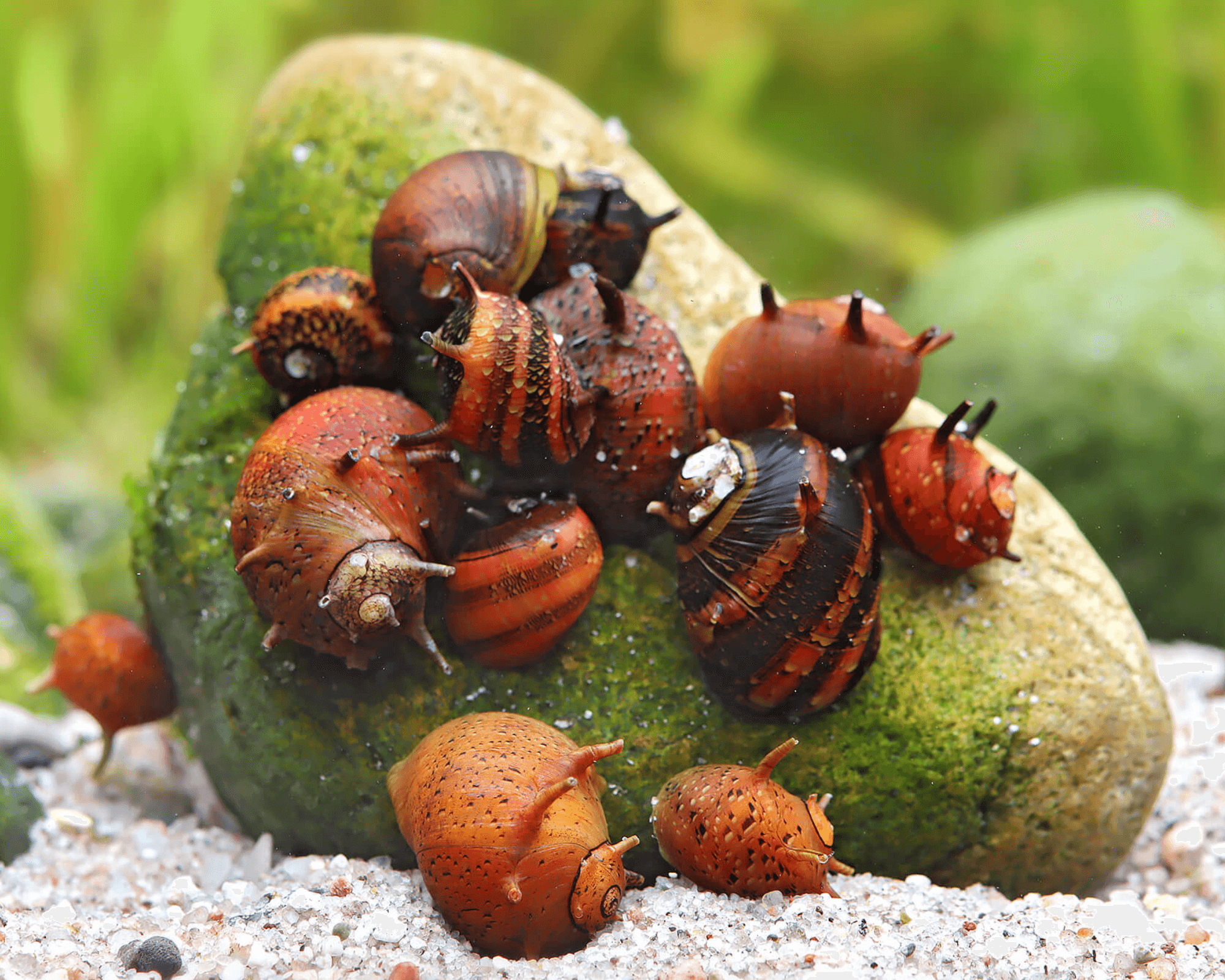
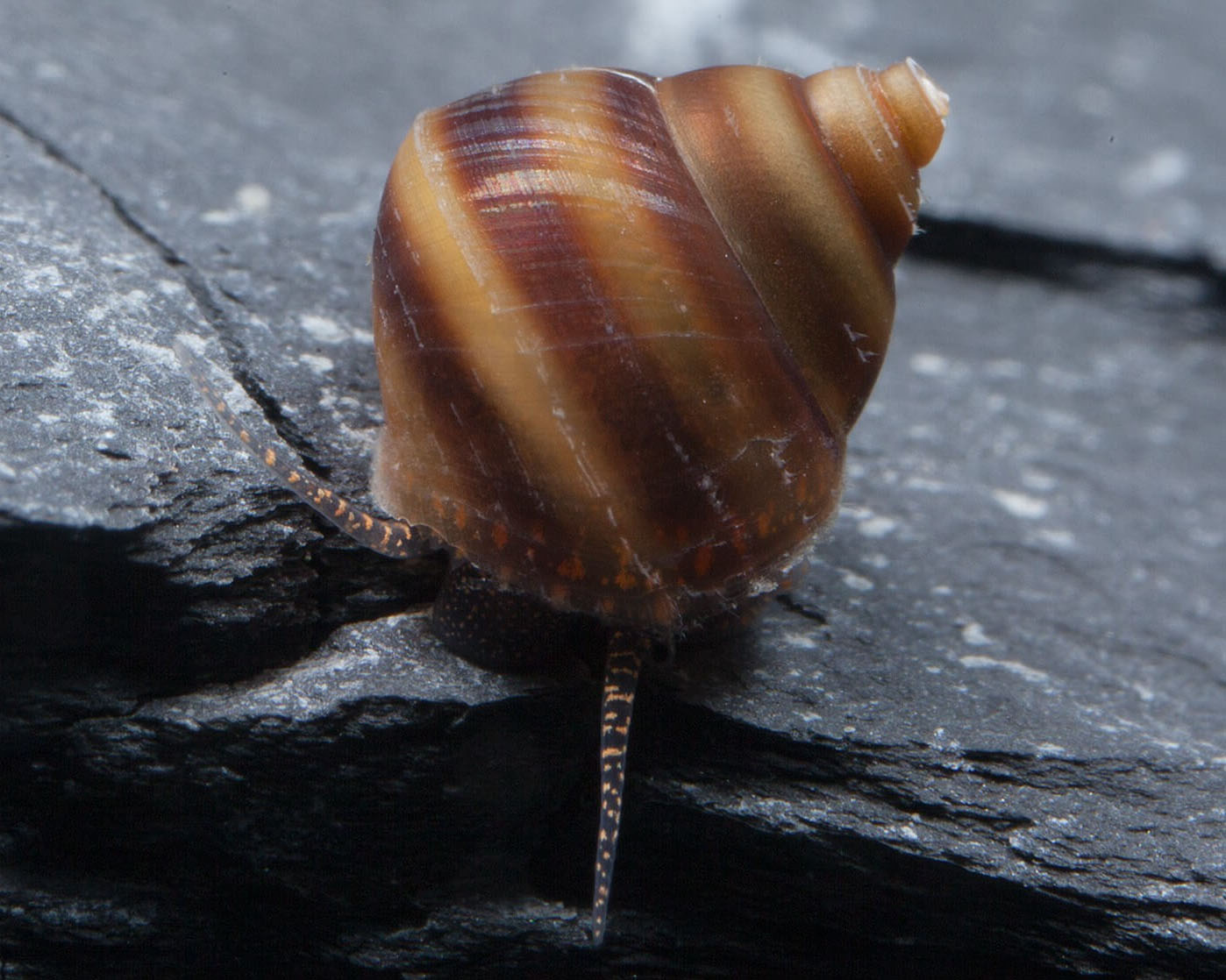
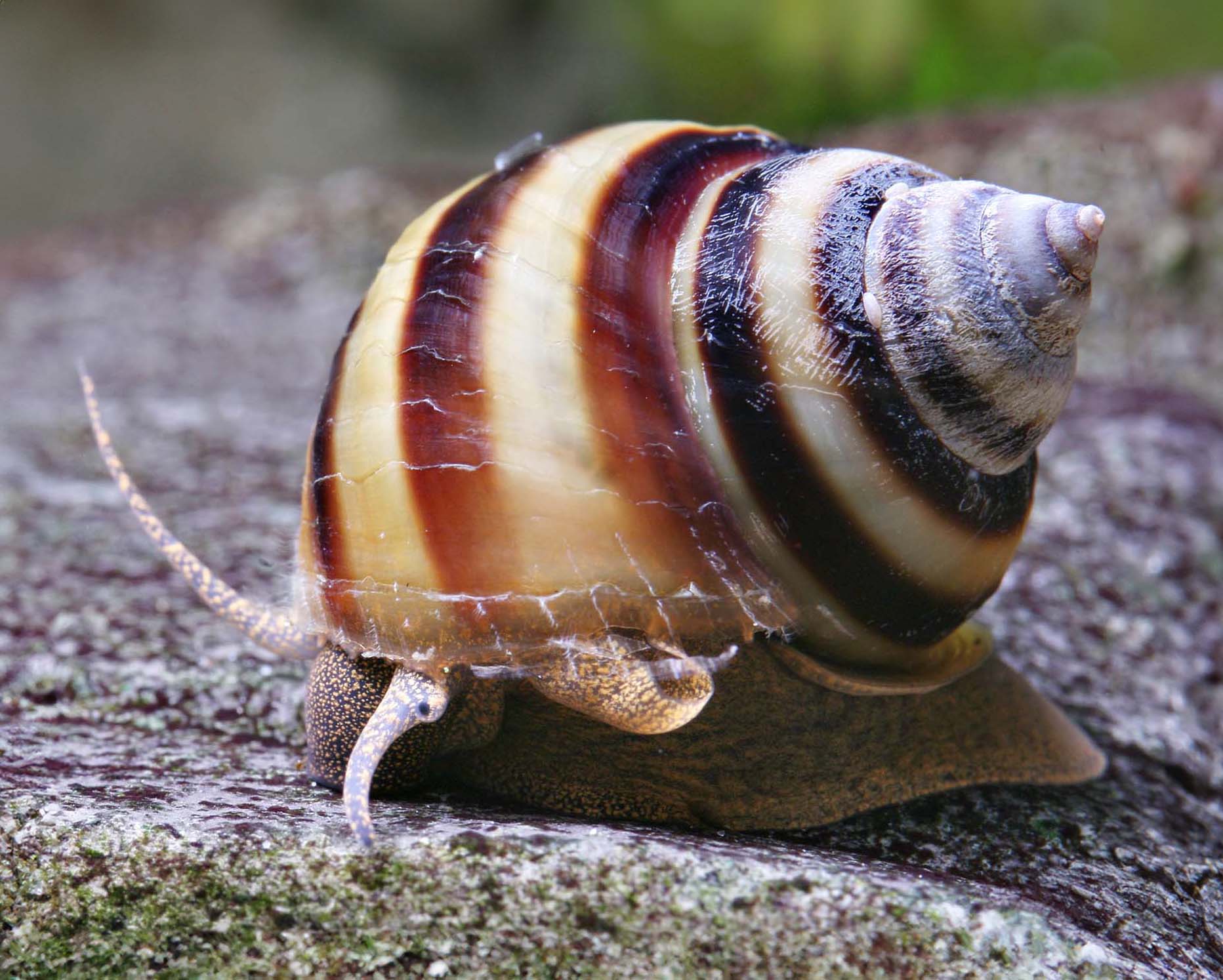
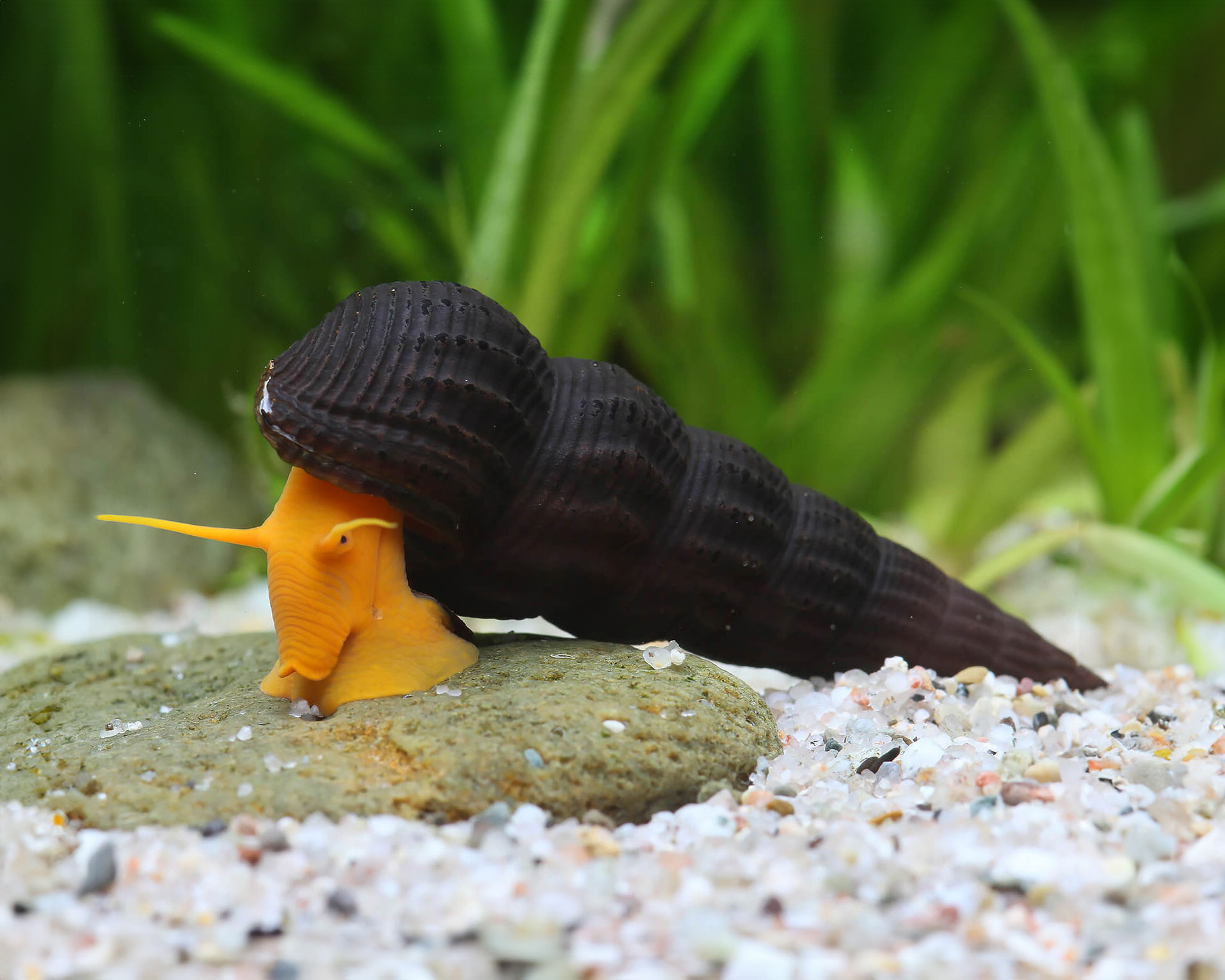
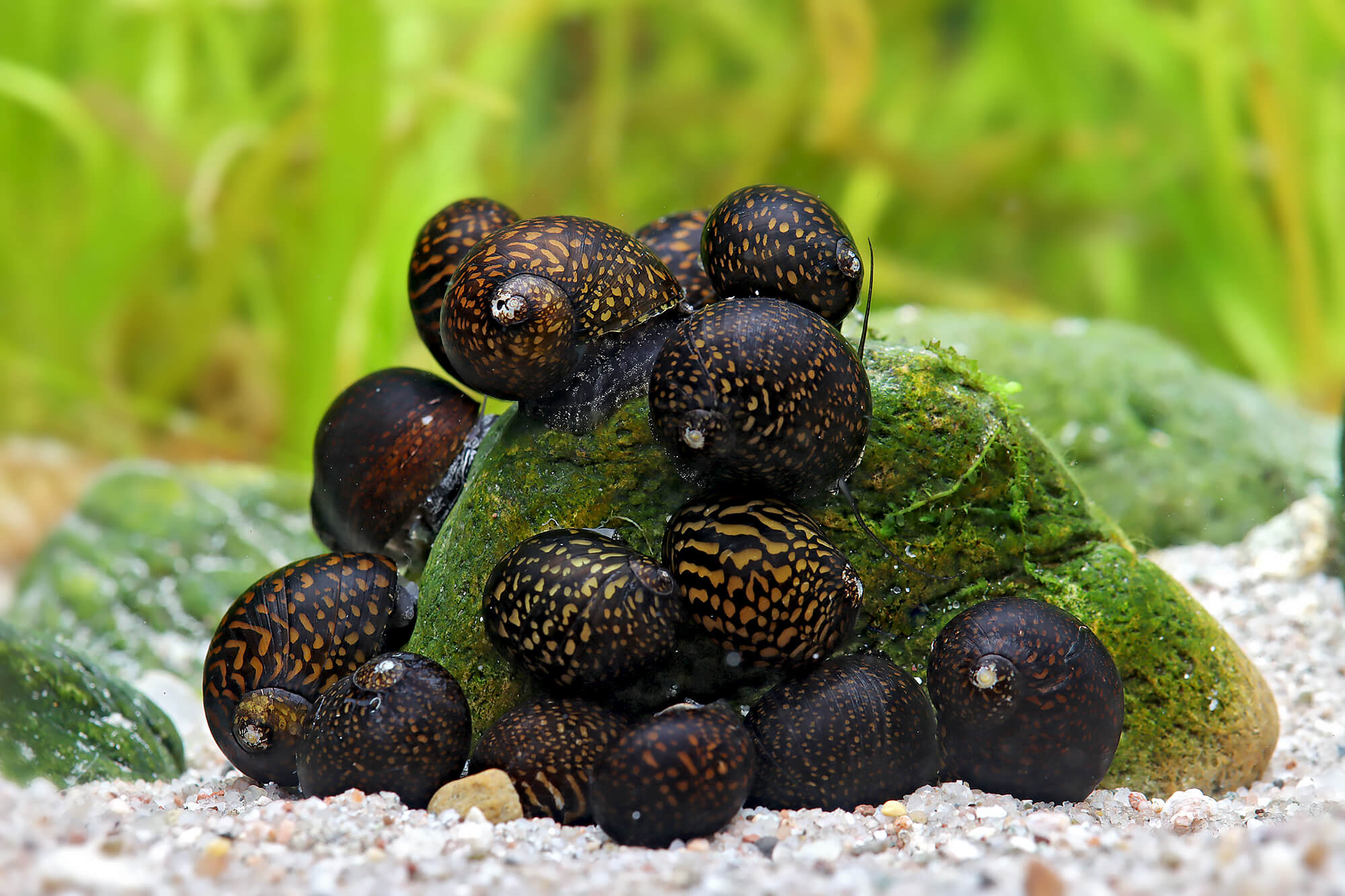
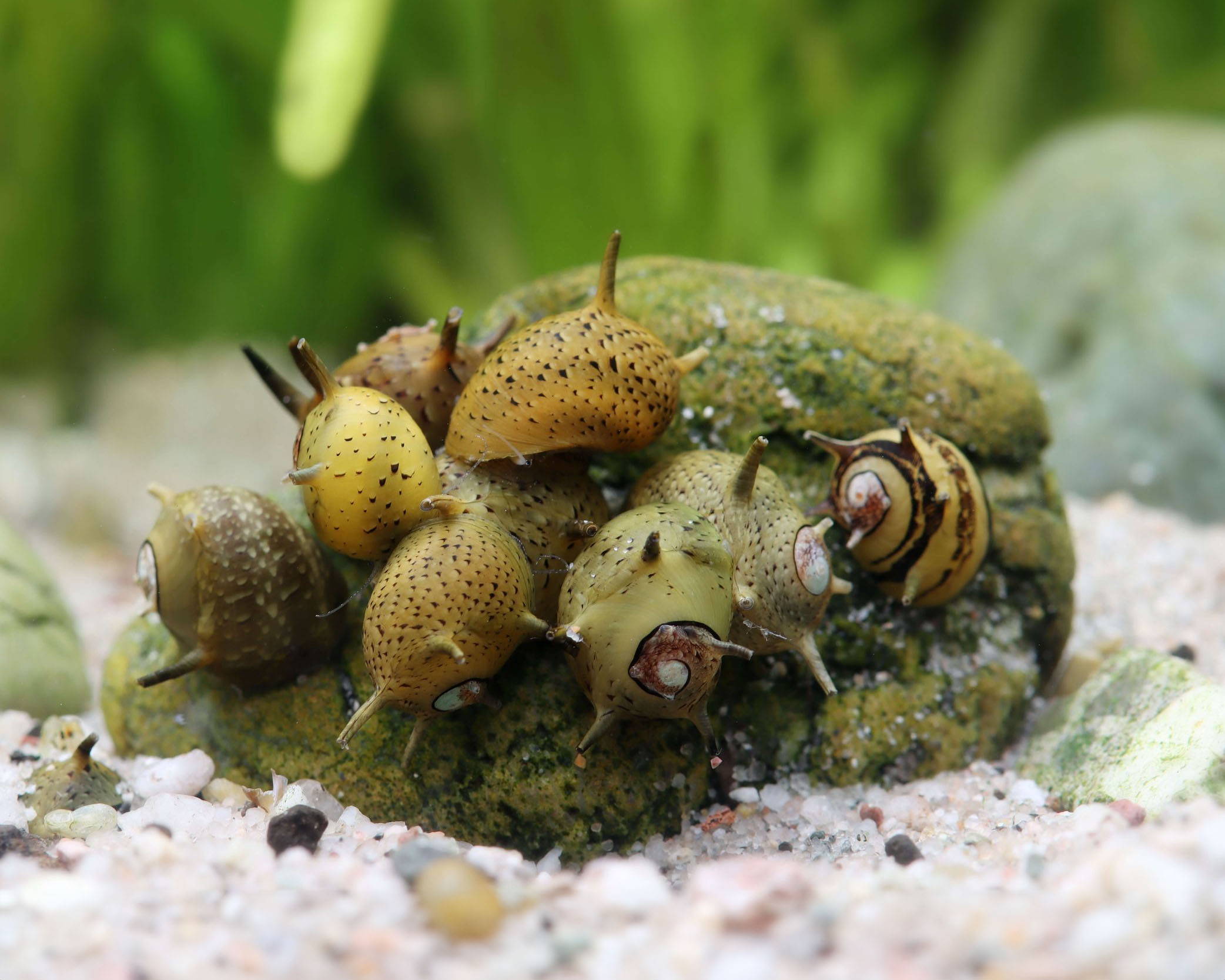
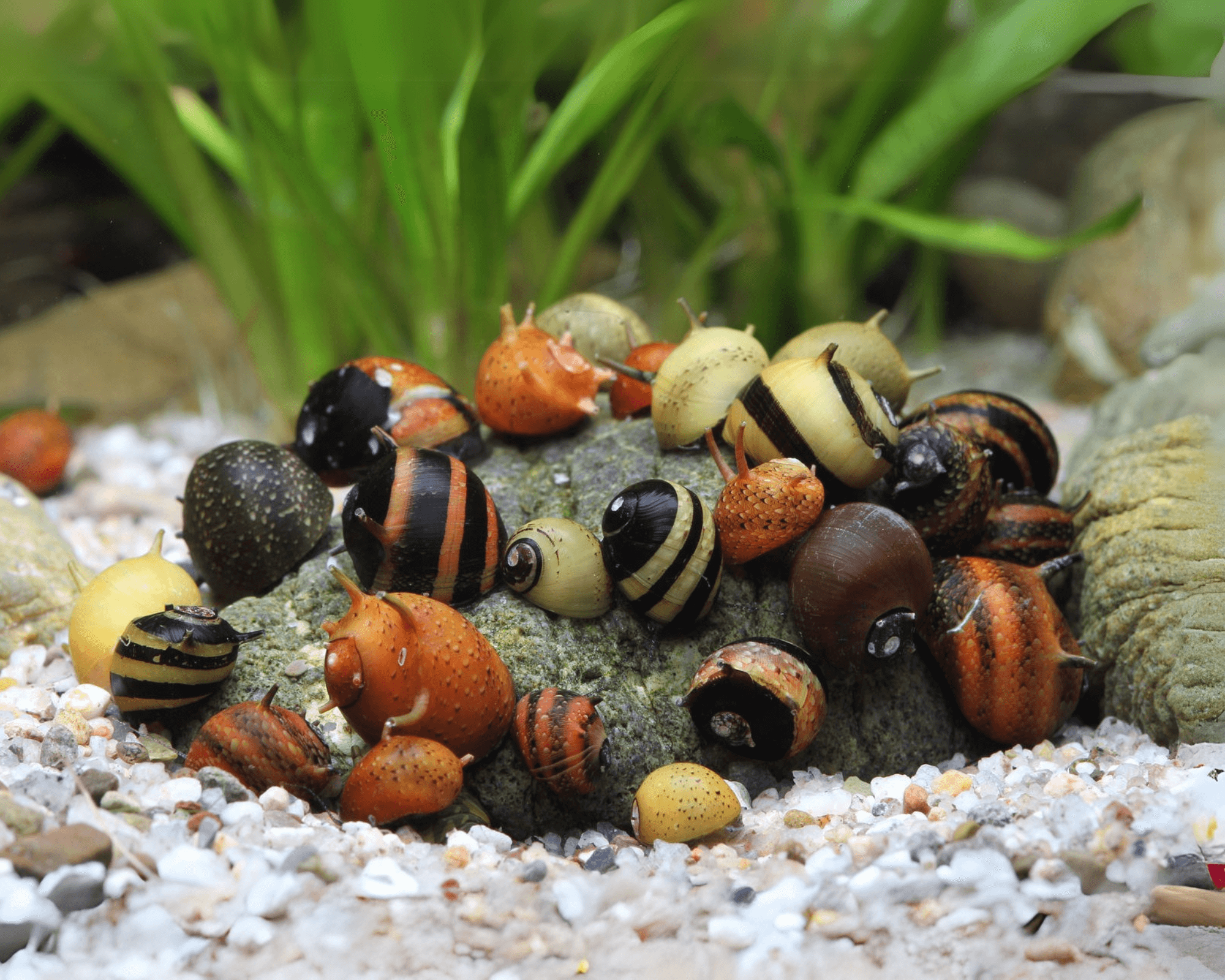
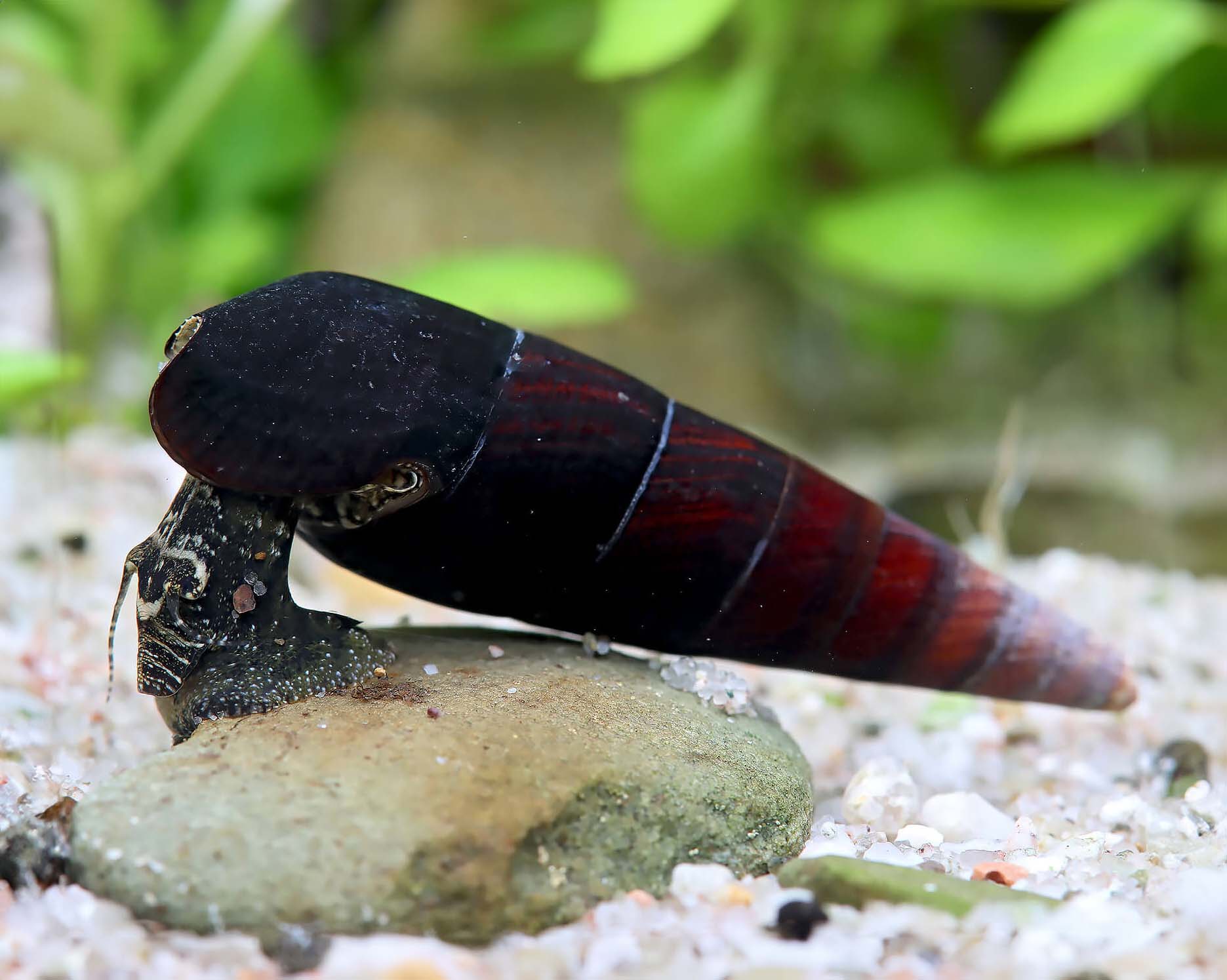
The supplied name places this snail in the genus Clithon, family Neritidae. It is commonly sold as Geweihschnecke or horned nerite, and “Volcano Red” is a trade color name rather than a formal taxonomic rank. Clithon species can be difficult to distinguish from photographs alone, so the identification as Clithon sowerbianum is not fully certain without a verified specimen and locality information.
Natural habitat and aquarium setup
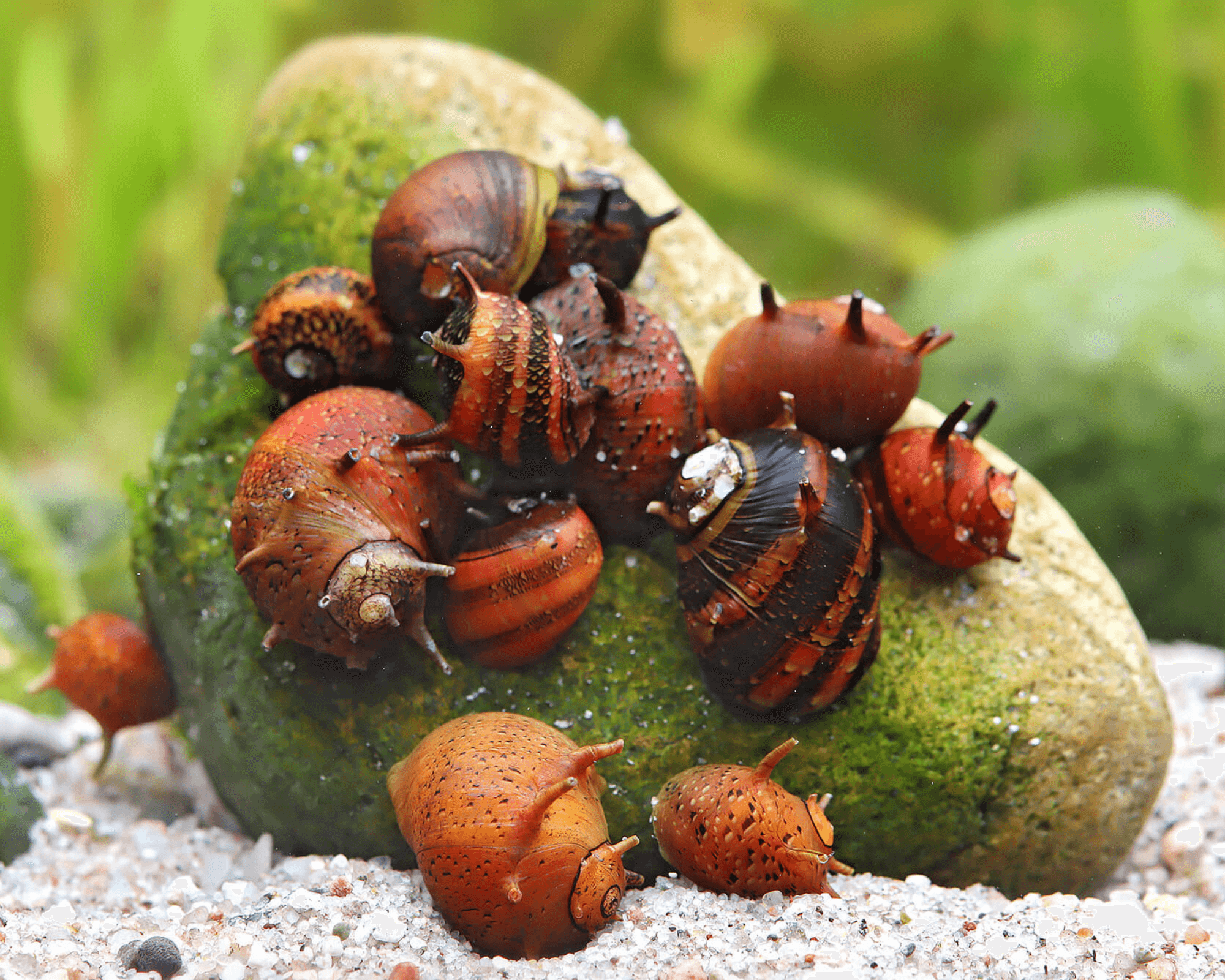
Clithon nerites are associated with shallow tropical streams, rivers, and estuarine areas where they graze algae and aufwuchs on rock, wood, and other firm surfaces. Provide a mature, covered aquarium with stable filtration, gentle to moderate flow, smooth hard surfaces, and some naturally growing biofilm. Avoid newly established tanks that are too clean to provide continuous food.
Water parameters
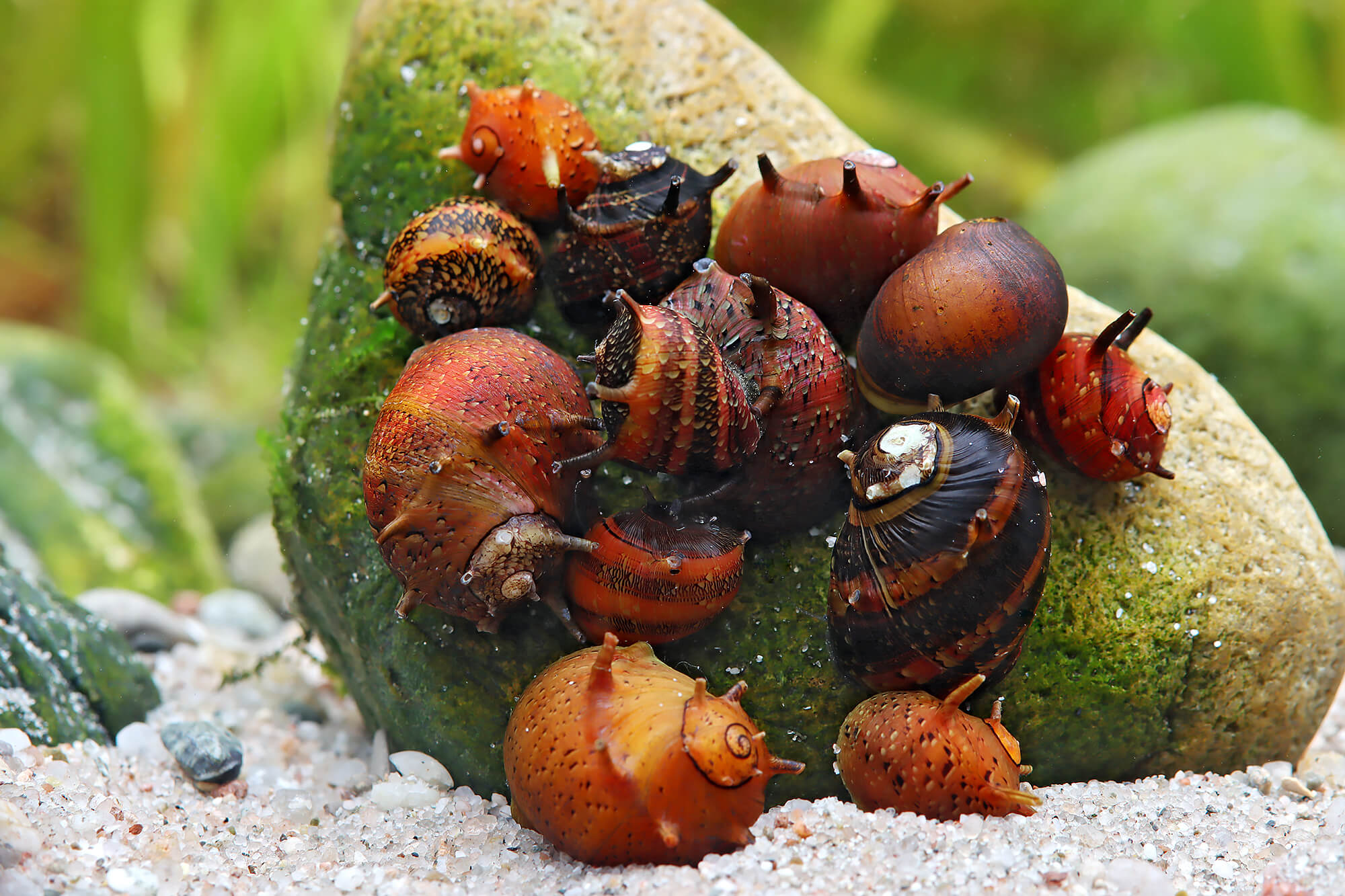
Use clean, well-oxygenated water with stable conditions rather than pursuing an exact target. A practical range is 22–28 °C and pH 7.0–8.2, with moderate hardness and sufficient calcium and alkalinity for shell maintenance. Avoid prolonged acidic, very soft water, sudden changes, copper-based medications, and detectable ammonia or nitrite. Regular partial water changes are preferable to large fluctuations.
Feeding and shell health
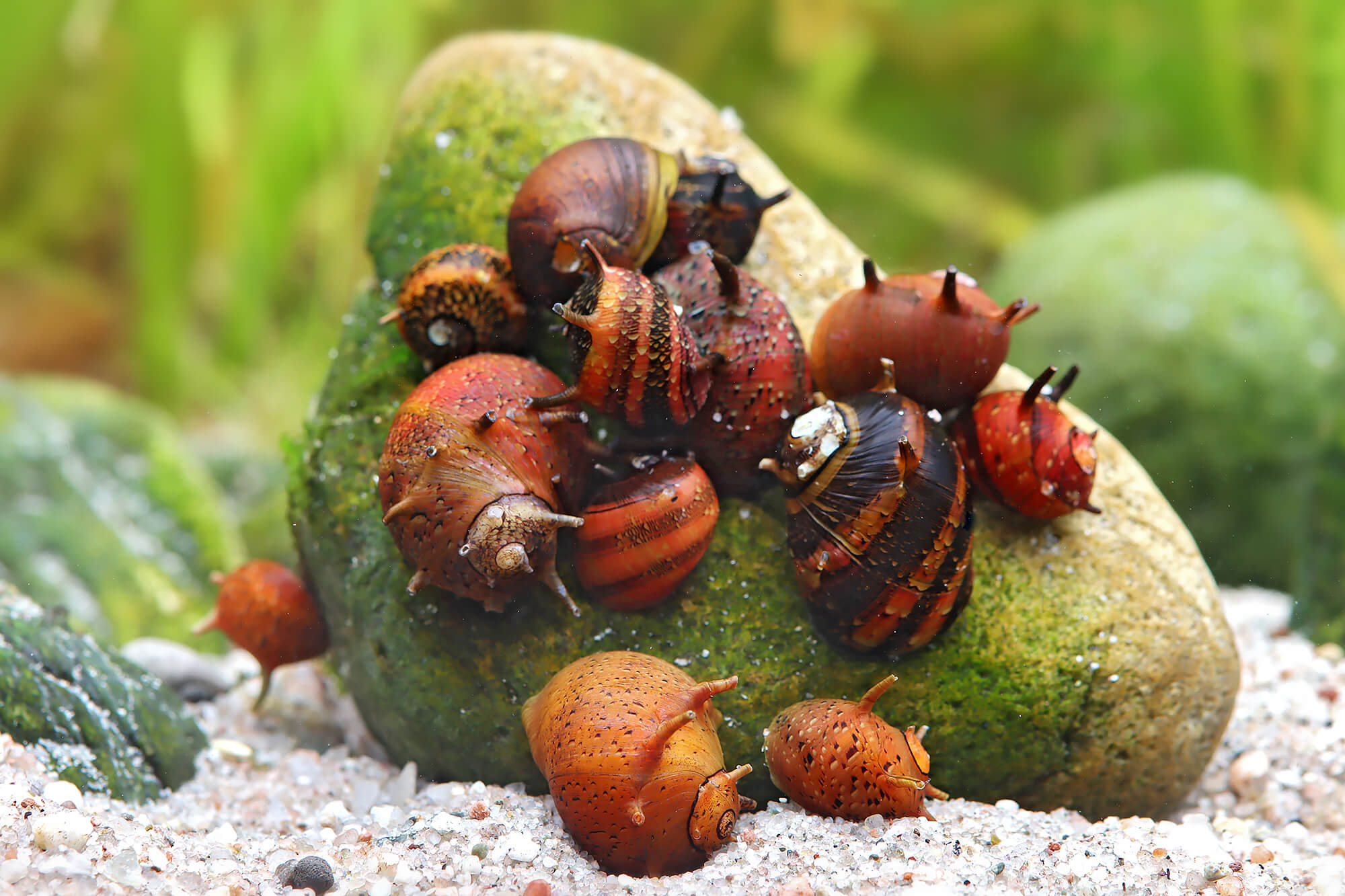
The main diet is algae, diatoms, and biofilm collected from aquarium surfaces. In tanks with little natural growth, supplement with algae wafers or other invertebrate foods and occasional blanched vegetables, removing leftovers promptly. Do not rely on algae alone in a sparse aquarium. Calcium-rich water and a balanced mineral supply help reduce shell erosion, but supplements cannot compensate for poor water quality.
Plants and tank mates
Healthy established plants are generally safe because this type of snail scrapes surface growth rather than eating sound plant tissue. It may remove soft algae from leaves. Choose peaceful tank mates; fin-nipping fish, loaches, puffers, and other snail-eating animals can injure or consume it. Keep a lid or narrow escape barrier because nerite-type snails may explore above the waterline.
Reproduction
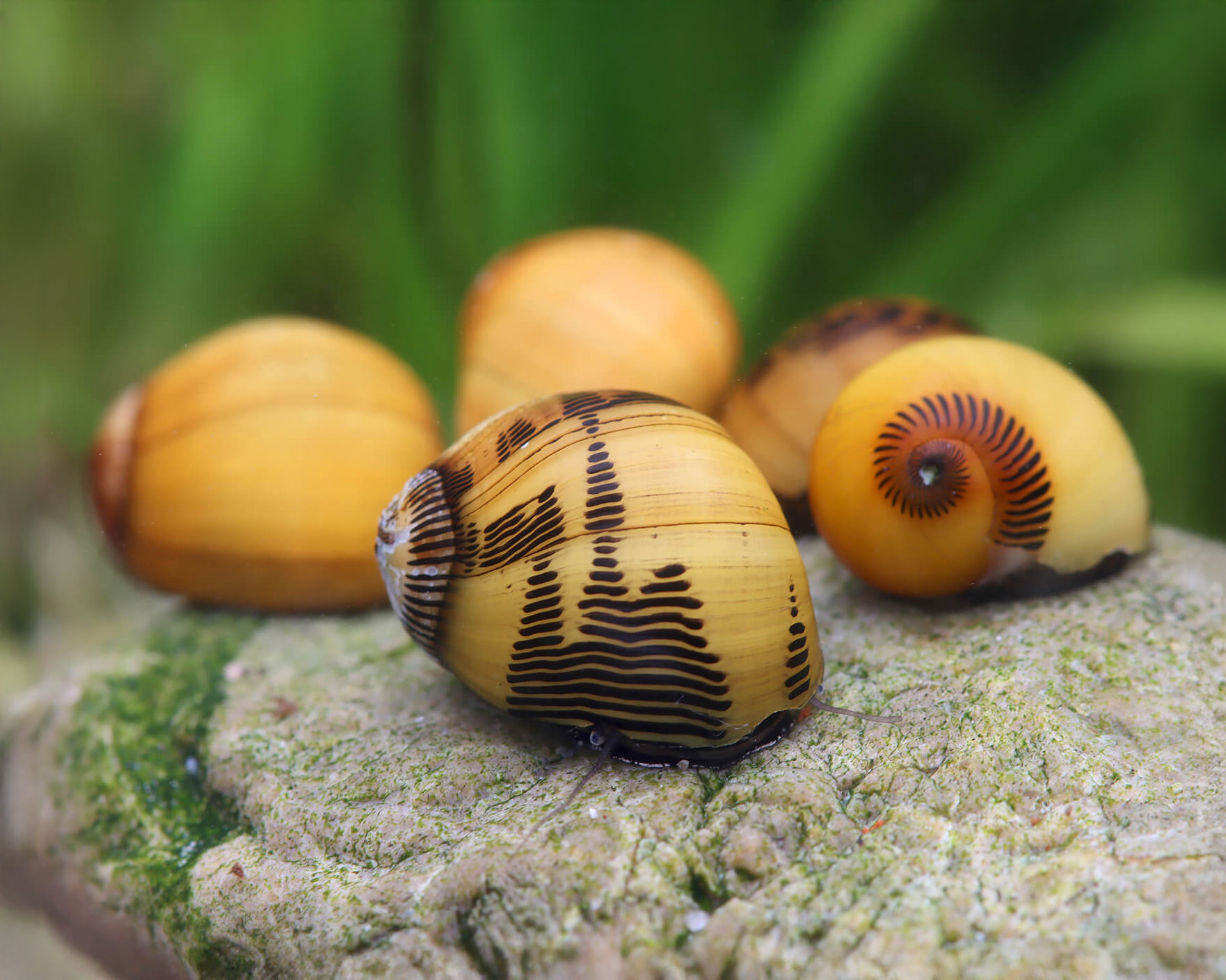
Individuals have separate sexes, and mating may occur in freshwater. Females can deposit small, hard, pale egg capsules on glass, rock, wood, or equipment. In typical freshwater aquaria, the larvae do not complete development, so a persistent population increase is unusual. Successful breeding generally requires specialized conditions that include a suitable brackish or marine larval environment, and captive rearing is not straightforward.
Population control
Because normal freshwater reproduction is limited, population control usually involves preventing accidental introductions and removing unwanted adults by hand. Control excess numbers by offering only enough supplementary food to prevent starvation, while retaining adequate natural grazing surfaces. Remove egg capsules if their appearance is undesirable, and never release aquarium snails or eggs into natural waterways. Avoid chemical snail killers, which can harm other invertebrates and degrade water quality.
 - 1.webp)

 DNZ - 1.webp)
Leave your comments