AquaLibs presents AquaRank Discover the world’s leading aquascapers

Explore transparent rankings built from published results across the world’s leading aquascaping contests.

Geweihschnecke Red Venom (Clithon sowerbianum)

Taxonomy and identification

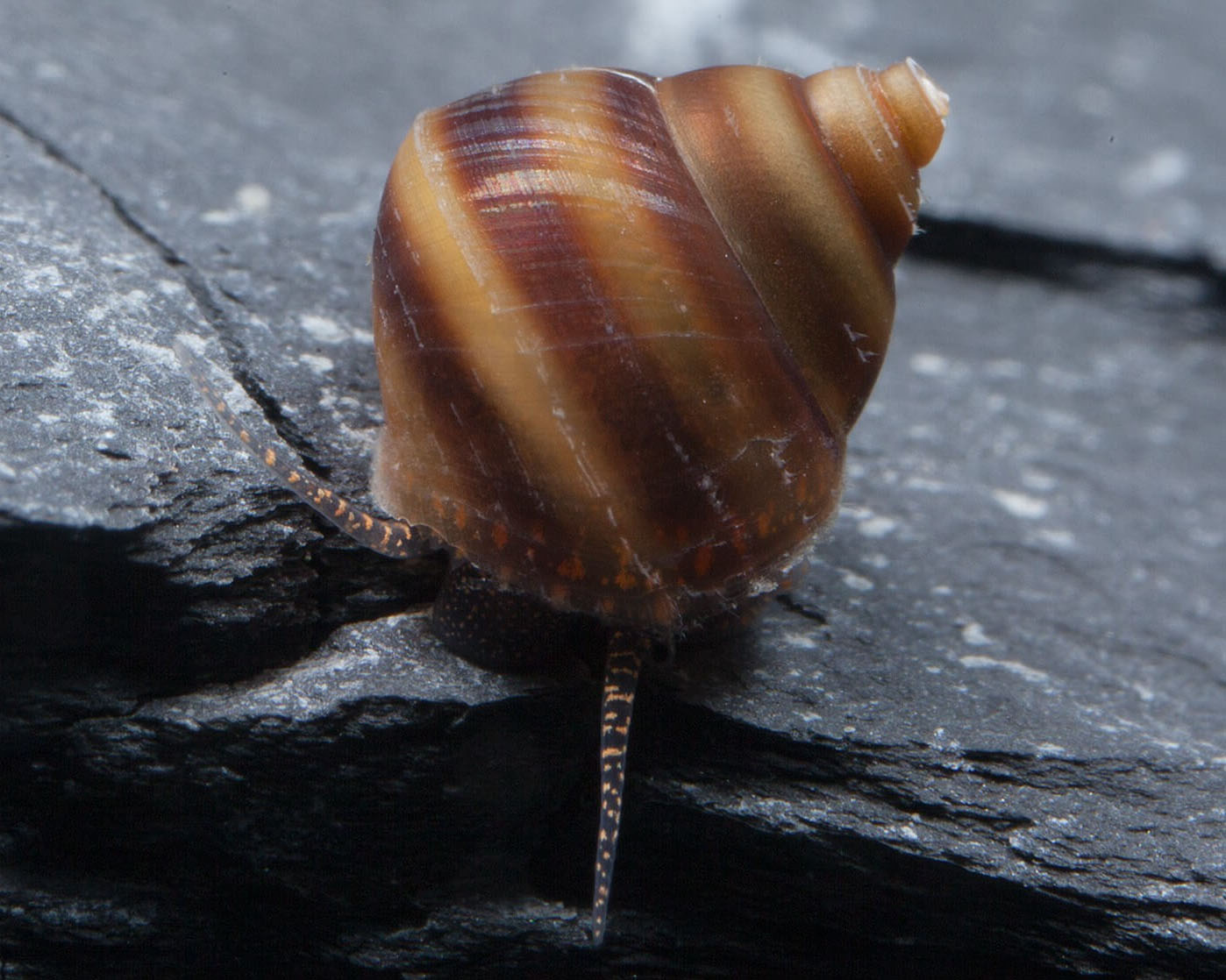
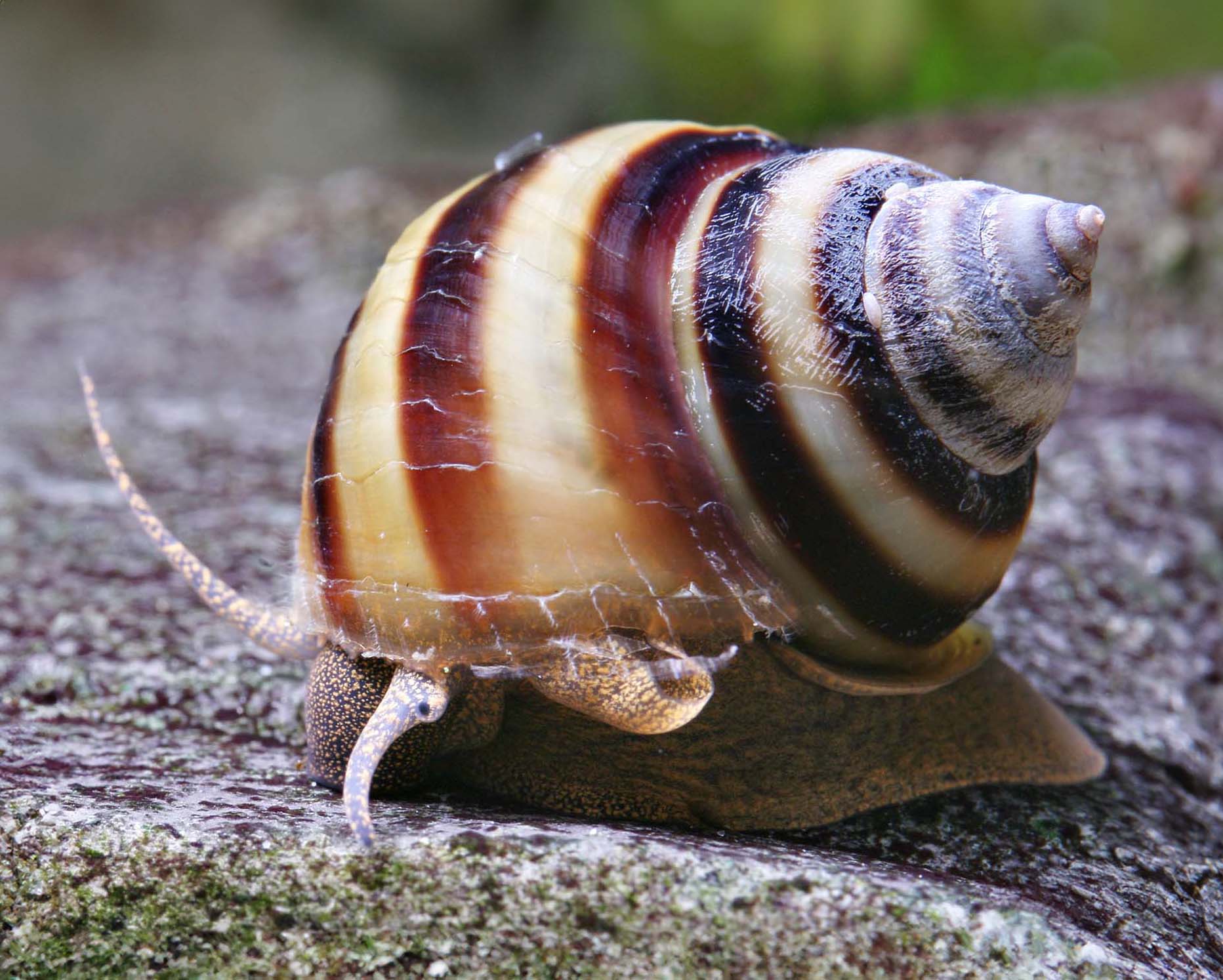
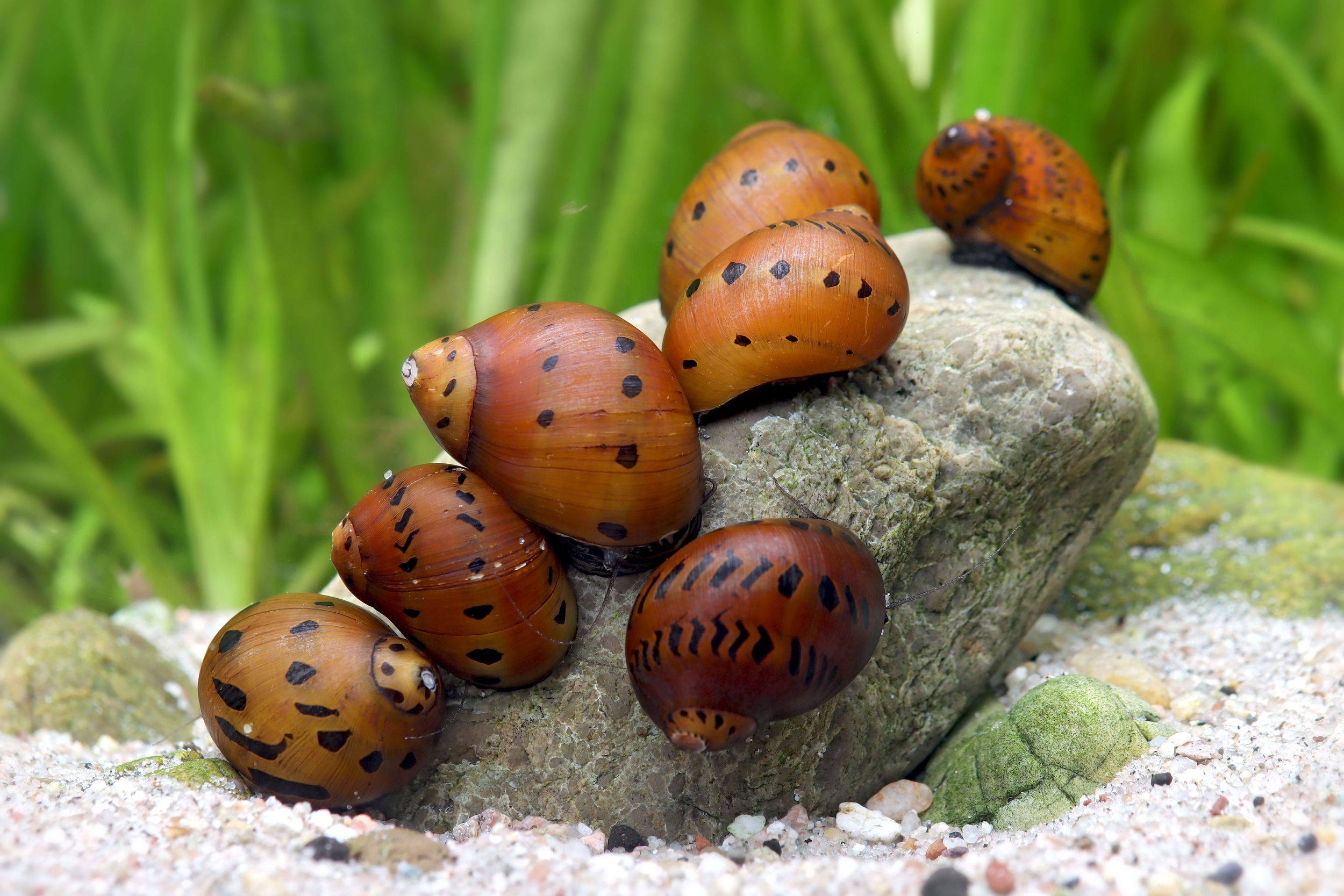
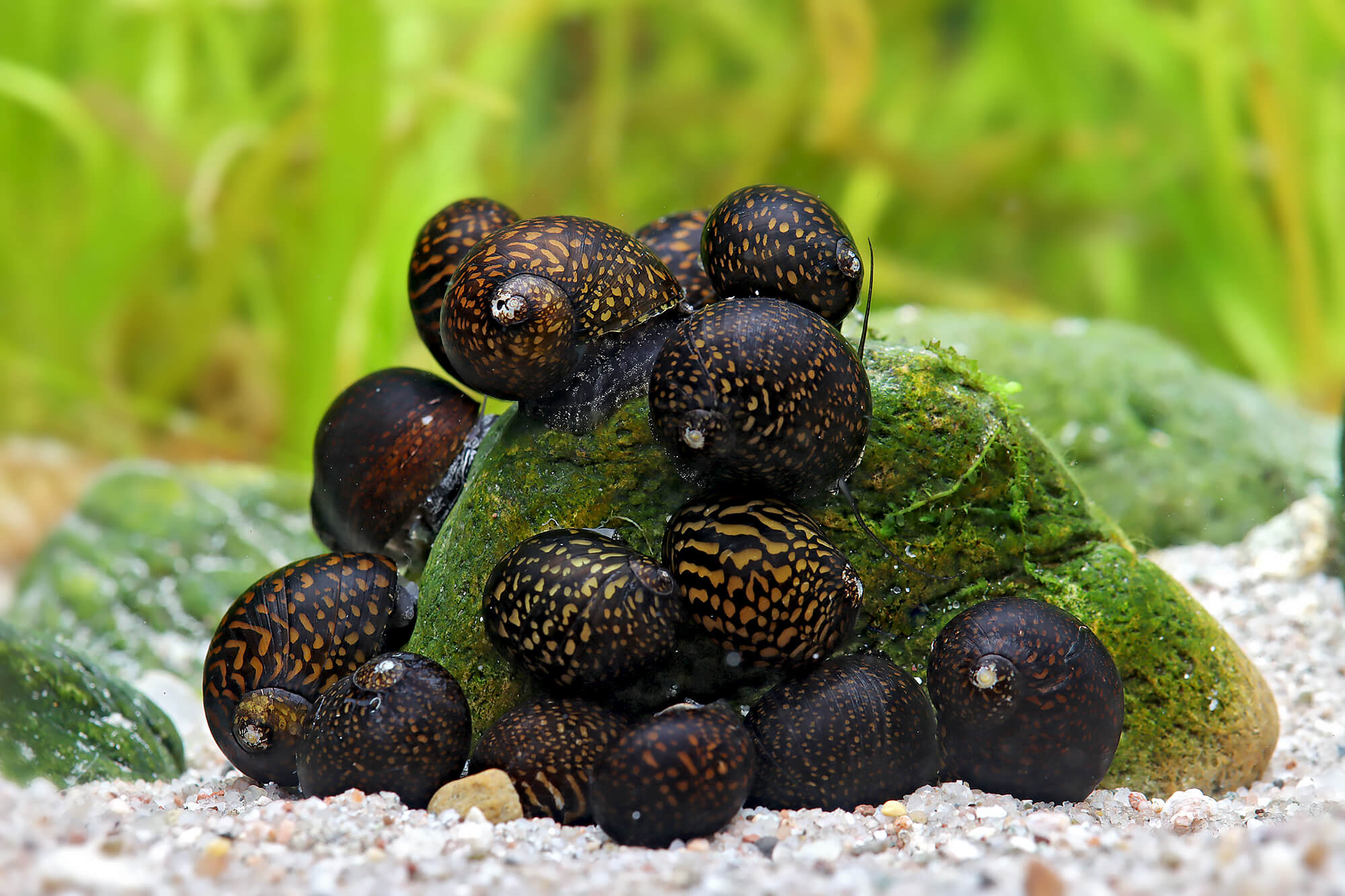
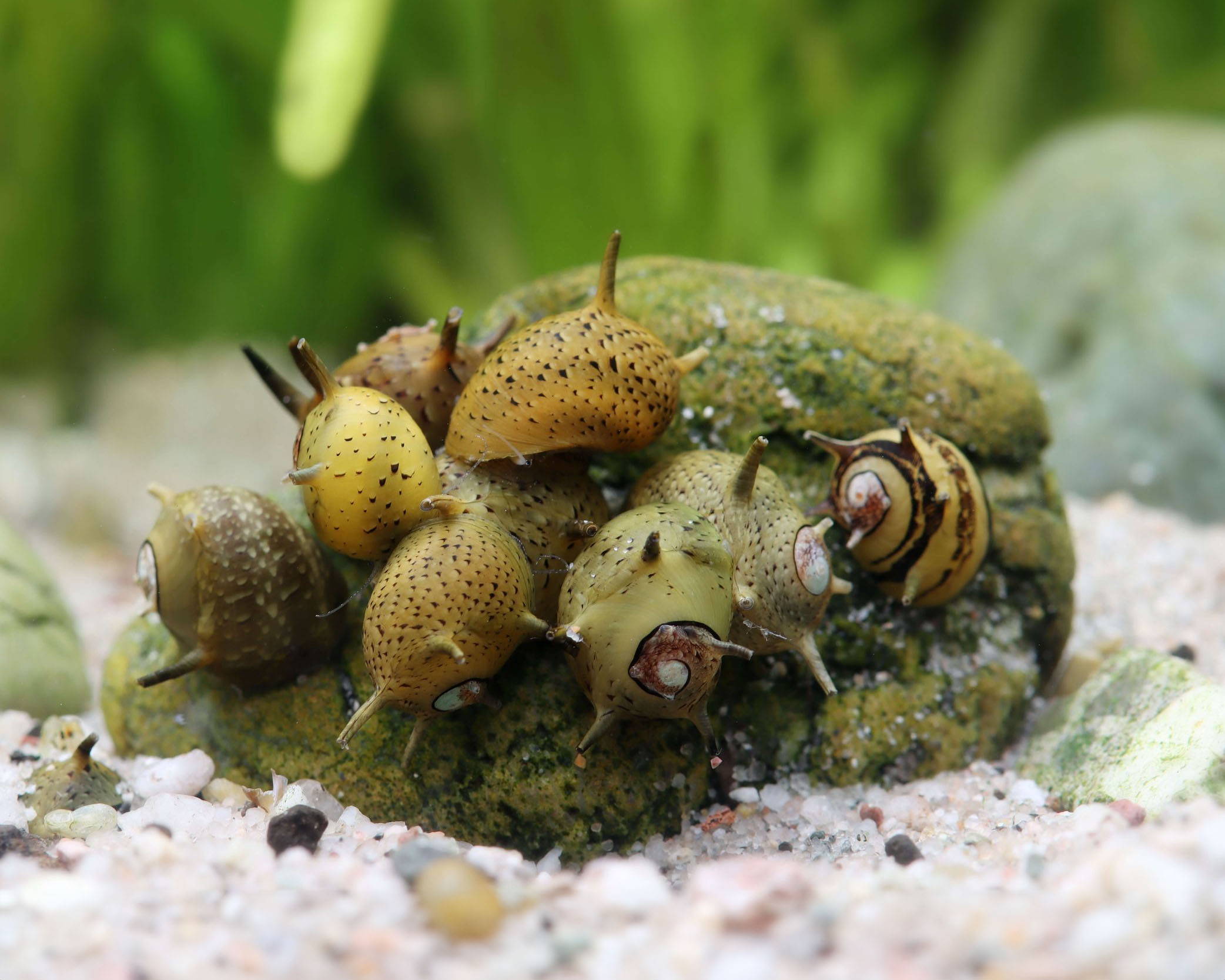
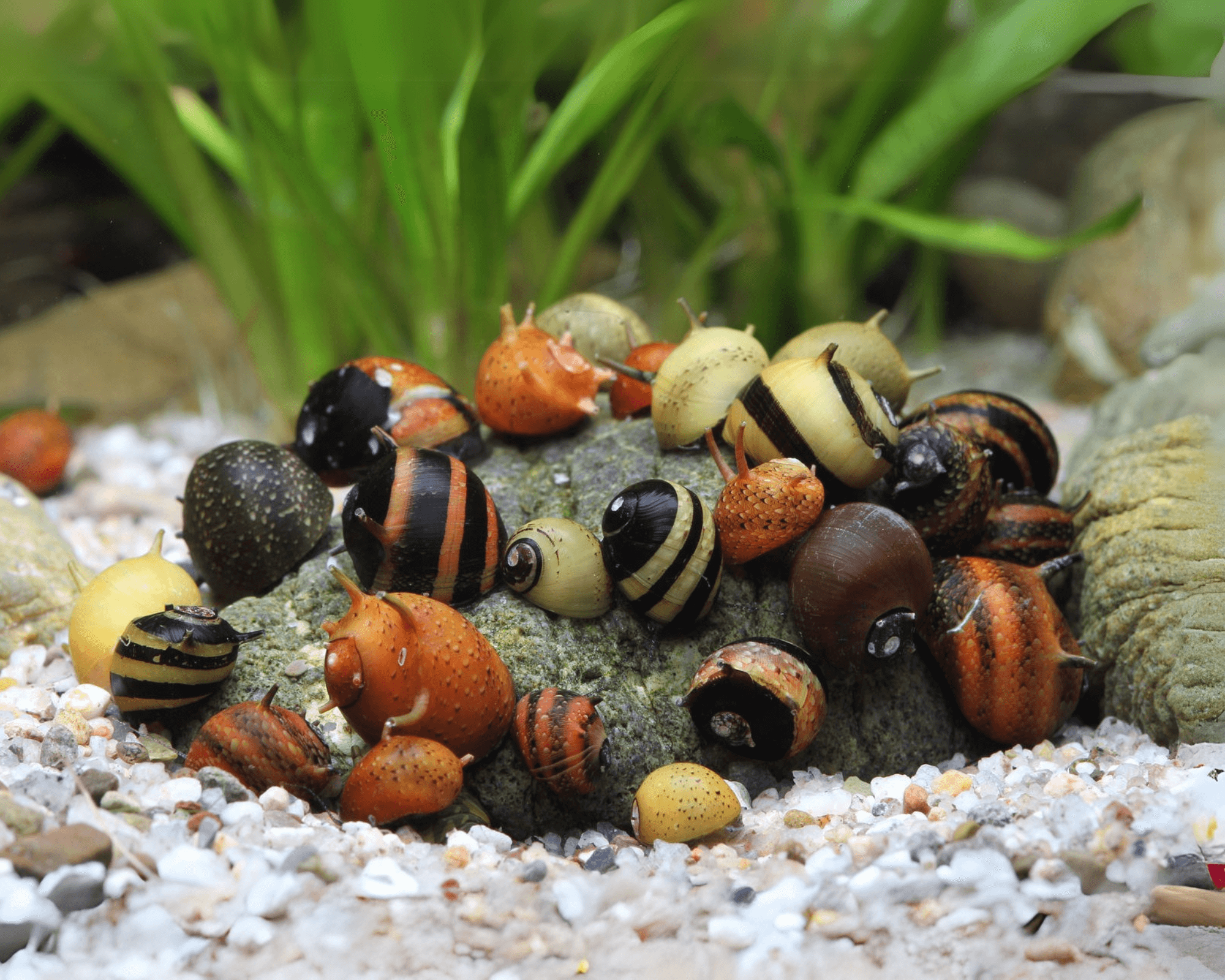
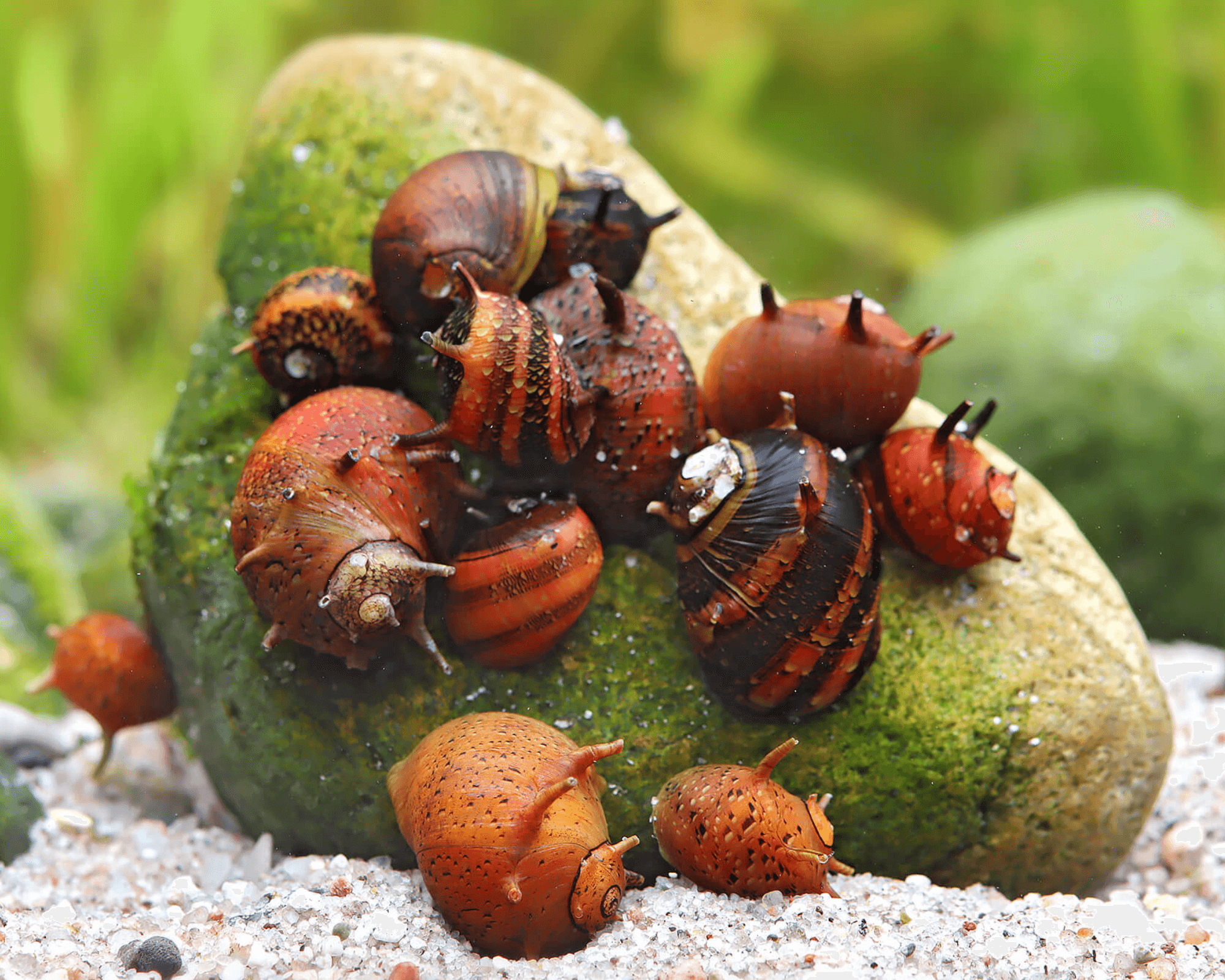
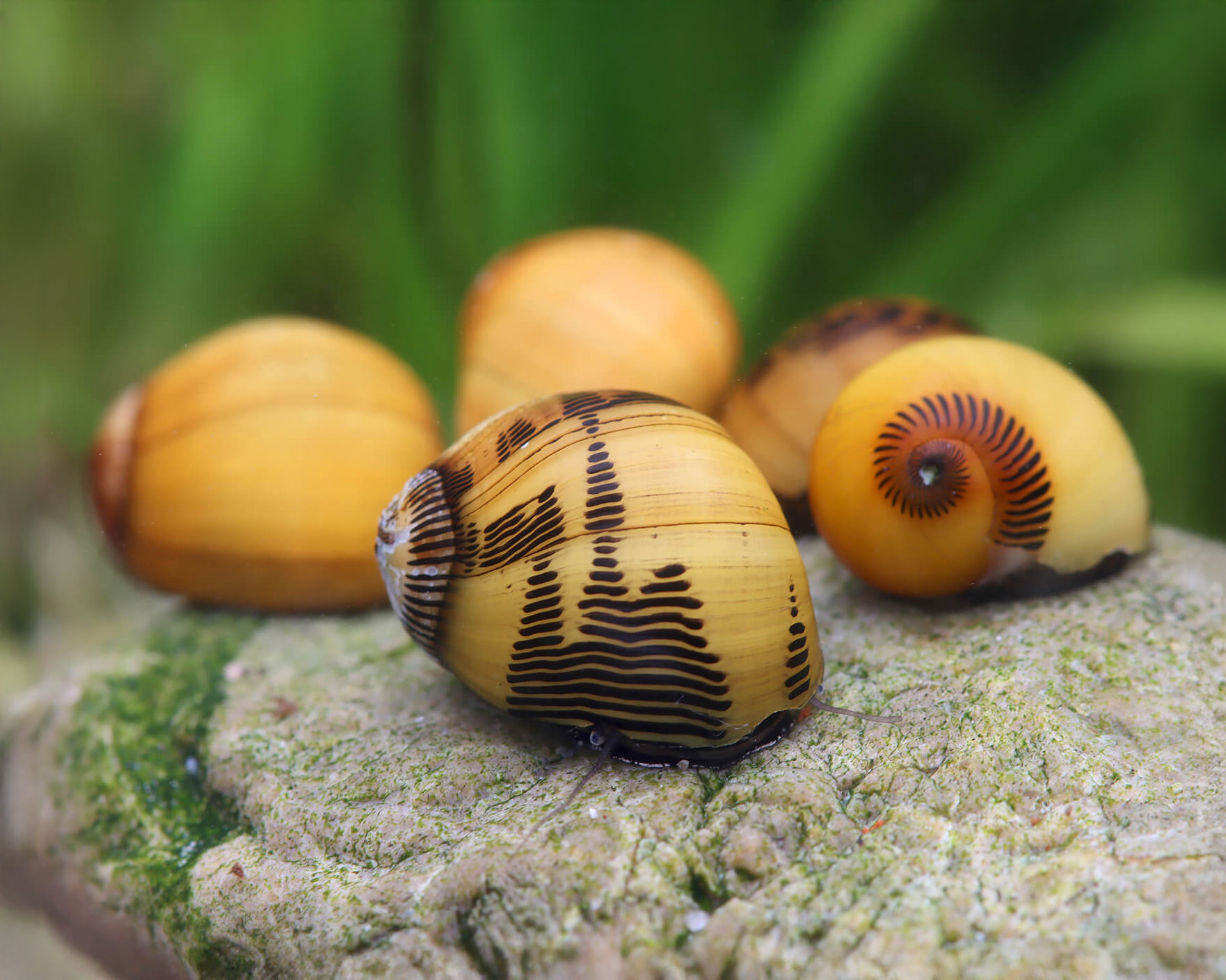
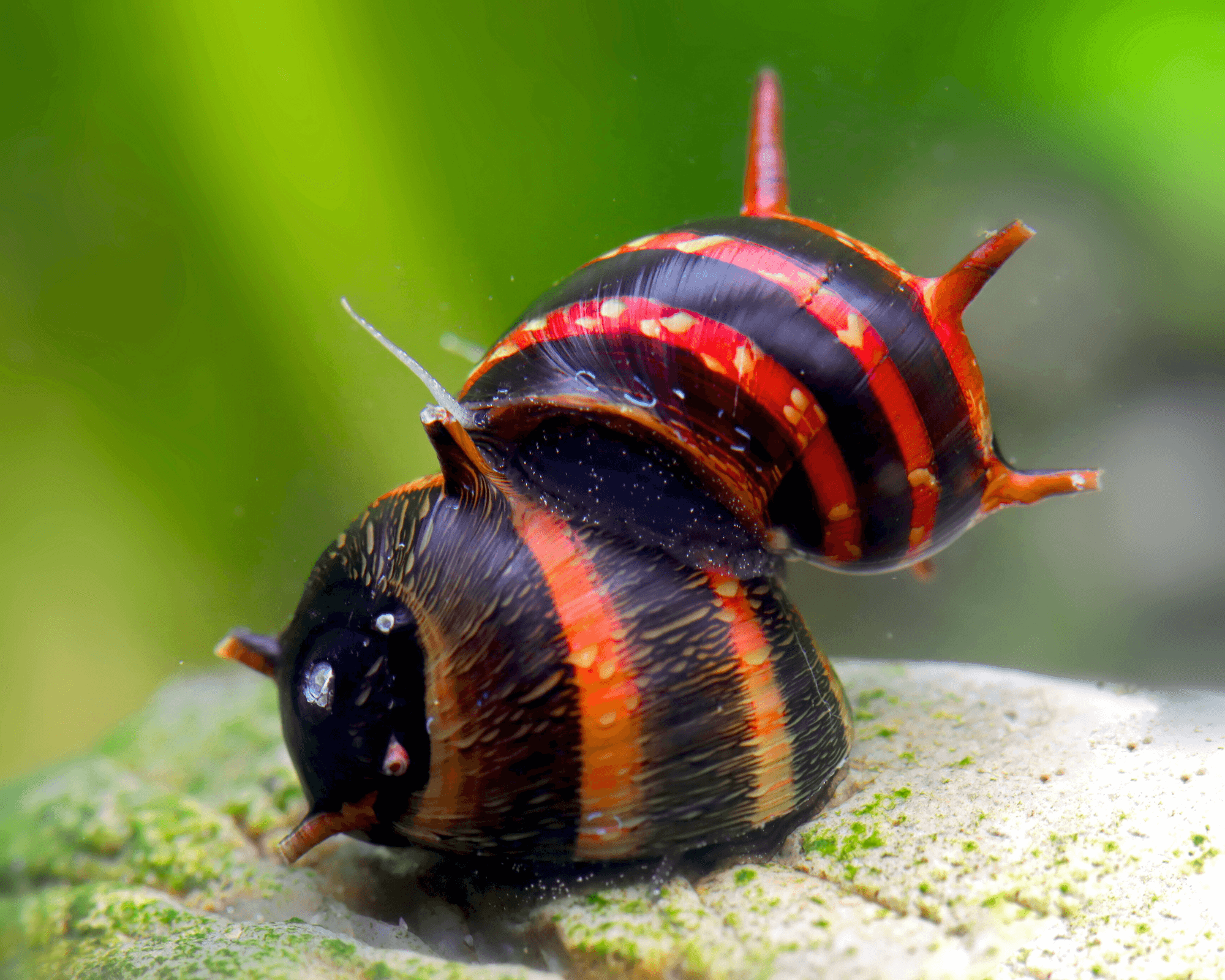
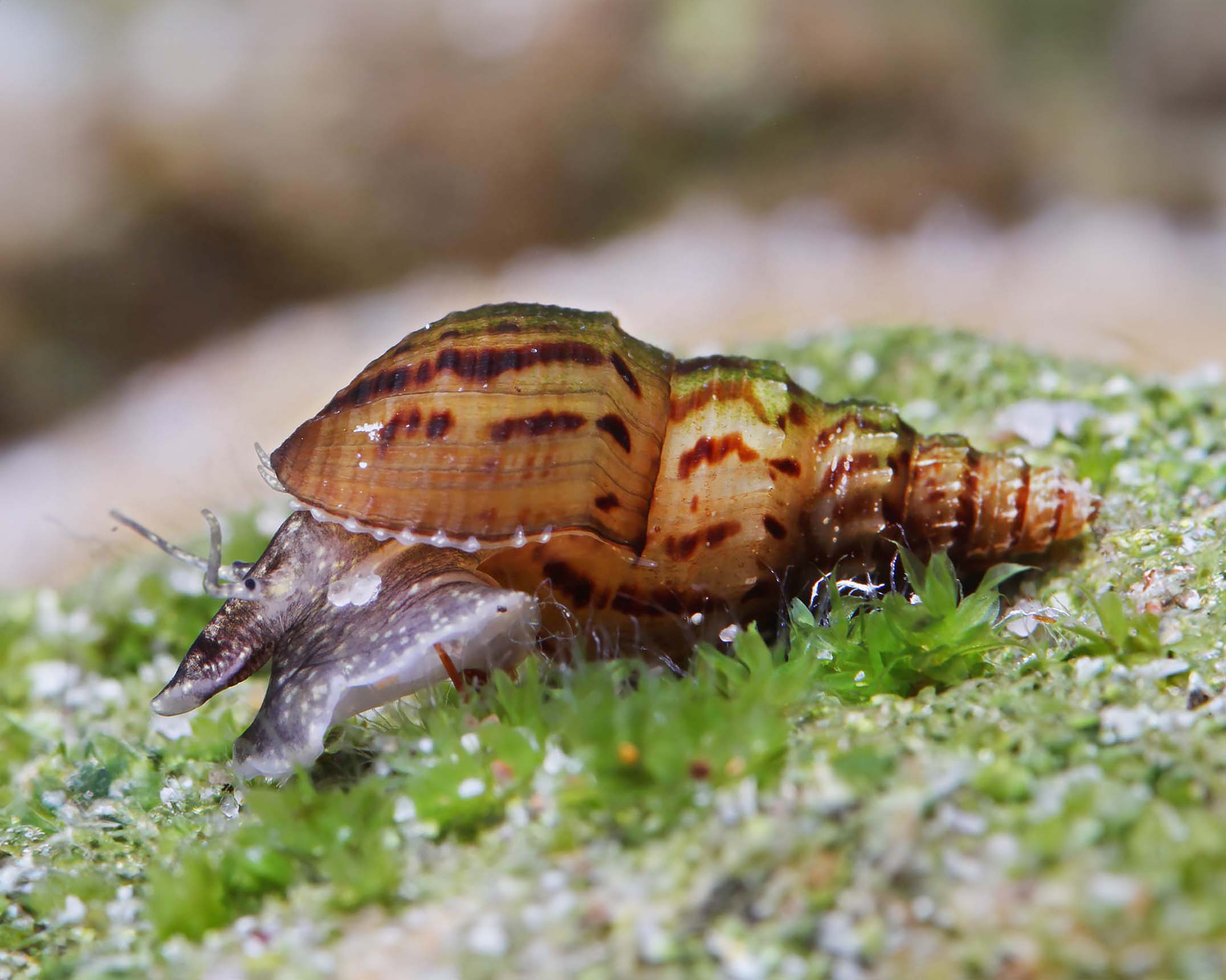
The supplied name is Clithon sowerbianum. Identification should be treated as provisional because Geweihschnecke and Red Venom are trade names, and several Clithon nerites can have similar banding and shell projections. The animals shown have a rounded nerite shell with horn-like projections and dark coloration marked by red-orange bands and pale spots. Confirming the species from photographs alone is difficult.
Taxonomy and identification

Natural habitat

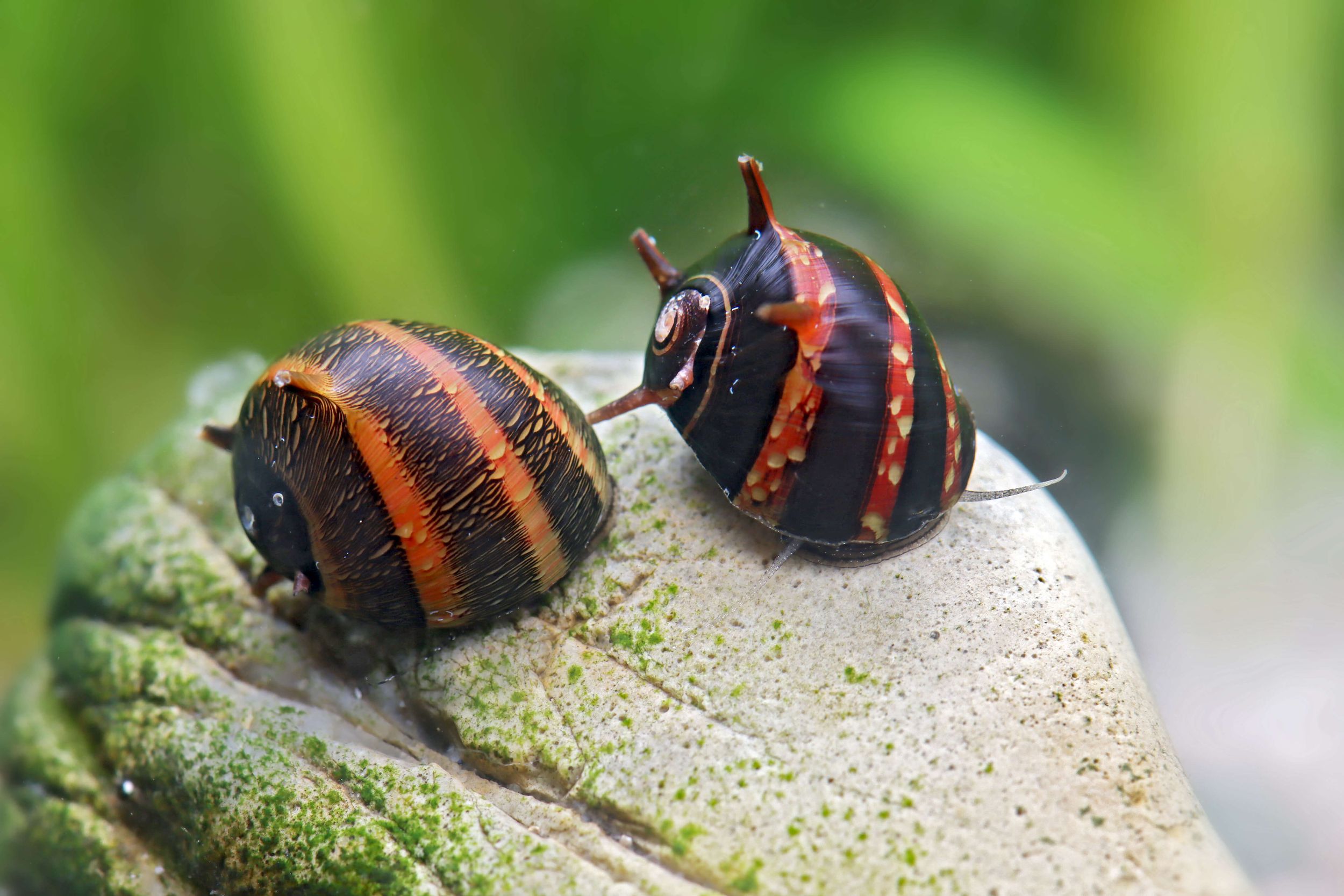
Clithon nerites are associated with tropical streams, rivers and estuarine transitions in the Indo-Pacific region. Adults commonly graze on hard surfaces in flowing, well-oxygenated water. Their life cycle includes a dispersive larval stage, so freshwater aquarium adults should not be assumed to represent a completely freshwater-breeding population.
Natural habitat

Aquarium water and setup

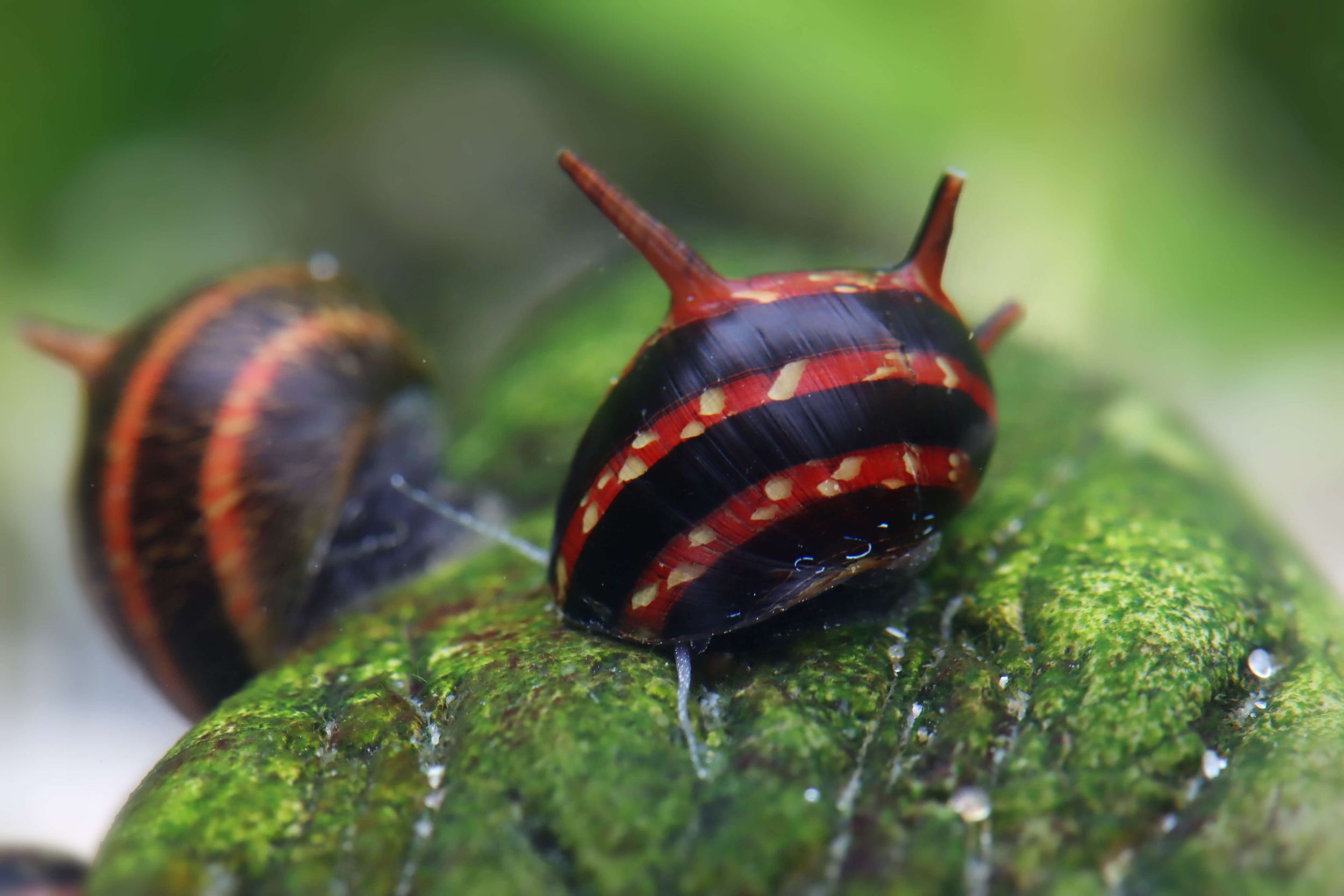
Use a mature, stable aquarium with good oxygenation, smooth rocks, wood and other surfaces that can support natural biofilm. Keep ammonia and nitrite at zero and avoid sudden changes in temperature, pH or hardness. Neutral to moderately alkaline water is preferable, with enough carbonate and general hardness to support shell maintenance. Avoid copper-based medications, which are toxic to snails. A secure lid is useful because nerites may climb above the waterline.
Aquarium water and setup

Feeding

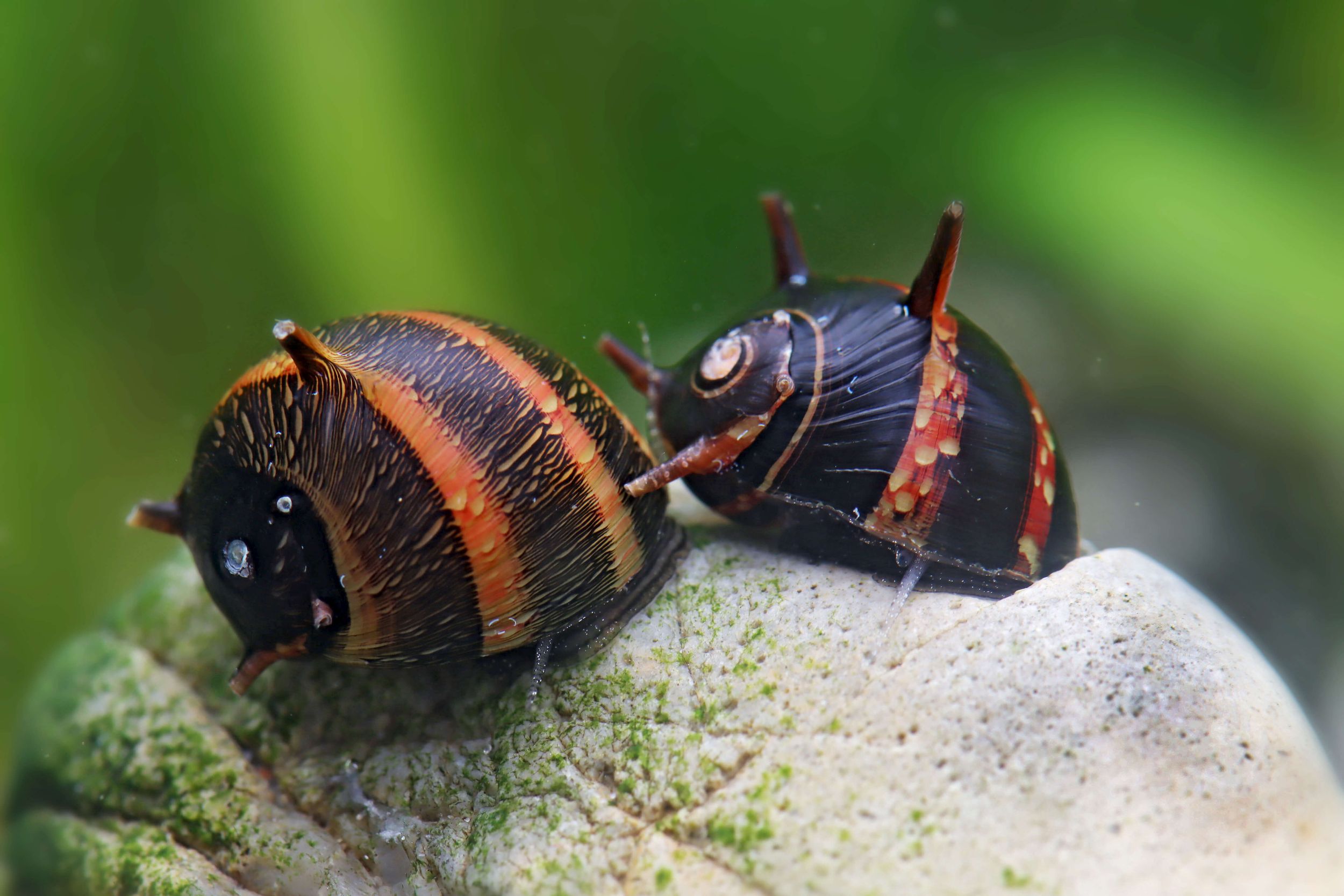
The main diet is naturally growing algae, diatoms and biofilm on glass, stone and décor. Do not add a large group to a newly set-up or excessively clean aquarium where food is scarce. Offer algae wafers or other invertebrate-safe foods when natural growth is insufficient, and remove uneaten portions. Blanched vegetables can be used occasionally, but food should be supplied sparingly to avoid water-quality problems.
Feeding

Plant safety

This type of nerite is generally plant-safe. It scrapes surfaces rather than actively eating healthy leaves, so it is suitable for planted aquariums. It may graze on algae growing on leaves and can disturb very loose floating plants while climbing. Damage to plants is more likely to result from poor nutrition, decaying leaves or another species than from normal feeding by this snail.

Reproduction and breeding limits

Individuals have separate sexes and may mate in freshwater. Females can deposit small, hard, pale egg capsules on rocks, wood, glass and equipment. In typical freshwater aquariums, the larvae do not develop successfully because Clithon reproduction involves a free-swimming stage associated with brackish or marine conditions. Eggs may therefore remain visible even when no juvenile snails appear. Successful captive rearing requires specialized control of salinity, food and larval culture, and should not be expected in an ordinary community tank.

Population control

Freshwater populations normally remain limited because recruitment fails, but the number of adults can still be controlled by removing unwanted snails by hand and avoiding unnecessary purchases. Reduce excess feeding while preserving enough algae and biofilm for the animals being kept. Inspect new décor and plants for egg capsules, and remove capsules if their appearance is undesirable. Never release snails, eggs or aquarium water into natural waterways. Avoid chemical snail killers, especially copper products, because they can harm the intended inhabitants and other invertebrates.

Compatibility and care notes

Keep with peaceful community fish and non-predatory invertebrates. Avoid puffers, loaches and other animals known to attack or consume snails. Provide stable water chemistry, a mature food source and gentle acclimation. A snail that remains inactive for a long period should be checked carefully for signs of life rather than immediately removed, since nerites can rest for extended periods.
Snail info

  • Temperature : 22–28 °C
  • pH: 7.0–8.2
Leave your comments
Latest on Snails
  • Geweihschnecke Volcano Red (Clithon sowerbianum)

    Geweihschnecke Volcano Red (Clithon sowerbianum)

    The Volcano Red Geweihschnecke is a small freshwater nerite-type snail sold under the scientific name Clithon sowerbianum. Its shell commonly shows red, orange, brown, and dark patterns, with horn-like projections in some individuals. It grazes algae and biofilm from hard surfaces without normally damaging healthy plants. Identification and the exact validity or spelling of the supplied scientific name should be treated with some caution because aquarium trade names and Clithon nomenclature are not always used consistently.
  • Yellow Baby Poso Snail, Tylomelania sp.

    Yellow Baby Poso Snail, Tylomelania sp.

    The Yellow Baby Poso Snail is a juvenile Tylomelania identified in the trade as Tylomelania sp. Its yellow to golden body contrasts with a dark, strongly ribbed shell. The “Poso” name suggests a Sulawesi lake lineage, but the exact species and locality cannot be confirmed from the supplied trade name or photographs alone. This is a freshwater snail for warm, mineral-rich aquariums and should be kept with peaceful tank mates that will not damage its soft body or feelers.
  • Gelbe Rennschnecke (Vittina waigiensis)

    Gelbe Rennschnecke (Vittina waigiensis)

    Vittina waigiensis is a nerite snail kept for grazing algae and biofilm on aquarium glass, rocks and hardscape. Its rounded shell may show yellow, orange or reddish tones with dark markings, but commercial names are not always applied consistently. Identification from photographs alone can be uncertain, so shell pattern should be checked against a reliable taxonomic reference. Adults are generally peaceful and do not normally damage healthy aquarium plants.
  • Devil's Thorn Snail (Faunus ater)

    Devil's Thorn Snail (Faunus ater)

    Faunus ater is a large, elongated pachychilid snail from tropical Indo-West Pacific waters. It is associated with freshwater streams, rivers and estuarine habitats, and aquarium specimens are often kept in freshwater or mildly brackish conditions. Its dark, banded or reddish-brown shell is distinctive, although identification from photographs alone can be uncertain. It is generally peaceful, plant-safe and slow to reproduce in typical freshwater aquaria.
  • Deadpool Rennschnecke (Vittina waigiensis)

    Deadpool Rennschnecke (Vittina waigiensis)

    Vittina waigiensis is a nerite snail sold in the aquarium trade under names such as Deadpool Rennschnecke, usually referring to a striking red shell with dark patterning. It is a peaceful algae grazer that generally leaves healthy plants alone. Adults can live in freshwater aquariums, but successful reproduction requires brackish or marine conditions during the larval stage. The trade name and shell pattern are not sufficient for absolute identification, so the species assignment should be treated as provisional unless confirmed by specialist examination.
  • Cappuccino Snail (Faunus ater)

    Cappuccino Snail (Faunus ater)

    Faunus ater is a large pachychilid snail associated with tropical rivers, streams and estuarine environments across parts of the Indo-Pacific. Its dark, elongated shell commonly has reddish-brown, orange or pale bands toward the tip. In aquaria it is generally a peaceful grazer that feeds on algae, biofilm and sinking foods. Successful reproduction is unusual in ordinary freshwater tanks because its life cycle includes free-floating larvae requiring suitable water conditions.
  • Bubble snail (Physa sp.)

    Bubble snail (Physa sp.)

    Bubble snails sold or observed under Physa sp. are small freshwater bladder snails commonly introduced with aquatic plants. They graze on algae, biofilm and soft organic residues, and usually leave healthy plants alone. Their rapid reproduction can make them conspicuous in well-fed aquariums. Exact species identification is uncertain from the supplied name and images, so care guidance is presented for Physa-type freshwater snails rather than a single confirmed species.
  • Brown Ramshorn Snail (Planorbella duryi duryi)

    Brown Ramshorn Snail (Planorbella duryi duryi)

    The brown ramshorn snail is a freshwater planorbid recognized by its flat, coiled shell and air-breathing habit. Planorbella duryi duryi is generally peaceful and useful as a scavenger, although it can reproduce rapidly when food is abundant. The supplied photographs show a brown ramshorn-like snail, but shell appearance alone cannot confirm the subspecies; this article follows the supplied identification while noting that limitation.
  • Blue Jelly Snail (Taia sp.)

    Blue Jelly Snail (Taia sp.)

    The Blue Jelly snail, often associated with the genus Taia, is a striking freshwater gastropod known for its vibrant blue foot and patterned shell. While precise taxonomic classification remains subject to ongoing debate within the hobby, these snails are popular for their unique appearance and relatively peaceful temperament in community aquariums, making them a fascinating addition for dedicated invertebrate keepers.
  • Black Lace Snail (Melanoides maculata)

    Black Lace Snail (Melanoides maculata)

    The Black Lace Snail, scientifically identified as Melanoides maculata, is a distinctive freshwater gastropod often appreciated for its elongated, turret-like shell. While taxonomy within the Thiaridae family can be complex and subject to revision, this species is noted for its dark, textured appearance. It is a hardy inhabitant suitable for various tropical aquarium setups, provided the substrate remains clean and oxygenated.
  • Black Fancy Clithon Snail

    Black Fancy Clithon Snail

    The Black Fancy Clithon snail is a popular choice for freshwater aquariums due to its effective algae-eating habits. Often referred to as a variation of the horned nerite snail family, these small gastropods are highly valued for their peaceful temperament and ability to keep hard surfaces clean. They are generally hardy, provided their specific water quality and dietary requirements are met.
  • Big Stripe Mosaic Racing Snail (Neritina sp.)

    Big Stripe Mosaic Racing Snail (Neritina sp.)

    The Big Stripe Mosaic Racing Snail is a visually striking gastropod often sought for its appetite for algae. Belonging to the Neritidae family, these snails are popular in the hobby for their unique shell patterns and efficient cleaning habits. While they are excellent additions to freshwater aquariums, they require specific environmental conditions to thrive and remain healthy in captivity.
  • Bee Snail (Brotia dautzenbergiana)

    Bee Snail (Brotia dautzenbergiana)

    The Bee snail, scientifically known as Brotia dautzenbergiana, is a freshwater gastropod recognized for its elongated, spiraled shell featuring distinct dark bands. Native to Southeast Asian river systems, this species is popular among aquarium hobbyists for its unique appearance and relatively peaceful nature. Providing a stable environment is essential for their long-term health and success in a home aquarium setting.
  • Batman Snail (Neritina taitensis)

    Batman Snail (Neritina taitensis)

    The Batman snail, scientifically known as Neritina taitensis, is a unique freshwater gastropod often kept by aquarists for its distinct shell morphology and algae-eating habits. Originating from tropical regions, this species is appreciated for its ability to clean hard surfaces in the aquarium. Proper care requires stable water conditions and a diet supplemented with biofilm and algae.
  • Batik Snail (Neritina variegata)

    Batik Snail (Neritina variegata)

    The Batik snail, scientifically classified as Neritina variegata, is a popular freshwater gastropod appreciated for its striking shell patterns and efficient algae-eating habits. Native to various tropical regions, these snails are highly sought after by aquarists for their ability to keep glass and decor clean without becoming a nuisance in the home aquarium environment.
  • Biofilm Grazing Snail Combinations

    Biofilm Grazing Snail Combinations

    Biofilm grazing snails are popular additions to freshwater aquariums for their ability to naturally manage bacterial mats and algae. This set typically features a mix of species, such as Neritidae and Planorbidae, which function as effective cleanup crews. These invertebrates thrive in established tanks, providing essential maintenance while adding biodiversity to the underwater landscape through their varied shell patterns and colors.