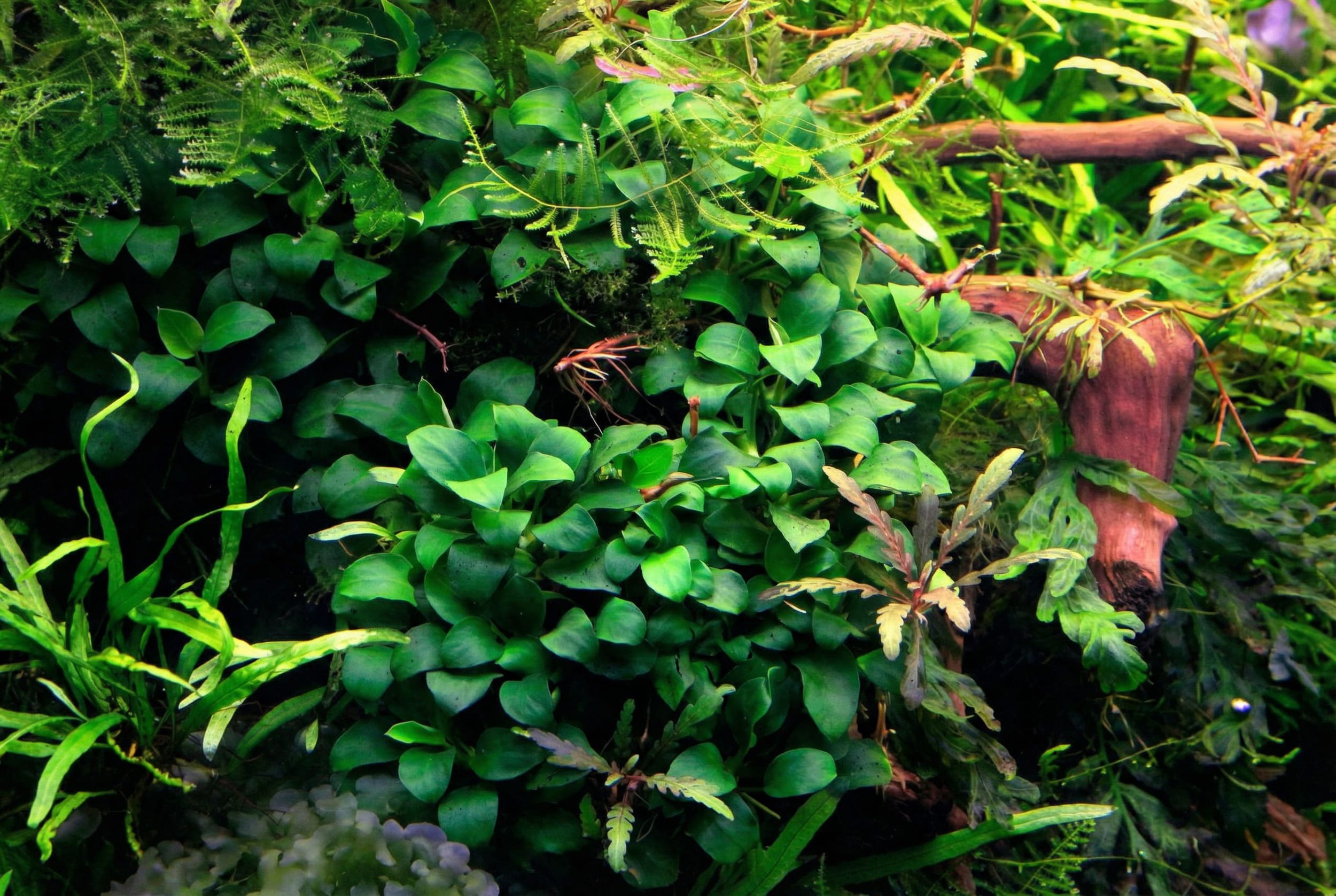
Anubias Nana: The Hardy Foreground Gem
Anubias barteri var. nana is a cornerstone for any beginner planted tank. This small, slow-growing plant features dark green, oval leaves and is incredibly hardy, tolerating a wide range of water parameters and low light conditions. It's an epiphyte, meaning it should be attached to decor like driftwood or rocks, not buried in the substrate, to prevent rhizome rot. Its compact size makes it perfect for foreground accents or attaching to smaller hardscape elements, providing excellent cover for small fish and shrimp.
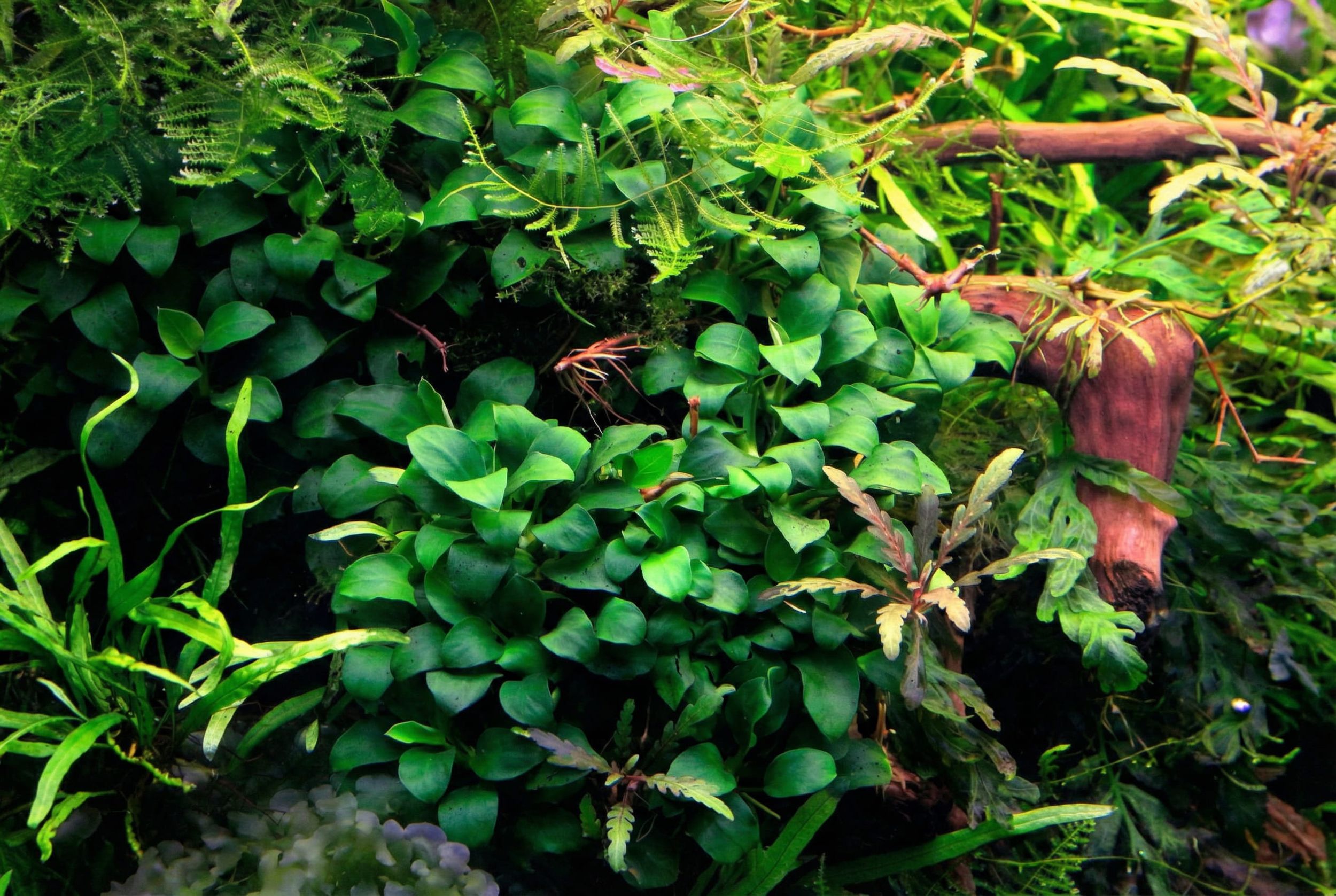
Anubias on Wood: Instant Aquascape Appeal
For an even easier start, consider Anubias pre-attached to spiderwood or other decor. This offers an immediate decorative element and ensures the plant is correctly positioned without the risk of burying its rhizome. Anubias on wood is perfect for midground placement, providing a naturalistic feel and excellent cover for shy fish or shrimp. Its robust nature means it will thrive with minimal intervention, making it a truly set-and-forget plant for busy hobbyists. It adapts well to various tank sizes.
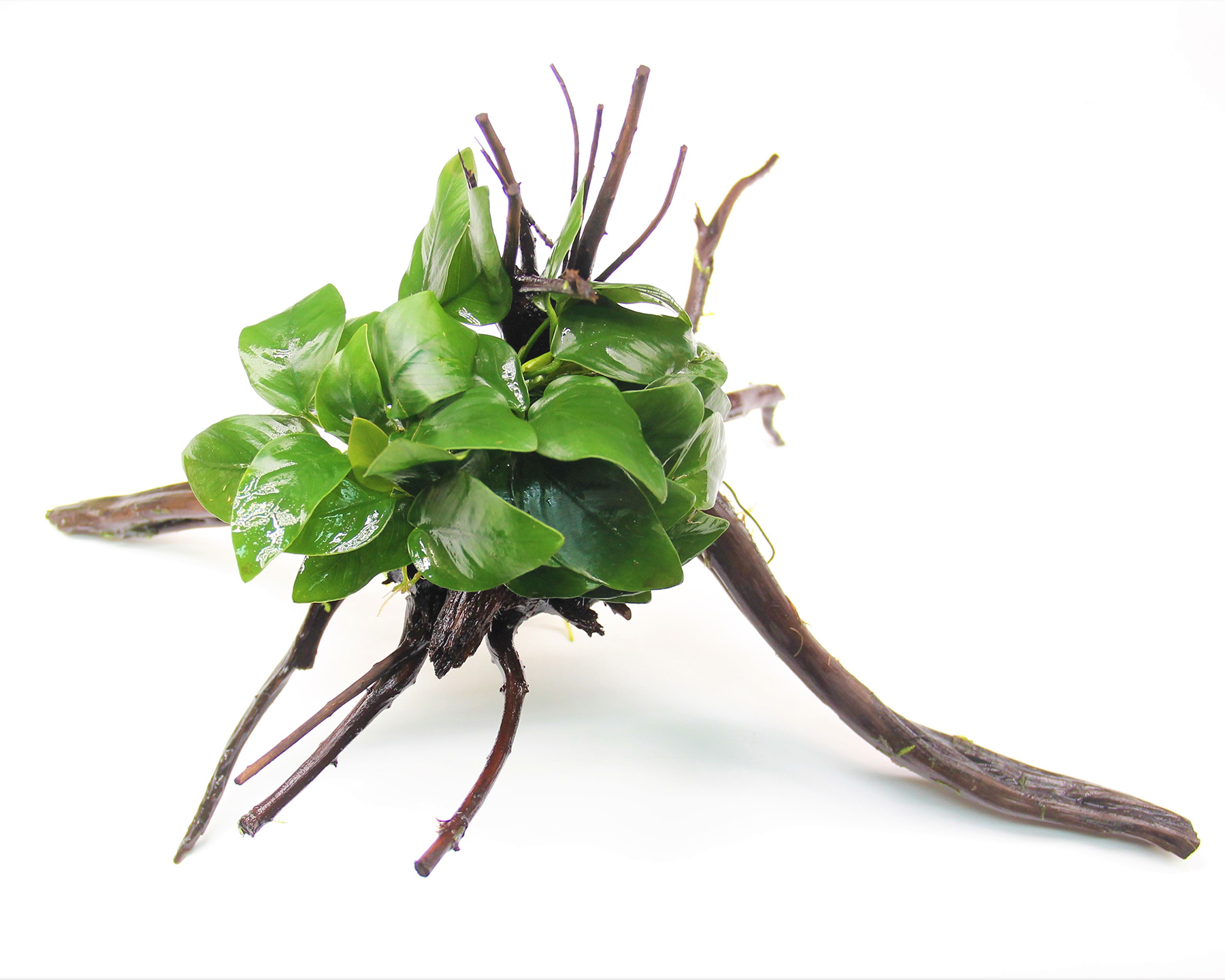
Coffee Leaf Anubias: Unique Texture for Midground
The 'Coffee Leaf' Anubias offers a distinct texture with its deeply veined, crinkled leaves that often display a reddish-brown hue when new. Like other Anubias varieties, it's exceptionally easy to care for, preferring to be attached to hardscape rather than planted in the substrate. Its larger size compared to Anubias nana makes it an excellent choice for midground placement, adding visual interest and a touch of unique foliage to your planted tank. This variety is also very forgiving of varying water conditions.
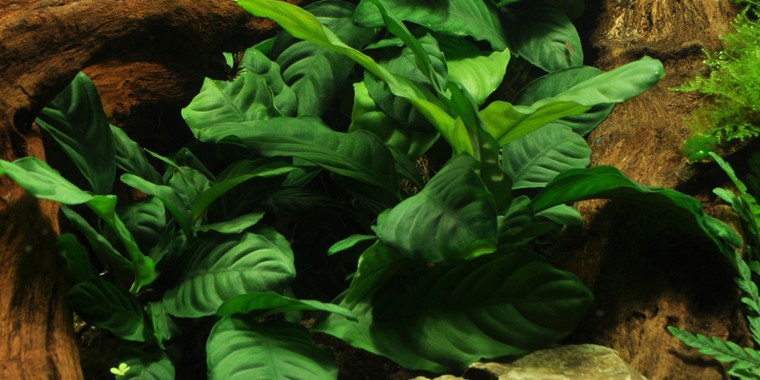
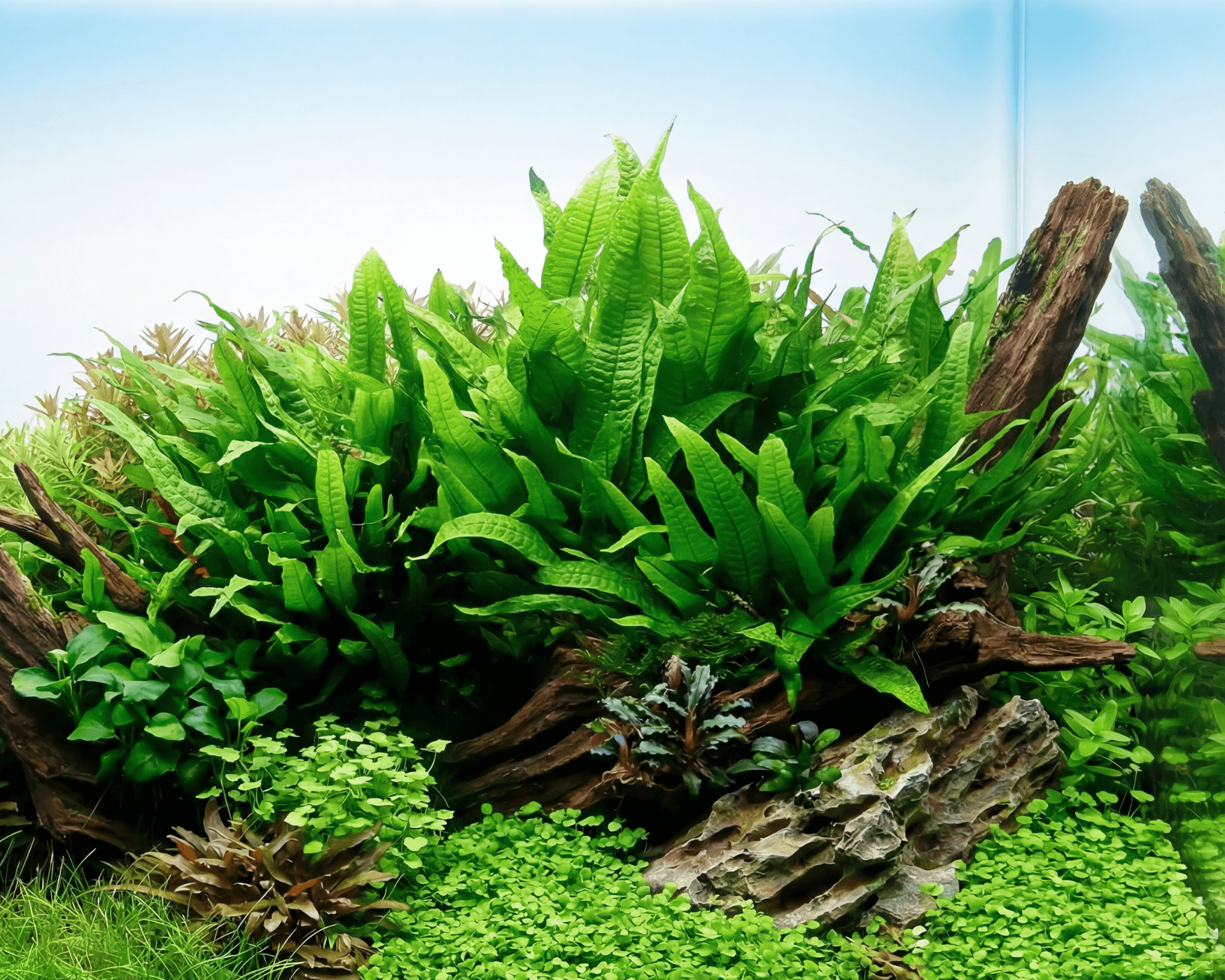
Java Fern: The Indestructible Classic
Java Fern (Microsorum pteropus) is another absolute must-have for beginners due to its unparalleled hardiness and adaptability. This plant can thrive in almost any condition, from low to moderate light, and doesn't require CO2 injection or rich substrate. It's an epiphyte, best attached to driftwood or rocks, where its rhizome can cling and grow. Its varying leaf shapes and sizes provide excellent texture and cover, making it ideal for midground or background placement in tanks of all sizes.
Green Cryptocoryne: Lush Midground Foliage
Cryptocoryne wendtii 'Green' is a popular and forgiving plant that forms attractive rosettes of wavy, green leaves. Crypts are primarily root feeders, so planting them in a nutrient-rich substrate or adding root tabs will encourage robust growth. They prefer stable conditions and may experience "crypt melt" when first introduced or if conditions change, but they almost always bounce back from their root system. This species is excellent for creating a dense, lush midground.

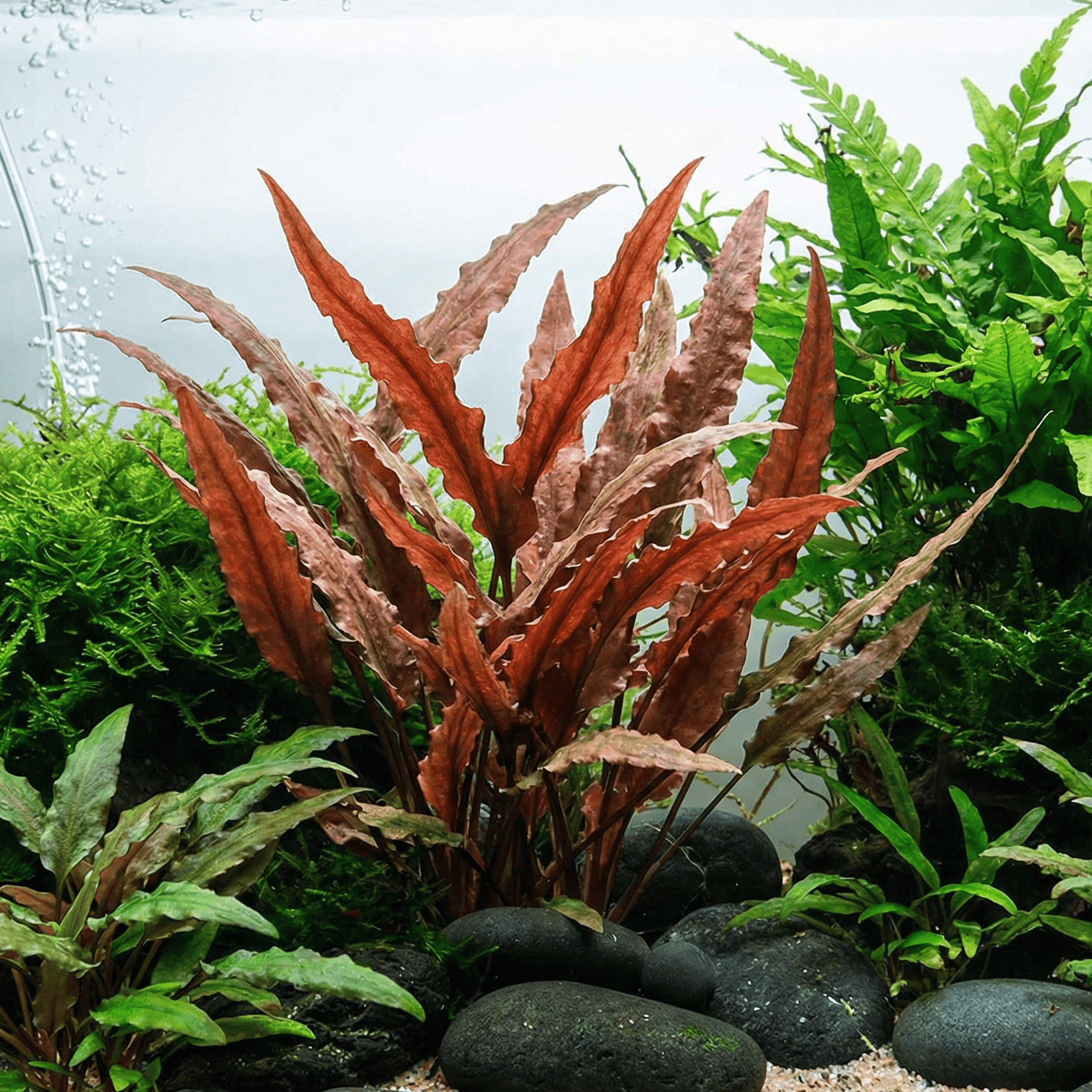
Red Cryptocoryne: A Splash of Color
For a touch of color without the fuss, Cryptocoryne undulatus 'Red' is an excellent choice. Its deep reddish-brown, undulating leaves provide a beautiful contrast to green plants. Like other Crypts, it thrives in stable conditions with a good substrate and moderate lighting. While it might melt back initially, its resilient root system ensures it will regrow, establishing a stunning, low-maintenance splash of red in your midground. It's a great way to introduce color without high demands.
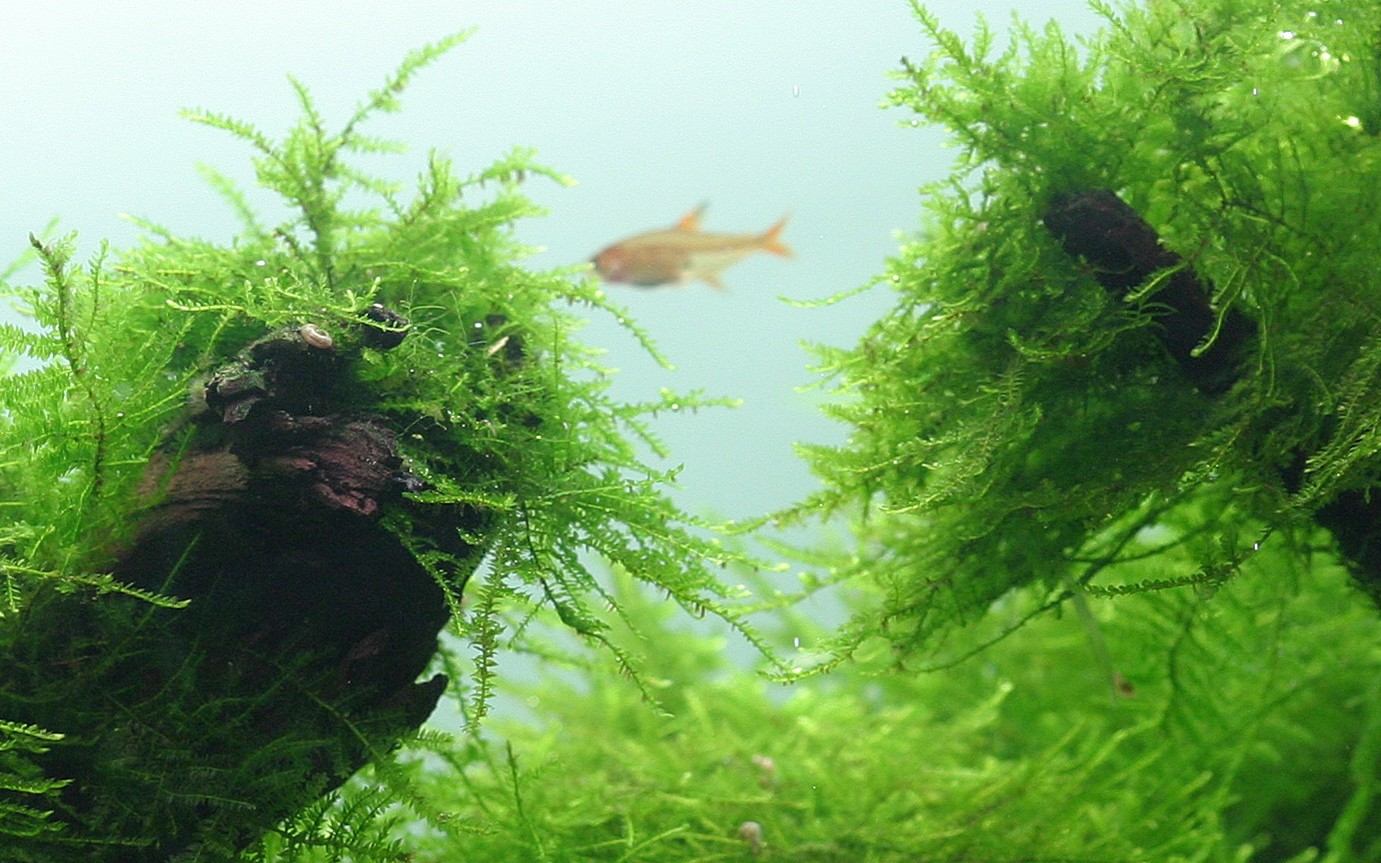
Java Moss: Versatile Carpeting and Hiding
Java Moss (Taxiphyllum barbieri) is arguably the most versatile and easy-to-grow aquarium moss. It can be attached to virtually any surface – driftwood, rocks, or even mesh to create a moss wall or carpet. It tolerates a wide range of light and water conditions and requires no special care beyond occasional trimming. Java Moss is fantastic for providing hiding spots for fry and invertebrates, and its dense growth adds a natural, ancient feel to any aquascape, even in nano tanks.
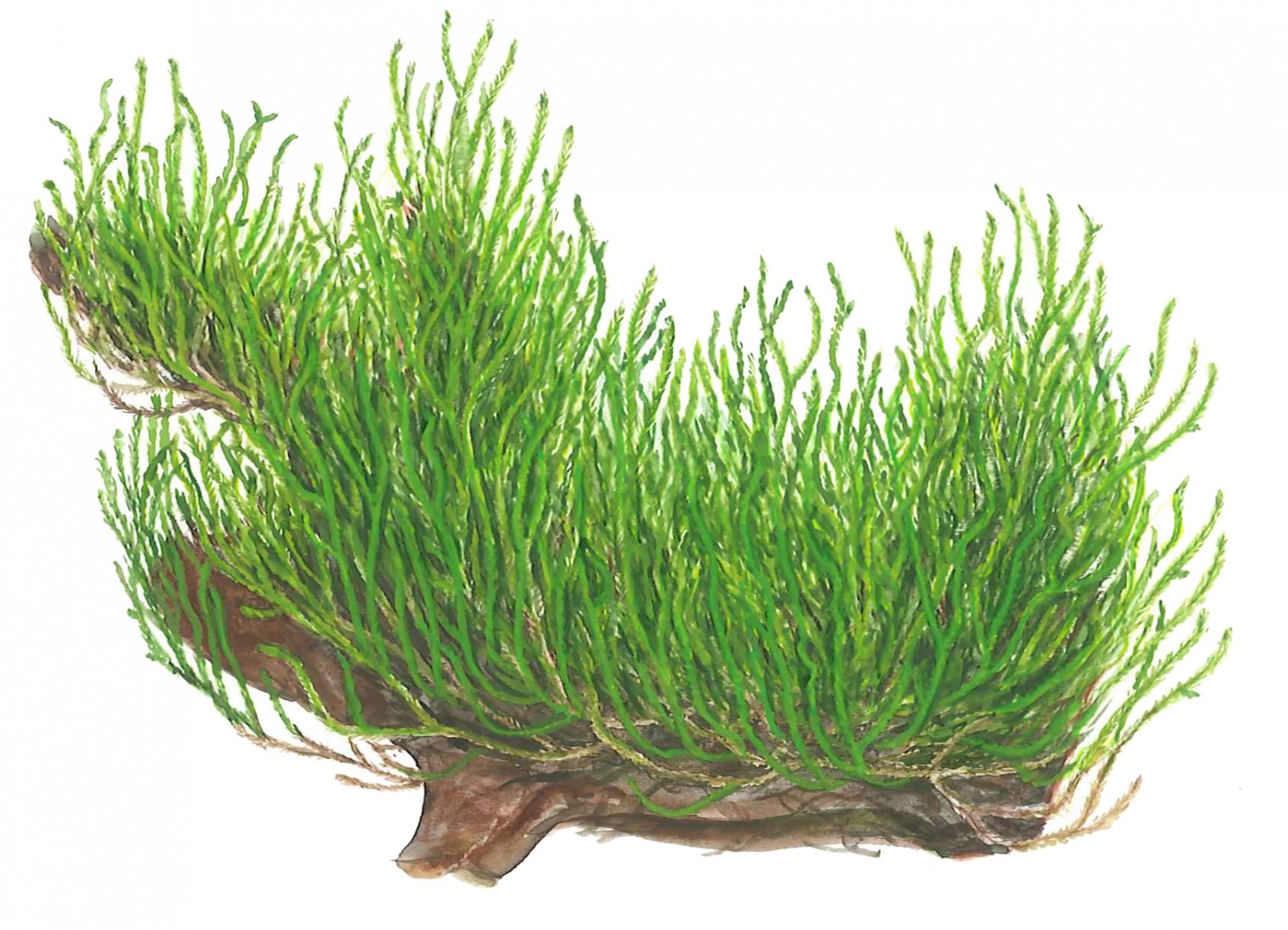
Flame Moss: Unique Upward Growth
Flame Moss (Taxiphyllum spec. 'Flame') gets its name from its distinctive growth pattern, where its fronds grow upwards in a flame-like fashion. This characteristic makes it a unique and eye-catching addition to hardscape, especially when attached to smaller rocks or driftwood in the midground. Like Java Moss, it's very easy to care for, thriving in low to moderate light and requiring no CO2. Its striking form adds dynamic vertical interest to your tank's layout.
Indian Waterweed: Fast-Growing Background Filler
Hygrophila polysperma, also known as Indian Waterweed, is a classic beginner stem plant renowned for its rapid growth and adaptability. It can quickly fill out the background of an aquarium, providing excellent cover and helping to absorb excess nutrients, thus combating algae. It thrives in moderate light and doesn't demand CO2, though it will grow even faster with it. Regular trimming helps maintain its bushy appearance and encourages side shoots, making it easy to propagate and manage.

Rotala 'H'ra': Vibrant Red Stem Plant
Rotala rotundifolia 'H'ra' is a fantastic choice for adding vibrant red and orange hues to your aquarium. While it shows its best color under higher light and with CO2, it can still grow well in moderate light, displaying more orange-pink tones. This stem plant is easy to propagate by simply cutting and replanting the tops. It's excellent for midground or background groupings, creating a colorful and dynamic bush that adds significant visual appeal to your aquascape.
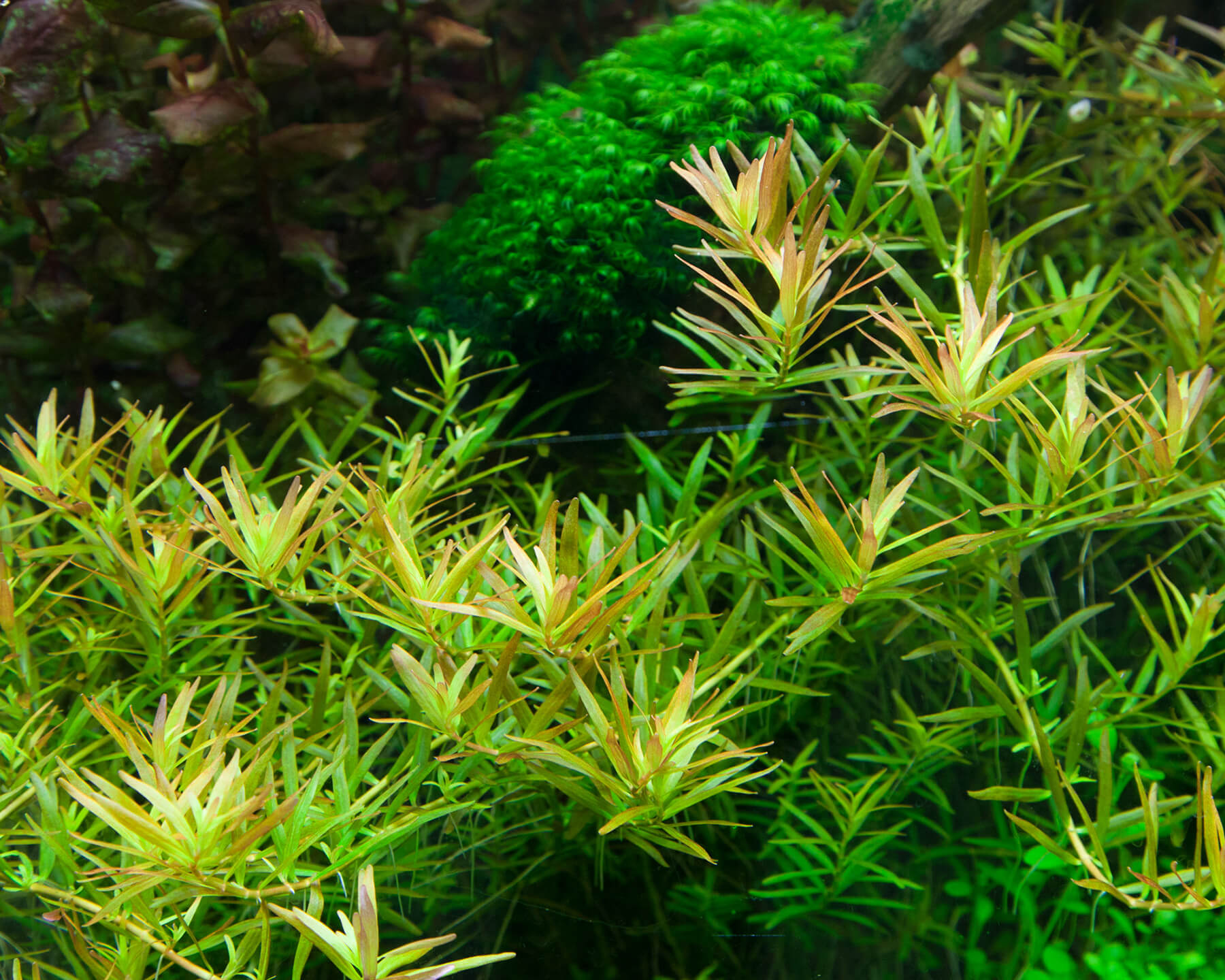
Dwarf Ambulia: Feathery Background Accent
Limnophila sessiliflora, often called Dwarf Ambulia, is an undemanding stem plant with delicate, feathery leaves that provide a beautiful texture in the aquarium. It grows quickly and can reach the water surface, making it ideal for the background. It's highly adaptable to various water conditions and light levels, though moderate light will encourage denser growth. This plant is a great nutrient absorber and provides excellent cover for fish and shrimp, contributing to a healthier tank environment.
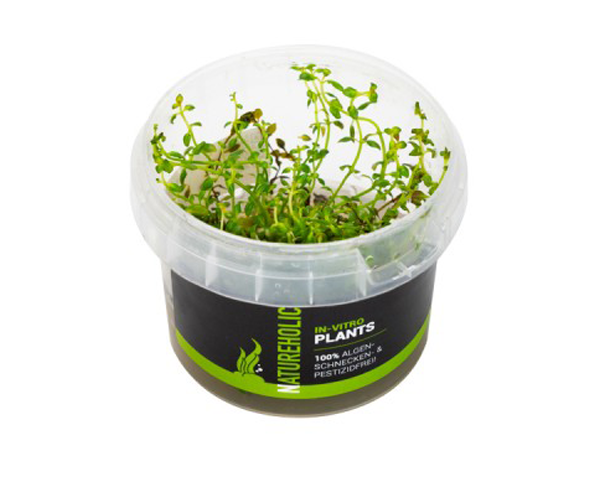
Staurogyne Repens: Bushy Foreground Carpet
Staurogyne repens is an excellent foreground plant that can create a lush, bushy carpet. It's relatively easy to grow, especially when planted in a nutrient-rich substrate. While it benefits from moderate to high light and CO2 for denser, faster growth, it can still thrive in lower-tech setups, albeit at a slower pace. Trim it regularly to encourage horizontal growth and maintain its carpet-like appearance, providing a beautiful green contrast and a natural look to your aquascape.
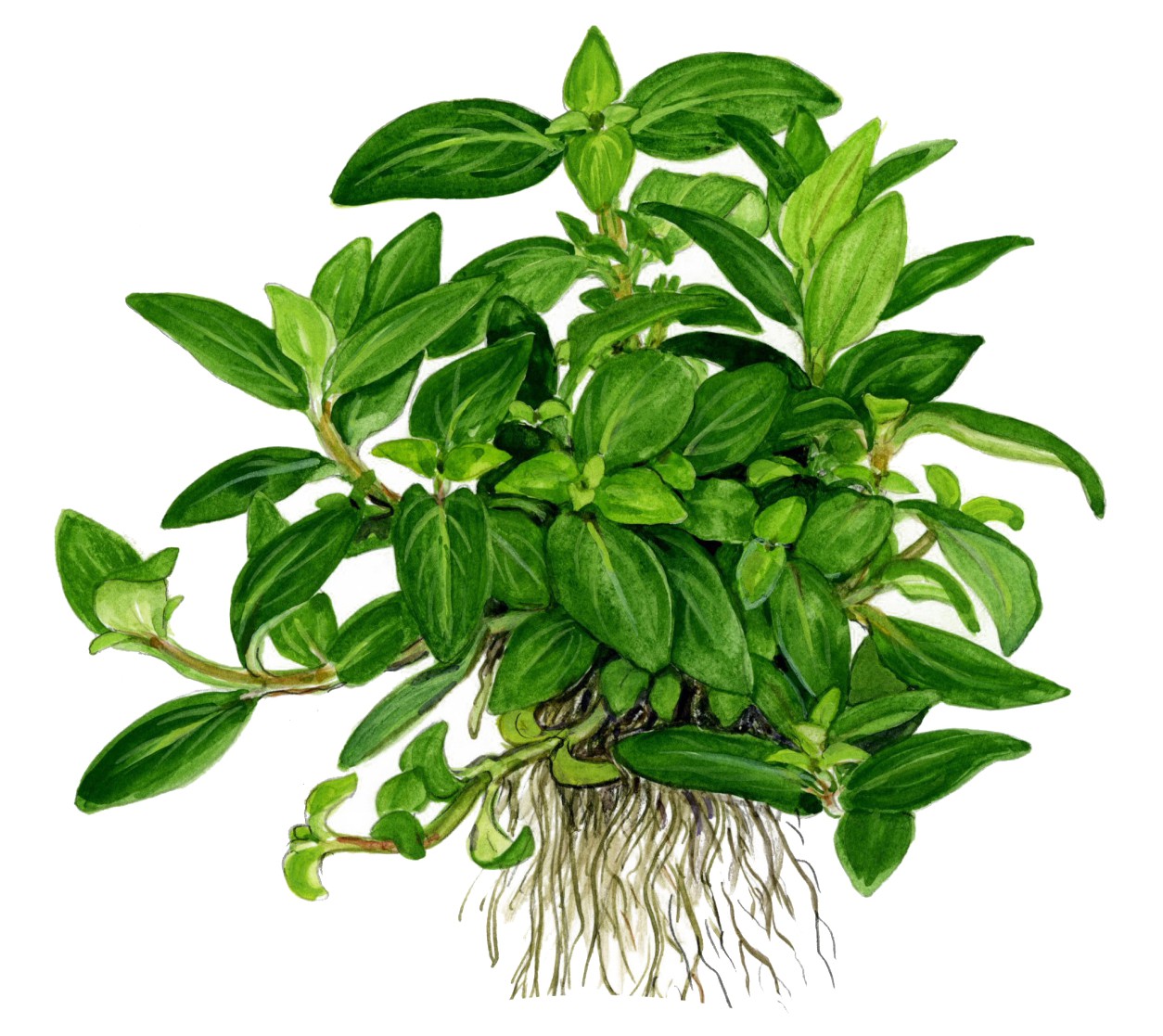
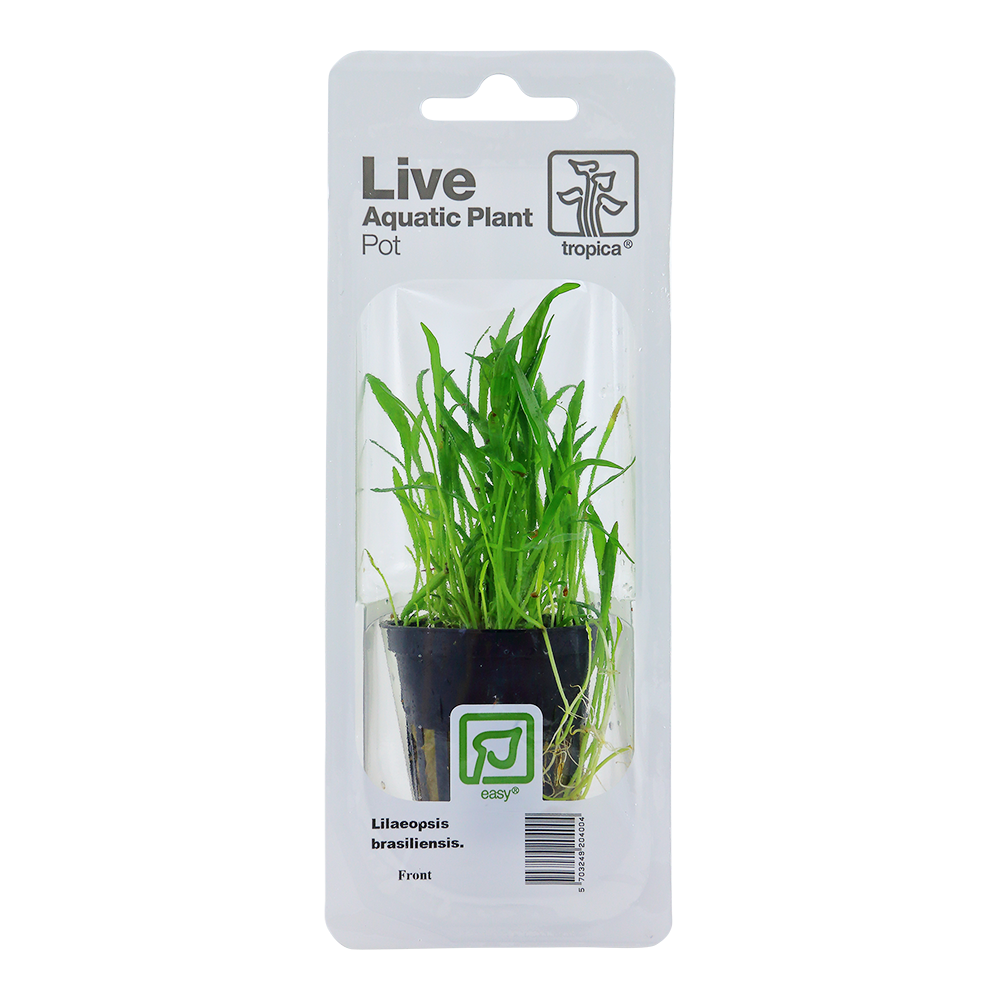
Brazilian Grass Plant: Natural Grassland Look
If you dream of a natural grassland look, Lilaeopsis brasiliensis is an achievable foreground plant for beginners. It forms a dense, short carpet of grass-like blades. While it grows slowly and benefits from good lighting and a rich substrate, it doesn't demand CO2. It spreads via runners, gradually filling in the foreground. Patience is key with this plant, but its natural aesthetic is well worth the wait for a serene aquascape, creating a miniature underwater meadow.
Frequently Asked Questions
Do I need special substrate for these easy aquarium plants?
While many of these plants, especially Anubias and Java Fern, don't require a special substrate (they attach to decor), root-feeding plants like Cryptocorynes and stem plants will benefit greatly from a nutrient-rich aquarium substrate or the addition of root tabs. A simple inert gravel is fine, but supplemental nutrition helps them thrive.
How much light do these beginner plants need?
Most of the plants listed here are considered low to moderate light plants. This means standard LED aquarium lights are usually sufficient. Avoid very high intensity lights without CO2 injection and comprehensive fertilization, as this can lead to algae issues in a beginner setup. Aim for 8-10 hours of light per day.
Do I need to add CO2 for these plants?
No, none of the plants listed in this article strictly require CO2 injection to survive and grow. They are chosen specifically for their ability to thrive in low-tech setups. However, adding CO2 will always boost growth, enhance color, and lead to more vigorous plants, even for these easy species, but it's not a necessity.
How often should I fertilize my planted tank with these plants?
For a low-tech setup with these easy plants, a comprehensive liquid fertilizer dosed once or twice a week is generally sufficient. Root tabs can be added near root-feeding plants like Cryptocorynes every few months. Always follow the manufacturer's instructions for dosage, and adjust based on plant growth and any signs of nutrient deficiencies.














Leave your comments