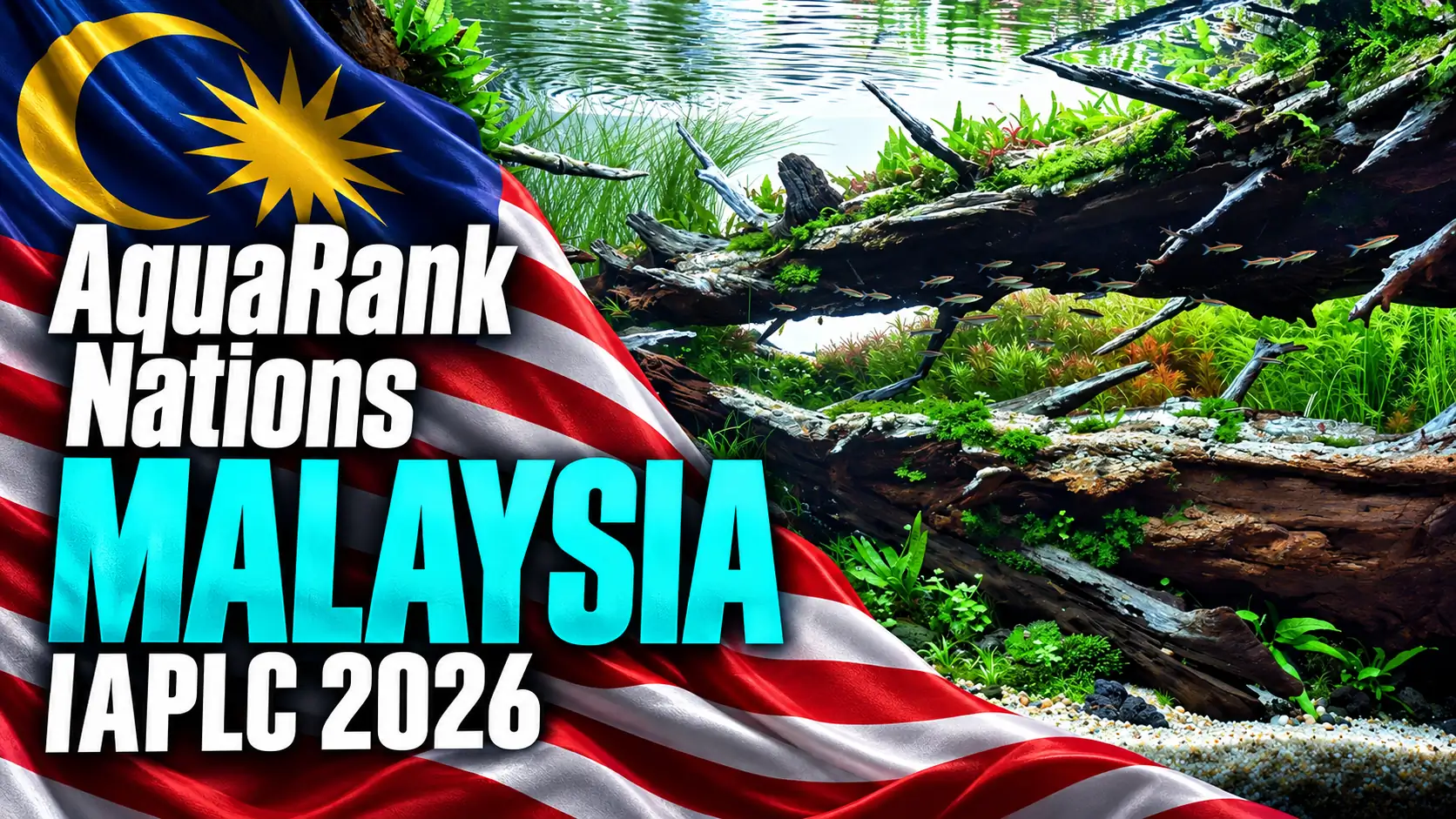
Follow the photographs into the wider country story with the new AquaRank Nations: explore Malaysia’s IAPLC 2026 results and the creators behind them.
This is part of AquaLibs’ IAPLC 2026 Country Studies, returning to our archived Malaysia introduction through this season’s photographs. The archive is historical commentary; the new observations are AquaLibs’ independent visual analysis, separate from official judging. The 4 selected works form an editorial comparison, not a census of national styles.
The 2026 result in context
| Published ranking range | Malaysia places |
|---|---|
| Ranks 1–7 | 0 |
| Ranks 1–27 | 1 |
| Ranks 1–100 | 2 |
| Ranks 1–300 | 8 |
Counts are calculated from the official final ranking, using the country-and-area label Malaysia. They count published places, not total submissions or participants. Rank 61 is vacant, so the global ranks 1–300 contain 299 published names.
From individual aquariums to the national view
Malaysia’s selected photographs include four members of the contributing five; rank 125 completes the national calculation. The numbers provide an invitation to discover that wider group, while the images below ask a separate question: how do timber, plant texture and fish share the picture? Nations connects those individual readings with recorded results across available seasons.
| AquaRank Nations · IAPLC 2026 | Malaysia |
|---|---|
| AquaRank national position | #11 |
| Average of five contributing overall ranks | 126.8 |
| Contributing individual ranks | #12, #33, #125, #230, #234 |
| Published country results in the full edition | 56 |
These are AquaRank’s calculated national standings, not official IAPLC national awards. The average uses the five lowest overall ranks from five confirmed aquascapers; a lower average is better. The 2026 edition is marked as complete on Nations. This full-ranking view is broader than the Top 300 photo selection used in this article. Figures were checked on 16 October 2026.
Explore Malaysia at IAPLC 2026 on AquaRank Nations →
Open the contributing five, follow available artwork and creator profiles, then use the edition selector or Malaysia’s IAPLC history to explore other available seasons. Use the IAPLC 2026 nations comparison to see the same method applied across countries and regions.
Inspired by Josh Sim’s IAPLC Nations Challenge. Read the Nations methodology for coverage and ranking rules. The average describes results; it does not measure a design style or explain a judge’s decision.
Follow the country journey
Explore Malaysia through the years below. Switch between nation position and average rank, then open an edition or its contributing aquascapers to continue the journey.
Malaysia at IAPLC
Loading country history…
Returning to the archive
The archived Malaysia introduction, published in 2021 and attributed to IAPLC Nations Challenge, described a forest background and growing interest in a fusion of Nature Aquarium with newer scenic ideas. We use that observation as historical context. Claims about clubs, membership or commercial culture in the old essay are not carried into this season without fresh evidence; the present study stays with four visible aquariums.
The photographs to study
| World rank | Creator | A detail to follow |
|---|---|---|
| #12 | Yap Kiat Fuil | Broad horizontal wood with visible water between it |
| #33 | Wu Chau Yuan | Fine background leaves make the fish conspicuous |
| #230 | Josh Sim | A fish becomes the central scale reference |
| #234 | Siak Wee Yeo | A clearing seen beneath hanging growth |
Rank 12 — Yap Kiat Fuil
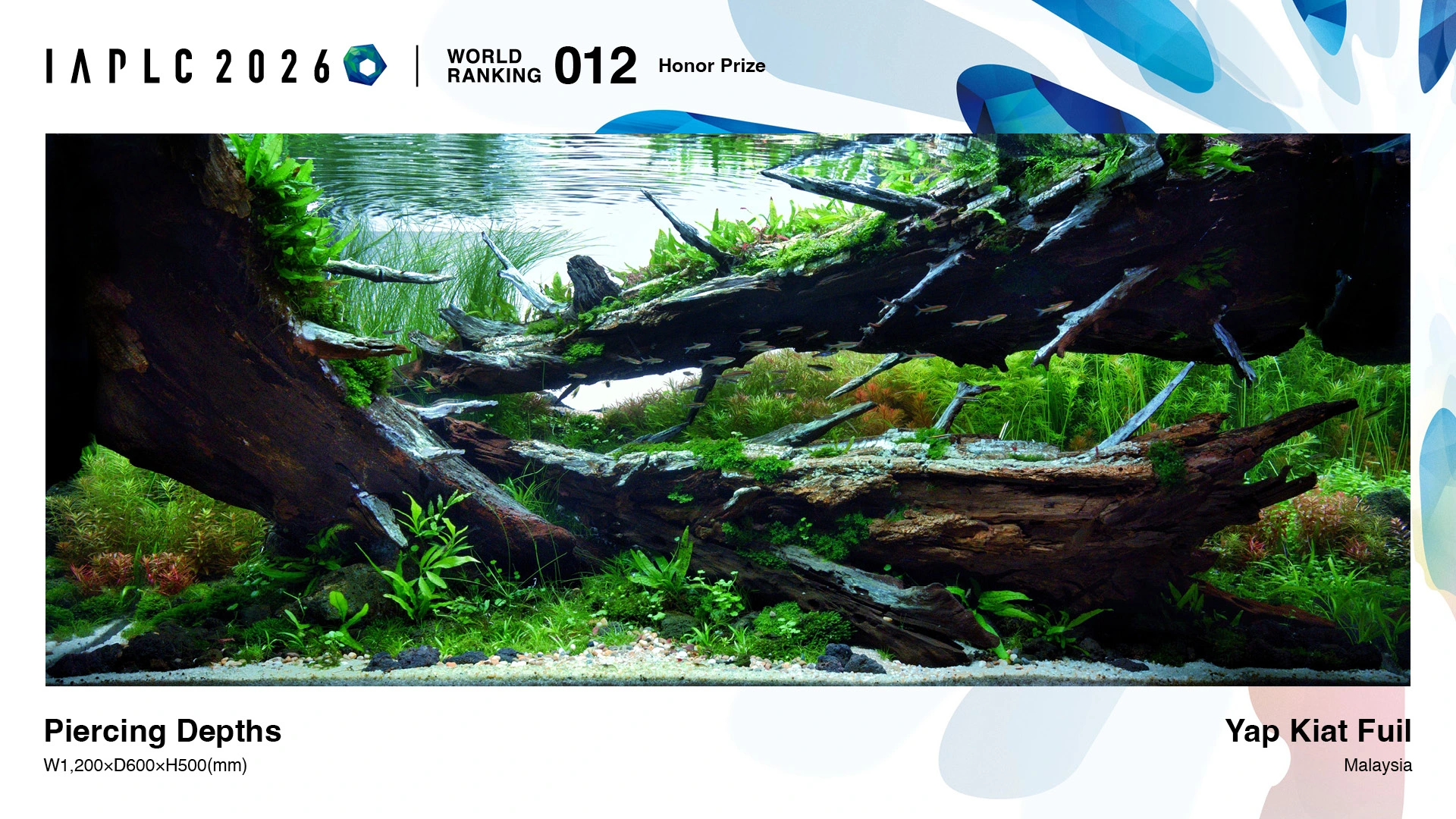
Broad horizontal wood with visible water between it. A dark near trunk and long timber layers establish a strong horizontal rhythm. Bright gaps separate the upper and lower structures, while fine background leaves give the water another texture. Planting follows the wood without covering every face. Fish are visible near the central gaps. The useful design relationship is between solid timber and the intervals around it: both contribute to the sense of distance.
Look closer: Look at the intervals between the largest pieces before studying their surfaces.
Explore Yap Kiat Fuil’s recorded work on AquaRank · Back to the selected works
Rank 33 — Wu Chau Yuan

Fine background leaves make the fish conspicuous. Curving planted wood frames an open middle, while long narrow leaves descend from the brighter upper water. A conspicuous group of warm-marked fish appears against that finer background texture. Low green ridges and small reddish accents connect the foreground to the wood. The delicate canopy has a different visual weight from the broad timber, allowing planting and fish to command attention without losing the frame.
Look closer: Notice the change from heavy near wood to fine upper foliage.
Discover aquascapers on AquaRank · Back to the selected works
Rank 230 — Josh Sim
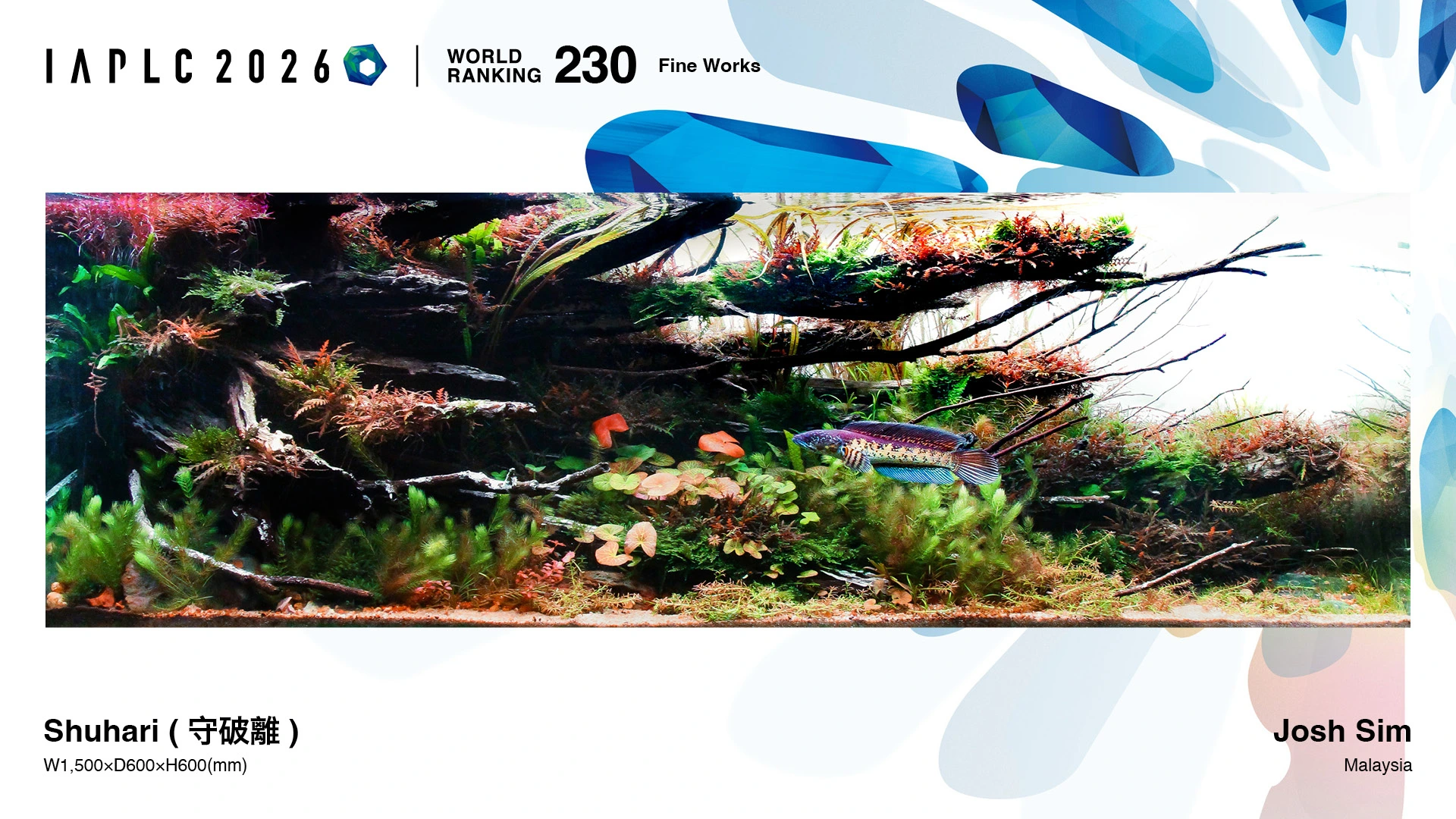
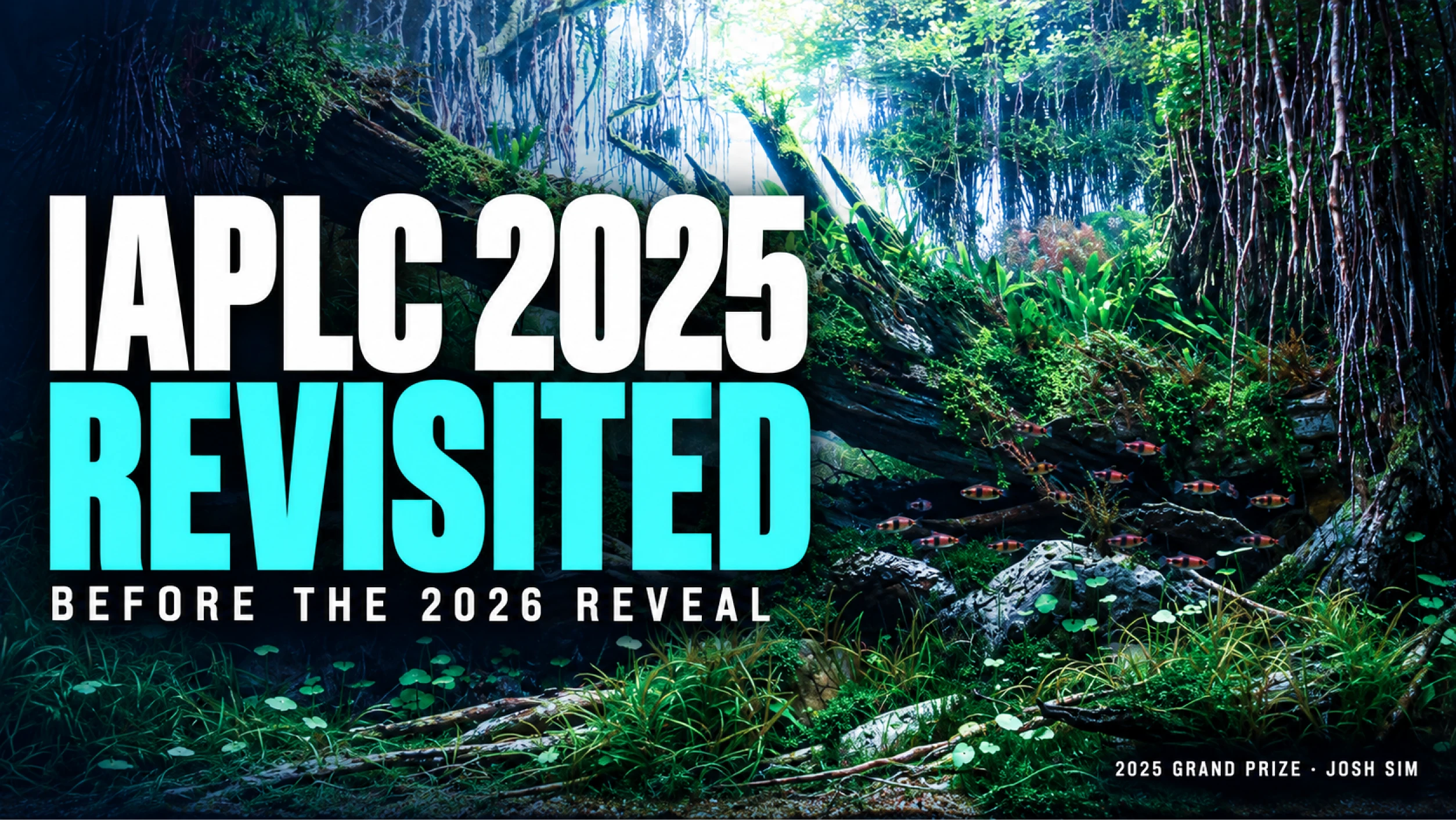
A fish becomes the central scale reference. Layered wood reaches into relatively bright water on the right. Warm red and orange foliage gathers on upper surfaces, with broad leaves and smaller green growth below. A single particularly conspicuous patterned fish occupies the middle-right, giving the timber and leaves an immediate scale relationship. The photograph asks the viewer to read a living subject within the scene, rather than only follow a distant path through it.
Look closer: Look at the main fish in relation to the nearest wood and broad leaves.
Explore Josh Sim’s recorded work on AquaRank · Back to the selected works
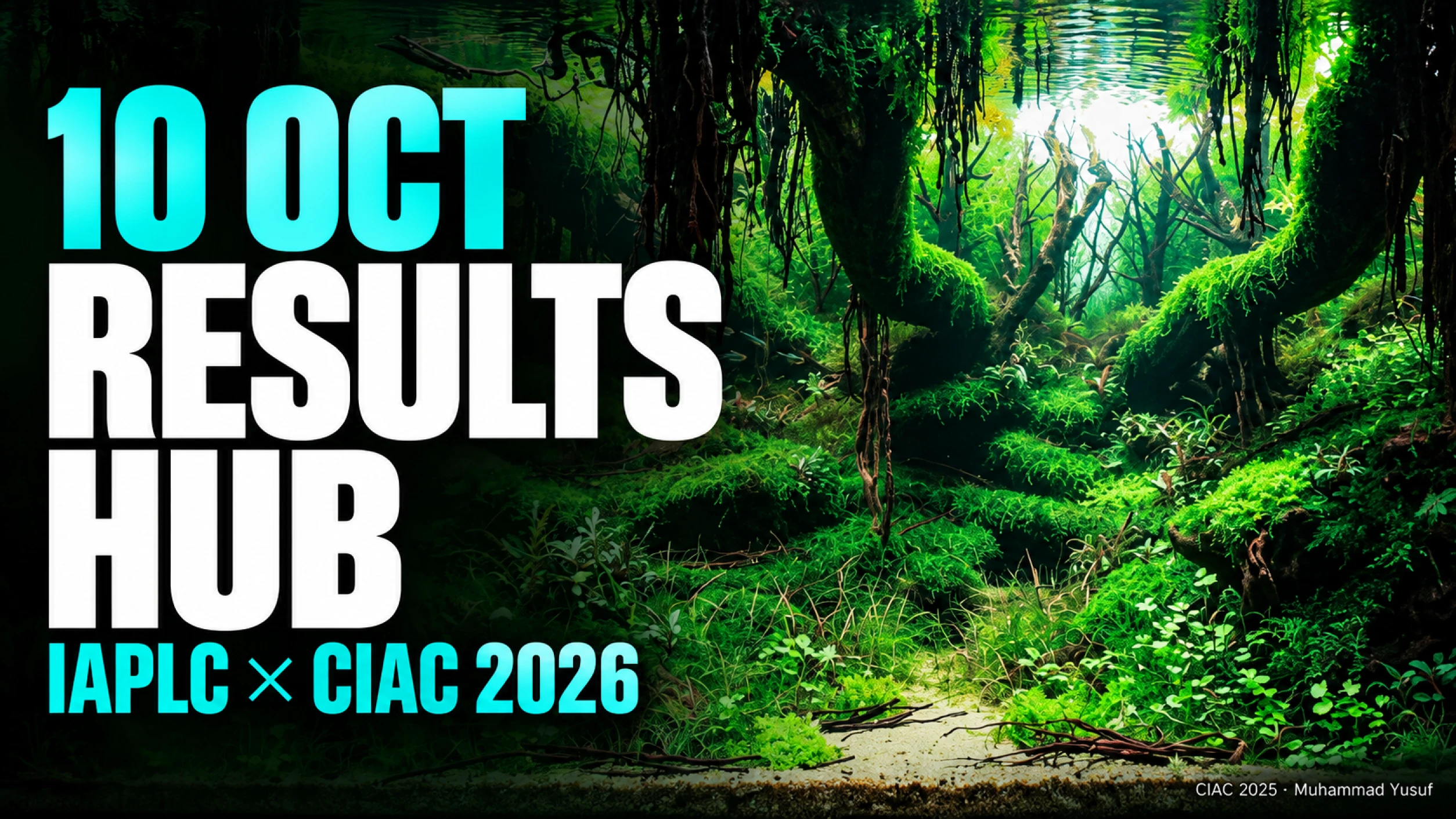
Rank 234 — Siak Wee Yeo
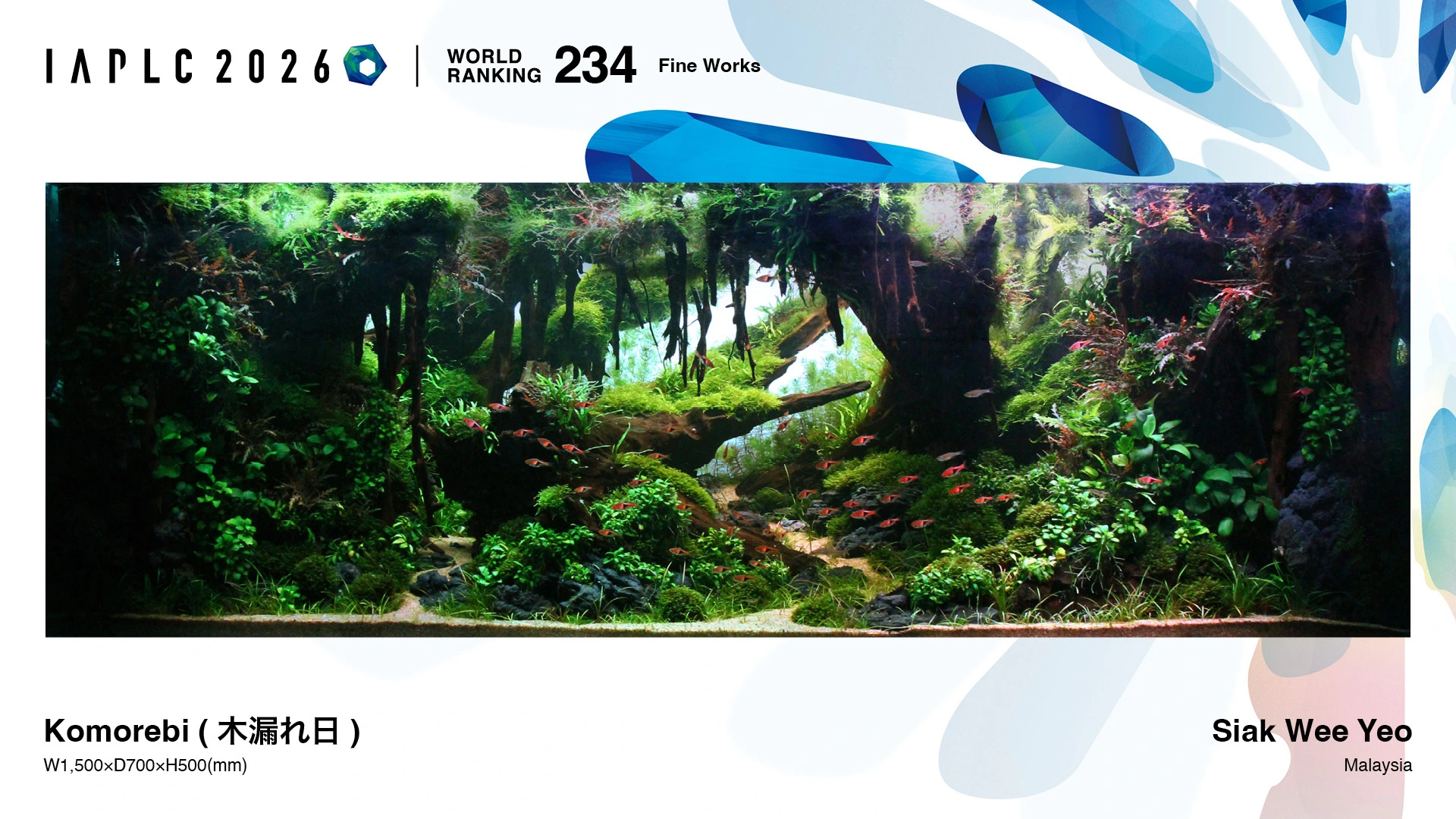
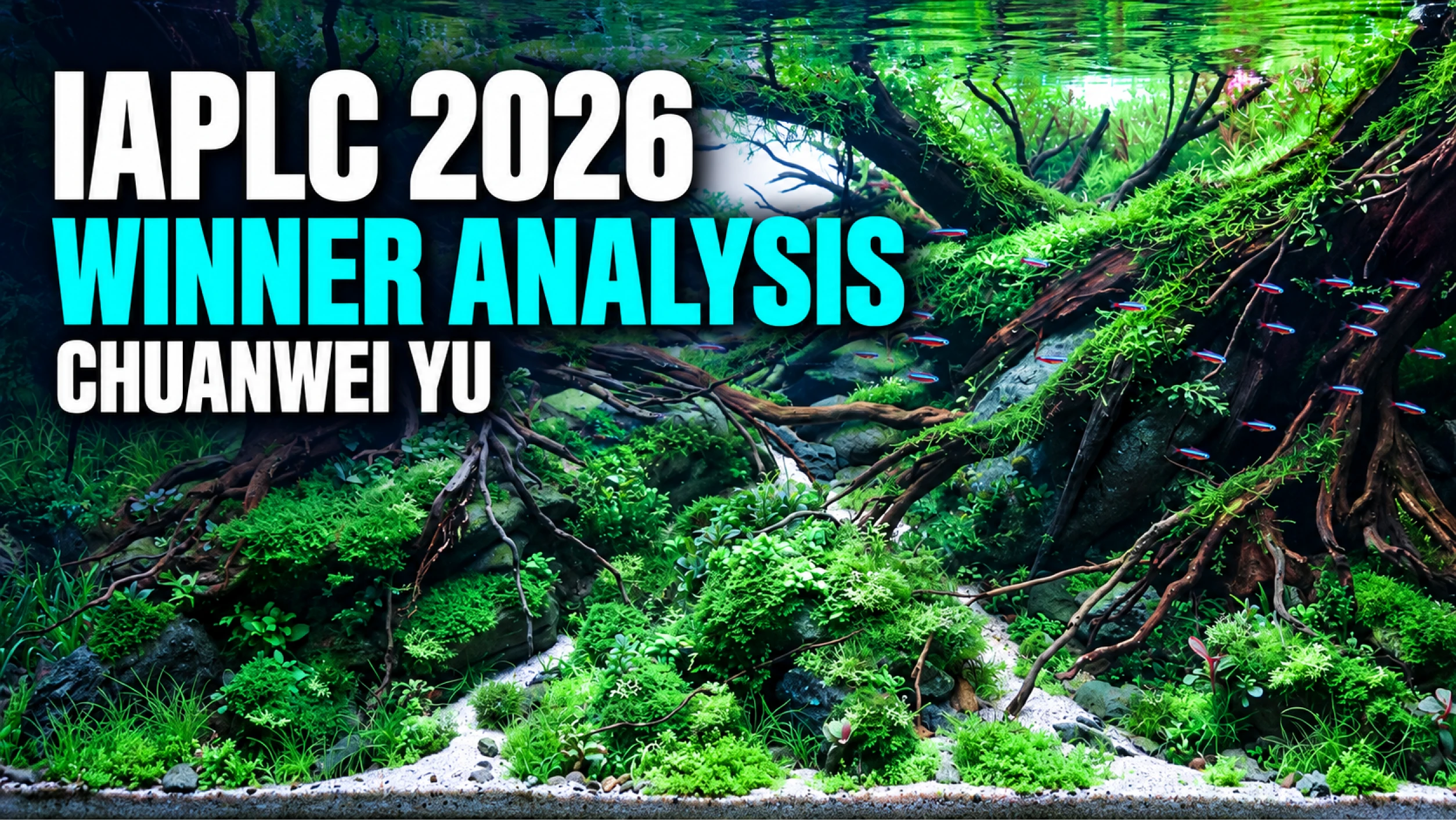
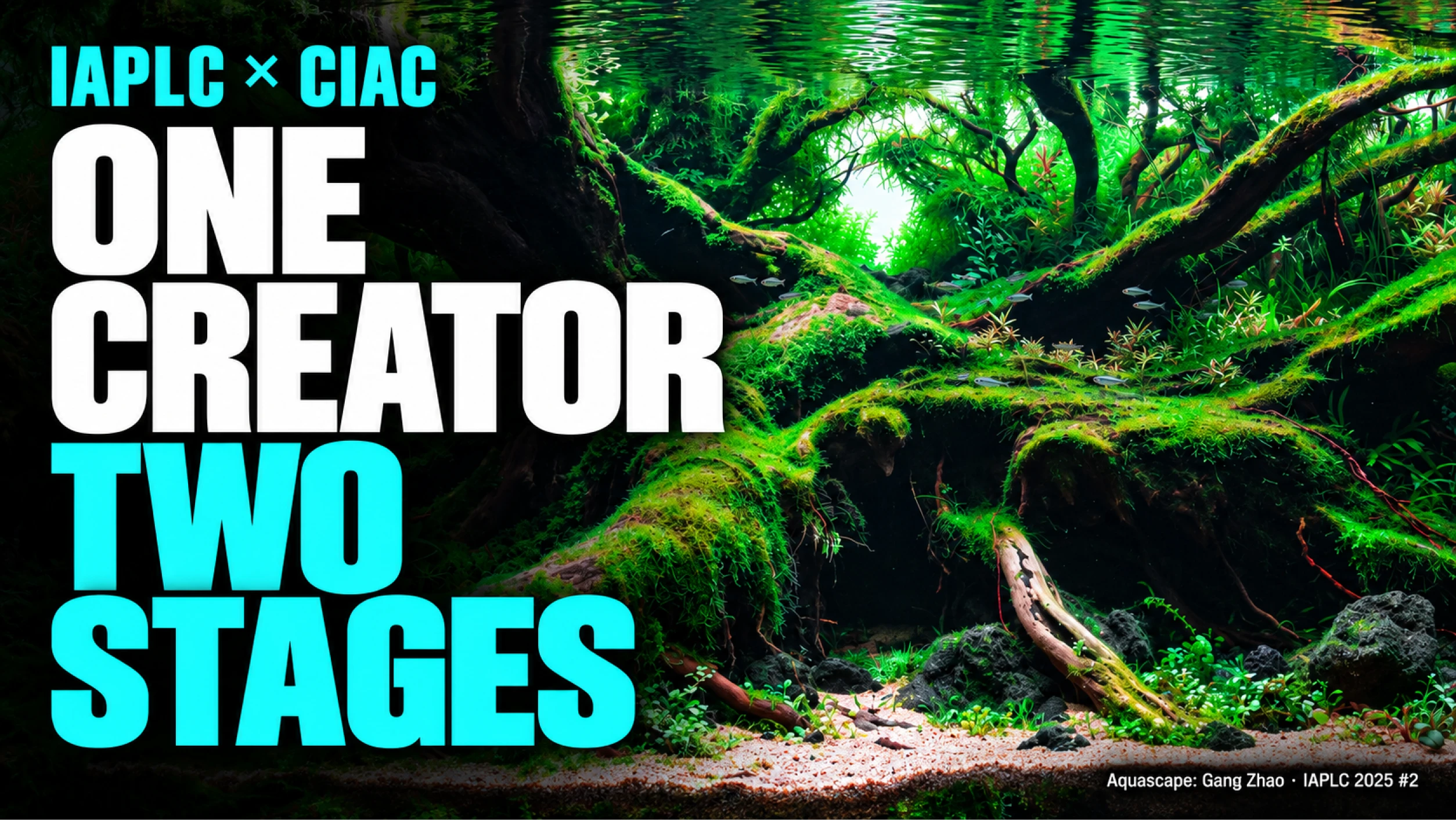
A clearing seen beneath hanging growth. Dark vertical forms and hanging roots enclose a brighter rear space. Green-covered lower ridges and a small pale route give the near scene a direction, while warmer leaves create limited accents around the frame. A group of fish appears against the shaded middle-right. The photograph combines close woodland texture with a distinct destination, making the contrast between enclosed and open space more important than any single material.
Look closer: Compare the small pale ground route with the much larger upper clearing.
Explore Siak Wee Yeo’s recorded work on AquaRank · Back to the selected works
What the comparison reveals
Yap Kiat Fuil makes intervals between horizontal wood a major part of the scene. Wu Chau Yuan uses a lighter, finer upper texture that makes a fish group conspicuous. Josh Sim’s photograph gives one prominently visible fish a strong scale relationship with timber and broad leaves, whereas Siak Wee Yeo encloses a clearing beneath hanging growth.
That variation is the most useful connection with the archive’s idea of experimentation. Fish can form a group, occupy a pocket or become the principal visual subject. Plant textures also have different roles: they trace wood, define a curtain or introduce a coloured upper level. The rankings describe the season’s outcomes, but they do not explain those individual choices or establish why one work finished above another.
A design exercise to take away
Describe the water occupied by the fish before describing the fish themselves. Its brightness, background texture and position within the frame help explain their visual contribution.
All published places at ranks 1–300
| World rank | Published name | Country / area |
|---|---|---|
| 12 | Yap Kiat Fuil | Malaysia |
| 33 | Wu Chau Yuan | Malaysia |
| 125 | Jelantoi Lantoi | Malaysia |
| 230 | Josh Sim | Malaysia |
| 234 | Siak Wee Yeo | Malaysia |
| 267 | Halim Manap | Malaysia |
| 277 | Erik Ee | Malaysia |
| 298 | Kevin Teoh | Malaysia |
Continue through the archive
Revisit the original Malaysia introduction, then open the IAPLC 2026 gallery to view the selected works at full size and keep browsing beyond them. For a related reading, explore the IAPLC 2026 Top 10 design guide.
Keep exploring with AquaRank Nations. Open Malaysia’s country overview to move from this season’s photographs to recorded results across available competitions and years. Start with the 2026 IAPLC result, choose an earlier available edition, and follow a creator whose work catches your attention. Country overviews keep competition and edition context visible; they do not combine raw ranks from different contests into one overall score.
Which Malaysian creator’s earlier work would help you understand the 2026 photograph more deeply?


Leave your comments