Taxonomy and identification
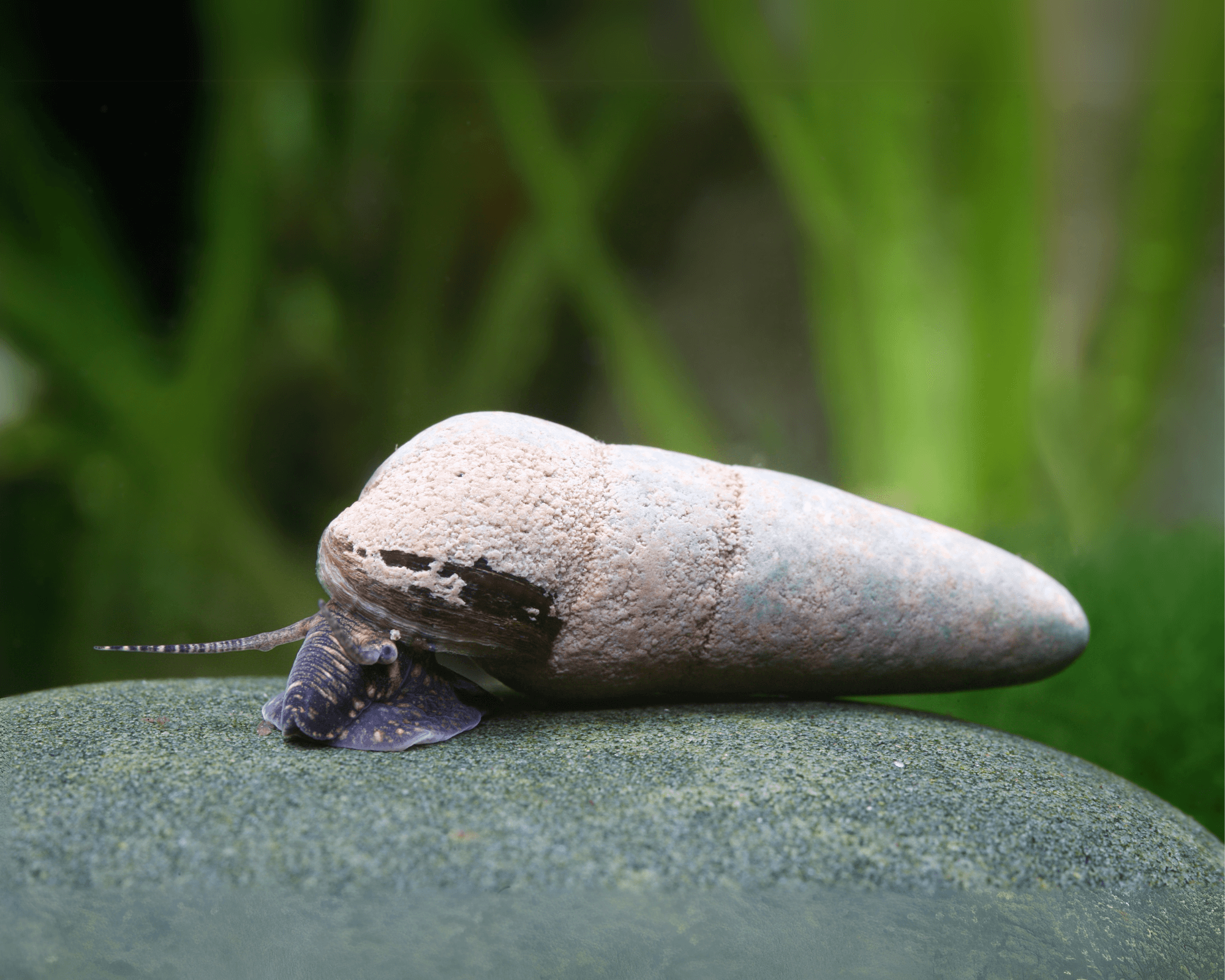
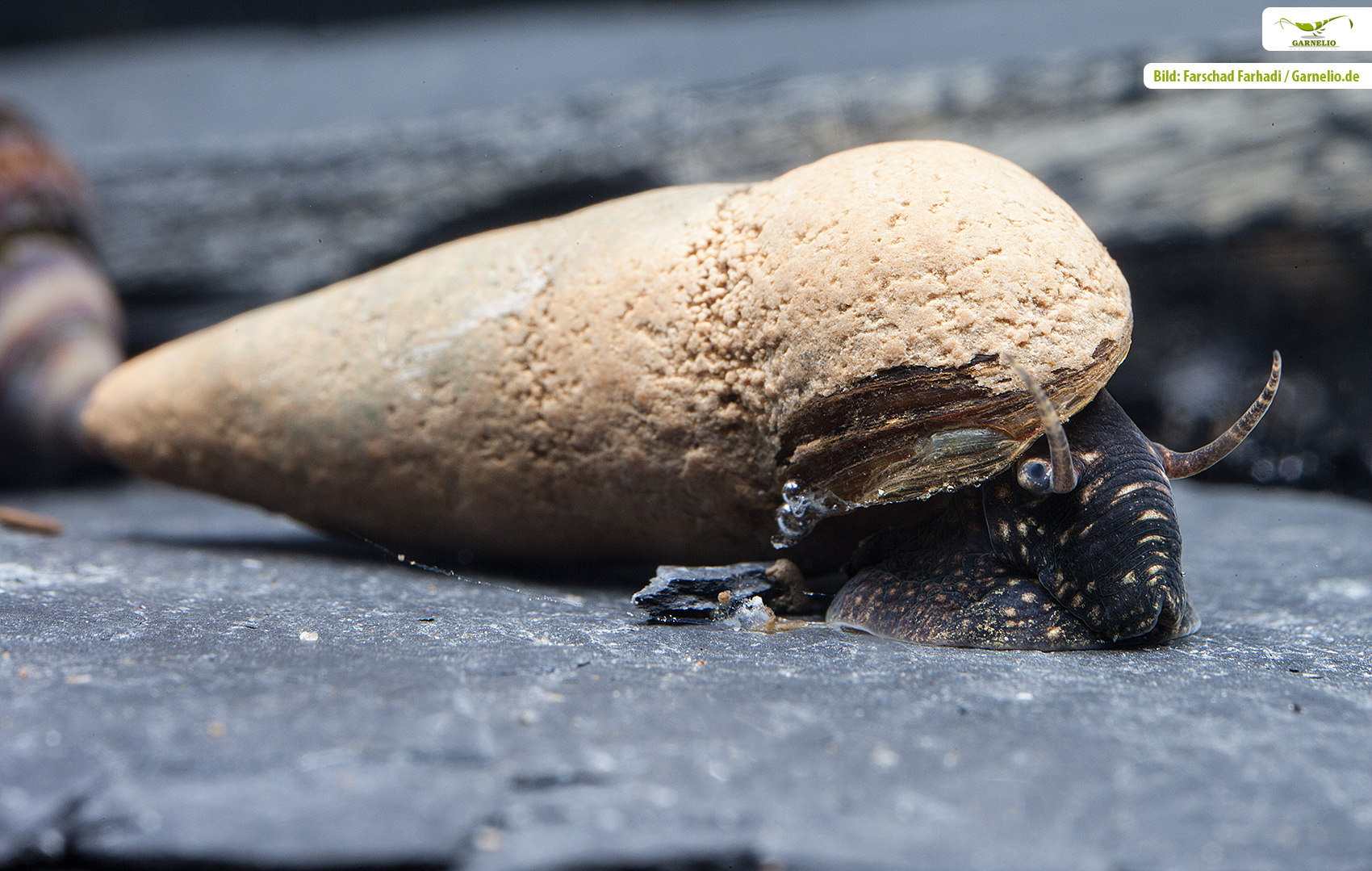
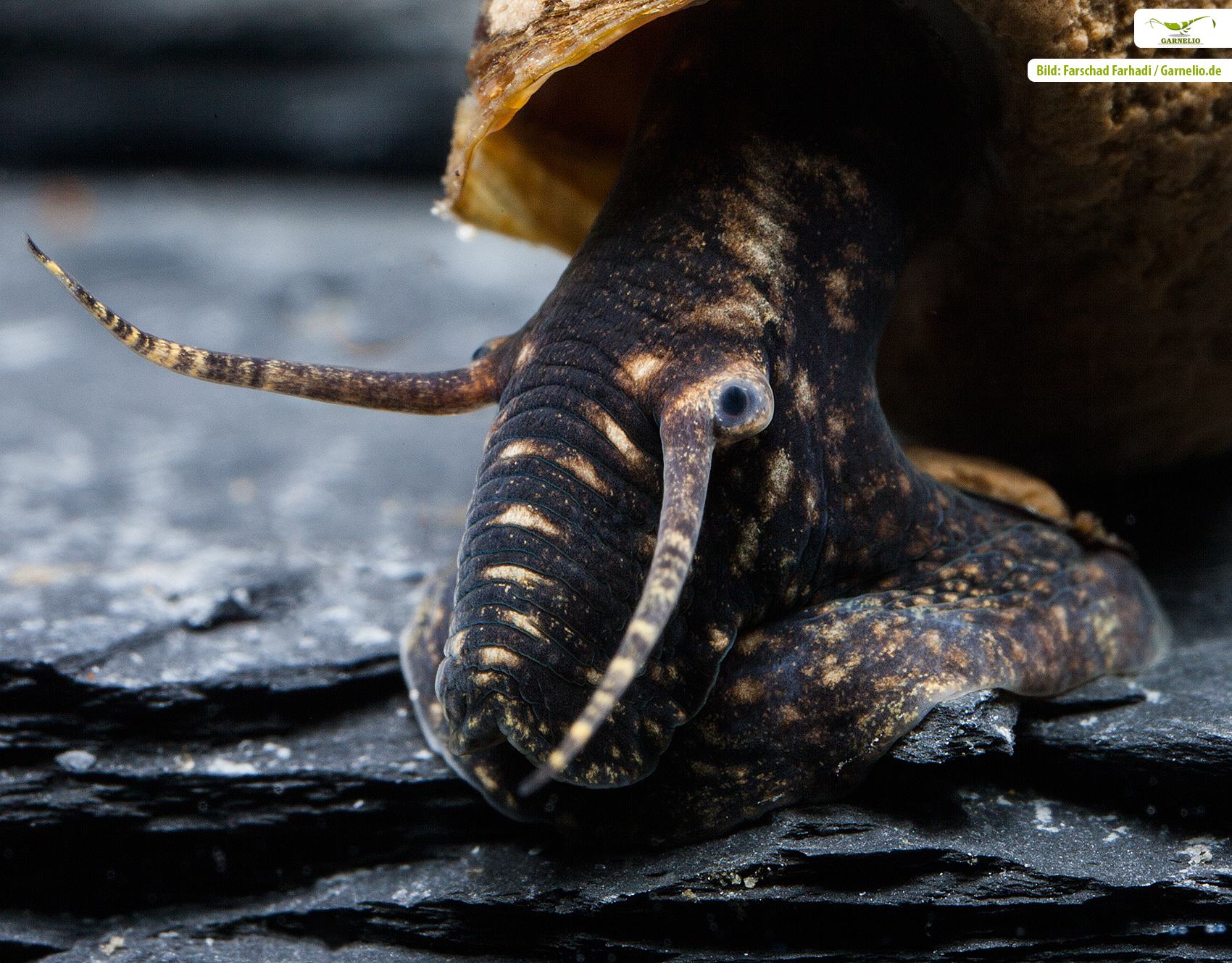
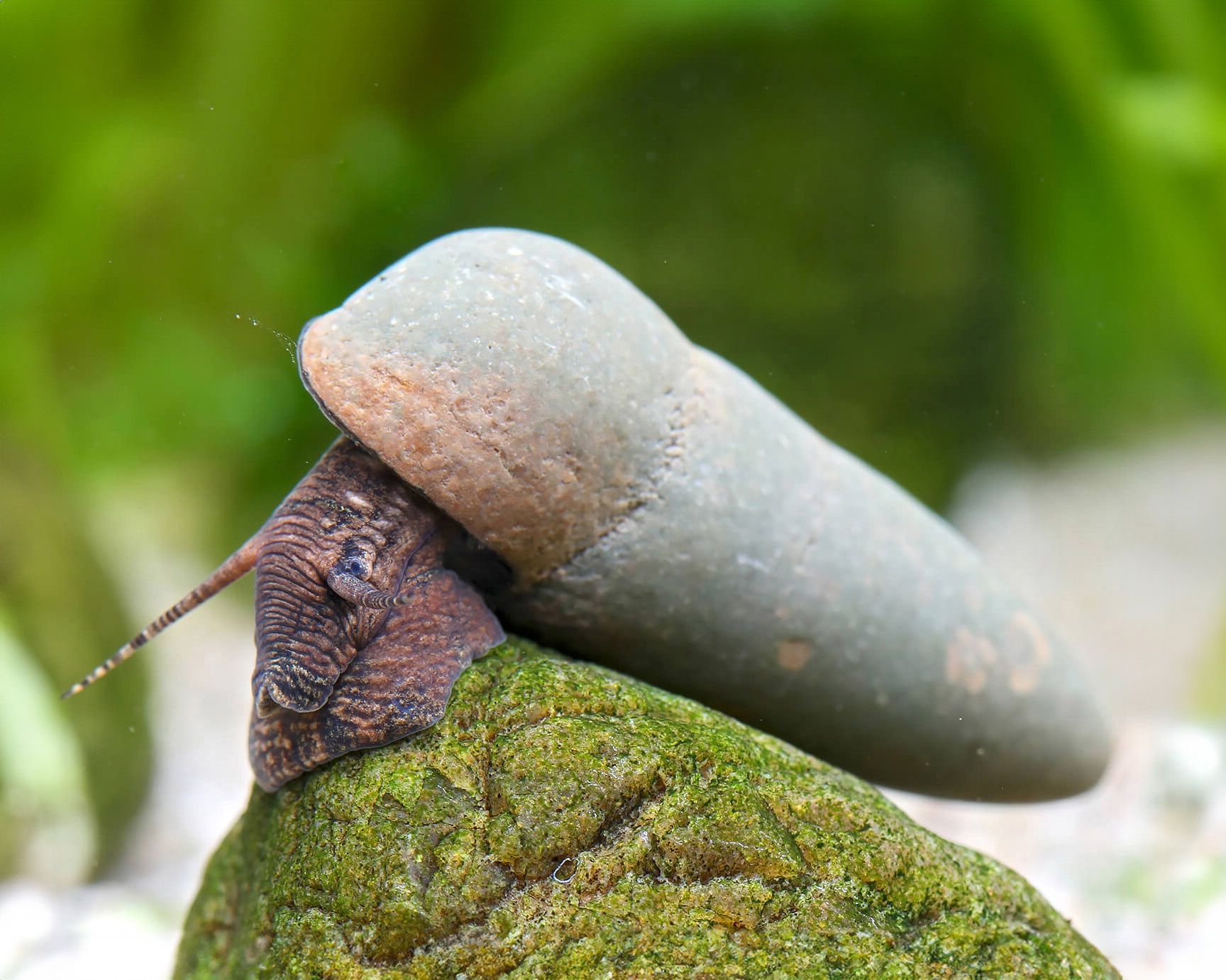
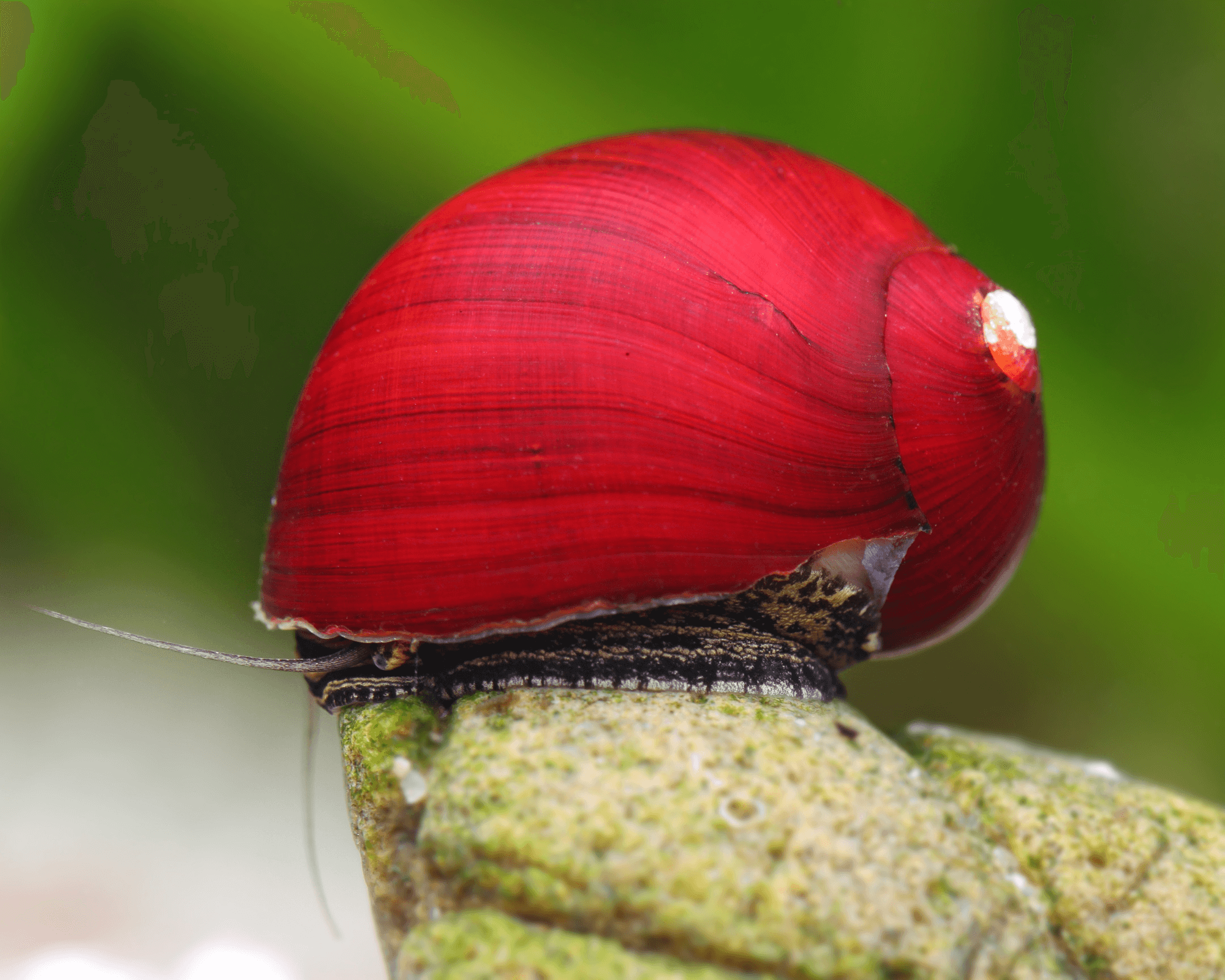
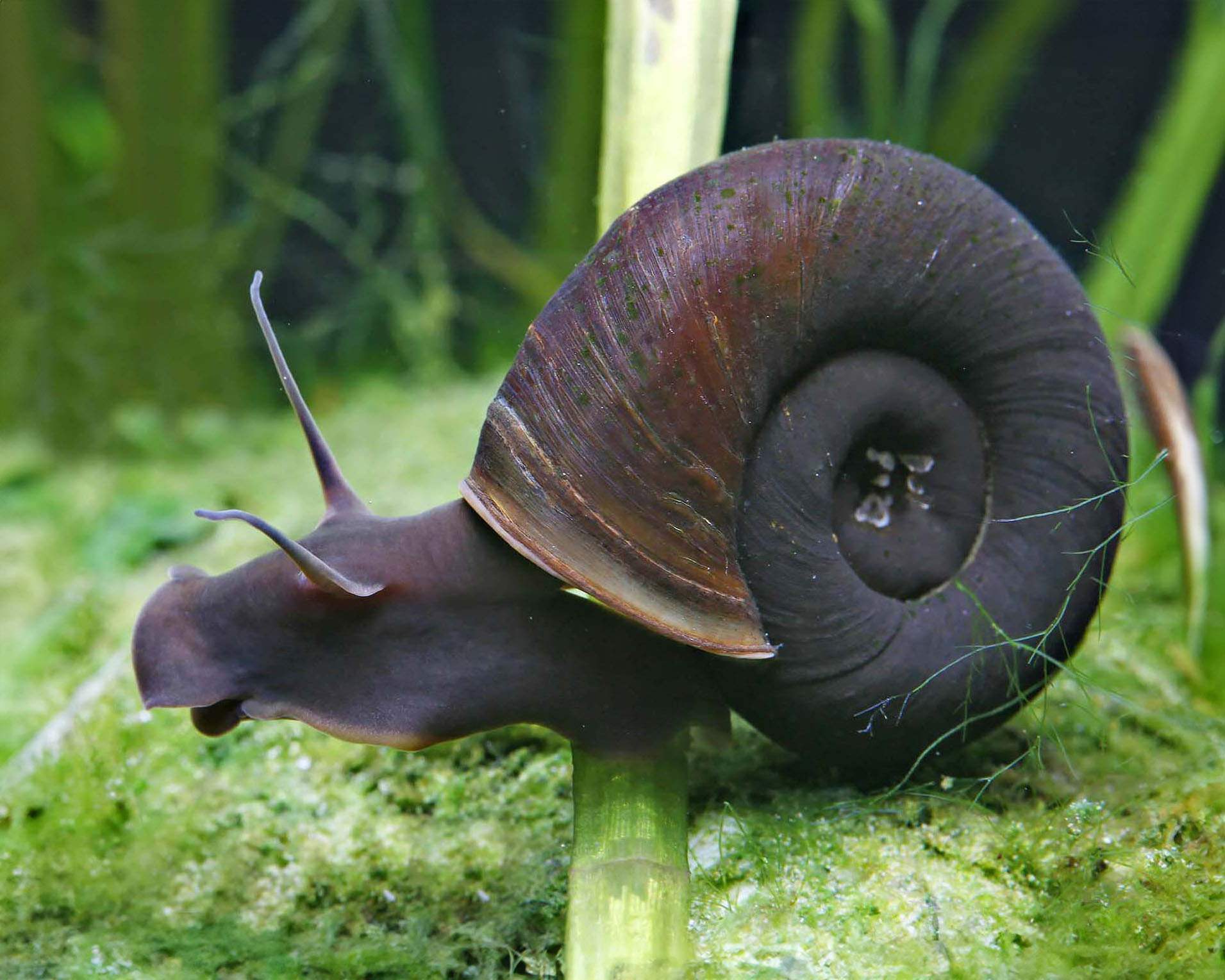
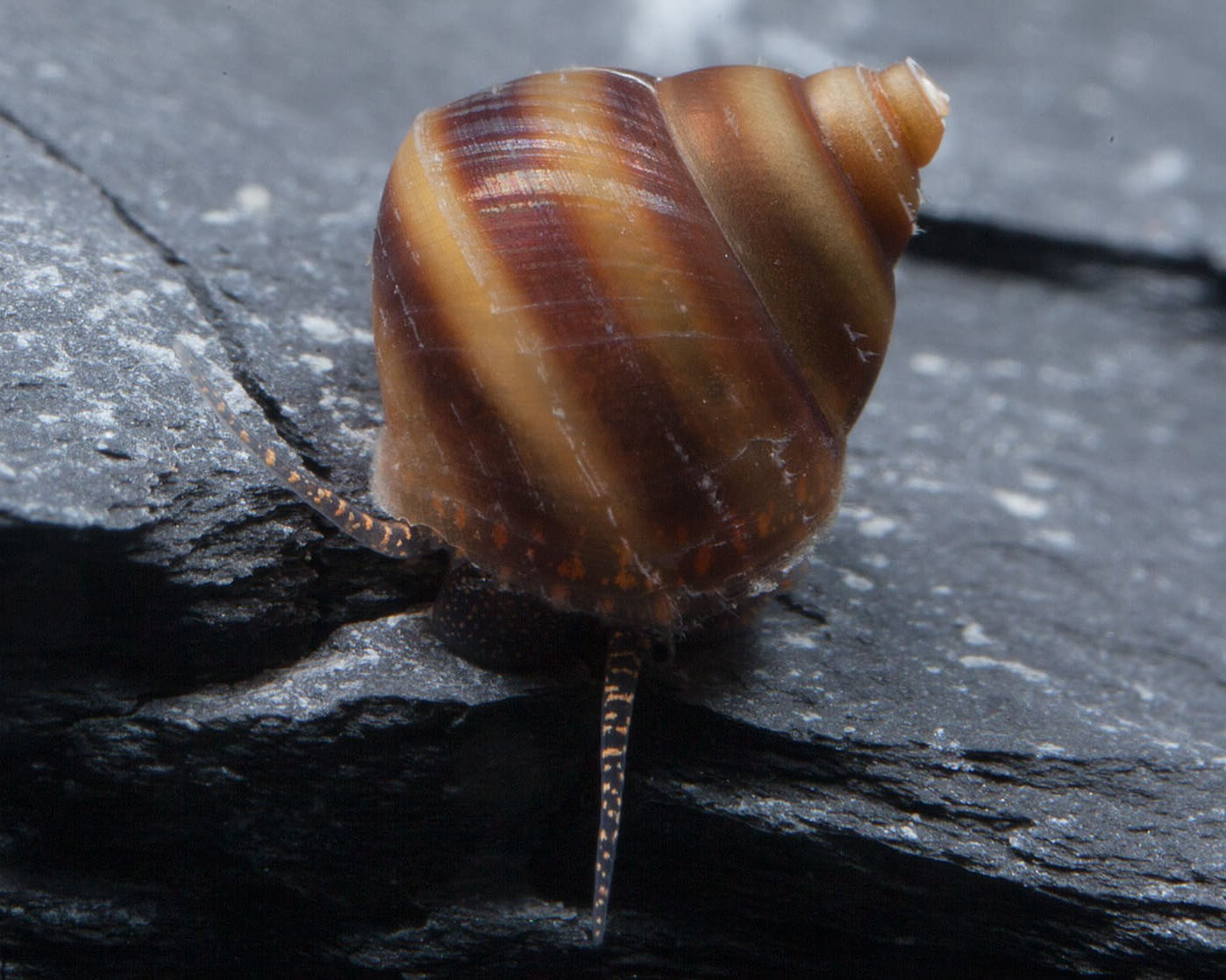
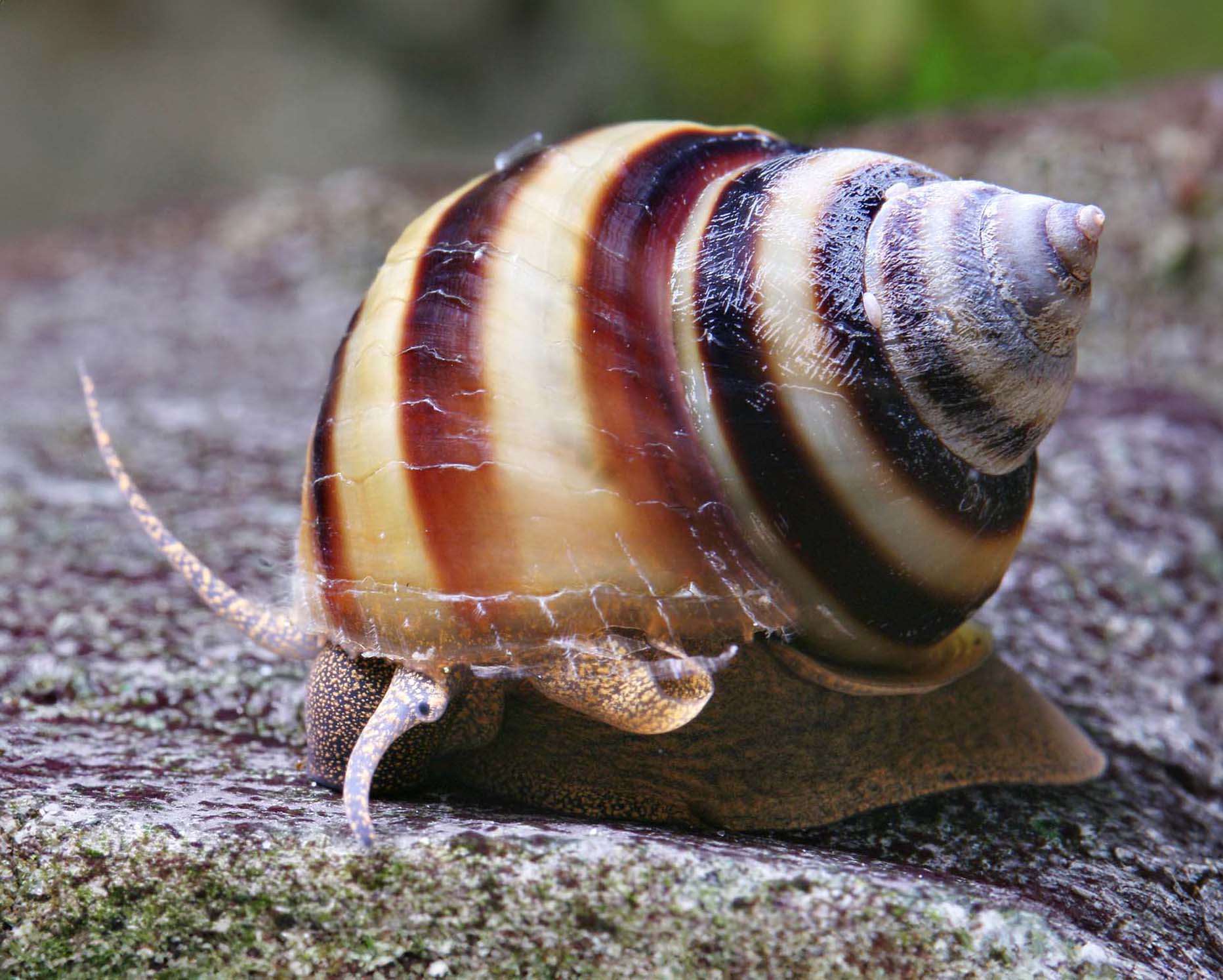
Tylomelania perfecta is a freshwater snail in the family Pachychilidae. The genus Tylomelania belongs to the Sulawesi pachychilid radiation and includes many closely related, locally distributed forms. The Thunderbolt trade name is not always applied consistently, so shell shape and color alone may not confirm the species. The supplied identification is treated as probable rather than certain. Typical features include a large elongated shell, a broad foot, a dark ridged body, and long tentacles.
Natural habitat
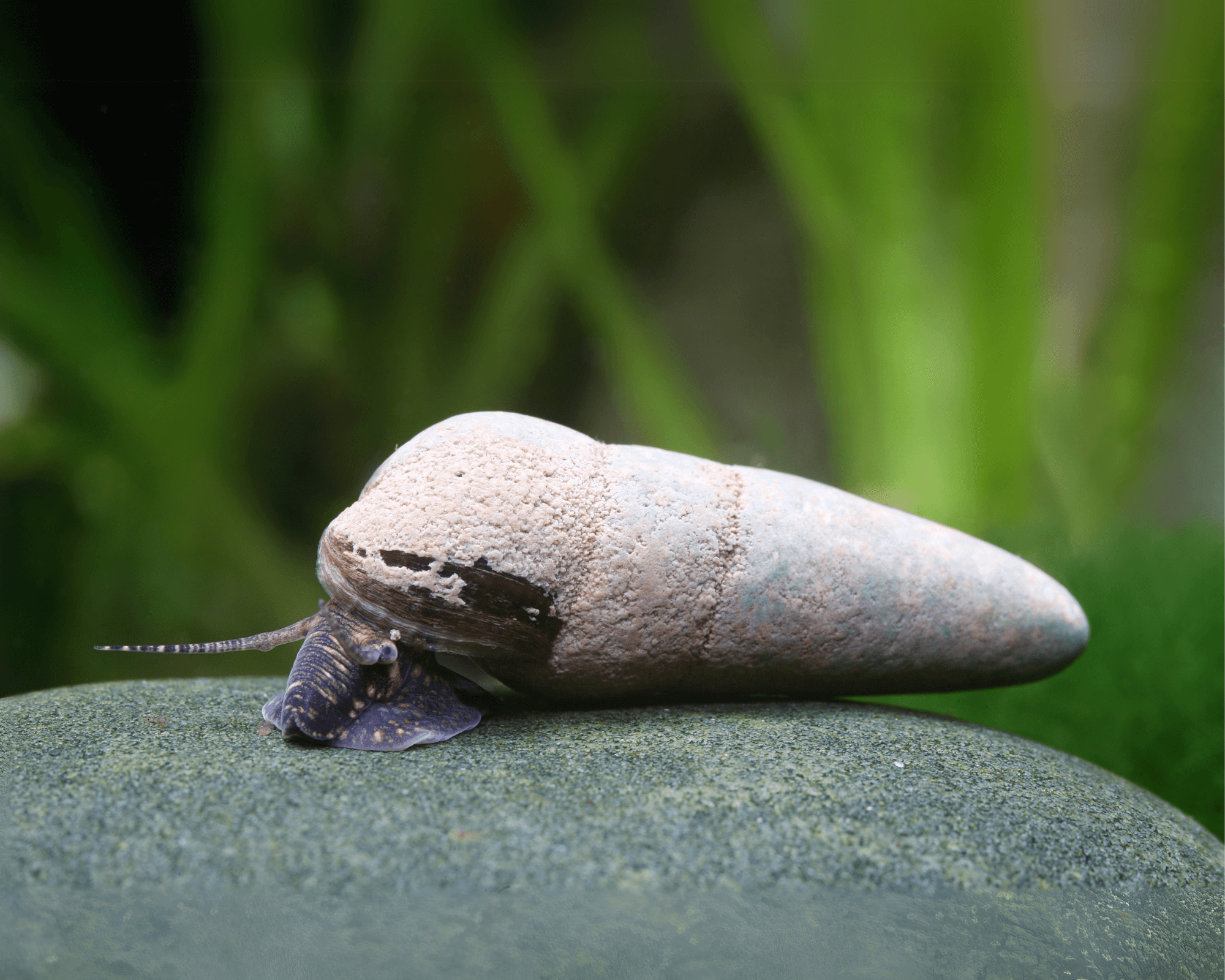
Tylomelania species are native to freshwater habitats on Sulawesi, Indonesia, including lakes, springs, streams, and associated rocky or silty margins. Conditions vary between localities, but many aquarium forms come from warm, clear, alkaline water with appreciable hardness. Provide smooth stones, wood, open floor area, and shaded refuges. Good oxygenation and gentle water movement are useful, while sudden changes in temperature or chemistry should be avoided.
Water parameters and aquarium care
Maintain warm, stable water around 26–30 °C with a pH of approximately 7.5–8.5. Moderate to high general and carbonate hardness helps support shell growth; avoid soft, acidic water and rapid shifts in mineral content. Ammonia and nitrite must remain undetectable, and nitrate should be kept low with regular maintenance. Use a mature aquarium because established surfaces provide natural grazing. Cover filter intakes and leave enough open substrate for this large, active snail.
Feeding
This snail grazes biofilm, algae, microorganisms, and organic material from hard surfaces and substrate, but a mature aquarium may not provide enough food by itself. Offer sinking herbivore or omnivore wafers, algae-based foods, and small portions of blanched courgette, spinach, green beans, or other suitable vegetables. Occasional protein-containing sinking foods can supplement the diet. Remove uneaten food promptly, particularly in warm water, to protect water quality.
Plant safety and tank mates
Tylomelania are generally considered plant-safe and are more likely to graze algae, biofilm, and decaying material than healthy leaves. They may disturb delicate rooted plants while moving or searching through substrate, and very soft or damaged leaves can be rasped. Choose peaceful tank mates that will not nip tentacles or harass the snail. Avoid loaches, pufferfish, aggressive cichlids, and other animals that prey on or attack snails.
Reproduction
Tylomelania are live-bearing snails rather than egg scatterers. Females release individual, fully formed young enclosed in a pale, capsule-like membrane; the young emerge after release and begin grazing independently. Reproduction is comparatively slow and is affected by food availability, temperature, condition, and the presence of compatible adults. Exact breeding details may vary among Tylomelania species and locality forms, so captive results should not be assumed to represent Tylomelania perfecta specifically.
Population control
Population growth is usually manageable because reproduction is slow, but abundant food can increase survival of young. Feed measured portions, remove leftovers, and avoid allowing excessive organic waste to accumulate. Inspect plants, décor, and filter compartments for juveniles during maintenance. If numbers become excessive, remove snails by hand and rehome them responsibly; do not release them outdoors. Copper treatments and other molluscicides can harm this snail and contaminate the aquarium, so they should not be used for routine control.
 - 1.webp)
Leave your comments