Taxonomy and identification
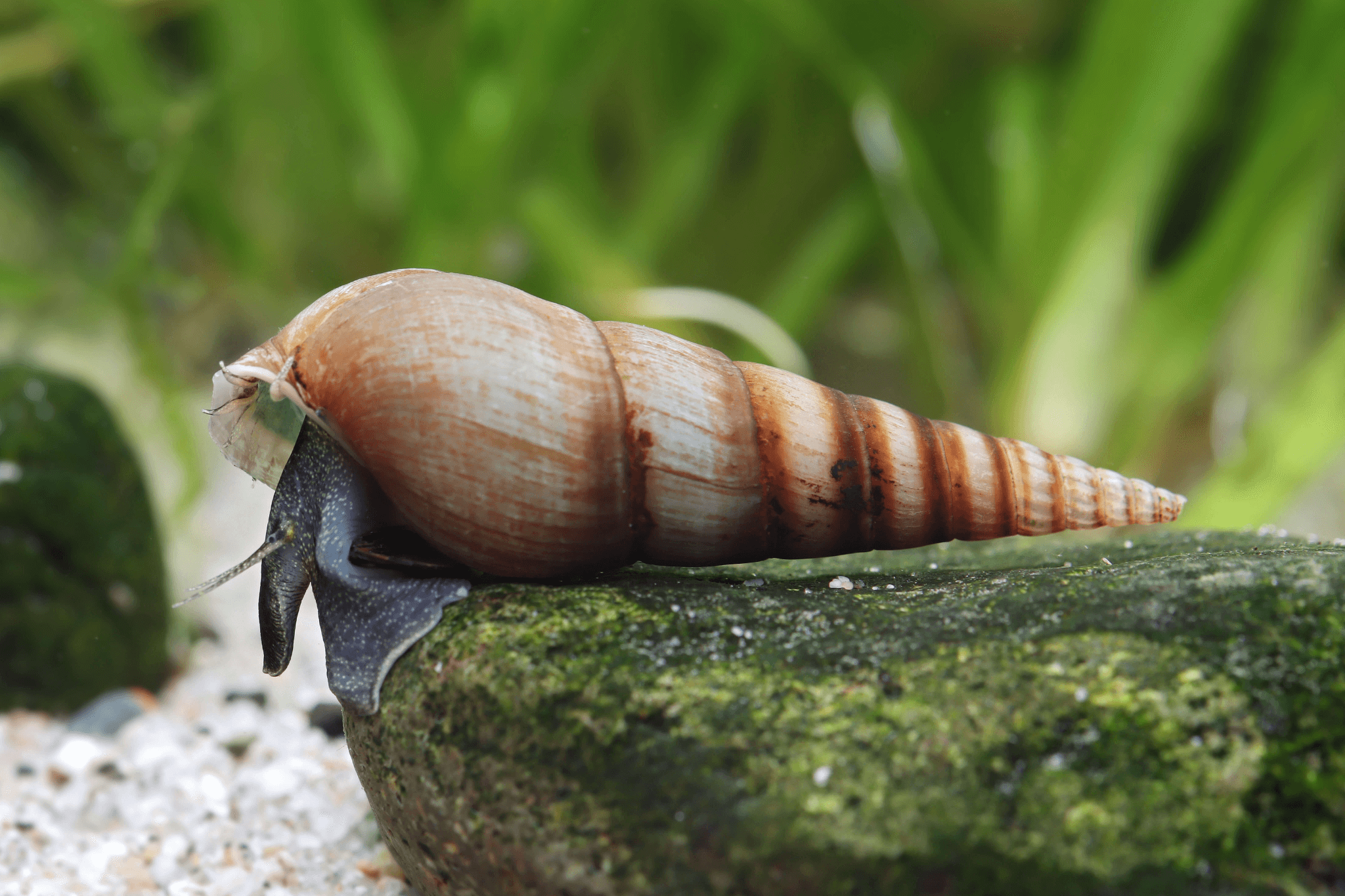
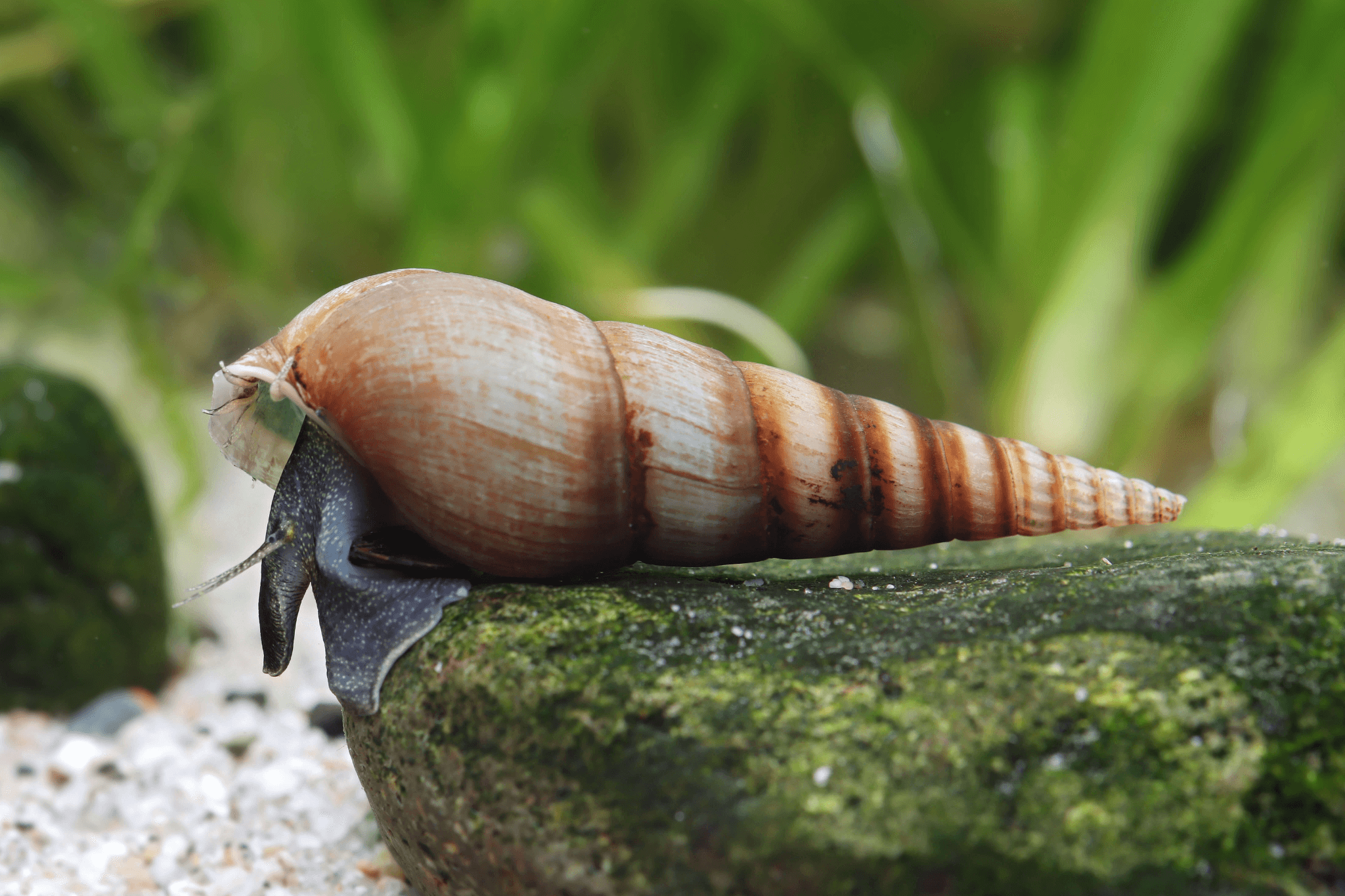
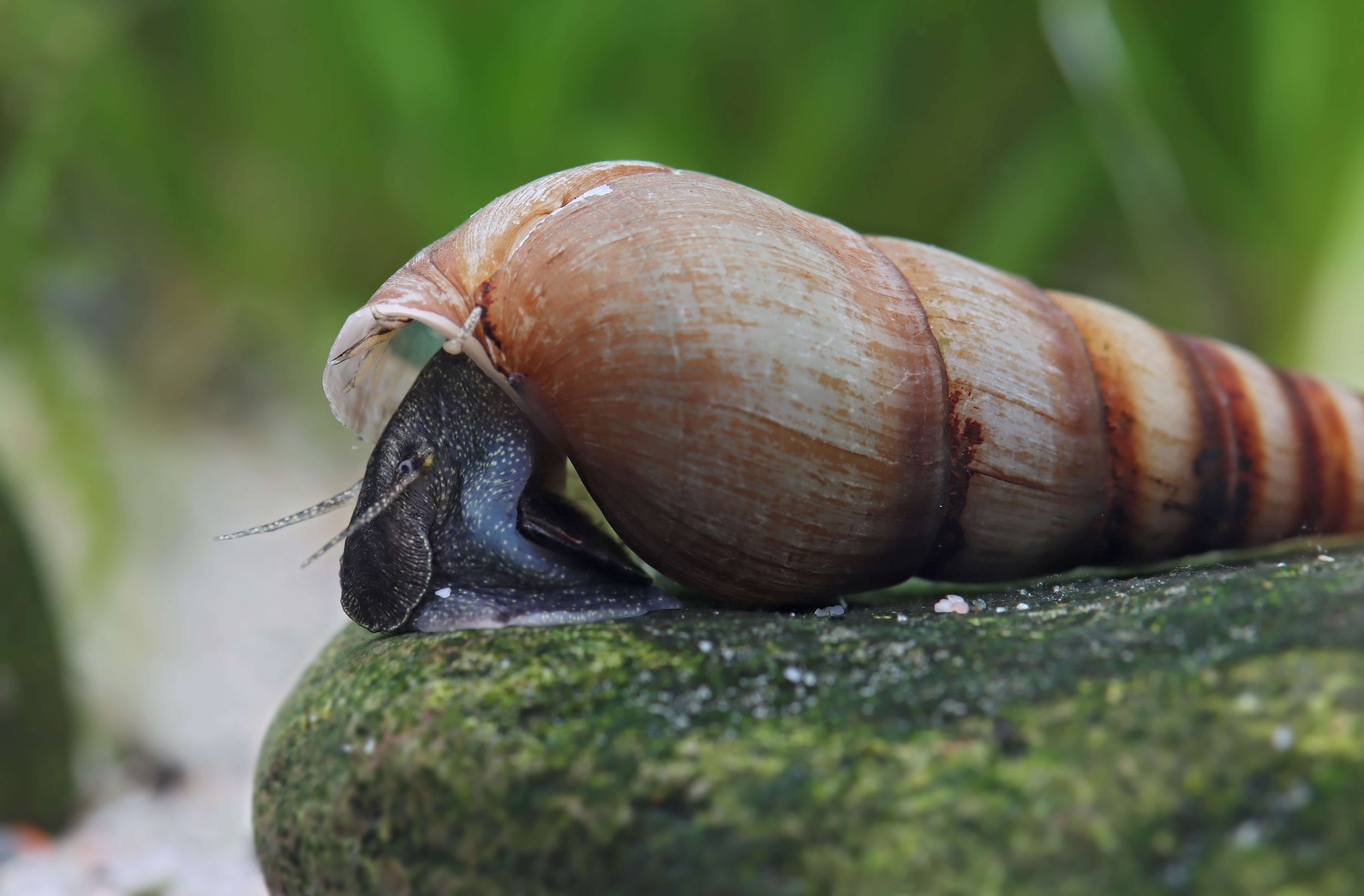
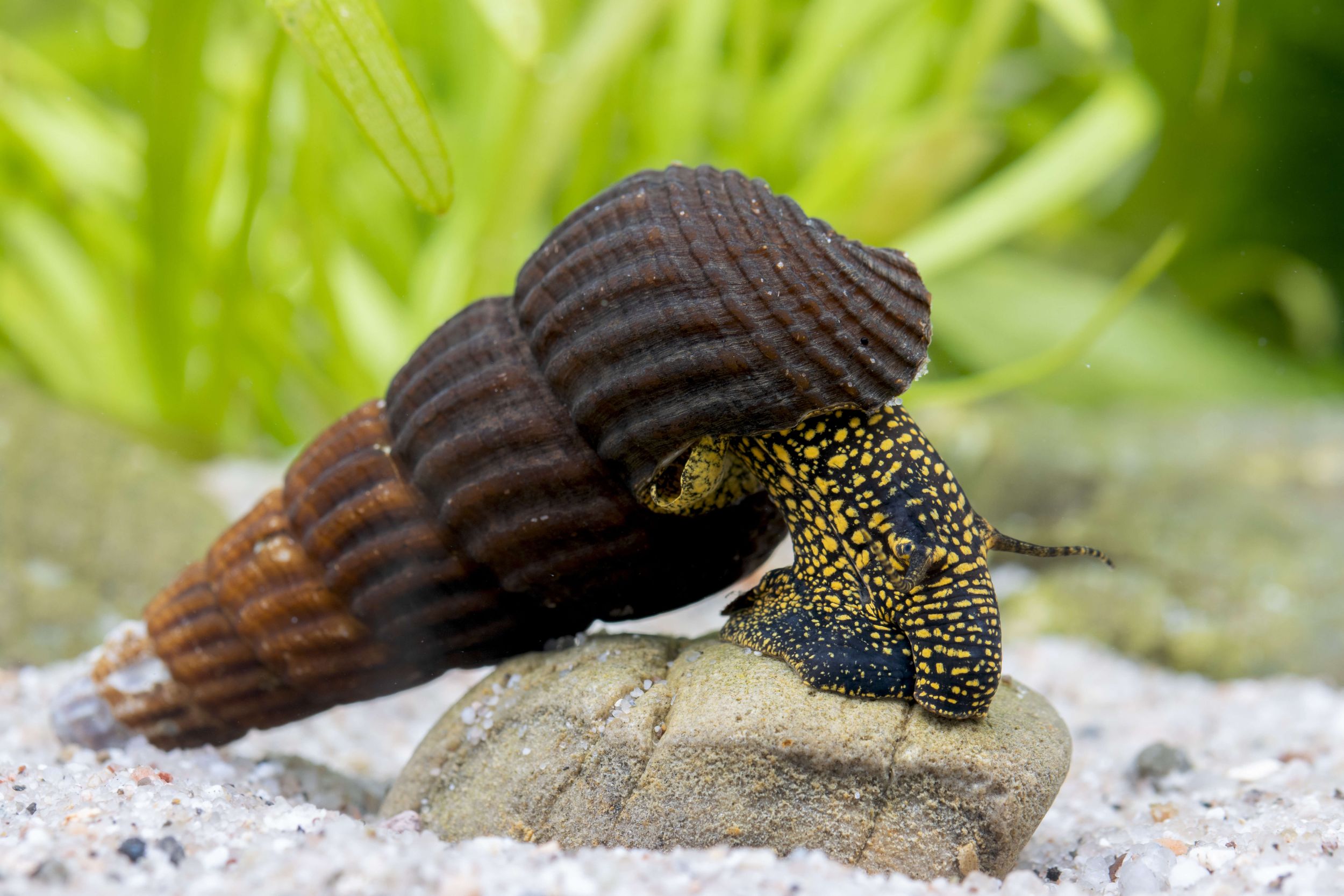
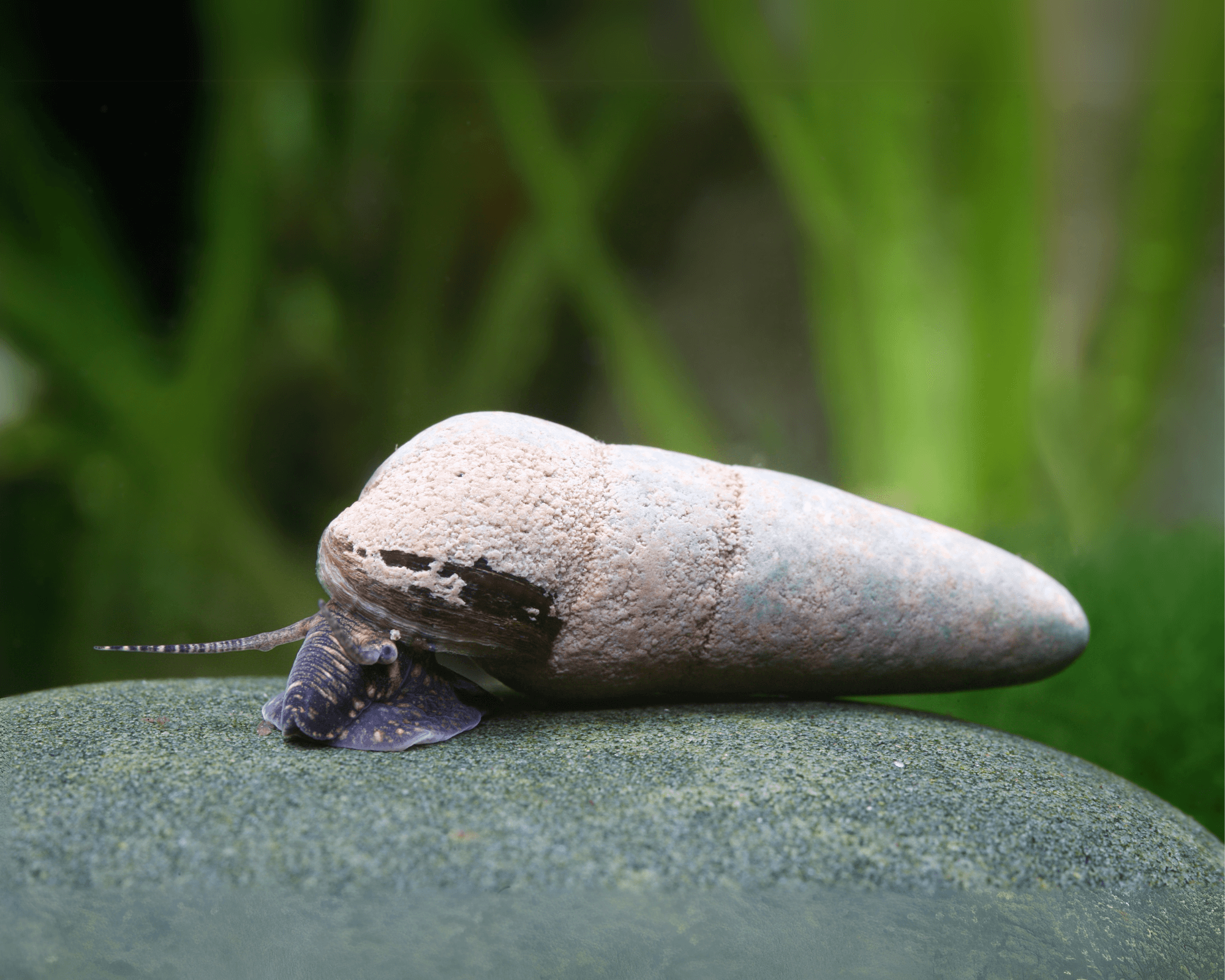
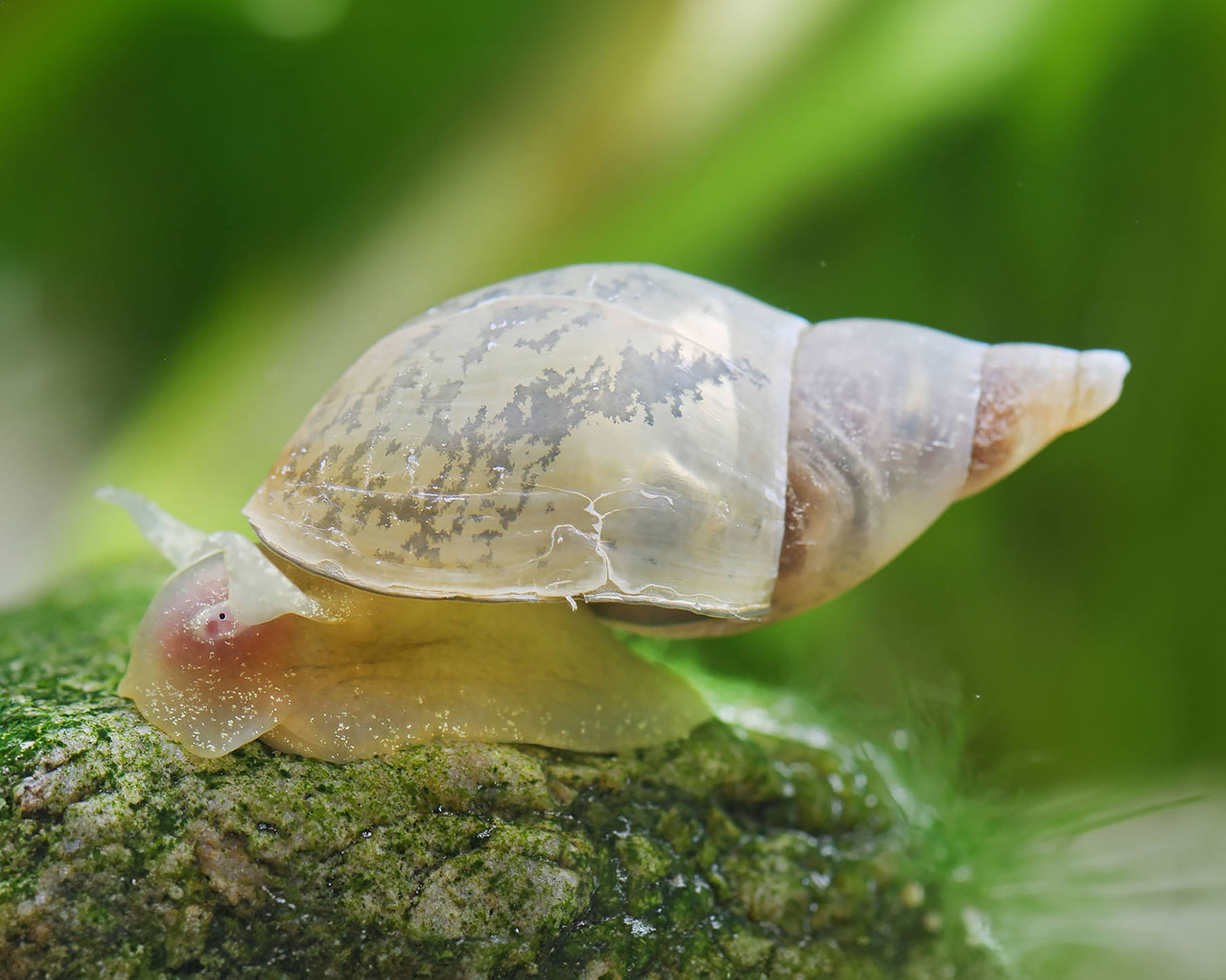
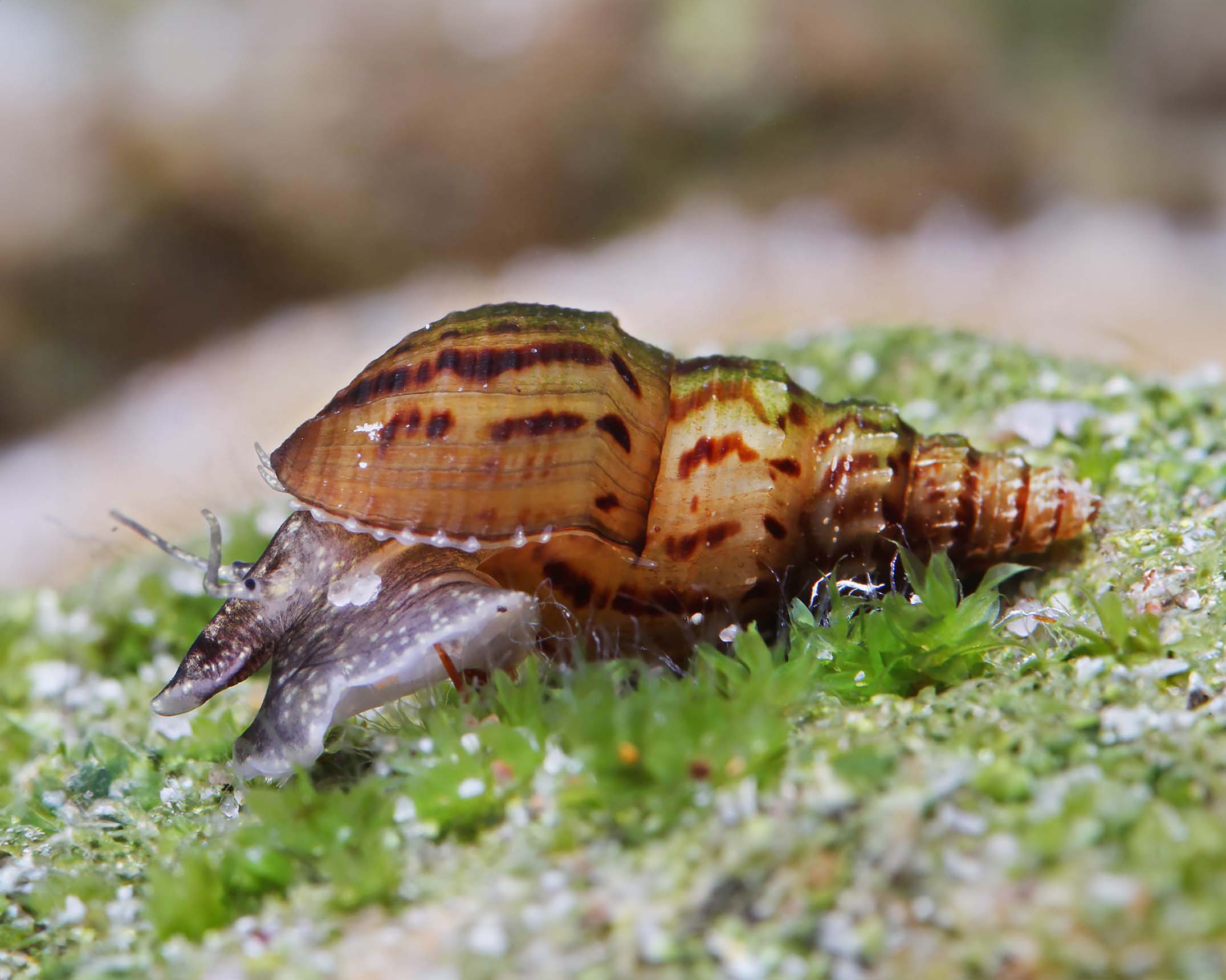
The supplied source identifies this snail as Melanoides tuberculata. It is a freshwater trumpet snail in the family Thiaridae. “XXL” is a trade or size designation rather than a separately established species or formal taxonomic name. The shell is elongated and conical, with multiple whorls and commonly darker bands or mottling. Shell and body colors can vary considerably.
Natural habitat
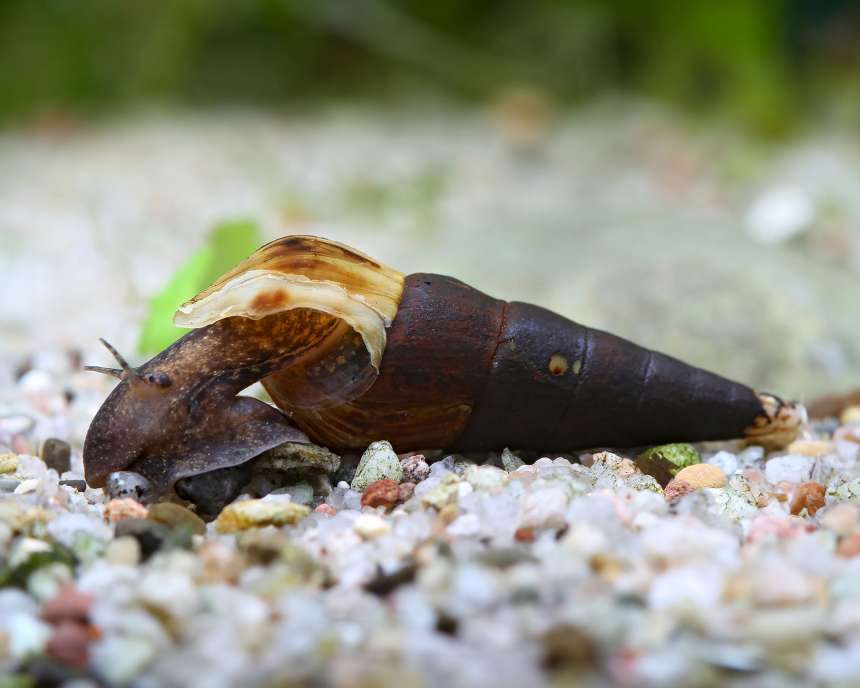
Melanoides tuberculata is associated with warm freshwater habitats, including ponds, canals, lakes, rivers and streams. It commonly spends daylight hours buried in substrate and becomes more active at night or when food is available. Fine sand or smooth small-grain substrate supports natural burrowing, although the snail can live on other aquarium substrates.
Aquarium water parameters
Maintain stable, clean, oxygenated freshwater at approximately 20–30 °C and pH 7.0–8.5. Moderate hardness and a reliable supply of calcium and other minerals help maintain the shell. Avoid prolonged acidic, very soft water, sudden temperature changes and detectable ammonia or nitrite. Regular partial water changes are preferable to attempting to correct poor conditions with abrupt chemical adjustments.
Feeding
This omnivorous detritivore grazes on biofilm, algae, uneaten food and decaying organic matter in the substrate. In a mature aquarium it may obtain much of its diet naturally, but it can also receive small amounts of sinking foods such as algae wafers or other invertebrate foods. Remove uneaten portions. Excess food is the main reason populations become very dense.
Plant safety and tank mates
Healthy, established aquarium plants are normally safe because this snail mainly grazes surfaces and consumes dead or damaged material rather than cutting healthy leaves. It may move through or disturb delicate newly planted stems while burrowing. Keep it with peaceful freshwater community fish and invertebrates that do not routinely attack snails. Copper-based medications and other treatments toxic to mollusks should be avoided.
Reproduction
Melanoides tuberculata is a livebearing snail. Young develop inside the parent and are released as small crawling snails rather than as conspicuous egg clutches. Reproduction can occur without a deliberately managed breeding setup, and introduced individuals may establish a population from a small starting group. Warm conditions and plentiful food generally support faster population growth.
Population control
Control begins with measured feeding, prompt removal of excess food and routine substrate maintenance. Manual removal after dark, when the snails are active, is effective for gradual reduction. A baited snail trap can remove many individuals, but it should be checked frequently and placed so desired animals are not trapped. Do not release surplus snails into natural waterways. Chemical snail killers can harm fish, shrimp and other invertebrates and may cause water-quality problems when many snails die at once.

 - 1.webp)
Leave your comments