Taxonomy and identification
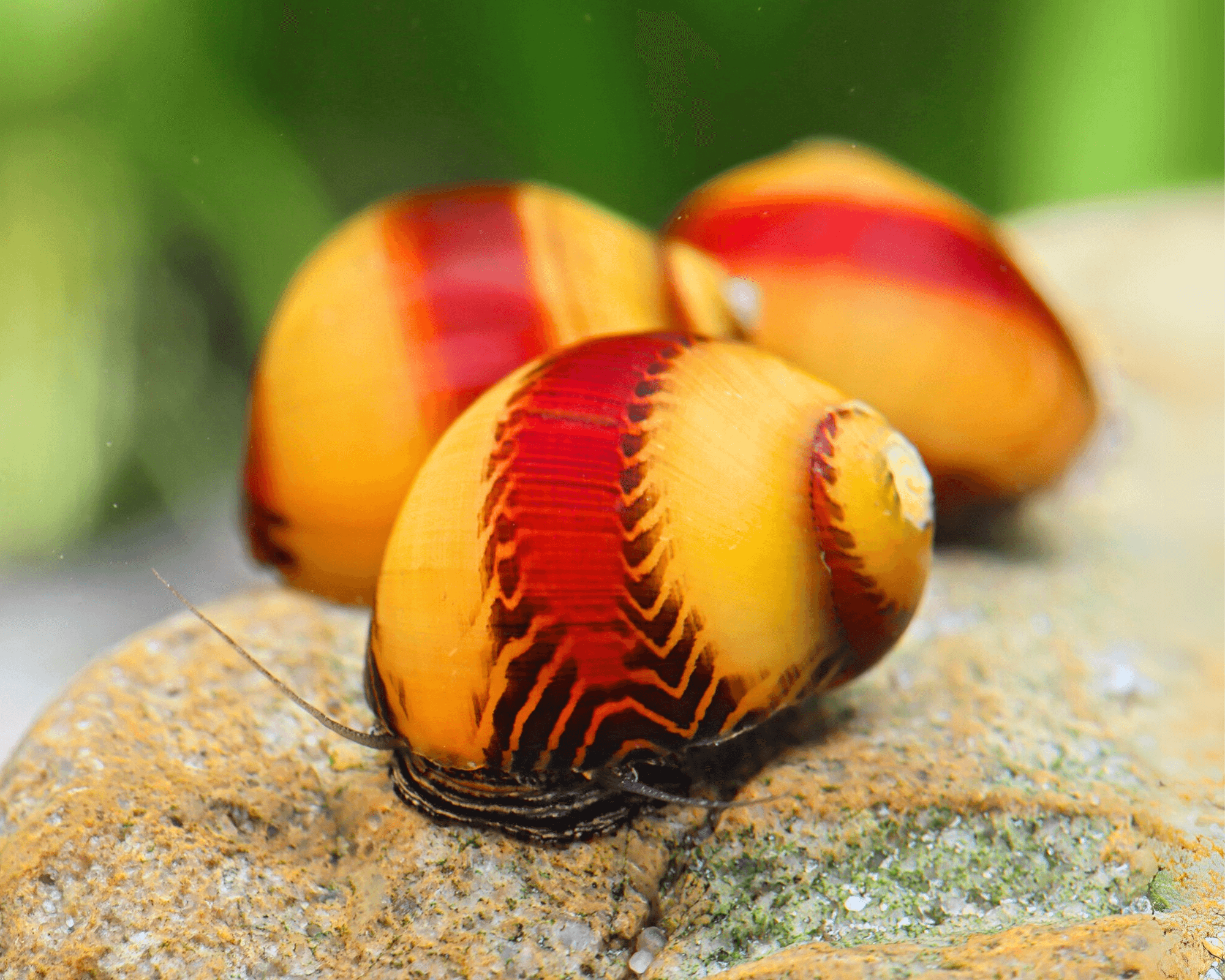
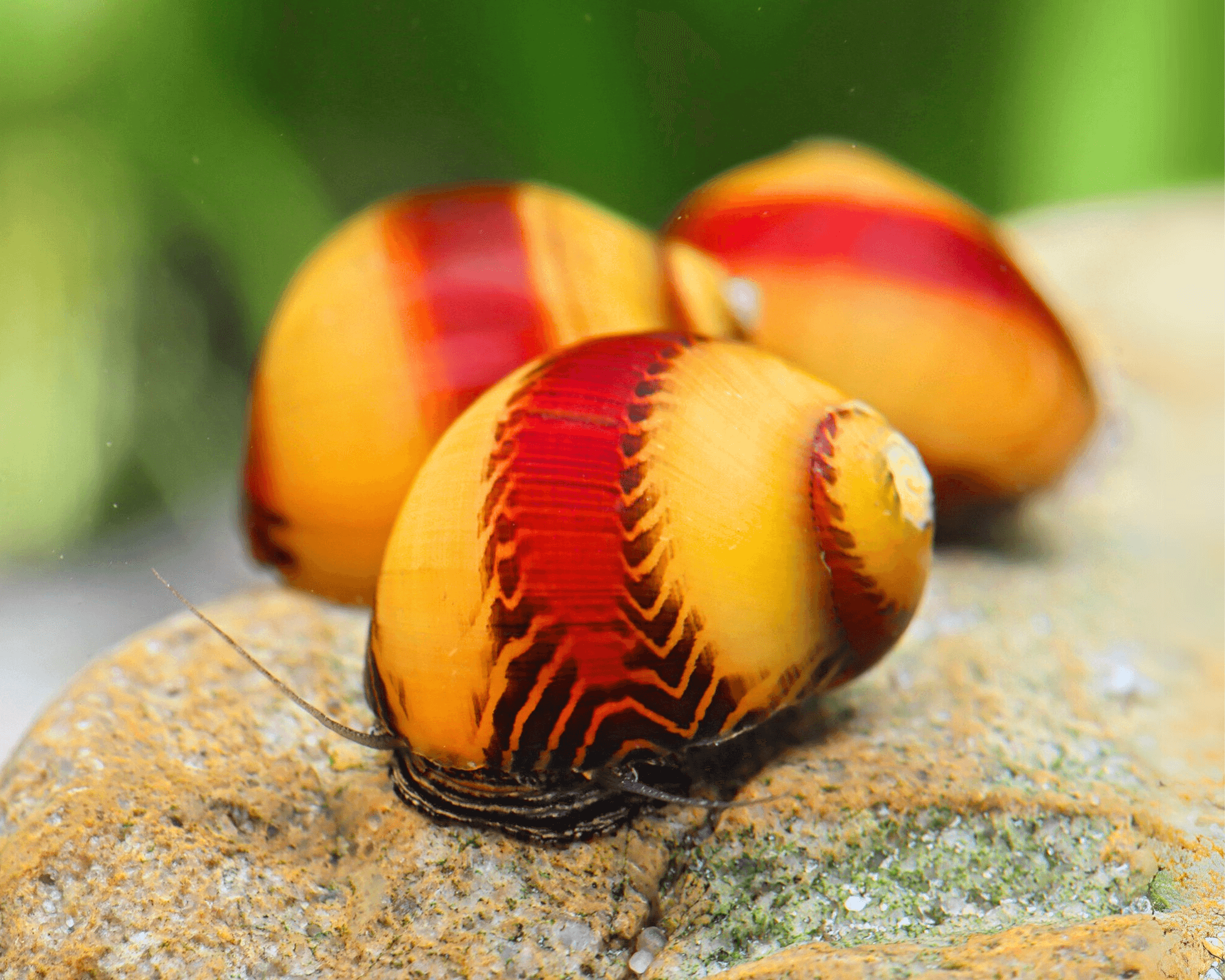
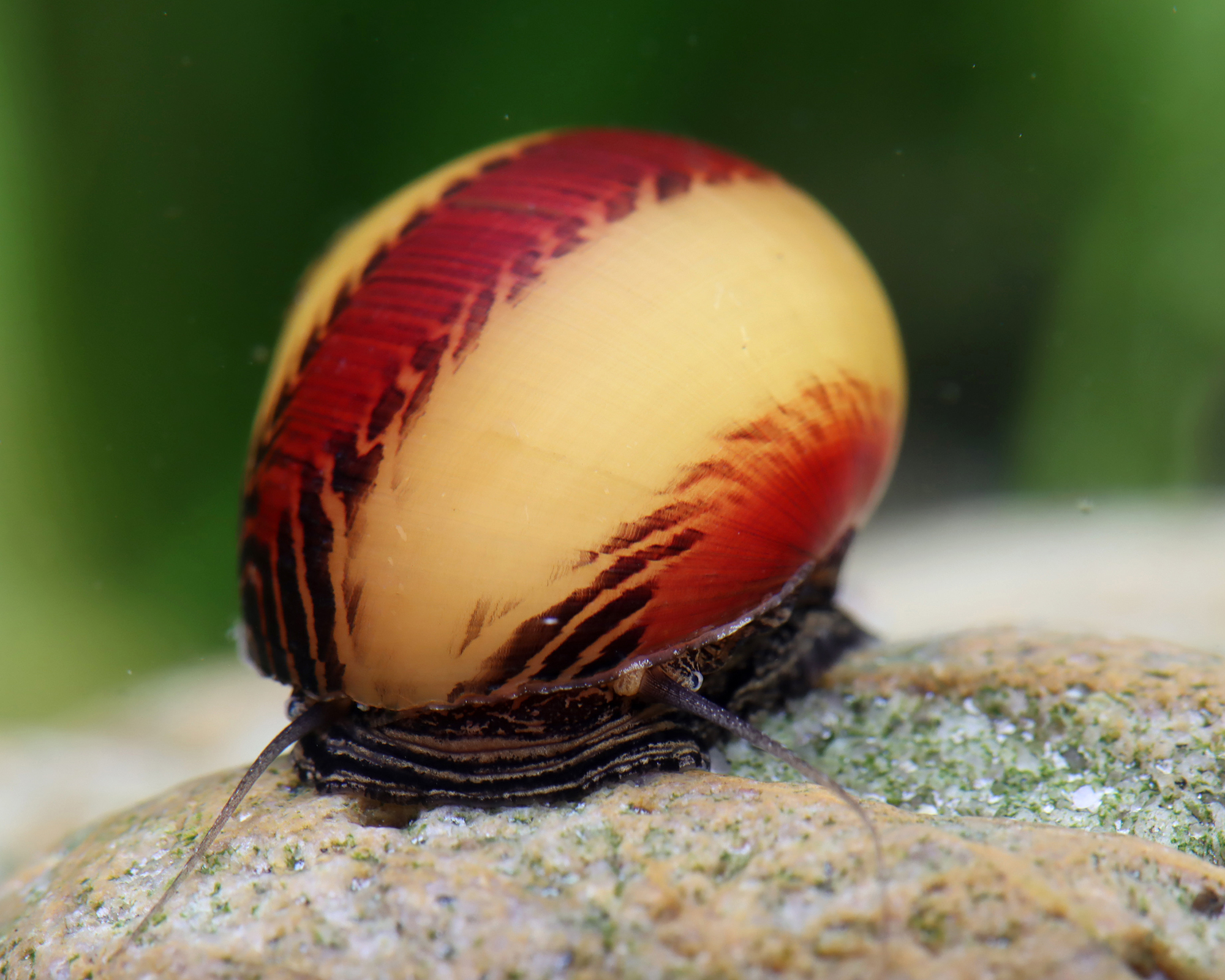
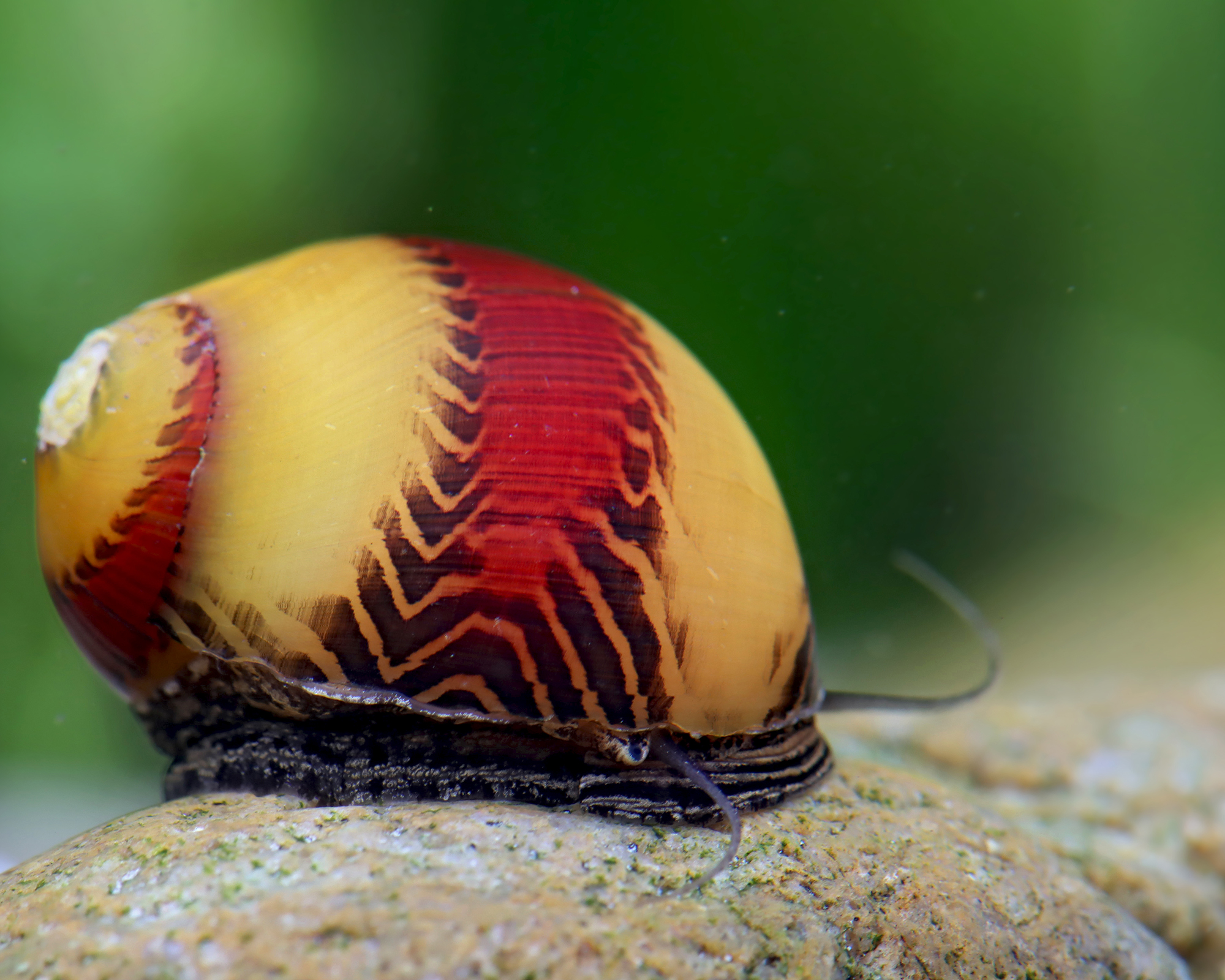
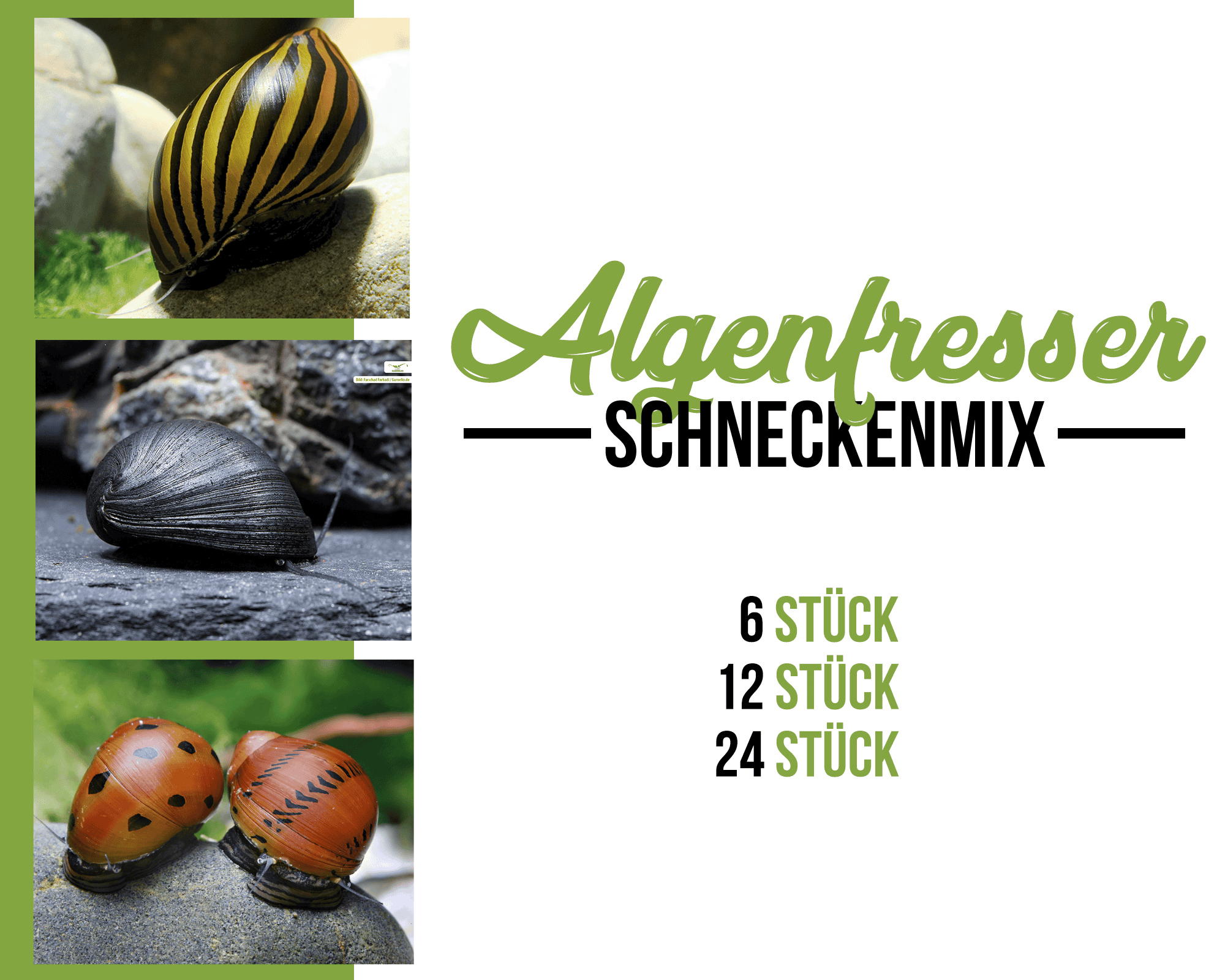
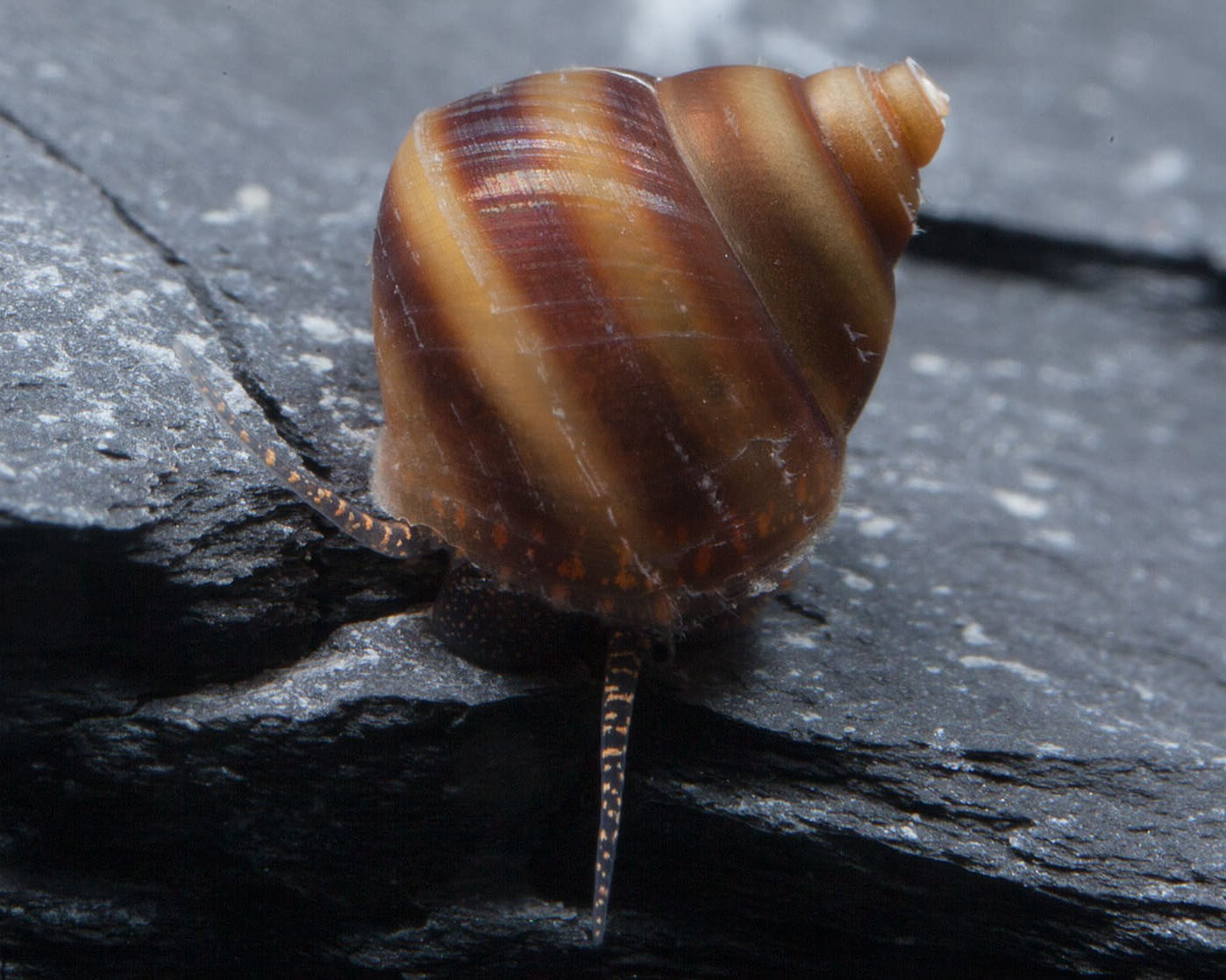
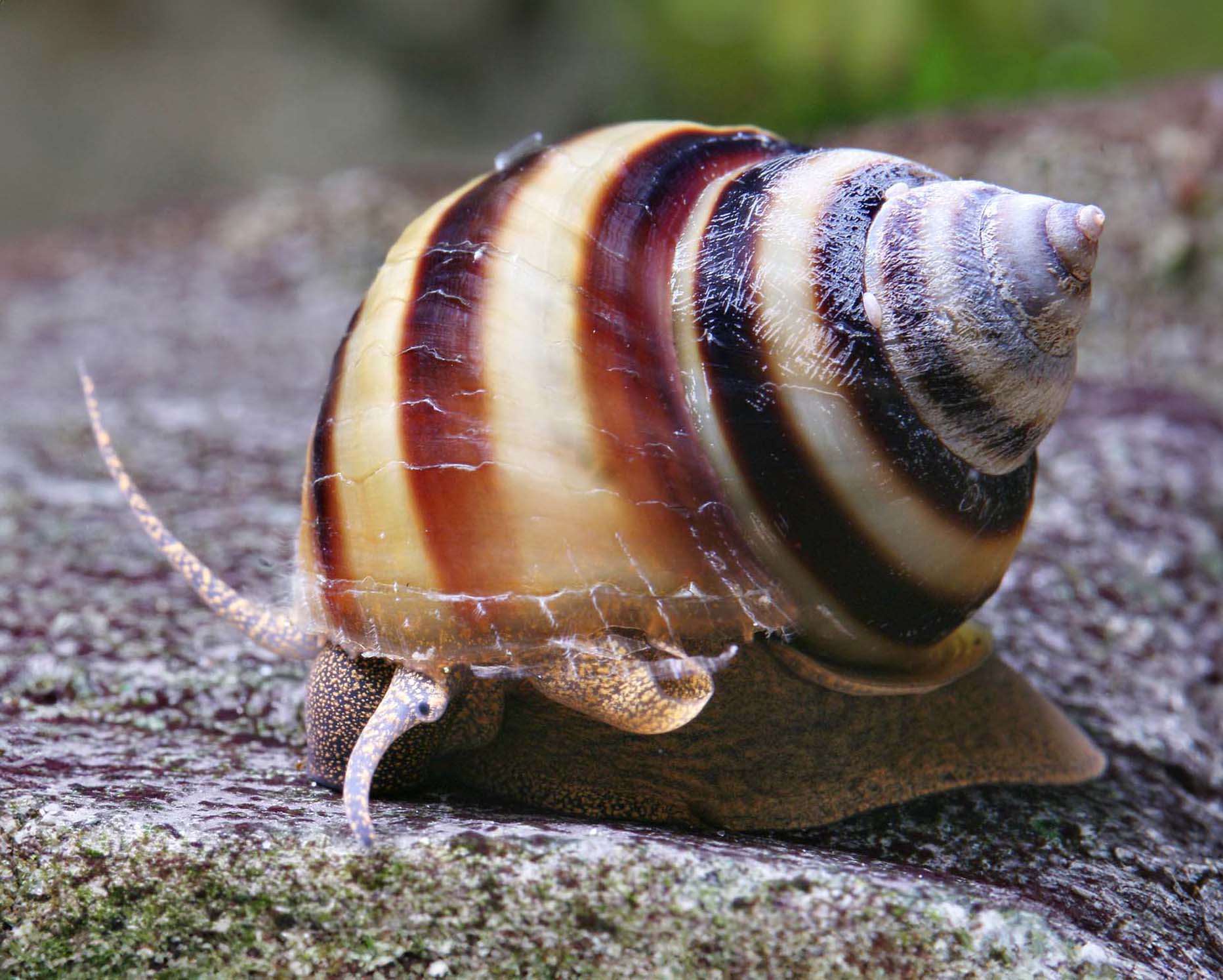
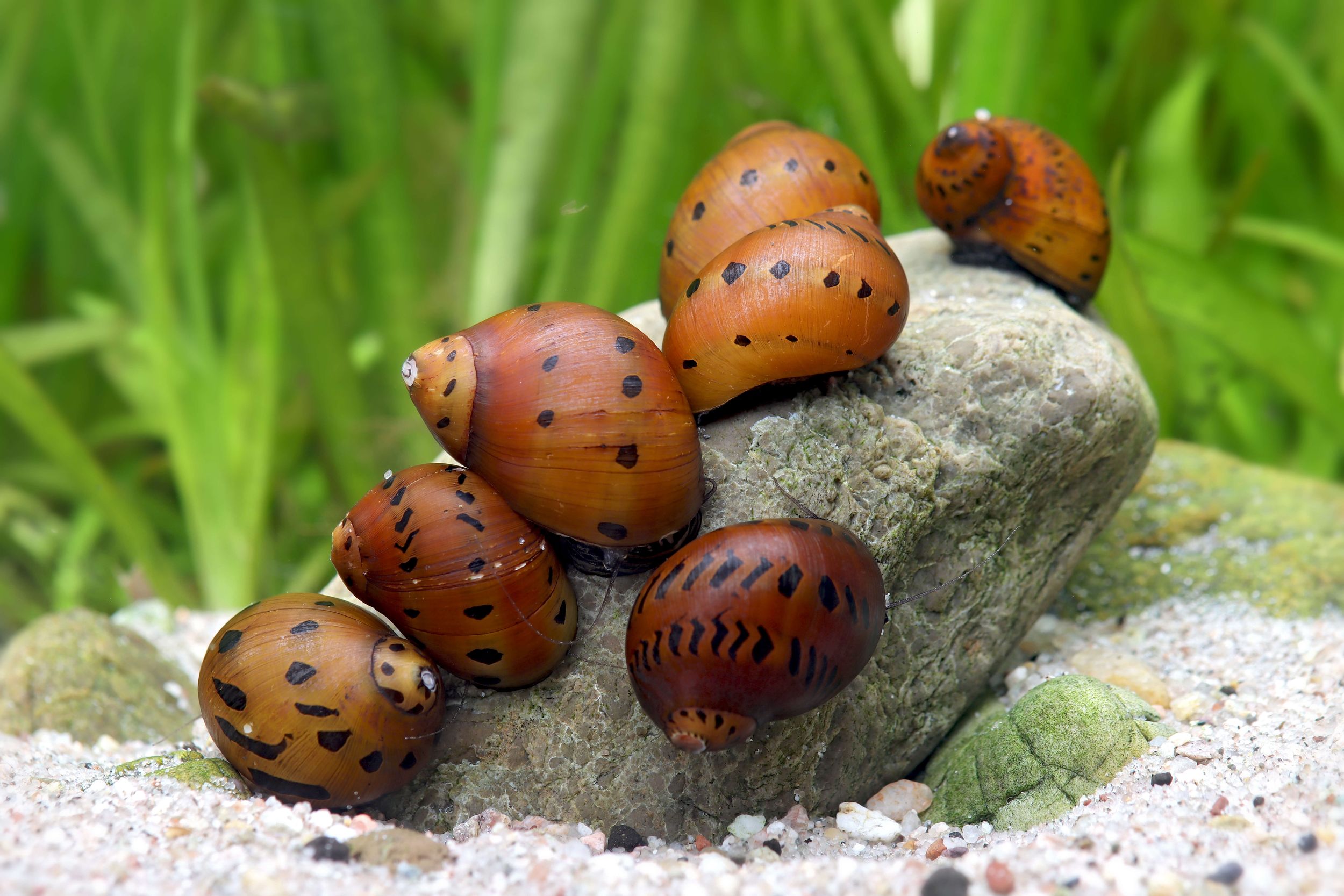
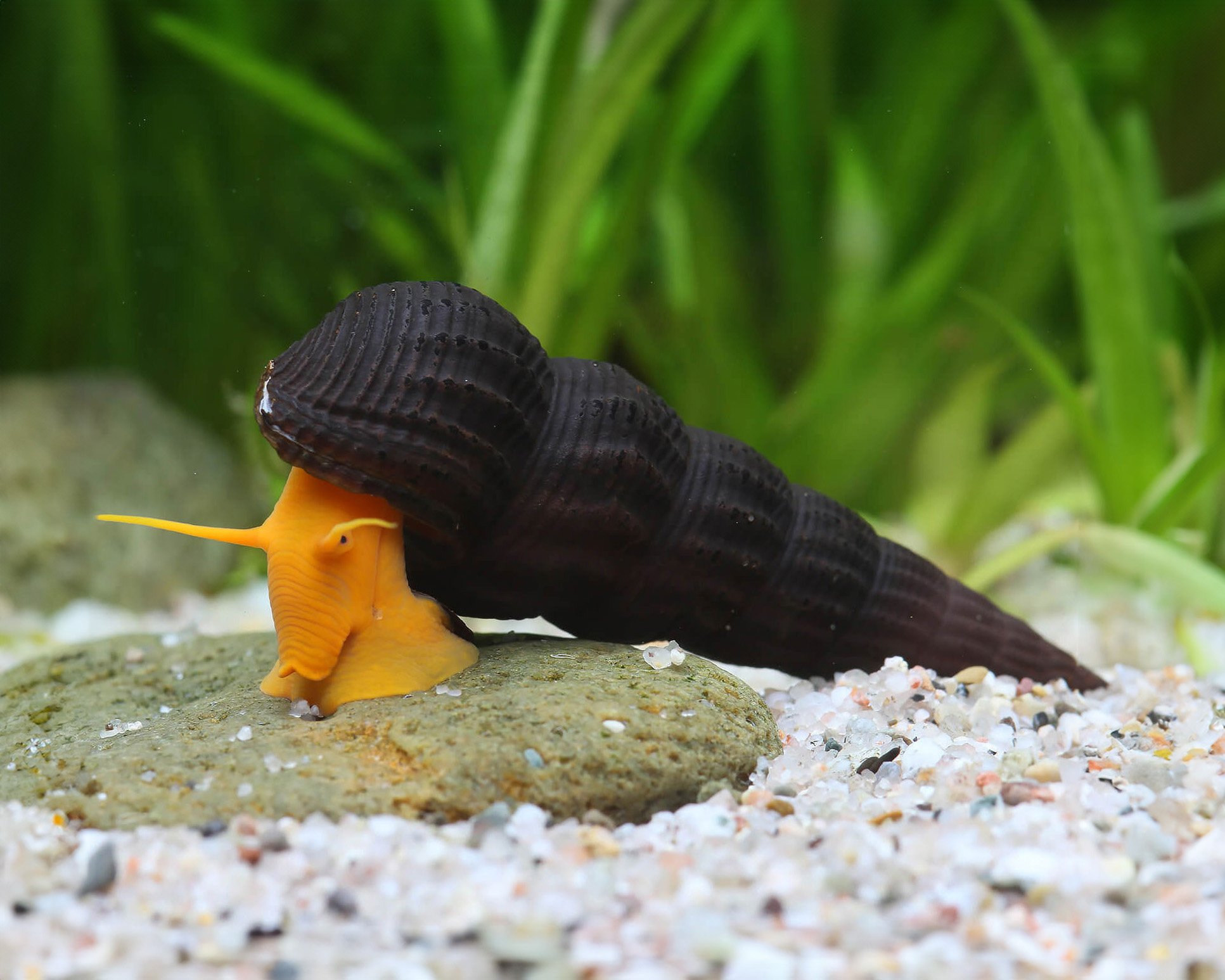
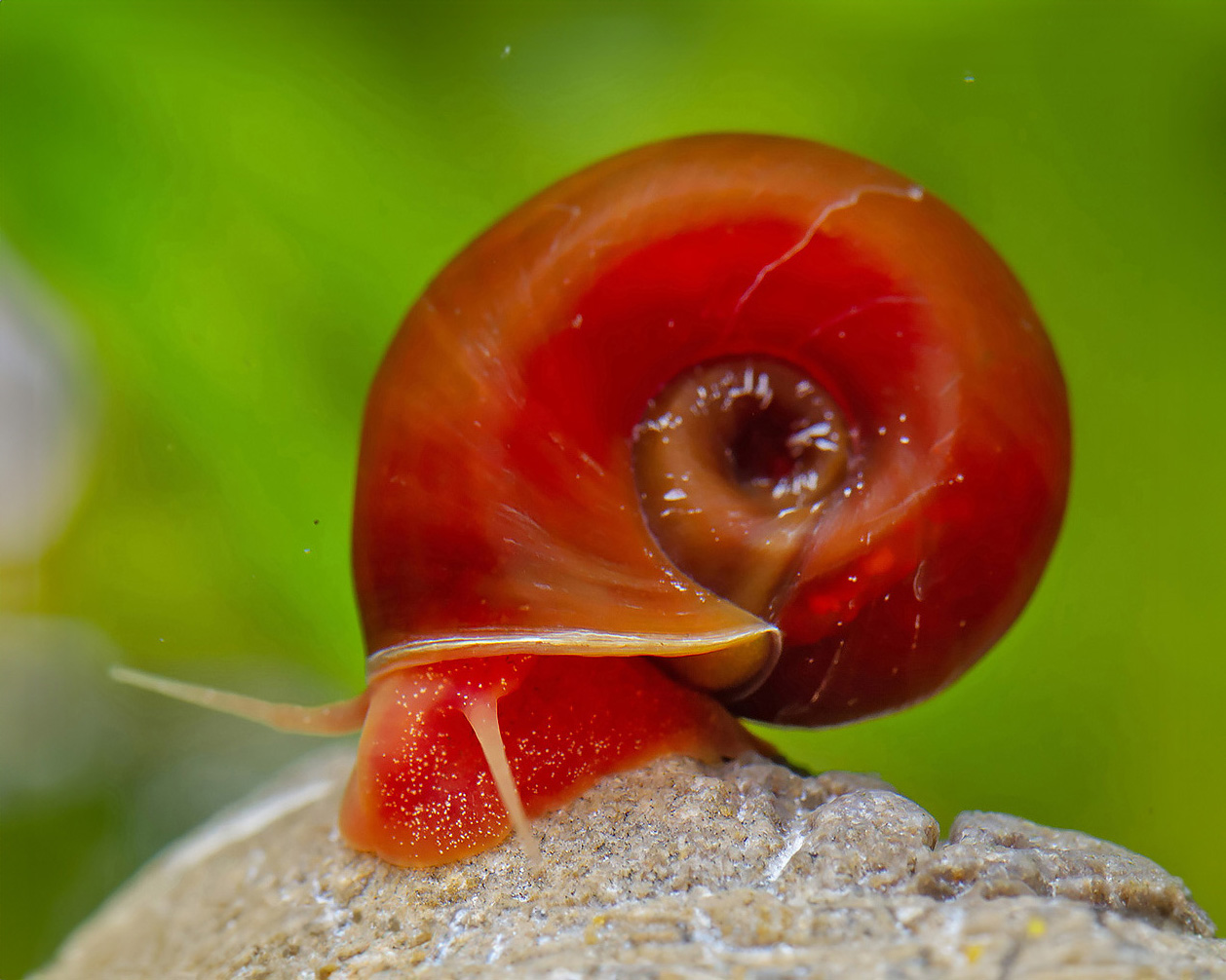
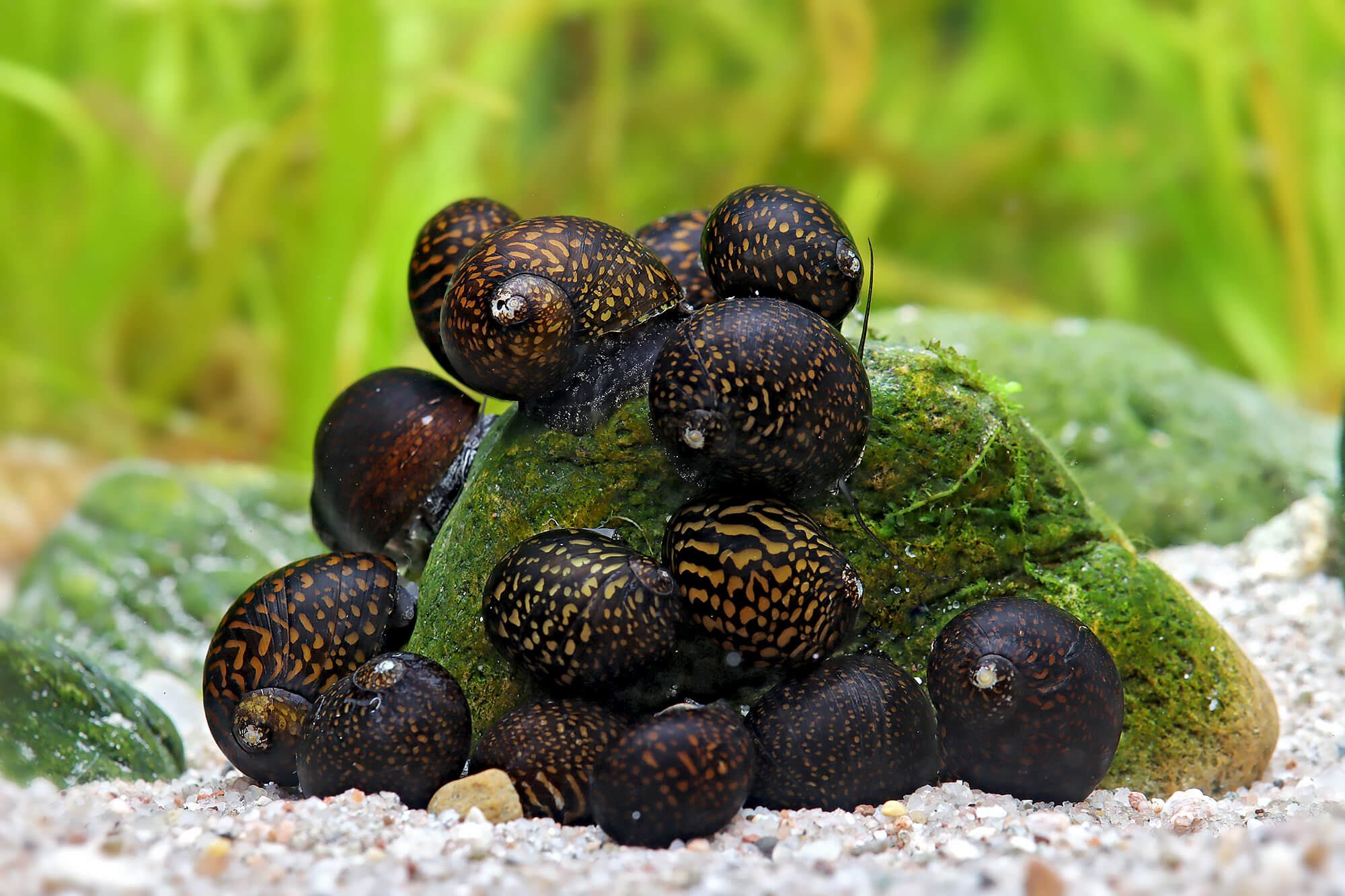
Vittina waigiensis is a nerite snail in the family Neritidae. Aquarium sellers may use common names such as red stripe nerite, yellow stripe nerite, or Rennschnecke, and trade names are not always consistent. The pictured shell has a yellow to orange base with red bands and dark edging, a pattern compatible with V. waigiensis, but photographs alone cannot confirm the species. It has a low, rounded shell and a broad muscular foot typical of nerites.
Natural habitat
This species is associated with tropical Indo-Pacific freshwater streams and connected estuarine habitats. Nerites often live on firm surfaces where flowing, oxygen-rich water supports algae and biofilm growth. Their amphidromous life cycle connects freshwater adult habitat with brackish or marine conditions needed by the planktonic larvae.
Aquarium conditions
Provide mature, stable water with good oxygenation, gentle circulation, smooth rocks, wood, and other surfaces that can develop natural biofilm. Keep ammonia and nitrite at zero and avoid prolonged nitrate accumulation. Moderately hard, alkaline water is preferable because calcium and carbonate availability help maintain the shell. Avoid sudden changes in temperature, pH, hardness, and salinity. A tight-fitting lid is useful because nerites may climb above the waterline.
Feeding
The main diet is attached algae and biofilm scraped from glass, rocks, wood, and other hard surfaces. Do not rely on a newly set-up or very clean aquarium to feed several snails. Offer sinking algae wafers or other invertebrate foods, and occasionally provide blanched vegetables such as zucchini or spinach when natural growth is insufficient. Remove uneaten food promptly. Calcium-rich food and mineral availability support shell maintenance, but excessive feeding can degrade water quality.
Plant safety
Vittina waigiensis is generally safe with healthy aquarium plants. It grazes algae and surface films rather than deliberately eating sound plant tissue. It may move across delicate leaves and can consume decaying material, so damaged leaves may look grazed after the snail has cleaned them. Protect the snail from copper-based medications and other treatments containing copper, which can be lethal to mollusks.
Reproduction and breeding
Individuals have separate sexes, and mating can occur in freshwater. Females deposit small, hard, pale egg capsules on rocks, wood, glass, and equipment. The capsules commonly remain visible even when they do not hatch. The larvae normally require brackish or marine water and appropriate food in a specialized rearing system, so eggs laid in an ordinary freshwater aquarium do not usually produce a growing population. Successful captive breeding is considerably more difficult than keeping adults.
Population control
Population growth is naturally limited in most freshwater aquariums because larvae cannot complete development there. Control feeding if other nuisance snails appear, remove unwanted adult nerites by hand, and scrape visible egg capsules from display surfaces when their appearance is undesirable. Do not use copper or unverified chemical snail killers in a tank containing valued invertebrates. Never release aquarium snails or egg-covered equipment into natural waterways.
 - 1.webp)
 - 1.webp)
Leave your comments