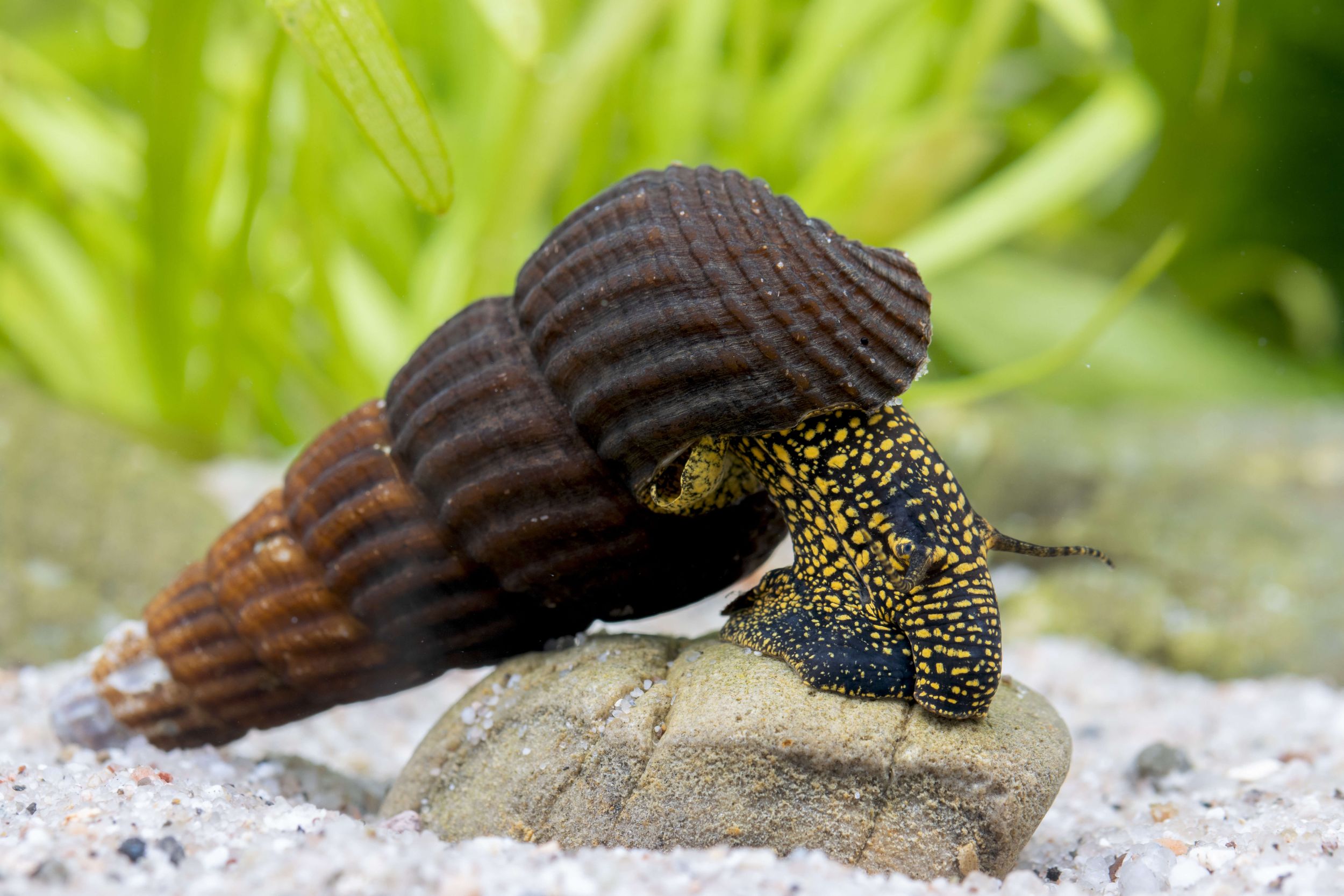
Taxonomy and identification
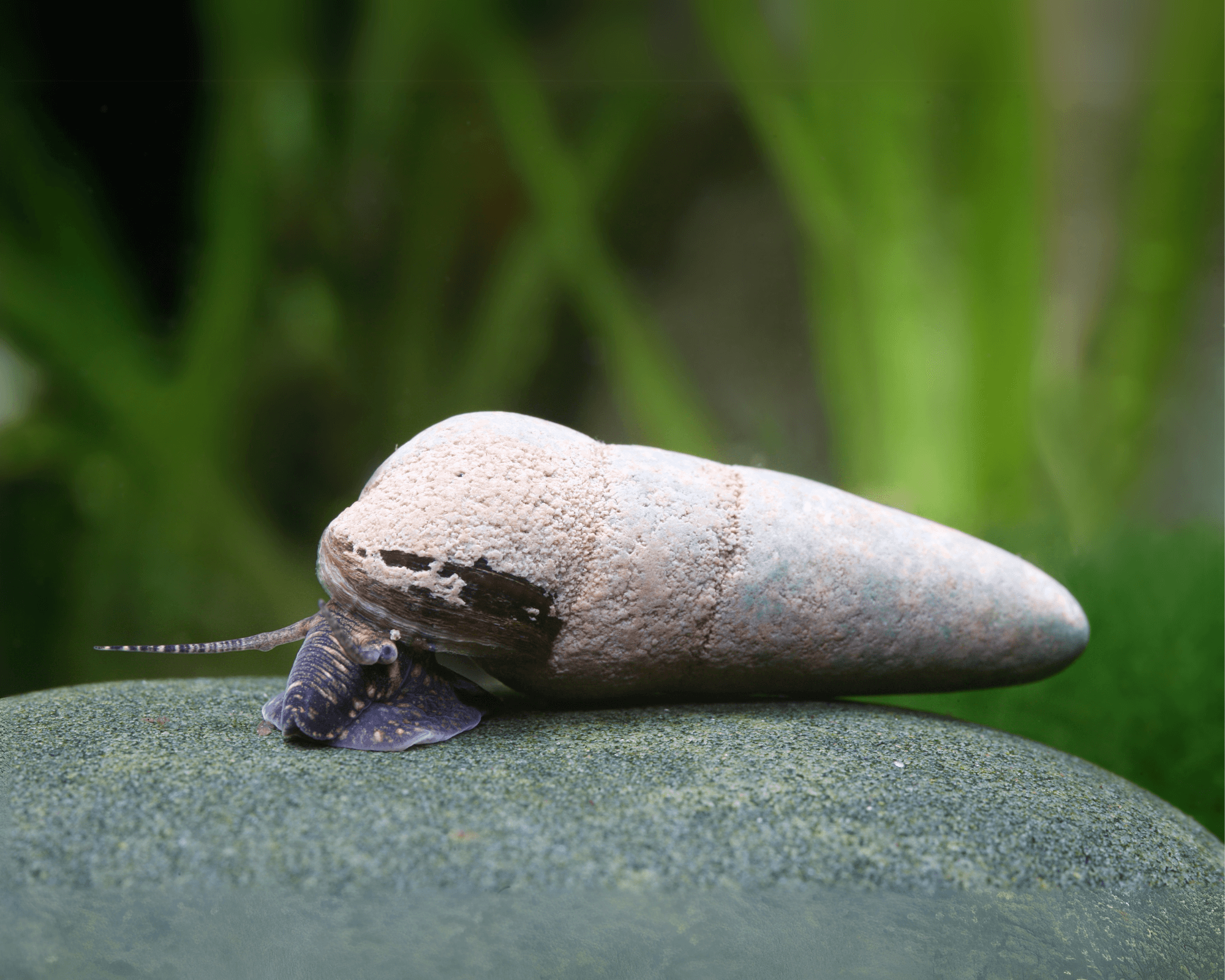
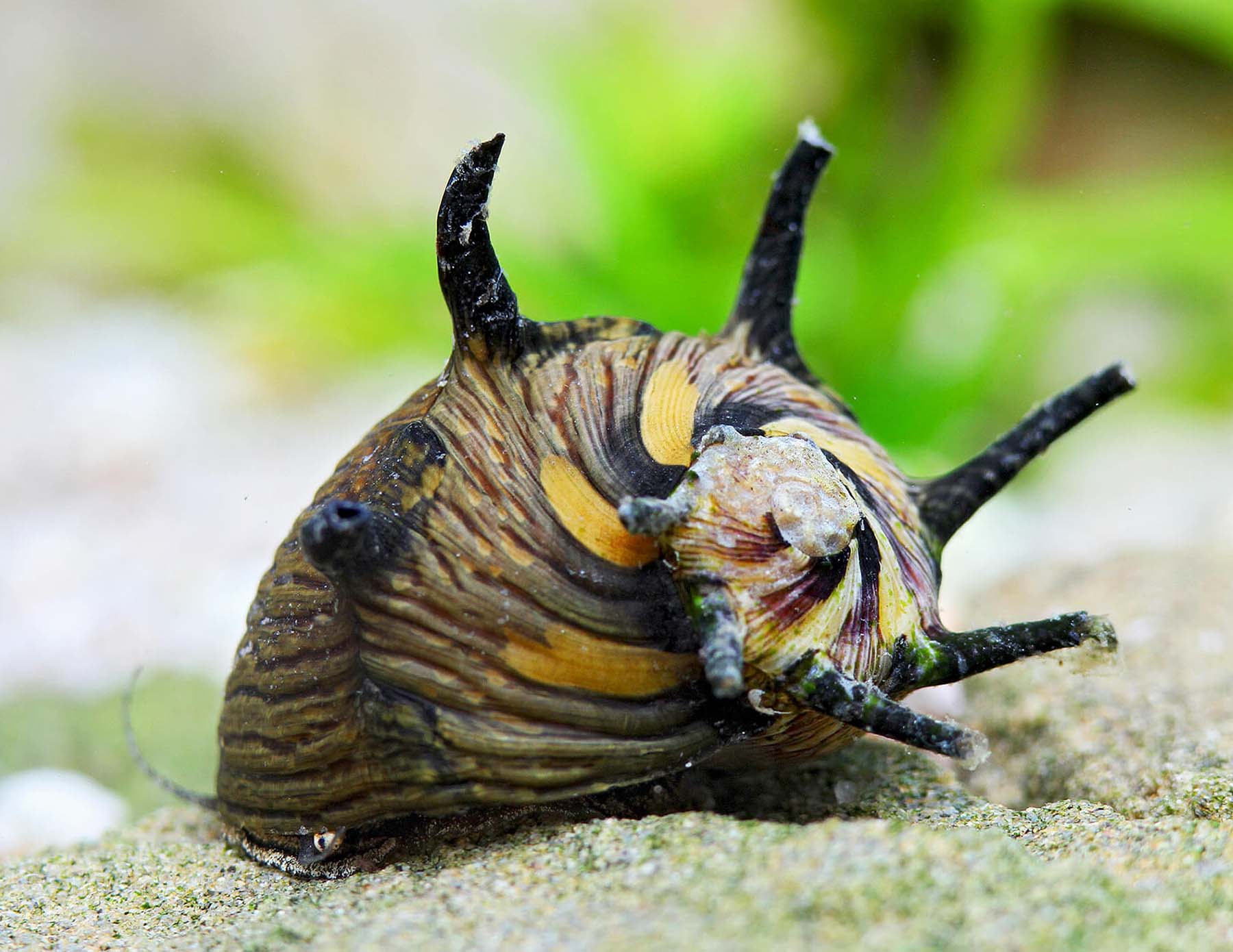
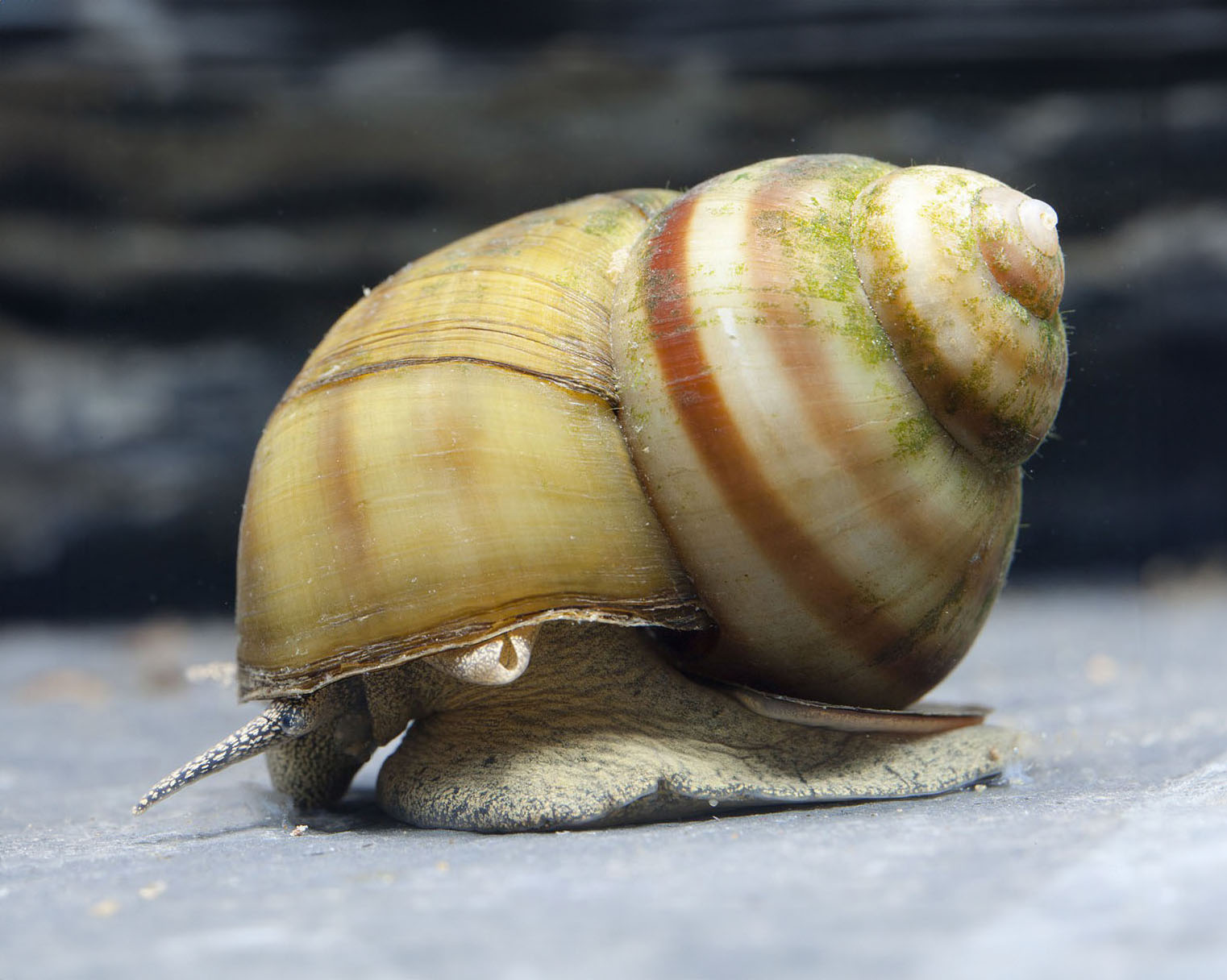
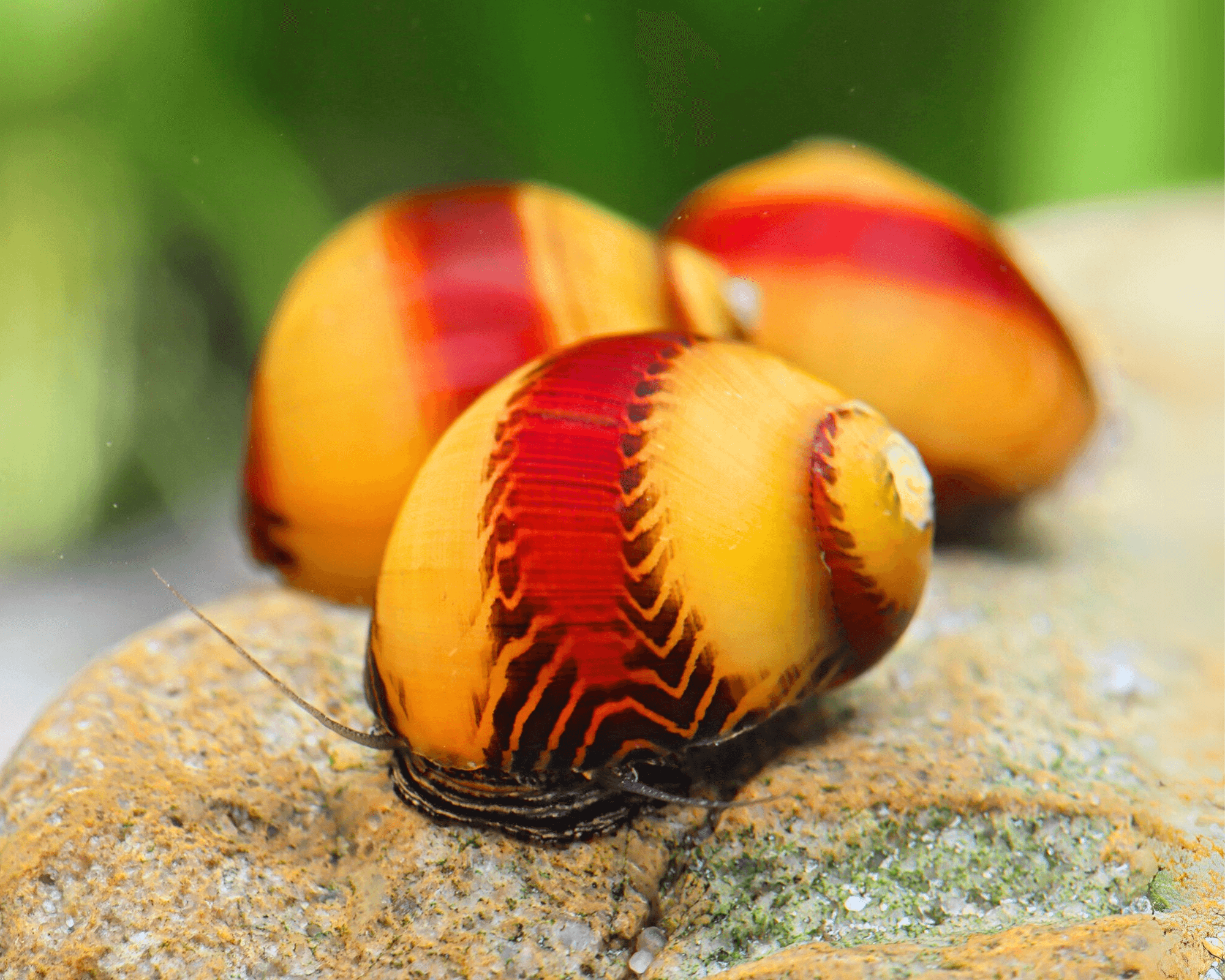
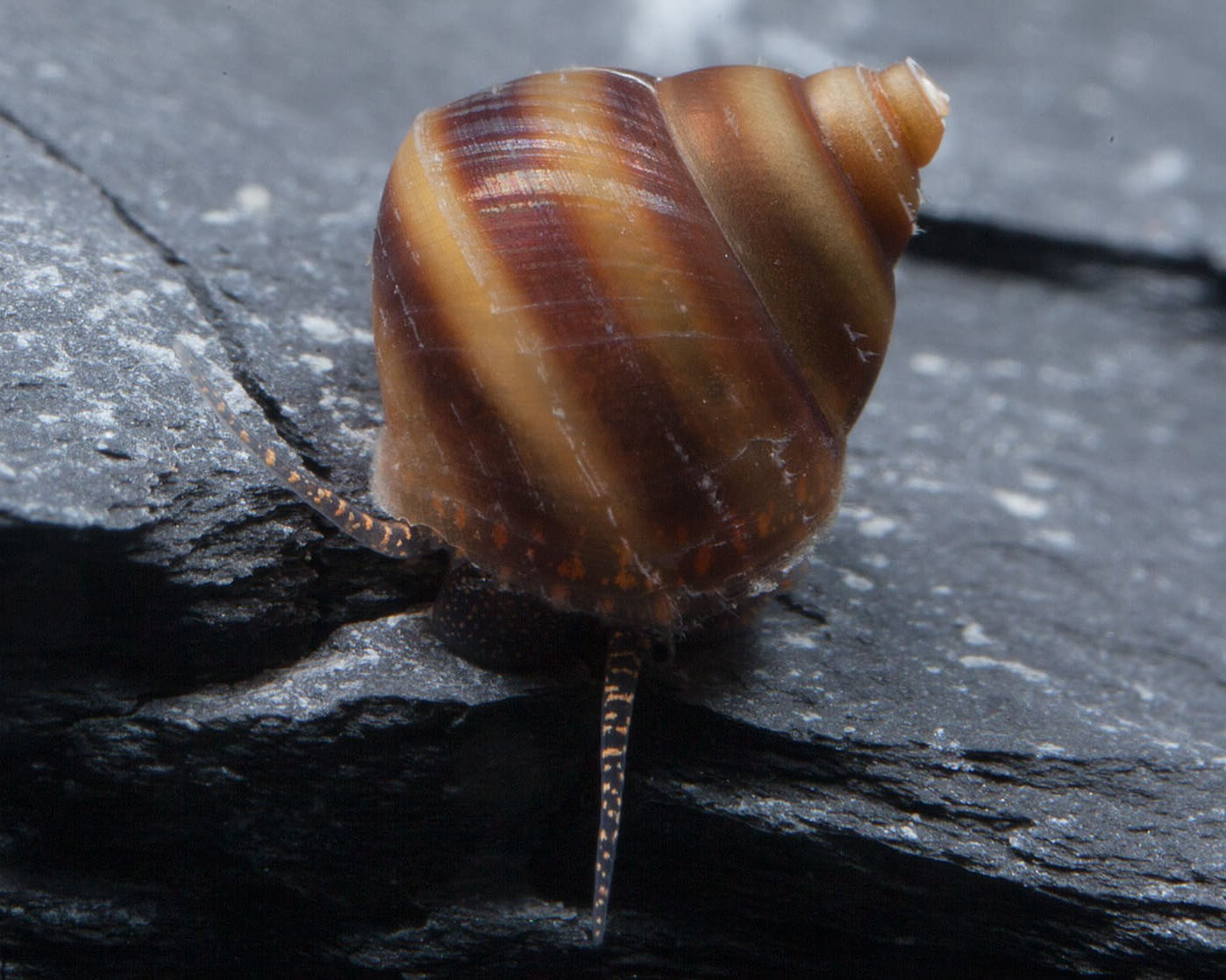
The supplied name places this snail in the genus Tylomelania and identifies it as Tylomelania patriarchalis. Tylomelania belongs to the freshwater snail family Pachychilidae. The trade designation “Perlhuhn yellow” is a commercial color name rather than a formal taxonomic rank. Shell shape, body pattern, locality and provenance should be checked when exact identification matters, since similar Tylomelania are traded under overlapping names.
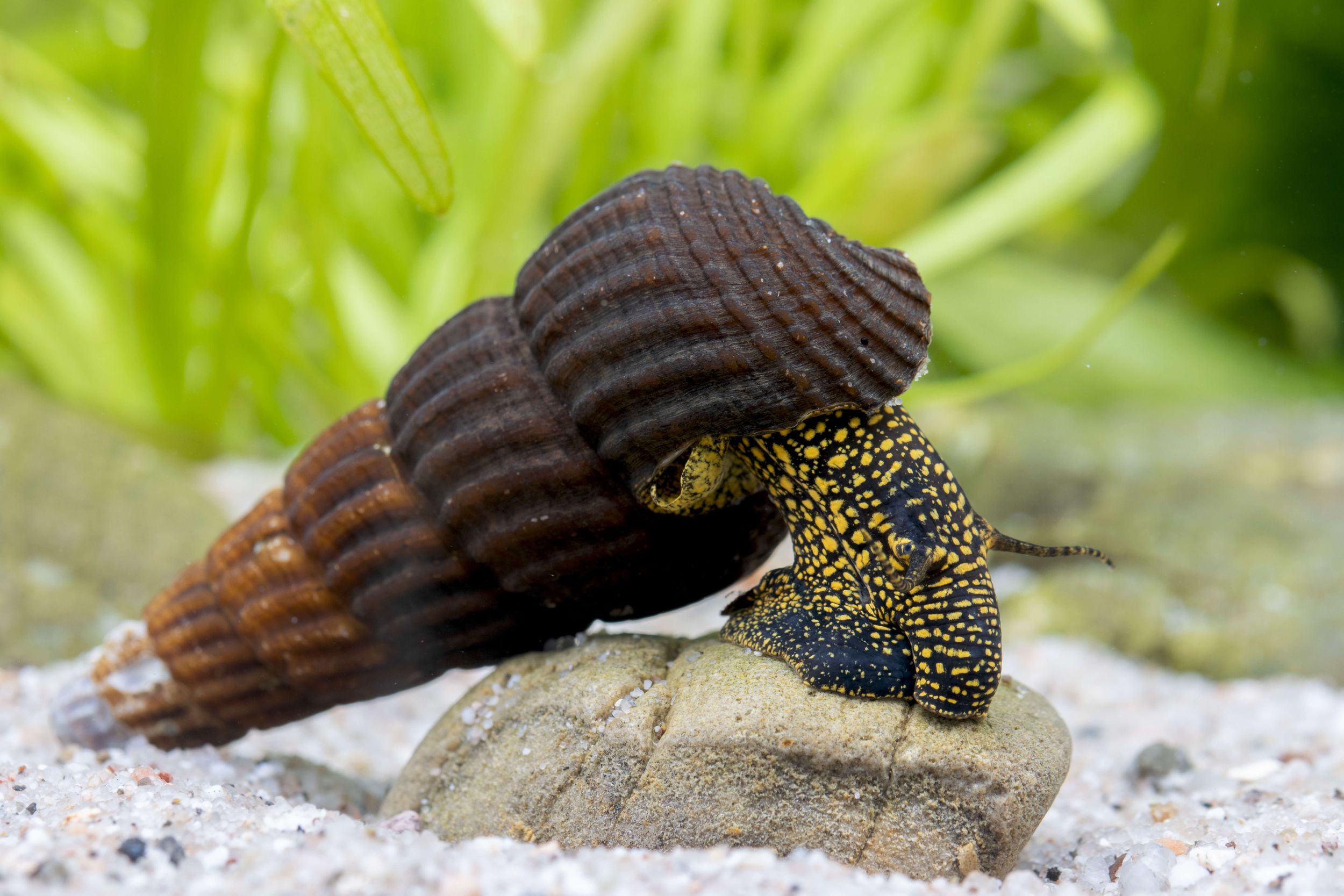
Natural habitat
Tylomelania patriarchalis is associated with Sulawesi, Indonesia, where Tylomelania species inhabit clear freshwater lake and spring environments. Such habitats are typically warm, well oxygenated and mineral rich, with rocky or firm surfaces for grazing. Aquarium specimens should not be exposed to sudden changes in temperature, pH, hardness or water quality.
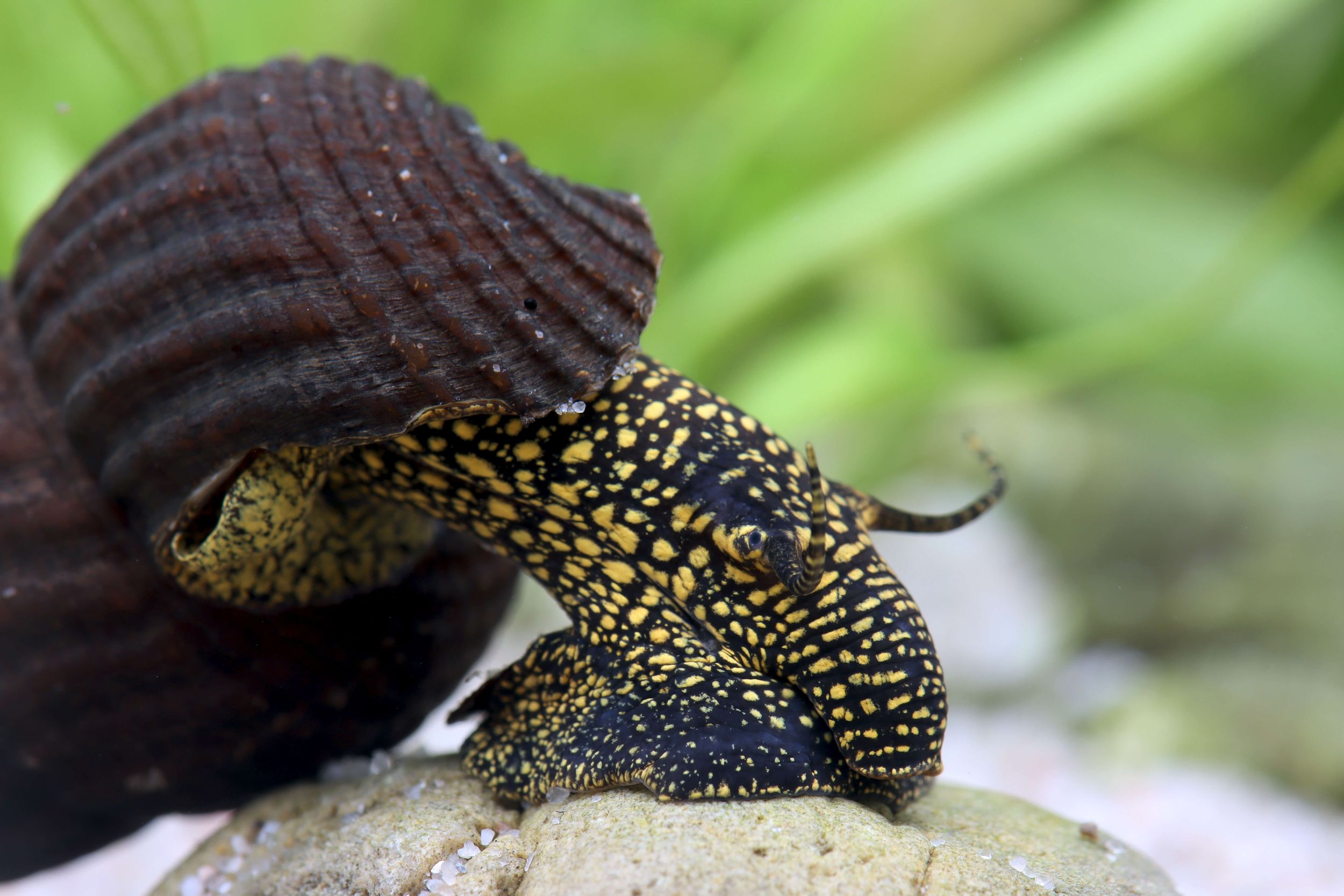
Aquarium conditions
Use mature, stable aquariums with efficient biological filtration, good surface agitation and ample open bottom area. Maintain alkaline, moderately hard to hard water containing sufficient calcium and other minerals for shell growth. Avoid detectable ammonia and nitrite, and keep nitrate low through regular maintenance. Provide smooth stones, wood or other surfaces for grazing, while avoiding sharp decorations that can damage the soft foot. A secure lid is useful because snails may climb above the waterline.
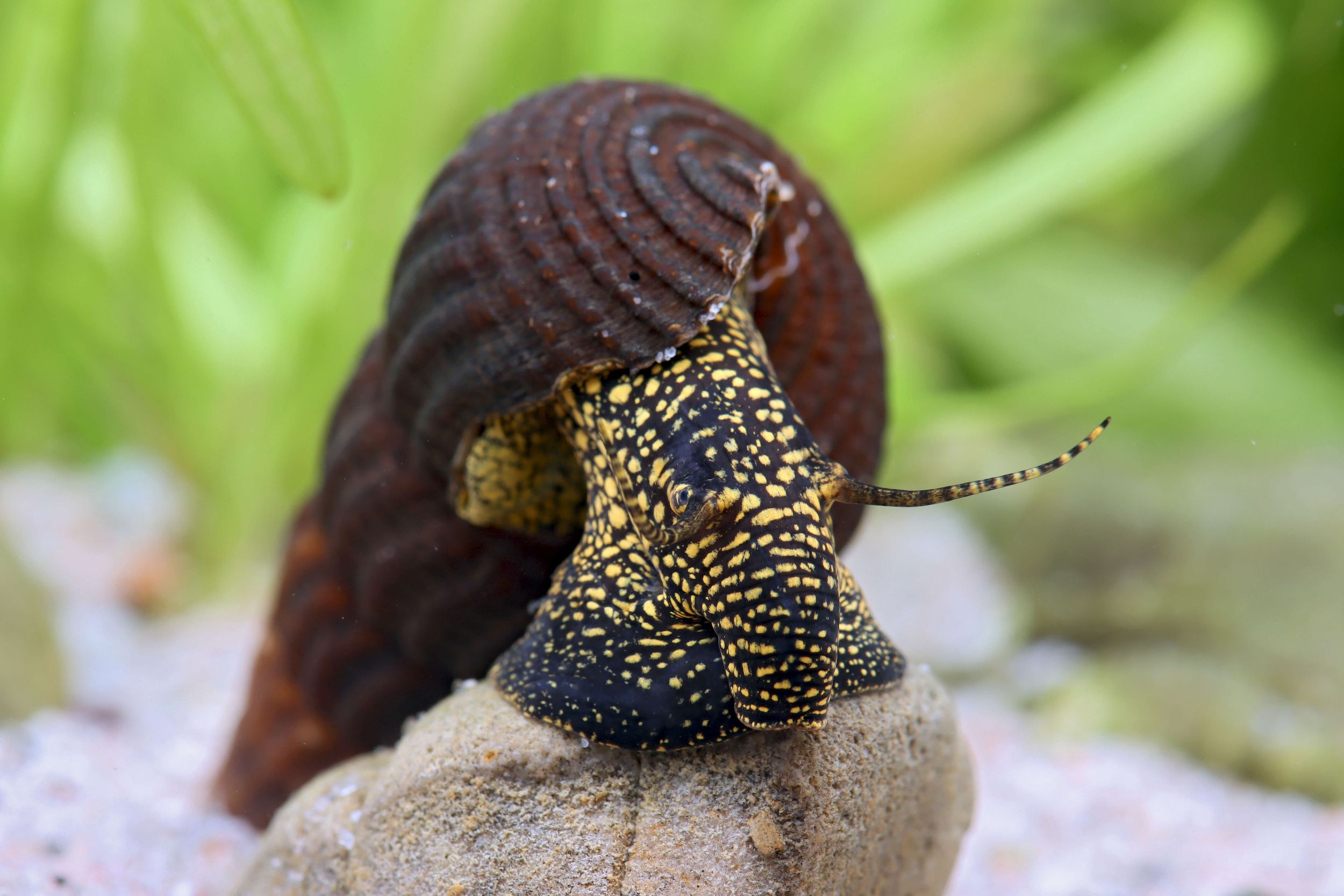
Feeding
This snail grazes on biofilm, microorganisms and soft organic growth, but established aquariums often do not provide enough food by themselves. Offer sinking foods such as quality algae wafers, herbivore tablets and blanched vegetables, removing leftovers before they foul the water. A varied diet and adequate calcium support body condition and shell maintenance. Do not rely on algae scarcity as a population-control method if it causes starvation.
Plant safety
Healthy, robust aquarium plants are generally safe with Tylomelania patriarchalis. The snail primarily grazes surfaces rather than deliberately eating healthy plant tissue. It may rasp damaged, dying or very soft leaves, especially when underfed. Protect delicate new growth by providing regular supplementary food and remove decaying plant material promptly.
Reproduction
Tylomelania are live-bearing snails and do not normally produce clouds of free-swimming larvae. They have separate sexes, so reproduction requires compatible males and females. Females give birth to individual, relatively developed young enclosed in a pale brood capsule; the young emerge and begin grazing after release. Reproduction can be slow or irregular in aquariums, and successful breeding depends on warm, stable, well-mineralized water and adequate food.
Population control
Population growth is best managed by controlling food availability without withholding necessary nutrition. Feed measured portions, remove uneaten food, and avoid allowing excessive organic waste to accumulate. Inspect the aquarium regularly and hand-remove surplus snails, or rehome them to another suitable aquarist. Do not use copper-based medications or chemical snail killers in an aquarium containing Tylomelania, and never release unwanted specimens into natural waterways.

 - 1.webp)
Leave your comments