
Taxonomy and identification
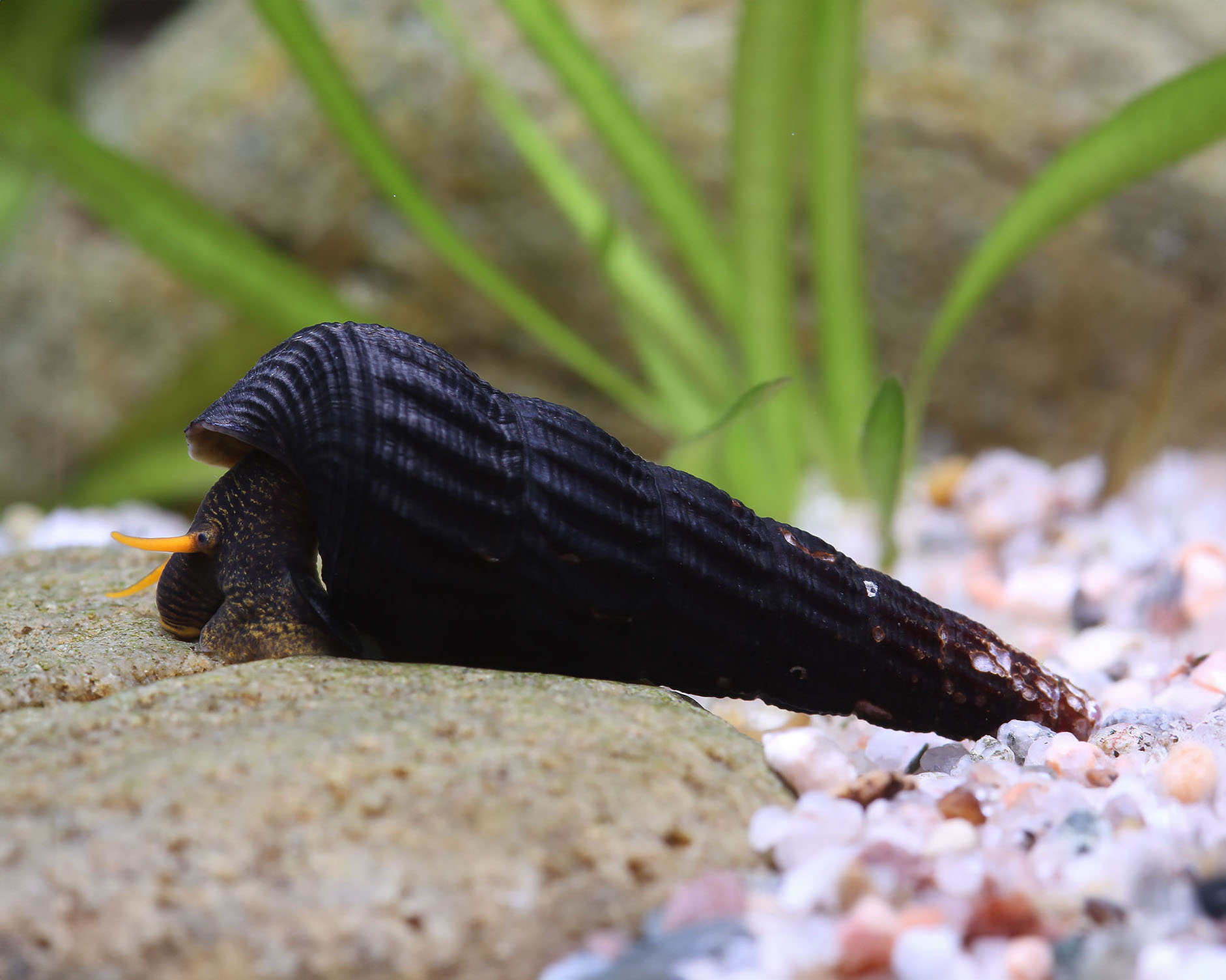
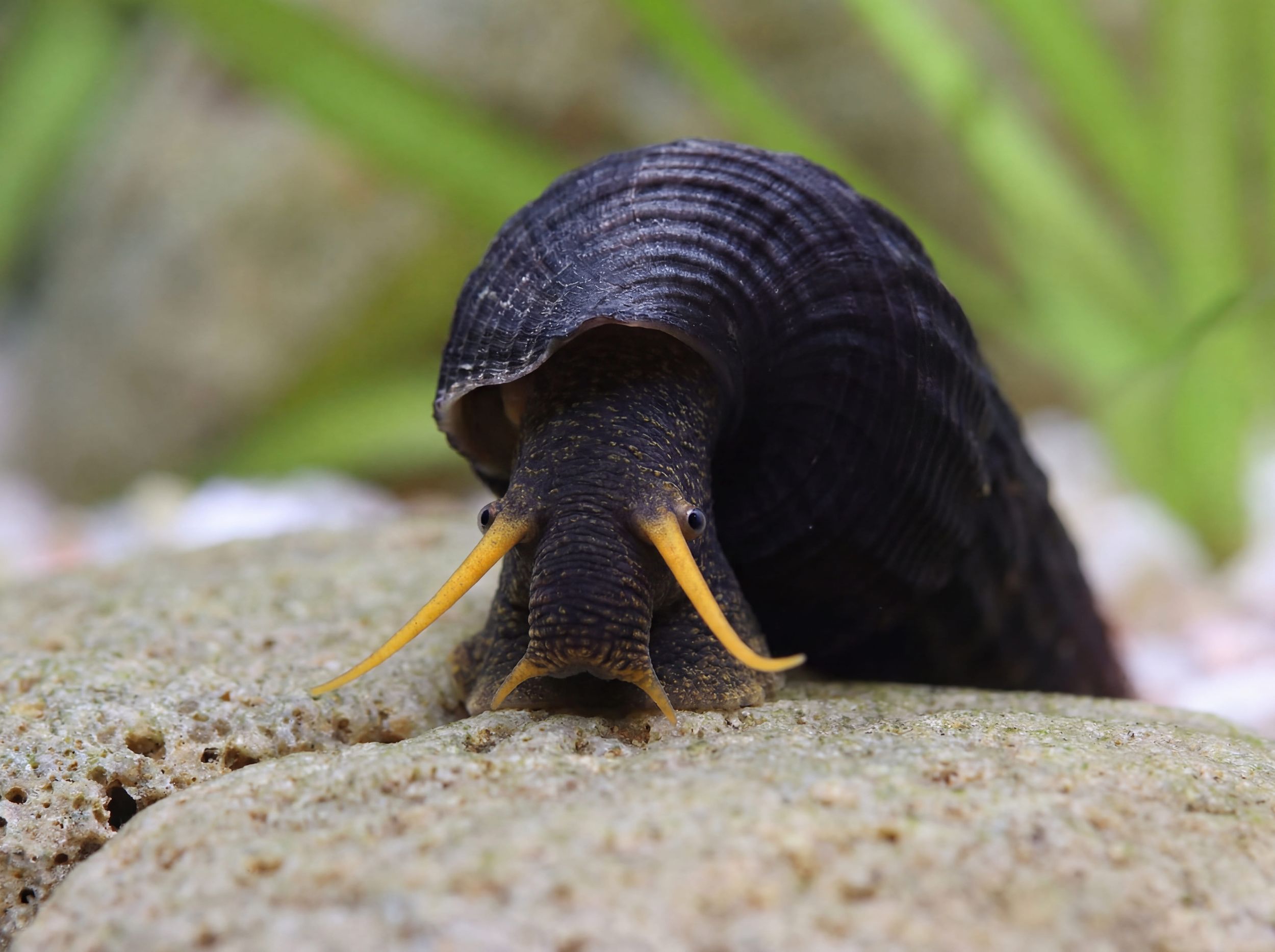
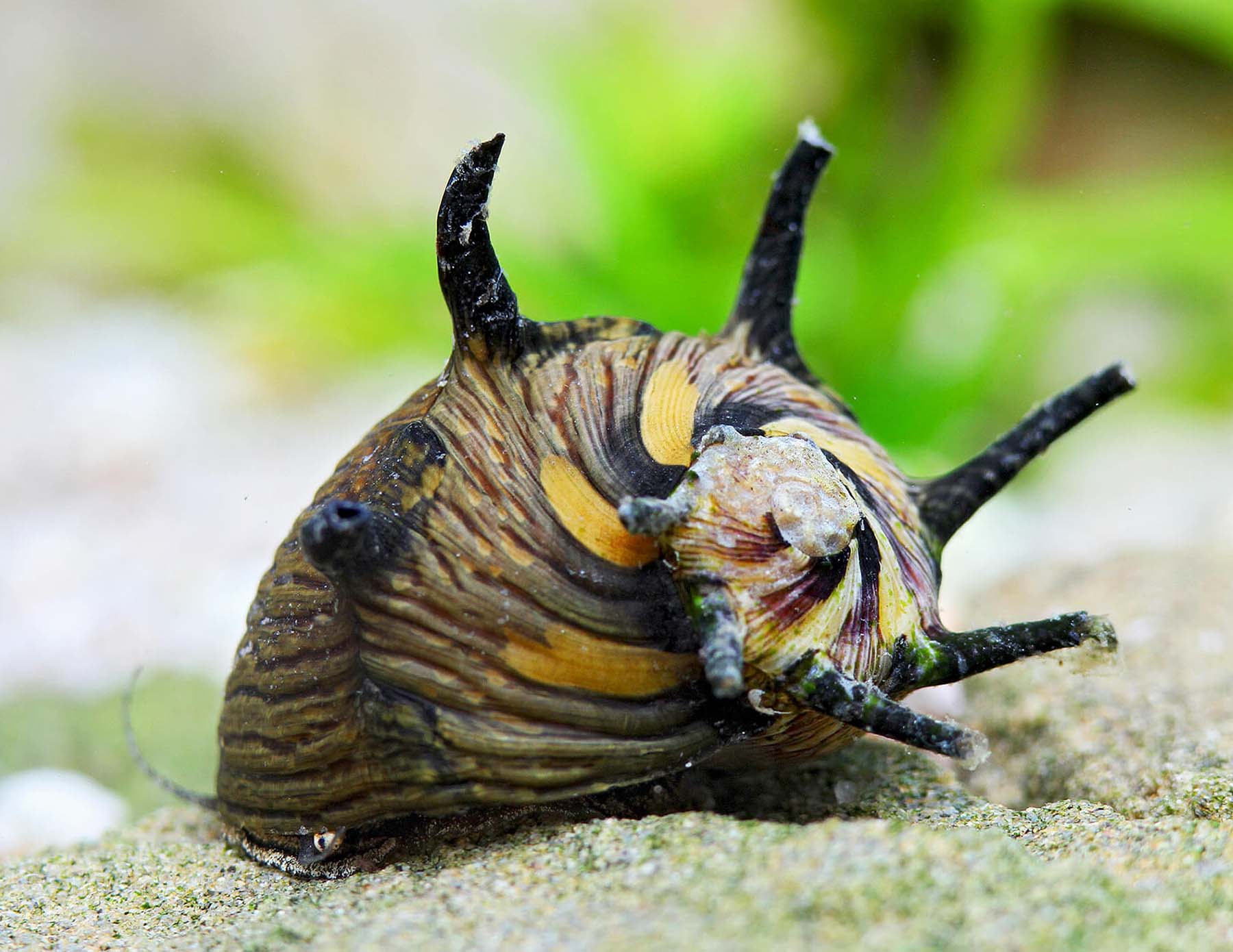
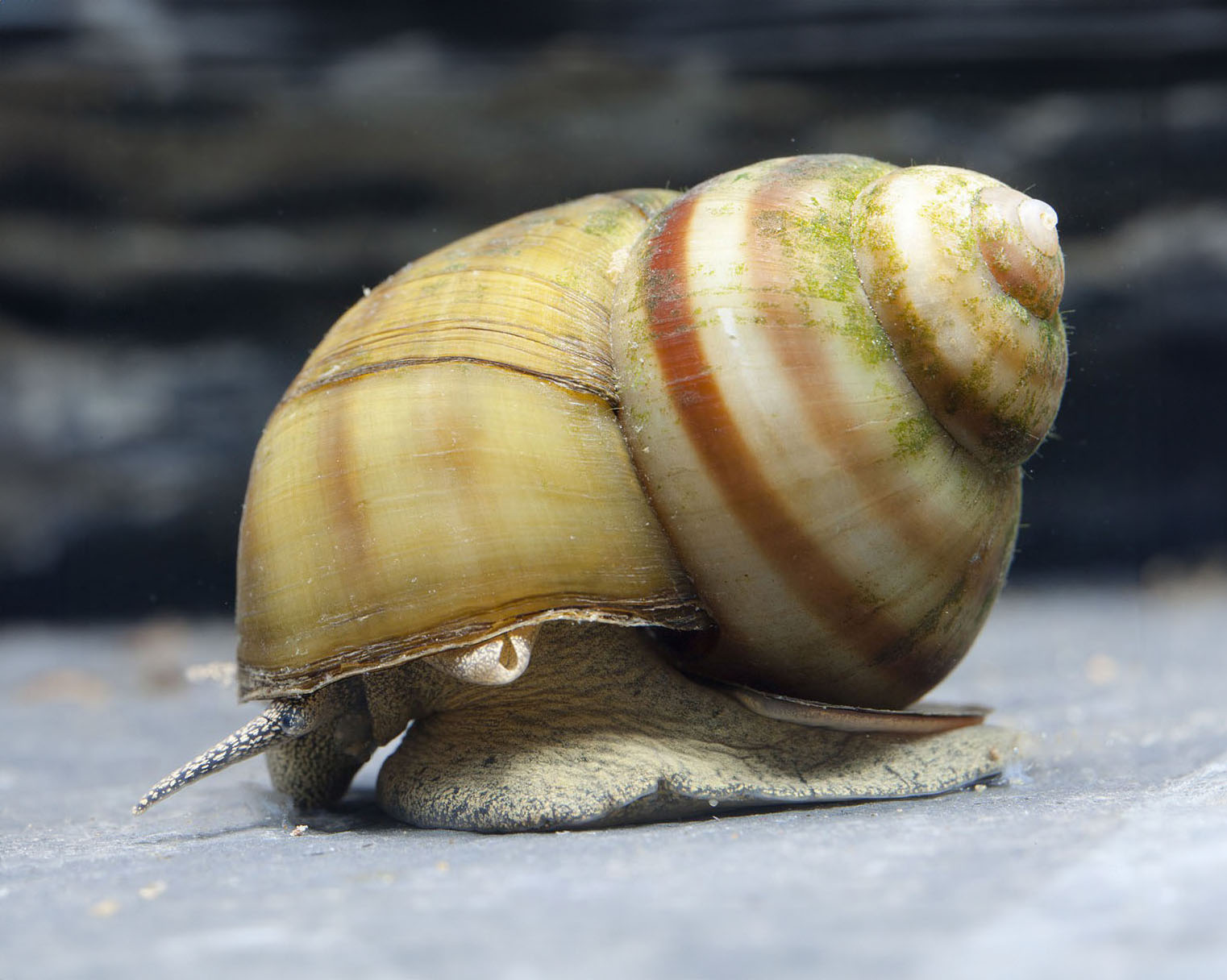
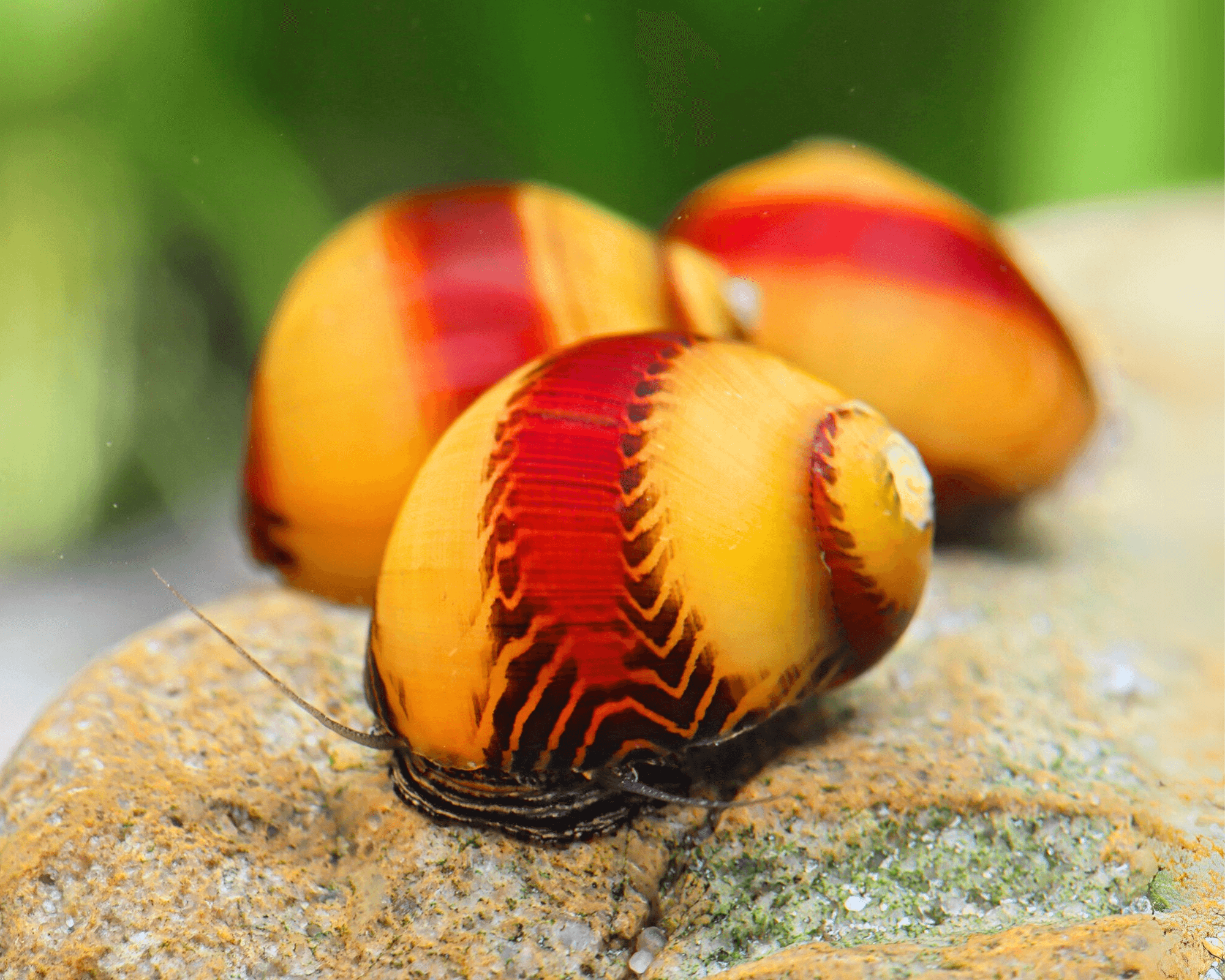
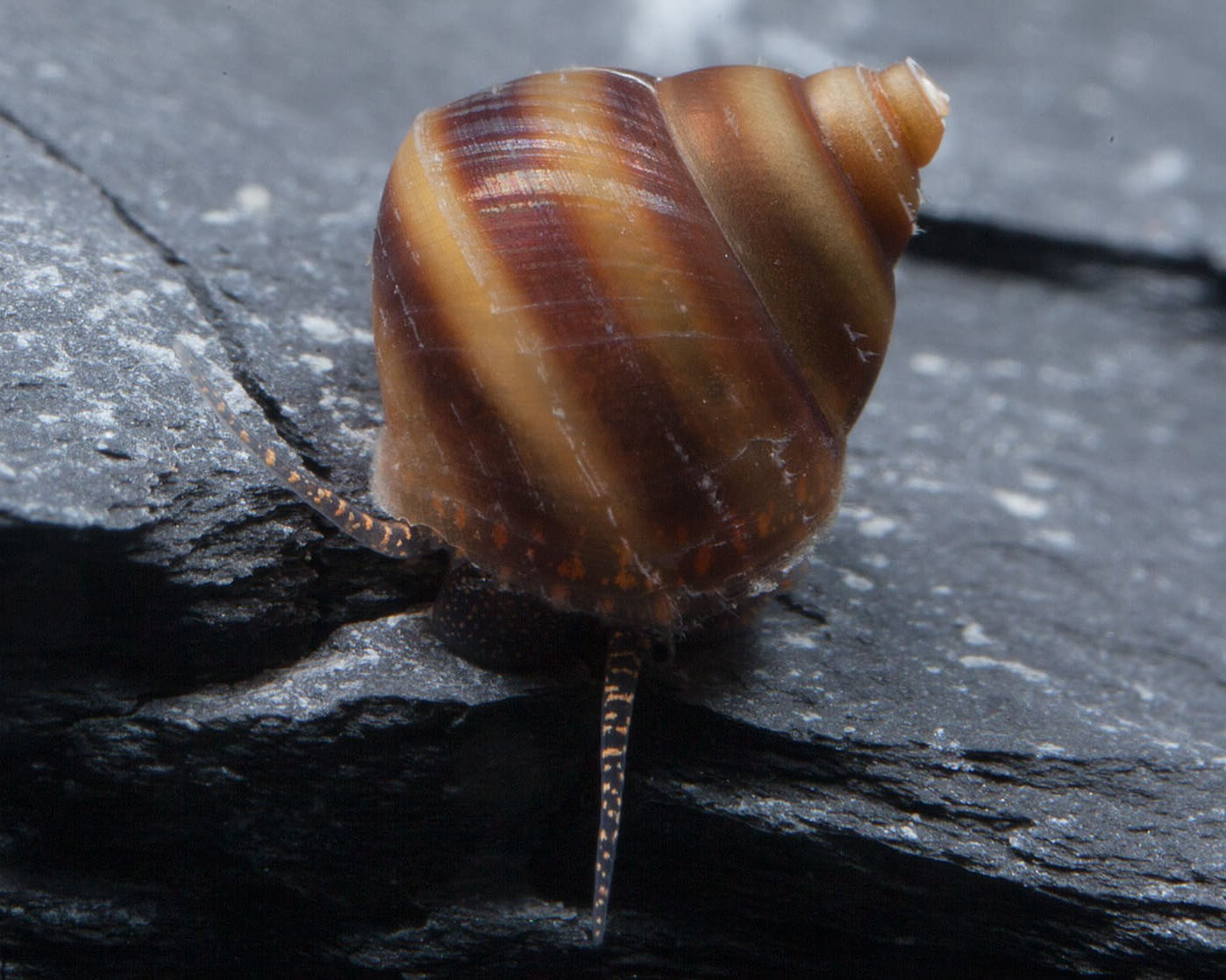
The supplied name is Tylomelania sp. Yellow Antenna. The genus Tylomelania belongs to the freshwater gastropod family Pachychilidae. The label sp. indicates that the exact species has not been established here; aquarium trade names can cover several closely related forms. The elongated, strongly sculptured shell and bright antennae are useful visual traits, but photographs alone should not be used to assign a precise species.
Natural habitat
Tylomelania species are associated primarily with freshwater habitats on Sulawesi, Indonesia, including lakes, springs, streams and shoreline areas, depending on the species. Their natural environments are typically warm, well-oxygenated and mineral-rich, with rocks, wood, sediment and biofilm available for grazing. The exact habitat requirements of this trade form are uncertain because its species and collection locality are not confirmed.
Aquarium water and setup
Use mature, stable water with good oxygenation, moderate to high hardness and consistent alkalinity. A temperature of 24–30 °C and pH of 7.5–8.5 are reasonable general targets. Calcium and other minerals are important for shell maintenance, but sudden chemistry changes should be avoided. Provide smooth rocks, wood, open floor area and a secure lid. Avoid copper-based medications and very soft, acidic water.
Feeding
This snail grazes on biofilm, soft algae, microorganisms and organic material on aquarium surfaces, but an established aquarium may not provide enough food by itself. Supplement with sinking foods such as algae wafers, spirulina-based foods, blanched vegetables and other suitable invertebrate foods. Remove uneaten portions before they decay. A varied diet and adequate minerals support body condition and shell growth.
Plant safety
Tylomelania sp. Yellow Antenna is generally considered plant-safe. It usually grazes on surface growth and decaying material rather than healthy leaves. Newly planted or delicate plants may be disturbed while the snail moves across the substrate, especially if the snail is large. Damage to plants is more likely when food is scarce, so regular supplementary feeding is advisable.
Behaviour and compatibility
These snails are peaceful and can be kept with other non-aggressive community species that tolerate warm, alkaline water. They spend time on the substrate, hardscape and glass, and may be more active after dark. Avoid loaches, pufferfish, crayfish and other animals known to attack or eat snails. Ensure that tankmates cannot monopolize all sinking food.
Reproduction
Tylomelania are livebearing snails. Females produce one relatively large, developed young at a time rather than depositing large masses of eggs. Reproduction is usually gradual, and successful breeding requires suitable warm water, stable conditions, food and adequate minerals. Exact reproductive rates vary among species and aquarium strains, so the Yellow Antenna form should not be assumed to have a fixed breeding schedule.
Population control
Because reproduction is usually slow, population increases can often be managed by controlling food availability. Feed measured portions, remove leftovers, avoid allowing excessive organic waste to accumulate and maintain a reasonable number of snails for the aquarium. Manually remove surplus individuals when necessary and rehome them responsibly. Do not use copper or other chemical snail killers in a display containing these or other invertebrates.
 - 1.webp)
Leave your comments