AquaLibs presents AquaRank Discover the world’s leading aquascapers

Explore transparent rankings built from published results across the world’s leading aquascaping contests.

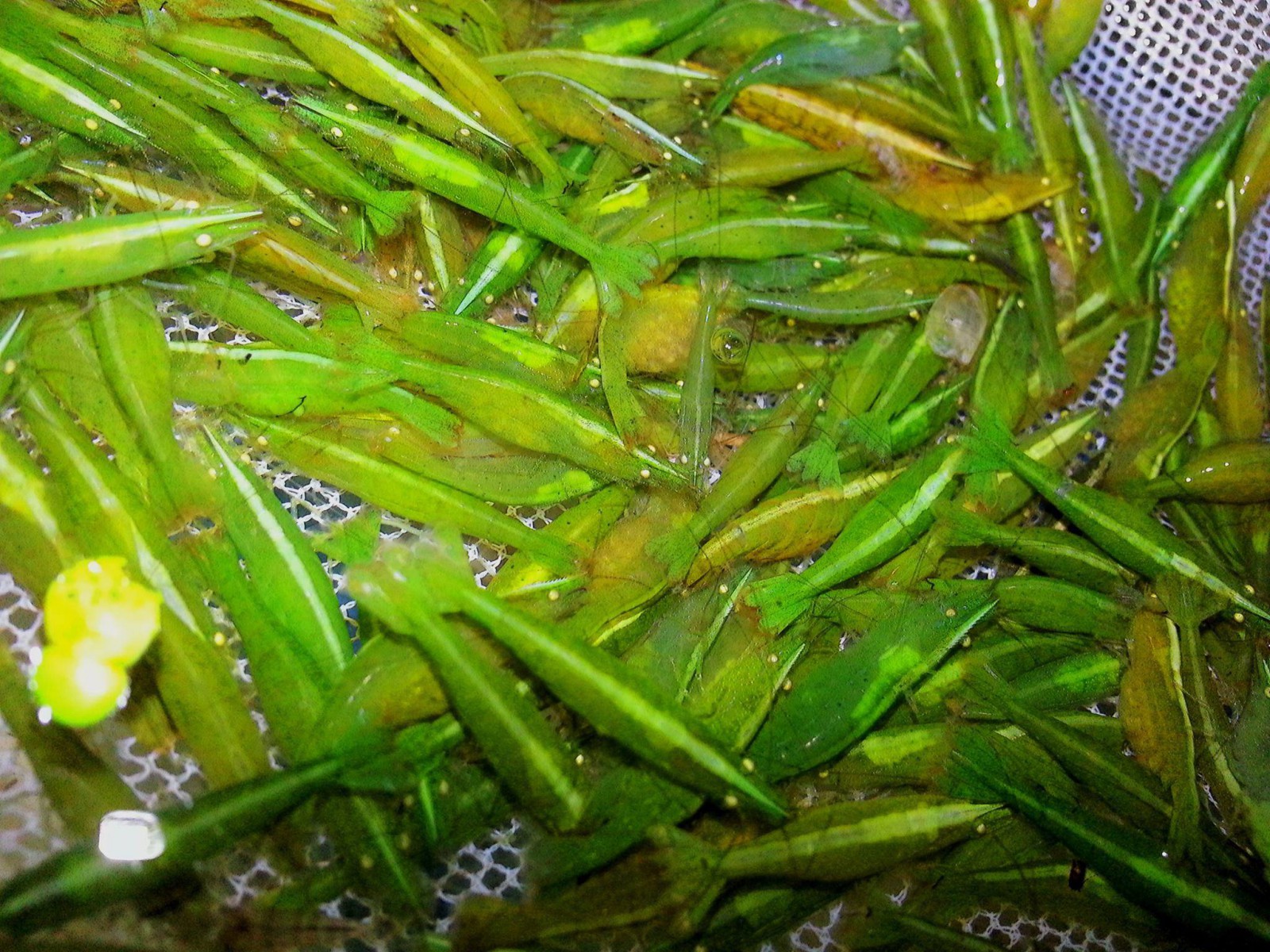
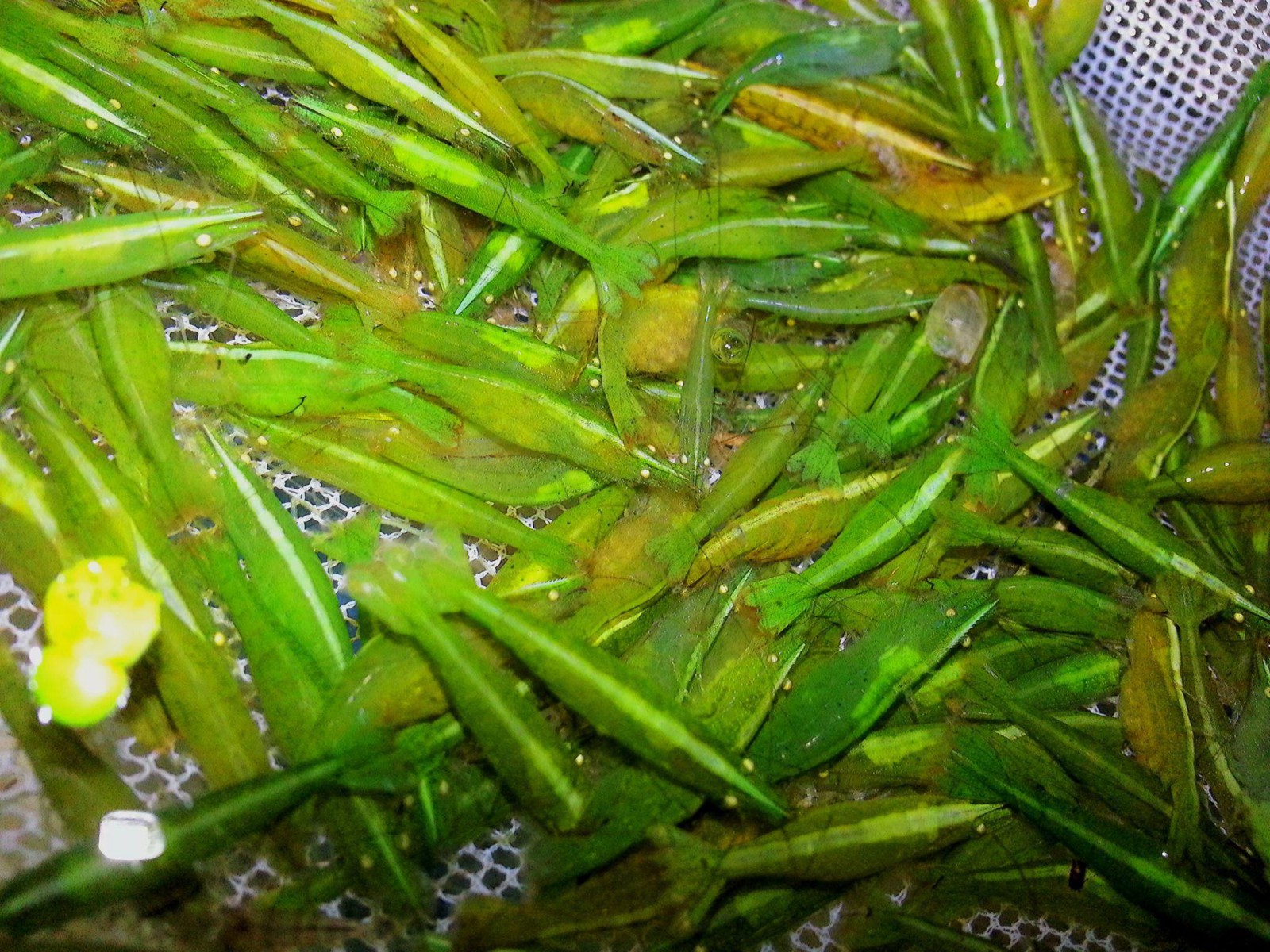
Green Dwarf Shrimp (Caridina cf. babaulti)

Taxonomy and identification

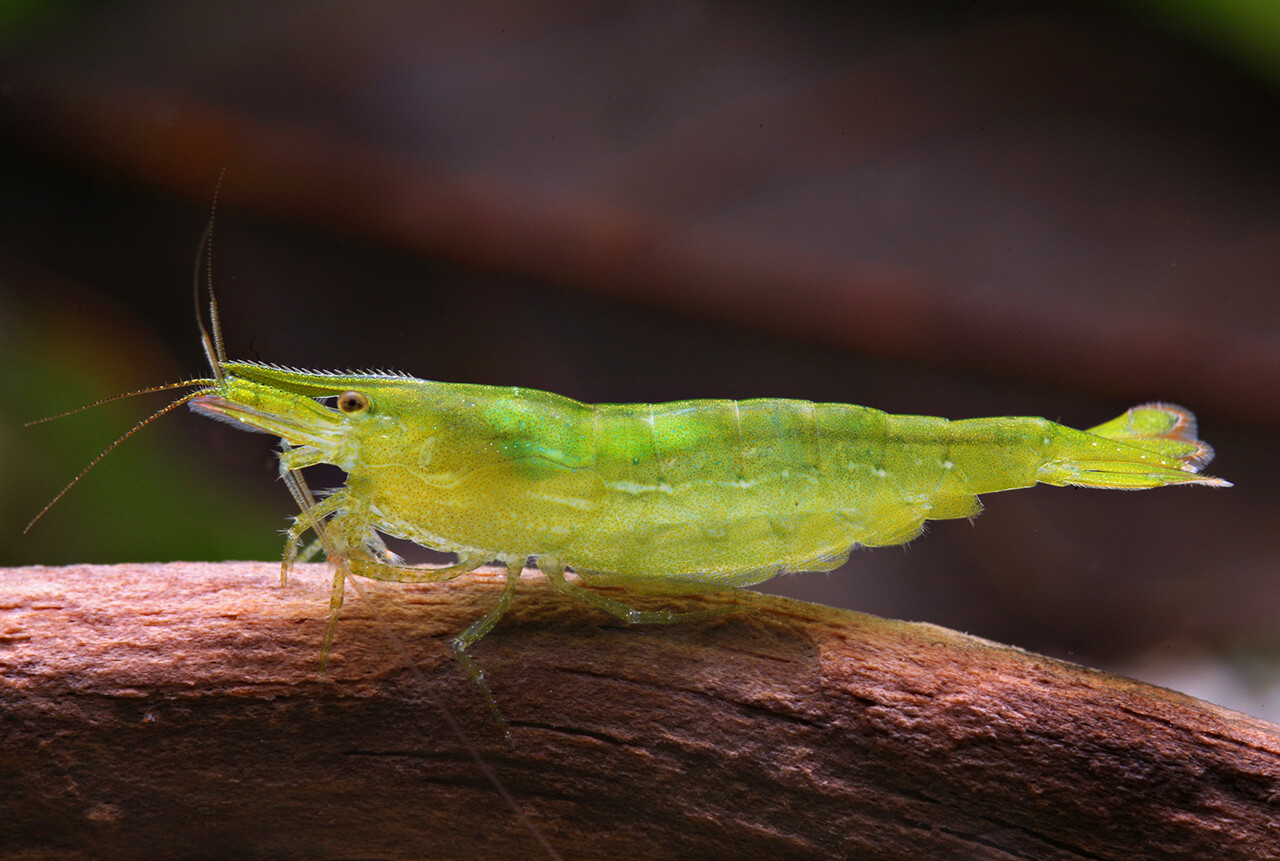
This shrimp is commonly traded as Caridina cf. babaulti. Caridina is the genus, while cf. means “compares with” and signals that the shrimp is considered similar to Caridina babaulti but has not been confirmed here as that exact species. Trade names such as green dwarf shrimp or skyfish shrimp are not formal taxonomic names. Color intensity and pattern can vary with genetics, age, lighting, background, and condition, so photographs alone cannot establish a precise identification.
Taxonomy and identification

Natural habitat

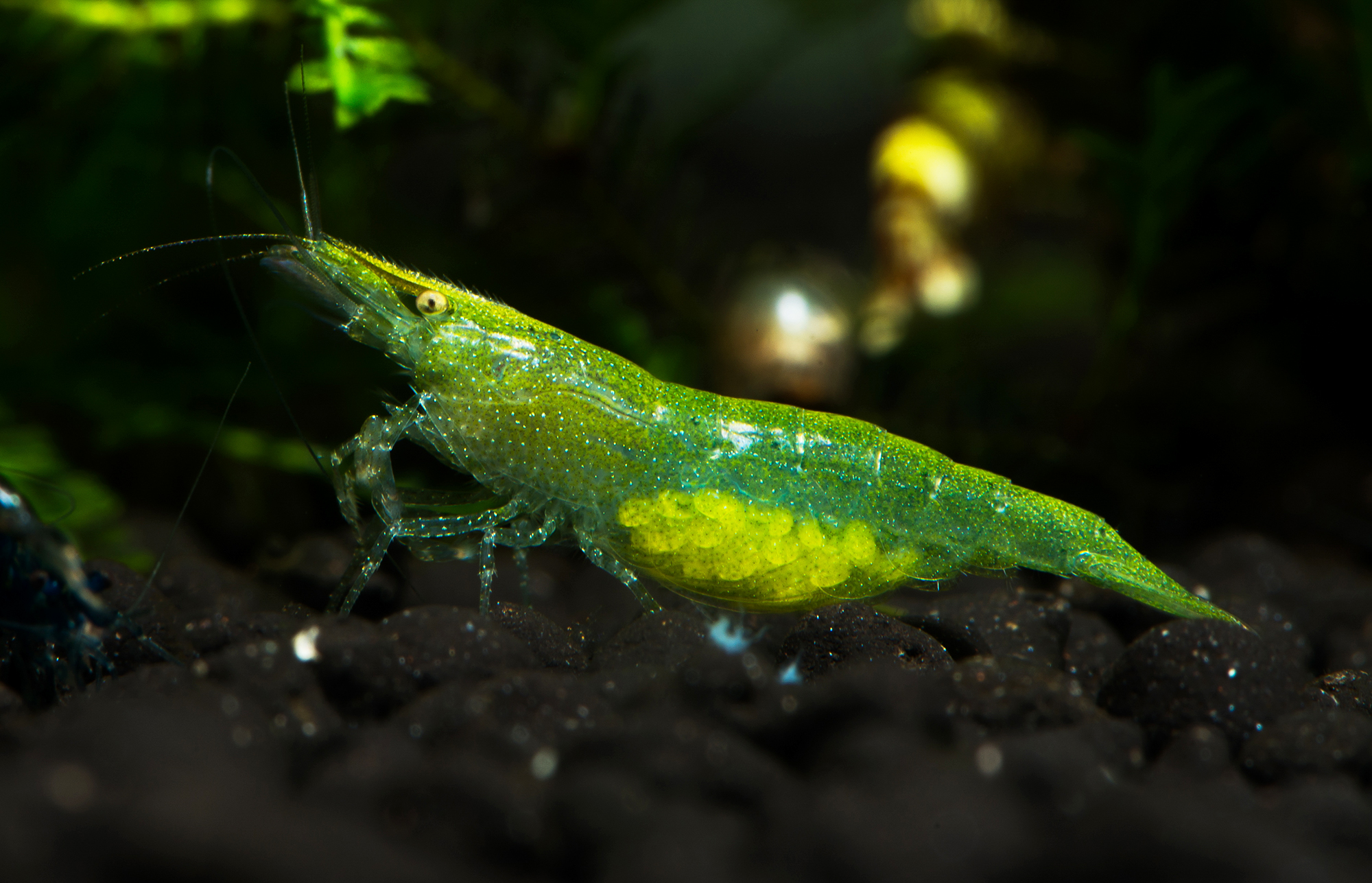
Caridina babaulti and related forms are associated with freshwater habitats in South Asia, but the exact origin of aquarium-traded C. cf. babaulti should not be assumed without reliable collection or breeding records. In an aquarium, provide dense plants, moss, leaf litter or wood surfaces, shaded refuge, and gentle circulation. These structures support grazing and give newly molted shrimp places to hide.
Natural habitat

Water parameters

Prioritize stability over chasing a single target value. A practical range is 20–28 °C and pH 6.5–7.5, with ammonia and nitrite at zero and nitrate kept low through regular maintenance. The water should contain enough general hardness and calcium for shell formation, while avoiding abrupt changes in temperature, pH, conductivity, or mineral content. Use dechlorinated water and acclimate slowly, especially after transport.
Water parameters

Aquarium setup

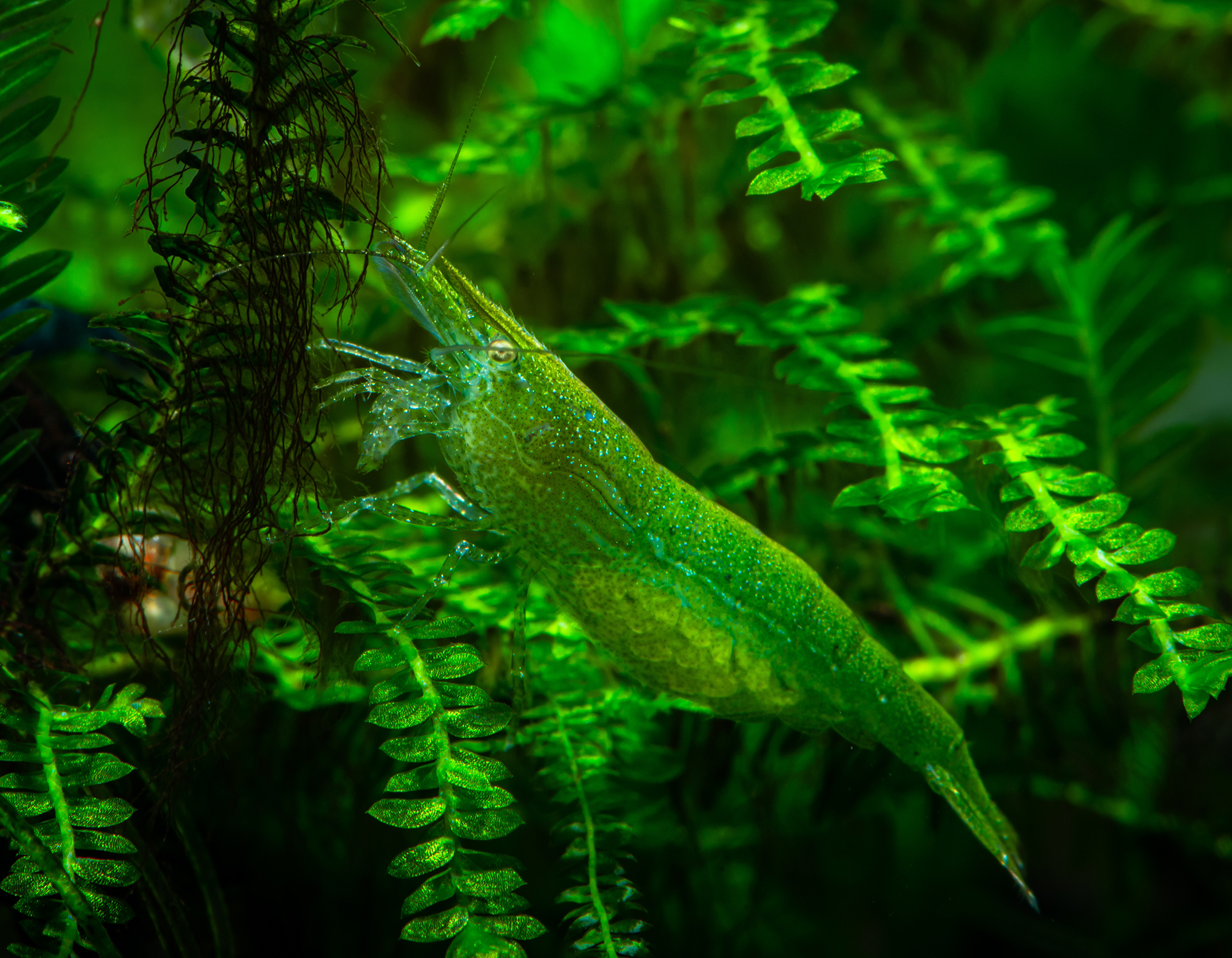
A mature, planted aquarium with a cycled filter is preferable to a newly established tank. Fine-leaved plants, moss, wood, rocks, and a sponge-covered intake create grazing area and protect small juveniles. Avoid copper-containing treatments and other medications that are unsafe for invertebrates. Gentle filtration and moderate flow help deliver oxygen without constantly displacing the shrimp.
Aquarium setup

Feeding

Biofilm, algae, and microorganisms growing on mature surfaces should form the foundation of the diet. Supplement sparingly with a quality shrimp food, blanched vegetables, or other suitable plant-based foods. Occasional protein-containing foods can be offered, but remove uneaten portions before they decay. Small meals are safer than heavy feeding, and a varied diet supports growth, molting, and reproduction.

Tank mates

The safest companions are other peaceful, similarly sized invertebrates and small, non-predatory fish that do not actively hunt shrimplets. Snails are generally compatible when water chemistry suits both animals. Avoid large fish, aggressive fish, crayfish, predatory loaches, and shrimp-eating species. Even peaceful fish may consume newly hatched juveniles, so a species-only or densely planted setup gives the best survival rate.

Molting and mineral needs

Shrimp periodically shed the rigid exoskeleton to grow. Before molting, an individual may become less active, hide, or appear paler; afterward it is vulnerable and should not be disturbed. Leave the shed exoskeleton in the aquarium, as it may be eaten and its minerals recycled. Stable hardness, adequate calcium and magnesium, good nutrition, and the absence of sudden water changes help reduce molting problems.

Breeding

This type is generally regarded as a freshwater-breeding Caridina form: females carry relatively large eggs beneath the abdomen, and young hatch as miniature shrimp rather than requiring a marine larval stage. Mature plants and biofilm improve juvenile survival. Maintain a stable, well-established aquarium, feed lightly but consistently, and protect the intake with a sponge. Because the identification is provisional, breeding behavior and color inheritance may vary among commercial lines.
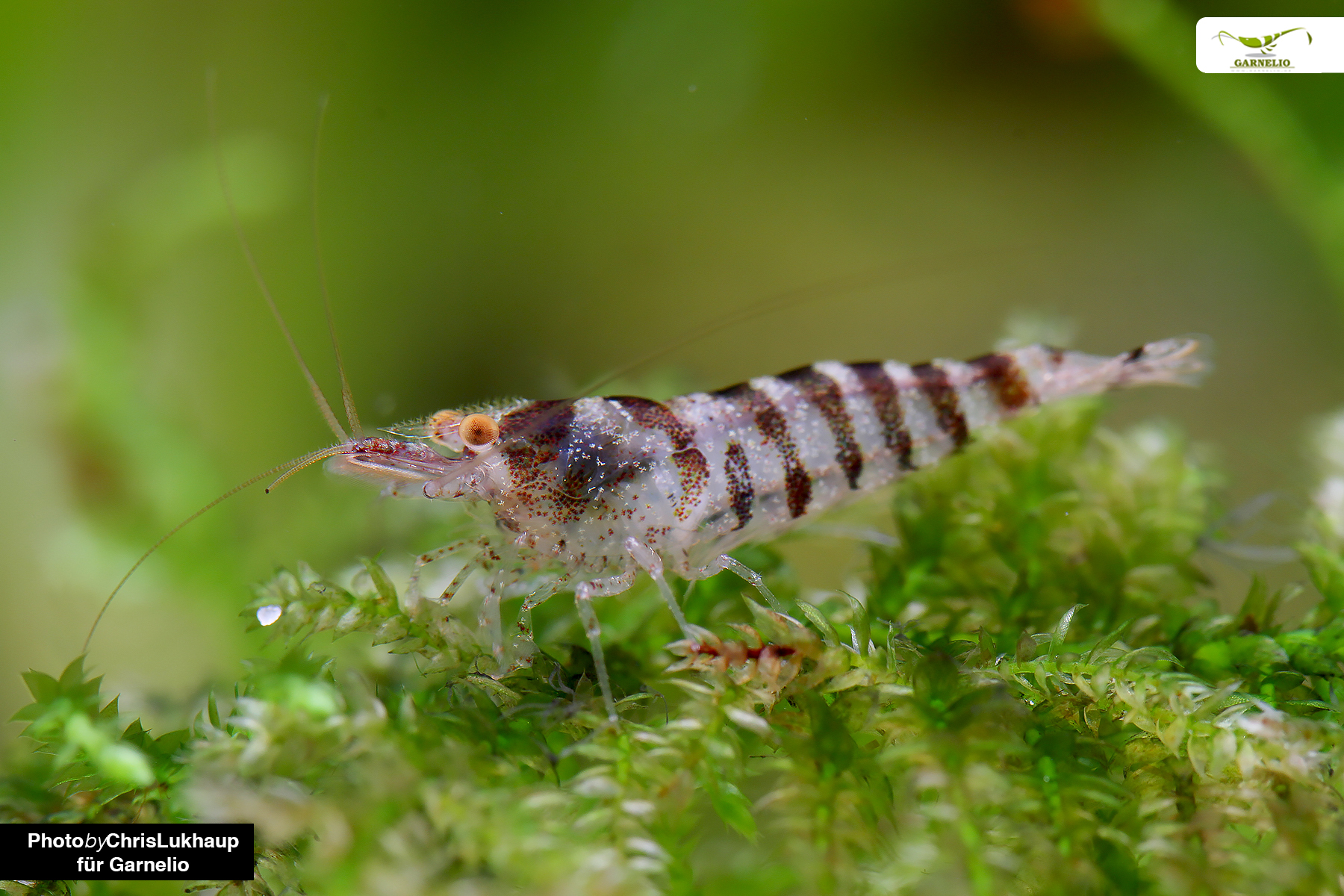
Shrimp info

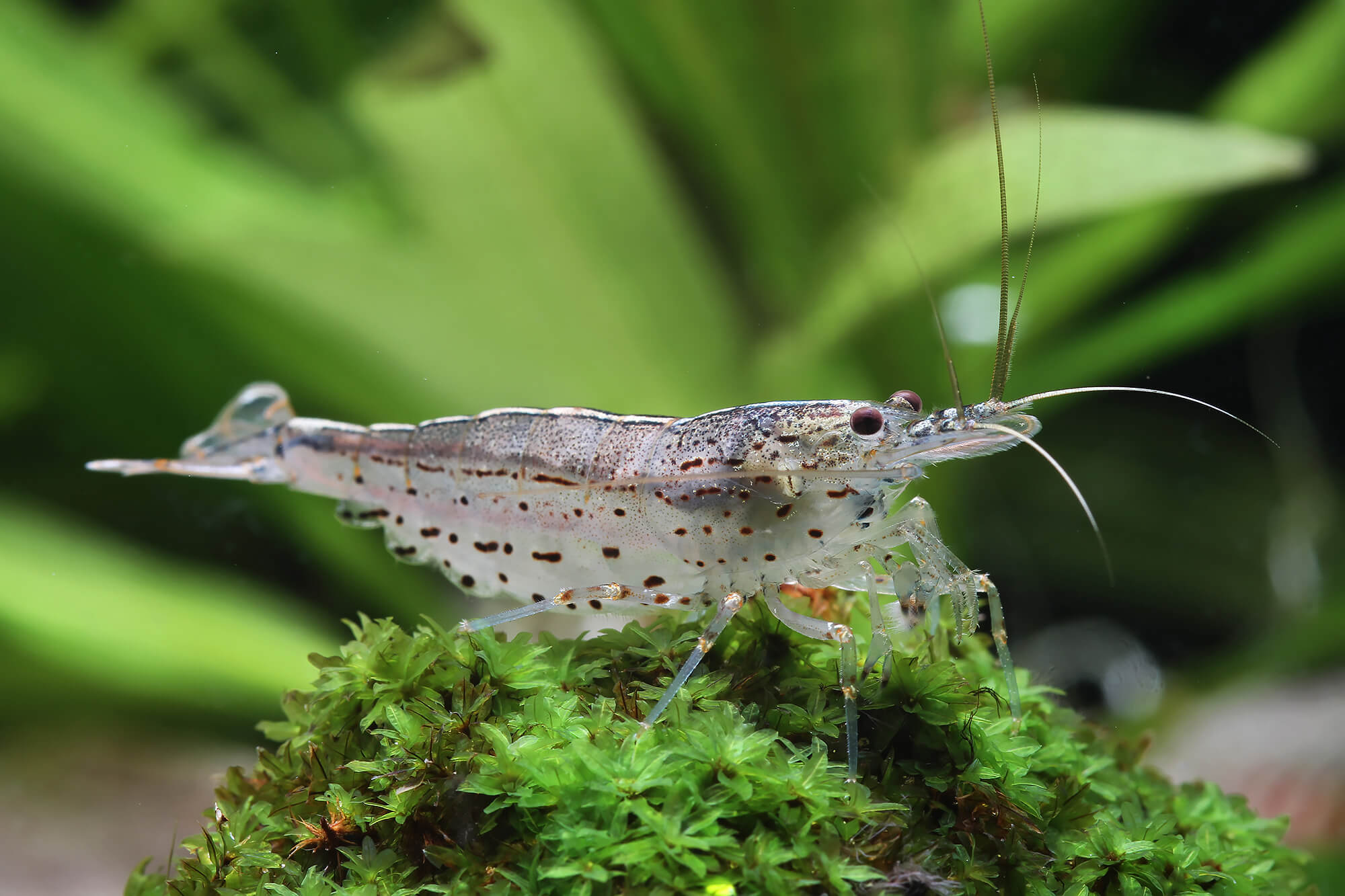
  • Size: 2–3 cm
  • Difficulty level: Beginner-Intermediate
  • Temperature : 20–28 °C
  • pH: 6.5–7.5
Leave your comments
Latest on Shrimps
  • Amano Shrimp (Caridina multidentata)

    Amano Shrimp (Caridina multidentata)

    Amano shrimp are hardy freshwater algae grazers recognized by their translucent body, dark spotting and active scavenging behavior. They are widely used in planted aquariums, where they feed on algae, biofilm and uneaten food. Adults are generally peaceful and adaptable, but successful breeding is specialized: larvae require brackish water before juveniles can be acclimated to freshwater. The supplied trade label identifies these shrimp as Amano shrimp, although individual stock identity cannot be independently verified from the label alone.
  • Zebra Shrimp (Caridina cf. babaulti)

    Zebra Shrimp (Caridina cf. babaulti)

    The Zebra Shrimp is a small freshwater Caridina sold under the name Caridina cf. babaulti, with a translucent body marked by dark transverse bands. The “cf.” designation indicates that the aquarium strain has not been confirmed as the exact species Caridina babaulti. It is a peaceful, algae-grazing shrimp suited to mature planted aquariums with stable, mineralized water. The pictured form shows pale body coloration with brown to black striping, but pattern intensity can vary with genetics, mood, diet, and background.
  • Red Rhinoceros Shrimp (Caridina gracilirostris)

    Red Rhinoceros Shrimp (Caridina gracilirostris)

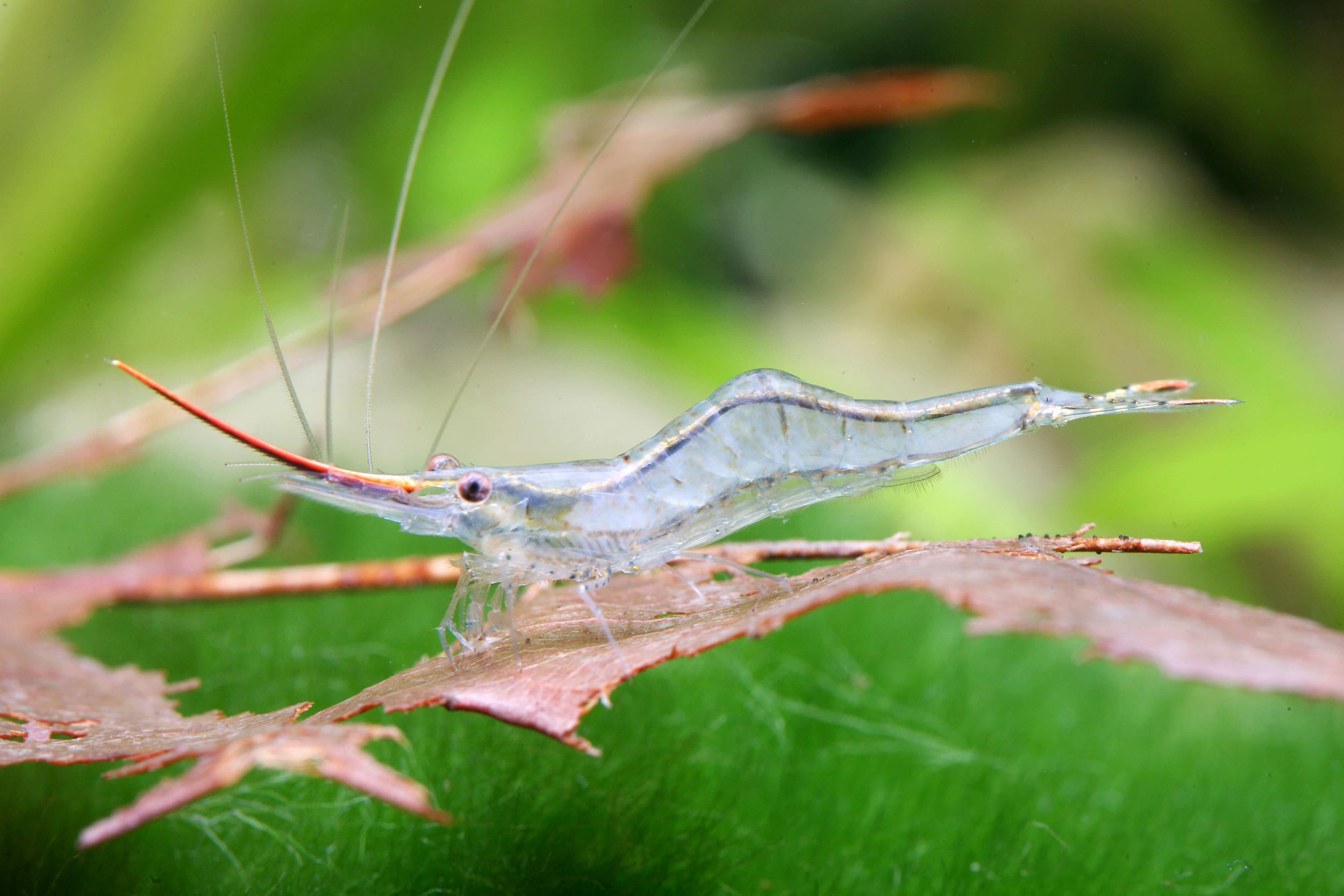
    Caridina gracilirostris is a small, translucent shrimp recognized by its elongated rostrum, often marked red or orange. It is associated with coastal freshwater, brackish and estuarine habitats, so aquarium care differs from that of fully freshwater Caridina species. Adults may be maintained in suitable freshwater or mildly brackish conditions, but successful reproduction involves free-swimming larvae and usually requires carefully managed brackish water. The supplied image appears consistent with this species, although image-based identification cannot confirm it with certainty.
  • Super Crystal Red Shrimp (Caridina logemanni)

    Super Crystal Red Shrimp (Caridina logemanni)

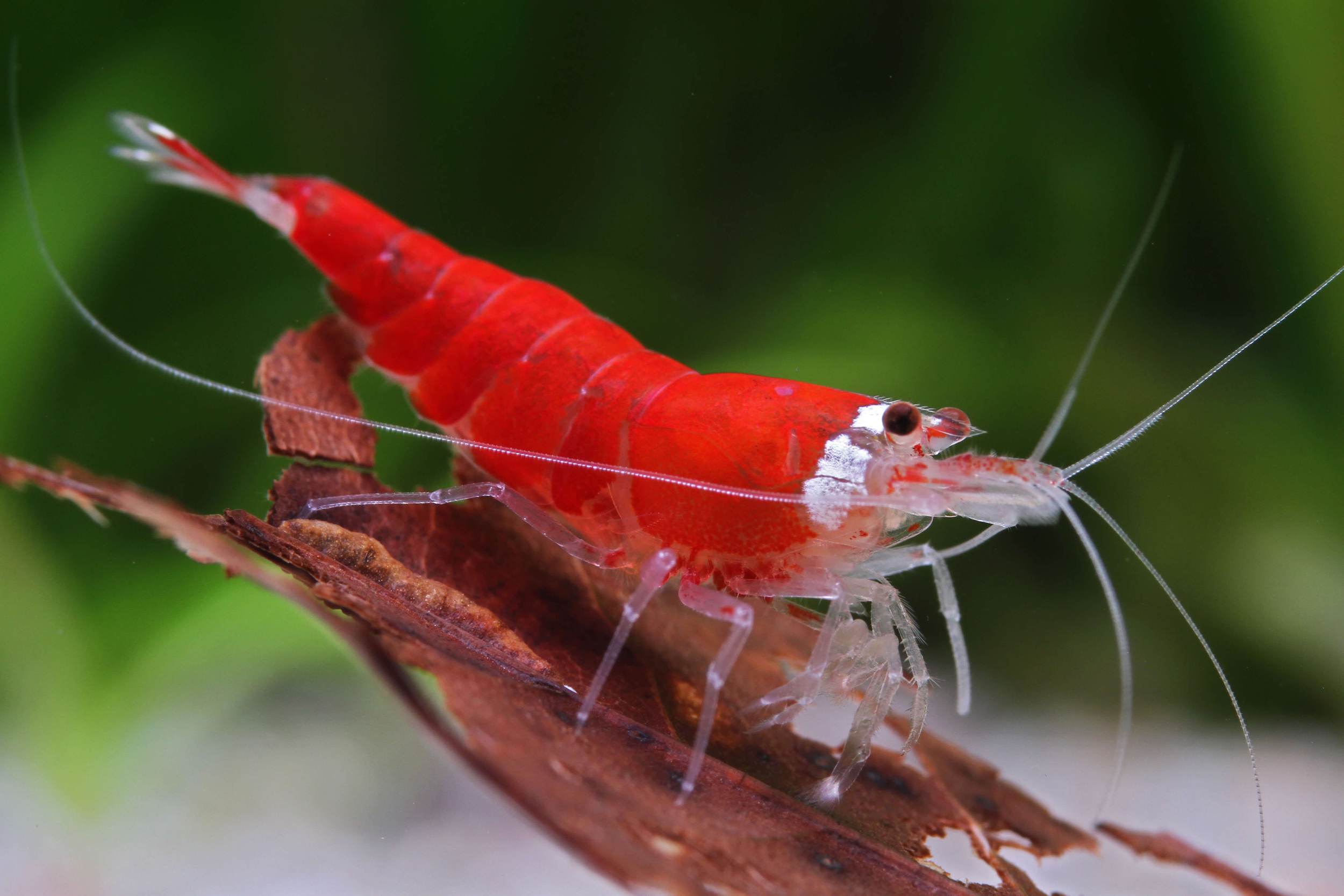
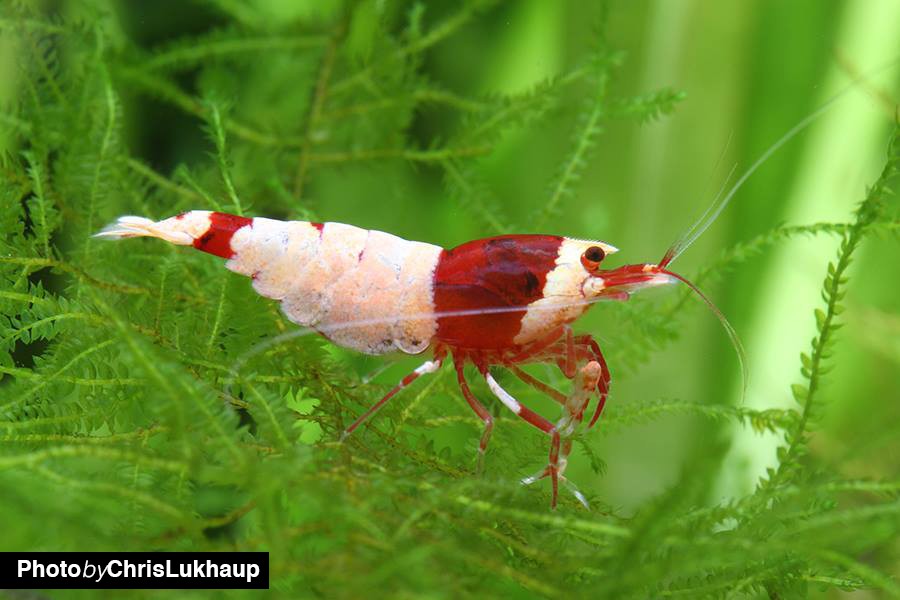
    Super Crystal Red Shrimp are a selectively bred red-and-white color form of Caridina logemanni, commonly kept in specialized freshwater aquaria. Their contrasting pattern, small size, and sensitivity to unstable conditions make them appealing but demanding shrimp. A mature, biologically established aquarium with soft, mineral-balanced water, gentle filtration, and abundant biofilm is important. The supplied source identifies these shrimp as Caridina logemanni; exact grade and lineage cannot be confirmed from the available material alone.
  • Snow White Bee Shrimp (Caridina logemanni)

    Snow White Bee Shrimp (Caridina logemanni)

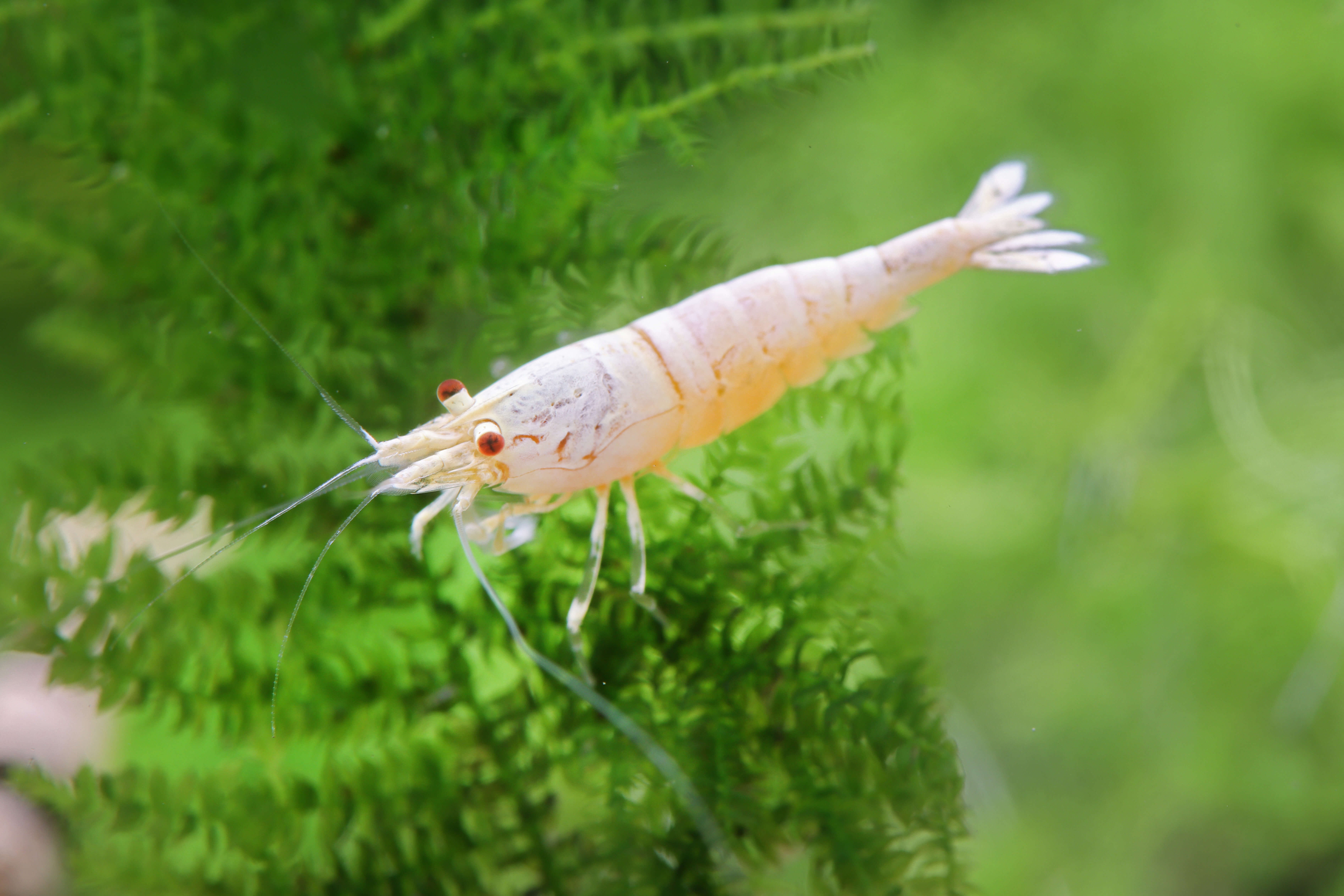
    The Snow White Bee Shrimp is a selectively bred freshwater form associated with Caridina logemanni, a small bee shrimp from the Caridina cantonensis group. It has a predominantly white, often translucent body and is valued for its appearance and breeding potential. This shrimp needs mature, exceptionally stable water, soft mineral content, gentle filtration, and peaceful tank mates. The supplied images show a pale white to cream animal with warm peach tones and reddish eyes; exact grade and lineage cannot be confirmed from images alone.
  • Royal Blue Tiger OE Shrimp (Caridina mariae)

    Royal Blue Tiger OE Shrimp (Caridina mariae)

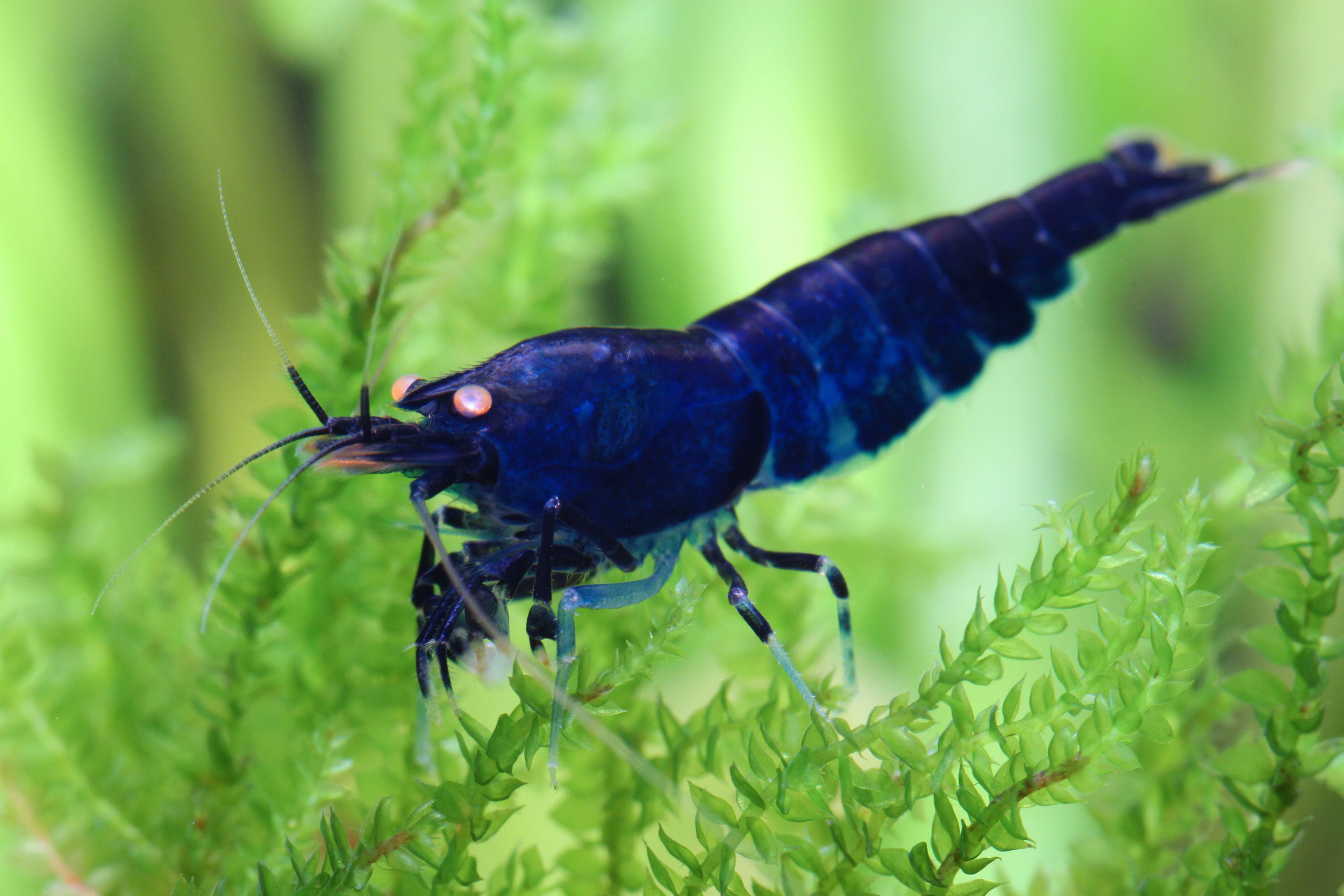
    The Royal Blue Tiger OE Shrimp is a selectively bred blue color form of Caridina mariae, commonly known as the tiger shrimp. “OE” refers to orange eyes, a visible trait in the supplied image. It is a small, peaceful freshwater shrimp suited to a mature, planted aquarium with stable, mineral-balanced water. Exact lineage and grade cannot be confirmed from the trade label and photograph alone.
  • Red Shadow Mosura Shrimp

    Red Shadow Mosura Shrimp

    Red Shadow Mosura is a selectively bred freshwater Caridina shrimp recognized for a deep red-and-white pattern and broad pale body markings. The trade name describes a color form rather than a formally established species, so it is best recorded as Caridina species or Caridina cf. cantonensis only when the breeder provides that identification. It suits mature, stable aquariums with soft, slightly acidic water, gentle filtration, biofilm, and careful maintenance. This specialized line is generally better for experienced shrimp keepers than for newly established tanks.
  • Golden Tiger Shrimp (Caridina cantonensis)

    Golden Tiger Shrimp (Caridina cantonensis)

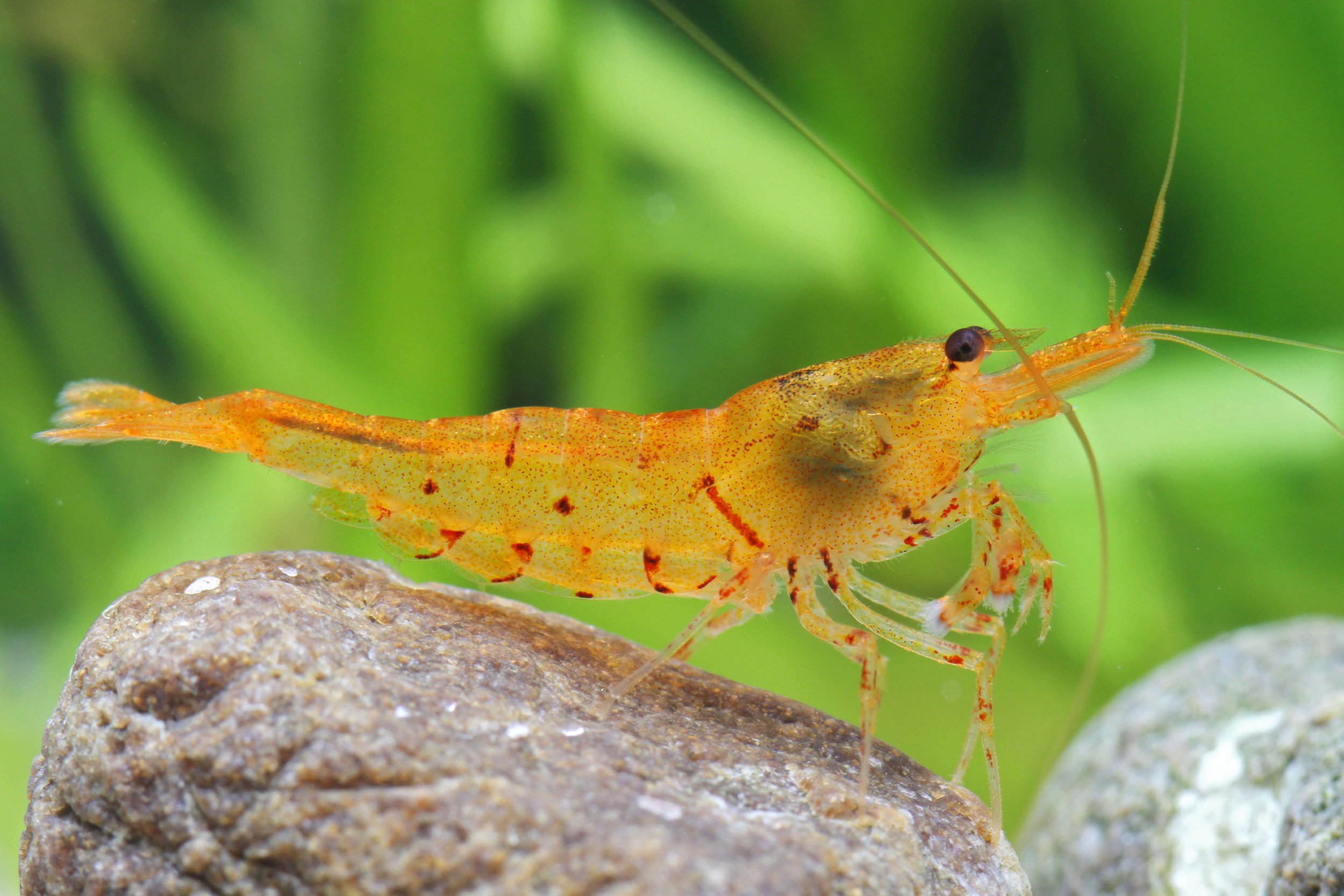
    Golden Tiger Shrimp is a selectively bred Caridina cantonensis color form marked by a yellow to golden body and contrasting orange-red or darker tiger-like markings. The supplied image supports this general identification, but individual line names are not standardized and exact genetics cannot be confirmed from an image alone. It is a soft-water shrimp best kept in a mature, stable aquarium with gentle filtration, biofilm, suitable minerals, and peaceful tank mates.
  • Black Shadow Mosura Shrimp

    Black Shadow Mosura Shrimp

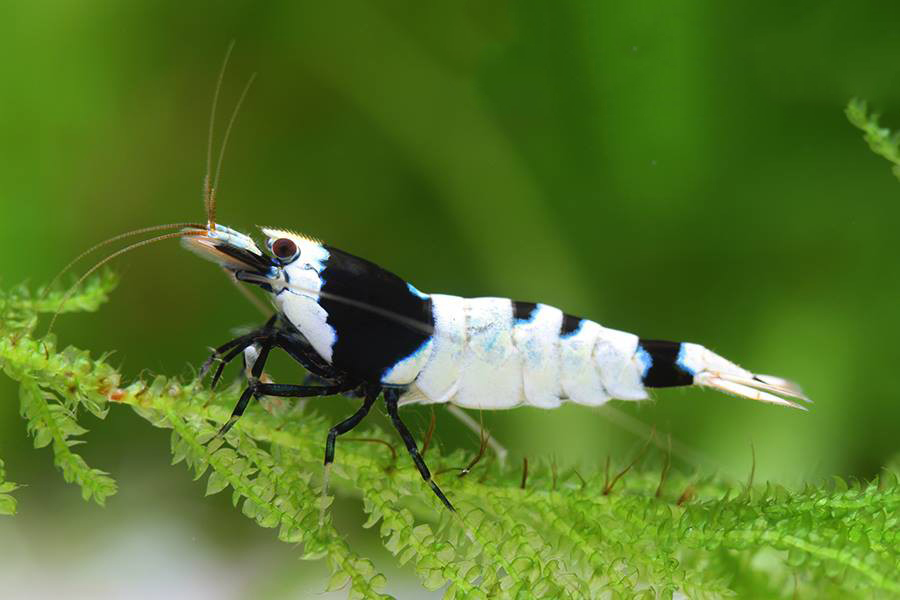
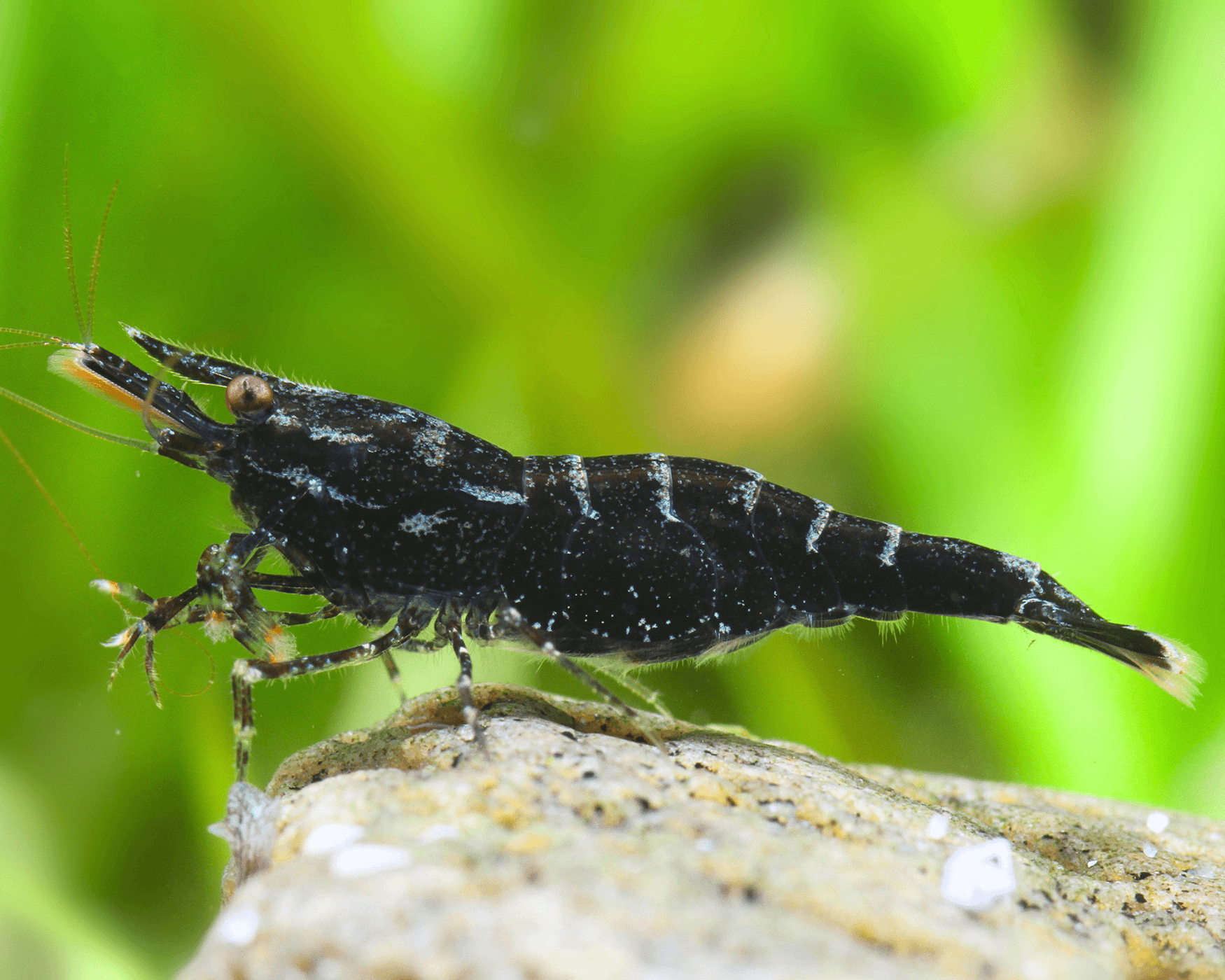
    Black Shadow Mosura is a selectively bred freshwater Caridina-type shrimp recognized by strong black-and-white patterning. The supplied label identifies it only as Caridina spec., so its exact species and line history cannot be confirmed from the available information. It is generally suited to mature, stable aquaria with soft, slightly acidic water, low mineral content, gentle filtration, and abundant biofilm. This is a specialist shrimp rather than a robust community species, and careful acclimation is important.
  • Sulawesi Yellow Ring Shrimp (Caridina spinata)

    Sulawesi Yellow Ring Shrimp (Caridina spinata)

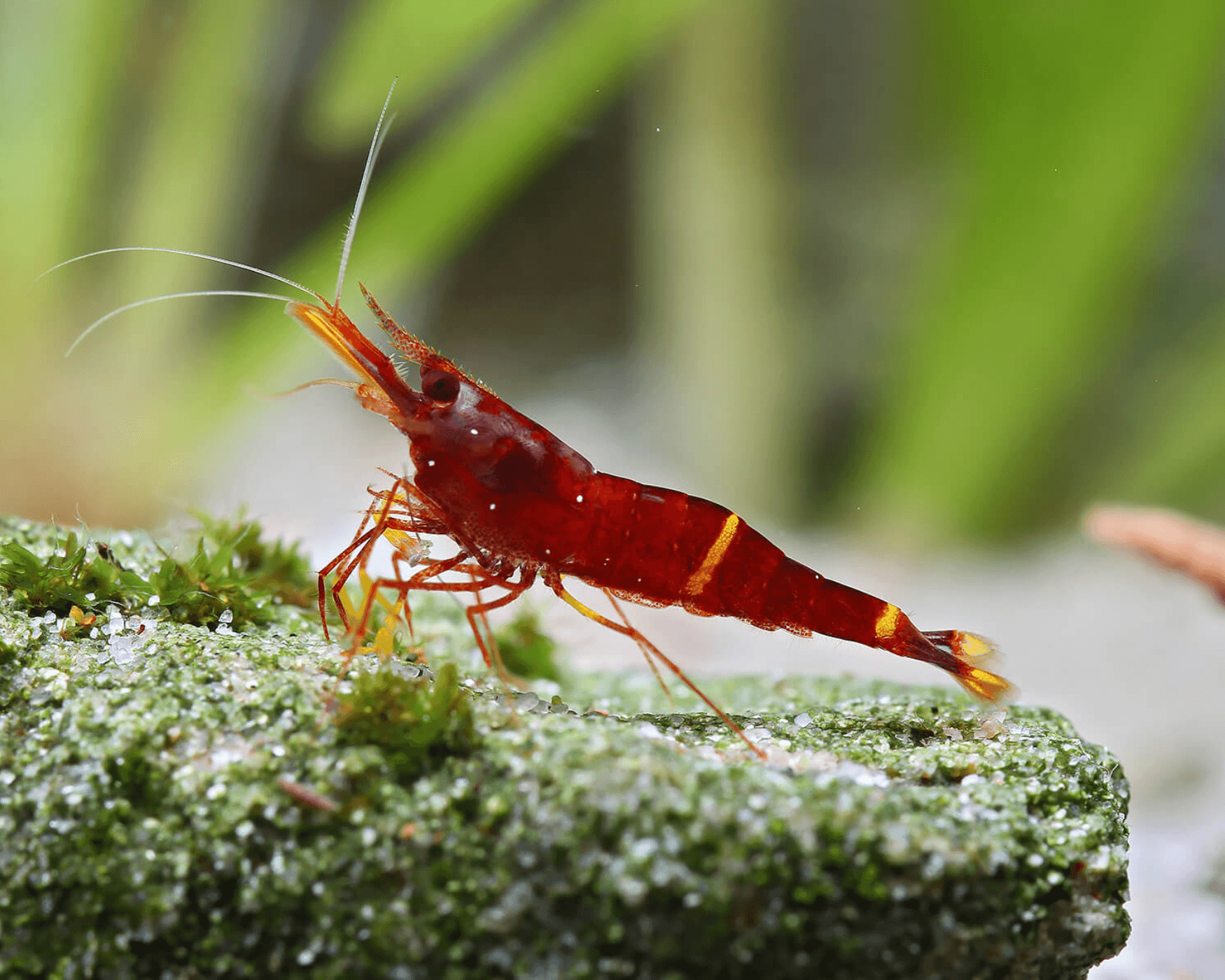
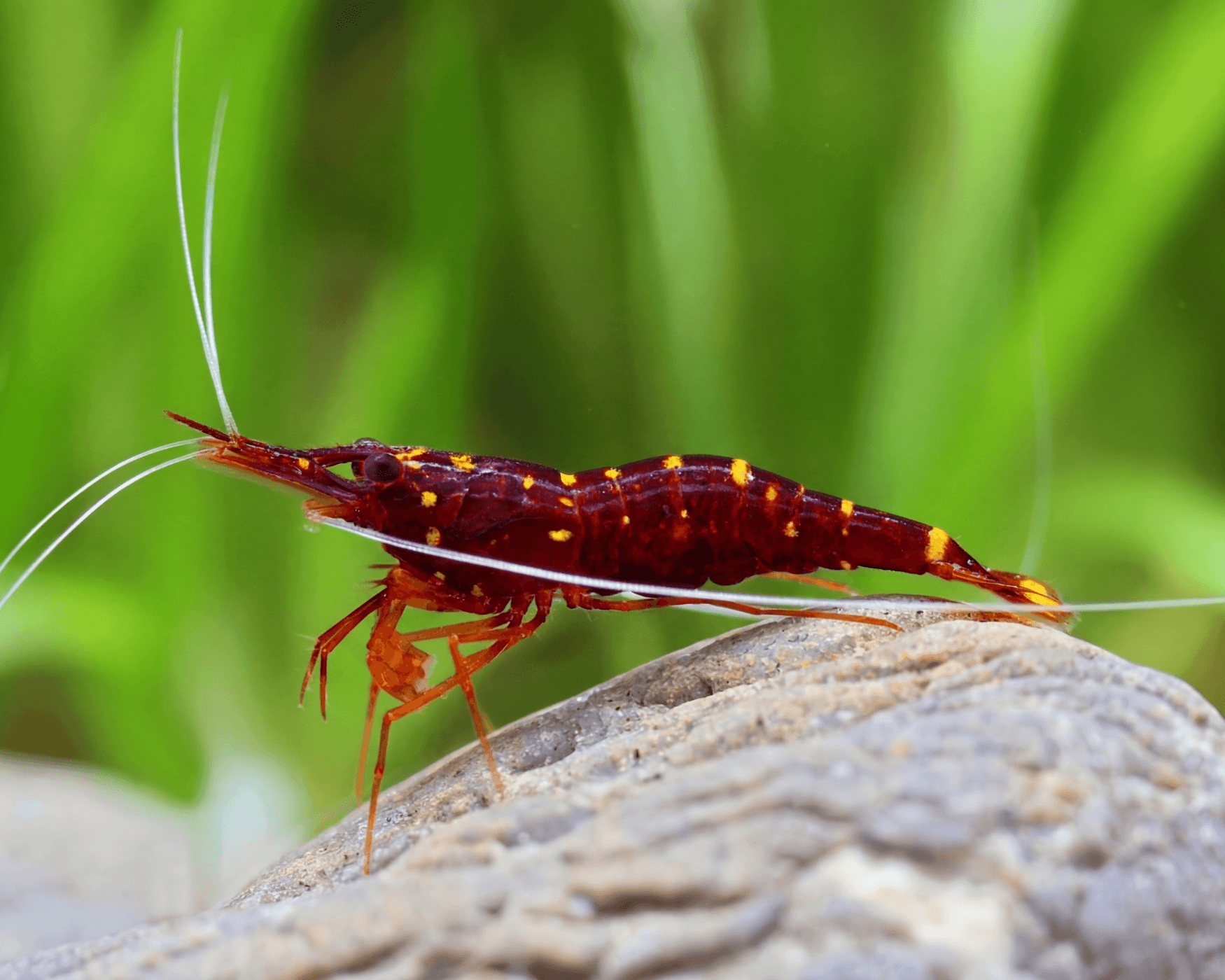
    Caridina spinata is a Sulawesi freshwater shrimp known in the aquarium trade as the Yellow Ring Shrimp. It is associated with warm, alkaline, mineral-rich water and requires a mature, stable aquarium rather than soft, acidic conditions used for many other Caridina. The supplied source identifies this shrimp as C. spinata, although the accompanying images show a red-bodied, yellow-banded animal and cannot independently confirm species identity. Careful acclimation and consistent maintenance are central to long-term success.
  • Black Bee Shrimp (Caridina logemanni)

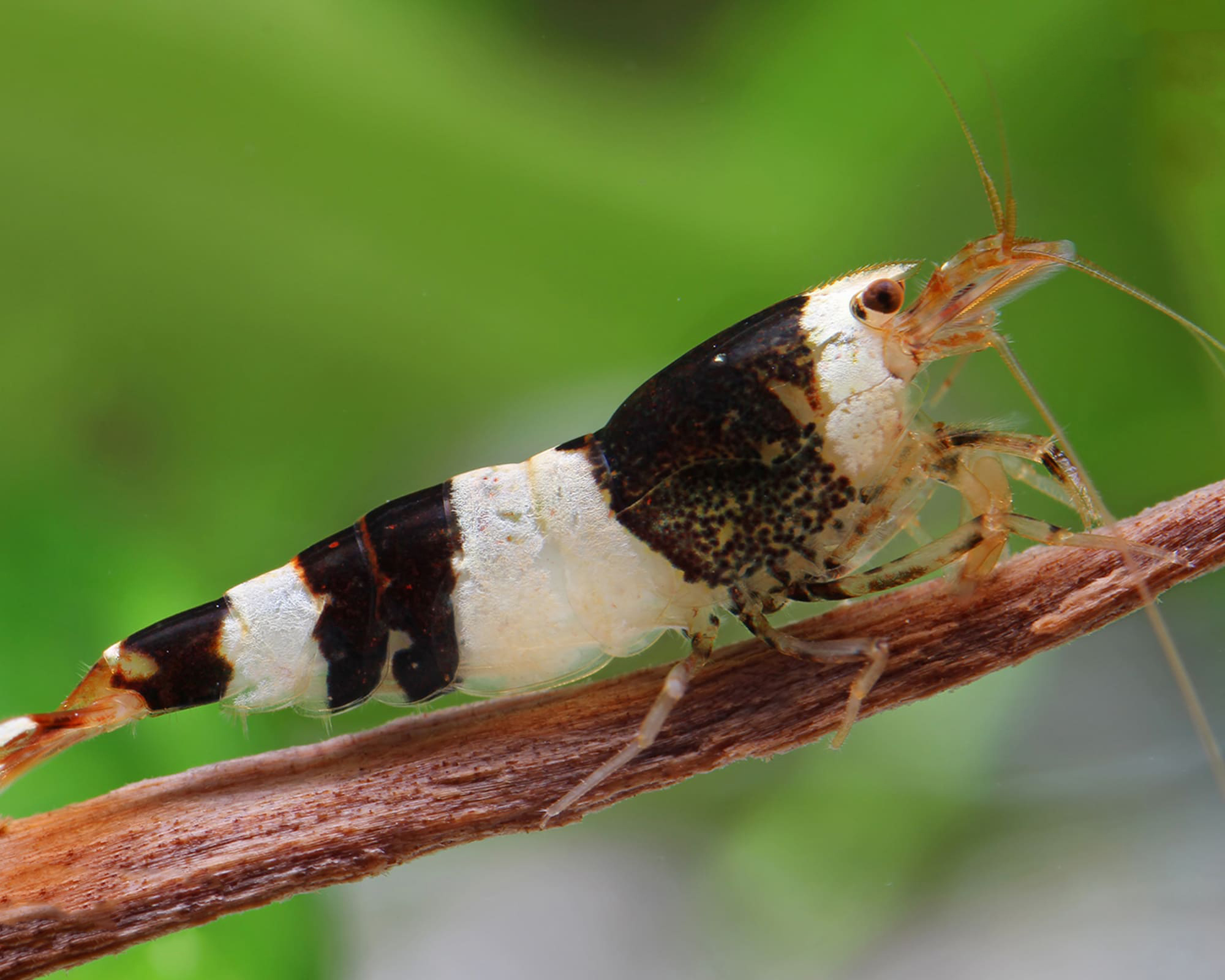
    Black Bee Shrimp (Caridina logemanni)

    The Black Bee shrimp is a popular dwarf shrimp variety, scientifically recognized as Caridina logemanni. Prized for its striking high-contrast banding, this species is a staple in the hobby for advanced keepers. Originating from freshwater habitats in southern China, these shrimp require stable, specialized water conditions to thrive and successfully reproduce within a dedicated aquarium setup.
  • Sulawesi Three Spot Red Bee Shrimp

    Sulawesi Three Spot Red Bee Shrimp

    The Sulawesi Three Spot Red Bee Shrimp is a striking crustacean originating from the ancient lake systems of Sulawesi, Indonesia. Known for its intense coloration and unique spot pattern, this shrimp requires specialized care conditions typical of the Sulawesi region. Due to their specific environmental needs, they are recommended only for experienced hobbyists capable of maintaining stable, high-quality water parameters.
  • Sulawesi Starry Night Shrimp (Caridina spec.)

    Sulawesi Starry Night Shrimp (Caridina spec.)

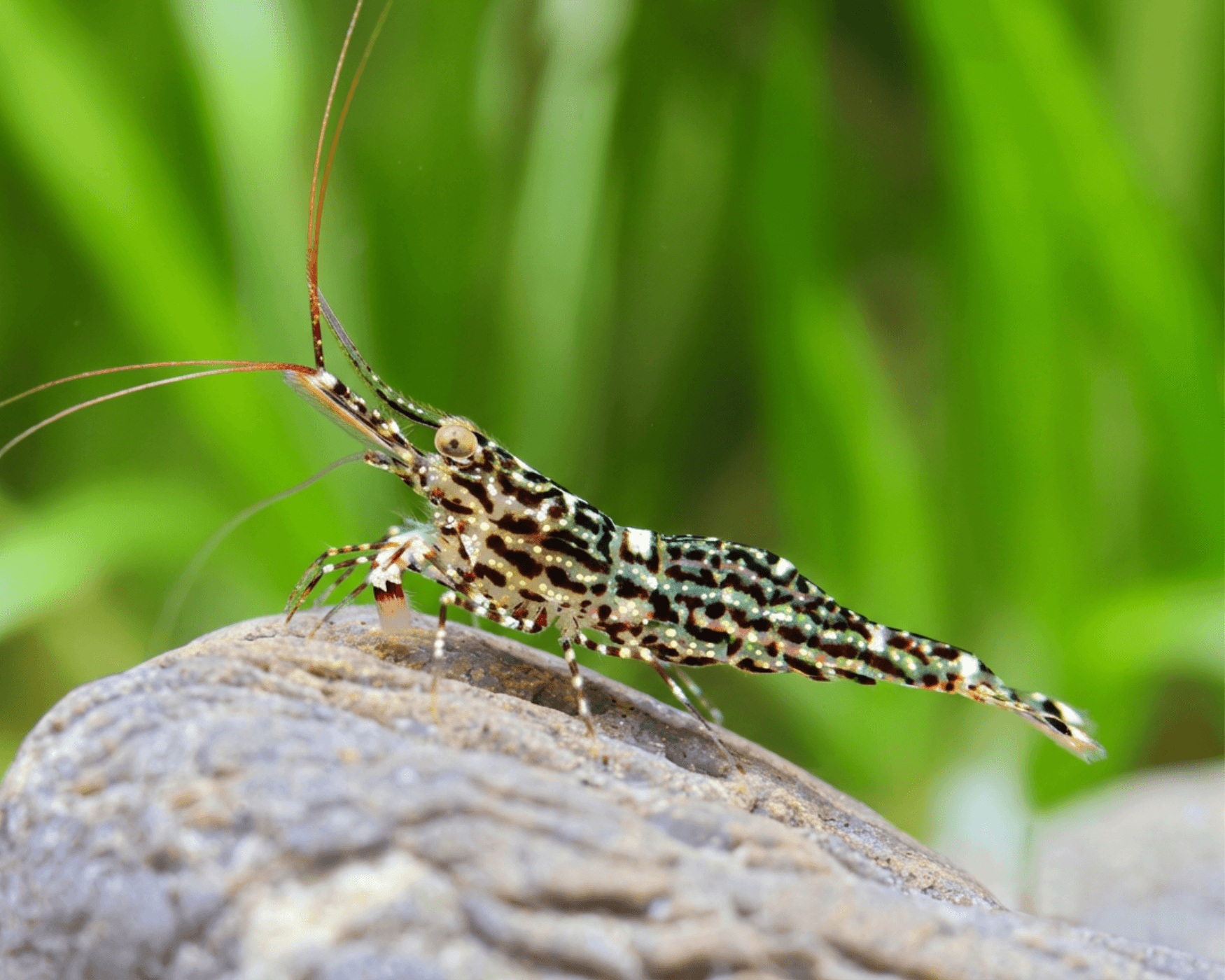
    The Sulawesi Starry Night shrimp is a visually striking freshwater crustacean native to the ancient lake systems of Sulawesi, Indonesia. Known for its distinct dark coloration and light spots, this species requires specialized care. Due to the complex nature of its endemic habitat, it is considered a challenging species suitable only for experienced aquarium keepers.
  • Sulawesi Red Orchid Shrimp (Caridina glaubrechti)

    Sulawesi Red Orchid Shrimp (Caridina glaubrechti)

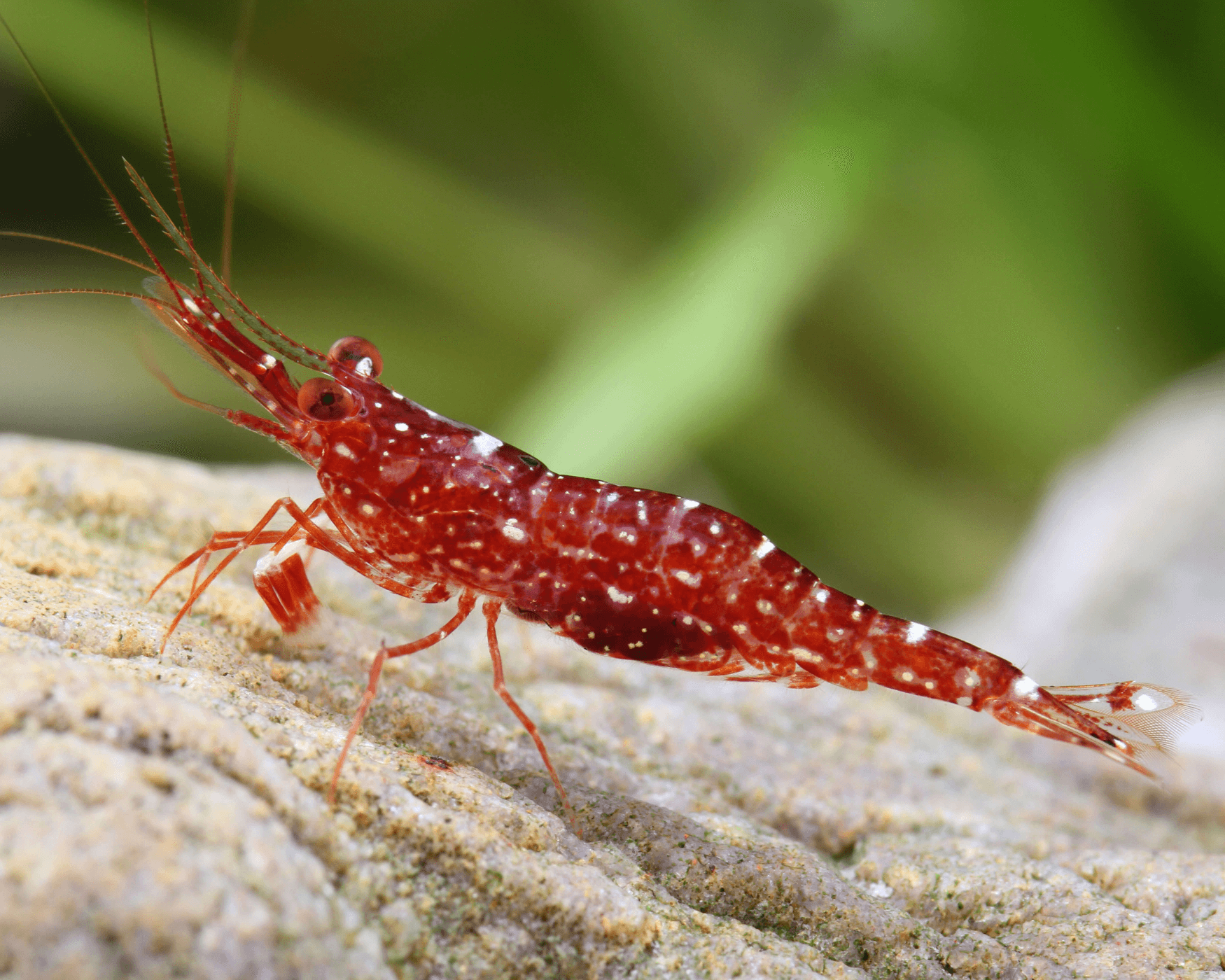
    The Sulawesi Red Orchid shrimp, scientifically known as Caridina glaubrechti, is a visually striking freshwater crustacean native to the ancient Lake Towuti in Indonesia. Renowned for its intense red coloration and intricate white markings, this species is highly sought after by advanced hobbyists. Due to their specific environmental requirements, they are considered a challenging species to maintain successfully in captivity.
  • Sulawesi Mantano Tiger Shrimp

    Sulawesi Mantano Tiger Shrimp

    The Sulawesi Mantano Tiger shrimp, scientifically identified as Caridina holthuisi, is a specialized freshwater crustacean endemic to Lake Mantano in Indonesia. Known for its striking striped patterns and complex environmental requirements, this species is highly sought after by experienced hobbyists. Success with these delicate shrimp relies heavily on replicating their unique, mineral-rich, and warm alkaline lake habitat conditions.
  • Caridina striata: The Sulawesi Mantano Red Line Shrimp

    Caridina striata: The Sulawesi Mantano Red Line Shrimp

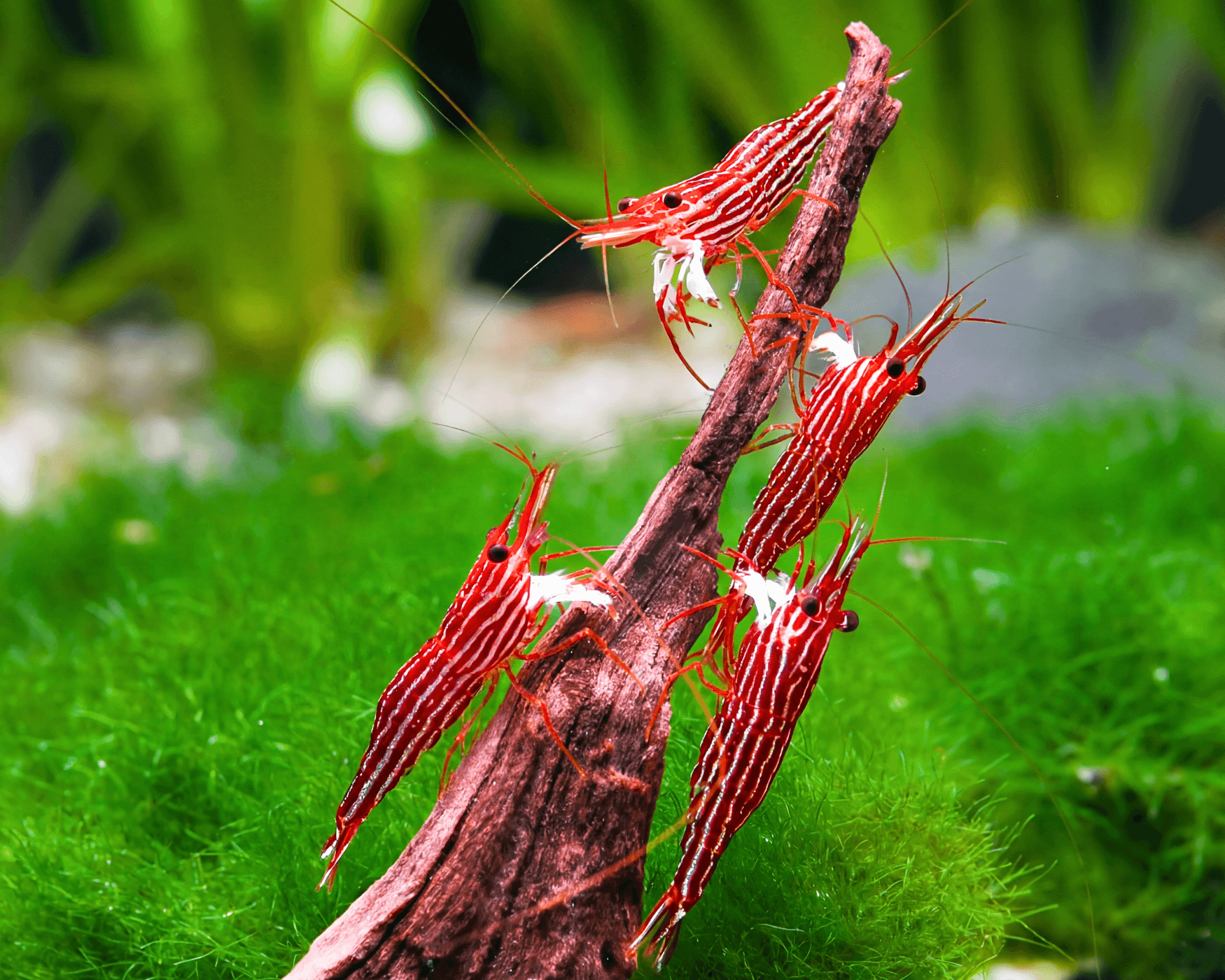
    The Caridina striata, commonly known as the Sulawesi Mantano red line shrimp, is a striking freshwater crustacean native to the ancient Lake Matano in Indonesia. Renowned for its vivid red body adorned with distinct horizontal white stripes, this species requires specialized care. It is a highly sought-after invertebrate for advanced hobbyists interested in the unique conditions of Sulawesi lake ecosystems.