Taxonomy and identification
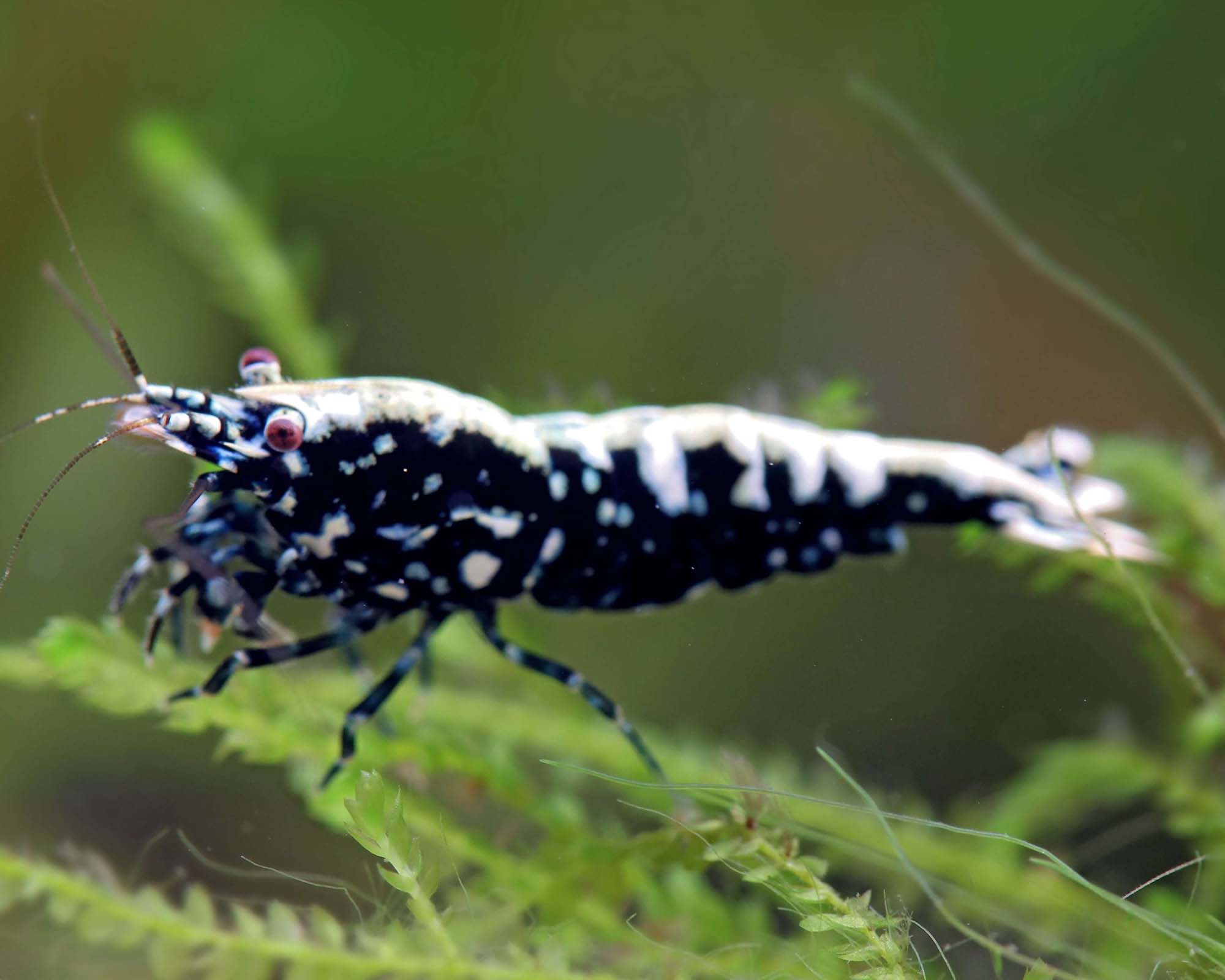
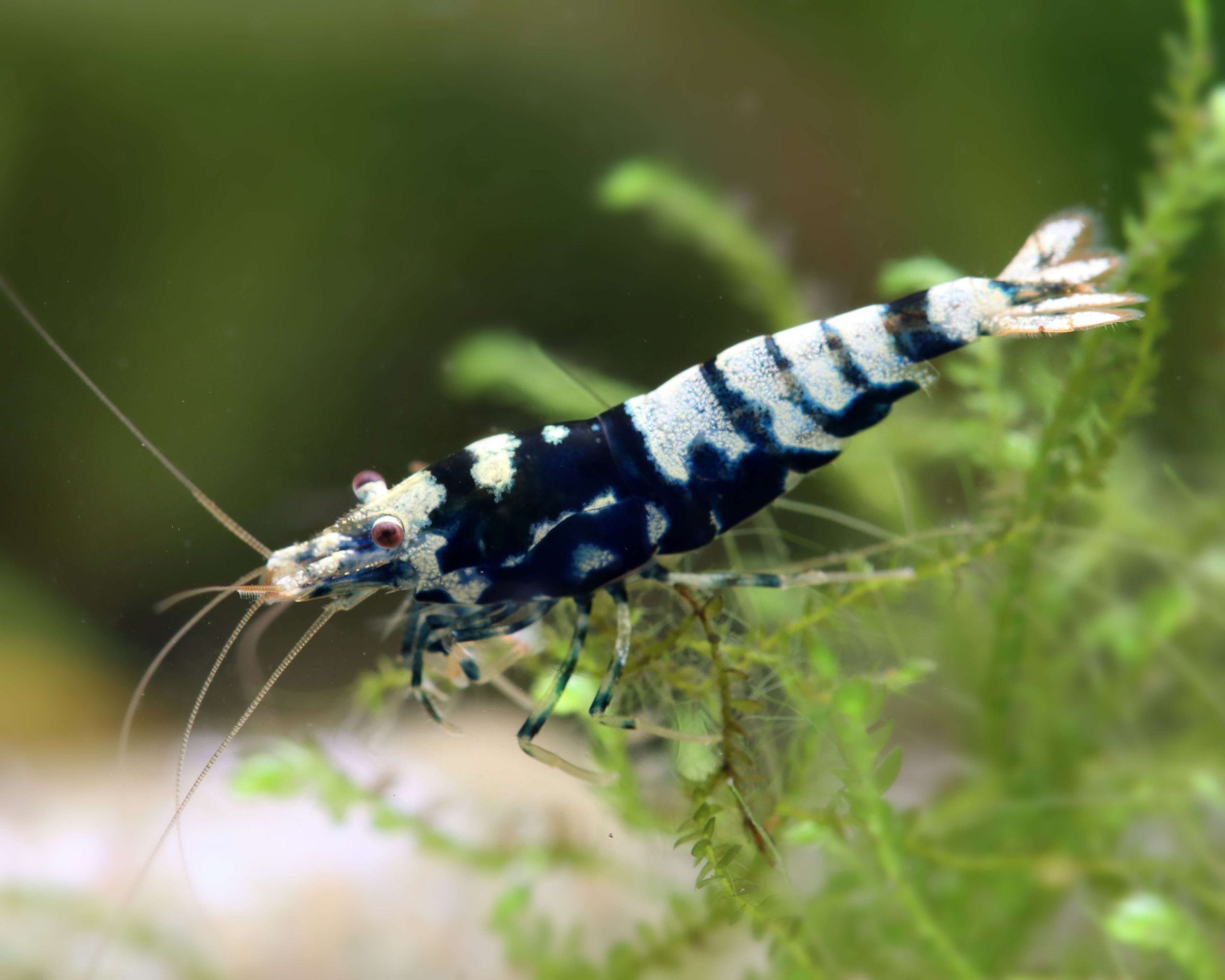
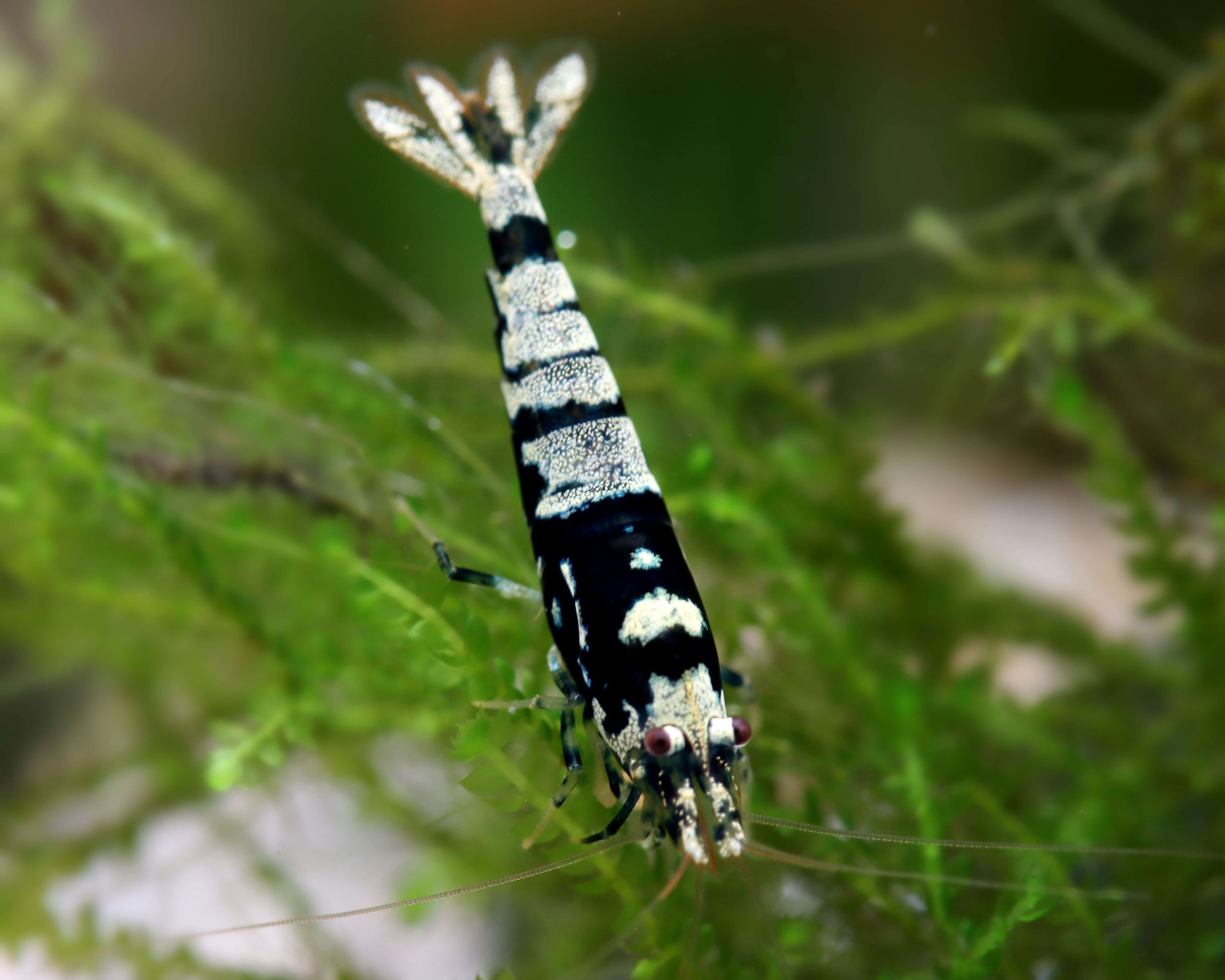
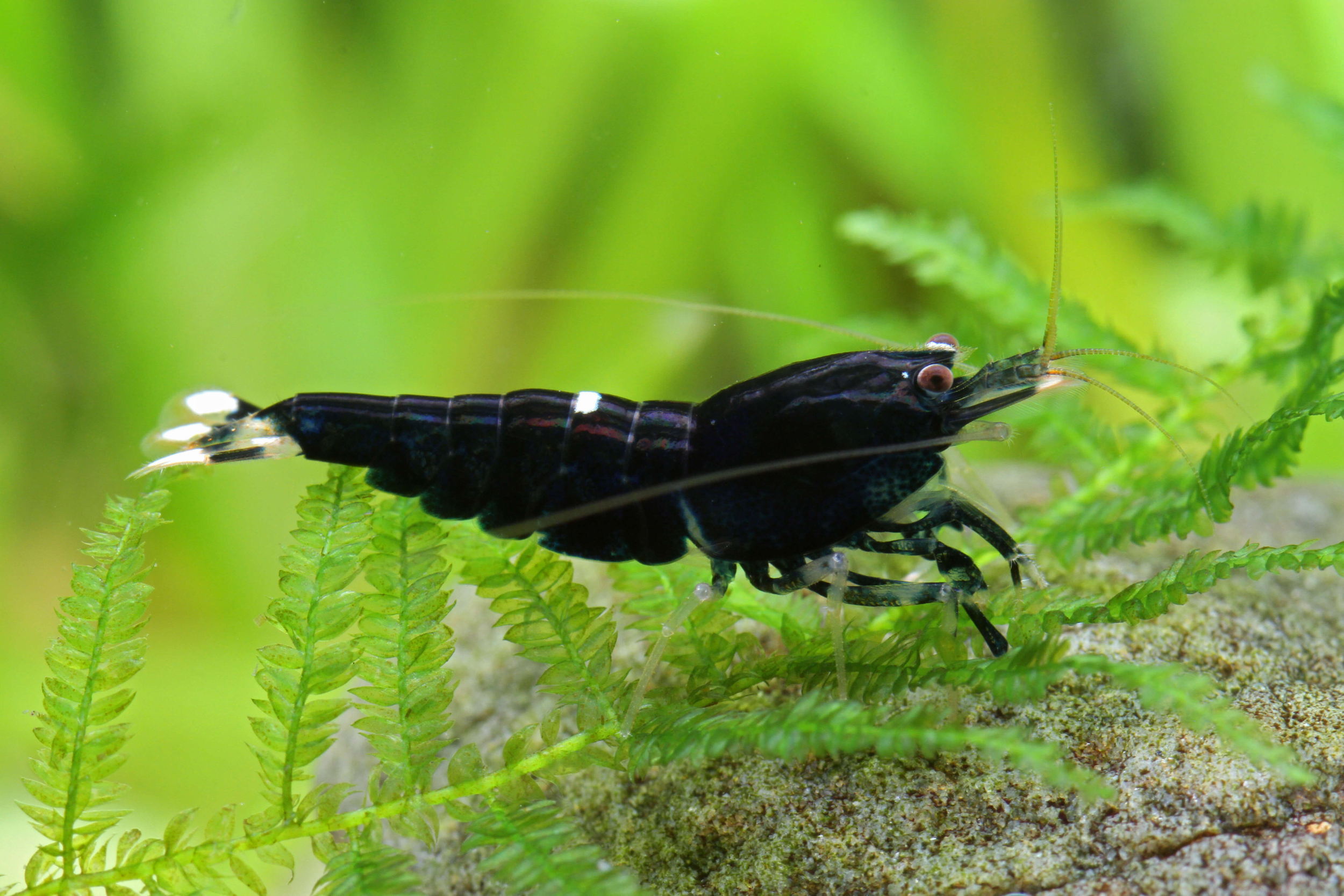
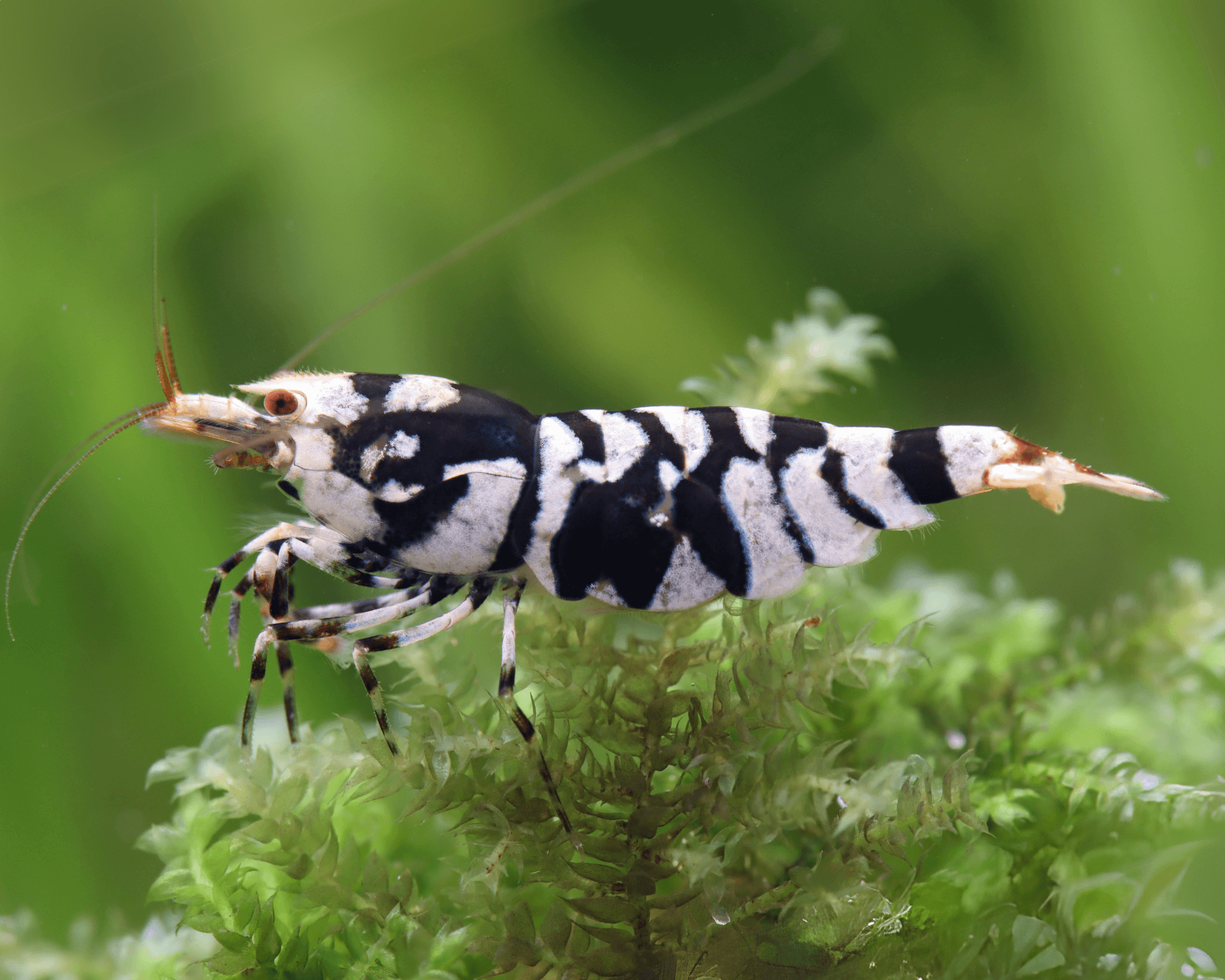
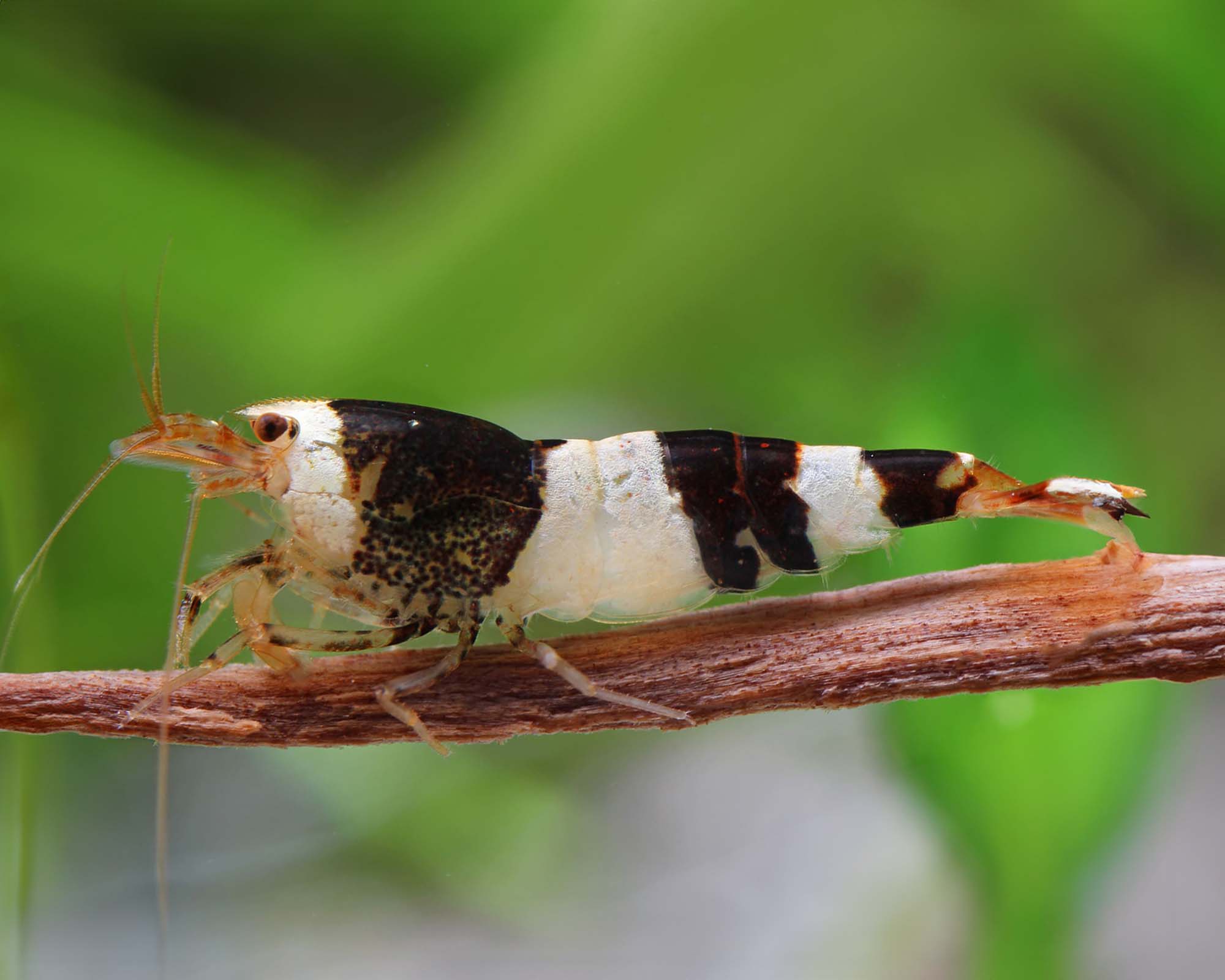
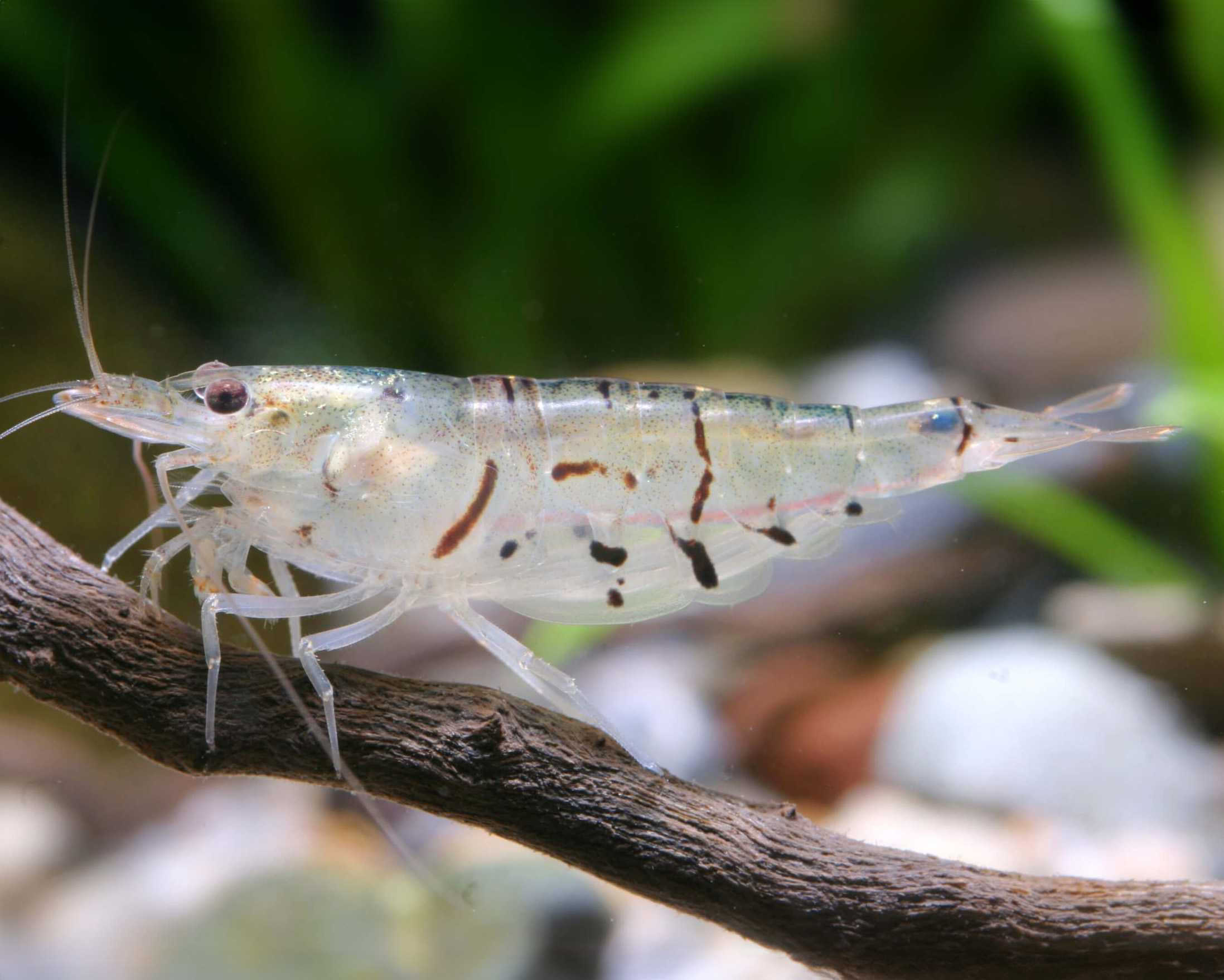
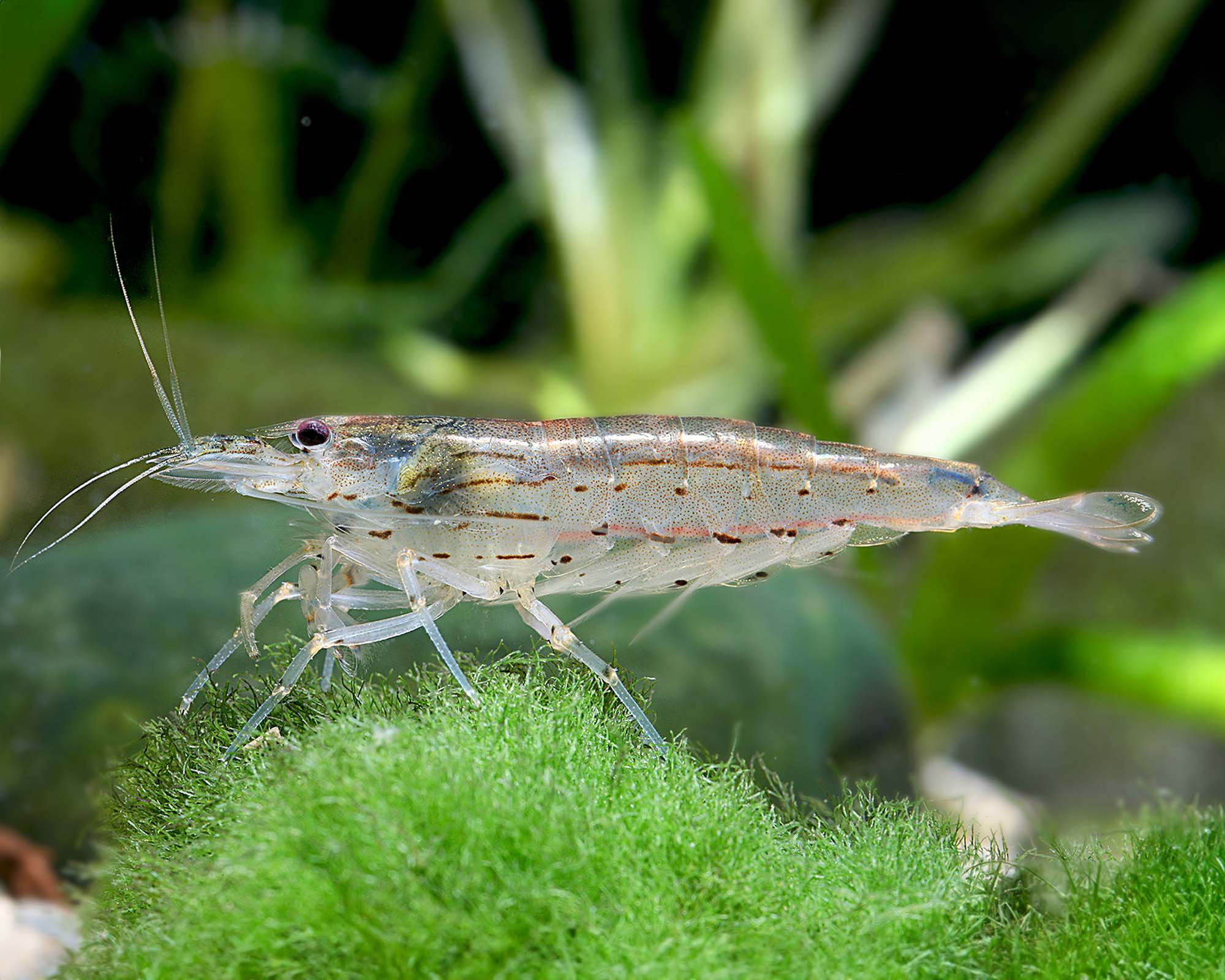
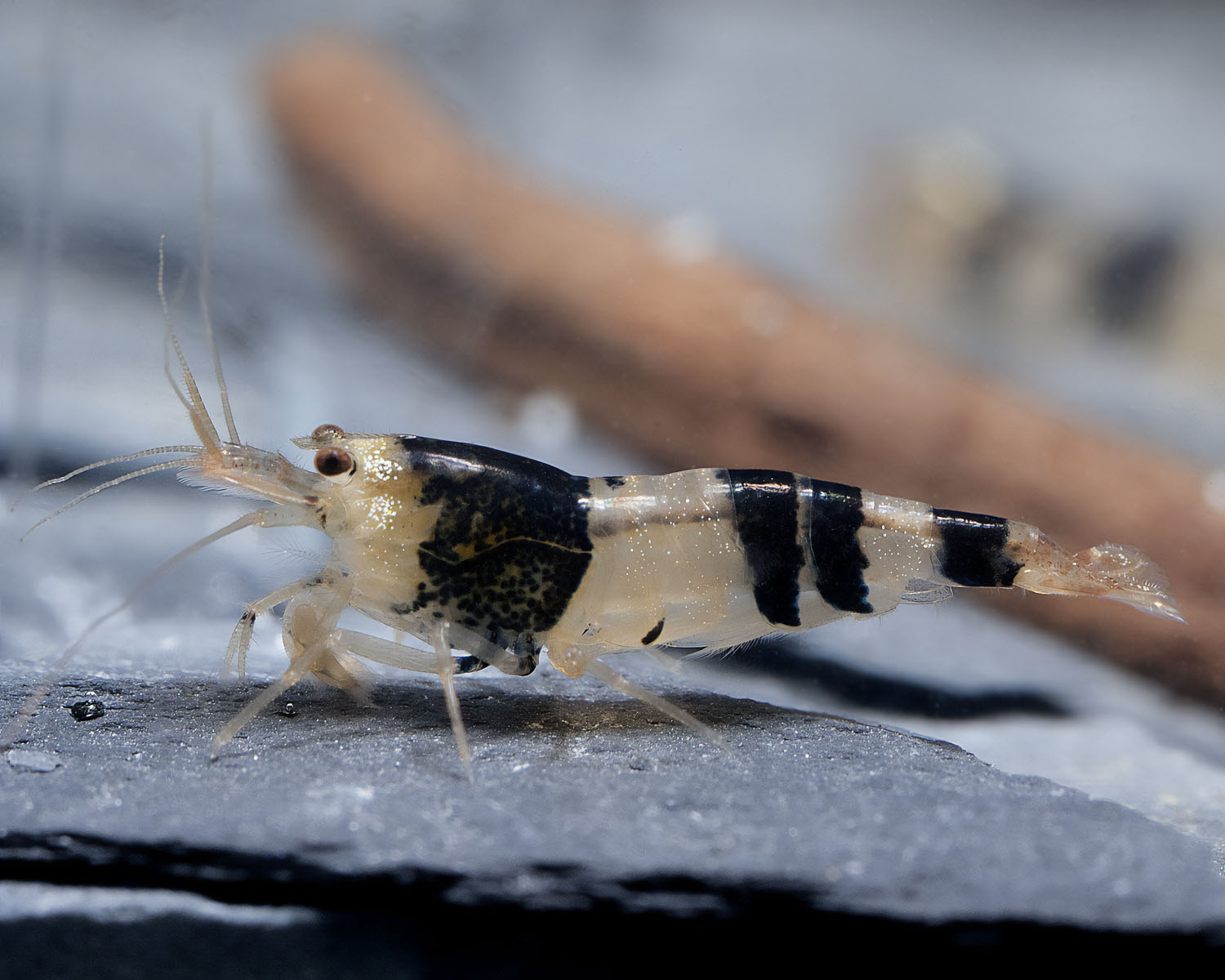
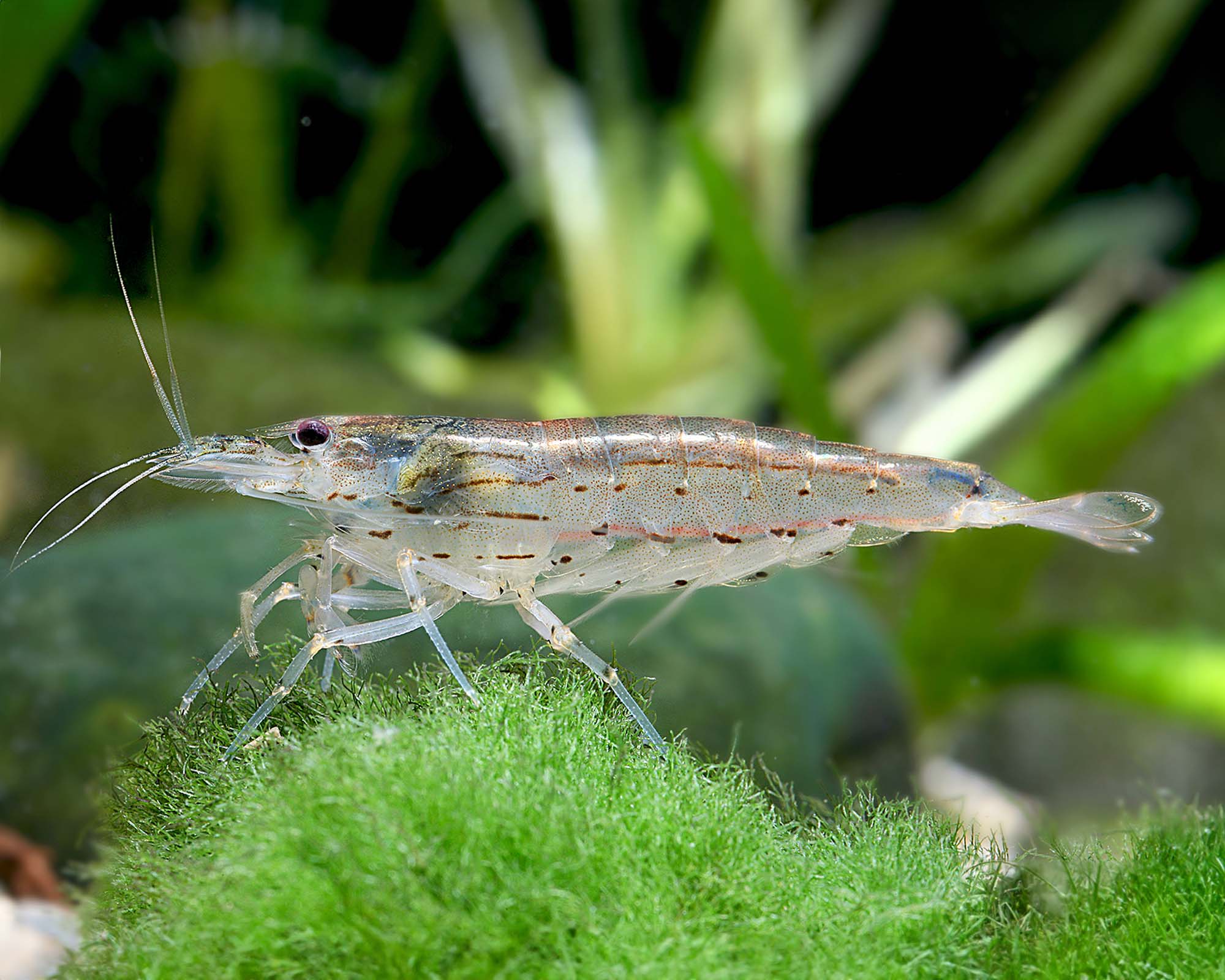
The supplied trade name is Black Galaxy Tiger and the listed scientific designation is Caridina sp. This indicates an ornamental Caridina line whose formal species identity is not specified. The name describes a cultivated color and pattern form rather than a confirmed wild species. Individuals commonly show a dark or black base, pale galaxy-like patches, and contrasting bands, but appearance is variable. Do not assume that every shrimp sold under this name has the same lineage.
Habitat and aquarium setting
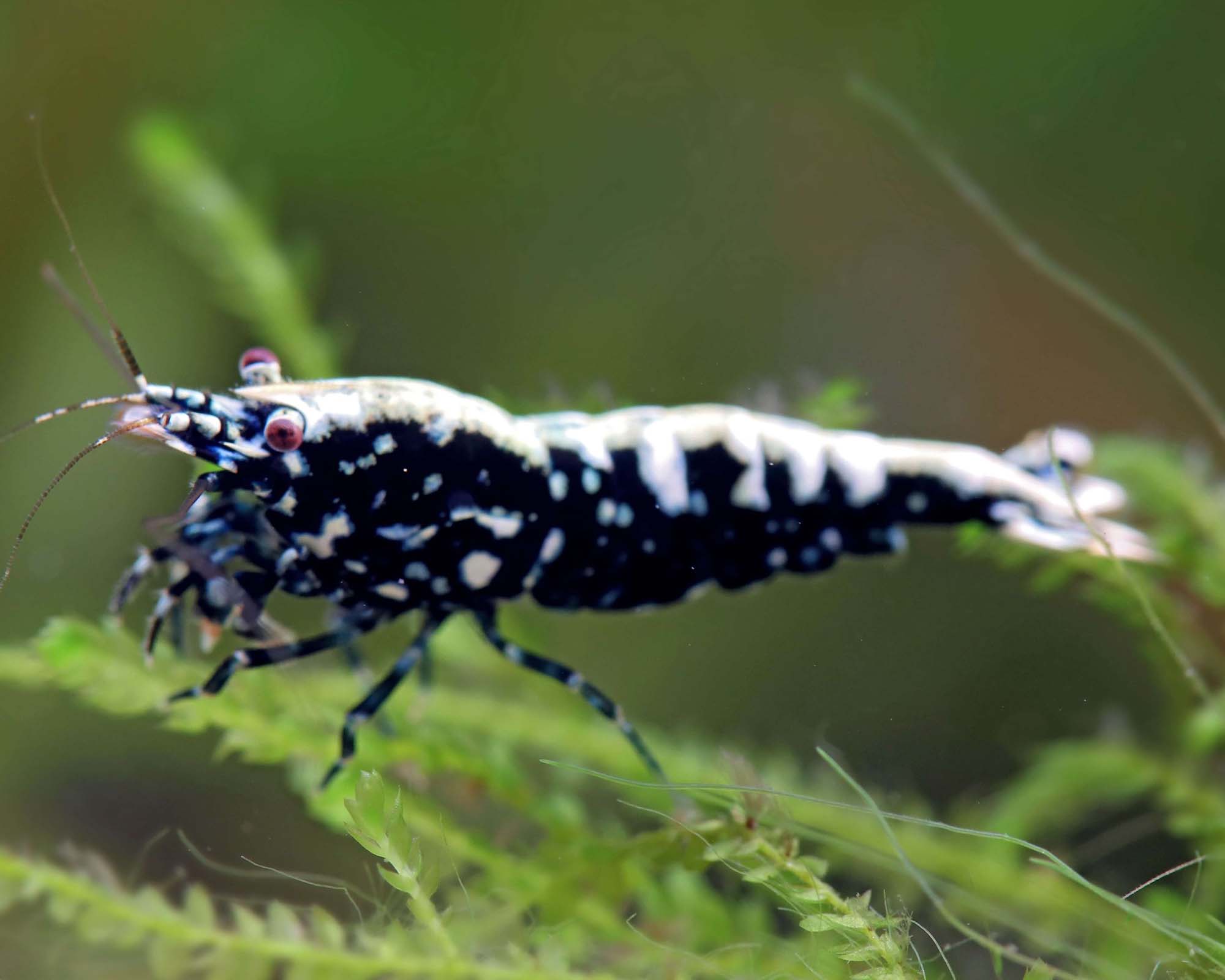
The precise natural habitat of this cultivated form is not established. Like other sensitive Caridina aquarium lines, it benefits from a mature, biologically stable aquarium with gentle filtration, subdued lighting, fine plants or moss, leaf litter, and surfaces that support biofilm. Use a secure cover because shrimp can climb through small gaps. Avoid newly set-up tanks and sudden changes in temperature, mineral content, or acidity.
Water parameters
A practical target is 20–24 °C, pH 6.0–6.8, low general hardness, low carbonate hardness, and zero ammonia and nitrite. The exact hardness and total dissolved solids should be matched to the breeder's established values rather than changed abruptly. Use remineralized soft water when necessary, and make small, temperature-matched water changes. Stable conditions are generally more important than pursuing a single exact number.
Feeding
Black Galaxy Tigers graze continuously on biofilm, microorganisms, and fine organic material on plants and hard surfaces. Supplement this with small portions of a quality shrimp food containing plant matter and minerals. Occasional blanched vegetables or dried, aquarium-safe leaves can provide variety. Feed sparingly and remove uneaten food before it decomposes. Avoid copper-containing medications and products not confirmed as shrimp-safe.
Tank mates
The safest companions are other peaceful, similarly sized Caridina shrimp and small, non-predatory snails. Most fish may eat shrimplets, and even peaceful species can stress or opportunistically consume newly hatched young. Avoid large fish, crayfish, predatory invertebrates, and fin-nipping species. If maintaining a selectively bred line, keep it in a species-focused aquarium to reduce losses and prevent unwanted crossbreeding with other Caridina lines.
Molting and maintenance
Shrimp periodically shed their exoskeleton to grow. They may become less visible and seek cover before or after a molt, when their new shell is soft and vulnerable. Provide stable mineral availability, biofilm, plants, and hiding places such as moss and leaf litter. Do not remove a freshly shed exoskeleton unless it is decomposing; shrimp commonly consume it to recover minerals. Sudden changes in hardness, pH, temperature, or water chemistry can contribute to failed molts.
Breeding
This type of Caridina is expected to reproduce through a direct freshwater life cycle when healthy, mature females and males are present. After mating, a female carries eggs beneath her abdomen and regularly fans them until they hatch as miniature shrimp. Dense moss, mature biofilm, gentle sponge filtration, and stable soft water improve survival. Keep breeding groups separate from fish and other Caridina color lines if preserving the Black Galaxy Tiger pattern. Because the exact lineage is uncertain, offspring patterns and quality may vary.
 - 1.webp)
Leave your comments