Taxonomy and identification
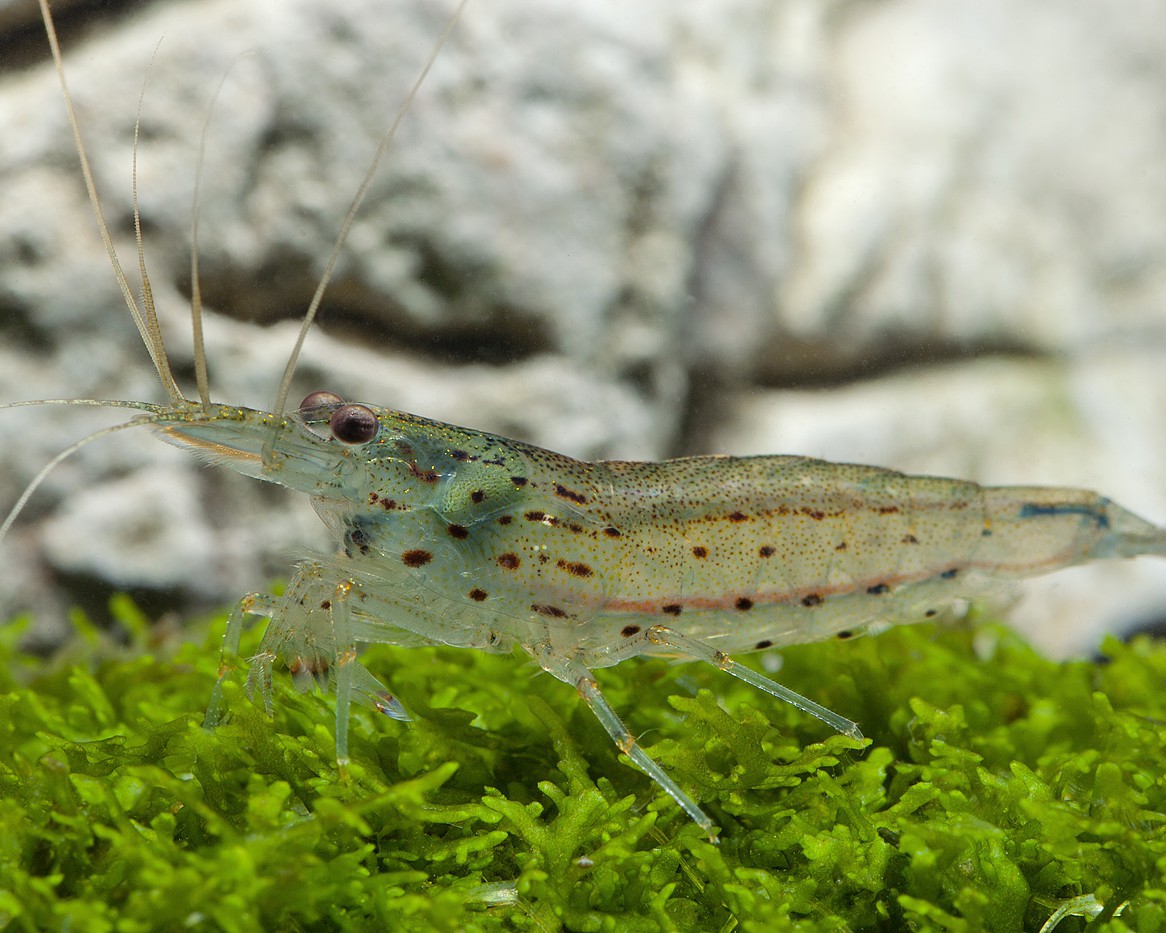
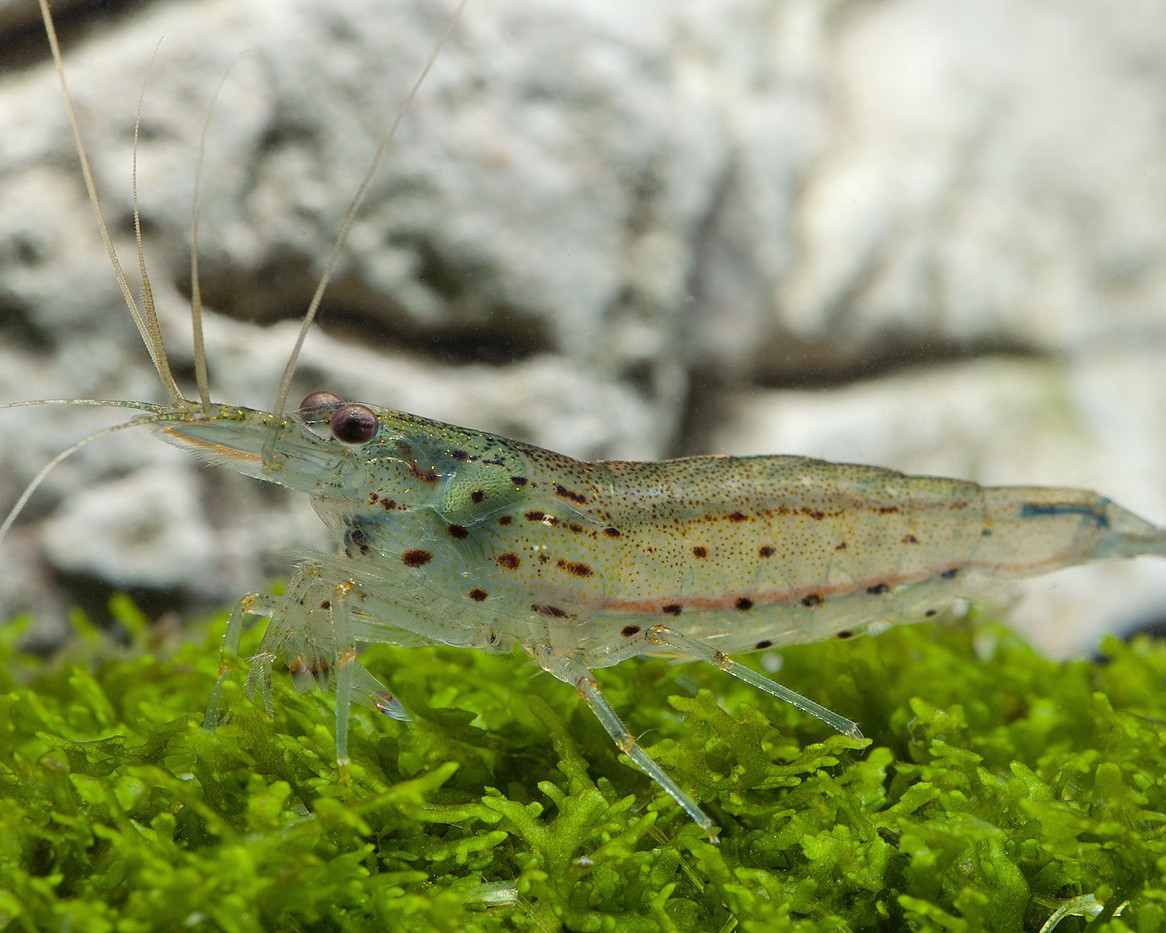
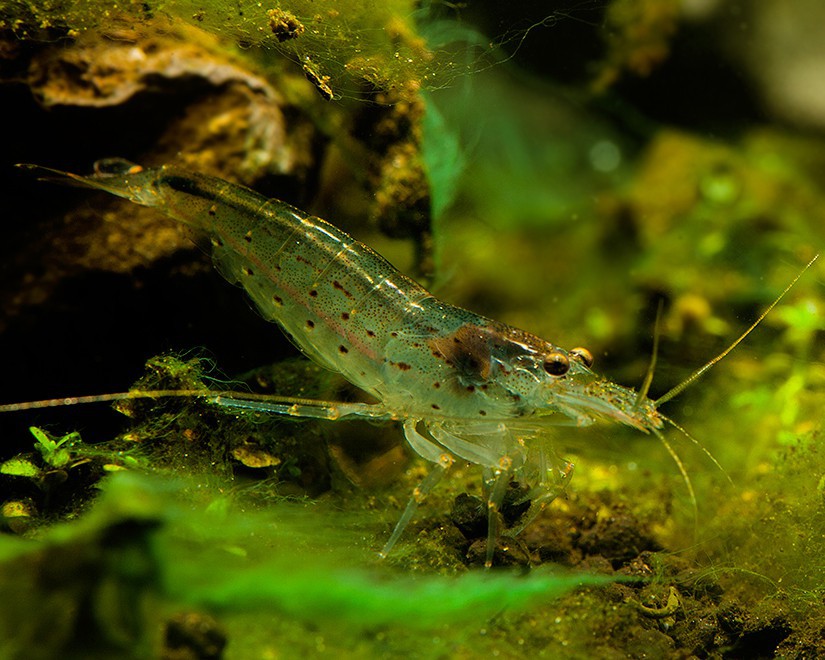
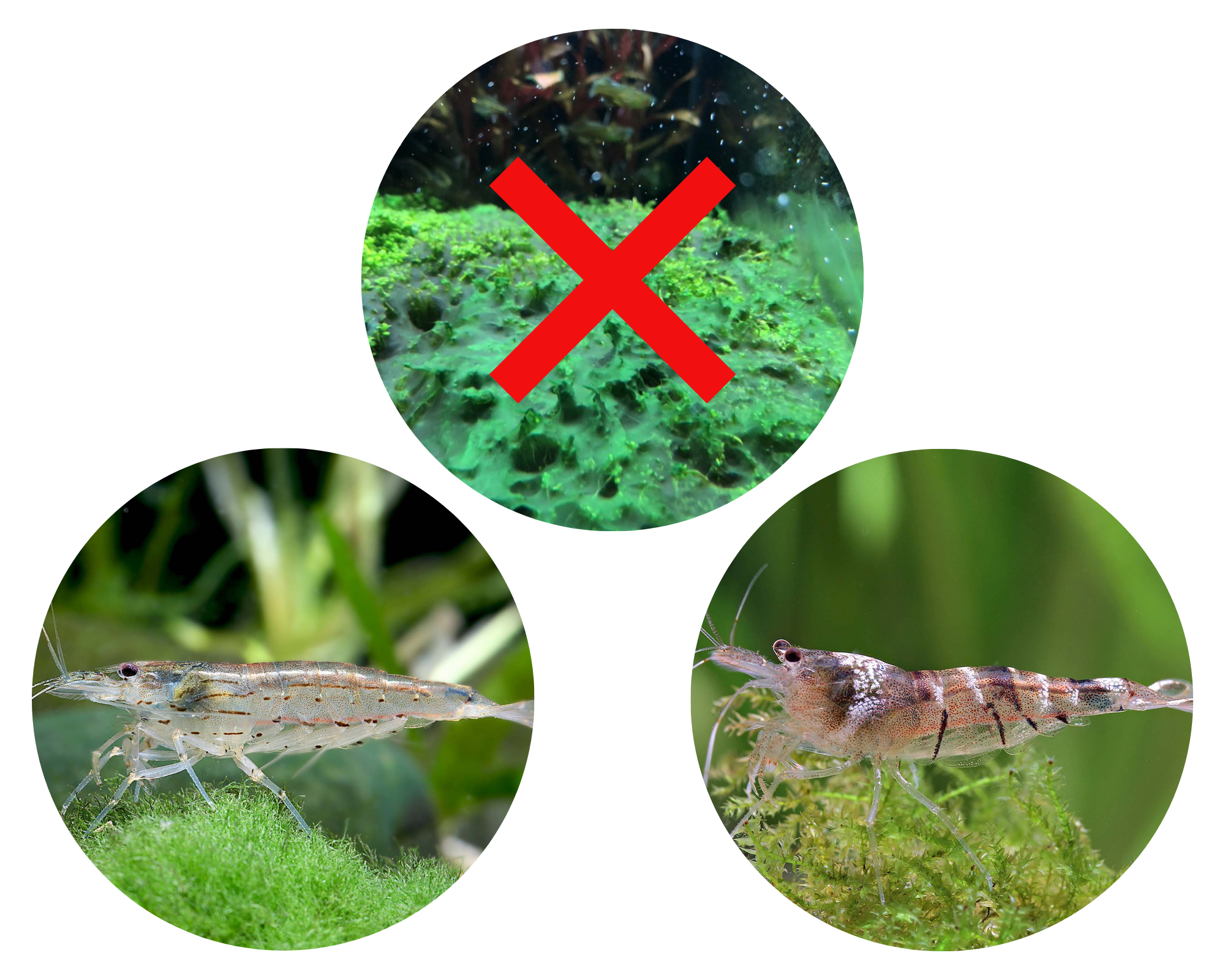
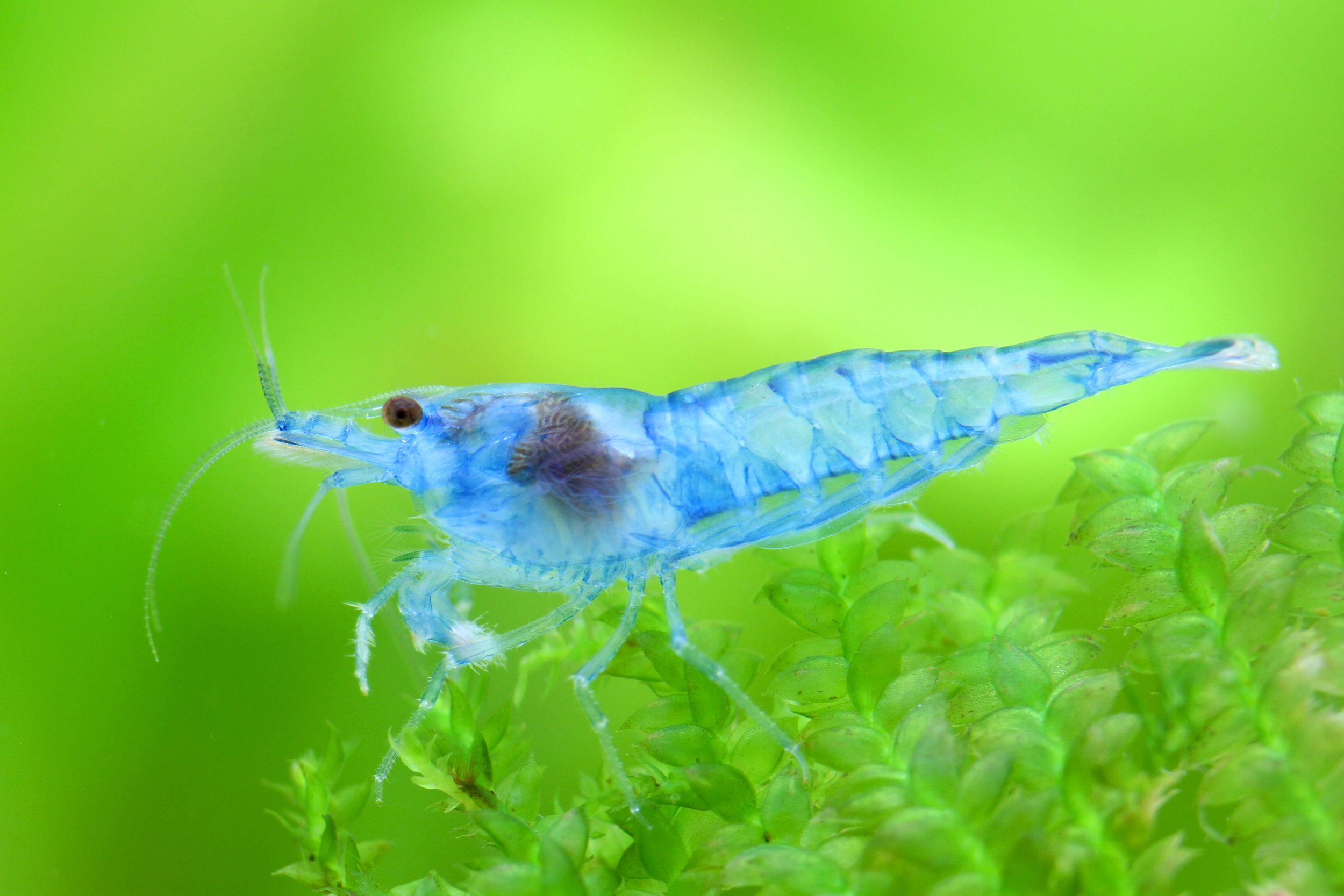
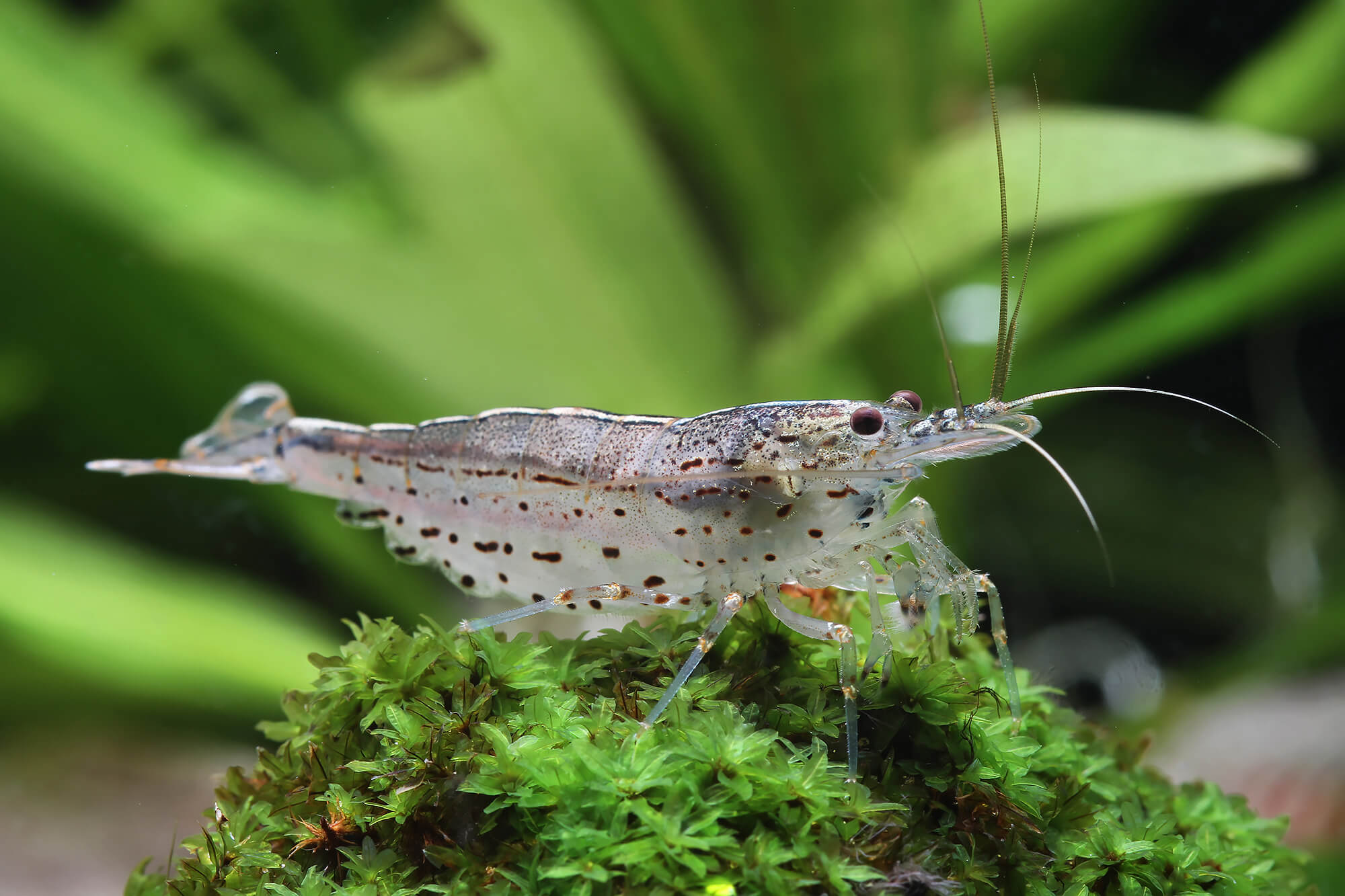
The source label uses Caridina japonica, a former name still common in aquarium trade. The shrimp is generally treated today as Caridina multidentata. It belongs to the family Atyidae. Identification is not completely certain from photographs alone, but the translucent body, dark spotting, pale lateral markings and overall form are consistent with the Amano shrimp. Color intensity varies with background, diet, stress and individual condition.
Natural habitat
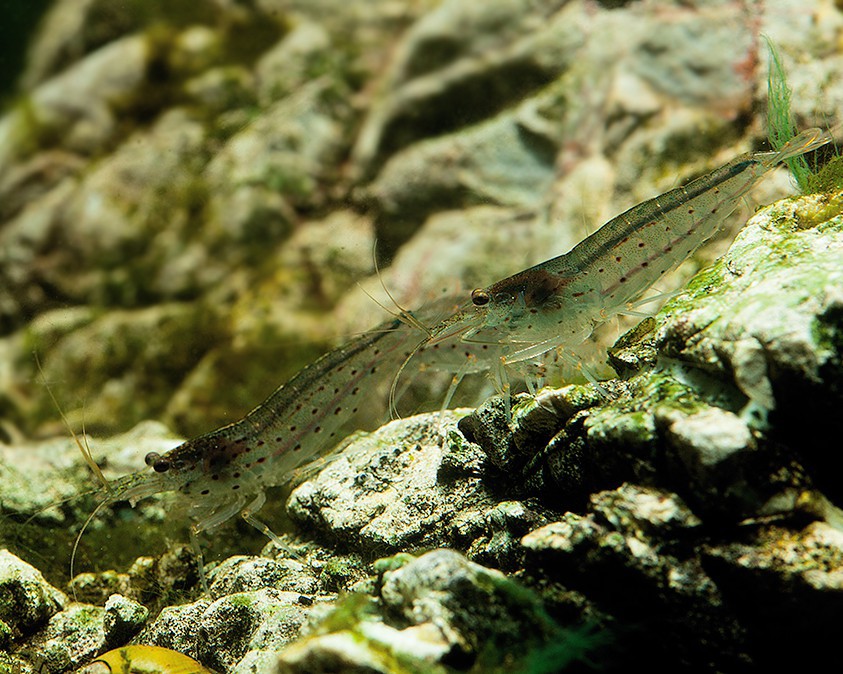
Amano shrimp occur in freshwater streams and rivers associated with Japan and nearby parts of East Asia. Adults live among stones, wood, leaf litter, algae and aquatic plants, where they graze on biofilm and suspended or deposited organic material. Their life cycle is amphidromous: adults inhabit freshwater, while the free-swimming larvae require brackish to marine conditions before developing into juveniles that return to freshwater.
Aquarium setup and water
Use a mature, cycled aquarium with biological growth, gentle to moderate circulation and plenty of cover from plants, wood, rock and moss. A secure lid is useful because shrimp may climb through gaps, especially when stressed. Maintain stable, well-oxygenated water rather than chasing exact numbers. A practical range is 20–28 °C and pH 6.5–7.5, with low ammonia and nitrite and low nitrate. Avoid copper-based medications, sudden changes in hardness or temperature, and large, poorly matched water changes.
Feeding
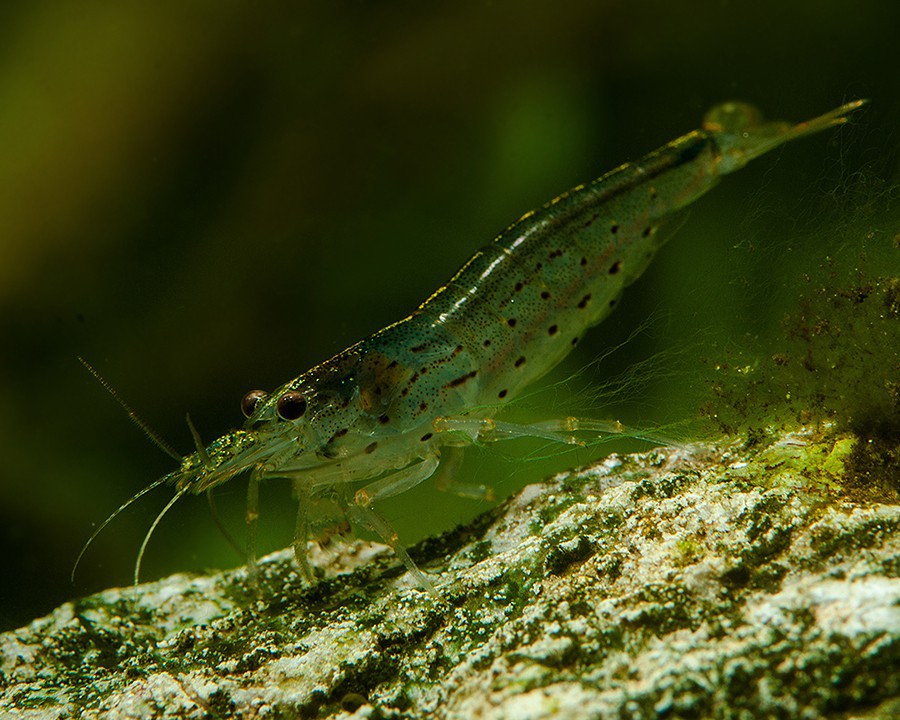
Amano shrimp should have continuous access to natural biofilm and soft algae, but an aquarium may not produce enough food for a group. Offer small portions of sinking shrimp food, algae wafers or blanched vegetables such as spinach, courgette or green beans. They also consume dead plant material and leftover food. Remove uneaten fresh food before it decomposes. Do not rely on them as a complete solution for severe algae problems.
Tank mates
They are peaceful and suitable for planted community aquariums. Good companions include similarly peaceful small fish, snails and other non-aggressive shrimp. Avoid large, predatory or highly territorial fish, which may eat adults or continually hunt them. Fish-safe intake sponges or prefilters help prevent shrimp from entering filtration equipment. Dense plants and moss provide grazing surfaces and refuge, particularly after molting.
Molting and maintenance
Growth occurs through periodic molting. A shrimp may become less active and hide before shedding its exoskeleton, then remain vulnerable while the new shell hardens. Leave the shed exoskeleton in the aquarium because it can be eaten and its minerals may be reused. Provide adequate dietary minerals and stable general hardness without making abrupt corrections. Sudden chemistry changes, poor oxygenation and contamination are more dangerous than a normal molt.
Breeding
Amano shrimp commonly mate after the female molts. The female carries many small eggs beneath the abdomen and fans them until hatching. The larvae are not miniature freshwater shrimp: they drift in the water column and need carefully controlled brackish or marine rearing conditions, suitable food and gradual acclimation. After metamorphosis, juveniles can be moved to freshwater. Consequently, the species may reproduce in a community aquarium, but completing the life cycle is an advanced breeding project.
Leave your comments