AquaLibs presents AquaRank Discover the world’s leading aquascapers

Explore transparent rankings built from published results across the world’s leading aquascaping contests.

Black Panda Shrimp (Caridina sp. Taiwan Bee) Care Guide

Taxonomy and identification

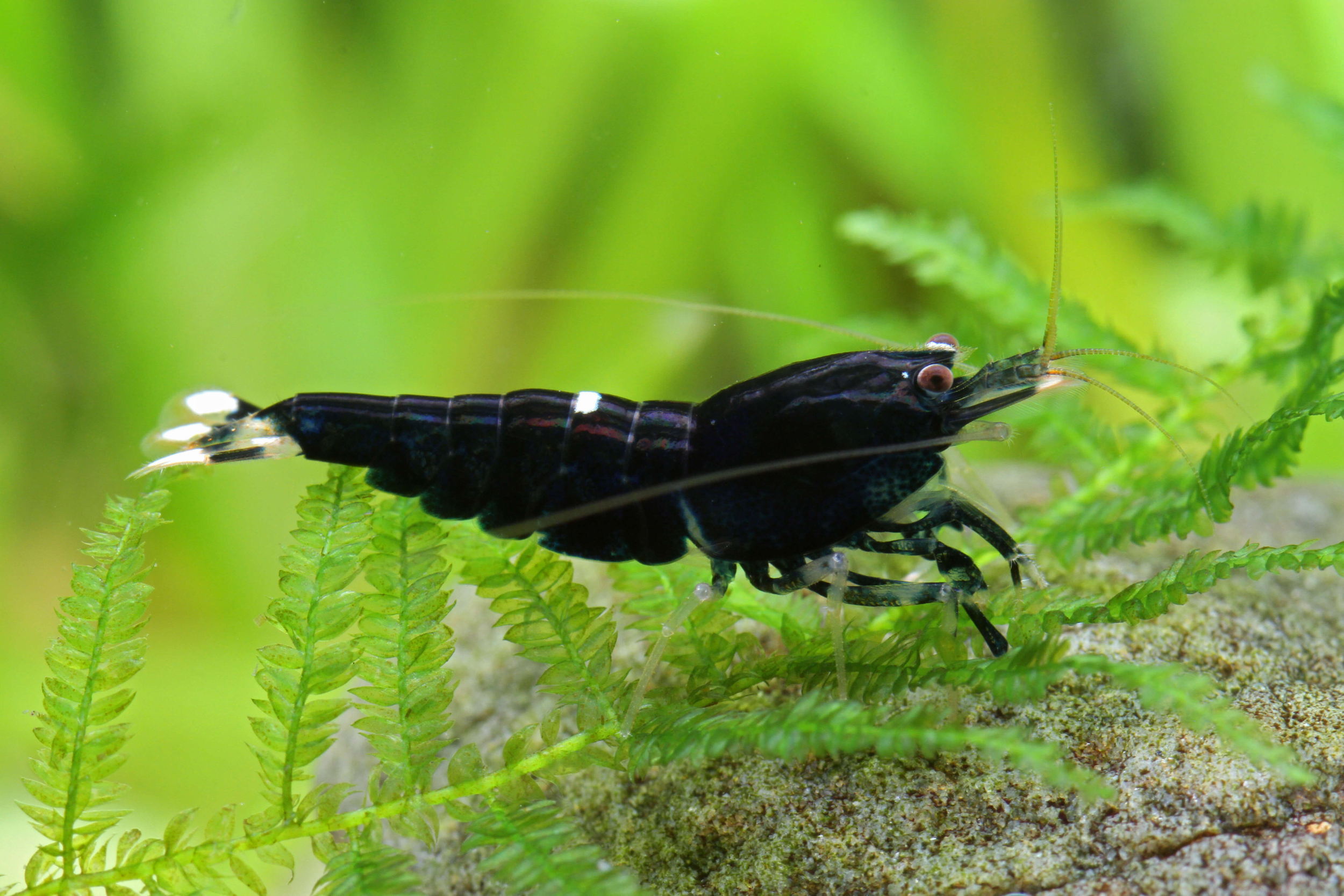
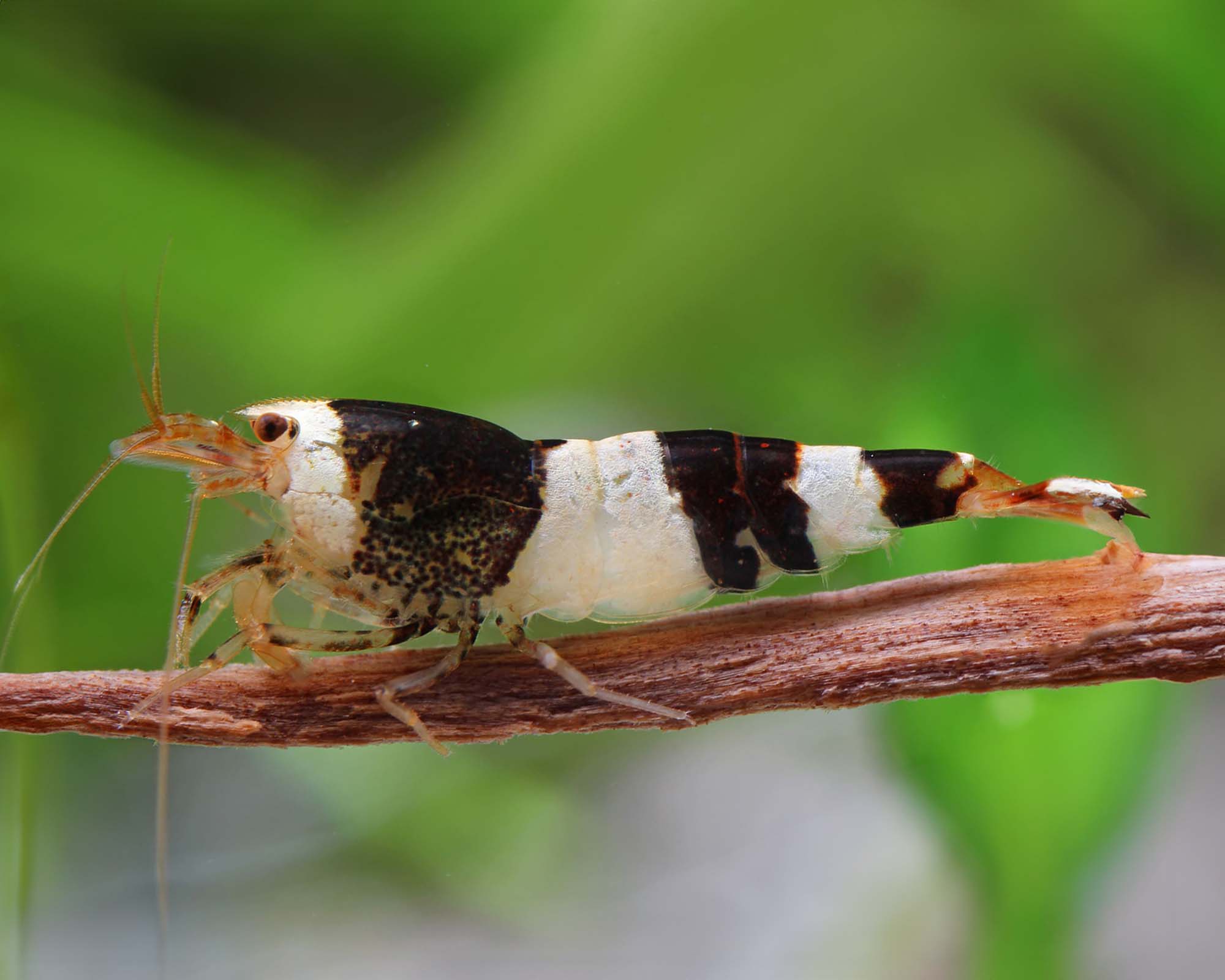
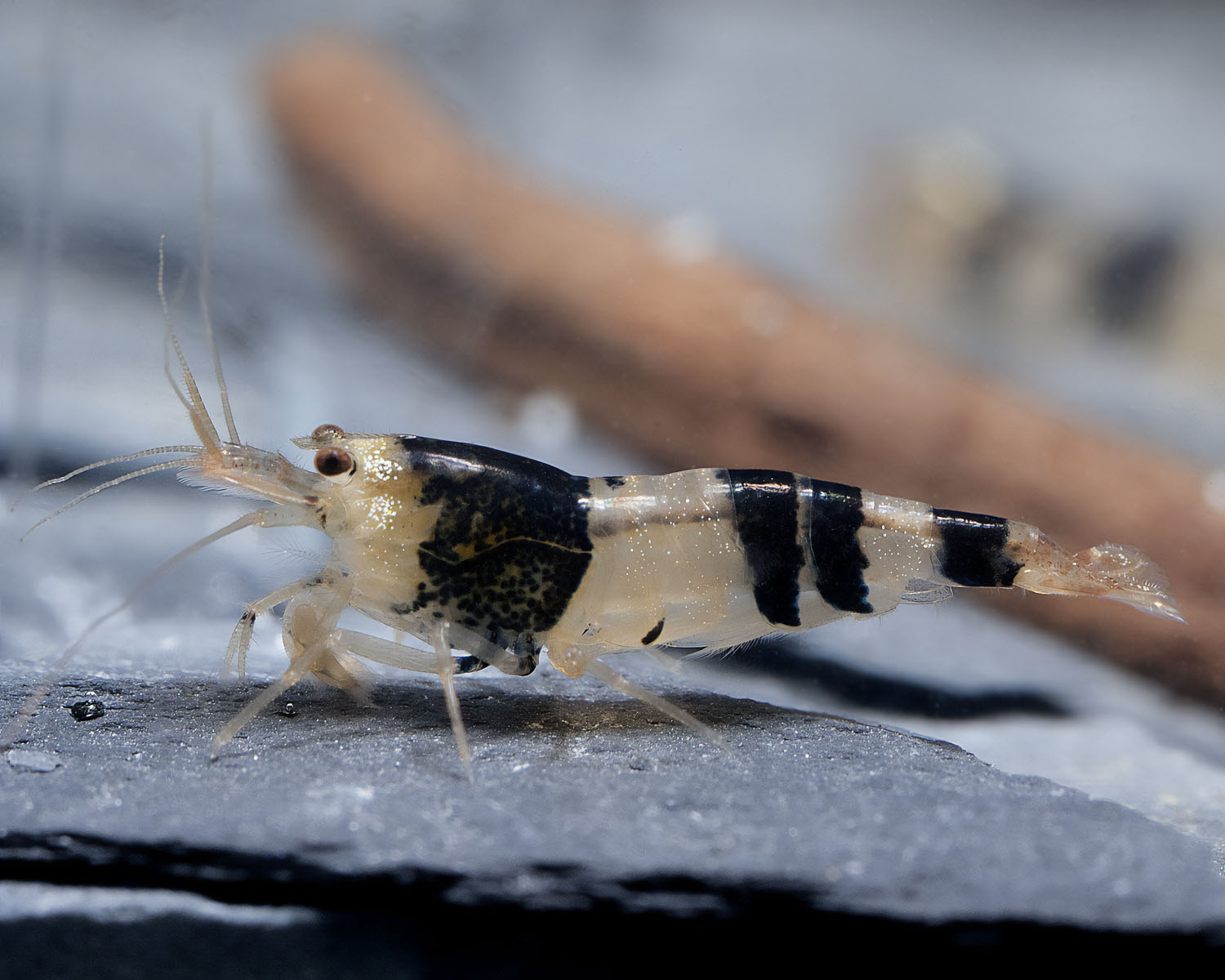
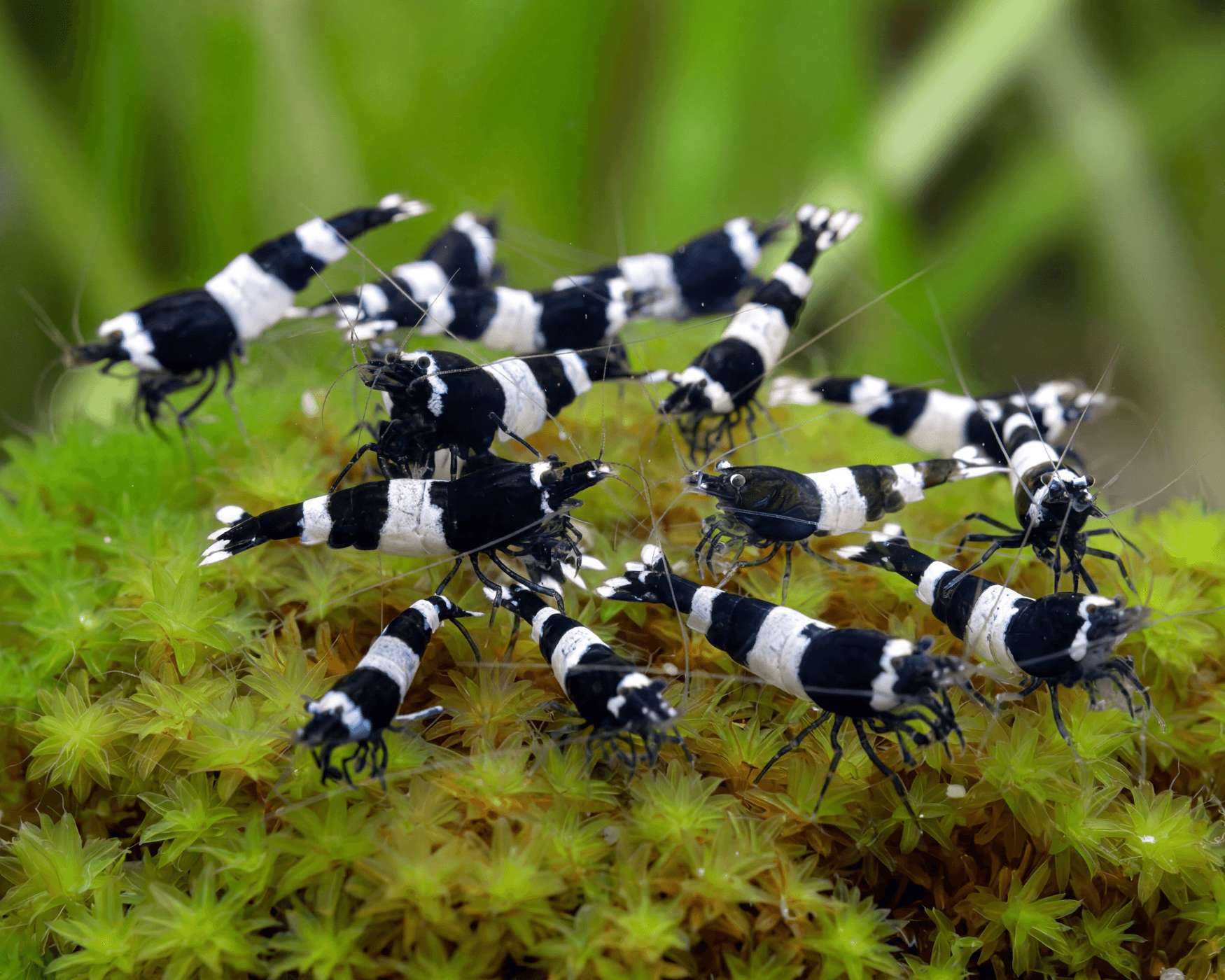
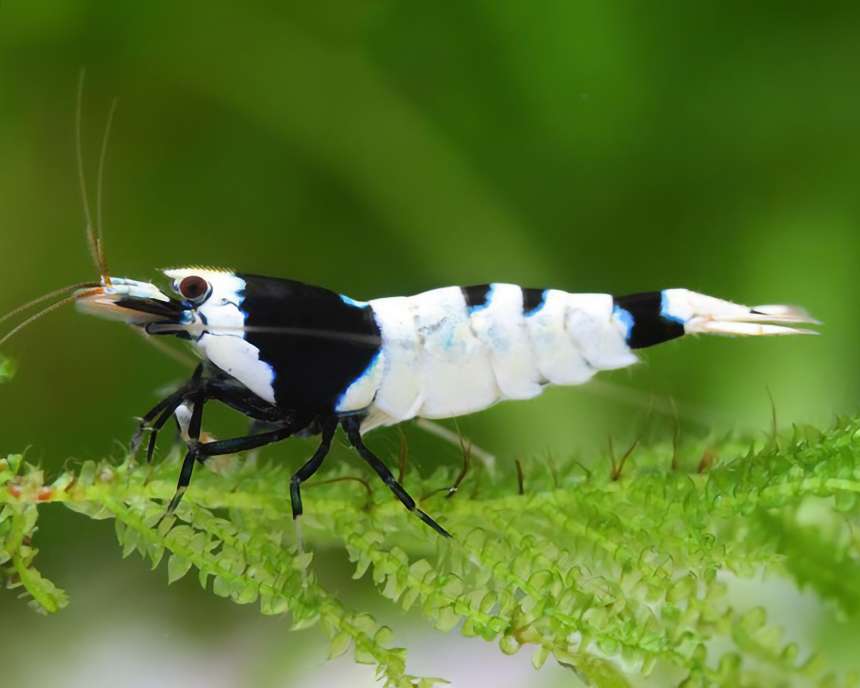
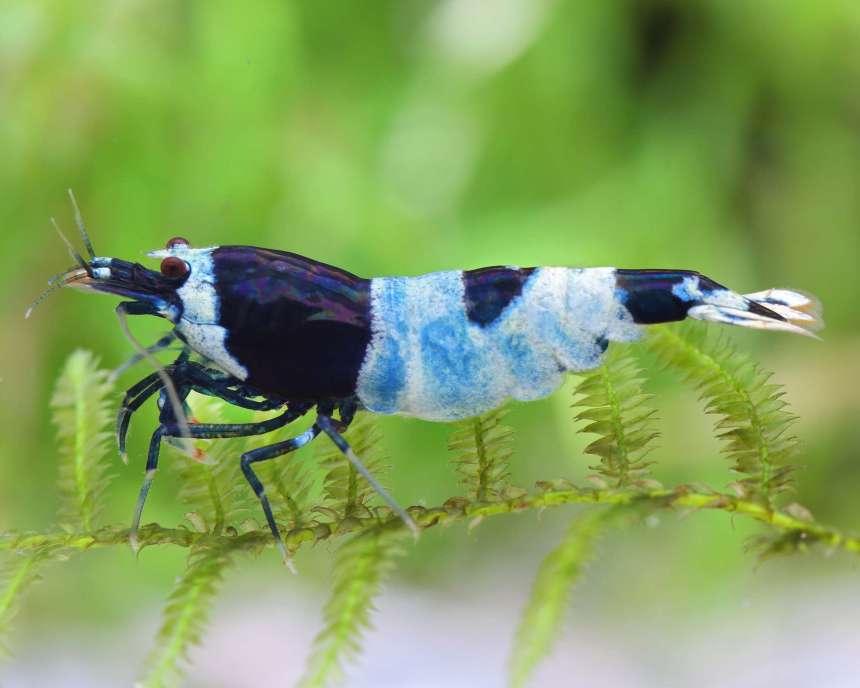
The aquarium trade name Black Panda Shrimp refers to a selectively bred color form rather than a securely established scientific species. The supplied name is Caridina sp. Black Panda, with Taiwan Bee and Shadow Bee used as trade-related names. Exact parentage and species-level placement can vary among lines, so identification should remain at the informal Caridina sp. level unless breeding records or specialist taxonomic evidence establish more.
Taxonomy and identification

Natural background and habitat

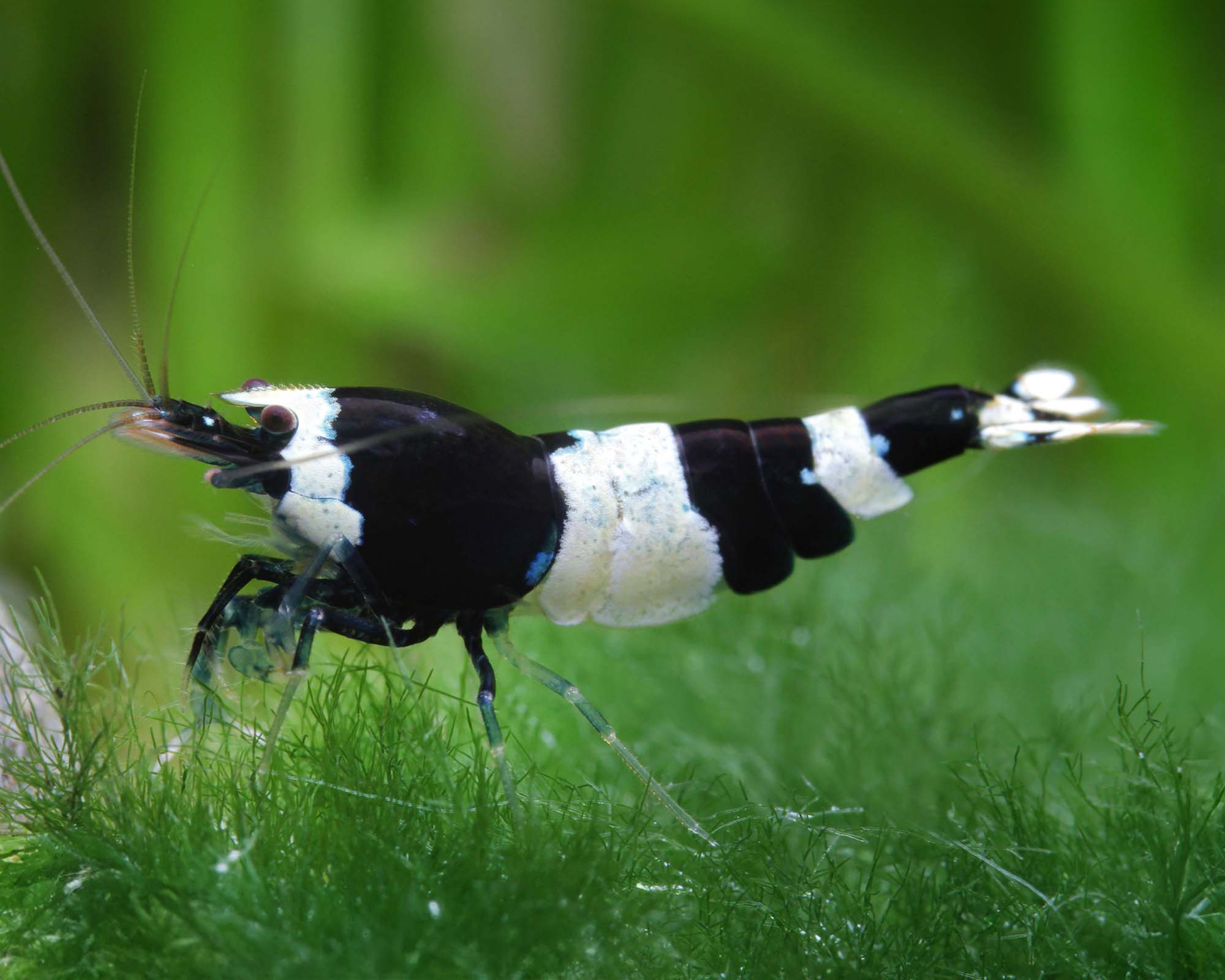
A precise wild habitat cannot be assigned confidently to this selectively bred form. Taiwan Bee shrimp are aquarium strains derived from Caridina stock associated with soft, low-mineral freshwater environments in southern China and nearby regions, but the Black Panda pattern itself is not a documented wild locality form. In an aquarium, provide shaded cover, mosses, wood, leaf litter, porous surfaces, and gentle circulation that support biofilm growth.
Natural background and habitat

Water parameters and aquarium setup

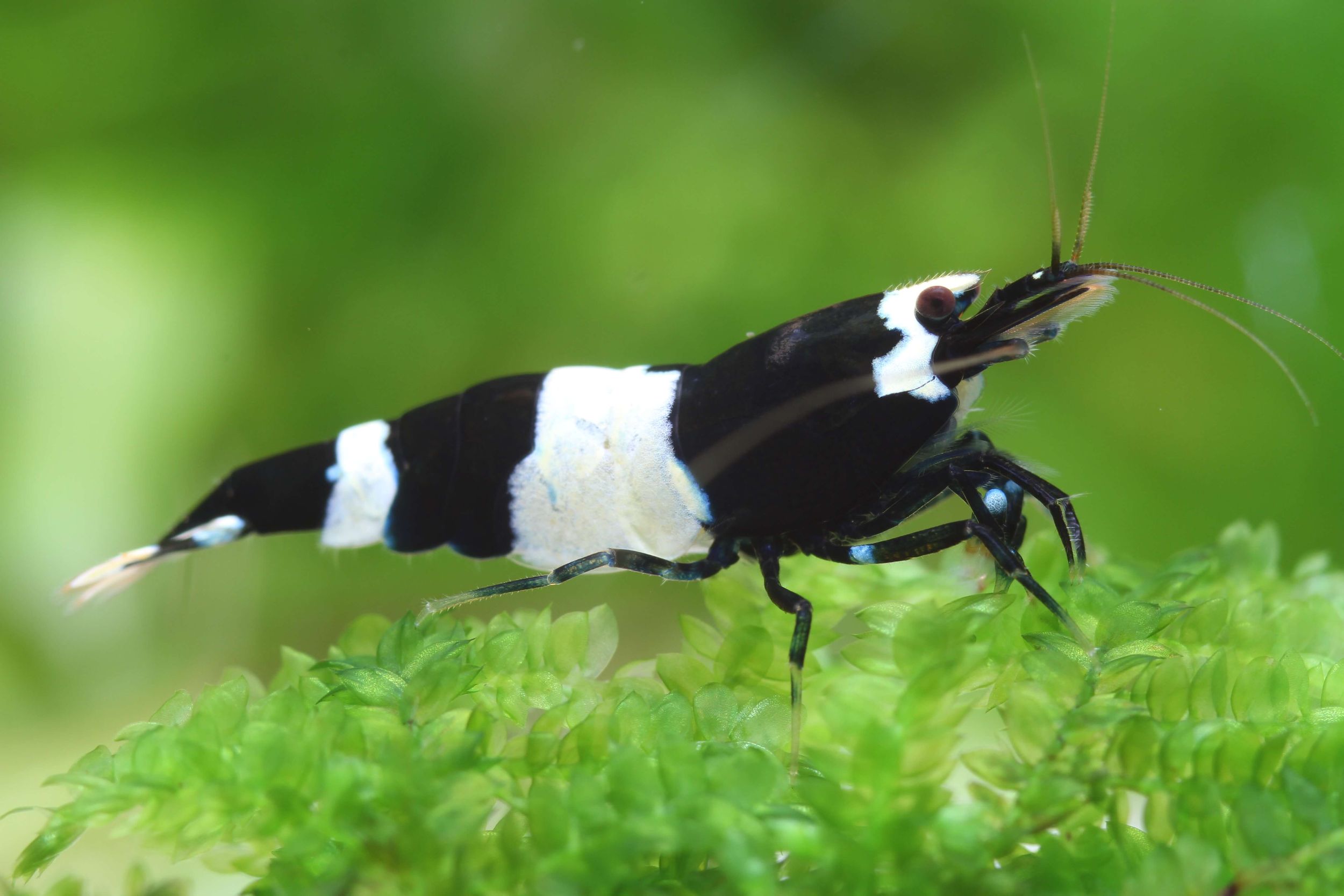
Use a fully cycled, mature aquarium with stable conditions rather than chasing exact numbers. A practical target is 20-24 °C, pH 5.8-6.8, low general hardness, moderate carbonate hardness close to zero, and very low ammonia and nitrite. Many keepers use active buffering substrate and remineralized reverse-osmosis water, but the chosen method must remain consistent. Avoid copper-based medications, sudden parameter changes, large temperature swings, and strong filtration intakes; cover intakes with a fine prefilter sponge.
Water parameters and aquarium setup

Feeding

Black Panda Shrimp graze continually on biofilm, microorganisms, and soft organic material on plants and hard surfaces. Supplement this natural grazing with small portions of a quality shrimp food containing appropriate protein and minerals, offered several times weekly. Blanched vegetables and occasional leaf litter can provide variety. Remove uneaten food promptly, especially in small aquariums, because deteriorating food can destabilize water quality.
Feeding

Tank mates

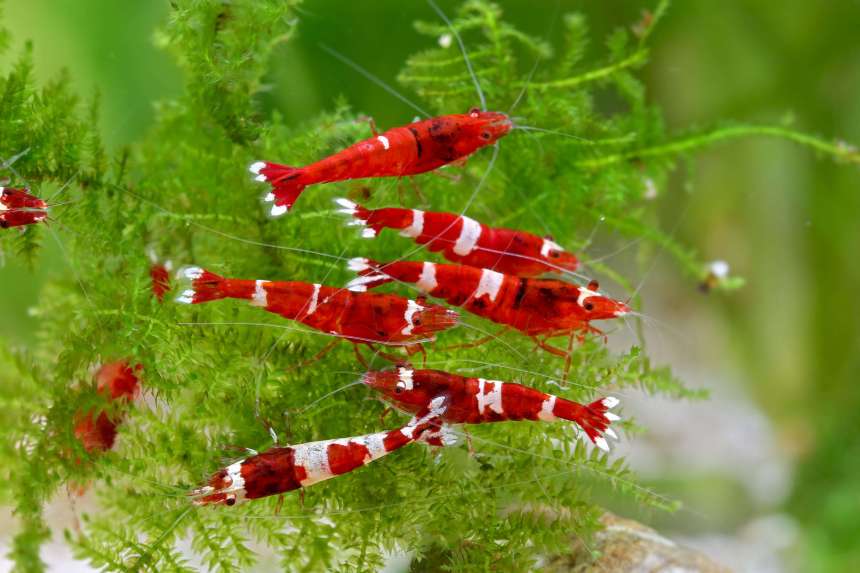
The safest companions are other peaceful Caridina of compatible water requirements. A species-only aquarium gives adults and young the best chance of survival and preserves selective breeding lines. Small, non-predatory fish may coexist in a heavily planted aquarium, but even peaceful fish can eat shrimplets. Avoid large fish, aggressive or highly active species, crayfish, predatory shrimp, and any tank mate likely to harass or consume juveniles. Mixing with other Caridina lines can produce less predictable offspring.
Tank mates

Molting and mineral balance

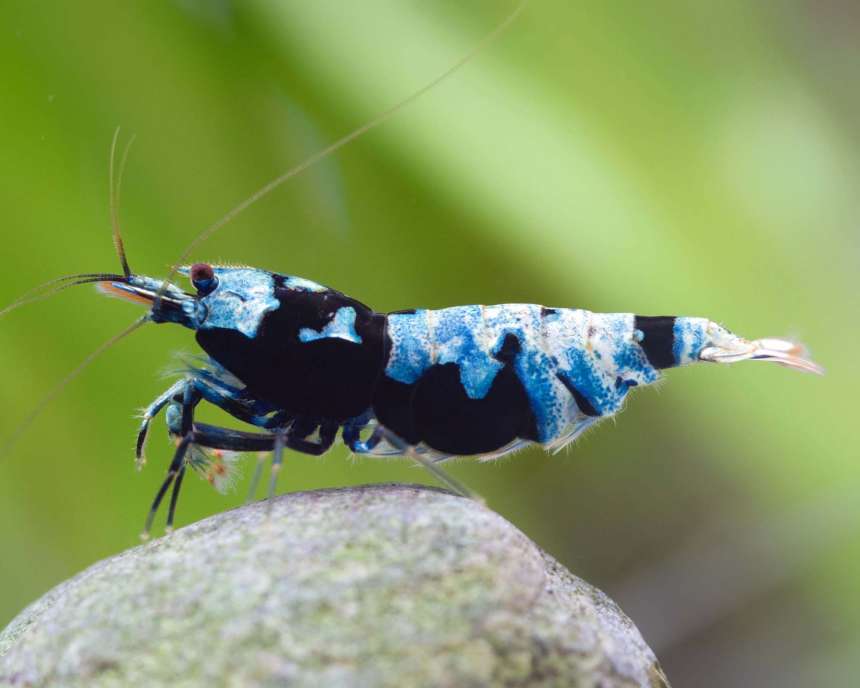
Shrimp periodically shed their exoskeleton to grow. Before molting, an individual may become less active or appear dull and will often hide afterward while its new shell hardens. Leave a shed exoskeleton in the aquarium unless it decomposes, because shrimp commonly consume it and recover minerals. Stable hardness, adequate dietary minerals, clean water, and plentiful cover are more important than adding calcium indiscriminately. Sudden changes in temperature, pH, or total dissolved solids can cause failed molts.
Molting and mineral balance

Breeding and juvenile care

This is a fully freshwater breeder. After mating, a female carries fertilized eggs beneath her abdomen and fans them until they hatch as miniature benthic shrimp; there is no required brackish larval stage. Use a mature, species-focused aquarium with abundant biofilm, moss, sponge filtration, and stable soft acidic water. Keep maintenance gentle around berried females and avoid major parameter shifts. Juveniles need continuous access to biofilm and fine foods, while selective breeders should remove undesired offspring if maintaining a consistent Black Panda pattern.
Breeding and juvenile care
Black Panda Shrimp (Caridina sp. Taiwan Bee) Care Guide

Shrimp info

  • Size: 2-3 cm
  • Temperature : 20-24 °C
  • pH: 5.8-6.8
Leave your comments
Latest on Shrimps
  • Black King Kong Shrimp

    Black King Kong Shrimp

    Black King Kong is a selectively bred bee-shrimp form with a predominantly black body and contrasting white markings. The name is used in the aquarium trade for several related breeding lines, so appearance and genetics can vary between groups. It is generally kept like other Taiwan-bee or Caridina bee shrimp: in mature, soft, acidic water with excellent stability, gentle filtration, and abundant biofilm. This shrimp is best suited to an established species aquarium and careful breeding program rather than a newly set-up community tank.
  • Black Galaxy Tiger Caridina sp.

    Black Galaxy Tiger Caridina sp.

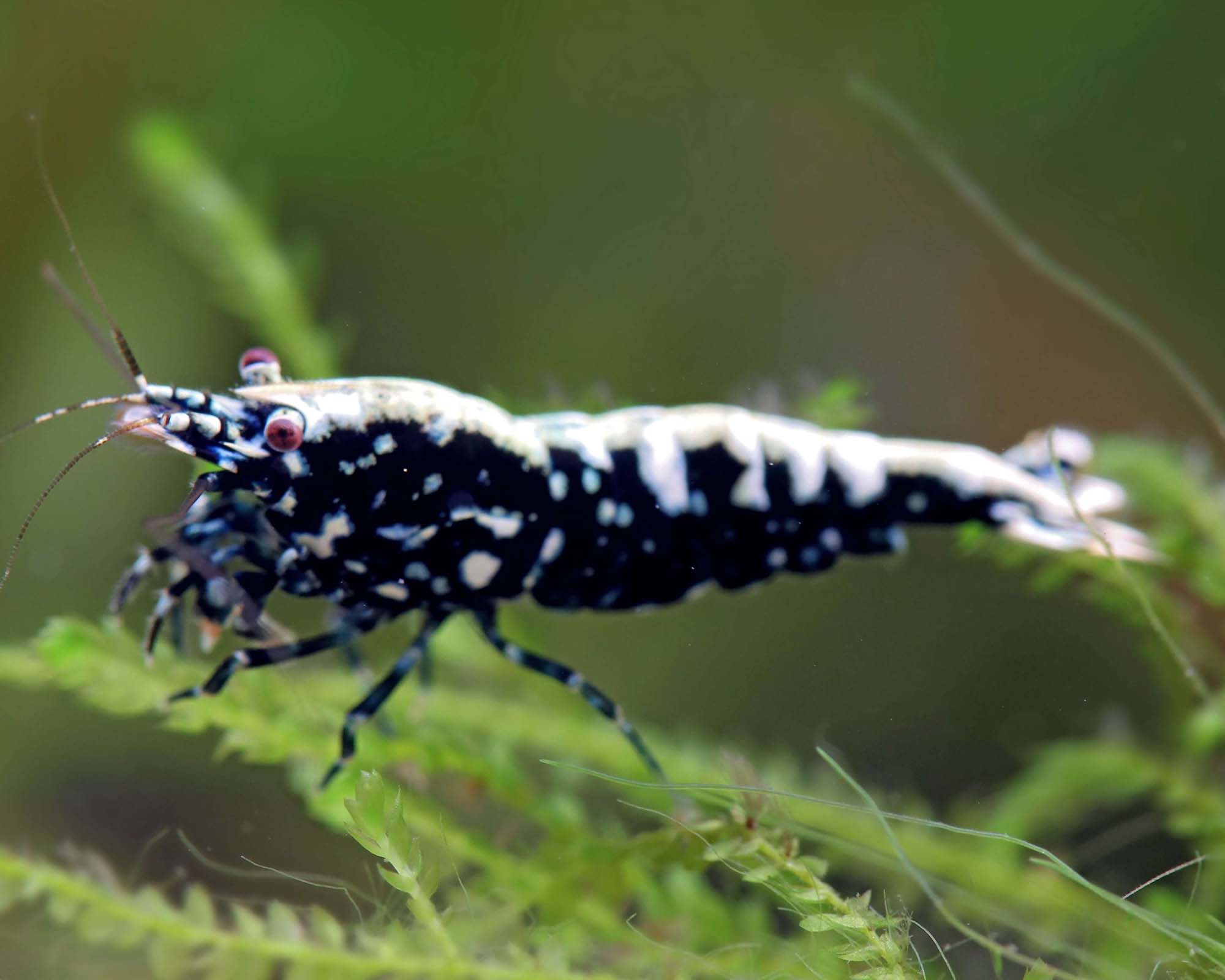
    Black Galaxy Tiger is a selectively bred freshwater shrimp sold under the trade name Caridina sp. It is recognized by a dark body with contrasting pale markings and tiger-like banding, although pattern quality can vary considerably between individuals. The exact species and breeding history behind this line are not established from the supplied information. It is best kept in a mature, stable aquarium with soft, slightly acidic water, abundant biofilm, and peaceful tank mates.
  • Black Fancy Tiger Caridina sp.

    Black Fancy Tiger Caridina sp.

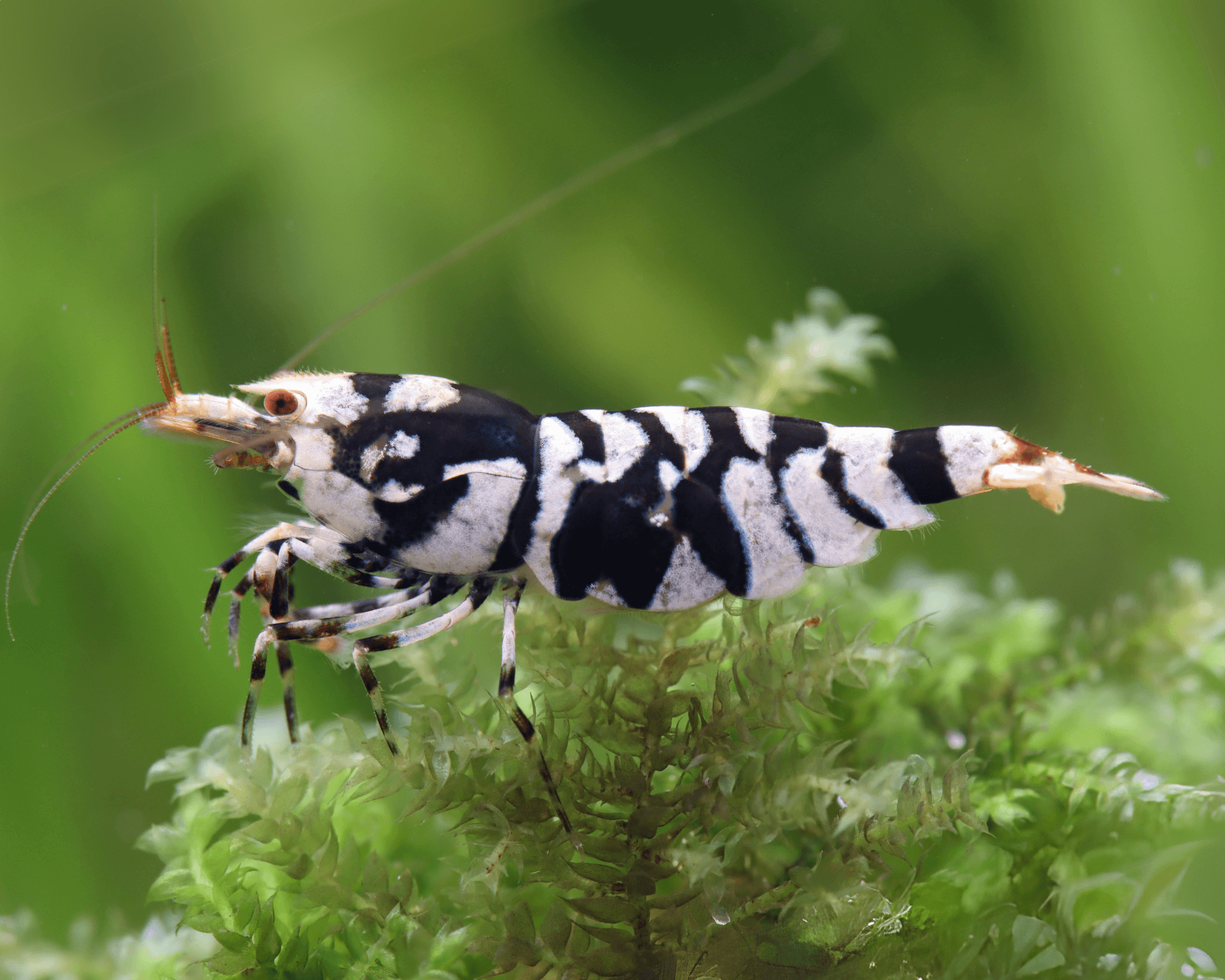
    Black Fancy Tiger is a selectively bred freshwater shrimp sold under the trade name Caridina sp. It is recognized by a dark black-and-white tiger pattern, although appearance and lineage can vary between breeders. Its exact species identity and wild origin are not established from the supplied name alone. Stable, soft, mineral-balanced water, mature biofilm and careful acclimation are central to long-term care.
  • Black Calceo Bee Shrimp (Caridina sp.)

    Black Calceo Bee Shrimp (Caridina sp.)

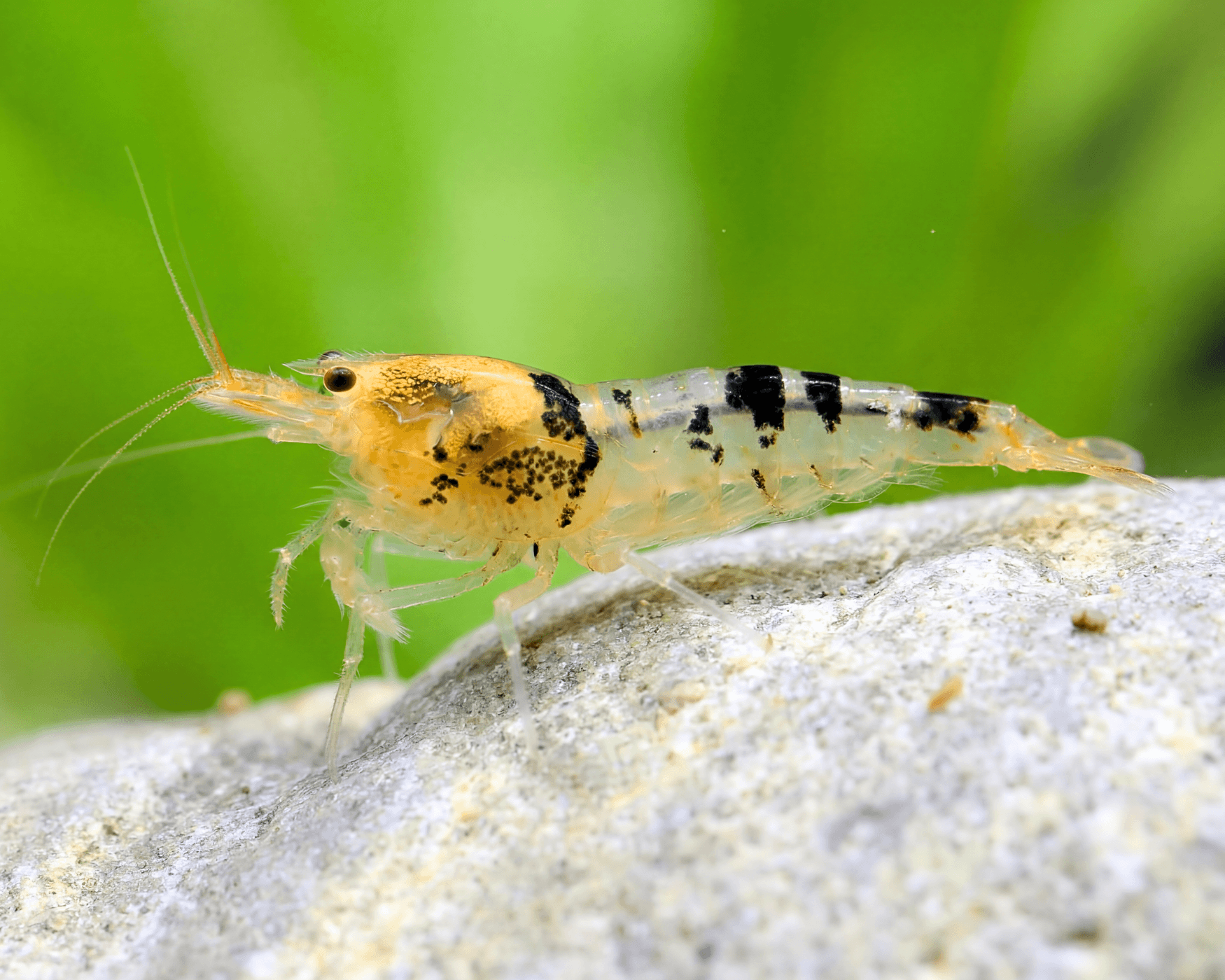
    The Black Calceo Bee Shrimp is a selectively patterned freshwater shrimp sold under the trade name Black Calceo Bee Garnele. It is identified here only as Caridina sp.; the exact species and lineage cannot be confirmed from the supplied name and image alone. Its translucent body shows black markings with golden-yellow coloration, and it requires mature, stable, mineral-balanced aquarium water typical of sensitive bee shrimp.
  • Black and White Bee Shrimp (Caridina logemanni)

    Black and White Bee Shrimp (Caridina logemanni)

    The black and white bee shrimp is a selectively bred form of Caridina logemanni, recognized for contrasting black-and-white bands. Aquarium grades such as Black Bee K4 and K6 describe pattern quality or coverage in the ornamental shrimp trade rather than separate species or formal taxonomic ranks. This shrimp is peaceful but sensitive to unstable water chemistry, making mature, carefully maintained aquariums the best setting. The identification is consistent with the supplied name, although individual grade designations cannot be confirmed from photographs alone.
  • Australische Amanogarnele (Caridina typus)

    Australische Amanogarnele (Caridina typus)

    Caridina typus is a translucent, patterned freshwater shrimp associated with the Indo-Pacific, including Australia. It resembles the familiar Amano shrimp in general form, but it is a different species and should not be identified by appearance alone. The shrimp is peaceful and useful as a grazer, yet its specialized larval development can make breeding substantially more demanding than routine aquarium care. Reliable identification is advisable because several transparent Caridina species have similar markings.
  • Amano Shrimp (Caridina multidentata)

    Amano Shrimp (Caridina multidentata)

    The Amano shrimp, Caridina multidentata, is a peaceful freshwater aquarium shrimp recognized by its translucent body and reddish-brown speckles. It is a useful grazer of algae and biofilm, but it requires stable, mature water and secure tank cover. Adults are generally hardy, while successful reproduction is challenging because the larvae require brackish conditions before completing development in freshwater.
  • Bee Shrimp Wild Form (Caridina logemanii var.)

    Bee Shrimp Wild Form (Caridina logemanii var.)

    The bee shrimp wild form is a small, soft-water Caridina with a translucent body marked by irregular black and pale bands or patches. Aquarium specimens are commonly associated with the Caridina logemanni lineage, although the supplied “var.” label does not establish a formally recognized taxonomic rank or exact collection locality. It is best kept in a mature, stable aquarium with cool, acidic, mineral-poor water, abundant biofilm, gentle filtration and peaceful tank mates. Stable conditions are more important than pursuing narrowly precise figures.
  • Amano Shrimp (Caridina multidentata) Care Guide

    Amano Shrimp (Caridina multidentata) Care Guide

    Amano shrimp, Caridina multidentata, are transparent to grayish freshwater shrimp marked with small brown or reddish spots and dashes. Also sold as Yamato shrimp, they are peaceful scavengers that graze on algae, biofilm and leftover foods. They suit mature community aquariums with stable, well-oxygenated water. Adults live in freshwater, but successful reproduction requires raising their drifting larvae in brackish water, so a self-sustaining freshwater colony is uncommon.
  • Amano Shrimp (Caridina multidentata)

    Amano Shrimp (Caridina multidentata)

    The Amano Shrimp, Caridina multidentata, is a translucent freshwater shrimp valued for grazing algae and biofilm. It is generally peaceful, adaptable and suitable for planted community aquariums with stable, clean water. Adults live in freshwater, but successful reproduction requires a separate brackish or marine larval stage, so routine captive breeding is substantially more demanding than everyday care. The supplied images are consistent with this species, although color and pattern vary among individuals.
  • Amano Shrimp (Caridina multidentata)

    Amano Shrimp (Caridina multidentata)

    The Amano Shrimp, Caridina multidentata, is a transparent to grayish freshwater shrimp marked with brown or reddish-brown spots and dashes. It is valued for grazing on algae and biofilm, but it is not a fully freshwater-breeding species: its larvae require brackish or marine conditions. Stable water, mature surfaces, shelter, and peaceful tank mates are important for long-term care.
  • Amano Shrimp (Caridina multidentata)

    Amano Shrimp (Caridina multidentata)

    The Amano shrimp is a transparent, spotted freshwater shrimp formerly widely sold as Caridina japonica and now generally identified as Caridina multidentata. It is valued for grazing algae and biofilm without usually harming healthy plants. Adults are peaceful and hardy when water quality is stable, but successful breeding requires brackish or marine conditions for the larval stage. The supplied images show the typical translucent greenish-brown, dark-spotted appearance.
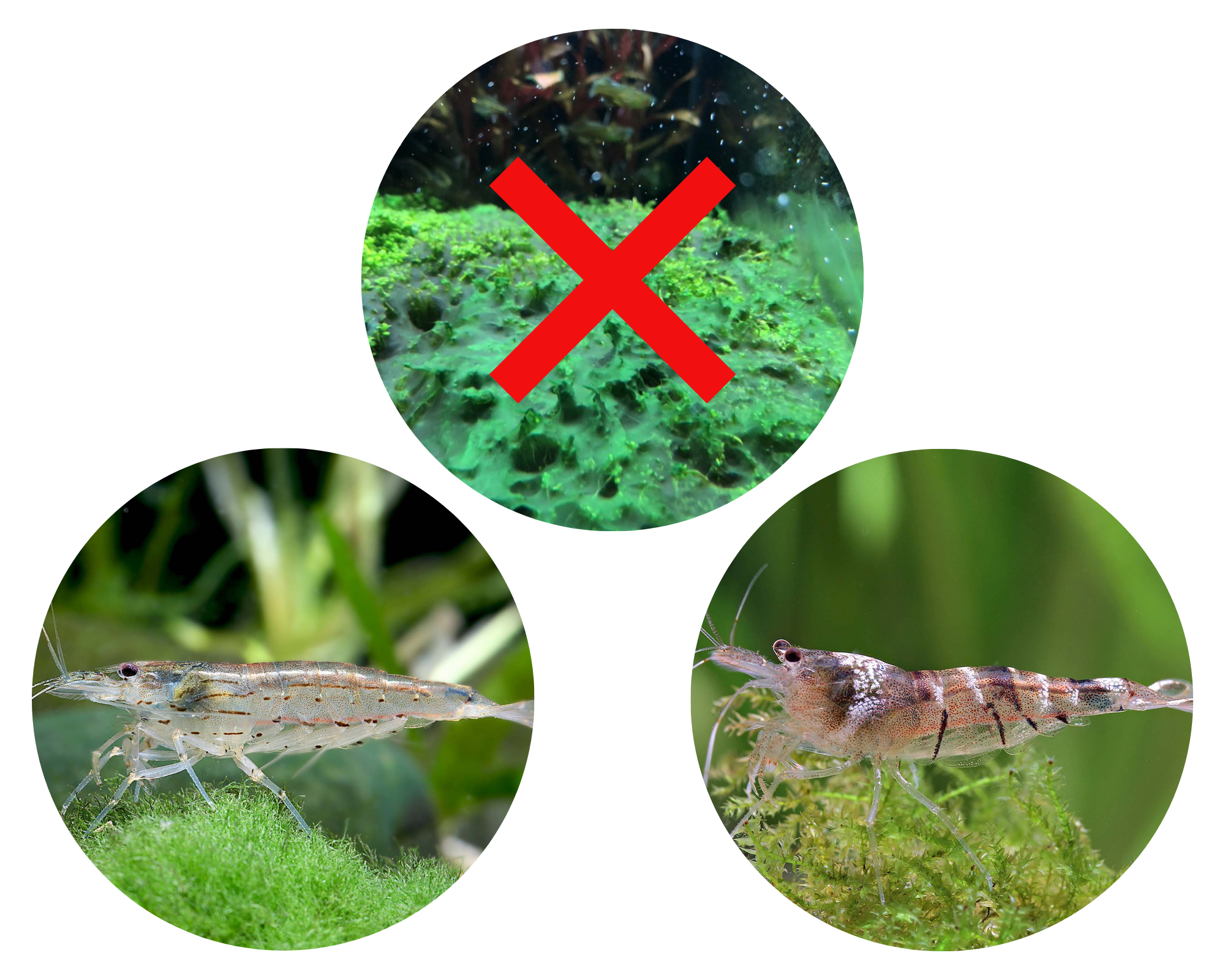
  • Algae-Eating Shrimp Set: Likely Amano Shrimp

    Algae-Eating Shrimp Set: Likely Amano Shrimp

    This aquarium-library entry concerns a group of algae-grazing shrimp that appear to be Amano shrimp, Caridina multidentata. The supplied source label is a trade description rather than a confirmed scientific identification, so the care guidance should be verified against the seller’s species information. These peaceful freshwater shrimp are valued for grazing algae and biofilm, but successful breeding requires a separate brackish larval stage.
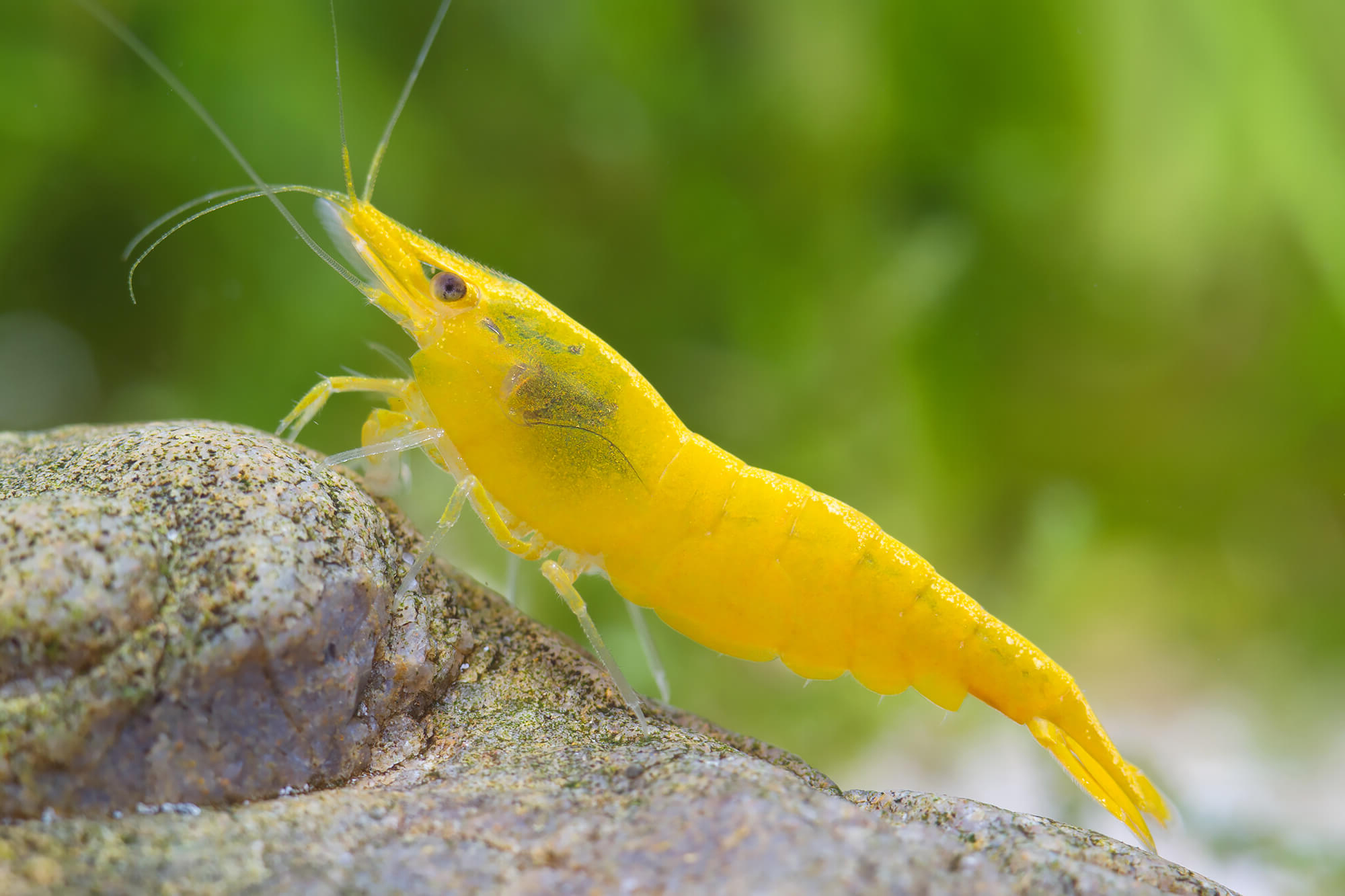
  • Yellow Fire Shrimp

    Yellow Fire Shrimp

    Yellow Fire Shrimp are a selectively bred yellow color form of the freshwater cherry shrimp, generally identified as Neocaridina davidi. They are peaceful, adaptable scavengers suited to mature planted aquariums with stable water chemistry. The supplied trade name and images support this identification, although the exact grade, lineage, and locality cannot be confirmed. Their bright yellow to golden coloration is strongest in well-conditioned adults and may vary between individuals.
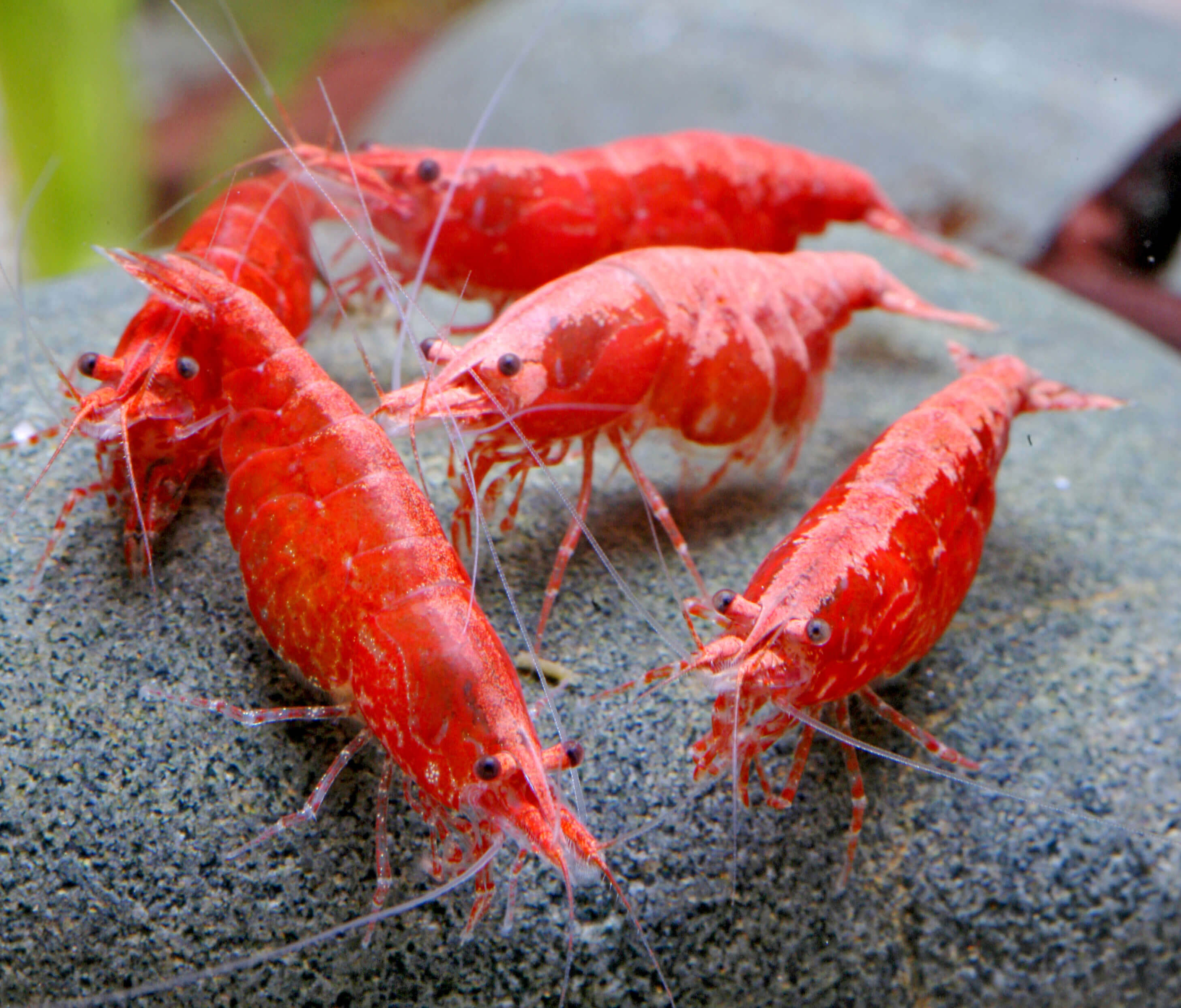
  • Red Sakura Shrimp (Neocaridina davidi)

    Red Sakura Shrimp (Neocaridina davidi)

    Red Sakura Shrimp are a selectively bred red color form of the freshwater dwarf shrimp commonly traded as Neocaridina davidi. They are peaceful scavengers that graze on algae, biofilm and small food particles. Their hardiness, uncomplicated breeding and modest adult size make them suitable for mature planted aquariums. The supplied trade label and images support a red Neocaridina-type shrimp, but exact line quality and taxonomy cannot be confirmed from them alone.
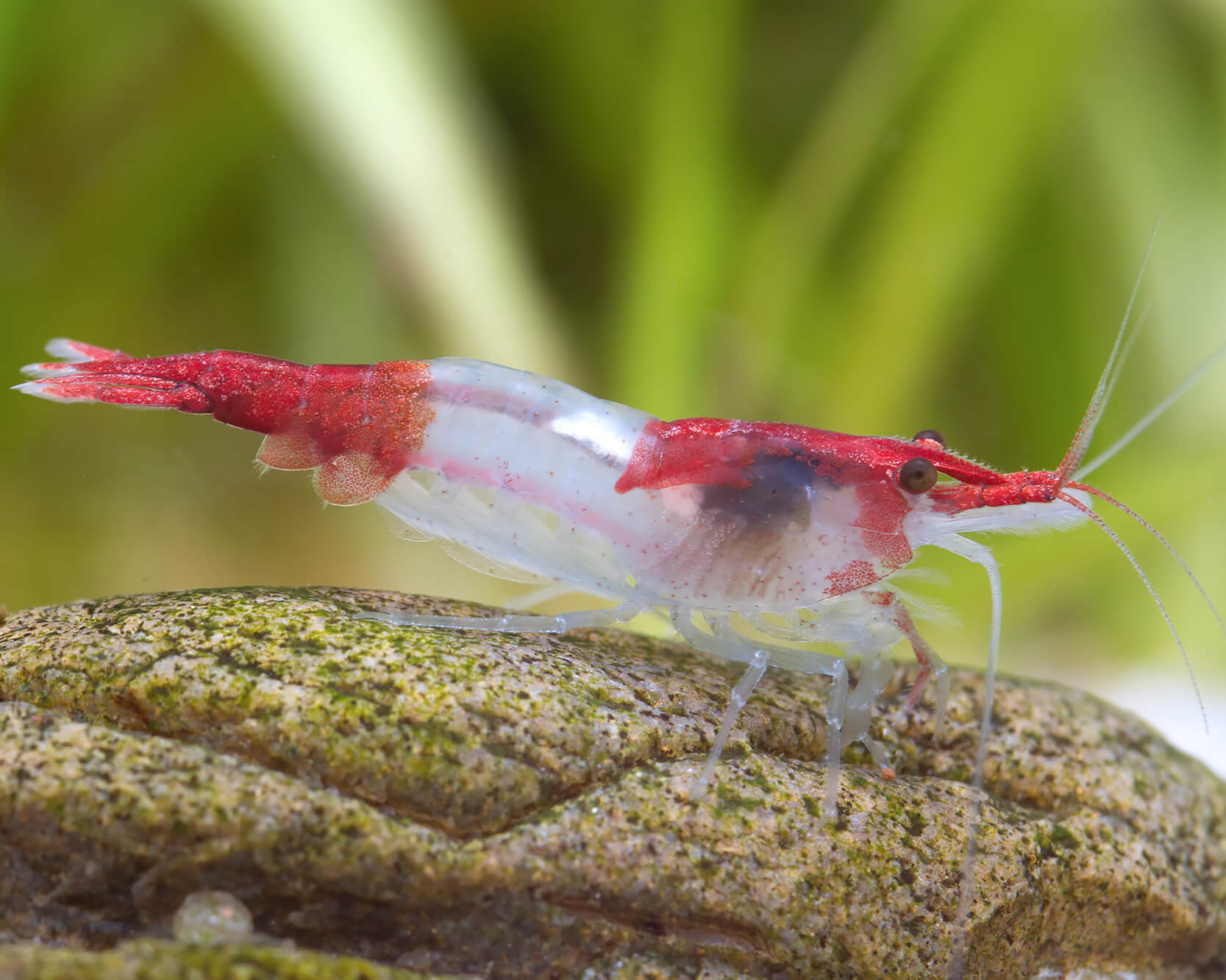
  • Red Rili Shrimp

    Red Rili Shrimp

    Red Rili Shrimp are a selectively bred color form of the freshwater Neocaridina davidi complex, recognized by red body sections separated by translucent or pale areas. They are generally peaceful, adaptable aquarium scavengers that graze on biofilm and accept prepared foods. The supplied trade label identifies this shipment as Red Rili Shrimp, but the image and label alone cannot confirm a precise strain history or species-level identification.